Some places on Earth belong almost entirely to animals. From remote islands packed with penguins to jungle shores crawling with crabs, these destinations are wild in the truest sense.
Humans may visit or work there, but the animals clearly run the show. Get ready to explore 15 remarkable places where wildlife outnumbers people in the most extraordinary ways.
1. Macquarie Island, Australia
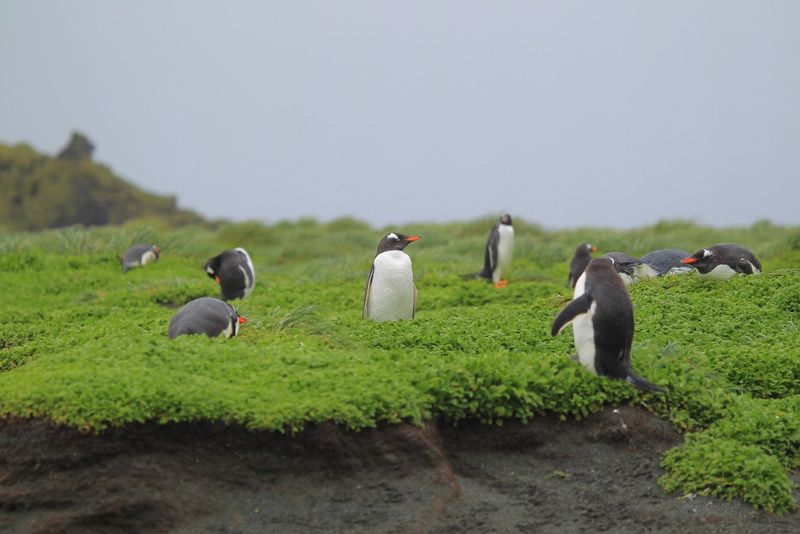
Sitting halfway between Australia and Antarctica, Macquarie Island feels like stepping into a nature documentary. The island is home to enormous colonies of royal and king penguins, along with southern elephant seals that haul themselves onto the beaches in massive groups.
Researchers stationed here are outnumbered by animals on an almost unimaginable scale.
Only about 20 to 40 scientists and support staff live on the island at any given time. Meanwhile, millions of seabirds and seals call it home year-round.
The island is a UNESCO World Heritage Site, recognized for its extraordinary wildlife and geological features.
Visitors are rarely allowed, making it one of the most protected places on the planet. If you ever dream of a place untouched by crowds and commerce, Macquarie Island is about as wild and pure as it gets.
2. South Georgia Island, British Overseas Territory
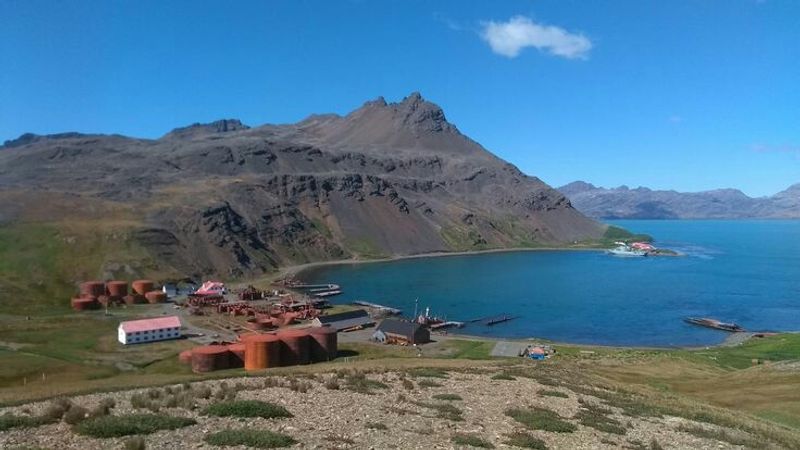
South Georgia Island is one of the most wildlife-dense places on Earth, and almost no one lives there permanently. Millions of king penguins breed along its beaches every year, creating scenes so spectacular they look almost unreal.
Fur seals, elephant seals, and wandering albatrosses also crowd the shoreline in staggering numbers.
There is no permanent civilian population on the island. A small rotating team of government officers and museum staff represent the only human presence.
The contrast between the sheer volume of animals and the near-total absence of people makes South Georgia one of the most remarkable places in the world.
Ernest Shackleton, the famous polar explorer, is buried here, adding a layer of human history to this otherwise animal-dominated land. Wildlife tourism has grown in recent years, but strict limits keep the ecosystem beautifully intact.
3. Sable Island, Nova Scotia, Canada
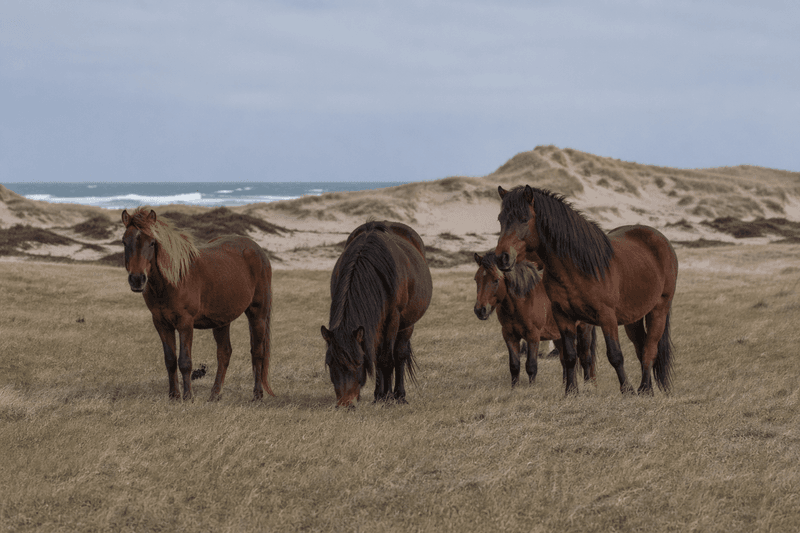
Sable Island is a thin sliver of sand sitting about 300 kilometers off the coast of Nova Scotia, and it punches way above its weight when it comes to wild beauty. Around 500 wild horses roam freely across its dunes, descended from animals brought to the island in the 1700s.
They have survived harsh Atlantic winters for generations without any human help.
Only a tiny team of Parks Canada researchers lives on the island at any time, usually fewer than five people. The horses, along with tens of thousands of grey seals that breed on its beaches, make Sable Island one of Canada’s most extraordinary natural treasures.
Access is tightly controlled, so the island remains largely undisturbed. The wild horses have become symbols of resilience and freedom, admired by wildlife lovers around the world who rarely get the chance to see them in person.
4. Assateague Island, Maryland and Virginia, USA
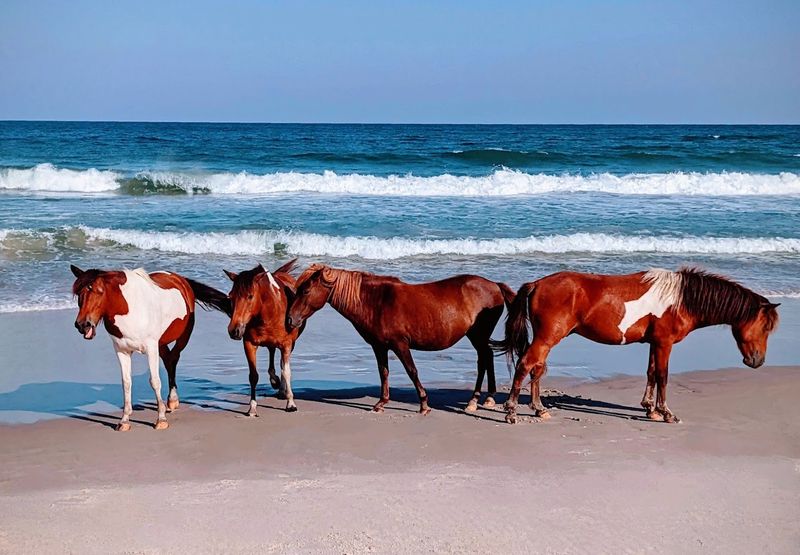
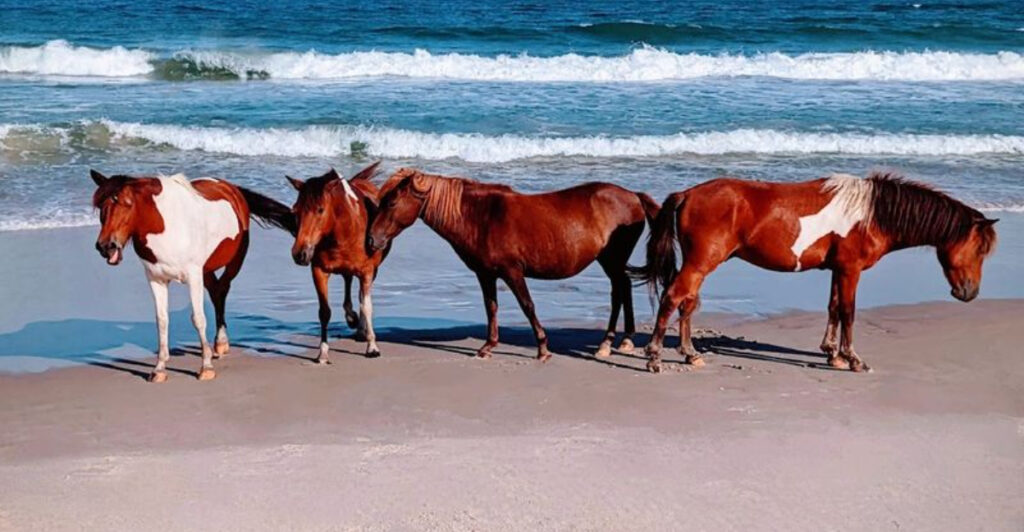
Assateague Island stretches along the coasts of Maryland and Virginia, and its most famous residents are the wild ponies that have lived there for centuries. Hundreds of these sturdy, shaggy horses roam the island’s marshes and beaches freely, grazing on salt grasses and splashing through shallow water.
Legend says their ancestors swam ashore from a shipwrecked Spanish galleon, though historians believe they were left by colonial-era settlers.
Very few people live on Assateague year-round. Most of the island is protected as a national seashore and wildlife refuge, which means the ponies and shorebirds have far more real estate than any human resident.
Thousands of migratory birds also pass through each year, adding to the wildlife spectacle.
Day visitors are welcome, but overnight camping is carefully regulated. The ponies are wild animals and should never be fed or approached, a rule that helps keep their natural behaviors intact.
5. Christmas Island, Australia
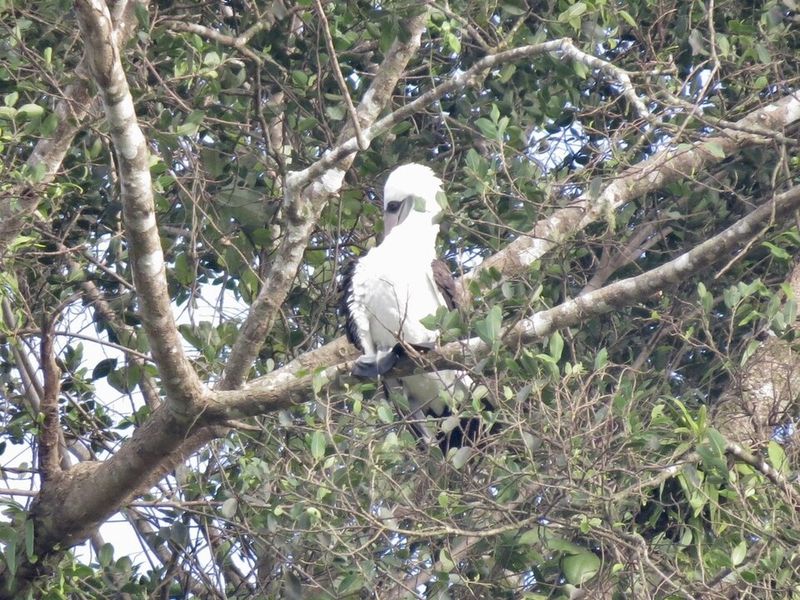
Every year, Christmas Island transforms into one of nature’s greatest spectacles. Around 40 to 50 million red crabs migrate from the forest to the ocean to breed, carpeting roads, bridges, and beaches in a moving sea of red.
Roads are closed, special crab crossings are built, and the whole island essentially pauses to let the crabs pass.
Fewer than 2,000 people live on Christmas Island, which sits in the Indian Ocean about 2,600 kilometers northwest of Perth. The human population is dramatically outnumbered not just by crabs but also by seabirds, including the famous Abbott’s booby and the Christmas Island frigatebird, both found nowhere else on Earth.
The island is an Australian territory with a rich mix of cultures, but its wildlife is the real headline. The annual crab migration has been called one of the most impressive natural events anywhere on the planet.
6. Okunoshima (Rabbit Island), Japan
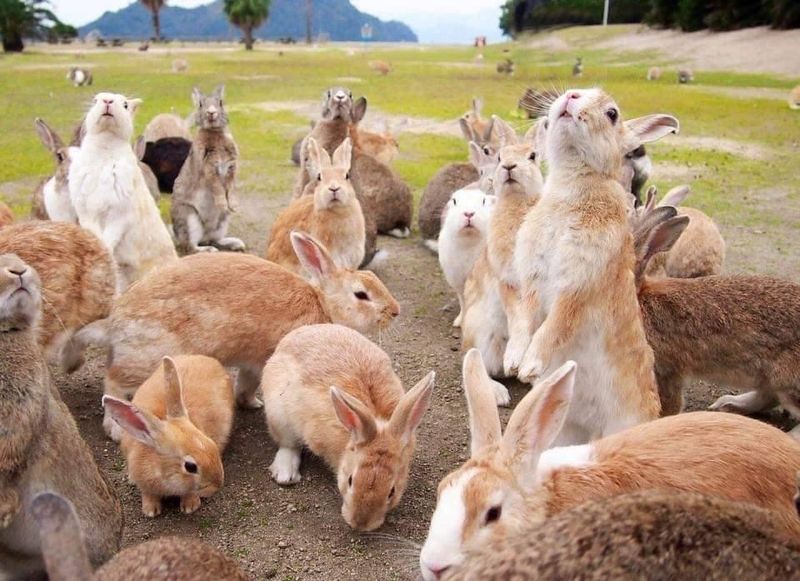
Okunoshima, a tiny island in the Seto Inland Sea, has earned the nickname Rabbit Island for a very good reason. Hundreds of free-roaming rabbits live here, and they show absolutely no fear of visitors.
The moment you step off the ferry, rabbits will run toward you hoping for a snack.
The island has a surprisingly dark history. During World War II, it was used to produce chemical weapons, and rabbits were kept there as test subjects.
Today, the island’s past is preserved in a small museum, while the rabbits have multiplied and taken over in the most adorable way possible.
A small hotel and staff manage the island, but the rabbit population far outpaces the human presence. Visitors are encouraged to bring rabbit-friendly pellets, which are sold near the ferry terminal.
The combination of quirky history and overwhelming cuteness makes Okunoshima truly one of a kind.
7. Aoshima (Cat Island), Japan
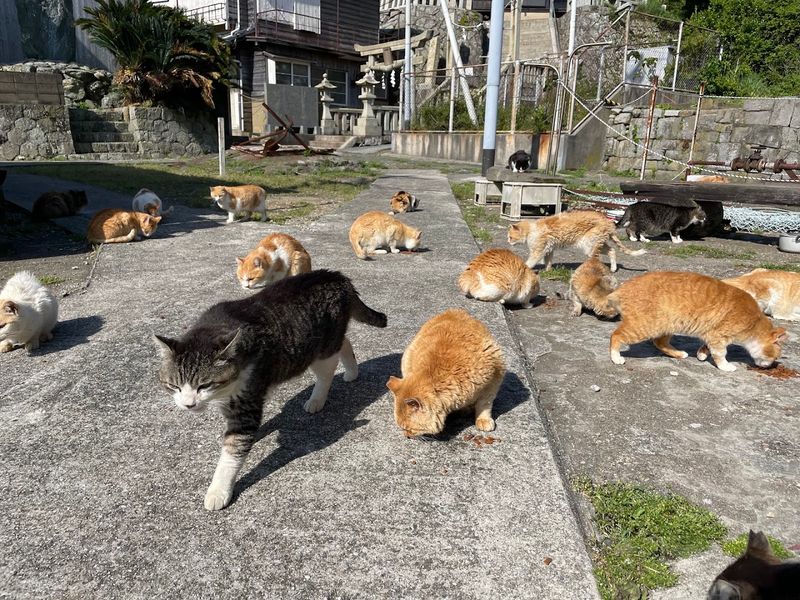
Aoshima is a tiny fishing island off the coast of Ehime Prefecture in Japan, and cats have completely taken it over. With roughly six cats for every one person, the felines roam freely through the village, nap on fishing boats, and greet visitors at the dock.
The island has become an internet sensation and a pilgrimage site for cat lovers worldwide.
The human population has shrunk dramatically over the decades as younger generations moved to the mainland for work and education. Elderly residents remain, and they coexist peacefully with the ever-growing cat community.
There are no cars on the island, making it a genuinely peaceful place to wander.
Getting there requires a ferry, and the number of daily visitors is limited. The cats were originally brought to the island to control mice that plagued the fishing community.
Now, generations later, they have inherited the whole island for themselves.
8. Tashirojima (Cat Island), Japan
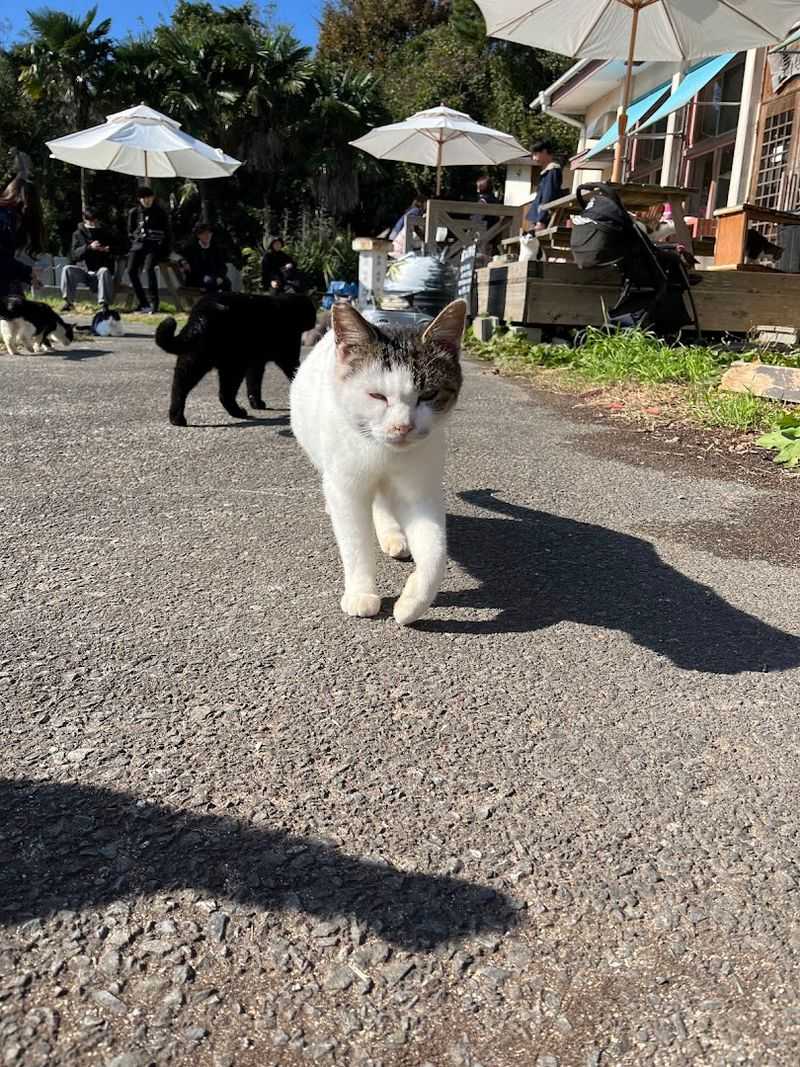
Japan has more than one cat island, and Tashirojima is perhaps the most famous of them all. Located off the coast of Miyagi Prefecture, this island has been associated with cats for over a century.
Local fishermen once believed that feeding cats brought good luck and better fishing, so the cat population grew and thrived over generations.
Today, cats outnumber the island’s aging human residents by a wide margin. There is even a cat shrine in the middle of the island, where both locals and visitors leave offerings.
Manga artist Tetsuya Chiba, who grew up nearby, helped fund a set of cat-themed cottages that visitors can rent overnight.
The island has no convenience stores or vending machines, keeping things refreshingly simple. Cats here are not owned by anyone in particular but are cared for collectively by the community.
It is a living example of a place where animals truly set the tone.
9. Snake Island (Ilha da Queimada Grande), Brazil
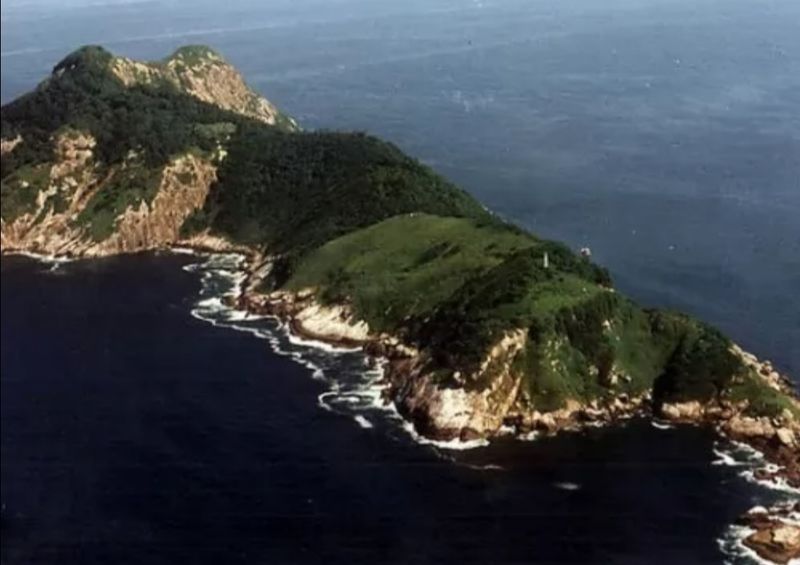
Off the coast of Sao Paulo state in Brazil lies an island that almost no one is allowed to visit, and for very good reason. Ilha da Queimada Grande, commonly known as Snake Island, is home to thousands of golden lancehead vipers, one of the most venomous snakes in the world.
Estimates suggest there is roughly one snake for every square meter in some parts of the island.
No permanent human residents live there. The Brazilian Navy maintains a lighthouse on the island, and access is strictly controlled by the government.
Scientists occasionally receive special permits to conduct research, but even they proceed with extreme caution.
The golden lancehead evolved in isolation after rising sea levels separated the island from the mainland thousands of years ago. Its venom is fast-acting and powerful enough to cause serious harm within hours.
Snake Island stands as a vivid reminder that some places on Earth simply belong to other creatures.
10. Kangaroo Island, South Australia
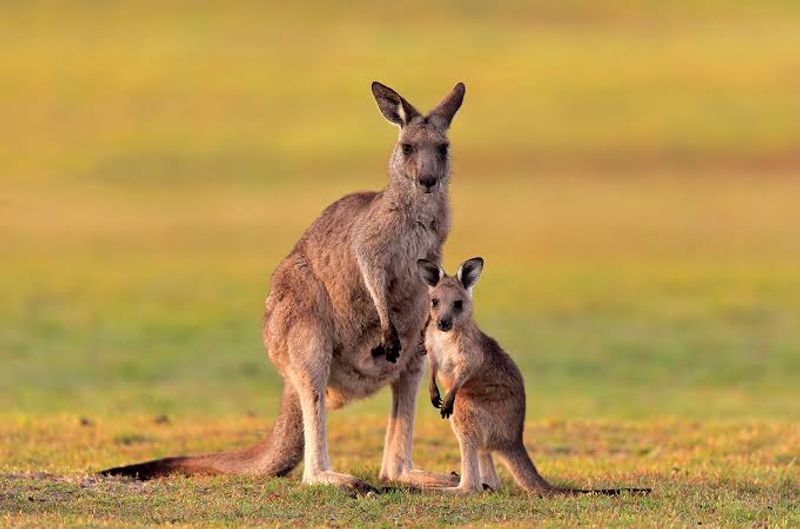
Kangaroo Island lives up to its name in every possible way. Located off the coast of South Australia, the island supports one of the country’s highest concentrations of native wildlife.
Kangaroos, koalas, wallabies, echidnas, sea lions, and little penguins all call it home, and together they far outnumber the island’s roughly 4,000 human residents.
Much of the island is protected as national park or conservation land, which means wildlife has priority over development. Seal Bay Conservation Park is famous for its Australian sea lion colony, where visitors can walk among animals that barely acknowledge human presence.
It is an extraordinary and humbling experience.
Devastating bushfires in 2019 and 2020 destroyed large parts of the island and killed or displaced an estimated three billion animals across Australia. Kangaroo Island has been slowly recovering, and wildlife numbers are gradually rebuilding.
Conservation efforts there have become a model for post-fire ecological recovery.
11. Monhegan Island, Maine, USA
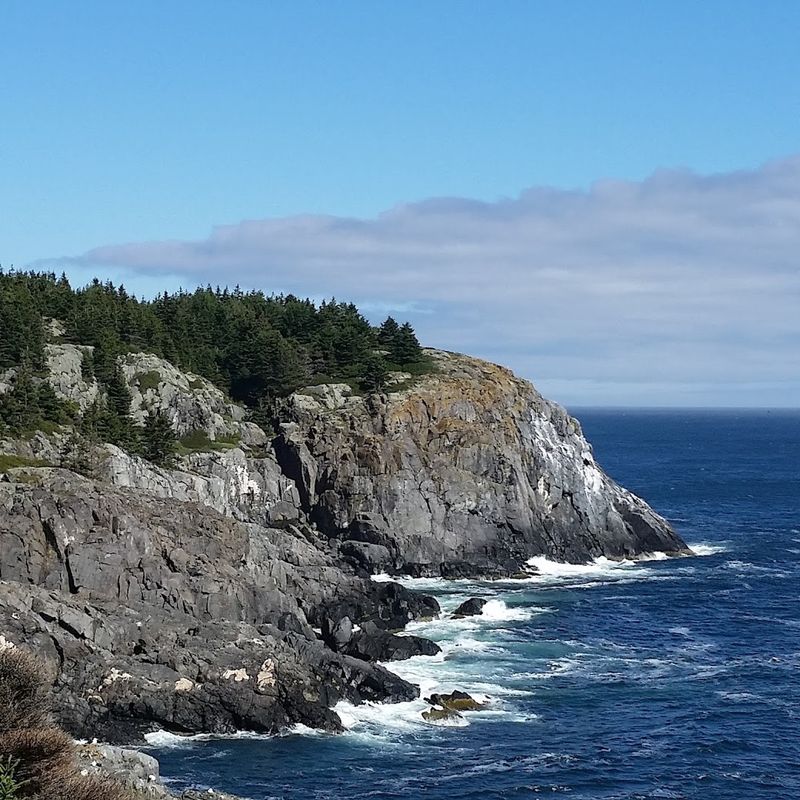
Monhegan Island sits about 18 kilometers off the coast of Maine, and it has long been a favorite destination for artists and birdwatchers alike. During the spring and fall migration seasons, the island becomes a temporary home for enormous numbers of warblers, shorebirds, and raptors.
The bird populations during peak migration can swell to tens of thousands, completely dwarfing the island’s year-round human population of fewer than 100 people.
The island has no cars, no chain restaurants, and no sprawling development. Life there moves at a slower pace, shaped largely by the rhythms of the sea and the seasons.
Lobster fishing is the main industry, and the community takes great pride in its independence and natural surroundings.
Birdwatchers travel from across the country to Monhegan during migration, hoping to spot rare species that occasionally land there after being blown off course. The island’s wild, windswept character makes every visit feel like a genuine escape.
12. Farne Islands, England
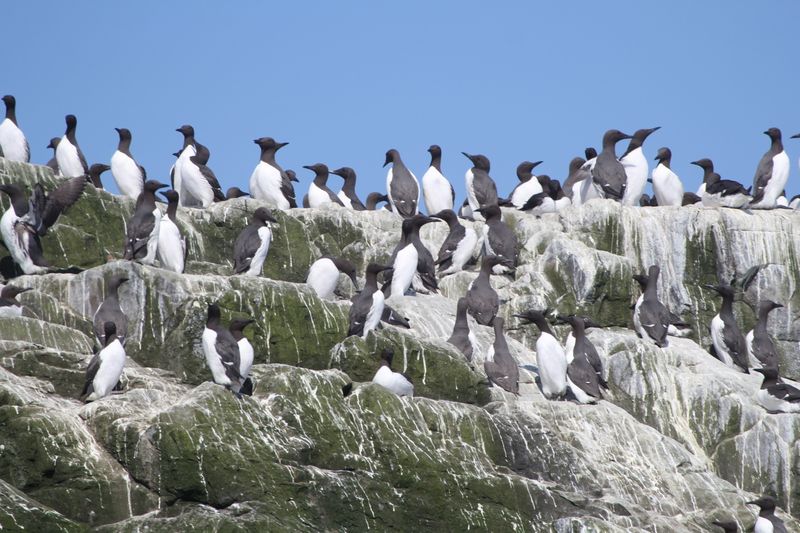
The Farne Islands, a group of small rocky islands off the Northumberland coast of England, are one of the UK’s most important wildlife sanctuaries. During the breeding season, over 100,000 pairs of seabirds nest there, including puffins, guillemots, razorbills, and Arctic terns.
The noise and activity during peak season is almost overwhelming in the best possible way.
Grey seals breed on the islands in large numbers, with the colony numbering in the thousands. No one permanently lives on the Farne Islands.
National Trust rangers stay there seasonally to monitor and protect the wildlife, making them the only human presence on these rocky outcrops.
Boat trips from the nearby town of Seahouses bring visitors close to the action without disturbing the animals. Puffins in particular are famously unbothered by humans, often waddling within arm’s reach.
The Farne Islands offer one of the most accessible wildlife encounters anywhere in Britain.
13. Galapagos Islands, Ecuador
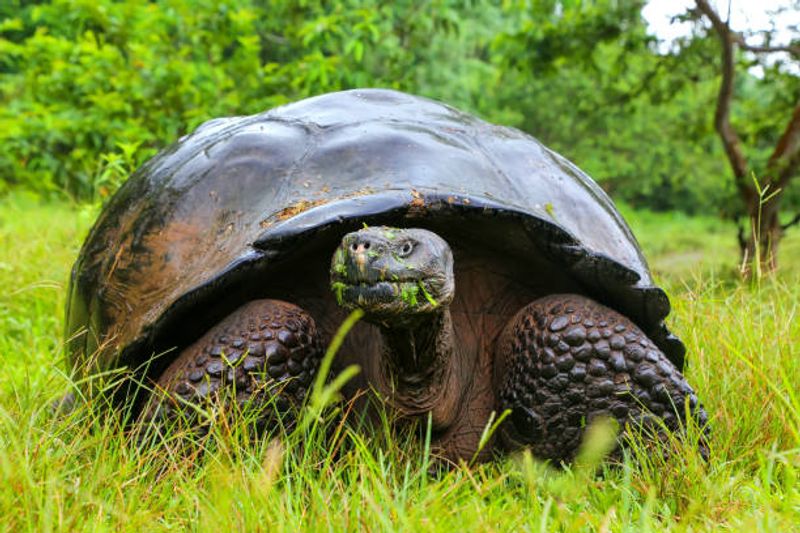
Few places on Earth have inspired as much scientific wonder as the Galapagos Islands. Located about 1,000 kilometers off the coast of Ecuador, this volcanic archipelago is home to species found nowhere else, including giant tortoises, marine iguanas, flightless cormorants, and blue-footed boobies.
The animals here famously show little fear of people, having evolved without natural land predators.
Around 33,000 people live on the inhabited islands, but they are vastly outnumbered by wildlife. Giant tortoise populations alone number in the tens of thousands across the islands, and sea lion colonies lounge on beaches and docks with total confidence.
Charles Darwin’s observations here in 1835 helped shape his theory of natural selection.
Tourism is carefully regulated to protect the fragile ecosystem. Visitors must travel with certified naturalist guides and stick to marked paths.
Despite the restrictions, the Galapagos delivers one of the most breathtaking wildlife encounters available to travelers anywhere in the world.
14. Isle of May, Scotland
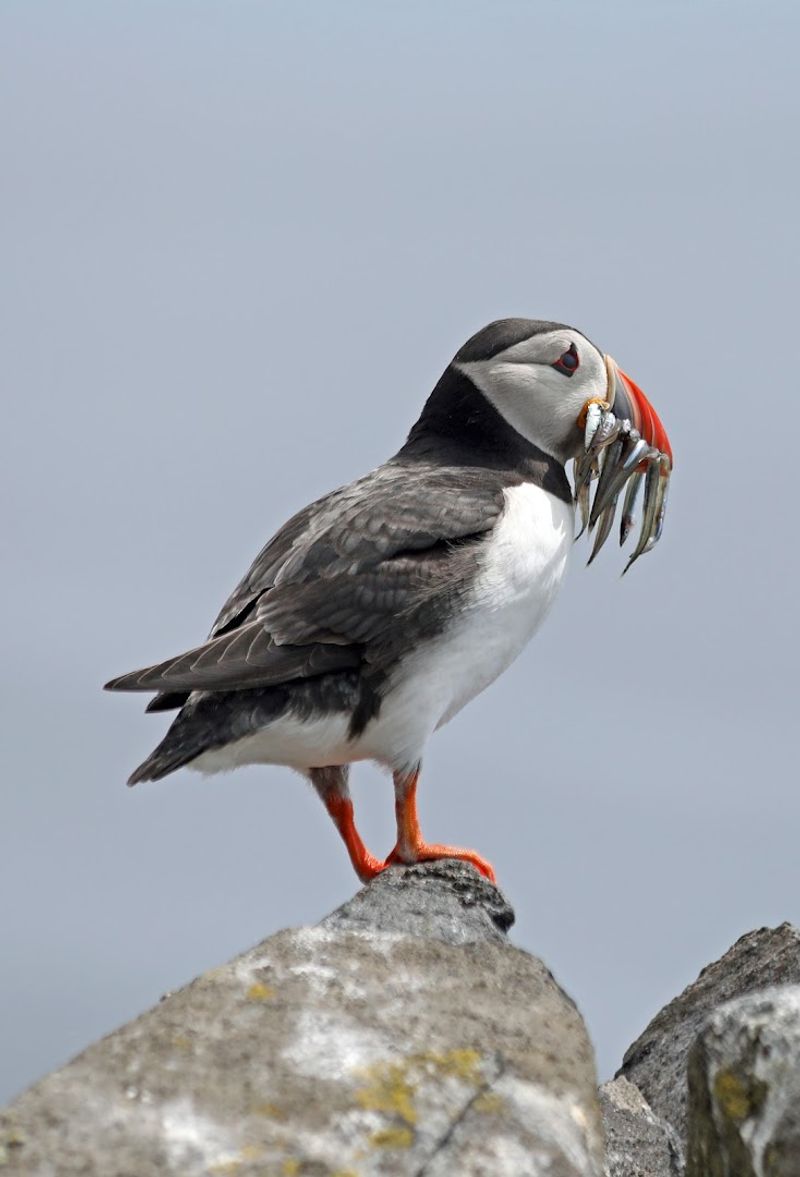
The Isle of May is a small, wind-battered island at the mouth of the Firth of Forth in Scotland, and every summer it becomes one of the most densely populated seabird colonies in the United Kingdom. Around 100,000 puffins breed there each year, along with razorbills, guillemots, shags, and kittiwakes.
The sheer volume of birds arriving in spring is genuinely breathtaking.
A small team of Scottish Natural Heritage wardens stays on the island seasonally to monitor the wildlife and carry out research. Outside of that, the island has no permanent human residents.
Grey seals also breed there in autumn, adding another layer of wildlife richness to an already remarkable place.
Day trips run from the nearby town of Anstruther during the summer months, giving visitors a rare chance to walk among puffins at close range. The Isle of May is proof that Scotland’s wild places can rival any nature destination in the world.
Share this story