Arkansas is nicknamed the Natural State for a reason, and nowhere is that more obvious than at its remarkable collection of natural springs. From the Ozark highlands to the Ouachita Mountains, the state is dotted with springs that have been drawing visitors for centuries, long before tourist brochures existed. Some of these springs produce millions of gallons of water every single hour, while others are quiet, tucked-away spots that reward curious travelers who bother to leave the main road. A few have shaped entire towns, inspired legends about healing powers, and even powered old grist mills and hydroelectric plants.
Whether you are planning a full road trip or just looking for a peaceful detour on a weekend drive, Arkansas has a spring worth stopping for. This list covers eleven of the best, from the nationally recognized to the wonderfully obscure, so read on to find your next favorite natural stop in the Natural State.
1. Mammoth Spring State Park, Mammoth Spring, Arkansas
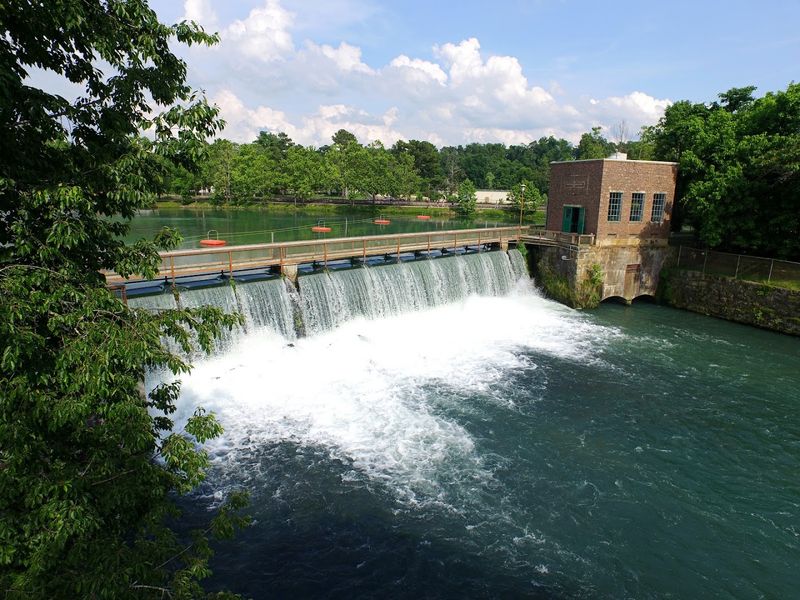
Few natural springs on the planet can match the sheer output of Mammoth Spring, which pumps an average of 9.78 million gallons of 58-degree water to the surface every single hour.
That staggering flow fills a 10-acre spring pool before feeding the Spring River, a popular destination for trout fishing and float trips throughout the year.
The Osage people recognized this place long before European settlers arrived, and early homesteaders called it “Head of the River” for obvious reasons.
A historic dam once powered both a milling operation and, later, a full hydroelectric plant that ran until 1972.
Today the park preserves a beautifully restored 1886 Frisco railroad depot complete with a caboose, exhibits, and a Welcome Center that explains the area’s layered history.
Walking trails circle Spring Lake and cross the old dam, and seasonal pedal boats let visitors enjoy the water at a slower pace.
The adjacent Federal Fish Hatchery adds an educational bonus to any visit.
2. Blanchard Springs, Fifty-Six, Arkansas
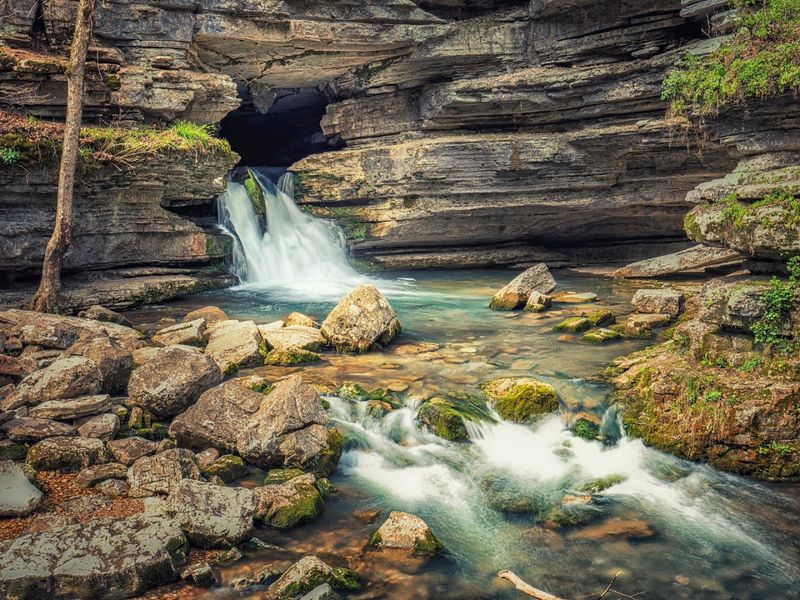
Blanchard Springs earned a major milestone in December 2025 when it was officially designated as Arkansas’s newest state park, giving this long-beloved Ozark treasure the recognition it deserves.
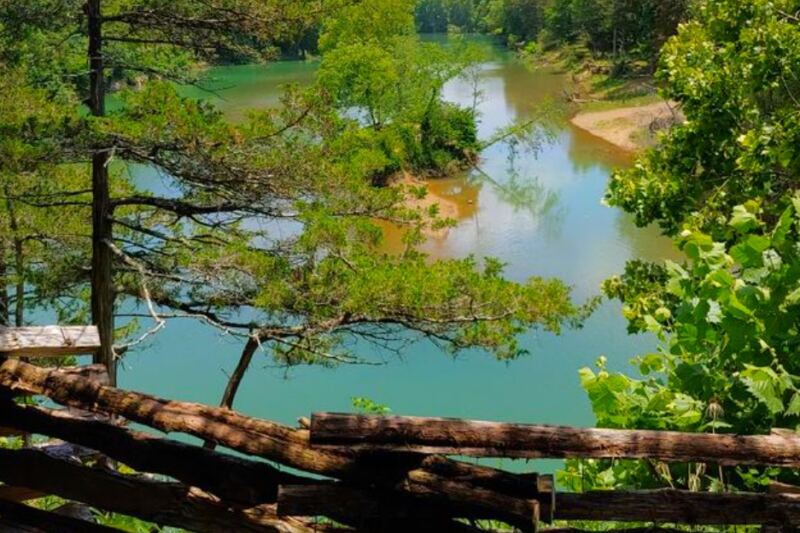
The spring bursts from the mountainside and feeds Blanchard Creek, which eventually forms Mirror Lake, a body of water so vividly turquoise that first-time visitors often stop mid-sentence to stare.
That distinctive color comes from mineral deposits in the water, and the lake is stocked with rainbow trout, so anglers have plenty of reasons to linger.
A boardwalk and staircase built near a 1930s Civilian Conservation Corps dam provide easy access to the lakeside.
The area is equally famous for Blanchard Springs Caverns, a living cave system where guided tours range from an accessible half-mile Dripstone Trail to a strenuous 1.2-mile Discovery Trail that descends 366 feet underground.
Hiking trails, campgrounds, picnic areas, and swimming in North Sylamore Creek round out one of Arkansas’s most complete outdoor destinations.
3. Blue Spring Heritage Center, Eureka Springs, Arkansas
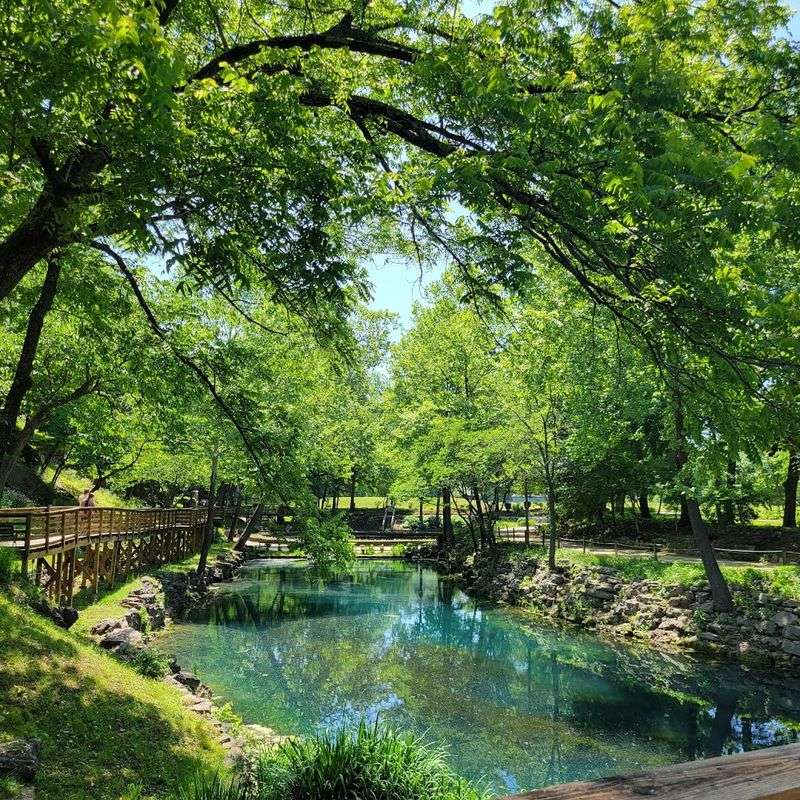
Ten thousand years of human history flow through Blue Spring Heritage Center, where an archaeological bluff shelter listed on the National Register of Historic Places sits just steps from one of Arkansas’s largest natural springs.
The spring releases 38 million gallons of 54-degree water daily into a lagoon that appears almost impossibly blue, a color produced by dissolved limestone and the reflection of the open sky above.
Cherokee, Osage, and Quapaw peoples considered this spring sacred ground, using it as a trading post and ceremonial site for millennia, and the Blue Spring later served as a stopping point during the Trail of Tears.
Visitors today can walk through themed gardens including the Woodland Garden and Medicine Wheel Garden, feed trout in the lagoon, and tour a Visitor Center stocked with artifacts and photographs.
The remains of a mid-1800s corn mill, including its original turbine, are still visible on the grounds.
The Heritage Center is generally open daily from mid-March through November.
4. Magnetic Spring, Eureka Springs, Arkansas
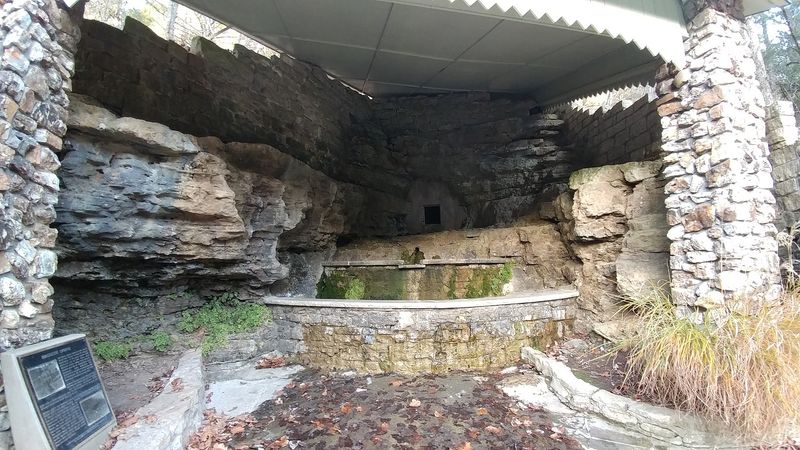
Back in the Victorian era, Magnetic Spring had people convinced that its water could magnetize metal objects and cure everything from physical weakness to addiction, which explains why it became the social heartbeat of early Eureka Springs.
General Powell Clayton and the Eureka Springs Improvement Company originally owned the spring before deeding it to the city in 1911, after workmen had already hand-dug 38 feet into the mountainside to reach the main water source.
A large wooden pavilion once stood over the original opening, later replaced by a wood and stone shelter that still stands today.
The Tourist Social Hour Club met regularly at Magnetic Spring from 1885 to 1935, making it one of the longest-running community gathering spots in the city’s history.
Early 1900s newspapers credited the spring with drawing more visitors to Eureka Springs than any other single attraction, and the water even served as an original source for Ozarka bottled water.
Today it connects to The Great Passion Play’s trail system and remains a quiet, accessible retreat with picnic tables and parking nearby.
5. Big Spring Park, Cotter, Arkansas
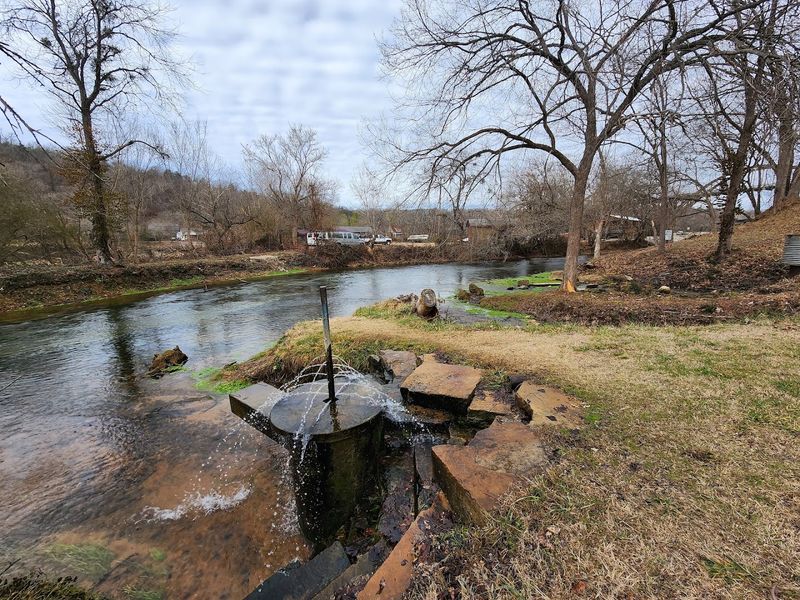
Cotter calls itself the Trout Fishing Capital of the World, and Big Spring Park is the perfect starting point for understanding exactly why that claim holds up.
Established in 1904, the park centers on a spring that pushes cool, clear water at 50 to 60 degrees Fahrenheit into a pool before it merges with the White River, where rainbow, brown, brook, and cutthroat trout are all fair game for anglers.
A rope swing at the swimming hole adds a fun, old-fashioned touch that families with kids tend to appreciate immediately.
The park spans five acres and includes riverside picnic cabanas, a playground, a concrete bicycle loop, and a four-mile walking and biking trail.
History runs deep here too. The Trail of Tears crossed the White River at this very location, and the Anglin-Tinnon Railroad Workers’ Memorial within the park honors Cotter’s railroad past with two real cabooses and a conductor’s statue.
The historic Cotter Bridge, the largest Marsh Rainbow Arch Bridge still in existence, is visible right from the park grounds.
6. Hot Springs National Park, Hot Springs, Arkansas
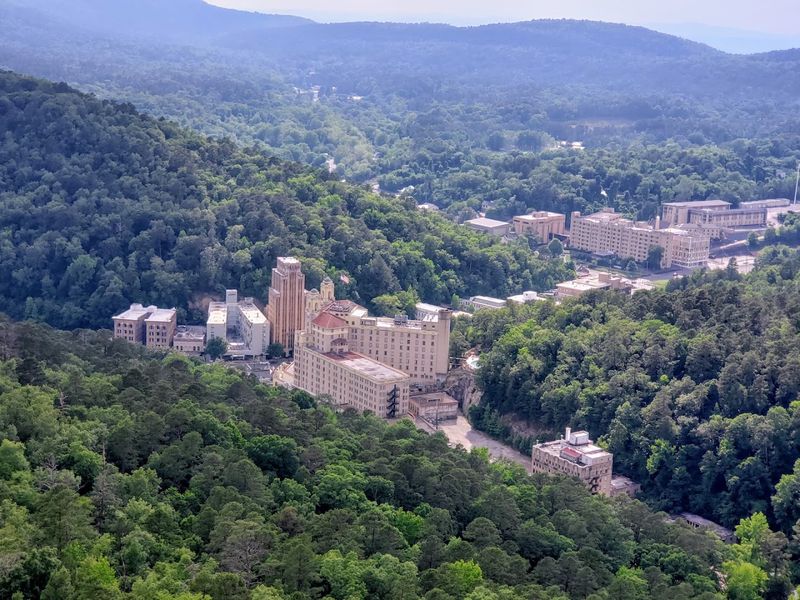
America’s oldest federally protected land, Hot Springs National Park was set aside as a federal reservation in 1832, nearly 40 years before Yellowstone got the same treatment.
The 47 thermal springs flowing from Hot Springs Mountain collectively produce close to 700,000 gallons of 143-degree water every day, and visitors can touch that water at designated public fountains scattered throughout the park.
Bathhouse Row is the park’s architectural crown, featuring eight preserved bathhouses where the tradition of “taking the waters” was practiced for over a century.
The Buckstaff Bathhouse and Quapaw Baths and Spa still operate as functioning spas today, while the Fordyce Bathhouse offers free self-guided tours through its ornate, museum-quality interior.
Native Americans used these springs long before European explorers arrived, drawn by the same geothermal phenomenon that continues to fascinate visitors today.
Hiking trails on Hot Springs Mountain and North Mountain provide scenic views of the Ouachita Mountains, and the Grand Promenade brick walkway above Bathhouse Row makes for a relaxed afternoon stroll.
7. Spring Park, Heber Springs, Arkansas
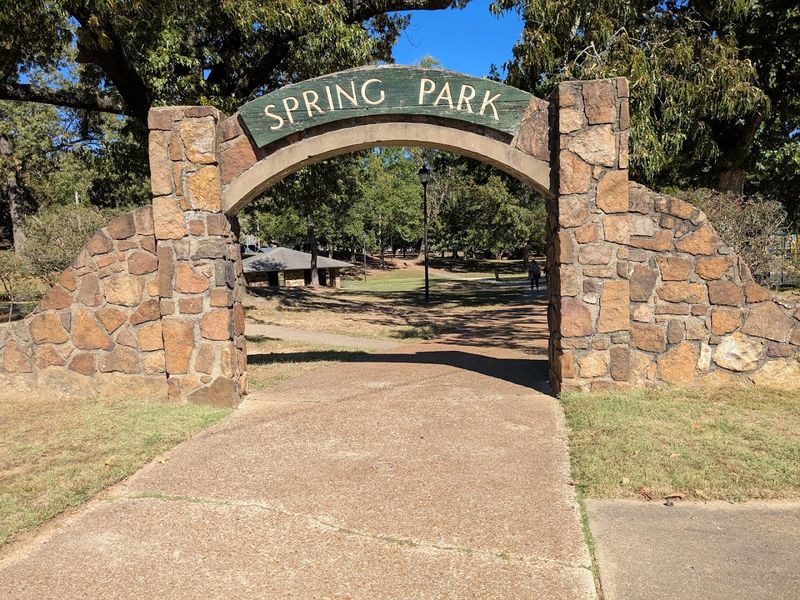
Heber Springs did not pick its name randomly. The town was literally built around the natural springs that bubble up through Spring Park, and for generations those waters were considered a legitimate health destination worth traveling miles to reach.
Originally known as Sugar Loaf Spring, the site drew visitors who believed in the medicinal value of “taking the waters,” a practice that turned small spring towns across the country into thriving resorts during the 1800s.
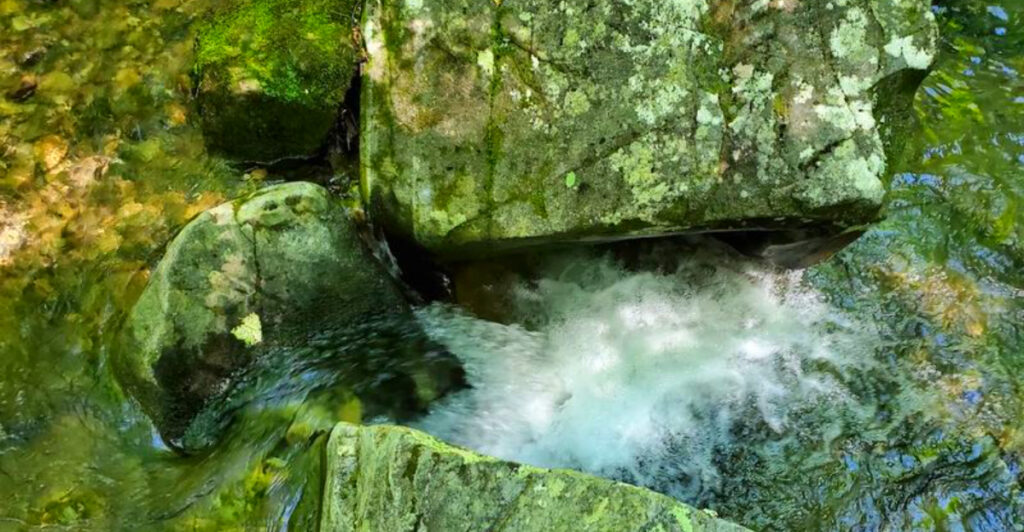
Today the park features multiple natural springs, small cascading waterfalls, and interesting rock formations that give the grounds a character you would not expect from a downtown city park.
Colorful landscaping, shaded benches, and decorative fountains make it easy to spend a slow hour just wandering the paths without any particular agenda.
Families often use Spring Park as a relaxed warm-up before heading to Greers Ferry Lake for boating and water sports, or to the Little Red River, which is internationally recognized for its outstanding trout fishing.
Local events and outdoor concerts occasionally bring the park to life with extra energy.
8. Withrow Springs State Park, Huntsville, Arkansas
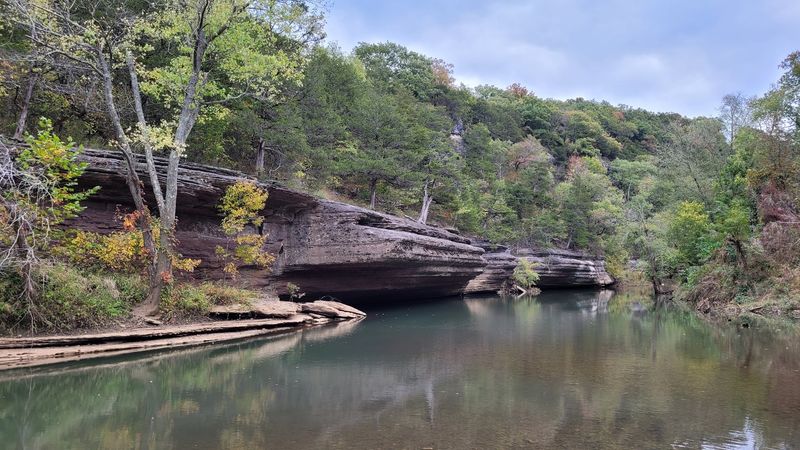
Named for Richard Withrow, an early settler and miller who put down roots in this Ozark valley long before it became a state park, Withrow Springs has a personality that feels genuinely earned rather than manufactured for tourists.
The park’s natural spring flows directly into War Eagle Creek, and that creek becomes the organizing feature of the entire outdoor experience, drawing hikers, canoeists, and anglers in equal measure.
Four miles of trails range from flat and easy to steep and rewarding, covering enough terrain to keep dedicated hikers busy for a full day.
Campers have multiple site options for overnight stays, and the park’s swimming pool provides a welcome cool-down after a long afternoon on the trails.
Wildlife observation is a quiet but consistent draw here, with the spring-fed landscape creating habitat conditions that support a solid variety of species throughout the year.
Picnic areas and a group pavilion make it practical for family gatherings, and the park’s location near Huntsville gives it easy access to northwest Arkansas without the crowds of more popular destinations.
9. Three Sisters Springs, Jessieville, Arkansas
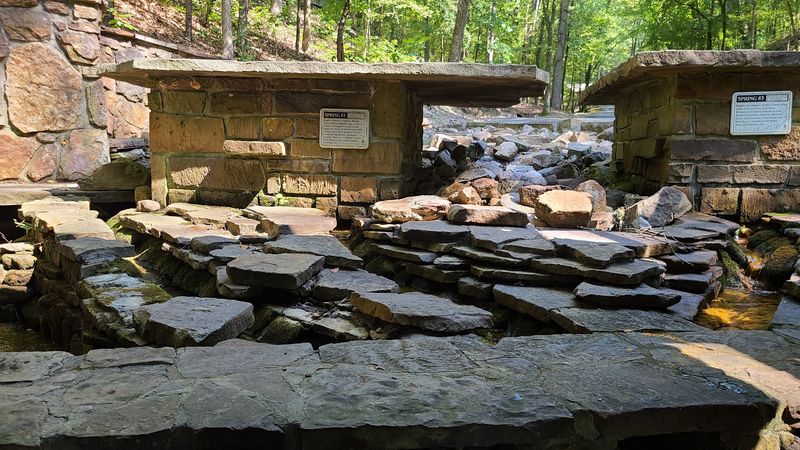
There is something particularly satisfying about finding a place that has not been over-promoted, and Three Sisters Springs near Jessieville delivers exactly that kind of quiet reward.
Tucked into the Ouachita Mountains, this cluster of three natural springs sits within a dense forest setting where the clearest water you have seen all day simply appears from the hillside without fanfare or signage demanding your attention.
Photographers specifically seek out this location for its unpretentious natural composition, where the springs, the surrounding trees, and the undisturbed ground cover create a scene that requires no filters or creative angles to look compelling.
The springs feed into nearby streams, playing a real role in the local ecosystem rather than just serving as a backdrop for visitors.
Travelers exploring Ouachita National Forest backroads often add Three Sisters Springs to their route as a spontaneous detour that turns into a genuine highlight of the trip.
There are no elaborate facilities here, which is precisely the point. The experience is about the water, the forest, and the rare pleasure of standing somewhere that most people simply drive past.
10. Wautauga Spring, Ravenden, Arkansas
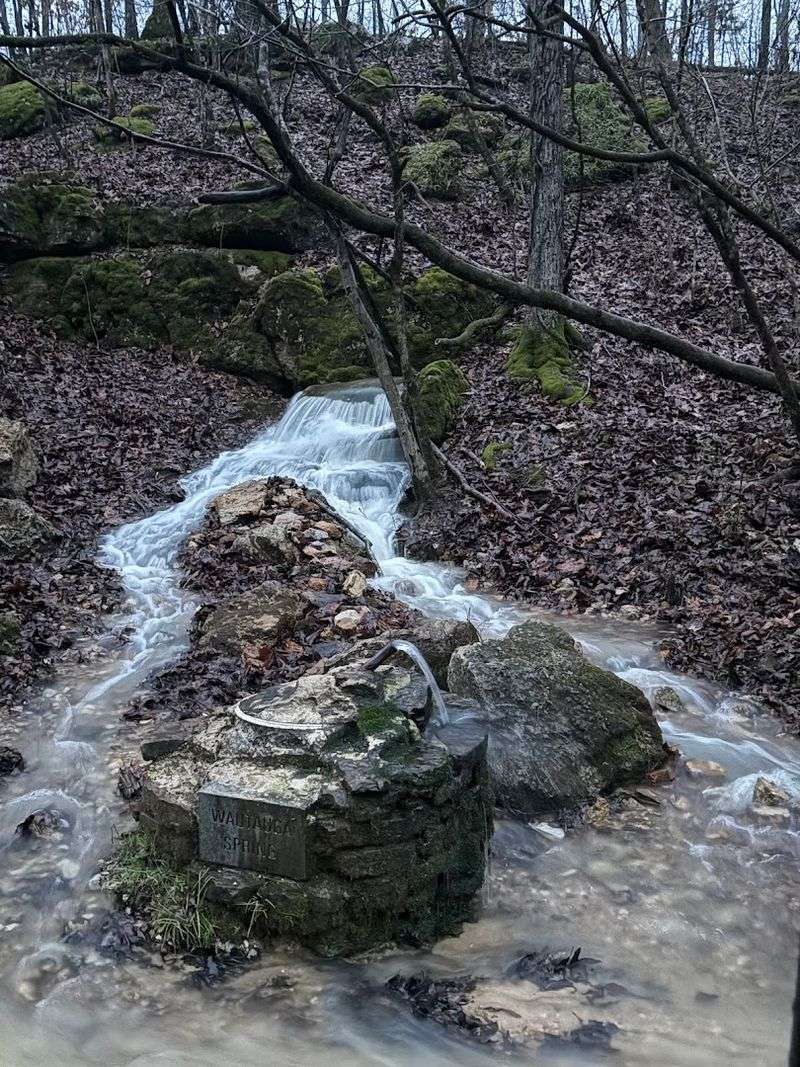
Not every great spring needs a national designation or a visitor center to justify the drive, and Wautauga Spring in Ravenden makes that case with quiet confidence.
Generations of local families have made their way to this rural northeastern Arkansas spot to collect cool, clear water from a spring that has been flowing reliably long before anyone thought to put it on a map.
The setting is genuinely rural, meaning the surrounding landscape is open, unhurried, and free from the commercial trappings that can dilute a natural experience elsewhere.
Wautauga Spring contributes to the local water system and supports the plant and animal life that depends on consistent, clean water sources in this part of the state.
For travelers who measure the quality of a stop by how uncrowded and authentic it feels, this spring checks both boxes without trying too hard.
It is the kind of place you mention to a friend by saying “you probably have not heard of it” and then watch their interest sharpen immediately.
11. Collier Spring, Norman, Arkansas
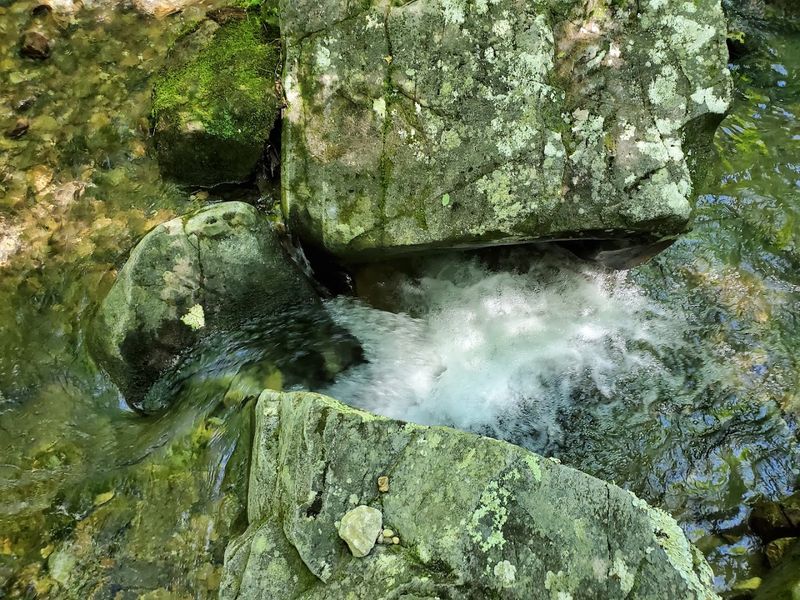
Western Arkansas does not always get the attention it deserves on natural spring itineraries, but Collier Spring near Norman makes a compelling argument for reconsidering that oversight.
Positioned close to the Ouachita National Forest, this modest spring sits within a woodland setting where the surrounding canopy and forest floor greenery create a backdrop that feels genuinely immersive without requiring any effort from the visitor.
The water is clear, the setting is quiet, and the crowds are essentially nonexistent, which puts Collier Spring firmly in the category of places that reward travelers who prefer quality over popularity.
Short walks through the surrounding forest make the visit feel active without being demanding, and the spring provides a natural focal point that gives the stop a clear purpose beyond just passing through.
Collier Spring feeds into the broader Ouachita Mountain ecosystem, contributing to the watershed that supports diverse plant and animal communities across this part of the state.
For anyone piecing together a scenic western Arkansas driving route, this spring makes for a genuinely satisfying final stop before heading back toward the highway.
Share this story