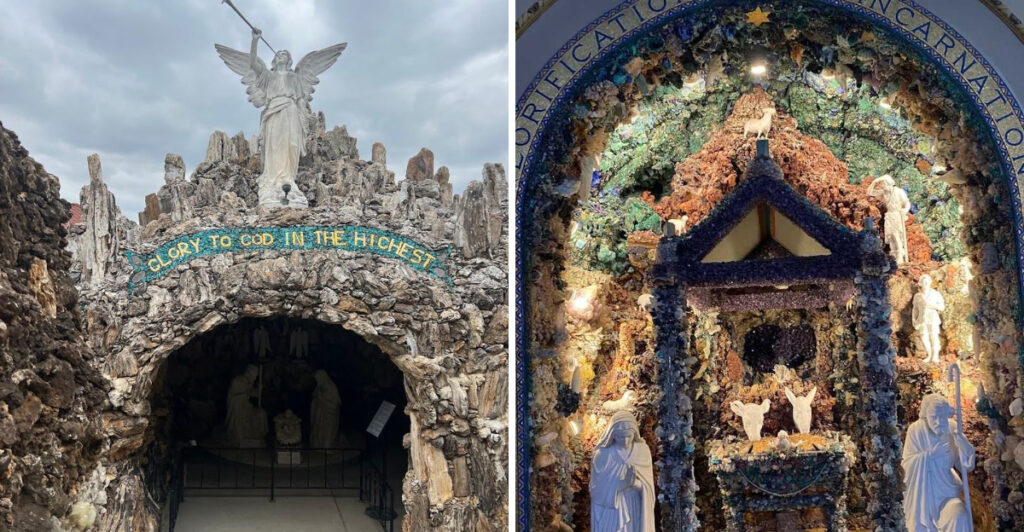
Somewhere in the rolling farmland of northwest Iowa, there is a structure so extraordinary that people drive hours just to stand in front of it and catch their breath. Built almost entirely by one man over several decades, it is covered in precious gems, petrified wood, seashells, and stones gathered from every corner of the world.
No photograph fully captures what it feels like to walk through it. The Shrine of the Grotto of the Redemption in West Bend, Iowa is officially recognized as the world’s largest man-made grotto, and once you see it up close, that title makes complete sense.
The Visionary Behind the Grotto
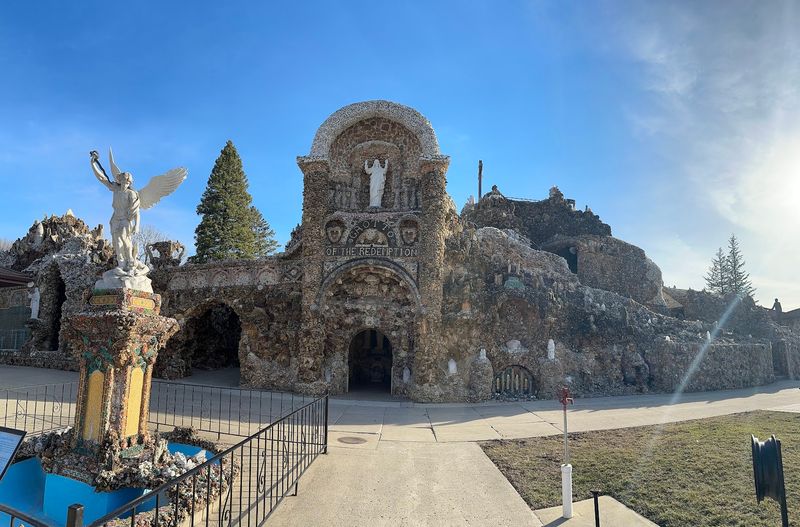
Father Paul Dobberstein began building the Grotto of the Redemption in West Bend, Iowa after recovering from a serious illness, fulfilling a promise he had made to the Virgin Mary during his recovery. What started as a personal act of devotion eventually grew into a massive, lifelong project that consumed nearly his entire adult life.
He spent winters traveling and collecting precious stones, minerals, and gems from around the world, carefully selecting each piece for its color, texture, and spiritual meaning. He had a trained eye for geology and an artist’s sense of composition.
Father Dobberstein worked on the grotto from 1912 until his passing in 1954, building nine separate grottos across the property. His dedication to the project never wavered.
The result is something that feels less like a construction project and more like a calling answered in stone.
Where the Grotto Stands Today
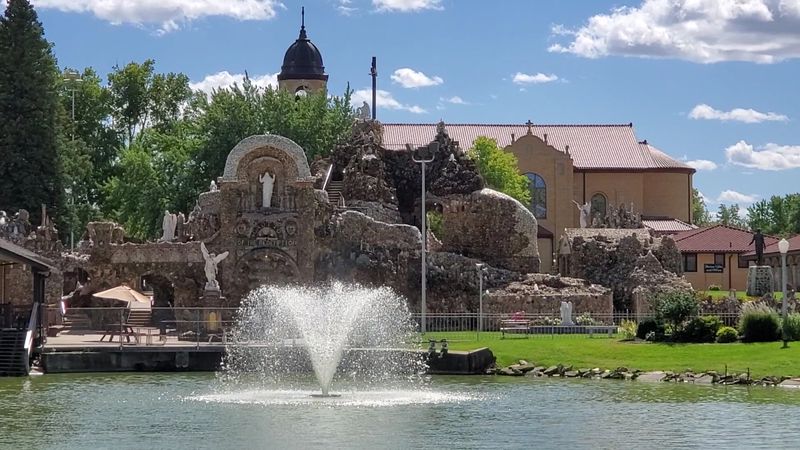
The Shrine of the Grotto of the Redemption is located at 208 1st Ave NW, West Bend, Iowa 50597, in the United States. The site sits right in the heart of a small, quiet town that most travelers would otherwise pass without a second glance.
The grounds include the main grotto complex, a beautiful church, a museum, a gift shop, and a campground. Everything is organized in a way that feels welcoming and accessible, whether you are visiting for spiritual reasons or simply out of curiosity.
Admission operates on a free-will donation basis, which means anyone can walk through and experience it without a set ticket price. The grotto itself is open around the clock, every day of the year.
That kind of open-door generosity says a great deal about the spirit behind the place.
A Record That Actually Holds Up
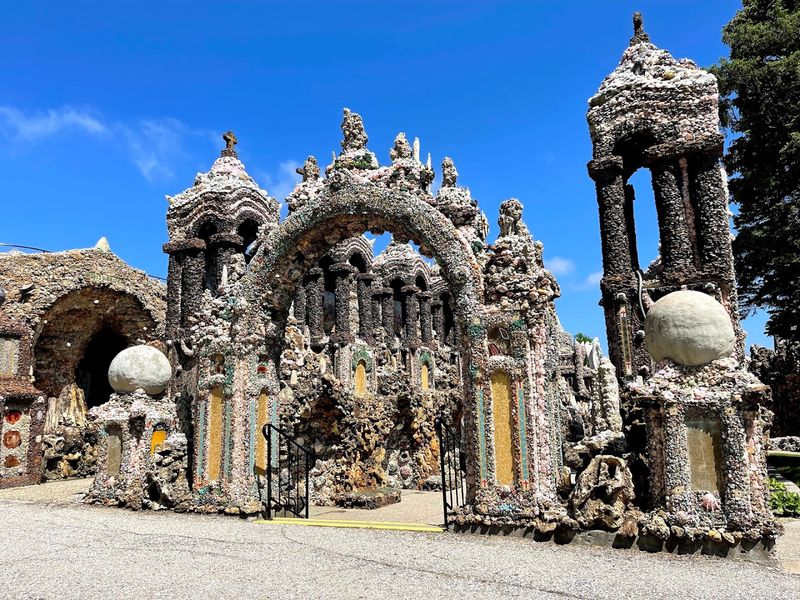
The title of world’s largest man-made grotto is not just a local boast. The Grotto of the Redemption genuinely holds that distinction, and the scale of it becomes clear the moment you step in front of the structure for the first time.
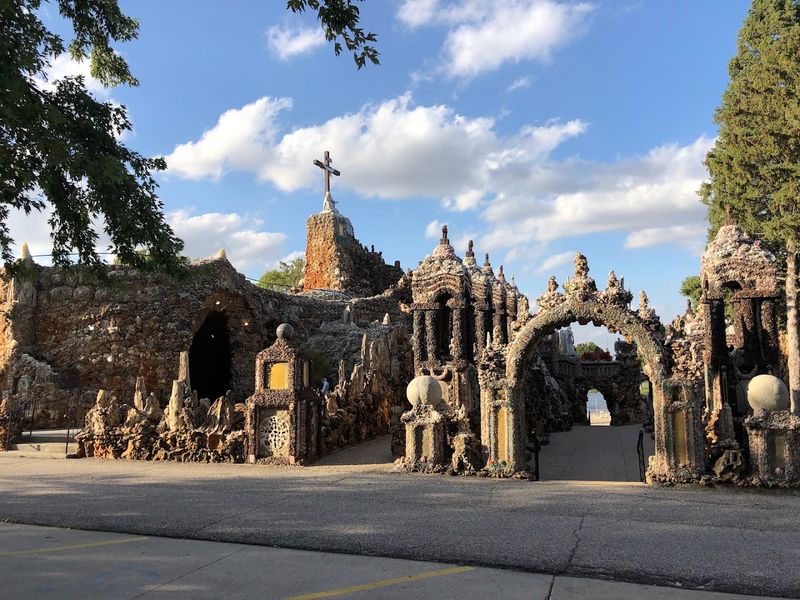
The complex contains nine separate grottos, each one depicting a different scene from the life of Jesus Christ. Together, they form a complete narrative told entirely through stone, mineral, and sculpture.
The sheer square footage of the structure, combined with the density of materials embedded in every surface, puts it in a category entirely its own.
Geologists have estimated that the mineral collection embedded in the grotto represents the largest collection of precious stones in one location in the world. That claim adds another layer to the experience.
You are not just looking at religious art. You are standing next to one of the most concentrated mineral displays on the planet.
The Nine Grottos and What They Represent
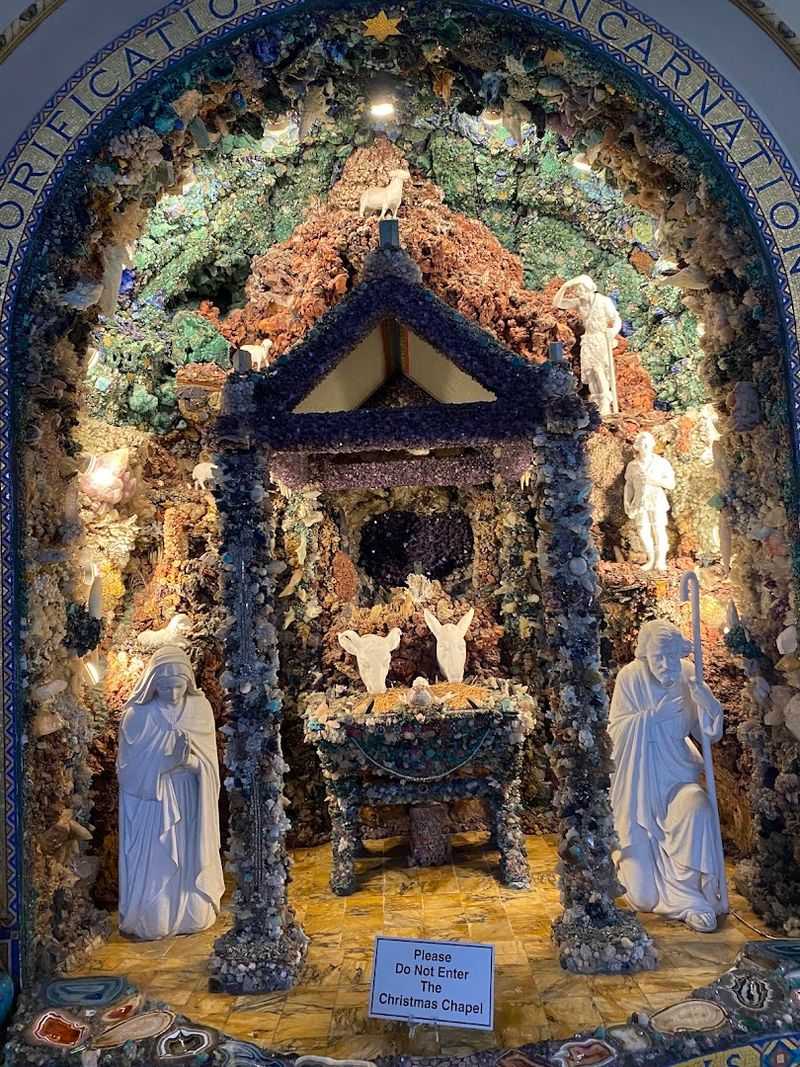
Each of the nine grottos on the property tells a specific chapter of the Christian story of redemption, from the fall of mankind in the Garden of Eden all the way through the resurrection. Walking through them in order feels like moving through a physical storybook.
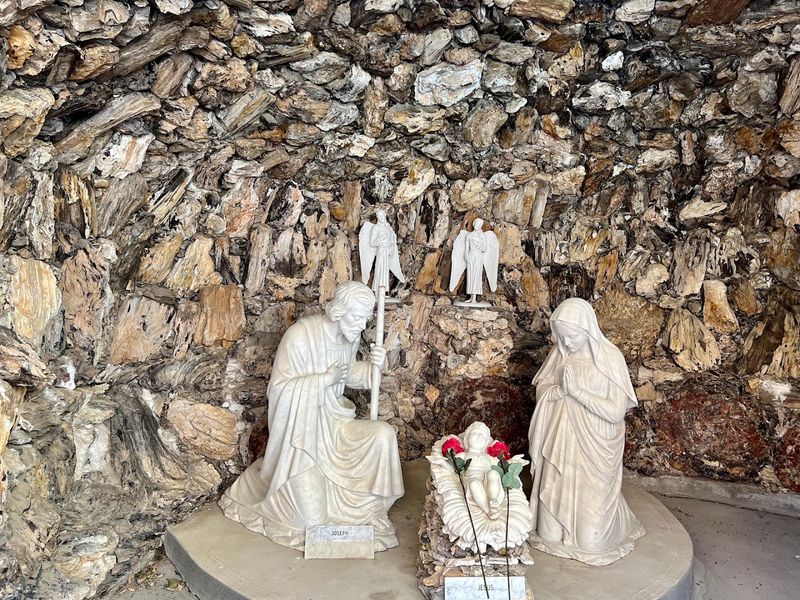
The Nativity scene, the Stations of the Cross, and the portrayal of Jesus in Mary’s arms are among the most visually striking sections. Every figure and every backdrop is surrounded by thousands of carefully placed stones that shift in color and texture with the changing light throughout the day.
What makes the arrangement so effective is that Father Dobberstein did not just stack rocks. He thought about how each mineral’s color and pattern would enhance the emotional tone of the scene it surrounded.
The result is storytelling through geology, and it works in a way that surprises nearly every visitor who walks through.
Stones and Gems From Around the World
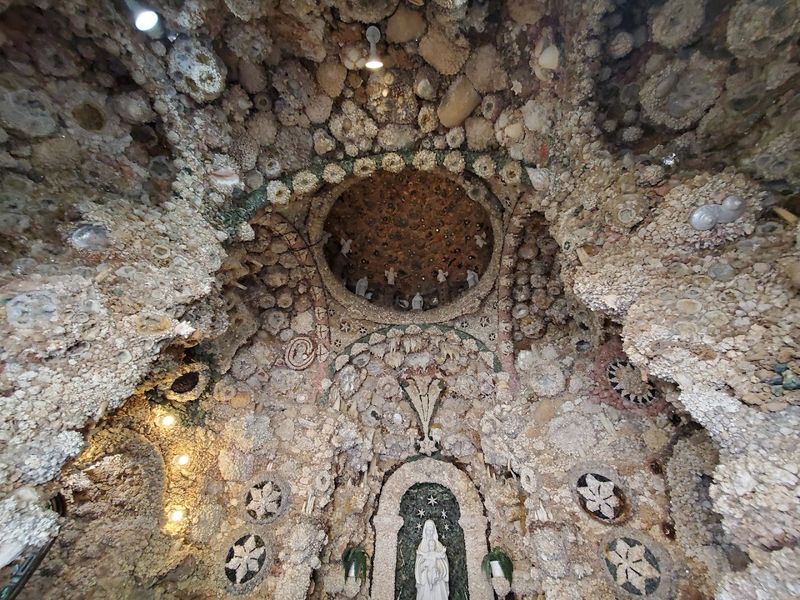
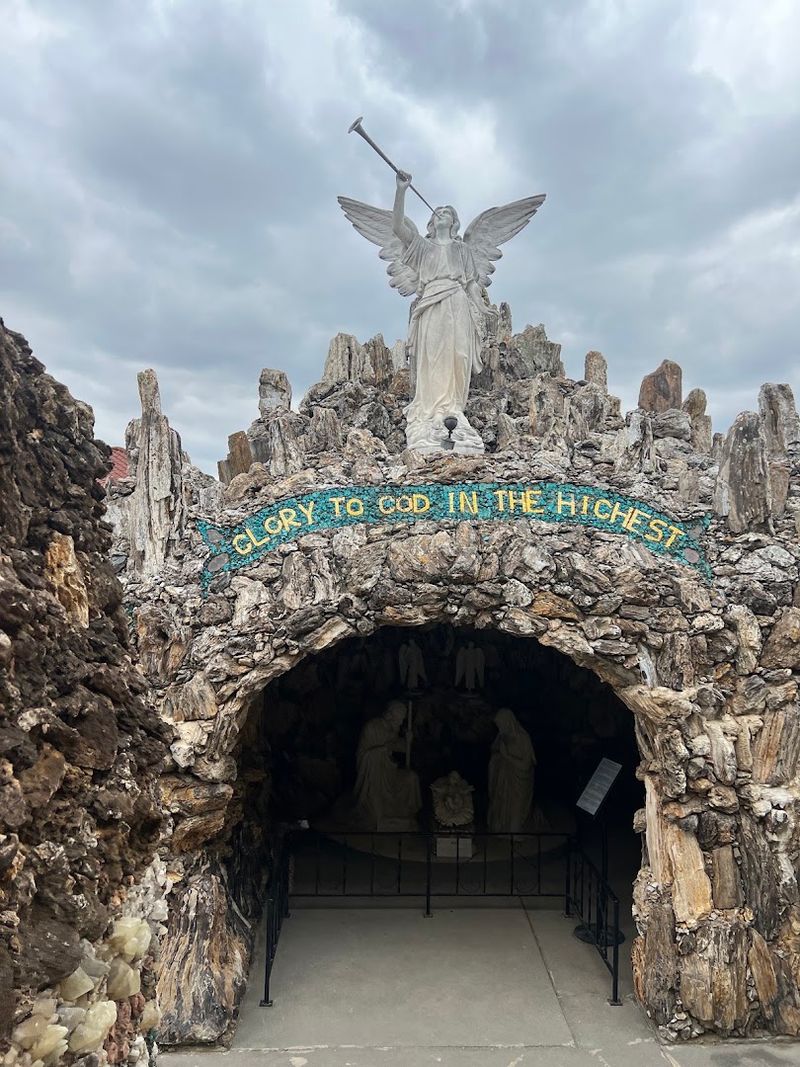
Father Dobberstein spent decades gathering materials from across the United States and beyond, and the variety of what ended up in the grotto walls is genuinely staggering. Petrified wood, stalactites, stalagmites, coral, quartz, amethyst, azurite, malachite, and countless other minerals appear throughout the structure.
Many visitors who have some background in geology or mineralogy find themselves stopping constantly, recognizing specimens they have only ever seen in textbooks. Others simply stand and stare at the colors, which range from deep purple and electric blue to warm amber and snow white.
The museum on the property includes a large display identifying many of the rocks and minerals used throughout the grotto. Spending time in the museum before or after walking the grounds adds a lot of context to what you are seeing.
Once you know what you are looking at, the walls become even more impressive than they already are.
Visiting During Daylight Versus After Dark
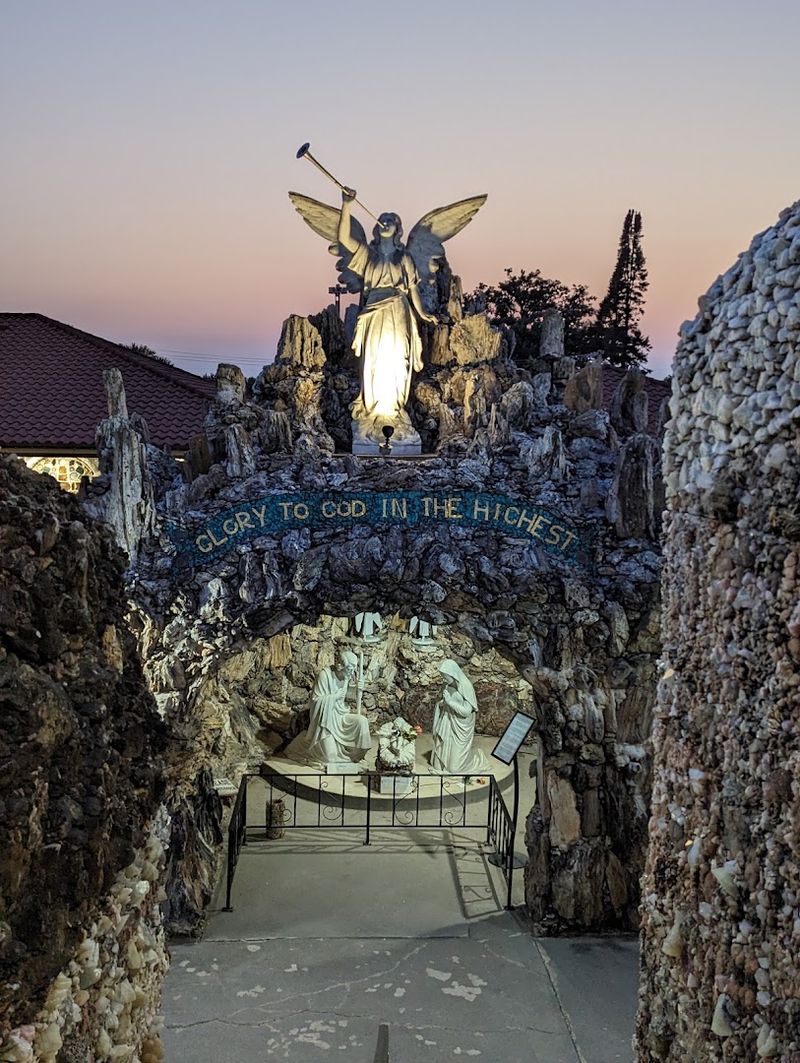
One of the most talked-about aspects of visiting the grotto is how dramatically different it looks depending on the time of day. During daylight hours, natural sunlight catches the minerals and gems embedded in the walls, creating flashes of color and sparkle that shift as you move around the structure.
After dark, the grotto is lit with artificial lighting that highlights specific features and casts deep shadows across the stone surfaces. The effect is atmospheric and quietly dramatic.
Some visitors who come during the day return the same evening specifically to see the difference.
The grotto is open around the clock, which makes a nighttime visit entirely possible without any special arrangements. If your schedule allows for it, arriving in the late afternoon and staying through sunset gives you both experiences in a single visit.
The transition from natural to artificial light is a moment worth waiting for.
The Church That Stands Alongside the Grotto
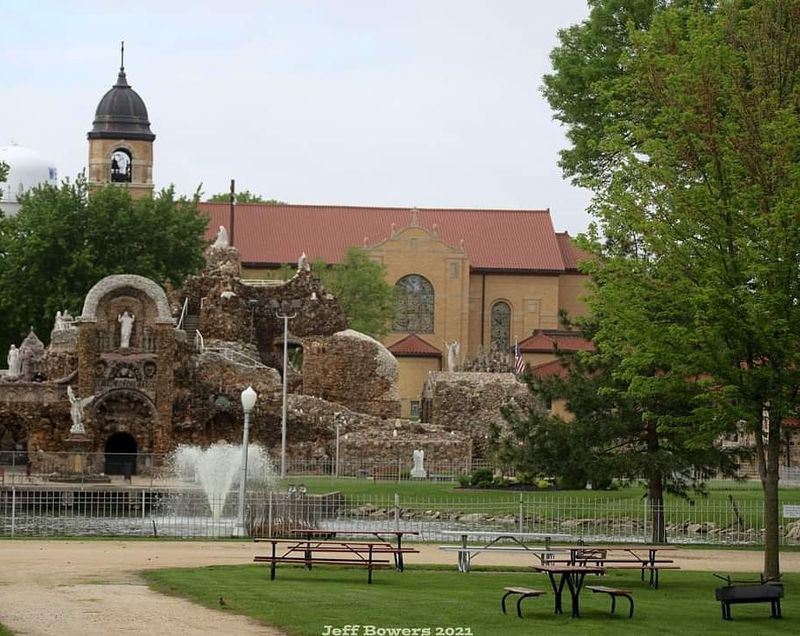
Many visitors focus entirely on the outdoor grotto and overlook the church that stands right beside it, which would be a genuine missed opportunity. The church is a beautiful example of traditional Catholic architecture, and it houses its own interior grotto that extends the experience from outdoors to inside.
On a sunny day, the stained glass windows fill the sanctuary with rich, layered color that falls across the pews and stone floors. The effect is quiet and genuinely moving, even for visitors who do not have a religious background.
Several people have mentioned that the church alone would justify the trip.
Taking a few minutes to sit inside the church after walking the outdoor grottos gives the visit a natural pause point. The contrast between the dense, complex stonework outside and the open, light-filled interior of the church creates a rhythm to the experience that feels intentional and well-considered.
Free Guided Tours and What You Learn on Them
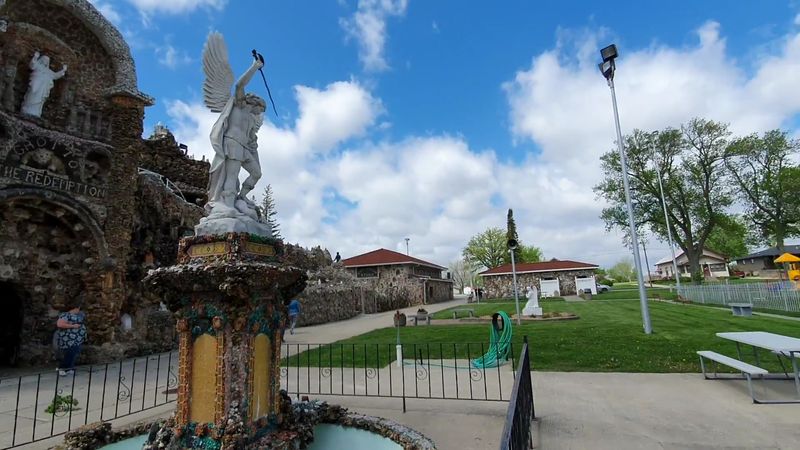
Free guided tours are offered at the grotto, typically at the top of the hour on weekends, and they run approximately 45 minutes. Taking the tour rather than walking through on your own changes the experience significantly.
Guides explain the history behind each grotto section, identify specific stones and minerals, and share details about Father Dobberstein’s process that you would never piece together on your own.
The tours move at a comfortable pace and are designed to be accessible for all ages. Children tend to stay engaged because there is always something visually interesting to focus on at every stop.
One detail that often surprises tour visitors is learning just how methodical Father Dobberstein was about sourcing his materials. He kept detailed records of where each stone came from and why he chose it for a particular location.
That level of intentionality shows up everywhere once you know to look for it.
Grotto Gary and the Living Legacy of the Shrine
One of the most memorable parts of a visit to the grotto is the chance to meet the man known as Grotto Gary, the longtime caretaker who has dedicated his life to maintaining and repairing the structure. He began helping with the grotto as a young child, and he has remained connected to it ever since.
Grotto Gary brings an irreplaceable human dimension to the place. He has hands-on knowledge of the materials, the construction techniques, and the history that no book or tour guide can fully replicate.
Visitors who take the time to talk with him often describe the conversation as one of the highlights of their entire trip.
He has even been known to let visitors place a stone into the grotto wall themselves, which turns a sightseeing visit into something far more personal. That kind of connection to a living tradition is rare, and it makes the grotto feel alive rather than preserved.
The Museum and What It Adds to the Visit
The on-site museum provides context that genuinely deepens the experience of walking through the grotto. Large displays identify the rocks and minerals used throughout the structure, with labels and descriptions that help visitors understand what they are looking at and where the materials originated.
The museum also covers the history of the grotto’s construction, including information about Father Dobberstein and the later contributions of Father Louis Greving, who continued the work after Dobberstein’s passing. Seeing photographs and artifacts from the construction period makes the scale of the undertaking feel even more remarkable.
Spending time in the museum before touring the grounds is a solid strategy. You walk into the grotto with enough background knowledge to notice details you might otherwise miss entirely.
The combination of the museum, the outdoor grottos, and the church creates a visit that is layered and genuinely satisfying rather than a quick walk-through.
Rocking the Grotto and the Annual Summer Event
Every June, the grotto hosts an annual community event known as Rocking the Grotto, which draws visitors from across the region. The event combines live entertainment, food, silent and live auctions, and a general celebration of the grotto and the community that has supported it for over a century.
The food at this event has developed a devoted following of its own. The Knights of Columbus cook hamburgers and steak sandwiches on-site, and the homemade pies served by local women have become something of a legend among regular attendees.
The slices are generously sized and come with ice cream.
The event raises money for the ongoing maintenance of the grotto and the church. Attending during Rocking the Grotto adds a social and cultural layer to the visit that you cannot get during a standard day trip.
If your travel dates happen to align with June, it is worth planning around.
Planning Your Visit and What to Expect
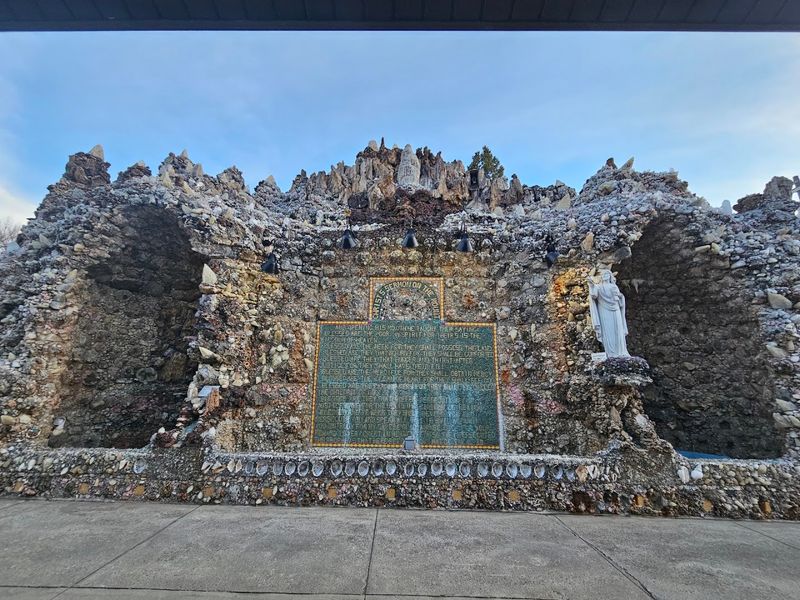
The grotto is open every day of the year, around the clock, with no set admission fee. A free-will donation is welcomed and goes directly toward maintaining the site.
The gift shop carries a range of souvenirs, including stones and minerals that visitors can take home as a tangible reminder of what they saw.
Plan to spend at least an hour and a half on the grounds, more if you take the guided tour and spend time in both the museum and the church. Comfortable walking shoes are a good idea since the grounds involve some uneven surfaces around the grotto structures.
West Bend itself is a small town, so plan accordingly for meals and fuel before or after your visit. The grotto is worth the drive regardless of where you are coming from in Iowa or beyond.
Most people who make the trip say they left wishing they had come sooner.
Share this story