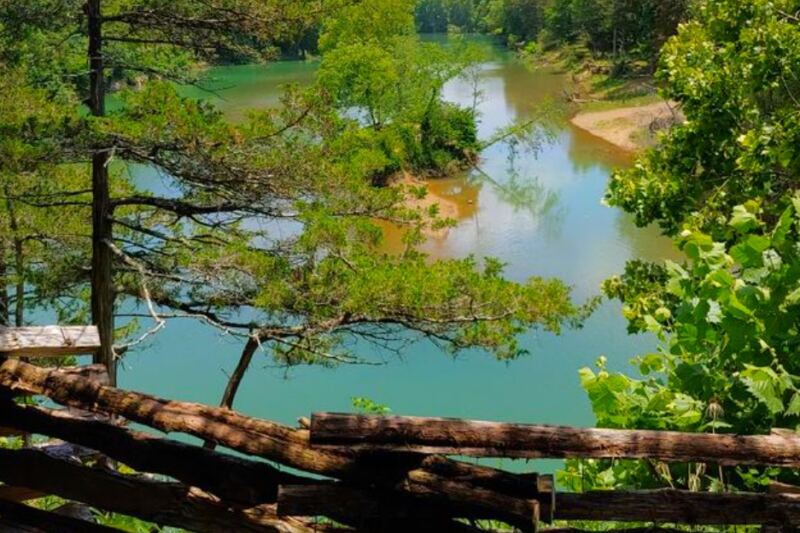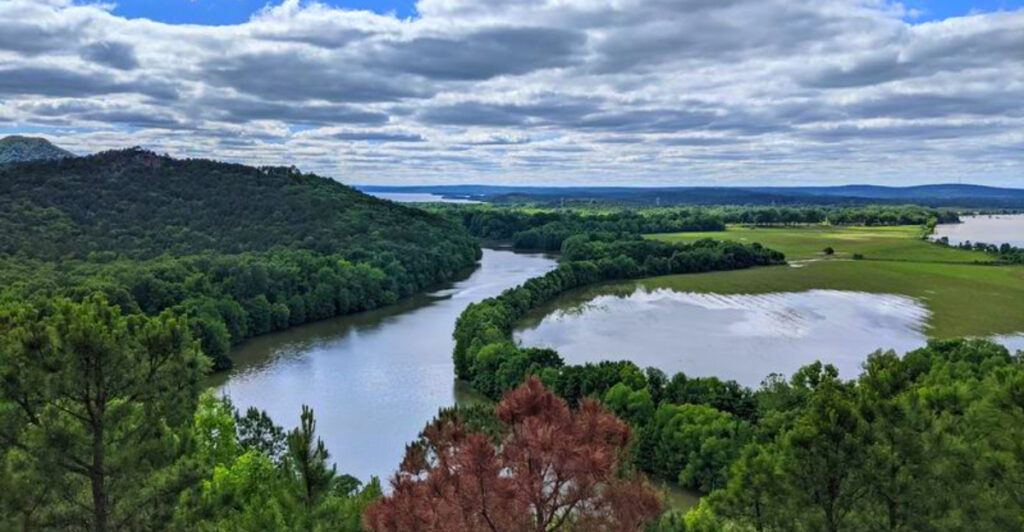
Just minutes from downtown Little Rock, one remarkable state park rises above the Arkansas River Valley with a mountain that has become one of the state’s most recognizable natural landmarks. Visitors come for challenging summit hikes, breathtaking panoramic views, peaceful rivers, scenic kayaking, diverse wildlife, and trails that showcase Arkansas at its most beautiful. It’s the kind of place where every climb rewards you with an unforgettable view and every trail offers something new to discover.
The experience extends far beyond the summit. Riverfront paddling, quiet forest trails, a beautiful arboretum, fascinating geology, abundant birdlife, educational programs, and year-round outdoor recreation have made this one of Arkansas’ premier destinations for nature lovers. Whether you’re searching for an adventurous hike or a relaxing day surrounded by spectacular scenery, it’s easy to understand why this park attracts visitors from across the region.
Here’s why Pinnacle Mountain State Park has become one of Arkansas’ most iconic outdoor destinations and one of the best places in the state to experience breathtaking mountain views, scenic hiking, and unforgettable natural beauty.
A Singular Landmark: Location and First Impressions
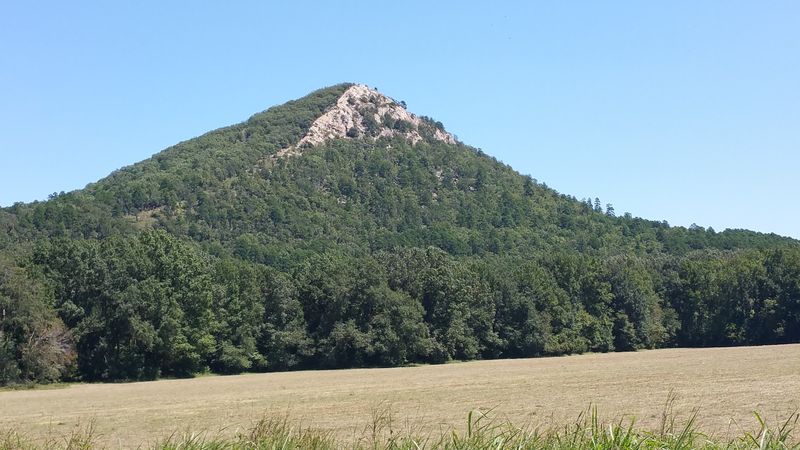
The moment Pinnacle Mountain comes into view from the road, you understand immediately why locals treat it like a personal treasure. Its near-perfect cone shape dominates the horizon in a way that feels almost theatrical, as if the landscape is showing off on purpose.
Pinnacle Mountain State Park is located at 9600 AR-300, Little Rock, AR 72223, sitting just a short drive west of the city. The park spans 2,351 acres and was dedicated in 1977 with a clear mission: environmental education, recreation, and preservation of this remarkable natural space.
Parking is free, which feels like a small gift before the adventure even begins. The park operates as a day-use facility, opening at sunrise and closing one hour after sunset, so planning your arrival early is always a smart move, especially on busy weekend afternoons when the trails fill up quickly.
The Geology Behind That Unmistakable Shape
Most people assume Pinnacle Mountain is a volcano. The shape practically begs for that conclusion, with its steep, symmetrical sides rising to a rocky point. The truth, however, is far more dramatic than any volcanic origin story.
The mountain is composed of Jackfork Sandstone, an incredibly durable sedimentary rock formed from ancient ocean floor sediments. About 275 million years ago, two massive continental plates collided, crumpling those sediments upward and creating what geologists call a classic “crumple zone.” That slow, powerful collision is the reason this mountain exists today.
The park sits at a rare convergence point where four distinct geological regions meet: the Arkansas River Valley, the Mississippi Alluvial Plains, the Gulf Coastal Plains, and the Ouachita Mountains. The Ouachita range itself is notable for running east to west, which is unusual for North American mountain chains. That geographic variety is a big reason why the park’s ecosystems feel so surprisingly diverse.
West Summit Trail: Rocky Steps and Rewarding Skies
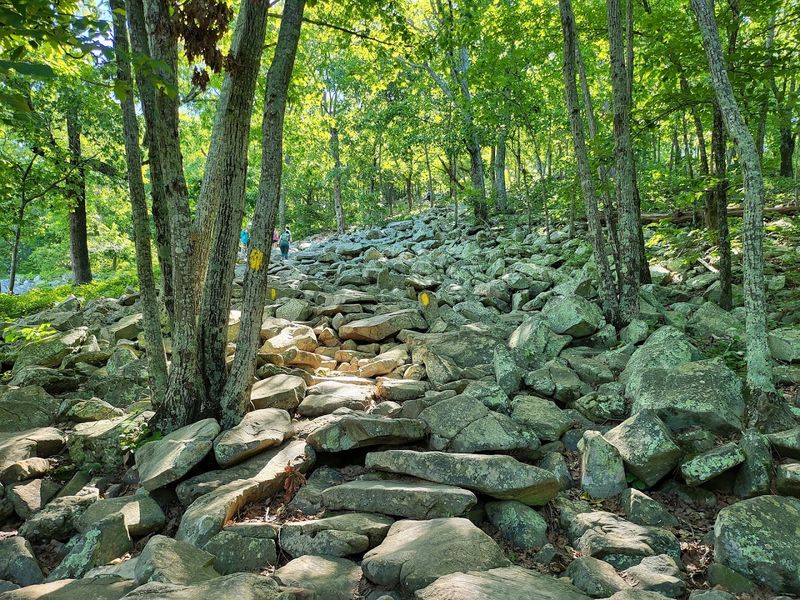
The West Summit Trail is where most first-time visitors start, and for good reason. At roughly 1.4 miles round trip with about 734 feet of elevation gain, it balances challenge with accessibility in a way that keeps the experience exciting without being punishing.
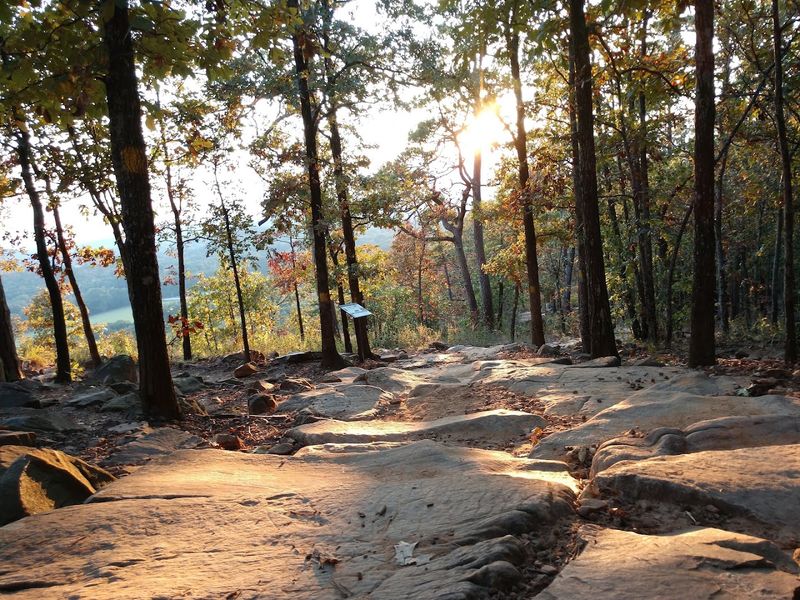
Natural stone steps line much of the lower portion of the trail, giving it a surprisingly well-crafted feel. The path is clearly marked throughout, which matters a great deal once you reach the upper section, where the route transitions entirely into bouldering and scrambling over rocky terrain.
Rest spots appear at intervals along the way, offering both a breather and a chance to turn around and appreciate how far you have already climbed. The final push to the summit is genuinely demanding, but the views that open up at the top make every labored step feel like a worthy investment. Most hikers complete the round trip in roughly two hours at a comfortable pace.
East Summit Trail: Where the Real Scrambling Begins
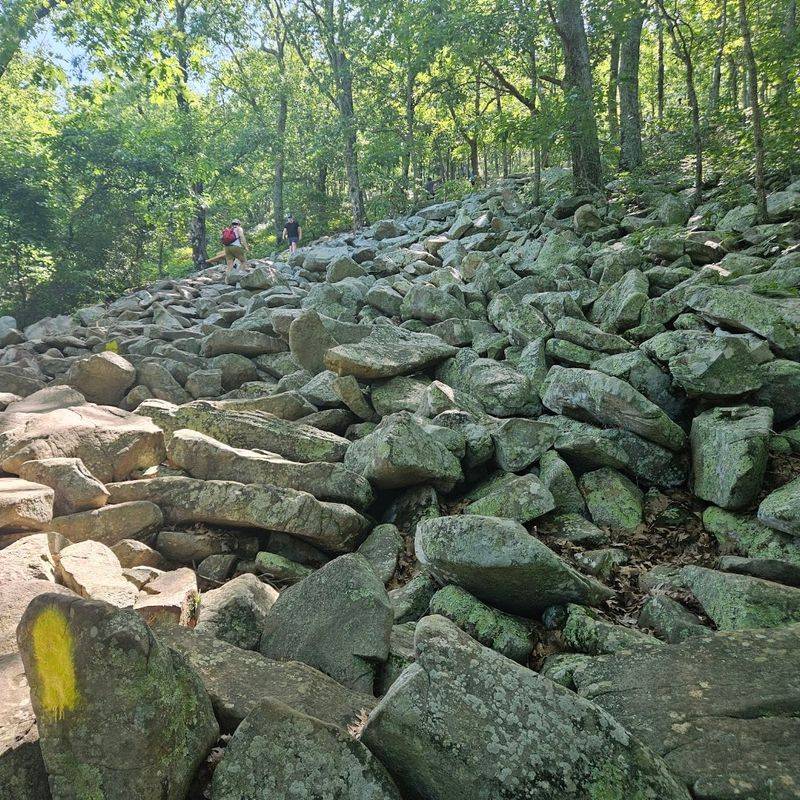
If the West Summit Trail is the approachable sibling, the East Summit Trail is the one who shows up to Thanksgiving dinner with mud on their boots and a great story to tell. This route is a direct, unforgiving assault on the mountain’s face, and it pulls no punches.
The trail involves extensive boulder scrambling almost from the start, requiring hikers to use both hands and feet to navigate the rocky terrain. It is not recommended for young children or anyone uncomfortable with heights and uneven surfaces, but for experienced hikers, it offers a genuinely thrilling physical challenge.
The payoff at the top is identical regardless of which route you take, but there is a particular satisfaction in reaching the summit via the East Trail. Turkey vultures have been spotted riding thermals just below the ridgeline, which makes the whole experience feel a little wilder and more primal. Wet conditions make this trail especially slippery, so dry days are strongly preferred.
Summit Views That Actually Deliver on the Promise
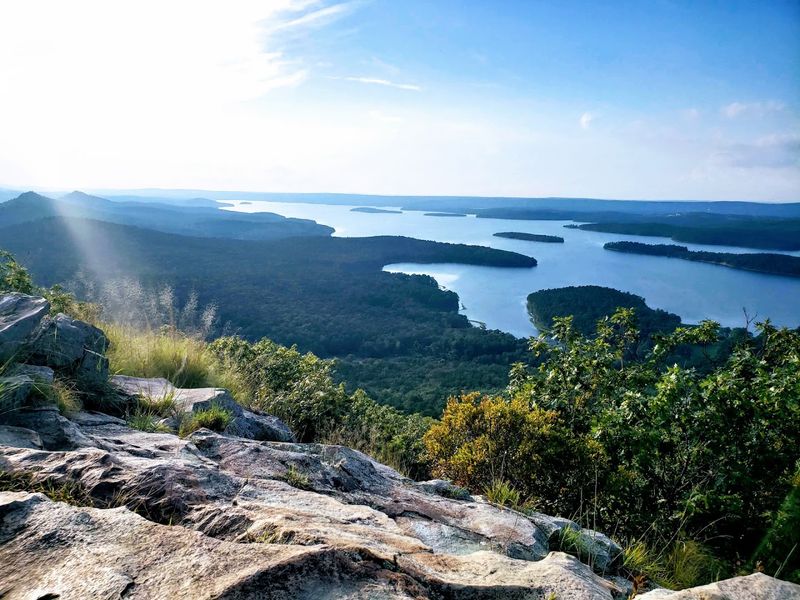
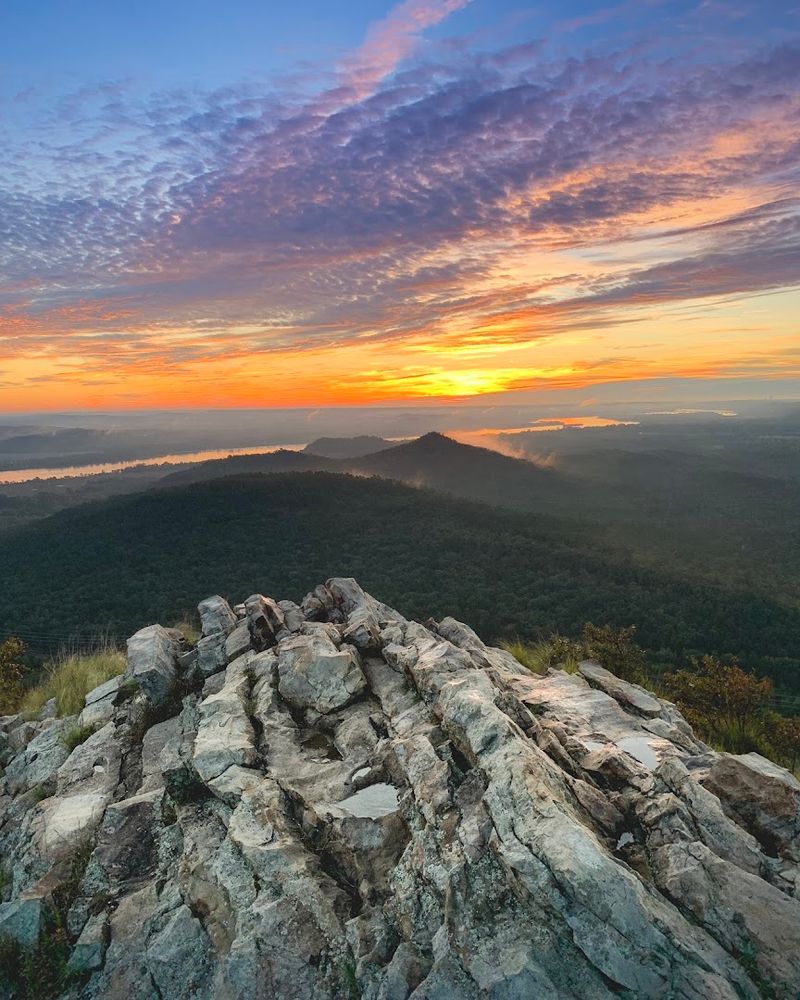
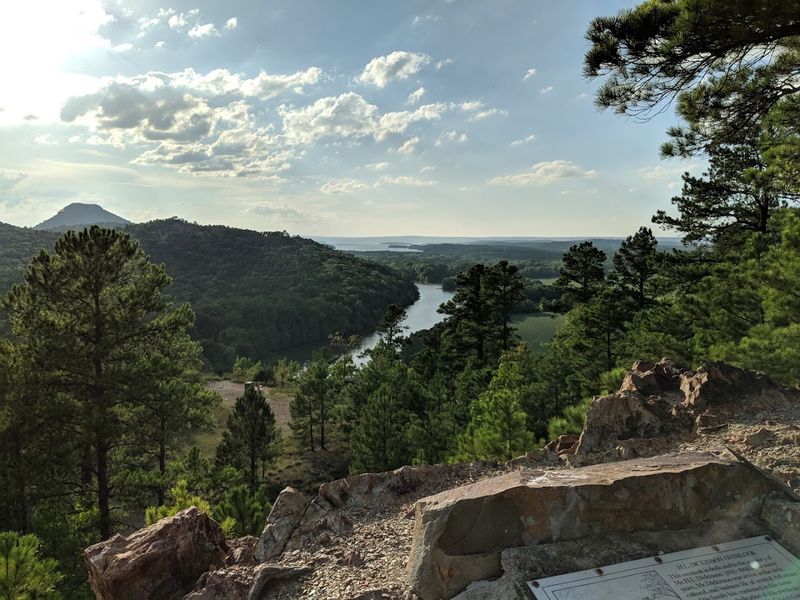
Some viewpoints build anticipation and then leave you slightly underwhelmed. The summit of Pinnacle Mountain is not one of those places. At 1,011 feet above sea level, the top opens up into a wide, rocky platform that offers a 360-degree canvas of Arkansas at its most beautiful.
To the north, the Arkansas River winds through the valley like a silver ribbon. Lake Maumelle spreads across the western view, its 8,900-acre surface catching light and reflecting the sky in shifting blues. Rattlesnake Ridge rises in the distance, and on clear days, the skyline of Little Rock is visible to the east.
Spending thirty minutes on the summit feels completely natural, because there is genuinely that much to look at. The wind picks up noticeably at the top, which provides welcome relief after the climb. Birding enthusiasts will want to keep their eyes on the sky, since warblers, turkey vultures, and various raptors regularly use the mountain’s updrafts as their personal highway.
The Base Trail: A Quieter Kind of Beautiful
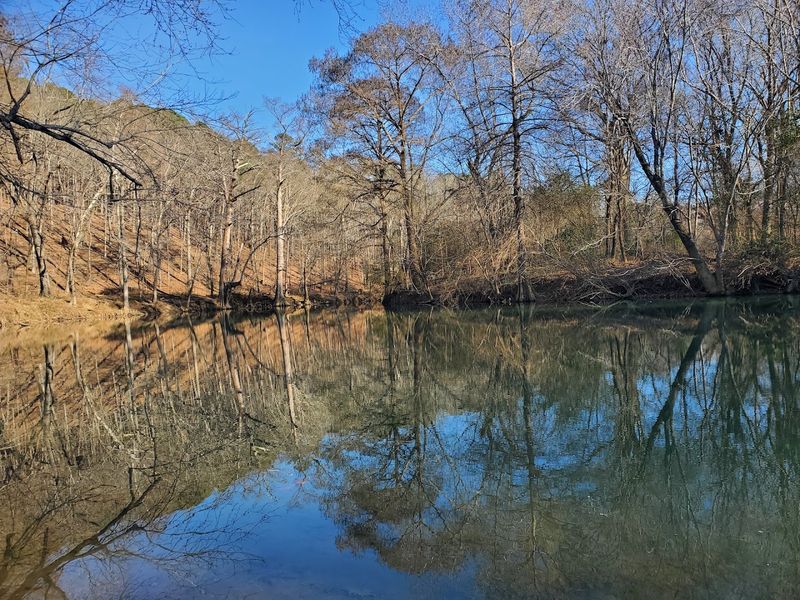
Not every great trail needs to send your heart rate into the red zone. The Base Trail at Pinnacle Mountain State Park makes a strong case for the underrated pleasure of a flat, meandering walk through genuinely lovely terrain.
Stretching between 1.25 and 3 miles depending on your chosen loop, the trail circles the entire foot of Pinnacle Mountain and connects the East and West Summit trailheads. This makes it a practical connector for hikers who want to ascend one side and descend the other, turning the summit experience into a satisfying full loop.
The trail traces the curves of the Little Maumelle River for much of its length, offering close-up views of the water and the riparian forest that lines its banks. Wildlife sightings are common here, including water snakes, ring-necked snakes, prairie lizards, squirrels, and an impressive variety of songbirds. The intimate, ground-level perspective is a refreshing contrast to the sweeping views waiting at the top of the mountain.
Rocky Valley Trail and the Turquoise Pond Surprise
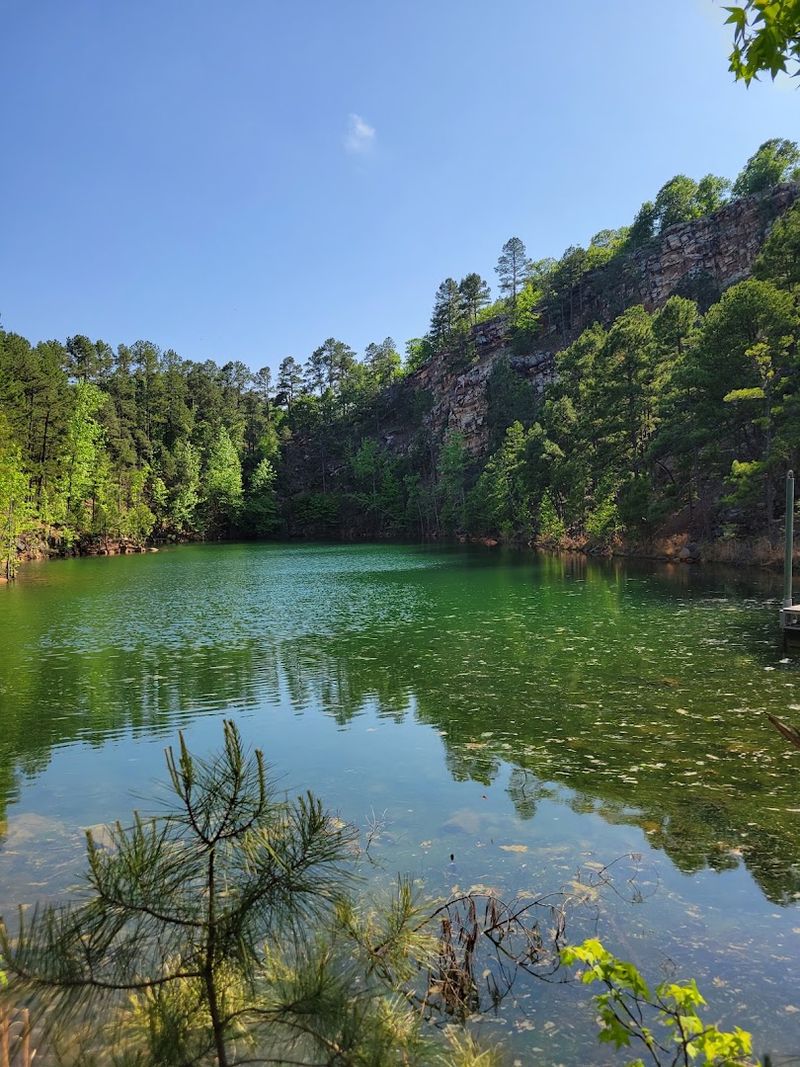
Tucked away from the main summit trails, the Rocky Valley Trail offers one of the park’s most unexpected and photogenic surprises. This moderately difficult 1.5-mile loop winds through a heavily forested valley, passing an old rock quarry that has transformed over time into something genuinely striking.
The quarry pond shimmers with an almost unreal turquoise blue color, a visual oddity that stops most hikers mid-step. The vivid hue comes from calcium carbonate particles suspended in the water, a natural chemical process that creates a color more commonly associated with Caribbean beaches than Arkansas forests.
Quarrying for sandstone and shale in this area began around the 1920s, with rock from Pinnacle Mountain’s eastern slope used in the construction of the Lake Maumelle dam in the 1950s and the McClellan-Kerr Arkansas River Navigation System in the 1960s. That industrial history now sits quietly beneath a layer of natural reclamation, making the Rocky Valley Trail feel like a small lesson in how landscapes reinvent themselves over time.
Kayaking and Fishing: Life on the Water
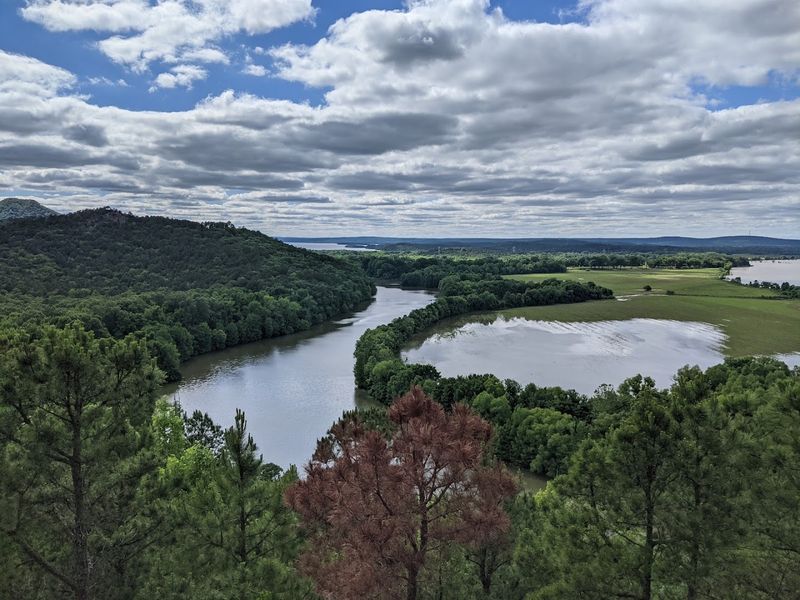
The rivers at Pinnacle Mountain State Park are not just scenic backdrops. They are fully functional playgrounds for anyone who enjoys getting out on the water, and the park makes access genuinely easy with kayak rental kiosks available on-site.
The Big and Little Maumelle Rivers flank the mountain on either side, offering calm, clear stretches ideal for kayaking and paddleboarding. Gliding along the Little Maumelle River with the mountain rising above the treeline is a perspective on the park that no trail can replicate. The water is gorgeous, as multiple visitors have noted, and the surrounding forest creates a natural canopy that keeps things cool even on warm days.
Fishing is another popular option, with both the Little Maumelle River and the park’s stocked pond providing good opportunities for anglers of varying skill levels. The stocked pond near the base area is particularly convenient for families who want a relaxed outing without venturing far from the picnic facilities. The combination of mountain and river access in one park is a genuinely rare offering.
The Arkansas Arboretum: Education Meets Easy Walking
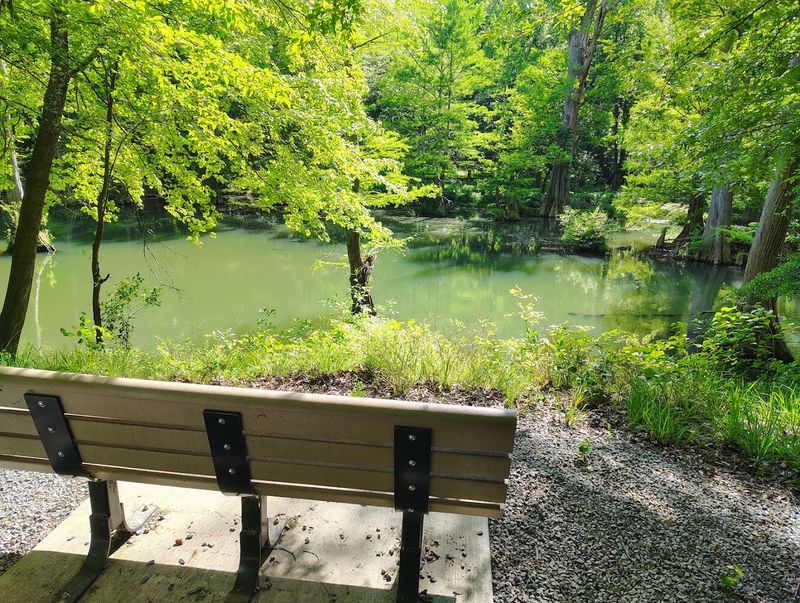
There is something quietly wonderful about a place that teaches you things without making it feel like homework. The Arkansas Arboretum inside the park does exactly that, offering a 0.6-mile paved loop called the Arkansas Trail that is fully barrier-free and accessible to visitors using wheelchairs or strollers.
Benches appear at regular intervals along the path, inviting you to sit, slow down, and actually look at what surrounds you. Interpretive audio signs are stationed throughout, identifying native plants and trees from each of Arkansas’s six natural divisions and explaining their ecological roles in the broader landscape.
The arboretum also features an education pond, where aquatic plants and the creatures that depend on them can be observed up close. Native plant gardens add seasonal color and attract pollinators, making the loop feel alive and dynamic regardless of when you visit. For families with younger children, curious beginners, or anyone who wants a gentler outdoor experience, the arboretum delivers a satisfying and genuinely informative walk without requiring a single boulder scramble.
The New Visitor Center: A Worthy Starting Point
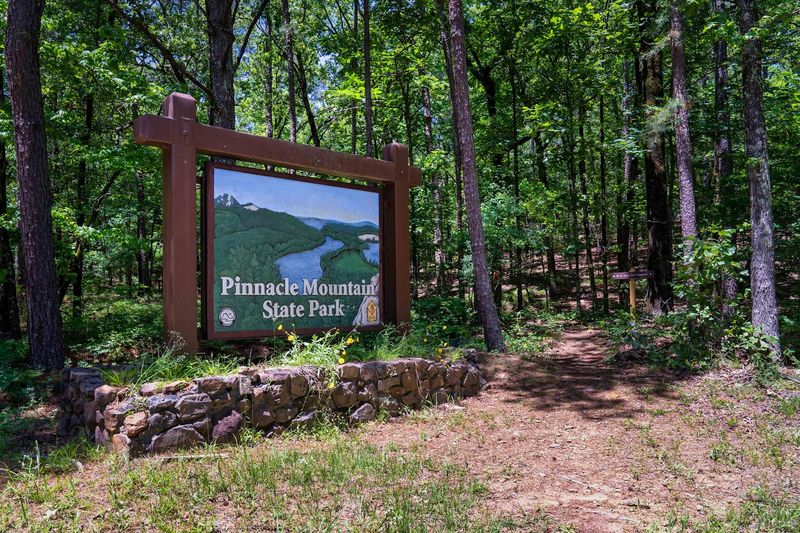
The recently renovated visitor center at Pinnacle Mountain State Park has quickly earned a reputation as one of the nicer park facilities in Arkansas, and a visit confirms that the praise is well-deserved. The building incorporates boulder-themed design elements that echo the rocky terrain of the mountain itself, creating an architectural conversation between the structure and its surroundings.
Large windows frame views of the Arkansas River, which means the scenery starts before you even lace up your hiking boots. Inside, exhibits cover the natural and cultural history of the park and the broader region, giving context to everything you are about to experience on the trails.
Friendly and knowledgeable staff are on hand to answer questions, recommend trails based on your fitness level, and hand out maps. The center also offers interpretive programs on topics ranging from geology and botany to archaeology and local wildlife. Arkansas State Parks has recently introduced a free passport program, and the visitor center is a great place to get your booklet stamped and start collecting rewards from parks across the state.
History Layered Into the Landscape
Long before it became a beloved state park, Pinnacle Mountain carried a different kind of weight in the historical record. English botanist Thomas Nuttall documented the peak in 1819, referring to it by the French name “Mamelle,” meaning breast, a reference to its distinctive rounded shape. Over time, as local excursions to “that pinnacle” became popular, the informal nickname gradually became the official name.
The park holds a designation as part of the Trail of Tears National Historic Trail, acknowledging its place along the routes traveled by the Cherokee, Choctaw, Creek, Seminole, and Chickasaw peoples during their forced relocation in the 19th century. That designation adds a layer of historical gravity to the landscape that rewards thoughtful visitors who take a moment to reflect.
Recreational access to the mountain expanded significantly with the arrival of local railroads in the 1890s and the growing popularity of automobiles in the early 1900s. Each era left its mark here, making Pinnacle Mountain not just a geological story but a deeply human one as well.
Planning Your Visit: Practical Tips for a Great Day
A little preparation goes a long way at Pinnacle Mountain State Park, and a few practical details can mean the difference between a great day and a frustrating one. The park is day-use only, open from sunrise until one hour after sunset, so timing matters. Weekday mornings tend to be quieter, while weekend afternoons bring significantly more foot traffic and parking can become tight.
Hydration is non-negotiable, especially in summer when central Arkansas heat and humidity arrive in full force. Carrying more water than you think you need is always the right call. Sturdy shoes with solid traction are essential for the rocky summit trails, and the East Summit Trail becomes genuinely slippery when wet, so checking the weather forecast before heading out is worth the thirty seconds it takes.
Dogs are welcome on the trails but must remain on a leash at all times. The park’s phone number is +1 501-868-5806, and the official website at arkansasstateparks.com/pinnaclemountain provides current trail conditions and program schedules. Leaving the trails cleaner than you found them keeps this place beautiful for everyone who follows.
Share this story