Southern Italy is the kind of place that stays with you long after you’ve left. Ancient ruins sit beside turquoise bays, cliff-top villages glow gold in the afternoon sun, and every winding road seems to lead somewhere extraordinary.
From the volcanic drama of Sicily to the cave cities of Basilicata, the south of Italy holds a staggering variety of landscapes and history. These 15 destinations show exactly why this region has been capturing hearts for centuries.
Amalfi Coast, Campania
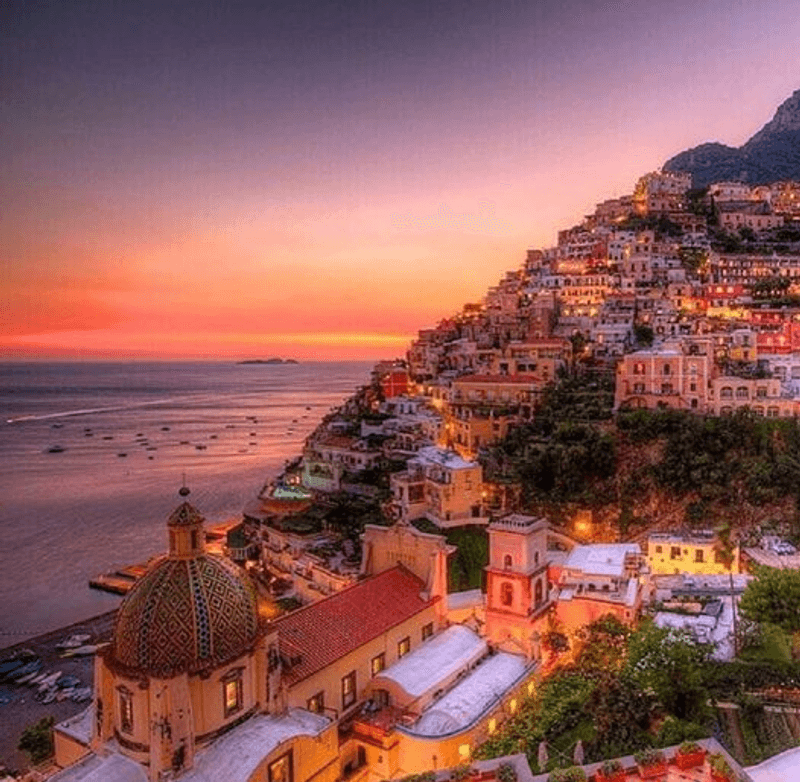
Few roads in Europe demand your full attention quite like the SS163, the narrow, hairpin-filled highway that threads along the Amalfi Coast. Every bend reveals another postcard-perfect view of terracotta rooftops, cascading bougainvillea, and sea so blue it almost looks painted.
Positano is the most photographed village on the coast, with its pastel houses stacking dramatically down to a small pebble beach. Amalfi town offers a magnificent cathedral, lively piazzas, and excellent seafood restaurants just steps from the water.
Ravello, perched higher than the rest, rewards the climb with extraordinary gardens and jaw-dropping panoramas.
Lemon groves cover the hillsides everywhere you look, and the local limoncello is worth every sip. Boat tours from Amalfi let you explore sea caves and hidden coves unreachable by road.
Visiting in spring or early autumn means smaller crowds and cooler temperatures, making the coastal walks far more enjoyable. Budget travelers can use the regional ferry service to hop between villages affordably.
Matera, Basilicata
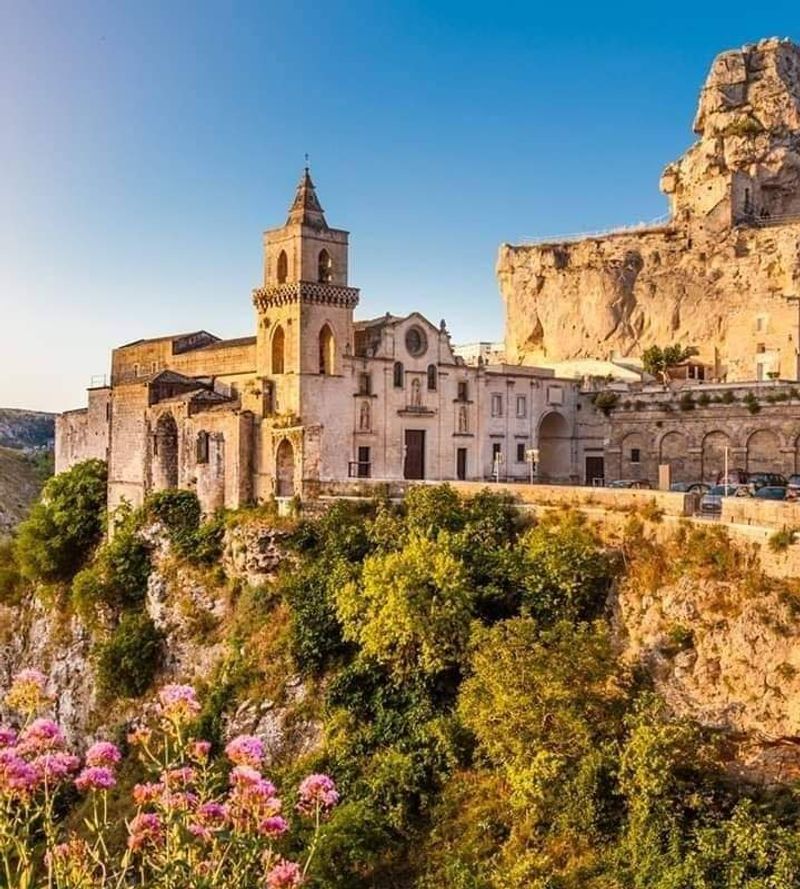
Matera might be the only city in the world where you can sleep inside a cave and wake up to a view that has barely changed in 9,000 years. That is not an exaggeration.
People have been living in these rocky hollows since the Paleolithic era, making Matera one of the oldest continuously inhabited settlements on Earth.
The Sassi districts, Sasso Caveoso and Sasso Barisano, are the main attraction. Thousands of cave dwellings, rock-cut churches, and interconnected passages spill down a dramatic ravine called the Gravina.
Walking through the Sassi feels genuinely unlike anything else in Italy, or anywhere else for that matter.
Once considered an embarrassment by the Italian government and forcibly evacuated in the 1950s, Matera has since been spectacularly reborn. It served as a European Capital of Culture in 2019 and has attracted global attention ever since.
Many cave homes have been converted into boutique hotels and restaurants, blending ancient architecture with modern comfort. Visit at sunrise when the stone glows amber and the town is still quiet.
Alberobello, Puglia
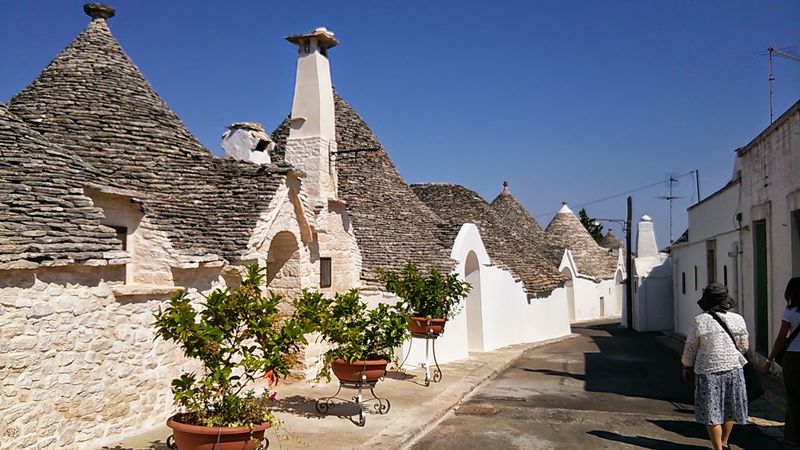
Alberobello is the kind of place that makes adults feel like they have stumbled into a fairy tale. The trulli, those quirky whitewashed houses topped with conical stone roofs, number over 1,500 in the town and are found almost nowhere else on the planet.
Nobody is entirely sure why the trulli were built this way, though one popular theory suggests the unusual roofs made it easier to demolish homes quickly to avoid paying building taxes to the Kingdom of Naples. Whether that story is fully accurate or not, it adds a wonderfully mischievous layer to the town’s charm.
The Rione Monti district contains the highest concentration of trulli, many of which are now shops selling local ceramics, olive oil, and wine. Some trulli have been converted into guesthouses, giving visitors the unique option of spending the night inside one.
The UNESCO World Heritage Site designation has brought international attention, so arriving early in the morning helps you enjoy the lanes before the crowds appear. The surrounding Itria Valley offers beautiful cycling routes through vineyards and olive groves.
Capri, Campania
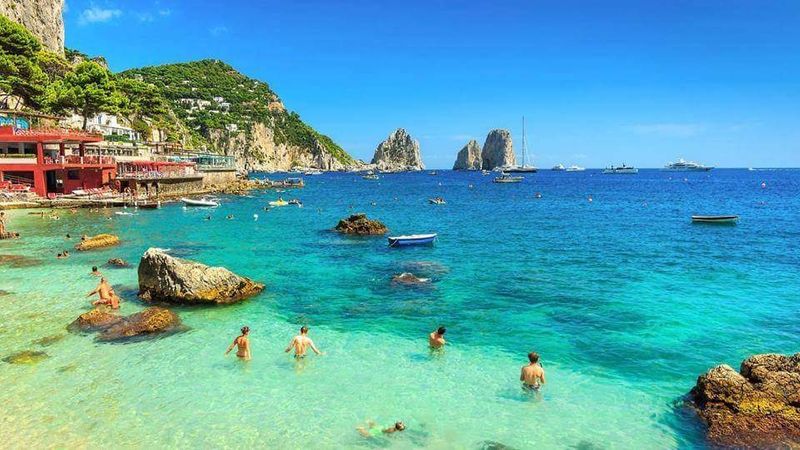
Roman emperors, Hollywood celebrities, and millions of tourists have all fallen under Capri’s spell, and honestly, it is easy to understand why. This small island rising from the Bay of Naples packs an almost unreasonable amount of beauty into just ten square kilometers.
The Blue Grotto is Capri’s most iconic attraction, a sea cave where light filters through an underwater opening and turns the water an electric, glowing blue. Boat tours depart regularly from the Marina Grande and take visitors around the island’s dramatic coastline, past the towering Faraglioni rock formations and into hidden coves.
Capri town sits at the top of the island and offers chic boutiques, lively piazzas, and excellent restaurants. Anacapri, higher up the hill, is quieter and more relaxed, with a chairlift that carries visitors to the summit of Monte Solaro for sweeping views across the bay.
Serious walkers can follow the ancient Phoenician Steps between the two towns. Visiting outside July and August means shorter queues, calmer streets, and noticeably lower prices at hotels and restaurants.
Polignano a Mare, Puglia
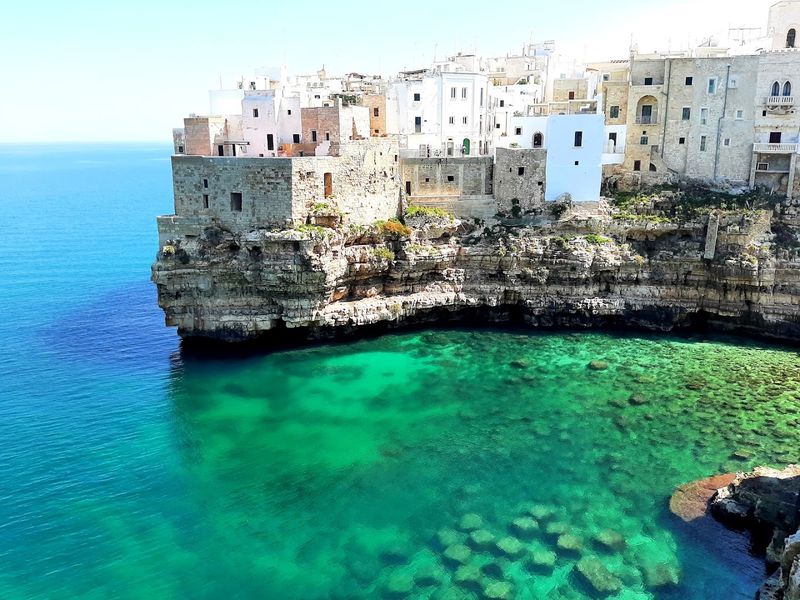
Standing at the edge of Polignano a Mare’s clifftop old town and looking straight down into the Adriatic is one of those moments that genuinely takes your breath away. The water below shifts between shades of emerald and deep blue, crashing against pale limestone in a display that photographers cannot resist.
Lama Monachile, the town’s most famous beach, sits in a narrow gorge directly beneath the old town. A stone bridge arches overhead, and the surrounding cliffs frame the scene perfectly.
It is small, pebbly, and gets busy in summer, but the setting is so striking that it remains one of Puglia’s most visited spots.
The old town itself is a pleasure to wander, with whitewashed lanes, sea-view terraces, and some very good seafood restaurants perched right above the water. Polignano is also the birthplace of singer Domenico Modugno, who wrote the famous song Volare, and a bronze statue of him stands near the cliff edge.
Day trips from Bari take less than 30 minutes by train, making Polignano a Mare one of the most accessible and rewarding stops on the Adriatic coast.
Tropea, Calabria
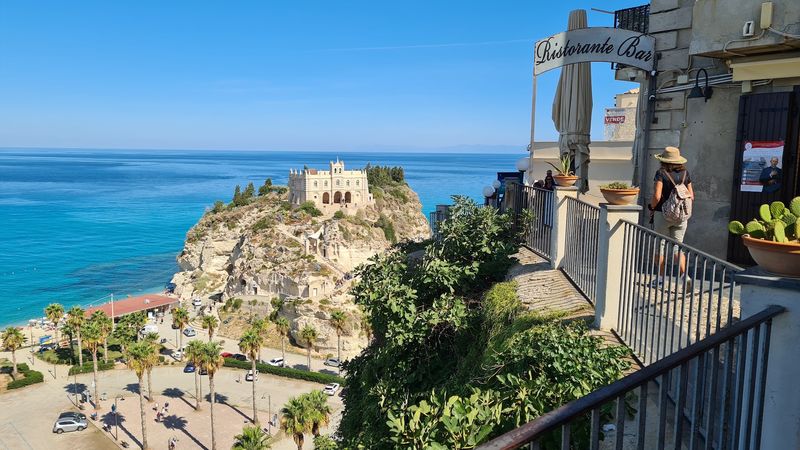
Calabria is one of Southern Italy’s least visited regions, which makes Tropea feel like a genuine secret shared between those lucky enough to make the trip. The town sits on a high rocky plateau above one of the clearest stretches of water on the entire Italian peninsula.
The beaches below the cliffs are wide, sandy, and backed by shallow turquoise water that rivals anything found further north on the Amalfi Coast. Getting down from the old town requires navigating a series of steep staircases carved into the cliff face, but the reward at the bottom is absolutely worth the effort.
The Sanctuary of Santa Maria dell’Isola crowns a rocky outcrop just offshore and is connected to the mainland by a path. Climbing up to the sanctuary provides some of the best views of Tropea’s dramatic coastline.
The town itself is known for its unusually sweet red onions, which locals use in everything from salads to jams. Street food stalls sell onion-based snacks throughout the summer months.
Tropea is best reached by train from Lamezia Terme, and most visitors stay for at least two or three nights to fully enjoy the coast.
Pompeii, Campania
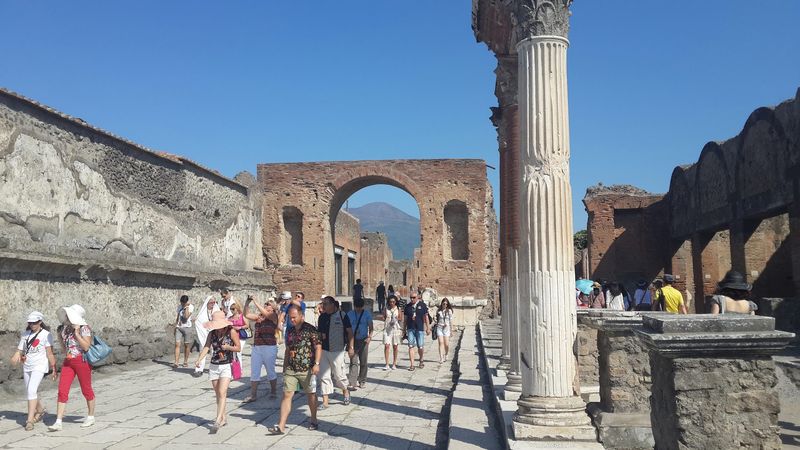
Walking through Pompeii is one of the most genuinely eerie and fascinating experiences Southern Italy has to offer. Mount Vesuvius erupted in AD 79 and buried the entire city under meters of volcanic ash, preserving streets, homes, bakeries, and even graffiti in extraordinary detail.
The site covers about 66 hectares, so a full visit easily takes four to five hours. Highlights include the Forum, the Amphitheatre, the Villa of the Mysteries with its stunning painted frescoes, and the haunting plaster casts of victims caught in the eruption.
Audio guides are widely available and genuinely improve the experience by providing context for what you are looking at.
The nearby Museo Archeologico Nazionale in Naples houses many of the finest artifacts recovered from Pompeii, including mosaics, sculptures, and everyday objects that paint a vivid picture of Roman life. Herculaneum, a smaller but equally well-preserved site just a short train ride away, is often overlooked by visitors but offers a more intimate and less crowded experience.
Booking tickets online before arriving saves considerable time at the entrance gates, especially during peak summer months.
Taormina, Sicily
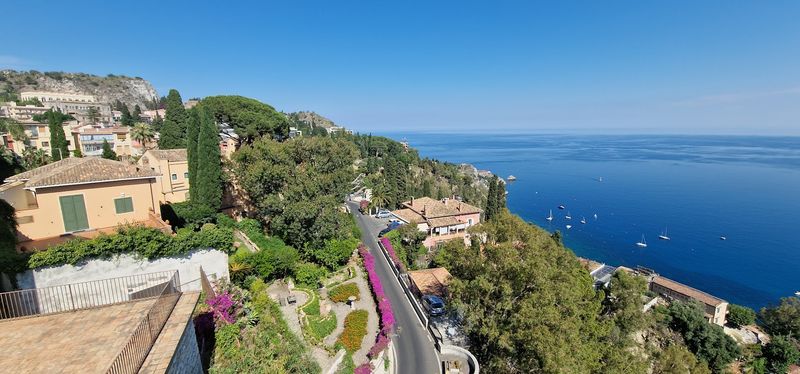
Taormina has been seducing visitors since the days of ancient Greece, and it shows absolutely no signs of stopping. Perched on a hillside above the Ionian Sea with Mount Etna looming magnificently in the distance, it may be Sicily’s most dramatically positioned town.
The Greek theater is the unmissable centerpiece. Built in the third century BC and later expanded by the Romans, it remains one of the best-preserved ancient theaters in the world.
Performances and concerts are still held here in summer, which means you can watch live music inside a 2,300-year-old venue with a volcano backdrop. That combination is hard to beat.
Corso Umberto, the main pedestrian street, is lined with boutiques, cafes, and gelato shops. Side streets branch off toward hidden terraced gardens and viewpoints that reward those willing to explore beyond the main drag.
Isola Bella, a small nature reserve connected to the shore by a narrow strip of sand, sits just below the town and offers snorkeling in clear water. The cable car from Mazzaro beach up to Taormina runs regularly and makes the steep climb effortless.
Spring and autumn are the most comfortable seasons to visit.
Valley of the Temples, Sicily
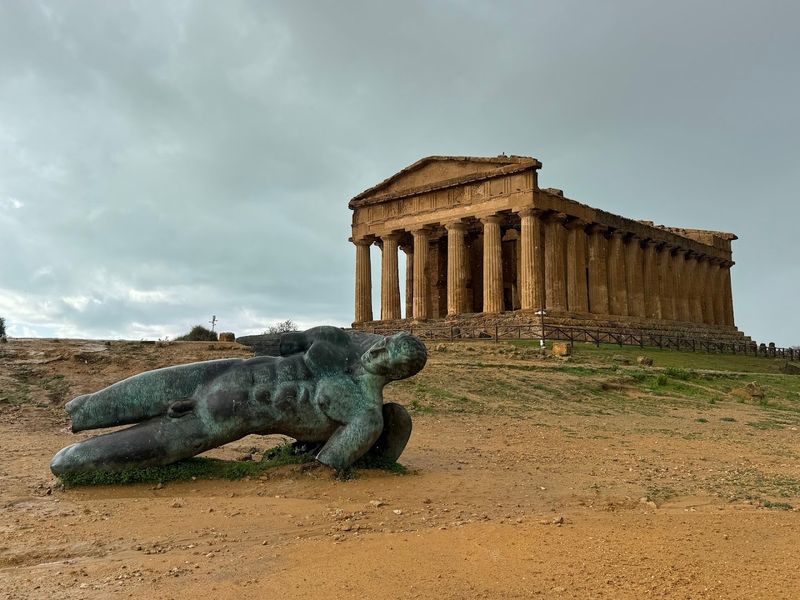
Imagine standing before a Greek temple so well-preserved that it looks like it could have been finished last century, yet it has actually been standing for over 2,400 years. That is the experience waiting at the Valley of the Temples outside Agrigento, and it never loses its power.
The archaeological park stretches along a ridge above the modern city and contains the remains of ancient Akragas, once one of the most important Greek colonies in the Mediterranean. The Temple of Concordia is the showstopper, its columns nearly complete and glowing a warm honey color in the afternoon light.
The Temple of Juno and the Temple of Heracles add further grandeur to the landscape.
Almond trees planted between the ruins bloom in February, turning the valley into a sea of white and pink blossoms during the annual Almond Blossom Festival. The site is also strikingly beautiful at night when floodlights illuminate the temples against a dark sky.
The Museo Regionale Archeologico Pietro Griffo nearby provides excellent context for the ruins, displaying sculptures, ceramics, and artifacts recovered from the site. Hiring a guide for a few hours makes a significant difference to how much you absorb from the visit.
Castelmezzano, Basilicata
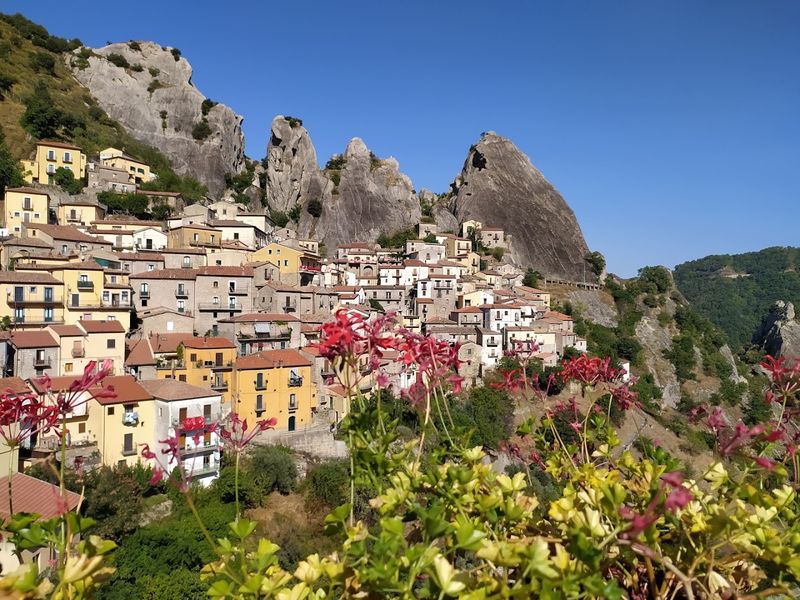
Castelmezzano is the kind of village that makes you wonder how anyone ever decided to build a town there in the first place. Wedged between the jagged rocky spires of the Lucanian Dolomites, it looks more like a natural formation than a human settlement.
The village clings to the mountainside at around 750 meters above sea level, with stone houses that seem to grow directly out of the rock. Narrow lanes twist upward between ancient buildings, and the views from the higher terraces stretch across forests and valleys that feel entirely untouched.
The atmosphere here is quiet, unhurried, and genuinely remote.
Castelmezzano is one end of the Volo dell’Angelo, a zip line that crosses the valley to the neighboring village of Pietrapertosa at speeds of up to 120 kilometers per hour. It is one of the longest zip lines in Europe and offers a completely unique way to experience the mountain scenery.
The Tre Forre trail connects the two villages on foot through dramatic rocky gorges for those who prefer a slower approach. Basilicata remains one of Italy’s least-visited regions, so Castelmezzano retains an authentic, crowd-free character that is increasingly rare in Southern Italy.
Noto, Sicily
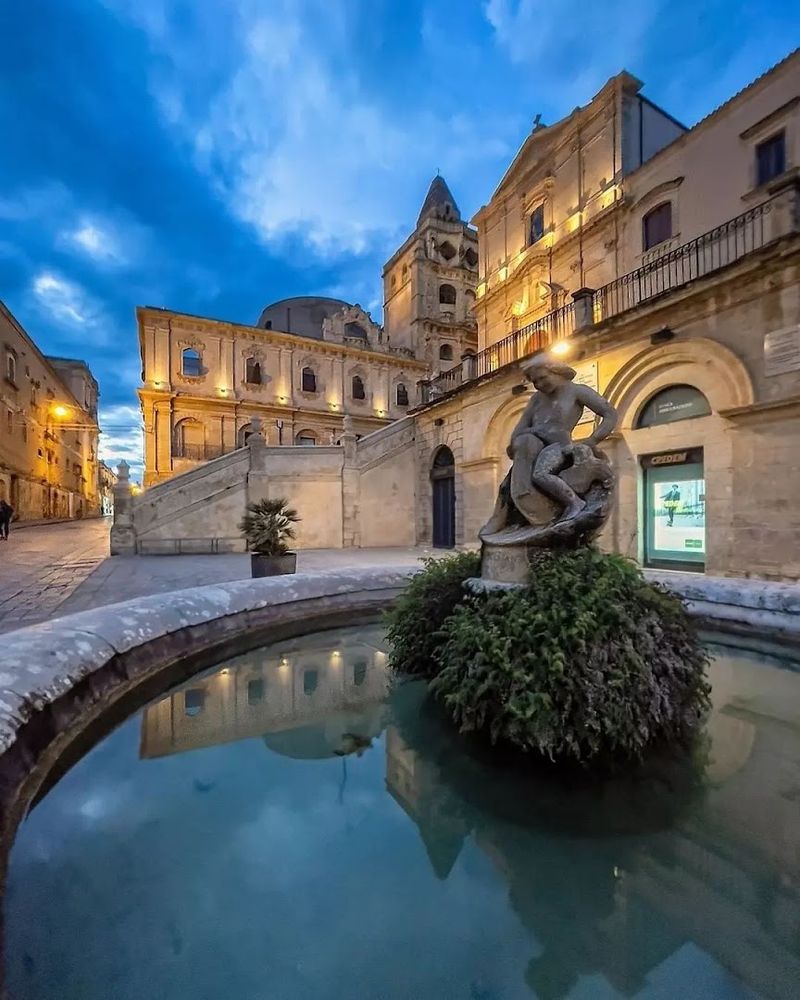
A catastrophic earthquake flattened much of southeastern Sicily in 1693, and the towns rebuilt in its aftermath became some of the most beautiful examples of Baroque architecture in the entire world. Noto is the crown jewel of them all.
The entire historic center was constructed from a warm golden limestone that absorbs sunlight and radiates it back in a way that makes the buildings glow, especially in the late afternoon. The main street, Corso Vittorio Emanuele, is lined with grand churches, ornate palaces, and elaborate balconies decorated with carved stone figures of lions, horses, and mythological creatures.
It is essentially an open-air museum of Baroque design.
Noto Cathedral, rebuilt after its dome collapsed in 1996, dominates the main piazza with an impressive facade and broad sweeping staircase. The Palazzo Nicolaci di Villadorata is famous for its extraordinarily detailed balcony carvings and hosts the annual Infiorata festival each May, when the street below is covered in elaborate flower petal designs.
Granita con brioche, a classic Sicilian breakfast of flavored crushed ice served with a soft bread roll, is best enjoyed at one of Noto’s traditional cafes before the heat of the day sets in.
Maratea, Basilicata
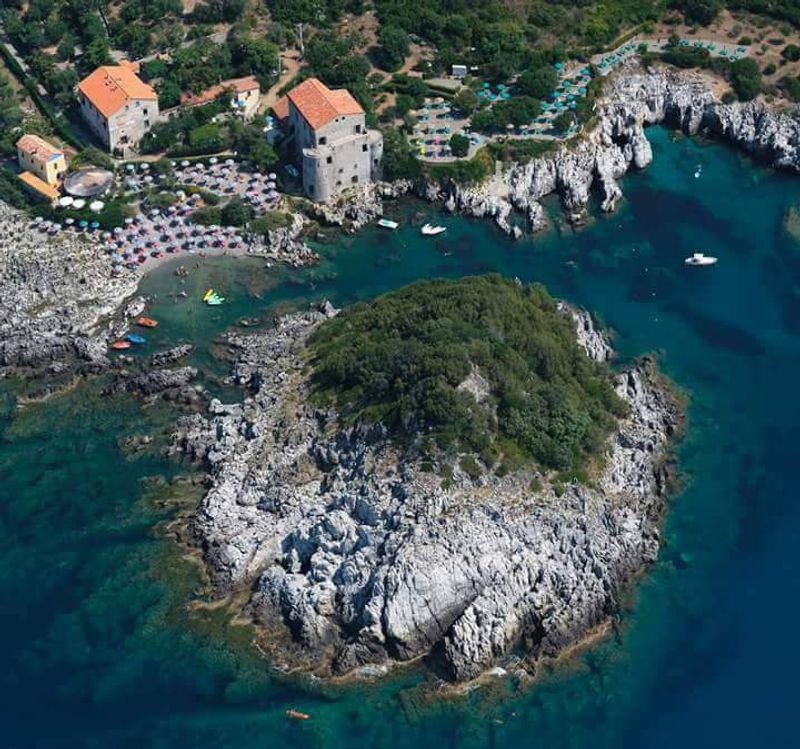
Maratea is Basilicata’s best-kept coastal secret, a stretch of rugged Tyrrhenian shoreline that somehow remains far less crowded than its glamorous neighbors in Campania and Calabria. That relative anonymity is a big part of its appeal.
The coastline here is dramatic and varied, with rocky headlands, hidden sea caves, and small sandy coves accessible by boat or on foot. The water is exceptionally clear, and the lack of heavy tourist infrastructure means the natural environment feels genuinely preserved.
Snorkeling and kayaking are popular ways to explore the more secluded stretches of shore.
Above the town stands one of Southern Italy’s more unexpected landmarks: a 22-meter-tall marble statue of Christ the Redeemer, positioned on Monte San Biagio with views extending across the Gulf of Policastro. The winding road to the summit passes through pine forest and offers several scenic pull-off points.
Maratea town itself is a charming cluster of medieval lanes, flower-draped balconies, and small piazzas. The village of Acquafredda, a few kilometers north, offers some of the most peaceful beaches on the coast.
Traveling to Maratea by train on the Calabrian coastal line is a scenic experience worth enjoying in its own right.
Syracuse and Ortigia, Sicily
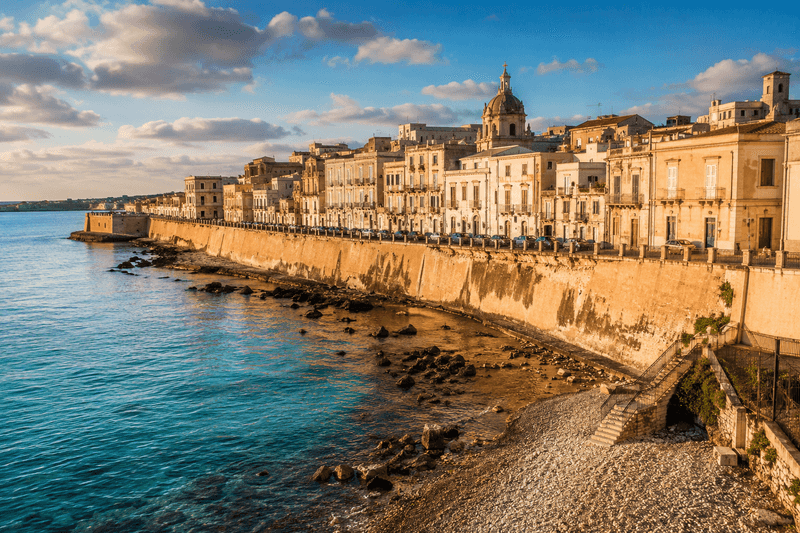
Syracuse was once one of the most powerful cities in the ancient world, rivaling Athens in size and influence. That extraordinary past is still very much visible today, layered across the island of Ortigia and the surrounding archaeological zone.
Ortigia is the historic heart of Syracuse, a small island connected to the mainland by two short bridges. Its streets are a wonderful mix of ancient, medieval, and Baroque architecture, with the Cathedral of Syracuse as the standout.
The cathedral was built directly around the columns of a fifth-century BC Greek temple dedicated to Athena, meaning you can still see the ancient stonework embedded in the church walls.
The Neapolis Archaeological Park on the mainland contains a magnificent Greek theater still used for performances today, a Roman amphitheater, and the Ear of Dionysius, a tall limestone cave with remarkable acoustic properties. The Fonte Aretusa, a freshwater spring on the Ortigia waterfront surrounded by papyrus plants, has been flowing since ancient times and remains a peaceful spot to sit.
Local markets sell excellent Sicilian produce, and the seafood along the Ortigia waterfront is some of the freshest in Sicily. Syracuse rewards visitors who stay for two or more nights.
Mount Etna, Sicily
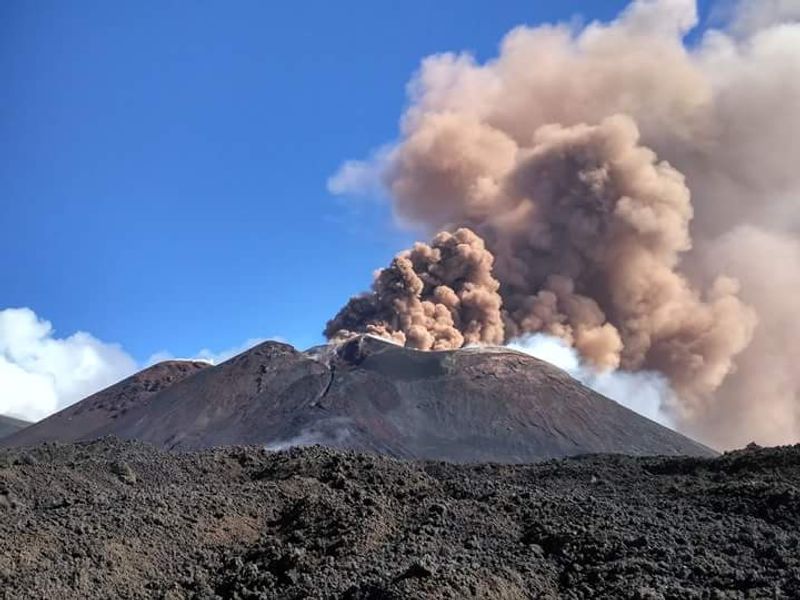
Europe’s tallest active volcano does not simply sit quietly in the background. Mount Etna smokes, rumbles, erupts, and generally reminds everyone nearby that it is very much alive, which somehow makes it even more fascinating to visit.
At nearly 3,350 meters above sea level, Etna dominates the entire eastern side of Sicily. The landscape it has created is unlike anything else in Italy: vast fields of black hardened lava, surreal craters, ash-covered slopes, and occasional patches of snow even in late spring.
Cable cars and guided jeep tours take visitors up toward the summit craters, though exact access points change depending on recent volcanic activity.
The lower slopes of Etna are surprisingly lush and fertile. Vineyards here produce wines with a distinctive mineral character prized by sommeliers worldwide, and several wineries offer tastings with views up toward the summit.
Pistachios, hazelnuts, and honey from the Etna region are local specialties worth picking up. The towns of Zafferana Etnea and Nicolosi serve as comfortable bases for exploration.
Hiking trails wind through forests of beech and chestnut trees on the quieter northern and western flanks. The combination of fire, ice, wine, and extraordinary views makes Etna genuinely one of a kind.
Aeolian Islands, Sicily
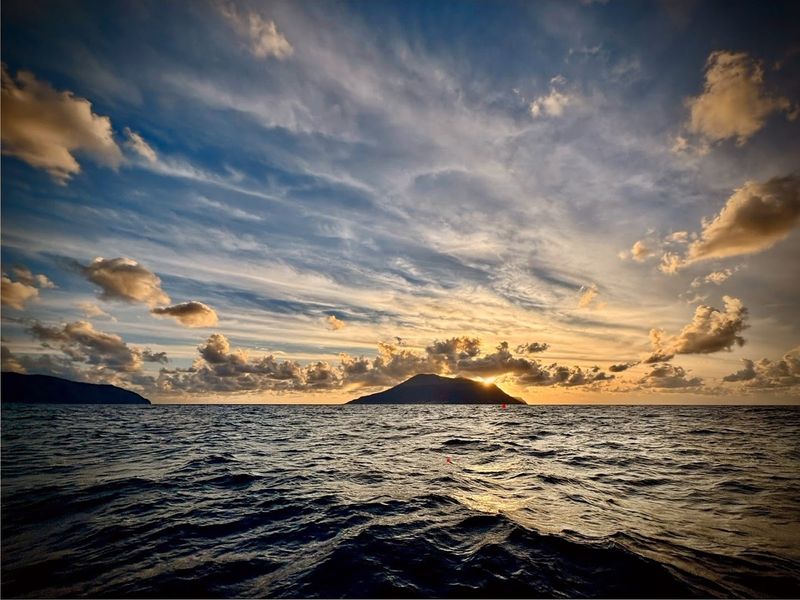
Seven volcanic islands scattered across the Tyrrhenian Sea north of Sicily form one of Italy’s most rewarding and least predictable archipelagos. The Aeolian Islands were declared a UNESCO World Heritage Site in 2000, and a single visit makes it obvious why.
Each island has its own distinct personality. Lipari is the largest and most lively, with a bustling port, excellent restaurants, and white pumice beaches.
Salina is green and tranquil, famous for its capers and the sweet Malvasia wine produced from grapes grown on its volcanic slopes. Panarea attracts a stylish crowd and has no cars.
Filicudi and Alicudi are genuinely remote, with donkeys still used for transport on the steepest paths.
Stromboli is the most dramatic of them all. Its volcano erupts almost continuously, sending glowing lava fragments into the night sky in a display that has been described by geologists as one of the most reliable natural spectacles on Earth.
Guided evening hikes to the summit viewpoint are an unforgettable experience. Hydrofoil services connect the islands to each other and to the Sicilian mainland, making island-hopping practical and enjoyable.
Visiting in June or September offers warm weather, clear water, and far fewer visitors than the busy July and August peak season.
Share this story