Bosnia and Herzegovina is one of those places where history is not locked behind glass in a museum. You can walk across bridges built by Ottoman engineers, stand inside churches that were later converted into mosques, and trace the outlines of medieval fortresses that every passing empire tried to claim.
Few countries in Europe carry so many layers of rule, architecture, and culture within such a compact geography. From the Ottoman bazaars of Sarajevo to the frontier fortresses of Srebrenik, each city on this list tells a different chapter of the same long story.
If you have ever wanted to understand how empires actually leave their mark on real places, this list gives you thirteen very good places to start.
Sarajevo
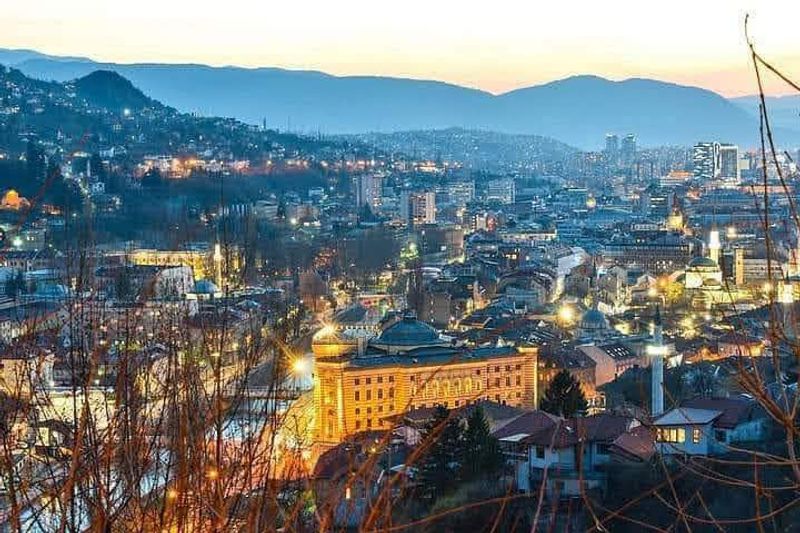
Walking through central Sarajevo feels like crossing a timeline on foot. The eastern side of the city center, known as Bascarsija, developed rapidly under Ottoman rule after the 15th century.
Mosques, workshops, caravanserais and open market lanes filled this district, and landmarks like the Gazi Husrev-beg Mosque and the Sebilj fountain still anchor the area today.
Moving west, the architecture shifts completely. Broad avenues, ornate civic facades and grand public buildings replaced the intimate bazaar scale when Austro-Hungarian administration took hold.
Sarajevo City Hall, now a restored cultural venue, is one of the most striking examples of that transformation.
The Latin Bridge area preserves the setting of Archduke Franz Ferdinand’s 1914 assassination, one of the most consequential events of the 20th century. UNESCO includes Sarajevo on Bosnia and Herzegovina’s tentative World Heritage list, recognizing its unusually close collection of Islamic, Catholic, Orthodox and Jewish institutions within one urban center.
Mostar
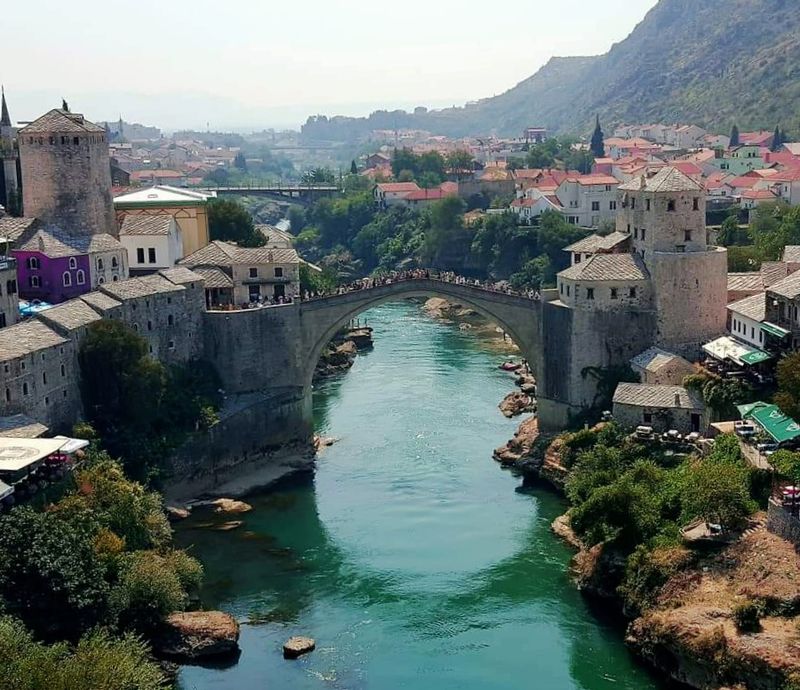
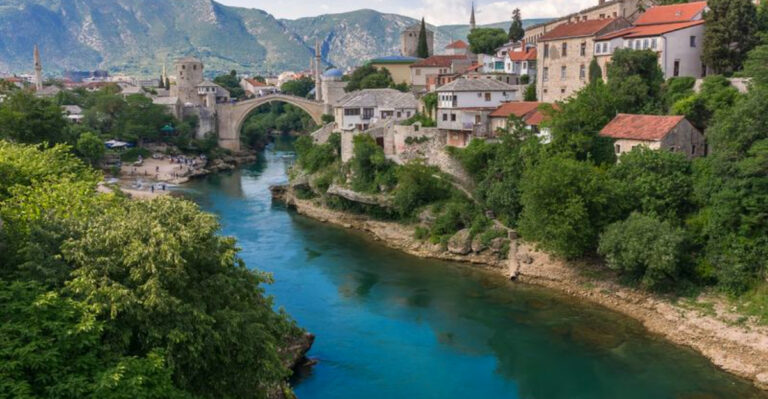
The Neretva River cuts through Mostar with enough force that every empire that wanted to control this region had to figure out how to cross it. The Ottoman answer was Stari Most, the high stone arch completed in the 16th century that connected commercial neighborhoods on opposite banks and became one of the most recognized achievements of Ottoman engineering in the Balkans.
The bridge was destroyed in November 1993 and later rebuilt using traditional materials and historic construction methods. Its reconstruction drew international attention and helped make Mostar a symbol of post-conflict recovery.
UNESCO lists the Old Bridge Area as an outstanding example of multicultural urban development.
Beyond the bridge itself, the cobblestone Kujundziluk bazaar, surrounding towers, mosques and traditional stone houses give Mostar’s historic core real depth. The city’s architectural character also reflects pre-Ottoman, Mediterranean and later Western European influences, making it more layered than a single imperial story.
Jajce
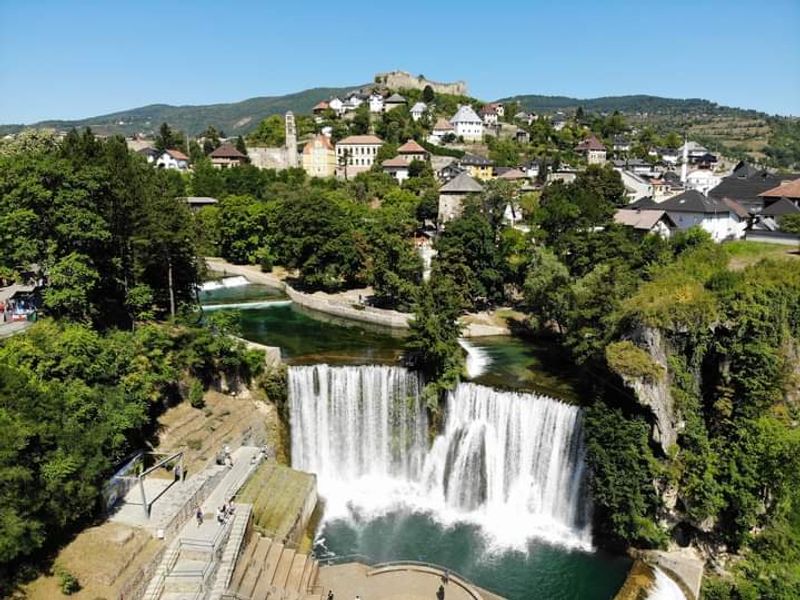
Before the Ottomans arrived, Jajce was already a royal center. The last Bosnian king, Stjepan Tomasevic, ruled from this hilltop town until 1463, and the medieval fortress and defensive walls from that era are still standing and open to visitors today.
Below the fortress, Ottoman-era buildings and the Esma Sultanija Mosque represent the centuries that followed the conquest. Two of the city’s more unusual sites are the underground Church of St. Mary with its associated catacombs and a nearby Mithraic temple that points to a Roman presence long before either medieval kings or Ottoman governors arrived.
Jajce is often described as an open-air museum, and that label holds up. The central area contains around 30 designated national monuments, and ticketed access is available at several of them.
Its natural and architectural ensemble also appears on Bosnia and Herzegovina’s UNESCO tentative list, reflecting the density of history packed into one relatively small town.
Travnik
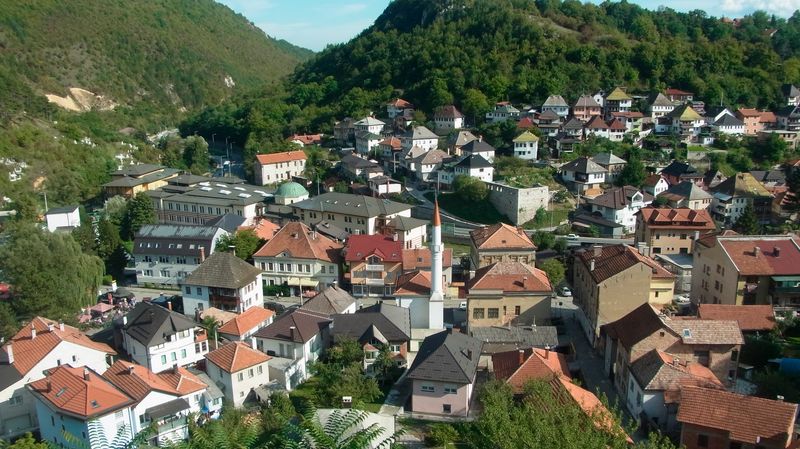
For roughly 150 years, Travnik was where the Ottoman Empire governed Bosnia. Viziers administered the province from this central Bosnian town, and they left behind mosques, fountains, residences and public institutions that shaped its character long after their authority ended.
The medieval fortress sitting above the town predates that Ottoman chapter entirely, creating a landscape where two distinct eras overlap on the same hillside. Below the fortress, the Sarena Dzamija, or Colorful Mosque, is one of the most photographed buildings in central Bosnia.
Two historic clock towers further distinguish Travnik from other regional towns of similar size.
Austro-Hungarian influence arrived later, bringing churches, educational buildings and European architectural elements into a city that had been primarily Ottoman in character. Travnik also holds a literary distinction: it is the birthplace of Ivo Andric, the Nobel Prize-winning author, and his childhood home operates as a memorial museum that visitors can tour alongside the fortress and mosques.
Pocitelj
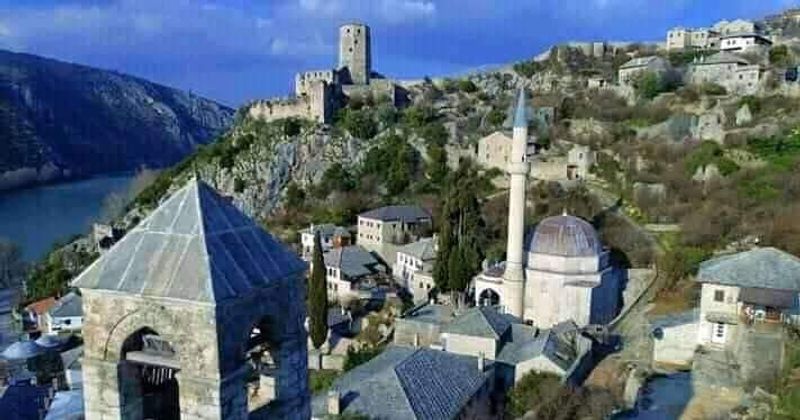
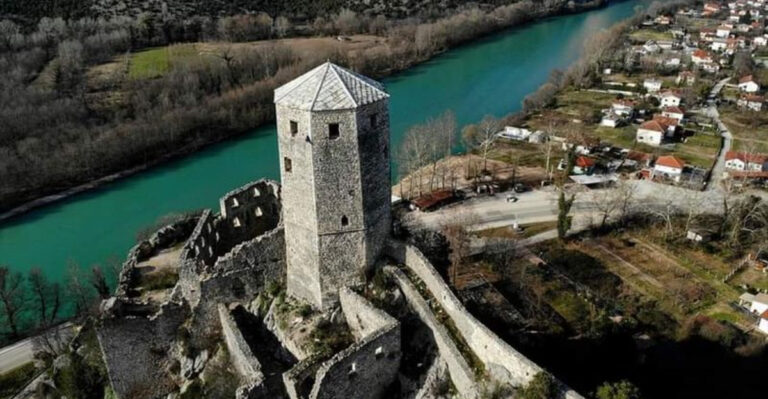
Pocitelj climbs a rocky hillside above the Neretva River in a way that makes it look almost theatrical. Stone houses, defensive towers and narrow paths stack on top of each other within a compact fortified settlement that controlled travel and trade routes connecting the Adriatic coast with Bosnia’s interior.
The town developed during the medieval period and was expanded under Ottoman rule. Its surviving ensemble includes the fortress, a clock tower, traditional residences and the domed Sisman Ibrahim Pasha Mosque.
Mediterranean building traditions blend with Ottoman urban planning here in a way that feels noticeably different from most inland Bosnian towns.
Pocitelj suffered extensive damage during the 1990s war, and major monuments were subsequently reconstructed. The historic core is a protected national monument and remains freely walkable, though the steep stone paths make appropriate footwear a practical necessity rather than a suggestion.
The settlement is included on Bosnia and Herzegovina’s UNESCO tentative list, though not yet on the full World Heritage List.
Stolac
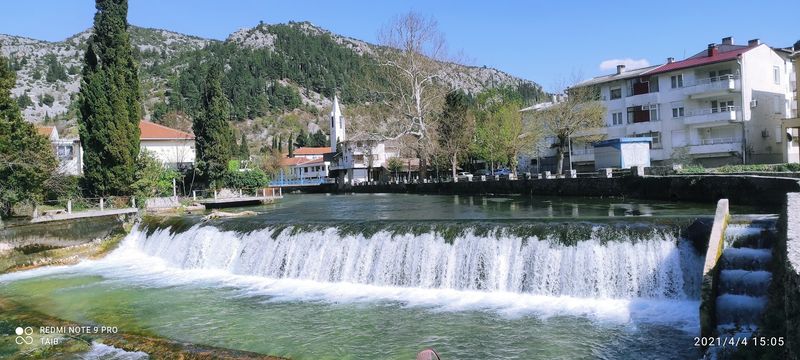
Stolac carries more history per square kilometer than almost any other town in the country. The surrounding area contains traces of Illyrian settlements, Roman communities, early Christian sites, medieval Bosnian culture and Ottoman development, making it one of the richest archaeological landscapes in the entire region.
Vidoski Fortress dominates the town from a ridge above the Bregava River, and its defensive walls evolved through Byzantine, medieval and Ottoman phases. Below the fortress, old bridges, mills and stone houses show how urban life organized itself around the river over many generations.
The nearby Radimlja necropolis contains some of the most elaborately carved medieval stecci tombstones in existence. These monumental medieval gravestones form part of a transnational UNESCO World Heritage property, which gives Stolac a direct connection to a recognized World Heritage site.
The town promotes itself as a museum town, and its fortress, riverside streets and archaeological surroundings remain active visitor destinations.
Trebinje
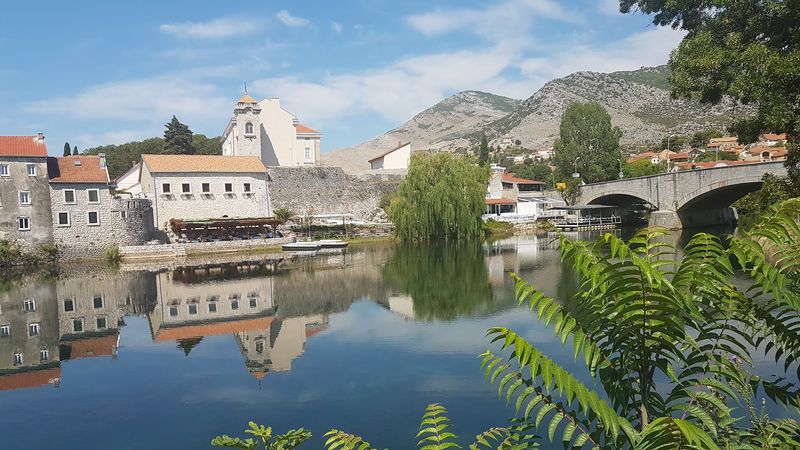
Trebinje’s walled Old Town looks like a fortress that gradually became a neighborhood. Construction of the fortified district intensified in the early 18th century after the Ottoman Empire lost nearby coastal strongholds to Venice, and Osman Pasha Resulbegovic directed much of that building effort.
Walls, gates, a clock tower and mosques created a compact administrative center beside the Trebisnjica River.
The wider region had been under medieval political control long before the Ottomans arrived, and the caravan route connecting the Adriatic coast with inland Balkan territories gave Trebinje its strategic value across multiple imperial periods. The Arslanagic Bridge, originally built during the Ottoman period and later relocated to its current position, adds another documented layer to that long history.
Austro-Hungarian rule introduced roads, military structures and European-influenced buildings that changed the city’s outward character. Trebinje’s Old Town, riverside promenades and central monuments remain active tourism sites, and the city’s tourism organization provides maps and visitor information from its central office.
Visegrad
The Mehmed Pasa Sokolovic Bridge at Visegrad is not just a crossing point over the Drina River. It is a work of imperial architecture at its most confident.
Constructed at the end of the 16th century on the orders of the Ottoman grand vizier whose name it carries, the bridge was designed by Mimar Sinan, the celebrated imperial architect responsible for some of the most important structures of the Ottoman world.
A sequence of elegant stone arches spans the river with a precision that has held for more than four centuries. The bridge once formed part of an important route connecting Bosnia with wider Ottoman territories and remained central to regional life long after the empire that built it was gone.
Ivo Andric made the bridge internationally famous through his novel The Bridge on the Drina. It remains accessible as a central public landmark today.
UNESCO added the Mehmed Pasa Sokolovic Bridge to the World Heritage List in recognition of its architectural and historical significance.
Konjic
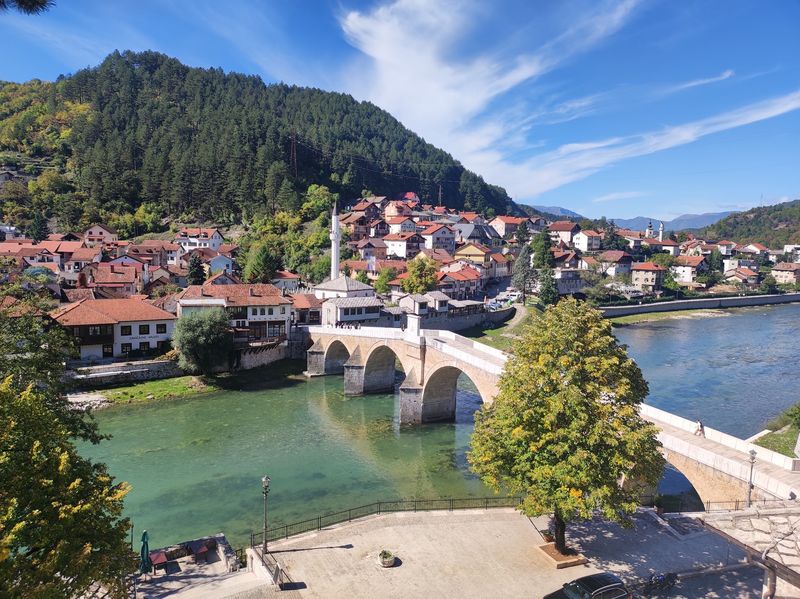
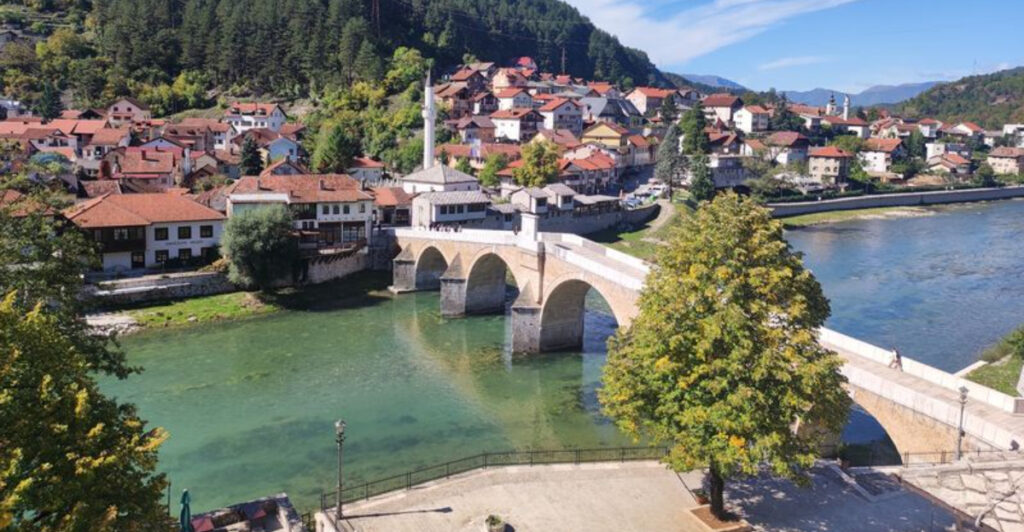
Konjic sits at a natural crossroads where major routes through Bosnia and Herzegovina converge, with mountains pressing in from several directions and the Neretva River running through the middle. That geography made it strategically important for centuries, and the six-arched Old Stone Bridge, constructed during the Ottoman period in 1682, was the physical expression of that importance.
The bridge supported regional travel and commerce for generations before German forces destroyed it while retreating in March 1945. A careful reconstruction completed between 2006 and 2009 restored its historic form, and it now reconnects the town’s old neighborhoods just as it did for most of its original existence.
The adjoining old bazaar preserves the smaller scale of the Ottoman town, and later Austro-Hungarian and Yugoslav buildings show how Konjic continued to matter to each successive administration. Both the bridge and old commercial area remain accessible to visitors.
The city’s official tourism platform was actively publishing updates in 2026, confirming Konjic’s continued role as a heritage destination.
Bihac
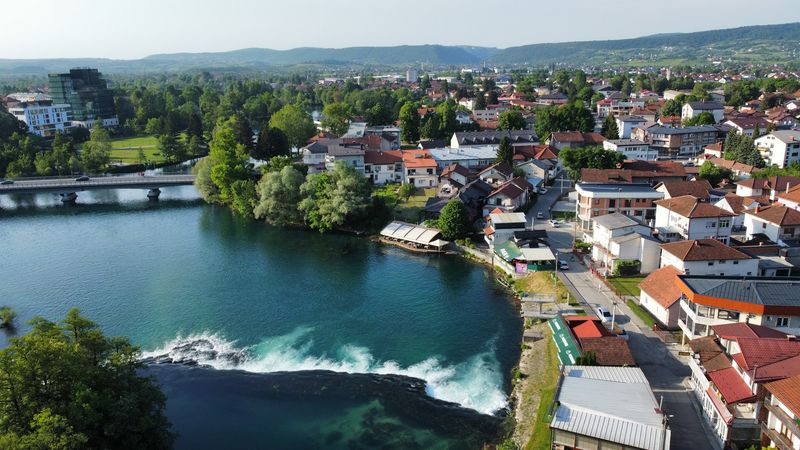
The Fethija Mosque in Bihac is one of the most architecturally honest buildings in Bosnia and Herzegovina. It began as a medieval Gothic Catholic church, traditionally dated to the 13th century, and was converted into a mosque after the Ottoman conquest of Bihac in 1592.
Gothic windows and proportions remain visible from the outside, sitting alongside later Islamic architectural elements in a combination that no renovation has tried to hide.
That visible layering makes Bihac a particularly clear example of how different empires reshaped the same physical space without fully erasing what came before. The Captain’s Tower, a surviving element of the town’s medieval defensive complex, and the bell tower of St. Anthony from the Austro-Hungarian period add further chapters to that story.
All three landmarks stand within the modern city center and can be explored on foot without much planning. Religious interiors should be visited respectfully and may be unavailable during services or ongoing maintenance work.
Banja Luka
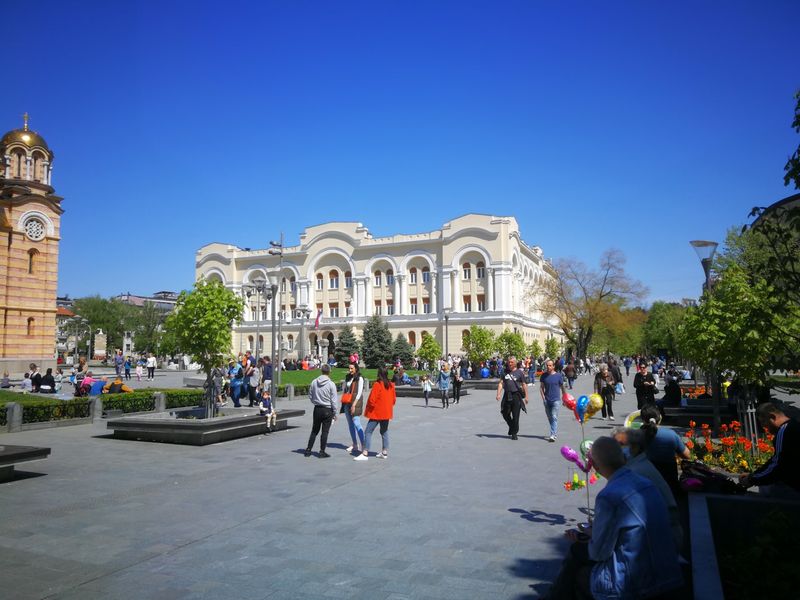
Banja Luka’s imperial history is written in two very different architectural languages. The Ottoman period, particularly the 16th century, brought significant development under Ferhad Pasha Sokolovic, who sponsored mosques, bridges, mills and public facilities.
The Ferhadija Mosque became the most prominent expression of that investment and remains the city’s most recognizable historic building.
The Kastel Fortress beside the Vrbas River tells a longer story. The site was used during Roman and medieval times before being strengthened under Ottoman administration and later adapted by successive authorities.
Walking through the fortress grounds today means standing on ground that was strategically valuable to at least four different political systems.
Austro-Hungarian rule added tree-lined streets, civic institutions and European architectural styles that helped transform Banja Luka into a modern regional center. The Ferhadija Mosque was destroyed in 1993 and officially reopened after reconstruction in 2016.
Entry should respect prayer schedules and appropriate dress, while the riverside fortress grounds remain open for general exploration.
Livno
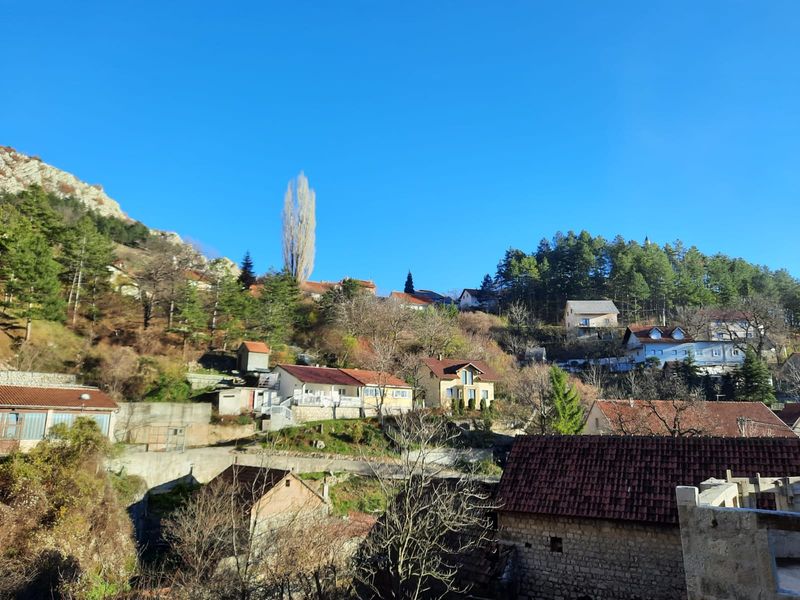
Livno sits in a broad karst field along routes that historically linked Dalmatia with inland Bosnia, and that geographic position meant medieval rulers, Ottoman administrators and Austro-Hungarian officials all left their mark on the same regional center. Unlike cities with a single concentrated old town, Livno’s history is distributed across hillsides, religious complexes and residential streets.
The elevated old quarter holds Ottoman-era houses, mosques and defensive remains overlooking the newer center. The 16th-century Hajji Ahmed Dukatar Mosque and its adjacent clock tower form one of Livno’s most recognizable historic groupings.
Nearby Franciscan institutions reflect the continuing Catholic presence in the region, while later civic buildings show Central European influence moving in from the west.
Most exterior landmarks and public areas remain accessible to visitors. Access to mosque, church and museum interiors depends on local schedules.
The combination of Islamic, Catholic and secular architecture across the same town shows clearly how different governments reshaped Livno without completely removing what previous administrations had built.
Srebrenik
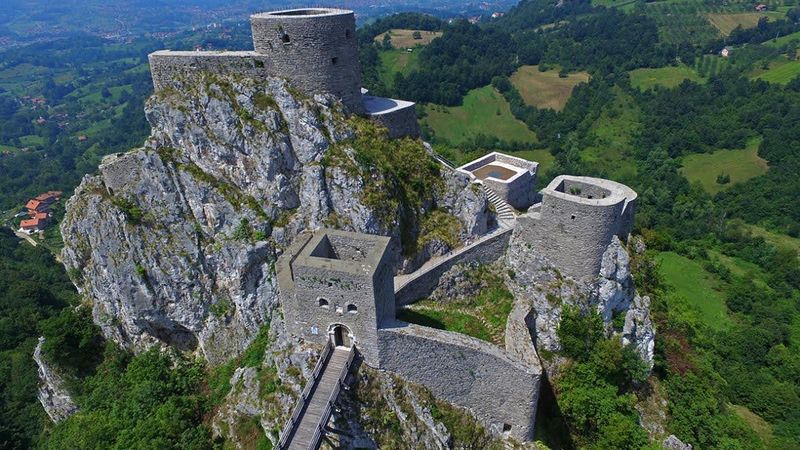
Srebrenik Fortress sits on a rocky ridge connected to the surrounding land by a narrow bridge, and that dramatic position tells you everything about why it was built. A written charter from 1333 documents the stronghold, making it one of the earliest recorded fortresses associated with medieval Bosnia and a rare example of a site with a verifiable founding date.
Its strategic value made it worth fighting over across multiple centuries. Bosnian rulers, Hungarian-Croatian forces and the Ottoman Empire all controlled or contested the fortress at different points, and the Ottomans eventually incorporated it into their defensive network and modified parts of the complex for changing military needs.
The fortress remains the central attraction of the Srebrenik area and is generally open to visitors, though weather, maintenance or scheduled events can affect access. Reaching the top requires climbing uneven paths and steps, but the elevated setting provides broad views across the countryside.
Srebrenik is a clear reminder that Bosnia’s imperial history was shaped in frontier fortresses just as much as in bazaars and administrative capitals.
Share this story