Spain is full of surprises tucked away from its famous cities and busy beaches. Hidden in mountain valleys, perched on rocky cliffs, and nestled inside ancient walls are villages so beautiful they have earned official recognition.
Los Pueblos Mas Bonitos de Espana is a national association that certifies communities meeting strict standards for architecture, heritage, cleanliness, and visitor services. These 13 villages represent some of the finest examples of rural Spain, each with its own personality and story worth discovering.
Albarracin, Aragon
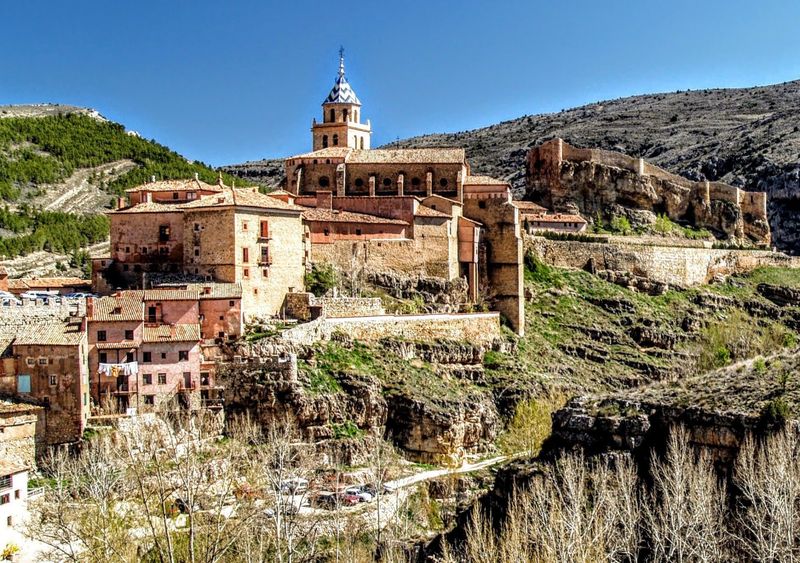
Perched dramatically on a rocky spur above the Guadalaviar River, Albarracin looks like it was painted onto the landscape by someone with a very vivid imagination. Its pinkish stone houses tumble down the hillside in cheerful disorder, wooden balconies jutting out at angles that seem to defy gravity.
The surrounding cliffs blend so naturally with the village walls that it can be hard to tell where geology ends and architecture begins.
History here runs deep. The first Islamic defensive enclosure dates to around the 10th century, and the walls expanded significantly when Albarracin became the capital of an independent taifa kingdom.
Walking the upper ramparts gives you a bird’s-eye view of rooftops, towers, and the river canyon below, all at once.
Albarracin is widely considered one of the best-preserved medieval villages in Spain. Its narrow lanes are lined with artisan shops, small restaurants, and stone doorways that practically beg to be photographed.
The village earned its place in Los Pueblos Mas Bonitos de Espana for good reason. Whether you visit in golden autumn light or under summer skies, Albarracin delivers a genuinely unforgettable experience.
Ainsa, Aragon
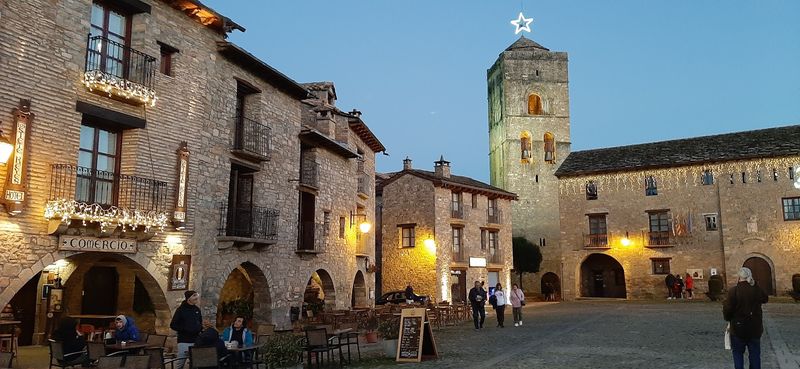
Ainsa has one of those town squares that makes you stop walking and simply stare. Stone arcades frame the rectangular plaza on all sides, creating a scene so photogenic that first-time visitors often stand there a little longer than they planned.
The Romanesque Church of Santa Maria anchors one end, its tower rising above the roofline with quiet authority.
Beyond the plaza, the remains of a castle guard the village’s northern edge, offering sweeping views toward Pena Montanesa and the distant Pyrenees. Ainsa sits in the historic Sobrarbe region of Huesca, a territory associated with an ancient kingdom that emerged more than a thousand years ago.
That long history is still visible in every stone arch and cobbled lane.
The village comes alive during its festivals, and the surrounding area gives outdoor enthusiasts plenty to explore, from canyoning in the Ordesa valley to hiking through beech forests. Ainsa is compact enough to explore in a morning but rewarding enough to justify staying longer.
Its mix of medieval grandeur, mountain scenery, and genuine local character makes it one of Aragon’s most satisfying stops for travelers seeking something beyond the ordinary.
Santillana del Mar, Cantabria
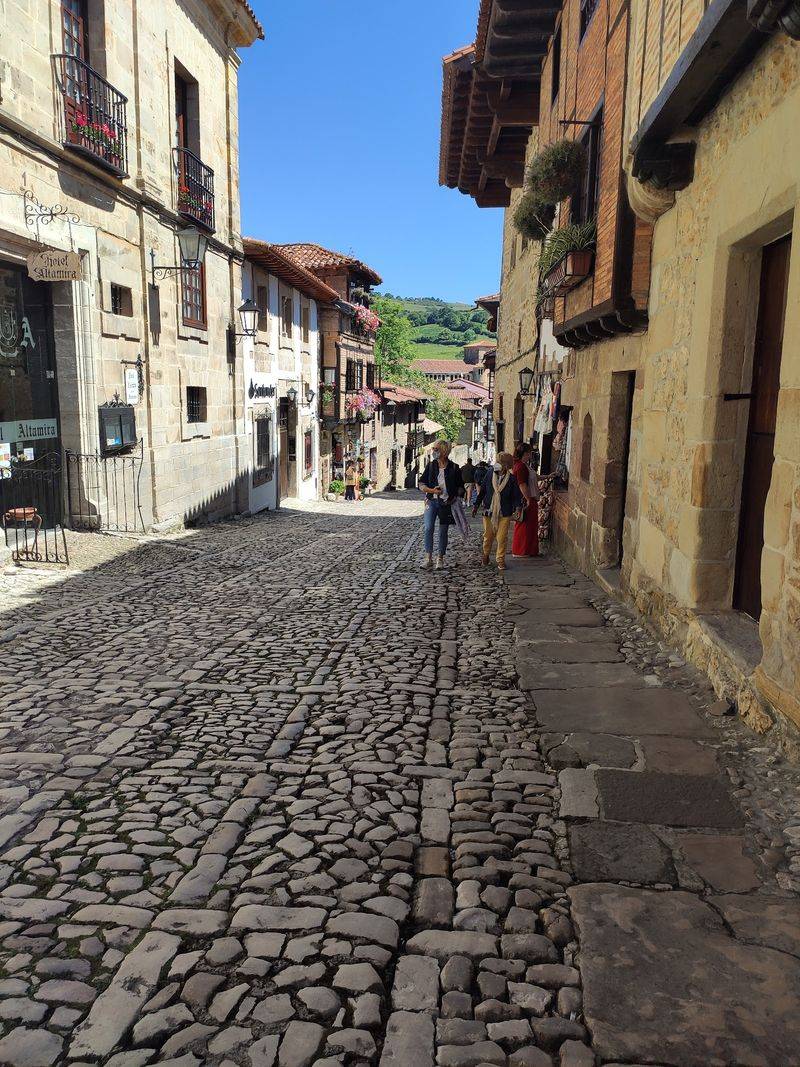
Philosopher Jean-Paul Sartre once called Santillana del Mar the most beautiful village in Spain, and while philosophers are not usually known for travel tips, this one stuck. Honey-colored stone mansions line its cobbled streets, their wooden balconies overflowing with flowers in shades of red and pink.
The overall effect is less like a real place and more like a film set that someone forgot to dismantle.
At the heart of it all stands the Collegiate Church of Santa Juliana, built in honor of the village’s patron saint and one of the finest examples of Romanesque architecture in northern Spain. The Torre del Merino and Torre de Don Borja rank among the oldest surviving civil buildings, while the Plaza Mayor preserves the quiet dignity of a medieval administrative center.
Just outside the village lie the Altamira caves, famous for their astonishing prehistoric paintings of bison and other animals. The combination of medieval streetscapes and Stone Age art makes this corner of Cantabria genuinely one-of-a-kind.
Santillana del Mar is small enough to walk end to end in twenty minutes, but rich enough in history and architecture to keep curious visitors engaged for an entire day.
Morella, Valencia
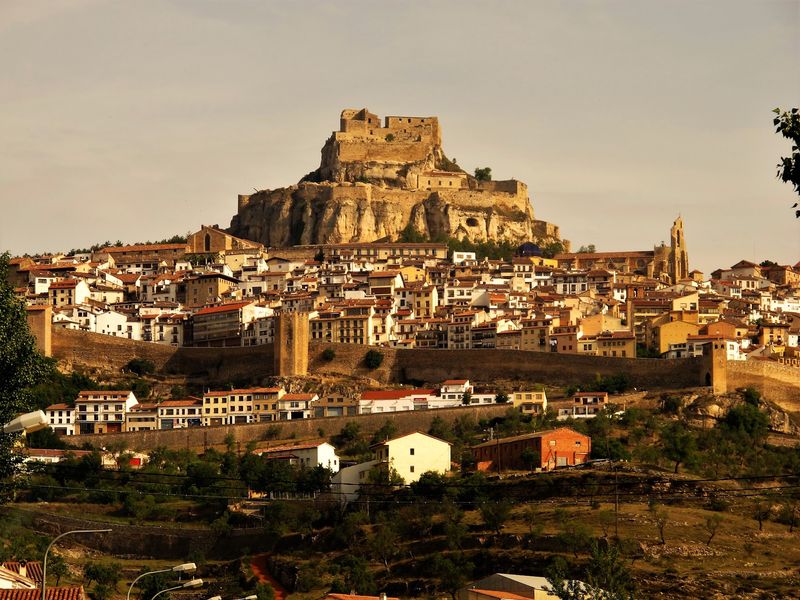
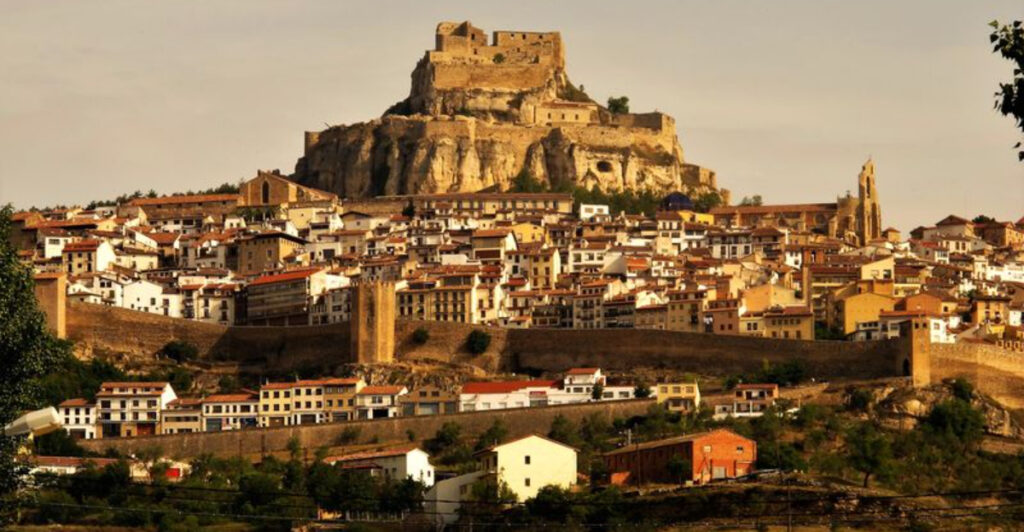
Spotting Morella from the road for the first time produces a genuine double-take. A colossal castle crowns a sheer rocky summit, and defensive walls wrap around the entire hillside below it like a stone embrace.
The effect is almost theatrical, the kind of view that makes passengers in moving cars suddenly shout at the driver to stop.
Centuries of different civilizations have left their mark on Morella’s streets, gates, towers, and churches. Its arcaded main street provides shade on hot summer days and a sense of architectural continuity that feels rare in modern Spain.
Climbing through the layers of the village toward the fortress above is an experience that rewards every step with better views and more interesting stonework.
Morella hosts a celebrated sexenni festival every six years, a tradition recognized as an Intangible Cultural Heritage event. The surrounding comarca of Els Ports adds rugged landscapes, medieval hermitages, and quiet rural roads to the mix.
For travelers who appreciate dramatic settings with genuine historical depth, Morella delivers on every front. Its place in Los Pueblos Mas Bonitos de Espana reflects not just its appearance but the quality of everything that has been preserved here across the centuries.
Peniscola, Valencia
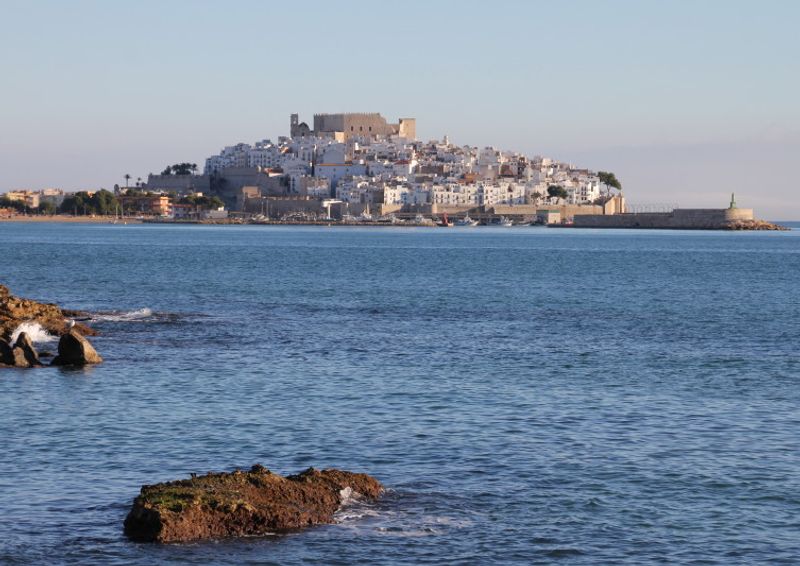
Peniscola is the kind of place that looks almost too good to be real. Its whitewashed old town sits on a rocky headland that juts into the Mediterranean, surrounded by water on three sides and enclosed by impressive stone walls.
From the beach below, the village rises like a medieval ship sailing out to sea.
The castle at its summit was home to the exiled Antipope Benedict XIII, known locally as Papa Luna, who held court here in the early 15th century after being driven from Avignon. His stubborn refusal to abandon his claim to the papacy became legendary, and his castle remains the village’s most visited monument.
Game of Thrones fans may recognize certain scenes filmed among its ancient walls.
Below the fortified headland, Peniscola has developed a lively beach resort scene that gives the area a dual personality. Families come for the sand, history lovers come for the castle, and food enthusiasts come for the fresh seafood served in restaurants just steps from the water.
The old town itself remains remarkably well preserved despite the tourist activity surrounding it, making Peniscola one of the most genuinely complete historic villages on the entire Spanish Mediterranean coast.
La Alberca, Castilla y Leon
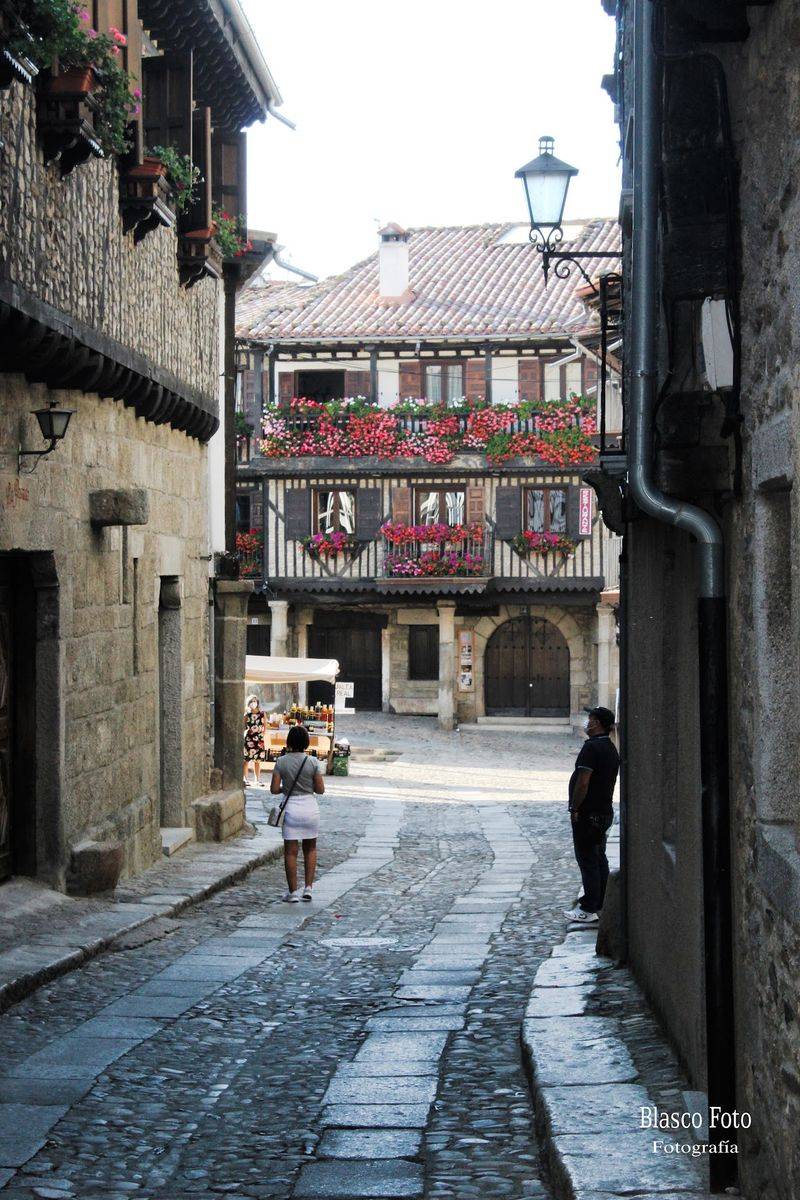
Walking into La Alberca feels like stepping into a very well-preserved version of rural Spain that most of the country has long since forgotten. Timber-framed houses lean companionably over narrow streets, their deep wooden balconies loaded with geraniums and trailing plants.
The stone arcades around the central plaza create pockets of shade that locals have been using for centuries.
La Alberca holds a notable distinction: it was the first village in Spain to be declared a Historic-Artistic Site, receiving that designation back in 1940. That early recognition helped protect its architectural character at a time when many similar villages were being altered or abandoned.
The result is a historic center that feels genuinely lived-in rather than preserved purely for tourism.
The surrounding Sierra de Francia landscape adds hiking trails, chestnut forests, and the Las Batuecas natural park to the appeal. Local food traditions are strong here, with cured meats from Iberian pigs being a particular point of pride.
Visitors who arrive expecting a postcard village often leave surprised by how much actual daily life continues within its ancient streets. La Alberca is charming without trying too hard, and that relaxed authenticity is precisely what makes it so appealing.
Pedraza, Castilla y Leon
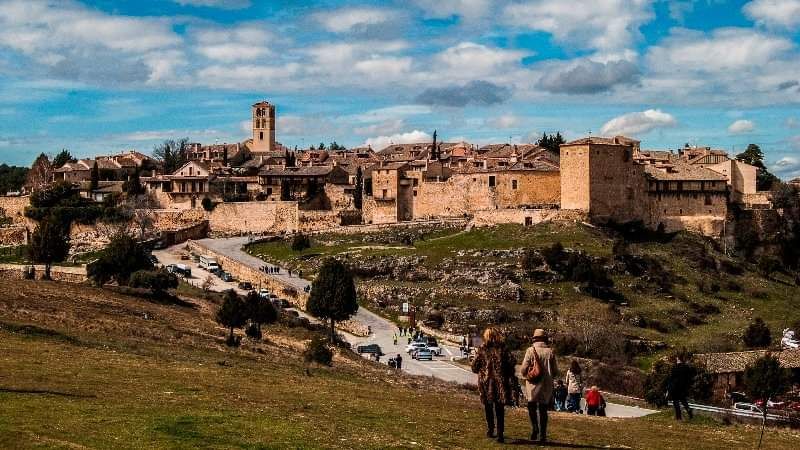
You earn your first impression of Pedraza by passing through its single fortified gateway, a dramatic entrance that immediately signals you are leaving the modern world behind. Beyond the gate, stone palaces and noble houses line quiet streets, their facades decorated with carved coats of arms that hint at the wealth and status of their original owners.
The whole village feels like it has been paused mid-sentence somewhere around the 16th century.
The broad Plaza Mayor is one of the finest in Castile, surrounded by arcaded buildings and anchored by a sense of unhurried calm that is genuinely hard to find so close to Madrid. Pedraza sits roughly 100 kilometers from the capital, making it a popular day trip for city residents who need a reminder that Spain contains more than traffic and tapas bars.
Two famous painters, Ignacio Zuloaga and Daniel Zuloaga, both lived and worked in Pedraza, attracted by its light and architectural character. The village’s castle, which overlooks the surrounding countryside from a rocky promontory, once held the sons of the French king Francis I as hostages.
That mix of artistic history and royal intrigue gives Pedraza a depth that goes well beyond its photogenic stone streets.
Setenil de las Bodegas, Andalusia
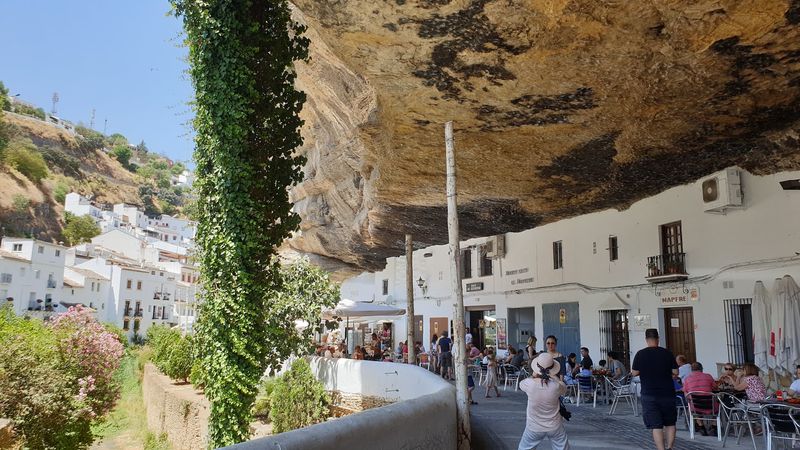
Some villages are built beside interesting geology. Setenil de las Bodegas decided to skip the formalities and build directly underneath it.
Enormous rock overhangs stretch above entire streets, forming natural ceilings over rows of white houses, shops, and restaurants. The result is one of the most visually bizarre and genuinely fascinating streetscapes anywhere in Spain.
The two most famous cave-streets, Cuevas del Sol and Cuevas de la Sombra, translate roughly as Streets of Sun and Shadow, named for which side of the gorge catches the light. Dining at a restaurant here, seated beneath a cliff that has been hanging overhead for thousands of years, is an experience that tends to generate strong opinions about whether it is thrilling or slightly nerve-racking.
Most people land firmly on thrilling.
Above the cave-lined streets stands the Torre del Homenaje, the main surviving tower of an Almohad fortress that protected the settlement from the 12th century. The village sits in the province of Cadiz, surrounded by the rolling hills of the Serrania de Ronda.
Its unusual relationship between human architecture and raw geology sets Setenil apart from every other white village in Andalusia, and that singularity is exactly what draws visitors from across Europe.
Vejer de la Frontera, Andalusia
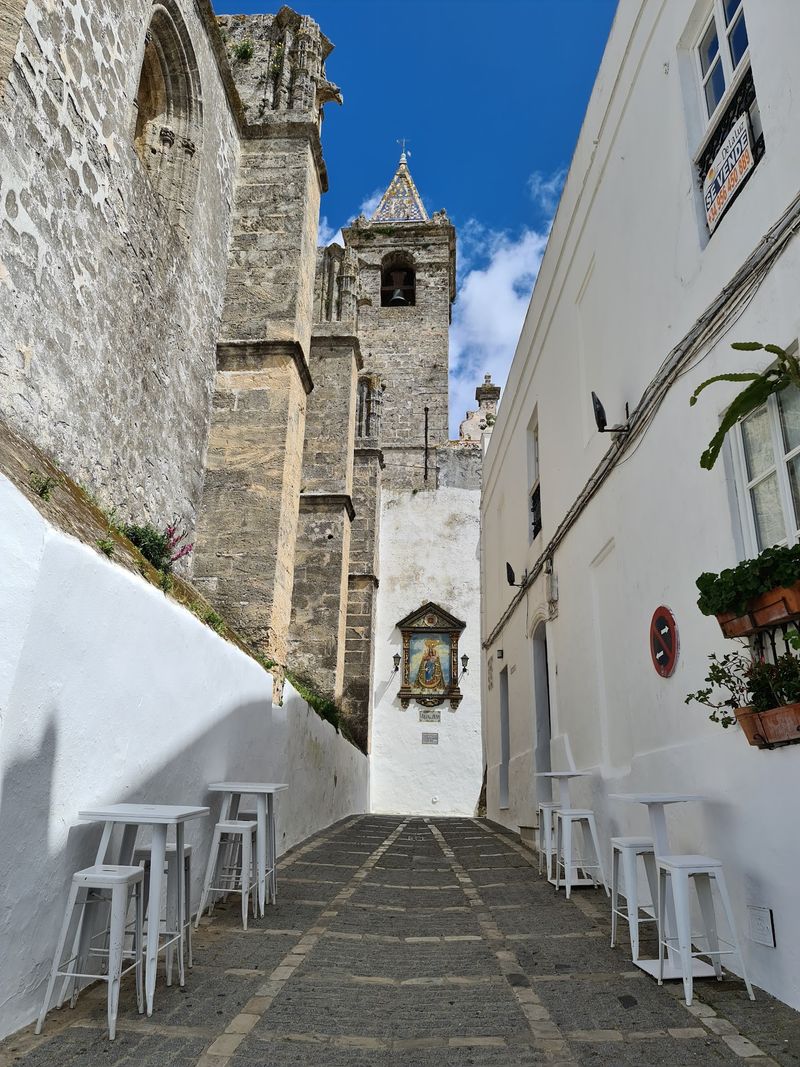
Vejer de la Frontera has a habit of stopping travelers in their tracks. From a distance, its white houses and tiled roofs cluster so tightly on the hilltop that the whole village looks like a single sculptural object placed carefully on the landscape.
Up close, arched passageways, hidden courtyards, and viewpoints reveal themselves one by one as you wander its maze of narrow streets.
The village sits roughly 190 meters above sea level, with sweeping views toward the Atlantic coast just 10 kilometers away. That combination of hilltop history and nearby beach access gives Vejer a dual appeal that few Andalusian villages can match.
Its long Islamic heritage is visible in the layout of its streets, the proportions of its whitewashed walls, and the way the village turns inward around cool interior spaces.
Vejer was designated a Historic-Artistic Site in 1976 and received Spain’s first National Village Beautification Prize in 1978, recognitions that reflect decades of careful maintenance. A growing international food scene has added excellent restaurants and a lively market to its charms.
The village also hosts a popular flamenco festival each summer. Vejer manages the rare trick of being genuinely fashionable without losing the quiet, layered character that made it special in the first place.
Mojacar, Andalusia
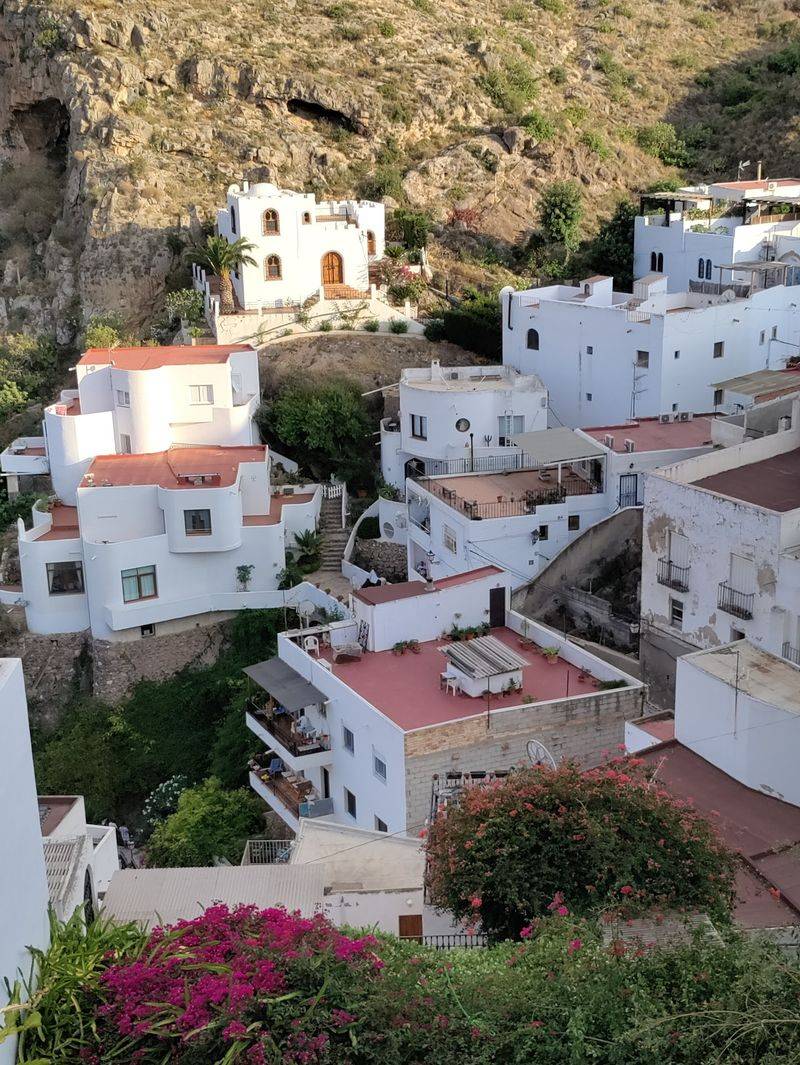
Mojacar old village wears its Moorish past openly and without apology. Whitewashed cubic houses climb a steep hill above the dry Almerian landscape, their flat roofs and small windows reflecting centuries of adaptation to intense heat and bright sun.
From the lookout points scattered across the village, the blue Mediterranean stretches to the horizon in one direction and ochre-colored badlands extend in the other.
The village layout follows the logic of an ancient Islamic settlement, with narrow lanes designed to create shade, channel breezes, and confuse any attacker who managed to get inside the walls. Fountains, flower pots, and painted ceramic tiles add color to the whitewashed surfaces.
Local legend holds that Mojacar was founded by the Indalo, a prehistoric stick figure found painted in nearby caves, now adopted as a good-luck symbol throughout the region.
Modern Mojacar has two distinct faces: the historic hilltop pueblo and the beach resort district several kilometers downhill. The contrast between these two worlds is striking and actually adds to the appeal.
Travelers can spend a morning exploring medieval alleyways and an afternoon on a Mediterranean beach without ever leaving the same municipality. Local cuisine reflects the area’s mixed cultural history through dishes like migas and gurullos stew.
Pampaneira, Andalusia
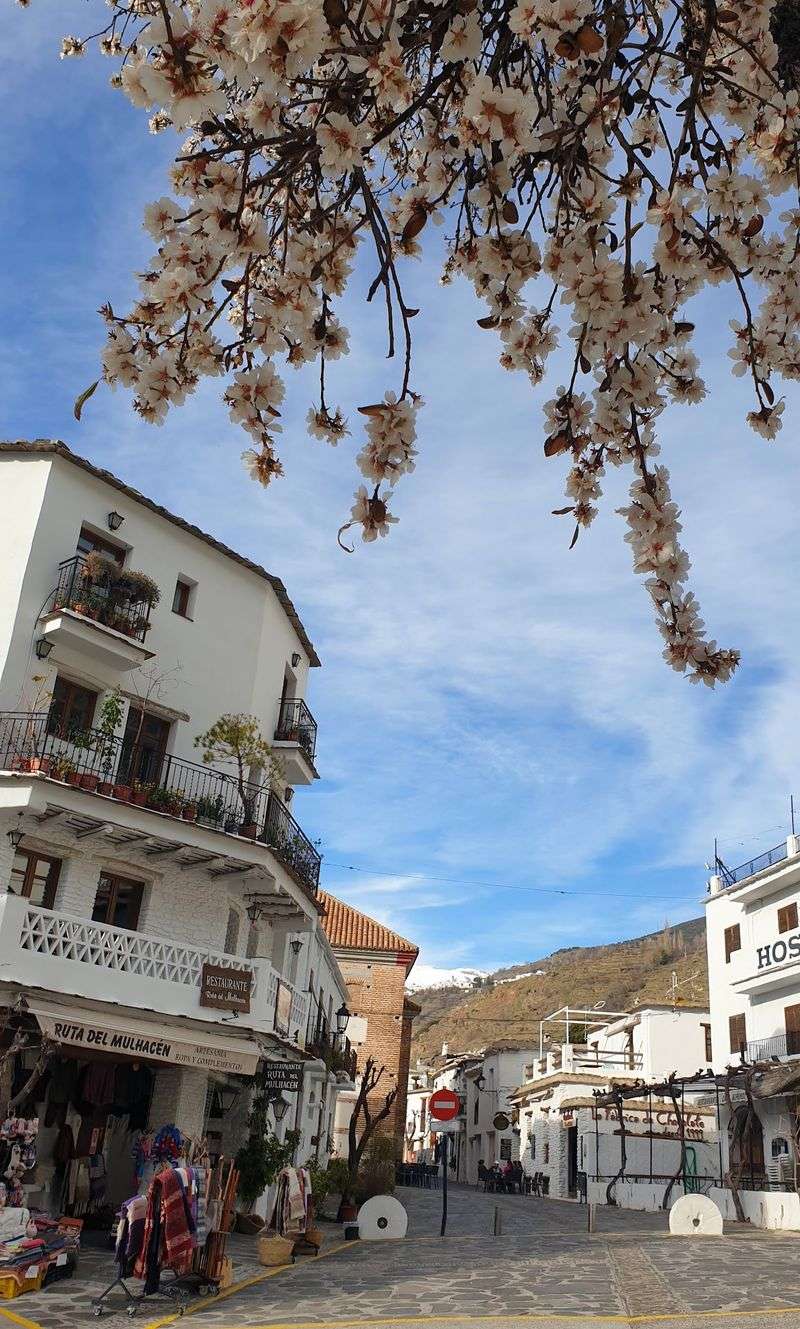
Gravity seems to have had very little say in how Pampaneira was arranged. The village spreads across a steep slope of the Poqueira Gorge in the Alpujarras, its flat-roofed white houses stacked in terraces that follow the natural contours of the mountainside.
Water channels run alongside the lanes, a feature inherited from the Moorish agricultural system that once irrigated these high slopes.
The flat roofs, known as terraos, are a defining characteristic of Alpujarran architecture and serve a practical purpose: they catch rainwater and provide outdoor space during the warm months. Walking Pampaneira’s streets, you will find craft shops selling handwoven rugs, ceramics, and local honey, as well as small bars serving hearty mountain food that prioritizes quantity alongside quality.
The village sits at roughly 1,060 meters above sea level, making it noticeably cooler than the coast even in midsummer. Hiking trails from the village connect to Bubion and Capileira higher up the gorge, and serious walkers can continue all the way to the Sierra Nevada peaks above.
Pampaneira earned its place in Los Pueblos Mas Bonitos de Espana through a combination of authentic architecture, cultural continuity, and a mountain setting that remains one of the most striking in southern Spain.
Tejeda, Gran Canaria
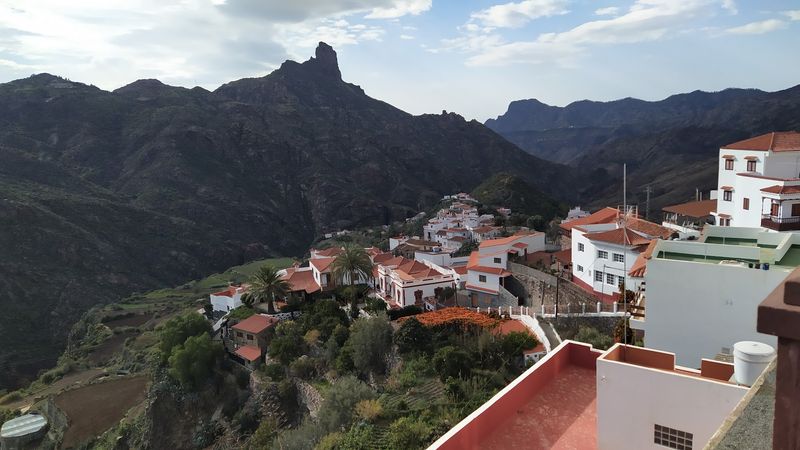
Writer Miguel de Unamuno looked out at the landscape surrounding Tejeda and described it as a petrified storm. Standing at any of the village’s viewpoints, it is easy to understand what he meant.
Massive volcanic rock formations, plunging ravines, and the jagged silhouette of Roque Nublo dominate a panorama that feels more like science fiction than rural Spain.
Tejeda sits near the geographic center of Gran Canaria, inside the remnants of an ancient collapsed caldera. The village itself is a calm contrast to the dramatic geology surrounding it: white houses, bougainvillea-draped walls, a small church, and a central square where life moves at an unhurried pace.
The almond trees that cover the surrounding hillsides burst into white and pink blossom each February, drawing visitors from across the island.
Roque Bentayga, visible from the village, was a sacred site for the Canary Islands’ indigenous Guanche people and contains ancient ritual spaces carved into the rock. The wider landscape around Tejeda forms part of the UNESCO-recognized cultural landscape of Risco Caido and the Sacred Mountains of Gran Canaria.
For a village accessible by road from Las Palmas in under an hour, Tejeda offers a remarkably wild and historically layered experience.
Ujue, Navarra
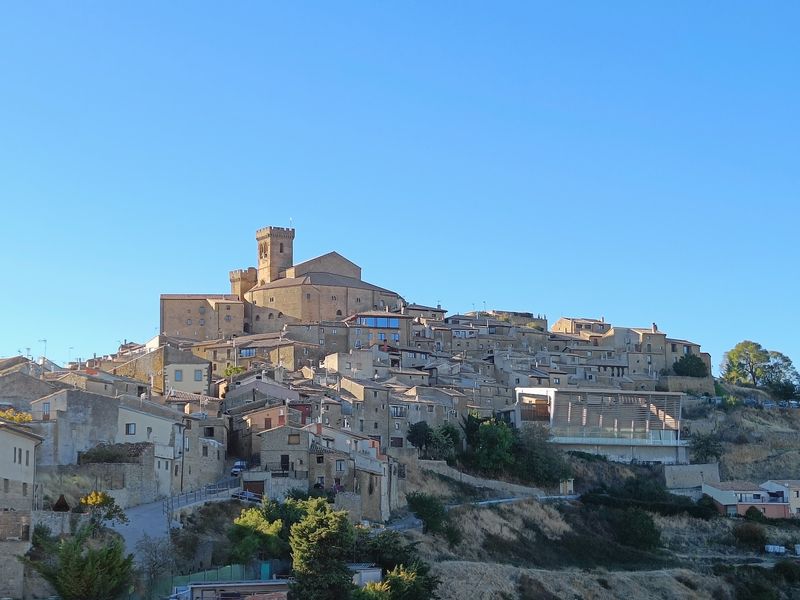
Ujue looks like it grew straight out of the rock. Limestone houses crowd together around winding lanes that spiral upward toward the fortified Church of Santa Maria, creating a silhouette so unified and purposeful that the entire village reads as a single architectural statement from a distance.
On a clear day, the views from the top stretch across the plains of Navarra all the way to the Pyrenees.
The church itself is a remarkable structure, combining Romanesque and Gothic elements in a building that served as both a place of worship and a defensive stronghold. Inside, a revered image of the Virgin of Ujue has been drawing pilgrims for centuries.
Each year on the Sunday after Saint Mark’s Day, a candlelit pilgrimage called the Romerias brings thousands of people dressed in traditional black tunics up the hill to the church.
The village has fewer than 100 permanent residents, which gives it a quality of quiet that larger certified villages cannot replicate. Walking its lanes after the day-trippers leave, with views of the Navarran plain turning gold in the late afternoon light, is one of those travel experiences that is difficult to describe but easy to remember.
Ujue earns its place on this list through atmosphere alone, and atmosphere here is in very generous supply.
Share this story