Some buildings hold more than wood and nails. They hold entire chapters of a community’s story.
The 1889 Territorial School in Edmond, Oklahoma is exactly that kind of place, a tiny one-room schoolhouse that has survived more than 135 years and still carries its original blackboards on the walls. Built just days after the famous Land Run of 1889, this modest structure is believed to be the oldest standing building in Oklahoma County, and walking through its door feels less like a museum visit and more like a genuine step back in time.
Where the 1889 Territorial School Stands Today
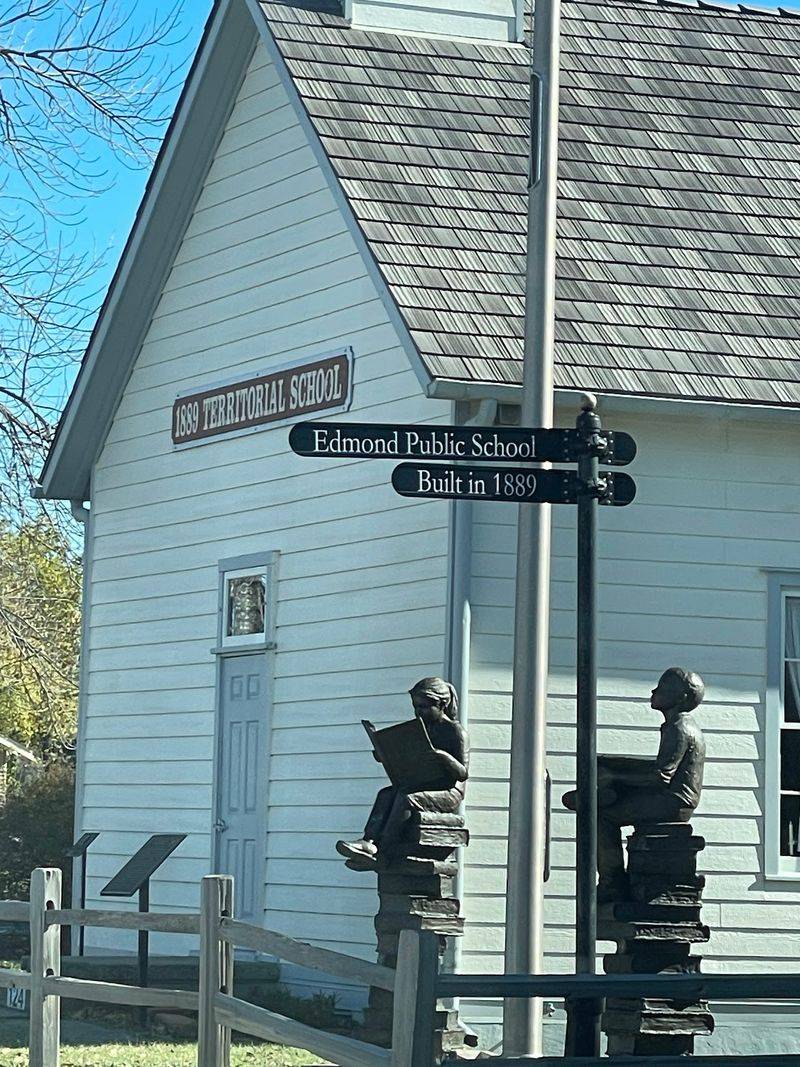
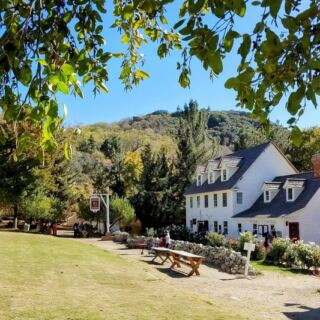
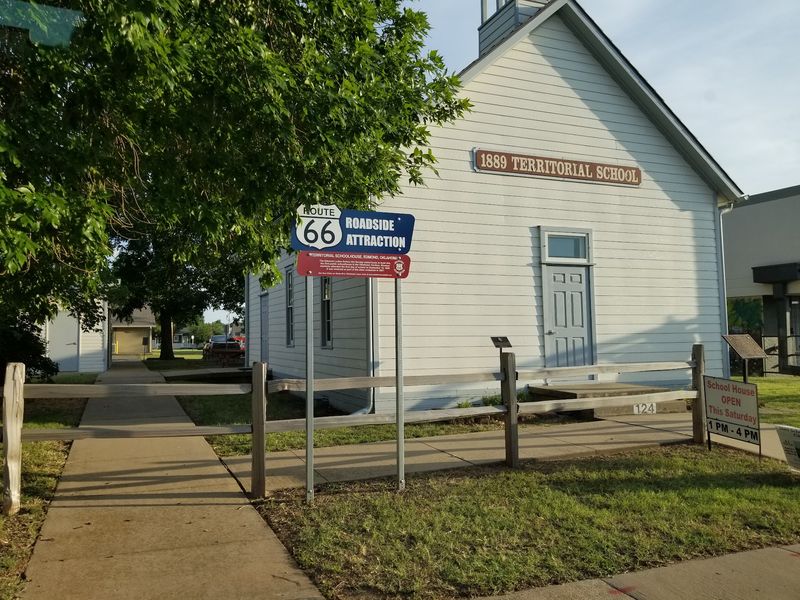
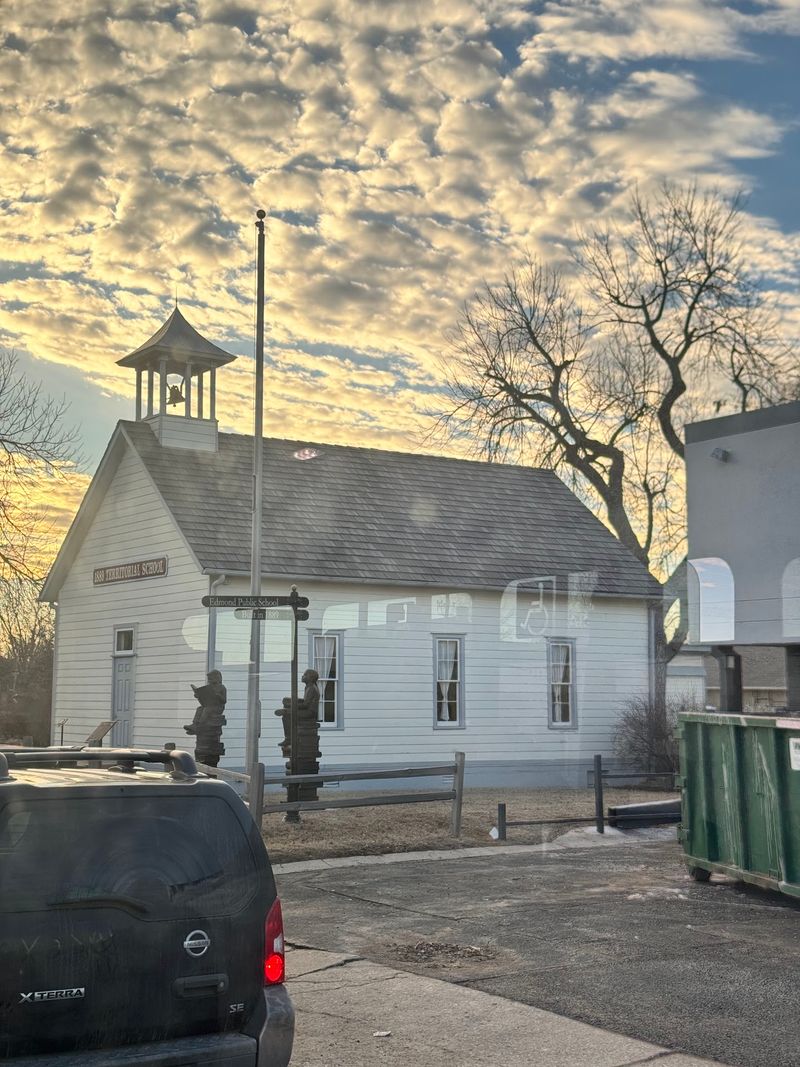
A small white building tucked along a busy Edmond street might not catch your eye at first glance, but the 1889 Territorial School at 124 E 2nd St, Edmond, OK 73034 is one of the most historically significant structures in the entire state. Modest in size and easy to miss, it sits in a way that almost dares you to slow down and take a second look.
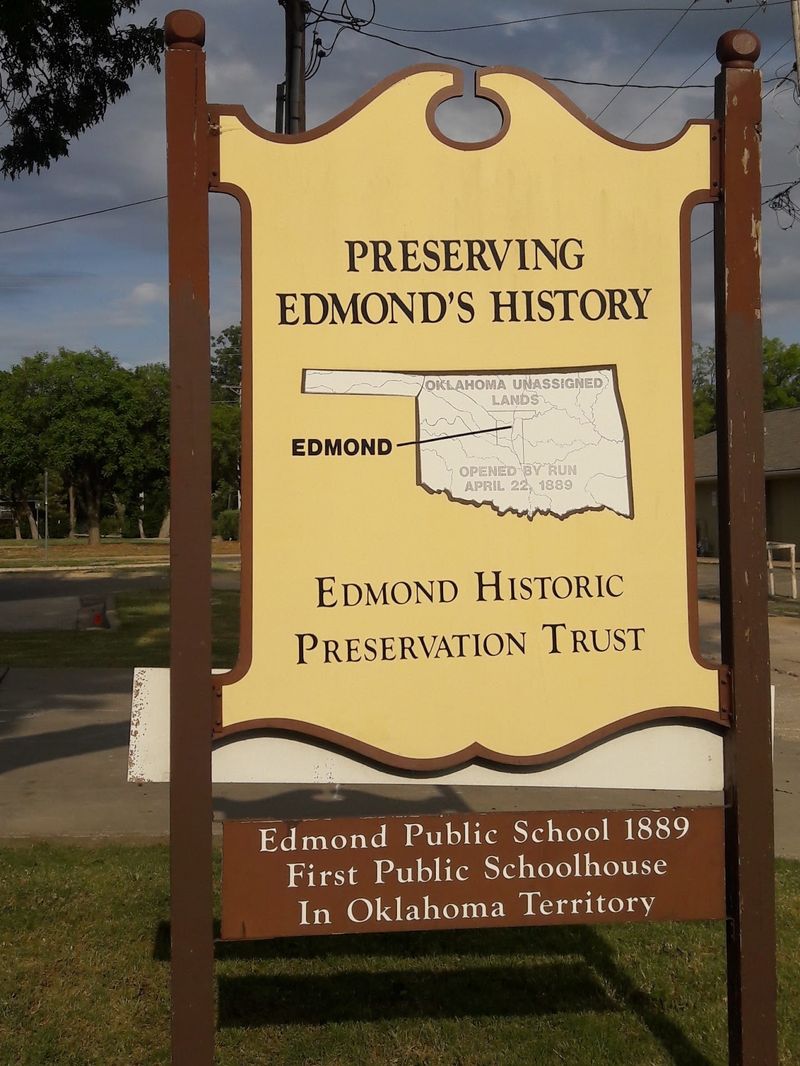
The school sits right in the heart of Edmond, a city in Oklahoma County that traces its own roots directly to the Land Run of April 22, 1889. That single afternoon changed the Oklahoma Territory forever, and this little schoolhouse was one of the very first permanent structures that followed.
It is a physical anchor connecting modern Edmond to its earliest days.
Out front, a pair of bronze sculptures depicting schoolchildren greet visitors before they even reach the door. The sculptures set the tone immediately, playful, warm, and quietly educational.
The surrounding area offers additional parking beyond the two spots directly behind the building, so getting there is manageable even on a busy Saturday afternoon.
The Land Run That Made This School Necessary
On April 22, 1889, tens of thousands of settlers poured into the Unassigned Lands of Indian Territory in a single chaotic afternoon. Towns materialized almost overnight, and Edmond was one of them.
Within weeks, families were already thinking about schools, because where there are children, education follows close behind.
The schoolhouse was constructed in 1889, just months after that famous run, making it a direct product of one of the most dramatic settlement events in American history. The fact that it still stands today, on essentially the same ground where it was built, is remarkable given how rapidly Oklahoma changed in the decades that followed.
Edmond grew from a tent city into a proper town with surprising speed, and the school was part of that transformation. It served as a symbol that the community intended to stay, to build, and to educate its children.
That original sense of purpose still radiates from the building today, even after all the years and changes that have come and gone around it.
A Building That Outlived Its Original Purpose Several Times Over
Few buildings survive 135-plus years without reinventing themselves at least once, and the 1889 Territorial School is no exception. After serving as a classroom through the late 1800s, the building transitioned into a private residence around 1900.
That shift alone is fascinating, someone literally lived inside what had been a schoolroom.
The story did not stop there. By the 1950s, the building had transformed again, this time into a camera shop.
A Victorian-era schoolhouse selling photography equipment is an unlikely combination, but it speaks to the structure’s durability and the community’s instinct to keep using it rather than tear it down.
Eventually, the Edmond Historic Preservation Trust stepped in and undertook a careful restoration that returned the building to its schoolhouse identity. The renovation preserved as much original material as possible while making the space safe and accessible for modern visitors.
The result is a building that carries the fingerprints of every era it has lived through, without losing sight of what it was at the very beginning.
The Original Blackboards That Refused to Disappear
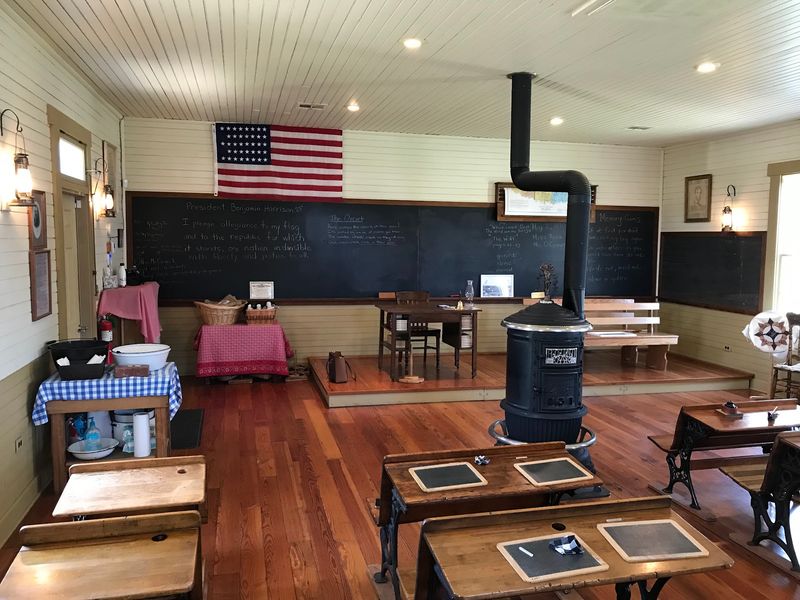
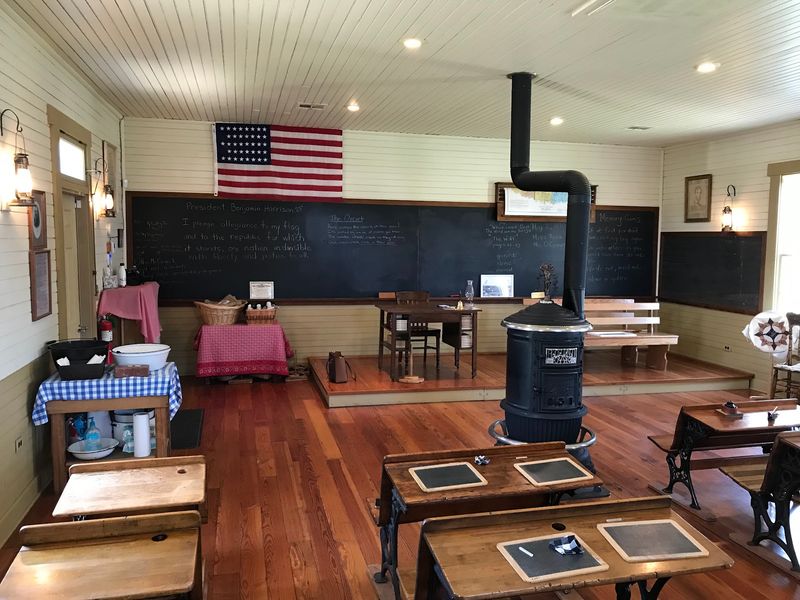
Perhaps the most striking detail inside the 1889 Territorial School is something you might walk right past if no one points it out. The blackboards on the interior walls are not chalkboards that were hung up or installed.
They are painted directly onto the wood, and they have been there since the school first opened.
The recipe sounds almost folkloric: a mixture of burnt sweet potatoes and milk, applied in a rectangle on the wall to create a dark, writable surface. Pioneer ingenuity at its most practical.
Today, those same painted rectangles are protected behind a plexiglass-framed barrier, preserving them for future generations to see and appreciate.
The fact that these blackboards survived more than a century of use as a residence and a camera shop, then a full restoration, is genuinely astonishing. They are not reproductions.
They are not artistic interpretations. They are the real thing, sitting quietly on the wall exactly where a territorial-era teacher once wrote lessons for children who had just arrived by covered wagon.
Nothing in the building makes the past feel closer than standing in front of them.
A Roof Section and a School Bell Worth Ringing
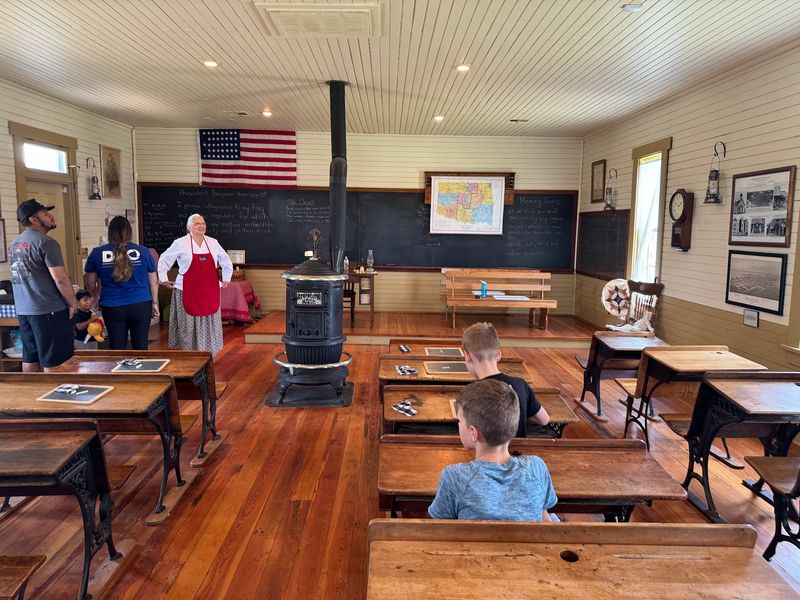
Beyond the blackboards, the interior of the 1889 Territorial School holds a few more surprises that make the visit feel genuinely layered. Mounted on the wall in the back corner is a section of the building’s original roof, complete with wood shingles.
It is not a photograph or a diagram. It is an actual piece of the structure that once kept rain off the heads of Oklahoma Territory’s earliest students.
Then there is the school bell. The original bell rope is still in place, and visitors are actually invited to ring it themselves.
Pulling that rope and hearing the bell sound overhead is one of those rare museum moments where you stop being a passive observer and become briefly, joyfully part of the story.
Period desks and decor fill the room, creating a classroom atmosphere that feels considered rather than cluttered. The docents on hand know exactly which decorative pieces are accurate to the era and which ones are not original to this specific building, and they are refreshingly transparent about the distinction.
That honesty adds a layer of trust to the whole experience that makes the genuine artifacts feel even more meaningful.
The Curious Question of Why It Is Not on the National Register
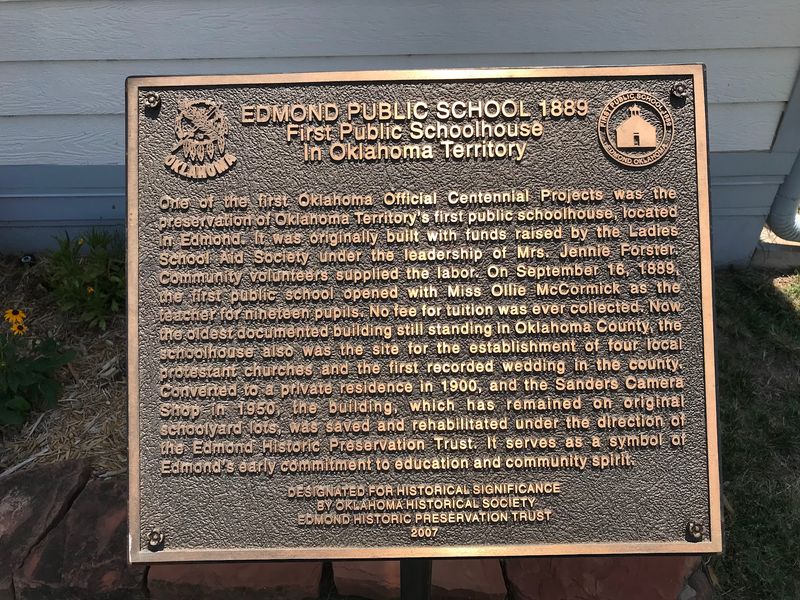
Here is a detail that surprises almost every visitor who learns it. Despite being believed to be the oldest standing building in Oklahoma County and a structure with clear historical significance, the 1889 Territorial School is not listed on the National Register of Historic Places.
The reason comes down to a matter of feet, specifically about 50 of them.
At some point in the building’s history, it was moved approximately 50 feet from its original location. That relocation, however minor it seems, disqualifies the structure from national historic registration under current criteria.
It is a technicality that feels almost frustrating when you are standing inside a room with original 19th-century blackboards on the walls.
The docents share this fact openly and with good humor, and it tends to spark genuine conversation among visitors. Some find it absurd.
Others find it fascinating as a window into how historic preservation standards work. Either way, the building’s local and state significance is undeniable, and the Edmond Historic Preservation Trust has made sure it is cared for with the same attention it would receive under any federal designation.
Accessibility and Layout Inside the Schoolhouse
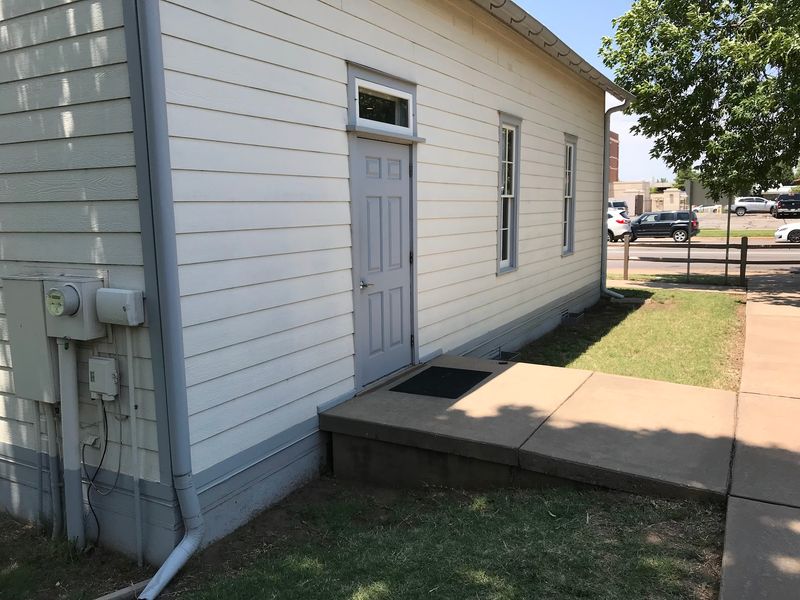
Getting inside the 1889 Territorial School is straightforward once you know the layout. The building has two entrances, which is a thoughtful detail for such a compact structure.
The front entrance faces 2nd Street and requires climbing a couple of steps, while the wheelchair-accessible entrance is located on the east side of the building, facing the adjacent tire and lube shop.
The interior is a single room, true to the one-room schoolhouse tradition. Period desks are arranged as they would have been in a functioning classroom, and the space is well air-conditioned, which matters considerably during Oklahoma summers when the heat is no small thing.
The building is compact, so crowding can happen quickly when multiple groups arrive at the same time. That said, the intimate scale is also part of the charm.
You are never far from any detail, and the docents can address the whole room without raising their voices. Parking is limited to two spots directly behind the schoolhouse, with one designated as handicap accessible, but the surrounding neighborhood offers additional options for those willing to walk a short distance.
The Knowledgeable Docents Who Bring the History to Life
A historic building is only as compelling as the people who help you understand it, and the 1889 Territorial School is fortunate to have docents who genuinely know their subject. Volunteers from organizations including the Daughters of the American Revolution have staffed the schoolhouse, bringing deep knowledge of both the building and the broader context of Oklahoma’s territorial period.
Visitors consistently mention being greeted warmly the moment they arrive. The docents are upfront about which artifacts are original to the schoolhouse and which are period-accurate additions, a distinction that matters to history enthusiasts.
That transparency makes the genuine pieces, like the blackboards and the roof section, feel even more precious.
The conversations that unfold during a visit can go in many directions. Docents are prepared to talk about the Land Run, territorial life, pioneer education methods, and the building’s own complicated journey through the 20th century.
For visitors who come with questions, the experience becomes genuinely interactive. For those who simply want to look around, the room itself does most of the talking without anyone needing to say a word.
Pioneer Day Events and School Field Trips
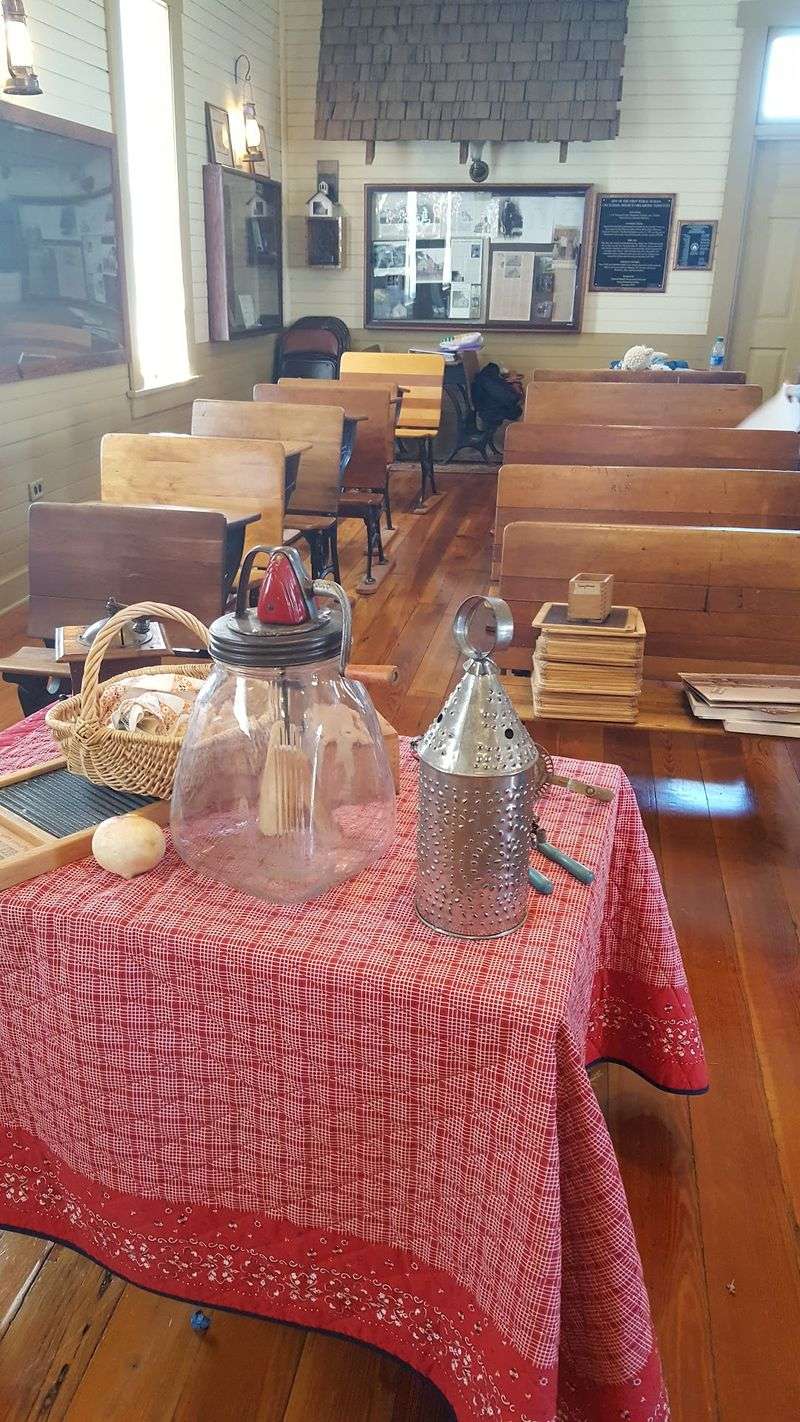
The 1889 Territorial School is not just a static display. It functions as a living educational space, particularly for younger visitors.
The Edmond Historical Museum and the schoolhouse collaborate regularly on community events, and one of the most popular offerings is a pioneer day program designed specifically for children.
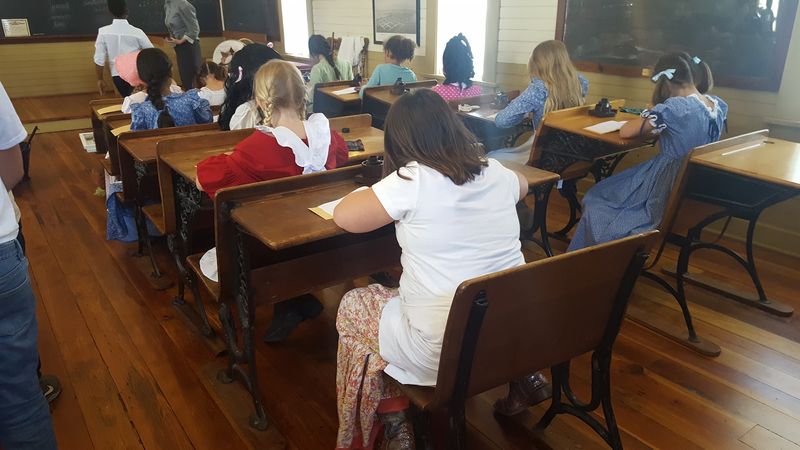
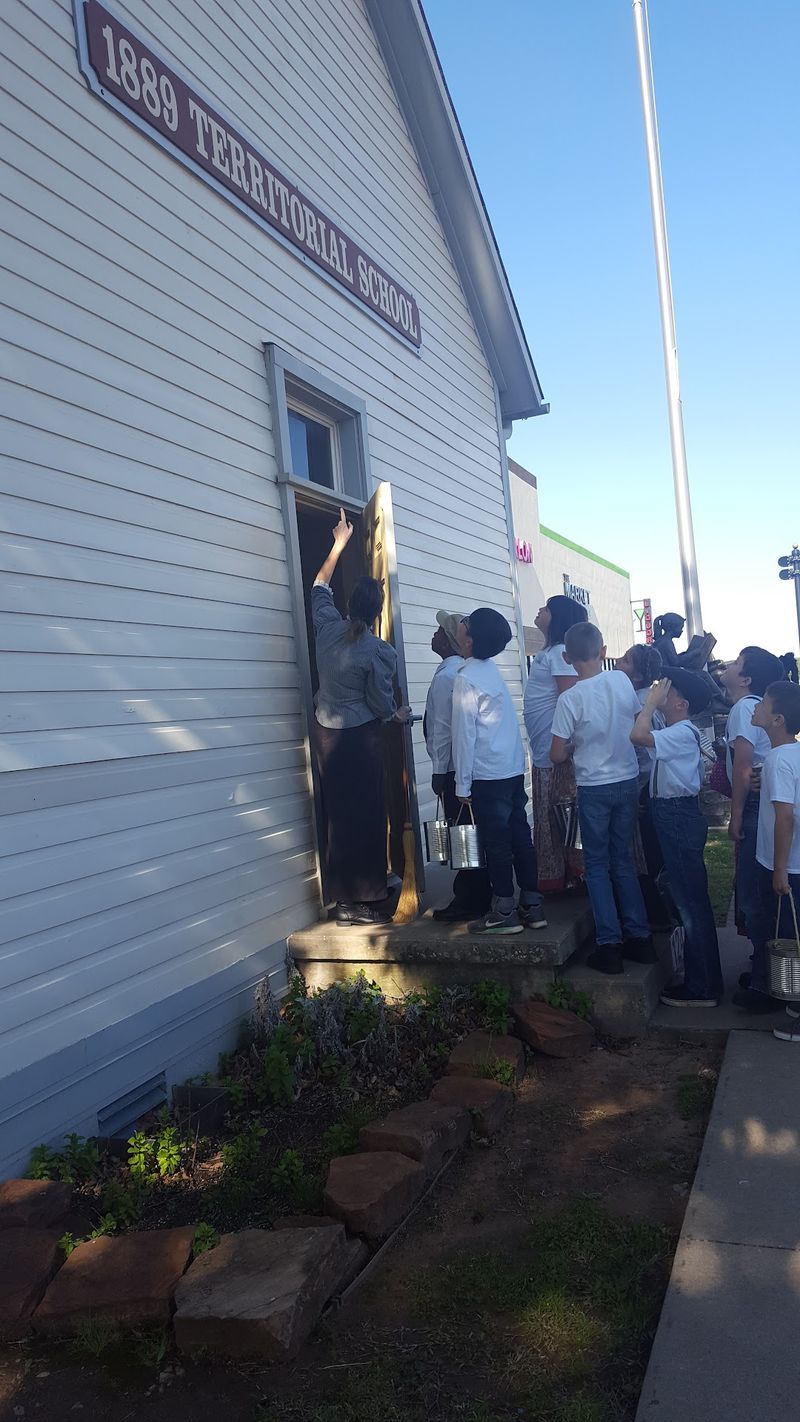
During pioneer day events, kids get to experience what school life actually felt like during the territorial era. That means sitting at period desks, learning the way students did in 1889, and engaging with history in a hands-on way that no textbook can fully replicate.
Families with elementary-age children find these programs especially rewarding.
Field trips from local schools are a natural fit, and the schoolhouse has welcomed second-grade classes and other young groups who come to learn about Oklahoma’s earliest days. The combination of a real historic building, original artifacts, and enthusiastic docents creates an educational environment that sticks with kids long after the visit ends.
For parents looking for an outing that is genuinely enriching without being overly serious, the schoolhouse hits a sweet spot between fun and meaningful.
The Outdoor Spaces and Eagle Scout Picnic Tables
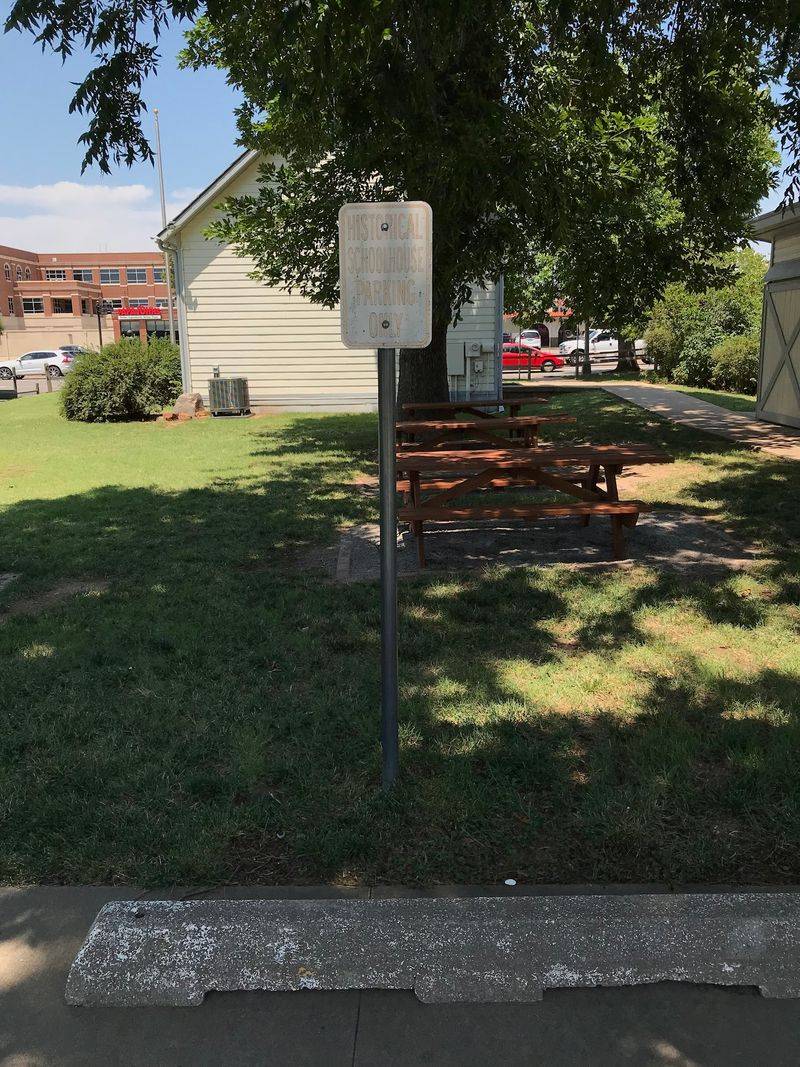
The grounds around the 1889 Territorial School offer more than just a path to the front door. Out front, the bronze sculptures of schoolchildren create a natural gathering point and a popular photo opportunity for families.
The sculptures are detailed and expressive, giving the exterior a warmth that matches the interior’s atmosphere.
Behind the building, a small picnic area features tables that were built by a local Eagle Scout troop. Each table carries a small plaque commemorating the scout who built it, which adds a quietly touching layer of community history to what might otherwise be an ordinary seating area.
The tradition of young people contributing to the preservation of this site feels entirely appropriate given the building’s origins as a place of learning.
Restrooms are located outside the schoolhouse, which is actually historically accurate to how the original school would have operated. They tend to remain locked outside of group visits and special events, so it is worth planning accordingly if you are visiting with young children.
The overall outdoor space is modest but well-maintained, and on a mild Oklahoma afternoon, spending a few minutes outside before or after your tour is a pleasant way to extend the visit.
What Makes This a Hidden Gem Worth Seeking Out
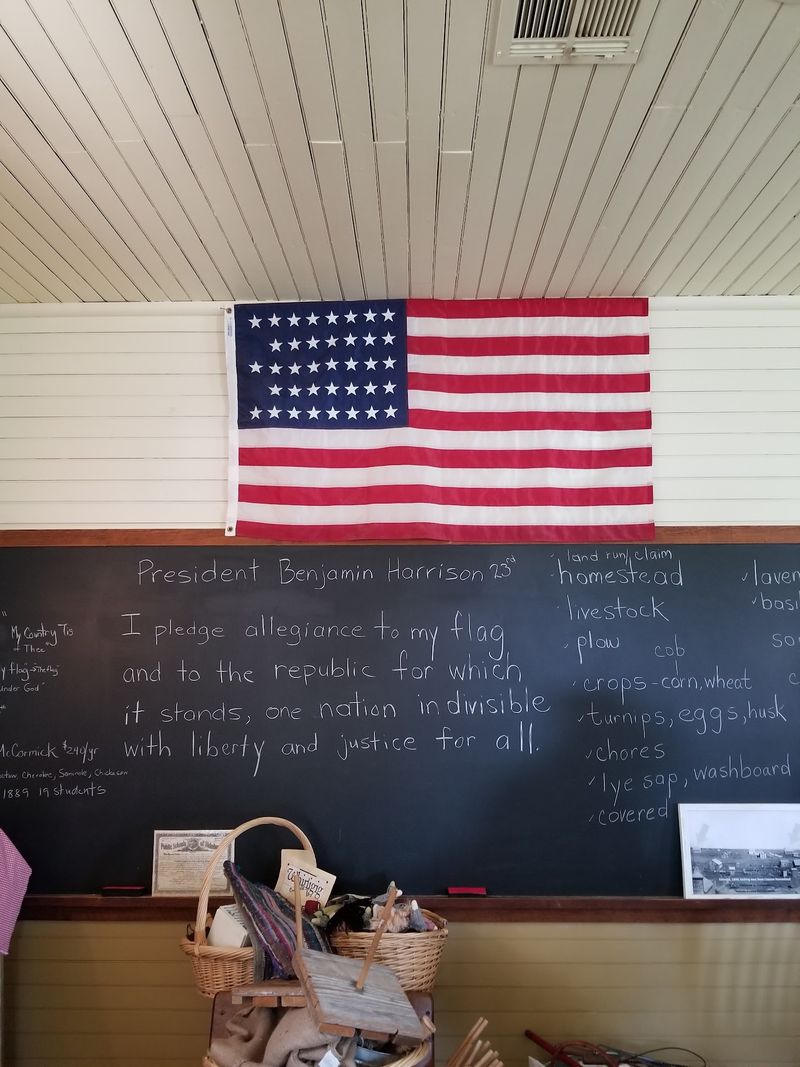
The phrase hidden gem gets used too freely, but the 1889 Territorial School earns it. There is no flashy signage, no gift shop, and no admission fee.
What the schoolhouse offers instead is something harder to manufacture: genuine history presented with care, honesty, and a sense of community pride that comes through in every detail.
The building holds a 4.5-star rating across 22 reviews on Google Maps, which is a strong score for a free historical landmark that is only open a few hours per week. Visitors range from curious tourists passing through Edmond to local families who want their kids to understand where their community came from.
The experience resonates across age groups in a way that few small museums manage.
Part of what makes the visit feel special is the lack of pretension. Nobody is trying to make this into something bigger than it is.
The schoolhouse is exactly what it appears to be: a small, carefully preserved building that has been standing since Oklahoma was still a territory, holding onto its original blackboards and its original story with equal stubbornness. That authenticity is genuinely rare, and it is worth going out of your way to experience it.
The Atmosphere Inside the Classroom
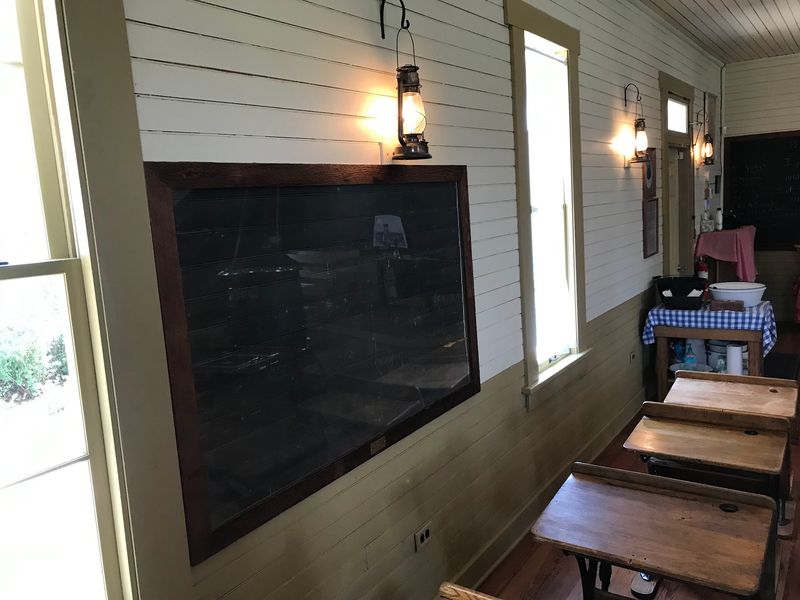
Certain rooms carry a quality that is difficult to name but immediately felt. The single classroom inside the 1889 Territorial School has that quality.
The period desks are arranged in rows, the light comes in through original-style windows, and the blackboards sit behind their protective plexiglass looking exactly as they must have looked to a child sitting in one of those seats in the 1890s.
The room is small enough that you become aware of how many children once shared this space for their entire school day. There were no separate classrooms for different grades, no cafeteria, no gymnasium.
Just this room, a teacher, and students of varying ages learning side by side. That reality lands differently when you are physically standing in the space rather than reading about it.
The air conditioning keeps the interior comfortable even in summer, which is a practical consideration in central Oklahoma where July temperatures can be genuinely punishing. The combination of physical comfort and historical atmosphere makes it easy to linger, to look closely at the details, and to let the setting do its quiet work of connecting the present to a very different past.
Hours, Admission, and How to Plan Your Visit
Planning a visit to the 1889 Territorial School requires a bit of calendar awareness. The schoolhouse is open on Saturdays from 1 to 4 PM, and specifically on the first two Saturdays of each month.
Every other day of the week, the building is closed to the public, though the exterior is always visible and the bronze sculptures out front are accessible any time.
Admission is free, which makes the schoolhouse one of the most accessible historical experiences in central Oklahoma. There is no charge to enter, no suggested donation required at the door, and no ticket to book in advance for a standard Saturday visit.
Groups looking for private tours can contact the schoolhouse directly at 405-715-1889, as that option is available for larger parties outside of regular hours.
More information, including event listings and background on the building’s history, is available at edmondhistory.org. The Edmond Historical Museum, which collaborates with the schoolhouse on events, is a natural companion stop if you want to extend your exploration of Edmond’s past.
Arriving early in the 1 to 4 PM window tends to give you more time with the docents before the afternoon gets busier.
Why Edmond’s Oldest Building Deserves a Place on Your Oklahoma Itinerary
Oklahoma has no shortage of historical sites, but few of them offer the combination of age, authenticity, and accessibility that the 1889 Territorial School delivers. The building is believed to be the oldest standing structure in Oklahoma County, and it greets every visitor with original artifacts rather than reproductions.
That is a meaningful distinction.
The schoolhouse fits naturally into a broader Edmond day trip. The city has its own character worth exploring, and anchoring a visit around the schoolhouse gives the outing a historical foundation that makes everything else feel more connected.
Understanding where Edmond started makes the modern city more interesting to move through.
Free admission, knowledgeable docents, original blackboards, a ringable school bell, and a story that stretches back to the first days of Oklahoma’s settlement all add up to something worth making time for. The 1889 Territorial School is not trying to compete with larger institutions or flashier attractions.
It simply stands where it has always stood, holding its history quietly and waiting for visitors who are curious enough to show up on a Saturday afternoon and ask it to share.
Share this story