America is home to some of the most extraordinary church buildings in the world, and many of them have been standing for centuries. From hand-built adobe chapels in the desert Southwest to soaring Gothic cathedrals in major cities, these sacred spaces tell the story of how different cultures, faiths, and architectural traditions shaped the country over time.
Some were built by Spanish missionaries, others by medieval-inspired architects working with modern materials, and at least one was designed by one of the most famous architects in American history. Whether you are a history lover, an architecture fan, or simply someone who appreciates beautiful spaces, these fourteen churches are genuinely worth knowing about.
Washington National Cathedral In Washington, D.C.
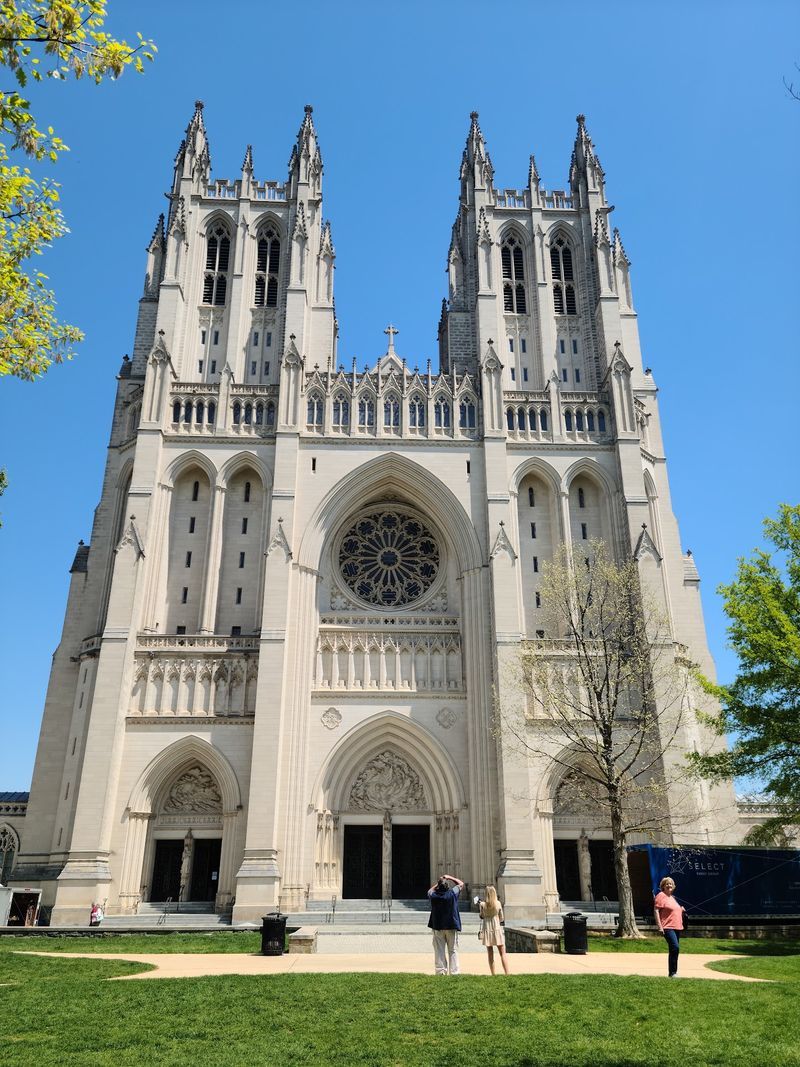
Few buildings in the United States took as long to finish as Washington National Cathedral, which saw its cornerstone laid in 1907 but did not receive its final stone until 1990. That 83-year construction timeline makes it both an antique and a relatively modern achievement at the same time.
Built in the tradition of medieval Gothic cathedrals, the building features pointed arches, flying buttresses, carved stone gargoyles, and a long vaulted nave. What sets it apart from European counterparts is the mix of American details tucked into its stonework, including carvings of national figures and a stained-glass window containing an actual piece of moon rock brought back from the Apollo 11 mission.
Visitors can explore through self-guided tours, specialized architectural tours, or a digital guide covering chapels, gargoyles, and stained glass. Worship services and private prayer remain open without an admission charge, making it accessible to everyone.
Cathedral Basilica Of St. Louis In St. Louis, Missouri
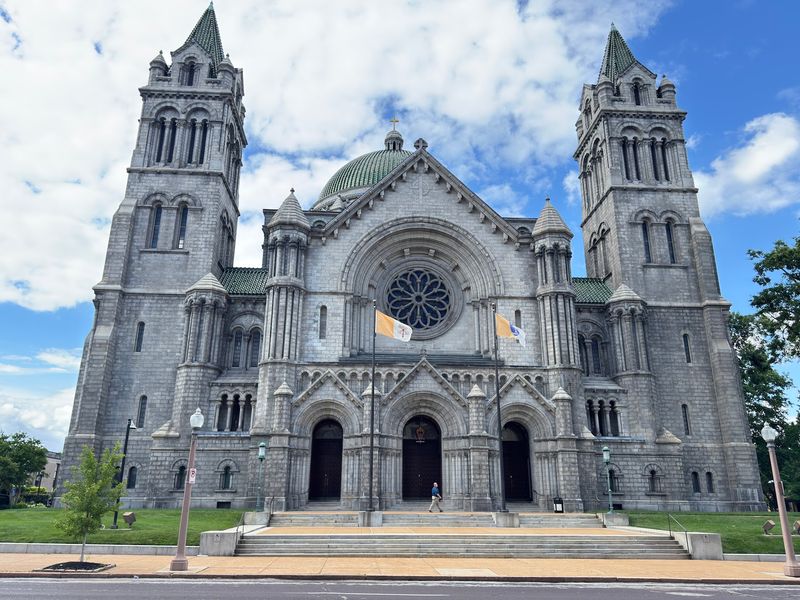
No other church in the Western Hemisphere contains more mosaic artwork than the Cathedral Basilica of St. Louis. The interior is covered with an estimated 41.5 million pieces of colored glass tile, assembled by numerous artists over several decades of painstaking work.
Construction began in the early 20th century, blending Romanesque and Byzantine architectural influences beneath a large central dome. From the street, the stone building reads as grand but restrained.
Step inside, and the shift is dramatic. Gold backgrounds, biblical scenes, decorative geometric patterns, and soaring vaulted ceilings fill every surface.
The basilica remains the mother church of the Archdiocese of St. Louis and welcomes visitors throughout the year. Tours focused on the history, architecture, sacred art, and mosaic collection are regularly available.
If you have only one stop planned in St. Louis for architecture, this one makes a strong case for itself.
Mission San Xavier Del Bac Near Tucson, Arizona
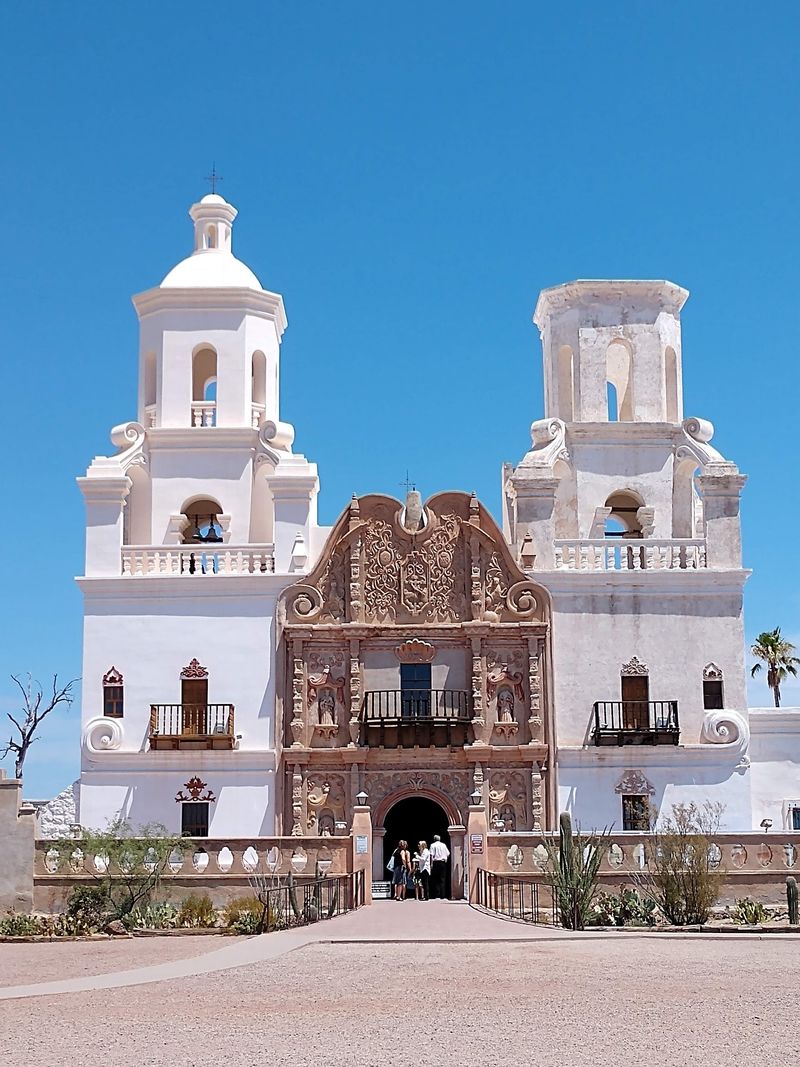
Rising out of the flat Sonoran Desert southwest of Tucson, Mission San Xavier del Bac earned the nickname “White Dove of the Desert” for good reason. Its gleaming white exterior, twin towers, and rounded domes are visible from a considerable distance, making the first sighting genuinely striking.
The existing church was completed in the late 1700s and reflects a fascinating blend of Spanish Colonial architecture with Mexican Baroque, European, and Indigenous artistic influences. Inside, the contrast with the plain exterior is remarkable.
Painted surfaces, carved religious figures, decorative columns, and elaborate altar arrangements cover nearly every wall and ceiling.
San Xavier is not a museum. It remains an active Catholic parish serving the Tohono O’odham community, which gives the site a living spiritual presence that preserved ruins simply cannot replicate.
Volunteer-led tours are generally available on selected weekdays, and visitors are asked to be respectful of ongoing worship throughout their visit.
St. Louis Cathedral In New Orleans, Louisiana
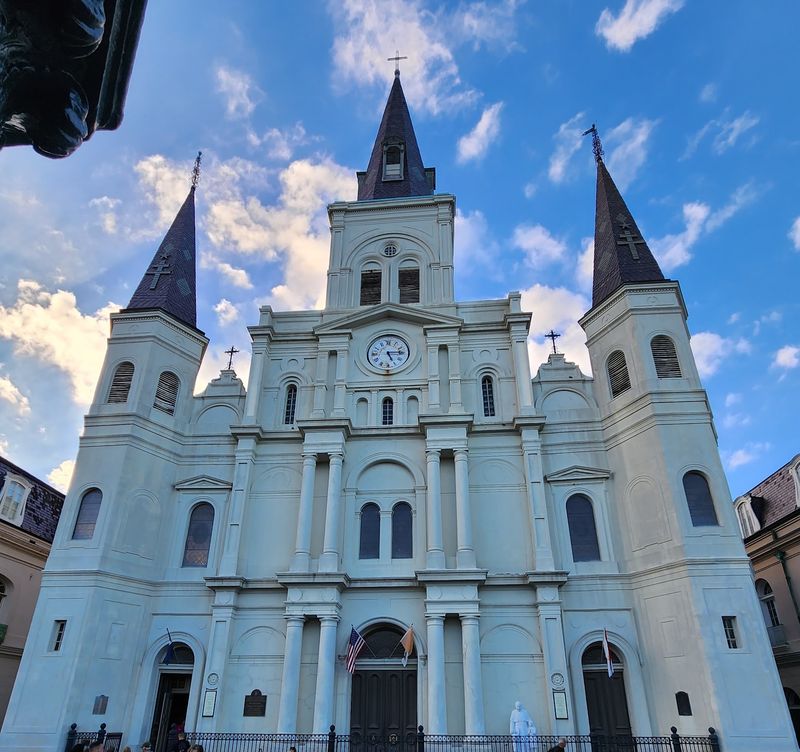
Three pointed white spires rise above Jackson Square in the heart of New Orleans’ French Quarter, making St. Louis Cathedral one of the most photographed buildings in the entire South. Its position between the historic Cabildo and Presbytère creates one of the most complete and recognizable architectural compositions in any American city.
The present structure largely dates to the 19th century, though the Catholic community connected to this site traces its origins back to the early colonial period of Louisiana. The design pulls from Gothic, Renaissance, and classical influences, giving the facade a layered quality that rewards a closer look.
A central clock sits between two narrow towers, with the taller central spire anchoring the whole composition.
St. Louis Cathedral is recognized as the home of the oldest continually active Roman Catholic cathedral community in the United States. Public visits are generally available daily, though services, weddings, and special events can occasionally affect access times.
Cathedral Of Saint John The Divine In New York City
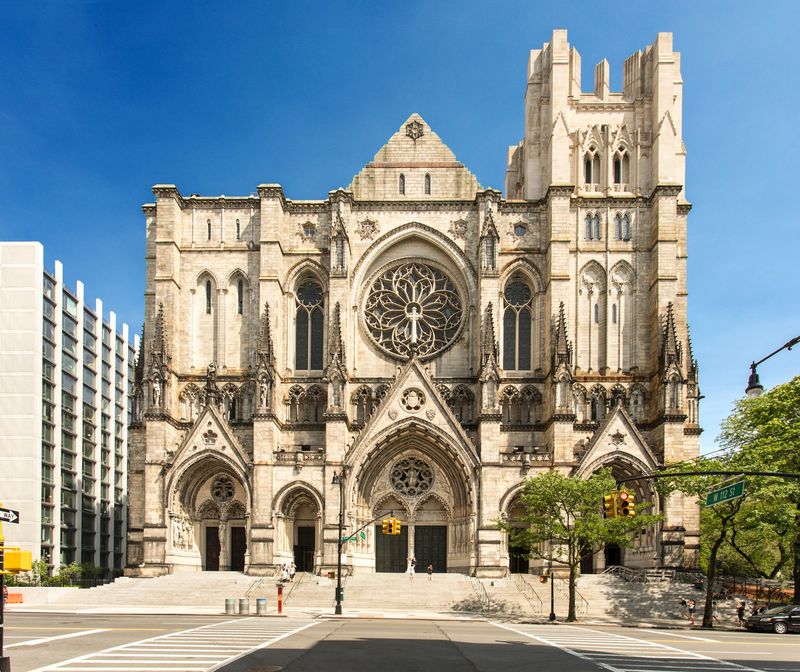
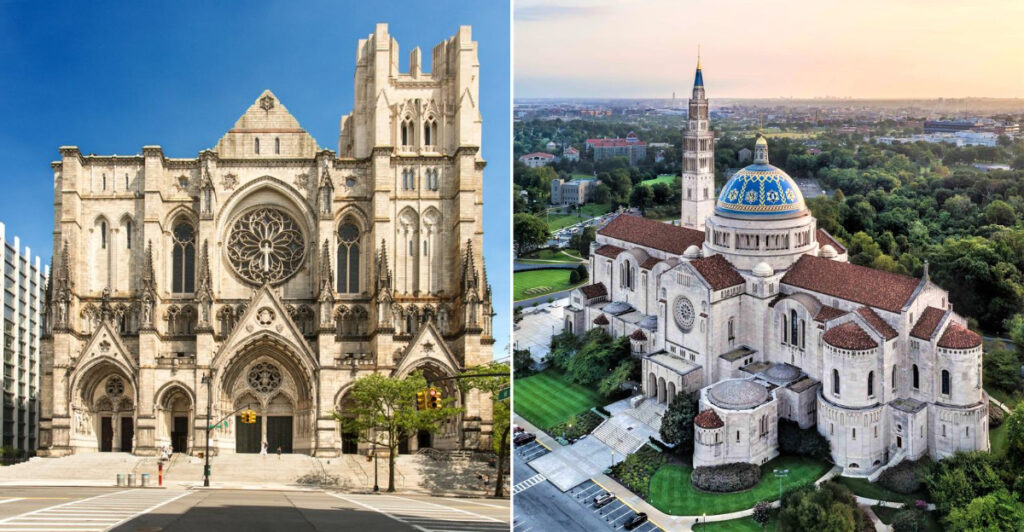
Construction on the Cathedral of Saint John the Divine began in 1892, and the building is still technically unfinished, which is part of what makes it so fascinating. Its evolving design shifted from Romanesque Revival to Gothic over the decades, and that layered history is visible in the stonework itself.
Located in the Morningside Heights neighborhood of Upper Manhattan, the cathedral is enormous by any measure. Inside, immense stone columns, soaring arches, tapestries, chapels, stained-glass windows, sculptures, and contemporary artworks create an interior that feels more like an architectural timeline than a single unified space.
The building serves as the seat of the Episcopal Diocese of New York and hosts an unusually wide range of activities, including religious services, civic gatherings, art exhibitions, and live performances. Self-guided visits are available, and scheduled highlights tours are offered regularly.
Those visiting for prayer or quiet reflection are welcomed without charge, regardless of faith background.
Grace Cathedral In San Francisco, California
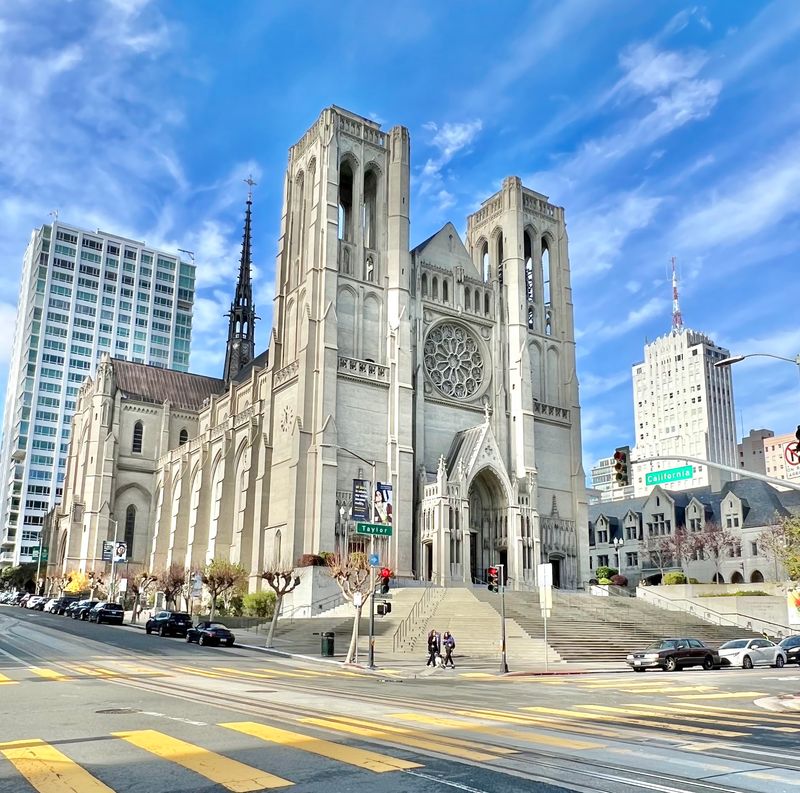
Grace Cathedral sits at the top of Nob Hill in San Francisco, and its twin towers are a reliable landmark in a city full of them. The building draws heavily from French Gothic design, with carved portals, large stained-glass installations, and an interior that feels notably spacious for an urban church.
Two of its most interesting features are replicas of Lorenzo Ghiberti’s bronze doors from the Baptistery in Florence, installed at the main entrance. Inside, visitors can also find a full indoor labyrinth based on the famous medieval labyrinth at Chartres Cathedral in France, which is used for walking meditation and reflection.
Grace Cathedral is an active Episcopal church that holds worship services, concerts, and public programs throughout the year. Current tour options include general architectural highlights as well as more in-depth experiences covering the building’s art collection and its place in San Francisco history.
Construction progressed in stages throughout the 20th century, with the completed building dedicated in 1964.
Old North Church In Boston, Massachusetts
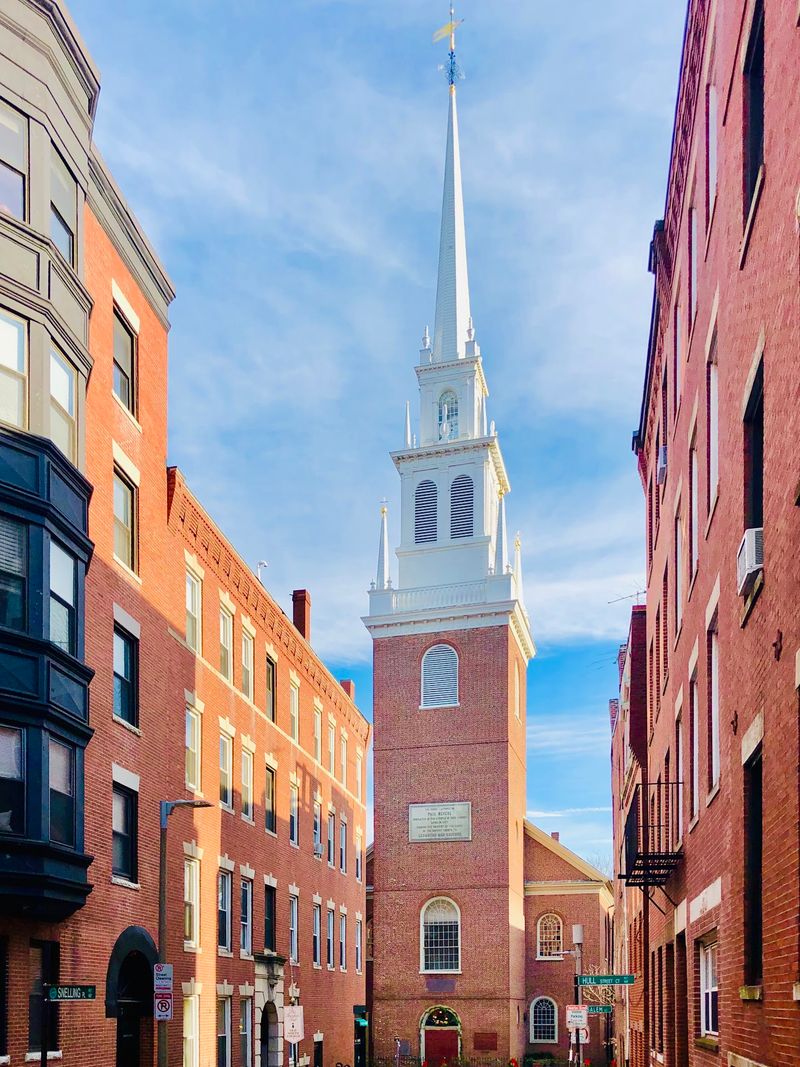
Built in 1723, Old North Church holds the distinction of being Boston’s oldest surviving church building, which alone would make it worth a visit. But its place in American history goes well beyond its age.
On the night of April 18, 1775, two lanterns were hung in the church’s steeple to signal that British troops were moving toward Lexington and Concord by sea rather than by land. That signal set off a chain of events that would become central to the American Revolution, and the church has been connected to that story ever since.
The design was influenced by Anglican churches in London associated with the architectural tradition of Sir Christopher Wren, giving it a clean, symmetrical Georgian character.
Inside, high box pews, upper galleries, and colonial-era memorials reflect how Anglican worship was organized in the 1700s. Old North remains an active Episcopal congregation, and admission, tours, and educational programming are currently available for visitors.
San Miguel Chapel In Santa Fe, New Mexico
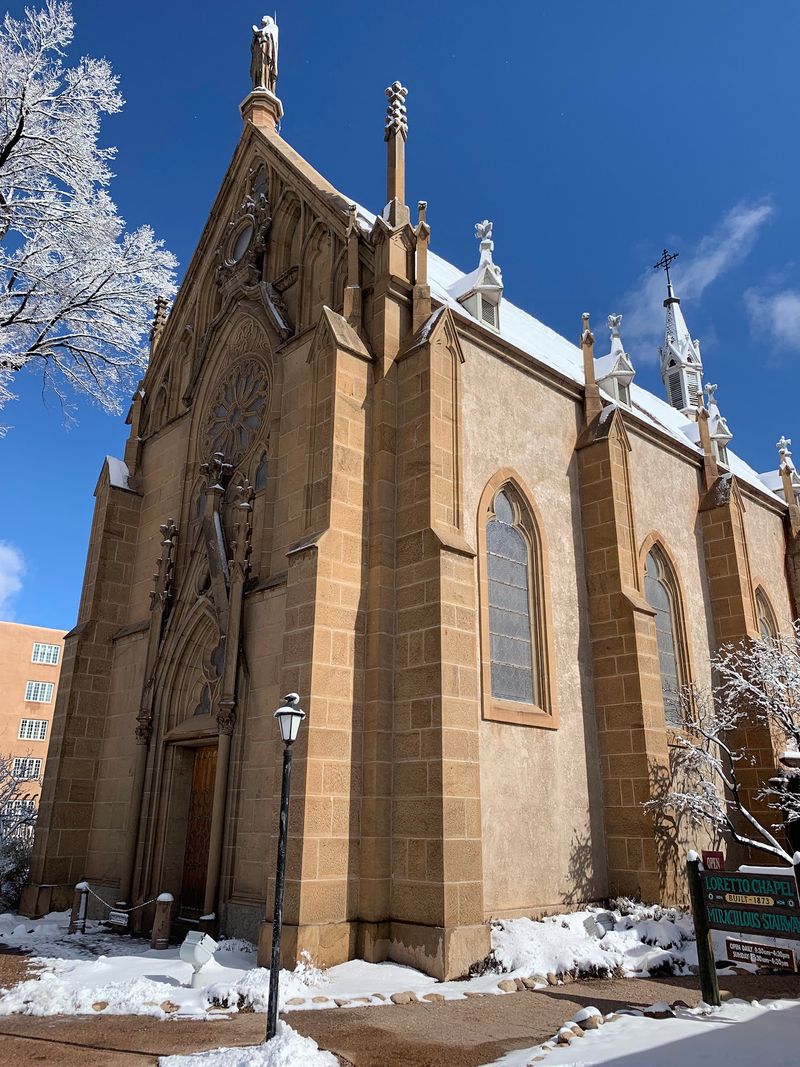
San Miguel Chapel does not impress through size or ornament. Its power comes from something more elemental: thick earthen walls, rough timber roof beams, a simple bell opening, and a direct connection to centuries of continuous use in one of the oldest cities in the United States.
The chapel’s origins date to the early 1600s, though it has been damaged, repaired, and partially rebuilt several times across those four centuries. Rather than following the symmetry of European church design, San Miguel reflects the practical building traditions that developed from both Indigenous Pueblo methods and Spanish Colonial construction techniques.
The result is a structure that feels genuinely rooted in its landscape.
A local preservation community maintains the building, which hosts visits, religious observances, concerts, and cultural events. The chapel’s official site provides current visitor information and requests donations to support ongoing preservation efforts.
For anyone visiting Santa Fe’s historic downtown, this is one stop that puts the city’s long timeline in clear perspective.
Basilica Of The National Shrine Of The Immaculate Conception In Washington, D.C.
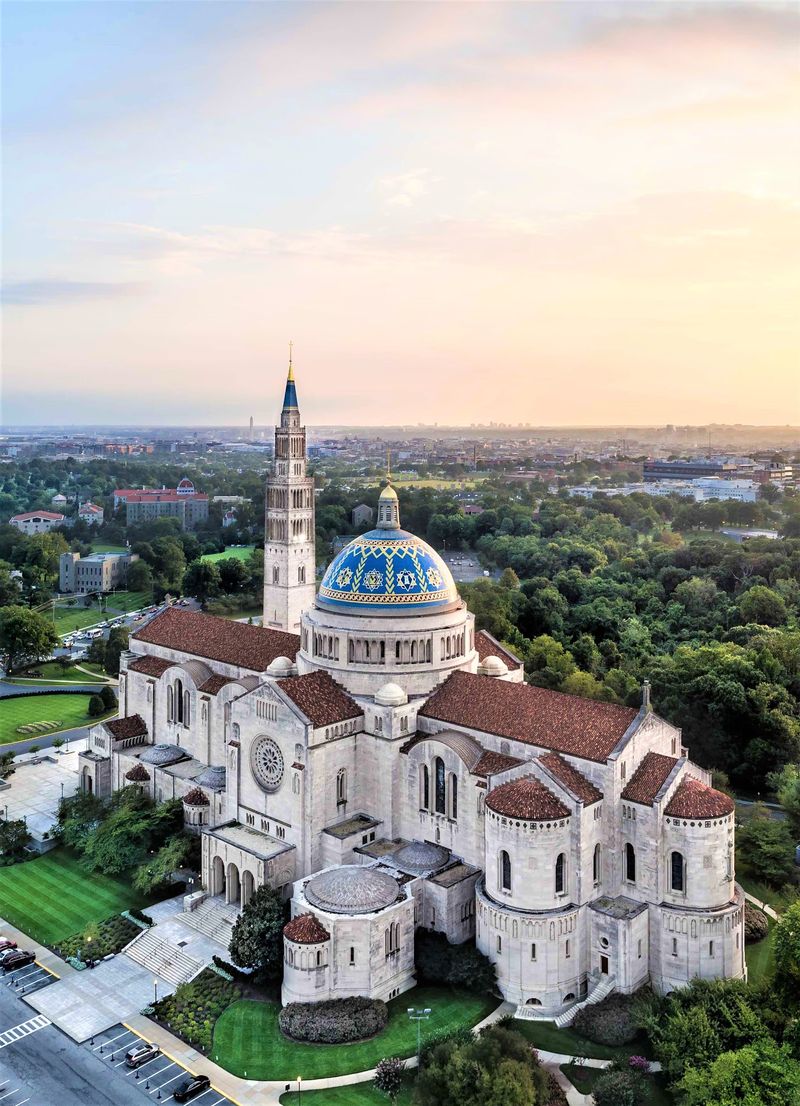
The Basilica of the National Shrine of the Immaculate Conception is the largest Catholic church in the United States and one of the largest in the world, which becomes immediately obvious the moment you approach it. Its colorful tiled dome and massive Romanesque-Byzantine exterior make it visually distinct from the Gothic cathedrals that dominate many American city skylines.
Inside, the building contains more than 80 chapels and oratories, each representing a different Catholic community or devotional tradition from around the globe. That variety gives the interior an unusually rich collection of artistic styles, from Byzantine gold mosaics to contemporary sculpture.
The foundation stone was laid in 1920, and the shrine has grown steadily since then.
Regularly scheduled guided tours cover the architecture, history, sacred art, Great Upper Church, Crypt Church, and individual chapels. The basilica remains an active destination for worship and pilgrimage, and general admission for visitors is free of charge throughout the year.
Duke University Chapel In Durham, North Carolina
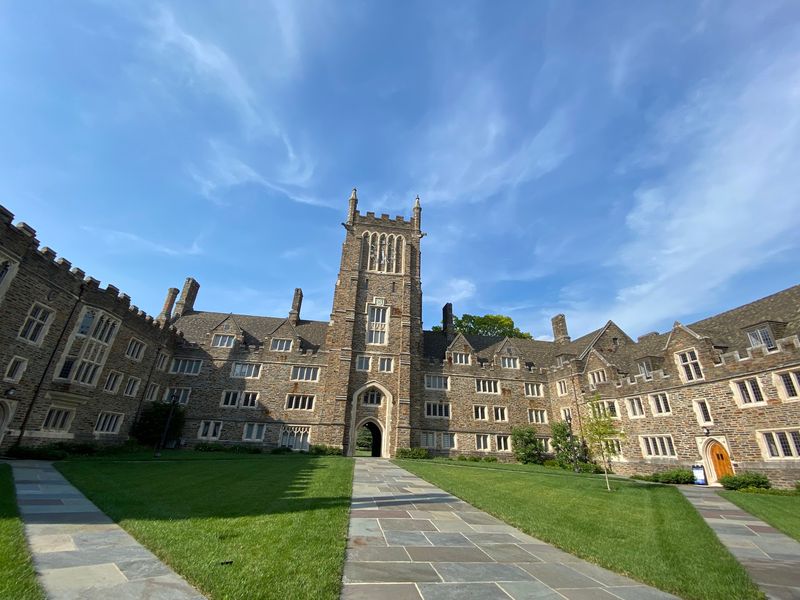
Duke University Chapel anchors the West Campus of Duke University with a tower that rises 210 feet above the surrounding quadrangle, making it visible from a wide area of Durham. Completed in 1932, the chapel is considered one of the finest examples of collegiate Gothic architecture in the country.
The design was developed through the Philadelphia firm of Horace Trumbauer, with Julian Abele serving as chief designer, a notable achievement given that Abele was one of the first prominent African American architects working at that scale in the early 20th century. Inside, pointed arches, carved stone details, vaulted ceilings, and a long nave give the space a gravity that larger, older European churches often carry.
The chapel hosts worship services, concerts, university ceremonies, and community events throughout the year. It is normally open to the public daily for prayer, reflection, and architectural viewing, though occasional closures happen for private university functions.
No admission fee is charged for general visits.
Unity Temple In Oak Park, Illinois
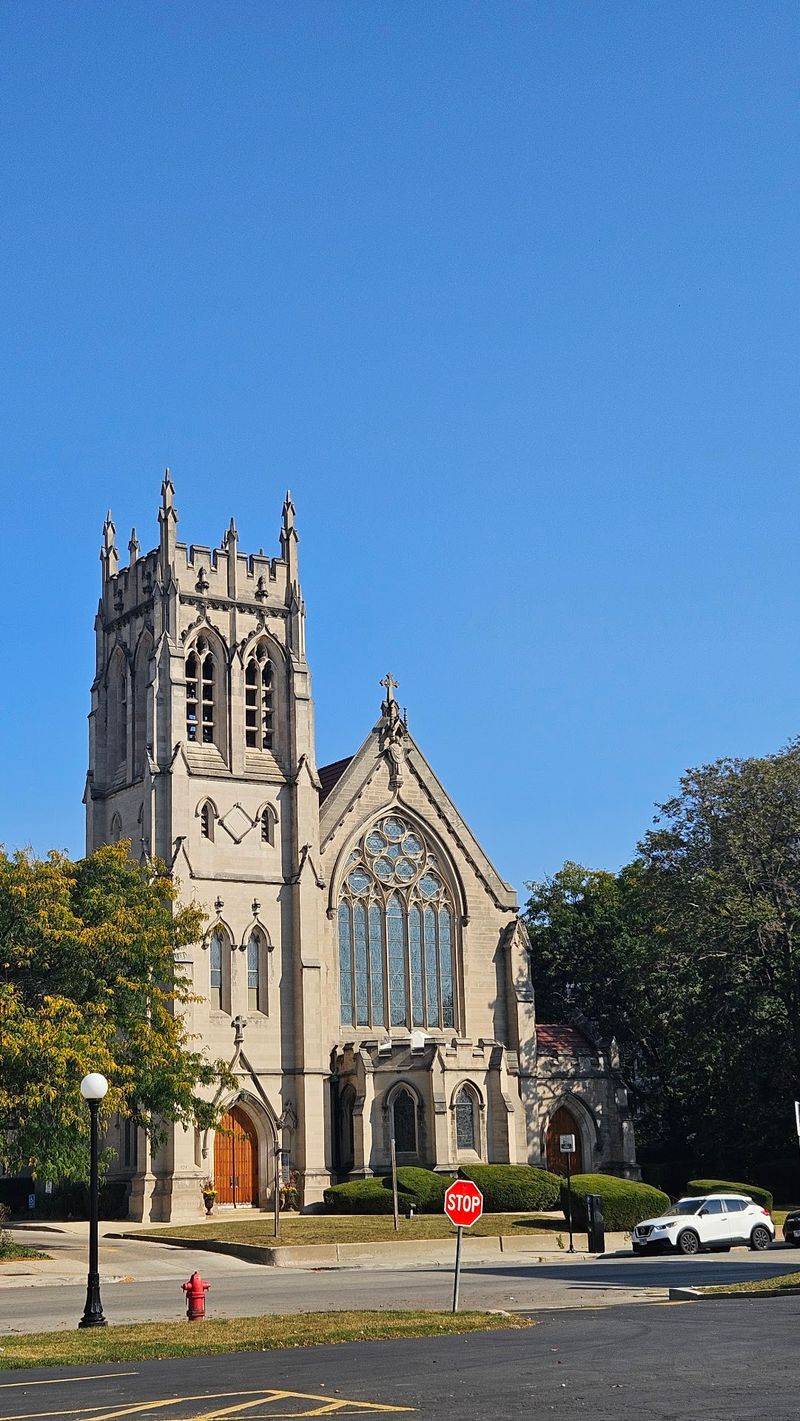
When Frank Lloyd Wright designed Unity Temple in 1905, he essentially rejected every convention that defined church architecture at the time. No spire, no pointed arches, no stained-glass narratives.
Instead, the building uses geometric concrete forms, skylights, and an arrangement that centers entirely on the congregation gathered inside.
Completed using poured reinforced concrete, Unity Temple was one of the earliest public buildings in the United States to use that material so prominently. The relatively plain exterior gives little indication of what is inside, where balconies, decorative bands, columns, and carefully filtered natural light make the sanctuary feel both intimate and surprisingly monumental.
The building remains the home of an active Unitarian Universalist congregation and received a major restoration completed in 2017. Guided and self-guided tours are available through the Frank Lloyd Wright Trust, allowing visitors to examine its architectural details up close.
Unity Temple is also a UNESCO World Heritage Site, recognized as part of Wright’s broader body of Prairie-period work.
Mission San José In San Antonio, Texas
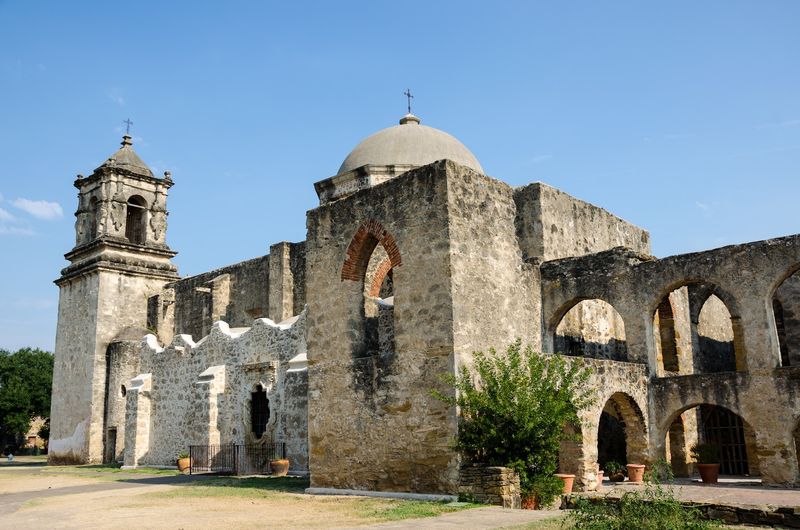
Founded in 1720, Mission San José grew into the largest and most prosperous of the five Spanish missions established in the San Antonio area, earning a reputation as the “Queen of the Missions” during the colonial period. That title still feels fitting when you see the carved stone facade of its 18th-century church.
The ornate Rose Window on the church’s south wall is considered one of the finest examples of Spanish Colonial decorative stonework in North America. The mission complex originally included far more than just the church: living quarters, agricultural fields, workshops, a granary, a mill, and defensive walls formed a self-contained community for hundreds of residents.
Much of the complex was carefully restored during the 20th century, but Mission San José is not a static museum piece. An active Catholic parish continues to hold services in the church today.
Visitors can explore the site as part of San Antonio Missions National Historical Park, which is free to enter with a National Parks pass.
Basilica Of The Sacred Heart At Notre Dame, Indiana
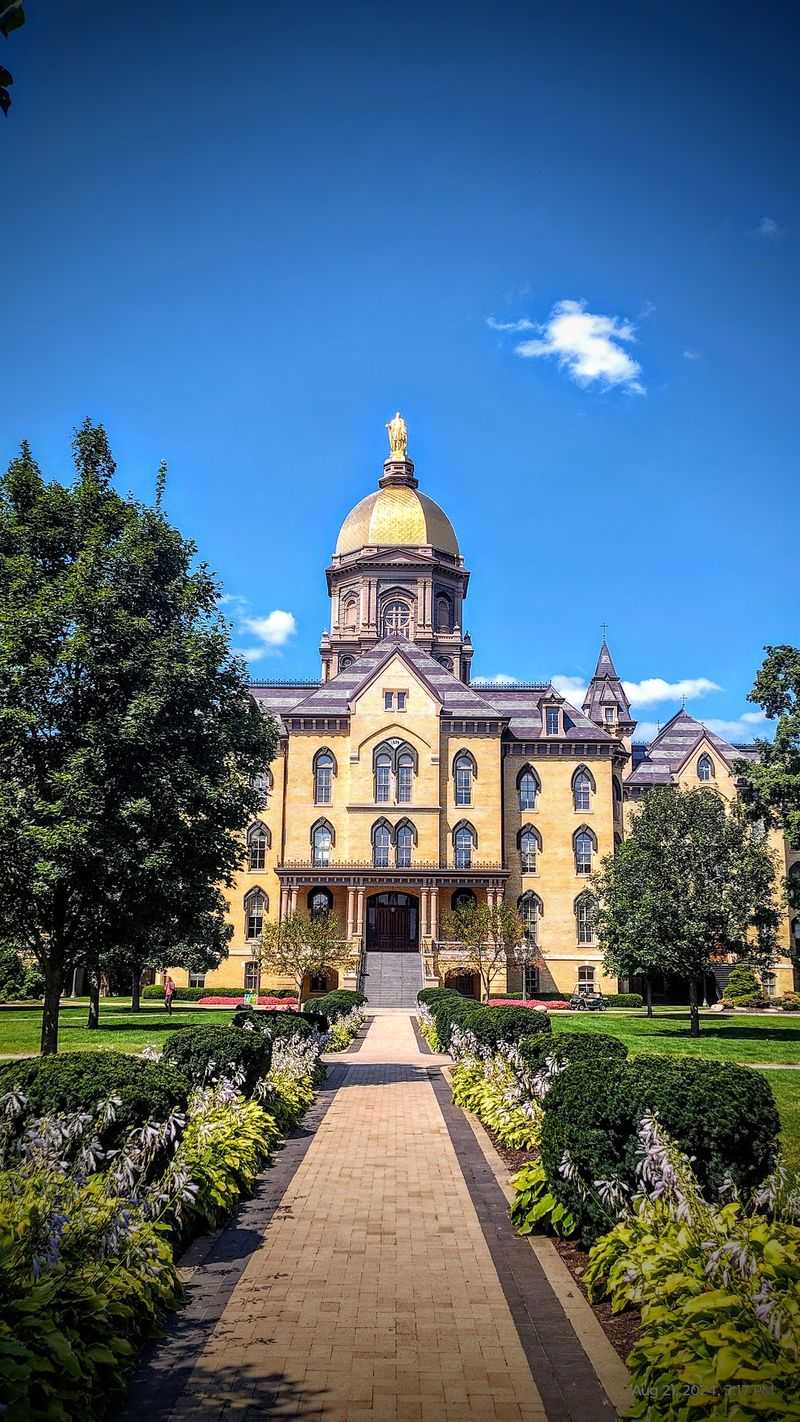
The Basilica of the Sacred Heart sits at the heart of the University of Notre Dame campus and has served as the university’s principal church since the 19th century. Its narrow tower, steep rooflines, and pointed windows give it a distinctly European Gothic Revival appearance that stands apart from most American collegiate chapels.
The interior is especially rich in decorative detail. Painted ceilings, carved furnishings, decorative vaulting, and stained-glass windows produced by European workshops fill the space with an accumulated visual history that took generations to build.
The basilica also holds the distinction of being the mother church of the Congregation of Holy Cross in the United States.
Despite its architectural importance and steady stream of campus visitors, the basilica remains a fully functioning church rather than a heritage site. It is open to the public throughout the year, with hours varying according to the university calendar.
Visitors may attend liturgies, pray quietly, take a self-guided tour, or arrange a scheduled guided tour through the university.
Thorncrown Chapel In Eureka Springs, Arkansas
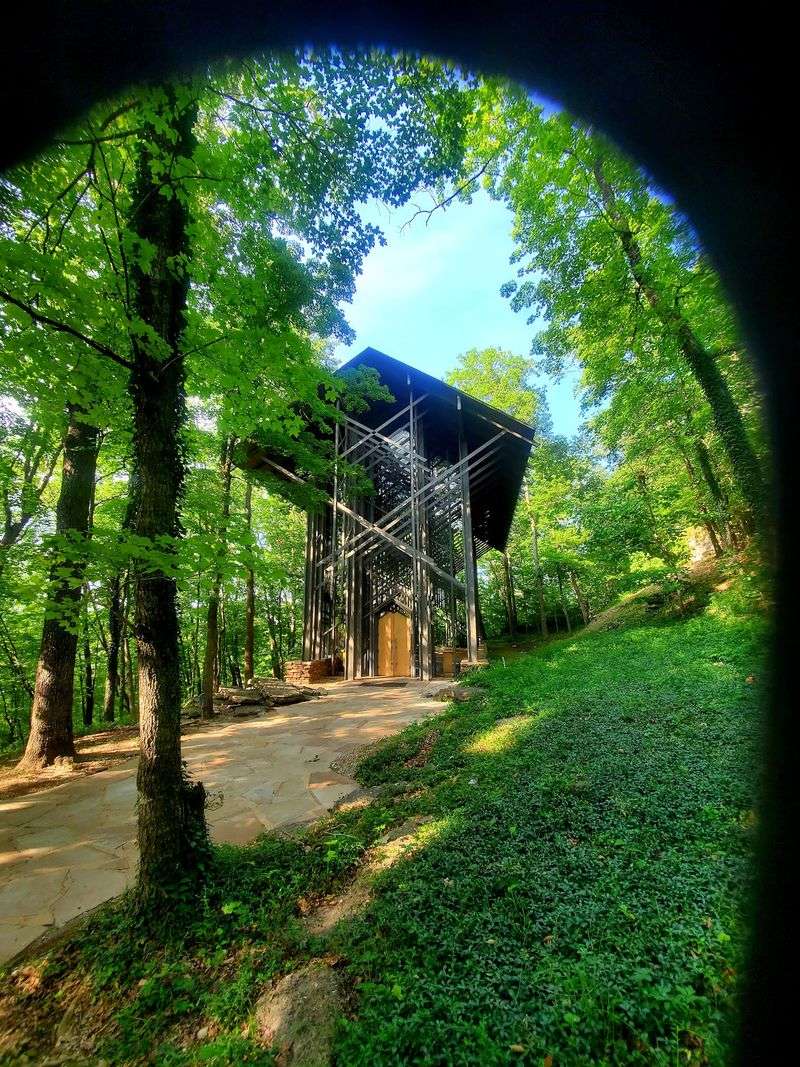
Thorncrown Chapel was completed in 1980, which makes it the youngest building on this list by a wide margin. But age is not the only measure of architectural significance, and Thorncrown has already earned recognition from the American Institute of Architects as one of the most important works of American architecture from the 20th century.
Architect E. Fay Jones designed the chapel to work with its wooded Ozark hillside setting rather than impose on it.
The structure uses repeated wooden framing, transparent glass walls, and tall vertical proportions that echo the surrounding trees. One of the more interesting construction facts is that all components were sized so they could be carried through the forest by hand, avoiding the need for a wide construction road that would have cleared the trees.
From inside, the surrounding woodland becomes part of the sanctuary experience as changing light moves through the glass walls throughout the day. Thorncrown is currently open seasonally from March through December and hosts religious services, weddings, and public visits, with occasional closures for private events.
Share this story