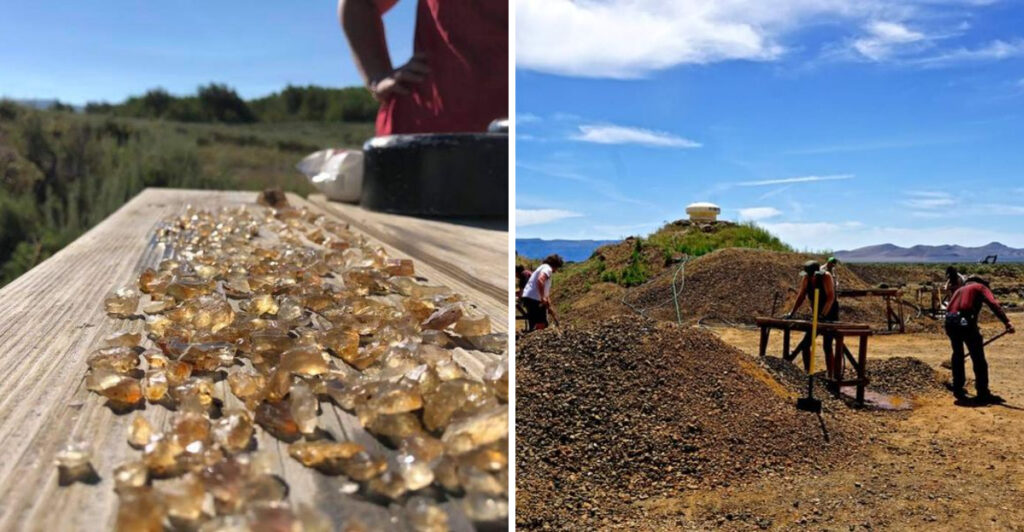
There is a spot in the high desert of Oregon where you can dig through layers of ancient volcanic rock and walk away with a genuine gemstone you found yourself. No jewelry store, no middleman, just you, a pile of ore, and the satisfying moment when a flash of color catches the light.
Oregon sunstones are the state’s official gemstone, and they come in shades ranging from pale yellow to deep orange, pink, and even the rare blue or red. One working mine in the remote Lake County region lets visitors try their hand at mining, and the whole experience is far more rewarding than anything you could buy off a shelf.
Where Spectrum Mines Sits and How to Find It
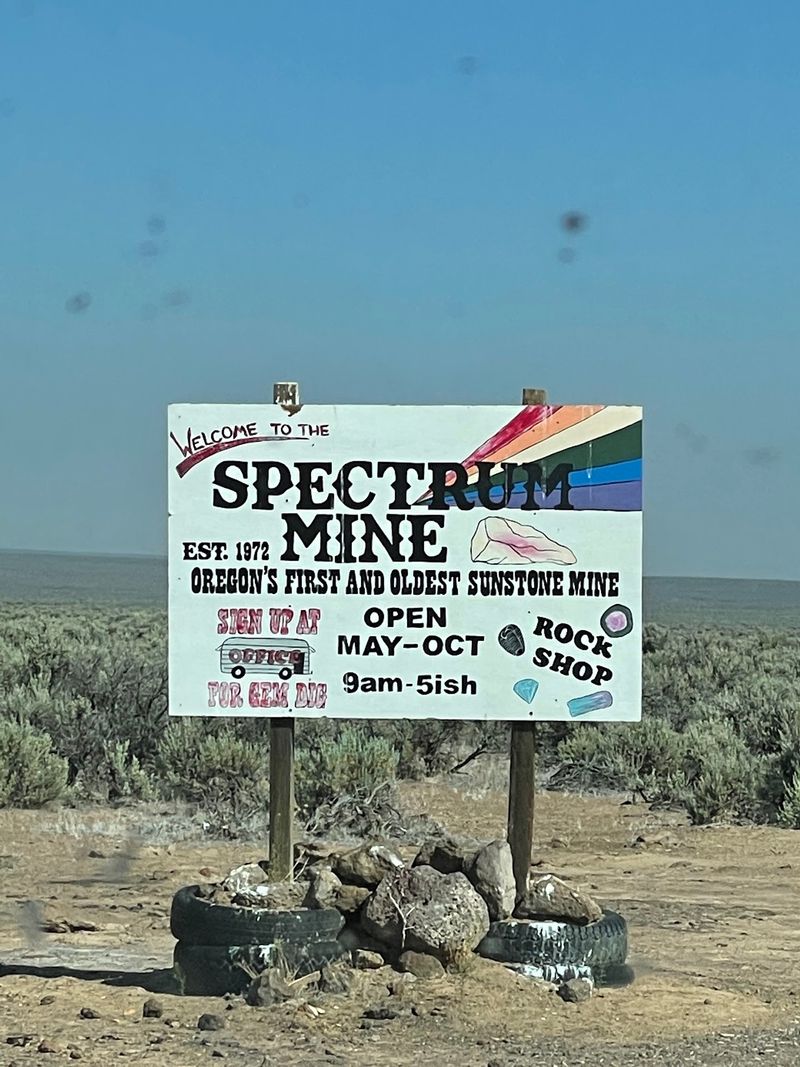
Getting to Spectrum Mines is part of the adventure, and you should know that upfront. The mine is located near Plush, OR 97637, a tiny community in Lake County in the high desert of southeastern Oregon.
The drive takes you far from any city, past sagebrush flats and wide-open skies, on roads that get rough and dusty before you arrive.
Google Maps has been known to send visitors down the wrong tracks, so downloading offline directions beforehand is a smart move. The final stretch involves a gravel and dirt road, and a vehicle with decent clearance will make the trip much smoother.
A full tank of gas is not optional here since the nearest fuel stop is a long way back.
The mine operates Tuesday through Sunday from 9 AM to 5 PM, and you can reach them at +1 775-772-7724 or visit highdesertgemsandminerals.com for details. Cell service is essentially nonexistent in this area, so plan every detail before you leave.
Once you arrive, the remote setting feels more like a reward than an inconvenience, with a landscape so quiet and vast it genuinely resets your brain.
What Oregon Sunstones Actually Are
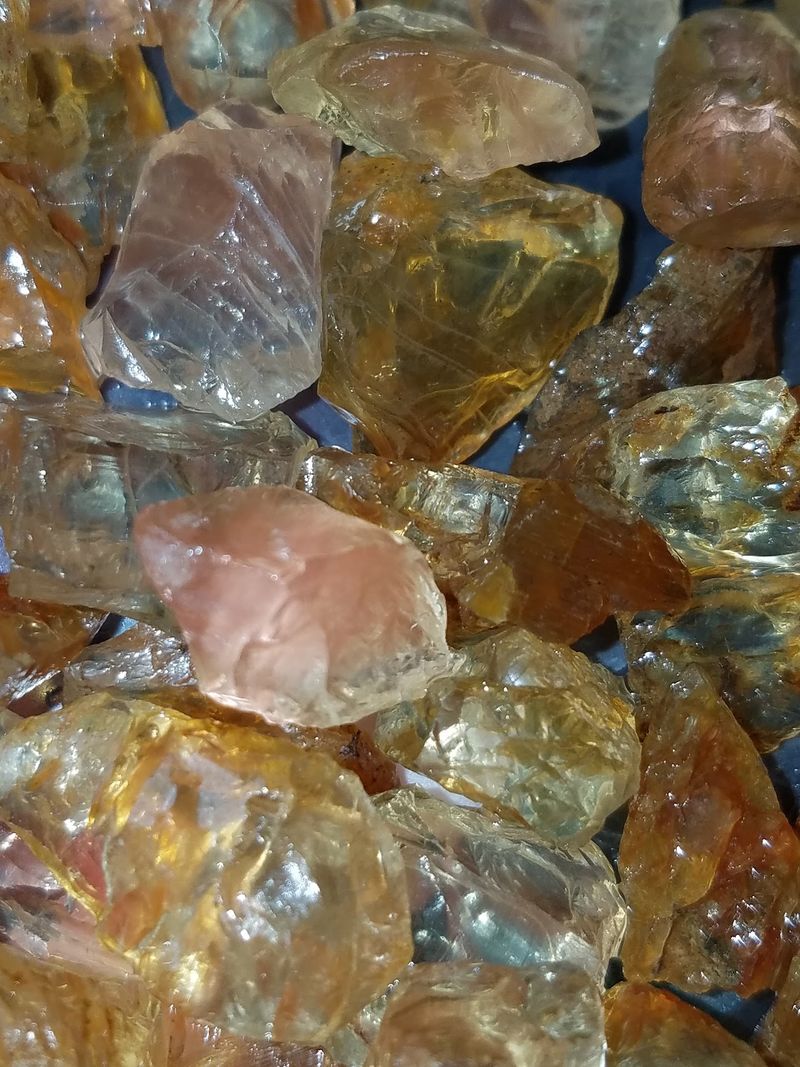
Oregon sunstones belong to a mineral group called feldspar, specifically a variety known as labradorite or andesine, and they are found almost nowhere else on Earth in gem quality. What makes them stand out is a phenomenon called schiller, a metallic shimmer that moves across the stone as you tilt it in the light.
Tiny copper platelets suspended inside the crystal create this effect, and it is genuinely striking to see in person.
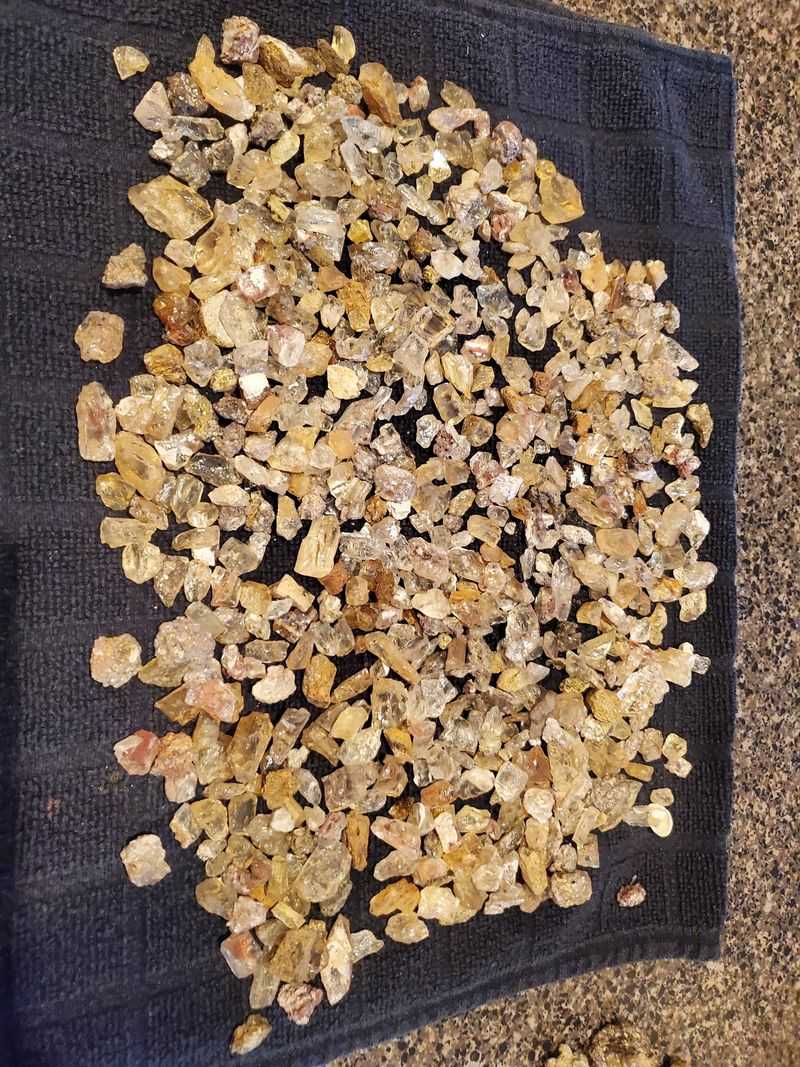
The color range is wide. Most stones come out in warm yellows, peach tones, and oranges, but pink, green, and bi-color stones also turn up.
The rarest and most prized are the deep blood-red stones and the blue ones, which almost never appear and are considered exceptional finds even by experienced rockhounds.
Oregon designated the sunstone as its official state gemstone in 1987, recognizing how unique these crystals are to the region. The stones form in ancient lava flows, which is why mining them means working through volcanic material.
Each one you pull from the ground has been sitting in that rock for millions of years, which puts a different kind of weight in your hand when you finally hold one.
The Conveyor Belt Run Experience
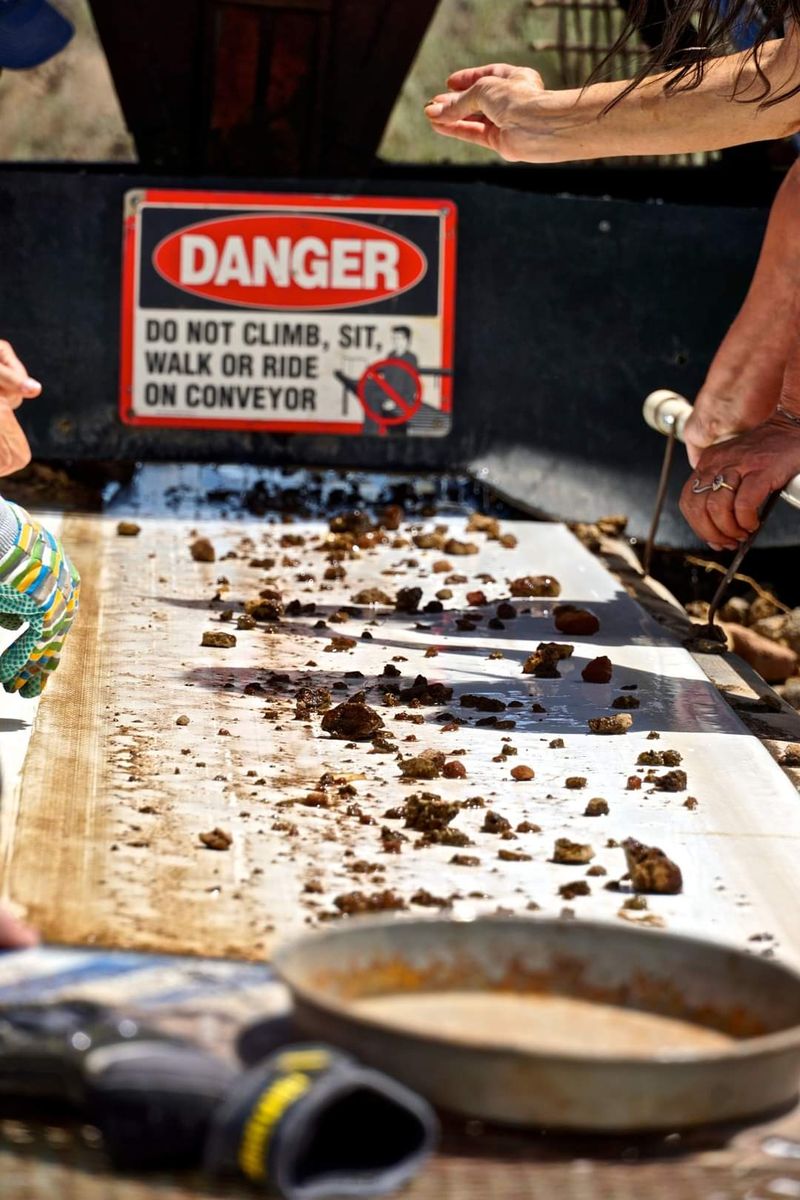
The conveyor belt run is the most popular option at Spectrum Mines, and it is easy to see why. Ore gets loaded onto a moving belt that carries material past a stream of water, washing away the mud and leaving the heavier stones behind.
Visitors stand along the sides and pick out anything that catches their eye as the material moves past them.
The first few minutes can feel a little chaotic, a bit like trying to sort mail on a fast-moving treadmill. But visitors catch on quickly, and staff members stand at the end of the belt to catch any stones that get missed.
Those recovered stones go back to the people who missed them, so nothing is truly lost.
A belt run typically costs around $200 per hour and works well when split among a group. Most visitors come away with dozens of stones, ranging from small but facetable pieces to occasional larger finds with strong color and schiller.
The experience is genuinely hands-on and fast-paced enough to keep everyone engaged. Arriving when the sun is higher in the sky helps, since early morning shade makes spotting the stones against wet gravel noticeably harder.
Digging the Free Pit Area
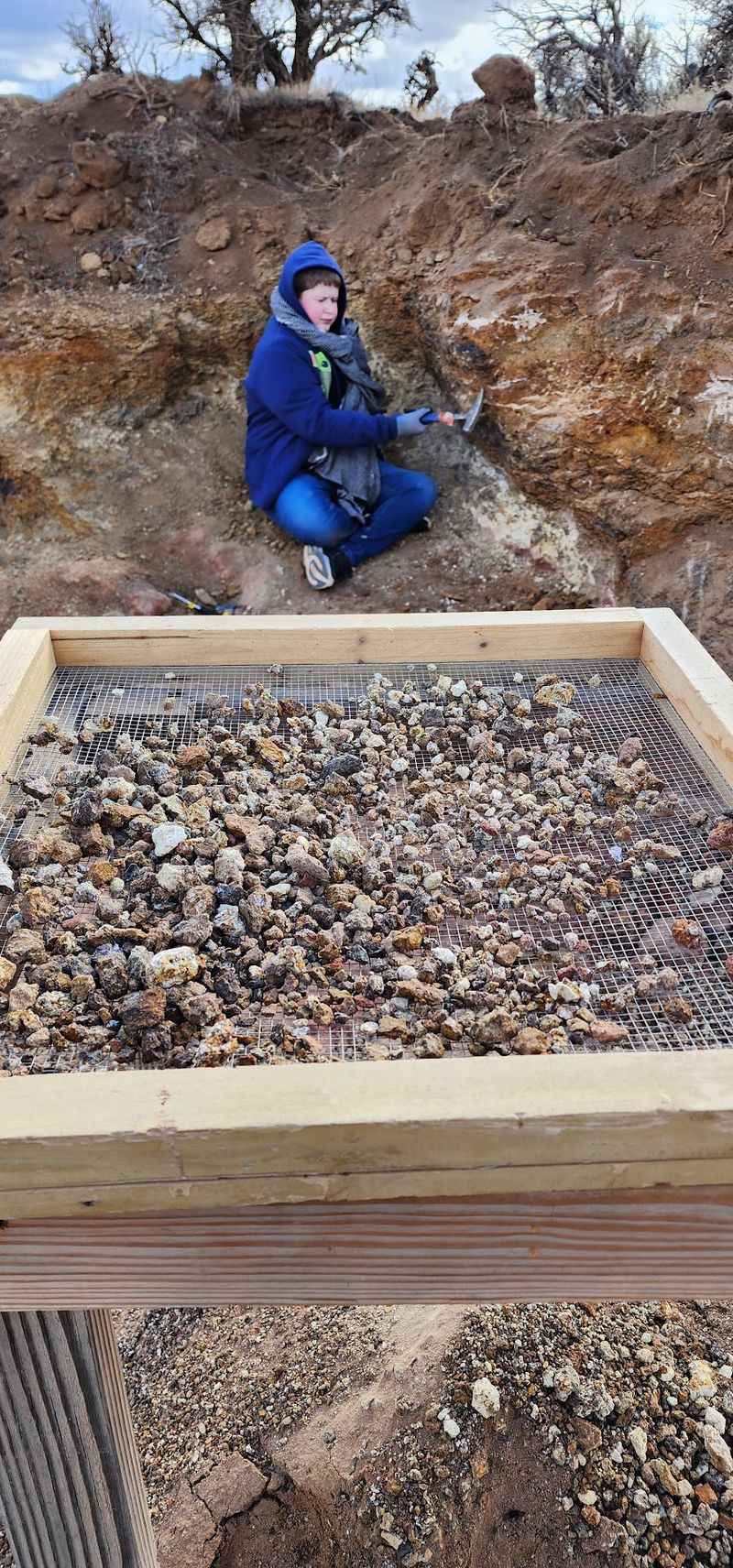
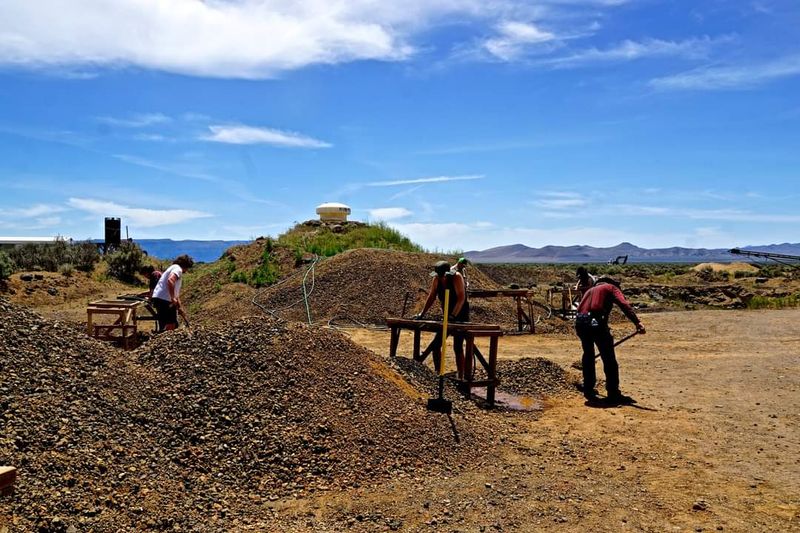
Before you spend any money on a processed pile or belt run, the free pit area is worth every minute you give it. Spectrum Mines maintains a designated public digging zone where visitors can get down in the dirt with hand tools and search through the raw ground at no charge.
The stones are less concentrated here than in the commercial options, but the experience of actually extracting a gem from the earth is hard to beat.
One visitor reported pulling a solid collection from the free pit in about an hour of focused digging, which is a respectable result for a no-cost option. The key is patience and a slow, methodical approach.
Rushing through the soil means missing the small flashes of color that signal a stone hiding just below the surface.
Tools are provided on-site, which is a big help for first-timers who show up without their own gear. The pit also gives families with younger kids a low-pressure way to join in without worrying about wasting money on a commercial option.
Even if you plan to do a belt run or purchase a pile, spending time in the free pit first is a smart warm-up that sharpens your eye before the real hunt begins.
Purchasing a Processed Ore Pile
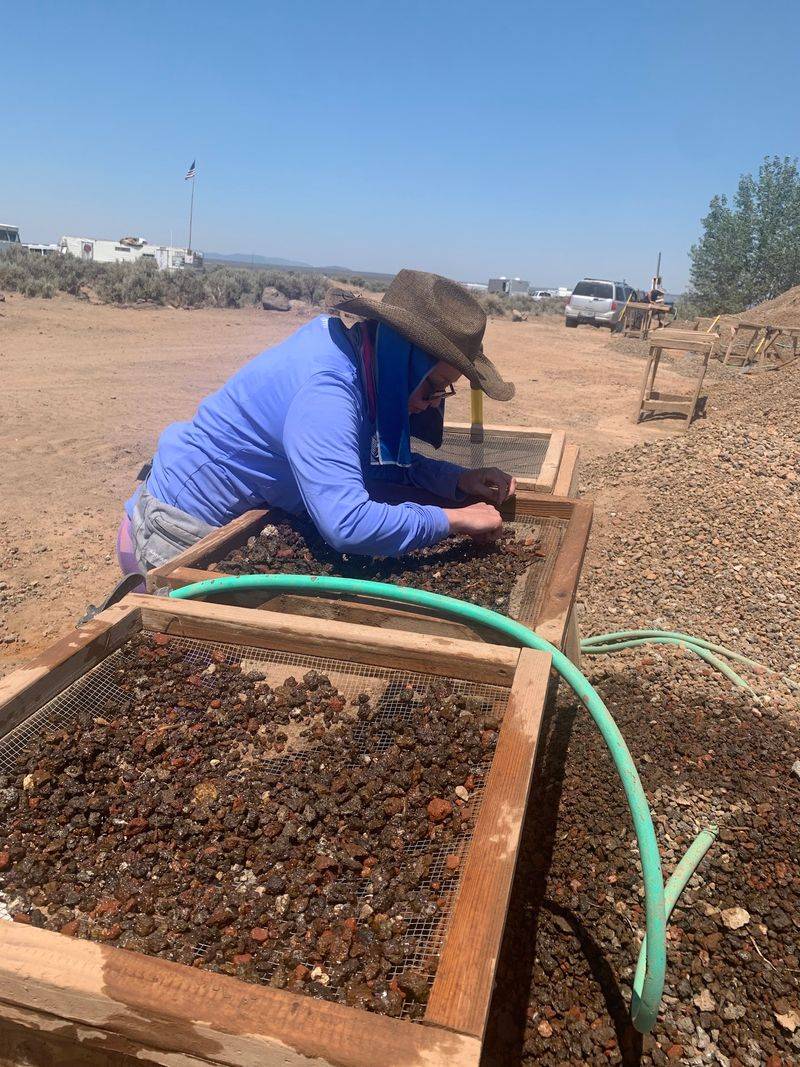
For visitors who want a middle-ground experience between casual digging and the fast pace of the belt run, buying a processed ore pile is a solid choice. Spectrum Mines offers piles of ore that have already been extracted and brought to a working area, where visitors can sift, sort, and search at their own pace.
Prices have ranged around $175 to $225 depending on the grade selected.
The process involves wetting the material, spreading it out, and combing through it shovel by shovel. It is genuinely physical work, and a pile can take a small group most of the day to work through thoroughly.
That said, the reward of pulling out a stone you found yourself, even from pre-extracted material, carries real satisfaction.
Results vary, and some visitors have come away with pounds of facetable stones while others have found the experience more modest. The honest reality is that sunstone mining at any level involves some unpredictability.
Experienced rockhounds who take their time and work carefully tend to do better than those who rush. The staff can offer guidance if you ask, and their tips on what to look for and how to read the material make a noticeable difference in your final count.
The Staff and the Knowledge They Bring
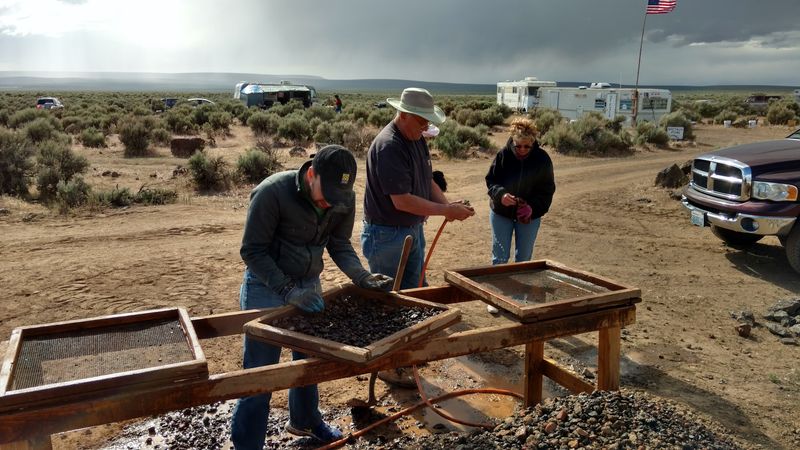
One of the things that consistently stands out in visitor accounts is the quality of the people working at Spectrum Mines. The staff includes experienced rockhounds who have spent years working with sunstones and know the material inside and out.
Ask them a question and you are likely to get a detailed, genuinely useful answer rather than a vague shrug.
Staff members have been known to help visitors identify which stones have the best potential for faceting, how to read the schiller in different lighting conditions, and which parts of the material tend to yield the most interesting finds. That kind of on-the-ground expertise is hard to find and makes a real difference, especially for first-time visitors who have no frame of reference for what they are looking at.
The owner and long-time crew members have also been praised for going well beyond basic hospitality. One memorable account involved staff driving a visitor a significant distance to get vehicle parts after a breakdown, then helping install them to get the group back on the road.
That level of community-minded helpfulness is rare anywhere, and it reflects the kind of culture the mine has built over the years. Coming in with genuine curiosity and a polite attitude tends to unlock the best of what the staff has to offer.
Overnight Cabins and Camping on Site
Spectrum Mines offers basic cabin accommodations for visitors who want to make a full weekend out of the trip. The cabins are small and simple, built more for function than comfort, but they include beds and protect you from the temperature swings that define high desert nights.
Calling ahead to reserve one is strongly recommended since availability is limited.
Nights in this part of Oregon get genuinely cold, even in summer, so bringing a sleeping bag is wise regardless of the season. Days, on the other hand, can push into intense heat, which means layers are not just a suggestion but a practical necessity.
The site also has functioning toilets and well water available, which feels like a genuine luxury given how remote the location is.
Dry camping spots are available for those who prefer to bring their own setup, and some visitors have reported finding loose sunstone chips just lying on the ground around the camp area at dawn, no tools required. The stillness of the desert at night is its own reward, with almost no light pollution making the sky above the mine genuinely spectacular.
One visitor summed it up well: arriving at a place this remote and having a bed waiting for you already feels like winning something.
What to Pack Before You Head Out
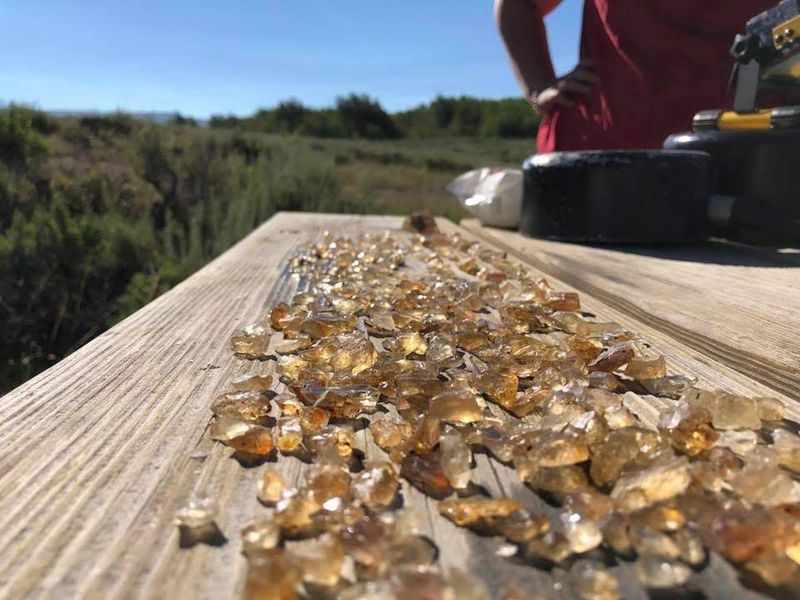
The high desert does not forgive poor preparation, and Spectrum Mines is remote enough that forgetting something important means going without. Water is the top priority.
Visitors have consistently recommended bringing far more than you think you will need, since the sun and dry air drain you faster than you expect, especially when you are physically working through ore all day.
Food and snacks are equally important since there are no vendors or restaurants anywhere near the mine. A hat, sunglasses, and sunscreen are non-negotiable for anyone planning to spend time outside, which is essentially everyone who visits.
Portable shade, like a pop-up canopy, makes a significant difference on hot days when the treeless desert offers nothing to hide under.
Old clothes that can get wet and dirty are the right call for any of the mining activities. Sturdy, closed-toe shoes with good grip are better than sandals on uneven ground.
A printed set of directions is a practical essential since cell service disappears long before you reach the mine. Downloading an offline map before leaving town is the smart backup.
A full tank of gas when you leave the last town is not a recommendation but a requirement for making the round trip without stress.
The Drive In and Navigation Challenges
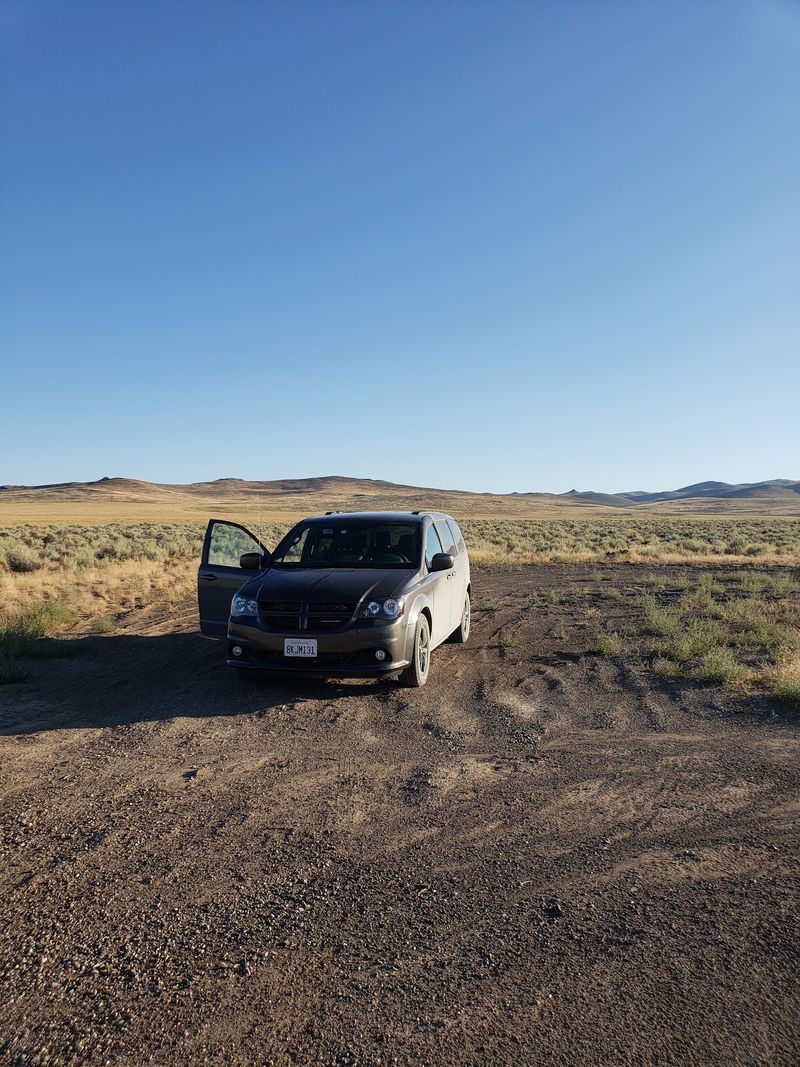
The road to Spectrum Mines is not a casual detour. The final approach involves gravel and dirt roads that can be rough on low-clearance vehicles, and the signage along the way is minimal at best.
Several visitors have described signs that are faded, partially buried in desert shrubs, or simply missing where you need them most.
Google Maps has a documented history of sending people down incorrect routes in this area, which is why printed directions from the mine’s own website are worth the extra effort before you leave. The Google Maps pin for the mine is reported to be accurate, but the app may not recognize the final dirt road as a navigable route and could try to reroute you onto something worse.
The drive from Plush itself takes additional time on unpaved surfaces, and the total journey from any major city is a commitment. From Bend, the trip runs several hours each way.
The reward is a location so far from the usual tourist trail that it genuinely feels like you have discovered something most people never will. The rough road is part of the filter that keeps this place special, and arriving after navigating it successfully gives you a quiet, earned sense of accomplishment before you even pick up a tool.
Colors and Rare Finds Worth Knowing About
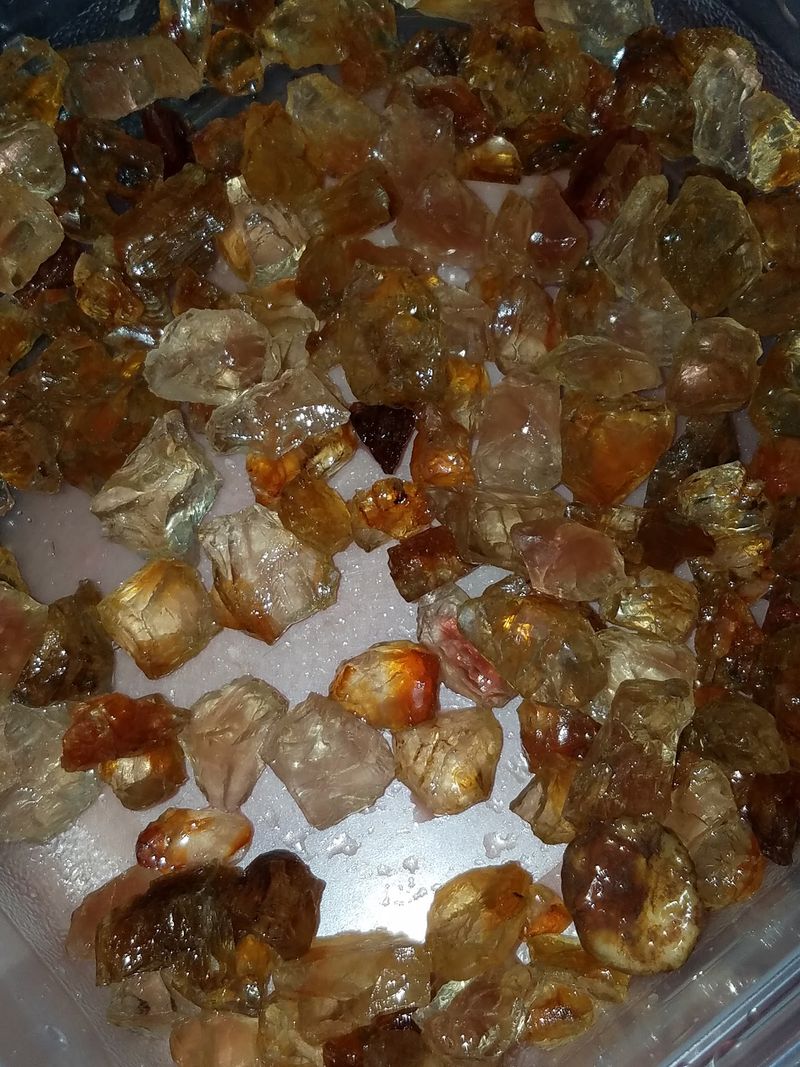
Most sunstones pulled from Spectrum Mines come in the warm end of the color spectrum, yellows, peaches, and oranges being the most common. These are still beautiful stones and many are facet-grade, meaning a skilled gem cutter can turn them into finished pieces suitable for jewelry.
Pink and pale green stones also appear with some regularity and are considered solid finds.
The stones that generate real excitement are the rarer colors. Deep blood-red sunstones are uncommon even at the best sites and tend to appear as small spots inside otherwise orange or bi-color stones rather than as solid red pieces.
Blue sunstones are exceptionally rare and represent the kind of find that rockhounds talk about for years. One visitor at Spectrum reportedly found a blue stone, which caused a stir among everyone present that day.
Watermelon stones, which show both red and green in the same crystal, and tricolor pieces are also possible in the pit areas, though they are not something you can count on. The belt run tends to yield higher volumes of smaller stones, while pit digging carries a lower probability but a higher ceiling for unusual finds.
Knowing what you are hoping to find before you arrive helps you choose the right mining option for your goals.
Buying Cut Stones and Rough Directly from the Mine
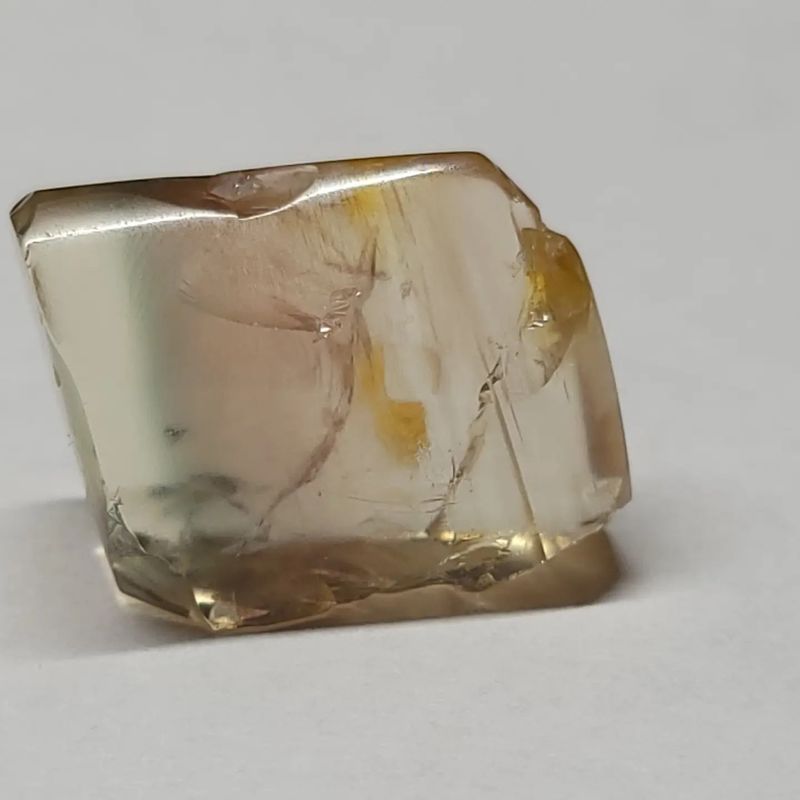
Not everyone who visits Spectrum Mines wants to spend the day mining, and the operation accommodates that. The on-site shop carries rough sunstones and cut, faceted pieces that the mine’s own crew has extracted and processed.
Buying directly from the source means you are getting genuine Oregon sunstones with a clear and traceable origin.
The quality of stones available for purchase tends to be higher than what most visitors will pull from a belt run or pile on their own, which makes sense since the staff knows exactly what to look for and has years of experience sorting material. If your goal is a specific size or color for a jewelry project, buying a finished stone or high-quality rough is often more efficient than spending a full day mining and hoping for the right result.
The staff at the shop can also advise on how to best cut a particular piece based on its internal structure and schiller orientation, knowledge that comes from hands-on lapidary experience rather than theory. For anyone interested in the craft side of gemstones, that kind of practical guidance is genuinely valuable.
Combining a morning of mining with an afternoon browse through the shop gives you both the experience and the best chance of leaving with something truly worth keeping.
Why This Place Stays Worth the Effort
There are easier ways to get a gemstone. You could walk into any jewelry store and pick one out from behind glass in about ten minutes.
But the stones you find at Spectrum Mines carry something a purchased gem never will: the memory of exactly where and how you found them, and the physical effort it took to pull them out of the ground yourself.
That personal connection is what keeps visitors coming back year after year. Families who visit once tend to return, often making it an annual tradition.
Rockhounds who have been to other sunstone operations consistently describe Spectrum as a solid middle-ground option with more amenities than most and a genuinely welcoming environment when the timing and staffing align well.
The remote location, the rough roads, the heat, and the unpredictability of what you will find are all part of the package. None of it is hidden or misrepresented.
The mine is honest about what it is: a working operation in the middle of the Oregon high desert where the treasure is real but the experience is raw. For the right kind of traveler, that combination is exactly the point, and the stones you carry home will always mean more because of everything it took to get them.
Share this story