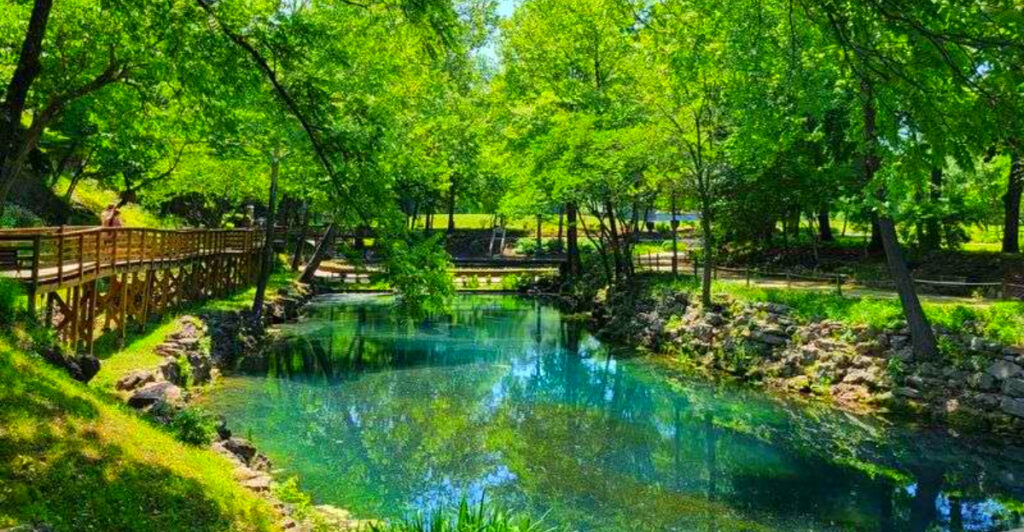
Crystal-clear spring water, colorful native gardens, peaceful woodland trails, ancient archaeological sites, and one of the Ozarks’ most remarkable natural wonders have made this Eureka Springs destination unlike anywhere else in Arkansas. Visitors come for the brilliant blue spring, blooming seasonal flowers, trout-filled waters, Native American history, and tranquil walking paths that reveal something new around every bend. It’s the kind of place where a simple garden visit becomes an unforgettable journey through both nature and history.
The experience extends far beyond the gardens. More than 10,000 years of human history, a nationally recognized Trail of Tears site, thoughtfully designed botanical displays, fascinating interpretive exhibits, and one of the state’s largest natural springs combine to create an attraction that is both beautiful and deeply meaningful. Every visit offers another reason to slow down, explore, and appreciate one of Arkansas’ most extraordinary hidden treasures.
Here’s why Blue Spring Heritage Center has become one of Arkansas’ most unforgettable destinations and a must-visit stop for anyone exploring the Ozarks.
Where History and Nature Converge at 1537 Co Rd 210
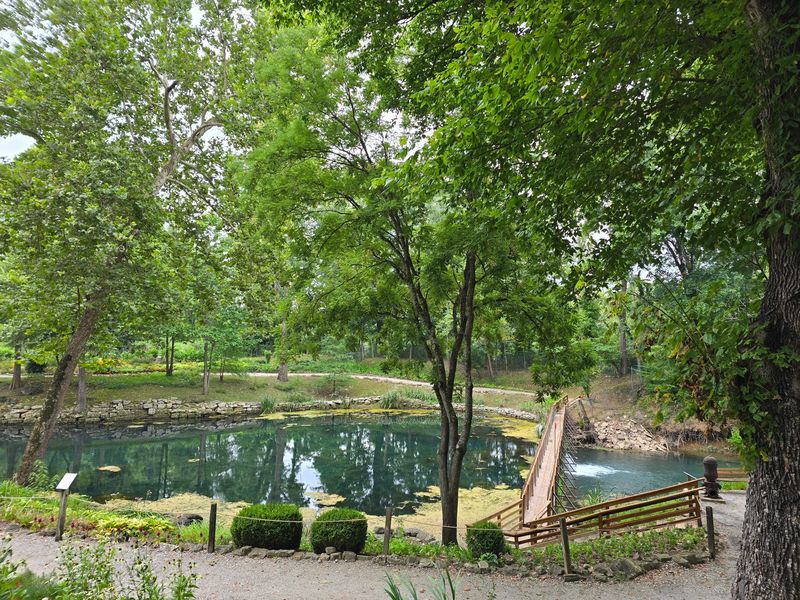
The address is simple enough: 1537 Co Rd 210, Eureka Springs, Arkansas 72632. But nothing about the destination itself is ordinary. A short, scenic drive from downtown Eureka Springs delivers you to a 33-acre sanctuary that quietly announces itself through a canopy of towering hardwoods and the distant sound of rushing water.
My first impression was that this place does not try to impress you with flashy signage or loud attractions. The entrance is understated, almost humble, and that restraint turns out to be the point. You are meant to slow down the moment you arrive.
The Trading Post serves as your entry point, where staff greet you warmly, hand you a trail map, and genuinely explain the best routes based on your pace and interests. That personal touch sets the tone immediately. The phone number is +1 479-253-9244, and the website at bluespringheritage.com offers seasonal updates worth checking before your trip.
The Staggering Power of Blue Spring Itself
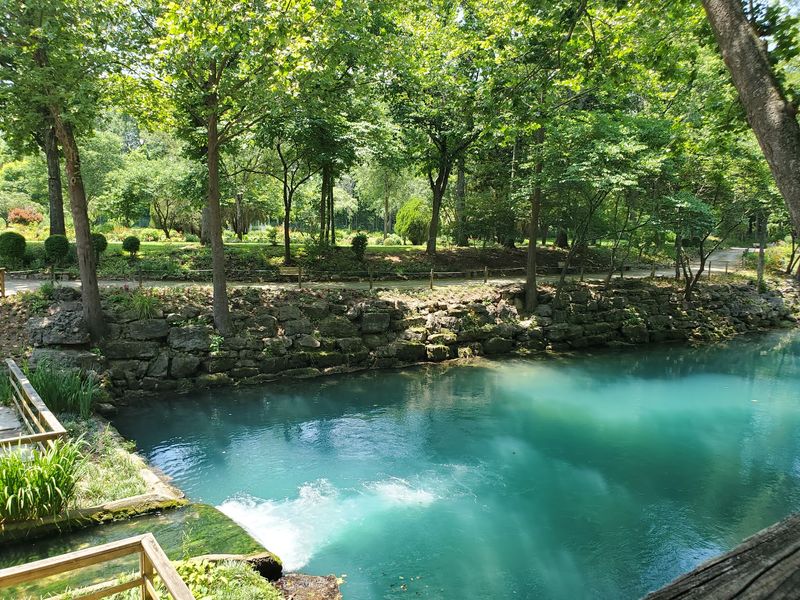
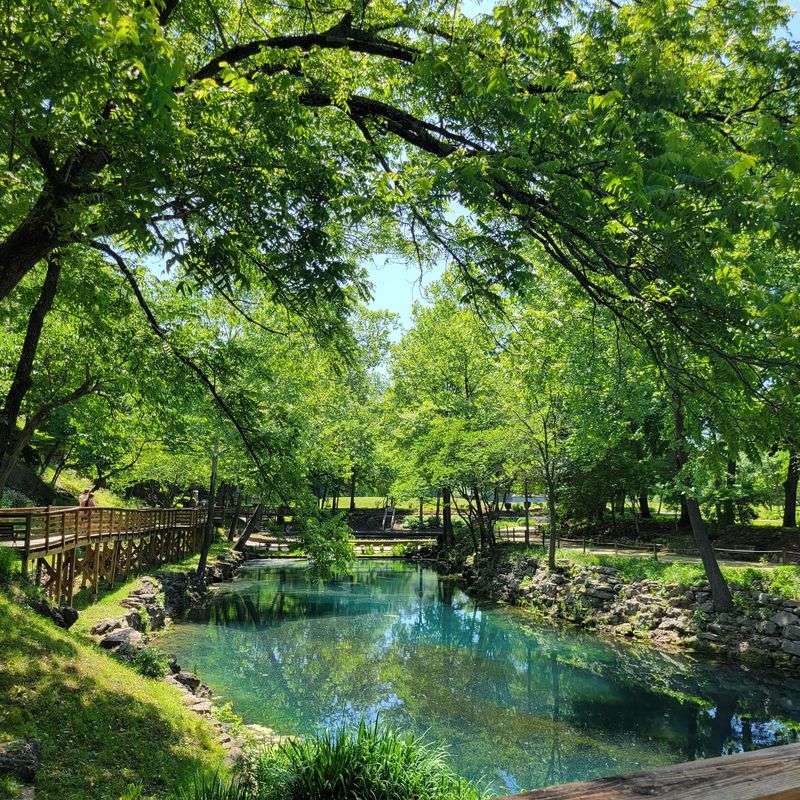
Few natural features can stop a person mid-stride the way the Blue Spring does. The water that surges up from the earth here produces an astonishing 38 million gallons every single day, a volume so consistent and so forceful that it has shaped this entire valley over thousands of years.
The color is the thing that gets you first. It is a vivid aquamarine blue-green, so saturated and clear that it looks almost artificial, though every drop of it is pure geology at work. Minerals rising from deep underground give the water its signature hue, and the constant temperature of 54 degrees Fahrenheit keeps it refreshingly cool year-round.
A viewing deck extends over the lagoon formed by the outflow, giving you a front-row seat to watch trout glide effortlessly through water so transparent it barely seems to exist. Bring quarters, because feeding those trout is genuinely one of the more satisfying small pleasures this place offers, and the fish are enthusiastic participants.
Ten Thousand Years of Human History Under One Bluff
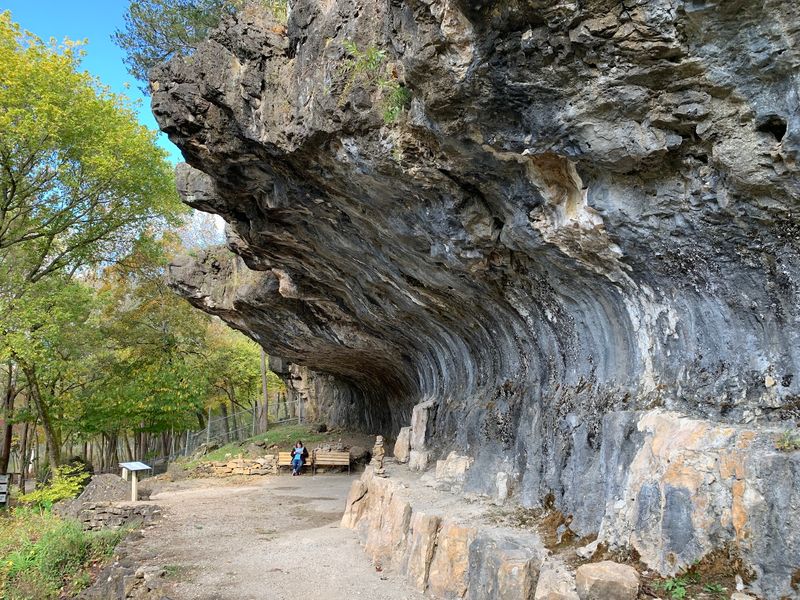
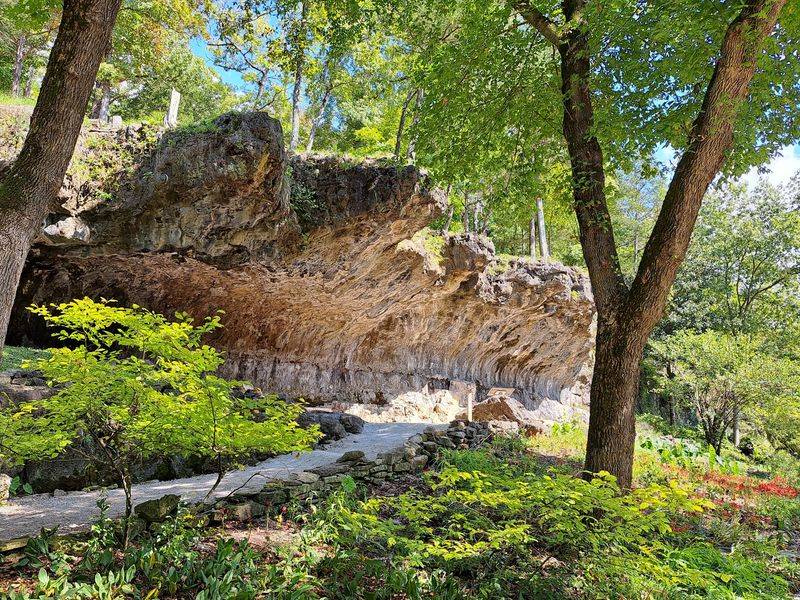
The Bluff Shelter is the kind of place that makes modern life feel very recent. This massive overhanging limestone formation, now listed on the National Register of Historic Places, provided shelter to human communities for at least 10,000 years, with evidence of occupation stretching back to 8000 B.C.
Archaeological excavations conducted in 1970 and 1971 uncovered arrowheads, pottery fragments, and remnants of ancient firepits, tangible proof that generations of people called this overhang home. They hunted the surrounding forests, gathered plants from the valley floor, and cultivated crops including maize, squash, and beans in the fertile bottomlands near the White River.
Standing beneath the bluff, you feel the weight of that history in a way that no museum exhibit quite replicates. The rock above you sheltered the same rain, the same storms, the same cold Arkansas nights, for people across countless generations. Interpretive signs throughout the area do an excellent job of translating the archaeological record into accessible, moving storytelling that resonates long after you leave.
A Sacred Stop on the Trail of Tears
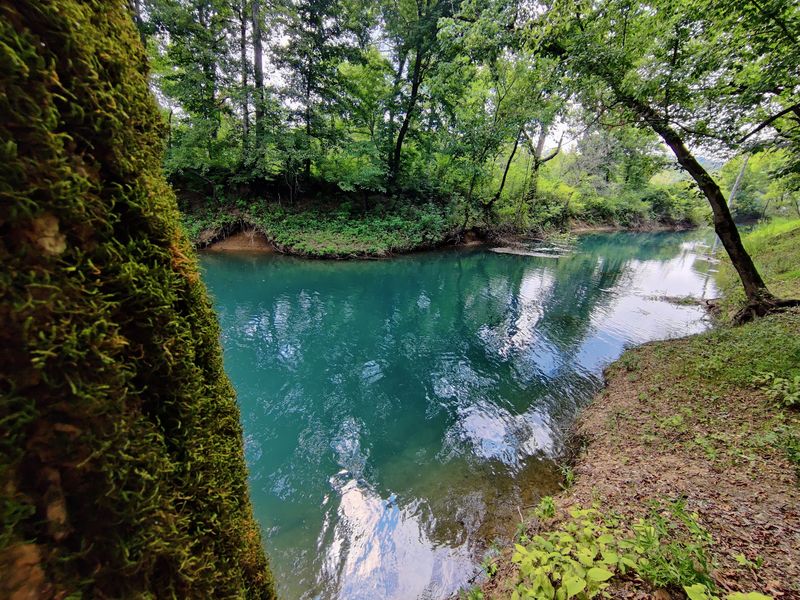
In March 1839, weary Cherokee people traveling the forced relocation route to present-day Oklahoma reached these springs and stopped to rest. Blue Spring was already known through oral tradition as a place of healing and renewal, and its cold, clear water offered genuine relief after months of brutal hardship on the trail.
The Blue Spring Heritage Center is a designated stop on the National Historic Trail, and that designation carries real weight here. Multiple indigenous nations, including the Osage, Cherokee, Quapaw, Lenape, Musogee, and Lakota, recognized this valley as sacred ground, often setting aside conflicts to gather peacefully near the water.
The interpretive displays along the trails handle this history with care and respect, neither sensationalizing nor glossing over the pain involved. Reading those panels beside the same spring that offered comfort to exhausted travelers two centuries ago is a quietly powerful experience. The beauty of the surroundings and the gravity of the history create a combination that stays with you well after the drive home.
Native Plants in Full, Glorious Bloom
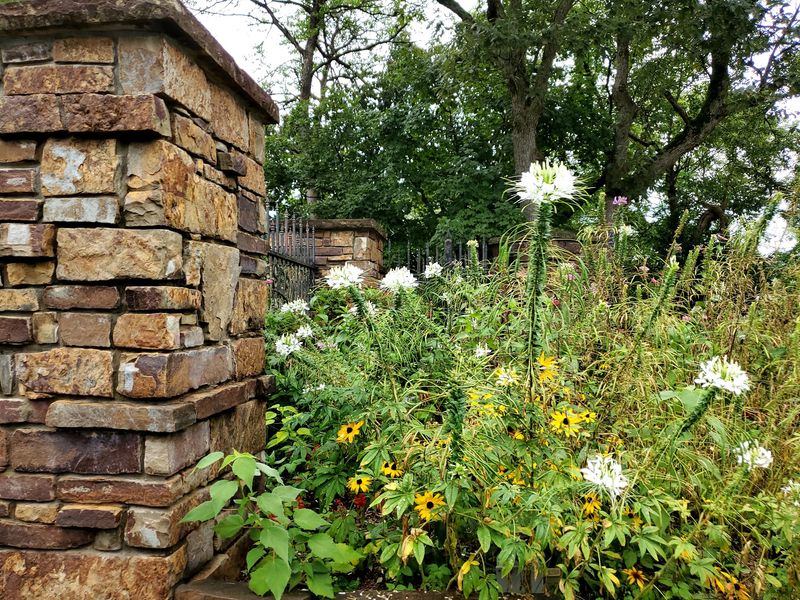
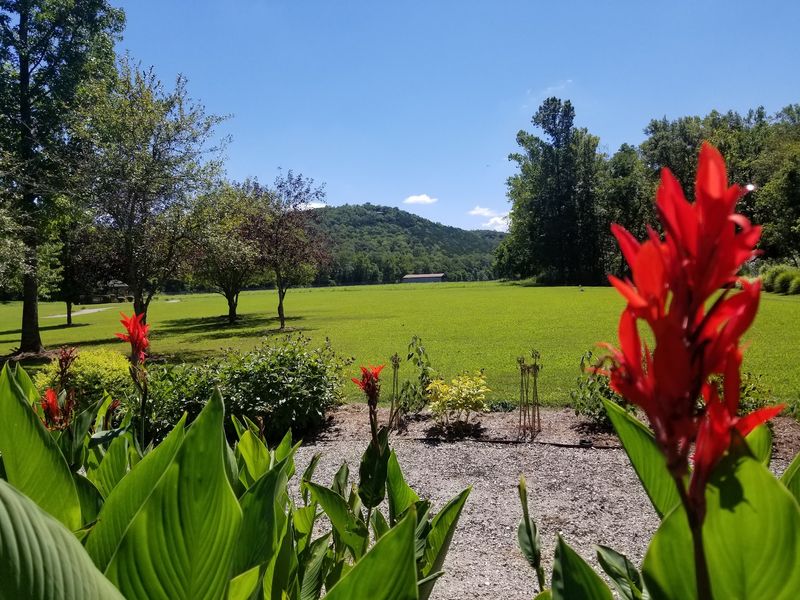
The botanical gardens at Blue Spring Heritage Center unfold across 33 acres with the kind of variety that rewards visitors in every season. Dogwoods, hydrangeas, magnolias, azaleas, peonies, and bleeding hearts all have their moment here, and the center even tracks monthly bloom schedules on its website so you can time your visit perfectly.
The Woodland Garden follows the natural contours of the land, offering a shaded, meandering path where wildflowers appear in waves of color from early spring through fall. There is a genuine sense of walking through a living landscape rather than a manicured showpiece, which makes the experience feel authentic and unhurried.
Two gardens carry particular cultural significance. The Medicine Wheel Garden is arranged in a circular pattern representing the four sacred cycles of life, showcasing plants historically used by indigenous communities for medicinal and spiritual purposes. The Three Sisters Garden demonstrates the traditional agricultural practice of growing maize, squash, and beans together, a brilliantly interdependent system that sustained indigenous communities for centuries across North America.
The Medicine Wheel Garden and Its Living Lessons
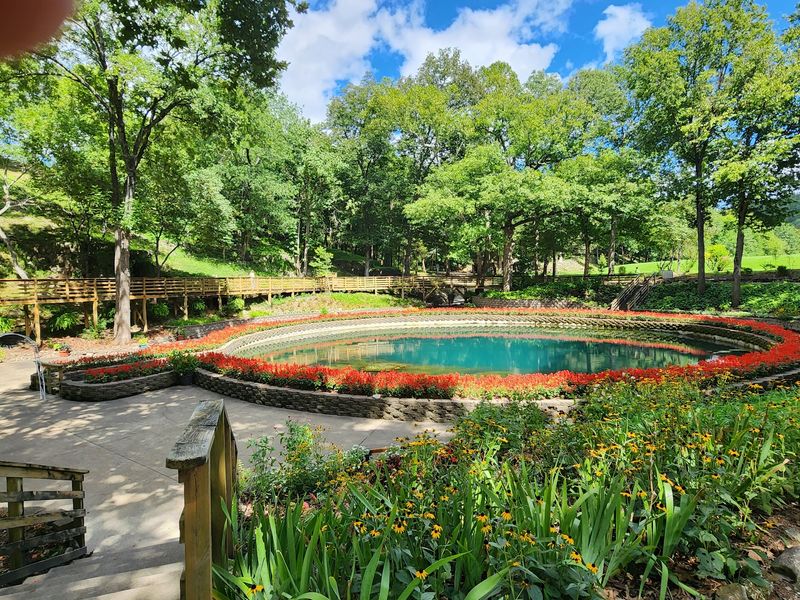
There is something quietly instructive about a garden designed not for visual spectacle alone but for cultural memory. The Medicine Wheel Garden at Blue Spring Heritage Center arranges native plants in a circular pattern divided into four sections, each representing one of the sacred cycles of life recognized in many indigenous traditions.
Every plant in this garden was selected because of its historical role in Native American medicine, ceremony, or daily sustenance. Walking through it feels less like touring a garden and more like reading a living reference guide to thousands of years of botanical knowledge. The interpretive signs explain each plant’s traditional uses in clear, accessible language that both adults and children can appreciate.
What makes this garden particularly compelling is the way it bridges the past and the present. These plants still grow, still bloom, and still carry the same properties that made them valuable long before European settlers arrived in the Ozarks. The garden is a gentle but firm reminder that ecological knowledge and cultural heritage are deeply intertwined, and that both deserve preservation.
Remnants of the Old Mill and Early Settler Industry
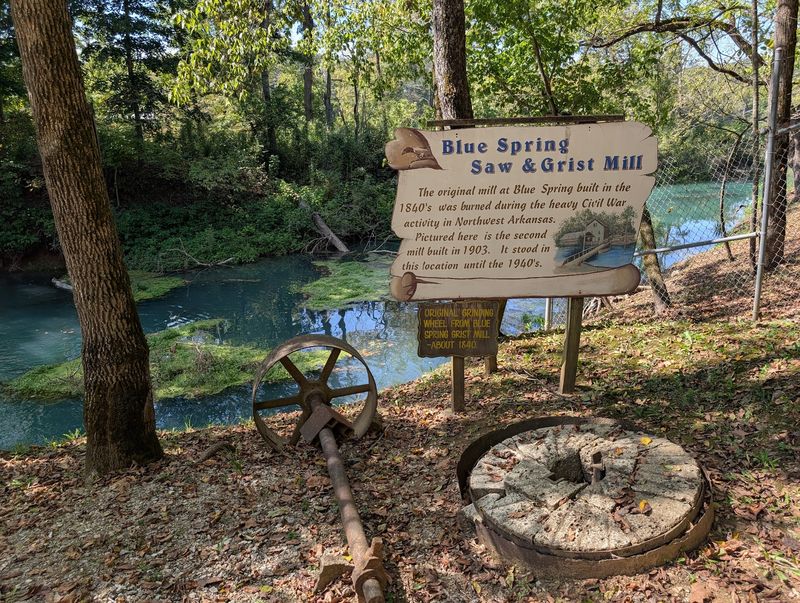
Not everything at Blue Spring Heritage Center speaks to ancient indigenous history. A fascinating chapter of early settler life also played out along these banks, centered on the spring’s extraordinary water output as a source of industrial power.
A grist mill first built in the early 1840s harnessed the spring’s flow to grind corn for surrounding communities. That original structure did not survive the American Civil War, but a replacement built in 1903 expanded operations to include flour milling and sawmilling, making the site a genuine hub of frontier commerce and daily life.
The full structures are long gone, but a preserved turbine and a grist stone displayed on the grounds give you a tangible connection to that era. There is something satisfying about seeing the same water that colored this valley blue for millennia also turning the wheels of a 19th-century mill. The coexistence of natural wonder and human ingenuity at this single location is one of the things that makes the center feel so layered and worth exploring thoroughly.
More Than a Mile of Trails Worth Every Step
Over a mile of well-maintained trails wind through the Blue Spring Heritage Center, and the variety packed into that distance is genuinely impressive. Paths meander past ancient rock formations, skirt tranquil ponds, cross wooden boardwalks over flowing water, and climb gently through wooded hillsides thick with native vegetation.
Thoughtfully placed benches appear at regular intervals, and these are not just courtesy stops. They are positioned at genuinely scenic spots where pausing to absorb the surroundings feels natural and rewarding. The viewing deck over the spring lagoon is the most popular resting point, and for good reason, since the color of the water from that elevated vantage is even more striking than it appears at ground level.
The staff at the Trading Post provide a recommended walking route that most visitors find well-sequenced and easy to follow. The paths are largely accessible, with long flat sections suitable for strollers and many mobility needs, though some areas include gravel surfaces and a staircase through the Azalea Terrace that adds a bit of elevation change. Early morning visits reward those who arrive before the crowds.
The Visitor Center, Videos, and the Trading Post
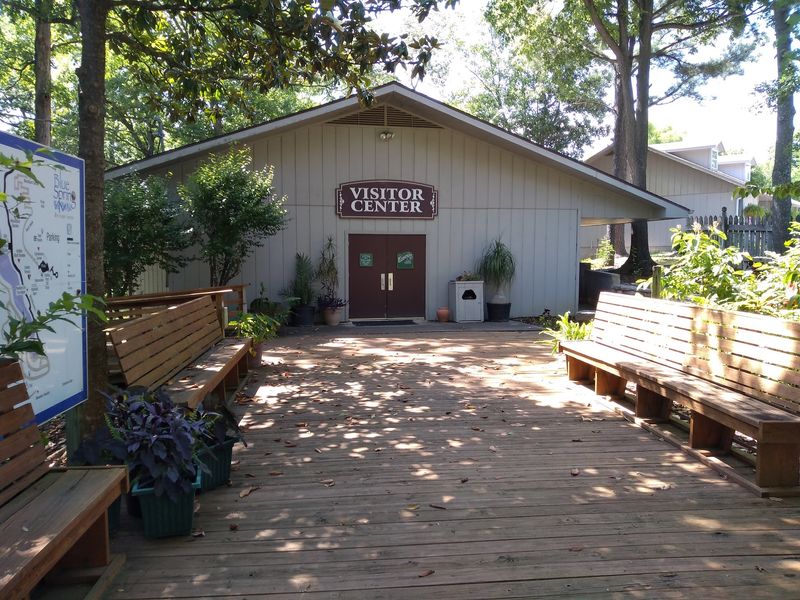
Before heading out onto the trails, most visitors stop in the visitor center attached to the Trading Post, and that detour is genuinely worth the extra few minutes. A short historical film introduces the spring’s layered story, covering its geological origins, its indigenous significance, and its role in early settler life in a concise and engaging format.
The Trading Post itself doubles as a gift shop with a curated selection of souvenirs, and notably, a thoughtful collection of Native American history books that allow curious visitors to go deeper into the stories the trails only begin to tell. Some items in the shop are sourced from indigenous artisans, though the selection varies.
Staff at the counter are consistently described by visitors as friendly and genuinely knowledgeable, happy to recommend routes based on your time, fitness level, and specific interests. They will also remind you to use the restrooms before heading out, since the facilities near the parking lot are the only ones available on the property. That is practical advice worth heeding on a warm afternoon.
How a Beautiful Garden Became a Heritage Center
The story of how this land became the Blue Spring Heritage Center is itself a lesson in evolving appreciation. The spring first attracted organized tourism as early as 1948, when its visual drama and natural setting made it an obvious draw for visitors exploring the Ozarks.
For decades it functioned primarily as a scenic garden destination, and in 1993 it was formally developed as the Eureka Springs Gardens, a 33-acre landscape designed to showcase native and ornamental plants in a thoughtfully curated setting. The gardens earned a devoted following and built a strong regional reputation for beauty and tranquility.
The pivotal shift came in 2003, when the decision was made to fully integrate the site’s deep historical and cultural layers into the visitor experience. The rebranding as the Blue Spring Heritage Center reflected a genuine commitment to honoring the indigenous history, Trail of Tears connections, and archaeological significance embedded in the land. That evolution transformed a lovely garden into something far more meaningful, a place where natural beauty and human history reinforce each other at every turn, and where every visit leaves you with more questions worth pursuing.
Practical Tips That Will Make Your Visit Much Smoother
The Blue Spring Heritage Center operates seasonally, opening daily from 9 AM to 6 PM between March 15 and November 29, with a closure on Thanksgiving Day. Checking the website before your visit is a smart habit, since conditions and schedules can shift with the seasons and occasional weather events.
Admission is priced reasonably for what the center offers. Adults pay $17.75, seniors over 65 and military veterans pay $15.75, children aged 6 to 15 pay $9.75, and kids five and under enter free. Most visitors find that one to two hours covers the grounds comfortably, though the place rewards a slower pace if your schedule allows.
Comfortable footwear is a genuine necessity, not a suggestion. The trails include gravel sections and some elevation changes that make sandals a regrettable choice. Bringing water is also wise during warmer months. Pets are not permitted except for service animals, and visitors are asked to stay on marked paths, avoid picking plants, and leave bikes and skateboards in the car.
Quarters for the trout-feeding station are a delightful and highly recommended addition to your pocket change.
Share this story