Some of the best travel experiences in Europe happen before you even arrive at your destination. Hopping on a train here means watching glaciers, vineyards, fjords, and medieval castles roll past your window like a living postcard.
From Switzerland’s sky-high Alpine routes to Portugal’s sun-drenched wine valleys, these rail journeys turn the trip itself into the main event. Grab a window seat, because these 10 routes are pure magic on rails.
Bernina Express, Switzerland and Italy
Few train rides on Earth pull off a climate change quite like the Bernina Express. You board in the crisp Swiss Alps and, a few hours later, step off near Italian palm trees in Tirano.
The contrast alone is worth the ticket price.
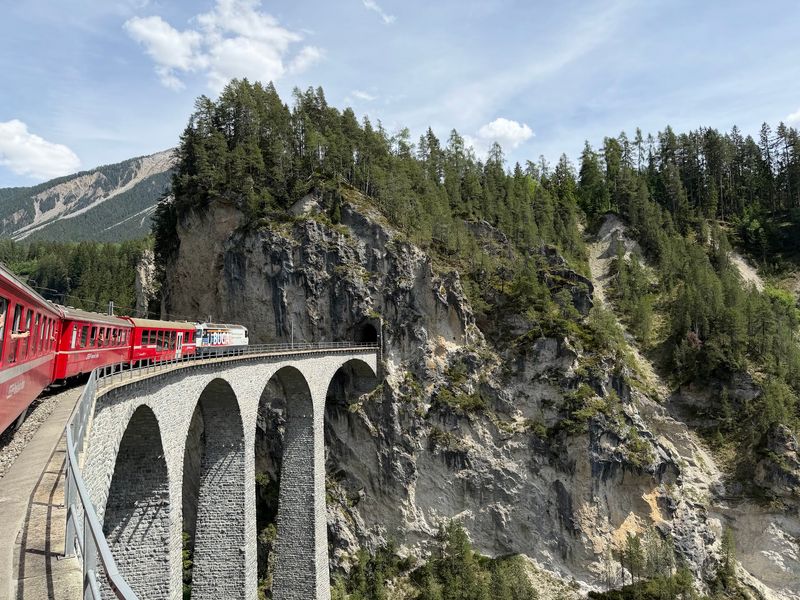
Running from Chur, the route crosses 196 bridges and passes through 55 tunnels. The Landwasser Viaduct is a jaw-dropping stone arch that curves right into a cliff face.
Then comes the Brusio circular viaduct, a spiral of track that loops around itself like a train pretending to be a rollercoaster.
The Albula and Bernina railway landscapes hold UNESCO World Heritage status, which is a fancy way of saying the scenery is officially incredible. Panoramic coaches give wide, unobstructed views throughout the journey.
A separate seat reservation is required on top of your rail pass, so book ahead, especially in summer when this route fills up fast.
Glacier Express, Switzerland
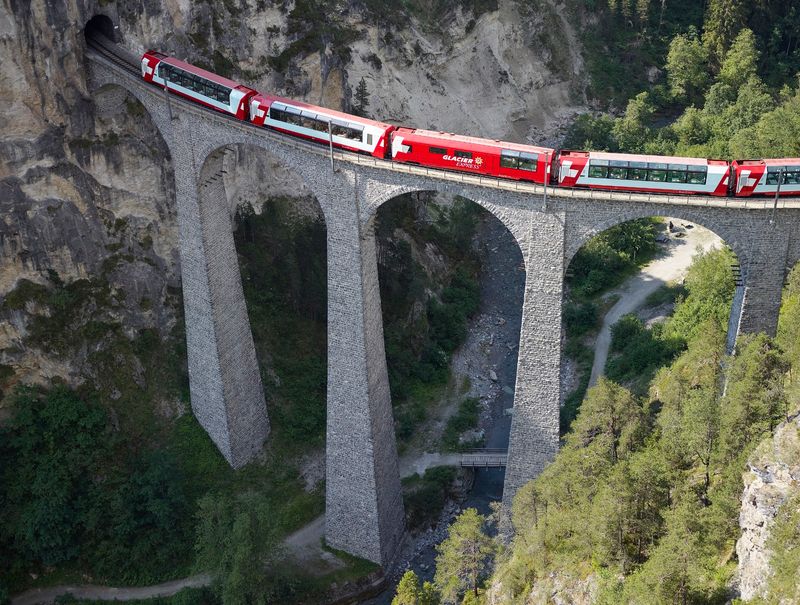
Eight hours on a train sounds like a punishment, but the Glacier Express makes it feel like a reward. Linking Zermatt and St. Moritz through the heart of the Swiss Alps, this is the self-proclaimed “slowest express train in the world” and it earns that title proudly.
The route crosses 291 bridges and burrows through 91 tunnels. Highlights include the dramatic Rhine Gorge, the Oberalp Pass at 2,033 meters above sea level, and sweeping views connected to the iconic Matterhorn.
The Landwasser Viaduct makes another appearance here, because apparently Switzerland likes to show off.
Panoramic windows run almost floor to ceiling, so no view gets wasted. Meals and drinks are served at your seat, which means you never have to choose between eating and sightseeing.
You can also ride shorter sections of the route if a full day on board feels like too much. Seat reservations are mandatory, so plan well in advance during peak travel months.
West Highland Line, Scotland
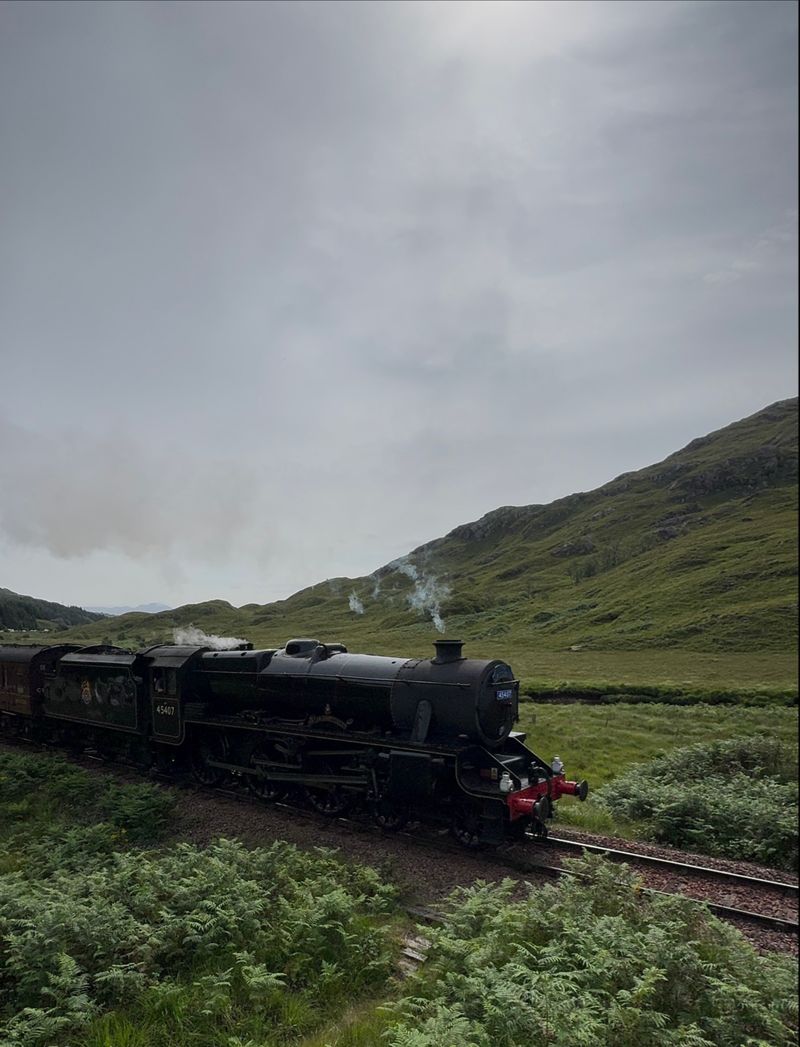
Scotland’s West Highland Line is the kind of route that makes you feel like you have stumbled into a fantasy novel. Leaving Glasgow behind, the train pushes steadily into some of Britain’s most remote and rugged terrain, passing lochs, moorland, and mountains that seem to go on forever.
The Mallaig extension is where things get truly spectacular. The train crosses the Glenfinnan Viaduct, a curved stone structure that arches dramatically over a green valley.
Fans of a certain boy wizard franchise will recognize it immediately, but even without the film connection, it is breathtaking.
What makes this route extra appealing is that no luxury or heritage ticket is required. Regular ScotRail services run year-round on standard fares, making incredible Highland scenery surprisingly affordable.
The line also passes Loch Shiel, the white sands of Morar, and the fishing village of Mallaig, where the journey ends with views toward the Isle of Skye. Booking advance fares early can save a noticeable amount if your travel dates are confirmed.
Flam Railway, Norway
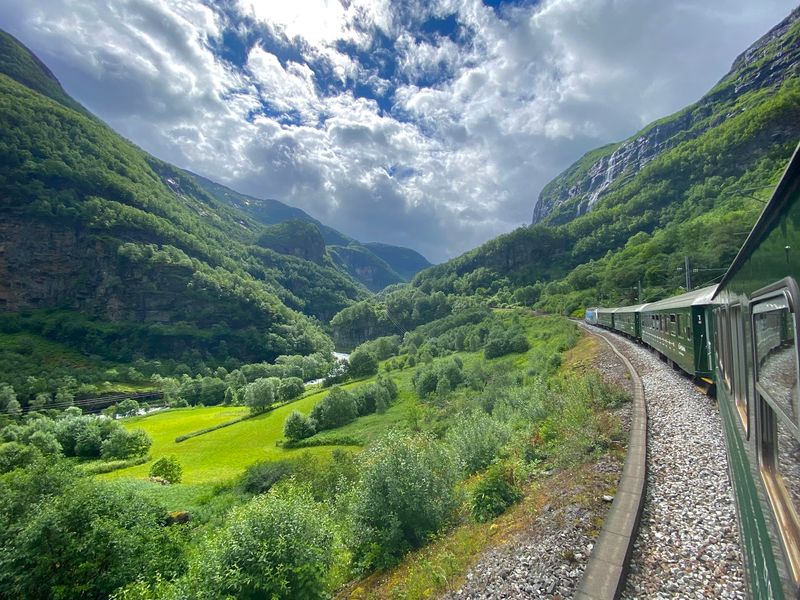
Twenty kilometers might not sound like much, but the Flam Railway packs more scenery into that distance than most routes manage in 200. Connecting the mountain station of Myrdal with the fjordside village of Flam, this short ride punches well above its weight.
The train drops nearly 900 meters in altitude during the descent, which means waterfalls, sheer rock faces, and mountain farms appear around almost every bend. One waterfall stop, at Kjosfossen, lets passengers step off briefly to watch water thunder down the cliffs.
It is loud, wet, and completely wonderful.
The line passes through 20 tunnels, including one that spirals inside a mountain to lose altitude gradually. At Myrdal, the Flam Railway connects directly with the Bergen Railway, making it easy to combine both routes in a single Norwegian adventure.
The village of Flam itself sits at the edge of the Aurlandsfjord, one of the narrower arms of the famous Sognefjord. This is a short journey that rewards every minute of attention you give it.
Bergen Railway, Norway
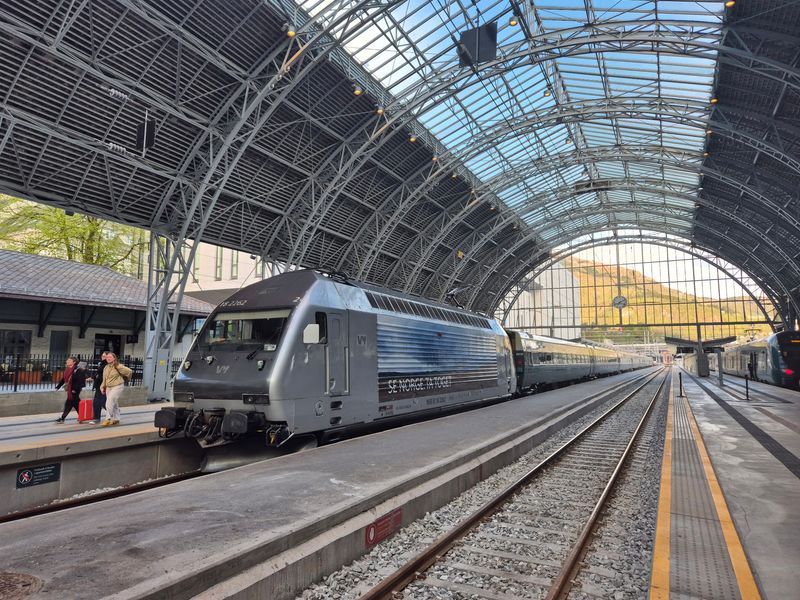
Norway’s Bergen Railway is proof that getting from A to B can be one of the best things you do on a trip. The roughly seven-hour journey between Oslo and Bergen is a masterclass in Norwegian landscapes, cycling through forests, river valleys, and one of Europe’s largest mountain plateaus.
The Hardangervidda plateau section is the highlight for many passengers. Up here, the train rolls across a wide, treeless expanse that feels almost Arctic, even in early autumn.
In winter, snow blankets everything and frozen lakes shimmer beside the tracks. In summer, the same plateau glows green under nearly endless daylight.
The descent toward Bergen brings the landscape back to life with fjord country, steep hillsides, and the colorful wooden buildings of Norway’s second city waiting at the end. The route runs multiple times daily in both directions, so there is no need to rush or book far in advance for standard seats.
Traveling westward in the afternoon often means the best light for photography through the mountain sections.
Douro Line, Portugal
Port wine lovers, this one is for you. Portugal’s Douro Line follows the Douro River east from Porto into one of Europe’s most visually striking wine regions, where vineyard terraces climb impossibly steep hillsides above the river’s winding bends.
The railway opened in the 19th century and required serious engineering to carve a route through the valley’s rocky geography. Tunnels and bridges come frequently, and the track often runs right at river level, putting passengers just meters from the water.
The stretch between Regua and Pinhao is the most celebrated section for scenery.
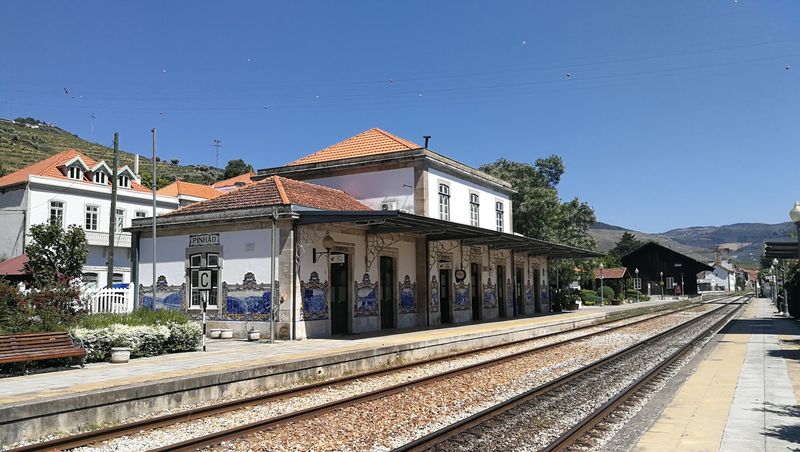
Pinhao station deserves a stop on its own. Its platform walls are decorated with traditional blue-and-white azulejo tiles showing scenes of vineyard life and harvest traditions.
It is a small but genuinely beautiful detail that sums up the character of this whole route. During summer and early autumn, a historic steam train sometimes operates between Regua and Tua, though schedules change yearly and should be confirmed before booking around them.
Standard regional trains from Porto make this journey accessible on any budget.
GoldenPass Express, Switzerland
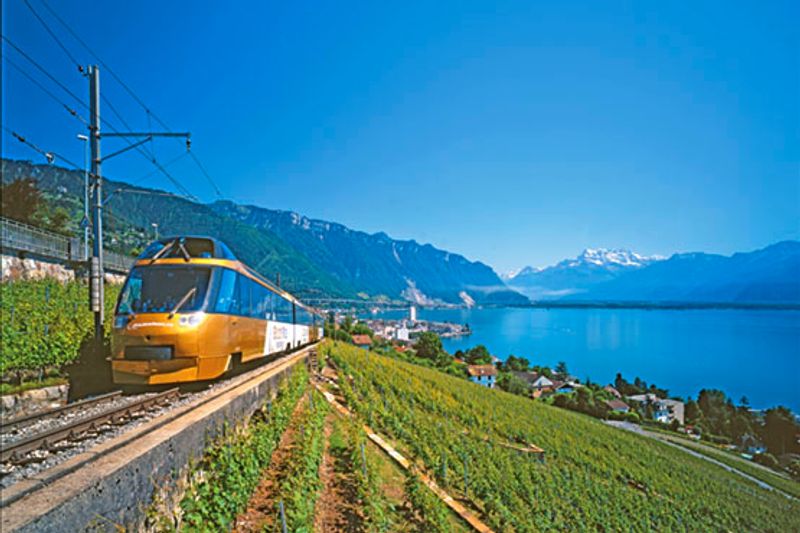
Picture this: you start your morning surrounded by Alpine peaks near Interlaken and end your afternoon sipping something cold beside Lake Geneva in Montreux. The GoldenPass Express makes that exact trip possible in a single, seamless journey.
The route winds through the resort town of Gstaad, the cheese-making village of Chateau-d’Oex, and across three different Swiss cantons. Each section has its own distinct personality, shifting from high mountain pastures to rolling green hills to lakeside vineyards as the train descends toward its final stop.
The panoramic windows on the express service are genuinely impressive, curving up into the roof to maximize sky and mountain views. The descent into Montreux is a particular highlight, with the lake appearing below and the vineyard terraces of the Lavaux UNESCO heritage site spreading across the hillsides.
Before this express service launched in 2022, passengers had to change trains mid-route due to a gauge difference, so the direct connection is a genuine improvement. Seat reservations are recommended, especially on weekends and during the busy summer season.
Semmering Railway, Austria
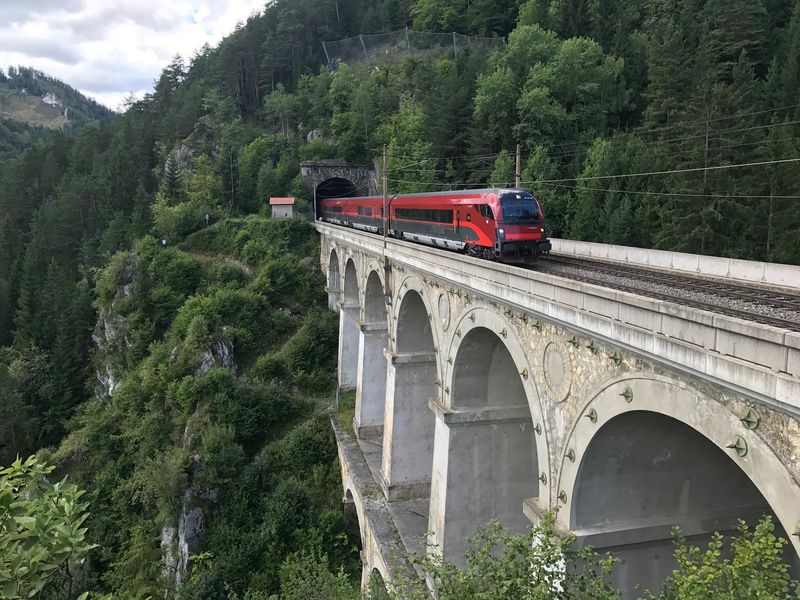
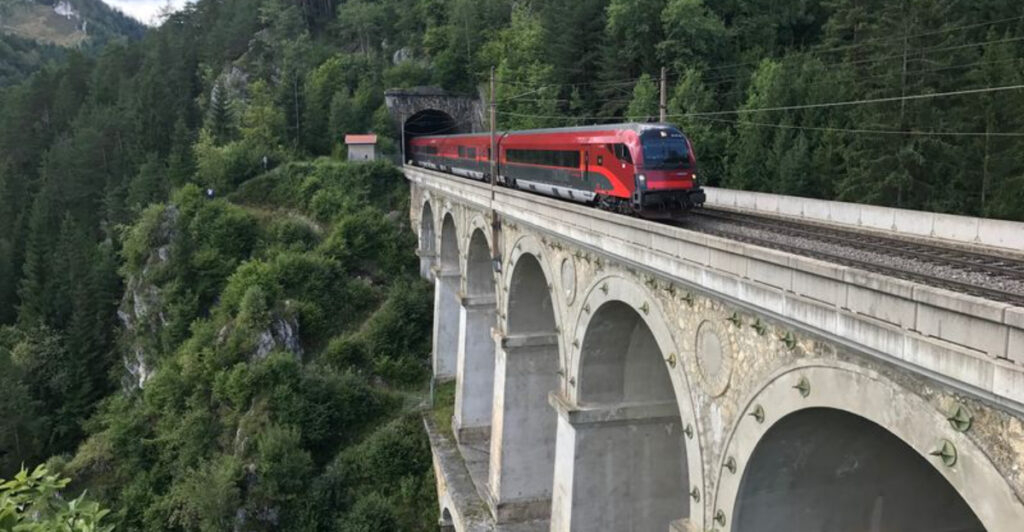
Built in the 1840s when steam locomotives were still a novelty, the Semmering Railway is the granddaddy of mountain railways everywhere. It became the world’s first standard-gauge mountain railway when it was completed in 1854, and it earned UNESCO World Heritage status for its engineering ambition alone.
The roughly 40-kilometer section between Gloggnitz and Murzzuschlag is the heritage stretch, threading through forested Alpine terrain using a network of tunnels, curved viaducts, and elegant stone bridges. The engineers who built it had no precedent to follow, which makes the result even more impressive.
The Semmering region itself became a fashionable mountain retreat for Viennese society in the late 19th century, and grand hotels from that era still stand along the route. Riding the railway today connects you to that entire history while also delivering genuinely beautiful scenery.
Regular Austrian Federal Railways trains use the route, so no special booking or premium ticket is needed. Autumn is a particularly good season to travel, when the beech forests turn copper and gold around the viaducts.
Rhine Valley Railway, Germany
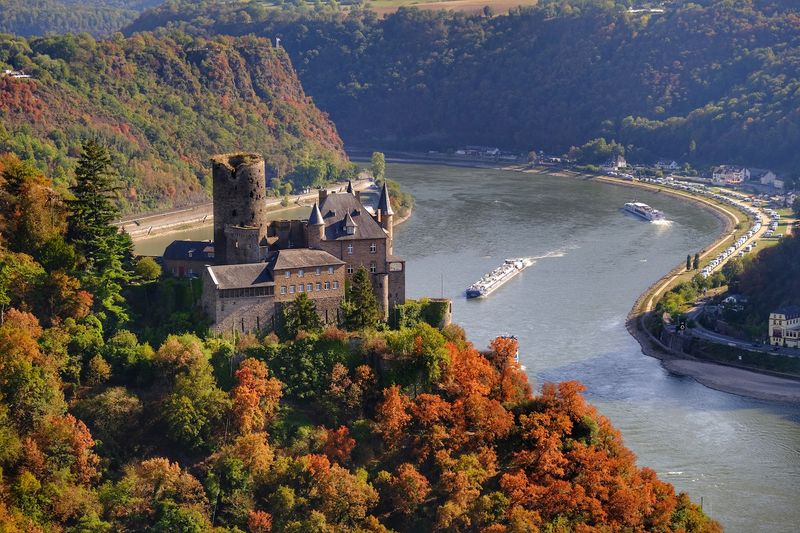
Castles, vineyards, river bends, and boat traffic, all visible from a standard regional train ticket. The Rhine Valley Railway between Bingen and Koblenz is one of Europe’s most effortlessly scenic rides, and it requires absolutely no advance planning to enjoy.
The route passes through the UNESCO-listed Upper Middle Rhine Valley, where medieval fortresses perch on almost every hilltop. Counting them becomes a game after the first few appear.
The steep slopes below the castles are covered in Riesling vineyards, and the river itself is constantly busy with barges, ferries, and tourist boats.
Trains run on both banks of the Rhine, so you get slightly different perspectives depending on which side you choose. The right bank offers closer views of the famous Loreley rock and several of the most dramatic castle positions.
Journey time between Bingen and Koblenz is under an hour, making this easy to slot into a broader Germany itinerary. Combining it with a short river cruise in the opposite direction is a popular approach that works surprisingly well for getting the full picture of this legendary stretch of river.
Vigezzina-Centovalli Railway, Switzerland and Italy
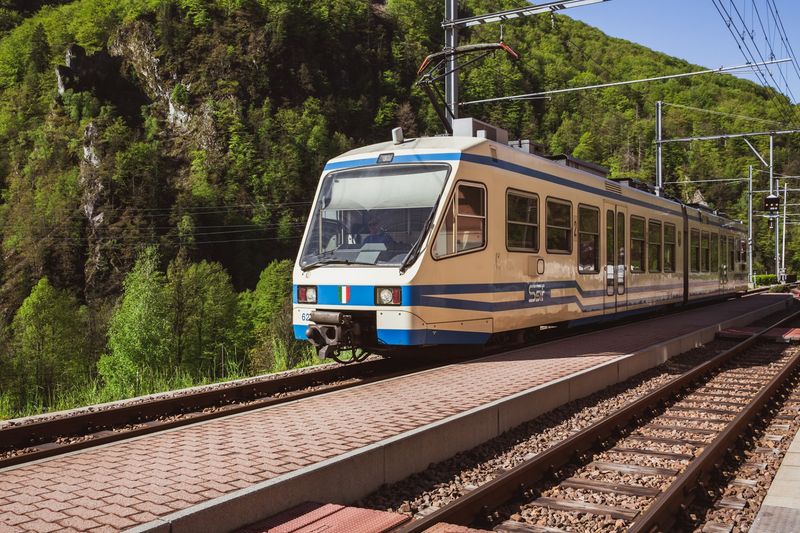
The name translates loosely as the Hundred Valleys Railway, which tells you something about the landscape this narrow-gauge line passes through. Running between Locarno in Switzerland and Domodossola in Italy, this two-hour journey feels like it was designed specifically for people who love discovering places that most tourists miss.
The route crosses 83 bridges and viaducts while weaving through chestnut forests, past stone villages, beside waterfalls, and above deep ravines that drop sharply away from the track. Unlike some of the bigger Swiss routes, this one has a quieter, more local character.
You share the train with commuters and schoolchildren as often as with tourists.
Spring brings the waterfalls to full roaring power after snowmelt fills the mountain streams. Autumn is when this route truly shines, though, as the chestnut forests turn amber and gold in a display that can last well into November.
The narrow-gauge carriages are smaller than standard Swiss trains, which adds to the charm rather than detracting from it. Rail passes are accepted on this route, but a small reservation fee may apply depending on the service you choose.
Share this story