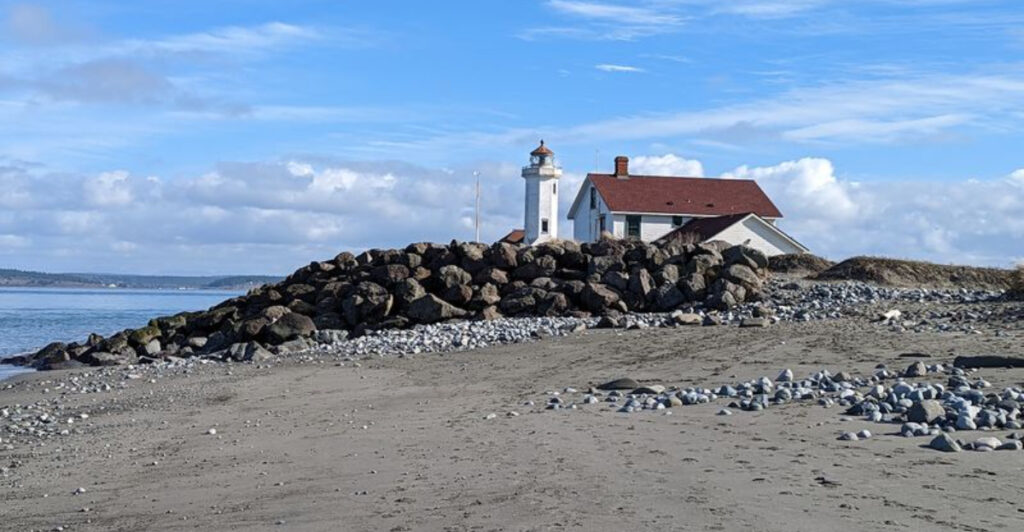
There is a place on the northern tip of Washington’s Olympic Peninsula where concrete military bunkers sit quietly above Puget Sound, surrounded by forest trails, a working lighthouse, and miles of open beach. Most people drive past Port Townsend without knowing what waits just a few minutes from the ferry dock.
This is one of those rare spots that layers history, nature, and genuine adventure into a single visit. The park was once a fully operational coastal defense base, and today it keeps nearly all of that character intact.
Whether a first-time visitor or someone who has passed through the area a dozen times, there is always something new to find here, and this article covers all of it.
A Military History Written in Concrete
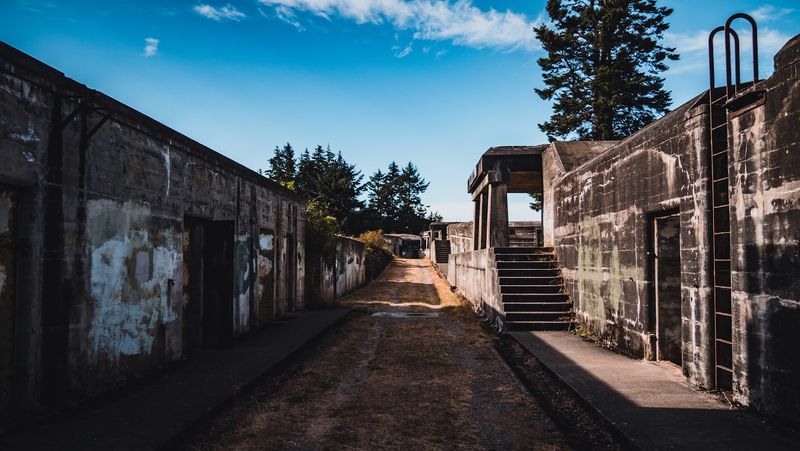
Built in the late 1890s and completed in the early 1900s, Fort Worden was part of a trio of forts designed to protect Puget Sound from naval attack. The other two forts, Fort Flagler and Fort Casey, formed what military planners called the Triangle of Fire, a defensive system meant to stop enemy ships before they could reach Seattle or Tacoma.
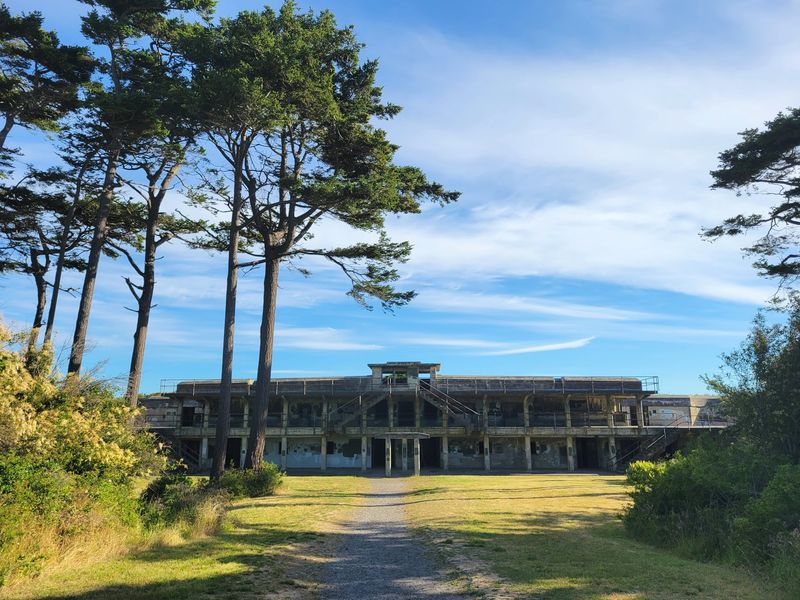
The gun batteries at Fort Worden are the most striking reminders of that era. These massive concrete platforms once held large artillery guns capable of firing shells across the water at considerable range.
Today, the batteries are open to explore, and walking through them gives a real sense of the scale and seriousness of the original construction.
The fort remained active through both World Wars and was used as a youth camp and then a state park after its military mission ended. That layered history makes every corner of the grounds worth a closer look.
Inside the Bunkers: Dark Corridors and Flashlight Fun
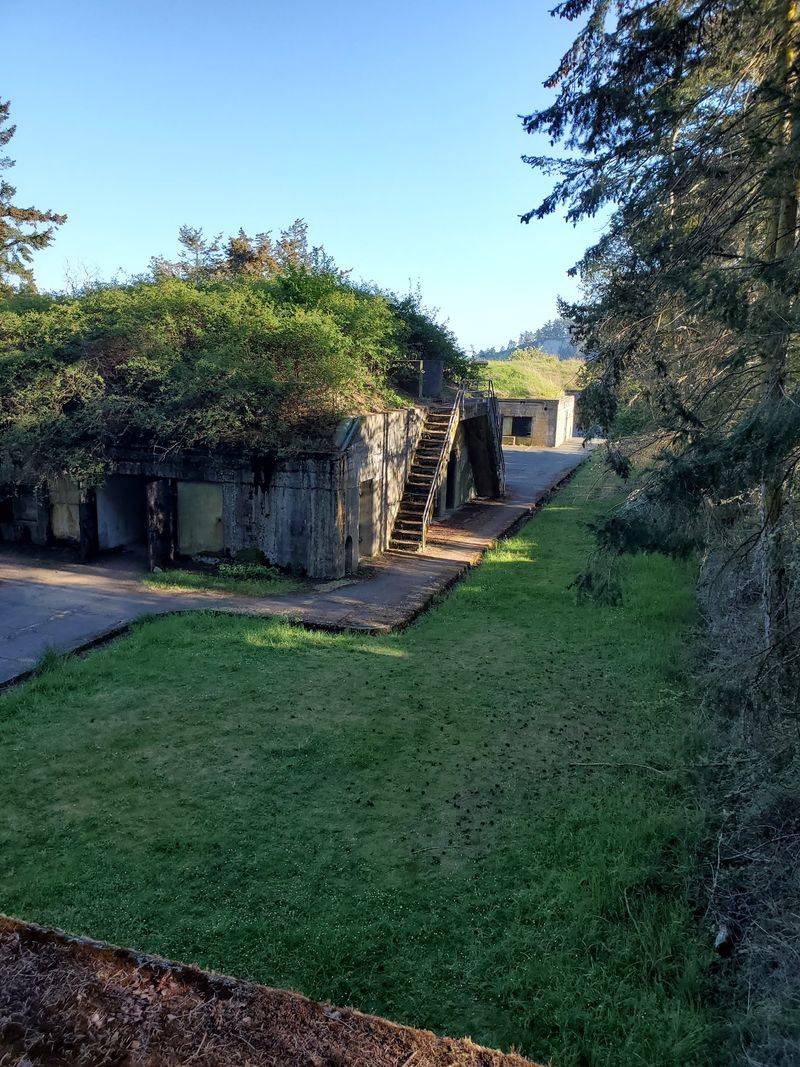
Bringing a flashlight to Fort Worden is one of the best decisions a visitor can make. The interior corridors of the gun batteries are dark, narrow in places, and full of branching passages that make the whole experience feel like a real-life puzzle.
Watch out for low door frames, because the original military construction did not account for modern visitors casually wandering through. The concrete walls are thick, and once inside, phone signals tend to disappear entirely, which actually adds to the atmosphere rather than being an inconvenience.
Kids find the bunkers especially exciting, and adults tend to get just as caught up in the exploration. The structures are well-preserved, and some of the original mechanical features are still visible inside.
Going through all the corridors takes more time than most people expect, so building in at least an hour just for the bunkers is a smart move before moving on to the rest of the park.
Point Wilson Lighthouse: A Working Beacon on the Edge
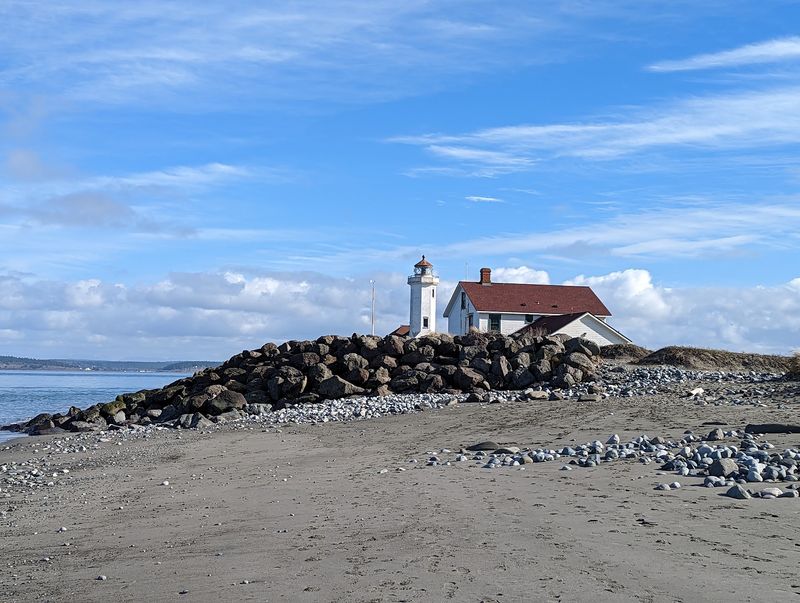
The Point Wilson Lighthouse is one of the most recognized landmarks at Fort Worden, and it earns that status easily. The red-roofed lighthouse has been guiding ships through the tricky waters at the junction of Admiralty Inlet and the Strait of Juan de Fuca since 1879, with the current tower built in 1914.
Tours of the lighthouse run from 11 a.m. to 4 p.m. on Saturdays and Sundays between May and September, and climbing to the top is well worth the effort. From up there, on a clear day, the views stretch across to Mount Baker, Vancouver Island, the San Juan Islands, and the Cascades all at once.
Outside of tour hours, the lighthouse grounds are not open for wandering, but the exterior and surrounding beach area are always accessible. The walk from the lighthouse along North Beach during low tide is particularly rewarding, with wide stretches of sand and unobstructed water views that make the short hike feel much bigger than it actually is.
North Beach and the Shoreline That Keeps Giving
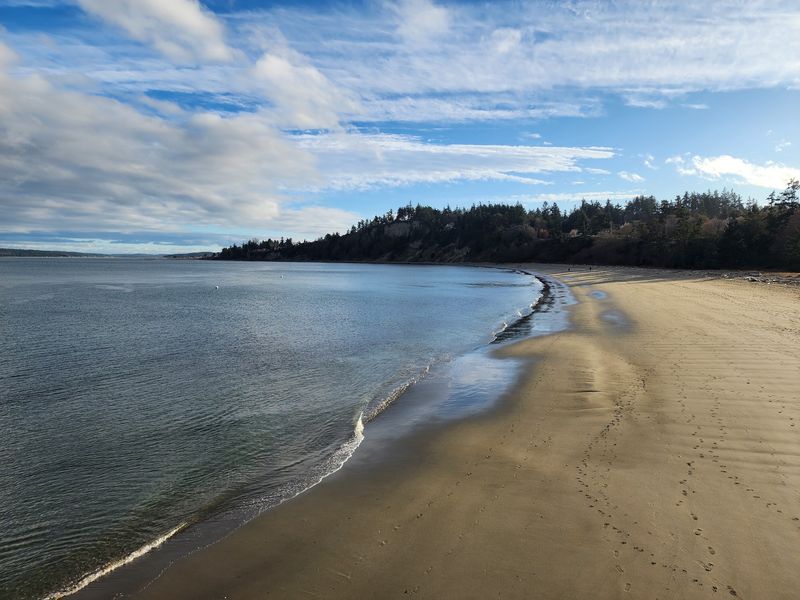
North Beach stretches along the park’s waterfront and offers some of the most open, uncluttered shoreline on the Olympic Peninsula. The beach is a mix of sand and small stones, and at low tide the exposed flats extend far enough to make a long walk feel genuinely exploratory.
From the beach, the views across the water toward Vancouver Island and the San Juan Islands are clear on most days, and watching Coast Guard vessels or ferries pass through the strait adds an unexpected layer of activity to what might otherwise be a quiet afternoon.
The beach is a practical spot too, with well-maintained restrooms near the parking area and enough space that groups can spread out without crowding each other. Paddleboarding and kayaking are both popular here, and the relatively calm conditions close to shore make it accessible for people who are not experienced paddlers.
The beach connects naturally to several trails that head back into the forested interior of the park.
Trails Through Forest and Open Fields
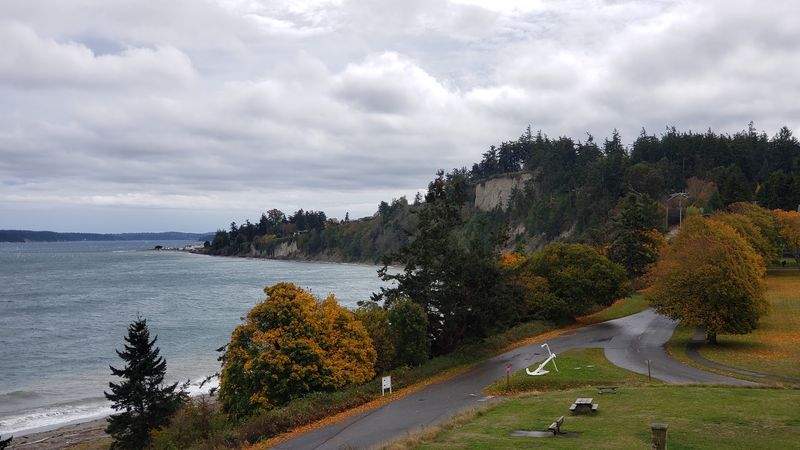
Fort Worden has a trail system that covers a surprising amount of ground for a park of its size. Paths wind through dense forest, open grassy fields, and along the bluffs above the water, giving hikers a range of terrain without needing to travel far between them.
The Chinese Garden Trail is a quieter option that leads through wooded terrain with lake views before dropping down to the beach. It runs only a couple of miles round trip, making it manageable for most fitness levels, and the trail surface is in good condition.
There are no bathroom facilities at that particular trailhead, so planning ahead is helpful.
The main trails closer to the parade grounds and battery installations are a mix of paved and unpaved surfaces, which makes the park accessible for people using strollers or wheelchairs on the flatter sections. Wildlife is common throughout, with deer grazing openly on the grass and a wide range of bird species active along the forest edges.
Wildlife That Shows Up Uninvited and Often
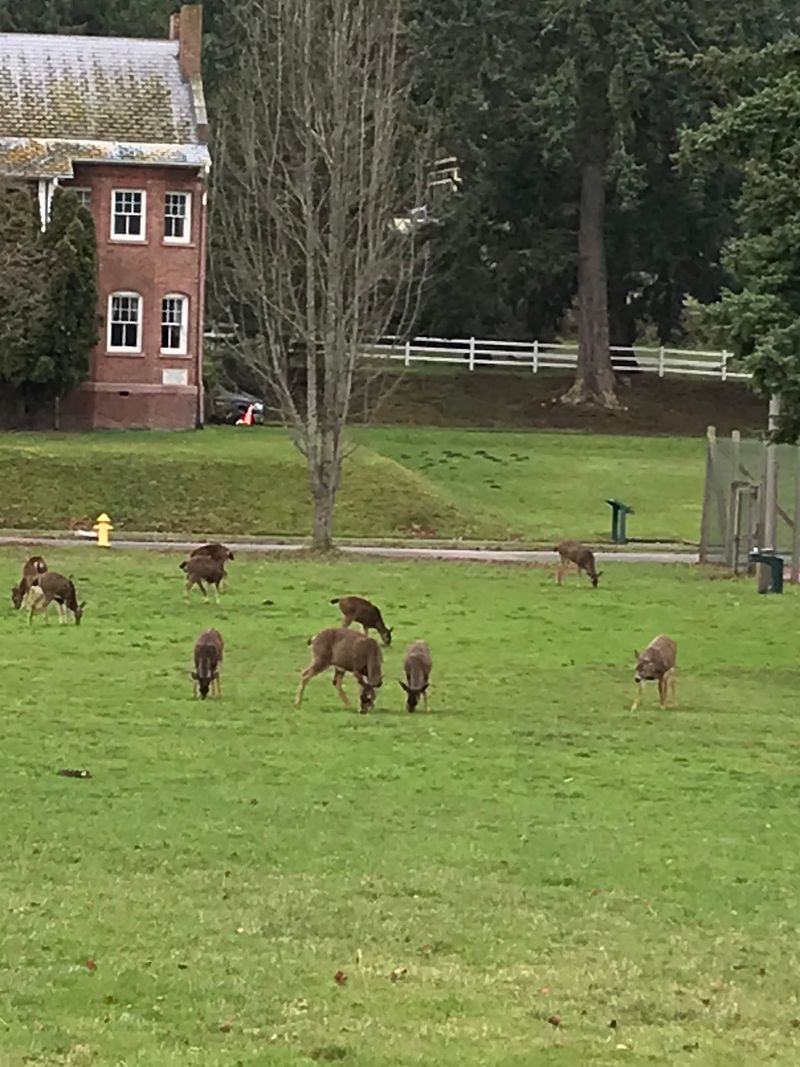
The deer at Fort Worden are not shy. They graze on the open parade grounds and along the trail edges with a confidence that suggests they know the park belongs to them as much as anyone else.
Seeing a small group of them near the historic buildings at dusk is a common occurrence, and they tend to hold their ground rather than bolt.
Bird activity is consistent throughout the park, and the mix of shoreline, forest, and open field habitats means the variety is genuinely broad. Shorebirds work the beach at low tide, raptors circle the bluffs, and smaller songbirds fill the forest sections with steady background activity.
On clear days near the water, Coast Guard ships and occasional military aircraft practicing over the strait add an unexpected layer of activity to the natural setting. The combination of tame wildlife and open sky makes the park a reliable spot for anyone who enjoys watching the natural world go about its business without too much interference.
Camping Options That Cover Every Style
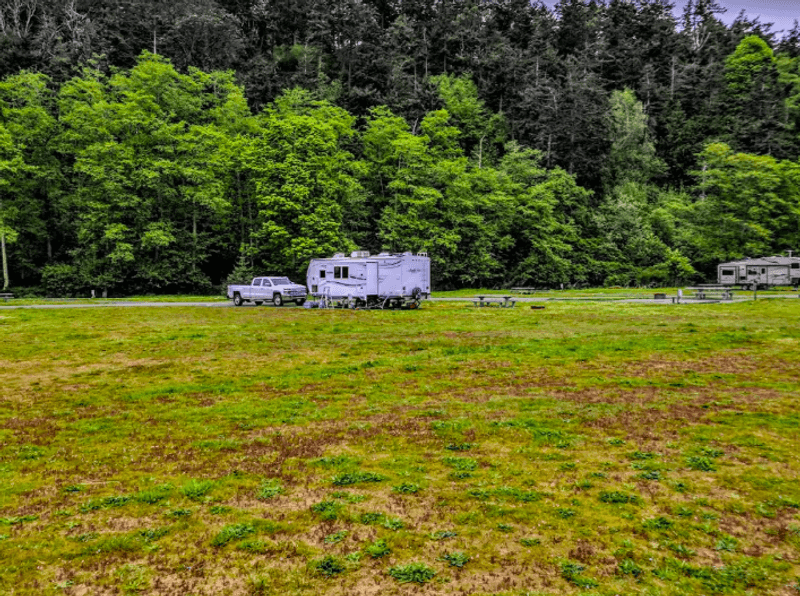
Fort Worden offers camping that ranges from standard tent sites to full RV hookups, and the setting makes it one of the more distinctive campgrounds in the state. Waking up within walking distance of both historic bunkers and open beach is not something most campgrounds can offer.
The campground is well-maintained, and the facilities are clean and functional. The sites are spread across different areas of the park, so choosing a spot closer to the beach versus one near the forest is a real option rather than a theoretical one.
One thing worth keeping in mind is trail etiquette around the campground. The trails connecting different sections of the park sometimes pass near occupied campsites, and giving those spaces a wide berth is a basic courtesy that keeps the experience good for everyone.
Booking ahead is strongly recommended during summer weekends, as the campground fills quickly and walk-in availability during peak season is not something to count on.
Rentable Houses and the Keeper’s Quarters
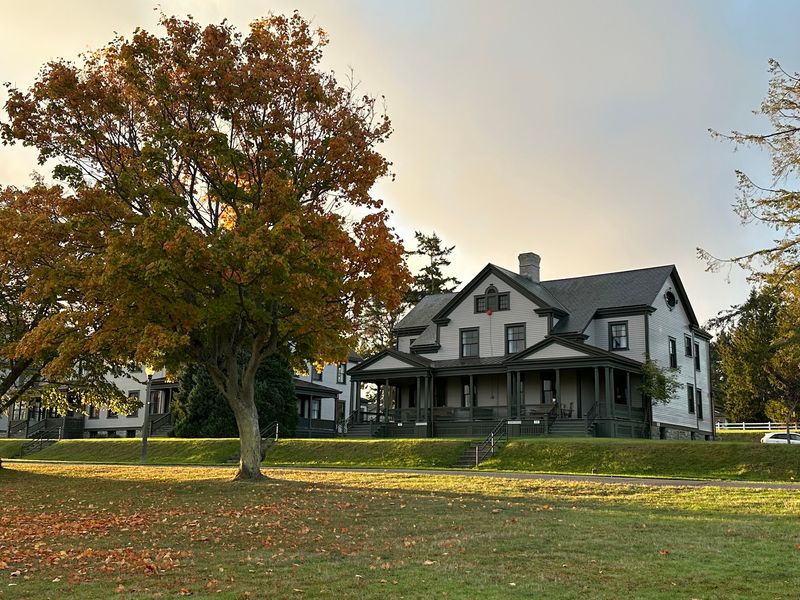
One of the more unusual options at Fort Worden is the ability to rent the historic buildings on the grounds. The officer’s houses along the parade ground have been converted into rentable accommodations, and the keeper’s house near the lighthouse is also available for overnight stays.
The two-story keeper’s house in particular offers elevated views of the water that are hard to match anywhere else in the park. Groups that rent the houses get a genuinely different kind of overnight experience, one that puts them inside the historic fabric of the fort rather than just adjacent to it.
The houses work well for family reunions, small group gatherings, or anyone who wants a more comfortable base for exploring the park over multiple days. Availability fills up well in advance for popular dates, especially around holidays and summer weekends, so checking the Washington State Parks reservation system early is the practical approach for anyone seriously considering this option.
The Movie Connection Most People Miss
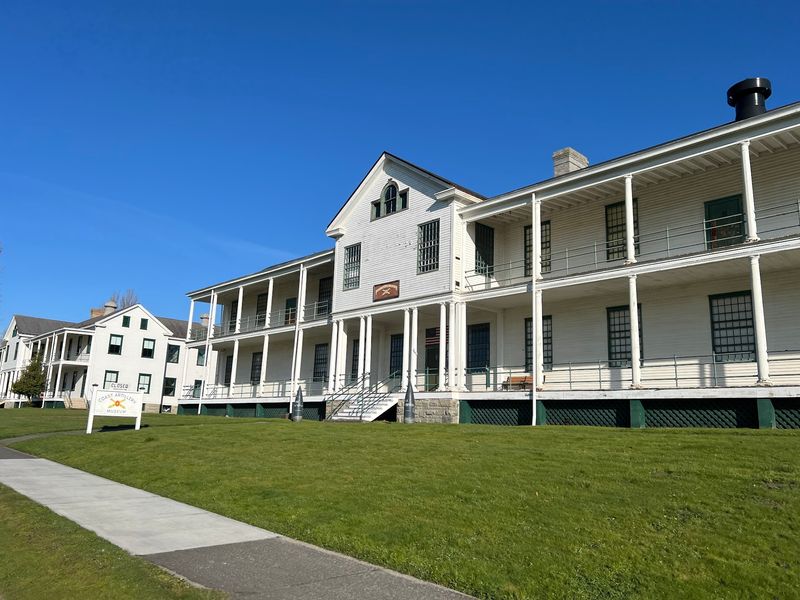
Fort Worden has a film credit that surprises a lot of first-time visitors. The 1982 movie “An Officer and a Gentleman,” starring Richard Gere, was filmed largely on the grounds of the fort, and the main military buildings visible from the parade ground are immediately recognizable to anyone who has seen the film.
The structures used in the movie are still standing and still look much the same as they did during production. Walking past them with that context in mind adds an extra layer to an already historically rich setting.
The park does not heavily promote the film connection, so it tends to be a discovery rather than a selling point, which makes it feel like a genuine bonus rather than a tourist gimmick. For anyone who grew up watching that film, seeing the actual locations in person is one of those small but satisfying moments that a good travel day tends to produce.
The Commanding Bluff Views Above the Sound
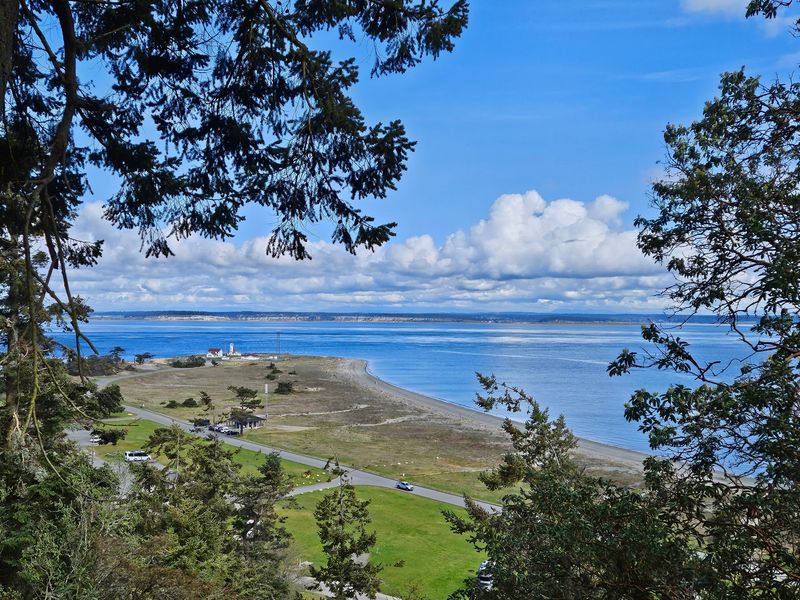
The elevated terrain above the beach at Fort Worden puts visitors in a position that the original military planners chose very deliberately. From the bluffs near the battery installations, the views stretch across the water in multiple directions, taking in the Olympic Mountains to the west, Mount Baker to the northeast, and the San Juan Islands scattered across the middle distance.
On clear winter days, the visibility can be especially sharp, with the mountain ranges standing out against blue sky in a way that makes the whole scene look almost too clean to be real. The lack of development along the shoreline below keeps the view largely unchanged from what it would have looked like a century ago.
The bluff trails connect to the main battery areas, so combining a walk along the high ground with a stop at the gun emplacements is a natural pairing. The elevation change is modest, making the climb accessible for most visitors without requiring any special gear or preparation.
Practical Tips Before the First Visit
A Discover Pass is required for parking inside Fort Worden, and this catches a surprising number of first-time visitors off guard. The pass can be purchased online through Washington State Parks or at various retail locations, and having it ready before arrival avoids any unnecessary delay at the gate.
The park is open year-round, but the lighthouse tours, some rental buildings, and certain facilities operate on seasonal schedules. Checking the Washington State Parks website at parks.wa.gov before a visit is the most reliable way to confirm what will be available on a specific date.
Dogs are welcome in the park on leash, and the trail network is wide enough that managing space between groups is usually straightforward. Cell service inside the bunkers drops out completely, so downloading any maps or information before heading in is a smart precaution.
The park sits close to the Whidbey Island Ferry terminal, making it an easy addition to a longer Olympic Peninsula or Puget Sound road trip.
Where the Fort Meets the Water
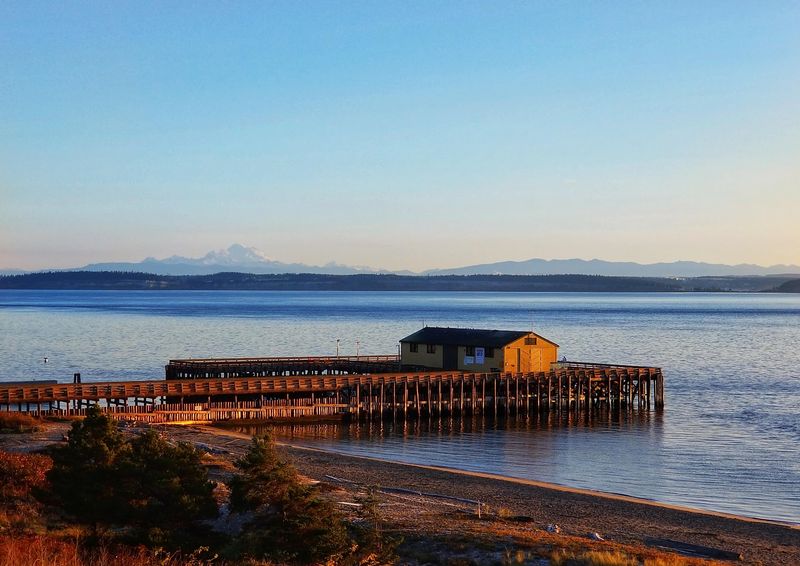
Fort Worden Historical State Park sits at 200 Battery Way E, Port Townsend, WA 98368, on the northeastern tip of the Olympic Peninsula, right where the Strait of Juan de Fuca meets Puget Sound.
The park covers over 400 acres and includes beaches, forests, historic military structures, and open parade grounds. The address puts visitors within easy reach of downtown Port Townsend, which is only a short drive away and well worth exploring before or after a day at the park.
A Discover Pass is required for parking inside the park, so it is worth grabbing one ahead of time to avoid any hassle at the gate. The park is open year-round, and the grounds are large enough that even busy weekends rarely feel overcrowded.
Arriving early on a weekday almost guarantees a quiet, unhurried experience with plenty of space to spread out and explore at a comfortable pace.
Share this story