Germany is one of those countries that keeps surprising you the more you explore it. From fairy-tale castles perched on rocky hilltops to quiet river valleys lined with ancient vineyards, there is always something new waiting around the next bend.
Whether you are a first-time visitor or a seasoned traveler, Germany offers a brilliant mix of world-famous landmarks and secret spots that most tourists never find. Get ready to discover 13 places that prove Germany is so much more than just Berlin and Bavaria.
Berlin’s Museum Island
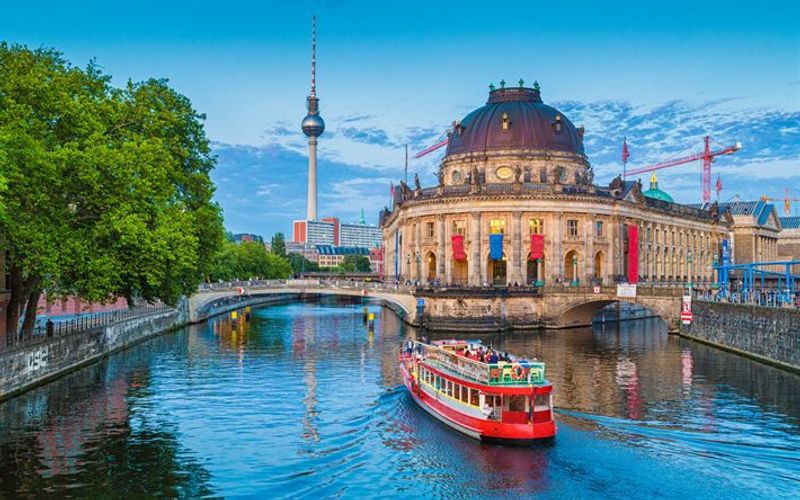
Sitting quietly in the middle of the River Spree, Museum Island is the kind of place that makes you feel smarter just by walking through it. The UNESCO-listed ensemble of five world-class museums was built across the 19th and early 20th centuries as a grand civic project dedicated to art, archaeology, and human history.
Architects competed to outdo each other, and the results are spectacular.
The Pergamon Museum alone could swallow an entire afternoon, housing reconstructed ancient gates and temples that once stood in the Middle East. The Neues Museum holds the famous bust of Nefertiti, one of the most quietly powerful objects in any European collection.
Berlin Cathedral looms nearby, its green copper dome visible from almost every angle on the island.
Getting between the museums on foot takes only minutes, making it easy to plan a full cultural day without any complicated logistics. The surrounding neighborhood of Mitte adds cafes, bookshops, and riverside benches for recovery breaks between galleries.
Museum Island proves that Berlin rewards travelers who push past the Brandenburg Gate and wander a little deeper into the city’s remarkable historic core.
Saxon Switzerland National Park, Saxony
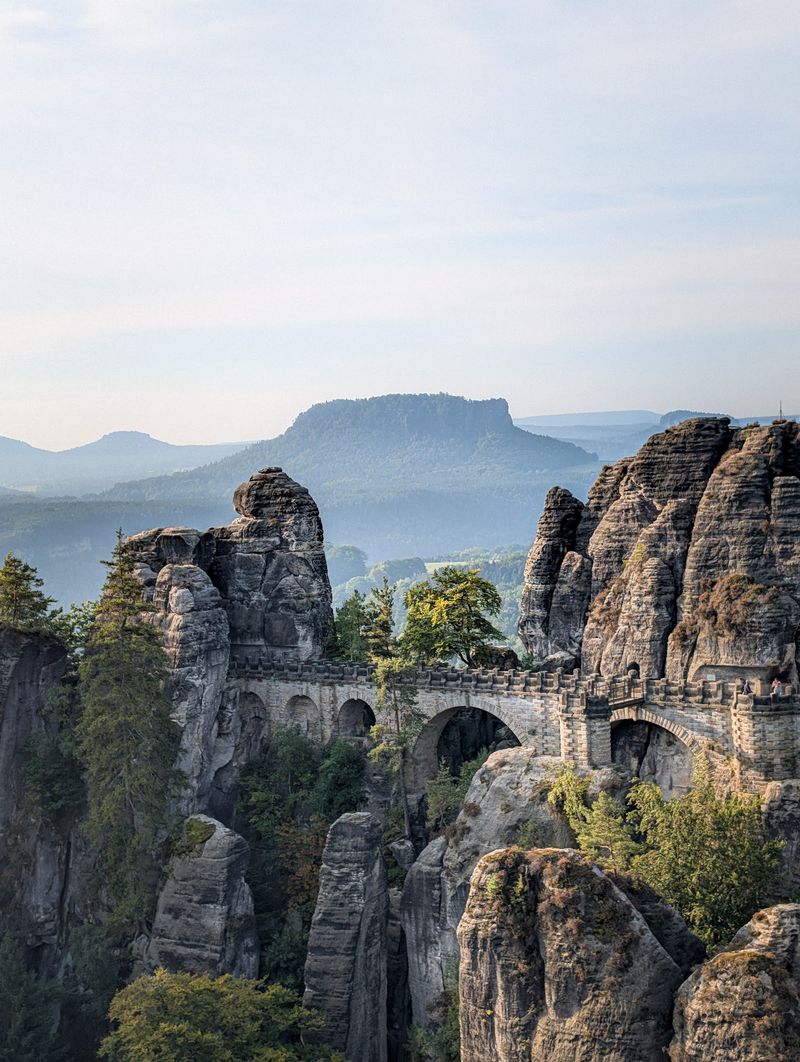
About an hour south of Dresden, the ground simply breaks open into something extraordinary. Saxon Switzerland National Park contains more than 1,000 free-standing sandstone towers, narrow ravines carved by ancient rivers, and forested cliffs that look almost too dramatic to be real.
The name was actually coined by two Swiss painters who felt the scenery reminded them of home.
The Bastei viewpoint is the classic starting point, where a stone bridge connects a cluster of sandstone pinnacles above the winding Elbe River. The panorama from there is genuinely jaw-dropping, especially in early morning when mist settles between the rock formations below.
Serious hikers will find even more on the Painters’ Way, a multi-day trail that threads through the landscapes that inspired generations of Romantic-era artists.
Rock climbing has a long and respected tradition here, with routes ranging from beginner-friendly scrambles to serious technical challenges on sheer sandstone faces. The park also connects easily to the historic town of Pirna and the magnificent baroque city of Dresden.
Visiting Saxon Switzerland feels like stumbling onto a film set, except the scenery is entirely, wonderfully real and free to explore year-round.
Quedlinburg, Saxony-Anhalt
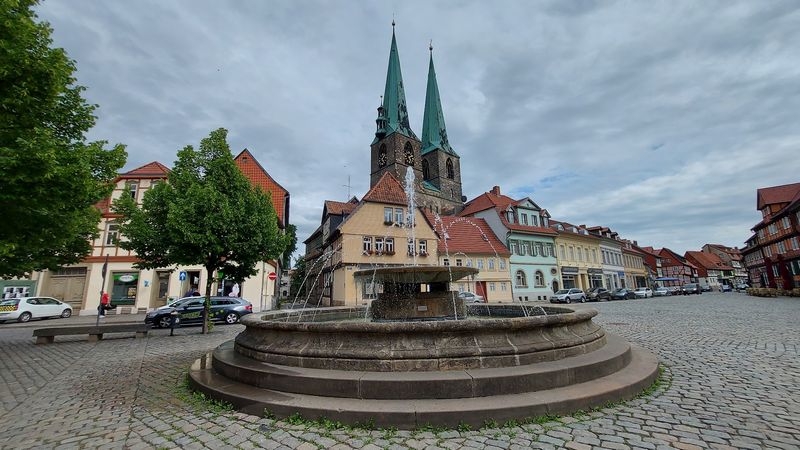
Quedlinburg looks like someone pressed pause on the Middle Ages and forgot to press play again. The town’s winding streets are lined with an astonishing number of timber-framed buildings, some dating back over 600 years, all huddled beneath a castle hill topped by the Romanesque Collegiate Church of St. Servatius.
UNESCO recognized this place as exceptional, and a single afternoon walking its lanes makes it obvious why.
The town played a genuinely important role in German history as a major center during the Saxon-Ottonian dynasty, the ruling family that shaped early medieval Germany. Henry I is buried inside the collegiate church alongside his wife Mathilde, and the crypt has a quiet, ancient atmosphere that feels completely different from grander cathedrals elsewhere.
Standing up there looking down over the rooftops is one of those unexpectedly moving travel moments.
Quedlinburg draws far fewer visitors than the Romantic Road towns farther south, which makes exploring it genuinely relaxed and pleasant. Local restaurants serve hearty regional food, and small guesthouses within the old town let you experience the medieval streetscape after the day-trippers have gone home.
For anyone traveling through Saxony-Anhalt, skipping Quedlinburg would be a real mistake.
Neuschwanstein Castle, Bavaria
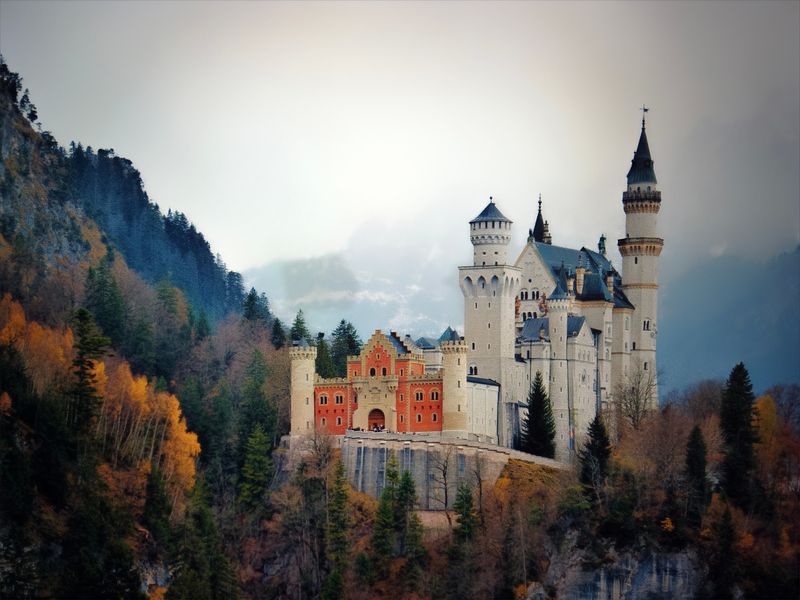
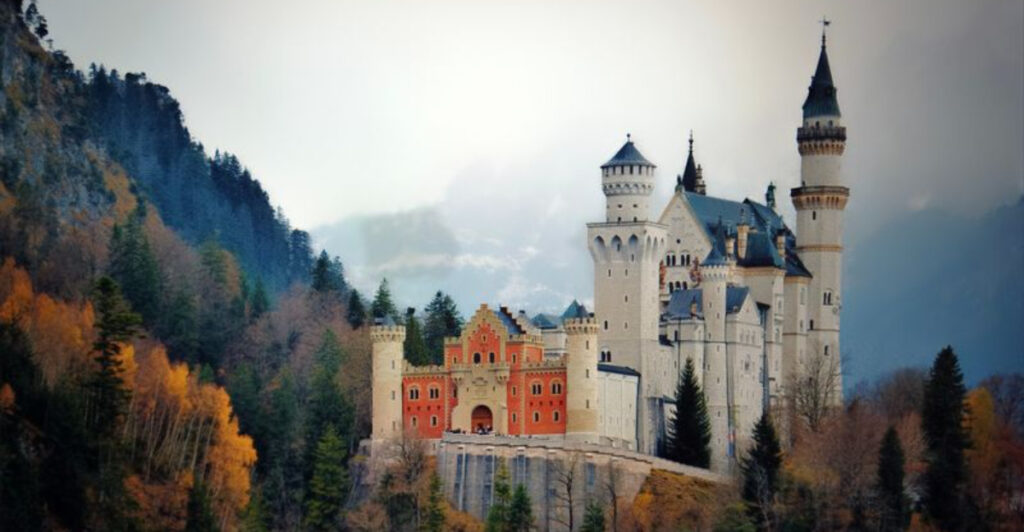
Every now and then, a place looks exactly like its postcards, and Neuschwanstein Castle is one of those rare exceptions that somehow looks even better in person. King Ludwig II dreamed up this theatrical masterpiece in the 1860s, drawing inspiration from medieval legends and the sweeping operatic world of Richard Wagner.
The result is a castle so dramatic it practically dares you to blink.
The interiors match the exterior perfectly, packed with painted murals, gilded rooms, and throne halls that feel plucked straight from a storybook. Surrounding forests, glittering lakes, and jagged Alpine peaks frame every view outside the windows.
Walking to the Marienbrucke bridge gives you the classic overhead shot that has launched a million travel posts.
Because Neuschwanstein draws enormous crowds, booking timed entry tickets well in advance is genuinely important. Arriving early in the morning rewards you with quieter pathways and softer golden light across the towers.
Nearby Hohenschwangau Castle, where Ludwig spent his childhood, makes a worthy addition to the same day trip. Together, the two castles tell the full story of one of history’s most fascinating royal dreamers.
The Romantic Rhine
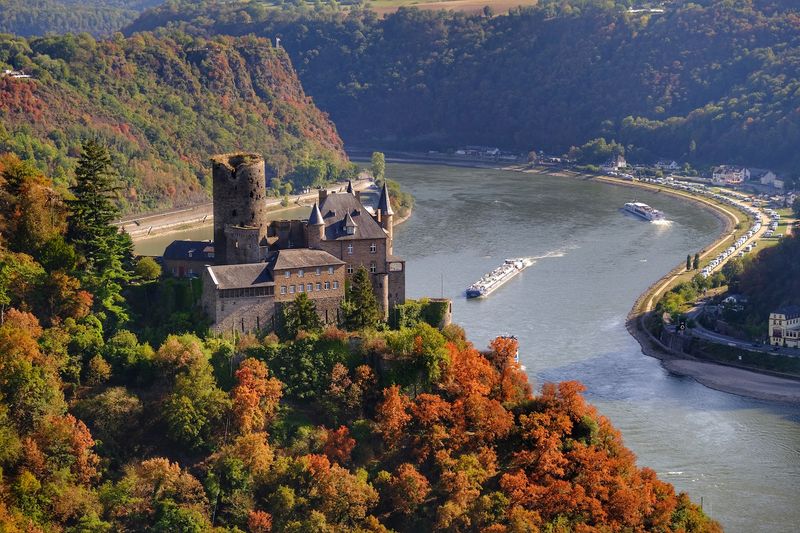
Few river journeys in Europe deliver as consistently as the stretch of the Rhine between Bingen and Koblenz. Vineyard terraces climb steep riverbanks, ruined castles crown almost every hilltop, and compact wine towns appear around each bend like scenes from an old painting.
Germany’s tourism board counts roughly 60 castles and palaces along the wider Rhine corridor, which gives some idea of the historical density packed into this valley.
Bacharach is one of the most atmospheric stops, where medieval gates, half-timbered houses, and a hilltop fortress combine into a scene that feels genuinely preserved rather than restored for tourists. The Loreley rock further along the river carries its own mythology, a legendary siren said to have lured sailors onto the rocks below.
Sitting on a riverside terrace with a glass of local Riesling while watching a barge drift past is one of Germany’s great simple pleasures.
Traveling by regional train keeps the scenery visible the whole way, while river boats turn the journey itself into the attraction. The valley is particularly beautiful in autumn when the vineyard slopes turn shades of amber and gold.
Spring brings blossoms to the hillsides, making every season along the Romantic Rhine genuinely worth considering.
Bamberg, Bavaria
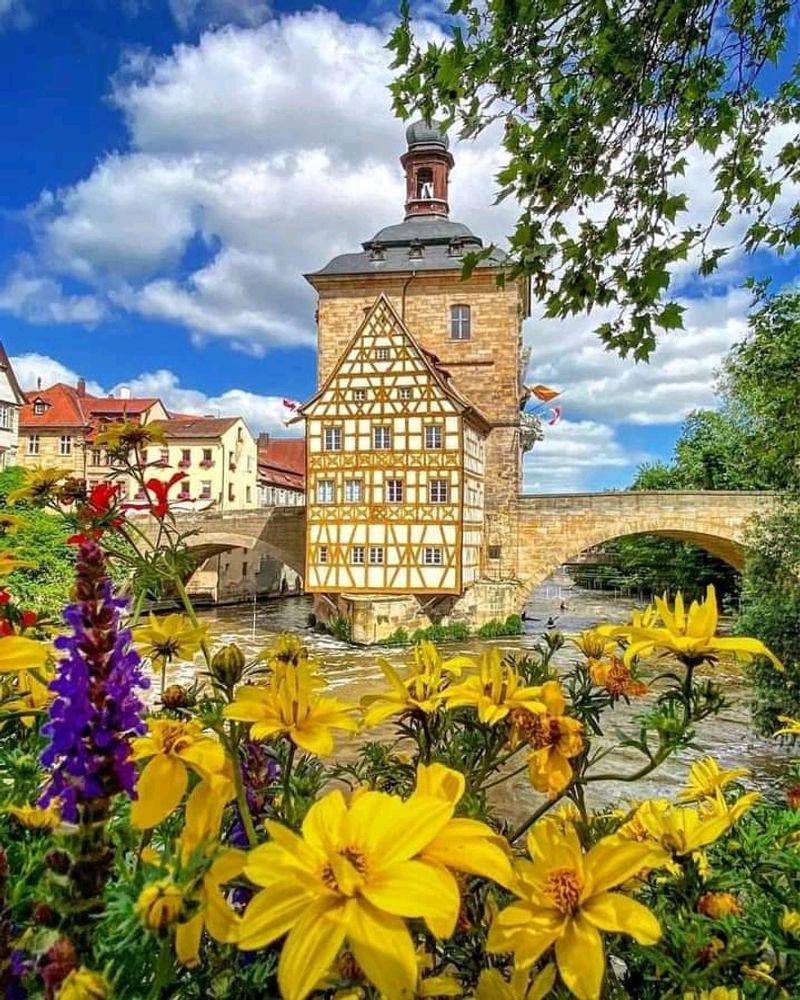
Bamberg has a fun-sounding claim to fame: it has more breweries per capita than almost anywhere else in Germany, and the local Rauchbier, a smoky dark beer brewed with malted barley dried over beechwood, is unlike anything you will find elsewhere. But Bamberg is far more than its beer culture, which is saying something in Bavaria.
UNESCO recognized the entire historic center as an outstanding example of medieval Central European urban planning.
When Emperor Henry II developed the city in the early 11th century, he had grand ambitions, modeling Bamberg on Rome with seven hills each topped by a church. The cathedral he commissioned still dominates the skyline and houses the famous Bamberg Horseman, a life-sized equestrian sculpture from around 1235 whose identity remains a delightful historical mystery.
The riverside district known as Little Venice adds a completely different, quieter mood to the city.
Narrow lanes connect neighborhoods of completely different characters, from grand Baroque squares to fishermen’s houses reflected in the Regnitz River. Bamberg sits close enough to Nuremberg and Bayreuth to combine easily into a longer Franconian road trip.
Travelers who overlook it in favor of Munich or the castle route are genuinely missing out on one of Bavaria’s best-kept secrets.
Spreewald, Brandenburg
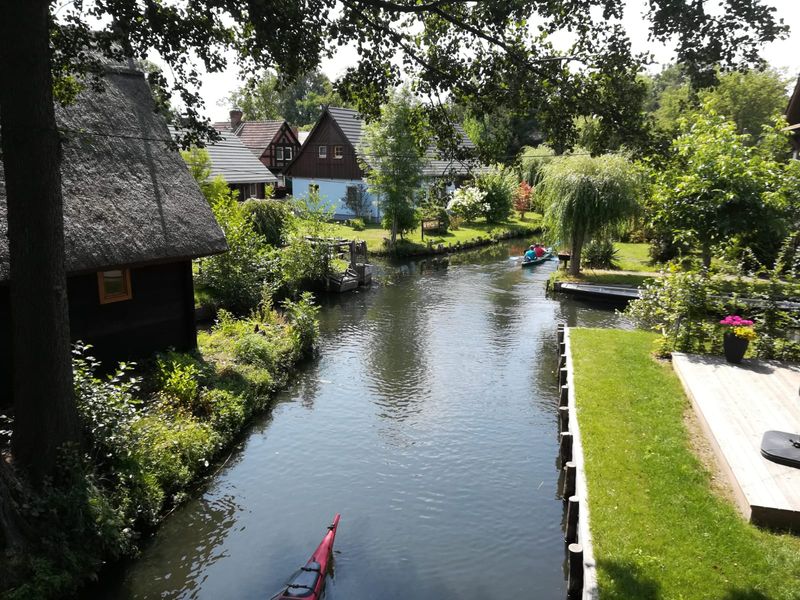
Ninety minutes from Berlin, the motorways and apartment blocks disappear and something completely unexpected takes their place. The Spreewald is a vast wetland of rivers, canals, and forest where boats replace roads in many of the traditional villages, and the postman still delivers mail by canoe in some areas.
It sounds like a fairy tale, but it is entirely real and very easy to visit.
The UNESCO Spreewald Biosphere Reserve protects a landscape shaped over centuries by the Sorbian people, a Slavic minority with their own language, traditions, and colorful folk costumes still worn at local festivals. Paddling a canoe or renting a bicycle lets you explore at exactly the right pace for noticing details: a heron standing in shallow water, a traditional thatched farmhouse half-hidden by willows, a garden full of gherkins.
The region is actually famous across Germany for its pickled gherkins, which make an unexpectedly charming souvenir.
Lubbenau and Lehde are the most popular entry points, both offering guided boat tours for visitors who prefer not to navigate independently. The Spreewald works beautifully as a day trip from Berlin or as an overnight stay for a slower, more immersive experience.
Either way, it delivers something genuinely different from anything else on a German itinerary.
The Black Forest, Baden-Wurttemberg
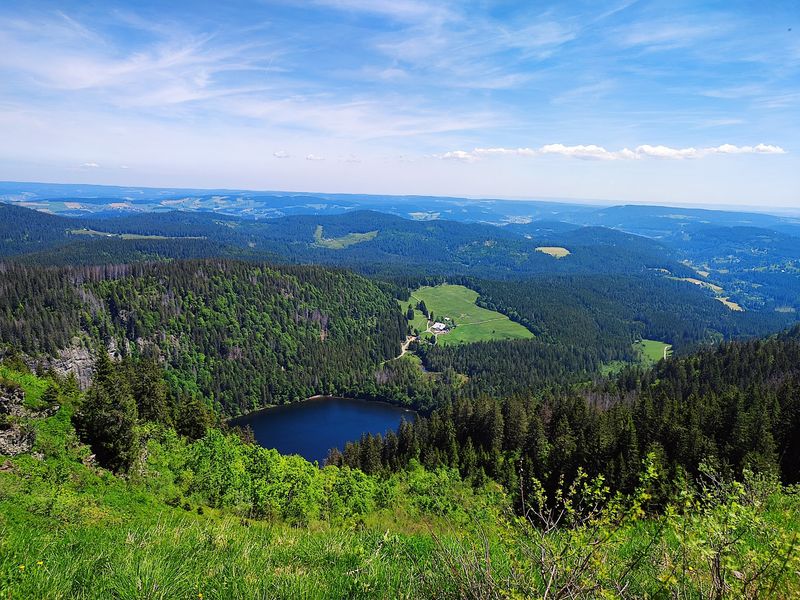
The Black Forest earned its brooding name honestly. Dense fir and pine trees cover rolling hills so thickly that sunlight barely reaches the forest floor in some areas, creating an atmosphere that makes you understand exactly why the Brothers Grimm set so many of their stories in landscapes like this.
Covering around 6,000 square kilometers, it is less a single destination and more an entire rural world waiting to be explored at your own pace.
The southern Black Forest is particularly rewarding for hikers, with trails crossing dramatic gorges, moss-covered rock faces, and high meadows with distant views toward the Alps and even the Vosges mountains in France on clear days. The Schluchtensteig trail is a favourite, threading through seven gorges over roughly 119 kilometers of genuinely varied terrain.
Waterfalls appear regularly along the route, including the impressive Triberg Falls, one of Germany’s highest.
Beyond hiking, the region offers traditional cuckoo clock workshops, lakeside villages around Titisee and Schluchsee, and thermal spa towns like Baden-Baden for complete relaxation. Local cuisine includes Black Forest ham and the famous Black Forest cake, both taken very seriously by locals.
The region rewards slow travel far more than a rushed drive through, so giving it at least two or three days is highly recommended.
Lubeck, Schleswig-Holstein
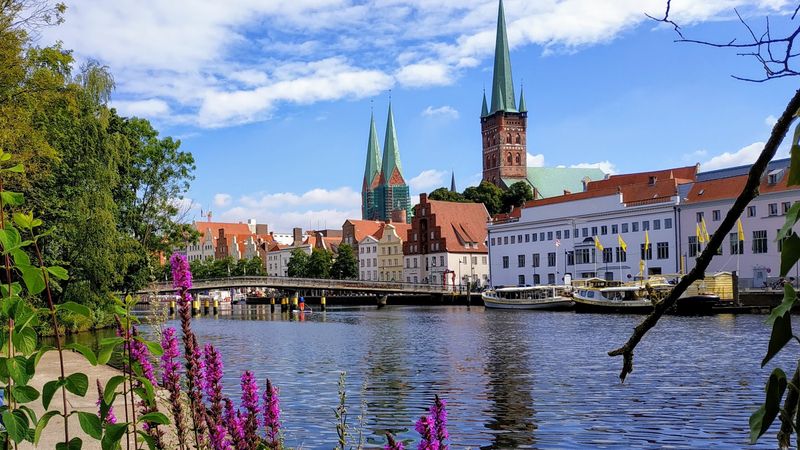
Seven church towers pierce the sky above Lubeck’s island old town, and the view from across the river has barely changed in centuries. Founded in 1143 and quickly growing into the leading city of the Hanseatic League, Lubeck once controlled a staggering proportion of northern European trade, and its merchants built their ambitions in red brick for everyone to see.
That brick Gothic architecture is now the city’s defining visual identity.
The Holstentor is the most photographed landmark, a squat twin-towered gate that has appeared on German coins and stamps and still manages to look genuinely impressive in person. Inside the old town, narrow lanes called Gange lead to hidden courtyards lined with small workers’ houses, a complete contrast to the grand merchant facades on the main streets.
The Cathedral and the Church of St. Mary, the second-largest brick church in Germany, anchor opposite ends of the historic center.
Lubeck also has strong literary connections as the birthplace of Thomas Mann, whose family home is now a museum. Local marzipan, shaped and painted into elaborate forms, is taken seriously as a regional specialty and makes for a genuinely tasty souvenir.
The city sits close to the Baltic coast, making it easy to combine with a beach day at nearby Travemunde.
The Moselle Valley
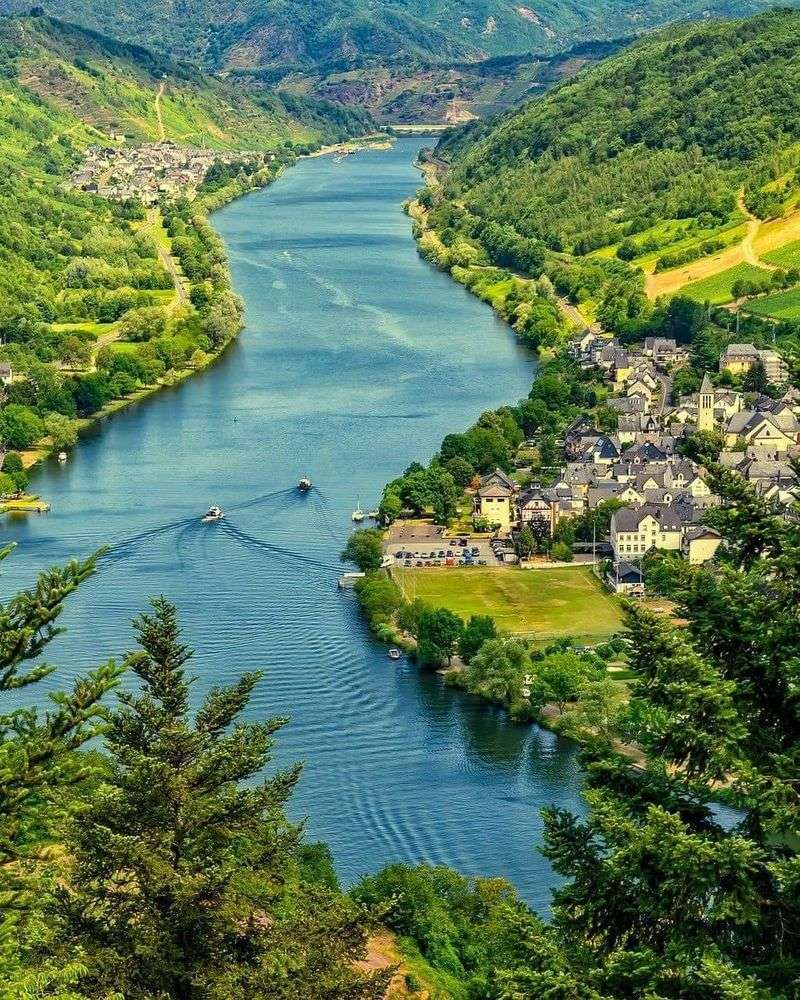
The Moselle River takes its time, curving lazily between vineyard slopes so steep that harvesting grapes here is considered one of the hardest agricultural jobs in Europe. Some sections of the valley climb to gradients of around 60 degrees, meaning winegrowers effectively work on cliff faces to produce the crisp, aromatic Riesling that has made the region famous for roughly 2,000 years.
Roman legions planted the first vines here, and the tradition never stopped.
Cochem is the obvious headline stop, its hilltop Reichsburg castle visible from almost everywhere in town, with cobbled lanes and riverside cafes making it easy to linger far longer than planned. Bernkastel-Kues is arguably even more charming, its half-timbered market square considered one of the most beautiful in Germany.
Beilstein, tiny and almost impossibly picturesque, feels like a village that time politely decided to leave alone.
Cycling the Moselle Cycle Route is one of the most enjoyable ways to move between towns, keeping the river visible and the scenery constantly changing. Wine festivals fill the valley calendar from late summer through autumn, when local winemakers open their cellars and the whole region smells faintly of fermenting grapes.
Traveling slowly here is not just recommended, it is basically required.
Rugen and Jasmund National Park
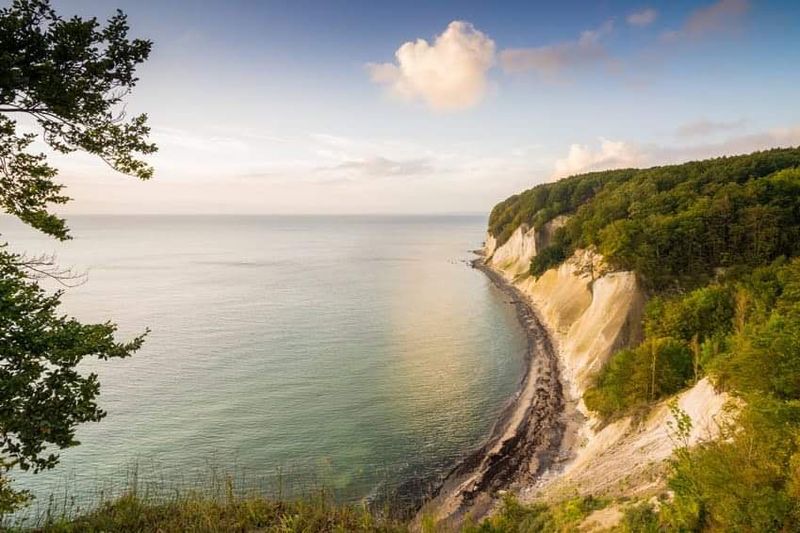
Most people are surprised to learn that Germany has chalk cliffs, and even more surprised when they see how spectacular they are. The Konigsstuhl chalk cliff on Rugen island rises around 118 meters straight out of the Baltic Sea, its brilliant white face backed by one of Europe’s oldest beech forests.
Romantic painter Caspar David Friedrich captured the scene roughly 200 years ago, and his paintings helped make this corner of northern Germany famous across the continent.
Jasmund National Park protects the cliffs and the surrounding ancient forest, where walking trails lead through cathedral-like beech groves before emerging dramatically at clifftop viewpoints over the sea. The contrast between the dark, mossy forest interior and the sudden brightness of the cliffs above open water is one of the most striking natural experiences in Germany.
The park visitor center explains the geology and the ecology clearly and is worth a stop before heading out on the trails.
Beyond the national park, Rugen offers an entirely different side of itself: long sandy beaches, elegant old-fashioned seaside resorts like Binz with their white wooden villas, and cycling routes crossing the whole island. The ferry crossing from Stralsund takes only minutes, making Rugen very accessible for a Baltic coast addition to any northern Germany trip.
Monschau and the Eifel
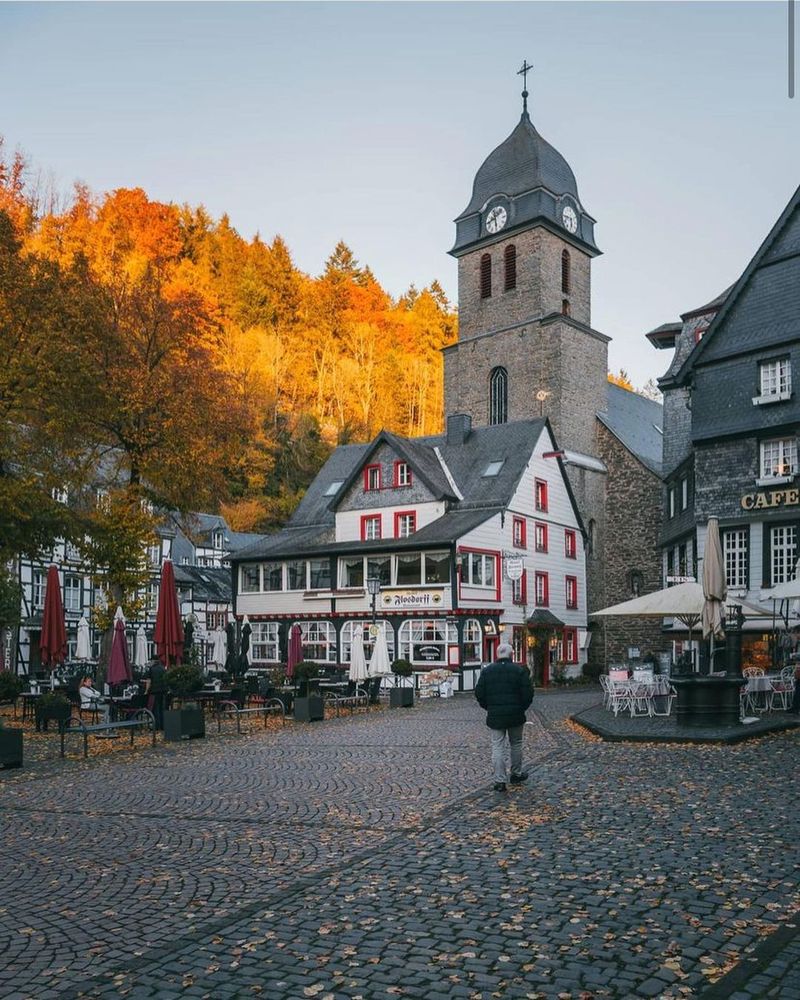
Tucked into a narrow valley close to the Belgian border, Monschau is the kind of small town that makes you want to cancel the rest of your trip and simply stay. Slate-roofed timber-framed houses crowd the valley floor beside the River Rur, climbing the hillsides in layers that look more like a painting than a real place.
The whole old town is a protected monument, and walking its steep lanes takes barely 20 minutes but tends to expand into an entire afternoon.
The nearby Eifel region turns a Monschau visit into something much bigger. Germany’s official Eifelsteig long-distance trail connects the town with forests, high moorland, volcanic lakes called Maare, ancient Roman roads, and medieval castle ruins farther south toward Trier.
The Hohes Venn nature reserve just across the Belgian border adds wild moorland and rare plant communities for anyone interested in serious nature walking.
Monschau also has a surprisingly lively calendar of events, including a famous Christmas market held in the old town that draws visitors from across western Germany and the Netherlands. Cologne and Aachen are both within easy driving distance, making Monschau a perfect countryside escape from either city.
The mustard made locally here is a genuine regional specialty worth picking up before you leave.
Berchtesgaden National Park, Bavaria
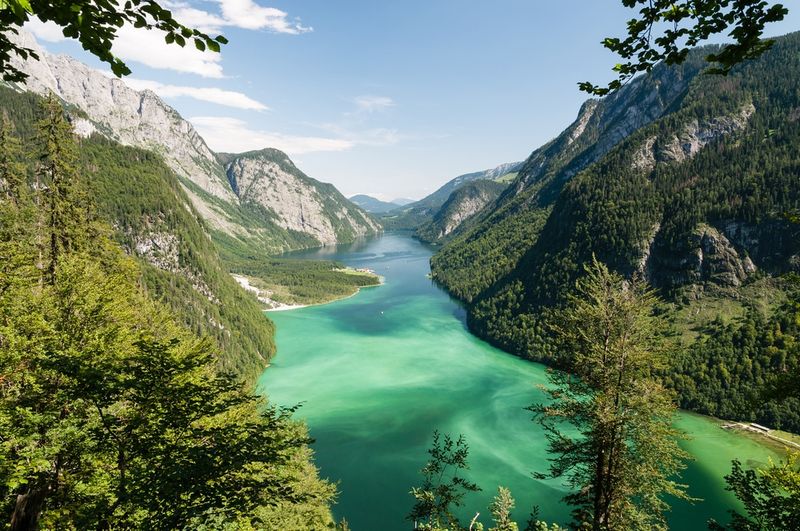
Germany saves one of its most dramatic landscapes for last, right in the southeastern corner of Bavaria where the country practically runs out of room before bumping into Austria. Berchtesgaden National Park is Germany’s only Alpine national park, and it looks every bit as wild and grand as that title suggests.
The Konigssee, a fjord-like lake of almost impossibly turquoise water hemmed in by vertical cliff faces, is the visual centerpiece that tends to stop visitors mid-sentence.
Around 260 kilometers of hiking trails thread through the park, ranging from easy lakeside walks to serious mountain routes requiring proper equipment and experience. Ibex, marmots, golden eagles, and red deer all live here, and patient hikers with binoculars have a reasonable chance of spotting at least a couple of species on a full day out.
The electric boats that cross the Konigssee are the only motorized vessels allowed on the water, keeping the whole lake remarkably quiet and clear.
The area carries some complicated history too, as the nearby Obersalzberg was Hitler’s wartime retreat, and the Documentation Center there handles the subject seriously and thoughtfully. Berchtesgaden town itself is pleasant and well-supplied with good accommodation.
As the final stop on a southern German road trip combining Munich and Neuschwanstein, this Alpine corner provides a genuinely unforgettable conclusion.
Share this story