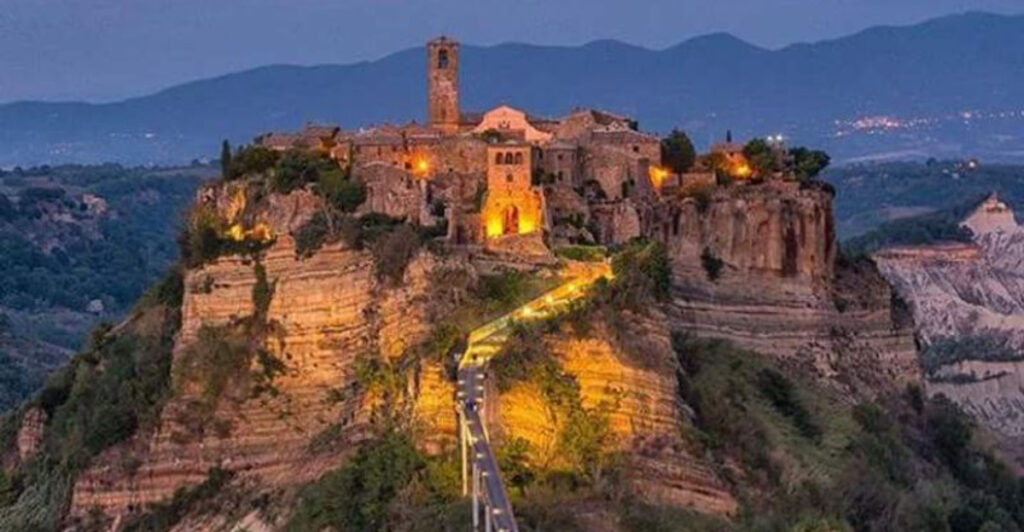
Italy’s hilltop towns are some of the most breathtaking places on Earth, perched high above valleys, vineyards, and ancient farmland. Built centuries ago for defense and survival, these stone villages have transformed into living museums where history, food, and jaw-dropping scenery all share the same cobblestone street.
From volcanic cliffs in Lazio to misty Sicilian summits, each town tells a completely different story. Whether you are planning a trip or simply dreaming of one, these ten towns will make you want to book a flight immediately.
Civita di Bagnoregio, Lazio
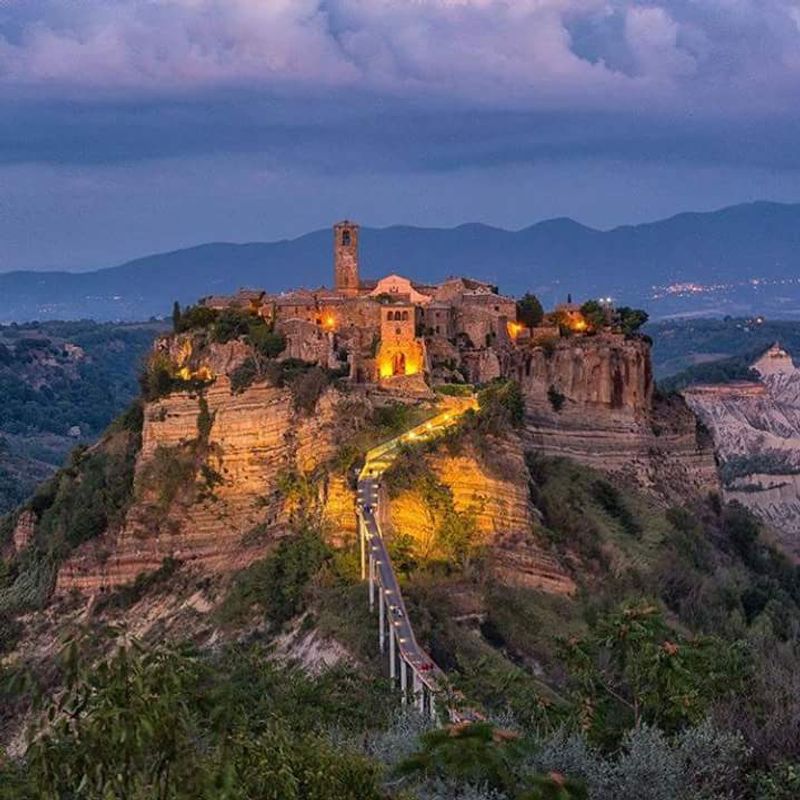
Imagine a town so fragile it has officially been nicknamed “the dying city.” Civita di Bagnoregio sits on an eroding tuff plateau in Lazio, slowly being worn away by wind and rain over centuries. A long pedestrian bridge is the only way in, and crossing it feels like walking toward another world entirely.
Once inside, the pace drops to nearly zero. Stone houses lean against each other along tiny lanes, arches frame unexpected views, and a small central square anchors the whole settlement.
The population is just a handful of permanent residents, making it one of Italy’s quietest inhabited places.
The most unforgettable moment is the approach. Standing at the start of the bridge and watching the entire town rise from the eroded badlands below is genuinely stunning.
There is nowhere else in Italy quite like this. Visiting early in the morning means fewer crowds and softer light, which makes the ochre stone glow in a way that photographs cannot fully capture.
Pack comfortable shoes and bring plenty of water for the walk.
San Gimignano, Tuscany
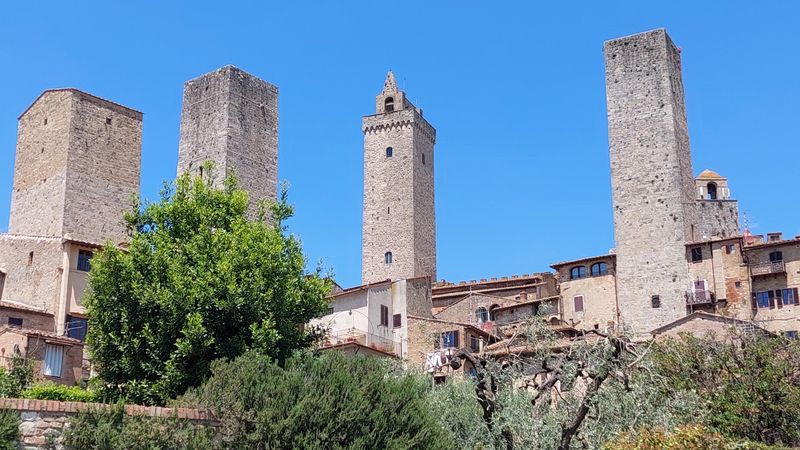
Thirteen towers still punctuate the Tuscan sky above San Gimignano, and honestly, they look like something a very ambitious child stacked out of building blocks. Medieval families built these towers as status symbols, competing to build higher than their neighbors.
The result is one of the most theatrical skylines in all of Europe.
UNESCO added the historic center to its World Heritage list in 1990, recognizing how well the town preserves its 14th-century layout, streets, and character. Walking inside the walls feels like stepping into a remarkably intact medieval neighborhood rather than a reconstructed one.
The piazza at the center buzzes with gelato shops, wine bars, and local vendors.
Beyond the walls, vineyards producing Vernaccia di San Gimignano stretch across the classic Tuscan countryside. This crisp white wine has been made here since the 13th century and pairs beautifully with local pecorino cheese.
Sunsets from the town walls are particularly special, when the towers catch the orange light and cast long shadows across the surrounding hills. Arrive on a weekday if possible, since weekends bring noticeably larger crowds to this popular destination.
Montepulciano, Tuscany
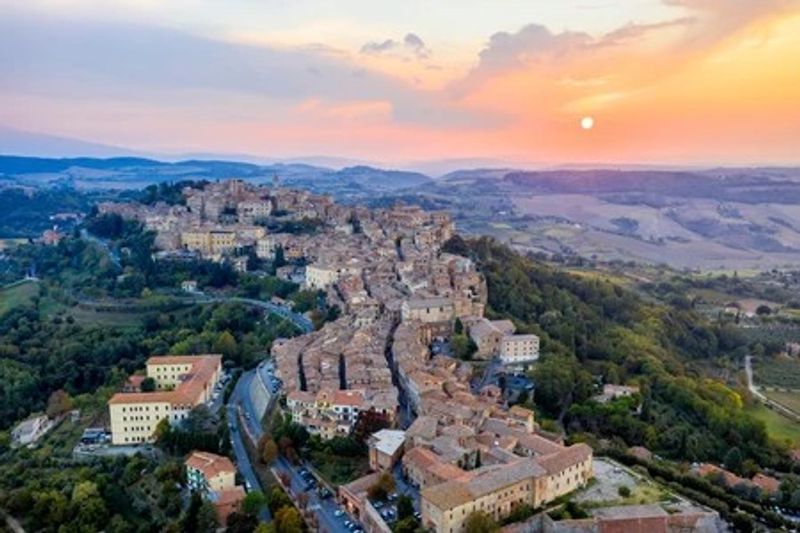
Every street in Montepulciano seems to end with a view worth photographing. Sitting on a long ridge between the Val d’Orcia and Valdichiana, this Tuscan town offers fresh panoramas almost every time you reach a corner or an opening in the buildings.
The climb through the historic center is steep, but nobody seems to mind once they see what is waiting at the top.
Piazza Grande forms the monumental heart of the old town, surrounded by Renaissance palaces, a cathedral, and a well that has been there longer than most countries have existed. Italy’s tourism authority traces the settlement back to late Etruscan origins, which gives Montepulciano a layered history that goes well beyond its Renaissance surface.
The vineyards surrounding the hill produce Vino Nobile di Montepulciano, one of Tuscany’s most celebrated red wines. Wine cellars beneath the town walls offer tastings in remarkably atmospheric spaces carved from ancient stone.
The main street running up through town is lined with food shops, butchers, and bakeries selling local specialties that reward any visitor willing to browse slowly. Visiting in late summer means catching the Bravio delle Botti, a barrel-rolling race between town districts.
Pitigliano, Tuscany
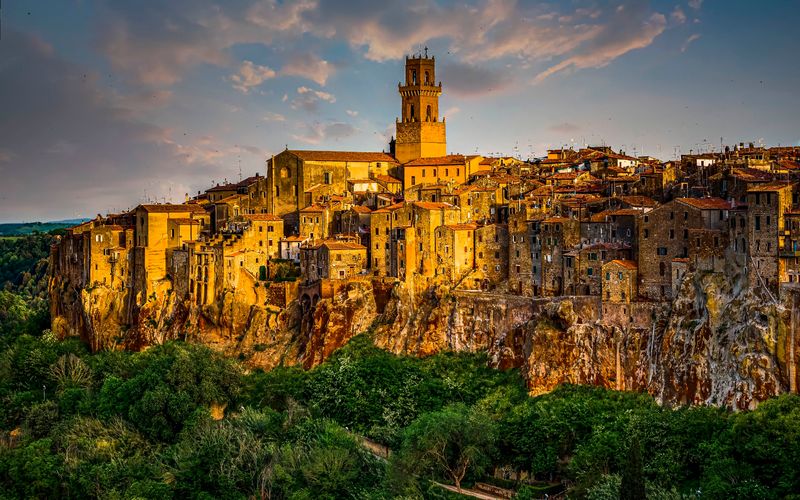
From across the valley, Pitigliano looks like it grew directly out of the rock beneath it. Rows of ochre houses rise from volcanic tuff cliffs in a seamless vertical stack, creating one of southern Tuscany’s most striking silhouettes.
It is the kind of sight that stops you mid-sentence.
The town carries a fascinating secondary identity as “Little Jerusalem.” A historic Jewish community settled here centuries ago, and their legacy survives in a well-preserved synagogue, a kosher wine cellar, and a small museum dedicated to Jewish life in the region. This cultural layer adds real depth to what might otherwise be just a pretty perch above the valley.
Paths around the settlement reveal ancient Etruscan tombs, tunnels carved into volcanic rock, and gardens tucked beneath the town walls. The surrounding area, known as the Maremma, is one of Tuscany’s least touristy corners, full of hot springs, nature reserves, and quiet roads.
Pitigliano pairs well with nearby Sorano and Sovana for a day of exploring this rugged, volcanic landscape. Local restaurants serve hearty Maremman cooking, including wild boar stew and handmade pasta that tastes nothing like anything from a jar.
Orvieto, Umbria
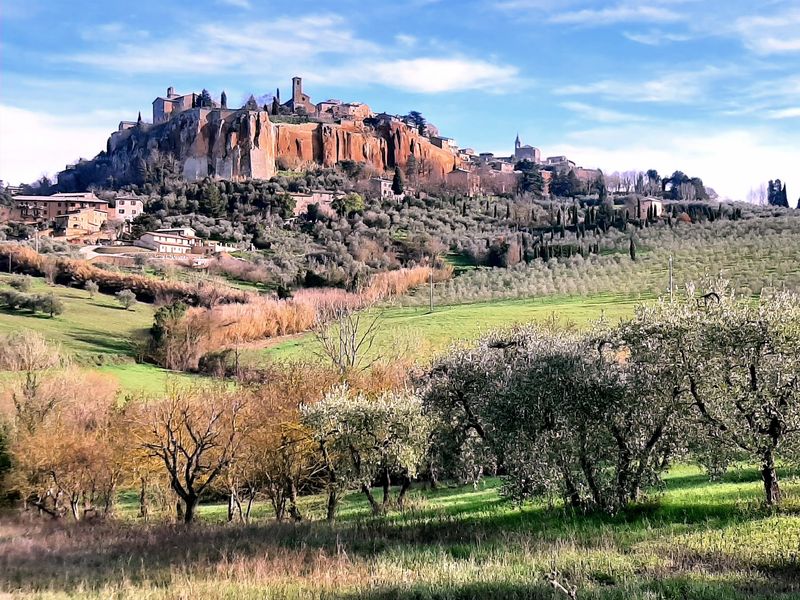
Orvieto has been impressing visitors for over three thousand years, which is a strong track record by anyone’s standards. The town rises on a flat-topped volcanic plateau above the Umbrian countryside, and the first glimpse of it from the valley below is genuinely hard to forget.
A funicular railway connects the lower town to the historic center, making the ascent effortless and scenic.
The cathedral is the undisputed centerpiece of the old town. Its elaborate Gothic facade, decorated with mosaics, sculptures, and intricate stonework, took nearly three centuries to complete.
Inside, Luca Signorelli’s frescoes in the Chapel of San Brizio are considered among the finest examples of Renaissance painting in all of Italy.
Walking the path around the edge of the plateau rewards visitors with sweeping views across rolling hills, vineyards, and river valleys. Below the streets, a network of underground caves and tunnels stretches through the volcanic rock, open for guided tours that reveal Etruscan wells, medieval dovecotes, and olive presses.
Orvieto Classico white wine is produced from vineyards on the slopes below the plateau, and local restaurants serve it alongside truffle-based dishes that reflect the surrounding Umbrian countryside beautifully.
Pienza, Tuscany
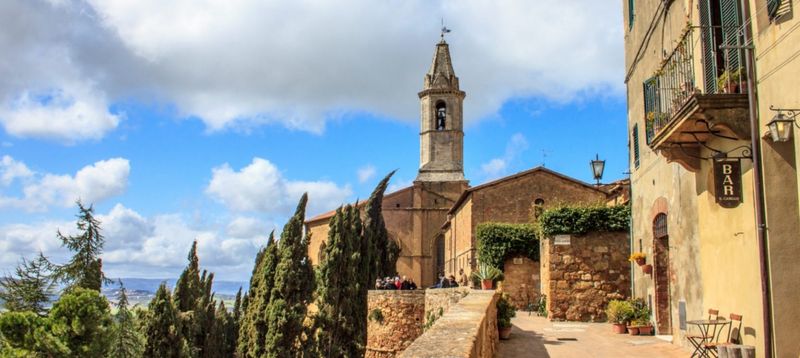
Pope Pius II had a bold idea in the 15th century: take a small Tuscan village and rebuild it from scratch as the perfect Renaissance city. Pienza was the result, and it remains one of the most deliberately beautiful towns in Italy.
UNESCO recognized it as an early model of Renaissance urban planning that influenced architects and city designers across Europe for generations.
Palazzo Piccolomini, the cathedral, and a handful of elegant palaces sit around a central square that feels proportioned with unusual care. The terraces behind the cathedral offer some of the finest views of the Val d’Orcia anywhere in Tuscany, with rolling hills, cypress trees, and farmhouses arranging themselves into a landscape that looks almost too perfect to be real.
Pienza is also famous for Pecorino di Pienza, a sheep’s milk cheese sold in shops throughout the old town in forms ranging from fresh and mild to aged and sharp. The town is compact enough to explore thoroughly in a single morning, which makes it a natural addition to any Val d’Orcia road trip.
Combining it with Montalcino and Montepulciano nearby gives a full day of scenery, history, food, and excellent wine without covering much distance at all.
Erice, Sicily
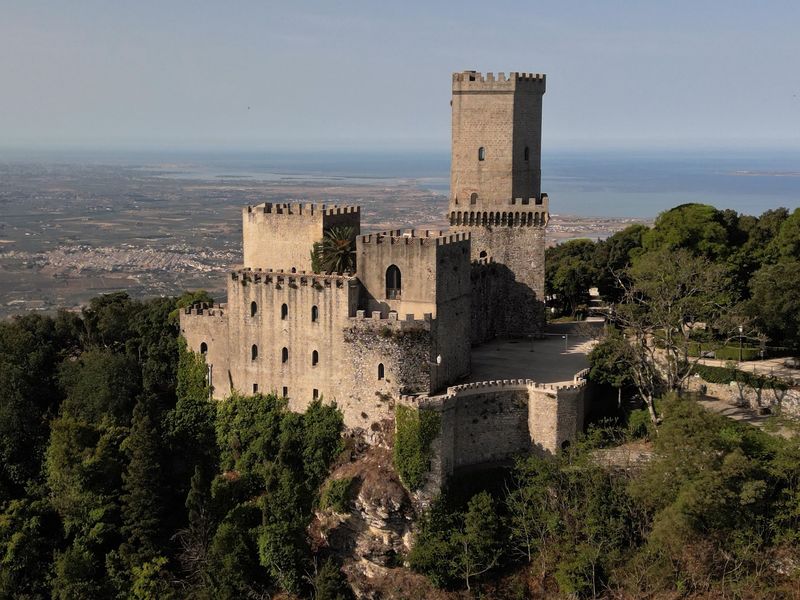
Sitting nearly 750 meters above sea level, Erice sometimes floats above the clouds while the beaches of western Sicily bake in the sun far below. Italy’s tourism authority describes it as an eagle’s nest, and standing on its ancient walls looking toward the Egadi Islands and the Trapani coastline, that description feels exactly right.
Stone-paved streets wind between medieval churches, courtyards, and Norman fortifications in a town that has been continuously inhabited since the time of the ancient Elymians. The atmosphere shifts noticeably with the weather.
On clear days, the views are enormous and luminous. When mist rolls in, the lanes become quiet and slightly mysterious, which is its own kind of magic.
Erice is also unexpectedly famous for its pastries. Convents here developed a tradition of almond-based sweets centuries ago, and pastry shops still carry on those recipes today.
The marzipan fruits and almond pastries sold in the old town are genuinely worth the trip on their own. A cable car connects Erice to Trapani below, offering a scenic and convenient alternative to driving the winding mountain road.
Combine a visit with Trapani’s salt flats and a ferry to the Egadi Islands for a full western Sicily experience.
Castell’Arquato, Emilia-Romagna
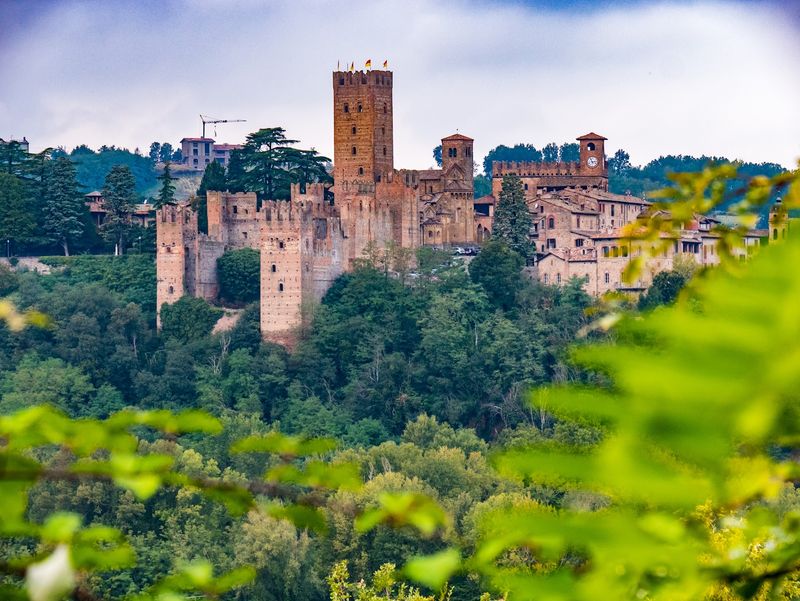
Long before Castell’Arquato was a hill town, it was underwater. The hill it sits on is partly formed from fossilized marine shells, evidence of an ancient sea that once covered the surrounding Po Plain.
That geological backstory makes the town even more interesting once you know it, like standing on the floor of a vanished ocean.
The medieval center is remarkably well preserved, with a Romanesque collegiate church, a 14th-century fortress, towers, stone homes, and elevated squares all arranged in a compact historic core. Italy’s tourism authority recognizes it among Italy’s beautiful borghi, and the Touring Club has awarded it an Orange Flag for tourism quality, which signals a destination that delivers on its promise.
Located roughly 30 kilometers from Piacenza in the Val d’Arda, the town sits at the edge of the Apennine foothills and is surrounded by vineyards producing local Gutturnio and Ortrugo wines. The surrounding countryside is ideal for walking or cycling, with quiet roads and small villages scattered across the hills.
Weekend markets and local festivals bring the central square to life regularly throughout the year. For travelers exploring Emilia-Romagna beyond Bologna and Parma, Castell’Arquato is a genuinely rewarding stop.
Calcata, Lazio
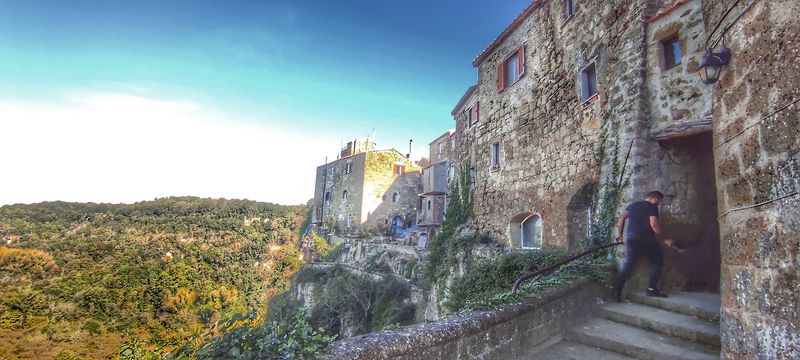
Just 40 kilometers north of Rome, Calcata sits on a narrow volcanic pinnacle above the wooded Treja Valley and operates on a completely different frequency from the capital. The village was nearly abandoned in the 1930s when authorities declared the cliff unstable.
Artists and craftspeople moved in during the 1960s and 1970s, transforming the empty buildings into studios, galleries, and homes.
That creative takeover never really stopped. Walking through the lanes today, visitors encounter ceramic workshops, painted doorways, street musicians, and small galleries tucked inside buildings that are several centuries old.
The contrast between the ancient stone architecture and the lively contemporary culture inside it gives Calcata a personality unlike anywhere else in central Italy.
The natural park surrounding the village adds another dimension entirely. Trails descend from the cliff into the Treja Valley, passing waterfalls, Etruscan tombs carved into the rock, and dense forest that feels genuinely wild.
The village has no cars, which makes the whole place unusually quiet and pedestrian-friendly. Calcata works perfectly as a half-day trip from Rome, and the drive through the Lazio countryside getting there is pleasant in its own right.
Local restaurants are small, informal, and serve food that rewards curiosity over caution.
Assisi, Umbria
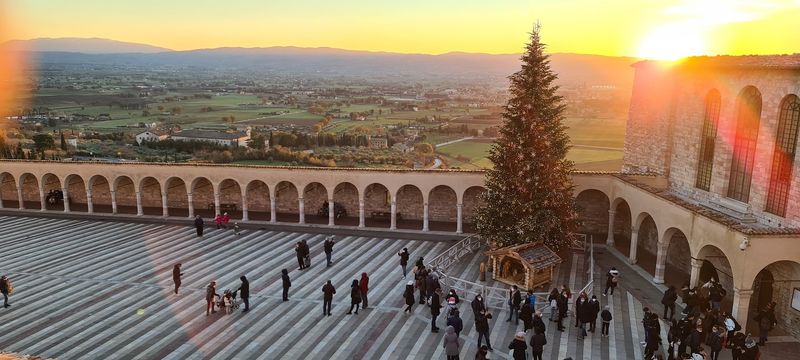
Pale stone buildings sweep across the slopes of Mount Subasio in a long, graceful arc that has been drawing visitors to Assisi for centuries. This is the birthplace of Saint Francis, one of the most beloved figures in Christian history, and the town carries that spiritual weight with quiet confidence rather than loud ceremony.
The Basilica of Saint Francis is the architectural and emotional heart of the town. Built in the 13th century, it contains celebrated frescoes attributed to Giotto and Cimabue that helped define the course of Western art.
The lower and upper churches offer two entirely different visual experiences, both worth taking time to absorb slowly rather than rushing through with a tour group.
Above the basilica, narrow streets climb toward the medieval Rocca Maggiore fortress, which sits at the top of the hill and offers panoramic views across the entire Umbrian plain. Even visitors with no particular interest in religious history tend to find Assisi deeply appealing, thanks to its architecture, its light, and the genuine sense of calm that the town maintains even when crowds are present.
The surrounding hillsides covered in olive trees and wildflowers make the approach by road one of the most scenic drives in Umbria.
Share this story