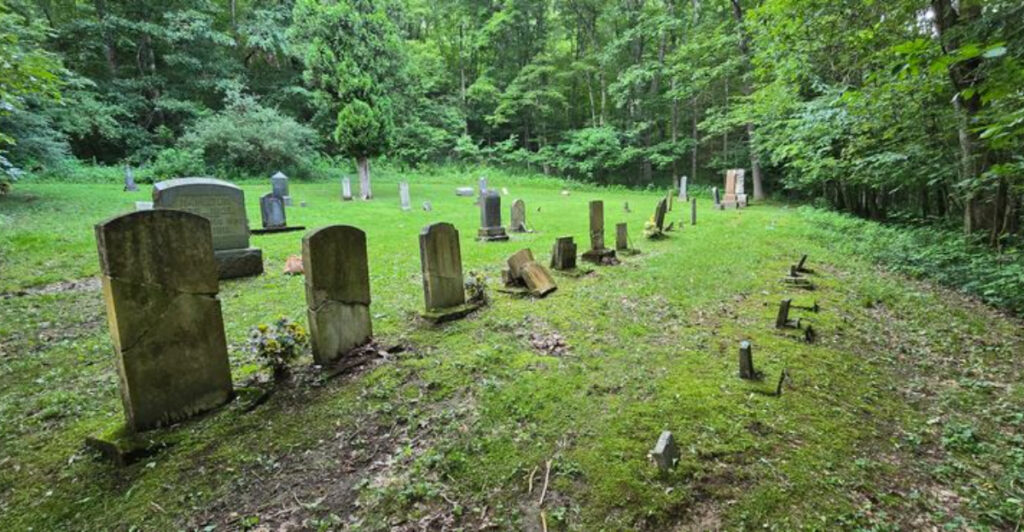
Ohio has a long history, and with old history comes plenty of old cemeteries that carry more than just gravestones. Some of these burial grounds have earned a spooky reputation, with locals swapping stories about strange lights, cold spots, and shadowy figures that appear once the sun goes down.
Whether you believe in ghosts or just love a good scary tale, these eight cemeteries are famous for giving visitors chills. Just be warned: many people say you should never wander in alone after dark.
1. Camp Chase Confederate Cemetery, Columbus

Camp Chase Confederate Cemetery in Columbus has one of Ohio’s most enduring cemetery ghost stories. The burial ground is connected to Camp Chase, a Civil War military post and prison camp where thousands of Confederate prisoners were held.
More than 2,000 Confederate soldiers who died while imprisoned are buried in the cemetery, giving the site a very real and somber history.
Its best-known legend concerns the Lady in Gray, sometimes called the Woman in Gray. Stories describe a mysterious woman dressed in gray visiting the graves, particularly that of a Confederate soldier.
According to versions of the tale, flowers have appeared at gravesites and visitors have reported seeing a mourning female figure among the headstones.
The historical cemetery and prisoners buried there are well documented. The Lady in Gray, however, belongs to Ohio folklore.
That distinction actually makes Camp Chase more interesting: its ghost story grew around a genuine Civil War tragedy that remains visible today.
2. Woodland Cemetery, Dayton
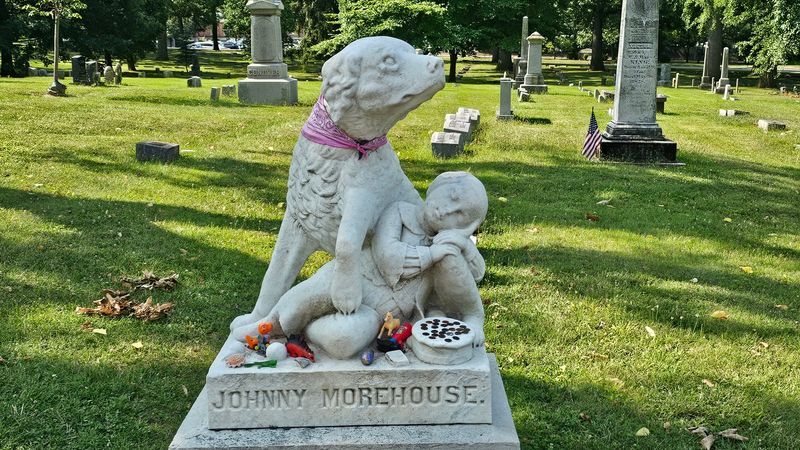
Perched on a hilltop overlooking downtown Dayton, Woodland Cemetery is both beautiful and famously haunted. Established in 1841, it holds the graves of aviation pioneers the Wright brothers and poet Paul Laurence Dunbar, giving it real historical weight.
Visitors have long shared stories about a little girl named Johnny Morehouse, buried here in the 1860s. Legend says his loyal dog refused to leave the grave, and people claim to still hear a dog and see a small boy near the touching stone monument.
The rolling grounds, grand mausoleums, and towering trees create an atmosphere that feels frozen in time. Come during the day for the history and the views, but understand why so many locals grow uneasy about lingering here after the gates would normally close.
3. Moonville Cemetery, McArthur
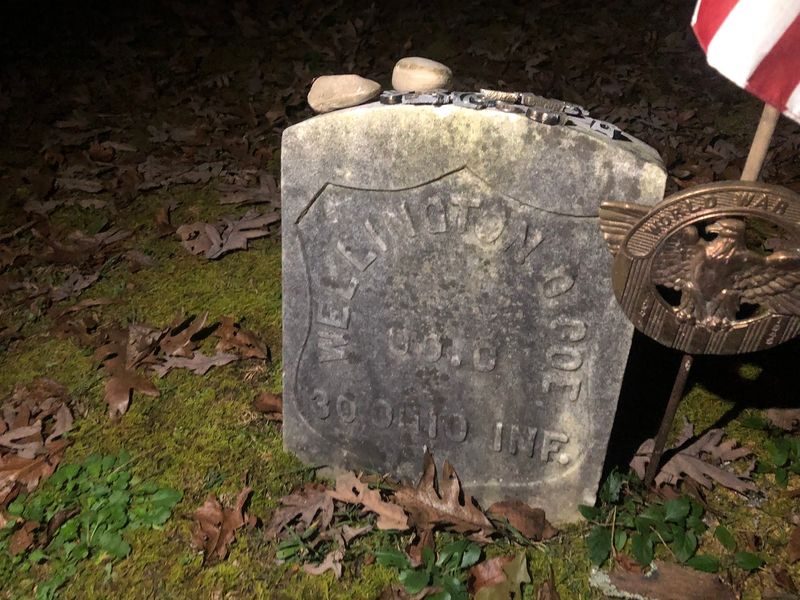
Hidden in the wooded hills of Vinton County, Moonville Cemetery is one of the few surviving remnants of the vanished community of Moonville. The small railroad and mining settlement developed in the 1800s along the Marietta and Cincinnati Railroad, but gradually disappeared as local industry declined.
The last family left Moonville in 1947, and today the cemetery and nearby Moonville Tunnel are among its most recognizable remains.
The cemetery sits along Township Highway 18 near McArthur and is associated with Brown Township. Many of its original markers have been lost or damaged over the decades, and local organizations installed a memorial obelisk in 2023 to honor those buried there.
Moonville’s eerie reputation comes largely from folklore surrounding the abandoned railroad and tunnel, where stories of ghostly railroad workers and mysterious lantern lights have circulated for generations. Those tales remain folklore rather than documented paranormal events, but the isolated cemetery and ghost-town setting have made Moonville one of southeastern Ohio’s best-known spooky destinations.
4. Chestnut Grove Cemetery, Ashtabula
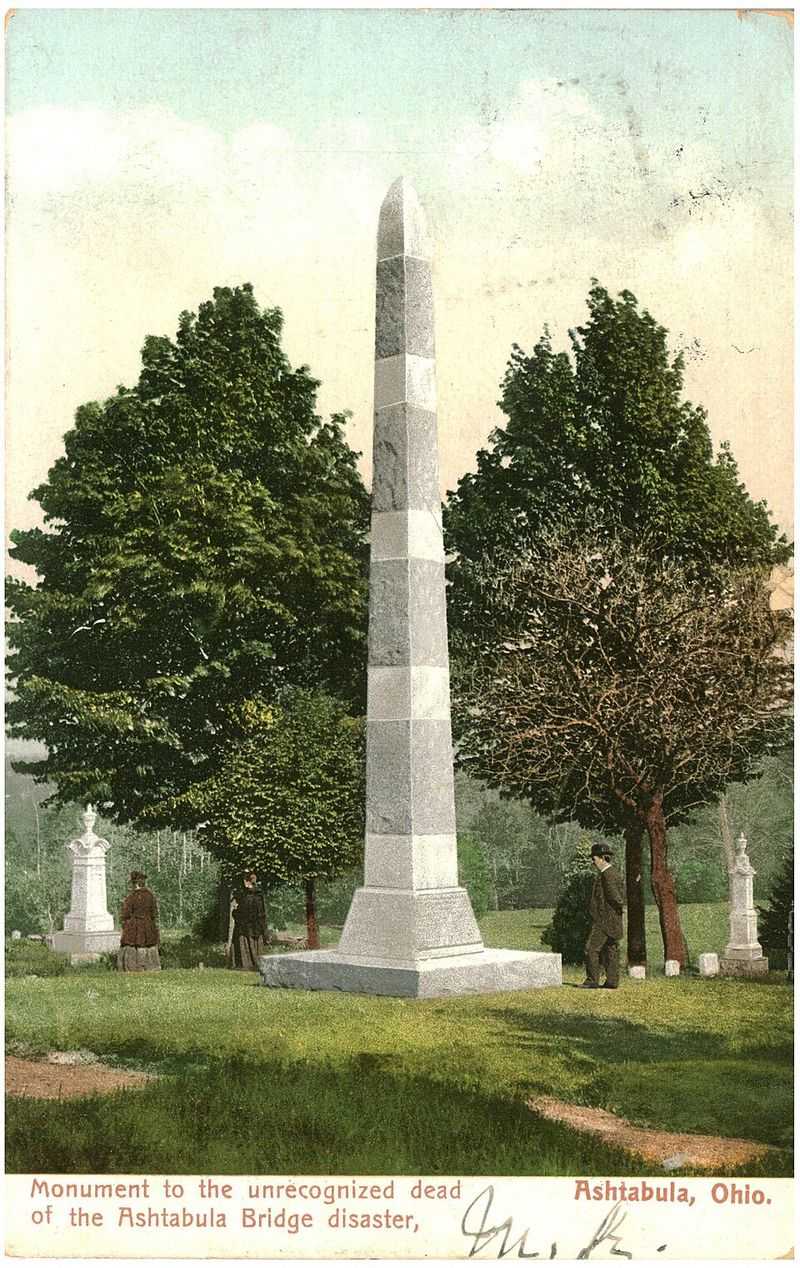
Grief and tragedy shaped the reputation of Chestnut Grove Cemetery in Ashtabula. It became the final resting place for many victims of the horrific 1876 Ashtabula River railroad disaster, when a bridge collapsed and a train plunged into the icy river below.
A tall monument honors the unidentified dead from that terrible night. Visitors sometimes report a mournful atmosphere near the memorial, along with cold spots and the faint sound of distress that seems to come from nowhere.
The connection to one of Ohio’s deadliest disasters gives this cemetery a somber, lingering energy. History buffs come to pay their respects, but plenty of locals admit the place carries a weight that makes evening visits feel deeply unsettling.
5. Oak Hill Cemetery, Cincinnati/Sharonville area, Ohio
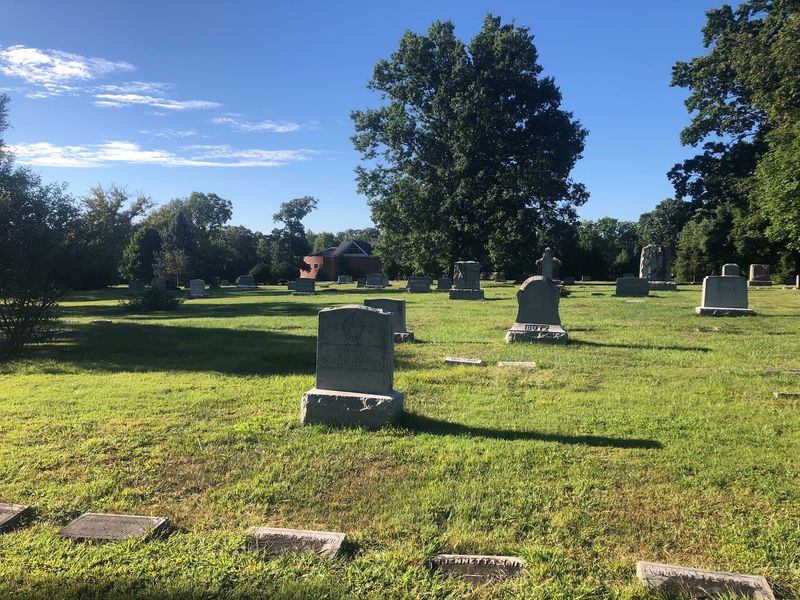
Oak Hill Cemetery sits at 11200 Princeton Pike in the northern Cincinnati area, near Springdale and Sharonville. Established in 1910, the cemetery has served generations of Greater Cincinnati families and today is part of the Spring Grove family of cemeteries.
Its official records include burials dating back to its founding, while the grounds feature mature trees, landscaped sections, monuments, and mausoleums.
Despite claims sometimes repeated online, there is no well-documented historical evidence that Oak Hill Cemetery is haunted or connected to a so-called “Sharonville witch.” Those stories should be treated as unverified folklore rather than fact. What is certain is that Oak Hill is an active cemetery with more than a century of local history.
Its quiet grounds and older monuments can certainly create an eerie atmosphere, but visitors should respect posted hours – the cemetery has established gate hours and is not intended for nighttime exploration.
6. Mound Cemetery, Marietta
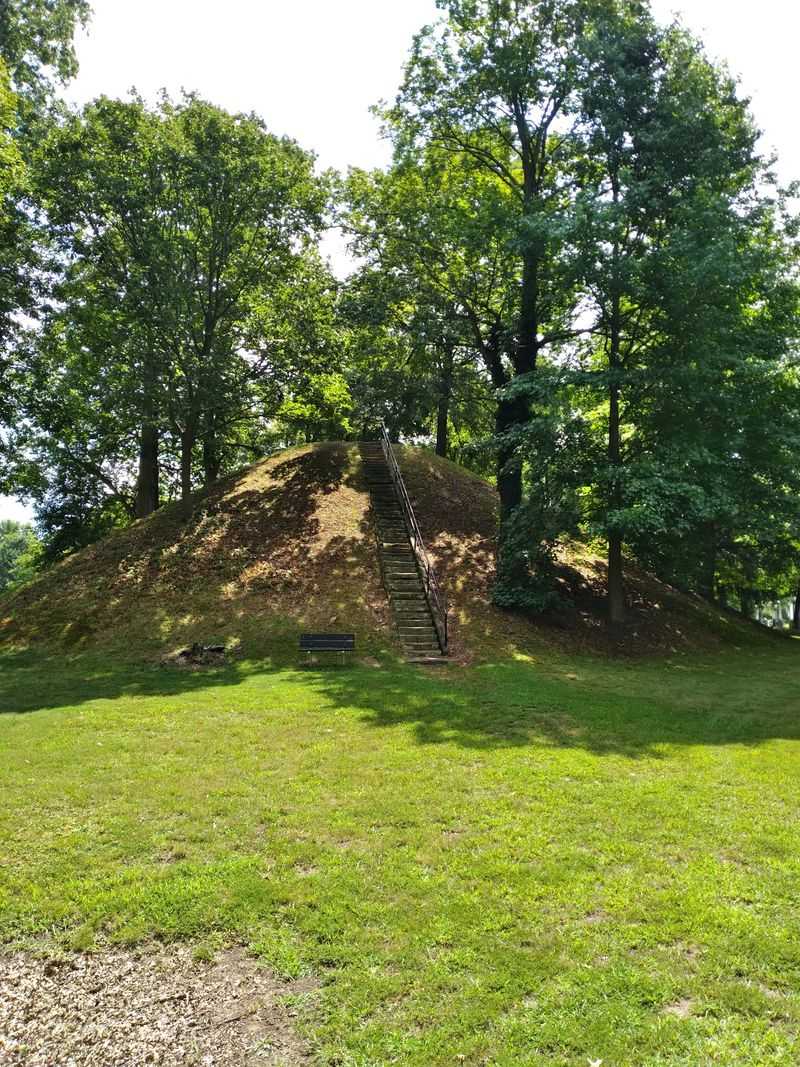
History runs incredibly deep at Mound Cemetery in Marietta, home to a giant ancient Native American burial mound built by the Adena people thousands of years ago. Early settlers later established a cemetery around it, layering centuries of the dead in one remarkable spot.
The towering grass-covered mound dominates the grounds, and visitors can climb stone steps to the top. Many describe a powerful, almost sacred feeling here, while others report strange sensations and shadowy movement among the Revolutionary War era graves.
Being surrounded by such ancient history gives the site a mysterious pull unlike anywhere else in the state. Respectful daytime visits are welcome, but the blend of prehistoric burial ground and colonial graves leaves plenty of locals unwilling to explore it once night settles in.
7. Boston Cemetery, Peninsula
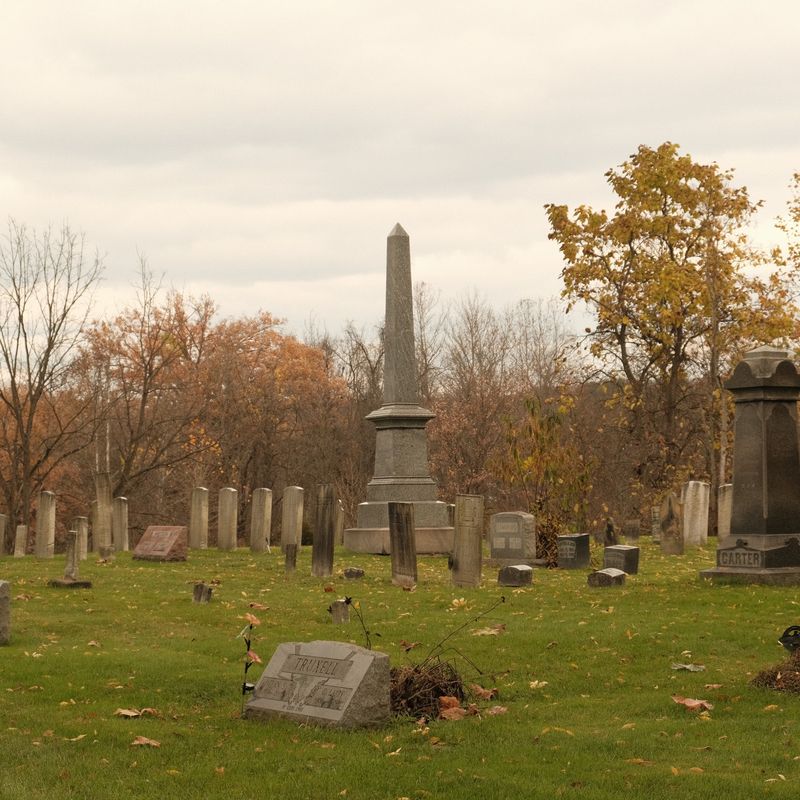
Boston Cemetery, also known as Boston Mills Cemetery, sits at the end of Main Street near Peninsula in historic Boston Township. Its roots reach back to Ohio’s early settlement period, with the earliest known burial dating to 1814.
The land was donated to the township by the Stanford family, and some of the area’s earliest residents are buried here, including the notorious counterfeiter Jim Brown.
The cemetery later became wrapped up in the infamous “Helltown” legends surrounding the Boston Mills area. Stories have claimed that a ghost sits on a cemetery bench, trees mysteriously move, and children buried here died in a tragic bus accident.
Paranormal researchers have challenged those stories: there is no bench, and no evidence supports the supposed bus tragedy.
The documented history is compelling enough. With graves dating back more than two centuries and its connection to one of Ohio’s most persistent collections of spooky folklore, Boston Cemetery remains an atmospheric piece of local history – without needing the legends to be presented as fact.
8. Bowman Cemetery, Lisbon
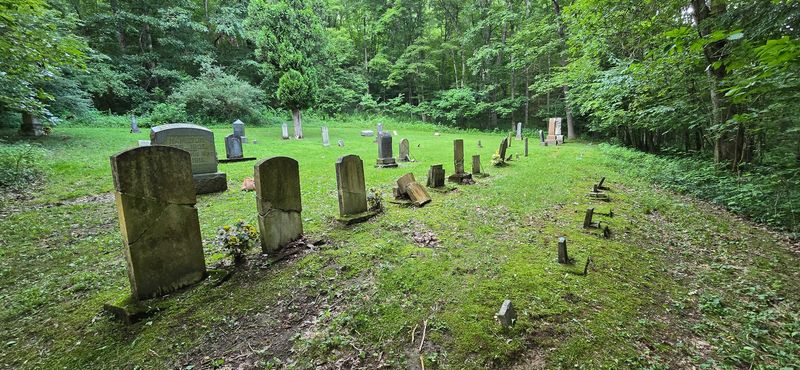
Tucked into the woods of Elkrun Township in Columbiana County, Bowman Cemetery is a small historic burial ground near Lisbon and Elkton. Township records confirm Bowman Cemetery as one of Elkrun Township’s historic cemeteries, while geographic records place it off Lusk Lock Road, east of Lisbon.
Its isolated setting has also made Bowman one of the better-known haunted cemeteries in northern Ohio folklore. The most persistent legend tells of a woman accused of witchcraft who was supposedly hanged near the cemetery and now wanders the surrounding woods.
Other stories describe visitors feeling watched, hearing unexplained noises, or encountering strange figures near the graves.
There is no historical proof that the alleged witch execution actually occurred, so that part of the story should be treated strictly as local legend. What is real is the secluded old cemetery itself, whose wooded location provides an appropriately eerie setting for a tale that has circulated for generations.
Share this story