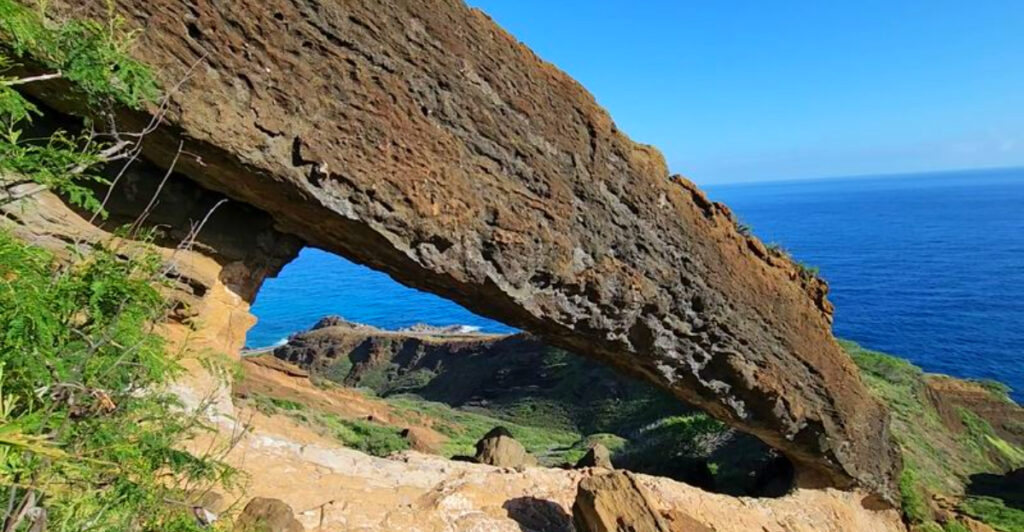
Most people driving along Oahu’s southeastern coast stop at the blowhole, snap a few photos, and move on. But just steps away, a rocky ridge rises above the Pacific and leads to something most visitors never notice: a massive natural lava arch framing an open sky above the ocean.
The Koko Crater Arch Trail is short enough to finish in under two hours, yet dramatic enough to leave you standing in silence, completely caught off guard by what you find at the top. If you love a trail that rewards effort with something genuinely rare, this one belongs on your list.
What Makes This Trail Unlike Any Other on Oahu
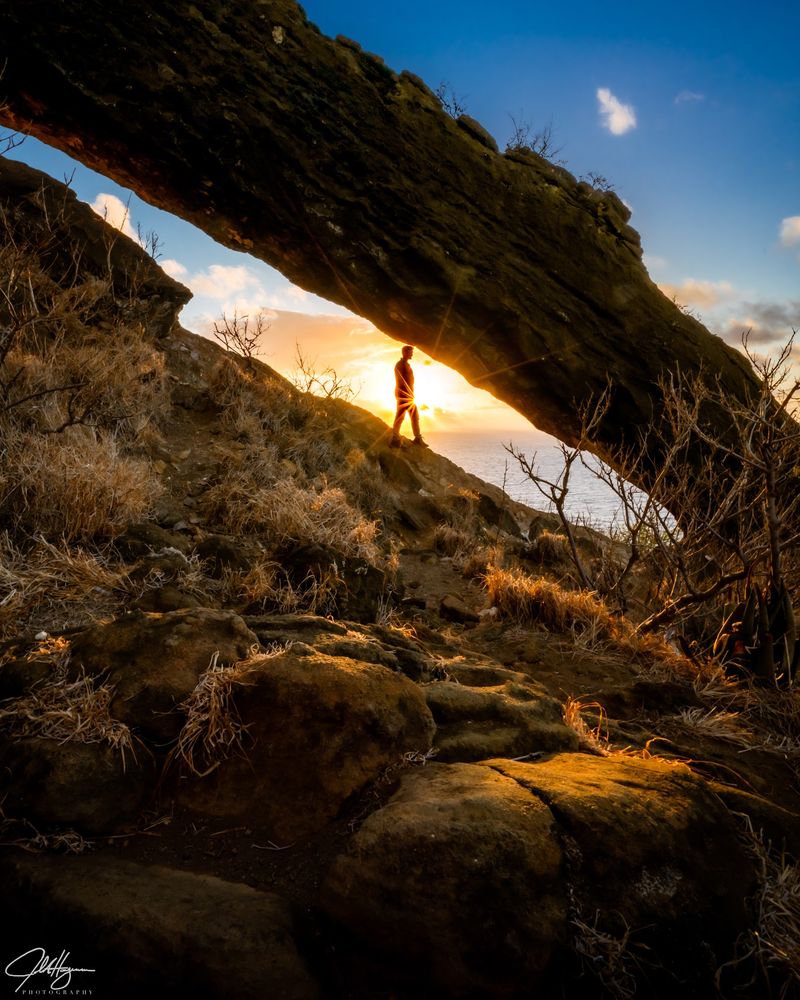
There are dozens of trails on Oahu, but very few lead to a natural arch carved from ancient lava rock rising above the open ocean. The Koko Crater Arch Trail sits on the southeastern coast of Oahu, within the Koko Head District Park area near Honolulu, Hawaii 96825.
It is one of those rare places that feels both accessible and completely wild at the same time.
The arch itself is the centerpiece, and it genuinely earns that title. Formed from volcanic basalt, it juts out from the crater rim in a way that frames the Pacific perfectly.
Most people nearby are lined up at the famous Koko Crater Railway Trail on the other side of the crater. Over here, the crowd thins out fast, making the experience feel personal and unhurried.
Getting to the Trailhead and Parking Tips
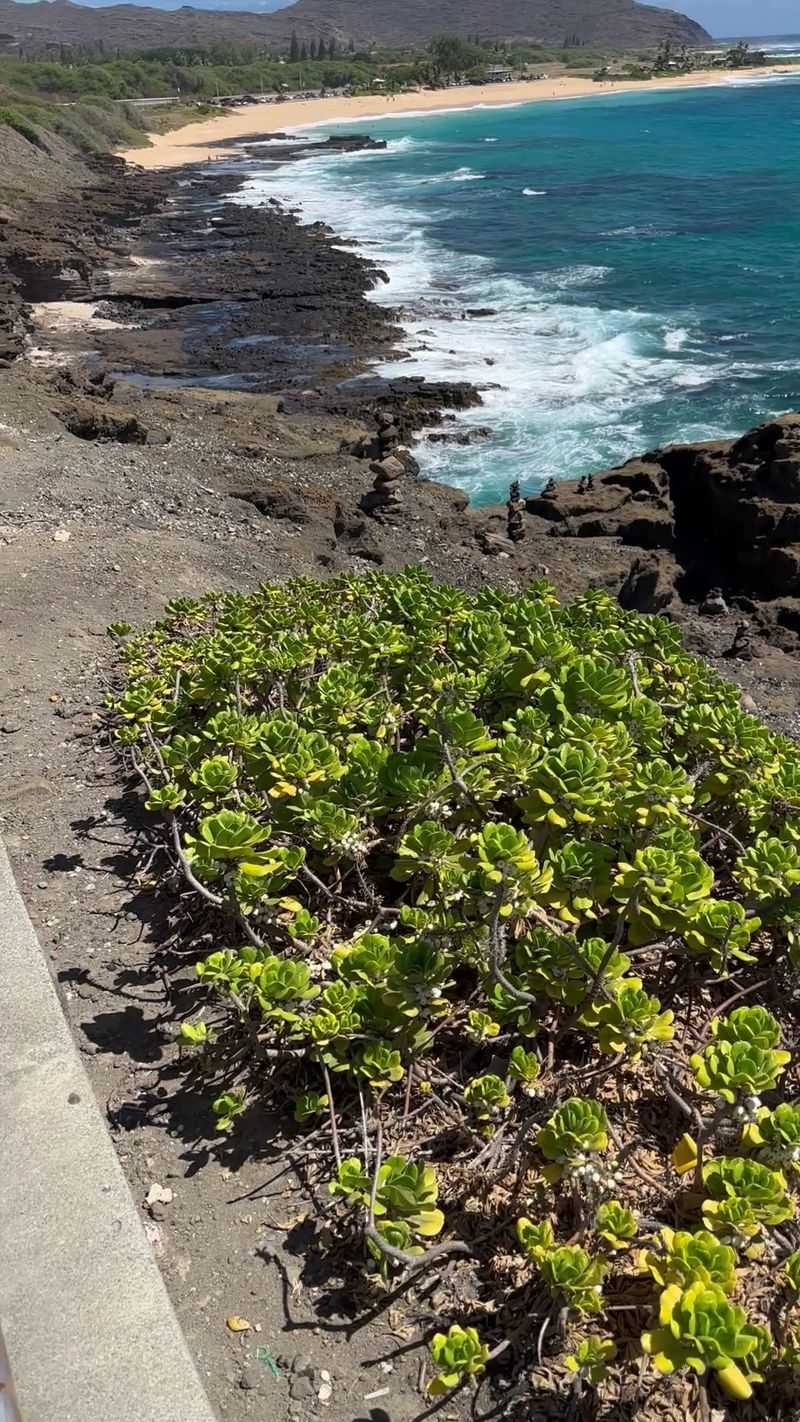
Finding the trailhead requires a little attention. The trail is accessed from Kalanianaole Highway, across from a small Japanese fishing shrine monument that sits near the road.
There are only about four parking spots along the shoulder on the opposite side, so they fill up fast during peak morning hours.
Arriving early is genuinely the smartest move here. Many hikers also park at the nearby Halona Blowhole lookout and walk down to the trailhead, which adds just a few minutes to the outing.
The trailhead itself is not marked with a sign, so spotting the lava ridge and following the worn path upward is how most people find their way.
Once you cross the road carefully and step onto the ridge, the route becomes clearer about halfway up. The trail opens daily from 5 AM to 10 PM, giving early risers plenty of time to catch sunrise over the water.
The Climb Up the Ridge and What to Expect
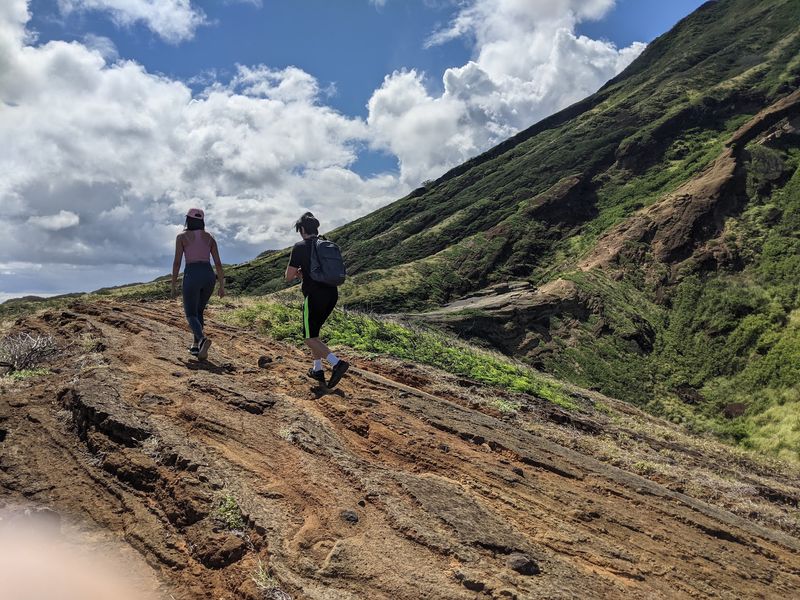
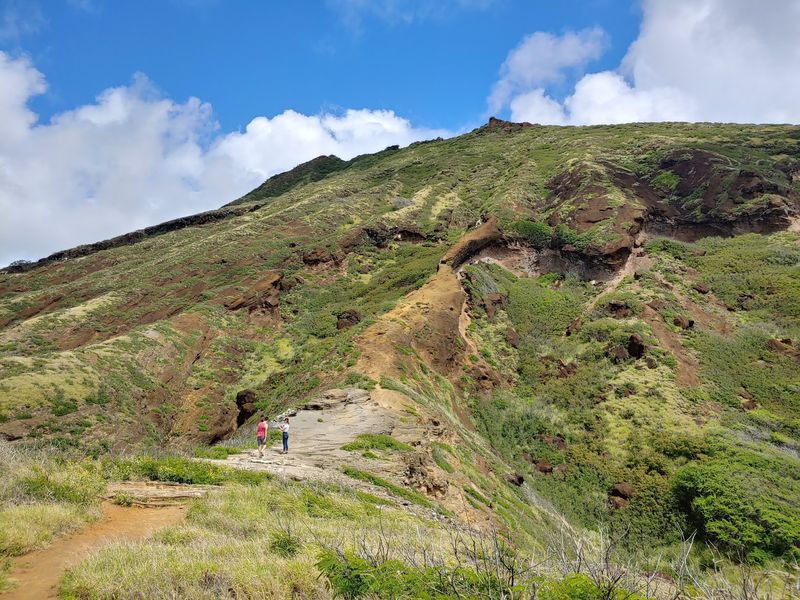
Right from the start, the trail gets your attention. The first section involves a quick, steep scramble up the lava rock before the path levels into a steady uphill walk along the crater rim.
The slope is consistent and does not give you many flat breaks, so pacing yourself early makes the whole experience more enjoyable.
The rock underfoot is rough volcanic basalt, which actually helps with grip. Still, the surface can be loose in spots, especially near the arch itself, so solid hiking shoes with good traction are a real asset here.
Sandals and casual sneakers tend to make the upper section more stressful than it needs to be.
Wind picks up significantly as you gain elevation. On gusty days, it can feel strong enough to throw you off balance near the exposed sections of the ridge.
Sunglasses help keep blowing sand out of your eyes on breezy mornings.
No Shade, No Water, No Forgetting to Prepare
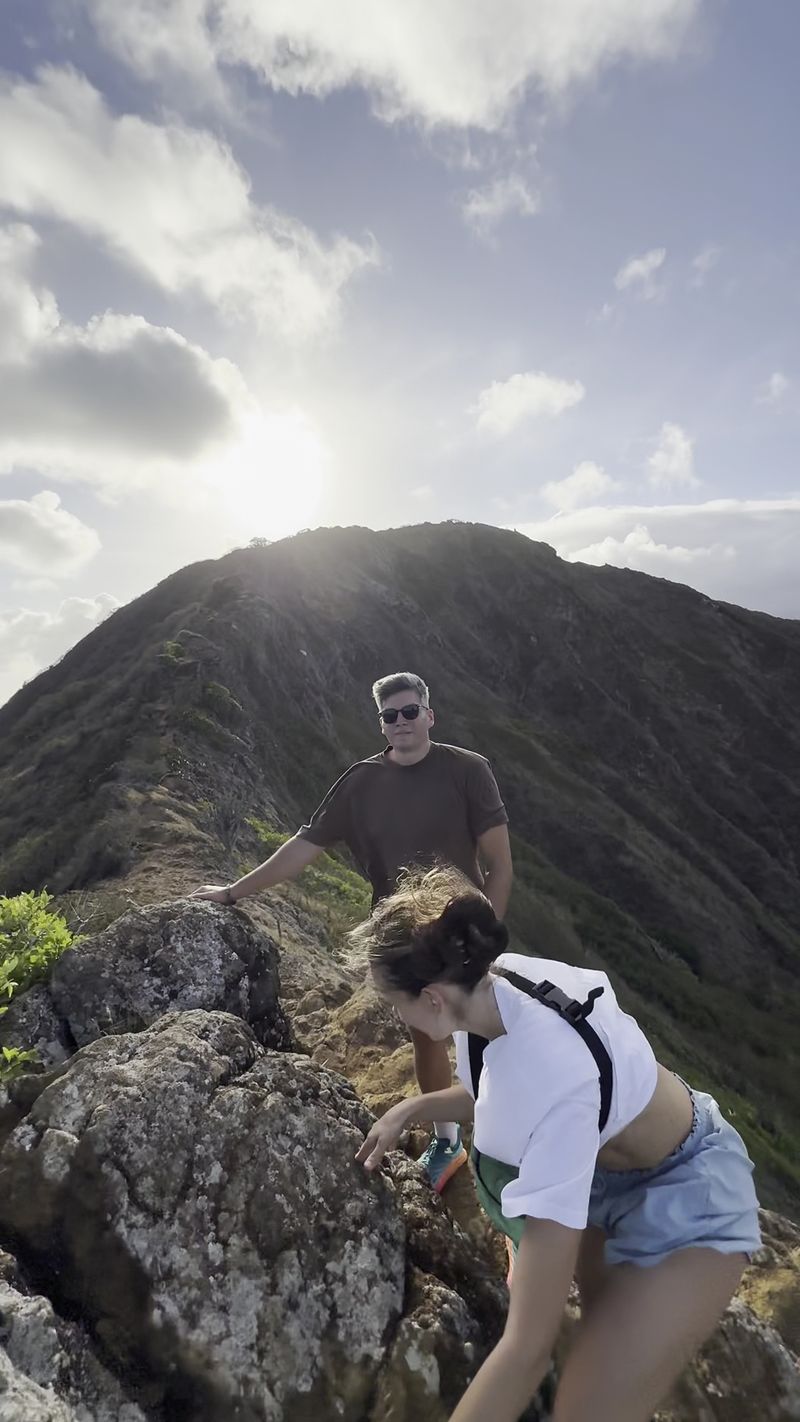
One thing the trail does not offer is shade. From the moment you leave the road until the moment you return, the sun hits you from every angle.
On a clear Honolulu morning, the UV index climbs fast, and the dark lava rock radiates heat in a way that makes midday hiking genuinely uncomfortable.
Bringing at least one full liter of water per person is smart, and two liters is better if you plan to explore past the arch toward the upper crater rim. Sunscreen, a hat, and light breathable clothing make a real difference in how you feel by the time you reach the top.
The good news is that the trail is short enough to complete before the heat peaks. Starting at or just after sunrise gives you cooler temperatures, softer light for photos, and a much more comfortable overall experience.
The early effort is absolutely worth it.
The Natural Arch Up Close and the Scramble to Reach It
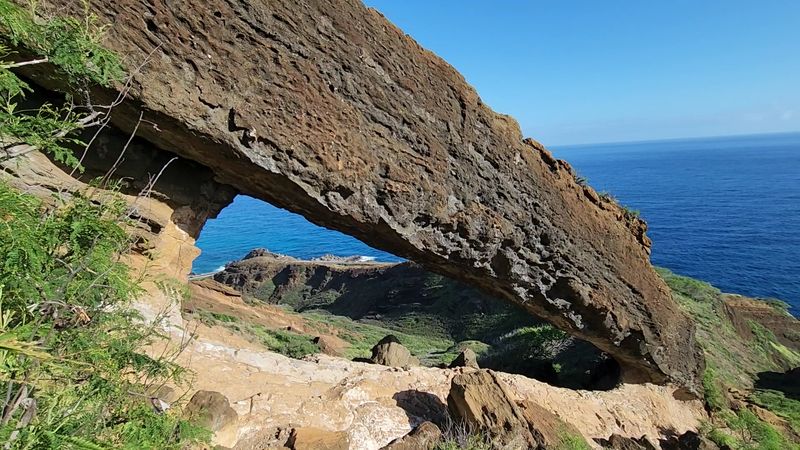
Reaching the arch is a moment that stops most people in their tracks. The structure is larger than it looks from the road, and standing beneath it with the Pacific stretching out below gives the whole hike a payoff that feels disproportionately big for such a short trail.
The arch frames the sky and ocean in a way that photographs struggle to fully capture.
Getting under the arch involves a short scramble along the left side of the formation. There is a faint path and, at times, a small ribbon marker on a branch to guide the way.
The loose gravel on this section demands slow, deliberate steps. Rushing it is not worth the risk.
Climbing over the top of the arch is possible for confident scramblers with good footwear, but the descent on the far side is steep with limited handholds. Taking your time and knowing your own comfort level matters more than reaching the very top.
Panoramic Ocean Views That Reward Every Step
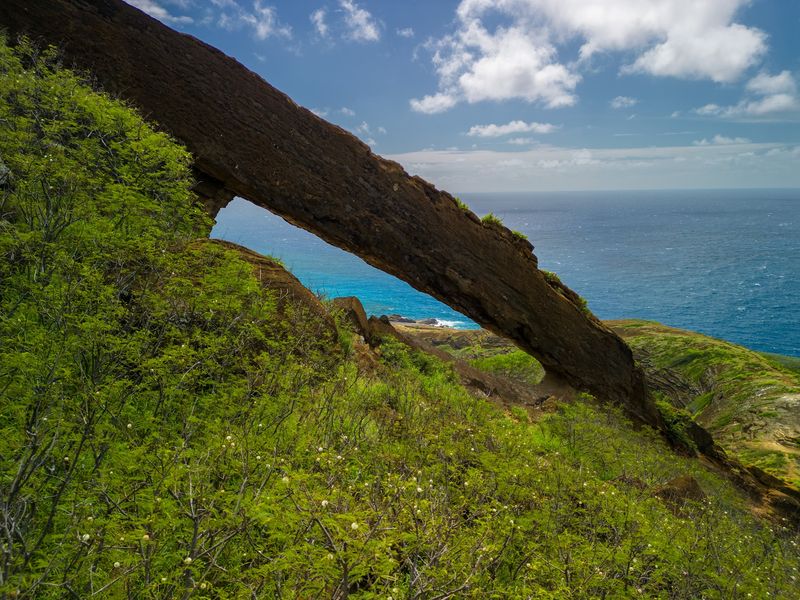
The views from the ridge and arch area are genuinely spectacular in every direction. To one side, the deep blue of the Pacific stretches to the horizon without interruption.
To the other, the rugged volcanic landscape of Koko Crater rolls away toward the Koko Head area and the green hills beyond. On a clear day, you can see Waikiki and the Diamond Head crater silhouette in the distance.
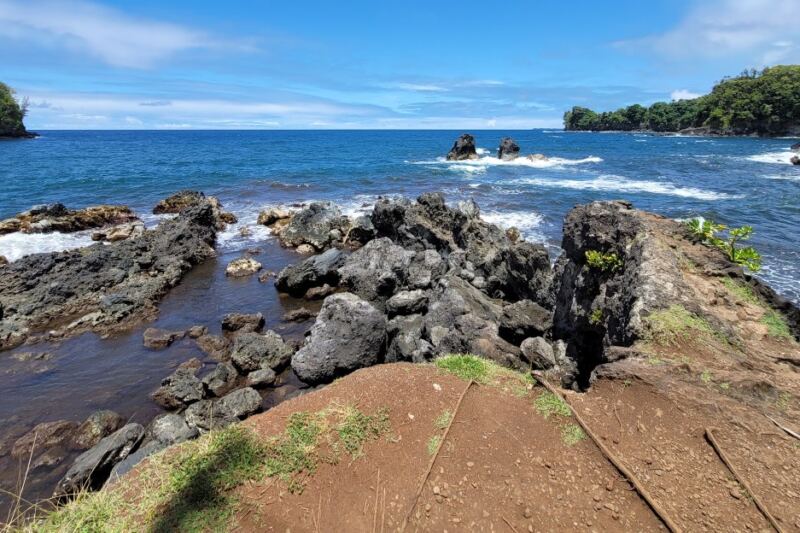
The coastline below is dramatic, with waves pushing hard against the black lava cliffs. Watching the water surge and explode against the rocks from this height is one of those views that holds your attention far longer than expected.
It has a pull to it that makes leaving feel harder than it should.
Sunrise visits reward hikers with soft golden light washing across the water, turning the whole scene into something that feels almost surreal. Many photographers return here specifically for that morning light.
The Halona Blowhole Connection and What Else Is Nearby
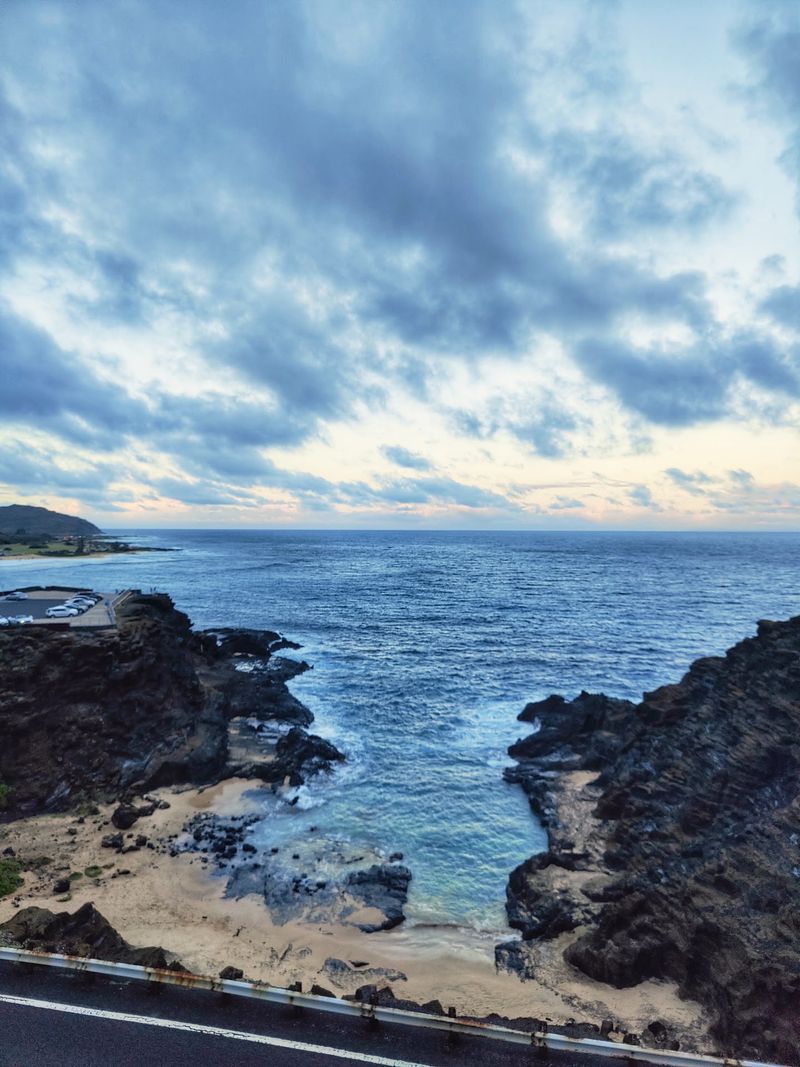
One of the best things about visiting the Koko Crater Arch Trail is how easily it pairs with other nearby stops. The Halona Blowhole lookout is practically next door, and many hikers combine both into a single outing that takes only a couple of hours total.
At the blowhole, ocean swells push through a lava tube and shoot a column of water into the air with a sound that genuinely startles first-time visitors.
Just below the blowhole lookout sits a small, tucked-away beach that offers a completely different pace from the ridge above. The contrast between the two spots makes the combination feel like two separate adventures packed into one morning.
Continuing east along the coast toward Makapuu Lighthouse adds another layer to the day. That trail offers its own sweeping views and is well-marked, making it a comfortable follow-up for anyone who still has energy after the arch visit.
How Long the Hike Actually Takes and Who Can Do It
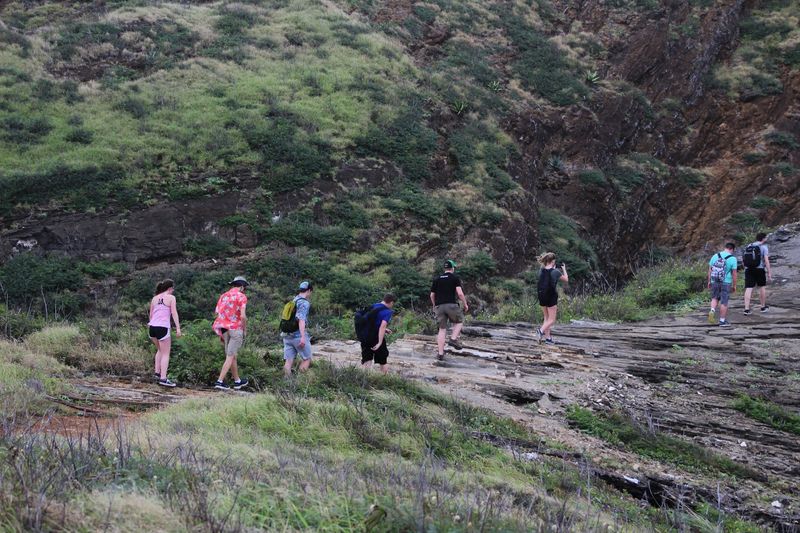
Most hikers complete the round trip to the arch and back in roughly 30 minutes to an hour, depending on pace and how long they linger at the top. For those who choose to explore past the arch and continue along the crater rim toward the upper trail connections, the outing can stretch to two hours or more.
The trail works well for moderately fit adults and older teenagers comfortable with uneven rocky terrain. One hiker brought a three-year-old in a backpack carrier without difficulty, which speaks to the manageable distance.
That said, the scramble near the arch itself is not suitable for very young children on foot or anyone with significant mobility limitations.
Beginners should feel encouraged but realistic. The steep sections are short, and the overall distance is forgiving.
Going slowly and focusing on footing rather than speed makes the experience far more enjoyable for first-timers on rocky volcanic trails.
Why Sunrise Is the Best Time to Visit
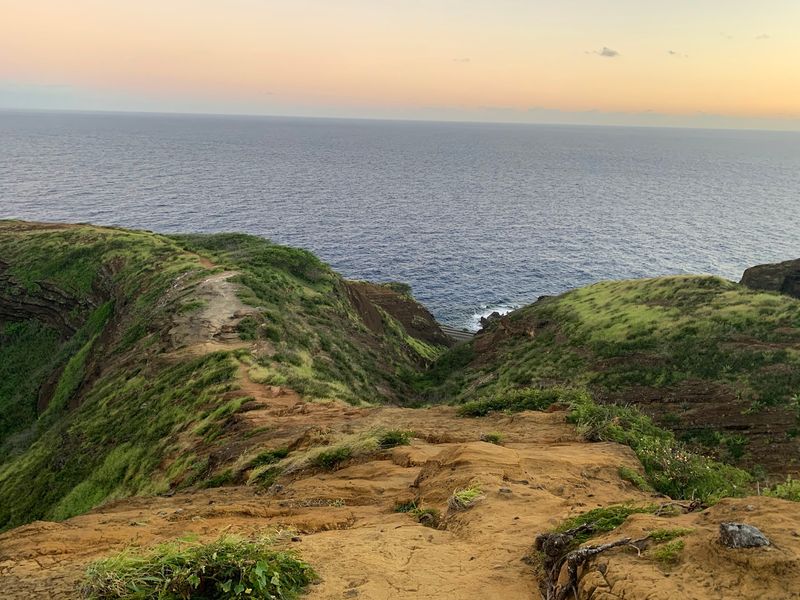
Sunrise at the Koko Crater Arch Trail hits differently than most spots on the island. The trail opens at 5 AM, which gives early risers a real window to reach the arch just as the sky begins to shift from deep purple to orange and gold above the Pacific.
The light at that hour makes everything look more vivid, and the air is noticeably cooler and fresher.
Without the midday sun bearing down, the volcanic rock stays manageable underfoot, and the wind off the ocean feels genuinely refreshing rather than harsh. The trail also sees far fewer people in the early morning, which means you can sit at the arch in near silence with only the sound of waves below.
Photographers who make the effort to arrive before sunrise consistently come away with images that stand out from the usual Oahu postcard shots. The combination of arch, ocean, and morning light is hard to replicate anywhere else on the island.
What to Know Before You Go and Final Tips
A few practical details make the difference between a smooth visit and a frustrating one. The parking shoulder fills quickly, especially on weekends, so arriving before 7 AM gives you the best chance at a spot.
The alternative walk from the Halona Blowhole lot adds only a few minutes and is worth it to avoid circling the road repeatedly.
Footwear matters more here than on most short trails. The lava rock is uneven, and the loose gravel near the arch demands shoes with real grip.
Bring water, apply sunscreen before you leave the car, and toss a light windbreaker in your bag for the exposed ridge sections.
The trail is not signed, so paying attention to the path and staying on the visible route is important. Cell service is generally available for maps, but trusting the ridge line and following foot-worn rock is usually all the navigation you need to find your way straight to the arch.
Share this story