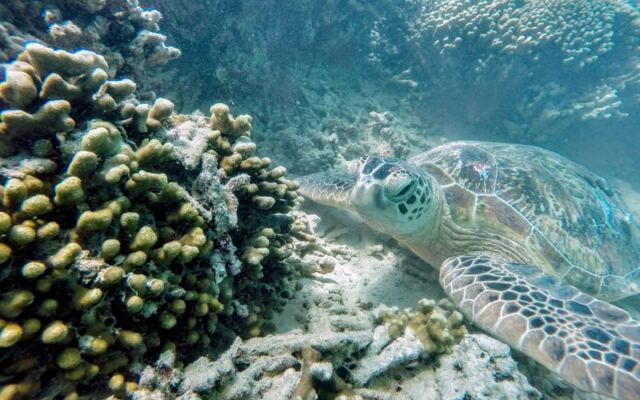
Twice a day, a strip of sand rises in the middle of a bay on the windward side of Oahu, and for a few hours people stand ankle-deep in water that was too deep to stand in that morning. Sea turtles cruise the reef edges nearby, and snorkelers slide off the sand into deeper water to go find them.
The spot sits a boat ride or a solid paddle away from the nearest road, yet plenty of locals call it their favorite place on the whole island. Keep reading to learn where it is, when the tide lets you in, how to get out there, and what to pack so the day goes your way.
A Sandbar Hiding in Plain Sight
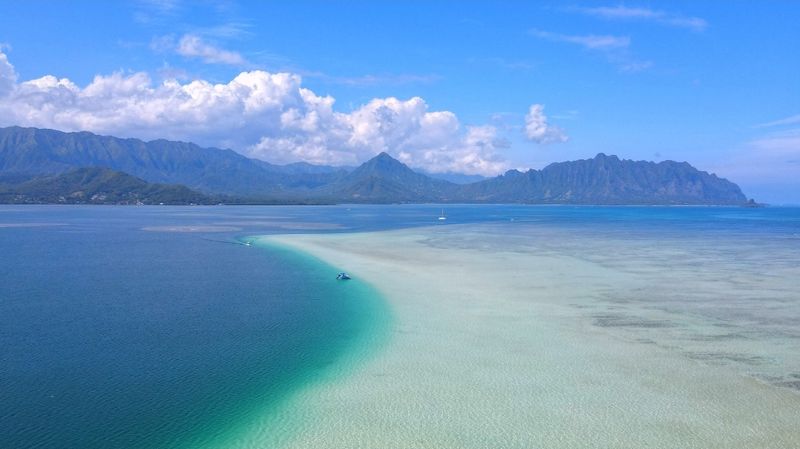
Out in the middle of Kaneohe Bay, a patch of seafloor rises high enough to stand on. Its name is Kaneohe Sandbar, and the reference address for this offshore scenic spot is 47-086 Kamehameha Hwy, Kaneohe, HI 96744, on the windward side of Oahu in Hawaii.
That address points to the shoreline area, not the sand itself. The sandbar lies roughly a mile and a half from shore, so nobody drives up to it.
Instead, people arrive by tour boat, private boat, kayak or stand-up paddleboard. The boat ride takes about 20 minutes, while a paddle out runs close to 30 minutes, depending on wind and stamina.
The listed website for the spot leads to the Hawaii Department of Land and Natural Resources Division of Aquatic Resources, a smart stop for ocean guidelines before any trip.
Once there, the payoff is refreshingly simple. A shallow island of sand sits in the bay with open water in every direction.
The Tide Chart Rules Everything
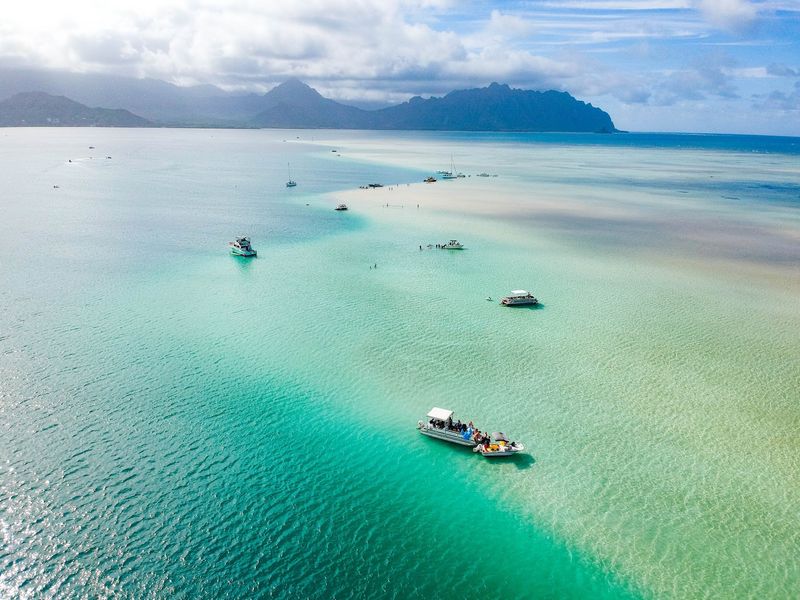
Timing is everything out here. The sandbar surfaces twice a day during low tide, and the rest of the time it rests under a layer of seawater.
Water depth changes throughout the day. On some trips the sand stays barely covered and people wade in ankle-deep water, while other outings find it closer to knee deep.
Even when the strip never fully breaks the surface, the shallow zone still works as a hangout. Kayakers have paddled out on days when it stayed submerged and still found plenty of room to stand and swim.
The smart move is checking a tide chart before booking a tour or launching a kayak. Show up during high tide and the famous shoal can seem to vanish entirely, leaving only open water and a slightly puzzled crew.
A low tide early in the day also unlocks another option closer to shore. That little bonus shows up later in this story, so keep scrolling.
Mountains, Islands and a Very Big Bay
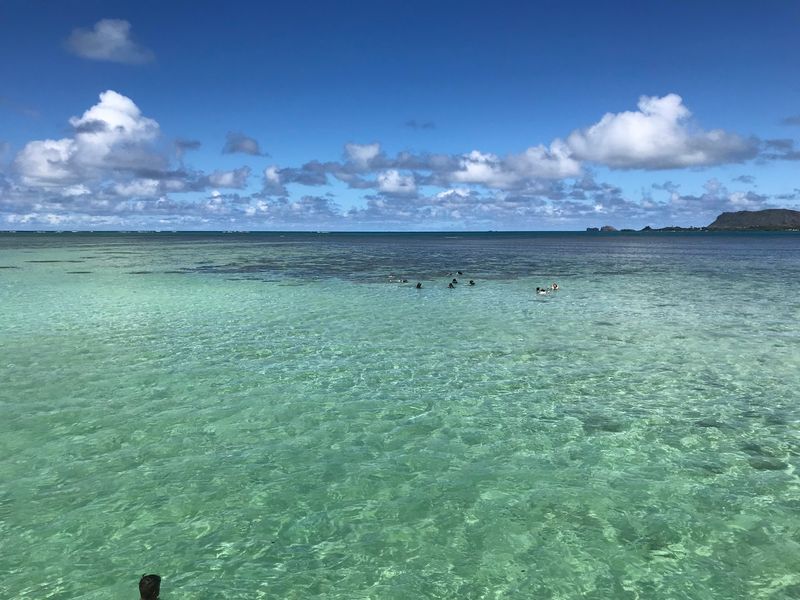
Few places on Oahu offer a view in every direction quite like this one. From the sand, the bay stretches toward massive green mountains that rise behind the windward shore.
Boat routes often pass Coconut Island on the way out, which gives the ride its own bit of scenery before anyone gets wet. Kapapa Island sits farther out in the bay and doubles as a handy landmark.
The water earns plenty of praise, often called emerald green or turquoise depending on the light. When clouds pass overhead, the look of the bay can shift within minutes.
Rain showers over the coastline are a common sight from out here. Some people have filmed storms soaking whole towns on shore while they stood out on the sandbar under open sky.
That distance is a big part of the charm. Standing on sand while the island sits far away delivers a private island feeling without the private island price tag.
The Coral Ring Behind the Calm
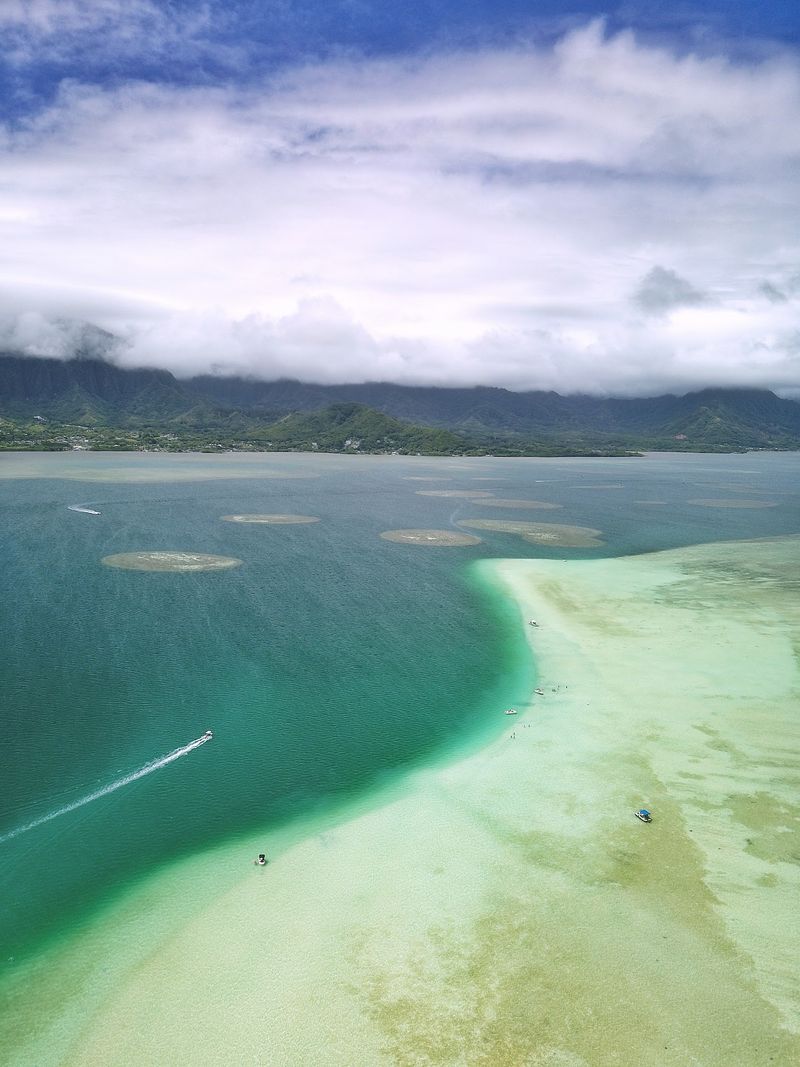
Here is a detail many first-timers miss: coral surrounds the sandbar. That ring of reef helps keep the nearby water calm and clear, which explains why the shallows stay so mellow compared to open ocean.
The coral also gives snorkelers a reason to wander. Deeper patches around the edges hold abundant coral and schools of fish, and some tours stop at a reef on the way out for extra underwater time.
Not every snorkel session hits the jackpot, though. Certain outings turn up only a handful of fish, so it pays to keep expectations flexible.
Healthy reef is fragile, and standing on it is a bad deal for both the coral and the feet. Stick to sandy patches whenever touching down.
Think of the reef as the quiet engine behind the whole experience. Treat it kindly, and it will keep doing its job long after the last boat of the day heads home.
Sea Turtles With Zero Stage Fright
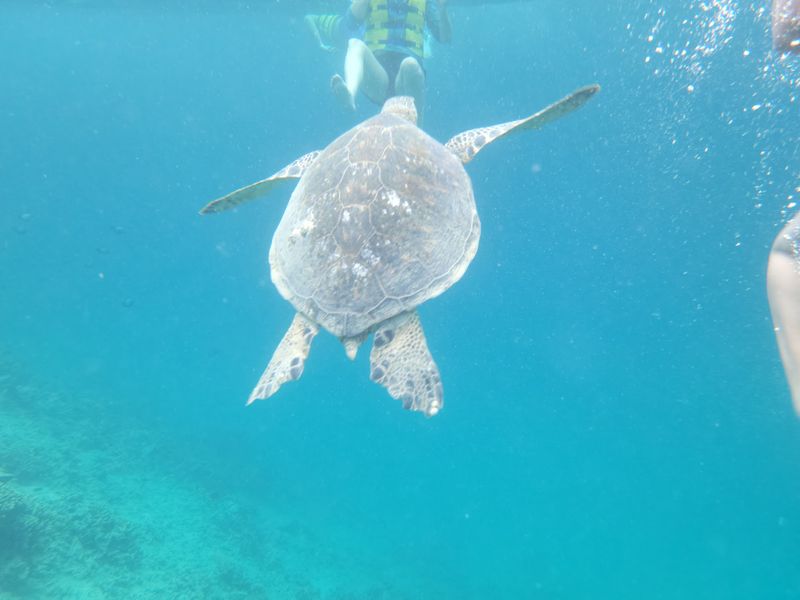
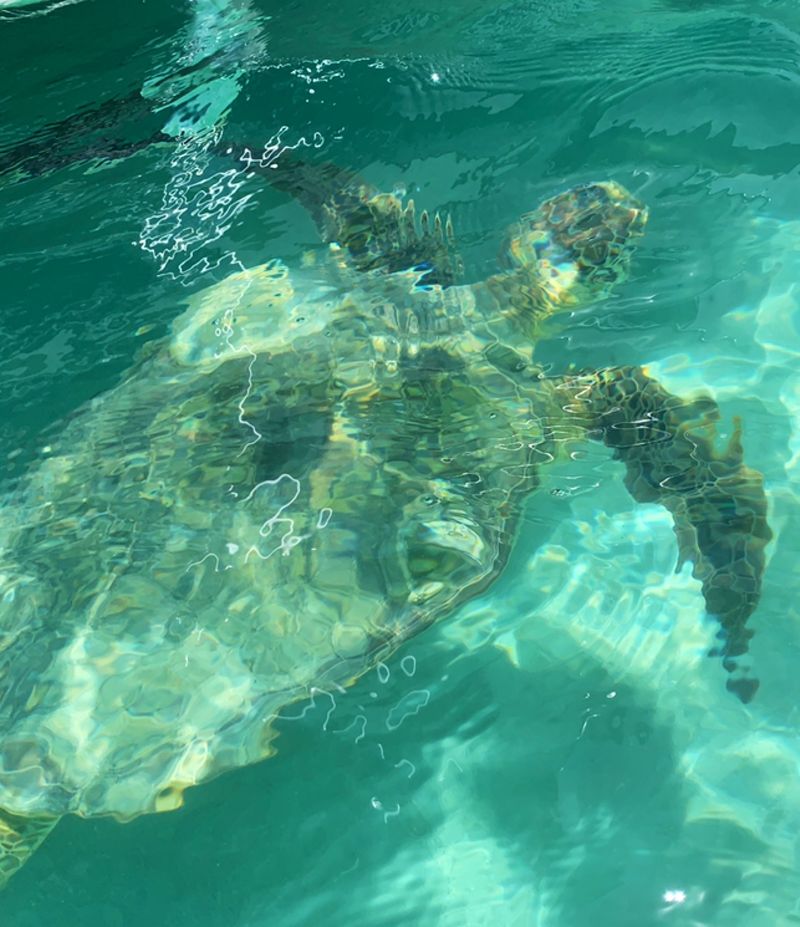
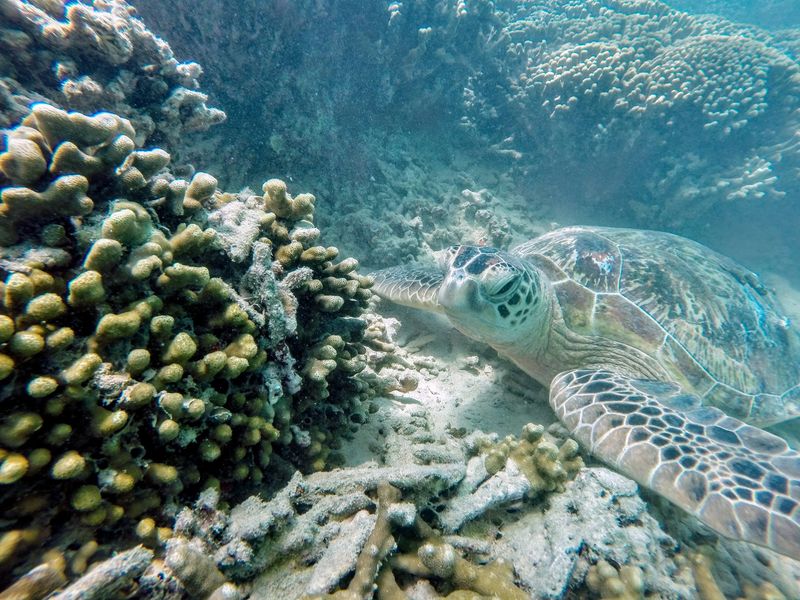
Ask anyone who has made the trip what stuck with them most, and sea turtles usually top the list. They show up often enough that turtle spotting is one of the main reasons day charters head out here.
Most sightings happen past the sandbar drop-off and in the slightly deeper parts of the reef. One group counted five or more turtles in a single hour, more than they spotted on an entire trip to the Great Barrier Reef.
Tour staff like to say that seeing a sea turtle brings good luck. Given how often they appear, the bay hands out a generous amount of it.
The turtles tend to swim or rest without much fuss about nearby snorkelers. Kayakers have even swum right alongside one that seemed completely unbothered.
Give them plenty of space anyway. A respectful distance keeps the encounter relaxed for everyone involved, shells included.
Where the Shallows Suddenly Stop
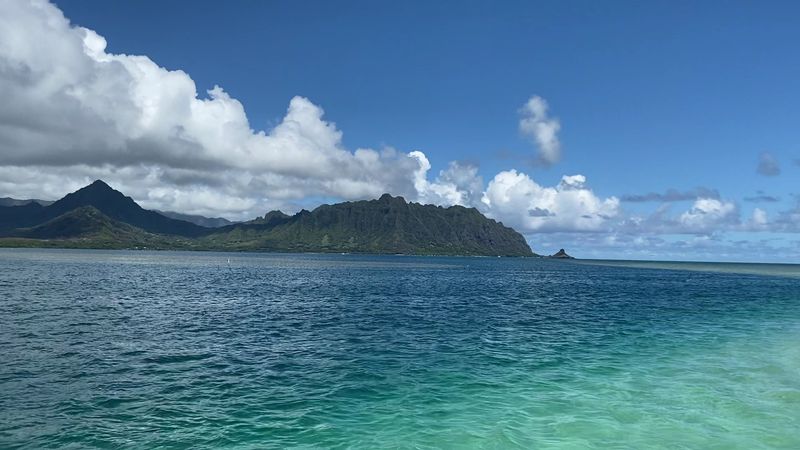
Knee-deep water one minute, deep blue ocean the next. That quick switch is the signature snorkel move at the sandbar, and guides usually lead groups a short swim away from the sand to reach it.
At the edge, the bottom drops off fast into deep water. Sunlight still reaches down far enough to light up fish below, and turtles often cruise along this zone.
For anyone who has never snorkeled over open deep water, the drop-off can feel intimidating at first. Staying close to a guide and wearing proper flotation makes it far more manageable.
Photographers should plan ahead. Water pressure can make phone screens hard to press, so an underwater camera or a housing built for the job saves a lot of frustration.
The contrast between the two zones is the whole appeal. One side works as a sandy lounge, and the other opens a window into the deeper bay.
Walking Around a Mile Offshore
There is something delightfully odd about strolling around so far from shore. Many people describe the experience as surreal, and it is hard to argue with them.
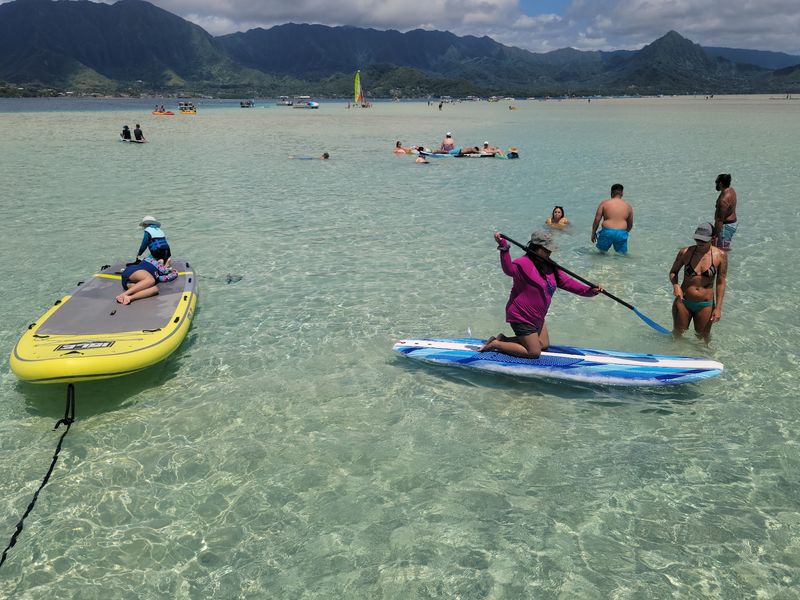
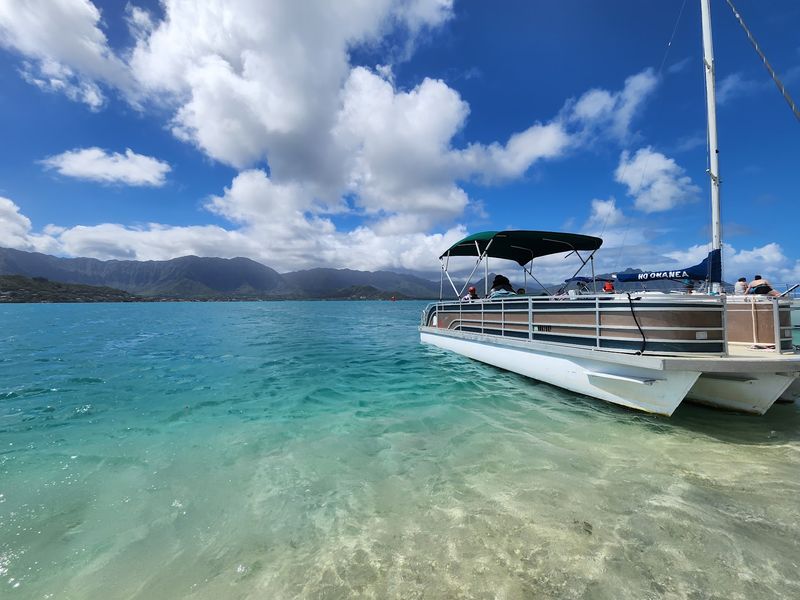
The water often sits around knee level, which makes the sandbar an easy place to wade, toss a ball or simply stand and soak up the view. Boats anchored in deeper water let swimmers jump and dive off the back before paddling over to the shallow middle.
Families get a lot out of the variety. Kids who are not keen on marine life can still have a great day splashing in the shallows, even on outings where no fish show up at all.
Some say the protected bay keeps it from feeling like the middle of the ocean. Others insist it feels exactly like standing on a tiny island.
Both camps land on the same conclusion. The views alone make the trip worthwhile.
Catamarans, Charters and Captains
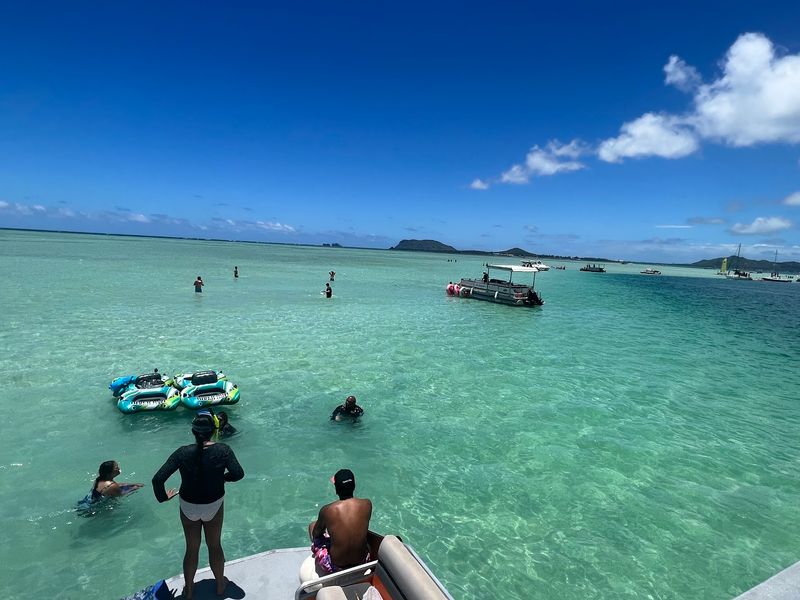
Most people reach the sandbar the easy way, aboard a tour. Because it sits a few minutes offshore by boat, getting there privately is tricky without your own vessel.
Options range from small boats to catamaran excursions that spend a couple of hours on site. Kaneohe Bay Ocean Sports and Captain Bruce are among the names regularly seen out here, and a handful of companies handle much of the business.
What comes with the ticket depends on the tour. Some packages add kayaking or snorkeling, while water toys like banana boats pop up in the mix too.
Crews get warm words for keeping the day relaxed and fun. Plenty of groups call the outing the highlight of their entire Hawaii trip.
Compare packages before booking. Time on the sand, snorkel stops and extras vary widely, and those details shape the day far more than the size of the boat.
Paddle Power and a Lone Island Target
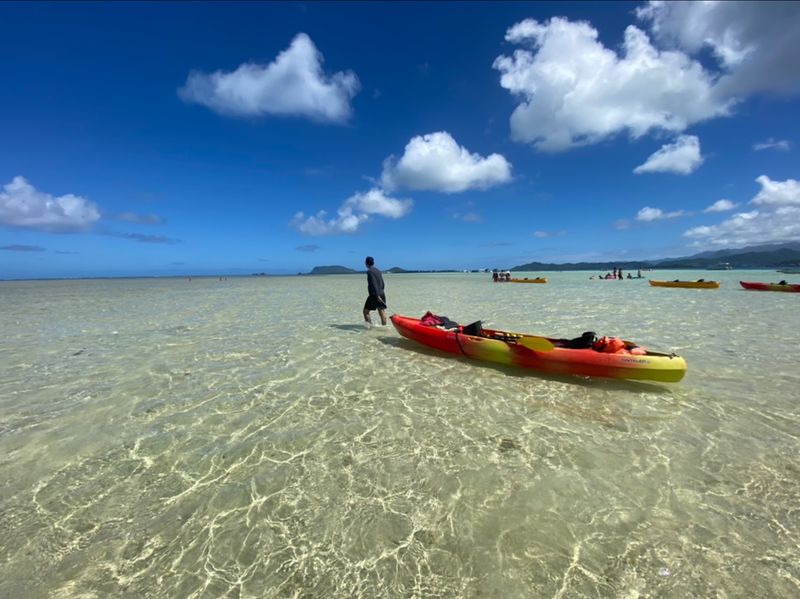
Arms ready? A kayak or stand-up paddleboard turns the trip into a self-guided adventure, and some regulars swear it beats the crowded tour boats.
One popular route starts near He’eia Kea Boat Harbor, with paddlers launching from the Kaneohe Canoe Club area. The real challenge is navigation, because from water level the sandbar is surprisingly hard to spot.
Aim for Kapapa Island. It sits out in the bay as a reliable target, while boats anchored closer to shore can act as decoys that pull paddlers off course.
Expect a genuine workout, especially in a tandem kayak or on a windy day. Wind can make the crossing tricky, and the trip takes about 30 minutes in decent conditions.
The reward arrives when the water color shifts to turquoise as the sand rises beneath the hull. That change signals arrival, and suddenly every stroke seems like a bargain.
Rental Gear and the Afternoon Deadline
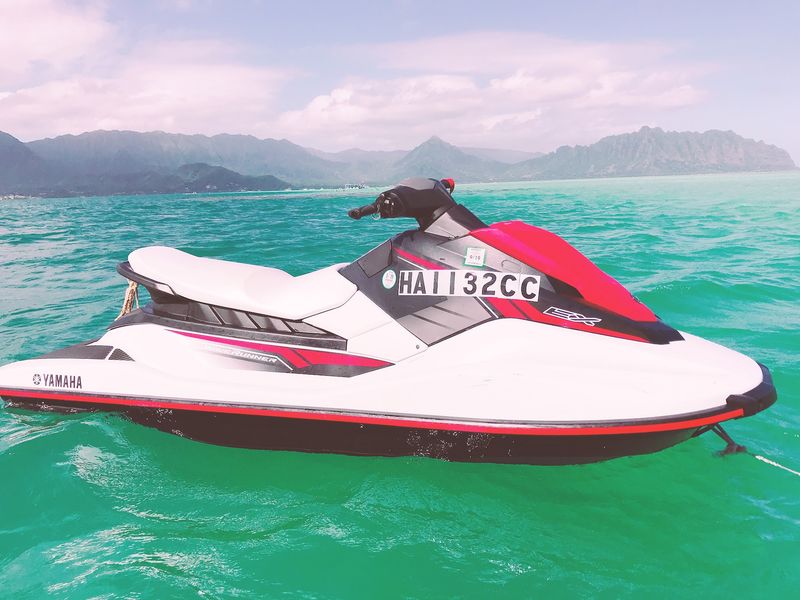
No boat, no problem. Rental outfits around the bay offer kayaks, paddleboards and even boats for groups who would rather set their own schedule.
Go Bananas is one shop that has strapped long kayaks with a skeg onto cars for the drive to the harbor. A skeg helps a kayak track straight, a useful perk on a breezy crossing.
Rental windows matter more than most people expect. On one group outing, gear went out around 1 p.m. and had to be back by 4:30 p.m., with extra charges for every half hour past that.
Policies can differ between shops and change over time. Confirm return times, fees and current prices directly with the rental company or tour operator before heading out.
Plan around both the tide and the drop-off deadline. Lining the two up means more hours on the sand and fewer frantic minutes racing the clock back to shore.
Party Boats or Peaceful Floats
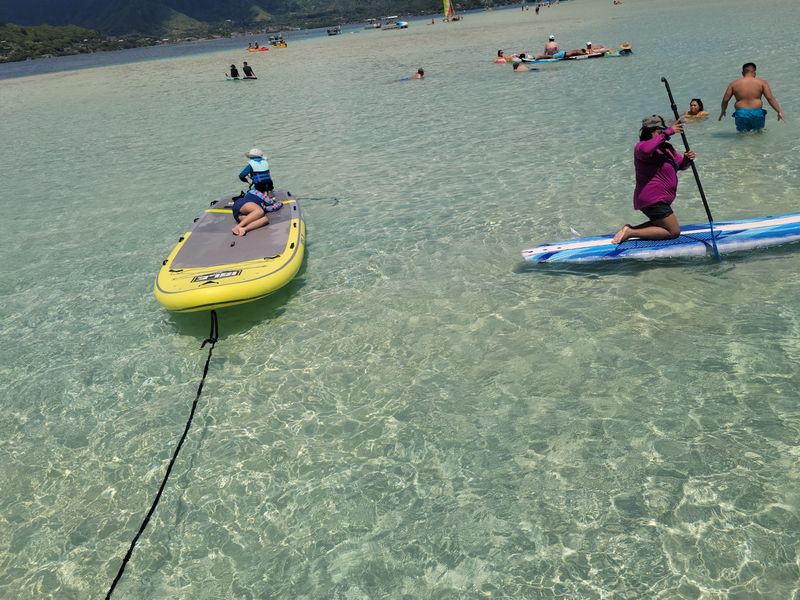
The mood on the sandbar depends heavily on the day. Some afternoons bring a lively crowd, including big boats hosting block parties and groups gathered around tables set up in the shallows.
Birthday celebrations, company get-togethers and friend groups all treat the spot as an open-air hangout. Games of catch, paddleboarding and plenty of snacks keep things social.
Crowds tend to build as the day goes on. Heading out earlier improves the odds of finding breathing room before the boats stack up.
For a calmer outing, arriving by kayak or SUP often means a quieter experience than stepping off a packed tour boat. Some regulars call the sandbar their go-to spot for rest and relaxation any time of year.
Couples, families, snorkel fans and social butterflies can all claim a slice of sand here. Success comes down to picking the right day, the right ride and the right tide.
A Rainy Week Rescue and a Free Backup Plan
Oahu weather does not always play nice. During stretches of near-daily rain, some beaches end up with brown water, yet the sandbar has saved more than one vacation for travelers still hoping to swim.
No tour booked? A budget-friendly option exists closer to land.
From the harbor and beach area, people have waded out at low tide until reaching coral, then snorkeled there for free.
The method is straightforward. Walk out past the seaweed until the coral appears, and on a low morning tide the water may only reach waist level, making the entire walk doable.
Shore snorkeling will not match the full sandbar trip, but it offers a taste of the bay without a boat. It also suits spontaneous plans when nothing was reserved ahead of time.
Watch conditions closely and never push beyond comfort. Out here, patience pays off far better than bravado.
The Packing List and the Leave-No-Trace Rule
Nothing is for sale out on the sand, so everything has to come along for the ride. A little planning separates a great day from a sunburned one.
Sunscreen leads the list, followed closely by a hat or cap. Plenty of drinking water and snacks keep energy up, especially for anyone paddling out under their own power.
Waterproof bags protect phones, keys and wallets from splashes. A change of clothes makes the ride home noticeably more comfortable.
Snorkel gear and a proper underwater camera setup round out the kit. Kayakers heading out solo should carry every safety device available, since the crossing can get lonely on a gray day.
Leaving no trace matters as much as packing well. Collect all trash and carry it back to shore to keep this shared spot respectful.
That small effort keeps the sandbar in good shape for the turtles and the next crowd.
Worth Chasing the Next Low Tide
Some attractions need a long list of selling points. This one needs only a low tide, a ride out and a generous layer of sunscreen.
The mix is hard to top on Oahu. Shallow sand for wading, reef edges for snorkeling, frequent sea turtle encounters and mountain views all share the same stretch of bay.
It is not a flawless fit for every expectation. Snorkeling can be hit or miss, crowds can swell, and paddling out takes real effort on windy days.
Still, plenty of people name it the best thing they did on the island and the first thing they recommend to friends. It also offers a welcome escape from the Waikiki bubble for anyone craving a more local-feeling day.
Check the tide, choose a ride and bring respect for the reef. The sandbar handles the rest, rising twice a day right on schedule.
Share this story