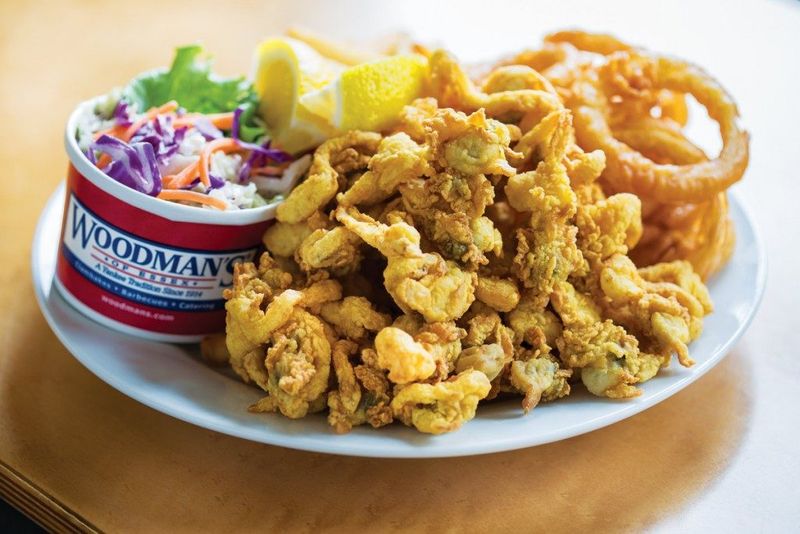
Somewhere along the North Shore of Massachusetts, a seafood restaurant has been serving fried clams the same way for over a century, and the story behind it is more interesting than any rumor about secret locations. Woodman’s of Essex, sitting openly at 119 Main Street in Essex, is the place food-curious locals and visitors keep returning to.
Its history goes back further than the 1920s, its address is no mystery, and the real draw is a documented family tradition that helped shape the way New Englanders think about fried clams. Getting the facts straight makes the story even better.
Woodman’s opened before the 1920s
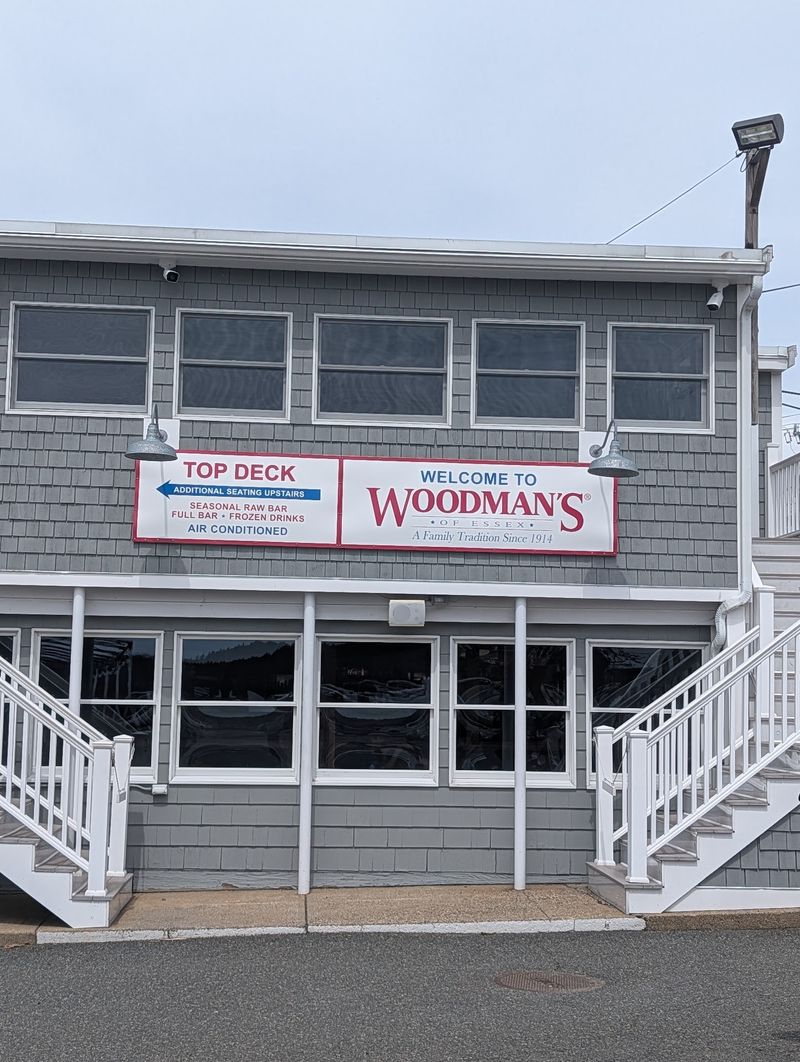
The timeline at Woodman’s starts earlier than most people expect. Lawrence “Chubby” Woodman and his wife Bessie opened their roadside stand in Essex in 1914, selling fresh clams, homemade potato chips, and other simple foods to travelers passing through the North Shore.
That founding date puts the business firmly in the years before World War One, well ahead of the 1920s framing that sometimes attaches itself to the restaurant’s legend.
Woodman’s documented history makes the 1914 opening clear and describes the stand as a modest operation suited to the roadside commerce of its era. Chubby had experience digging and selling clams, and the stand gave him a way to sell directly to customers who were beginning to travel the roads of Essex County by automobile.
Homemade potato chips were an early specialty, fried in the same equipment that would later play a role in the restaurant’s most famous story.
Calling the current Woodman’s an unchanged tiny shack would miss what actually happened over the following century. The business grew from that roadside operation into a larger seafood restaurant with a full menu, catering services, and a regional identity that draws visitors from well beyond Essex.
The casual, no-frills character of the original stand is still part of the atmosphere, but the scale is considerably larger.
Correcting the 1920s date is not a small detail. It shifts the restaurant’s story from a Prohibition-era curiosity to a pre-World War One enterprise, which changes how its longevity reads.
A business that has been operating since 1914 has survived two world wars, the Great Depression, and more than a hundred New England winters, which is a more striking fact than any rounded decade would suggest.
The July 1916 frying experiment
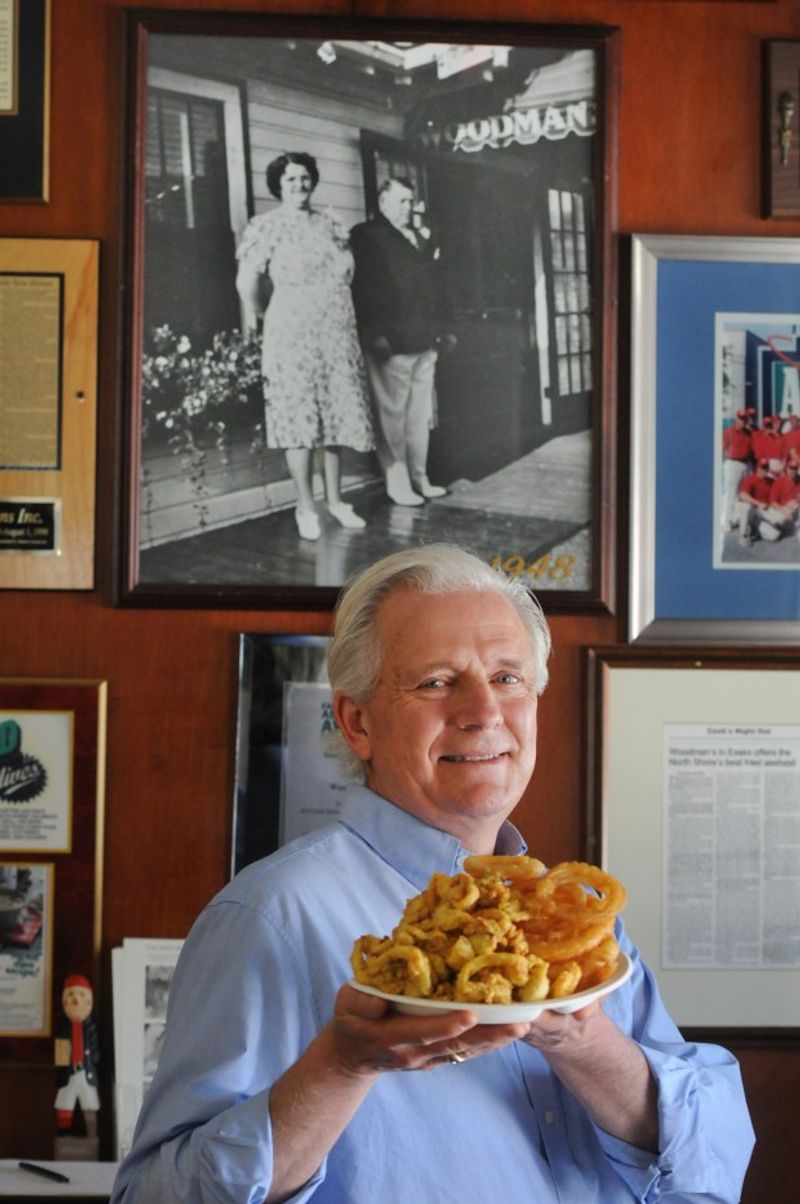
The story Woodman’s tells about the birth of its fried clam centers on a single afternoon: July 3, 1916. According to the family’s account, a local fisherman named Lawrence “Chubby” Woodman was at the stand when someone, in a joking spirit, suggested that the clams sitting nearby should go into the same fryer used for potato chips.
Chubby took the suggestion seriously, shucked the clams, coated them, and dropped them into the hot lard.
Woodman’s account of that day describes the result as an immediate success with customers who were present at the stand. The preparation used a corn-based coating and lard for frying, a combination the family says has remained central to the recipe ever since.
The anecdote has become so embedded in the restaurant’s identity that July 3rd carries a kind of unofficial significance for fans of the North Shore tradition.
What the story does not establish, and what the restaurant does not need to claim, is that no one anywhere had ever fried a clam before that afternoon. Cookbooks and culinary records from earlier decades describe fried-clam preparations, which means the honest version of the Woodman story is about creating a particular style rather than inventing the concept from scratch.
The family’s account is a restaurant and family claim, vivid and specific, and it deserves to be understood as that rather than as a universally verified historical event.
The anecdote works precisely because it is specific. A named date, a named person, a joking suggestion, and a fryer full of lard make the story feel real and grounded in a particular moment on the North Shore.
Whether or not every detail is precisely as described, the account has shaped how Essex and its clam tradition are remembered across New England.
What Woodman’s says it still does the same way
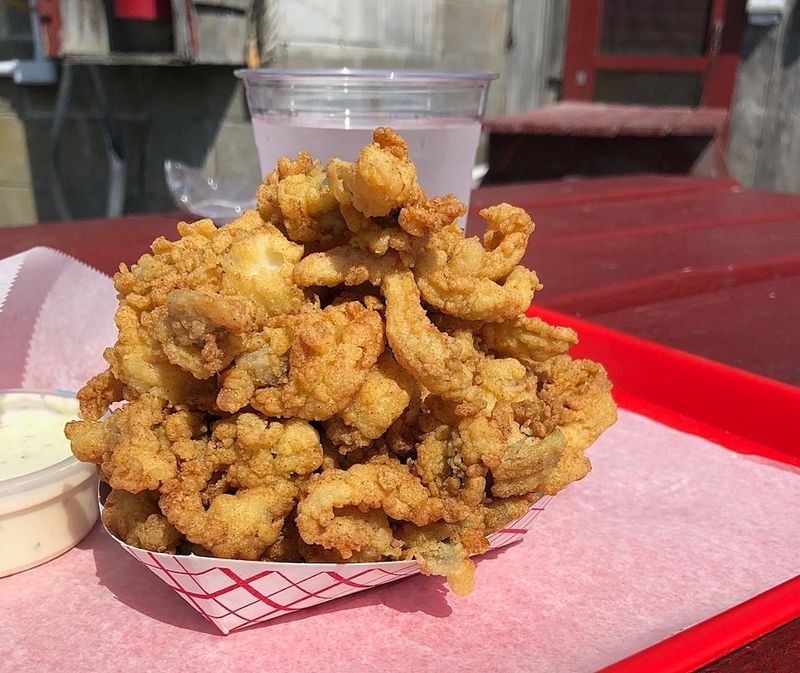
The clams at Woodman’s are soft-shell clams, the variety most people around here call steamers. They arrive shucked, receive a coating of corn flour, and go into a fryer filled with lard.
That description comes from the restaurant’s own menu and history pages, and it is the clearest public account of what the preparation actually involves. Woodman’s current menu information confirms that all fried items are cooked in lard, which distinguishes the preparation from restaurants that use vegetable oil or shortening.
Historic New England’s exhibition on clamming along the Massachusetts North Shore identifies the clams as soft-shell varieties and describes the Woodman method as dipping or rolling the clams in a corn-based coating before frying. That independent description adds weight to the family’s account without turning the restaurant’s claim into a laboratory-verified fact.
The two sources agree on the key elements: soft-shell clams, corn coating, lard.
The continuity claim, that five generations of the Woodman family have continued frying clams the same way Chubby and Bessie did, comes from the restaurant and family. A PBS program and Historic New England have both referenced the recipe’s enduring importance, which gives the claim more historical grounding than most restaurant origin stories receive.
Still, “the same way” is a phrase that deserves a little care.
No public archival record or laboratory analysis has confirmed that every ingredient ratio, coating thickness, frying temperature, and production detail has remained perfectly identical since 1916. What the historical support establishes is that the recipe has been central to the restaurant’s identity for a very long time, and that the core elements, soft-shell clams, corn-based coating, lard, appear consistently across sources.
Woodman’s own history page frames continuity as a point of family pride, which is the most accurate and honest way to read the claim.
Why Woodman’s is widely credited with popularizing the modern New England fried clam
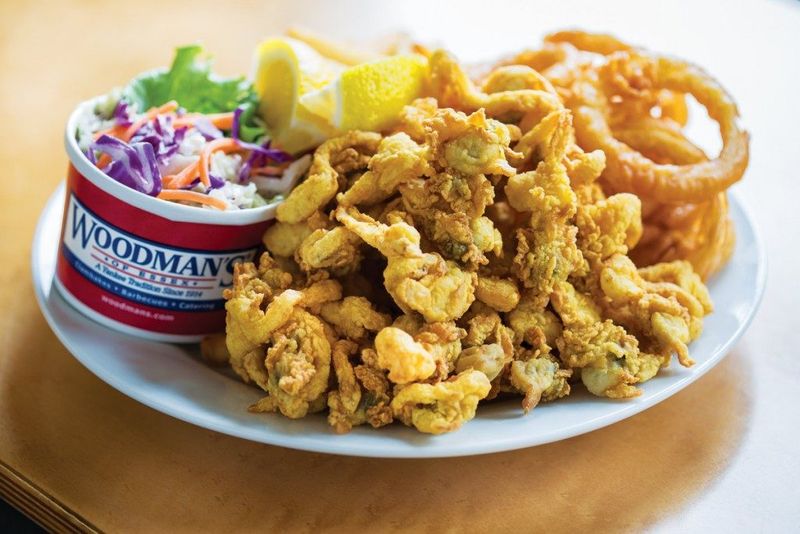
Crediting Woodman’s with popularizing the modern New England fried clam is accurate and defensible. Calling it the inventor of fried clams, full stop, requires a qualifier.
Historic New England notes that cookbooks from the 1840s describe fried-clam preparations, which means people were frying clams decades before Chubby Woodman picked up a shucking knife in 1916. The distinction matters because it changes what kind of achievement the 1916 story actually represents.
What Woodman’s appears to have done is develop and popularize a specific style: whole soft-shell clams, corn-based coating, fried in lard, served at a roadside stand on the North Shore. That style became closely associated with Essex, spread through the region, and eventually became what most people picture when they hear the phrase “New England fried clam.” That is a meaningful contribution to regional food culture, and it does not require overstating the case.
A Boston Globe investigation into who can claim the first fried clam found the question genuinely complicated, with competing accounts and earlier documentary evidence making a clean “first” difficult to assign. The Woodman family’s story is among the best-documented and most specific accounts, which helps explain why it has become the standard reference point even if it cannot be called the absolute origin.
For readers, the practical takeaway is that Woodman’s role in the fried-clam tradition is real and historically significant, just more nuanced than a simple “they invented it” headline. The restaurant helped define a regional style that has become a point of New England identity, and that is a more interesting story than a contested first anyway.
The best-clam question has no objective winner
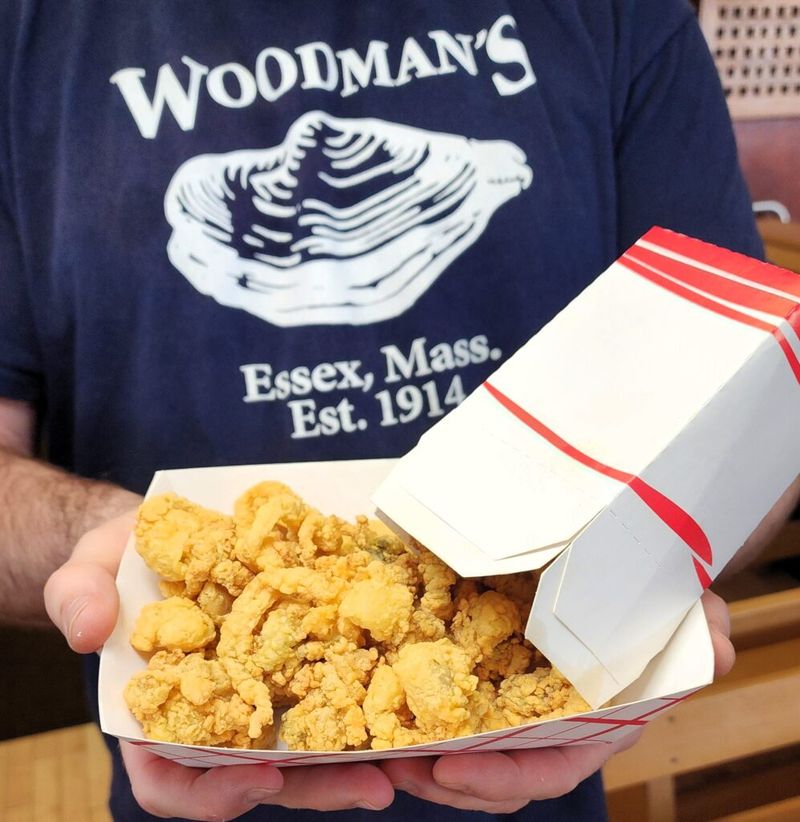
Ask ten North Shore regulars where to get the best fried clams in Massachusetts and you will likely get at least four different answers delivered with complete confidence. Woodman’s comes up often, but so does the Clam Box in Ipswich, which has its own devoted following and its own claim to North Shore authenticity.
Other restaurants in Essex, Gloucester, and along the Cape also appear regularly when locals start comparing notes.
Boston.com reader surveys on the best fried clams in Massachusetts consistently show Woodman’s among the top responses, reflecting genuine popularity among the readers who participate. Those same surveys also reveal the breadth of local opinion, with readers nominating spots from the South Shore, Cape Cod, and beyond.
Reader polls capture enthusiasm, not a measured statewide ranking, and the difference is worth keeping in mind.
More recent Boston.com coverage from 2023 continued to show Woodman’s as a prominent name while reinforcing that local preferences vary by neighborhood, by what someone grew up eating, and by how much they value a particular style of coating or clam size. Crispness, belly size, coating thickness, and saltiness all enter the conversation, and reasonable people weigh them differently.
A 2021 roundup of reader-recommended fried clam spots listed more than a hundred locations across the state, which gives a sense of how seriously Massachusetts takes this particular food debate. Woodman’s reputation is strong and earned, but the title of “best” or “crispiest in the state” belongs to whoever is eating the clam at that moment, on that afternoon, at their favorite table.
A larger restaurant carrying a roadside tradition
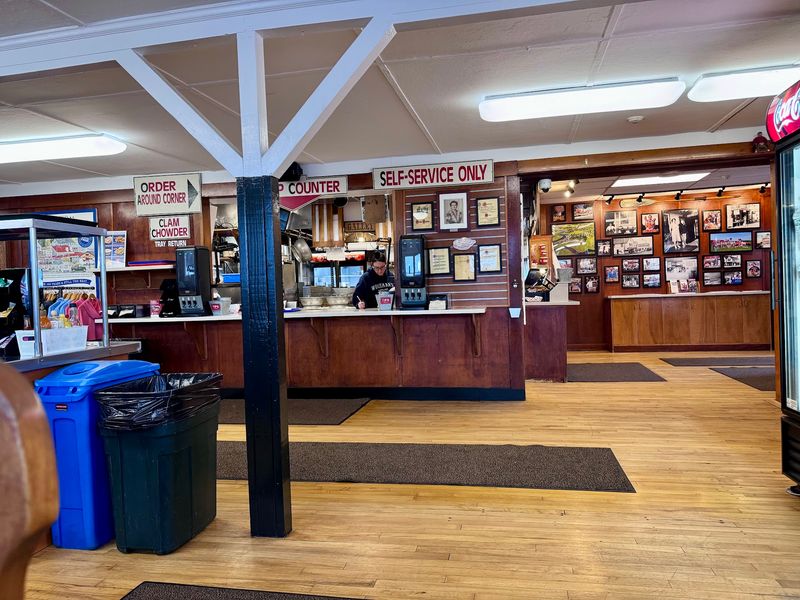
Woodman’s today is not the modest roadside stand that Chubby and Bessie operated in 1914. The business has grown into a full-service seafood restaurant with a broad menu that extends well beyond fried clams to include lobster, chowder, fish and chips, and other North Shore staples.
Calling it a shack is really a nod to its origins and the casual, counter-service spirit it has retained, not a description of its current physical scale.
Woodman’s history describes a business that has expanded across generations while keeping the family name and the founding family’s cooking philosophy at its center. That combination of growth and continuity is part of what makes the restaurant interesting to food historians and casual visitors alike.
A lot of roadside stands from 1914 simply no longer exist.
On the menu side, Woodman’s current menu notes that its fried offerings are prepared in lard and lists gluten-free fried clams as an option. Customers with food allergies or dietary restrictions are instructed to notify staff before ordering, because menu items and preparation controls can vary and cross-contact is a real consideration in a busy restaurant kitchen.
That guidance comes directly from the restaurant and should be taken seriously by anyone with a shellfish allergy or gluten sensitivity.
Prices, seasonal hours, and specific ordering details are not included here because those details change and should be verified directly with the restaurant before a visit. What stays consistent is the general character: a casual, family-run North Shore institution where the fried clam tradition started more than a century ago and where the lines on a summer afternoon tell you something about how seriously people take their seafood around here.
Enjoy the tradition without taking shellfish risks
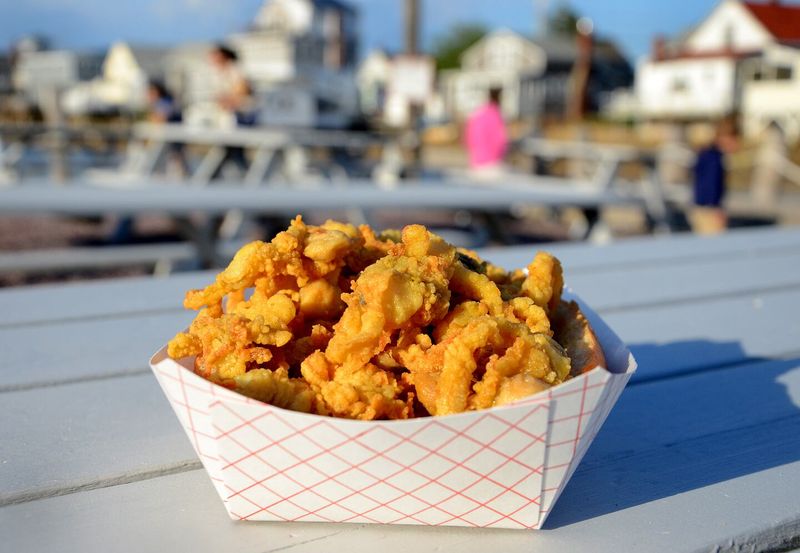
Fried clams taste best when the clams themselves were handled correctly from the moment they left the water. Buying shellfish from a licensed, approved source is the first and most important step, whether you are ordering at a restaurant or picking up clams at a fish market.
FDA guidance on selecting and serving fresh seafood recommends purchasing from reputable dealers, keeping shellfish properly chilled, and cooking it thoroughly before eating.
Massachusetts adds an additional layer of concern that anyone eating local shellfish should understand. The Massachusetts Division of Marine Fisheries explains that red tide events can cause paralytic shellfish poisoning, a serious condition caused by toxins that accumulate in shellfish feeding in affected waters.
Critically, those toxins are not reliably destroyed by cooking. Frying a clam at high heat does not make it safe if the clam came from a closed or contaminated area.
That is why harvesting shellfish from arbitrary shoreline spots is genuinely risky, even for experienced diggers. Massachusetts regularly closes shellfish beds in response to water quality issues, pollution, or harmful algal blooms, and the closures are not always obvious to someone walking the flats.
FDA safe food handling principles emphasize sourcing from approved suppliers as a foundational step, not an optional precaution.
For readers who want to enjoy fried clams at home, the practical path is straightforward: buy from a licensed dealer, keep the clams cold, cook them fully, and check with the Massachusetts guidance on eating fish safely if you have questions about local sourcing. Woodman’s and other established North Shore restaurants handle approved sourcing as a matter of course, which is one practical reason why ordering at a reputable spot is a reliable choice.
The real secret is a tradition in plain sight
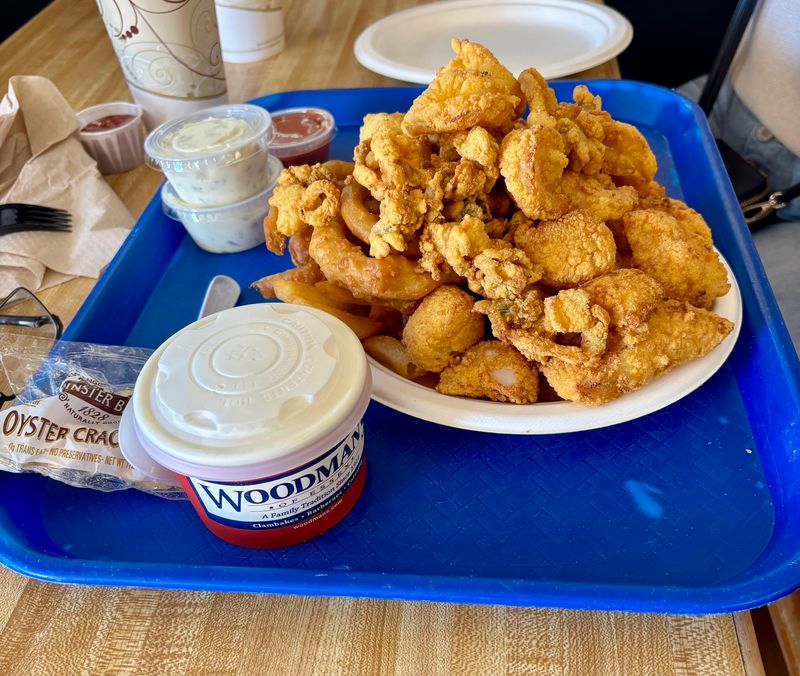
Woodman’s of Essex is not a secret, and its appeal does not depend on being one. The address is 119 Main Street in Essex, the founding date is 1914, and the restaurant dates its signature fried-clam method to July 3, 1916, not the 1920s.
Those are the facts the family and the historical record support, and they are more compelling than any invented mystery.
What Woodman’s history and Historic New England’s North Shore clamming exhibition together describe is a restaurant that helped shape a regional food tradition, maintained a publicly documented cooking method across five generations, and became a reference point in the ongoing Massachusetts debate over who makes the best fried clam. The recipe continuity is a family claim supported by historical sources, not a laboratory-certified fact, but that qualification does not make the tradition less real.
Local readers keep naming Woodman’s because the experience holds up, not because the location is hidden. The real draw is a century-old story told in corn coating and lard, served out of a building on a road in Essex that anyone with a map can find.
Sometimes the best-kept secret is the one that was never a secret at all.
The public address behind the fried-clam legend
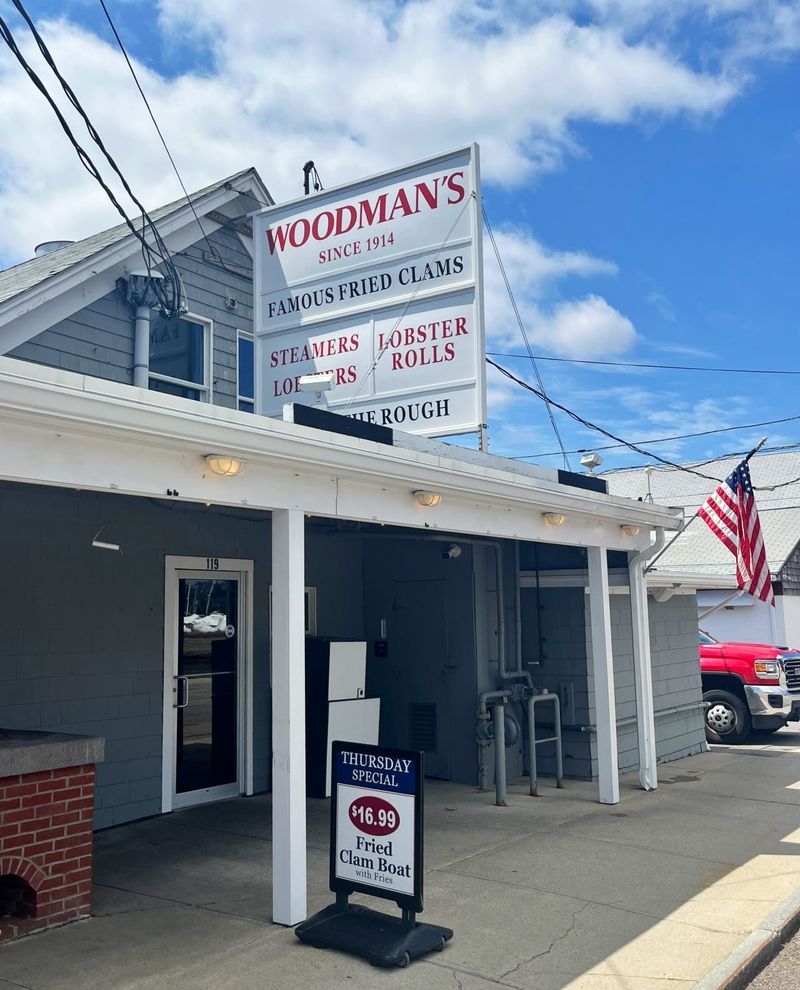
Woodman’s of Essex sits at 119 Main Street in Essex, Massachusetts, and has never been a secret. The address is public, the history is documented, and the restaurant has been covered by local media, food writers, and historians for decades.
What makes it worth knowing about is not a mystery location but a genuine North Shore reputation built over more than a century of frying clams.
According to Woodman’s own account of its history, the business traces its roots to a roadside stand opened by Lawrence “Chubby” and Bessie Woodman in 1914. That stand grew into the restaurant that stands today, and the Woodman family has continued to operate it across multiple generations.
The location, the founding family, and the basic story are all part of the public record.
The more useful question for a reader is not where Woodman’s is hiding, but why it keeps coming up in conversations about the best fried clams in Massachusetts. Reader surveys and local coverage consistently place it among the top names on the North Shore, though the debate over which restaurant actually serves the finest clams is lively and unresolved.
Boston.com reader recommendations regularly include Woodman’s alongside other beloved Essex-area spots, reflecting genuine regional loyalty rather than a single winner.
Separating public fact from family lore and customer opinion is the most honest way to appreciate what Woodman’s actually represents. The restaurant is a real, well-known institution with a documented origin story, a publicly described cooking method, and a place in the broader history of New England seafood.
That combination is worth understanding on its own terms, without the embellishment of invented secrecy or unsupported superlatives.
Share this story