There is a garden in Portland, Oregon, that stops people mid-step the moment they walk through the gate. Rhododendrons in shades of deep pink, lavender, and fiery red tower overhead, some nearly as tall as small trees.
Wooden bridges arch over glassy ponds, bald eagles circle above, and ducks waddle across the paths like they own the place. Crystal Springs Rhododendron Garden has earned a spot among America’s best gardens, and after spending an afternoon there myself, I completely understand why.
Keep reading to find out what makes this place so special and why it deserves a top spot on your travel list.
Where to Find This Portland Treasure
Tucked into a quiet southeast Portland neighborhood, Crystal Springs Rhododendron Garden sits at 5801 SE 28th Ave, Portland, OR 97202, right along the edge of Eastmoreland Golf Course. The address sounds ordinary, but nothing about the place is.
I had done a little research before heading over, so I knew parking would be tight. The on-site lot holds roughly 10 to 15 cars, which fills up fast on weekends.
Most visitors, myself included, end up street parking nearby on SE Martins or another side street and walking a few blocks to the entrance.
The walk itself is worth it because the anticipation builds with every step. The garden is open Tuesday through Sunday, with Monday hours also available from 10 AM to 4:45 PM, though Wednesday hours start at 1 PM.
You can reach the garden by phone at +1 503-267-7509 or visit their website at crystalspringsgardenpdx.org to plan ahead. Arriving early on a weekday gives you the best chance of a calm, crowd-free experience that feels almost private.
A Garden With a Story Worth Knowing
Crystal Springs Rhododendron Garden has been growing its reputation since the 1950s, when the American Rhododendron Society began developing the site in partnership with the City of Portland. What started as a dedicated test garden for rhododendron species has expanded into one of the most celebrated specialty gardens on the West Coast.
The garden now holds more than 2,500 labeled plants, many of which carry their own official names. One of the things I found genuinely charming was discovering that so many of the rhododendrons have been individually named.
There is something unexpectedly personal about reading a small tag and learning that the enormous magenta bloom beside you has its own identity.
The site was nominated as one of America’s best gardens, a recognition that reflects decades of careful curation and horticultural dedication. The garden is managed by the Crystal Springs Rhododendron Garden Foundation, which works closely with the city to keep standards high.
That partnership shows in every pruned path and every thoughtfully placed bench that invites you to pause and actually absorb what you are looking at.
The Blooms That Make Jaws Drop
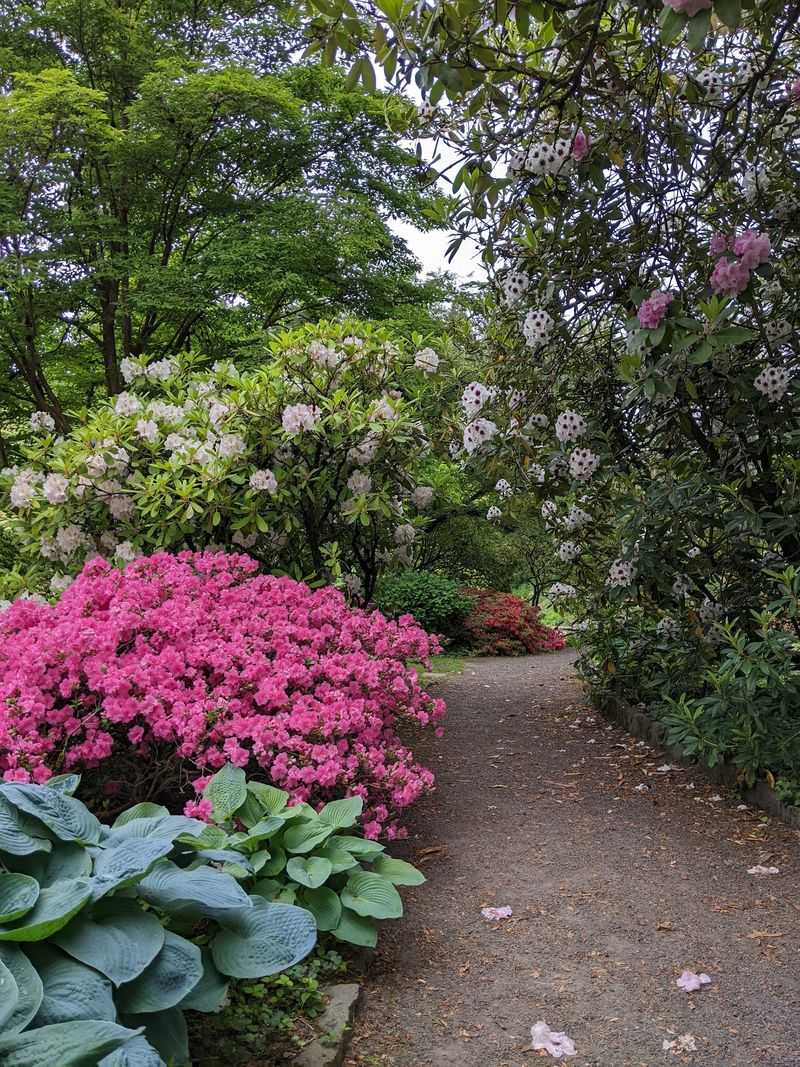
Nothing quite prepares you for the color. I visited in early May, and the rhododendrons were at full peak bloom.
The variety on display is genuinely staggering, with colors ranging from soft blush white to deep burgundy and every shade of coral, orange, and violet in between.
Some of the plants have grown so tall they form canopies overhead, turning certain paths into tunnels of living color. I kept stopping to take photos, not because I planned to, but because my feet simply refused to keep moving past certain spots without pausing.
Early May tends to be the sweet spot for peak bloom, though the garden offers color from early spring through early summer as different varieties take their turn. Visiting in late April or the first two weeks of May gives you the best chance of catching the widest variety at once.
Ducklings also tend to appear during this window, which adds an entirely different layer of charm to the experience. The combination of towering blooms and tiny waddling ducklings is, frankly, an unfair amount of beauty concentrated in one place.
Water Features That Set the Mood
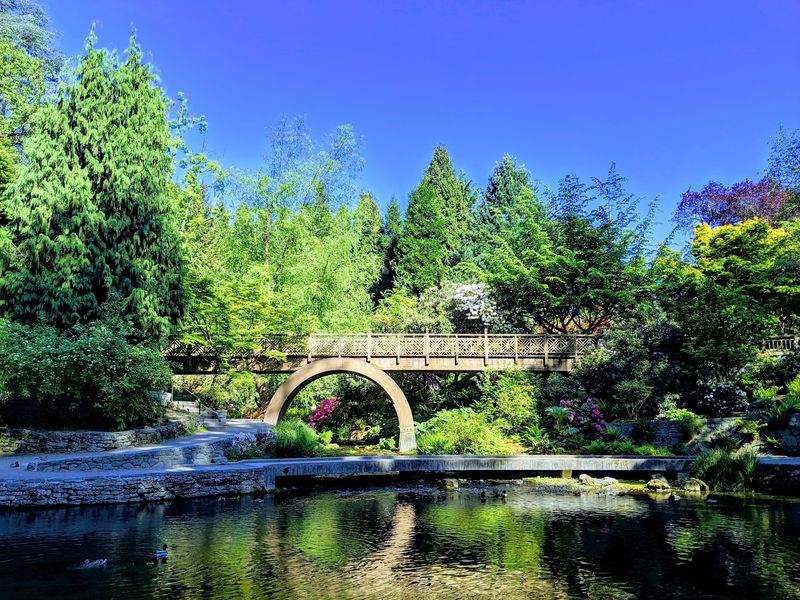
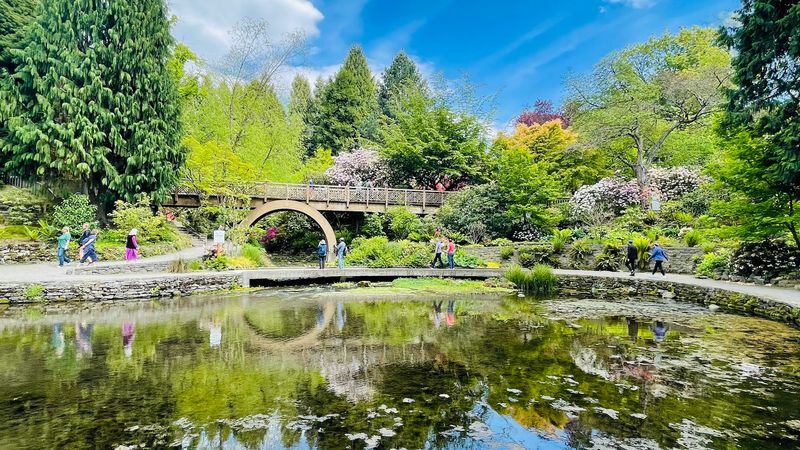
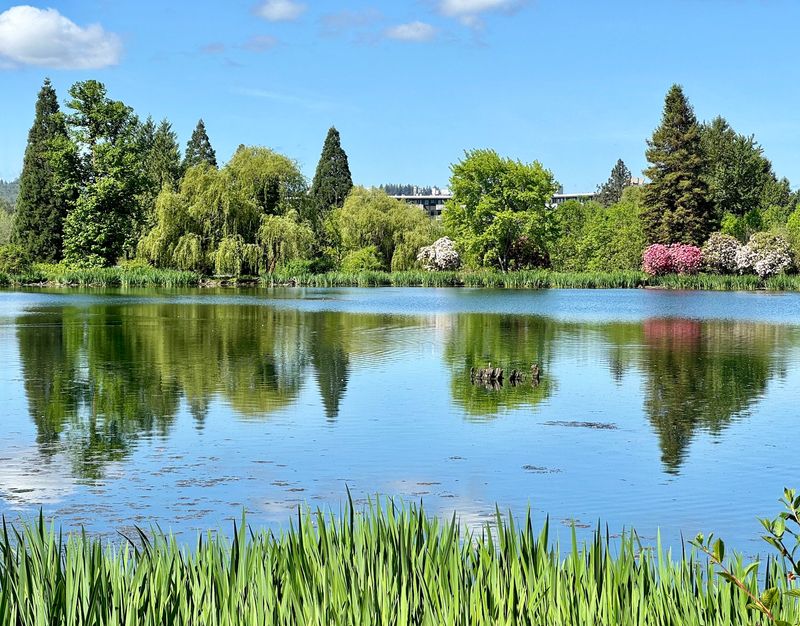
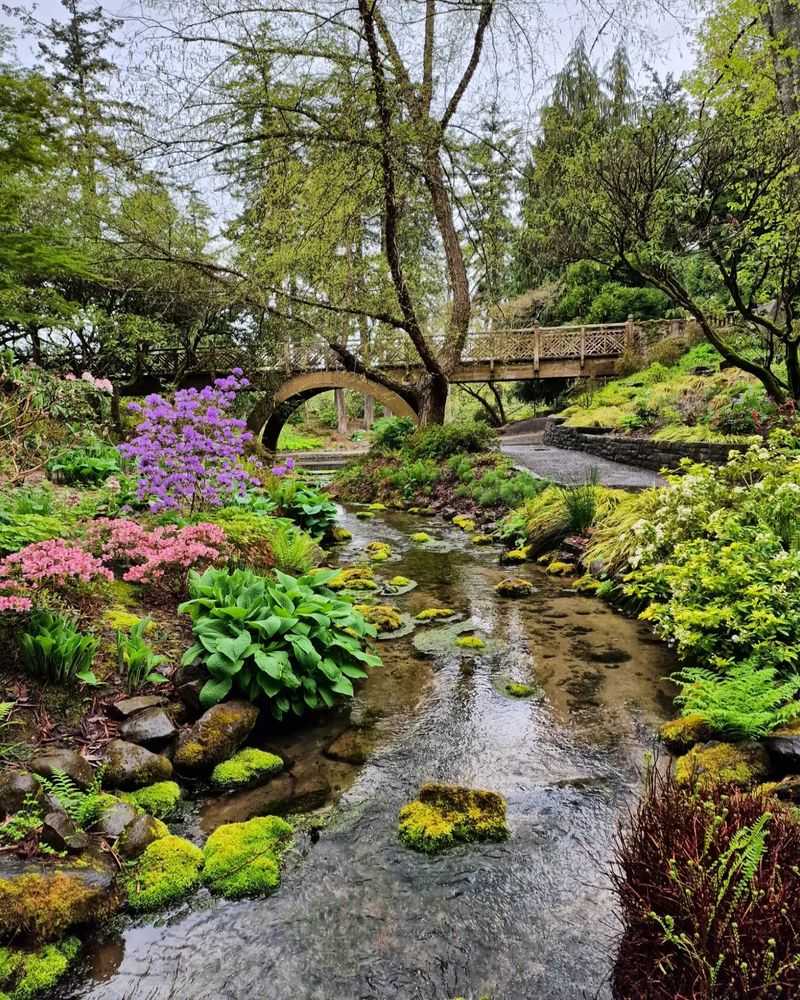
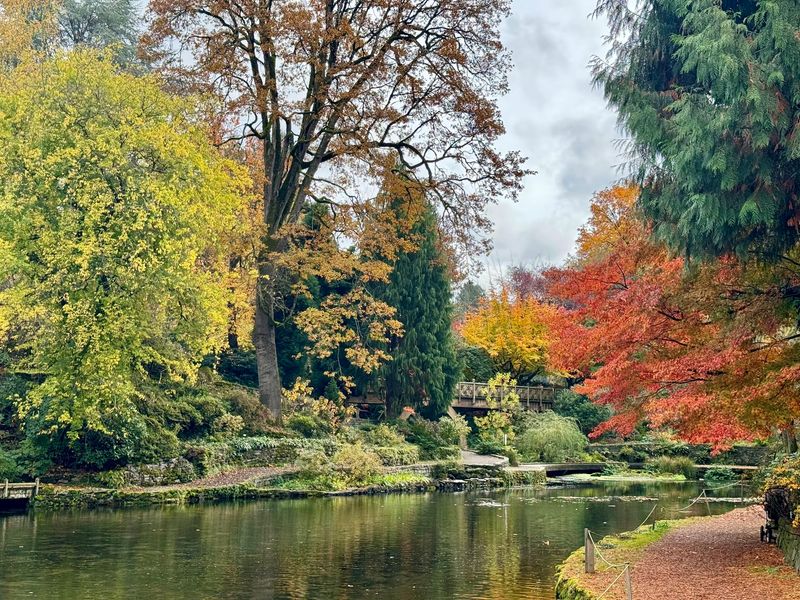
The water is everywhere at Crystal Springs, and it is a big part of what gives the garden its distinctive atmosphere. Ponds, small waterfalls, and flowing channels wind through the property, creating a constant soft background sound that makes the whole place feel calmer than the city surrounding it.
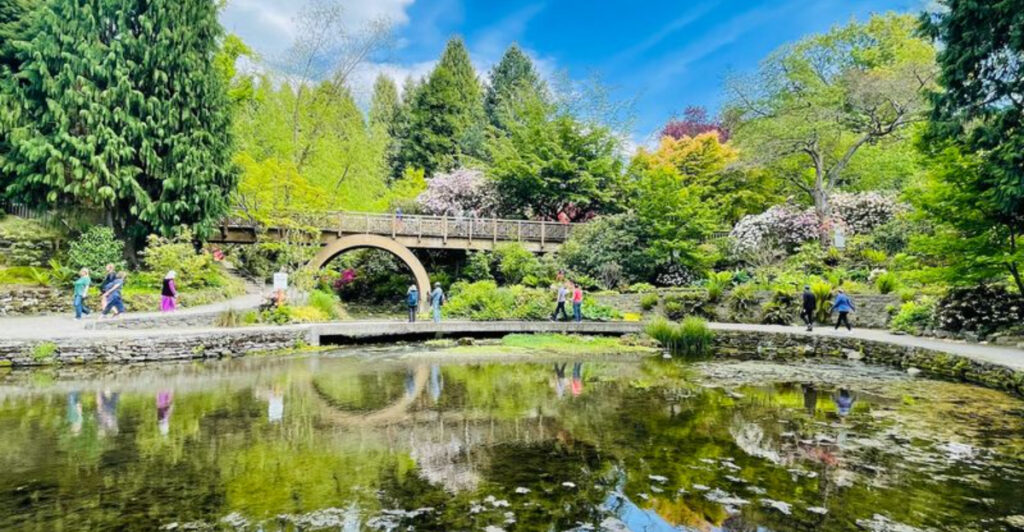
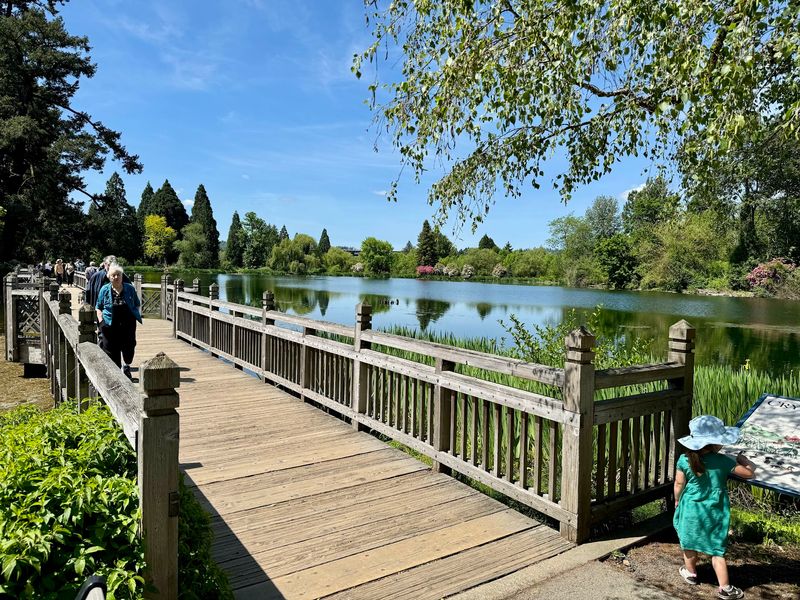
The wooden bridges are standout features on their own. One bridge with a circular arch creates a near-perfect geometric reflection in the water below, and it is clearly a favorite photo spot.
I watched at least a dozen people stop on that bridge during my visit, all of them holding up their phones at the same angle, all of them completely justified in doing so.
The water features also attract wildlife in a very direct way. Ducks nest along the banks, geese patrol the pond edges with absolute confidence, and nutria, which look like a cross between a beaver and a very large rat, can often be spotted resting on logs near the water.
The interaction between the manicured garden plantings and this casual, unbothered wildlife gives the whole space a layered, lived-in quality that no purely formal garden can replicate.
Wildlife You Did Not Expect to See
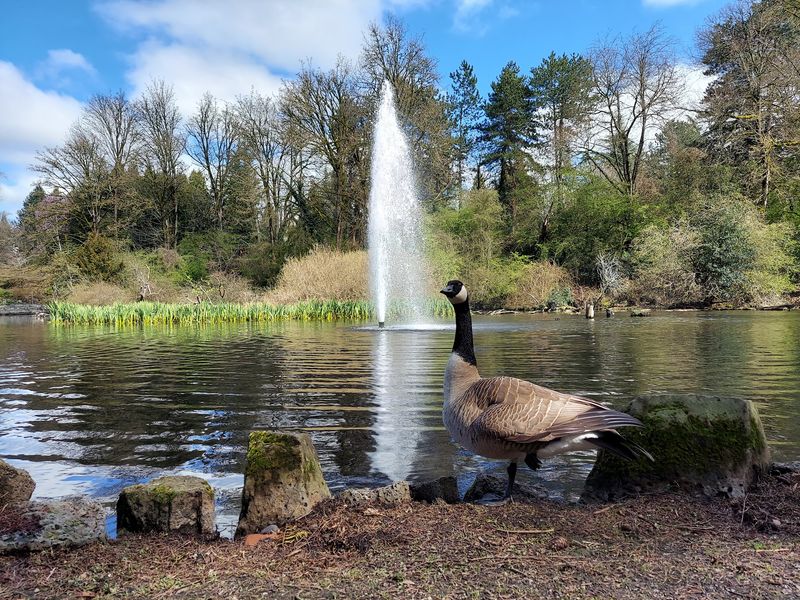
A botanical garden is not usually where you expect to spot a bald eagle, yet Crystal Springs has a resident pair that nests on the property. During my visit, I saw one of them glide overhead with that slow, effortless wing spread that makes everything else seem to pause for a moment.
The garden also has an active population of Canadian geese, which nest throughout the grounds and seem entirely unbothered by human visitors walking a few feet away. Nutria are another surprisingly common sighting, often lounging on logs at the water’s edge.
I had never seen one before, and the first glimpse genuinely made me stop and stare.
Ducks are the most plentiful residents, with well over 200 mentions in visitor reviews, which tells you something about how central they are to the experience. Muskrats, beavers, and a wide variety of songbirds also make appearances depending on the season.
The wildlife density here is remarkable for an urban garden, and it adds a spontaneous, unscripted quality to every visit. You never quite know what will be sitting on the next log or circling above the next pond when you turn a corner.
Trails, Benches, and the Art of Wandering Slowly
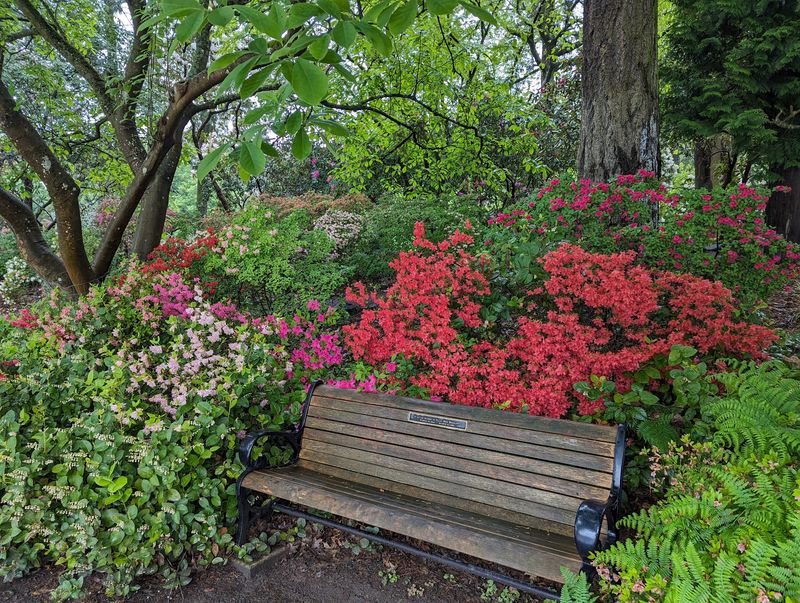
The trail layout at Crystal Springs is one of its quieter strengths. The paths meander in a way that feels intentional rather than random, consistently revealing new views just around each bend.
Even when the garden is busy, the winding layout distributes visitors naturally so it rarely feels crowded in any single spot.
Benches appear at almost every turn, and they are not just practical afterthoughts. Each one is positioned to face something worth looking at, whether that is a pond, a waterfall, a particularly dramatic cluster of blooms, or an open view across the lake.
I sat on at least four different benches during my 90-minute visit, which is either a sign of excellent bench placement or a personal weakness for sitting down.
A few practical notes for trail navigation: some paths are unpaved and have gentle inclines, so footwear with decent grip is a smart choice. Visitors with limited mobility may find certain sections more challenging than others.
The restrooms are located at the far end of the garden from the entrance, so plan accordingly rather than discovering that detail at an inconvenient moment. The trails reward slow walkers far more than those who try to rush through.
Admission, Pricing, and Who Gets In Free
At nine dollars for general admission and eight dollars for seniors, Crystal Springs offers one of the best value-to-scenery ratios in Portland. Credit cards are accepted at the entrance, which is worth knowing if you tend to carry minimal cash on day trips.
The garden also has an accessibility program that allows visitors who receive food assistance benefits to enter for free, up to a set number of people per card. That kind of community-minded pricing policy feels right for a public garden that genuinely wants to serve its city rather than just attract tourists.
Professional photography at the garden comes with a separate fee structure, and the policy details are not immediately obvious on the website. If you plan to bring professional camera equipment, contacting the garden by email before your visit is strongly recommended to avoid any confusion at the gate.
Smartphone photography is completely fine and unrestricted, which covers most visitors comfortably. The garden also hosts a seasonal market, so checking the events calendar before your visit can add an extra layer of activity to your trip without any additional cost.
Nine dollars for an afternoon this good feels almost like a miscalculation in your favor.
The Garden Next to a Golf Course, and Why That Works
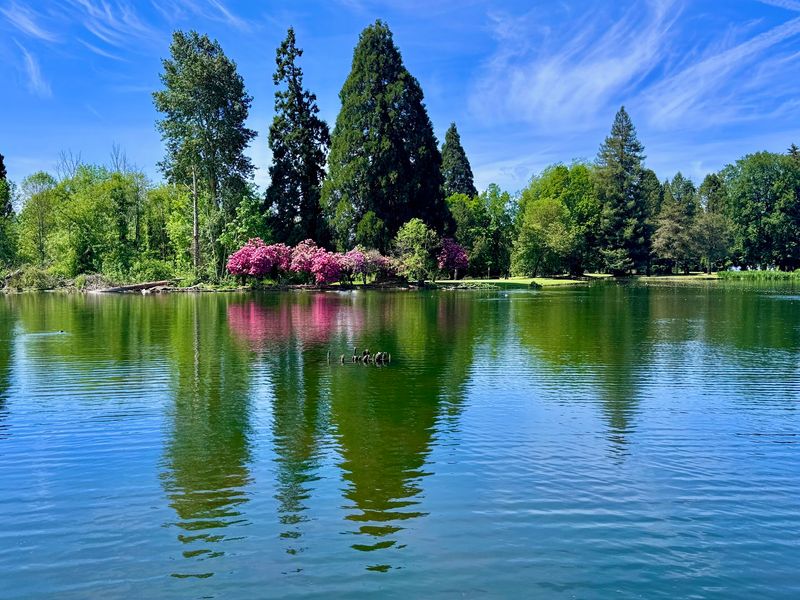
One of the more unexpected pleasures of visiting Crystal Springs is the view it shares with Eastmoreland Golf Course next door. Hole 12 of the course is visible from certain points along the garden path, and rather than feeling like an intrusion, it adds a pleasant sense of open space to an otherwise enclosed garden setting.
The relationship between the two properties is a small but effective example of thoughtful urban planning. The golf course provides a natural buffer that keeps the garden from feeling hemmed in, while the garden gives golfers a genuinely beautiful backdrop.
Both spaces benefit from the arrangement without either one overwhelming the other.
Eastmoreland is one of Portland’s older public golf courses, established in 1917, which means the mature trees lining its fairways contribute to the overall canopy that makes this corner of southeast Portland feel greener and quieter than most urban areas. For visitors who enjoy both gardens and golf, the proximity makes for a natural combination.
A morning round on the course followed by an afternoon walk through the garden would make for a full and satisfying day in this part of the city without ever needing to move your car more than once.
Best Times to Visit and What to Bring
The garden is open year-round, though the hours vary slightly by day. Tuesday, Thursday, Friday, Saturday, Sunday, and Monday all open at 10 AM and close at 4:45 PM.
Wednesday is the exception, with a later opening at 1 PM, so plan accordingly if Wednesday is your best available day.
Spring is the undisputed peak season, with early May offering the fullest bloom and the most wildlife activity. That said, a mid-March visit before the rhododendrons open still delivers a calming, worthwhile experience thanks to the water features, trails, and early-blooming exceptions that show up ahead of schedule.
Summer brings its own quieter beauty as the garden transitions to later-blooming varieties.
Packing a picnic is allowed and genuinely encouraged by the setting. The benches, the pond views, and the general unhurried pace make it easy to turn a garden visit into a proper afternoon out.
Comfortable walking shoes, a light layer for the typically mild Portland spring temperatures, and a fully charged phone for photos are the practical essentials. Arriving on a weekday morning gives you the best combination of light, crowd levels, and available street parking within a reasonable distance of the entrance.
A Place That Earns Its Reputation Visit After Visit
Some places earn a good reputation once and then coast on it. Crystal Springs is not one of those places.
The garden holds a 4.8-star rating across more than 2,600 reviews, which is a level of consistency that reflects genuine, sustained quality rather than a single lucky season.
Families return every year. First-time visitors immediately start planning their next trip.
The combination of world-class horticulture, accessible pricing, active wildlife, and thoughtfully designed trails creates an experience that holds up across multiple visits and across seasons. There is always something different to notice, whether it is a new bloom, a new bird, or simply a bench you somehow missed the last time.
The garden’s nomination as one of America’s best is not a surprise to anyone who has spent an afternoon there. What is slightly surprising is how under-the-radar it remains compared to larger, more heavily marketed attractions in the Pacific Northwest.
Crystal Springs feels like something the people of Portland quietly treasure, and after my visit, I completely understand that instinct to keep it close. Go once, and you will understand it too.
Share this story