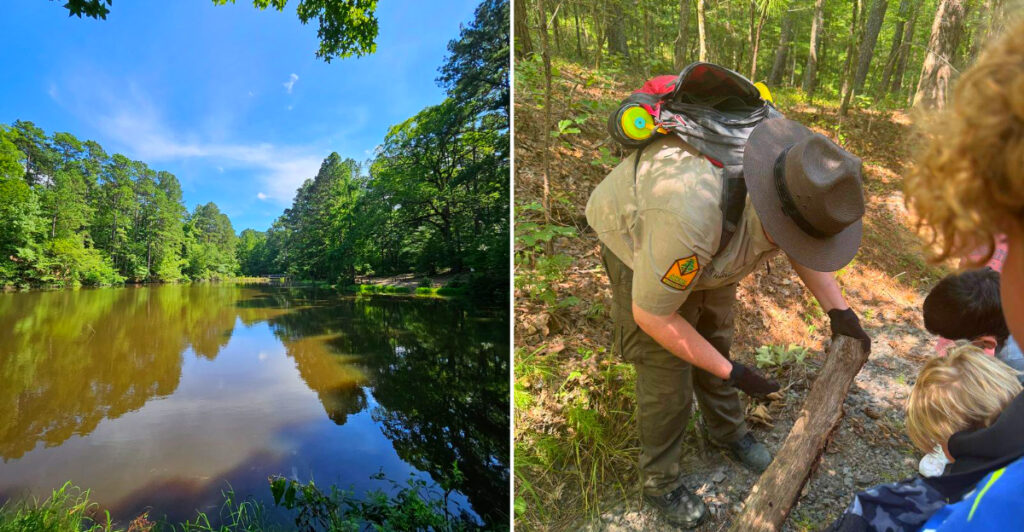
One small state park in southern Arkansas protects something surprisingly unusual within just 368 forested acres. Eleven natural springs rise from the ground here, surrounded by rare plant communities, mature beech trees, and roughly 200 acres protected as a State Natural Area.
But people were coming to these woods long before hiking trails brought modern visitors. By the late 1800s, travelers journeyed here to drink and bathe in mineral spring water believed to have medicinal properties. The attraction became significant enough that two hotels once stood near the springs.
There is another distinction that makes this quiet place unusual. When it opened in 1978, it became Arkansas’s first environmental education state park, and only two other parks in the entire country shared that designation at the time. Today, easy trails lead visitors past the springs, unusual plants, and traces of the people who were drawn to this land generations ago.
Arkansas’s First Environmental Education State Park
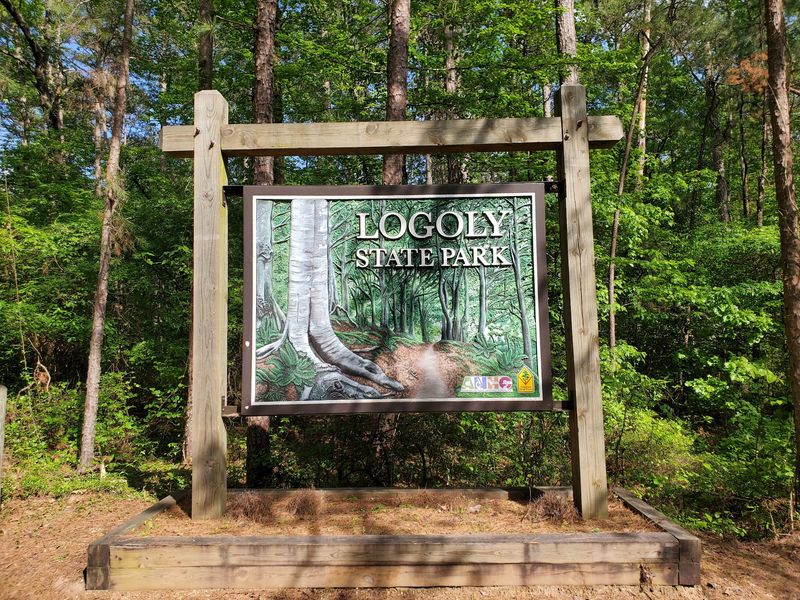
Not every park can claim a first, but this one wears its title with quiet pride. Logoly State Park, located at 131 Columbia Road 459 near Magnolia, Arkansas, opened on May 19, 1978, as the state’s inaugural environmental education state park. At the time, only two other parks in the entire nation shared that distinction.
Spanning 368 acres of lush coastal plain forest, the park was designed from the beginning to be more than a place to walk and picnic. Its core mission has always been teaching visitors of all ages how ecosystems work, why rare habitats matter, and how human choices affect the natural world around us.
The park sits about six miles north of Magnolia in Columbia County, tucked far enough from the highway that road noise fades quickly once you step onto the grounds. That sense of purposeful separation from everyday life feels completely intentional, and honestly, it works beautifully.
A History Rooted in Healing Springs and Scouting Summers
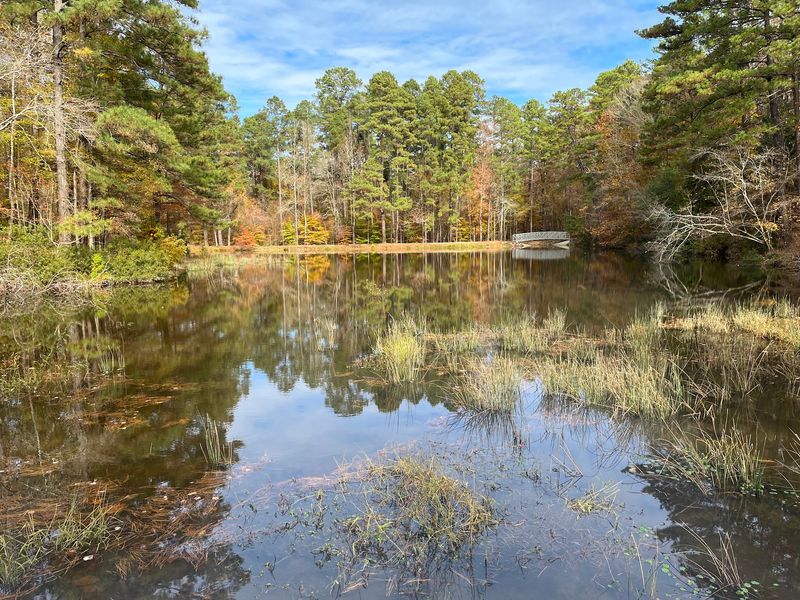
Long before ranger-led programs and interpretive trails, this land was drawing visitors for an entirely different reason. By the late 1800s, the mineral springs here, known as Magnesia Springs, had developed a reputation for having medicinal properties, and travelers came from considerable distances to drink and bathe in the mineralized water.
Two hotels, the Duke and the Mendenhall, once stood near the springs to accommodate those seeking rest and relief. Evangelists even held week-long gatherings here, which says a lot about how powerfully this place drew people in.
By the 1940s, three families, the Longinos, the Goodes, and the Lyles, owned the property and leased it to the Boy Scouts of America. The scouts named their summer retreat Camp Logoly by combining the first two letters of each family name. Thousands of young scouts made memories here until 1967, leaving behind only concrete slabs where their cabins once stood, quiet reminders of summers long past.
Eleven Natural Springs That Still Flow Today
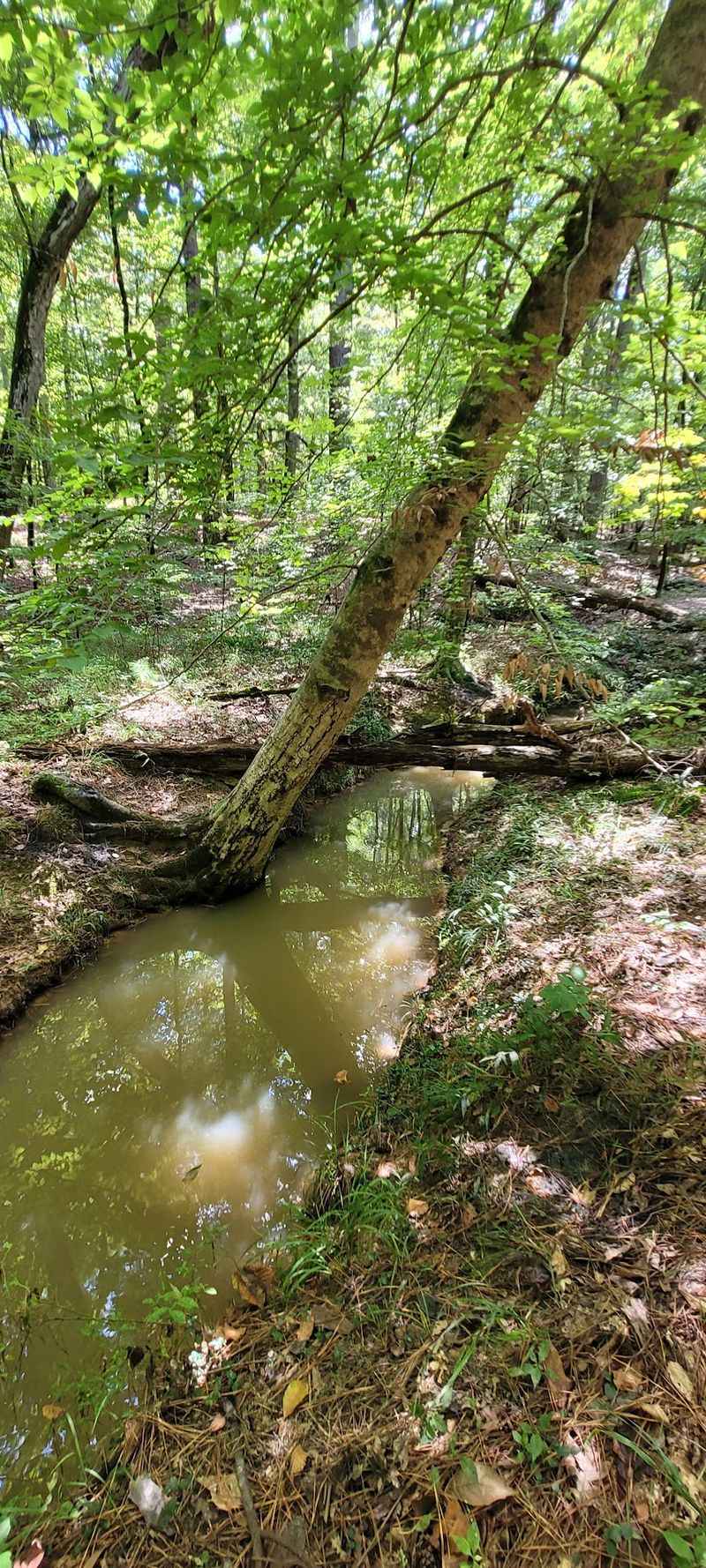
Eleven natural springs rise through the forest floor at Logoly, and each one carries its own quiet character. The most historically significant is Magnesia Springs, which drew health-seekers for decades before the park existed. Standing near it today, knowing that crowds once gathered here believing the water could restore their health, adds a layer of history that a trail sign alone cannot fully capture.
Salt Springs is another intriguing stop, reached by a short spur trail where water visibly seeps from the ground, hinting at the geological forces working silently beneath the surface. These springs are not just scenic features. They create distinct microhabitats that support plant species found nowhere else in the region.
Approximately 200 acres of the park are designated as a State Natural Area specifically because of these springs and the rare botanical communities they sustain. Visiting during wetter seasons gives the best chance of seeing the springs flowing at their most expressive and energetic.
Rare and Unusual Plant Life Thriving in the Forest
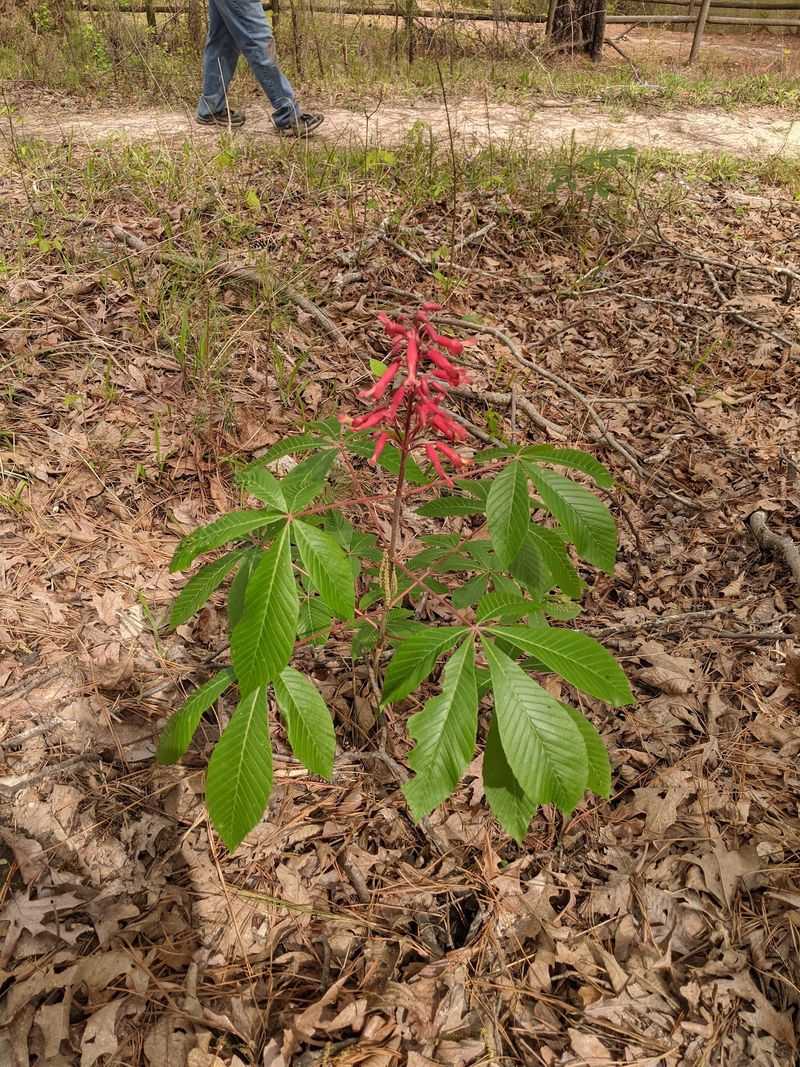
Few state parks in Arkansas can match Logoly’s botanical credentials. The combination of mineral springs, moist ravines, and mature forest creates conditions where plant species that struggle elsewhere manage to thrive here. American beech trees dominate sections of the forest with their smooth, silver-gray bark and wide, spreading canopies.
Growing on the roots of those very beech trees is beech-drops, a parasitic plant that cannot photosynthesize on its own and depends entirely on its host to survive. Spotting one feels like finding a botanical secret tucked into the leaf litter.
Spring is when the forest floor truly comes alive. Woolly ragwort bursts into blazing yellow, downy phlox adds soft purple to the understory, and native coral honeysuckle climbs through the canopy in vivid red. These blooms attract Eastern tiger swallowtail butterflies, eight-spotted forester moths, and various native bees, turning the park into a quietly buzzing, color-filled world that rewards any visitor who slows down long enough to look carefully.
Trails That Reveal the Park’s Many Personalities
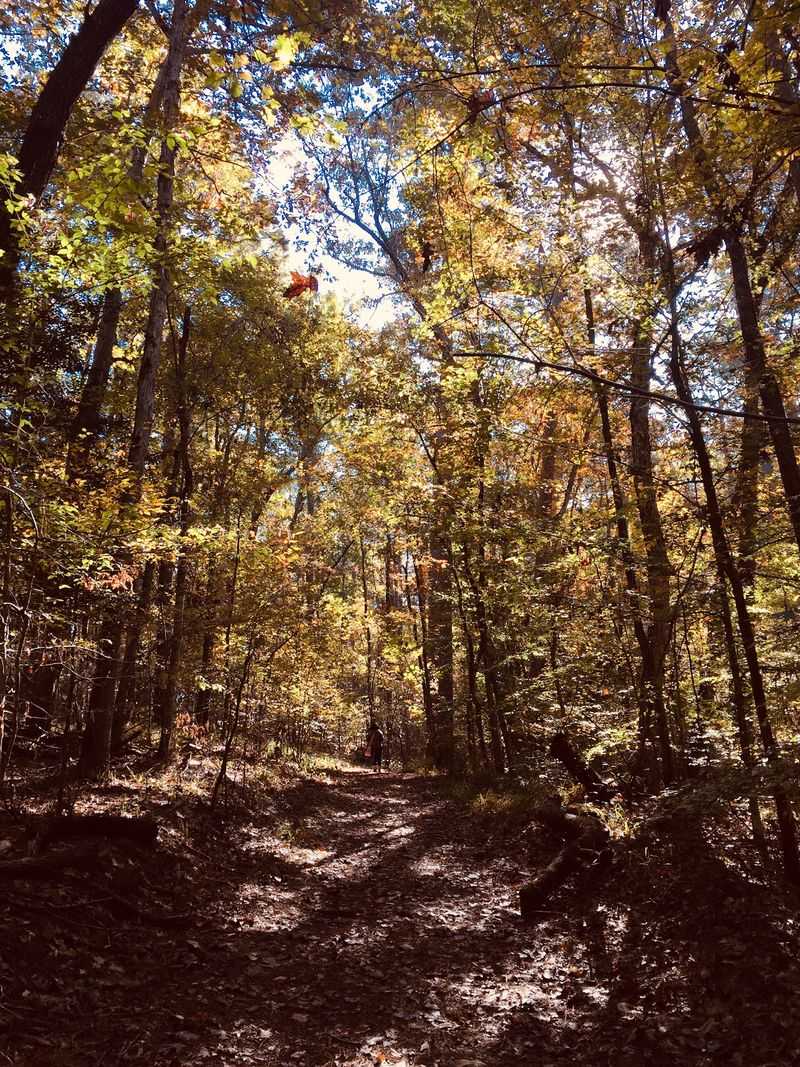
The trail network at Logoly is modest in total mileage but rich in variety. Each path seems designed to show off a different side of the park, from open wetland edges to shaded ravines carved by slow-moving creeks. Most routes are easy enough for families with younger children, which makes this an approachable outdoor destination without sacrificing genuine natural interest.
The Spring Branch Trail stretches two miles and follows Spring Branch Creek through rolling hills typical of the West Gulf Coastal Plain. The terrain here demonstrates how waterways in southwest Arkansas cut narrow, ditch-like valleys into the landscape over time, a geology lesson delivered by the land itself.
The Magnesia Springs Trail is shorter at just a quarter mile but packs in historical weight. It leads directly to the historic springs and passes remnants of old structures, connecting the present to the park’s layered past. Observation stands and photo blinds placed along several trails make birdwatching a genuinely rewarding reason to visit on its own.
A Visitor Center Built to Practice What It Preaches
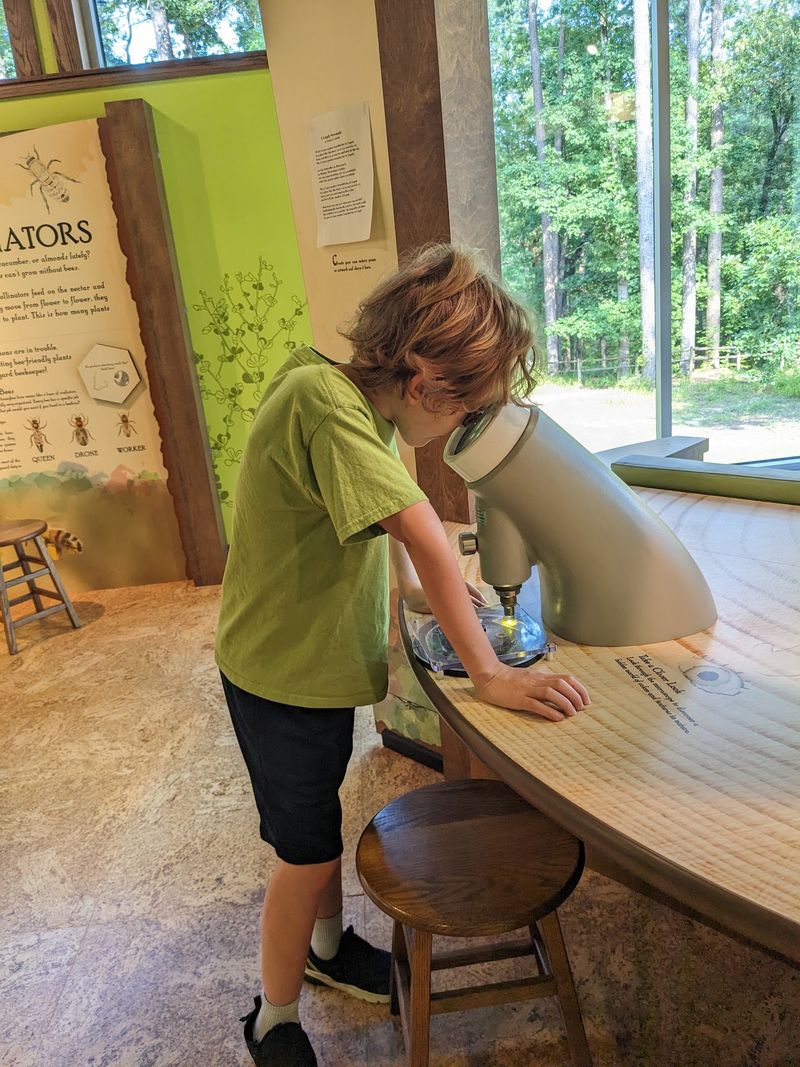
The visitor center at Logoly is not just a building where you grab a trail map and move on. It is a working demonstration of sustainable design, powered by solar panels and equipped with large cisterns that collect rainwater for flushing toilets and watering plants around the grounds. Motion sensors control the interior lighting, keeping energy use low without any extra effort from visitors.
Inside, the exhibits are genuinely interactive and designed to hold attention. There is a sounds-of-nature section where you can activate different forest soundscapes, and a crawl-through log exhibit that teaches what creatures live inside decaying wood. A small aquarium displays local fish and aquatic life native to the region.
An indoor classroom and an outdoor amphitheater set naturally into the landscape give park staff flexible spaces for presentations and programs throughout the year. The visitor center operates daily from 8 a.m. to 5 p.m. and is the ideal first stop before heading out onto the trails.
Wildlife Watching and the Art of Slowing Down
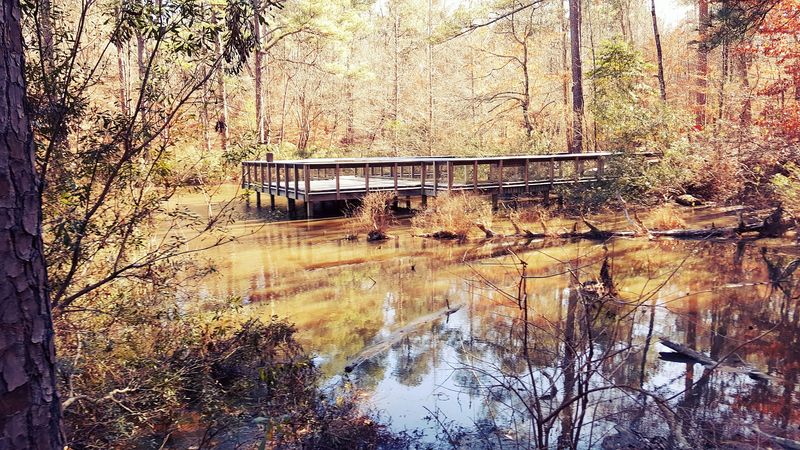
There is a particular kind of reward that comes from sitting still in a quiet forest and letting the wildlife come to you. At Logoly, that patience pays off regularly. The park’s combination of mature woodland, wetland edges, and flowering plants creates layered habitat that supports a wide range of species throughout the year.
Birdwatchers find spring and fall especially productive, when migratory species pass through and breeding birds become active. Flycatchers, gnatcatchers, and worm-eating warblers are among the species that use the park’s habitat. The pond draws waterfowl and wading birds, adding another dimension to any morning spent with binoculars.
Pollinators are a highlight in their own right. Eastern tiger swallowtails drift between the wildflowers, eight-spotted forester moths visit the blooms in striking black and white, and native bees work through the understory with steady efficiency. Observation stands and photo blinds placed along the trails give visitors a structured vantage point without disturbing the animals going about their day.
Picnics, Playgrounds, and Fishing at the Pond
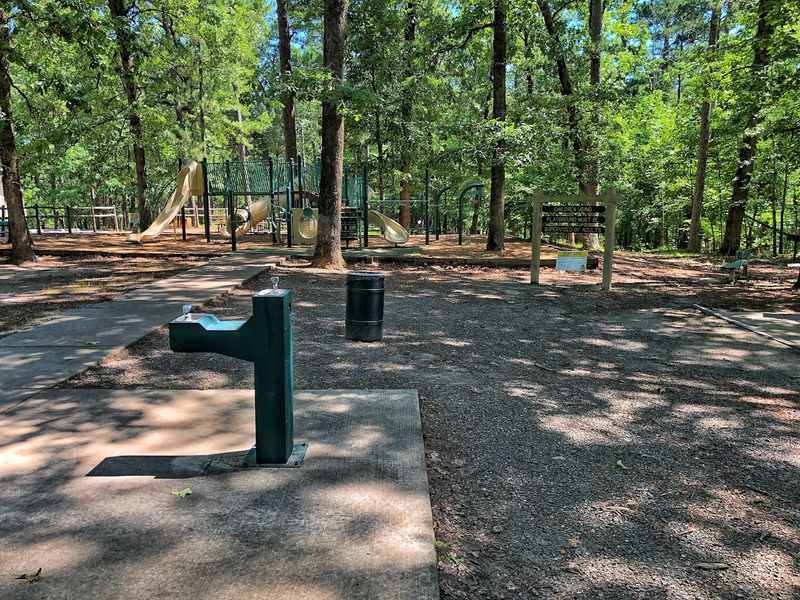
Not every visit to a state park needs to revolve around hiking miles of trail. At Logoly, there is a comfortable middle ground for visitors who want to enjoy the outdoors at a relaxed pace. Picnic tables and grills are scattered throughout shaded areas near the pond, creating a genuinely pleasant setting for a family lunch or a quiet afternoon meal.
The playground is well-shaded and maintained, which matters a lot on a warm southern Arkansas afternoon. Children can play while adults keep watch from nearby benches, and the proximity to restroom facilities makes it practical for families with young kids.
The pond itself offers catch-and-release fishing from the bank, with catfish, bream, and largemouth bass among the species present. Watching the surface of the water while a line soaks is its own kind of meditation. The whole area around the pond feels like the social heart of the park, a place where the day slows to exactly the right pace.
Environmental Programs That Stick With You
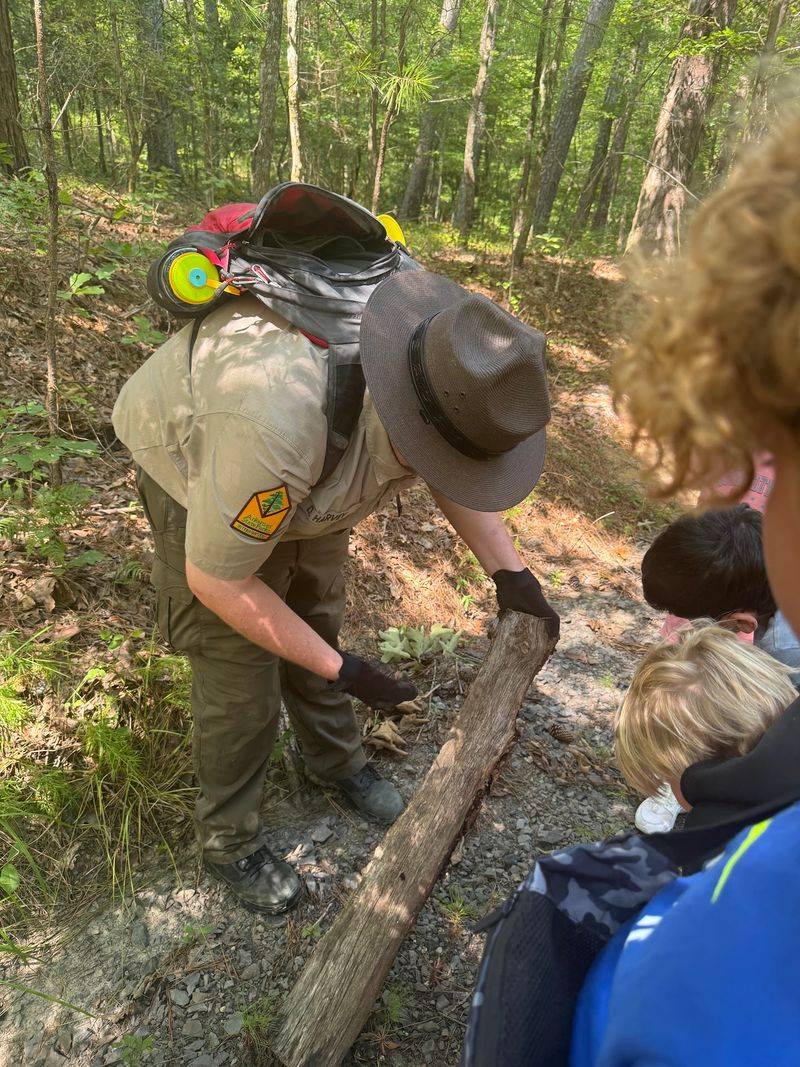
Some parks have educational programs. Logoly has educational programs that people still talk about years later. The interpreters here bring genuine enthusiasm to their presentations, covering topics that range from global ecology to the specific plant and animal communities living within the park’s boundaries.
Snake presentations are a particular crowd favorite. Knowledgeable staff members have been known to bring out live snakes, including a Speckled King Snake, letting visitors handle them and ask questions. For a child who has never touched a snake before, that moment tends to be memorable in the best possible way.
Group visits can be arranged in advance, and the park gives scheduling priority to educational groups with planned activities, which reflects how seriously the staff takes the teaching mission. The outdoor amphitheater and indoor classroom make it easy to host programs for large or small groups in any weather. Every program reinforces the park’s central idea: understanding the natural world is not optional, it is essential.
Camping Under the Pines for Those Who Want to Linger
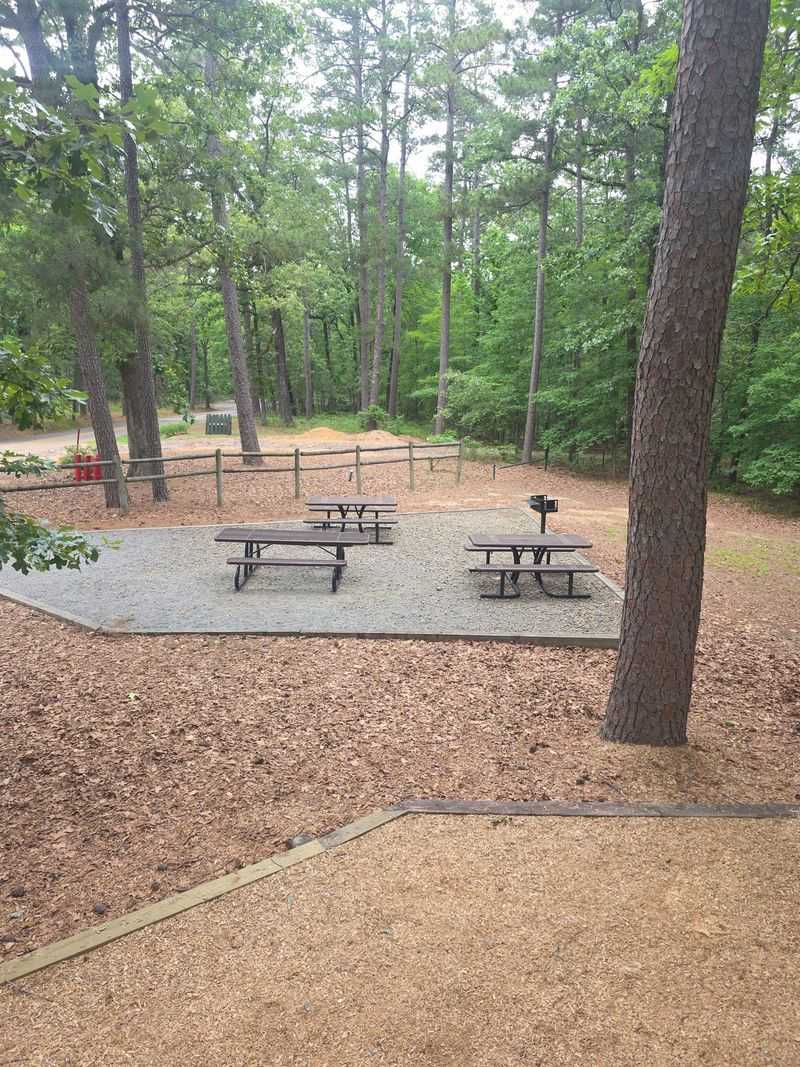
A single day at Logoly is enough to understand why people keep coming back. But spending a night here shifts the experience into something quieter and more immersive. The park offers six group tent sites for those who want to extend their stay, and the primitive nature of those sites is very much part of the appeal.
There are no electrical hookups, which keeps the camping experience simple and focused on the surroundings. A bathhouse with hot showers is available, so the rustic quality has its limits in the best possible way. A covered pavilion on the grounds gives groups a practical gathering space regardless of the weather.
Reservations are accepted, with priority going to educational groups that have programs scheduled at the park. Individual campers are welcome on a first-come, first-served basis. At night, with the park’s low visitor traffic creating genuine quiet, the sounds of the forest take over completely, and the distance from any major road means the only interruption might be a train passing faintly in the distance.
Best Times to Visit and What to Bring
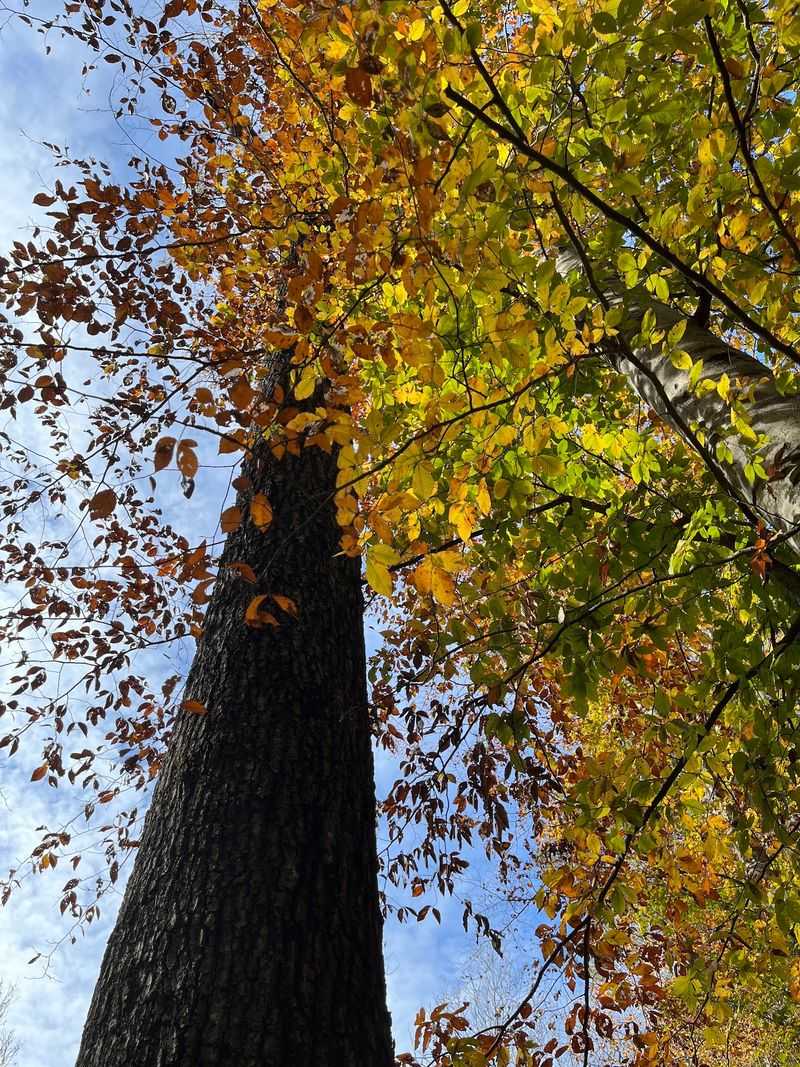
Spring and fall are the seasons that show Logoly at its most compelling. Temperatures are mild, the light through the canopy is soft, and the park’s plant and animal life are at their most active and visible. Spring brings the wildflower bloom that turns the forest floor into something worth photographing at every step, while fall adds warm color to the canopy without the summer humidity.
Summer visits are absolutely possible, but a few preparations make a real difference. Insect repellent is not optional in the warmer months. Sturdy shoes handle the uneven ground and exposed tree roots on the trails better than casual footwear. Carrying enough water is equally important, since there are no water stations mid-trail.
The park is open daily from 8 a.m. to 5 p.m., with gates closing one hour after sunset. Dogs are welcome in outdoor areas on a leash. Checking the park’s website before visiting for any seasonal updates or program schedules is a small step that prevents surprises and makes the trip go smoothly.
Why This Quiet Park Deserves a Spot on Your List
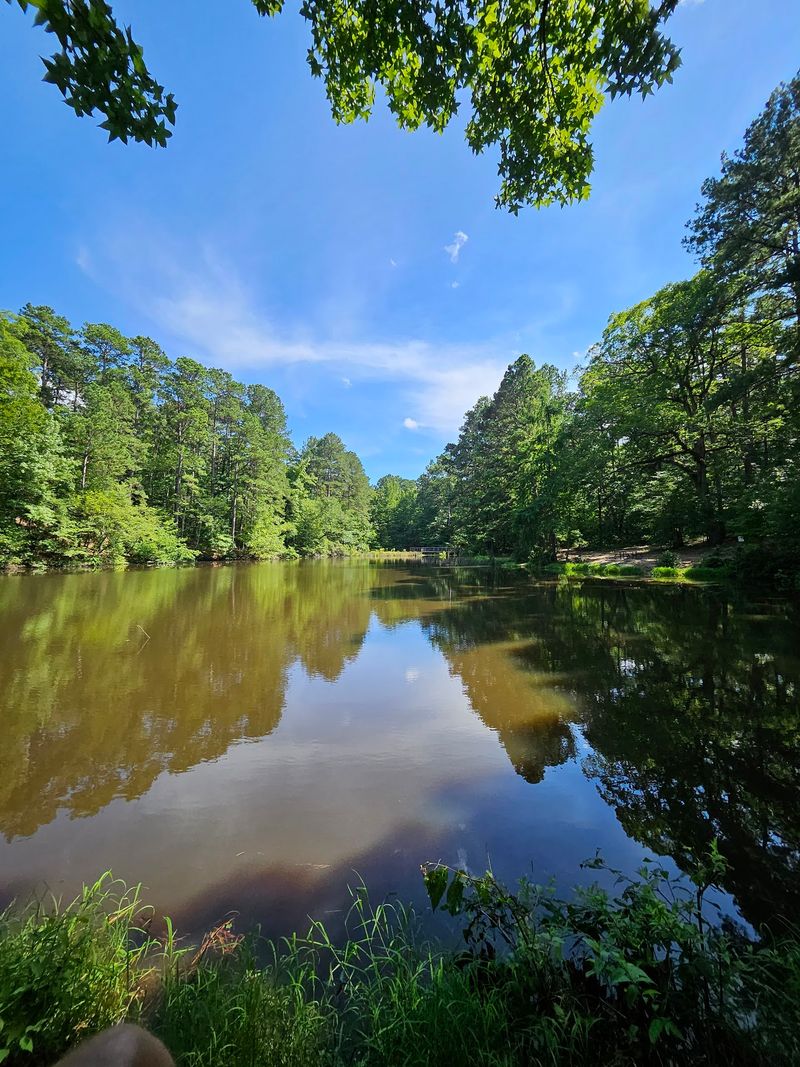
There are parks that impress through sheer scale, and then there are parks that impress through depth. Logoly belongs firmly in the second category. Its 368 acres contain more ecological and historical interest per square foot than most destinations ten times its size, and the calm that settles over the place the moment you arrive feels like something the park actively cultivates.
The combination of rare plant communities, historic mineral springs, sustainable infrastructure, and genuinely passionate staff creates an experience that is hard to replicate anywhere else in Arkansas. The park earns its 4.6-star rating not through flashy attractions but through consistent quality and real substance.
Whether the draw is wildflowers, birdwatching, a family picnic, or simply a few hours of genuine quiet in a well-preserved southern forest, Logoly delivers without overpromising. It is the kind of place that does not need to advertise itself loudly, because the people who find it tend to come back, and they tend to bring someone new with them each time.
Share this story