Most people walk past tall downtown buildings without a second glance, but there is one skyscraper in Minneapolis that stops you cold the moment you step inside. Eight stories of soaring glass rise above you, filling an entire city block with natural light even in the middle of a Minnesota winter.
The space feels more like a glowing indoor canyon than a corporate lobby, and locals have been gathering here for decades. What makes it truly remarkable is that most visitors from outside the city have never even heard of it.
The Skyscraper That Redefined a City Skyline
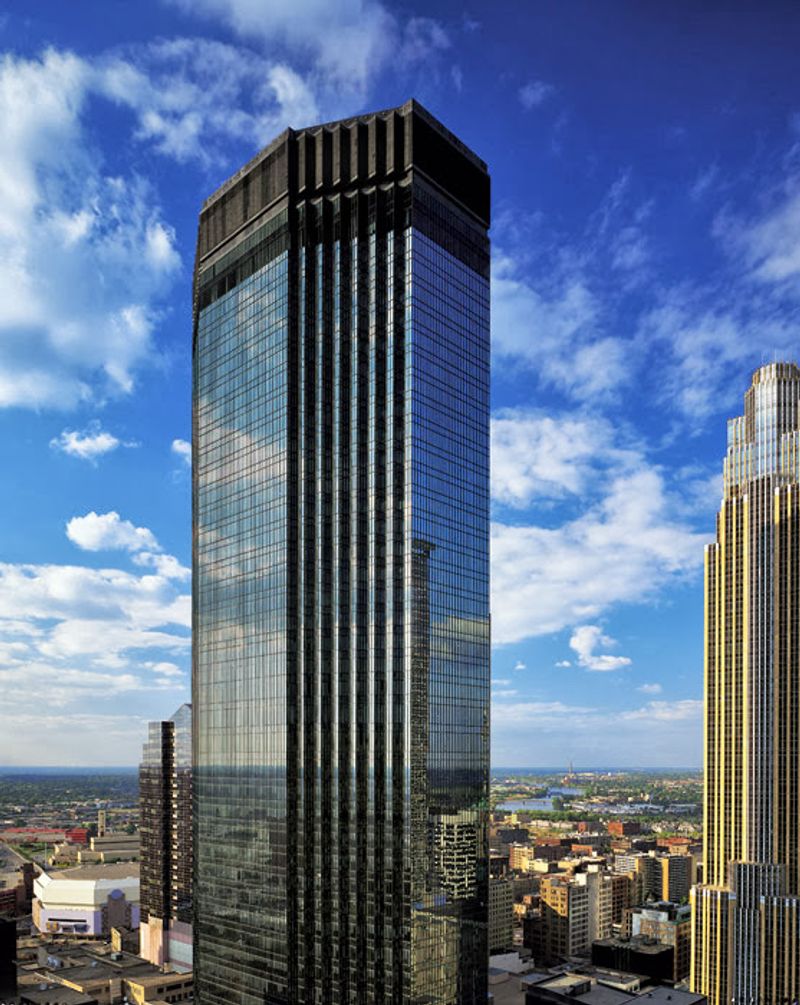
Before the IDS Center opened in 1973, downtown Minneapolis looked completely different. The building changed everything.
At 792 feet tall with 57 floors, it became the tallest building in Minnesota and reshaped the city skyline in a way that architects and city planners still talk about today.
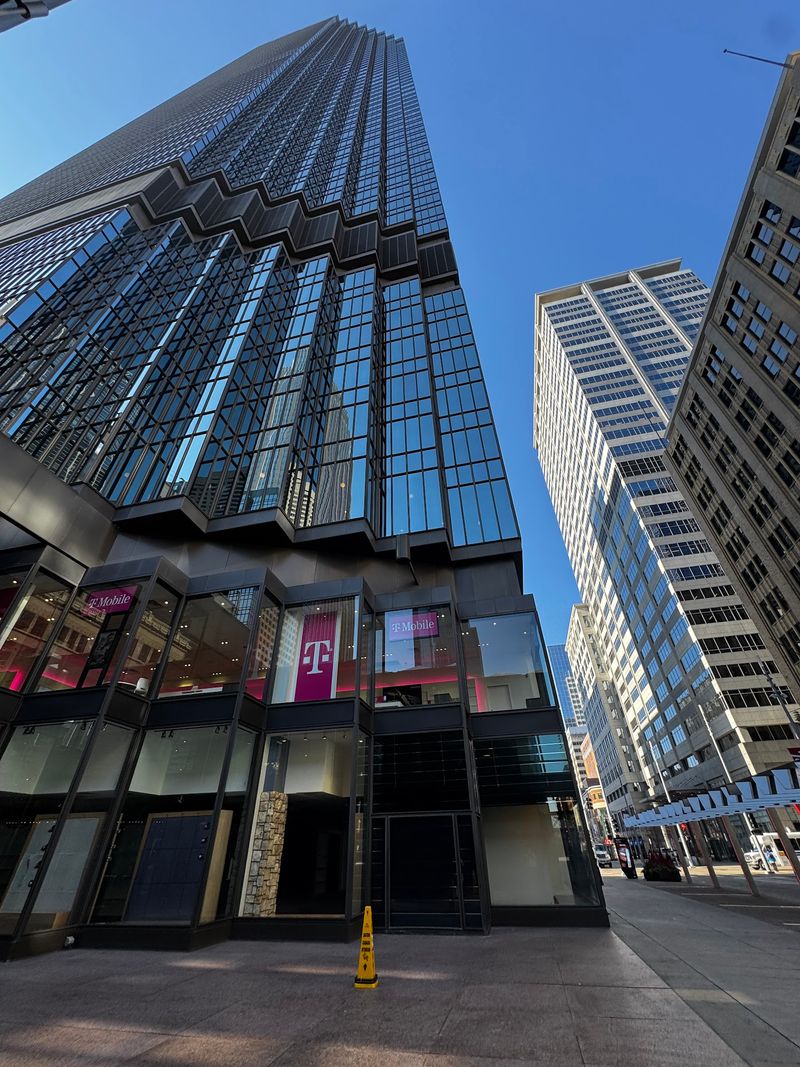
The IDS Center stands at 80 S 8th St, Minneapolis, MN 55402, right at the heart of downtown. Its design, created by Philip Johnson and John Burgee, features notched corners that catch light differently depending on the time of day.
That detail alone makes it worth looking at from the street before you ever walk inside.
The building brought a new kind of energy to downtown Minneapolis and helped set the stage for the connected, walkable city center that exists today. It remains one of the most architecturally significant structures in the entire Upper Midwest.
Crystal Court: Eight Stories of Indoor Light
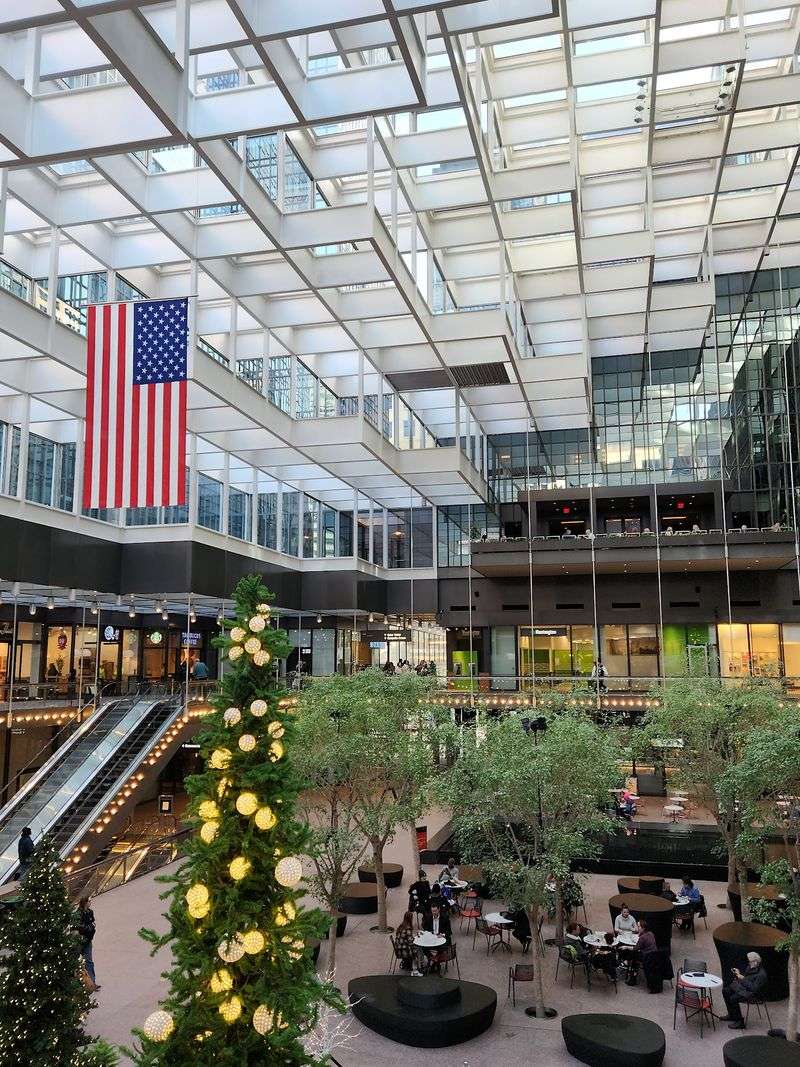
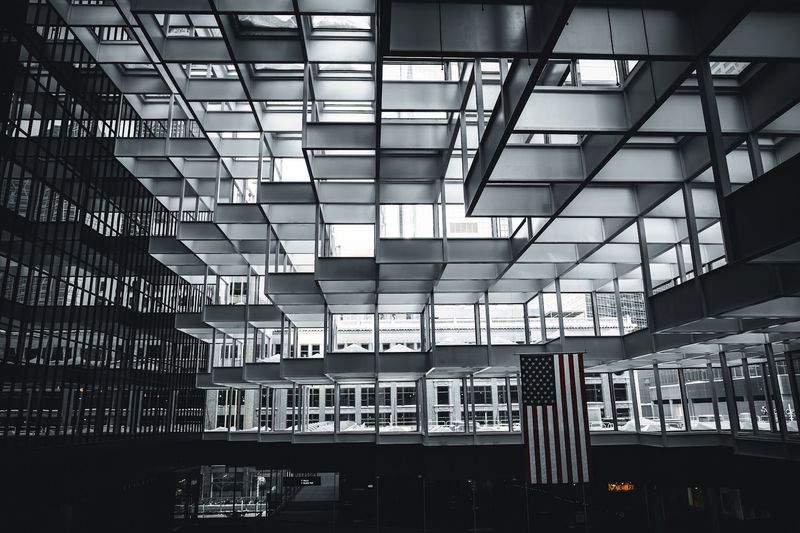
The Crystal Court is the beating heart of the IDS Center, and nothing really prepares you for seeing it the first time. You walk through the entrance and suddenly the ceiling climbs eight stories above you, wrapped entirely in glass and steel framing that floods the space with daylight.
The name fits perfectly. On a sunny winter afternoon, the light refracts through the glass panels and fills the court with a warm, almost crystalline glow.
The contrast between the freezing temperatures outside and the bright, open warmth inside is genuinely startling in the best possible way.
The court was designed to serve as a public gathering space, not just a building lobby. That intention still shows.
People sit, eat, meet friends, and simply pause to look up. The scale of it feels generous in a way that most indoor public spaces simply do not.
The Architecture Behind the Glass
Philip Johnson was one of the most celebrated American architects of the twentieth century, and the IDS Center stands as one of his most recognized commercial works. The building’s notched tower design was considered innovative at the time of construction and has aged remarkably well compared to many of its peers from the same era.
The Crystal Court itself was a bold architectural statement. Rather than treating the ground-floor atrium as simply a pass-through, Johnson designed it as a destination.
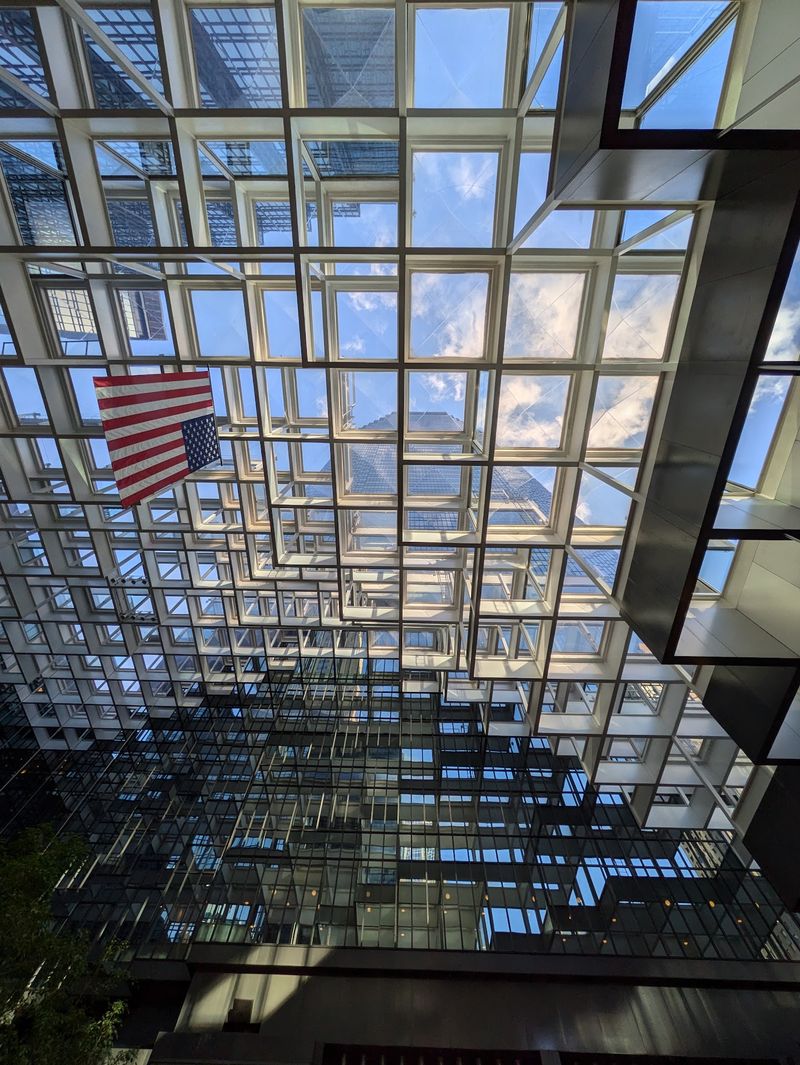
The glass roof structure allows natural light to reach the ground level throughout the day, which is no small feat in a Minnesota winter when daylight hours are short.
The way the steel framework holds the glass panels together creates a geometric pattern overhead that changes in appearance depending on where you stand. Looking straight up from the center of the court is one of those views that genuinely rewards the effort.
A Winter Refuge That Feels Like Outdoors
Minneapolis winters are serious business. Temperatures regularly drop well below freezing, and spending time outside requires real commitment.
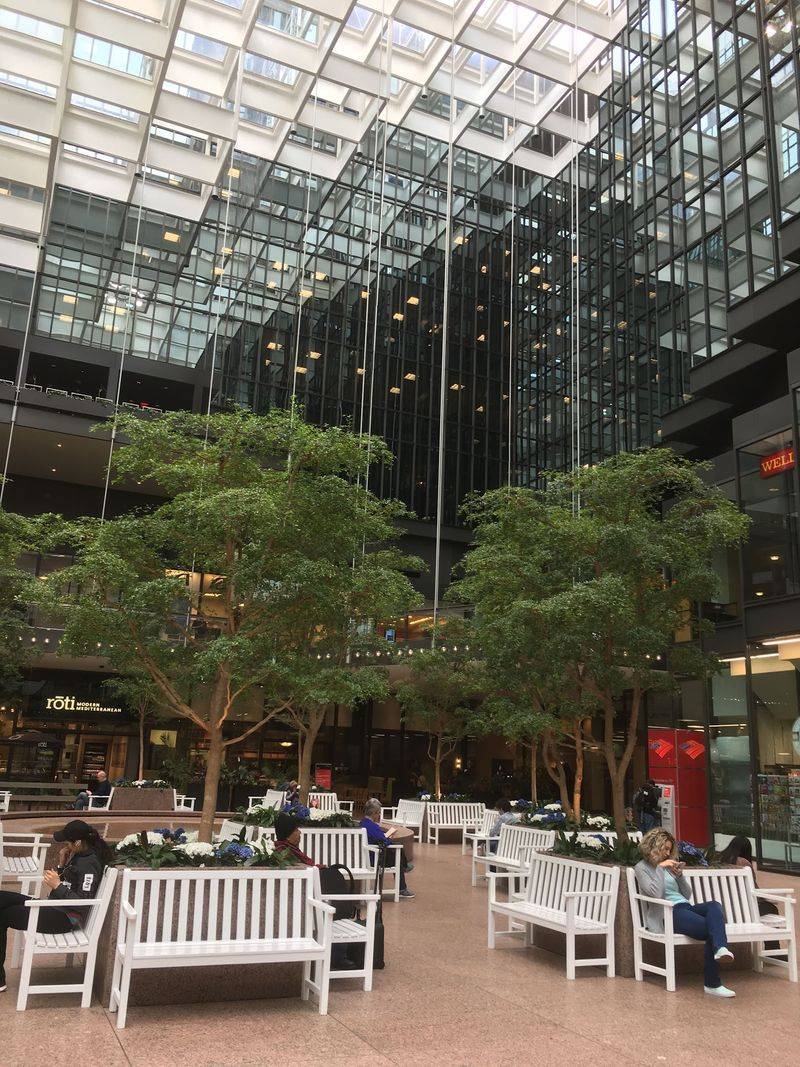
The Crystal Court offers something that feels almost rebellious against that reality: a bright, open space with trees, natural light, and room to breathe, all without a coat.
One visitor once described sitting in the court during January as feeling like being in a forest in the middle of winter. That image sticks because it is surprisingly accurate.
The indoor plantings and the generous light create an atmosphere that feels far less institutional than you might expect from a corporate skyscraper lobby.
For downtown workers, the court has long served as a midday escape. You can bring lunch, find a seat, and spend thirty minutes feeling genuinely refreshed before heading back to your desk.
That kind of everyday utility is what keeps people coming back year after year.
The Water Feature That Calms the Whole Room
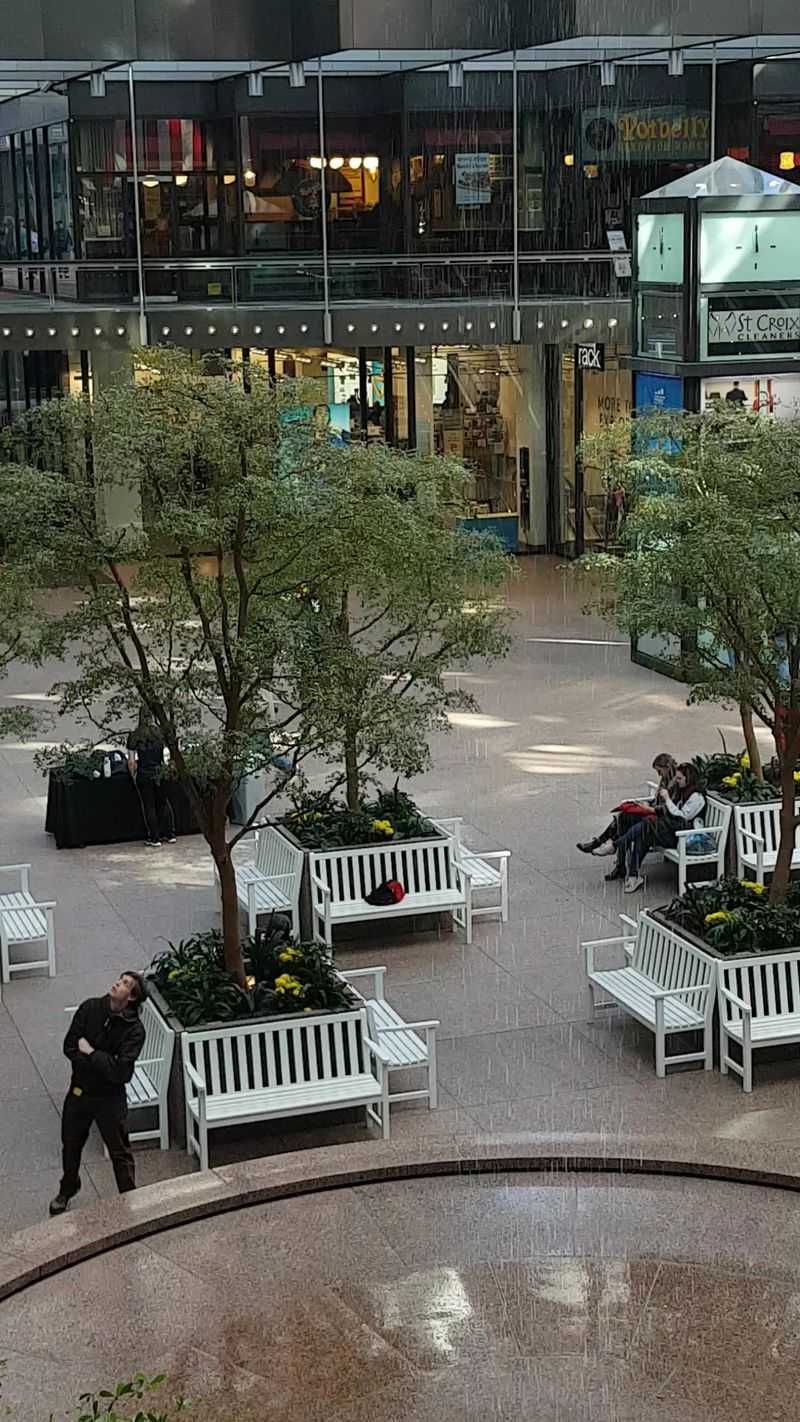
There is a water feature inside the Crystal Court that deserves its own mention. Water cascades down from above into a surrounding area of trees and seating, and the sound it creates carries through the entire court in the most calming way possible.
Early in the morning, before the building fills with workers and visitors, the sound of the water is almost the only thing you hear.
That quiet moment, just after 8 AM on a weekday, is genuinely one of the more peaceful urban experiences you can find in downtown Minneapolis. The combination of running water, natural light, and the scale of the space creates an atmosphere that feels designed for human comfort rather than just visual impact.
The water feature has been part of the court’s character for decades. It grounds the space and gives visitors something specific to orient themselves around when they first walk in.
Connected to the Famous Minneapolis Skyway System
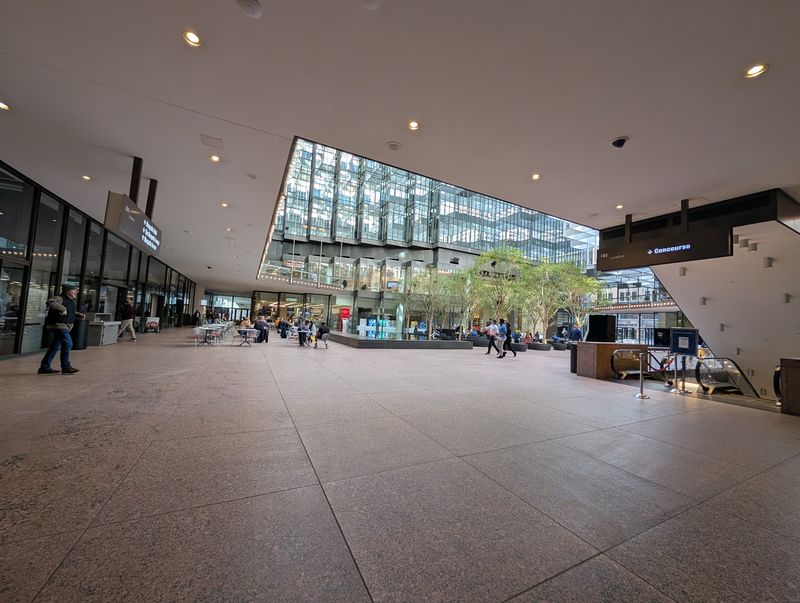
The IDS Center is one of the most important nodes in the Minneapolis Skyway System, which is the longest continuous network of enclosed pedestrian walkways in the world. From inside the Crystal Court, you can access the skyway and walk to dozens of destinations across downtown without ever stepping outside.
That connectivity is a big reason why the building stays busy even on the coldest days of the year. Workers, shoppers, and visitors move through the space constantly, using it as a central hub to navigate the rest of downtown.
The skyway connections run in multiple directions, making the IDS Center a genuine crossroads of the city’s indoor pedestrian life.
For first-time visitors, the skyway access alone is worth exploring. The experience of walking above street level through connected glass bridges while watching traffic below is one of those distinctly Minneapolis moments that stays with you long after you leave.
Dining and Shopping at Ground Level
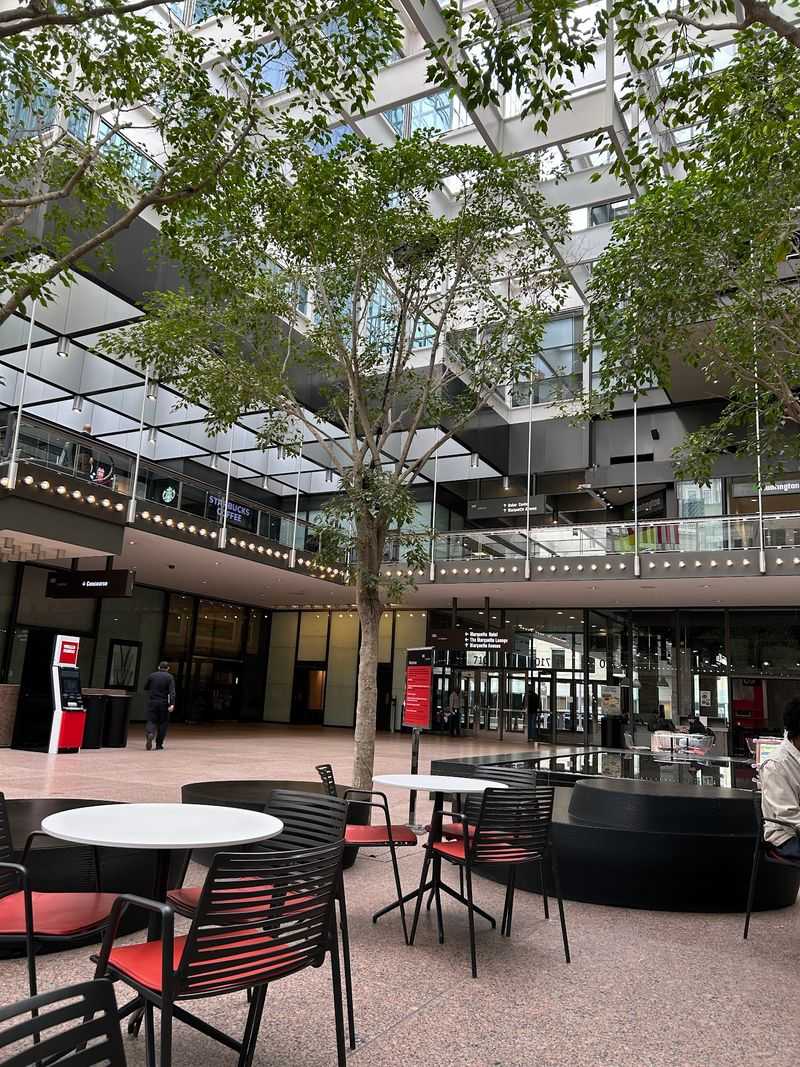
The ground level of the Crystal Court has always been home to dining and retail options for the downtown crowd. Coffee, sandwiches, ice cream, and quick lunch spots have all had a presence here over the years, serving the thousands of workers and visitors who pass through daily.
The mix of options has shifted over time, as it does in any urban retail environment, but the court remains a practical and pleasant place to grab a meal. Sitting at a table inside the Crystal Court while eating lunch and watching the light shift across the glass ceiling above is a simple pleasure that downtown workers genuinely appreciate.
Shopping options on the main floor add to the building’s role as a downtown destination rather than just an office tower. The combination of food, retail, and public space all under one dramatic glass roof gives the IDS Center a character that goes well beyond its corporate function.
A Building With Real Financial History
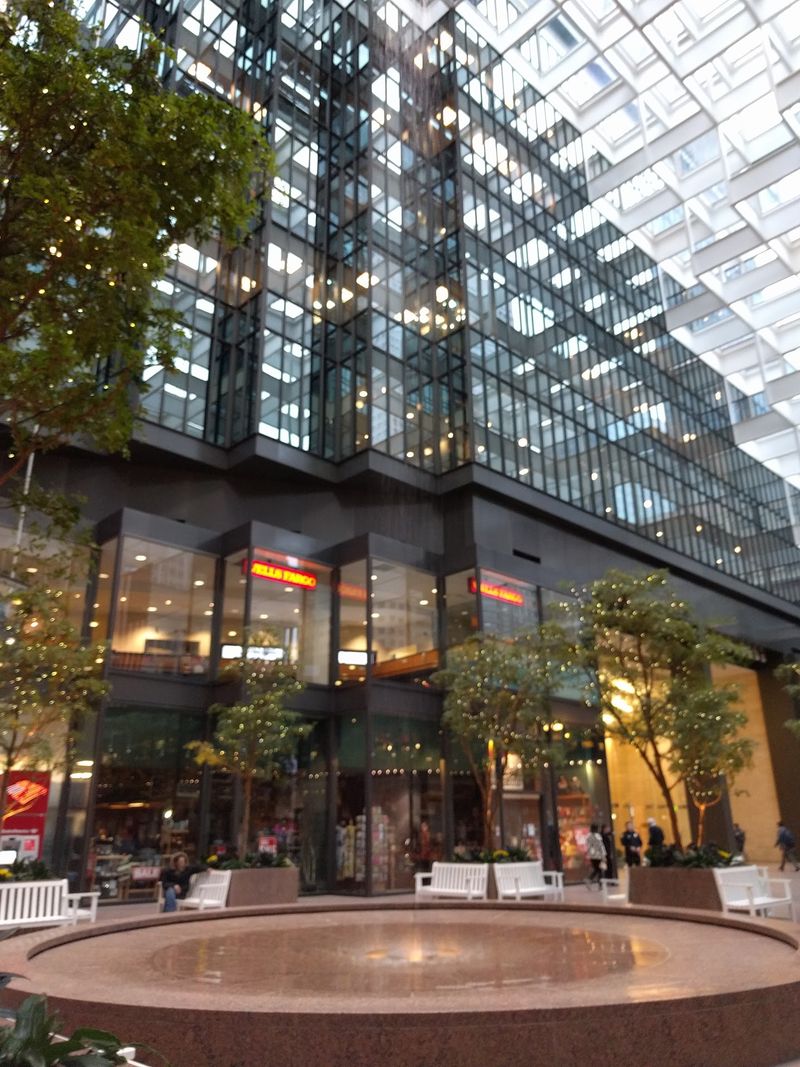
The name IDS stands for Investors Diversified Services, the financial company that originally commissioned the building. The firm’s decision to build a landmark tower in downtown Minneapolis was a significant vote of confidence in the city at a time when many American urban centers were struggling.
That financial legacy has continued. The building has long housed some of the largest financial institutions in the United States, and its tenant roster has reflected the economic life of the Twin Cities region for more than fifty years.
Working in the IDS Center carried a certain prestige in Minneapolis business culture that persists to this day.
The building’s history is inseparable from the history of downtown Minneapolis itself. Understanding why the Crystal Court was designed as a public space, open and welcoming rather than restricted, makes more sense when you understand the civic ambitions that surrounded the building’s original construction.
The View From the Upper Floors
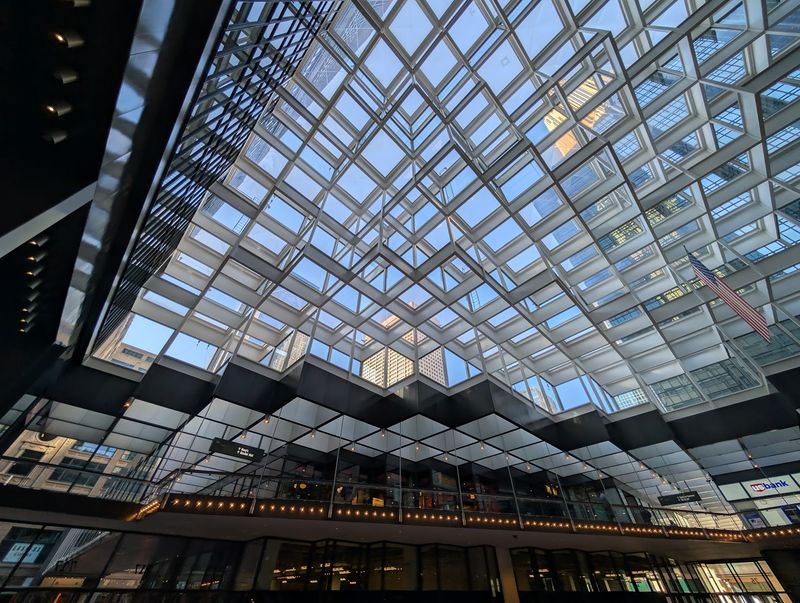
Looking down into the Crystal Court from the upper-floor office levels is an experience that office workers in the building take for granted but visitors find genuinely impressive. The court’s eight-story height means that even from a few floors up, the scale of the glass-covered space below becomes fully apparent.
From the outside, the building’s height is equally striking. At 792 feet, with a broadcast antenna bringing the total to 910 feet, the IDS Center commands views across a wide stretch of the Minneapolis metro area.
Office tenants on the upper floors have long enjoyed sweeping views of downtown and well beyond.
The observation experience from inside the building, looking down through the atrium rather than out across the city, is one of those unexpected pleasures that the Crystal Court offers. The geometry of the glass panels from above creates a perspective that is completely different from the view at ground level.
What the Skyline Looked Like Before 1973
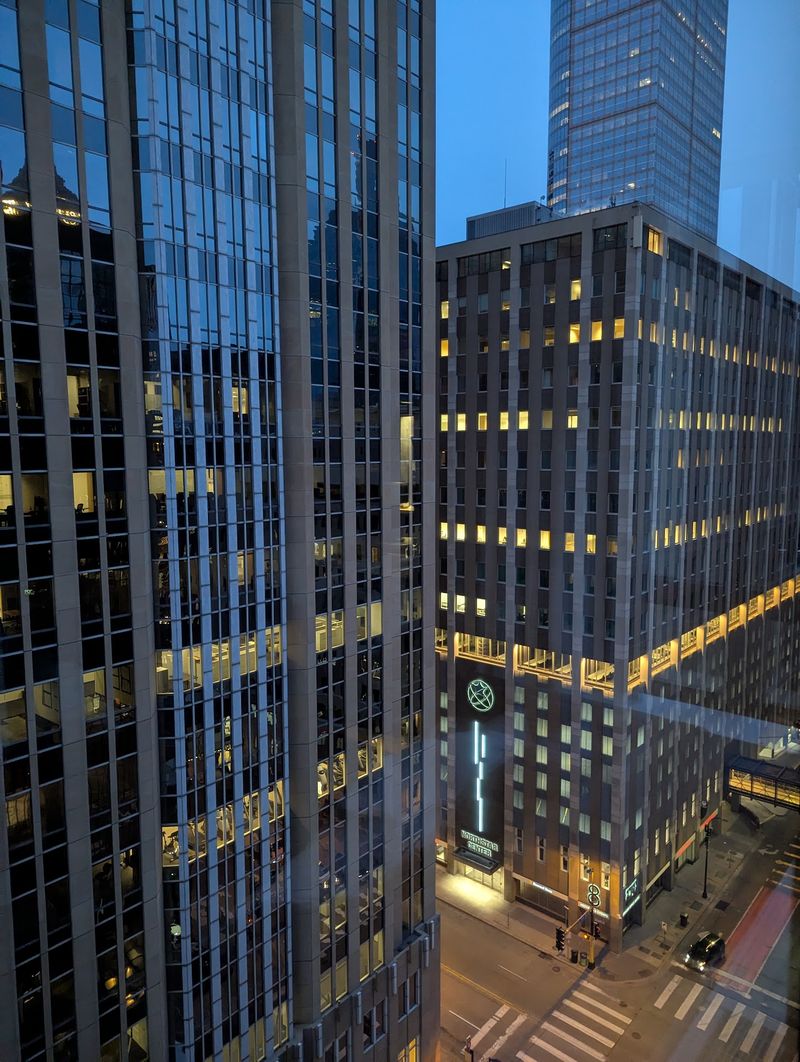
It is hard to picture downtown Minneapolis without the IDS Center now, but the building simply did not exist until 1973. Before it opened, the city’s skyline was considerably shorter and less defined.
The tower’s arrival marked a turning point that local historians and architecture enthusiasts still reference when discussing how the city grew into its current form.
The decision to build at that scale in the early 1970s required real ambition. American cities were navigating economic uncertainty, and investing in a 57-story skyscraper was not an obvious choice.
The fact that the building has remained not only standing but genuinely beloved is a testament to the quality of its design and its integration into the life of the city.
Walking through the Crystal Court today, it is easy to forget that this space had to be imagined and built from nothing. The fact that it still feels fresh after fifty years says something significant about the original vision.
Early Morning in the Crystal Court
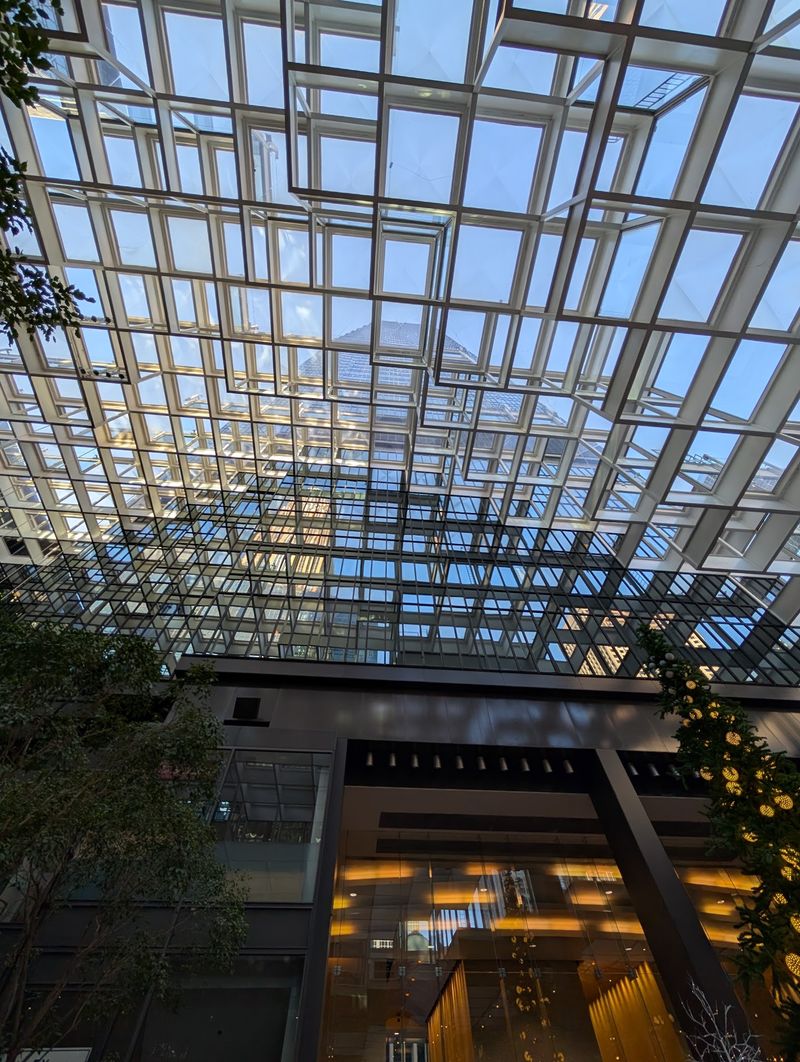
If you ever get the chance to visit the Crystal Court before the weekday rush begins, take it. The building opens at 8 AM on weekdays, and that first hour before the space fills up is something genuinely special.
The water feature runs quietly, the light is soft and angled through the glass panels, and the whole court has a calm that disappears quickly once the day gets going.
Several people who work in the building have mentioned that early morning is their favorite time in the space. There is something about a room that big being almost completely silent that makes you notice the architecture in a way you cannot when it is busy.
The Crystal Court is a public space, which means anyone can walk in during building hours. That open-door policy is one of the things that has kept the court woven into the daily fabric of Minneapolis life for more than five decades.
How the Crystal Court Connects to Marquette Hotel

One detail that surprises many visitors is how closely the IDS Center connects to the Marquette Hotel next door. The two buildings share access in a way that makes them feel like parts of the same complex, and guests staying at the Marquette often find themselves wandering into the Crystal Court almost by accident.
That kind of seamless connection between hotel, office tower, and public atrium is not something most cities pull off successfully. In this case, it works because the Crystal Court was always intended to be a genuine public space rather than a private lobby.
The result is a ground-level experience that feels open and connected rather than corporate and closed off.
Travelers staying in downtown Minneapolis who book a room at the Marquette Hotel essentially get the Crystal Court as an extended living room. That is a genuinely appealing arrangement, especially during the months when going outside requires serious winter gear.
Security and Safety in a Busy Urban Hub
The IDS Center has a reputation for being one of the cleaner and better-maintained public spaces in downtown Minneapolis. The building is actively patrolled and managed in a way that makes visitors feel comfortable spending time there, which is not something that can be said about every urban atrium in a major American city.
That sense of order matters in a space that serves as both a corporate office tower and a public pass-through. Thousands of people move through the Crystal Court on a busy weekday, and the building manages that volume without feeling chaotic or neglected.
The cleanliness is consistent and noticeable.
For visitors unfamiliar with downtown Minneapolis, the IDS Center is a reliable anchor point. Knowing that you can step inside, get your bearings, grab a coffee, and access the skyway system from a safe and well-maintained space makes exploring the rest of downtown considerably easier and more enjoyable.
Why Locals Keep Coming Back
Ask someone who has worked in downtown Minneapolis for any length of time what they think of the Crystal Court, and you will almost always get a warm response. The space carries genuine nostalgia for people who grew up visiting parents at their offices here in the 1970s and 1980s, when the court was at its most bustling.
That emotional connection to a building is rare. Most office towers are simply places people go to work and then leave.
The Crystal Court became something more personal for many Minneapolis residents, a place with memories attached to it across multiple generations. That kind of community relationship with a piece of architecture takes decades to develop.
Even as the retail mix has changed and the downtown landscape has shifted, the physical space itself has remained compelling. The light, the water, the scale, and the sense of openness keep drawing people back in a way that goes beyond habit.
Planning Your Visit to the IDS Center
The IDS Center is open to the public Monday through Friday from 8 AM to 5 PM. Weekend visits are not possible as the building is closed on Saturdays and Sundays, so planning around a weekday is essential if you want to experience the Crystal Court in person.
Getting there is straightforward. The building sits at 80 S 8th St in downtown Minneapolis, and public transportation runs on all sides of the block.
Street parking and nearby ramps are available, though paid parking is the norm in this part of downtown. The skyway connections mean you can also arrive via other downtown buildings if you are already in the area.
Once inside, take your time. Walk the perimeter of the Crystal Court, find a seat near the water feature, and look up at the glass ceiling.
The experience rewards a slow pace far more than a quick pass-through. Nearby downtown Minneapolis has plenty more to explore once you are done.
Share this story