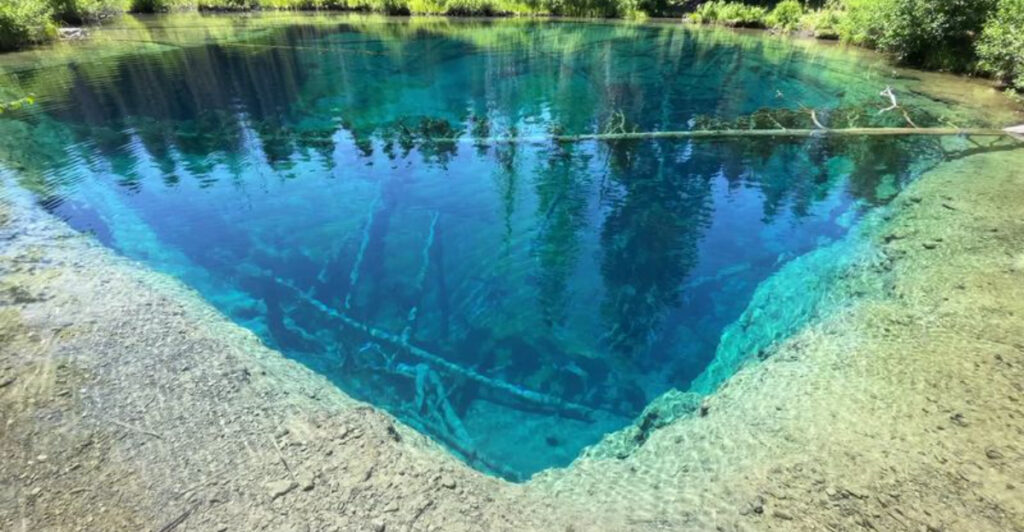
There is a small pool of water tucked inside the Mt. Hood National Forest in Oregon that stops people mid-step the moment they see it.
The color is an electric turquoise-blue that looks almost too vivid to be real, and the water is so clear you can see straight down to the bottom, nearly 45 feet below the surface. No tropical editing, no filters, just a natural spring-fed lake doing what it has always done.
I visited on a sunny morning, and I am still thinking about what I saw. Keep reading, because this place deserves every word.
Where to Find This Hidden Spring Pool
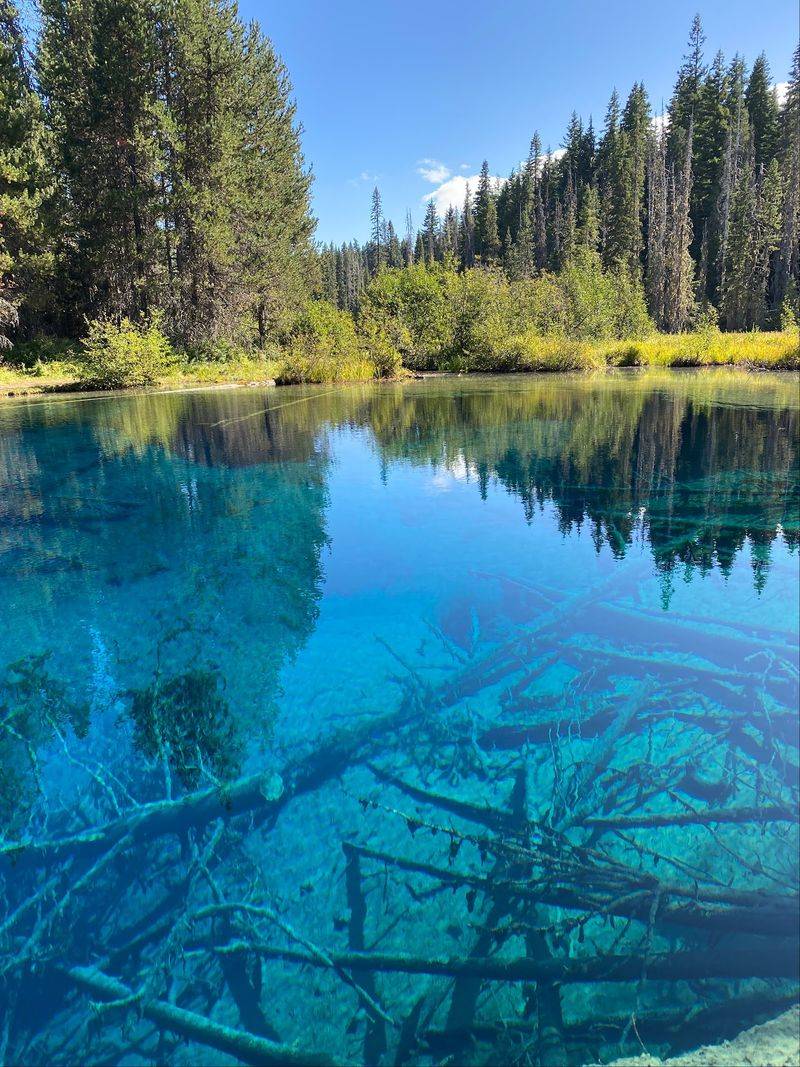
Little Crater Lake sits within the Little Crater Lake Campground, off Forest Road 58 near Timothy Lake in the Mt. Hood National Forest, Oregon.
The coordinates place it at roughly 45.148 degrees north latitude, deep in the forested hills southeast of Government Camp.
There is a $10 day-use fee to enter the campground, and the host on-site does enforce it, so pay before you park. The parking area at the far end of the campground holds about six to ten vehicles, and the trailhead starts right there.
From Portland, the drive takes roughly an hour and a half, winding through increasingly dense forest roads. The address to navigate toward is the Little Crater Lake Campground, Timothy Lake area, Clackamas County, Oregon.
The surrounding landscape is classic Pacific Northwest: tall Douglas firs, open meadows filled with corn lilies, and the kind of quiet that makes city noise feel like a distant memory. Getting there is half the experience, and arriving at that parking lot with the trailhead sign ahead of you is a genuinely exciting moment.
The Short Walk That Delivers a Big Reward
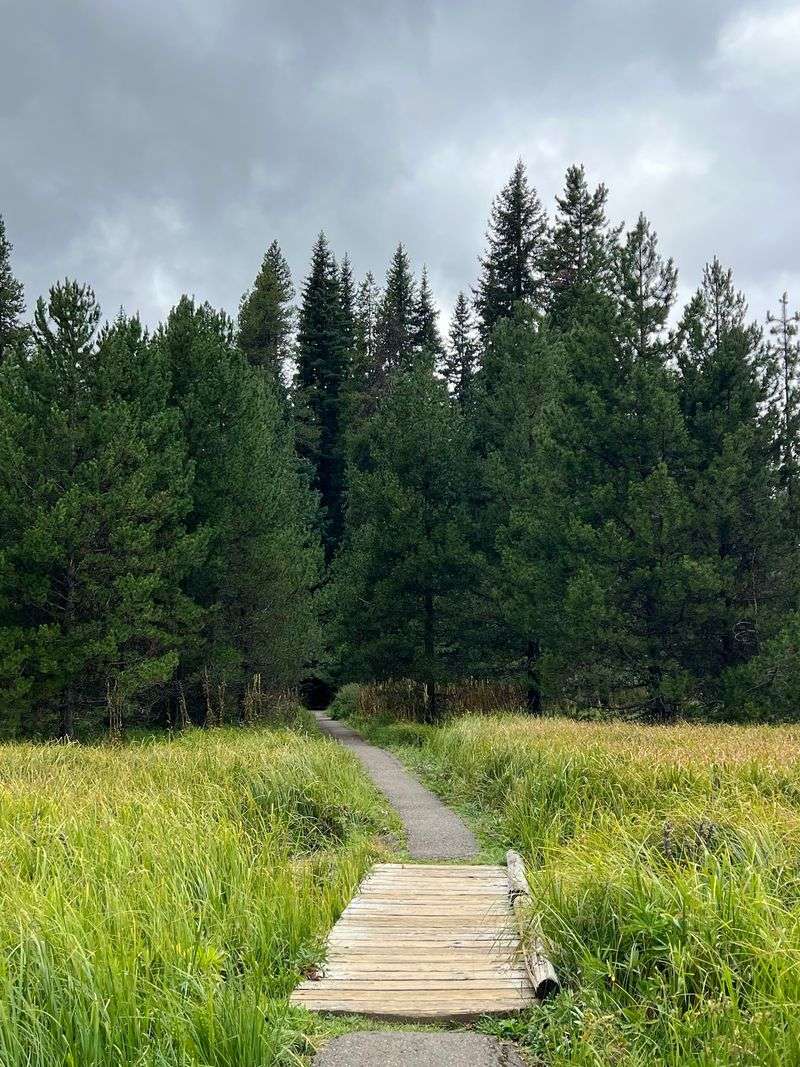
The trail from the parking area to the lake is only about 250 yards, roughly a five-minute walk on a mostly paved, completely flat path. It cuts through an open meadow first, where corn lilies grow thick and tall on both sides, before the trees close in and the air gets noticeably cooler.
Then the lake appears, and the walk suddenly feels like the best decision you made all week. The path continues past the main viewing area, connecting to a boardwalk and eventually meeting up with the Pacific Crest Trail for those who want a longer adventure.
The viewing platform near the water was out of service during my visit, but you can walk left or right along the bank. Going right leads you to the boardwalk and PCT connection.
Going left is a shorter path that ends fairly quickly since you cannot walk all the way around the pool.
Families with young children, older visitors, and anyone who just wants a peaceful stroll will find this trail completely manageable. The payoff at the end is wildly disproportionate to the effort required.
The Color That Makes People Stop and Stare
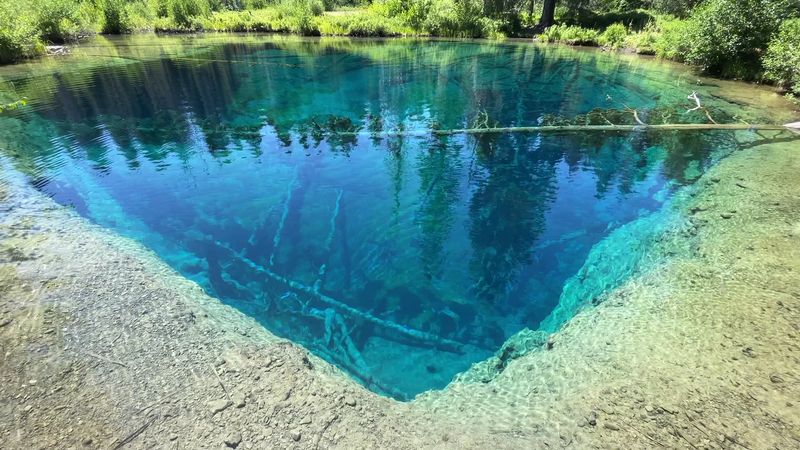
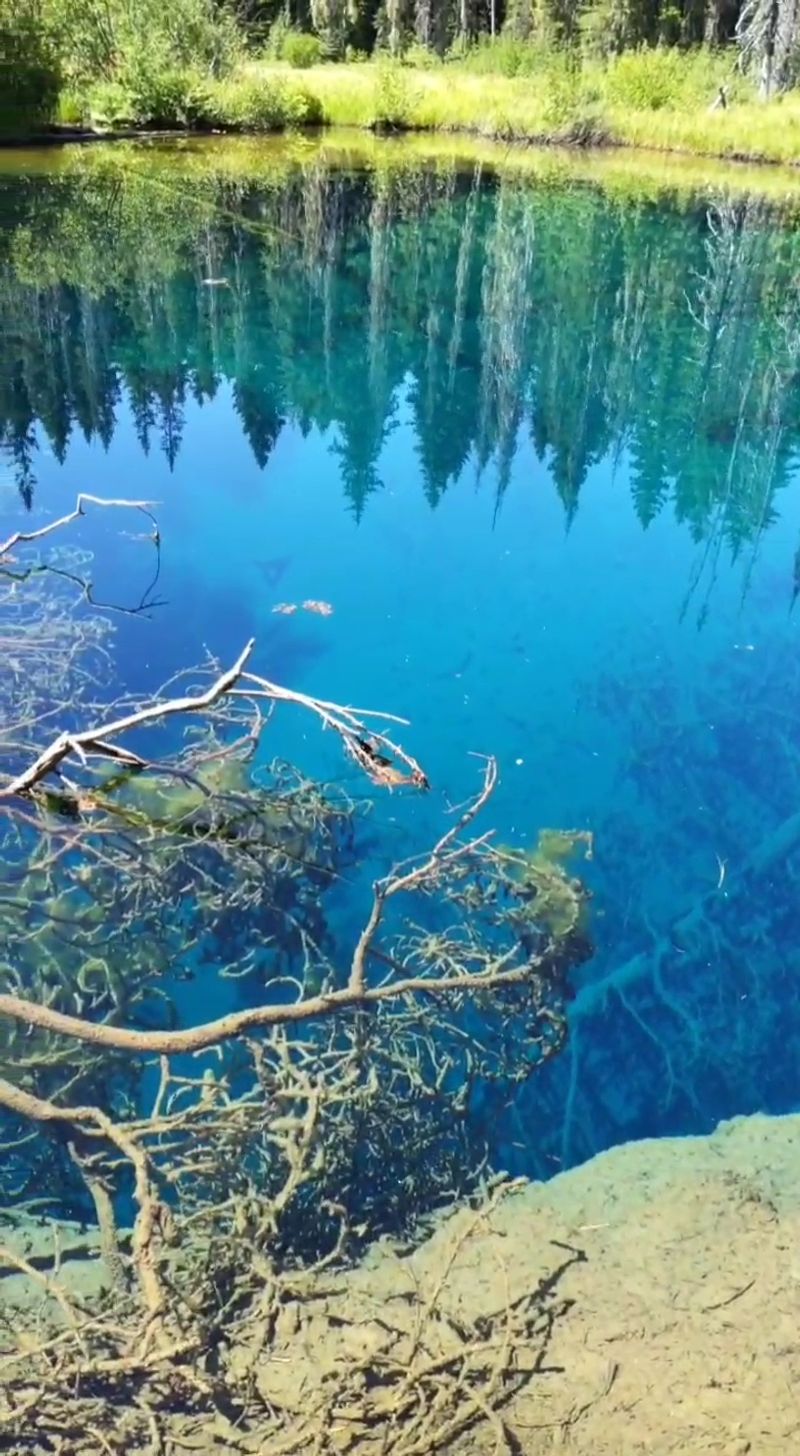
The first thing that hits you is the color. Not just blue, not just green, but a layered turquoise that shifts depending on where the light lands and what angle you are viewing from.
Deep blues at the center fade into aquamarines near the edges, and the whole surface glows like something lit from underneath.
No photograph I have seen of this place fully captures what your eyes take in when you are standing right at the bank. The clarity is the part that is truly hard to process.
You can see every rock, every ripple on the sandy bottom, every small fish drifting lazily below the surface, and the lake is 45 feet deep.
The turquoise color comes from the way light scatters through extremely pure, cold spring water. There are no algae blooms, no sediment clouds, and no murk of any kind.
The water is simply that clean.
People visiting nearby Timothy Lake often add this as a quick stop, and almost every single one of them ends up standing at the edge much longer than they planned, just staring into that impossible blue.
The Geology Behind the Magic
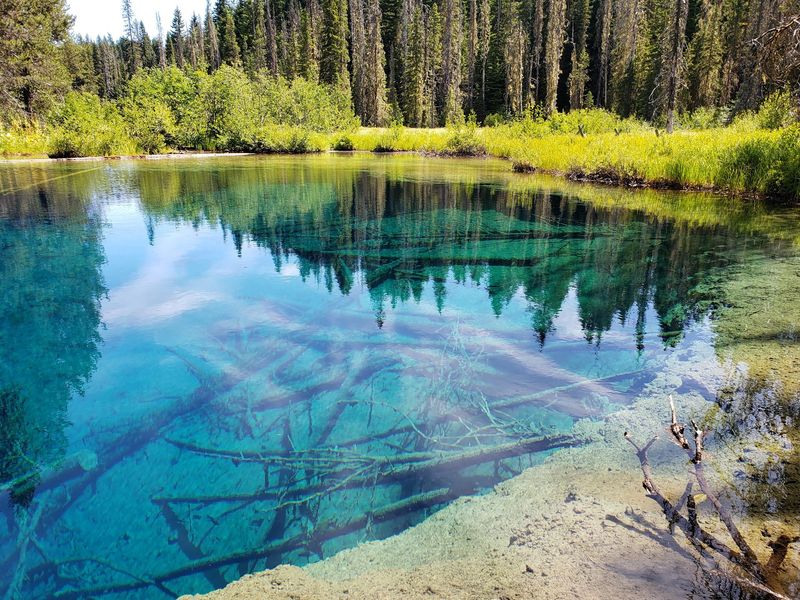
Little Crater Lake is not a typical lake. It is a spring-fed artesian pool formed when cold groundwater, filtered through layers of volcanic rock deep underground, rises to the surface under natural pressure.
That process creates water of extraordinary purity before it ever sees daylight.
The pool is roughly 100 feet wide and drops to about 45 feet at its deepest point. Because the water comes from underground aquifers rather than surface runoff, it carries almost no sediment, minerals that cloud water, or biological material that would reduce visibility.
The surrounding Mt. Hood region is geologically active, shaped by volcanic eruptions and glacial movement over thousands of years.
The same forces that built the mountain also created the underground pathways that feed this pool.
What makes the setting even more unusual is the meadow surrounding the lake. Corn lilies, which thrive in wet, boggy soil, grow densely around the perimeter, giving the whole scene a lush, almost prehistoric quality.
The combination of geological rarity and natural beauty is exactly why this spot has earned a reputation well beyond Oregon.
Why Swimming Is Off the Table
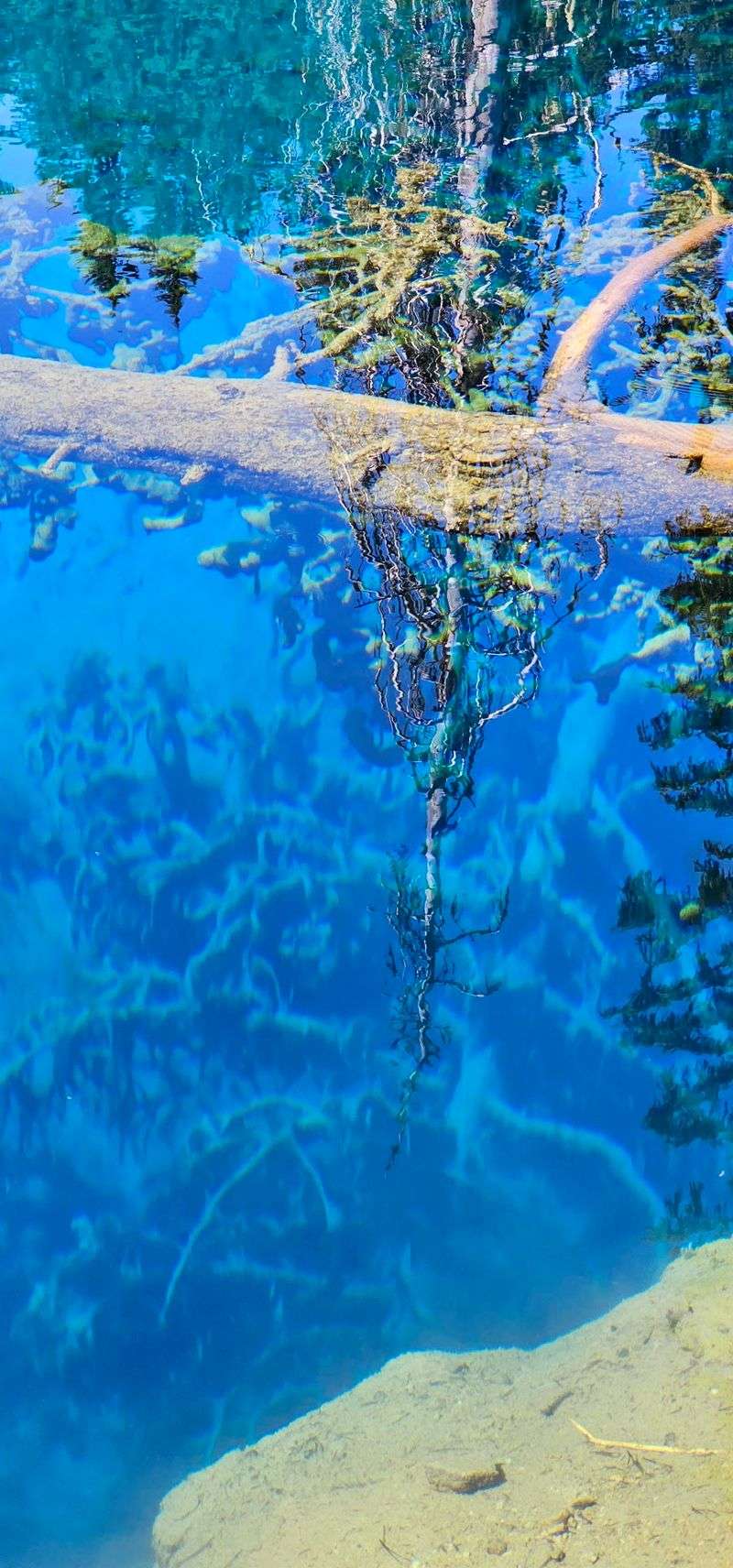
The water looks so inviting that the no-swimming rule feels almost cruel on a warm afternoon. But there is a very good reason for it, and once you know the temperature, the rule makes a lot more sense.
The water in Little Crater Lake stays at approximately 34 degrees Fahrenheit year-round. That is just barely above freezing.
The spring-fed source keeps the temperature constant no matter what season you visit, which means even on the hottest summer day, that water is cold enough to cause serious physical shock almost immediately.
You can dip your hand in at the edge, where the water warms slightly from sun exposure, and feel the sharp chill for yourself. Small fish somehow thrive in it, drifting near the bottom with what looks like zero concern for the temperature that would send most humans scrambling for a towel.
The no-swimming rule also protects the water quality. Because this is a rare and fragile natural formation, keeping human activity out of the pool preserves the clarity and ecological balance that make it worth visiting in the first place.
The fish seem perfectly happy with that arrangement.
Camping Right Next to the Lake
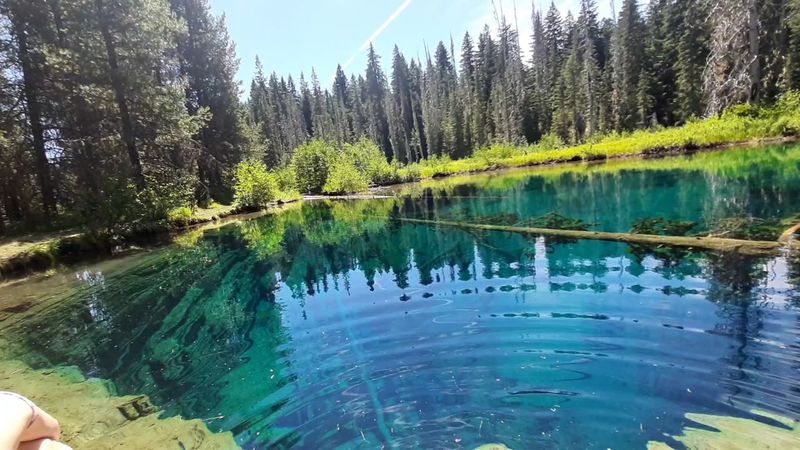
One of the quieter perks of visiting Little Crater Lake is that you do not have to rush back to a hotel when the day ends. The Little Crater Lake Campground sits right on-site, and staying overnight means you get the lake almost entirely to yourself in the early morning hours.
The campground is well-maintained, with clean bathrooms and a camp host who is both friendly and attentive. The host keeps things orderly, which means the site stays pleasant for everyone.
Reservations are recommended during peak summer months since spots fill up quickly once word gets out about a place this beautiful.
Waking up to a forest morning and walking five minutes to that turquoise pool before most people have had their coffee is an experience that is genuinely hard to beat. The light hits the water differently at dawn, casting softer reflections and bringing out subtle green tones in the shallower areas near the bank.
The $10 day-use fee applies if you are not camping, but overnight campers have full access throughout their stay. For a weekend escape from Portland or Salem, this campground punches well above its size.
The Best Time to Visit for Perfect Light
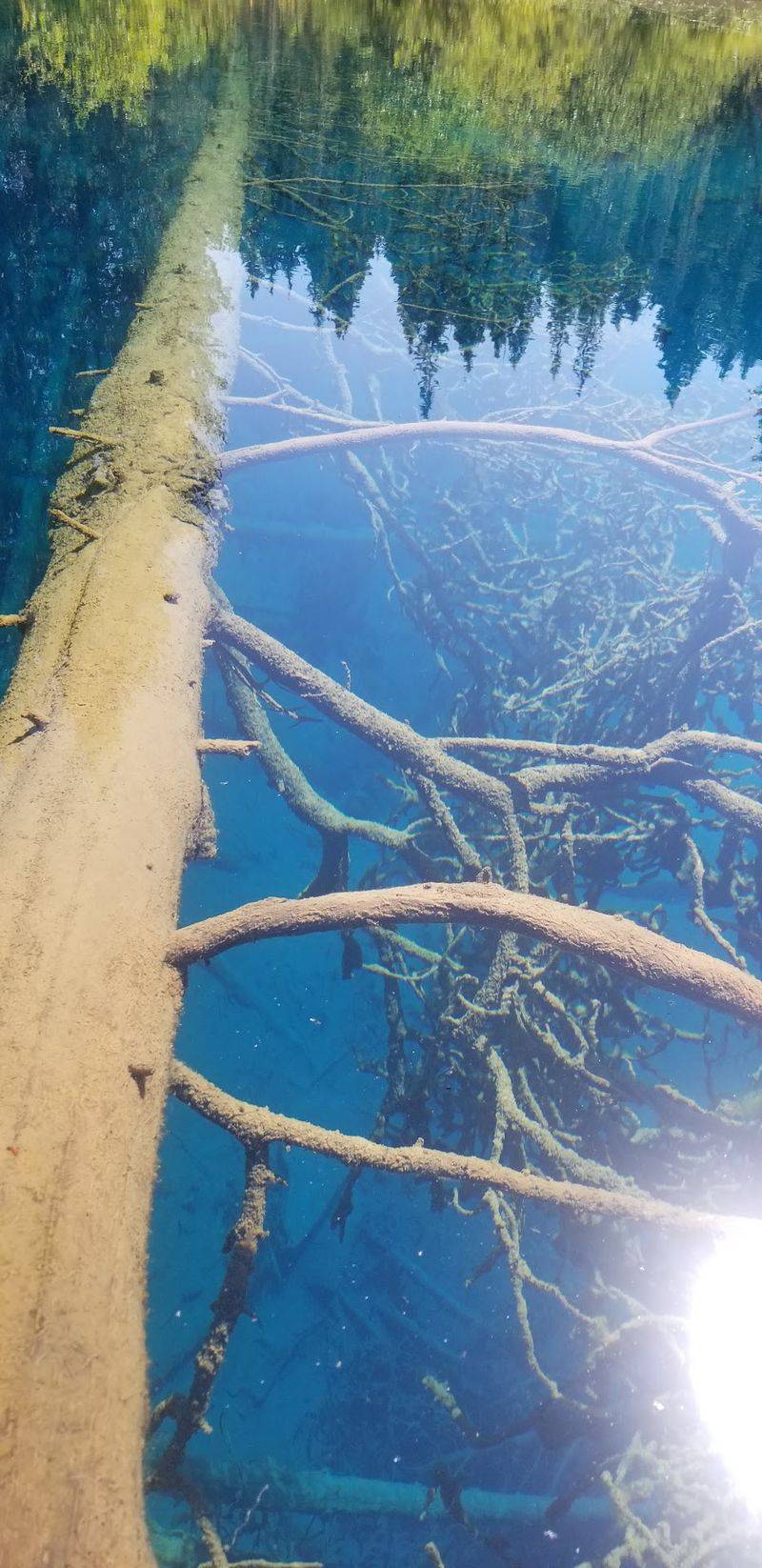
Timing your visit makes a real difference at this lake. The pool sits in a natural clearing surrounded by tall trees, which means the sun does not reach the water until mid-morning.
An early arrival around 9 a.m. can mean the lake is still in shadow, beautiful but missing that full luminous glow.
The sweet spot is late morning to early afternoon on a clear day, when direct sunlight hits the water at the right angle and the turquoise color absolutely ignites. Clouds mute the effect significantly, so checking the forecast before making the drive is worth a few seconds of your time.
Summer is the most popular season, and for good reason. The surrounding meadow is lush, the corn lilies are at full height, and the forest feels alive in a way that the colder months cannot match.
Fall visits offer fewer crowds and a beautiful contrast of changing leaf colors against that ever-constant blue water.
Spring can be muddy along the trail edges, and winter access depends on road conditions in the forest. For most visitors, June through September offers the most reliable combination of good weather, open roads, and that signature electric-blue payoff.
Connecting to the Pacific Crest Trail
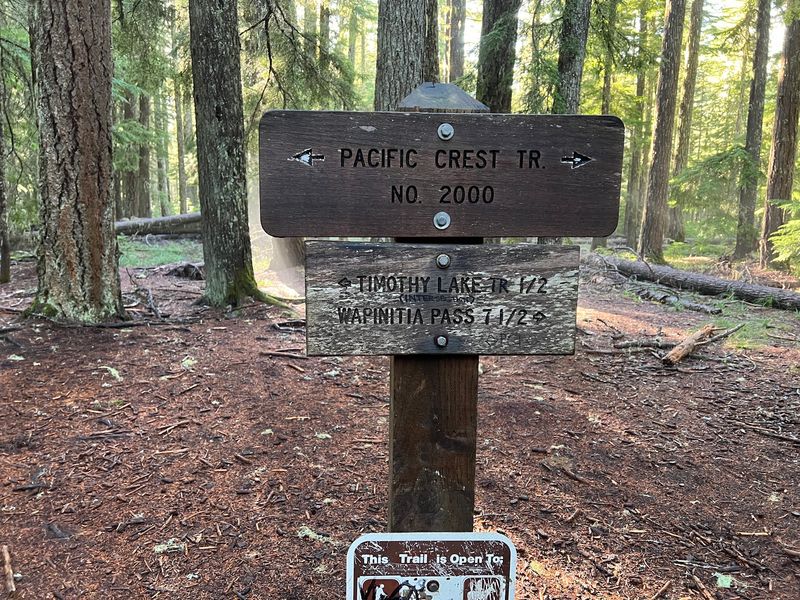
The lake itself is a short stop, but the trail network around it offers much more for those who want to stretch their legs further. Past the boardwalk near the lake, the path connects directly to the Pacific Crest Trail, one of the most famous long-distance hiking routes in the country.
From that junction, you can follow the PCT in either direction through the Mt. Hood National Forest.
Longer loop options range from about five to six miles up to eleven or twelve miles for more ambitious hikers. The terrain is classic Pacific Northwest forest walking, with well-maintained paths, towering conifers, and occasional mountain views.
Even a short extension of a mile or two past the lake gives you a completely different experience from the quick parking-lot-to-viewpoint visit. The forest deepens, the trail quiets, and the sense of being genuinely out in the wilderness becomes very real very fast.
Connecting to the PCT also means this spot works well as part of a larger Mt. Hood itinerary.
Pair it with Timothy Lake, a drive up to Timberline Lodge, or a stop at Ramona Falls, and you have a full day of Oregon outdoor highlights without much overlap.
Wildlife and Plant Life Around the Pool
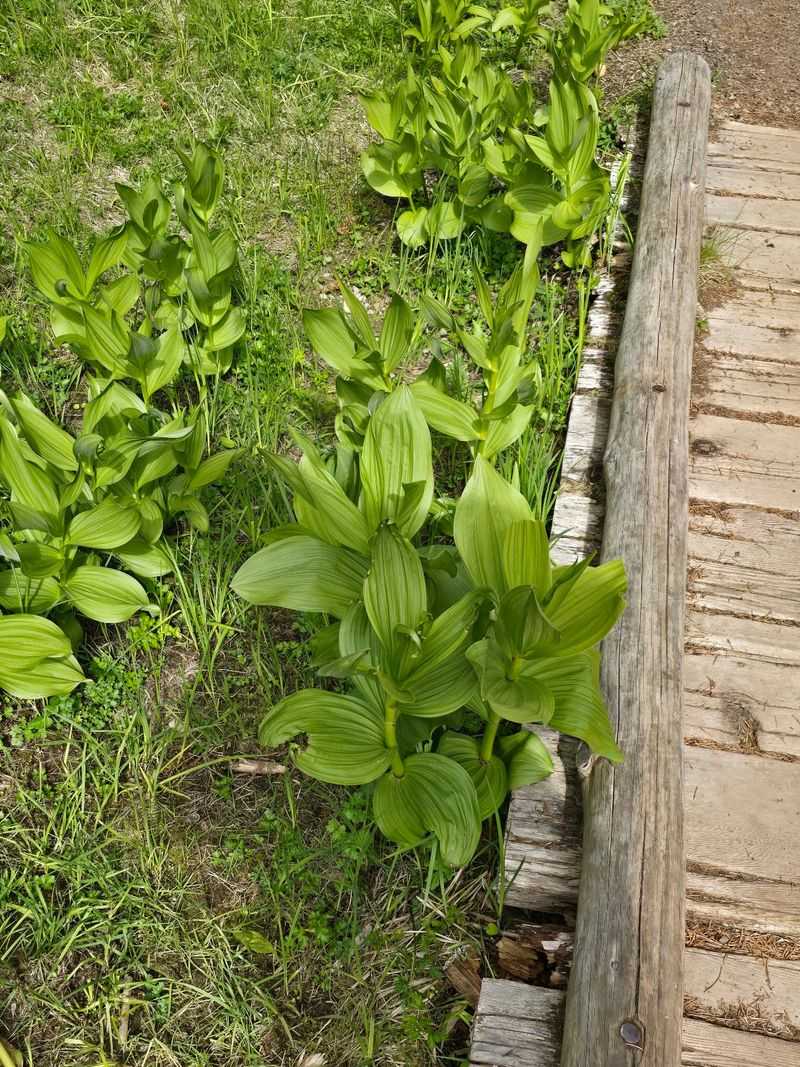
The ecosystem around Little Crater Lake is quietly fascinating. Corn lilies dominate the meadow surrounding the pool, growing in dense clusters that give the approach trail a lush, almost jungle-like quality in peak summer.
Their broad green leaves catch the light and create a soft rustling sound when the breeze moves through.
Inside the lake itself, tiny fish navigate the cold, clear water with surprising ease. Seeing them from the bank is part of what makes the view so surreal.
The water is so transparent that the fish look like they are floating in air rather than swimming in a 45-foot-deep pool.
The surrounding forest supports a wide variety of bird life typical of the Mt. Hood region, including woodpeckers, jays, and the occasional osprey passing overhead.
Deer are commonly spotted near the campground in the early morning and at dusk, moving quietly through the trees at the meadow’s edge.
The entire area is a reminder that healthy ecosystems are worth protecting. The rules around swimming and staying on designated paths exist specifically to keep this delicate balance intact, so that future visitors can experience the same pristine scene that makes this place so worth the drive.
Why This Spot Deserves a Place on Your Oregon List
Oregon has no shortage of beautiful places, but Little Crater Lake occupies a category that very few spots can claim. The combination of effortless access, extraordinary water clarity, and a setting that feels completely removed from everyday life makes it stand out in a state full of natural highlights.
The short walk means almost anyone can experience it, regardless of fitness level or hiking experience. Young children, grandparents, and everyone in between can reach the lake and stand at its edge without breaking a sweat.
That kind of accessibility paired with that level of visual payoff is genuinely rare.
The $10 day-use fee is a small price for what you get. Many visitors combine the stop with a visit to nearby Timothy Lake, turning it into a relaxed half-day loop through some of the best scenery the Mt.
Hood area has to offer.
Every person I spoke with near the lake that morning said some version of the same thing: no photo does it justice. They were right.
The color, the depth, the silence of the forest around it, and the cold clarity of the water all add up to something that has to be seen in person to be fully understood. Plan the trip.
Share this story