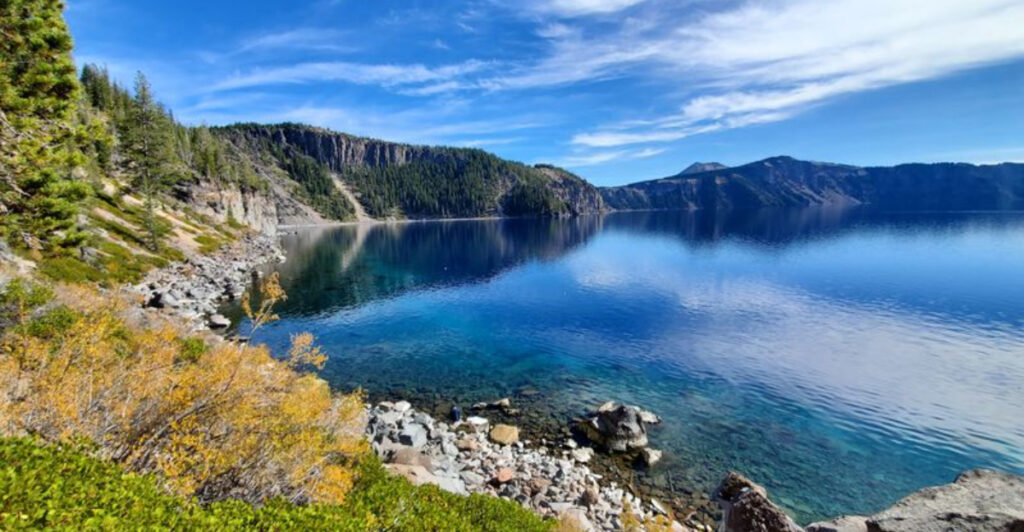
Tucked away in southern Oregon, Crater Lake sits quietly inside a collapsed volcano, playing by absolutely none of nature’s usual rules. Most lakes have rivers feeding them or draining them, but not this one.
Crater Lake fills itself entirely from snow and rain, and it loses water only through evaporation and seepage into the ground. It sounds impossible, but the science behind it is just as fascinating as the view itself.
A Volcano’s Surprising Legacy
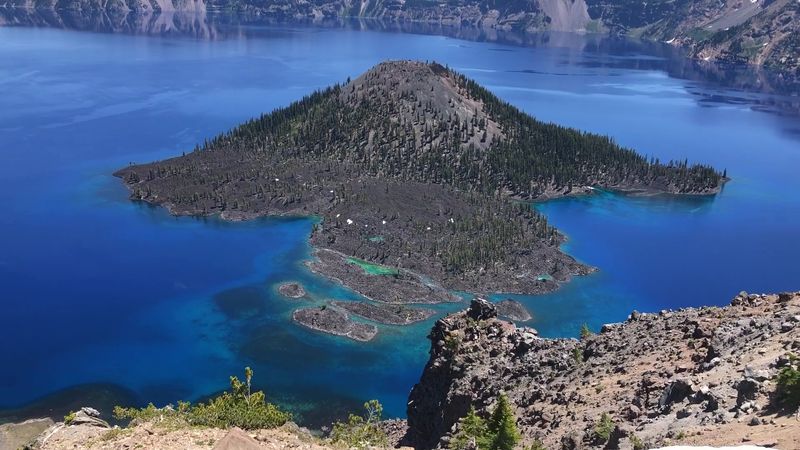
Around 7,700 years ago, a massive volcano called Mount Mazama erupted so powerfully that its top completely caved in on itself. What was left behind was a giant bowl-shaped depression called a caldera.
Over thousands of years, that bowl slowly filled with water, creating what we now call Crater Lake.
The caldera walls rise up to 2,000 feet above the water, forming some of the most dramatic cliffs you will ever see at a lake. The sheer scale of the place is hard to wrap your head around until you actually stand on the rim and look down.
Native American tribes, particularly the Klamath people, witnessed the eruption and passed down stories about it for generations. Scientists only confirmed the volcanic origin in the late 1800s.
Crater Lake became a national park in 1902, making it one of Oregon’s most treasured natural landmarks. The volcanic history is not just backstory here; it is the whole reason this place exists.
No Rivers In, No Rivers Out
Here is the part that makes most people stop and scratch their heads. Crater Lake has zero rivers or streams flowing into it, and zero rivers or streams flowing out of it.
That breaks the basic pattern of almost every other major lake on Earth.
So where does all the water come from? Snow.
Lots and lots of snow. The Crater Lake area receives an average of 44 feet of snow every single year, making it one of the snowiest places in the entire country.
That snowmelt, along with rainfall, slowly fills the lake and keeps it at a remarkably steady level.
Water leaves the lake through two main ways: evaporation into the air and seepage down through the porous volcanic rock beneath the lake bed. Amazingly, these inputs and outputs balance out so well that the water level rarely changes by more than three feet in either direction across an entire year.
Nature found its own perfect system here, no rivers required. It is one of the most quietly impressive hydrological balancing acts on the planet.
The Deepest Lake in the United States
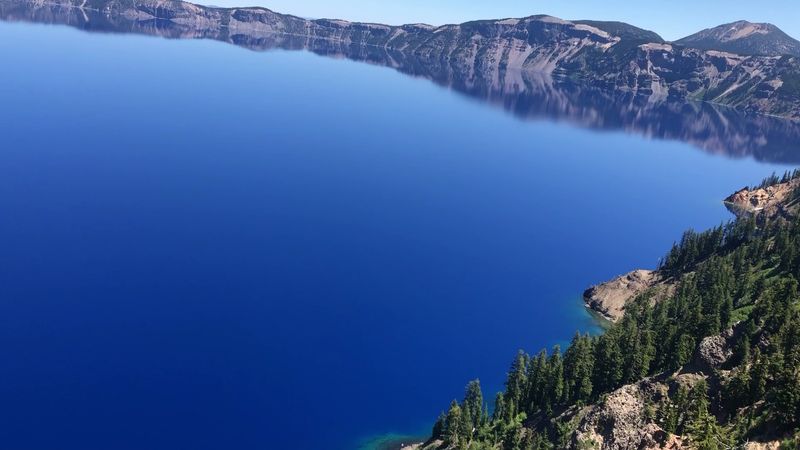
Drop a school bus into Crater Lake and you would need to stack about 27 more on top of it just to reach the surface. The lake plunges to a maximum depth of 1,943 feet, making it the deepest lake in the United States and the ninth deepest in the entire world.
That kind of depth does something remarkable to the way light behaves in the water. Sunlight penetrates deep into the lake, and the water absorbs red and yellow wavelengths while scattering blue light back toward the surface.
The result is that jaw-dropping, almost unreal shade of blue that visitors keep describing as looking like something out of a painting.
Scientists have measured light penetrating to depths of 142 feet in Crater Lake, which is extraordinarily clear compared to most lakes. The depth also keeps the water incredibly cold year-round, even when summer temperatures on the rim are warm and comfortable.
Swimmers brave enough to take a dip at the one designated swimming spot report that the cold hits like a wall. The lake’s depth is not just a fun fact; it is central to everything that makes this place so unique.
Water So Clear It Looks Fake
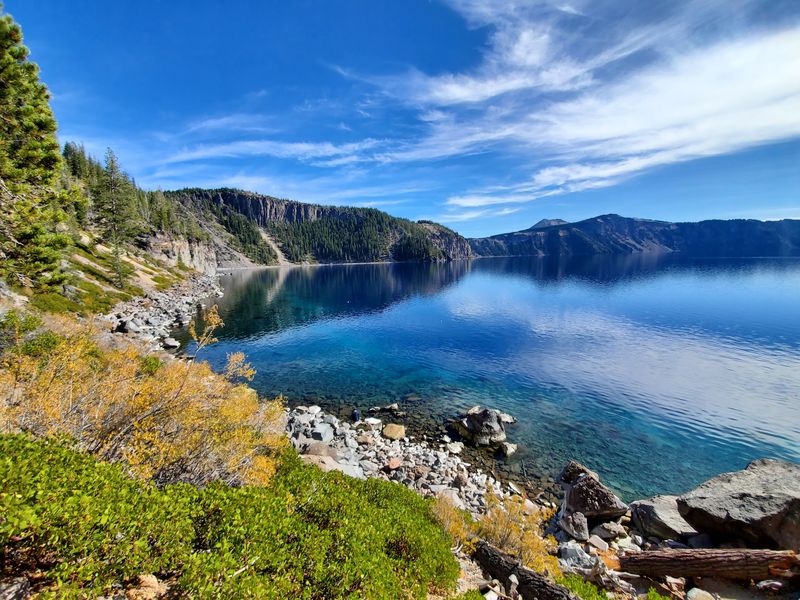
Visitors consistently say the same thing when they first see Crater Lake: it looks like someone turned up the saturation filter all the way. The water is so vibrantly, intensely blue that people genuinely wonder if they are seeing it correctly.
One reviewer put it perfectly, saying the views look like AI in person because the lake appears too perfect to be real.
The clarity comes down to purity. Because no rivers flow into Crater Lake, no sediment, agricultural runoff, or pollutants wash in from surrounding land.
The water that fills the lake comes almost entirely from precipitation, which is about as clean as water gets before it even hits the ground.
Scientists measure water clarity using something called a Secchi disk, which is a black and white disc lowered into the water until it disappears from view. In Crater Lake, that disc has been visible at depths of up to 142 feet.
For comparison, most lakes lose visibility within just a few feet. The lake’s purity is so well preserved that it is considered one of the clearest bodies of water in North America.
Seeing it in person genuinely feels like cheating reality.
Wizard Island Rises From the Water
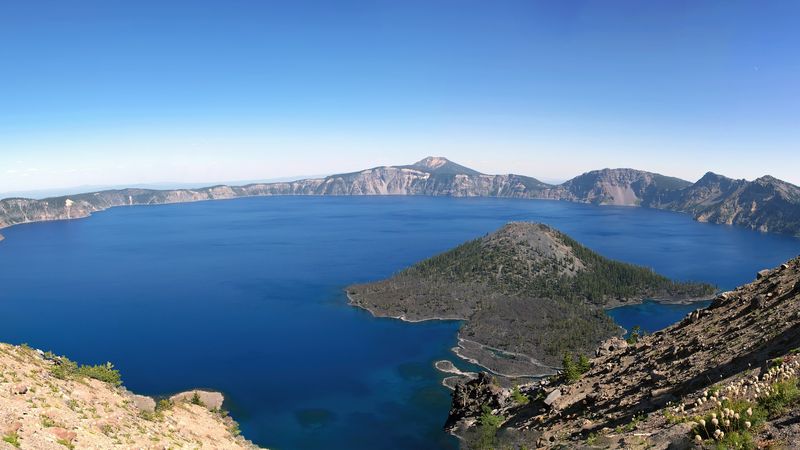
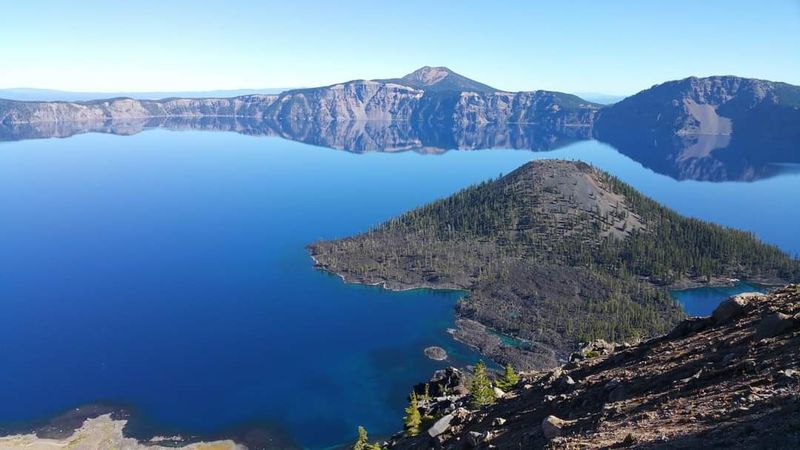
Smack in the middle of all that blue water sits a small volcanic cinder cone that looks like it belongs in a fantasy novel. Wizard Island rises about 755 feet above the lake’s surface and was formed by volcanic activity that happened after the main caldera collapse.
It earned its whimsical name because early visitors thought it looked like a sorcerer’s hat.
Getting to Wizard Island requires taking a boat tour from the Cleetwood Cove dock, which is the only place where visitors can actually access the water’s edge. The boat ride itself is an experience, gliding across water so blue and clear that you can see deep below the surface.
Once on the island, hikers can climb to the summit crater at the top.
Standing on Wizard Island and looking back at the caldera walls surrounding you is a genuinely surreal moment. You are inside a collapsed volcano, on a smaller volcano, surrounded by one of the clearest lakes in the world.
The island also has a small lava tube and fascinating rock formations to explore around its base. It is the kind of place that makes you feel like you wandered into something ancient and extraordinary.
Rim Drive Delivers Views at Every Turn
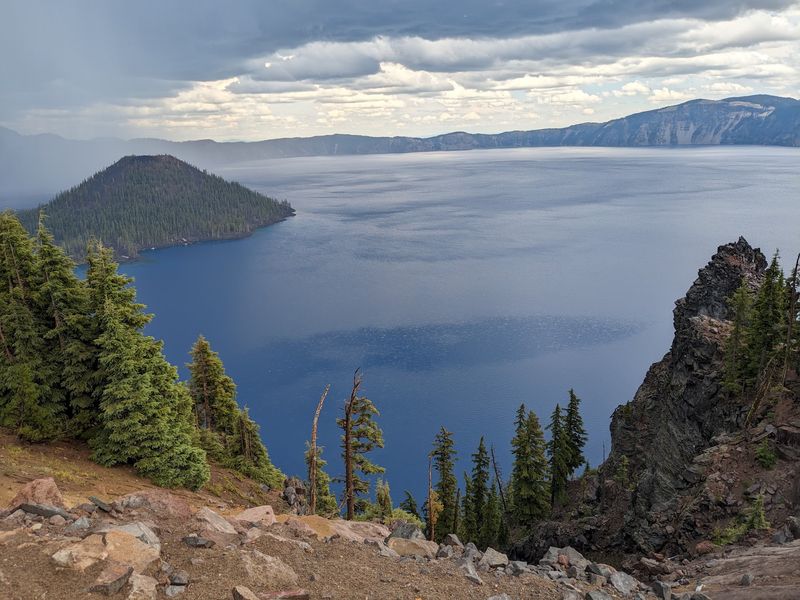
Thirty-three miles of road wrap around the entire rim of Crater Lake, and almost every single mile of it earns its place on a bucket list. Rim Drive is the main scenic route through Crater Lake National Park, connecting dozens of overlooks, trailheads, and pullouts where the views just keep getting better.
Drivers and cyclists stop constantly along the route because every bend in the road seems to reveal a slightly different and equally stunning angle of the lake. The east and west rim offer noticeably different perspectives, with the west rim often described as having more dramatic drop-offs and slightly fewer crowds during peak season.
The road is typically open from late June through October, depending on snowfall. During winter and spring, the snow piles up so deeply that the road becomes inaccessible by car.
Some sections of the rim receive snow even in late June, and one reviewer mentioned fresh snow falling alongside blooming wildflowers during the last weekend of June. The combination of snow, flowers, and electric-blue water visible from the rim is exactly the kind of scene that makes people pull over, forget whatever they were rushing toward, and just stand there quietly for a while.
Hiking Trails for Every Skill Level
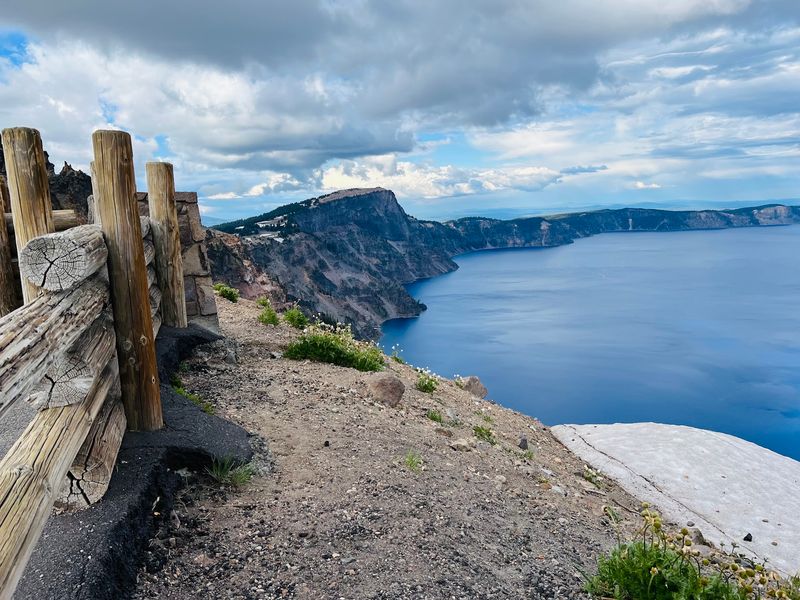
With 142 mentions in visitor reviews, hiking is clearly one of the top reasons people make the trip to Crater Lake. The park offers trails ranging from easy lakeside walks to more challenging climbs with serious elevation gain.
Whatever your fitness level, there is a path here with your name on it.
The most famous trail is Cleetwood Cove Trail, which is the only route that leads down to the water’s edge. Fair warning: it drops 700 feet in about a mile, which means the hike back up is genuinely tough.
Visitors who make it to the bottom get rewarded with close-up views of the lake and access to the boat tours that head out to Wizard Island.
Other popular options include trails to viewpoints along the rim, wildflower meadow walks, and routes that pass through fascinating volcanic rock formations. One reviewer described hiking in late June and finding both snow on the ground and wildflowers in full bloom at the same time, which sounds like the best possible combination of seasons.
The park’s trail signage is well-maintained and easy to follow, making navigation straightforward even for first-time visitors. Comfortable shoes and plenty of water are all you really need.
Snow That Sticks Around Longer Than Expected
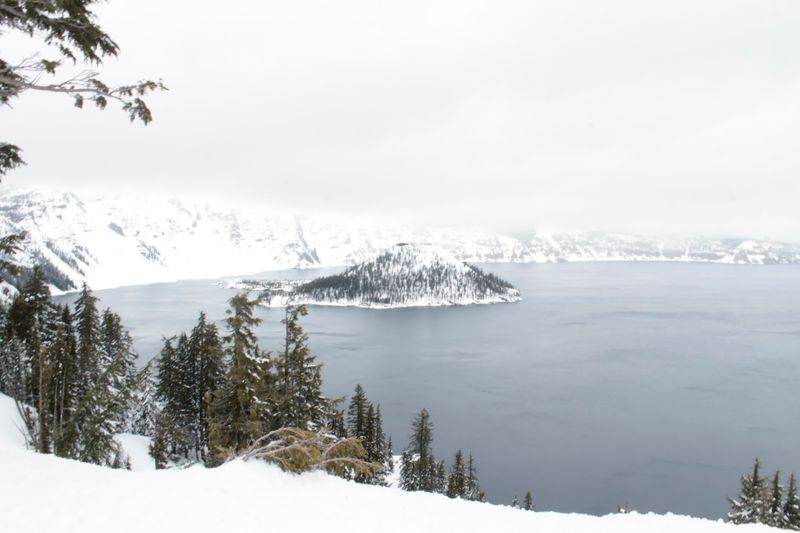
Forty-four feet of snow per year sounds like a typo, but it is completely accurate. Crater Lake sits at an elevation of around 6,178 feet at the lake surface, and the surrounding rim climbs even higher.
That elevation, combined with Oregon’s wet winters, creates snowfall totals that are genuinely hard to believe.
Snow often lingers well into summer at the rim. Visitors who showed up in April reported full snow coverage on the ground.
Even early July visitors have encountered snowy conditions on some trails. One reviewer mentioned that several trails were still closed in late June because they were buried under snow, while another described snowfall happening the last weekend of that same month.
The snowpack is actually what keeps Crater Lake alive. All that accumulated snow melts slowly through spring and summer, continuously replenishing the lake’s water supply.
Without those massive annual snowfalls, the lake’s water balance would fall apart. So while the snow might close a few trails and make the drive up a bit more adventurous, it is literally the engine that keeps this remarkable lake running.
Packing layers is always smart here, no matter what month the calendar says it is.
Wildlife and Wildflowers Add to the Magic
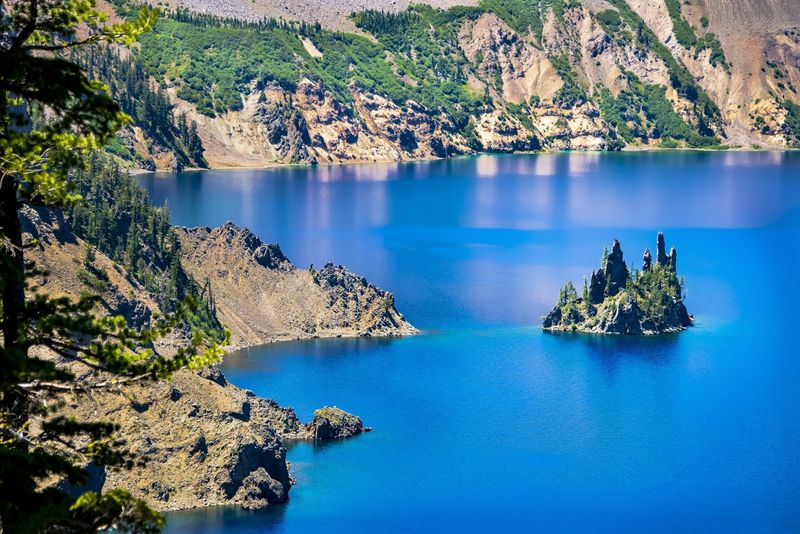
Crater Lake is not just a lake; it is an entire ecosystem sitting inside a volcano. The surrounding forests, meadows, and rocky slopes support a wide variety of wildlife, including black bears, deer, eagles, and Clark’s nutcrackers, which are a type of bird that is practically a mascot for high-elevation parks in the western United States.
Wildflower season at Crater Lake is a genuine spectacle. The meadows around the rim burst with color in late June and July, with lupine, paintbrush, and phlox among the most common blooms.
The contrast between bright purple and orange flowers and the deep blue lake behind them is the kind of sight that makes photographers forget to breathe.
One reviewer described visiting during the last weekend of June and finding snow on the ground alongside flowers in full bloom. That overlap of seasons is surprisingly common at Crater Lake and creates a visual combination that feels almost dreamlike.
Even visitors who are not particularly interested in botany tend to stop and take pictures when the wildflowers are out. The park’s high elevation keeps temperatures cool enough that flowers bloom later here than at lower elevations, extending the season in a very pleasant way.
Planning Your Visit to Make the Most of It
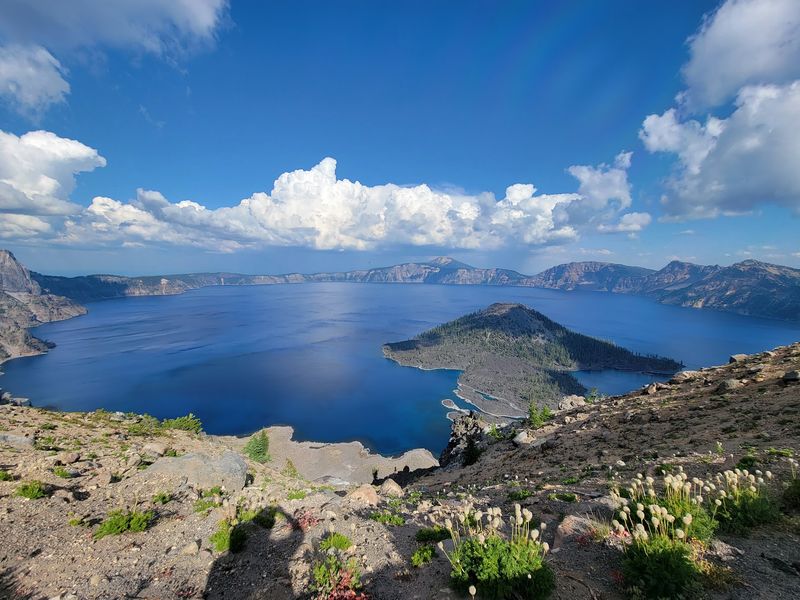
Getting to Crater Lake requires a bit of planning, but the payoff is absolutely worth the effort. The park entrance fee is $30 per vehicle, which covers seven days of access.
That price point makes it easy to justify spending multiple days exploring different trails, overlooks, and viewpoints without feeling rushed.
Summer is peak season, with July and August drawing the largest crowds. Arriving early in the morning or later in the afternoon helps avoid the biggest traffic backups along Rim Drive.
The trolley tour is a smart option on busy days, giving visitors a guided loop around the rim without the stress of finding parking at every stop. One reviewer specifically credited the trolley with letting them see far more of the lake than they could have managed by car on a crowded day.
The park has a lodge, restaurant, gift shops, and a visitor center, all of which are well-maintained and staffed by genuinely helpful people. Accommodations inside the park book up fast, so reserving early is strongly recommended.
For those coming from Portland, Eugene, or Medford, the drive takes a few hours but passes through beautiful Oregon scenery the whole way. Crater Lake consistently earns its spot on every Oregon must-see list, and one visit makes it immediately clear why.
Share this story