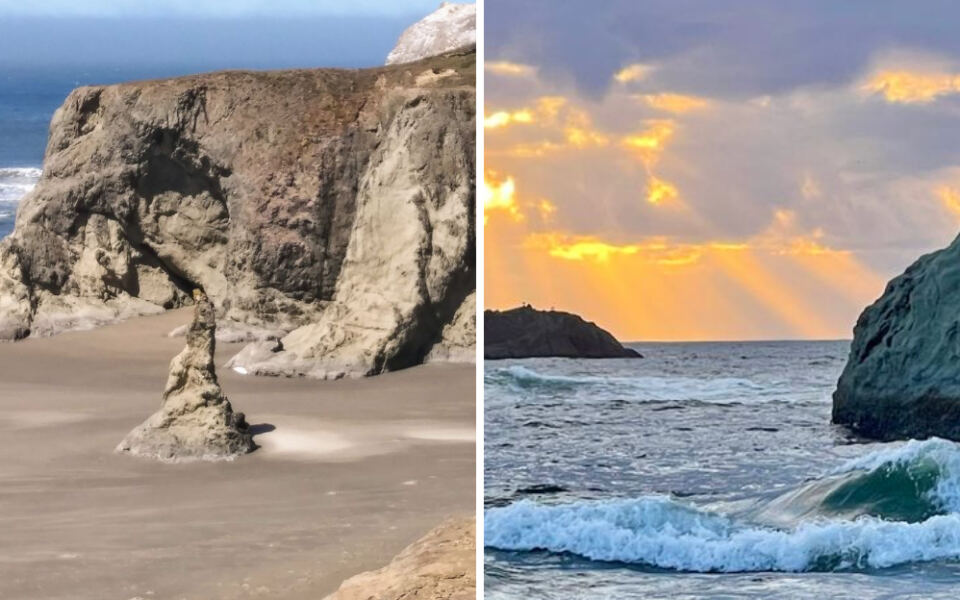
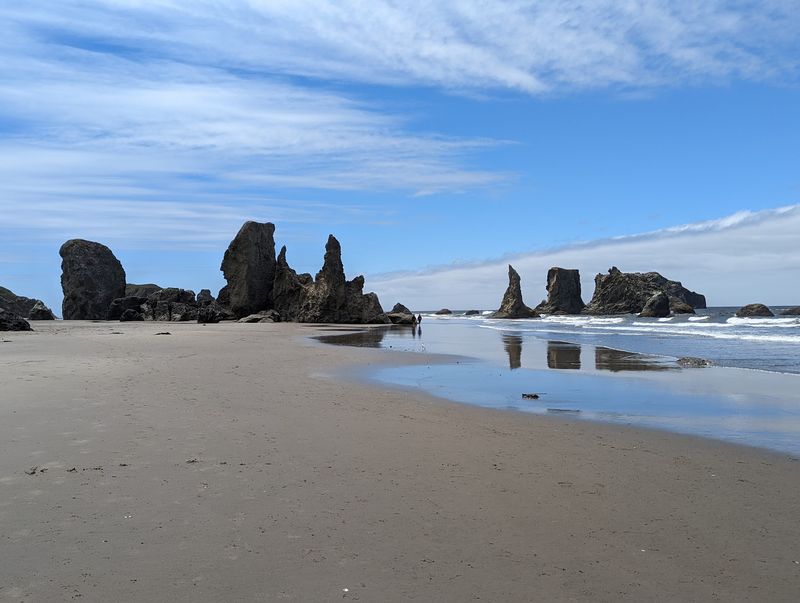
Face Rock State Scenic Viewpoint near Bandon, Oregon, showcases one of the most legendary rock formations along the entire Pacific coastline. The massive sea stack that gives the park its name resembles a woman’s face gazing up at the sky, frozen in stone by an ancient Coquille Indian legend.
With dramatic ocean views, accessible tide pools, mysterious sea caves, and a welcoming beach that’s open 24 hours a day, this scenic wonder offers something special for every visitor who makes the journey to Oregon’s southern coast.
The Legendary Face Rock Formation
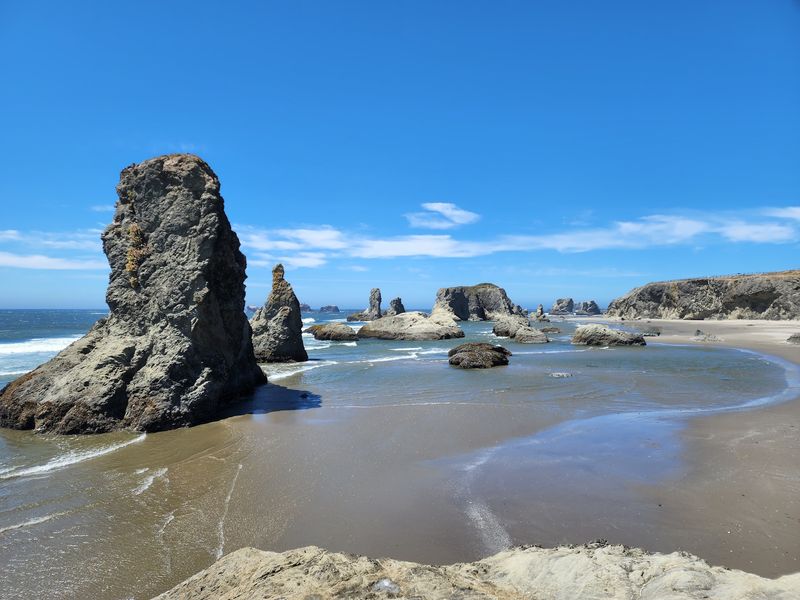
Standing offshore like a guardian frozen in time, Face Rock rises from the Pacific with an unmistakable profile that has captivated visitors for generations. According to Coquille legend, the rock formation depicts Princess Ewauna, who was turned to stone while gazing at the stars, her face forever skyward in defiance of an evil sea spirit.
The resemblance is genuinely striking when you spot the nose, forehead, and chin carved by centuries of wind and waves.
From the parking area, you’ll get a perfect view of this iconic formation without even descending to the beach. The rock measures roughly 40 feet tall and sits about 150 feet from shore, surrounded by smaller sea stacks that complete the legendary scene.
Photographers flock here during golden hour when the setting sun bathes the formation in warm light, creating shadows that enhance the facial features.
Bring binoculars if you want a closer look at the details. The best viewing angle is actually from the northern section of the parking lot, where the profile appears most human-like against the horizon.
Tide Pool Exploration at Low Tide
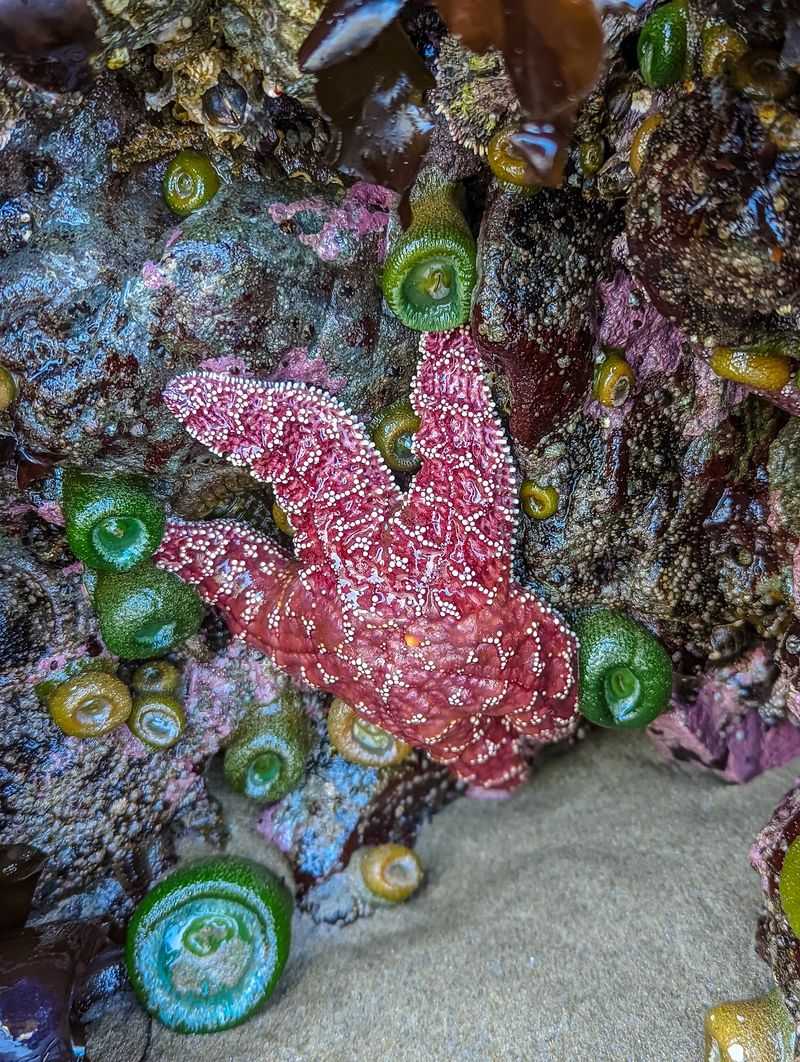
Timing your visit with the tide tables transforms Face Rock from a scenic overlook into an interactive marine biology classroom. When the Pacific retreats, it reveals a hidden world of tide pools teeming with purple and orange sea stars clinging to rock bottoms, sea anemones waving their tentacles, and hermit crabs scuttling between crevices.
Kids absolutely love searching for these creatures, and the firm wet sand makes it easy to navigate between pools.
Low tide typically occurs twice daily, and you’ll want to check the schedule before your visit to maximize exploration time. The pools form naturally in depressions around the base of the rock formations, creating protected habitats for dozens of species.
You’ll spot everything from tiny sculpin fish darting through shallow water to bright green sea lettuce decorating the rocks.
Remember to look but don’t touch. These delicate ecosystems depend on minimal human interference.
Wear water-resistant shoes with good grip since the rocks can be slippery, and keep your phone in a waterproof case because waves occasionally surprise even careful tide poolers.
Sea Caves Ready for Adventure
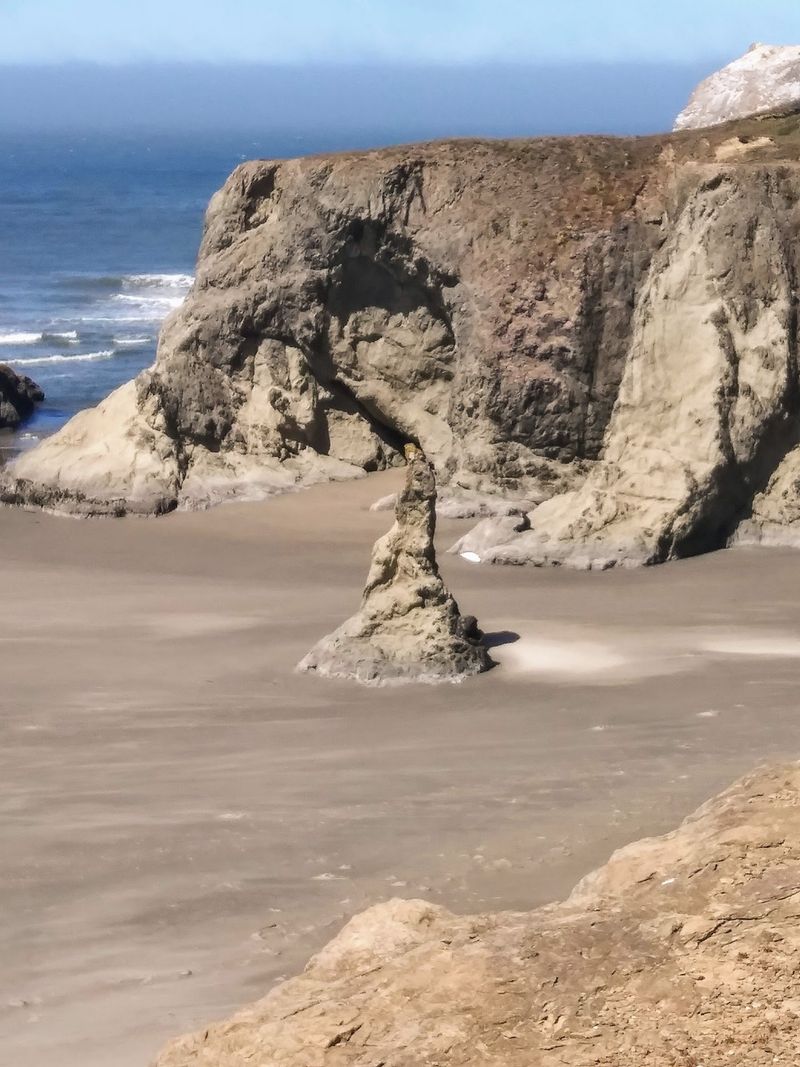
Carved by relentless wave action over thousands of years, the sea caves at Face Rock offer a thrilling exploration opportunity for adventurous visitors. Several caves puncture the rocky headlands, their entrances gaping like mysterious portals into the coastal cliffs.
During low tide, you can walk right into some of these formations, experiencing the echo of dripping water and the cool dampness that smells distinctly of ocean and minerals.
The caves vary in size from small alcoves barely big enough to duck into, to larger chambers where several people can stand comfortably. Sunlight filters through cracks and openings, creating dramatic light beams that photographers dream about.
Some caves go back 20 or 30 feet before narrowing to impassable passages, while others connect to create short tunnels you can walk through completely.
Safety comes first when cave exploring. Never enter caves when the tide is rising, as you could get trapped by incoming waves.
Bring a flashlight or headlamp to illuminate dark corners, and watch for uneven floors that might twist an ankle. The experience feels like discovering a secret world that most people never see.
Accessible Beach Stairs and Pathways
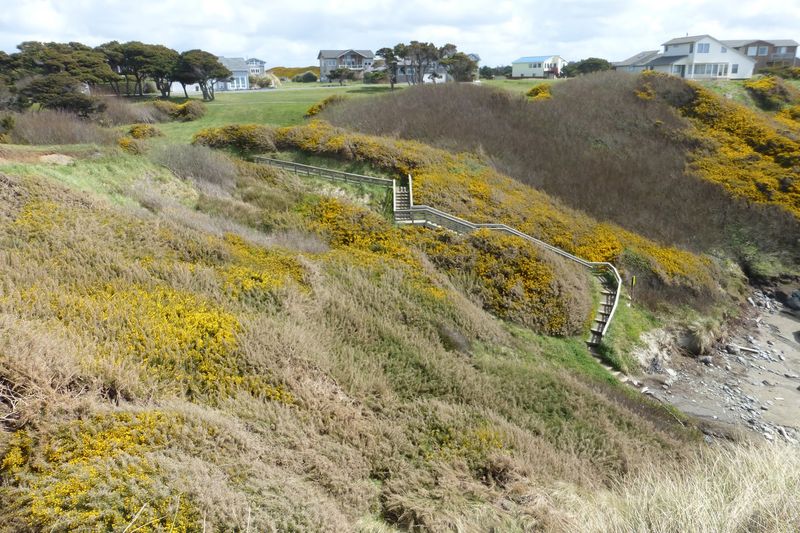
Getting down to the beach itself is surprisingly manageable thanks to a well-maintained staircase that descends from the parking area to the sand below. The stairs feature sturdy construction with regular landings where you can pause to catch your breath or snap photos of the expanding view.
Unlike some Oregon coast access points that require scrambling down steep, muddy trails, Face Rock provides a civilized route suitable for most fitness levels.
One important note: the bottom section of stairs lacks railings, which can challenge visitors with mobility concerns or balance issues. Take your time on this portion and consider using trekking poles if you have them.
The stairs aren’t excessively long, maybe 100 steps total, but the elevation change is noticeable on the return climb.
Once you reach the sand, the beach stretches in both directions for extended walks. The sand here packs firm near the waterline, making it easier to walk than the soft, energy-sapping sand found at some beaches.
Dogs are welcome on leashes, and you’ll often see happy pups racing along the shore. Horseback riders occasionally pass through, adding a romantic Old West vibe to the coastal scenery.
Circles in the Sand Labyrinth Art
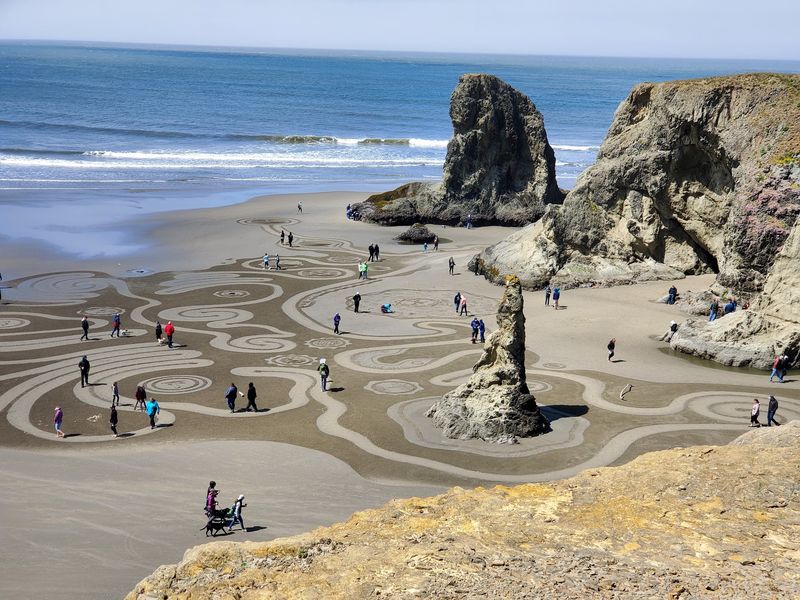
Between Memorial Day and Labor Day, if you time your morning visit just right, you might witness one of the Oregon coast’s most enchanting temporary art installations. Local artists create massive labyrinths in the sand during low tides between 6:00 and 10:00 AM, using rakes to draw intricate circular patterns that stretch across the beach.
These aren’t simple designs but complex walking meditations that can take 40 minutes or more to complete from entrance to center.
Each labyrinth is unique, never repeated, making every encounter a one-time experience. The patterns range from classic seven-circuit designs to elaborate custom creations inspired by Celtic knots, mandalas, and nature motifs.
Walking the path becomes a moving meditation, with the rhythm of your footsteps and the sound of waves creating a peaceful, almost spiritual experience.
The art proves so popular that organizers run a shuttle service from a nearby park to prevent parking congestion. Visitors receive a small colored rock as a keepsake, a tangible memory of their labyrinth walk.
By afternoon, the rising tide erases all evidence, returning the beach to its natural state until the artists return with their rakes the next morning.
Stunning Sunset Photography Opportunities
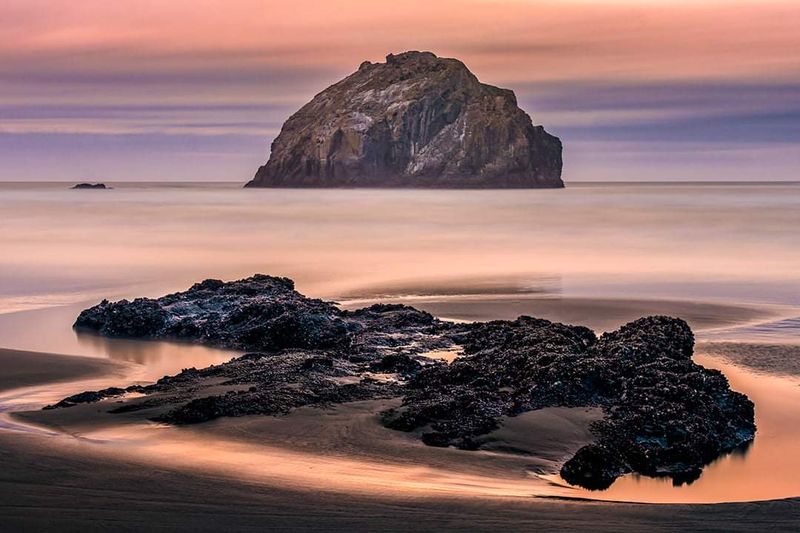
Photographers consistently rank Face Rock among Oregon’s top sunset locations, and for good reason. The westward-facing beach positions the iconic rock formations perfectly against the setting sun, creating silhouettes and color-saturated skies that look almost too beautiful to be real.
Unlike the crowded scenes at Cannon Beach’s Haystack Rock, Face Rock offers similar dramatic beauty with fewer people blocking your shots.
The variety of compositional elements gives photographers endless creative options. You can frame Face Rock against the colorful sky, use the wet sand as a reflecting mirror, incorporate the smaller sea stacks for depth, or capture waves crashing around the formations with long exposures.
The beach’s firm sand makes it easy to set up tripods without them sinking or wobbling.
Arrive at least 30 minutes before official sunset time to scout your location and test different angles. The light changes rapidly during golden hour, so be ready to adjust your position as colors shift from gold to pink to purple.
Bring a microfiber cloth to wipe sea spray from your lens, and consider filters to manage the bright sky while keeping foreground rocks properly exposed.
Modern Facilities and Convenient Amenities
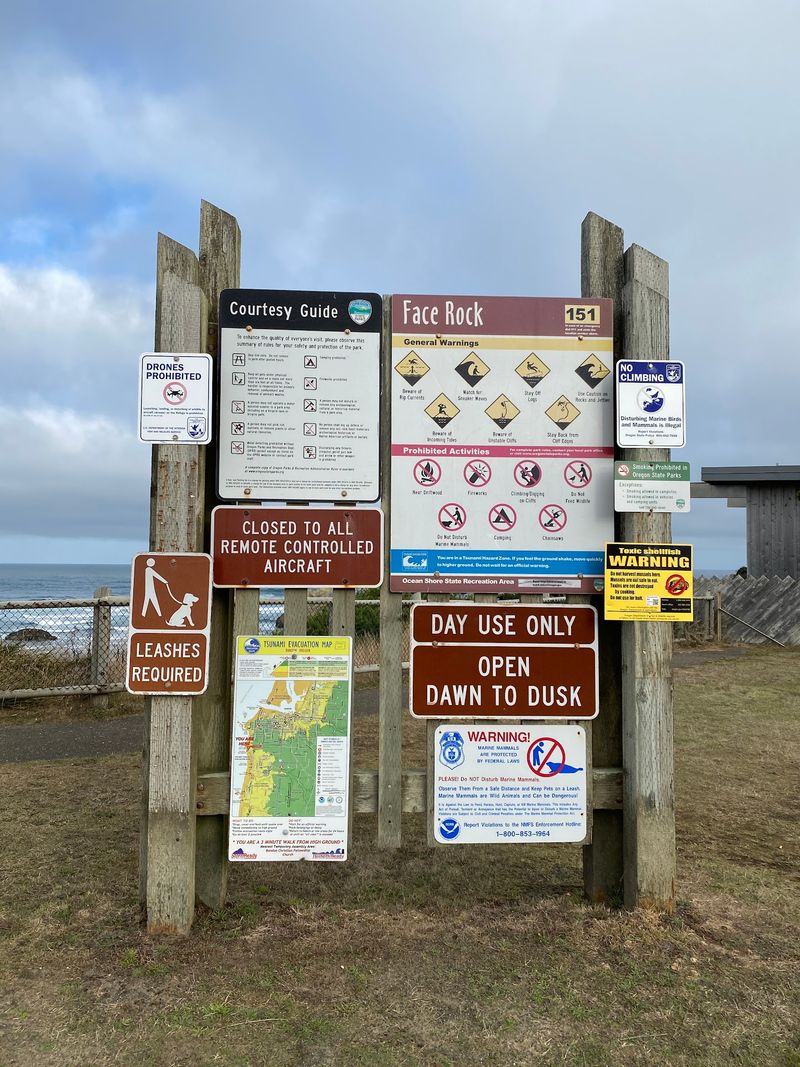
Recent upgrades have transformed Face Rock from a bare-bones viewpoint into a comfortable destination with visitor-friendly amenities. The parking lot features fresh striping with ample spaces, including designated accessible spots near the facilities.
Reviewers consistently praise the restroom buildings as surprisingly nice for a beach park, noting their cleanliness, modern design, and regular maintenance that keeps them pleasant even during peak summer months.
Picnic tables scattered around the upper viewing area provide perfect spots for a casual meal with an ocean view. The tables sit on level ground with the beach and rock formations spread before you, making them ideal for families who want to enjoy lunch while keeping an eye on exploring kids.
Unlike some coastal parks where wind makes outdoor dining miserable, Face Rock’s layout offers some natural wind protection, though breezy days still occur.
The park operates 24 hours daily, giving you flexibility to visit during early morning low tides, midday exploration, or late evening stargazing sessions. Free admission and parking remove financial barriers that limit access to some Oregon attractions.
Cell service works reasonably well here, so you can check tide tables, weather updates, or share photos without frustration.
Extended Beach Walks and Driftwood Discoveries
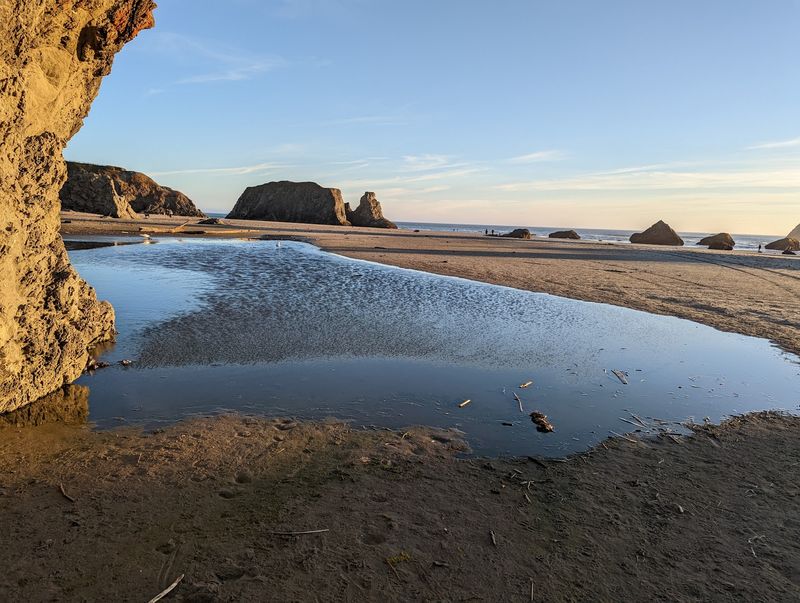
Beyond the immediate Face Rock area, the beach extends for miles in both directions, offering excellent opportunities for long, contemplative walks. The southern Oregon coast tends to accumulate impressive driftwood, and Face Rock beach delivers with massive silvered logs scattered across the upper beach like sculptures placed by a giant artist.
These weathered trees, carried down rivers and tossed ashore by storms, create natural seating areas and photogenic foregrounds for landscape shots.
The firm sand near the waterline makes walking easier than trudging through soft, dry sand. You can wear regular athletic shoes instead of going barefoot, which helps if you’re covering serious distance or have sensitive feet.
The beach remains relatively uncrowded compared to northern Oregon hotspots, giving you space to spread out and find your own section of coastline.
Beachcombers find all sorts of treasures washed up by the tides. Agates hide among the smaller pebbles, shells cluster in tide-deposited lines, and interesting rocks worn smooth by endless tumbling reveal beautiful patterns.
Bring a small bag if you’re a collector, but remember that living creatures like sand dollars and shells with inhabitants should stay on the beach.
Wildlife Watching and Seal Sightings
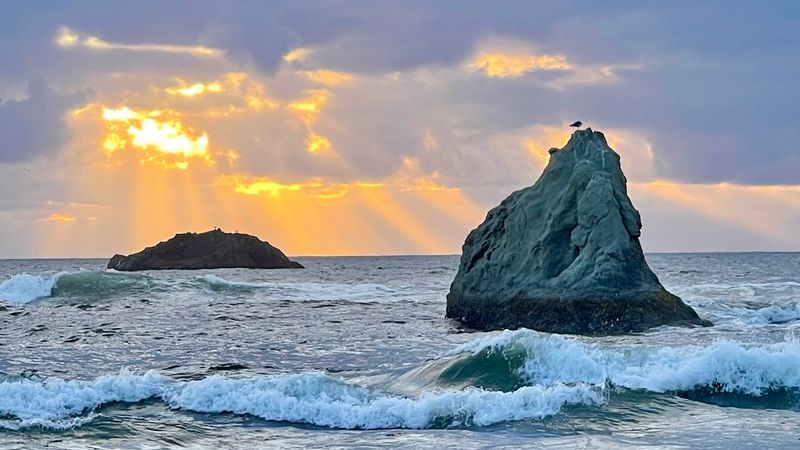
Patient observers often spot marine mammals around Face Rock’s offshore formations. Harbor seals frequently haul out on the rocks, especially during pupping season in spring and early summer when mothers rest between fishing trips to nurse their young.
Through binoculars, you can watch these whiskered creatures lounging in the sun, occasionally barking at each other or slipping into the water with surprising grace for their chunky land appearance.
Seabirds also populate the area year-round. Cormorants perch on the rocks with wings spread to dry, gulls wheel overhead hoping for dropped snacks, and during migration seasons, you might spot rarer species stopping along the Pacific Flyway.
Bring a bird identification guide or app to enhance your wildlife watching experience and learn what you’re actually seeing beyond “that brown bird on the rock.”
Keep a respectful distance from all wildlife. Federal law protects marine mammals, and approaching too closely can result in fines besides being harmful to the animals.
If seals start moving away from you or showing signs of distress, you’re too close. Zoom lenses work better than getting physically near, and they produce better photos anyway by compressing the background and isolating your subject.
Year-Round Access and Seasonal Considerations
Face Rock welcomes visitors every single day of the year, never closing for seasons or holidays. This 24-hour access lets you experience the park in different moods and lighting conditions that reveal new aspects of its beauty.
Summer brings the warmest weather and calmest seas, but also the largest crowds and the special sand labyrinth installations that only appear during peak season.
Winter visits offer dramatic storm-watching opportunities when massive waves crash against the rocks with explosive force. The park becomes wonderfully peaceful during colder months, with just a handful of hardy souls braving the wind to witness nature’s raw power.
Fog frequently rolls in during spring and fall, creating mysterious, ethereal scenes where rock formations appear and disappear like ghosts in the mist.
Pack layers regardless of season because coastal weather changes rapidly. That sunny morning can turn windy and cold by afternoon, or vice versa.
Sunscreen remains important even on overcast days since UV rays penetrate clouds. Check the forecast before visiting, but don’t let less-than-perfect weather stop you.
Some visitors actually prefer the moody, dramatic conditions that showcase the coast’s wild character better than endless blue-sky days.
Share this story