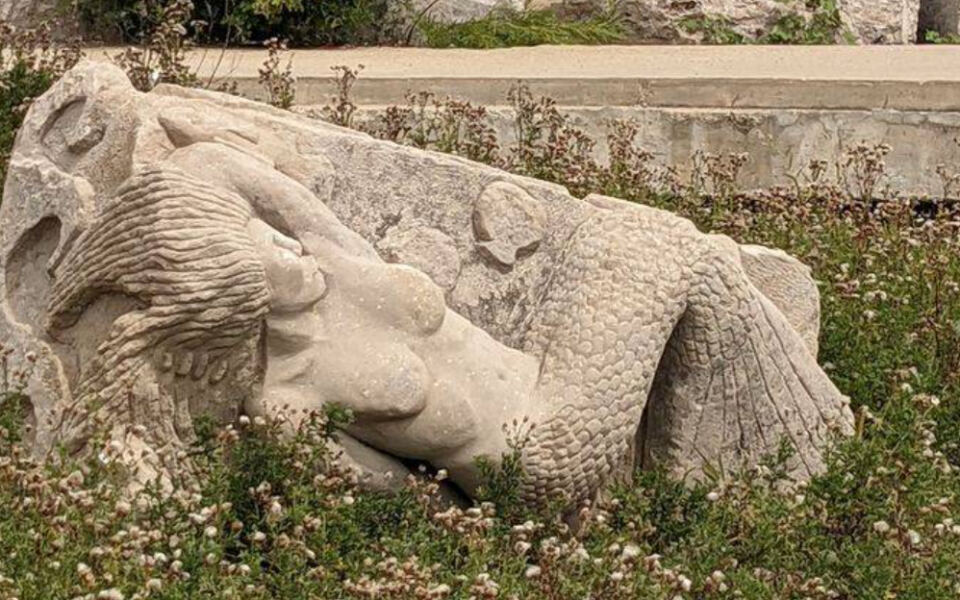
Along Chicago’s lakefront sits a mysterious concrete mermaid that wasn’t supposed to be there. Back in 1988, four artists showed up with tools and materials, working in plain sight to create something the city never approved.
Their bold project became a beloved landmark that still watches over Lake Michigan today, reminding visitors that sometimes the best art happens when people follow their creative vision instead of waiting for permission.
The Guerrilla Art Project That Changed Chicago’s Shoreline
Four artists gathered at Burnham Park in 1988 with a wild plan and zero official approval. They brought concrete, tools, and enough confidence to build a full-sized mermaid sculpture right on public land.
No permits, no permission, just pure creative ambition.
The group worked openly during daylight hours, which seems almost unbelievable today. Passersby watched as the figure took shape, probably assuming the artists had city authorization.
The boldness of their approach became part of the sculpture’s charm and legend.
José Moreno Castañeda, a Mexican sculptor, led the creative vision for the piece. His background in traditional sculpture techniques brought artistic credibility to what could have been dismissed as vandalism.
The team’s skill level showed in the finished product.
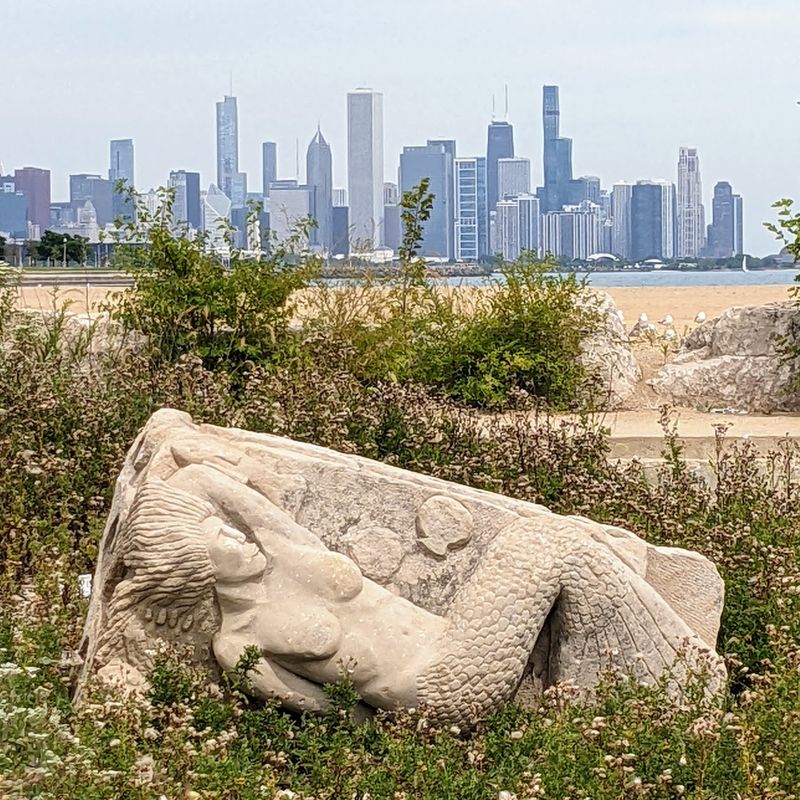
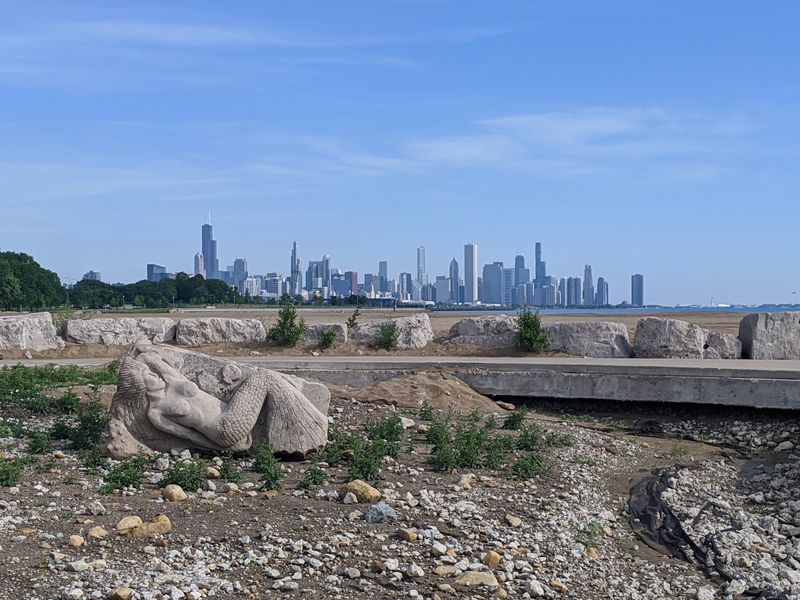
The mermaid sits in a gravelly wildflower patch near Oakwood Beach, positioned to face the sunrise each morning. Visitors can view her from a few feet away, though getting too close isn’t recommended due to the surrounding vegetation.
The Chicago skyline provides a stunning backdrop for photos.
A Steelworker’s Secret Contribution to Public Art
Among the four creators was a steelworker who brought industrial skills to an artistic project. His experience shaping metal translated surprisingly well to working with concrete and stone.
The physical demands of sculpture-making matched perfectly with his blue-collar background.
Chiseling concrete requires strength, patience, and a steady hand. The steelworker’s contribution went beyond muscle, though.
His understanding of materials and structural integrity helped ensure the mermaid would withstand Chicago’s harsh weather patterns.
The combination of fine art training and practical construction knowledge created something more durable than typical outdoor sculptures. This collaboration between different skill sets shows how great public art often emerges from unexpected partnerships.
Working-class expertise elevated the project beyond a simple art installation.
The mermaid has survived over three decades of lake wind, winter ice, and summer heat. Her durability speaks to the craftsmanship invested in her creation.
Though she’s been knocked over at least once, the sculpture remains a testament to quality workmanship and artistic vision combined.
The 36-Year Mystery That Became a Chicago Legend
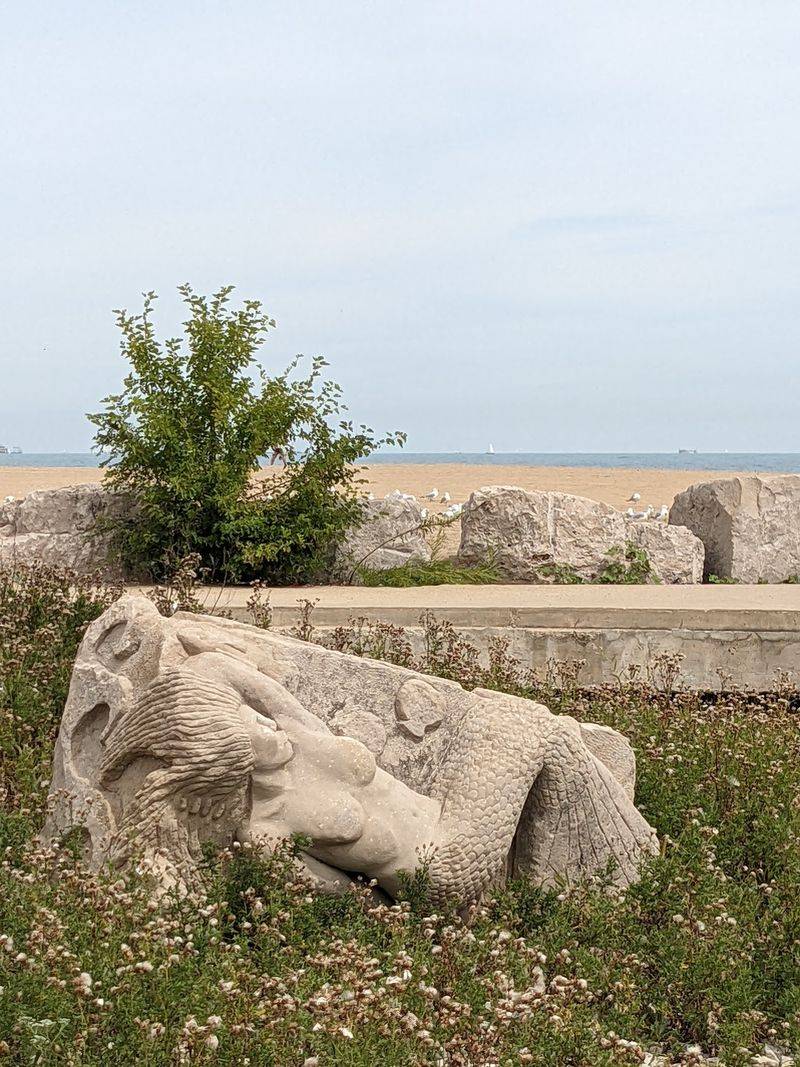
For years, nobody quite knew the full story behind the lakefront mermaid. Local legends filled the gaps with creative explanations.
One visitor even claimed Greeks placed it during ancient explorations, which sounds ridiculous but shows how mystery sparks imagination.
The Chicago History Podcast finally unraveled the complete story in episode 514. Their research revealed the guerrilla art project’s details and tracked down information about the creators.
Before that podcast episode, most Chicagoans just enjoyed the sculpture without knowing its rebellious origins.
The secrecy surrounding the project wasn’t entirely intentional. The artists simply created their work and left it as a gift to the city.
They didn’t seek publicity or credit, which added to the mermaid’s mystique over the decades.
Local folklore developed around the sculpture, including a belief that sitting on her lap and making a wish brings good luck. One reviewer claimed their romantic wish came true after trying this tradition.
Whether magic or coincidence, these stories keep people visiting and engaging with the art.
Why Unauthorized Art Sometimes Becomes the Most Beloved
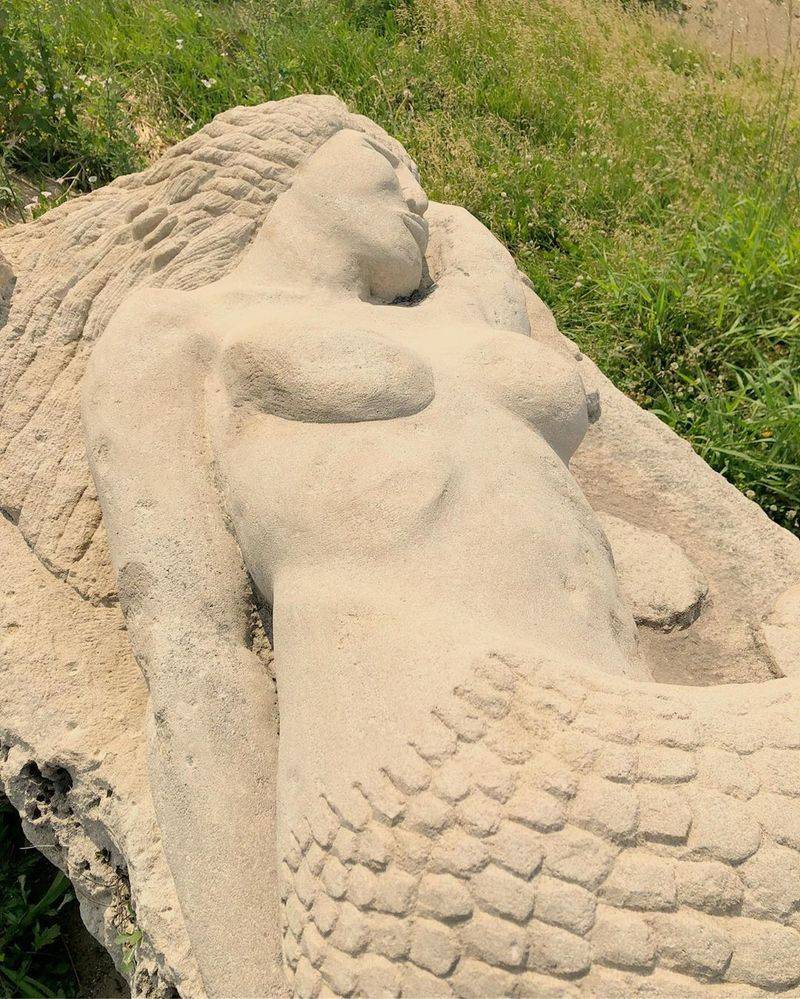
Cities typically require permits, proposals, and committee approvals for public art. This bureaucratic process can drain creativity and delay projects for years.
The mermaid bypassed all that red tape entirely, appearing overnight as a completed work.
The sculpture’s unauthorized status actually increased its appeal to Chicagoans. People love underdogs and rule-breakers who create beauty instead of destruction.
The mermaid represented artistic freedom and spontaneous creativity in a city known for official processes.
Chicago Park District eventually embraced the sculpture rather than removing it. Sometimes institutions recognize when the public has already voted with their affection.
The mermaid earned her place through community love rather than official channels.
Her 4.6-star rating from 26 reviews shows sustained appreciation decades later. Visitors specifically seek out this sculpture, walking from Oakwood Beach to find her among the wildflowers.
The informal, almost hidden location adds to her charm rather than diminishing it.
The Perfect Sunrise Spot on Chicago’s South Side
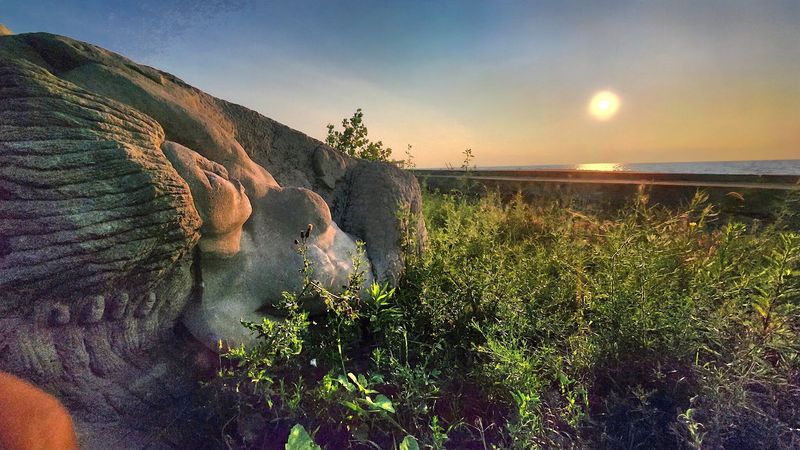
Someone positioned the mermaid deliberately to face eastward across Lake Michigan. Every morning, she watches the sun climb above the water’s horizon.
This thoughtful placement shows the artists considered how their work would interact with natural light and landscape.
Photographers and early risers have discovered this spot for capturing stunning sunrise images. The combination of sculpture, lake, and dawn light creates memorable compositions.
The mermaid serves as a foreground subject with the endless water stretching behind her.
South Side Chicago doesn’t always get the same tourist attention as downtown attractions. This sculpture gives locals and visitors alike a reason to explore Burnham Park’s quieter sections.
The area offers peaceful lake views without the crowds found at Navy Pier or Millennium Park.
Reviewers consistently mention the excellent skyline views from the mermaid’s location. Looking northwest, you can see Chicago’s famous buildings framed by the lakefront.
The sculpture marks a perfect vantage point that many people might otherwise miss during casual park visits.
When Vandalism Strikes Beloved Public Art
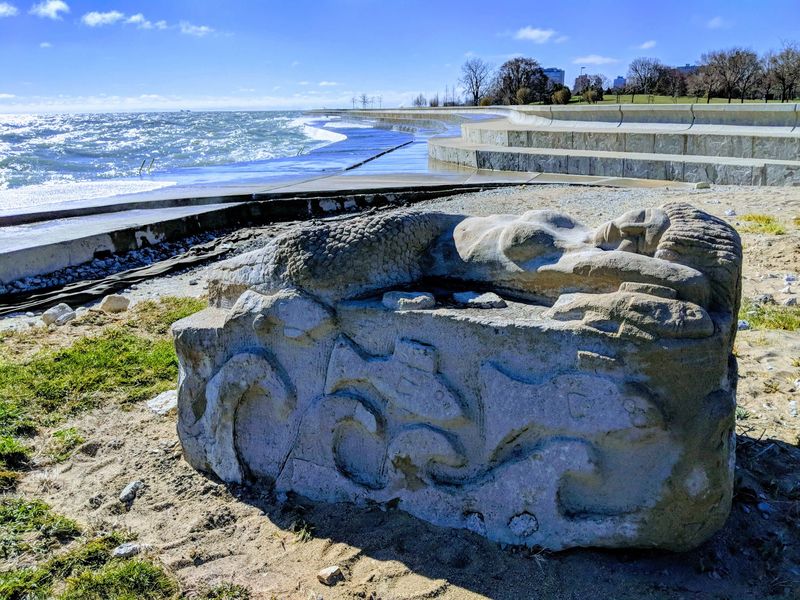
Someone knocked over the mermaid a few years ago, leaving her unrecognizable according to one angry reviewer. The incident sparked outrage among people who considered the sculpture part of their neighborhood’s identity.
Destroying public art hurts communities in ways that go beyond the physical damage.
The reviewer’s fury was palpable, wishing similar destruction on whoever harmed the mermaid. While extreme, this reaction shows how deeply people connected with the unauthorized sculpture.
She’d become theirs over the decades, a shared treasure worth protecting.
Fortunately, the mermaid was eventually turned upright again. Whether the Park District officially restored her or community members took matters into their own hands remains unclear.
Either way, the sculpture survived to greet more sunrises.
The incident highlights how vulnerable outdoor art remains to vandalism and weather. The mermaid’s concrete construction provided some protection, but nothing is indestructible.
Her survival through multiple challenges makes her story even more compelling to locals who’ve watched her endure.
Finding Beauty in Chicago’s Hidden Corners
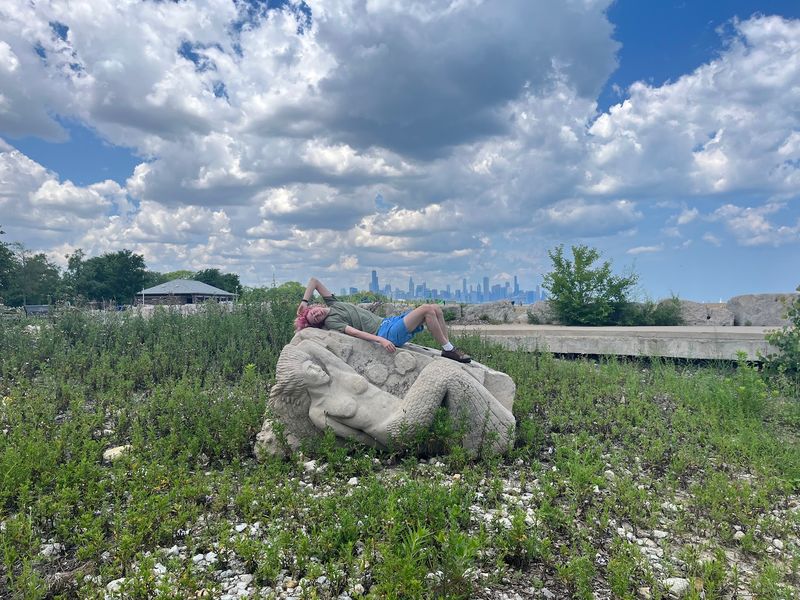
The mermaid sits within a gravelly wildflower patch rather than a manicured garden or formal plaza. This rough setting matches her rebellious origins perfectly.
Polished museum displays would feel wrong for a sculpture born from guerrilla creativity.
Wildflowers bloom around her seasonally, creating an ever-changing natural frame. Spring and summer bring color and growth, while winter leaves her surrounded by dried stems and snow.
Each season offers a different aesthetic experience for visitors.
The informal landscape means you need to walk a bit from Oakwood Beach to reach her. She’s not immediately visible from parking areas or main paths.
This slight effort required to visit makes finding her feel like a personal discovery rather than checking off a tourist list.
Some reviewers complain about the sculpture feeling random or poorly placed. They miss the point entirely.
The mermaid’s integration with natural, uncontrolled landscape reflects her creation outside official channels. She belongs exactly where she is, among the wildflowers and gravel.
The Artists Who Worked in Broad Daylight
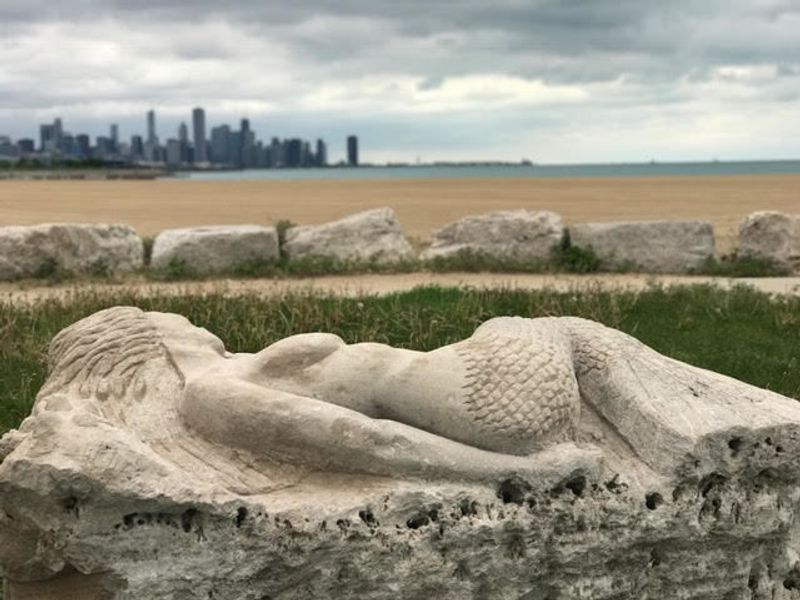
Imagine the confidence required to build an unauthorized sculpture in full view of joggers, cyclists, and beachgoers. The four artists worked during regular daylight hours, which seems almost impossible to believe.
Their casual approach suggested they belonged there, which apparently prevented questions.
Social psychology explains this phenomenon perfectly. People assume others have permission when they act confidently and openly.
The artists probably looked official enough that passersby never thought to challenge them or call authorities.
The team must have completed the project relatively quickly to avoid detection. Concrete work requires specific timing and conditions, so they likely planned their construction schedule carefully.
Speed and efficiency complemented their boldness.
No contemporary news coverage documented the sculpture’s creation, which is remarkable for a city with active media. The mermaid simply appeared, and people accepted her presence.
This gap in the historical record adds to the mysterious appeal that still draws visitors today.
Why Some Critics Miss the Point Entirely
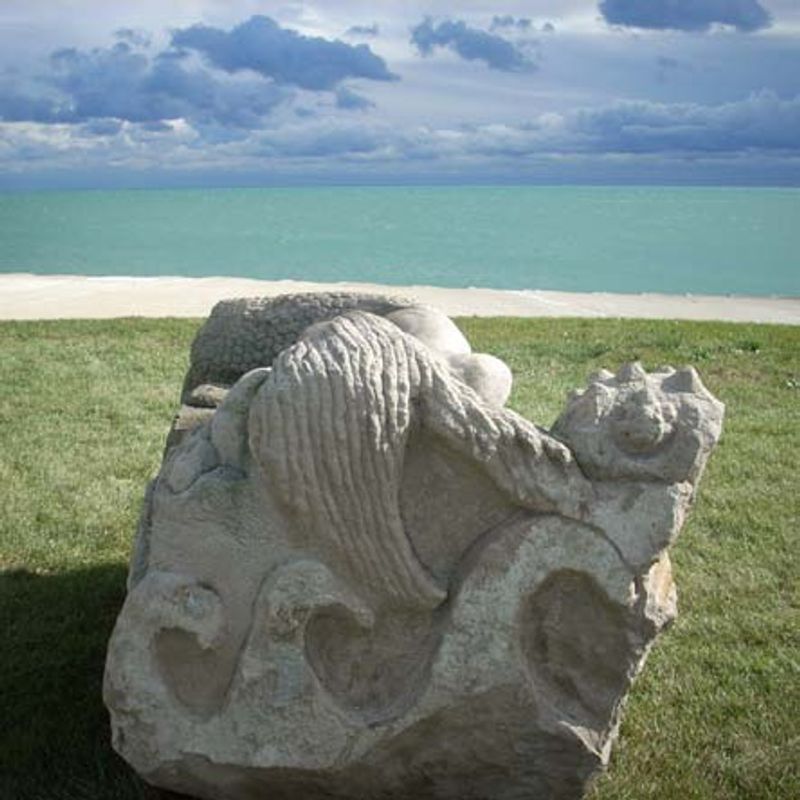
One reviewer dismissed the mermaid as poorly executed and meaningless, calling it not worth visiting. This harsh critique completely ignores the sculpture’s cultural significance and backstory.
Judging guerrilla art by traditional museum standards misses what makes it special.
The sculpture’s roughness is part of its character, not a flaw. These artists worked with limited resources and time, creating something permanent under challenging conditions.
Technical perfection was never the goal.
Public art serves different purposes than gallery pieces. The mermaid creates a landmark, sparks conversations, and gives people a reason to explore their lakefront.
Her social function matters more than whether critics approve of her artistic execution.
The overwhelmingly positive reviews and 4.6-star rating prove most visitors appreciate what the mermaid represents. She’s survived over three decades because communities valued her enough to keep her around.
Popular affection trumps critical dismissal every time.
Art doesn’t need universal approval to succeed. The mermaid found her audience among South Side residents and curious visitors who appreciate rebellious creativity.
That’s enough.
The Legacy of Breaking Rules to Create Beauty
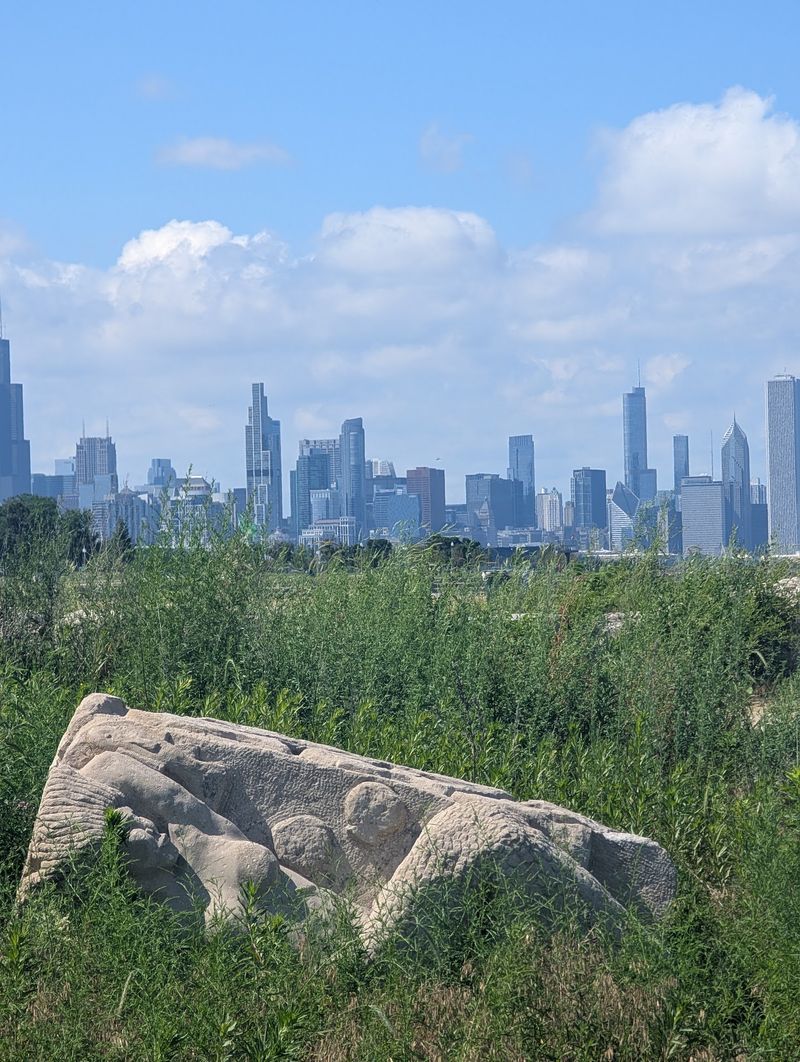
The Burnham Park mermaid proves that sometimes asking forgiveness beats seeking permission. If the artists had followed proper channels, their proposal might still be stuck in committee meetings.
Instead, they created something that’s delighted people for over 30 years.
Their guerrilla approach inspired other artists to think differently about public space and creativity. Not every unauthorized project succeeds or deserves preservation, but the mermaid’s quality and community embrace earned her permanence.
She set a precedent for bold artistic action.
The sculpture remains accessible 24 hours daily, free to anyone who wants to visit. This democratic access reflects the artists’ gift-giving spirit.
They didn’t create the mermaid for profit or fame, just for the joy of making something beautiful in a public space.
Visitors still make wishes on her lap, take sunrise photos, and share her story with friends. The Chicago History Podcast episode brought renewed attention, introducing new generations to her rebellious origins.
The mermaid continues evolving from unauthorized sculpture to cherished landmark, proving great art finds its own way.
Share this story