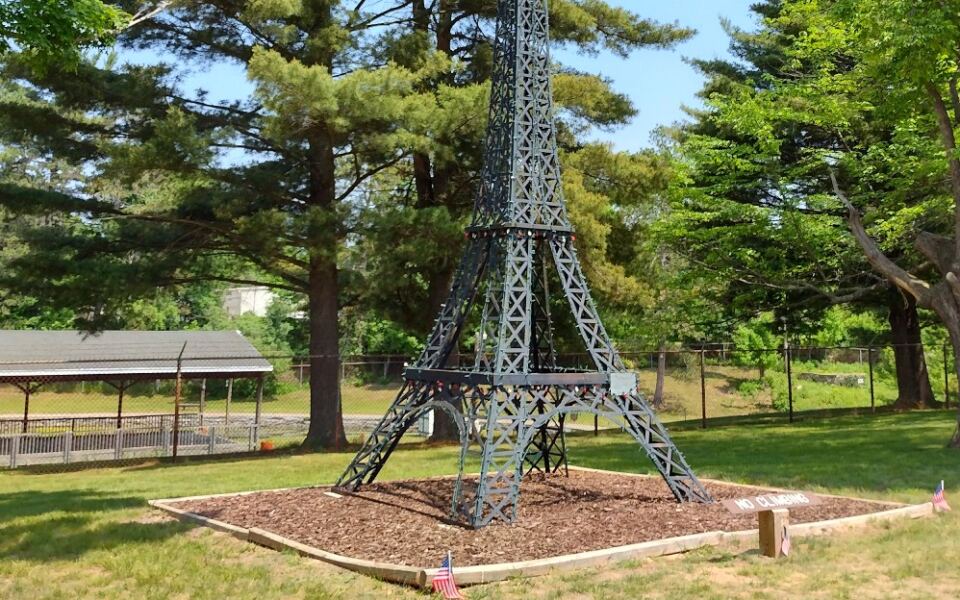
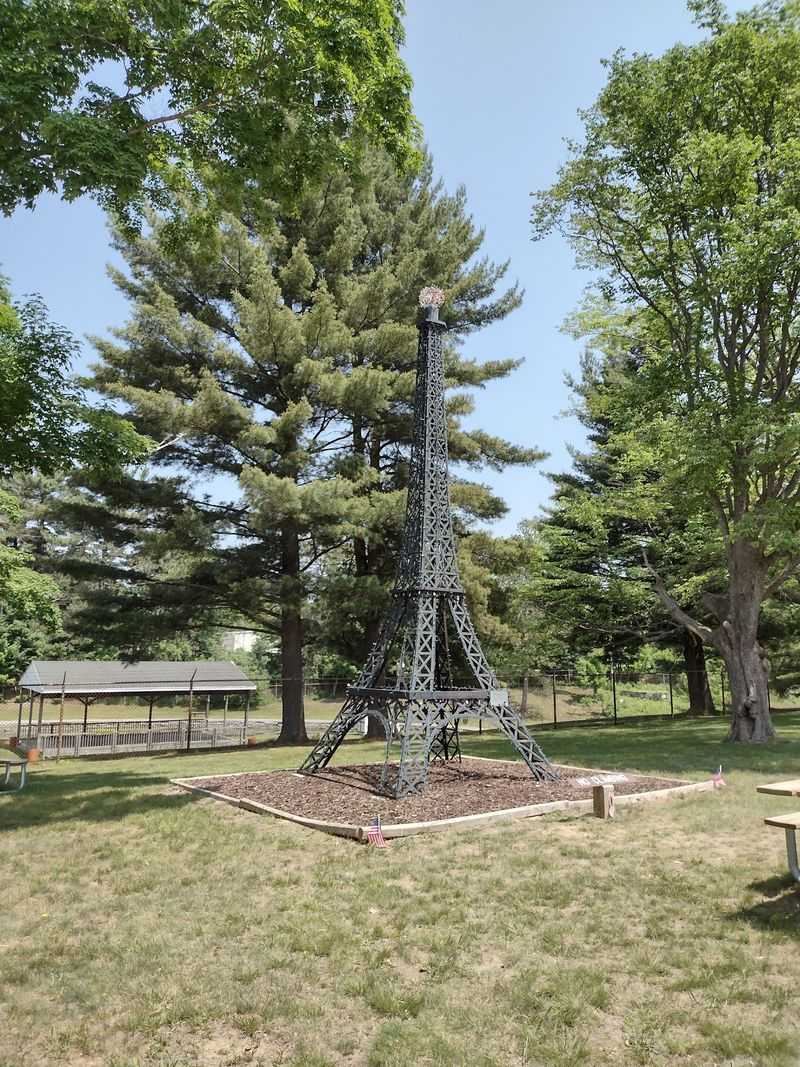
A tiny town called Paris in Michigan has its own 20-foot Eiffel Tower, and it was built by high school students using old metal bed frames. The unusual landmark stands inside Paris Park in Mecosta County, about eight miles north of Big Rapids.
The tower dates back to 1980, when students turned leftover metal from Depression-era workers’ beds into a miniature version of France’s famous landmark. Today, it stands near the White Pine Trail, making it an easy stop for cyclists and road trippers.
But the tower isn’t the only reason to visit. The park also has a historic fish hatchery dating to 1881, trout-feeding ponds, picnic areas, and access to the Muskegon River.
The story behind those old bed frames is just one of the surprises waiting in this little Michigan version of Paris.
A Small Steel Landmark in a Town Called Paris
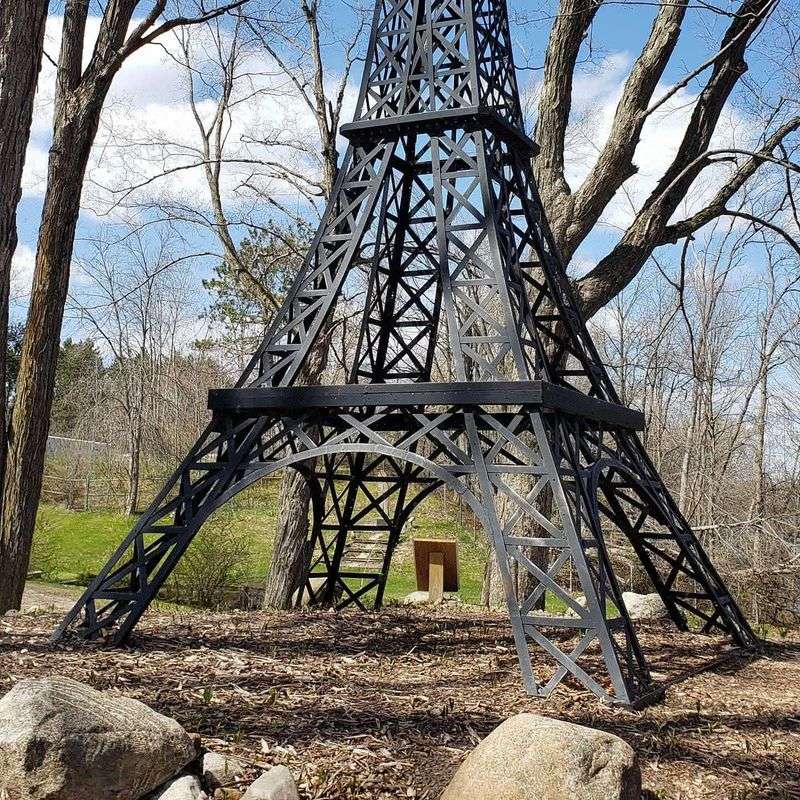
Paris, Michigan, has something most small towns can only dream of: its own Eiffel Tower. You’ll find this roughly 20-foot replica at Paris Park, 22090 Northland Drive, just north of Big Rapids in Mecosta County.
The town’s name makes the attraction especially fitting. Visitors can take a picture beside the famous French landmark’s miniature Michigan cousin without leaving the Midwest.
Unlike the original in France, this tower was built as a local school project. Its modest size is part of the appeal, and the story behind its construction makes it more than another roadside photo opportunity.
In March 2024, the structure was relocated from its former position farther inside the park to a more visible spot near the Fred Meijer White Pine Trail.
That change makes the landmark easier for passing cyclists and other visitors to notice. The surrounding park also contains a historic fish hatchery, trout ponds, and recreational facilities worth exploring.
Built by Students With Welding Torches
Not every high school assignment becomes a community landmark. This one did, thanks to a group of Michigan students who turned discarded metal into a miniature Eiffel Tower.
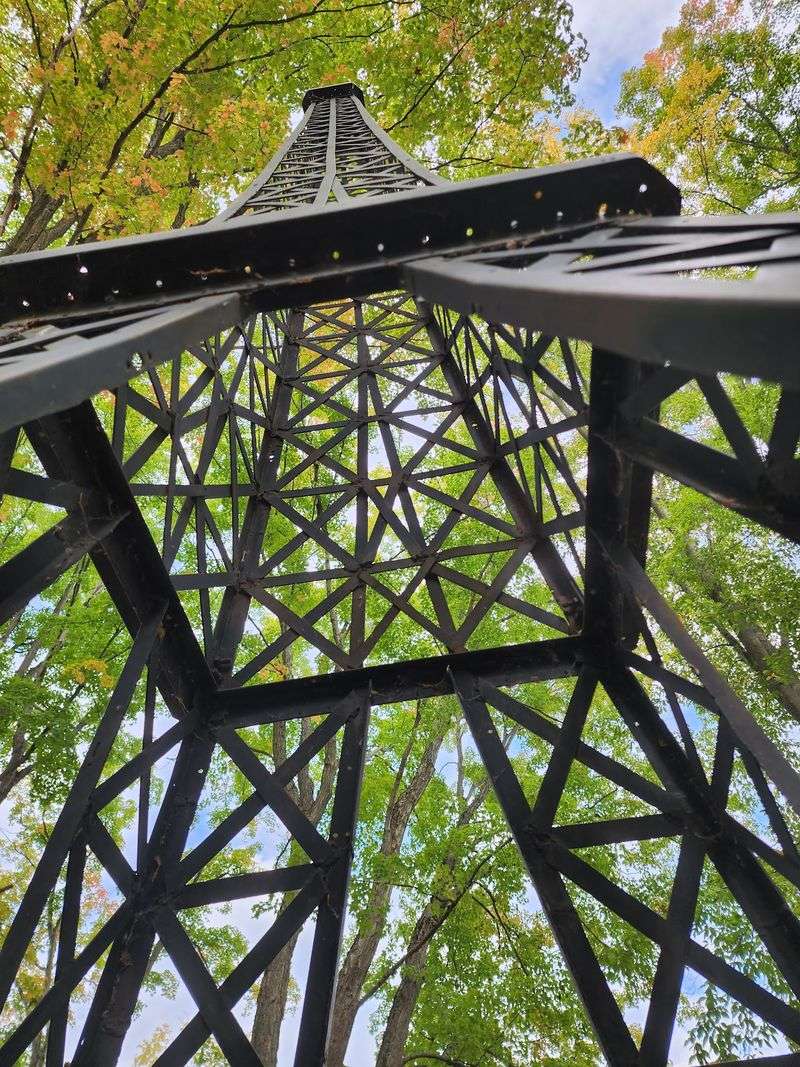
The structure was built in 1980 by students in a welding program. Rather than using entirely new materials, they repurposed old metal bed frames associated with workers from the Great Depression era.
Those frames became part of the tower’s distinctive lattice structure, giving the project an unusual connection to the area’s past.
The students recreated the recognizable outline of the Paris landmark on a much smaller scale. Its crisscrossing metal framework is an interesting detail to examine up close.
What began as a practical welding exercise eventually became one of the community’s best-known roadside attractions.
The tower has also proved durable enough to remain part of local life for decades. Its relocation in 2024 introduced the structure to a new generation of travelers using the nearby trail.
For visitors, knowing that teenagers built it from salvaged materials makes the little landmark even more memorable.
An Old Fish Hatchery With Deep Roots
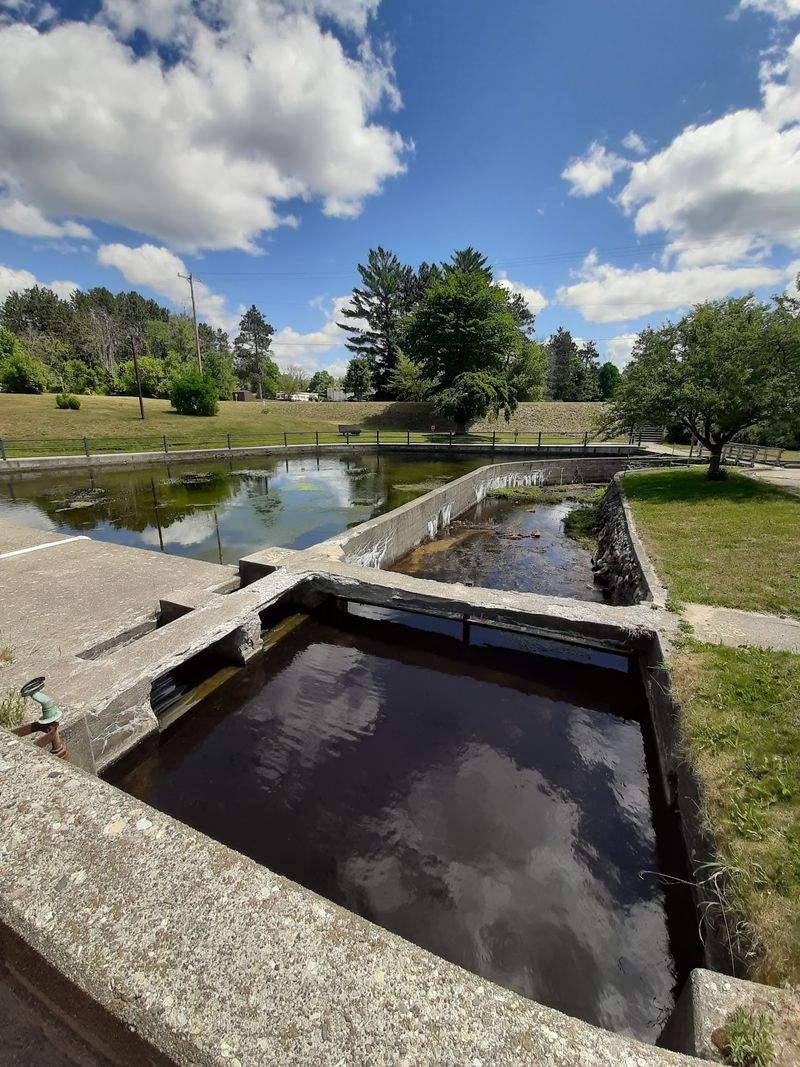
The Eiffel Tower might get the photographs, but the history of Paris Park goes back nearly a century before the replica appeared.
The Paris Fish Hatchery was established in 1881 and became part of Michigan’s efforts to raise fish for stocking waterways. Its surviving ponds and buildings provide a glimpse into an earlier period of fish management.
The site also has connections to Depression-era public works projects. Workers involved in federal relief programs helped develop facilities that supported the hatchery’s operations.
Today, visitors can explore the historic grounds and see remnants of the infrastructure once used to raise trout.
The old hatchery building and concrete ponds help explain why this location became important long before anyone thought about building an Eiffel Tower.
Historical displays have also helped visitors understand the site’s former role in Michigan’s fish-stocking operations. Access to particular buildings and exhibits may vary with park operations.
Although the hatchery no longer functions as it did during its busiest years, its surviving features remain an important part of the park’s identity.
Trout That Know Exactly What a Quarter Means
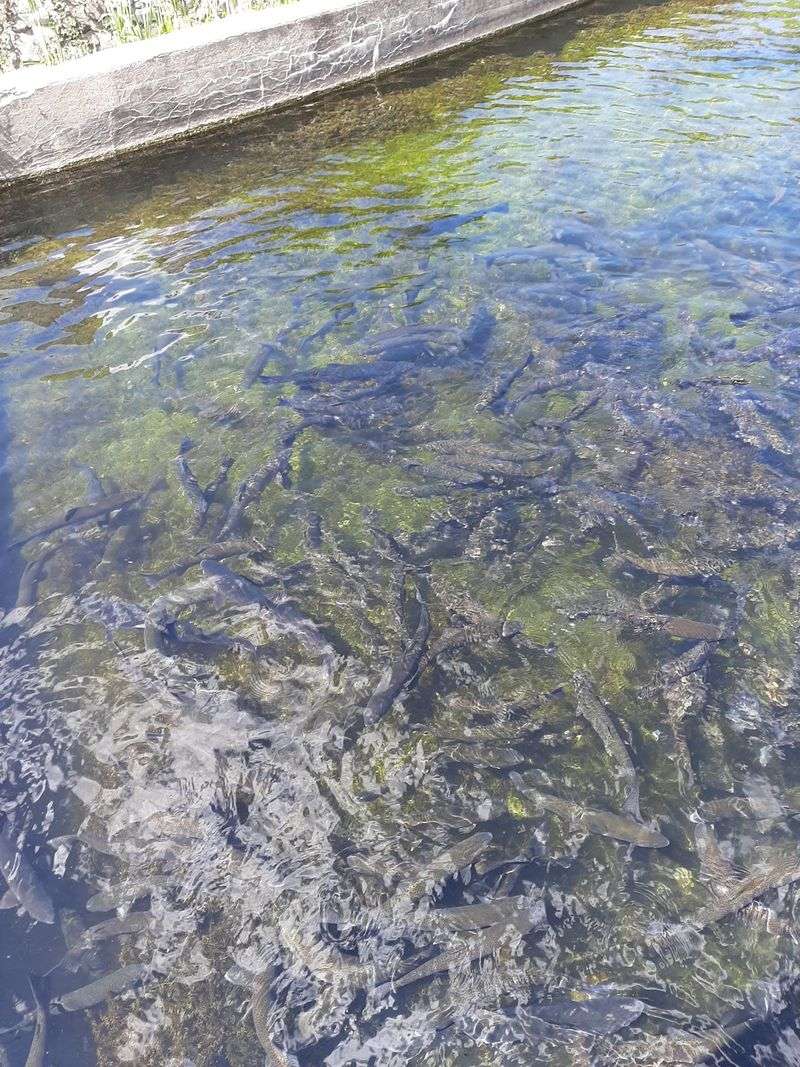
Some of the park’s most interesting residents have been here in one form or another for generations. The trout ponds are a reminder of the property’s long history as a working fish hatchery.
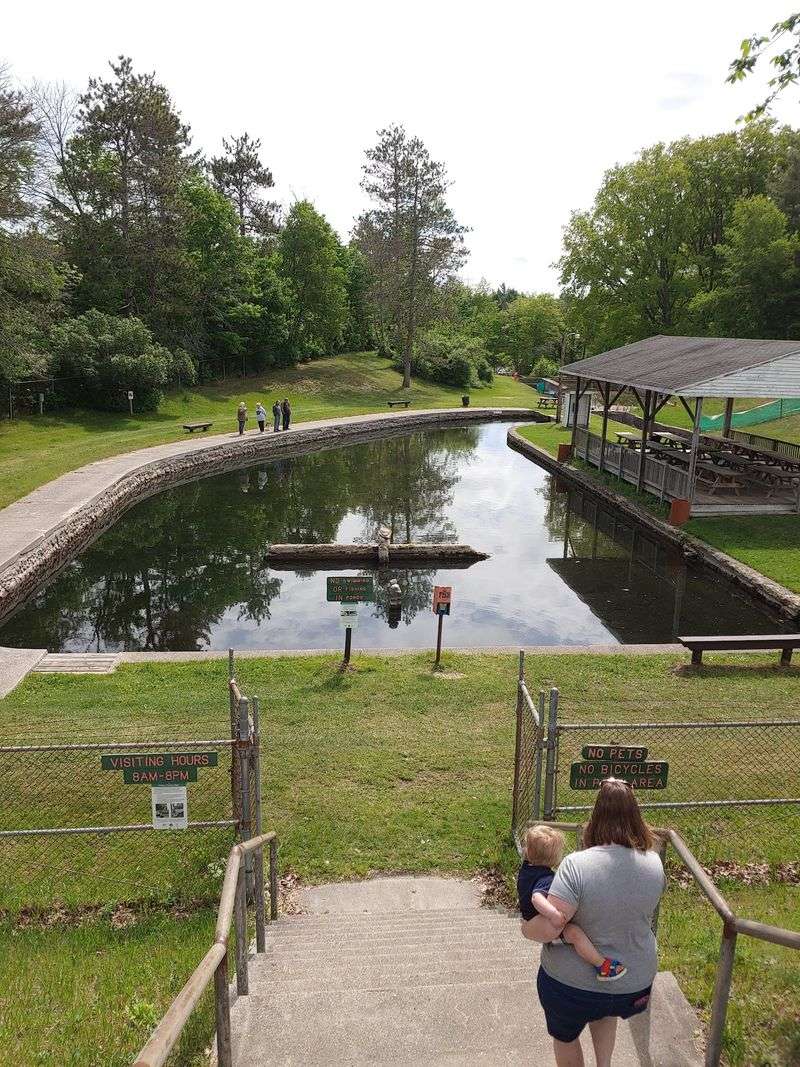
Visitors can still watch and feed trout in the remaining ponds, an activity that has become a favorite part of the Paris Park experience.
Fish food dispensers have traditionally allowed visitors to purchase pellets for a small amount of money. Bring some quarters, but check the current price and availability when you arrive.
The fish often gather when food reaches the water, making this an entertaining stop for families with children.
The ponds also tell a larger story about the property. During the hatchery’s operating years, fish raised here were transported to lakes and rivers throughout Michigan.
Today, some of the old ponds need restoration. Local volunteers and supporters have worked on efforts to preserve and improve this historic part of the park.
For visitors, the experience combines a simple family activity with a chance to learn about a piece of Michigan’s fishing history.
Photo Ops With a Sense of Humor
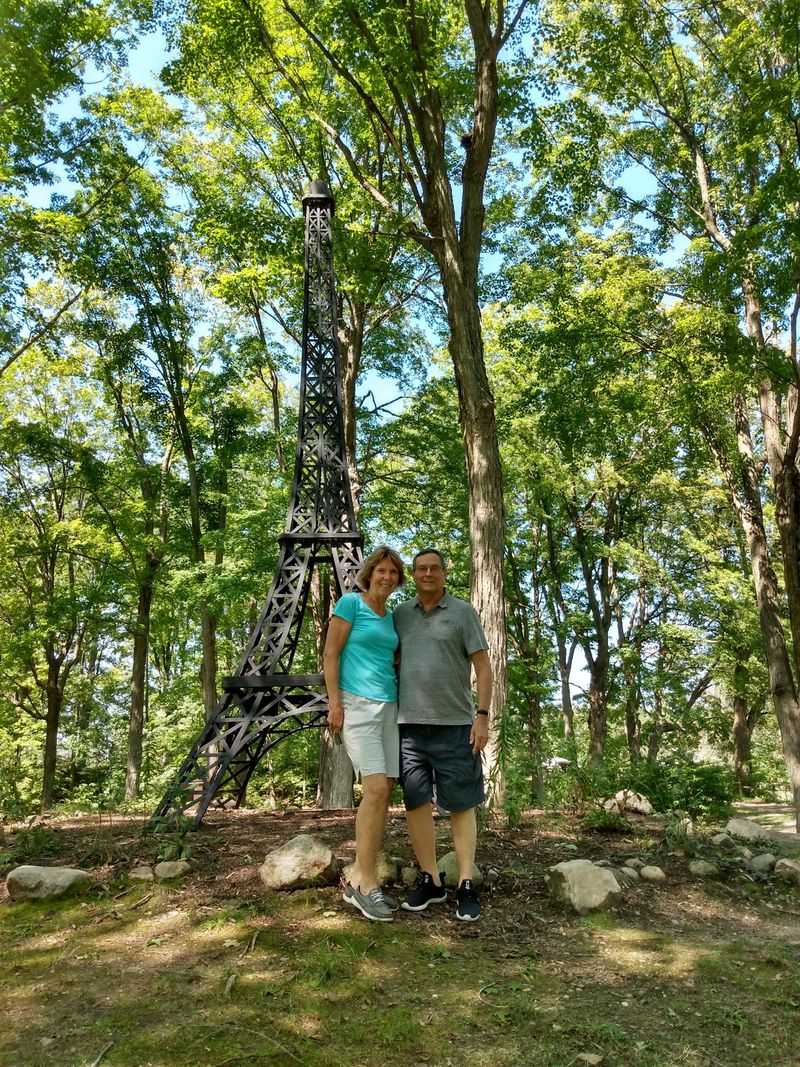
Here’s one vacation picture guaranteed to confuse a few friends: a photograph beside the Eiffel Tower with Michigan trees in the background.
The replica is only about 20 feet tall, so visitors can easily fit the entire structure into a single photograph.
That makes it a convenient roadside stop for families, couples, and travelers collecting unusual landmarks.
One popular approach is to stand beside the tower to show its actual size. Another is to photograph it from a lower angle, making the miniature structure appear taller.
The most interesting part of the photo might be the story you can tell afterward. This isn’t a commercially manufactured replica shipped from overseas.
It began as a student welding project using salvaged materials.
Its location also makes it different from many roadside attractions.
In 2024, the Mecosta County Parks Commission moved the tower onto a concrete pad in a more accessible location near the White Pine Trail.
That means people traveling through the area on bicycles can encounter the landmark during their ride.
A quick photograph might be enough for some visitors, but the nearby trail and historic hatchery make it easy to turn the stop into a longer outing.
A Rail Trail Runs Right Past It
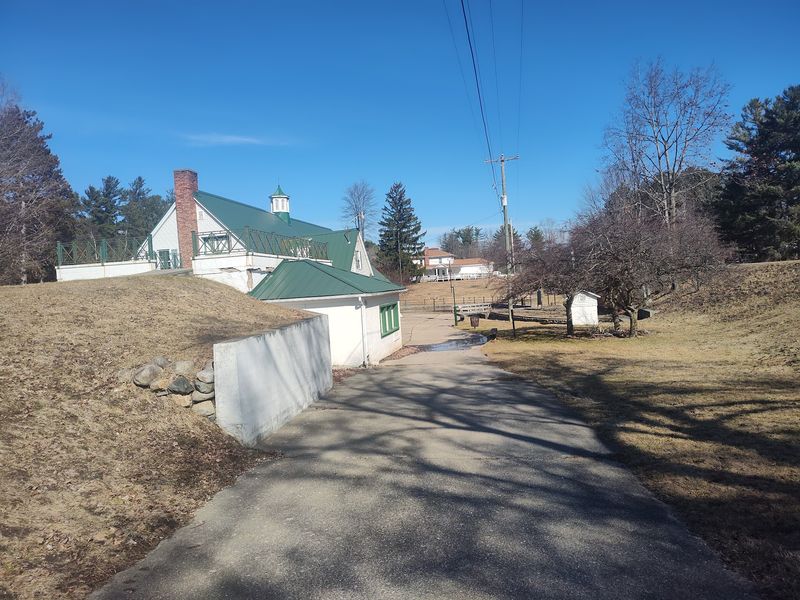
Cyclists traveling through Mecosta County have an unusual landmark waiting along their route.
The Fred Meijer White Pine Trail State Park passes directly beside Paris Park, providing a convenient connection between the Eiffel Tower and one of Michigan’s major recreational trails.
The paved trail follows a former railroad corridor and extends approximately 92 miles through western Michigan.
That railroad connection is particularly appropriate here. During the fish hatchery’s operating years, trains played an important role in transporting fish to destinations around the state.
Today, the same corridor serves walkers, runners, and cyclists.
The trail’s former railroad alignment provides relatively gentle grades along many stretches, making it appealing to recreational riders.
Families can plan a short ride near Paris rather than attempting a much longer section of the route.
Visitors arriving by bicycle can combine a stop at the Eiffel Tower with a look around the historic hatchery grounds, subject to park access rules.
For a longer outing, the trail connects Paris with Big Rapids to the south and other communities farther north.
It’s a good example of how one small roadside attraction can become part of a much bigger Michigan adventure.
River Access and a Campground Next Door
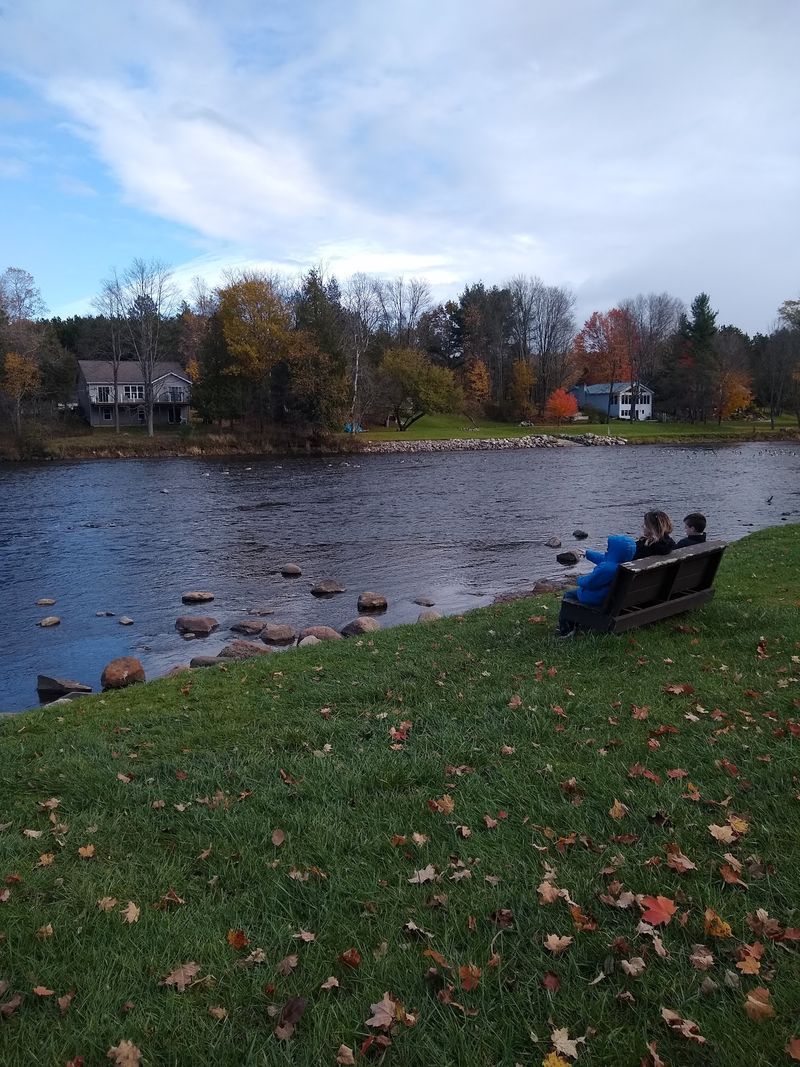
The Eiffel Tower might bring travelers to Paris Park, but the Muskegon River gives them a reason to stay longer.
The county park occupies approximately 40 wooded acres along the river and offers camping, fishing, picnicking, and access for nonmotorized watercraft.
For overnight visitors, the campground has 66 campsites, two group camping areas, and three cabins.
Campsites include electrical hookups, water access, picnic tables, and fire pits. Modern restroom facilities with showers are also available.
Visitors interested in spending time on the water can use the park’s canoe, kayak, and tubing launch.
During the operating season, the park also offers tubing rentals and transportation services for designated trips along the Muskegon River.
The park’s recreational facilities include playgrounds, basketball, sand volleyball, horseshoes, and wooded walking trails.
Those options make Paris Park more than a place to photograph an unusual landmark.
Families can spend the morning exploring the hatchery and tower, enjoy lunch at a picnic area, and devote the afternoon to outdoor activities.
Camping reservations, seasonal schedules, and recreational fees should be checked through Mecosta County Parks before planning an overnight stay.
Finding the Tower Without Getting Lost
The easiest way to plan a visit is to start with the official Paris Park address: 22090 Northland Drive, Paris, Michigan 49338.
The park sits north of Big Rapids in Mecosta County, close to the Fred Meijer White Pine Trail.
Older travel descriptions may direct visitors toward the back of the park or the historic hatchery building.
Those directions can be outdated because the Eiffel Tower was relocated in March 2024.
The structure now stands near the White Pine Trail, where it is more visible and accessible to passing trail users.
Visitors entering the county park by vehicle should also be aware of the admission policy.
Mecosta County Parks currently lists a $7 daily vehicle permit for Paris Park. An annual county parks vehicle permit is another option, and Michigan’s state recreation passport does not cover admission.
The park operates seasonally. Its official website currently lists May 7 through October 10, 2027, as the next operating season.
Anyone planning a visit outside those dates should contact the park to confirm which areas are accessible.
A little advance planning can prevent confusion about parking, entrance fees, and seasonal facilities.
Little Explorers Have Plenty to Do
A miniature Eiffel Tower might not sound like an obvious children’s attraction, but Paris Park has several activities that make it worth considering for a family outing.
Start with the tower itself. Children can compare its shape with photographs of the famous Eiffel Tower in France and learn how local students built the Michigan version.
The historic trout ponds offer another activity. Watching fish gather for food can keep younger visitors entertained while introducing them to the hatchery’s history.
Inside the old hatchery building, a pictorial history explains how the property operated before becoming a county park.
The park also includes playgrounds, picnic areas, and walking trails, giving families options beyond the tower and fish ponds.
Parents with older children can explore a short stretch of the nearby White Pine Trail.
For families bringing lunch, the park’s picnic facilities make it possible to combine several activities into one visit.
Restrooms are available during the park’s operating season, although access to individual facilities should be confirmed before arrival.
The biggest advantage is variety. Children can see a quirky landmark, learn something about Michigan history, watch trout, and spend time outdoors without traveling between multiple attractions.
Setting Expectations for a Tiny Paris
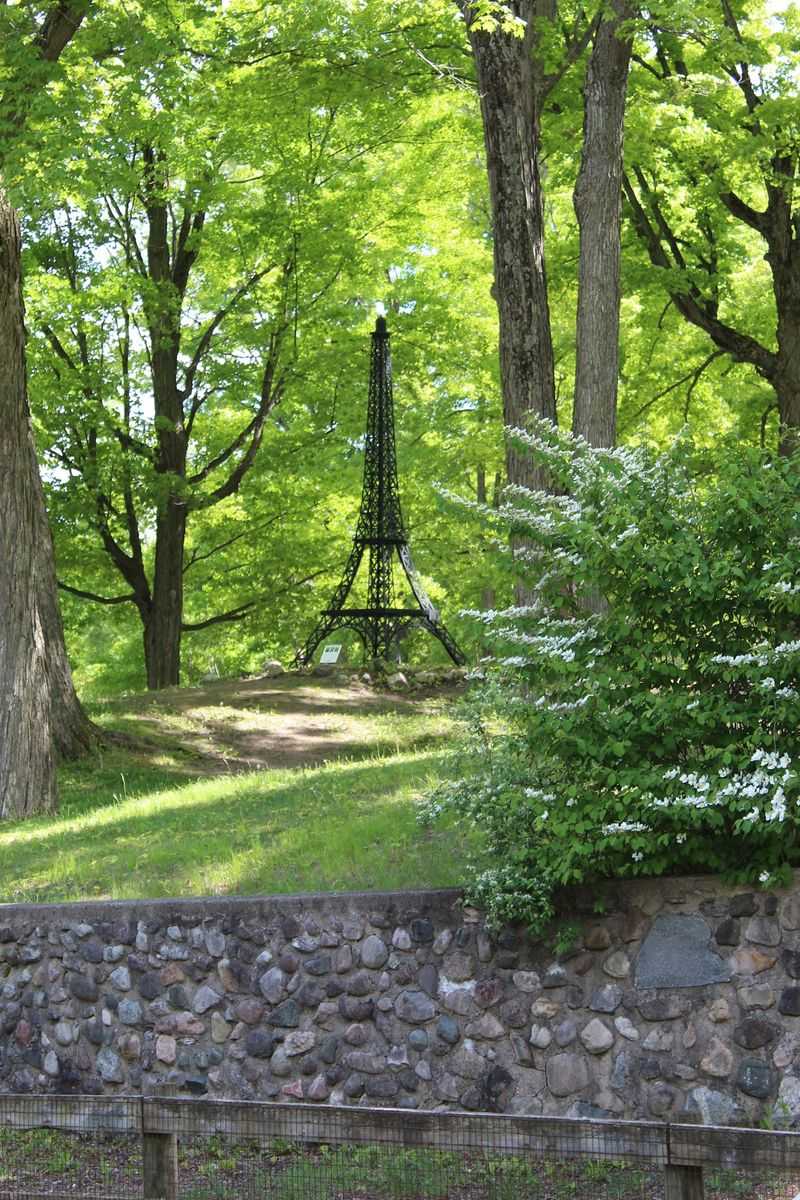
Nobody should arrive in Paris, Michigan, expecting a second French capital. The Eiffel Tower is only about 20 feet tall, and the surrounding community is considerably quieter than its European namesake.
That’s exactly why the attraction works.
The tower represents an unusual piece of local creativity, built by students who turned discarded metal into something their community would recognize for decades.
Its relocation in 2024 also shows that the landmark remains part of the area’s identity.
Still, visitors should treat it as one attraction within a larger destination rather than the centerpiece of an entire vacation.
The historic hatchery, trout ponds, White Pine Trail, and Muskegon River offer additional reasons to explore Paris Park.
The property’s history is particularly interesting. What began as a fish-rearing facility in 1881 eventually became a public recreational area after the county acquired the former hatchery in 1973.
The park opened in July 1976.
Nearly 150 years after the hatchery first opened, the property continues to serve a different generation of Michigan visitors.
For a road trip through Mecosta County, this little Paris offers an entertaining combination of local history, outdoor recreation, and a landmark with a backstory few travelers would expect.
And yes, you can still tell your friends you visited the Eiffel Tower in Paris. Just remember to mention Michigan eventually.
Share this story