The 1920s were a decade that refused to be boring. Flappers danced in grand ballrooms, jazz filled crowded clubs, architects competed to build the most dazzling skyscrapers, and wealthy Americans threw parties that made the history books.
The United States still holds onto a surprising number of places that were directly shaped by that era, and many of them are open to visitors right now. From a jazz club in Chicago where Al Capone reportedly had his favorite booth, to a Florida mansion so extravagant it had to be seen to be believed, these 15 destinations offer a genuinely hands-on connection to one of America’s most fascinating decades.
No museum recreations required. These are the real thing, still standing, still operating, and still full of stories worth knowing.
1. The Campbell, New York City, New York
Most people pass through Grand Central Terminal without realizing one of its rooms was once a private palace for a Jazz Age financier. John W.
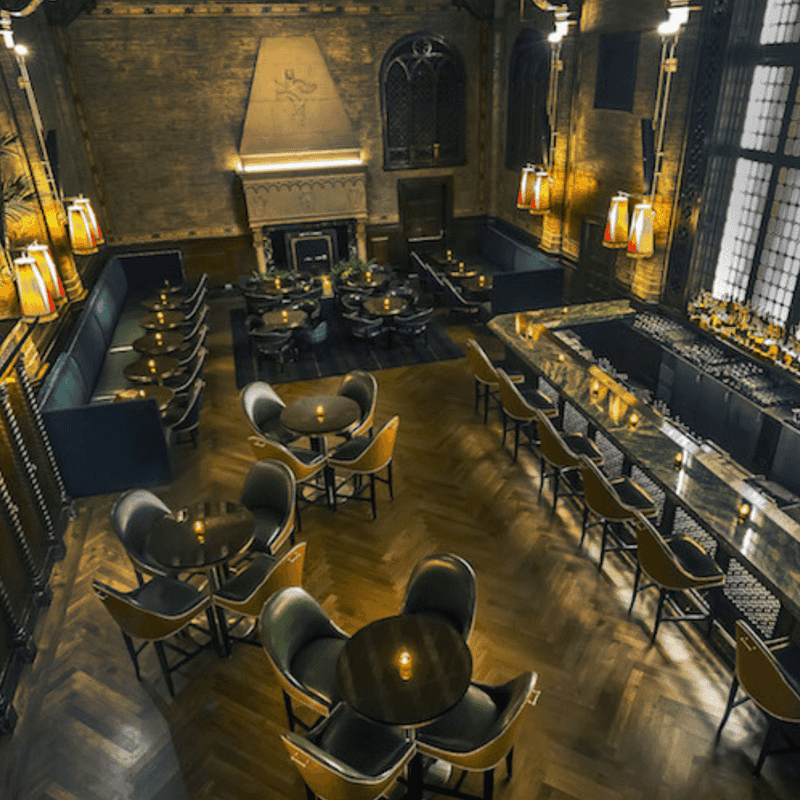
Campbell transformed this space in 1923 into his personal office and reception hall, filling it with a painted ceiling, stone fireplace, leaded-glass windows, and ornate woodwork.
Campbell entertained clients and friends here throughout the decade, surrounded by architectural details that reflected his considerable wealth and the era’s appetite for grand gestures. After years of use as a storage room and police precinct, the space was eventually restored and reopened as a cocktail bar.
The original room forms the centerpiece of the bar today. Guests order drinks beneath the towering ceiling and sit among the same architectural flourishes Campbell commissioned a century ago.
Few bars in New York carry this much documented history per square foot.
2. Fox Theatre, Detroit, Michigan
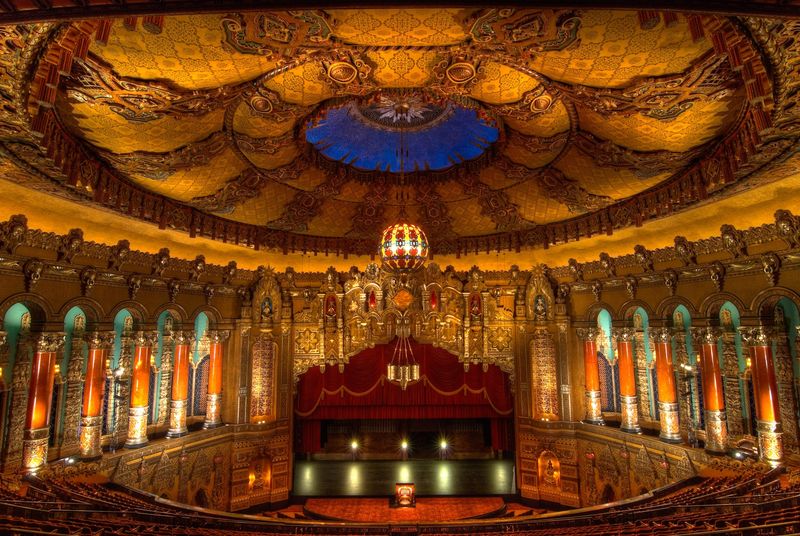
The Fox Theatre opened in September 1928 as the flagship of William Fox’s national chain, and architect Charles Howard Crane considered it his finest work. The building was also the first theater in the world to have built-in equipment for talking pictures, using the Movietone sound-on-film system.
Inside, the six-story lobby combined Egyptian, Indian, and Asian-inspired ornamentation with black marble, red leather, and an estimated 300,000 crystal jewels. The auditorium seated over 5,000 people and featured a Wurlitzer pipe organ that survives to this day.
The Fox holds the distinction of being the largest continuously operating theater in the United States. Attending a modern concert or stage show here means experiencing the building exactly as its designers intended: as a spectacle complete before the performance even begins.
It was designated a National Historic Landmark in 1989.
3. The Brown Hotel, Louisville, Kentucky
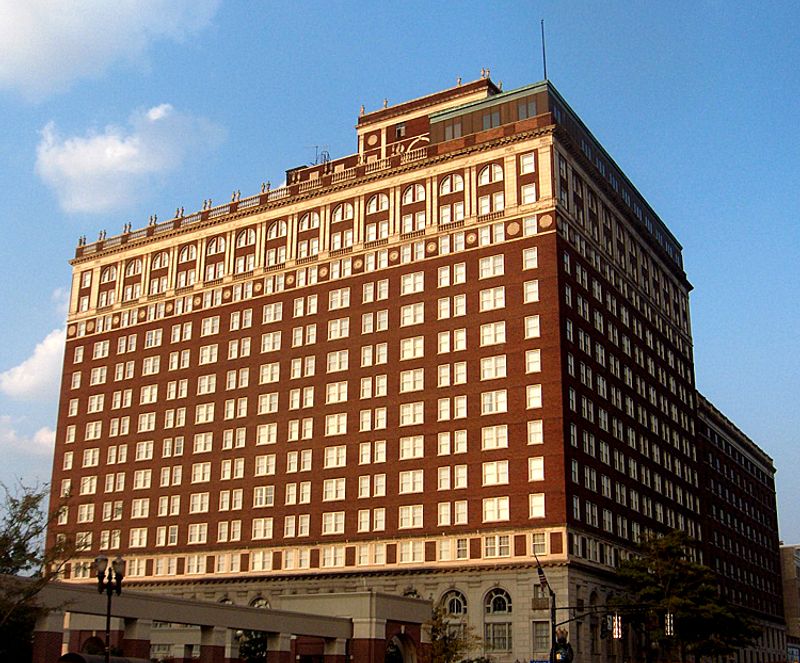
The Brown Hotel opened in 1923 and almost immediately became the social center of Louisville. Its rooftop garden was a popular spot for dancing throughout the decade, and the hotel’s grand ballrooms hosted the kind of events that filled the society pages of local newspapers.
In 1926, chef Fred K. Schmidt created the Hot Brown in the hotel’s kitchen.
The open-faced sandwich, built from turkey, bacon, and Mornay sauce, became a Louisville institution and is still served in the hotel’s restaurant today.
Guests can stay overnight in rooms that preserve much of the original architectural character, or simply visit to order the dish that made the kitchen famous. The Brown remains a working luxury hotel, meaning the connection to the 1920s is not just architectural but also edible, which is arguably the most satisfying kind of historical experience available.
4. Guardian Building, Detroit, Michigan
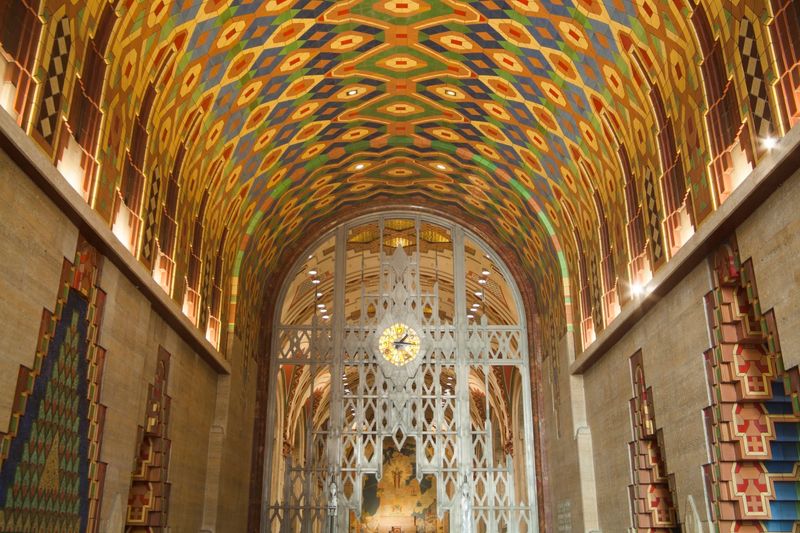
Completed in 1929 for the Union Trust Company, the Guardian Building was designed by architect Wirt C. Rowland with one clear goal: project an image of extreme confidence and success.
The result earned the building its enduring nickname, the Cathedral of Finance.
The 40-story tower was clad in 1.8 million specially formulated orange bricks, a color Rowland called “Guardian brick.” The lobby is where the real drama unfolds: a vaulted ceiling covered in Rookwood tile mosaics in vivid red, gold, and green, paired with marble walls, geometric metalwork, and a large mural by Ezra Winter depicting Michigan’s industries.
The building now serves as Wayne County headquarters and is a National Historic Landmark. Free public access to the lobby means anyone can walk in and experience one of the most visually striking interiors produced by the late-1920s building boom.
5. Green Mill Cocktail Lounge, Chicago, Illinois
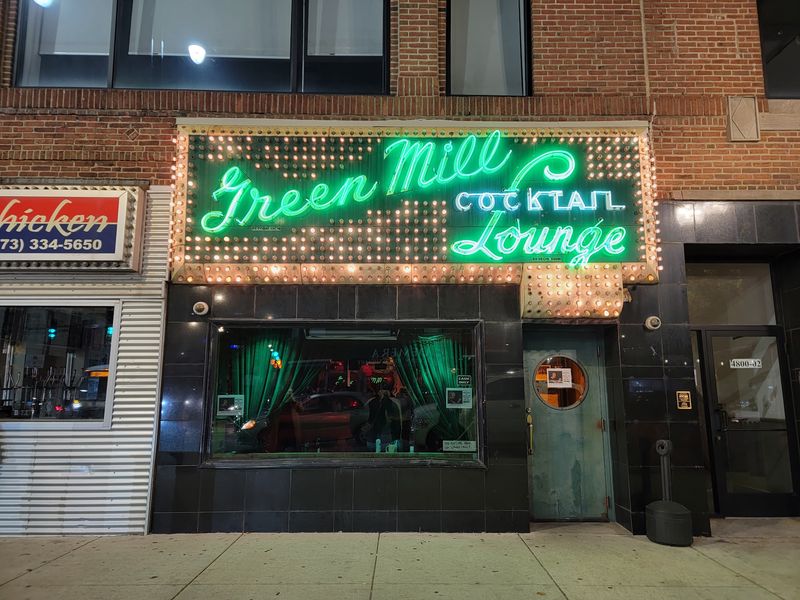
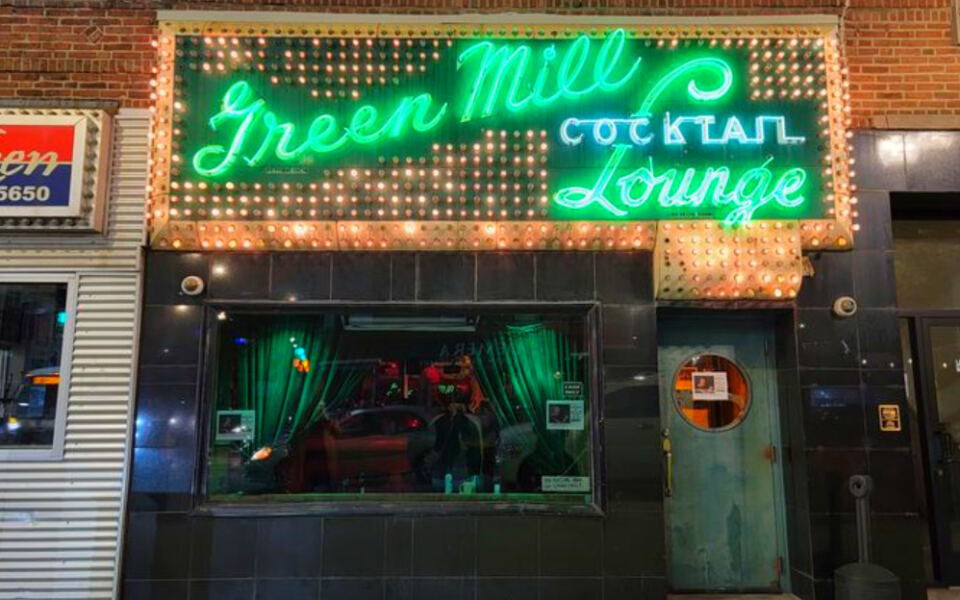
Al Capone reportedly had a favorite booth here, positioned so he could watch both entrances at once. That kind of detail tells you everything you need to know about the Green Mill Cocktail Lounge in Chicago’s Uptown neighborhood.
During Prohibition, the club was partly controlled by Jack “Machine Gun” McGurn, a key figure in Capone’s organization. A trap door beneath the bar reportedly connected to tunnels used for smuggling and quick escapes.
Jazz is still performed live seven nights a week, and the dark booths, vintage bar, and classic signage make the space feel genuinely unchanged. The club operates on a first-come, first-served basis with a cover charge.
There is even a small tribute to Capone behind the bar, making this one of Chicago’s most unfiltered connections to its Prohibition past.
6. The Hollywood Roosevelt, Los Angeles, California
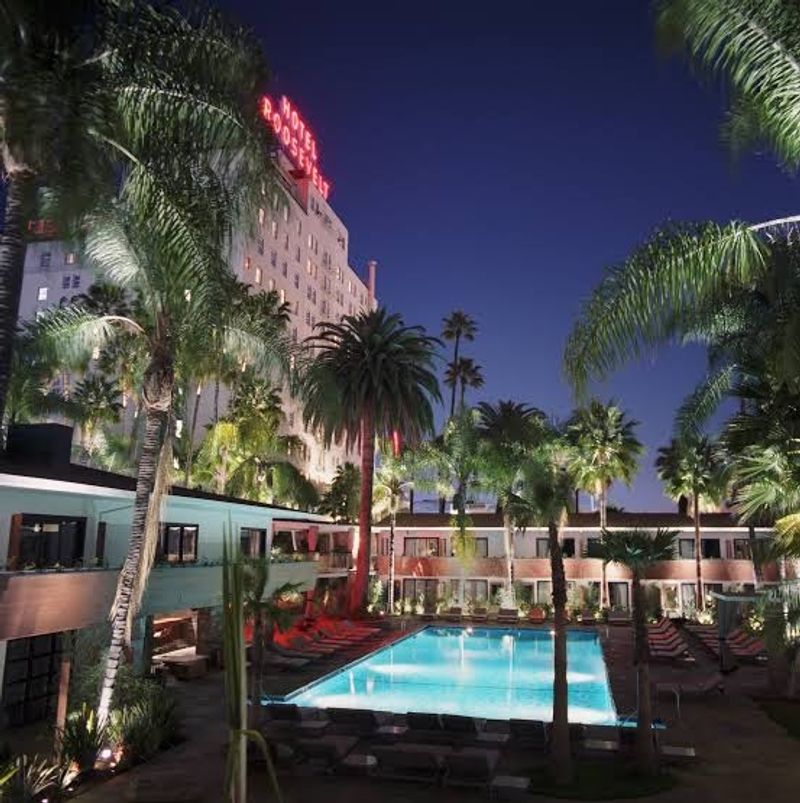
The first Academy Awards ceremony was held in this hotel’s Blossom Ballroom on May 16, 1929. The event lasted fifteen minutes, tickets cost five dollars, and 270 guests attended what would become one of the most famous annual traditions in entertainment history.
The Hollywood Roosevelt opened in 1927, financed by a group that included Douglas Fairbanks, Mary Pickford, Louis B. Mayer, and Sid Grauman.
Its twelve-story Spanish Colonial Revival design cost $2.5 million and placed it at the center of Hollywood’s rapidly expanding social scene.
Today the Roosevelt operates as a luxury hotel and a Los Angeles Historic-Cultural Monument. Guests can stay in the Gable and Lombard Penthouse or other historically connected rooms.
The restored lobby and original architectural details make it one of the most accessible places in Los Angeles to connect with the movie industry’s Jazz Age origins.
7. Ca’ d’Zan, Sarasota, Florida
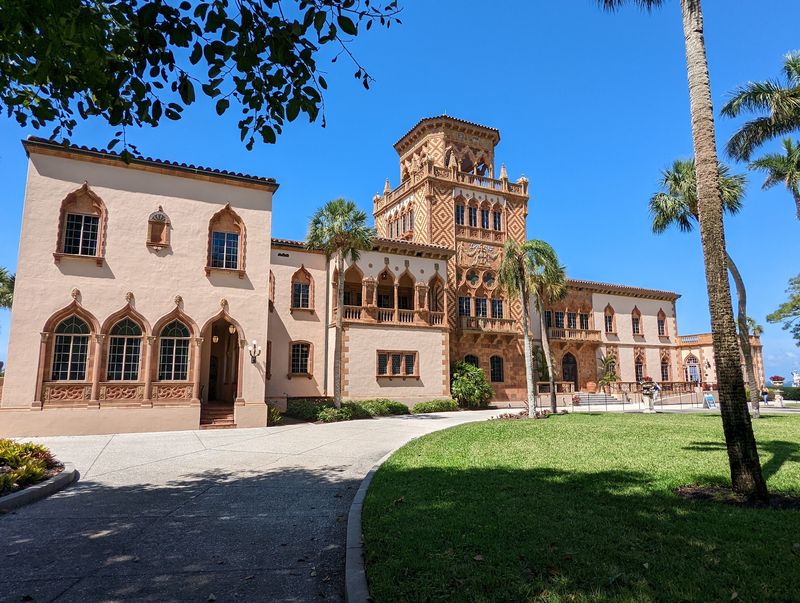
Circus magnate John Ringling and his wife Mable completed their Sarasota winter estate in 1926 at a construction cost of $1.5 million, which translates to well over $25 million today. Mable, inspired by trips to Venice, drove the design, which architect Dwight James Baum shaped into a five-story, 36,000-square-foot mansion with 41 rooms and 15 bathrooms.
The building blends Venetian Gothic, Italian Renaissance, Moorish, and Spanish elements, with Gothic arches and terra cotta ornamentation that echo the Doge’s Palace. Its waterfront terrace faces Sarasota Bay and was clearly designed to impress anyone approaching by water.
Ca’ d’Zan is now part of The Ringling, the State Art Museum of Florida, and is open to the public as a historic house museum. Visitors can tour the interiors, walk the terrace, and get an unusually clear picture of what extraordinary 1920s wealth looked like in practice.
8. The Chicago Theatre, Chicago, Illinois
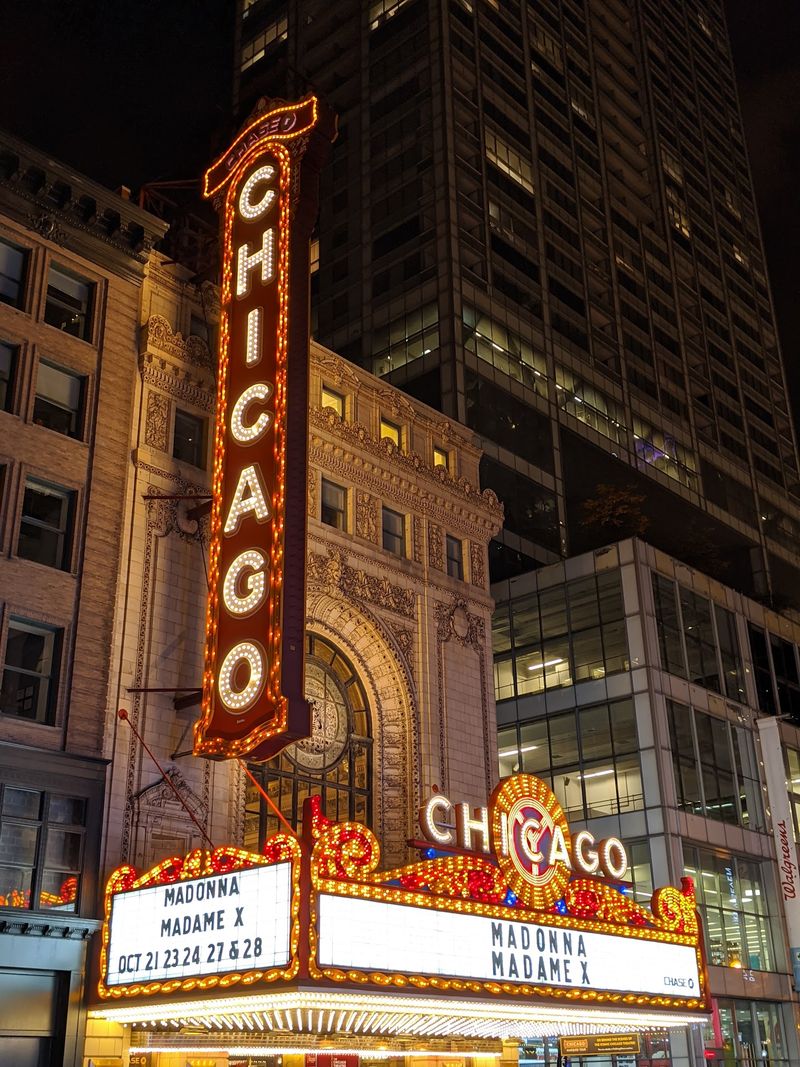
On opening night in October 1921, public interest was so intense that mounted police were needed for crowd control outside on State Street. Poet Carl Sandburg reportedly noted the scene.
The Chicago Theatre had just become America’s first large, lavish movie palace, and the city noticed immediately.
Built for $4 million by the Balaban and Katz brothers and designed by Cornelius and George Rapp, the 3,880-seat French Baroque theater featured a five-story lobby inspired by the Royal Chapel at Versailles and a grand staircase modeled after the Paris Opera House. Silent films were accompanied by a 50-piece orchestra and a Wurlitzer pipe organ.
The famous vertical CHICAGO sign still dominates State Street today, and the theater continues to host concerts, comedy shows, and musicals. Attending an event here connects modern audiences to the era when a night at the movies was treated as a genuine occasion.
9. Eastern State Penitentiary, Philadelphia, Pennsylvania
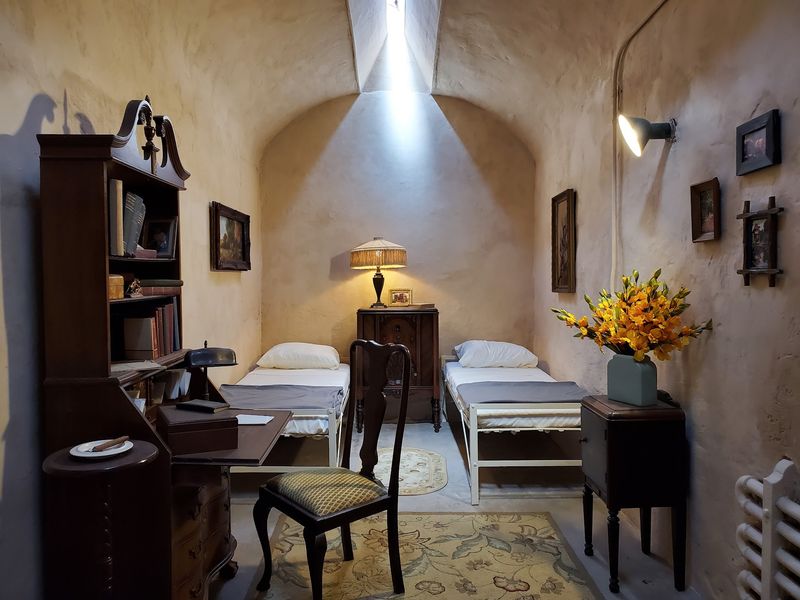
Al Capone arrived at Eastern State Penitentiary in August 1929, sentenced for carrying a concealed weapon. His stay in Cell Block 12, Cell 18 became one of the more unusual footnotes in Prohibition history, largely because his accommodations were reportedly nothing like a standard prison cell.
Contemporary accounts described the space furnished with rugs, paintings, and a cabinet radio, suggesting that Capone’s celebrity status translated into a degree of comfort not available to ordinary inmates. The contrast between those reported surroundings and the prison’s crumbling stone corridors is striking.
Eastern State now operates as a historic museum where visitors can explore the full complex, including a period recreation of Capone’s cell arranged to reflect how it may have appeared during his time there. It offers a grounded, factual counterweight to the more glamorous side of Jazz Age storytelling, and the architecture alone is worth the visit.
10. Biltmore Hotel Miami Coral Gables, Coral Gables, Florida
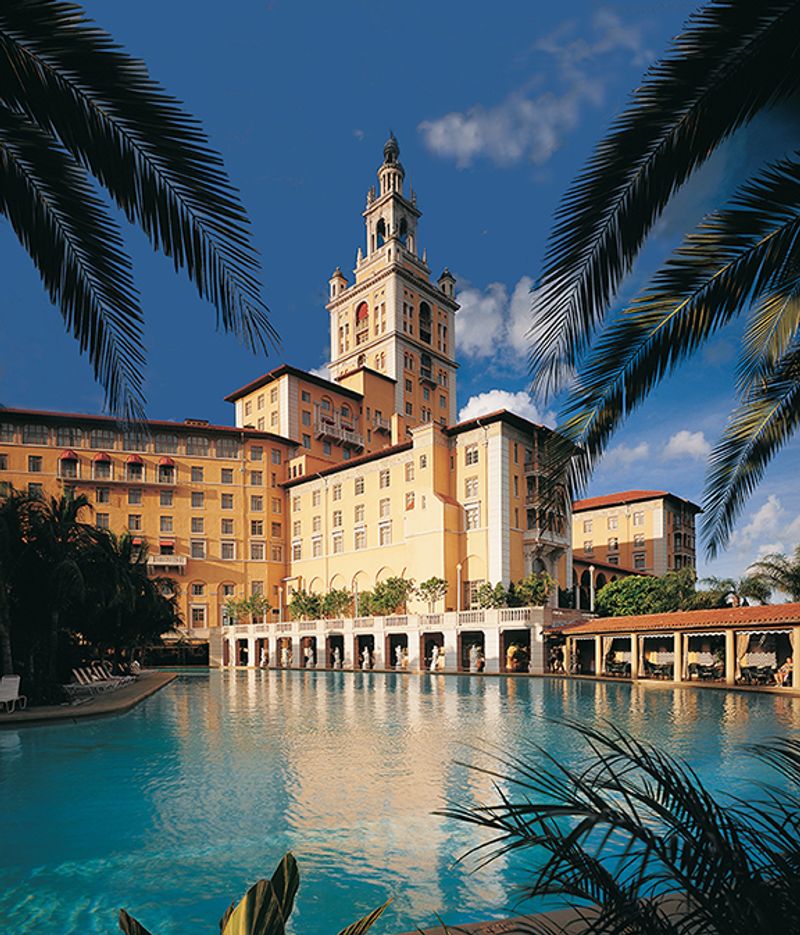
The Biltmore Hotel debuted in January 1926 as the centerpiece of George Merrick’s ambitious vision for Coral Gables as a world-class resort community. Designed by Schultze and Weaver in Mediterranean Revival style, the hotel’s 315-foot tower was modeled after the Giralda bell tower in Seville, Spain.
Its enormous swimming pool was celebrated at the time as the largest hotel pool in the world, and the surrounding courtyards, arches, and grand public rooms reflected the confidence of South Florida’s land boom years. The property was expressly built to attract wealthy visitors and project an image of permanent prosperity.
The Biltmore continues to operate as a luxury hotel and spa resort today. Guests can swim in that same historic pool, dine on the property, or book a room and spend the night inside one of the most ambitious architectural projects the 1920s Florida boom produced.
11. Musso & Frank Grill, Los Angeles, California
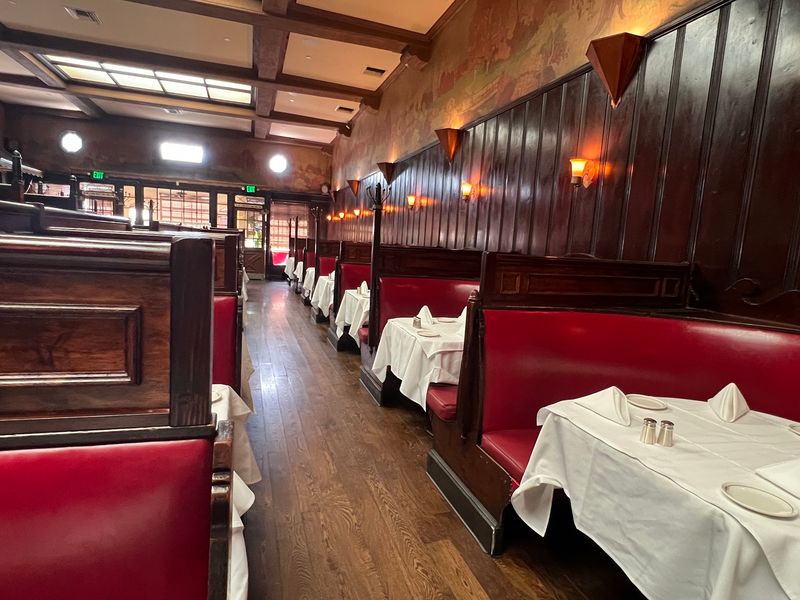
Charlie Chaplin had a preferred booth near the front entrance and reportedly ordered broiled lamb kidney and Irish stew. F.
Scott Fitzgerald, William Faulkner, and Ernest Hemingway were all regulars. Musso and Frank Grill, which opened in 1919, became so central to the Hollywood literary crowd that it earned the informal nickname the Algonquin Round Table West.
In 1923, French chef Jean Rue joined the kitchen and developed a menu that has remained largely unchanged ever since. The restaurant moved to its current address at 6667 Hollywood Boulevard in 1927 and has been there ever since.
The red leather booths, dark wood paneling, original bar, and staff in vests and bow ties are all still in place. Unlike a themed restaurant built to suggest a past era, Musso and Frank simply never stopped being what it was.
Reservations are recommended, especially for dinner.
12. Bok Tower Gardens, Lake Wales, Florida
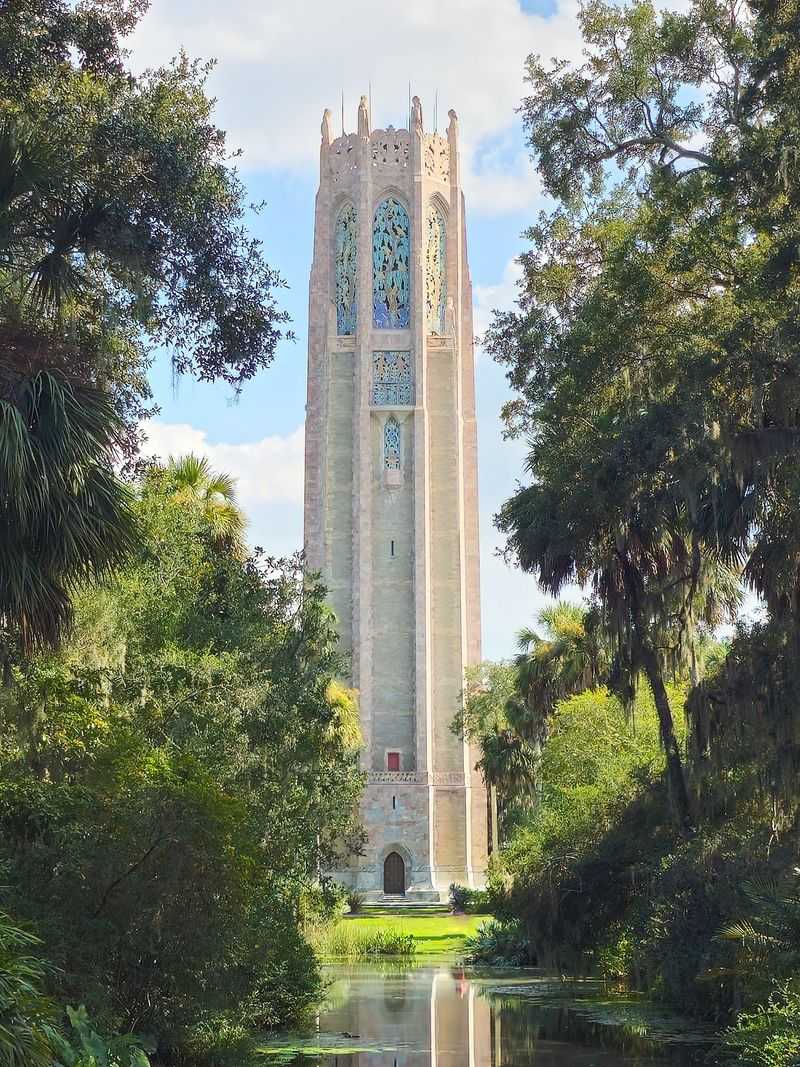
President Calvin Coolidge dedicated Bok Tower Gardens on February 1, 1929, calling it a place of quiet beauty in a decade better known for noise and spectacle. Edward W.
Bok, a Dutch immigrant and Pulitzer Prize-winning editor, funded the project as a gift to the American people.
Architect Milton B. Medary designed the 205-foot Singing Tower, which houses a 60-bell carillon and features elaborate marble sculpture by artist Lee Lawrie.
Medary’s work earned him the 1929 Gold Medal from the American Institute of Architects.
The surrounding 250-acre gardens were designed by Frederick Law Olmsted Jr.
The gardens are a National Historic Landmark and have been open to the public continuously since their dedication. Daily carillon concerts still take place from the tower.
The site represents a quieter, more contemplative side of the 1920s, showing that the decade’s ambition also produced places built for lasting beauty.
13. The Algonquin Hotel Times Square, New York City, New York
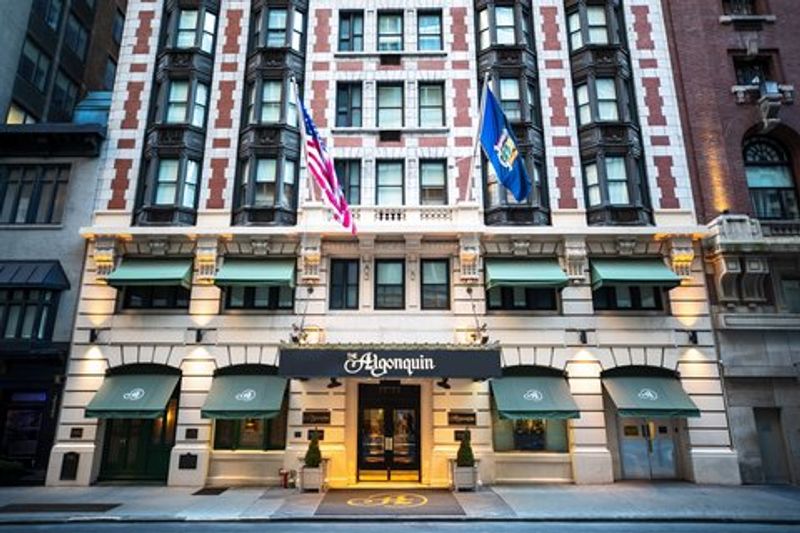
Harold Ross founded The New Yorker magazine on the second floor of this hotel. Dorothy Parker sharpened her wit at its famous Round Table lunches.
The Algonquin was already open when the 1920s began, but the decade transformed it into one of the most talked-about addresses in American literary life.
Beginning in June 1919, writers, critics, actors, and editors gathered daily in the hotel’s Rose Room for lunches that became a celebrated fixture of New York culture. The group included George S.
Kaufman, Edna Ferber, Alexander Woollcott, and Robert Benchley, among others. The hotel was also notably one of the first major New York establishments to welcome unaccompanied female guests.
The hotel still operates on West 44th Street, placing visitors in the same theater district those writers frequented. A Round Table Restaurant now occupies part of the historic space, and the in-house cat, a tradition maintained since the 1920s, continues to roam the lobby.
14. Oheka Castle, Huntington, New York
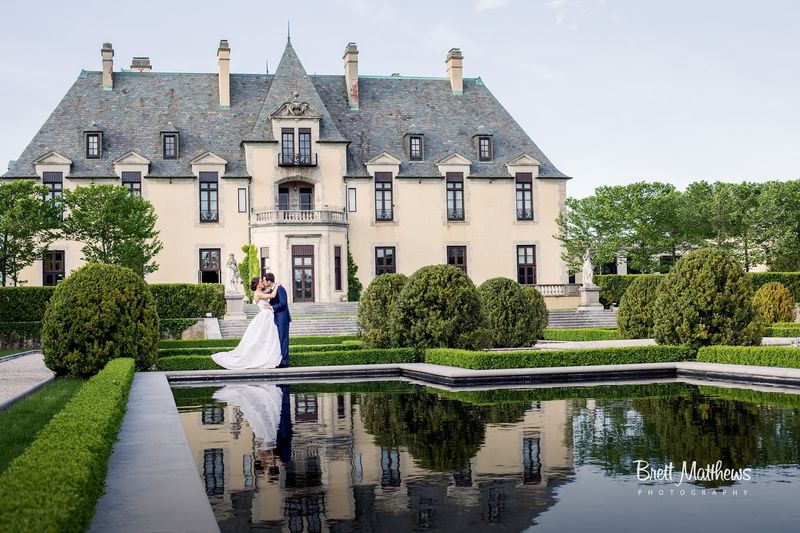
At 109,000 square feet and 127 rooms, Oheka Castle is the second-largest private residence ever built in the United States and the largest in New York. Financier Otto Hermann Kahn completed the estate between 1914 and 1919, and the 1920s turned it into one of Long Island’s most celebrated party venues.
Kahn hosted royalty, heads of state, and Hollywood stars on the grounds, and the French chateau-inspired architecture, designed by Delano and Aldrich with gardens by the Olmsted Brothers, provided a suitably grand backdrop. The original construction cost an estimated $11 million.
After a long period of decline, the estate underwent one of the most extensive private restorations in American history beginning in 1984. Today Oheka operates as a hotel and event venue with 32 guest rooms, mansion tours, and restored formal gardens recreated from original Olmsted Brothers drawings.
The Gold Coast excess of the Jazz Age is very much intact.
15. The Plaza Hotel, New York City, New York
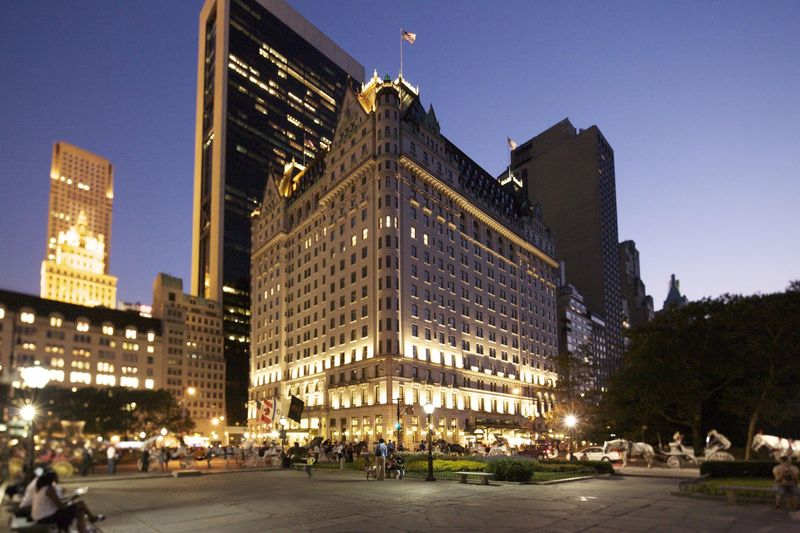
F. Scott Fitzgerald and his wife Zelda were regular visitors to The Plaza during the 1920s, and the hotel’s Fifth Avenue address made it a natural gathering place for New York’s social elite throughout the decade.
The connection to Fitzgerald’s writing, particularly the world portrayed in his novels, has become one of the hotel’s most durable associations.
The Plaza opened before the Roaring Twenties, but the Jazz Age gave it much of its legendary reputation. Grand parties, society dinners, and fashionable gatherings filled its ballrooms and dining rooms throughout the decade, establishing the kind of institutional glamour that outlasted the era itself.
The hotel remains a working luxury property and a National Historic Landmark. Its public spaces, including the Palm Court and the Oak Room, preserve much of their early 20th-century character.
Among the towers and traffic of modern Manhattan, The Plaza remains one of the clearest windows into the city’s Jazz Age social world.
Share this story