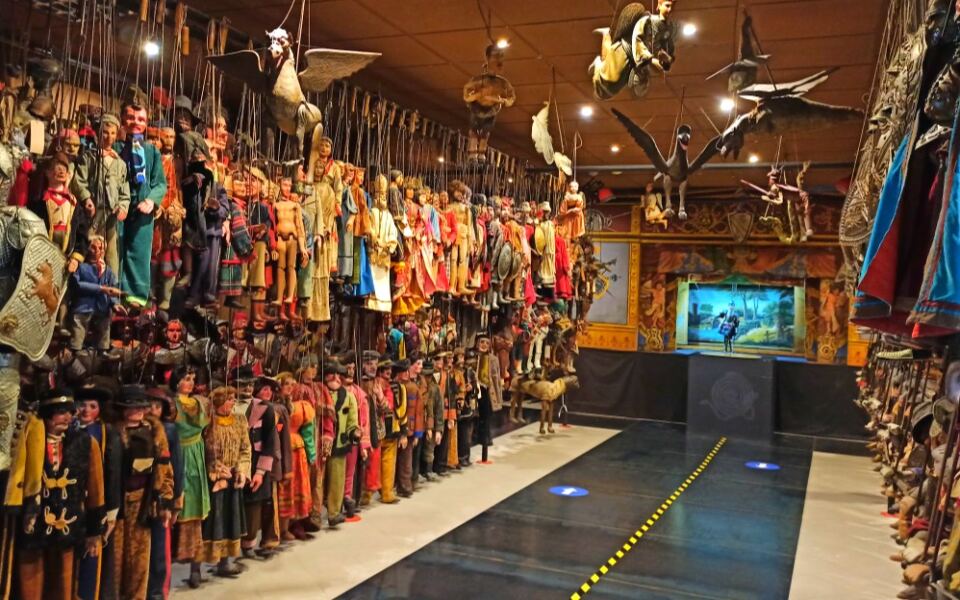
In Vietnam, puppeteers perform behind a pool of water. In Sicily, armored knights battle on miniature stages.
And in Atlanta, visitors can see original characters from The Muppet Show, Sesame Street, and The Dark Crystal.
These are just a few of the places keeping centuries-old puppetry traditions alive. Japan’s Bunraku theater uses three performers to control a single puppet, while Salzburg’s famous marionette theater has been staging productions since 1913.
Across the world, museums and working theaters preserve everything from intricate shadow puppets to familiar television characters. Some let visitors watch live performances, while others reveal the craftsmanship behind the figures.
These 13 destinations show just how much history and creativity can fit onto a puppet stage.
1. Center for Puppetry Arts, Atlanta, Georgia, USA
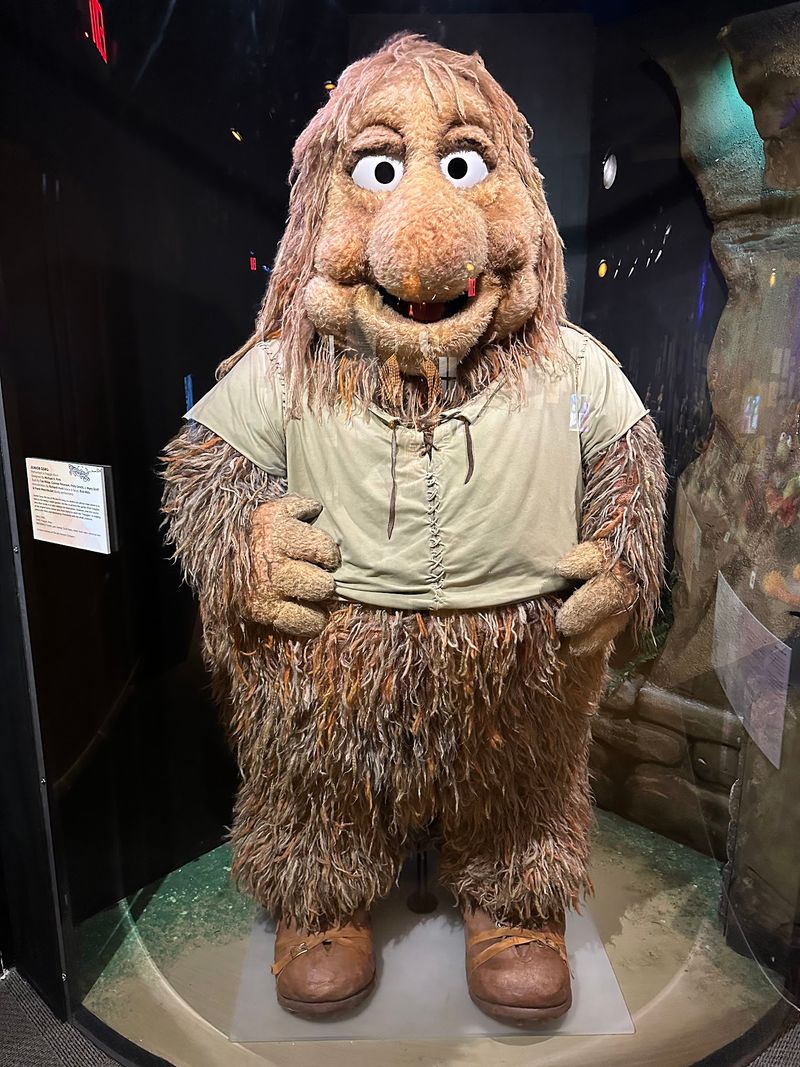
Kermit the Frog started his career as a puppet made from an old coat, and Jim Henson’s legacy is a big part of this Atlanta museum. The Worlds of Puppetry Museum includes a Jim Henson Collection with characters from The Muppet Show, Sesame Street, and fantasy films like The Dark Crystal.
A separate Global Collection covers puppets from Asia, Africa, Europe, and the Americas. You can compare shadow figures, rod puppets, and marionettes in one visit.
Henson himself cut the ribbon when the center opened in 1978. That detail makes the Muppet galleries feel extra personal.
The center also runs live shows for young kids and for adults, plus hands-on workshops where you can build your own puppet. Check the schedule before going, since shows change by season.
Georgia families get a lot out of this one, but grown-up fans of Fraggle Rock will be just as happy.
Address: 1404 Spring St NW, Atlanta, GA 30309
2. Museu da Marioneta, Lisbon, Portugal
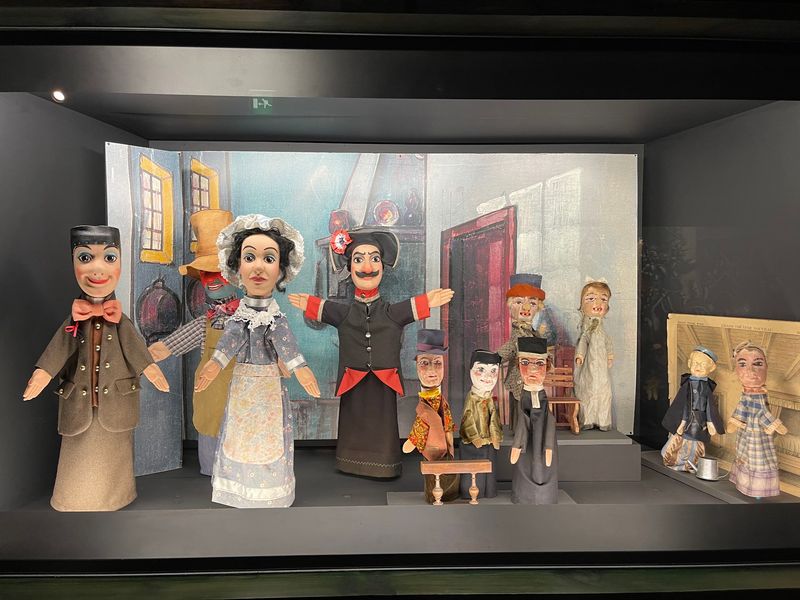
Nuns once lived in the building that now houses Lisbon’s puppet museum. The Convento das Bernardas dates back to the 1600s, and its old walls make a fitting home for figures with long histories.
Portuguese puppetry gets plenty of attention here. Look for Dom Roberto, a feisty glove puppet character tied to street shows, and for the Bonecos de Santo Aleixo, rustic rod puppets from the Alentejo region.
The collection then stretches far beyond Portugal. You’ll see shadow puppets from Asia, masks, and theater figures from several continents.
Displays also explain how puppets are built and moved, which helps the whole collection click. It’s easy to spend more time here than planned.
The museum sits in the Madragoa neighborhood, close to the river and other historic streets. Pairing it with a walk around the area makes for a well-rounded Lisbon afternoon.
Address: Rua da Esperança 146, 1200-660 Lisboa, Portugal
3. National Marionette Theatre, Prague, Czech Republic
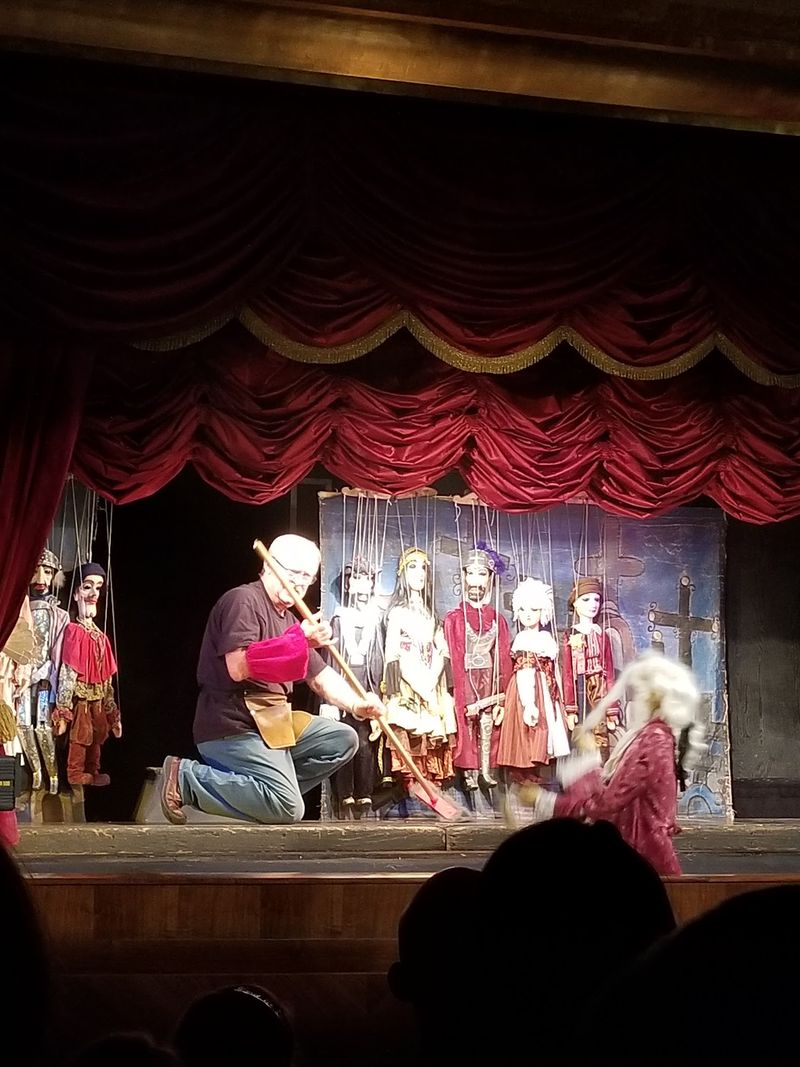
How often do you get to see a wooden puppet sing opera? At this Prague theater, string marionettes perform Mozart’s Don Giovanni, and the show has run for decades.
The production pairs a recording of the opera with puppets dressed in period costumes. Playful moments, like a puppeteer’s hand appearing on stage, keep the mood light.
Mozart has real ties to Prague, since Don Giovanni premiered in the city in 1787. That connection gives the show local roots beyond its tourist appeal.
Czech puppetry runs deep, too. UNESCO added puppetry in Slovakia and Czechia to its heritage list in 2016.
The international puppetry organization UNIMA was also founded in Prague in 1929. Puppet fans can feel like they’re visiting a kind of headquarters for the art.
Shows are short enough for most kids, and no Czech is needed to follow along.
Address: Žatecká 98/1, 110 00 Prague 1, Czech Republic
4. Royal Puppet Theater Toone, Brussels, Belgium
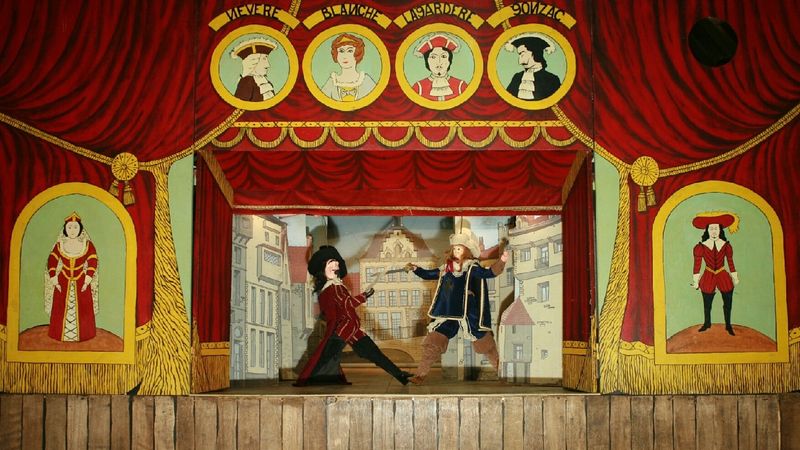
Down a narrow alley just steps from the Grand-Place, a family puppet tradition has passed from one Toone to the next since the 1800s. Each new lead puppeteer takes on the Toone name, which keeps the story going.
Shows use heavy rod puppets controlled from above. The plays often adapt classics like The Three Musketeers or Hamlet, with a funny Brussels spin.
A character named Woltje, a cheeky local street kid, often pops up to poke fun at the plot. He’s a big part of the theater’s personality.
Many performances use the old Brussels dialect, so check which language a show uses before booking. Some are geared toward visitors who don’t speak it.
The building also has a small museum of older puppets and a café space. Even between shows, the hanging figures make it worth a peek.
Address: Rue du Marché aux Herbes 66 (Impasse Sainte-Pétronille), 1000 Brussels, Belgium
5. National Bunraku Theatre, Osaka, Japan
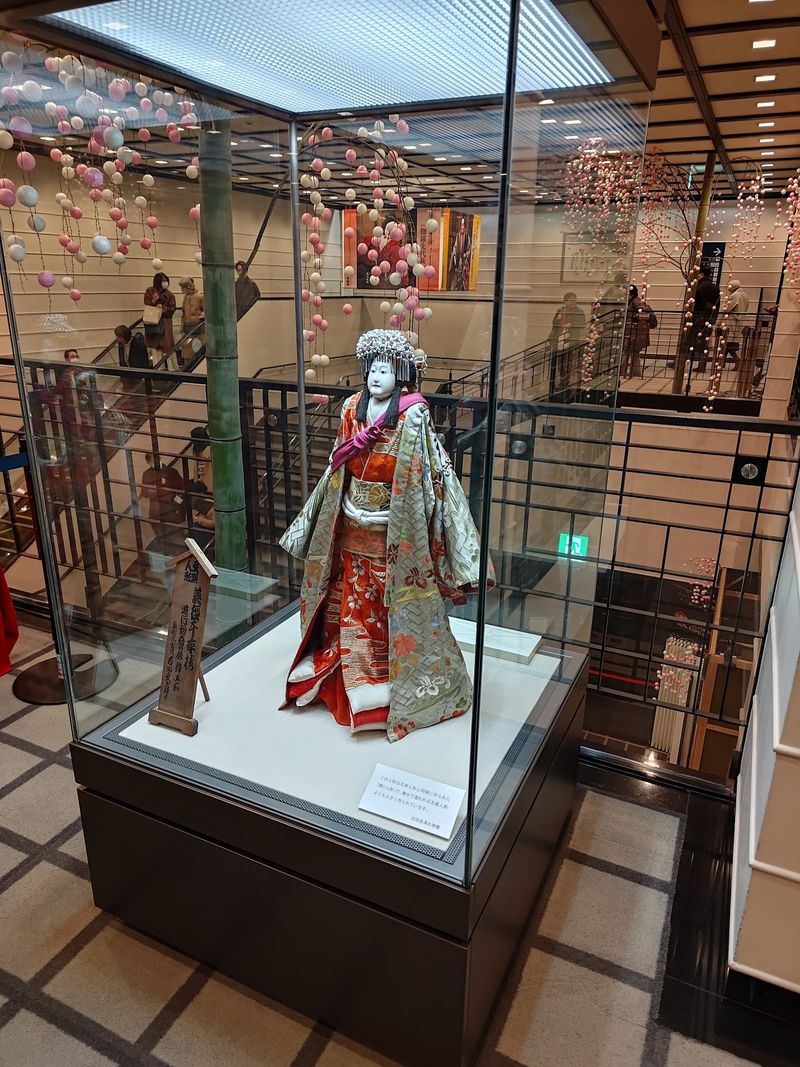
Three people work together to move one main Bunraku puppet. The lead puppeteer handles the head and right arm, a second controls the left arm, and a third works the feet.
Training takes many years, and assistants often start with the feet. That patience shows in how lifelike the puppets look on stage.
Bunraku also relies on two more performers. A tayu narrator voices the characters, while a shamisen player supplies the music.
Osaka is the birthplace of this style, which grew popular in the 1600s and 1700s. UNESCO now recognizes Ningyo Johruri Bunraku as world heritage.
The theater opened in 1984 and holds regular seasons through the year. English audio guides and subtitles help newcomers follow the plots about love, duty, and honor.
Don’t skip the exhibition room, where you can see puppet heads and costumes up close.
Address: 1-12-10 Nipponbashi, Chuo-ku, Osaka 542-0073, Japan
6. Thang Long Water Puppet Theatre, Hanoi, Vietnam
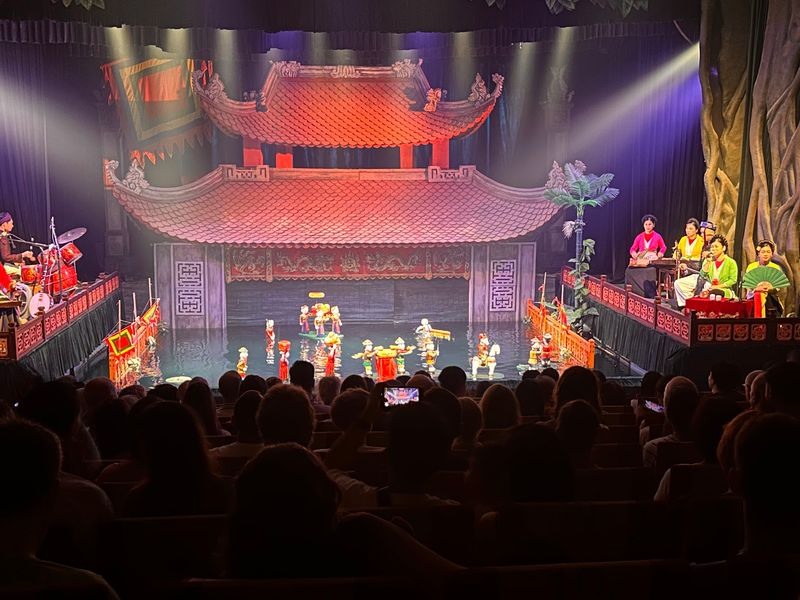
Rice paddies were the first stages for Vietnamese water puppetry. Farmers in the Red River Delta developed the art around a thousand years ago, performing when fields flooded.
Today’s version uses an indoor pool in central Hanoi. Puppeteers hide behind a bamboo screen and stand in the water, steering figures with long poles underneath.
The wooden puppets are carved and covered in lacquer to handle all that splashing. Scenes show farming, fishing, festivals, and dancing dragons.
A live band plays traditional instruments beside the pool, and singers voice the stories. You won’t need to understand Vietnamese, since the action tells you what’s happening.
Shows are short, usually under an hour, so they fit easily into a busy day. The theater sits right by Hoan Kiem Lake, a handy spot after a lakeside walk.
Booking ahead is smart, since daily performance times are limited.
Address: 57B Dinh Tien Hoang, Hang Bac, Hoan Kiem, Hanoi, Vietnam
7. Wayang Museum, Jakarta, Indonesia
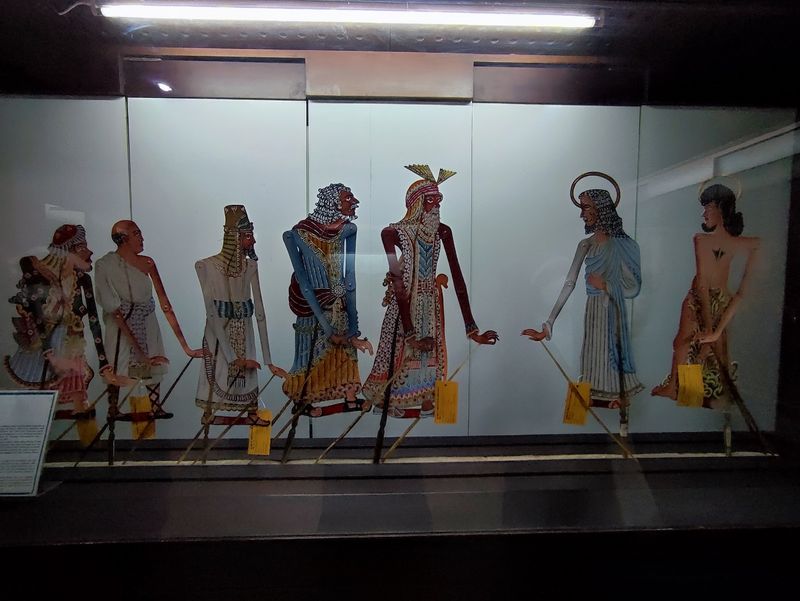
Leather shadow puppets in Indonesia can take weeks to carve and paint. The tiny holes punched into them create detailed patterns when light shines through.
Jakarta’s Wayang Museum shows off these wayang kulit figures along with wayang golek, which are three-dimensional wooden rod puppets. Both styles tell stories from epics like the Ramayana and Mahabharata.
The collection covers many regions of Indonesia, and each area has its own look. Some figures have long, slender arms, while others are bold and brightly painted.
Puppets from places like China, India, and Europe appear here as well. Comparing them makes the Indonesian styles stand out even more.
The museum sits in Kota Tua, Jakarta’s old town, on a site once used for a Dutch church. It opened as a museum in 1975.
Nearby museums around Fatahillah Square make it easy to plan a full day.
Address: Jl. Pintu Besar Utara No. 27, Pinangsia, Taman Sari, West Jakarta 11110, Indonesia
8. Salzburg Marionette Theatre, Salzburg, Austria
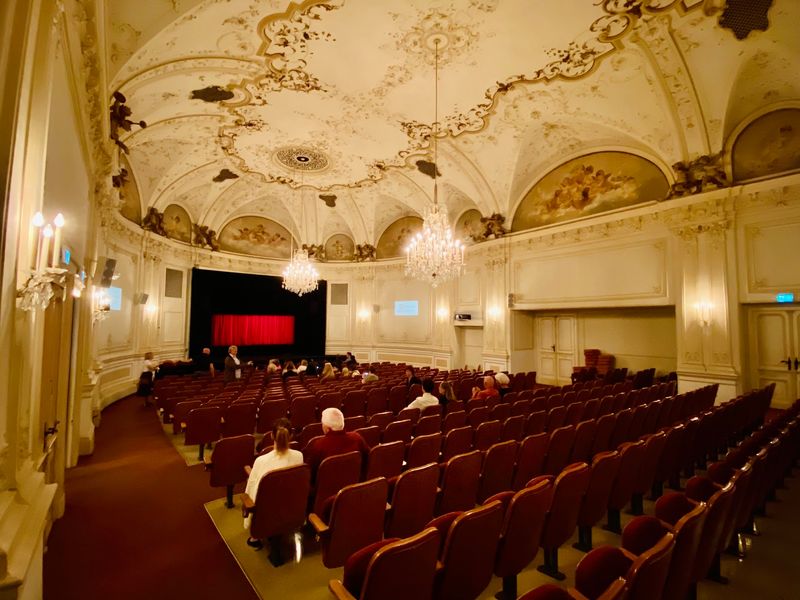
Sculptor Anton Aicher started this theater in 1913 with a production of Mozart’s Bastien and Bastienne. His family kept the company going for generations.
Mozart is still the heart of the program, which makes sense in his hometown. The Magic Flute and The Marriage of Figaro are among the operas the puppets perform.
Fans of The Sound of Music get their own treat. The theater stages a marionette version of the story, which is set in Salzburg.
The puppets dangle from strings worked by puppeteers on a bridge above the stage. Their small, careful motions make the characters seem to breathe.
The company has toured worldwide, and its tradition is listed as Austrian cultural heritage. It performs in a building on Schwarzstrasse, near the Mozarteum and Mirabell Gardens.
Shorter fairy tale shows are a smart choice for younger kids.
Address: Schwarzstraße 24, 5020 Salzburg, Austria
9. Antonio Pasqualino International Puppet Museum, Palermo, Sicily, Italy
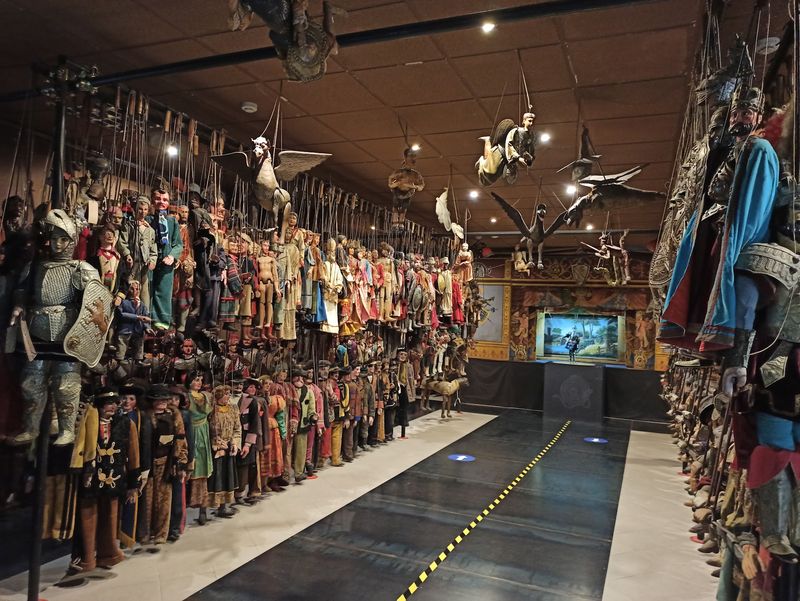
Sicilian puppet knights wear real metal armor, and some of them stand close to a meter tall. They star in the Opera dei Pupi, a tradition UNESCO recognized as part of world heritage in 2001.
Those battle-ready figures act out tales of Charlemagne’s paladins, including Orlando and Rinaldo. The stories are full of duels, loyalty, and plenty of dramatic sword-waving.
Anthropologist Antonio Pasqualino founded the collection in the 1970s to protect this art before it faded away. The museum now holds thousands of puppets, painted stage sets, and posters.
Sicily is only part of the story, though. The galleries also show puppets from places like India, Indonesia, Africa, and other parts of Europe.
Performances take place in the museum’s own small theater, so look for scheduled shows. Seeing a knight swing into action beats reading about it on a label.
Address: Piazzetta Antonio Pasqualino 5, 90133 Palermo PA, Italy
10. Bob Baker Marionette Theater, Los Angeles, California, USA
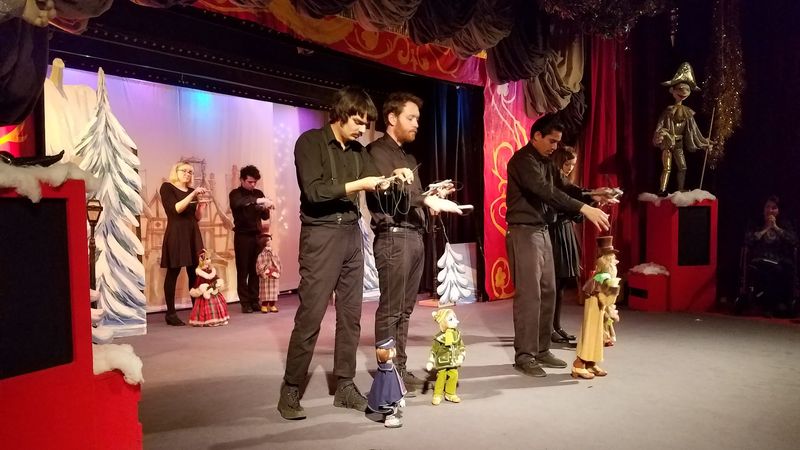
Ice cream after the show has been a tradition here for decades. It’s a sweet ending that kids and adults both seem to enjoy.
Puppeteer Bob Baker and his partner Alton Wood founded the theater in 1963. Baker had already worked on puppet effects for Hollywood films before opening his own stage.
The company holds thousands of handmade puppets. Many shows feature musical numbers with dancing animals, clowns, and fantasy figures.
Performances happen close to the audience, sometimes with puppets moving right past the front row. Kids often sit on the floor near the action.
The theater moved from its longtime spot near downtown to Highland Park in 2019. Its original building was named a Los Angeles historic monument, a nice nod to its local importance.
California has plenty of big entertainment, but this place shows how much fun a small stage can be.
Address: 4949 York Blvd, Los Angeles, CA 90042
11. Ballard Institute and Museum of Puppetry, Storrs, Connecticut, USA
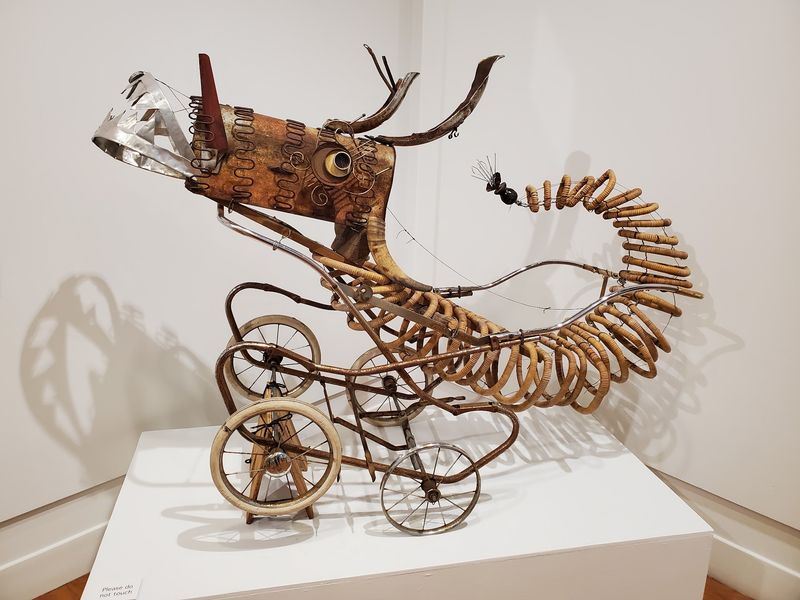
College students can actually earn degrees in puppetry at the University of Connecticut. Frank Ballard started that program, and this museum grew from his work.
Ballard taught puppetry at UConn for decades and built a large collection along the way. The museum now holds more than 3,500 puppets from many countries.
Exhibits change regularly, so a return visit may show something completely different. One season might spotlight giant parade puppets, while another focuses on shadow theater.
The collection includes work by well-known American puppeteers too. Pieces linked to famous companies sit alongside folk puppets from abroad.
The museum is located in Storrs Center, a walkable area next to campus. Admission is free, which makes it easy to stop by for a quick look.
Watch for special events, such as puppet slams and talks with artists, that bring the collection into the present.
Address: 1 Royce Circle, Suite 101B, Storrs, CT 06268
12. Northwest Puppet Center, Seattle, Washington, USA
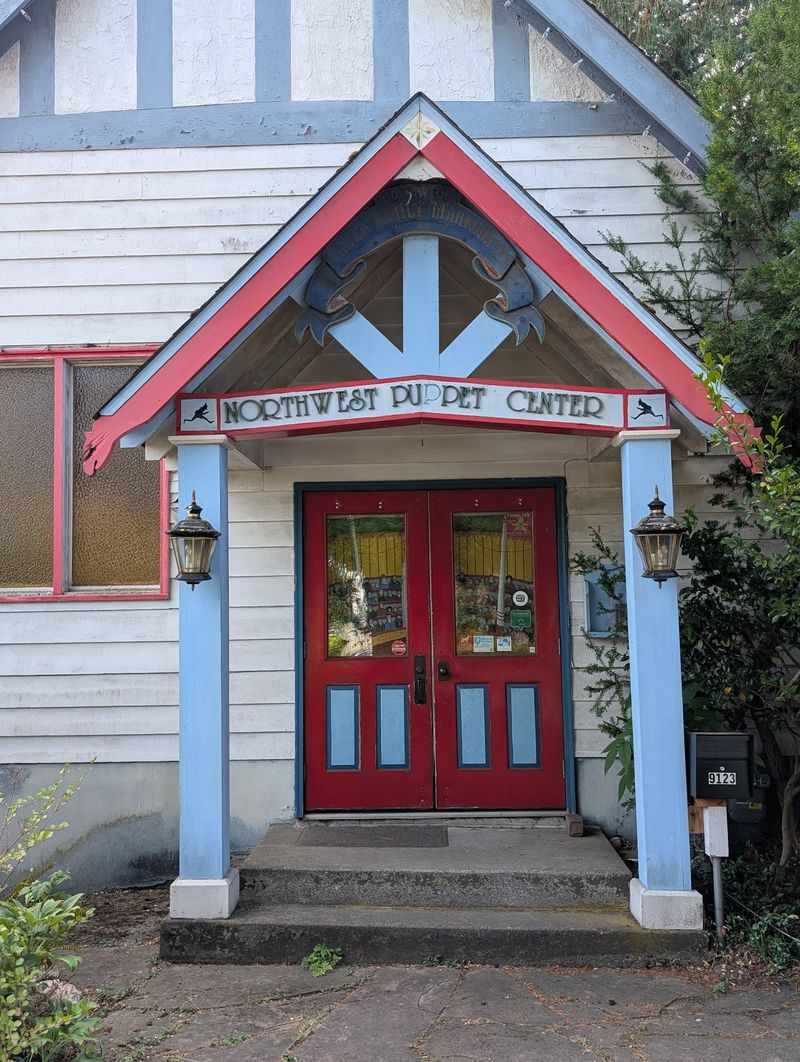
Church pews have been swapped for puppet shows in Seattle’s Maple Leaf neighborhood. The Northwest Puppet Center operates inside a former church building.
The Carter family runs the center and performs as the Carter Family Marionettes. Their focus on string puppets gives the shows a classic feel.
Programs often include visiting puppet troupes as well as the Carters’ own work. That mix keeps the season from feeling repetitive.
A museum area displays puppets from different traditions, including examples linked to Chinese puppetry. Exhibits rotate, so you may spot new figures each time.
The theater is small, which means most seats offer a clear view. Smaller crowds can also make kids feel more connected to the story.
Washington families looking for something different from a movie afternoon will like this option. Check show times online, since performances usually fall on weekends.
Address: 9123 15th Ave NE, Seattle, WA 98115
13. Detroit Puppet Company, Detroit, Michigan, USA

Brand-new stories are the specialty at this Detroit company. Instead of focusing on antique puppets behind glass, it creates fresh productions for today’s audiences.
Shows take place in an indoor performance space and in a neighborhood greenspace. Outdoor performances bring puppetry right into the community.
The company also offers workshops where people can try puppet making. Learning to build a character yourself gives you new respect for the puppeteers on stage.
Community events are a big part of its mission. Those gatherings show how puppets can bring neighbors together, not just entertain them.
Michigan has a long theater history, and this group adds a playful, modern chapter to it. Schedules change with the seasons, so check upcoming events before planning a visit.
It’s a good reminder that an art form centuries old can still surprise people with something new.
Address: 2221 Carpenter Ave, Detroit, MI 48212
Share this story