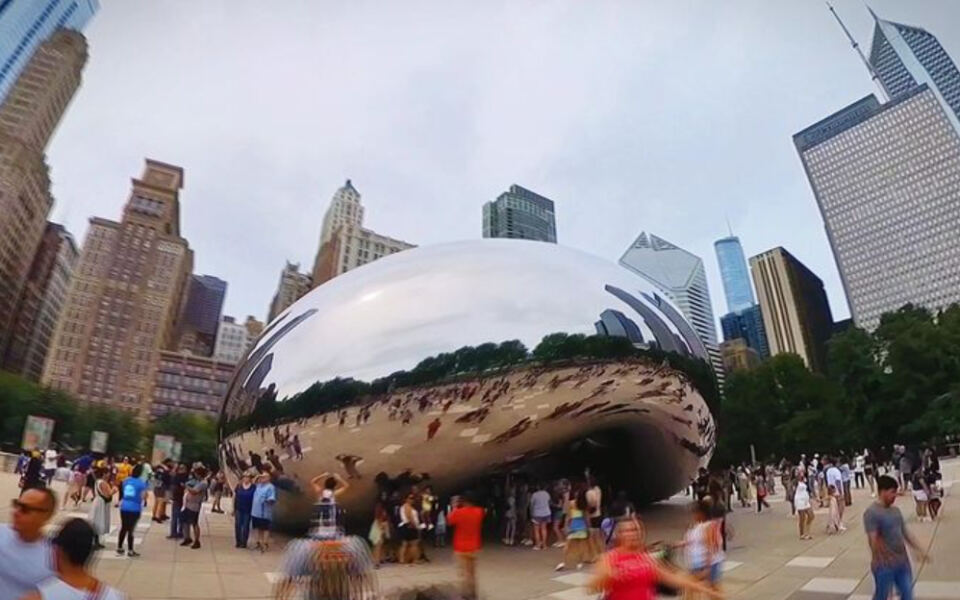
Standing in the heart of Millennium Park, Cloud Gate has become one of Chicago’s most recognizable symbols since its completion in 2006. This massive stainless steel sculpture, affectionately nicknamed “The Bean” by locals and visitors alike, weighs an astonishing 110 tons and stretches 66 feet long.
What makes it truly magical is how its polished surface acts like liquid metal, perfectly reflecting the city’s towering skyline, passing clouds, and everyone who stops to admire it.
A Mirror Made of 168 Perfectly Welded Steel Plates
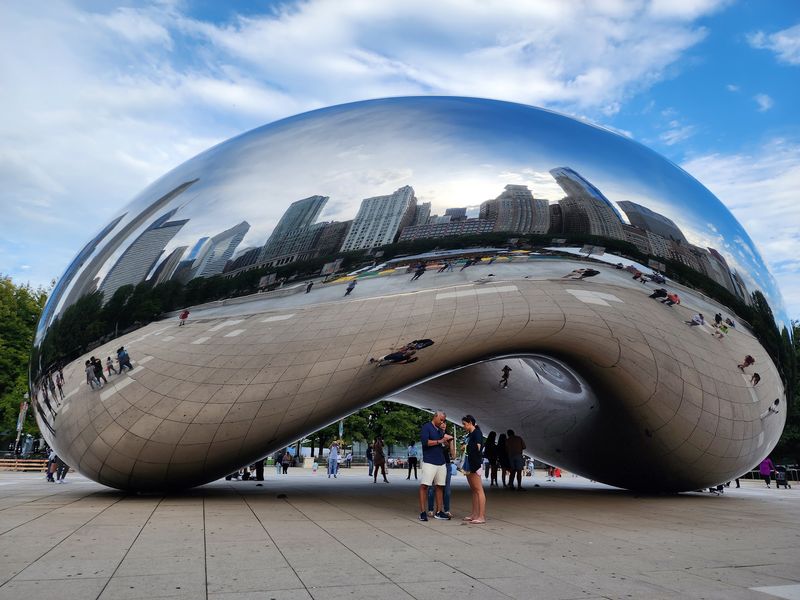
British artist Anish Kapoor designed Cloud Gate with one bold vision: create a sculpture so flawlessly polished that you couldn’t see where one piece ended and another began. The result required 168 stainless steel panels welded together with such precision that the seams are completely invisible to the naked eye.
Workers spent countless hours grinding and buffing every inch of the surface until it achieved that signature mirror finish. The steel itself is highly polished stainless, chosen specifically because it wouldn’t rust or lose its shine over time.
Walking around it, you’ll notice how the reflections shift and change with every step. The curved surface bends light in unexpected ways, creating distorted images that feel almost dreamlike.
From certain angles, you can see yourself stretched tall and thin, while from others you appear short and wide.
This incredible attention to detail is what separates Cloud Gate from ordinary public art. Every reflection tells a different story depending on where you stand, what time of day you visit, and what’s happening in the sky above.
The Bean Shape That Captured Everyone’s Heart
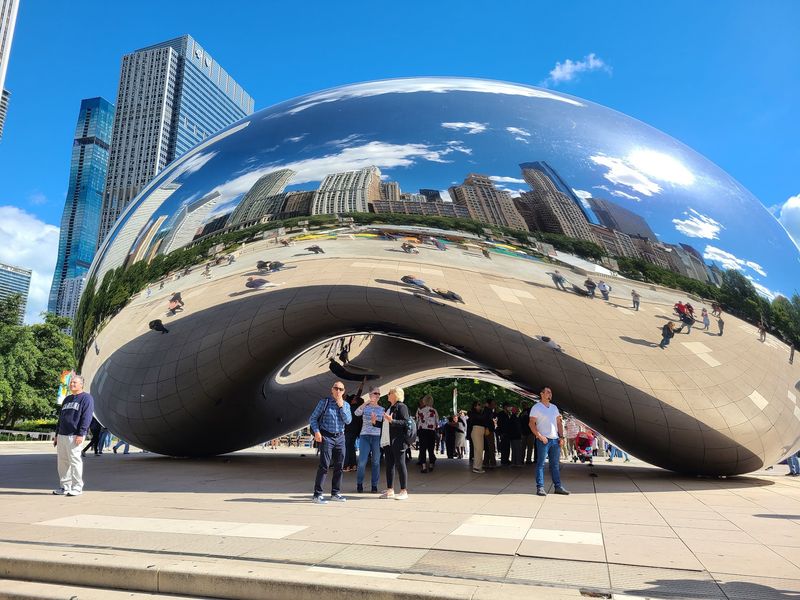
Nobody planned for Cloud Gate to become “The Bean,” but the nickname stuck almost immediately after installation. Its elliptical shape does look remarkably like a giant kidney bean dropped into the middle of downtown Chicago, and locals embraced the playful comparison.
The official name references the sculpture’s ability to capture cloud reflections on its surface, creating an ever-changing canvas of sky and weather. Kapoor wanted visitors to feel like they were looking at a gate or portal into another dimension.
Measuring 33 feet high at its center, the sculpture creates a natural gathering space underneath. The concave chamber below, called the “omphalos,” offers a completely different viewing experience where reflections multiply and swirl around you.
Despite weighing 110 tons, the Bean appears to float effortlessly on the plaza. Engineers designed a hidden support structure that keeps the massive weight distributed evenly without visible pillars or braces.
The seamless design makes it look like someone simply placed a giant drop of mercury in the park.
Skyline Reflections That Change Every Second
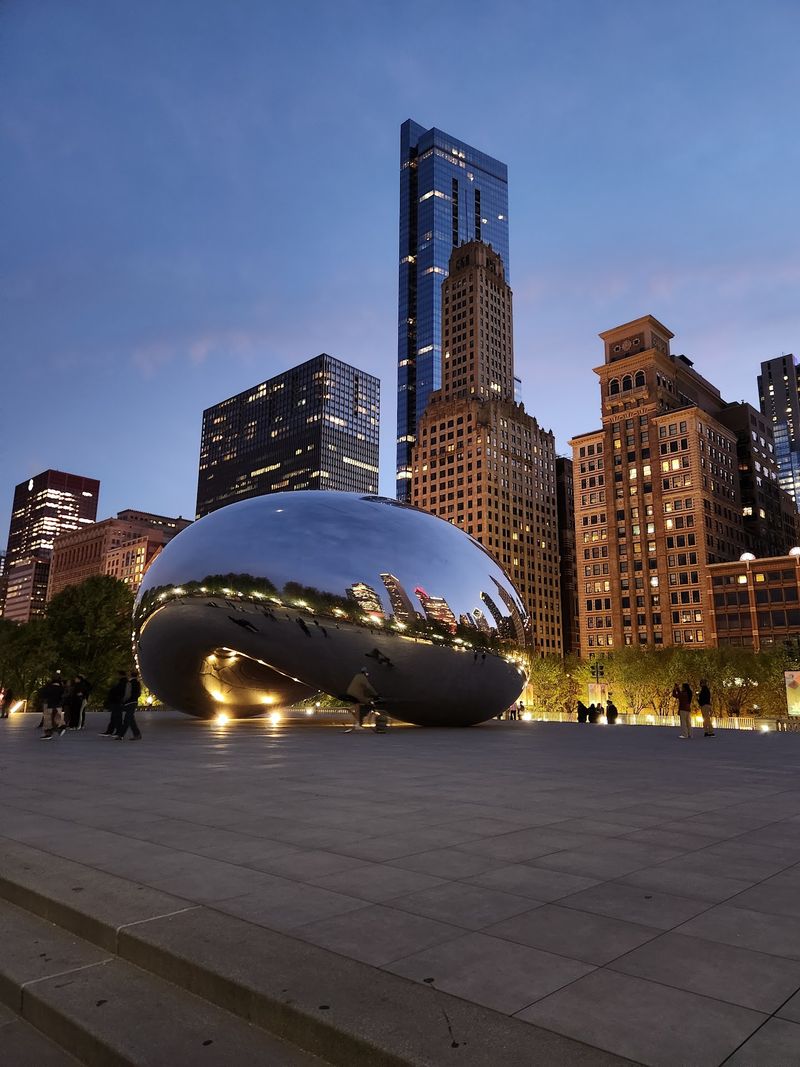
Point your camera at Cloud Gate and you’ll capture something nobody else has ever photographed quite the same way. The sculpture’s curved surface takes Chicago’s famous skyline and transforms it into an abstract painting that shifts constantly.
Tall buildings like Willis Tower and the John Hancock Center appear bent and warped across the steel surface. The reflections compress and stretch depending on your viewing angle, creating a funhouse effect that makes familiar landmarks look brand new.
Weather plays a huge role in what you’ll see reflected. On sunny days, bright blue skies and puffy white clouds dance across the Bean’s surface.
Overcast conditions create moody, dramatic reflections that feel almost cinematic.
Sunset brings out the sculpture’s most spectacular display, as golden and pink light bathes the steel and reflects warm colors across the entire surface. The surrounding buildings glow in the evening light, creating reflections that look like they’re on fire.
Night visits offer yet another experience, with city lights twinkling across the polished steel like stars.
Walking Underneath Creates Mind-Bending Views
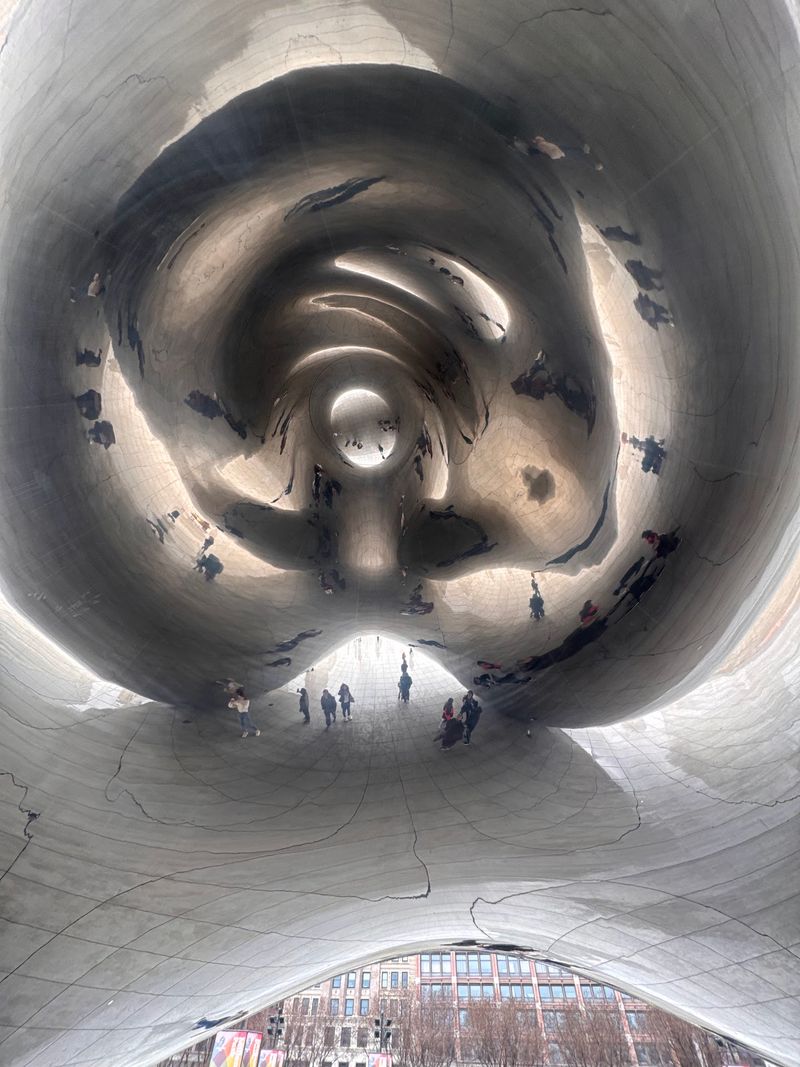
Most first-time visitors walk around Cloud Gate taking exterior photos, but the real magic happens when you step directly underneath. The concave interior chamber, officially called the omphalos, creates a 360-degree kaleidoscope of reflections that’ll make your head spin.
Look up and you’ll see yourself reflected multiple times, stretched and compressed in ways that seem to defy physics. Other visitors appear in the reflections too, creating a swirling crowd scene that feels like looking into infinity.
The curved ceiling acts like a fun house mirror on steroids. Raise your hand and watch as multiple distorted versions of your arm appear across the steel surface.
Kids especially love this part, making funny faces and poses to see how the reflections transform them.
During busy times, the omphalos becomes a social experiment as dozens of people crowd together, all appearing in each other’s reflections. The effect is disorienting and mesmerizing at the same time.
Early morning visits offer a quieter, more contemplative experience where you can study the reflections without dodging other tourists.
Photo Opportunities That Break the Internet
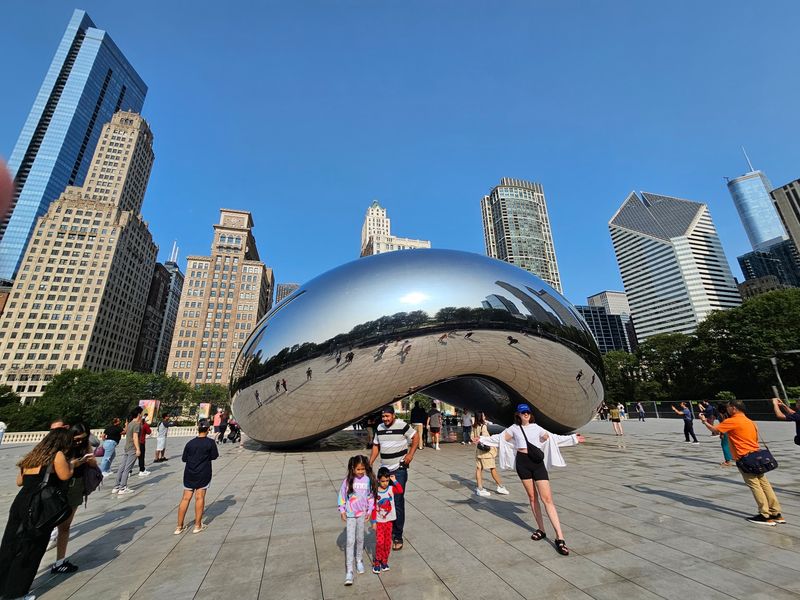
Cloud Gate has generated more Instagram posts than probably any other Chicago landmark, and for good reason. The sculpture offers endless creative possibilities for photography that range from silly selfies to artistic masterpieces.
Popular shots include standing at the sculpture’s base and capturing your reflection stretched across the curved surface. Others prefer wider angles that show both the Bean and the skyline behind it, creating a layered composition.
Photographers love the challenge of capturing unique perspectives. Some lie on the ground shooting upward, while others climb nearby steps for elevated views.
The reflections create natural frames and interesting compositions without needing any special equipment.
Timing matters more than gear when photographing the Bean. Early morning light creates soft, even reflections with fewer people in your shots.
Golden hour brings warm tones that make the stainless steel glow. Even rainy days offer opportunities, as water droplets on the surface add texture and interest to your photos.
Professional photographers and casual phone snappers alike find something special here. The sculpture does most of the artistic work for you.
Free Admission Makes It Accessible to Everyone
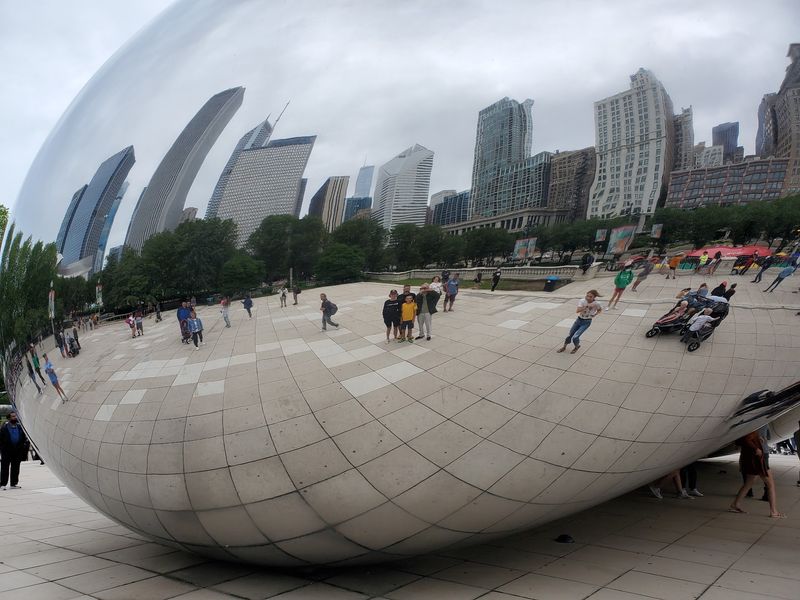
Unlike many major tourist attractions that charge hefty admission fees, Cloud Gate sits in a public park where anyone can visit anytime without paying a single dollar. This accessibility has helped it become a true landmark for both tourists and locals.
Millennium Park itself is free to enter and open year-round, making Cloud Gate available during all seasons. You can visit on a whim, spend five minutes or five hours, and never worry about ticket prices or closing times.
The sculpture’s location in the heart of downtown puts it within walking distance of hotels, restaurants, and other attractions. Many visitors incorporate it into a larger day of exploring Chicago’s Loop neighborhood without needing separate transportation.
Free access also means you can return multiple times during a trip to see how different weather and lighting conditions change the experience. Morning visits feel completely different from evening ones, and each season brings its own character to the reflections.
This democratic approach to public art aligns with Chicago’s reputation as a city that values accessible culture for all residents and visitors.
Crowds That Prove Its Massive Popularity
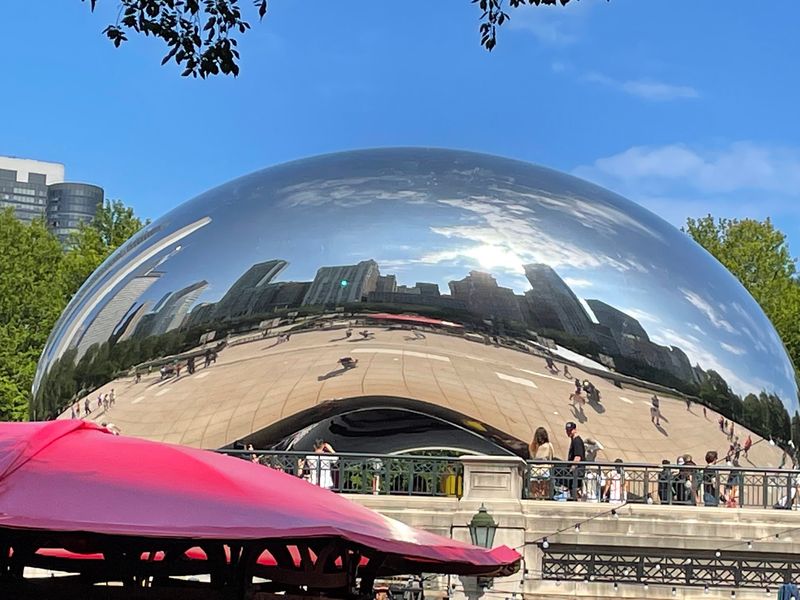
Prepare yourself for company when you visit Cloud Gate, because you definitely won’t be alone. This sculpture ranks among Chicago’s most visited attractions, drawing millions of people annually who all want their Bean photo.
Summer weekends and holidays bring the biggest crowds, with visitors packed shoulder-to-shoulder around the sculpture. Getting a clear photo without strangers in your frame becomes nearly impossible during peak times.
The area buzzes with energy as people from around the world gather to experience this iconic landmark.
Weekday mornings offer the best chance for a quieter visit. Arriving around 7 or 8 AM means fewer tourists and softer morning light for photos.
Winter months also see reduced crowds, though Chicago’s bitter cold might make lingering uncomfortable.
Despite the crowds, most visitors report that the experience still feels special. The lively atmosphere adds to the excitement, and watching other people discover the sculpture’s reflections brings its own entertainment.
Street performers and food vendors often set up nearby, creating a festival-like vibe.
Patient visitors who time their trips strategically can still find moments of relative peace to enjoy Cloud Gate’s magic.
Engineering Marvel That Defied Expectations
Building a 110-ton sculpture that looks like it’s floating required engineering genius that pushed the boundaries of what seemed possible. The project faced numerous technical challenges that threatened to derail it completely.
Originally estimated to cost around $6 million and finish in 2004, Cloud Gate ultimately required $23 million and wasn’t completed until 2006. The delays stemmed from the extreme difficulty of achieving Kapoor’s vision of perfectly seamless, mirror-polished steel.
Engineers had to design a framework strong enough to support the massive weight while remaining completely hidden from view. The internal structure uses a network of steel supports that distribute the load without creating visible bumps or irregularities on the surface.
Welding the 168 panels together without leaving marks required specialized techniques and countless hours of grinding. Workers essentially had to make the welds disappear, buffing and polishing until the surface became one continuous mirror.
The sculpture also needed to withstand Chicago’s harsh weather, from brutal winter cold to summer heat. Expansion and contraction of the steel required careful calculation to prevent warping or cracking over time.
Seasonal Changes That Transform the Experience
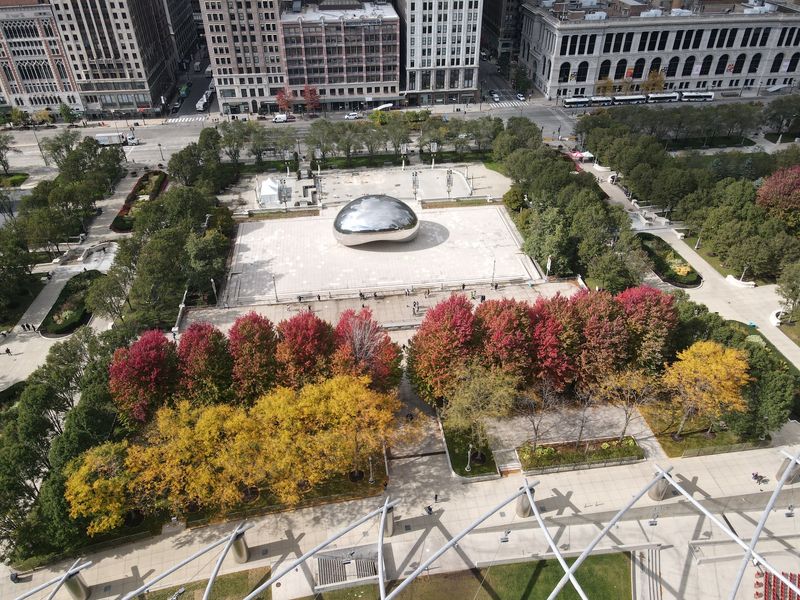
Chicago’s dramatic seasonal shifts mean Cloud Gate offers four distinctly different experiences depending on when you visit. Each season brings unique lighting, weather conditions, and atmospheric qualities that change how the sculpture looks and feels.
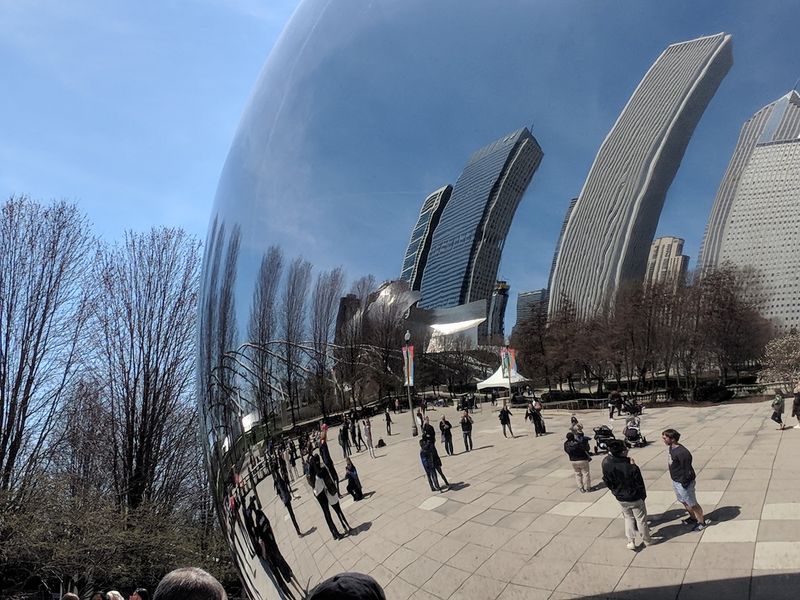
Winter transforms the Bean into a frozen mirror reflecting bare trees and gray skies. Snow piles up around its base, creating a striking contrast between white drifts and polished steel.
The cold keeps crowds manageable, though you’ll want warm clothing for extended visits.
Spring brings blooming flowers and fresh green grass to Millennium Park, adding bursts of color to the sculpture’s reflections. The weather becomes more pleasant for outdoor exploration, though occasional rain showers can create interesting water droplet patterns on the surface.
Summer means peak crowds but also the longest daylight hours and warmest temperatures. The sculpture stays busy from morning until night, with street performers and events filling the surrounding park.
Evening visits become especially appealing when you can linger comfortably as the sun sets.
Fall offers perhaps the best combination of manageable crowds, comfortable weather, and beautiful lighting as autumn colors reflect across the steel.
Location Perfect for Exploring Downtown Chicago
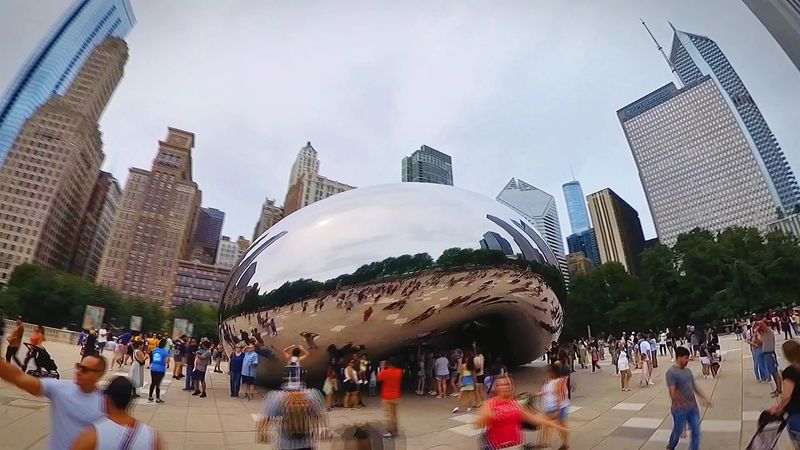
Cloud Gate’s placement in Millennium Park couldn’t be more convenient for visitors exploring downtown Chicago. The sculpture sits at 201 East Randolph Street, right in the heart of the city’s cultural and entertainment district.
Within a short walk, you’ll find the Art Institute of Chicago, one of the world’s great art museums. The Crown Fountain, another innovative public art installation, sits nearby in the same park.
The Jay Pritzker Pavilion hosts free concerts during summer months just steps away.
Multiple public transportation options make reaching Cloud Gate easy without a car. The Millennium Station sits underground beneath the park, connecting to commuter rail lines.
Several CTA train lines stop within blocks of the sculpture.
Surrounding streets offer countless dining options, from quick casual spots to upscale restaurants. Coffee shops line nearby blocks for morning caffeine runs before your Bean visit.
Hotels cluster in the area, making it possible to walk from your room to the sculpture.
The central location means you can easily build an entire day around visiting Cloud Gate, combining it with museums, shopping, dining, and other downtown attractions without extensive travel time between stops.
Share this story