Most people picture coal towns and covered bridges when they think of West Virginia, so imagine rounding a bend on a quiet country road and suddenly finding yourself face-to-face with golden spires, marble columns, and peacocks strutting across a manicured lawn. That is exactly what happens at a remarkable place tucked into the hills outside Moundsville, and the shock of it never quite wears off.
Built entirely by hand, without formal blueprints, by a group of young devotees who taught themselves stained glass cutting, gold leaf application, and marble inlay work from scratch, this palace is one of the most genuinely surprising landmarks in the entire eastern United States. Every section below reveals a different layer of the story, from the spiritual community that brought it to life, to the rose gardens that bloom every June, to the practical tips that will help you plan a visit you will be talking about for years.
Where in the World Are We: Address and Setting
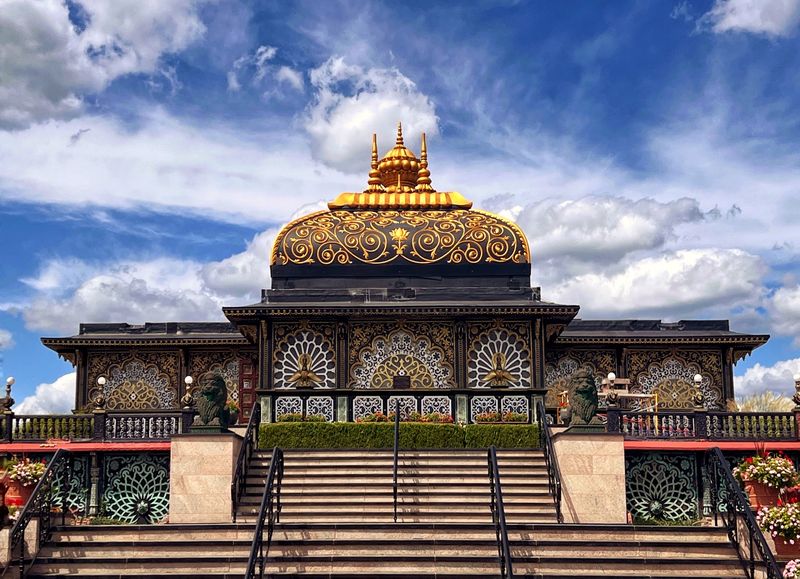
The first thing that strikes you about this destination is how completely out of place it looks, and yet how perfectly it fits. Prabhupada’s Palace of Gold sits at 3759 McCreary’s Ridge Road, Moundsville, WV 26041, perched within the New Vrindaban community in Marshall County, West Virginia.
The drive up through the winding mountain roads is scenic and quiet, lined with dense forest and the occasional farmhouse. Then, almost without warning, golden domes appear above the tree line, and your brain genuinely struggles to process what your eyes are seeing.
The palace overlooks rolling Appalachian hills that stretch out in every direction, giving the entire property a sense of peaceful elevation. The contrast between the rugged rural landscape and the ornate Eastern-inspired architecture creates a visual tension that is impossible to forget.
This remote location, far from any major city, is precisely what makes discovering it feel so rewarding.
The Origin Story: Built on Faith, Not Blueprints
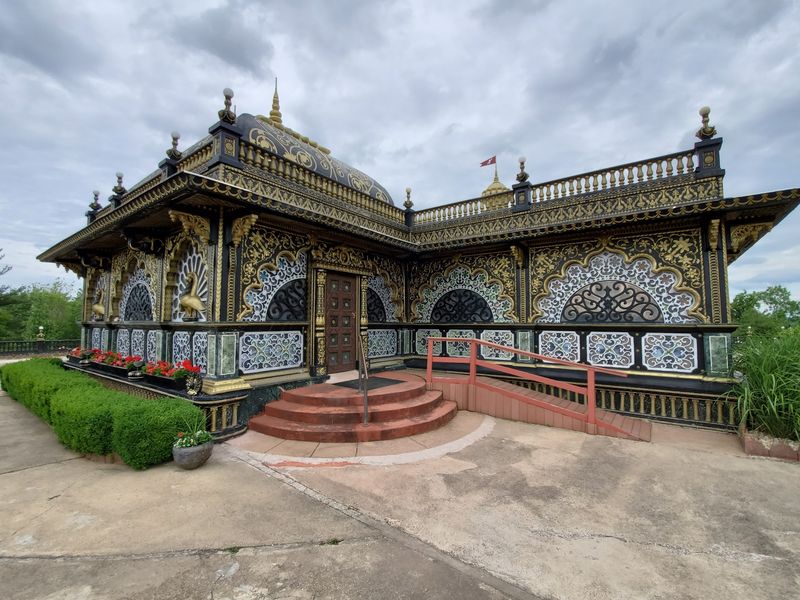
Here is a fact that stops most visitors cold: not a single professional architect was involved in building this palace. Construction began in 1973 and continued until 1979, carried out almost entirely by young Hare Krishna devotees who had no formal training in construction, masonry, or fine art.
The original idea was modest. Community members wanted to create a comfortable residence for their spiritual teacher, A.C.
Bhaktivedanta Swami Prabhupada, the founder of the International Society for Krishna Consciousness, known as ISKCON. What started as a simple plan grew into something extraordinary as devotees pushed themselves to learn entirely new crafts, from blacksmithing to stained glass artistry, through sheer trial and error.
All of the labor was donated freely, and the estimated cost for materials alone reached around $600,000, raised by the community itself. Srila Prabhupada passed away in 1977 before the palace was completed, so the finished structure became a living memorial to his legacy rather than a home.
Gold, Marble, and 52 Varieties of Stone
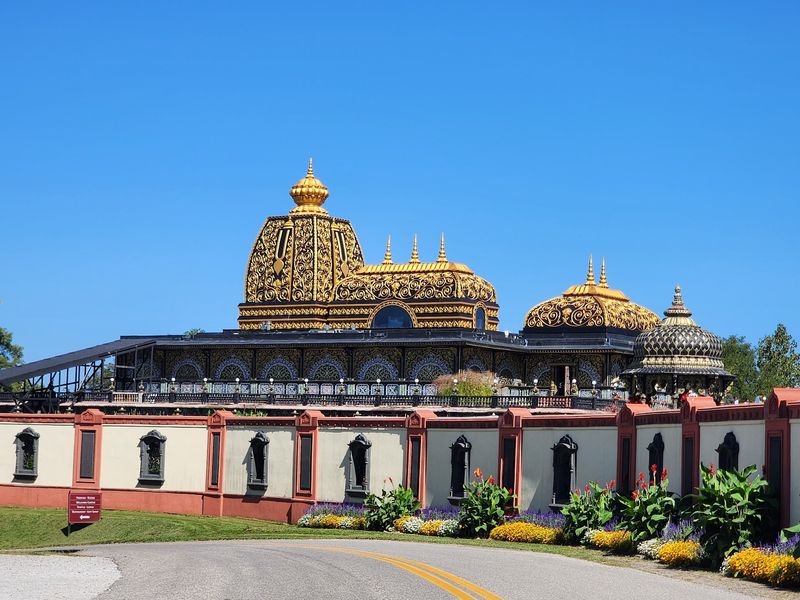
The exterior of the palace is covered in more than 8,000 square feet of 22-karat gold leaf, which explains the nickname “America’s Taj Mahal” that has followed it for decades. On a clear afternoon, the walls genuinely shimmer, and the effect from a distance is almost surreal.
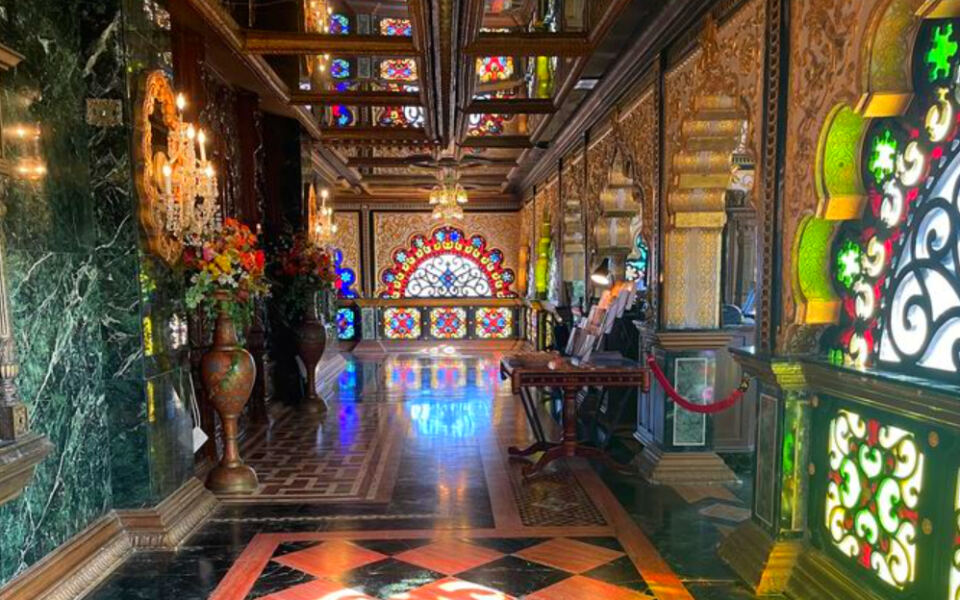
Inside, the opulence only deepens. Fifty-two varieties of marble and onyx, imported from Europe, Asia, and Africa, were cut and inlaid by hand to create the floors, walls, and decorative surfaces throughout the building.
Each pattern is precise and deliberate, reflecting months of patient, careful work by people who were essentially teaching themselves as they went.
The main dome features a ceiling made from approximately 4,200 individual crystal pieces, and a French chandelier estimated to be over 150 years old hangs in the Grand Hall, casting warm light across mirrored surfaces. Every material in this building carries a story, and the cumulative effect is breathtaking in the most literal sense of the word.
The Royal Peacock Windows: Stained Glass at Its Finest
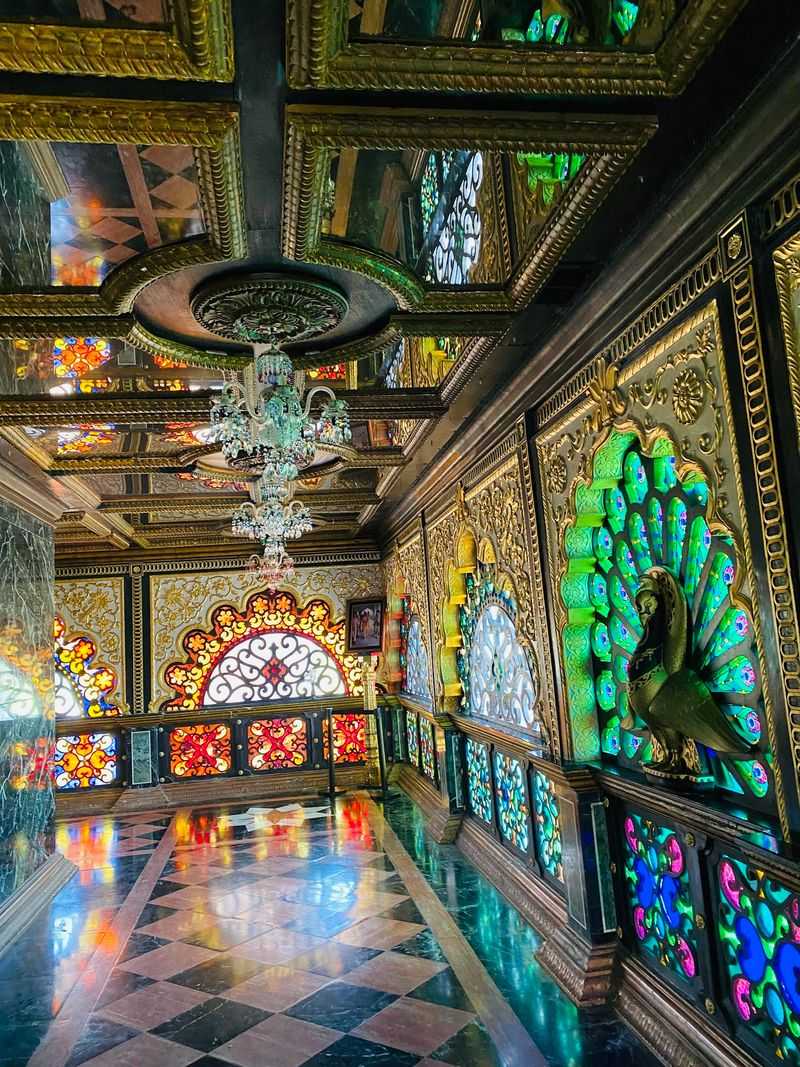
Of all the artistic achievements packed into this palace, the four royal peacock windows tend to generate the most audible gasps from visitors. Each window was assembled from more than 1,500 individually hand-cut pieces of stained glass, arranged into elaborate peacock designs that glow with vivid color when sunlight passes through them.
Peacocks hold deep significance in Krishna consciousness, representing beauty, grace, and divine connection, so their presence throughout the palace is intentional and meaningful rather than decorative. You will find peacock and lotus motifs carved into wooden doors, etched into window frames, and painted across ceiling murals throughout the building.
The stained glass work is particularly impressive given that the devotees who created it had no professional training in the craft. They learned by doing, experimenting with tools and techniques until the results matched their vision.
The windows stand today as one of the most compelling examples of what passionate self-taught artisans can accomplish when purpose drives every cut and every color choice.
Gardens in Bloom: Roses, Lotus, and Open Sky
The grounds surrounding the palace are as carefully tended as the building itself, and they reward visitors who take the time to wander rather than rush. The award-winning rose garden features more than 1,000 bushes representing nearly 100 distinct varieties, and the best time to catch them at peak bloom is around the second week of June.
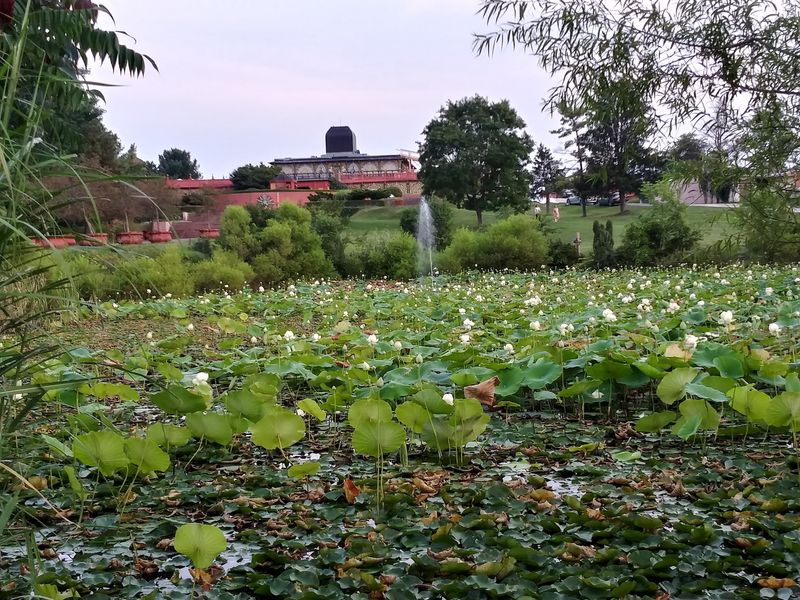
A short walk from the roses brings you to the Lotus Pond, a tranquil feature anchored by a graceful fountain. When the lotus flowers open in early July, the pond becomes a genuinely spectacular sight, the kind of scene that makes you stop walking and simply stand still for a moment.
The broader grounds also include a scenic lake with an ornate boathouse and a large swan boat, along with impressive 30-foot-tall deity statues that rise dramatically from the landscape. Spending time outdoors here feels restorative in a way that is hard to put into words, and the natural beauty acts as a perfect counterbalance to the richly decorated interior spaces waiting just a few steps away.
Peacocks, Swans, and a Very Rare White Bird
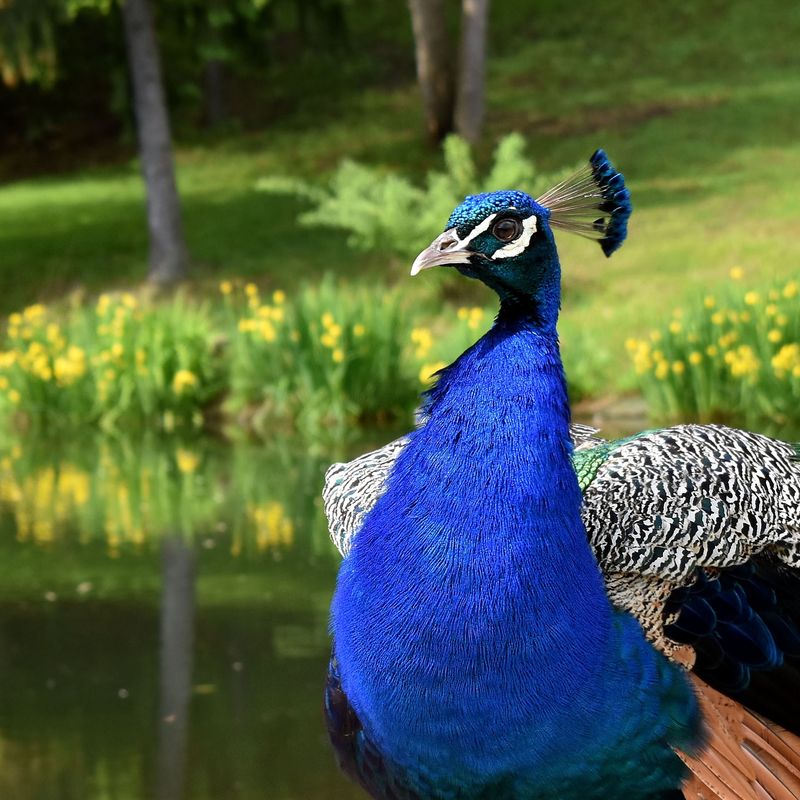
Nobody warns you about the peacocks, and that makes encountering them all the more delightful. The grounds of New Vrindaban are home to a peacock sanctuary where the birds roam freely, and on a good day you might catch one fanning out its full tail in a display that feels almost theatrical.
The real prize, though, is the rare all-white peacock that lives on the property. Spotting it feels like finding a secret the landscape decided to share with you at just the right moment.
Swans glide across the lake with an unhurried elegance that adds another layer of calm to the entire setting.
Cows also live on the property as part of the community’s values around animal care, and the overall atmosphere of the grounds is one of gentle coexistence between humans, animals, and carefully cultivated nature. The self-guided peacock walk is a wonderful way to explore the outer areas of the property at your own pace, and it pairs beautifully with the more structured palace tour.
Life Inside New Vrindaban: A Community Still Thriving
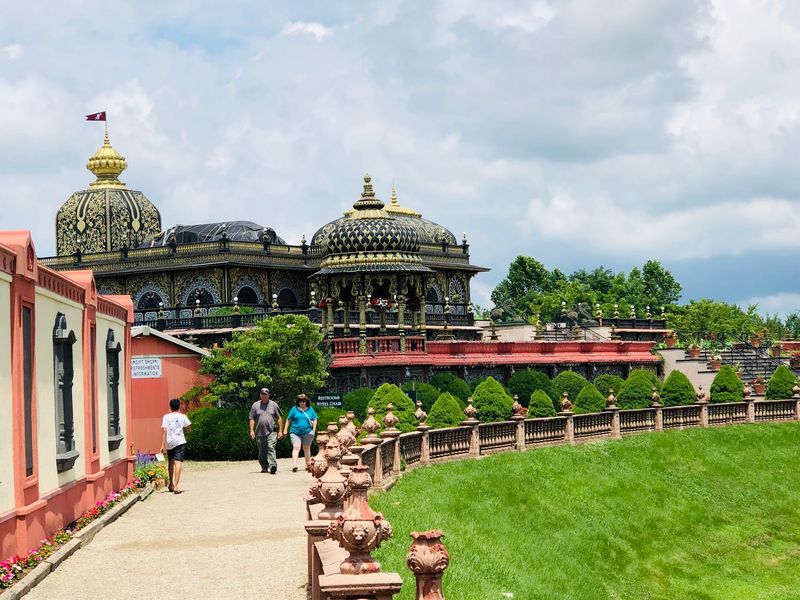
The palace does not exist in isolation. It is the most visible landmark of New Vrindaban, an active intentional community founded in 1968 under the direct guidance of Srila Prabhupada.
At its peak, the community counted nearly 500 members, making it one of the largest Hare Krishna communities in the country.
Today, residents continue to live and practice here, centered around the Sri Sri Radha Vrindavan Chandra Temple, which serves as the primary place of worship. The sounds of kirtan, devotional call-and-response singing, drift across the grounds at certain times of day, and the rhythm of community life is visible in the organic gardens, the working farm, and the shared spaces where residents gather.
Visitors are welcomed warmly and without pressure. The community’s approach to hospitality is genuinely open, and many guests report feeling a sense of calm and belonging from the moment they arrive.
The contrast between the spiritual intensity of the community’s daily practices and the easy welcome extended to curious outsiders is one of the most memorable aspects of the entire experience.
Govinda’s Restaurant and the Case for Vegetarian Cuisine
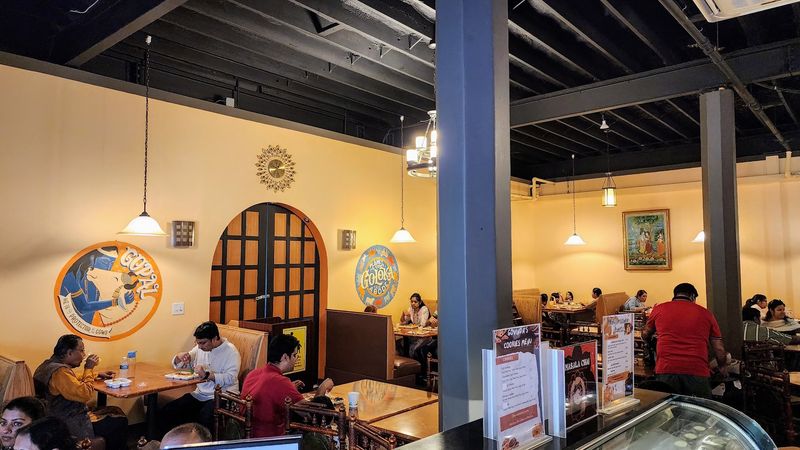
Govinda’s Vegetarian Restaurant has built a genuine reputation as one of the best plant-based dining options in the Upper Ohio Valley, and the food lives up to the buzz. The menu leans heavily on fresh, wholesome ingredients, many of them sourced directly from the community’s own organic gardens, which means what lands on your plate reflects the season and the soil just outside the window.
The atmosphere is relaxed and unpretentious, the kind of place where you feel comfortable lingering over a meal rather than rushing through it. Free lunches are sometimes offered to visitors as an expression of the community’s spirit of service, and accepting that generosity feels like participating in something meaningful rather than simply eating.
Beyond the main restaurant, a health food store and a snack bar provide options for quicker bites or provisions to take along on a hike. The Palace Lodge offers overnight accommodations for those who want to extend the experience into a full retreat, making it easy to transform a day trip into something much more immersive and memorable.
Guided Tours and How to Make the Most of Your Visit
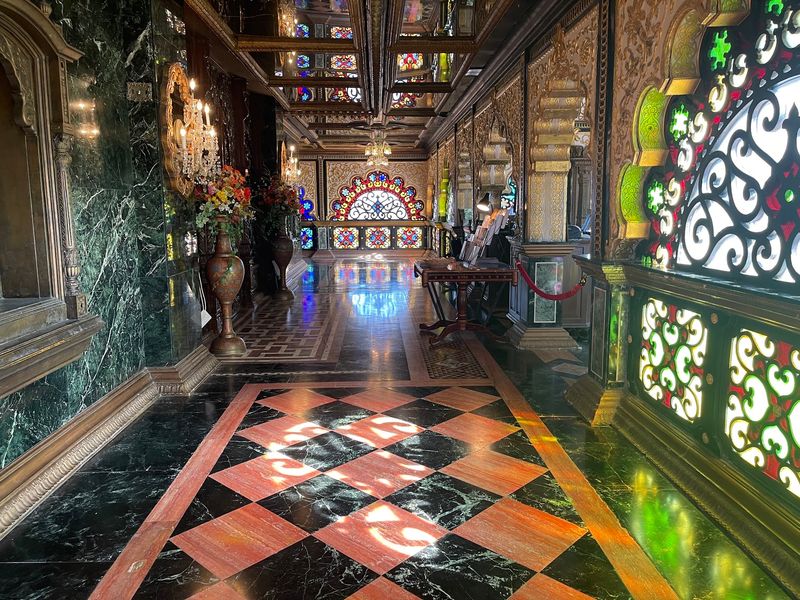
A guided tour is the single best way to understand what you are looking at inside the palace, and the tours are designed to be accessible and engaging rather than overly formal. Tours run every 30 minutes and last approximately 25 minutes, covering the major halls, the stained glass windows, the marble work, and the spiritual history behind the building’s creation.
The palace is open daily from 10:00 AM to 4:30 PM. Admission is $12 for adults, $8 for children aged 6 to 16 and seniors 65 and older, and groups of ten or more receive a reduced adult rate of $10.
One practical detail worth knowing: shoes must be removed before entering the temple, so wearing clean, easy-to-remove footwear is a smart call.
Picking up a map from the visitor center at the start of your visit is highly recommended, as it outlines all the destinations on the property and lists the day’s scheduled activities. Planning your route in advance means you are far less likely to miss something worth seeing, including the artisans sometimes spotted actively restoring sections of the palace.
Festivals, Colors, and Reasons to Return
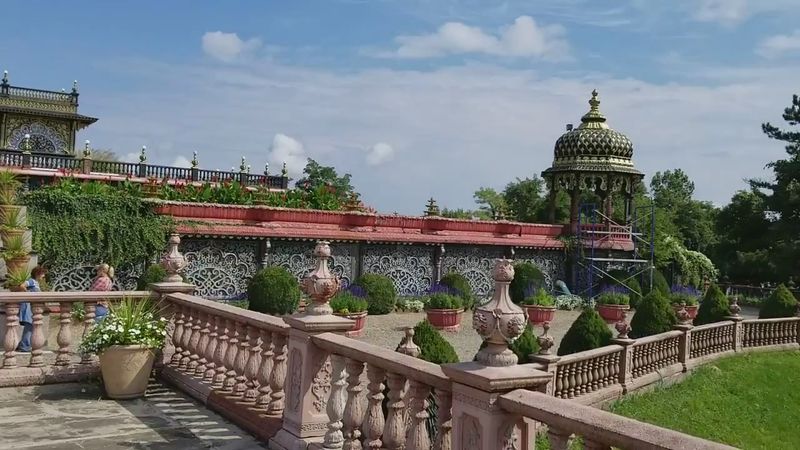
A single visit to New Vrindaban is enough to leave a lasting impression, but the community’s calendar of events gives you every reason to come back more than once. The Festival of Colors, a joyful Holi-inspired celebration held in September, transforms the grounds into a vivid, playful explosion of colored powder and communal energy that feels completely unlike anything else in the region.
The Fill Your Cup Festival focuses on wellness and mindfulness, drawing visitors who are looking for something more reflective and restorative. Timing a visit around the rose garden’s peak bloom in June or the lotus flowers’ opening in early July adds yet another layer of beauty to the experience, one that shifts with the seasons in ways that reward repeat visitors.
CNN once recognized the palace as one of the eight religious wonders to see in the United States, and the property has been identified as eligible for the National Register of Historic Places. That level of recognition, earned by a structure built entirely by untrained hands in rural West Virginia, is the kind of story that deserves to be told, and retold, for generations to come.
Share this story