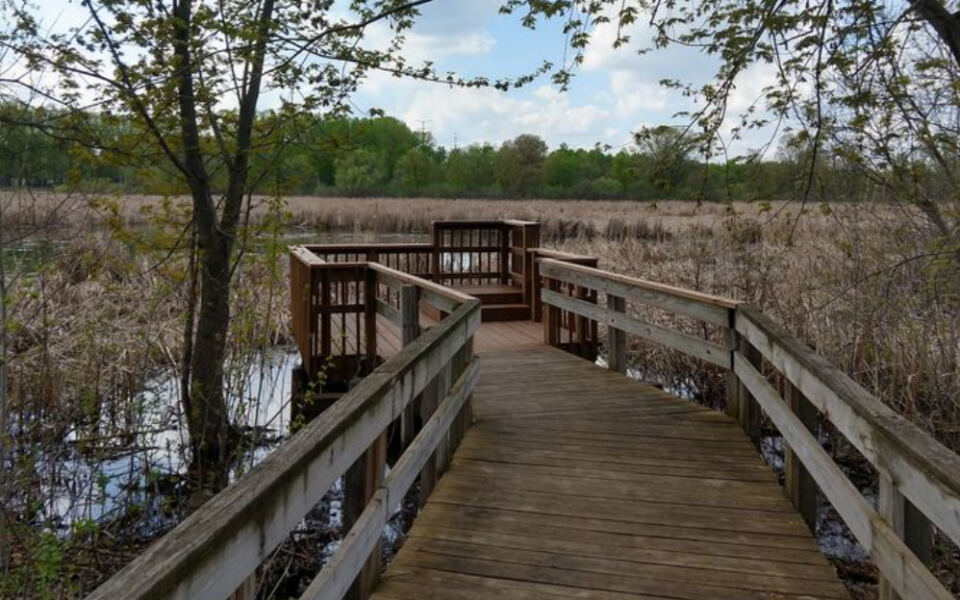
There is a place in the middle of a busy Twin Cities suburb where you can walk on water, sort of. A 900-foot floating boardwalk carries you right through the heart of a living wetland, with turtles sunning themselves just inches from your feet and red-winged blackbirds calling from the cattails.
Most people drive past this part of Fridley without ever knowing it exists. Once you find it, you will wonder how you went this long without it.
What Springbrook Nature Center Actually Is
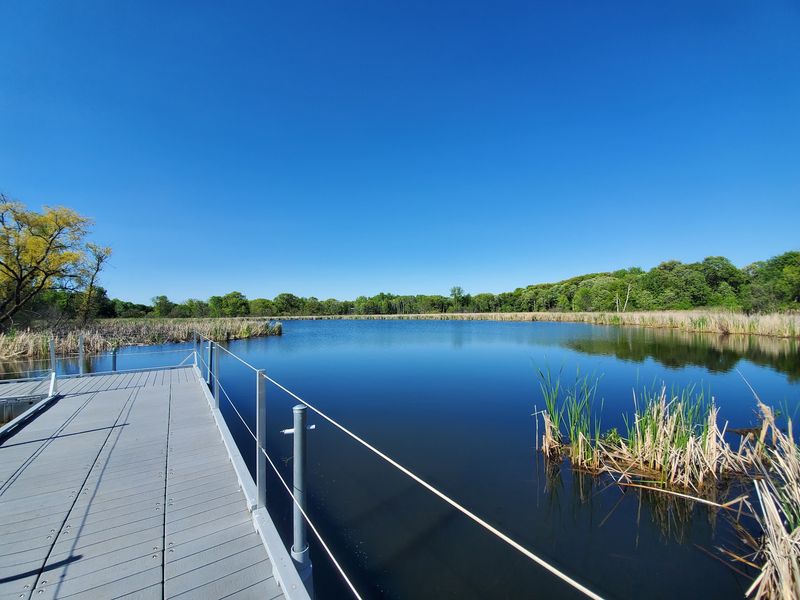
Tucked inside the city of Fridley, Minnesota, Springbrook Nature Center at 100 85th Ave NW is one of the Twin Cities metro area’s most quietly remarkable free public nature destinations. It sits on land that feels nothing like its suburban surroundings, offering wooded trails, open wetlands, and a fully staffed interpretive building all in one place.
The center is operated by the city of Fridley and is open seven days a week from 9 AM to 5 PM. Admission is free, which makes it one of the best no-cost outdoor experiences in the entire region.
Families, solo hikers, school groups, and photographers all show up regularly.
What sets it apart from a typical city park is the depth of what it offers. This is not just a patch of grass with a walking loop.
It is a genuine nature education destination with real wildlife, real habitat, and real reasons to keep coming back.
The 900-Foot Floating Boardwalk That Changes Everything
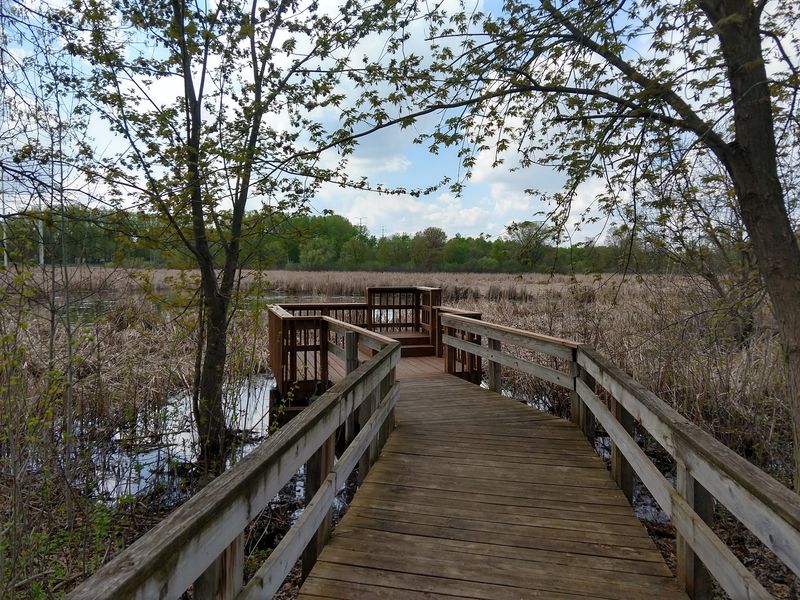
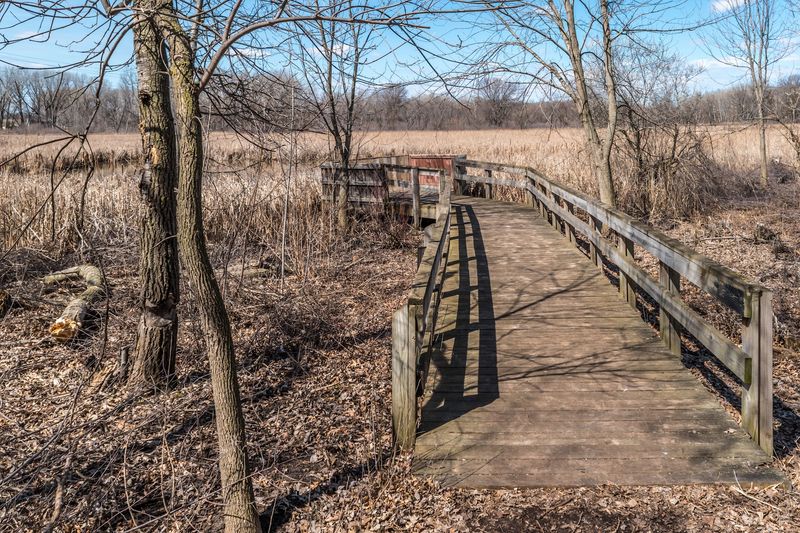
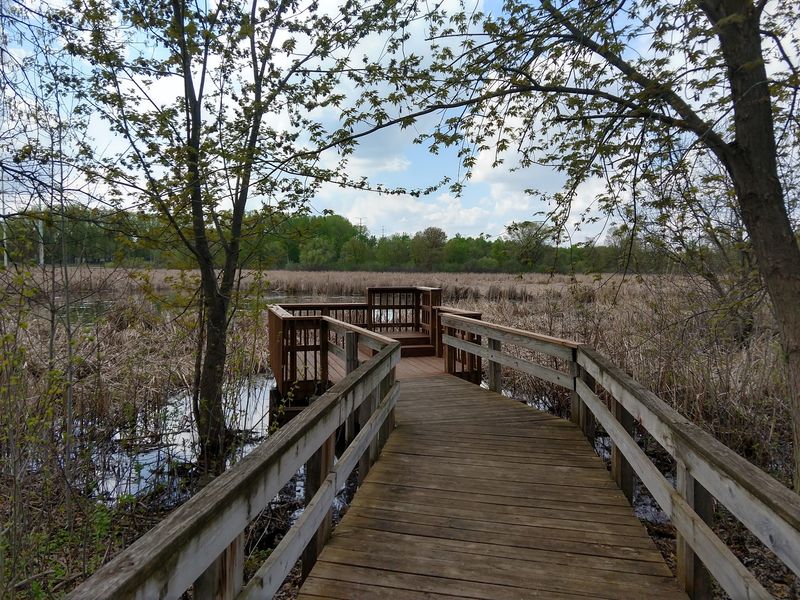
The single feature that makes Springbrook stand out from every other nature center in the metro is its floating boardwalk. Stretching 900 feet through the wetlands, it puts you directly on top of the water rather than beside it.
The sensation is genuinely different from a standard paved path.
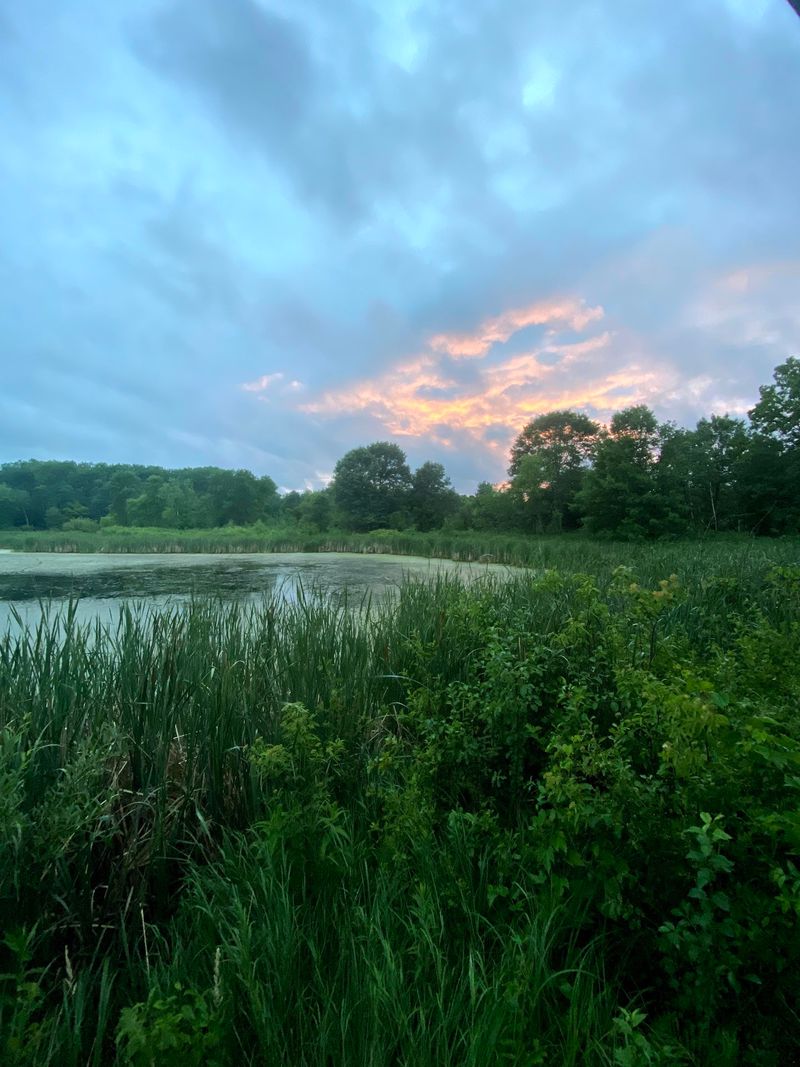
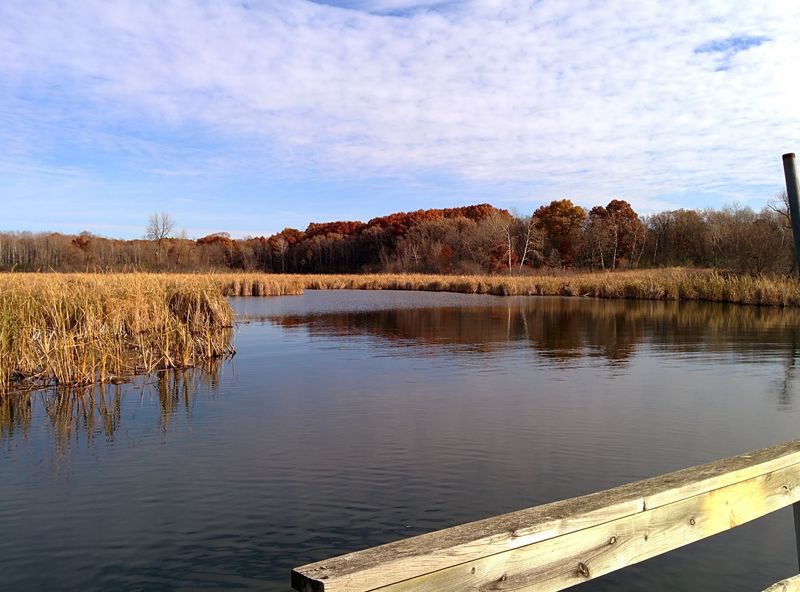
The boardwalk flexes slightly underfoot as you walk, and the water below reflects the sky and surrounding vegetation. On calm mornings, the surface looks like a mirror.
On breezy days, ripples move through the reeds and the whole scene feels alive in a way that photographs struggle to capture.
Painted turtles are regular boardwalk residents, often lined up along any floating log within view. Ducks paddle underneath.
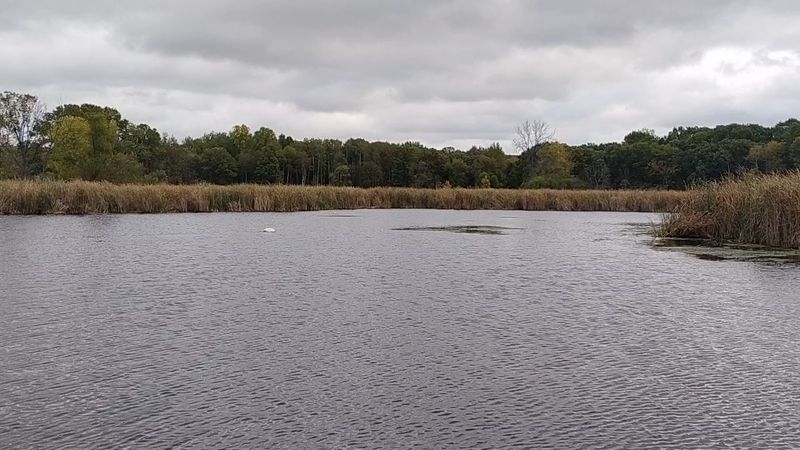
Families of swans have been spotted gliding through the open water nearby. The boardwalk alone is worth the trip, and it is completely free to walk anytime the park is open.
A Trail System Built for All Skill Levels
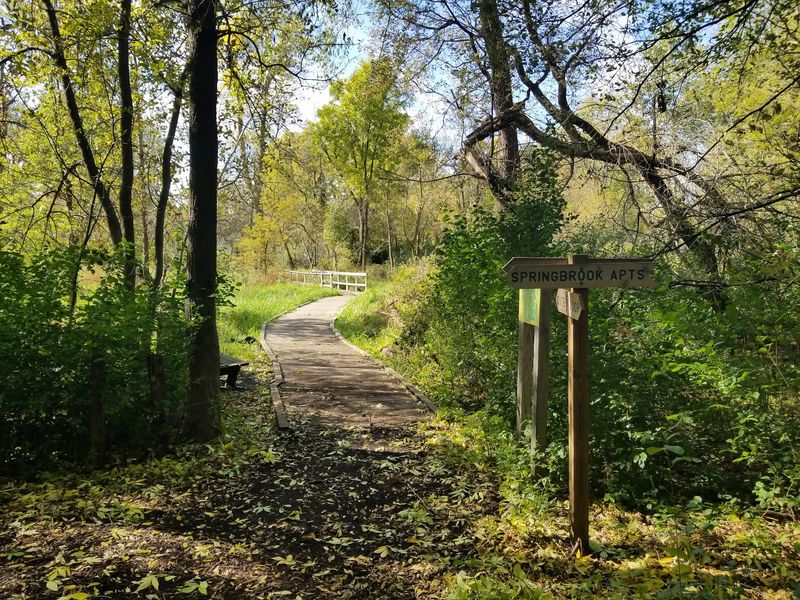
Beyond the boardwalk, Springbrook has miles of interconnected trails that wind through several distinct habitat types. Wooded sections give way to open meadows, and those meadows connect to wetland edges where the light changes completely depending on the time of day.
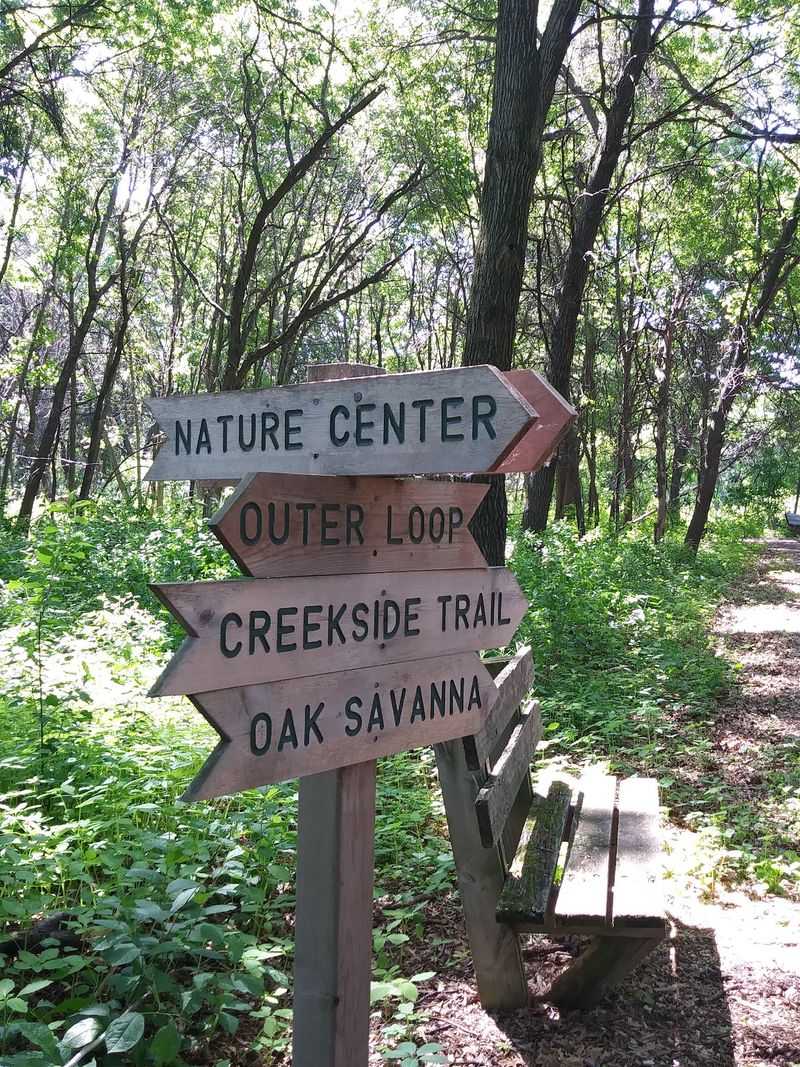
All of the trails are rated as easy, which makes them genuinely accessible for young children, older adults, and anyone who wants a peaceful walk without a strenuous climb. The paths are well marked, so getting turned around is not really a concern even for first-time visitors.
One of the more satisfying things about the trail system is how interconnected it feels. You can take a different combination of paths each visit and experience something new each time.
Long-time visitors have noted doing exactly that for decades, finding new details in familiar landscapes with every return trip. The trails also connect naturally to the boardwalk section, so the whole experience flows together.
Wildlife You Can Actually Get Close To
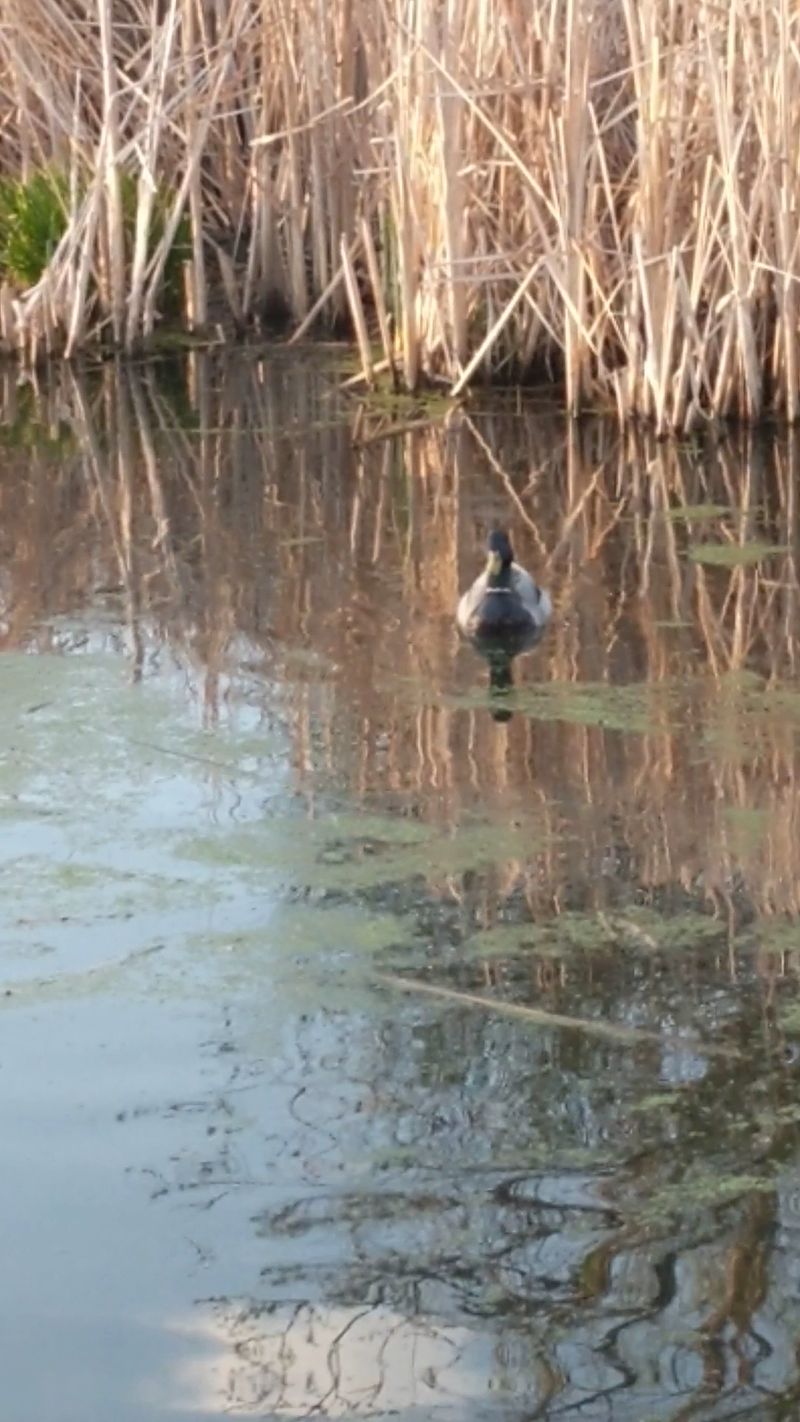
The wildlife at Springbrook is not shy. White-tailed deer appear on trails regularly, sometimes standing just a few feet off the path and watching visitors pass with minimal concern.
Wild turkeys wander through the grounds in groups, particularly near the interpretive center building where bird feeders attract steady activity.
Mink, woodchucks, chipmunks, and various duck species round out the regular cast of visible animals. Turtles are practically guaranteed on warm days along the boardwalk and pond edges.
Visitors have also reported spotting swans with cygnets in spring, which is one of those wildlife moments that stops everyone mid-step.
Photographers show up consistently because the animal density here is genuinely high for an urban setting. The variety across seasons keeps it interesting too.
What you encounter in March looks completely different from what you find in August. Bringing a camera is always a good idea, no matter how casual the visit starts out.
The Interpretive Center Building Worth Exploring
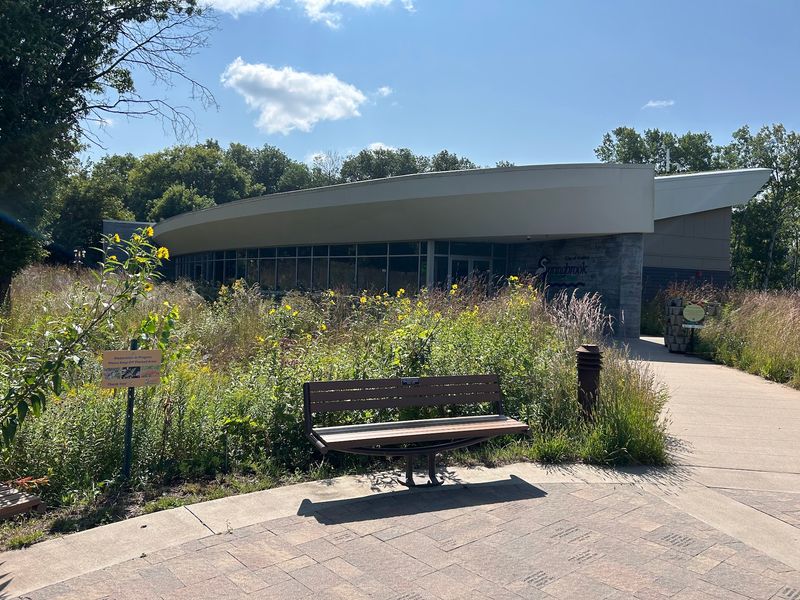
The building at the heart of Springbrook is more than a lobby. The interpretive center houses live animal displays including snapping turtles, painted turtles, bull snakes, and corn snakes in terrariums that kids can get close to.
There is also a light wall, a puppet theater area, a reading nook, and tables stocked with building materials for hands-on play.
The large windows facing the outdoor bird feeding area are one of the building’s best features. Turkeys, songbirds, and various woodland visitors come right up to the feeders, making the view from inside feel like a live nature documentary playing on an enormous screen.
On cold or rainy days, the indoor space gives families a full experience without stepping outside.
The center also hosts birthday parties, bridal showers, and group events in its meeting rooms. The spaces are well-equipped and separated enough that multiple events can run simultaneously without crowding.
It functions as a genuine community gathering place alongside its nature education role.
The Nature Playground That Kids Love
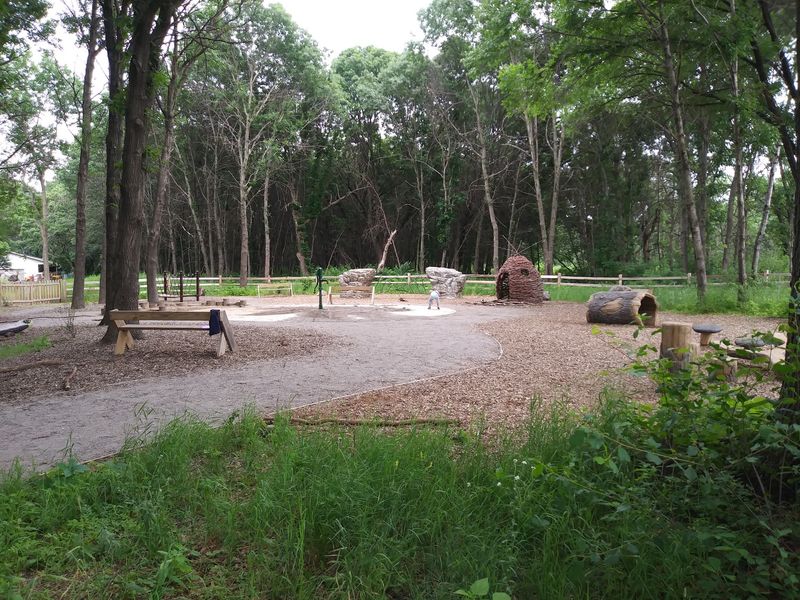
Added in 2018, the nature playground at Springbrook has become one of its most talked-about features among families with young children. It is not a standard plastic-and-metal play structure.
The design uses natural materials and encourages creative, open-ended play rather than a fixed set of activities.
There is a water feature, a mud kitchen, fort-building materials, climbing elements, and balancing challenges all worked into a shaded outdoor space. The whole area stays cool even on warm summer afternoons because of the tree cover, which parents appreciate as much as the kids do.
Toddlers and elementary-age children both find things to do here, though younger ones may need closer supervision around some of the more open-ended elements. The playground sits adjacent to the interpretive building, so it is easy to move between indoor and outdoor activities depending on energy levels and weather.
It has become a destination in its own right.
Wetlands That Do Real Ecological Work
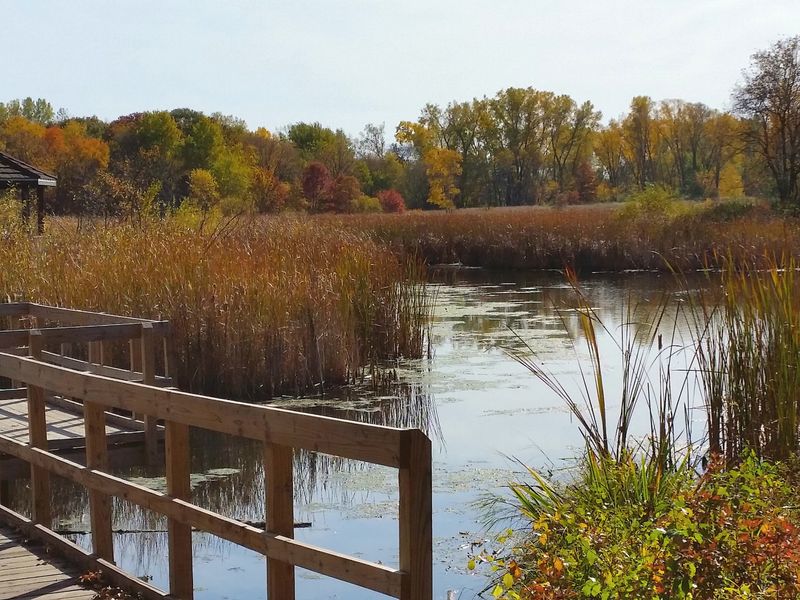
The wetlands at Springbrook are not decorative. They function as active habitat for a wide range of species and represent one of the more ecologically significant features of the property.
The marsh areas support nesting birds, amphibians, and aquatic life that depend on this kind of environment.
Frogs in various life stages have been spotted in and around the pond areas, including individuals still transitioning from tadpole to adult. The presence of multiple life stages in the same small area signals a healthy, functioning wetland ecosystem rather than a managed pond.
That kind of ecological detail rewards visitors who slow down and look carefully.
The floating boardwalk passes directly through this habitat, giving visitors an unusually close perspective on wetland life without disturbing it. Standing still on the boardwalk for a few minutes almost always reveals something moving in the water or perched in the reeds nearby.
Patience pays off here more than almost anywhere else on the property.
A Free Destination That Genuinely Delivers
Free public attractions that actually deliver a full experience are harder to find than most people expect. Springbrook clears that bar without any hesitation.
The combination of indoor exhibits, live animals, nature trails, a floating boardwalk, and a natural playground adds up to a full half-day or more of genuine engagement, all at no cost.
Families with young children have noted arriving and staying far longer than planned because there is simply more to do than anticipated. The indoor space alone can occupy toddlers for an hour or two, and that is before anyone sets foot on a trail.
The layered experience means different age groups find different things to anchor their visit.
A donation box is available inside the interpretive center for visitors who want to support the center’s ongoing programming. Given how much the space offers, many regular visitors feel that leaving something behind is the right thing to do.
The generosity of the community has clearly helped keep the place in excellent condition.
No Dogs Allowed, and Here Is Why That Matters
One policy at Springbrook stands out: dogs are not permitted on the trails or in the nature center. For some visitors, that might initially seem like a drawback.
In practice, it is one of the reasons the wildlife here is so accessible and relaxed around people.
Animals that have not been regularly startled by off-leash pets tend to behave differently. The deer, turkeys, and smaller mammals at Springbrook are noticeably calm around human visitors, which makes for much closer and more rewarding wildlife encounters.
That calm is not accidental. It is the result of a consistent, enforced environment where the animals feel genuinely safe.
Regular visitors who have spent time at both dog-friendly and dog-free nature areas often comment on the difference in animal behavior. Springbrook’s trails feel more like a wildlife sanctuary than a city park, and the no-dog policy is a significant part of the reason why.
It is a trade-off that clearly benefits the experience.
Seasonal Changes That Reward Return Visits
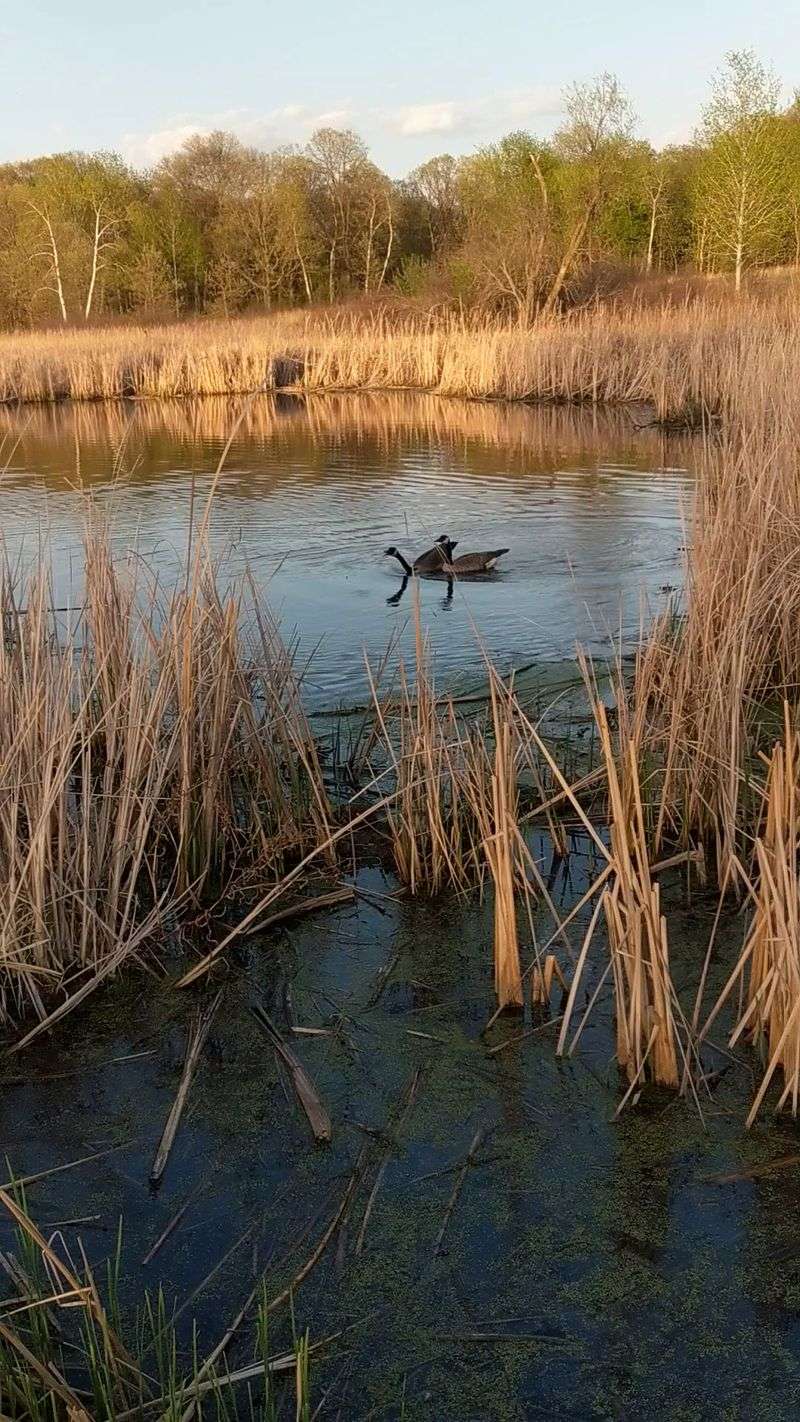
Springbrook looks and feels like a different place depending on when you visit. Spring brings migrating birds, emerging amphibians, and the first flush of green on the wetland vegetation.
The boardwalk in May, with the cattails just starting to grow and waterfowl nesting nearby, is a specific kind of beautiful that does not last long.
Summer fills the trails with insects, songbirds, and the full canopy of the woodland sections. Fall turns the wooded paths into something genuinely scenic, with color reflecting off the pond surface and the light going golden in the late afternoon.
Winter is quieter but not empty. Deer tracks in the snow and the occasional mink sighting keep things interesting for visitors willing to bundle up.
Long-time visitors have been returning for decades precisely because the experience changes with the seasons. The same loop walked in March and again in October delivers two completely different encounters with the same land.
Summer Camps and Educational Programs
Springbrook runs educational programming throughout the year, including summer camps that give children hands-on time in the natural environment. The camps use the trails, wetlands, and interpretive center as active learning spaces rather than just backdrop.
Kids come away with real knowledge about the species and habitats they encountered in person.
School field trips are a regular part of the center’s programming calendar as well. The combination of indoor exhibits and accessible outdoor trails makes it a practical choice for groups of various ages.
Teachers can connect classroom material to direct observation in a way that very few urban schools have available nearby.
The nature programs have been described as informative without being dry, which reflects the broader spirit of the place. Springbrook takes its educational role seriously without making the experience feel like homework.
That balance is harder to achieve than it sounds, and the center manages it consistently across its programming lineup.
The Meditation Garden Most Visitors Walk Past
Somewhere on the Springbrook property sits a meditation garden that many visitors discover only after multiple trips. It is not heavily advertised, and the signage does not shout for attention.
Finding it feels a little like a reward for paying close attention to the surroundings rather than just following the main trail markers.
The garden offers a quiet spot to sit and absorb the sounds of the property without the movement of a trail walk. Birds call from the surrounding vegetation, and the general stillness of the space is a noticeable contrast to the more active sections of the park.
It suits visitors who came for quiet as much as those who came for wildlife.
Urban green spaces with dedicated quiet areas are rarer than they should be. The meditation garden at Springbrook fills that gap in a way that feels thoughtful rather than added as an afterthought.
Worth seeking out on your first or second visit, whenever you are ready to slow down.
Practical Tips for Planning Your Visit
Springbrook is open every day of the week from 9 AM to 5 PM, which makes it easy to fit into almost any schedule. Morning visits tend to offer the best wildlife activity, particularly for deer and bird sightings.
Arriving close to opening time on a weekday usually means fewer crowds and more relaxed trail conditions.
Bug spray is strongly recommended from late spring through late summer. The wetland environment that makes the boardwalk so interesting also produces a reliable mosquito population, and visitors who come unprepared tend to cut their trail time short.
Sunscreen matters too, especially on the open boardwalk sections where there is no tree cover.
Parking is free and the lot is large, so that is one less thing to think about. The trails are stroller-friendly in most sections, though the boardwalk surface may require a bit more care with younger children.
Wear comfortable shoes, bring water, and plan to stay longer than you think you will need.
A Place That Means Something to the Community
Some places accumulate history quietly, through the people who return to them year after year. Springbrook is that kind of place.
There is a stone plaque near the front entrance installed by a couple who had their first date hiking the trails there decades ago. The inscription reads “Where it all began.” That kind of community connection does not happen by accident.
Visitors have been coming here since childhood and now bring their own children. Long-term regulars have been hiking the same trails for over 45 years and still find reasons to return.
The nature center has hosted weddings, family photo sessions, bridal showers, and birthday parties alongside its daily role as a public green space.
That layered community history gives Springbrook a warmth that purely recreational spaces sometimes lack. It is a place where real life has happened for a lot of people over a long time.
That is not something you can manufacture, and it shows in how people talk about it.
Why This Nature Center Keeps Drawing People Back
After everything Springbrook offers, the question of why people keep coming back has a clear answer: the place rewards attention. Every season brings something different.
Every trail combination reveals a new angle on familiar land. The wildlife does not follow a script, which means no two visits are exactly alike.
The free admission removes the mental barrier that keeps people from returning to paid attractions. When there is no ticket cost, a spontaneous Tuesday morning visit becomes a real option.
That accessibility has built a loyal, multigenerational audience that treats the center like a neighborhood resource rather than a special occasion destination.
If you find yourself in the Fridley area or anywhere in the northern Twin Cities metro, Springbrook is the kind of stop that earns its place on your regular rotation. The 900-foot boardwalk alone justifies the detour.
Everything else that comes with it makes the visit feel like a genuine discovery, even on the tenth trip.
Share this story