At a Montana state park near Great Falls, a mile-long sandstone cliff holds up to 18 feet of compacted bison remains. Native American communities used this site for at least 1,000 years, making it one of the most remarkable buffalo jump archaeological areas in North America.
Today, First Peoples Buffalo Jump State Park lets visitors explore the history behind these massive hunts. Ancient drive lines remain above the cliff, while a 6,000-square-foot visitor center explains how hunters worked together to guide bison toward the drop.
There is more to explore than the archaeological site itself. Visitors can hike to panoramic overlooks, watch prairie dogs, and learn about traditional hunting techniques through exhibits and special programs.
Here is what makes this historic Montana destination worth visiting, along with the trails, activities, and practical details to know before you go.
Finding the Cliff That Feeds a Thousand Stories
My map app kept saying I was almost there, and the prairie kept saying otherwise. Then the long sandstone rim appeared, and I knew I had arrived.
First Peoples Buffalo Jump State Park sits at 342 Ulm Vaughn Rd, Ulm, MT 59485, in the state of Montana. The town of Ulm is a short drive southwest of Great Falls, just off Interstate 15.
The last few miles include some gravel road, so take it slow. My car wore a fine coat of dust by the time I parked, which felt like a fair entry fee from the land itself.
Out-of-state vehicles paid $8 during my visit, while vehicles with Montana plates get in without that charge. The fee is based on the vehicle, so plan for that if you are driving a rental.
The site once went by the name Ulm Pishkun. The word comes from the Blackfeet term Pis’kun, often translated as deep kettle of blood.
That name hints at what happened at this cliff for centuries, and the full story begins right below.
A Thousand Years of Hunts Before Lewis and Clark
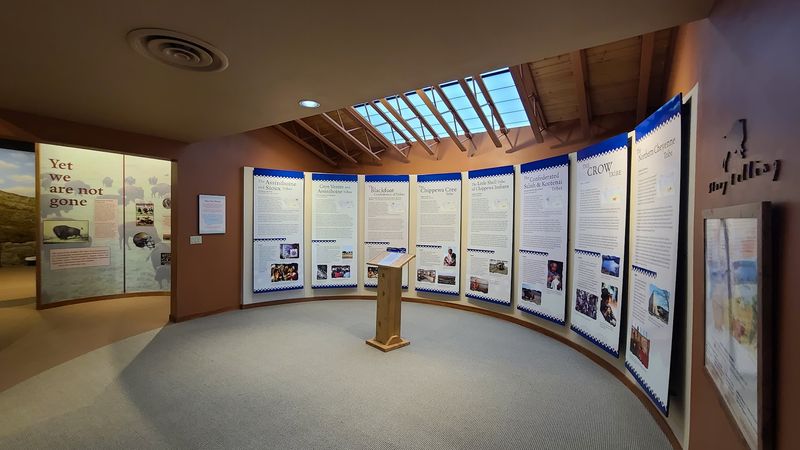
Native peoples used this jump for at least a thousand years. Some sources point to steady use from around 900 AD to 1500 AD, long before Lewis and Clark ever paddled through Montana.
Many tribes relied on this place. The list includes the Blackfeet, Salish, Shoshone, Pend d’Oreille, Kootenai, Bannock, Nez Perce, Crow, Gros Ventre, and Assiniboine.
Experts believe it may be one of the most frequently used buffalo jumps anywhere in the world. That is a big claim for a quiet spot near a small town.
In 2015, the site was named a National Historic Landmark. I liked knowing the land was protected, because the stories it holds still matter to tribal communities today.
Inside the visitor center, panels share the history of area tribes, including hard chapters from the 1800s. I took my time reading them.
Next up is the cliff itself, and its measurements surprised me more than I expected.
A Mile of Sandstone With Eighteen Feet of Secrets
Numbers usually bore me. These ones did not.
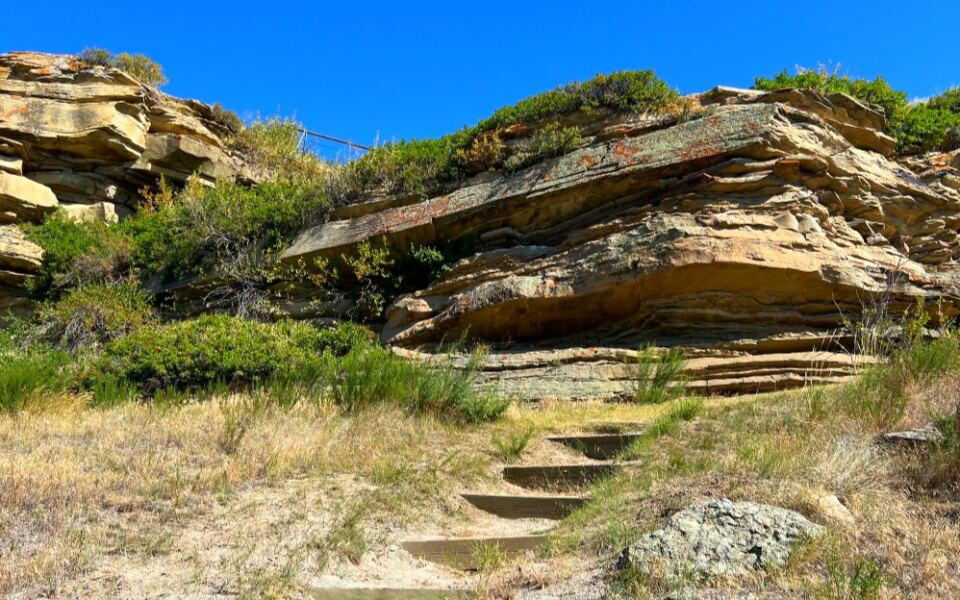
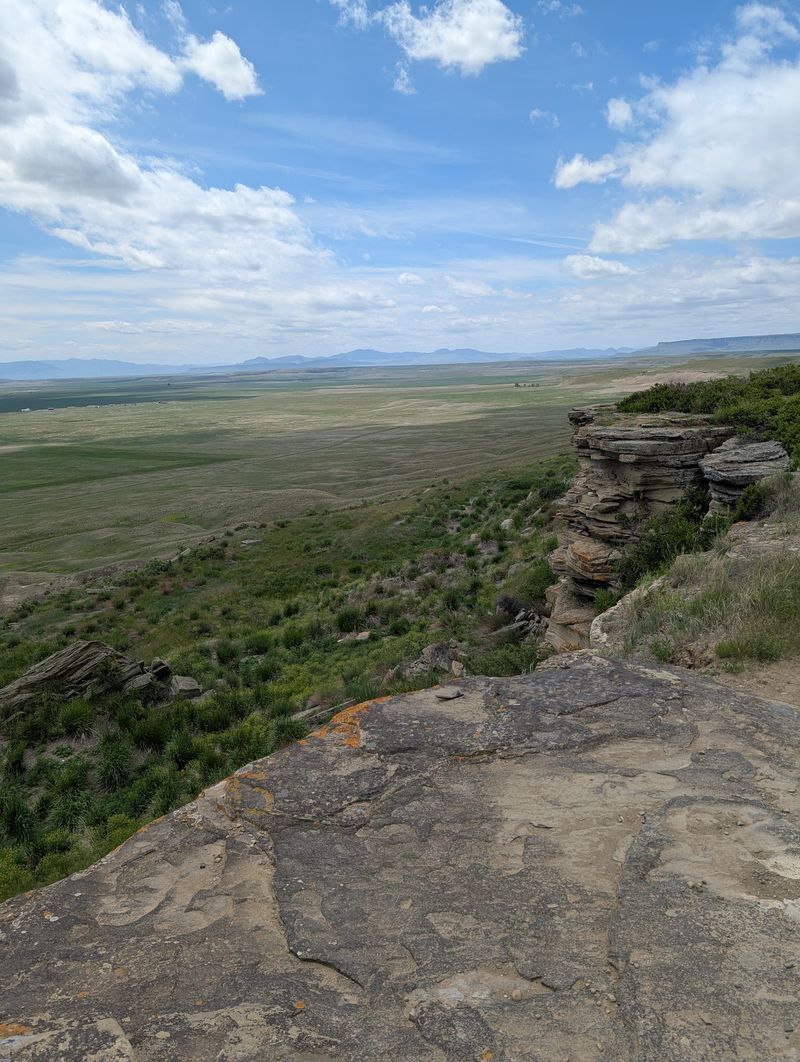
The sandstone cliff stretches about a mile and stands between 30 and 50 feet high. From the bottom, it looks tall.
From the top, it looks very, very tall.
Archaeologists found up to 18 feet of compacted bison remains at the base. That layer built up slowly over centuries of repeated hunts.
I tried to picture how many hunts it took to stack that much. My brain gave up somewhere around the first few hundred.
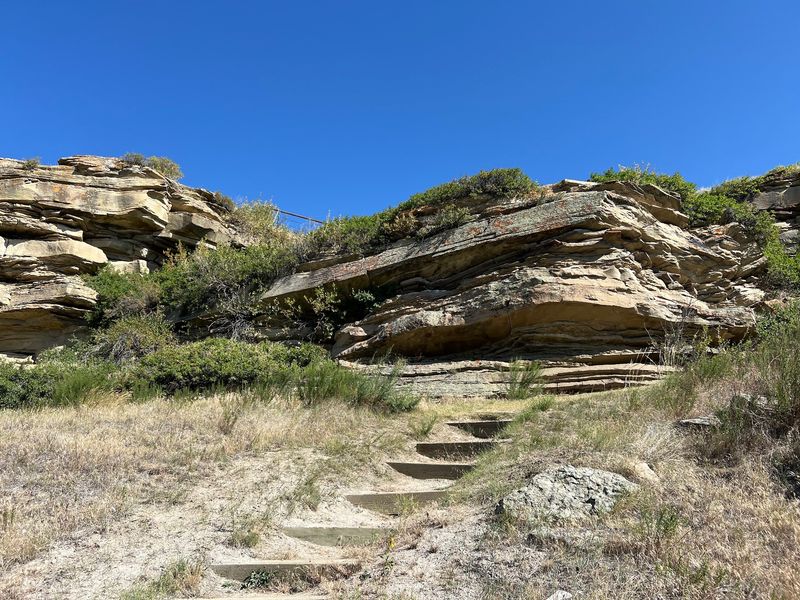
The cliff face is weathered and layered, with ledges and cracks that catch the afternoon light. Birds dart in and out of the rock, and the wind hums along the edge.
Keep a respectful distance from the rim, especially on gusty days. The drop is real, and the footing near the top can be uneven.
So how did hunters get huge animals to run toward this edge in the first place? The answer involves costumes, patience, and a whole community working as one.
Runners in Buffalo Robes and the Art of the Drive
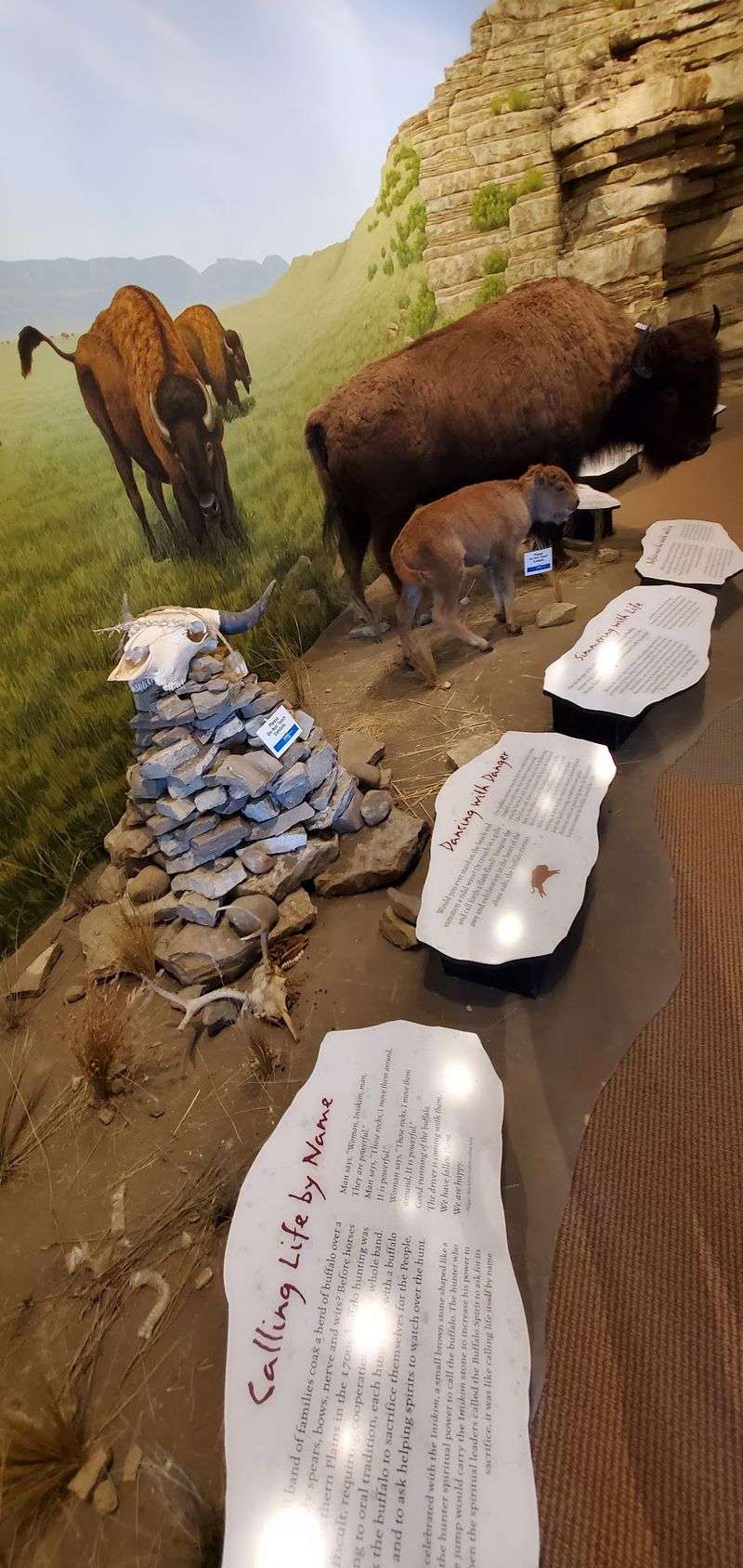
Runners were often young men. They wore hides and slowly earned the trust of the herd, then guided the animals toward the cliff.
The rest of the community helped too. People formed chutes along the route and startled the bison at the right moment, sending them over the edge.
This method worked for centuries before horses came to the Plains. Once horses arrived, hunting changed in a big way.
The staff at the front desk explained this so clearly that I could almost hear hooves. They answered every question I tossed at them, even the silly ones.
I left with a new respect for how much planning one hunt required. It was less about strength and more about timing and teamwork.
Out on the prairie, you can still see traces of how those chutes were built. Those clues are waiting in the next section.
Rock Cairns That Still Point the Way
At first I thought the rock piles were random. They were not.
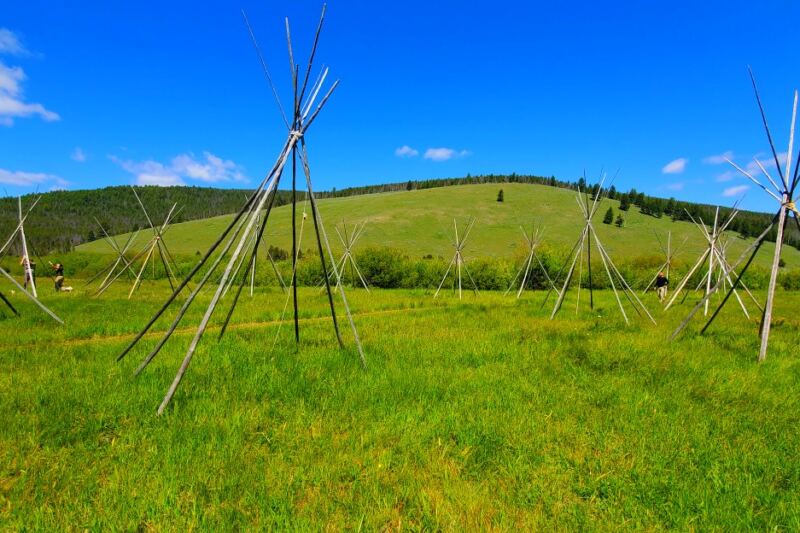
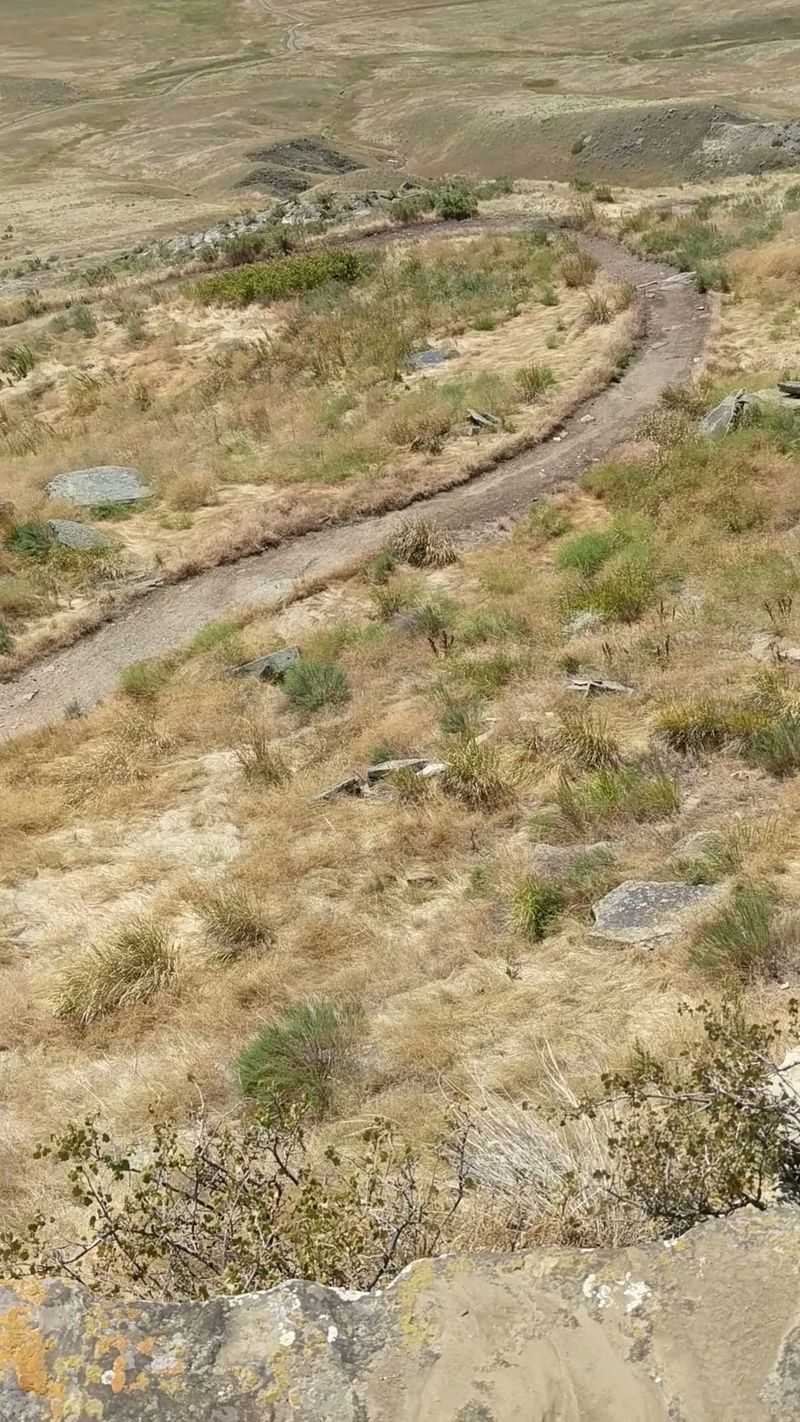
Remnants of drive lines still sit on the prairie above the cliff. These were low fences or rock cairns used to funnel bison toward the edge.
Seeing them in person changed how I understood the whole site. Suddenly the grassy plateau looked like a carefully planned path.
Please leave every stone where you find it. The park follows Leave No Trace rules, and these features are part of an archaeological landmark.
I walked slowly and tried to follow the lines with my eyes. It is a quiet, almost puzzle-like activity that kids may enjoy if you turn it into a game of spotting.
Bring binoculars for this part. They help you scan the land and pick out shapes that blend into the grass.
Those drive lines lead straight to the top of the jump, but the walk there is its own adventure. The trails come next, along with a few furry neighbors.
Three Miles of Trail and a Choice to Make
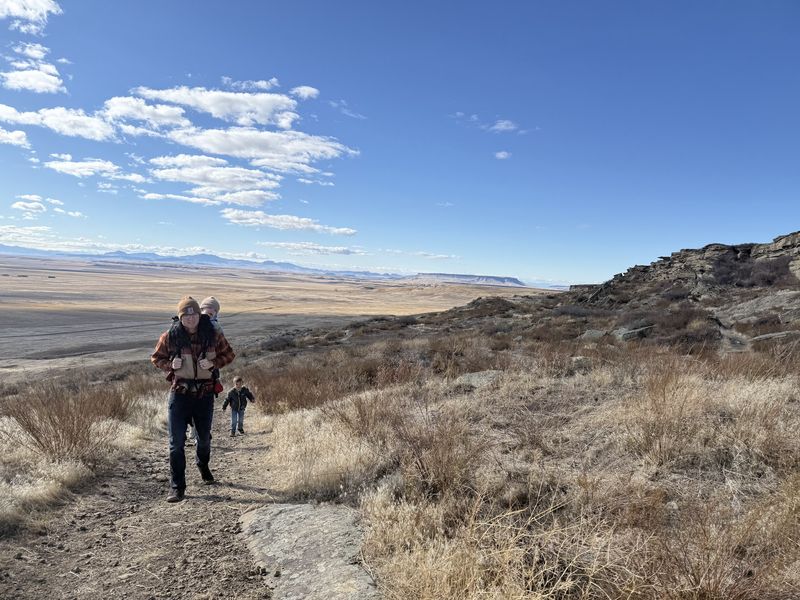
Hike or drive? I stood in the parking lot debating this like it was a final exam.
The park has more than three miles of interpretive trails across native prairie. The main loop climbs to the top of the jump, and many folks finish it in about an hour and a half at an easy pace.
A roundtrip from the visitor center to the cliffs and back runs roughly 2.5 miles. A few spots near the cliff access get rocky and a bit challenging.
Not feeling the climb? You can drive around to the other side of the park and park near the top.
Plenty of people do this on cold or windy days.
A paved path near the center makes part of the visit more accessible. I appreciated that the views are not only for strong hikers.
Wear sturdy closed-toe shoes or boots, and consider a hiking stick. The ground gets uneven fast.
Somewhere along the trail, I heard squeaky barks. Those little lookouts deserve their own spotlight.
Prairie Dogs on Patrol and Other Wild Neighbors
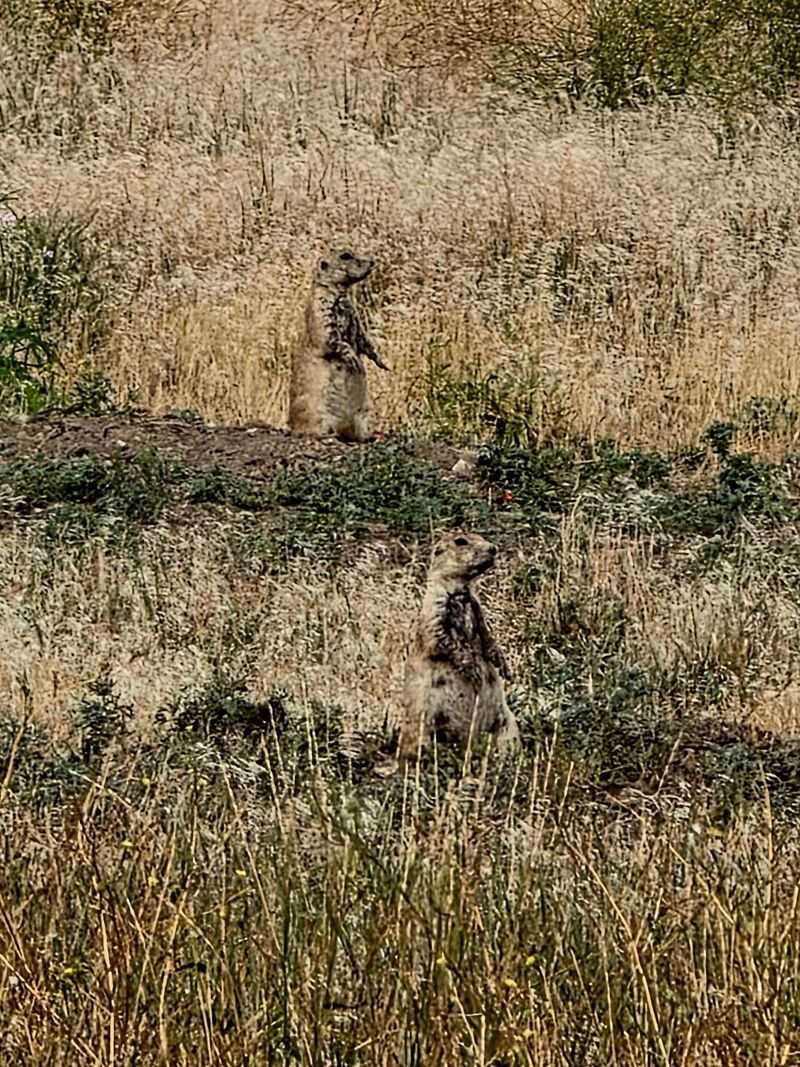
A black-tailed prairie dog stood up, stared at me, and barked. I felt officially checked in.
The park has busy prairie dog towns, and they are a crowd favorite. They pop up, chatter, and dive back down with impressive speed.
Other wildlife shows up too. On my walk I spotted rabbits and rock chucks, and deer wander through on quiet days.
Bird watchers, bring your binoculars. A rock wren hopping along the stones made my afternoon.
Now for the serious part. Rattlesnakes live here, and they usually try to avoid people.
Stay on the trail, watch where you step, and give any snake plenty of room. I kept my eyes on the path and my hands out of rock cracks.
Pets are welcome on a leash, which also helps keep them away from burrows and snakes. Please do not feed the prairie dogs, even when they look hopeful.
Up near the cliff, the animals are not the only thing worth spotting. Ancient art waits on the rock itself.
Pictographs, Petroglyphs, and Old Lodge Traces
Some messages last longer than any text thread. The ones on these cliffs have lasted for generations.
The park offers guided rock art hikes to view pictographs and petroglyphs on the cliffs. Pictographs are painted, while petroglyphs are carved or pecked into the stone.
I recommend calling ahead at 406-866-2217 to ask when these guided hikes are scheduled. A guide helps you spot faint images you would likely walk right past.
Along the trails, you may also notice remnants of sweat lodges. These quiet traces remind you that people did more here than hunt.
Touching the rock art can damage it, so keep your hands to yourself. Photos are a better souvenir anyway.
I found myself whispering near the cliff face, though nobody asked me to. It just felt like the right volume.
After all that looking, I was ready for a little hands-on action. Luckily, the park lets you try an ancient hunting tool yourself.
Traditional Tools and a Glimpse Into Life on the Plains
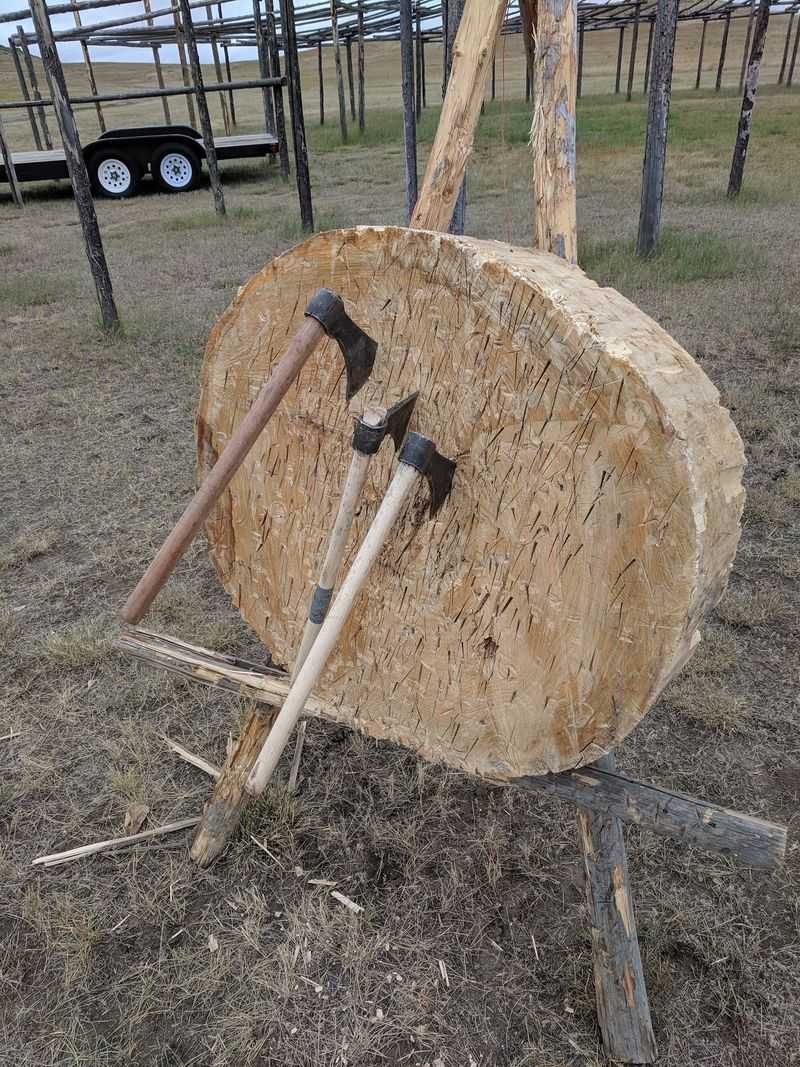
A massive wooden target covered in axe marks makes an unusual sight at a historic buffalo hunting site. At First Peoples Buffalo Jump State Park, visitors can see examples of traditional tools and learn how Native American communities developed the skills needed to survive on the Plains.
The outdoor target, made from a large section of tree trunk, has several axes embedded in its surface. It offers a reminder that throwing tools required practice, coordination, and accuracy.
Another important hunting tool was the atlatl, a spear-throwing device used long before bows and arrows became widespread. By extending the thrower’s arm, it helped launch lightweight darts with greater speed and force.
The park’s educational programs sometimes include demonstrations and hands-on activities involving traditional skills. Availability varies, so checking the event schedule before visiting is worthwhile.
Beyond these activities, the visitor center explains how hunting techniques evolved and why cooperation was essential to successful buffalo jumps. It is a fascinating introduction to the ingenuity behind a way of life that sustained communities for generations.
A Bison Up Close Inside the Visitor Center
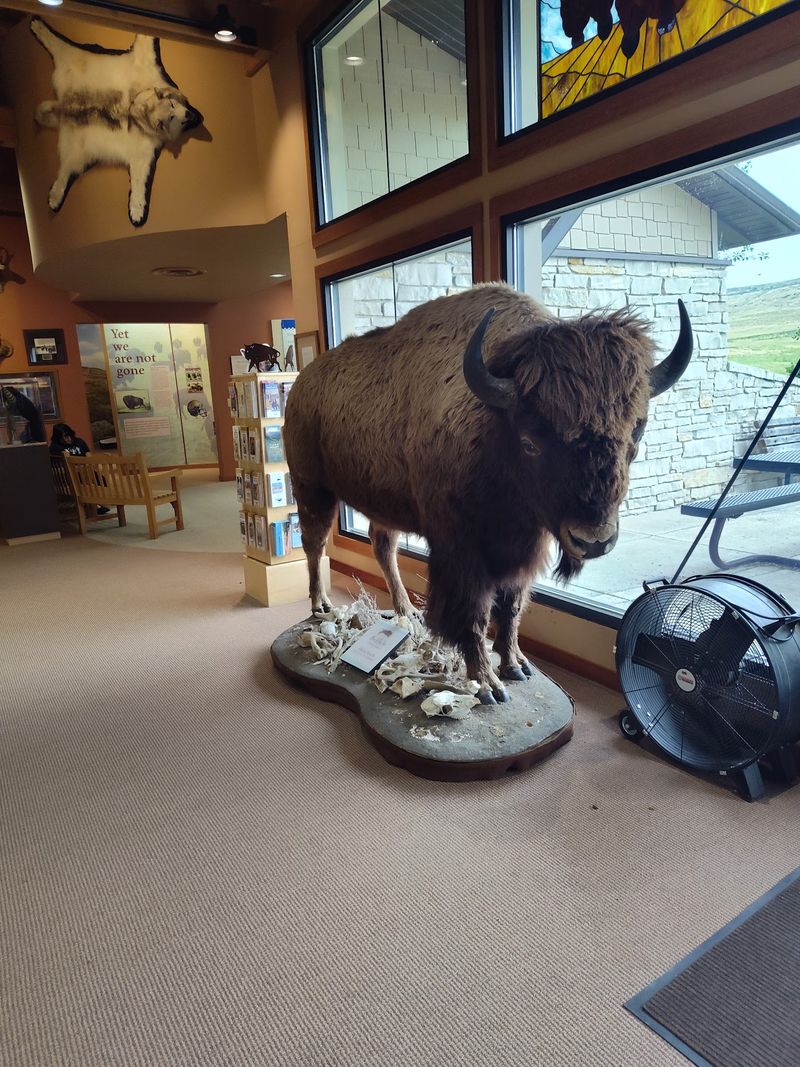
Standing next to the taxidermied bison, I suddenly felt like a snack-sized human.
The visitor center covers about 6,000 square feet. Inside, you will find buffalo culture exhibits, a storytelling circle, a classroom, a gallery, and a bookstore.
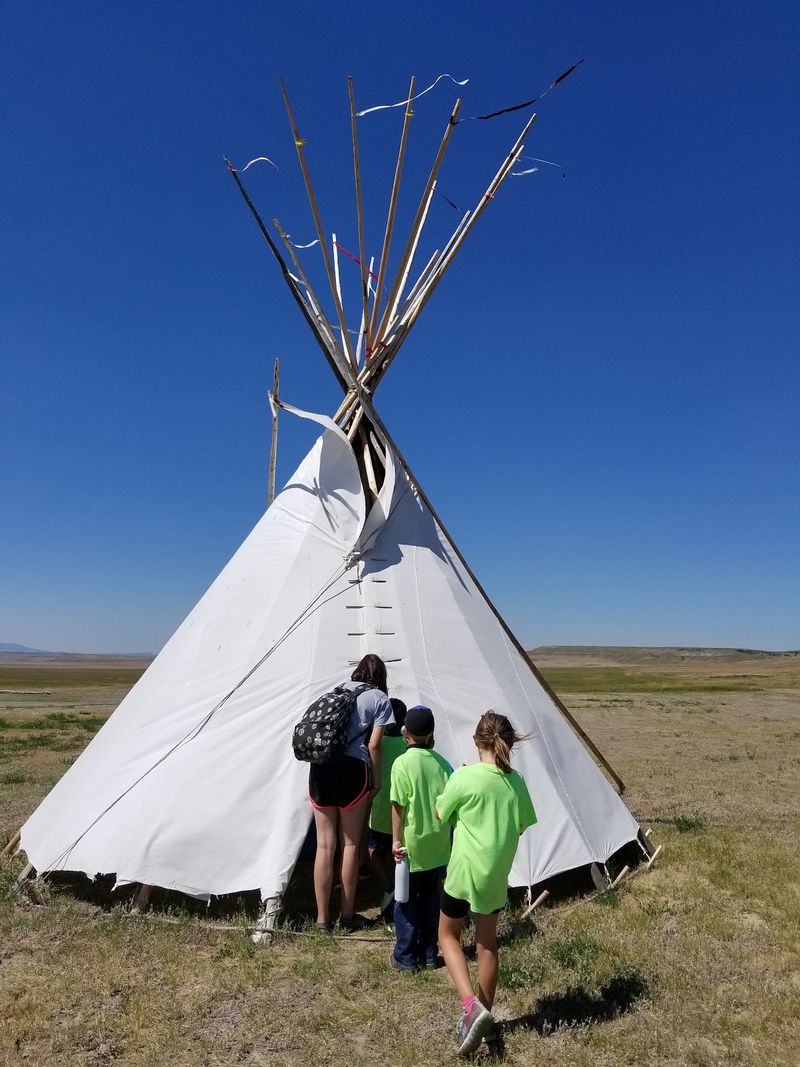
Displays include traditional tools and archaeological finds. One fact stuck with me: it took about 14 buffalo hides to make a single tipi.
A stained glass mural featuring three bison glows when the light hits it. Ask a staff member for the best photo angle, since they know the sweet spot.
The gift shop has a big book selection and fun shirts. Popular sizes can sell out, so grab yours early.
Exhibits involve a lot of reading, which suits curious teens and adults. Younger kids may prefer the bison and the storytelling circle.
I spent close to an hour inside without noticing the clock. Up top, though, the real showstopper was still waiting for me.
The View That Made Me Forget My Phone
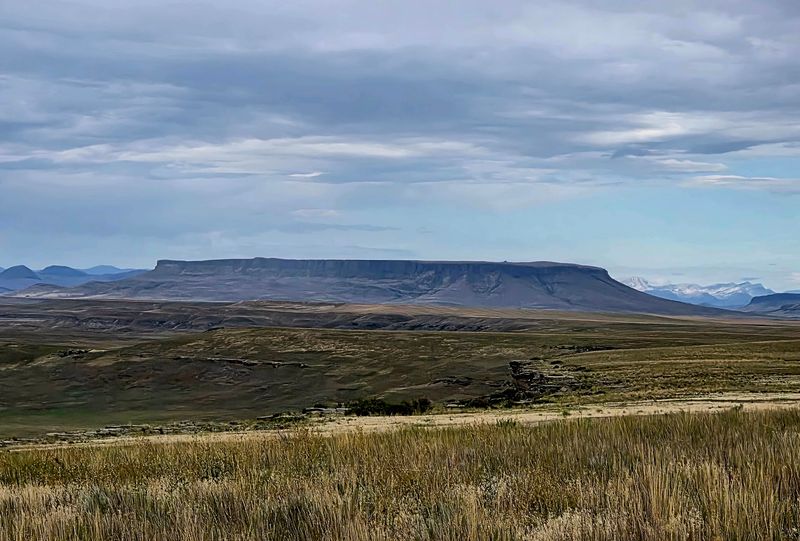
The top of the jump rewards every step, or every mile on the gravel road.
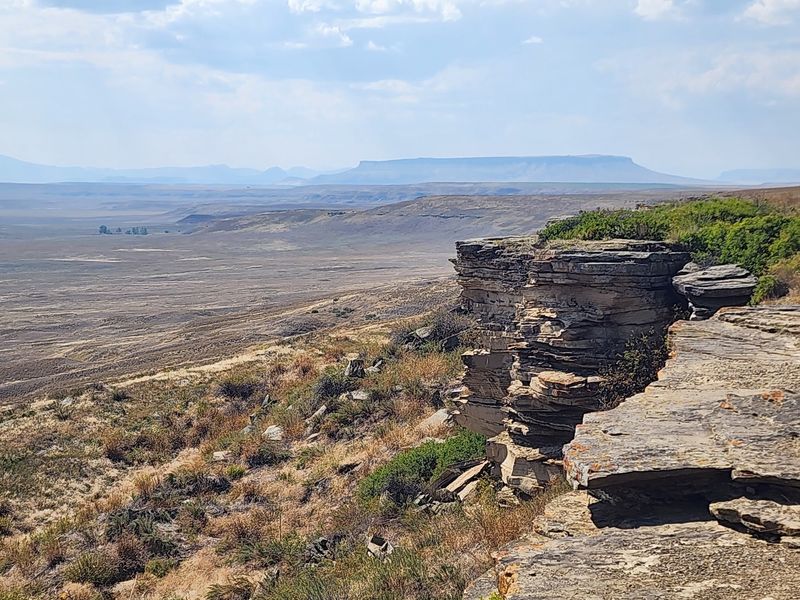
From the summit, the land opens wide. You can see the Rocky Mountain Front, the Missouri River valley, and a spread of buttes and grasslands.
Square Butte stands out in the distance and is visible for miles. It sits on private ranch land, so enjoy it from afar.
Early mornings bring the softest light for photos. I arrived later and still got plenty of good shots, but sunrise lovers will win here.
The wind can be strong up top. Bring a hat that ties on or one you do not mind chasing.
I sat on a rock and just looked for a while. My phone stayed in my pocket longer than it has in years.
Views this good make it easy to lose track of time. That leads straight to the practical stuff that will help you plan your own trip.
Smart Timing and a Packing List That Works
My biggest lesson? Do not show up right before closing.
The park is day-use only. The visitor center is open Wednesday through Saturday from 10 AM to 4 PM and Sunday from noon to 4 PM, and it closes Mondays and Tuesdays.
Gate hours shift by season, so confirm before you go.
Plan for at least two hours. That gives you time for the exhibits, the trail, and a few prairie dog photo breaks.
Late spring through early fall brings the mildest weather. March and October feel calmer, with fewer people around.
Pack water, sunscreen, a hat, sturdy shoes, binoculars, and a camera. A hiking stick helps on the rocky climb.
Shade is limited on the trails, so refill your bottle before heading out. The prairie sun does not mess around.
I drove away dusty, sunburned on one ear, and full of new knowledge. This cliff near Ulm taught me that teamwork can shape history, and it left me already planning a return trip.
Share this story