Sometimes the best discoveries in Illinois happen when you take the road that looks like it might not lead anywhere special. You follow a curvy, tree-lined path up a bluff, step out of the car, and suddenly the whole river valley opens up in front of you.
The kind of view that makes you wonder how you never heard about this place before. That feeling of stumbling onto something genuinely beautiful, quiet, and completely unhurried is exactly what waits at one of the state’s most rewarding overlooks.
Where Eagles Roost Sits in Illinois
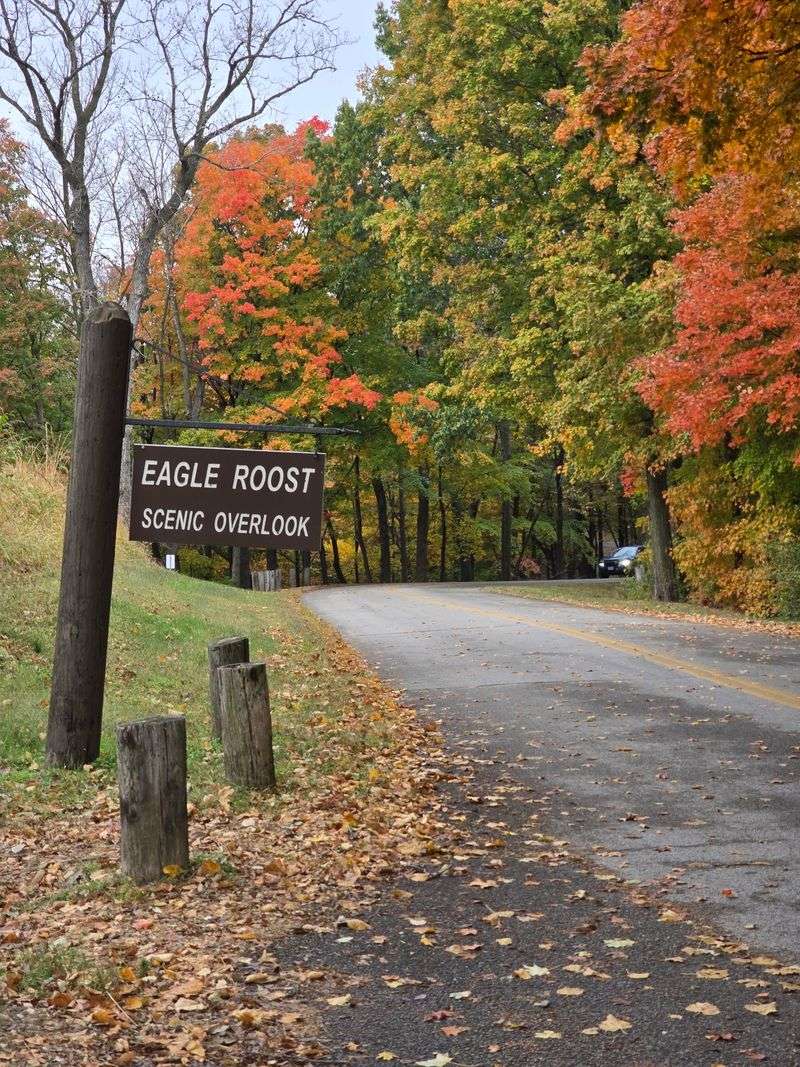
Perched high above the river bottoms of southwestern Illinois, Eagles Roost Scenic Overlook sits within Pere Marquette State Park, just outside the small river town of Grafton. The park itself is one of the largest state parks in Illinois, covering thousands of acres of rugged bluffs, dense hardwood forest, and winding trails above the confluence of the Illinois and Mississippi Rivers.
Grafton sits right at the tip of a peninsula formed where those two rivers meet, making the geography here unlike almost anywhere else in the state. The overlook takes full advantage of that rare positioning, offering sightlines that stretch across the river valley and into Missouri on a clear day.
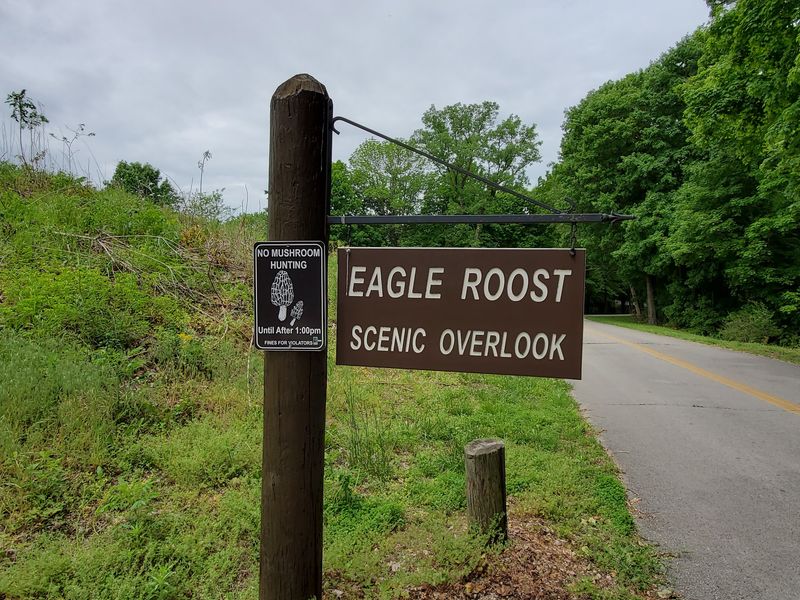
Getting here means driving along the Great River Road, a designated scenic byway that hugs the bluffs above the Mississippi. Pere Marquette State Park is well-signed from the main road, and Eagles Roost is reachable by a curvy park road that climbs steadily through the trees before revealing one of the most commanding views in the entire region.
A Park With Deep Roots in Illinois History
Pere Marquette State Park carries a name that reaches back centuries. It honors Father Jacques Marquette, the French Jesuit missionary and explorer who, along with Louis Jolliet, paddled through this stretch of river in 1673 while mapping the Mississippi River system for the first time from a European perspective.
The park itself was established in 1932, and much of its infrastructure, including trails, shelters, and the beloved Pere Marquette Lodge, was built by the Civilian Conservation Corps during the 1930s. That Depression-era craftsmanship still shows in the stonework and timber construction scattered throughout the grounds.
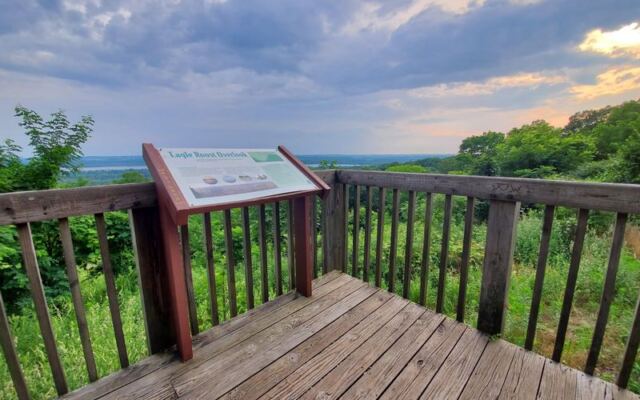
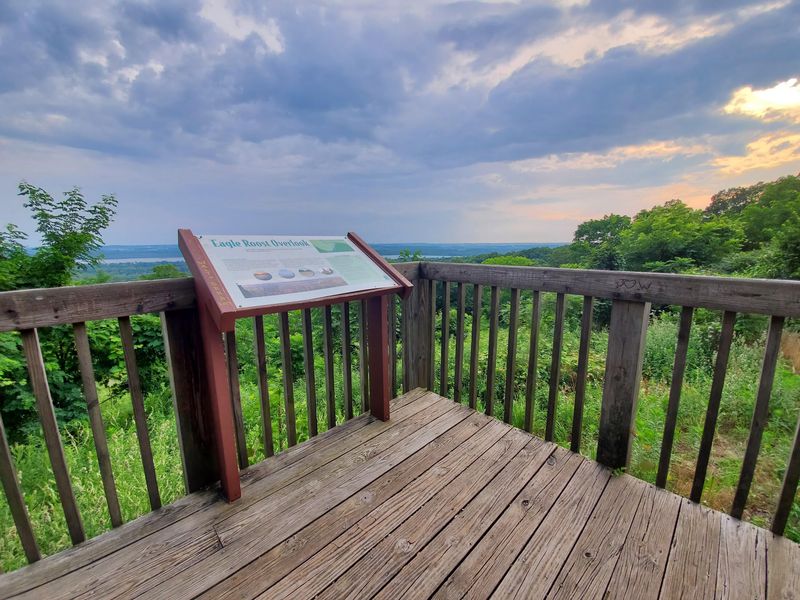
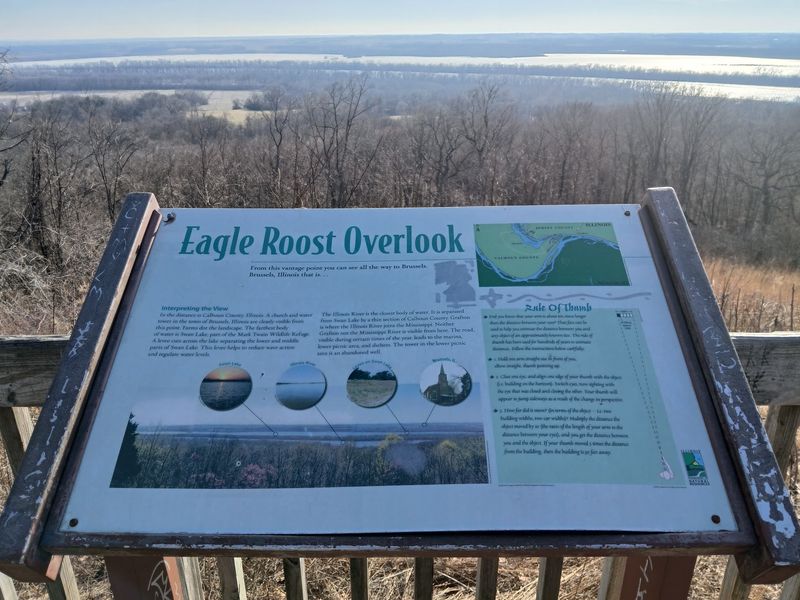
Eagles Roost Scenic Overlook carries that same sense of history and care. A plaque at the overlook provides background on the area, connecting visitors to the landscape’s long story.
Knowing that explorers once paddled the rivers visible from this very ridge adds a quiet weight to the view that makes the stop feel like more than just a photo opportunity.
The Scenic Road That Earns Its Name
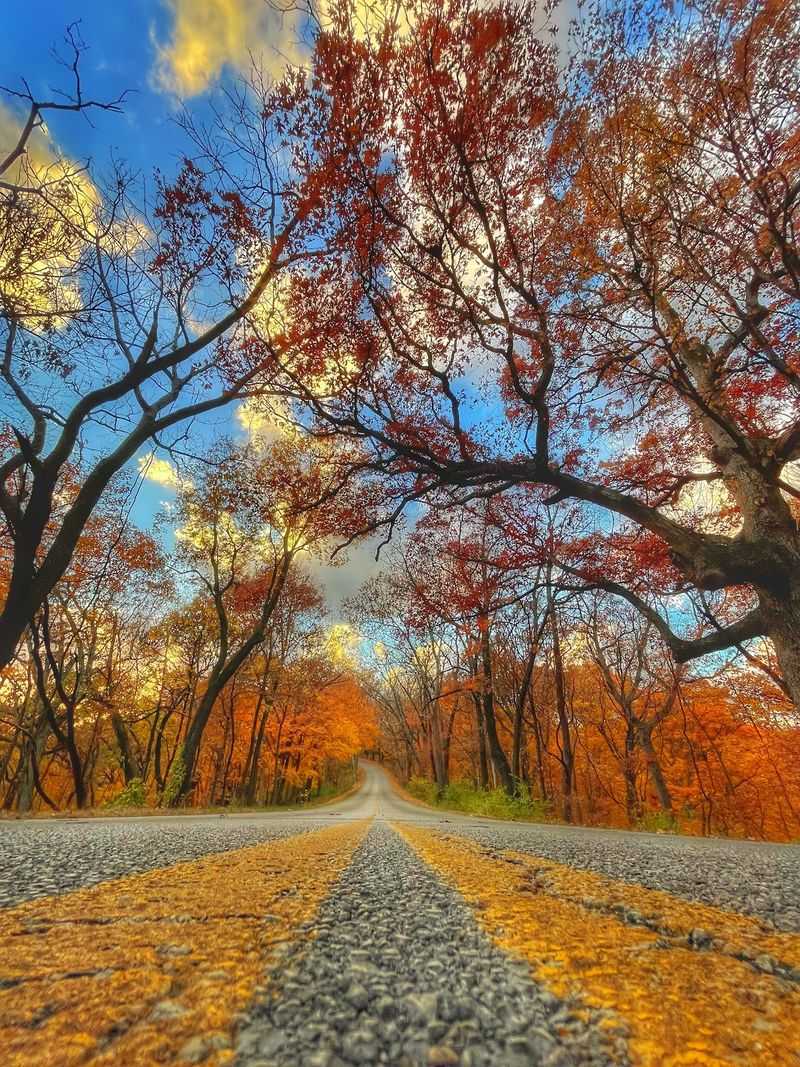
Before the overlook even comes into view, the drive up through the park is a reward on its own. The road curves and climbs through a thick canopy of hardwoods, with the trees pressing close on both sides and occasional gaps in the foliage hinting at the valley below.
Visitors consistently mention that the scenic road genuinely lives up to its label, which is not always a guarantee on routes marketed that way.
In fall, the canopy turns into a tunnel of orange, gold, and deep red that frames every bend in the road. Even in other seasons, the shifting light through the trees and the steady gain in elevation make the approach feel deliberate and unhurried, like the landscape is building toward something.
For those who prefer to earn the view on foot, walking up from the Pere Marquette Lodge is an option. It is a healthy uphill stretch of roughly two miles along the road, so walkers should be prepared to share the route with vehicles.
The reward at the top remains the same regardless of how you arrive.
The View Itself: Rivers, Valleys, and Two States
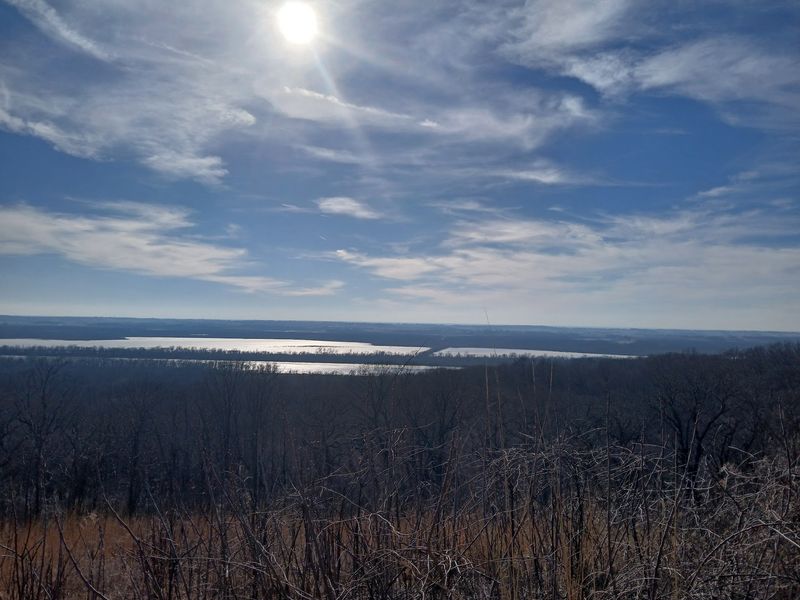
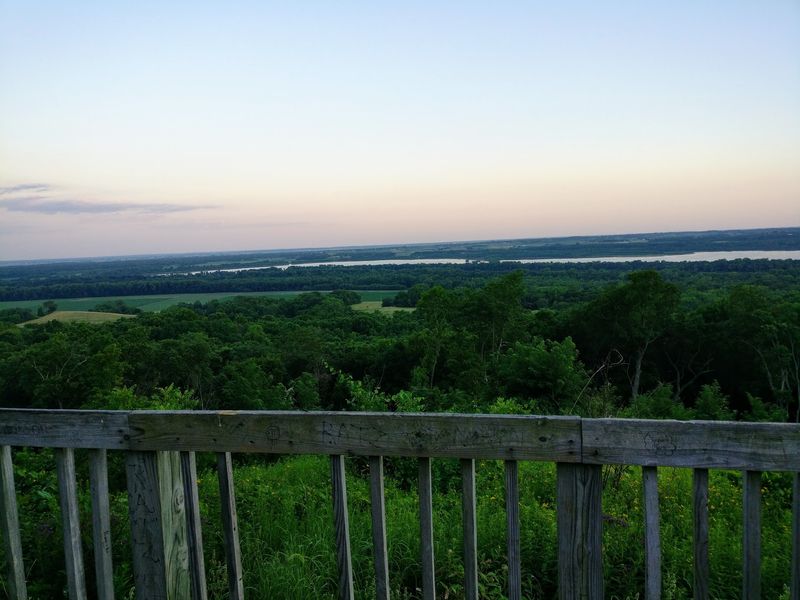
Standing at the overlook railing, the full scale of the river valley spreads out below in a way that genuinely stops conversation. On a clear day, the Illinois River and the Mississippi River are both visible, along with the wide floodplain that separates them and the bluffs of Missouri rising on the far bank.
The Illinois-Missouri state line runs through the water below, giving the view an almost geographic grandeur.
The overlook platform sits high enough that the scene feels open and unobstructed, with the horizon stretching farther than you might expect for a landlocked Midwestern state. Visitors frequently note that on clear days, the visibility extends for miles in every direction, taking in farmland, river bends, forested ridges, and distant Missouri bluffs all at once.
A well-maintained plaque at the site helps orient visitors to what they are seeing, naming the rivers, the floodplain features, and the broader landscape. That small detail makes the stop feel considered rather than accidental, and it gives first-time visitors a frame for the scale of what is laid out in front of them.
Sunset at the Overlook: Worth Timing Your Visit
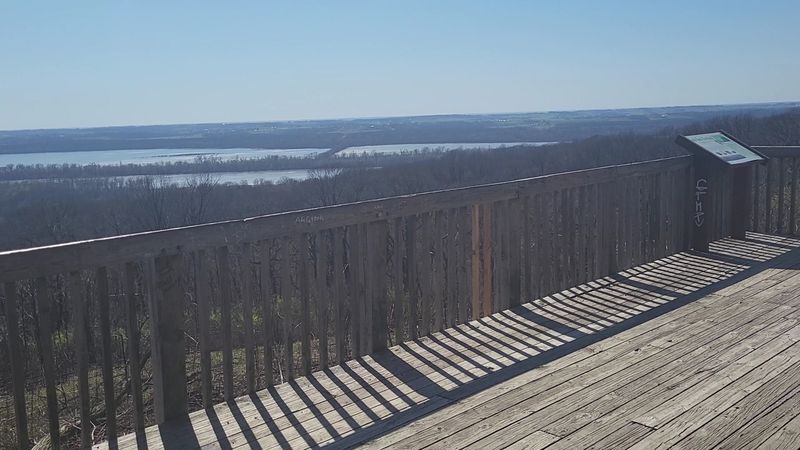
Arriving at Eagles Roost around sunset transforms an already impressive view into something that visitors struggle to put into words. The western exposure means that as the sun drops toward the Missouri bluffs, the entire river valley fills with warm light, and the water below picks up shades of copper and gold.
Visitors who have timed their visit for late afternoon consistently call it one of the best sunset vantage points in the region.
The light changes quickly at this elevation. What starts as broad afternoon sunshine narrows into long golden rays that rake across the floodplain, casting deep shadows in the tree lines and making the rivers glow.
The pace of the overlook slows naturally at that hour, with most visitors going quiet and simply watching.
Even if sunset timing does not work out perfectly, the late afternoon light in any season produces something worth stopping for. Fall sunsets here, with the added color of the turning leaves below, are particularly striking.
The overlook faces west, so the geometry of the view and the light are working together in a way that feels almost designed.
Fall Color Season at Pere Marquette
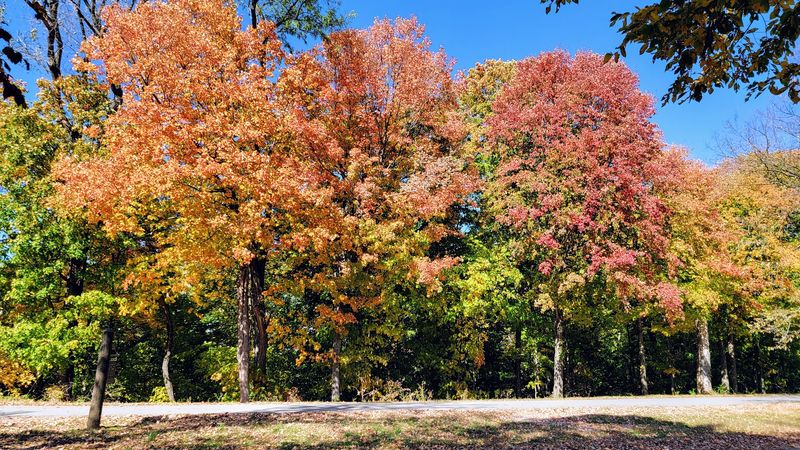
Fall color at Eagles Roost is the kind of seasonal event that brings people back year after year. The hardwood forests covering the bluffs around Pere Marquette shift through a full range of colors as October progresses, and from the overlook, the effect is layered across the entire valley below.
Visitors describe the scene during peak fall as nothing short of magical.
The overlook sits above the canopy in spots, meaning you are looking down into a sea of color rather than just standing beside it. Maples, oaks, and hickories all turn at slightly different rates, so the palette stays complex and varied rather than shifting uniformly.
On a sunny October afternoon, the colors are vivid enough to feel almost unreal.
Peak color typically arrives in mid to late October across this part of southwestern Illinois, though the exact timing shifts year to year. Even in early November, after the peak has passed, the bare branches open up sightlines through the forest that can reveal views otherwise hidden by summer foliage.
The park is worth visiting across a wide window rather than waiting for a single perfect weekend.
Eagle Watching Along the River Corridor
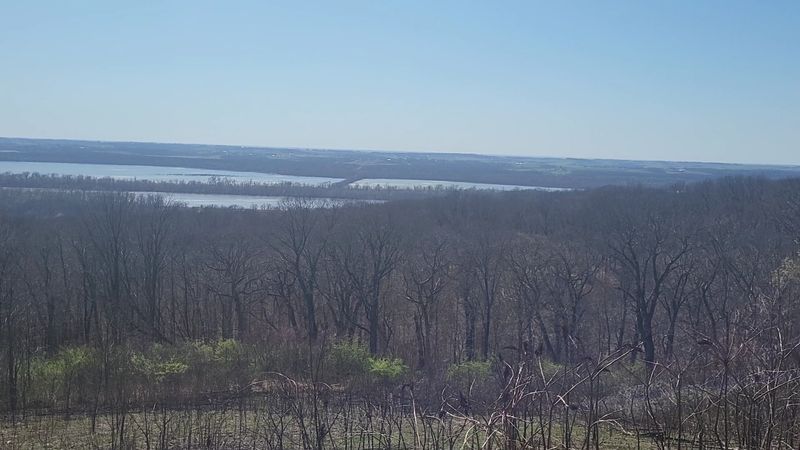
The name Eagles Roost is not just poetic. Bald eagles are genuinely present along this stretch of the Illinois and Mississippi Rivers, particularly during the colder months when they gather to take advantage of open water near the confluence.
Visitors have spotted eagles from the overlook platform itself, circling on thermals above the river valley below.
The confluence of two major rivers creates an ideal hunting corridor for eagles, which feed on fish and waterfowl in the open water that stays unfrozen longer than smaller waterways. Winter visits to Pere Marquette, while quieter in terms of crowds, can offer some of the best eagle-watching opportunities of the year.
Binoculars make a real difference here.
Even outside peak eagle season, the skies above the overlook carry consistent bird activity. Hawks, vultures, and other raptors use the bluff thermals to soar with minimal effort, and watching them drift at eye level from the overlook platform is its own quiet pleasure.
The wildlife element adds an unpredictable, living quality to a view that would already be worth the stop on scenery alone.
Trails Around the Overlook Area
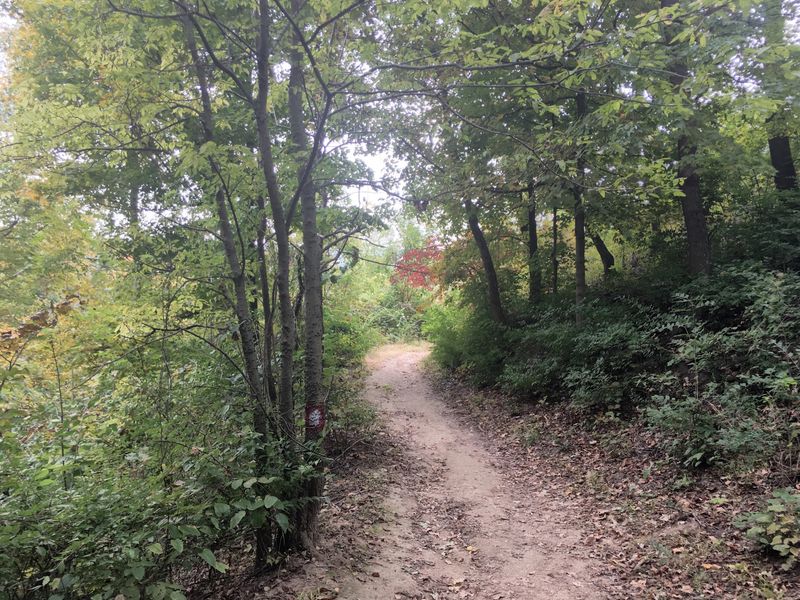
Several short trails cluster near Eagles Roost, giving visitors who want more than a quick stop a reason to linger. The paths are described as easy to moderate, with well-maintained surfaces and multiple viewpoints that open up at various points along the ridgeline.
Visitors note that the trail network is approachable for a wide range of fitness levels, including families with older children and grandparents who want to stretch their legs.
The broader Pere Marquette trail system extends well beyond the overlook area, with options ranging from gentle walks to longer ridge hikes. For those who prefer to explore without a map, the trails near Eagles Roost are compact enough to navigate intuitively, with the overlook platform serving as a natural anchor point.
Hiking up from the Pere Marquette Lodge is also possible, though it involves sharing the road with vehicles and gaining significant elevation over roughly two miles. Most visitors opt to drive to the overlook and then explore the shorter trails on foot from there.
Either approach ends at the same sweeping view, which is the whole point of the trip.
The Quiet Atmosphere That Keeps People Coming Back
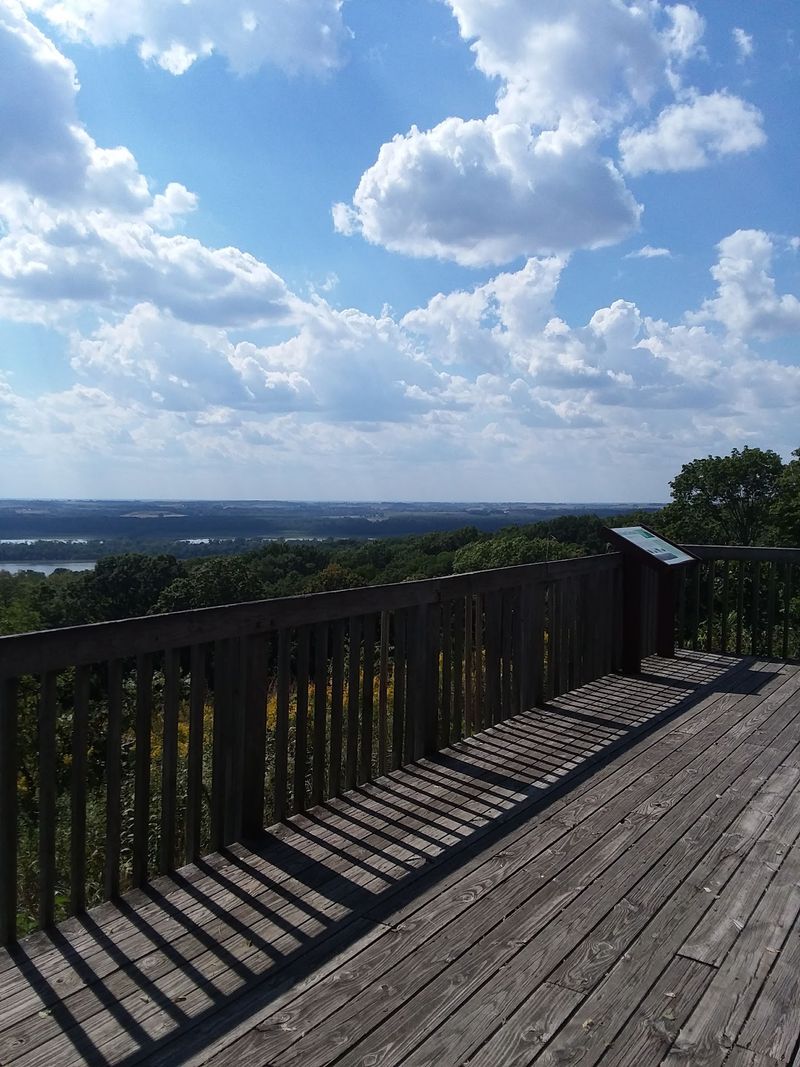
One of the things that distinguishes Eagles Roost from more heavily promoted viewpoints is how unhurried it feels even when other visitors are present. The overlook is spacious enough that a handful of people can spread out along the railing without crowding each other, and the surrounding forest muffles road noise almost completely.
The quiet here is the kind that settles in rather than just being an absence of sound.
Visitors consistently mention the peaceful quality of the spot as something that surprised them. Some have chosen it for milestone moments, including at least one couple who eloped at the overlook and describe it as permanently meaningful to them.
That kind of personal weight is hard to manufacture, and it speaks to something genuine in the atmosphere of the place.
Weekday visits tend to be especially quiet, with the overlook sometimes entirely to yourself for stretches at a time. Weekend afternoons bring more company, particularly in fall, but the setting absorbs visitors without feeling busy.
The overlook rewards patience and slow attention in a way that rushing through would miss entirely.
Who Belongs at Eagles Roost
The overlook draws a genuinely mixed crowd, which is part of what makes it feel like a community landmark rather than a niche destination. Families bring grandchildren to look out over the river valley, couples choose it for quiet afternoons away from busier attractions, and solo visitors arrive with cameras and stay longer than they planned.
The accessibility of the main overlook platform means that age and mobility level rarely limit who can enjoy the view.
Photographers and outdoor enthusiasts find a lot to work with here across all four seasons. The combination of elevated sightlines, open sky, and seasonal color gives a wide range of compositional options.
Birdwatchers with binoculars have a productive station, especially during migration periods and winter eagle season.
Families who have visited once often return, and visitors mention bringing new people to share the experience as a recurring habit. That pattern of return visits and the impulse to share the spot with others is a reliable sign that a place has found its way into people’s personal geography, the short list of places that feel like they belong to you a little.
Practical Notes for Planning Your Visit
Pere Marquette State Park is open year-round, and Eagles Roost Scenic Overlook is accessible during park hours. The park’s main contact number is 618-786-3323 for current conditions and any seasonal updates.
Illinois state parks do not charge a general admission fee, making the overlook a cost-free stop beyond whatever fuel it takes to get there.
One practical note worth knowing: the visitor center inside the park has been closed on some weekend visits in the past, which can limit access to printed maps and interpretive materials. Downloading a trail map before arriving or checking the Illinois Department of Natural Resources website for current visitor center hours is a smart move, especially if you plan to explore beyond the overlook.
The overlook is reachable by a paved park road that is manageable for standard passenger vehicles. Parking near the overlook is limited but typically sufficient on non-peak days.
Fall weekends and holiday weekends are the busiest periods, so arriving early in the day or on a weekday gives you the best chance of a quieter experience with more elbow room at the railing.
Why Eagles Roost Is Worth the Detour
Not every scenic overlook delivers on its promise. Some require significant effort for a view that turns out to be partially blocked, underwhelming in scale, or simply not worth the drive.
Eagles Roost is the exception that reminds you why you keep looking for these places in the first place.
The combination of an accessible location, a genuinely panoramic view across two rivers and two states, and a quiet atmosphere that invites you to stay longer than you planned adds up to something that feels rare. Add the seasonal layers of fall color, eagle sightings, and golden-hour sunsets, and the overlook becomes a place with a different personality depending on when you visit.
For Illinois day-trippers who want a drive that feels rewarding rather than obligatory, the route along the Great River Road to Grafton and up through Pere Marquette to Eagles Roost checks every box. The view from the top is the kind you carry home with you, the kind you find yourself describing to people who have not been, and the kind that makes you start planning the return trip before you have even left the parking area.
Share this story