There is a place tucked into the Ozark Mountains where a world-class art collection shares its home with ancient trees, spring-fed ponds, and winding forest trails. It sounds almost too good to be true, but Crystal Bridges Museum of American Art in Bentonville, Arkansas, is absolutely real and genuinely extraordinary.
What makes it even more remarkable is that most of what you see here costs absolutely nothing to experience. From iconic American masterpieces to a reconstructed Frank Lloyd Wright house, outdoor sculpture trails, immersive art installations, and a restaurant that could hold its own in any major city, this place has quietly become one of the most compelling cultural destinations in the entire country.
Whether you are an art lover, a nature enthusiast, or simply someone looking for a memorable day out, Crystal Bridges delivers on every front. Read on to discover exactly what makes this museum so special and why it belongs at the top of your travel list.
Where Art and Nature Intersect: The Address and Setting
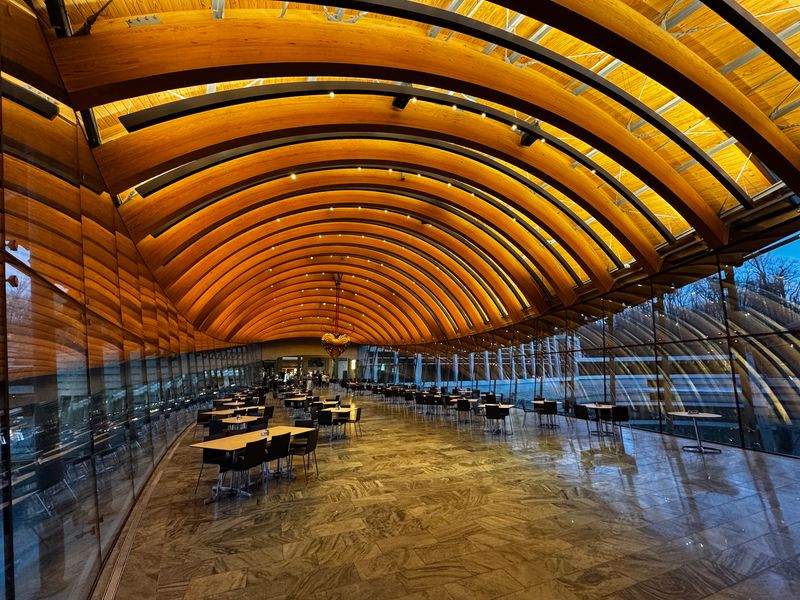
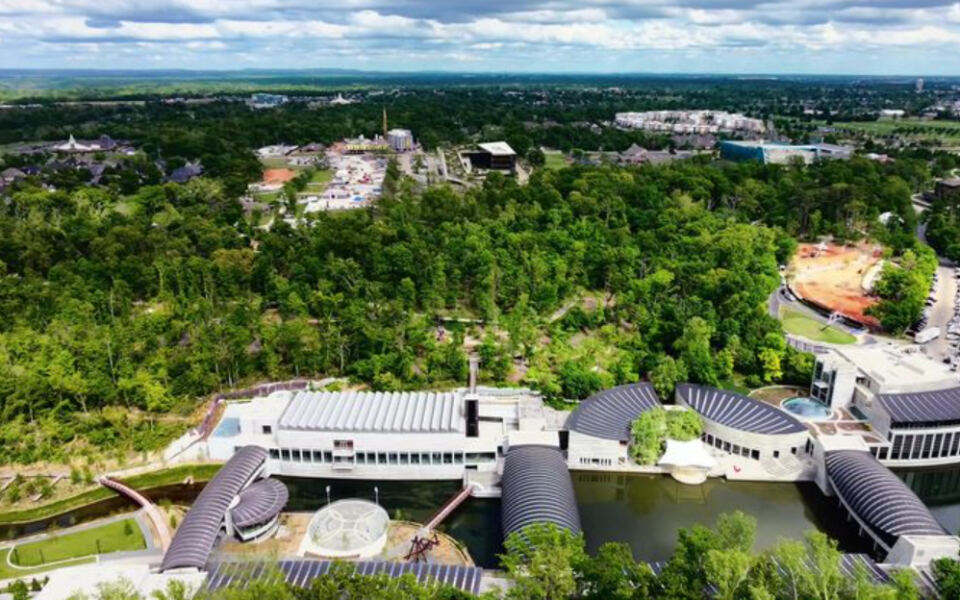
Few places in America announce themselves quite like this one. Crystal Bridges Museum of American Art sits at 600 Museum Way, Bentonville, Arkansas 72712, cradled within a natural ravine in the Ozark highlands of Northwest Arkansas.
The museum opened on November 11, 2011, and from the very first day, it made clear that it was not going to play by conventional rules. Rather than rising above the landscape, it settles into it, with pavilions hugging the contours of the land and ponds reflecting the sky overhead.
The name itself comes from a natural spring on the property and the bridge-like structures that connect the galleries across the water. Founder Alice Walton envisioned a place where American art and the American landscape could coexist on equal terms.
That vision is palpable the moment you arrive, with the forest pressing close and birdsong mixing with the quiet hum of visitors discovering something genuinely unexpected in the Arkansas hills.
Moshe Safdie’s Architectural Masterpiece
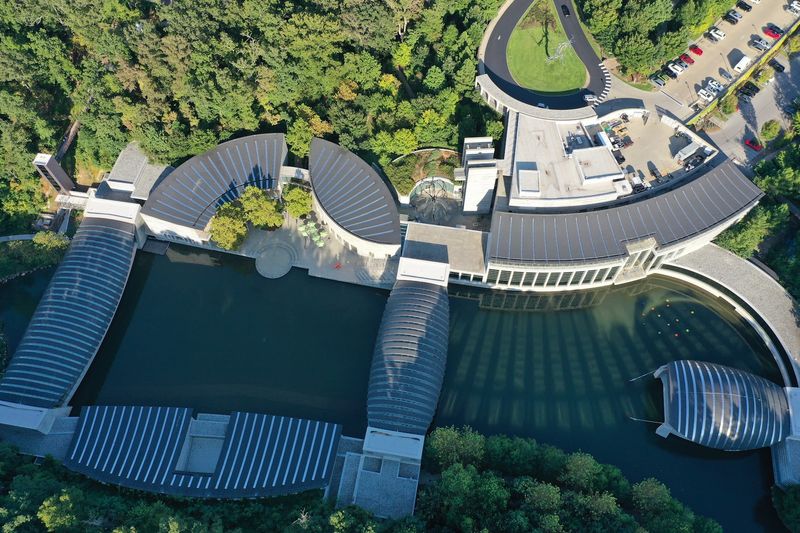
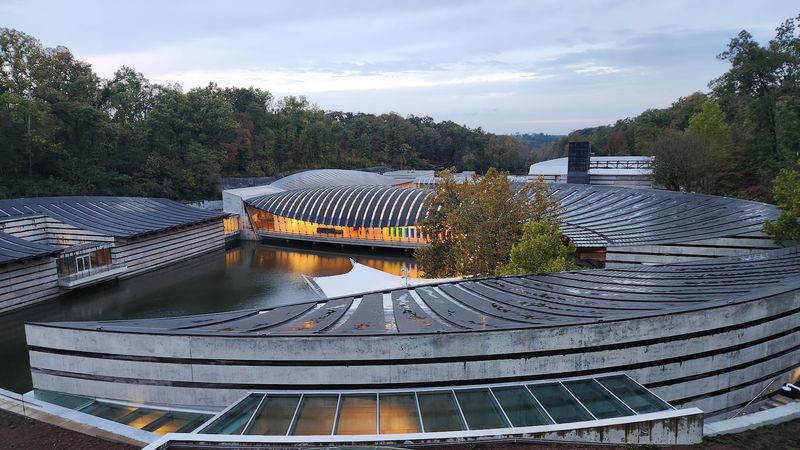
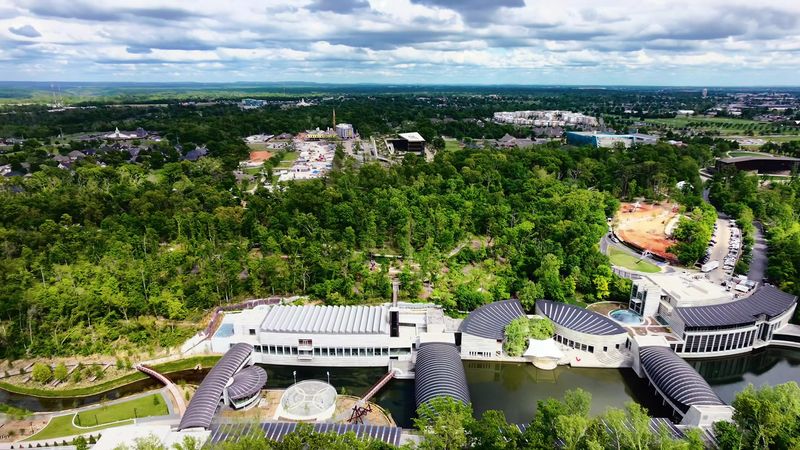
The building itself could easily be the main attraction. Internationally celebrated architect Moshe Safdie designed the museum as a series of eight interconnected pavilions that curve and nestle into the ravine, making the structure feel less like a construction project and more like a natural formation.
Safdie chose materials that echo the regional landscape: architectural concrete, western red cedar, copper roofing, laminated pine, and locally quarried fieldstone. The combination feels warm and rooted, never cold or sterile.
Some pavilions use suspension bridge technology, with foundations anchored into the limestone bedrock far below. Large windows throughout the galleries keep the surrounding forest constantly in view, so even while studying a 19th-century painting, you remain aware of the trees and water just beyond the glass.
An ambitious expansion by Safdie Architects, expected to complete in 2026, will increase the museum’s footprint by roughly 50 percent, adding new galleries and a complete figure-eight loop through the landscape. The building keeps getting better.
Five Centuries of American Art Under One Roof
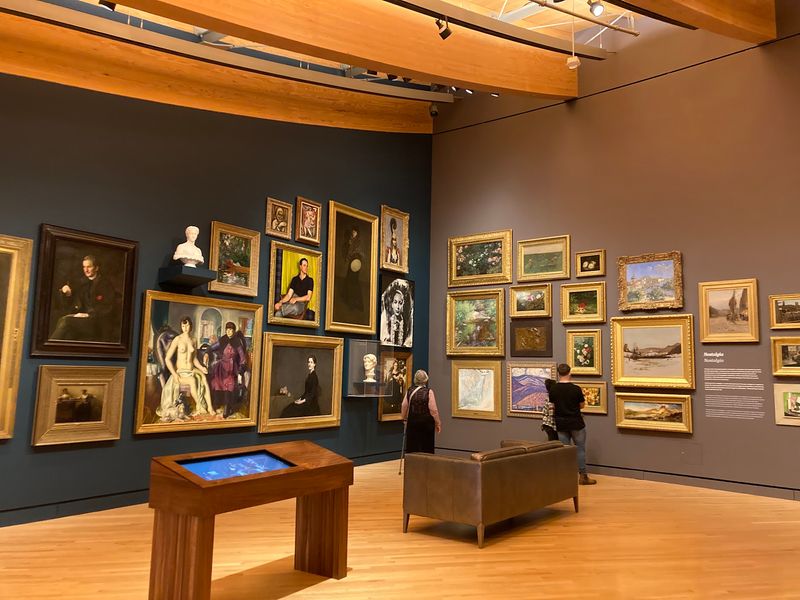
The permanent collection at Crystal Bridges spans roughly five centuries of American creativity, and it covers that ground with real confidence. Colonial portraiture, Hudson River School landscapes, Ashcan realism, modernist abstraction, and contemporary works all share the same carefully curated space.
Gilbert Stuart’s portraits of George Washington anchor the historical end of the collection, while Georgia O’Keeffe’s “Jimson Weed” represents American modernism at its most assured. Norman Rockwell’s “Rosie the Riveter” carries an emotional weight that stops visitors mid-step, and Asher B.
Durand’s sweeping “Kindred Spirits” rewards long, unhurried looking.
The museum also holds 15 works by Thomas Hart Benton, including “Tobacco Sorters” and “The Steel Mill,” alongside pieces by John Singer Sargent, Thomas Eakins, and Jackson Pollock. Contemporary acquisitions by Kerry James Marshall, Amy Sherald, and Maya Lin ensure that the story being told here is inclusive and ongoing.
Best of all, the permanent collection is always free to view, making this breadth of artistic excellence accessible to everyone who walks through the door.
The Outdoor Sculpture Trails That Change Everything
Plenty of museums have a sculpture garden. Crystal Bridges has something closer to a sculpture forest, and the difference is significant.
Over five miles of trails wind through 120 acres of native Ozark woodland, placing world-class artworks in direct conversation with towering trees and flowing water.
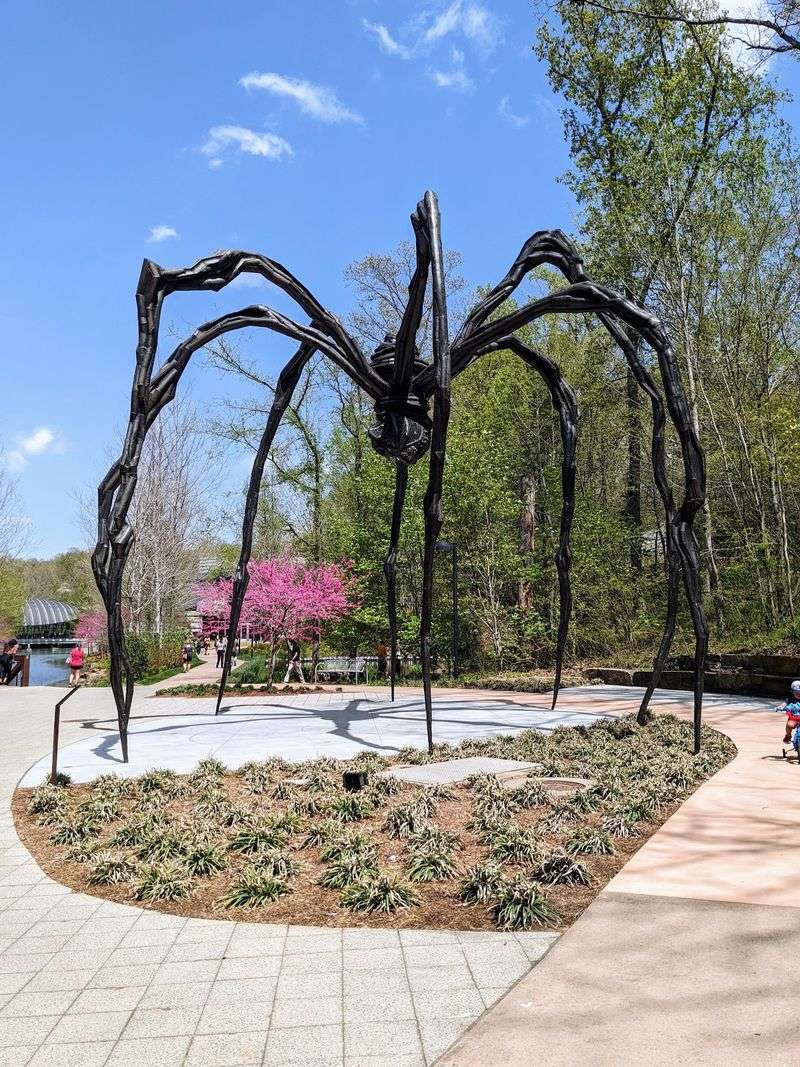
Louise Bourgeois’ monumental spider sculpture “Maman” looms over visitors with a presence that is equal parts unsettling and magnetic. Robert Indiana’s “LOVE” in corten steel stands warm and iconic against a backdrop of seasonal foliage.
Roxy Paine’s “Yield” reaches its intricate steel branches skyward near the museum entrance, mimicking the organic forms surrounding it.
A James Turrell Skyspace invites visitors to lie back and contemplate the shifting colors of the sky above, a meditative experience that feels entirely different from anything inside the galleries. The trails are a mix of paved paths and natural surfaces, welcoming strollers, cyclists, and solo walkers alike.
The campus has earned Level I accreditation from the ArbNet Arboretum Accreditation Program, recognizing its dedication to native trees including dogwoods, redbuds, and magnolias. Every walk reveals something new.
The Frank Lloyd Wright House That Traveled to Arkansas
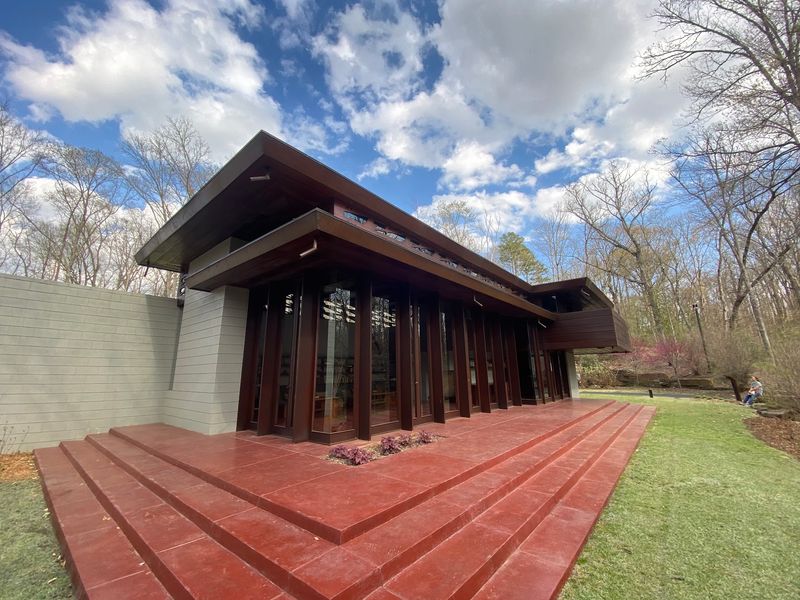
There is a Frank Lloyd Wright house on the museum grounds, and it actually belongs there now. The Bachman-Wilson House, originally built in 1954 in New Jersey, was carefully disassembled, transported piece by piece across the country, and meticulously reconstructed at Crystal Bridges, where it opened to the public in 2015.
Wright designed it as part of his Usonian series, a vision for affordable, beautifully crafted homes that harmonized with their natural surroundings. The house sits low to the ground, its mahogany panels and horizontal lines pulling the eye outward toward the landscape rather than upward toward the sky.
Self-guided audio tours let visitors move through the interior at their own pace, absorbing the thoughtful proportions, the carefully placed windows, and the sense that every element was considered rather than assumed. Guided tours offer even deeper context for those who want it.
Booking a tour in advance is strongly recommended, as spots fill quickly. Standing inside this structure, it becomes clear why Wright’s ideas still feel radical and right, even seven decades later.
Free Admission: A Revolutionary Promise Kept Every Day
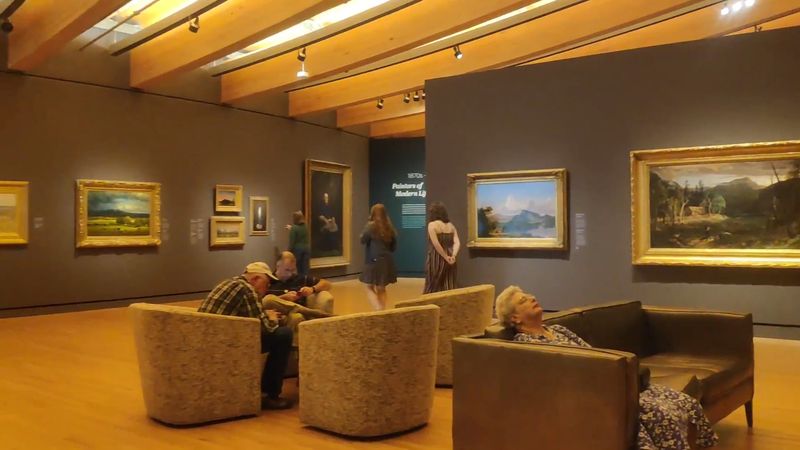
The price of general admission to the permanent collection at Crystal Bridges is zero, every single day, for every single visitor. That is not a promotional offer or a seasonal perk.
It is a founding principle backed by an endowment of around $800 million, largely provided by Alice Walton with additional support from Walmart.
This commitment dismantles the financial barrier that keeps many people away from major cultural institutions. Families can arrive spontaneously.
Students can visit repeatedly. Anyone curious about American art can walk in without hesitation or calculation.
The impact of this policy is visible in the diversity of the crowd on any given day, with toddlers, grandparents, school groups, solo visitors, and traveling couples all sharing the same galleries. Art appreciation is not rationed by income here.
The Momentary, the museum’s satellite contemporary arts space in downtown Bentonville, maintains the same free general admission policy, extending the philosophy beyond the main campus. When a world-class institution decides that access is non-negotiable, the results are genuinely moving to witness.
Eleven Restaurant: Dining Suspended Over Still Water
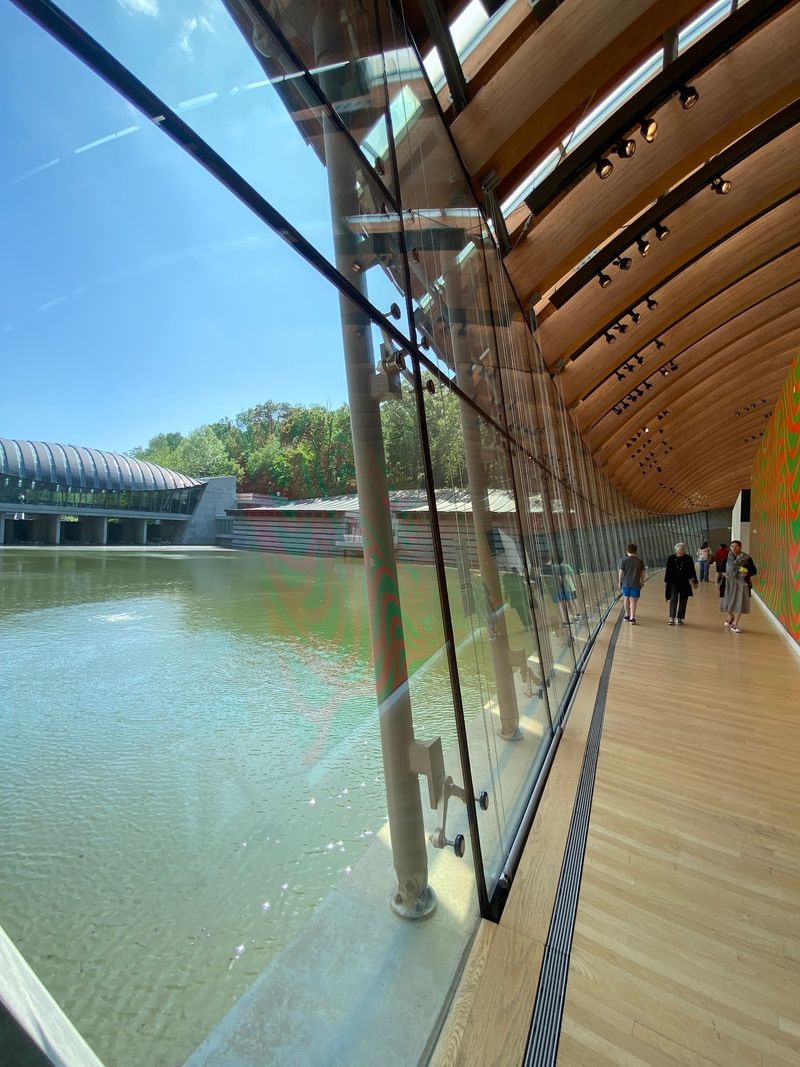
Museum restaurants have a reputation for being an afterthought. Eleven at Crystal Bridges is the opposite of that, and visitors who skip it are genuinely missing out.
The restaurant occupies one of the museum’s signature glass-enclosed bridge structures, positioning diners directly above a spring-fed pond with forest views on every side.
The menu focuses on seasonal American cuisine with a strong nod to the Ozarks region, emphasizing fresh, locally sourced ingredients. Dishes like spiced catfish with tomato gravy and Arkansas rice feel rooted in place rather than generic, and the kitchen clearly takes its sourcing seriously.
Brunch, lunch, and evening small plates are all available depending on the day and season. For a quicker stop, the Coffee Bar features Onyx Coffee Lab, an award-winning local roaster, alongside grab-and-go meals and house-made pastries.
The upcoming expansion adds Quartz and Honey, an elevated cafe with artisanal pastries, and the Plaza Cafe for lighter bites. Eating here is not just fuel for more gallery time.
It is an experience worth planning your visit around.
Temporary Exhibitions That Keep Every Visit Fresh
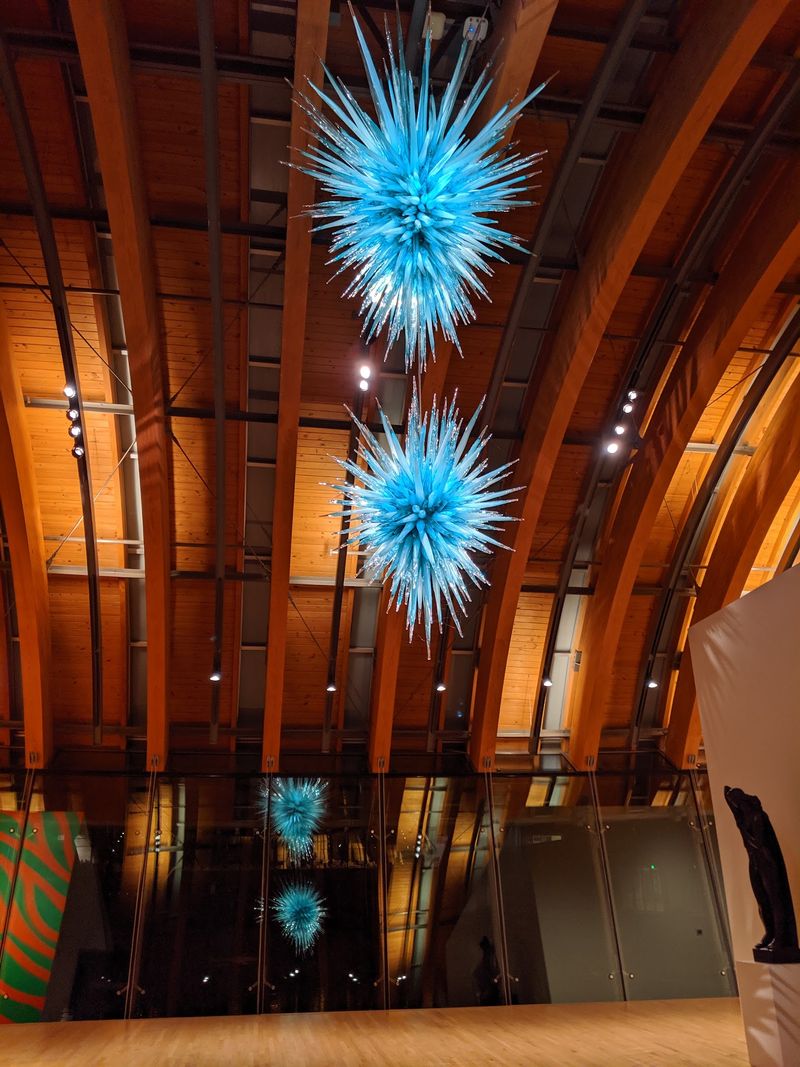
The permanent collection alone could fill a full day, but the rotating schedule of temporary exhibitions ensures that returning visitors always find something new waiting for them. These special presentations bring fresh perspectives and diverse voices into conversation with the museum’s broader mission.
Past exhibitions have ranged widely in subject and style. Christopher Marley’s “Exquisite Creatures” blended preserved natural specimens with visual artistry in a way that felt genuinely surprising.
A major Diego Rivera retrospective drew visitors from across the region and beyond.
More recently, the museum has hosted “Keith Haring in 3D,” an interactive exploration of the artist’s signature graphic language rendered in sculptural form. Yayoi Kusama’s immersive “Infinity Mirrored Room – My Heart Is Dancing into the Universe” transported visitors into a boundless field of light and reflection, with timed entry slots booking up well in advance.
Looking ahead, “Nature Adorned: The Artistry of Tiffany and Co. and the American Imagination” promises another visually rich experience. Temporary exhibitions typically carry a modest admission fee, a rare exception to the museum’s otherwise free model.
Art Everywhere: Creativity Hidden in Unexpected Corners
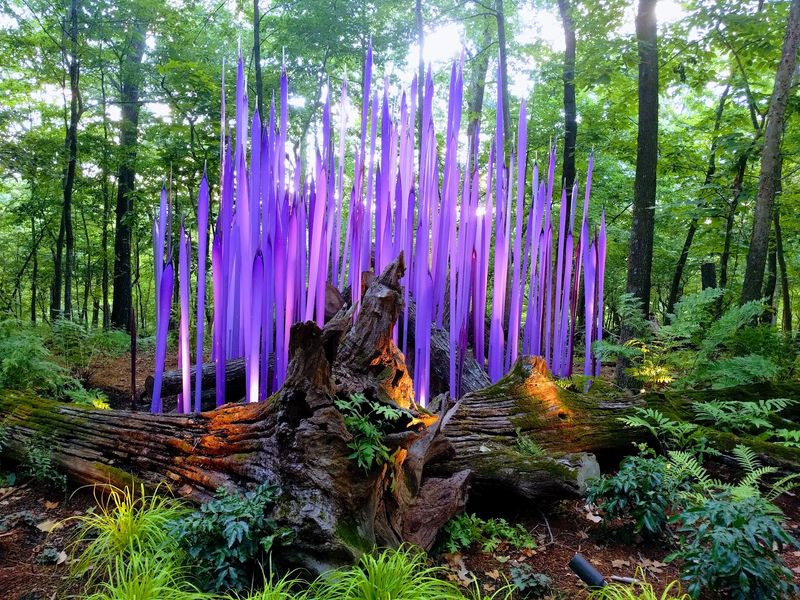
Crystal Bridges has a quiet habit of placing art where you least expect it. The museum’s “Art Everywhere” initiative commissions artists to transform stairwells, elevators, restrooms, and other transitional spaces into moments of genuine creative encounter.
The result is a campus where no corner feels overlooked or purely functional.
You might round a turn toward the exit and find a mural that stops you cold. You might step into an elevator and realize the walls are doing something interesting.
These small surprises accumulate over the course of a visit, creating a sense that the museum is paying attention to every inch of the experience it offers.
The philosophy extends beyond the main building. Public art installations appear on the grounds of affiliated institutions like the Alice L.
Walton School of Medicine, reflecting a broader organizational commitment to weaving creativity into daily life and community spaces.
This approach reinforces one of the museum’s core beliefs: art is not a special occasion reserved for formal gallery hours. It is a presence that can inhabit any space, elevate any moment, and remind anyone who encounters it that beauty is worth seeking out.
Alice Walton’s Vision and the Museum’s Origin Story
Every great institution has an origin story, and this one begins with a woman who decided that Northwest Arkansas deserved world-class art. Alice Walton, daughter of Walmart founder Sam Walton, established the museum’s founding organization in 2005 and spent years assembling a collection of American masterpieces before the building even existed.
One of the earliest and most talked-about acquisitions was Asher B. Durand’s “Kindred Spirits,” purchased for over $35 million in 2005.
That single transaction announced to the art world that this project was serious, and the collection has grown steadily in ambition and quality ever since.
The museum opened in November 2011 to enthusiastic critical response, with reviewers praising both the collection and the architecture in equal measure. Its arrival transformed Bentonville from a corporate headquarters town into a genuine cultural destination, spurring economic development and drawing visitors from across the country and beyond.
Walton’s guiding belief was simple: great art should not be confined to a handful of coastal cities. That conviction is now concrete, copper, cedar, and water, alive in the Ozark hills.
Practical Tips for Planning Your Visit
A little advance planning turns a good visit into a great one. Crystal Bridges is open Monday and Wednesday through Sunday, with hours running from 10 AM to 6 PM on most days and extending to 8 PM on Thursdays and Fridays.
The museum is closed on Tuesdays, Thanksgiving Day, and Christmas Day.
The outdoor trails and grounds are accessible from sunrise to sunset daily, even when the indoor galleries are closed, making an early morning or evening walk entirely possible. Parking is free in the museum’s attached garage on both upper and lower levels, with ADA-accessible spaces available.
A shuttle runs between the campus parking plaza and the main entrance for those who prefer not to walk.
For the Frank Lloyd Wright House, advance ticket booking is strongly recommended as tours fill up quickly. Budget at least three to five hours to do the campus justice, and consider wearing comfortable shoes since there is considerable walking both inside and out.
The museum’s phone number is 479-418-5700, and the website at crystalbridges.org provides up-to-date exhibition schedules and tour booking options.
Share this story