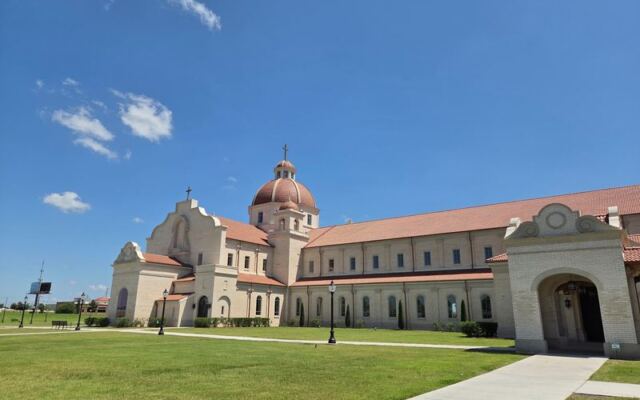
Oklahoma has a way of surprising you when you least expect it. Tucked along a stretch of Oklahoma City that looks like any other commercial corridor, a massive Spanish colonial complex rises from the landscape like something transported from another continent entirely.
The Blessed Stanley Rother Shrine is free to enter, open every day, and holds more history, beauty, and spiritual weight than most people realize is sitting right here in the Sooner State. Whether you are Catholic, curious, or just someone who appreciates remarkable architecture and a good hilltop view, this place has something genuinely worth your time.
Location and First Impressions Along SE 89th Street
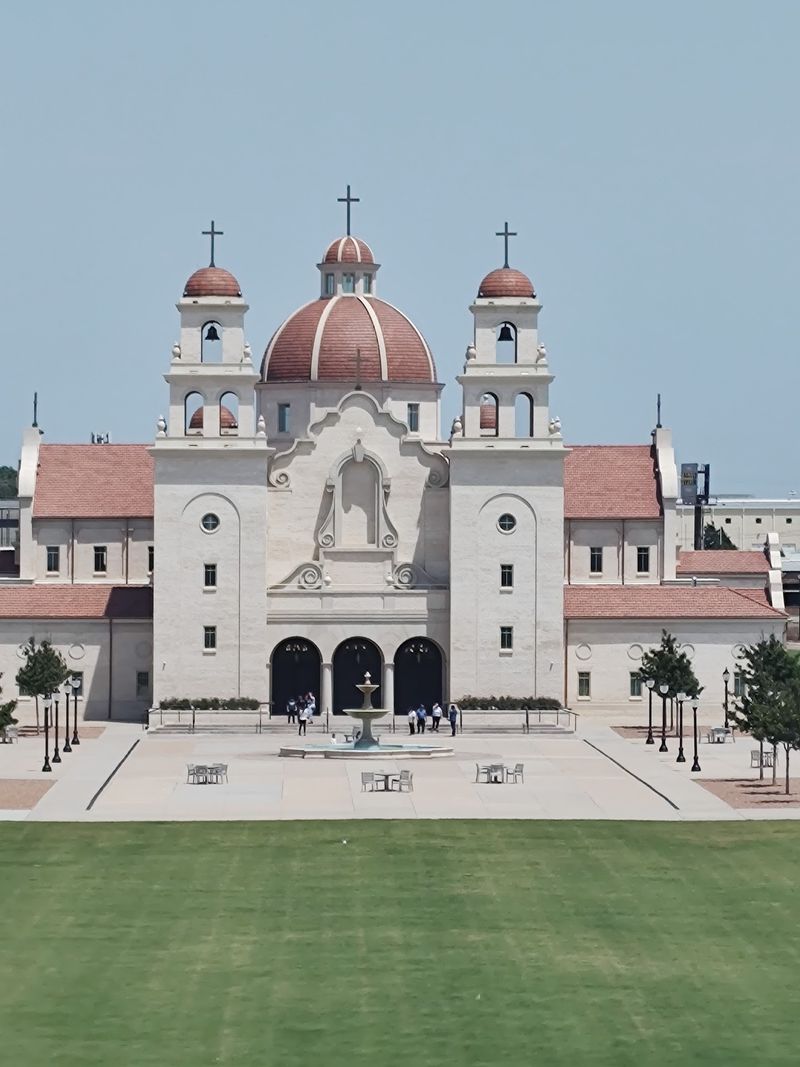
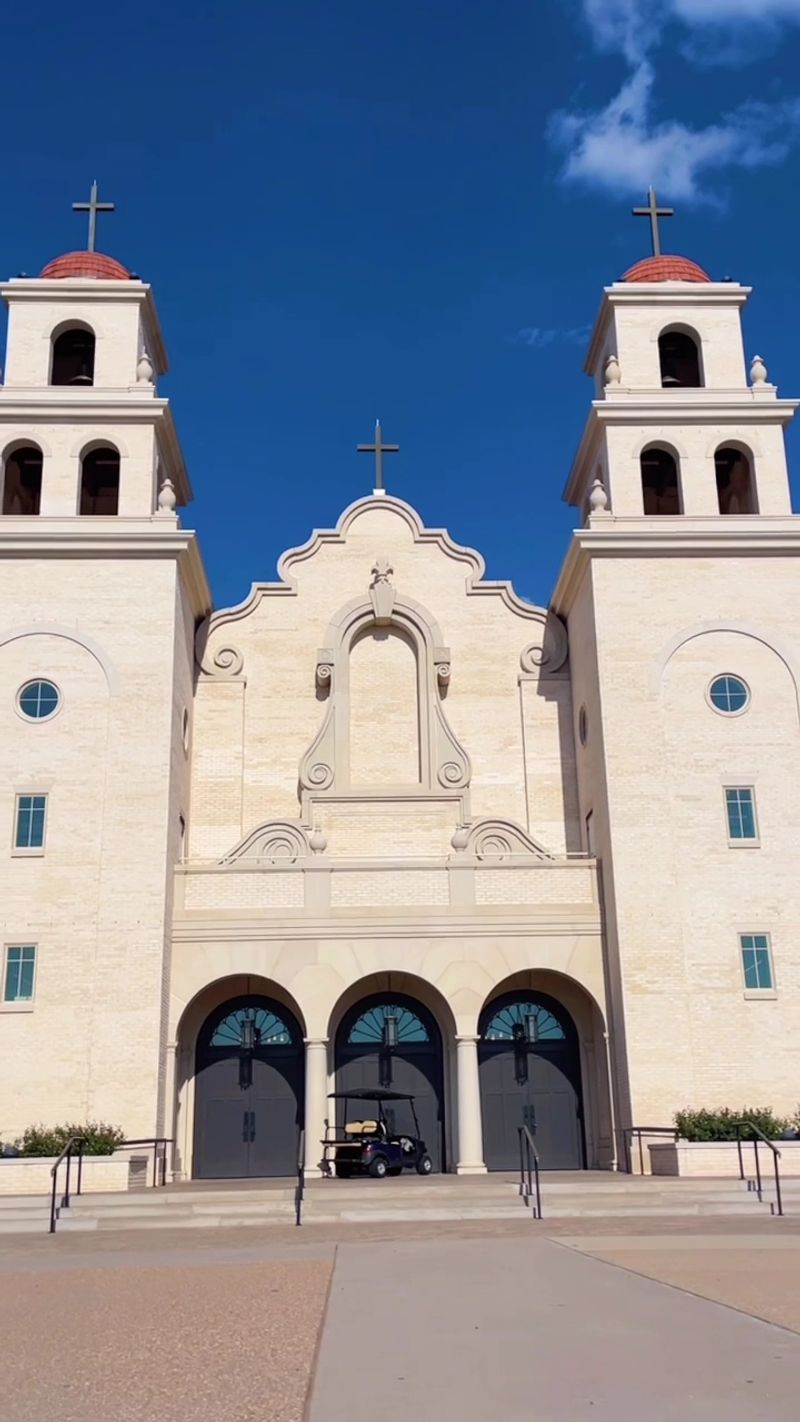
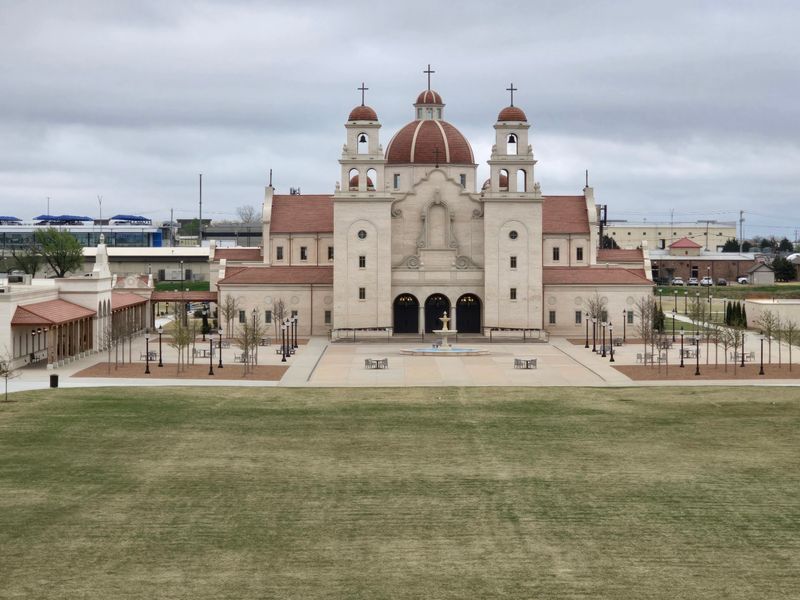
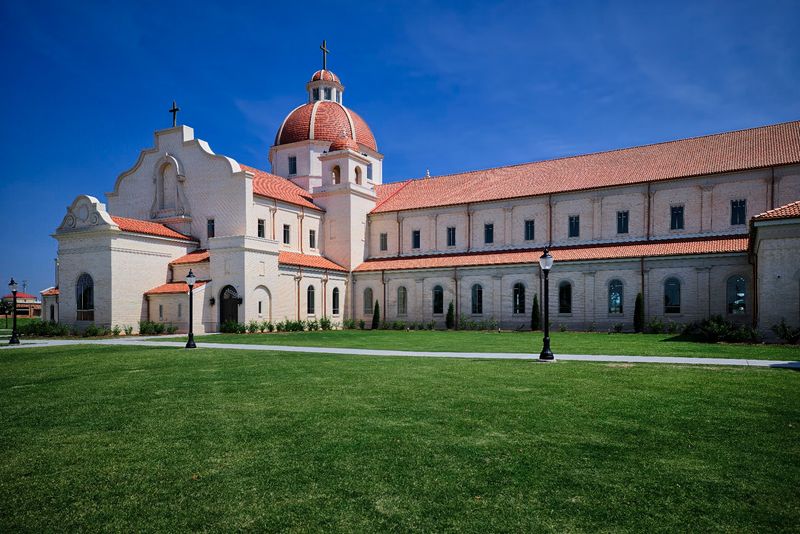
Spotted from the interstate before you even pull into the parking lot, the Blessed Stanley Rother Shrine at 700 SE 89th Street in Oklahoma City announces itself with a towering bell tower and sweeping red tile roofline that feels completely unexpected in the middle of commercial Oklahoma. The building does not whisper – it commands attention from blocks away.
Spanish colonial architecture defines every visible surface. Arched windows, detailed stonework, and warm earth-toned walls give the complex a presence that visitors from Europe have compared favorably to historic cathedrals on that continent.
One visitor who traveled from Austria described it as proof that even newly built churches can carry genuine style and beauty.
The parking lot is enormous, making arrival stress-free regardless of when you show up. From the moment you step out of your car, the scale of the property becomes clear – this is not a small neighborhood chapel.
The grounds are immaculately maintained, and the whole campus feels purposeful and welcoming from the very first step toward the entrance.
Who Stanley Rother Was and Why Oklahoma Claims Him
Born on a farm in Okarche, Oklahoma, Stanley Rother grew up with dirt under his fingernails and a calling he could not ignore. He became a Catholic priest and traveled to Santiago Atitlan, Guatemala, where he served as a missionary for more than a decade, learning the local Tz’utujil language and translating the New Testament so his parishioners could read scripture in their own tongue.
In 1981, amid rising tensions and targeted attacks on clergy in Guatemala, Rother was killed at his parish. He had been warned to leave and briefly returned to Oklahoma for safety, but chose to go back to the people he served.
That decision, rooted in commitment rather than recklessness, is central to understanding who he was.
In 2017, Pope Francis beatified him, making Stanley Rother the first person born on United States soil to be declared Blessed by the Catholic Church. Oklahoma claimed that distinction quietly but proudly, and the shrine built in his honor stands as a permanent recognition of a farmboy from the plains who left an extraordinary mark on the world.
His story is genuinely worth knowing.
The Main Sanctuary and Its Jaw-Dropping Interior
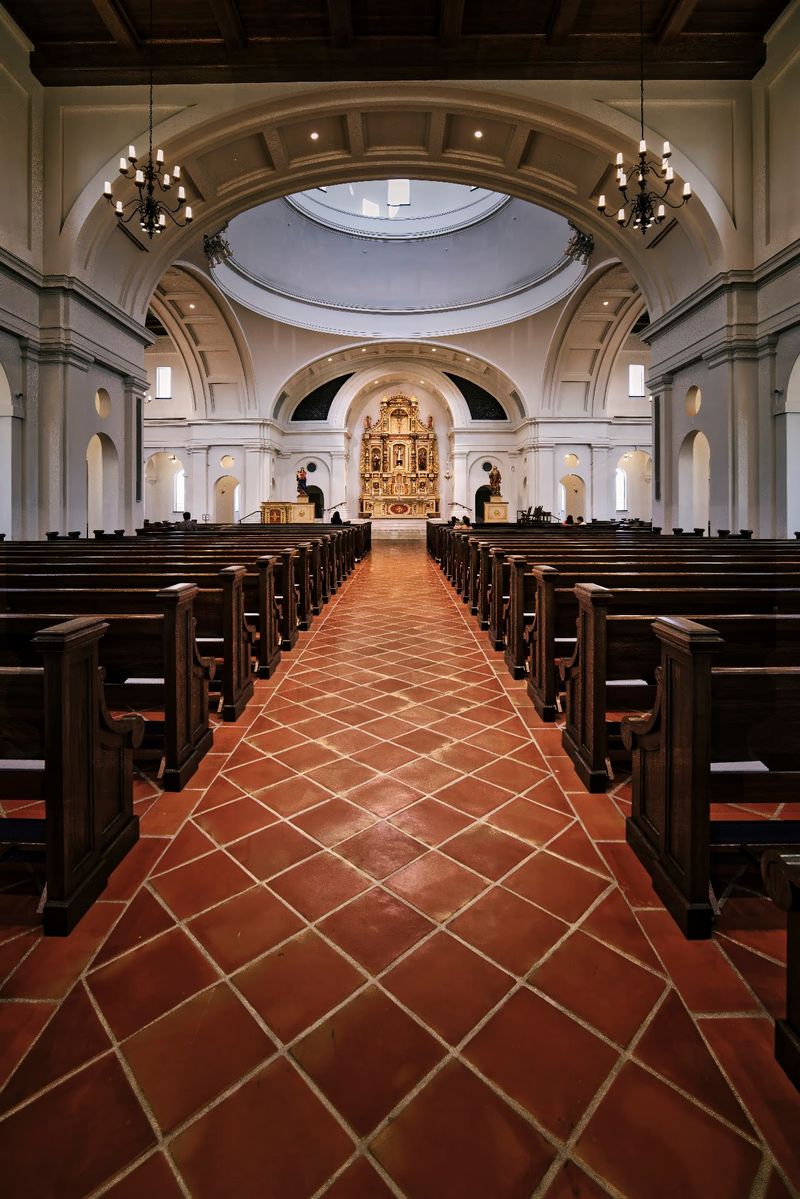
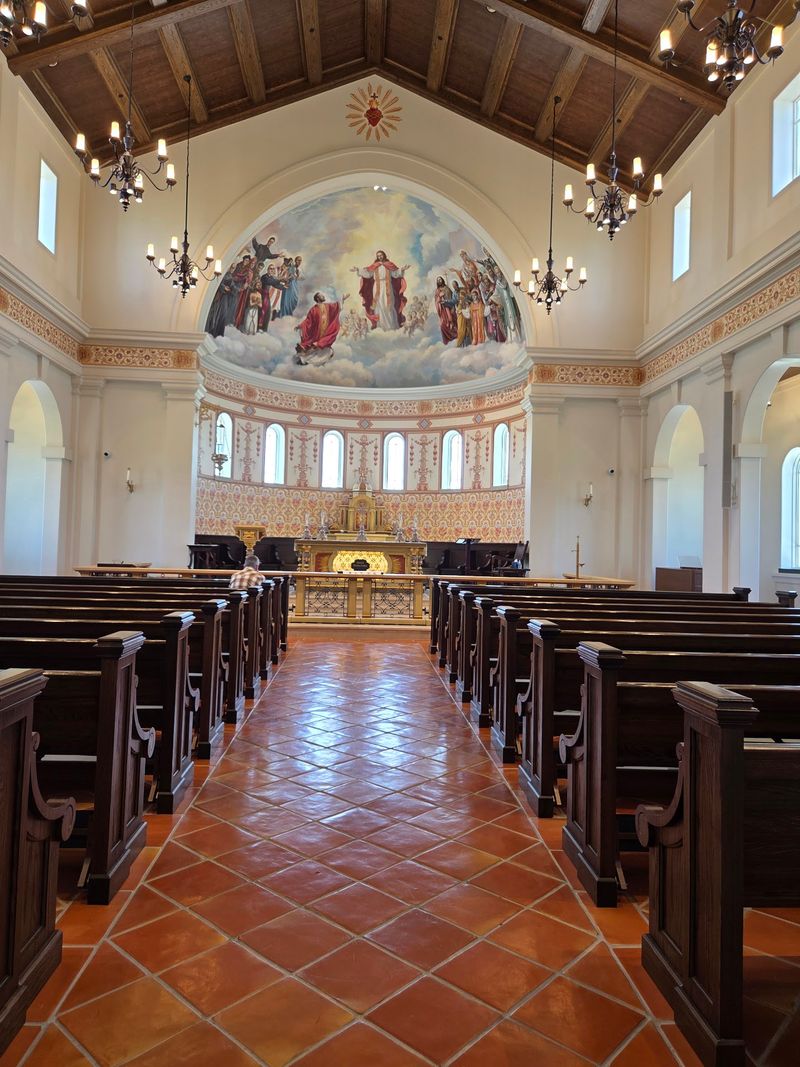
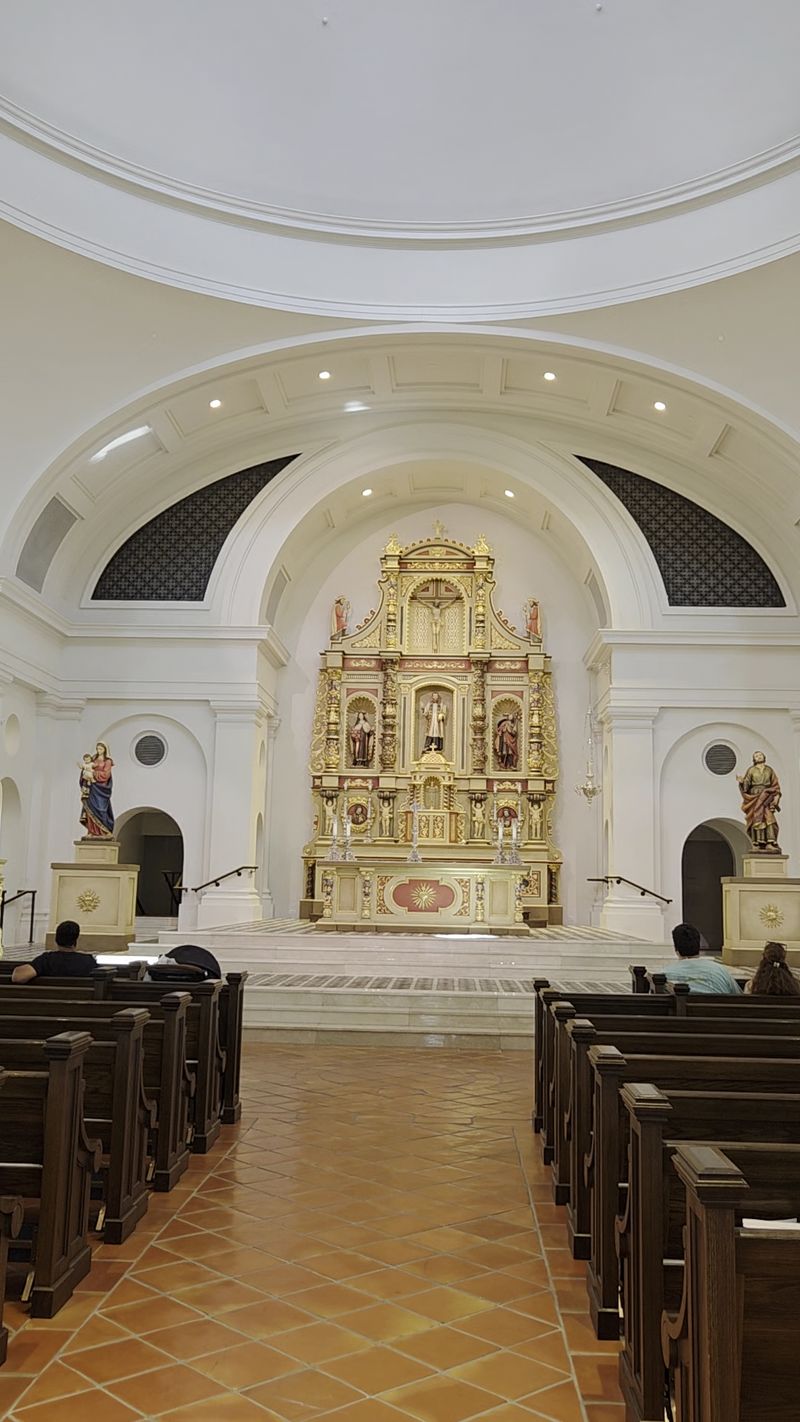
Stepping inside the main sanctuary for the first time tends to stop people in their tracks. The ceiling soars dramatically overhead, and natural light filters through arched windows in a way that spotlights the ornate altar without feeling theatrical.
Every design choice feels intentional, layered with reverence rather than decoration for decoration’s sake.
The sanctuary seats approximately 2,000 people, making it the largest Catholic church in Oklahoma. Despite that scale, the space manages to feel personal rather than cavernous.
The combination of warm architectural details and careful lighting creates an atmosphere that visitors consistently describe as peaceful and sacred, regardless of their own faith background.
One practical note worth knowing before you sit down: acoustics in the main church can be uneven depending on where you position yourself. Visitors who attend mass or listen to any spoken presentation tend to recommend sitting toward the front for the clearest sound experience.
The altar and religious artwork are worth a close look, and spending time simply absorbing the craftsmanship of the space is a legitimate reason to linger well beyond a quick glance around.
The Chapel Where Rother’s Remains Rest
Adjacent to the main sanctuary, a smaller chapel serves as the final resting place for Blessed Stanley Rother’s remains. The atmosphere shifts noticeably when you cross into this space – quieter, more intimate, and carrying a weight that even casual visitors tend to feel.
People pause here in a way they do not always pause elsewhere on the property.
Having a beatified martyr’s physical remains accessible to the public in a free, open facility is genuinely rare. Most relics of historical religious figures are housed in centuries-old European cathedrals or behind significant barriers.
Here in Oklahoma City, you can stand a few feet away from the tomb of the first US-born person ever beatified by the Catholic Church, at no cost and with no reservation required.
The chapel is described by visitors as deeply spiritual and beautifully designed, with every element oriented toward reflection rather than spectacle. Whether you approach it as a pilgrim, a history enthusiast, or simply someone curious about the man whose name the shrine carries, the chapel offers a moment of genuine stillness that is hard to manufacture anywhere else.
It is the emotional core of the entire property.
Tepeyac Hill and the Walk to Our Lady of Guadalupe
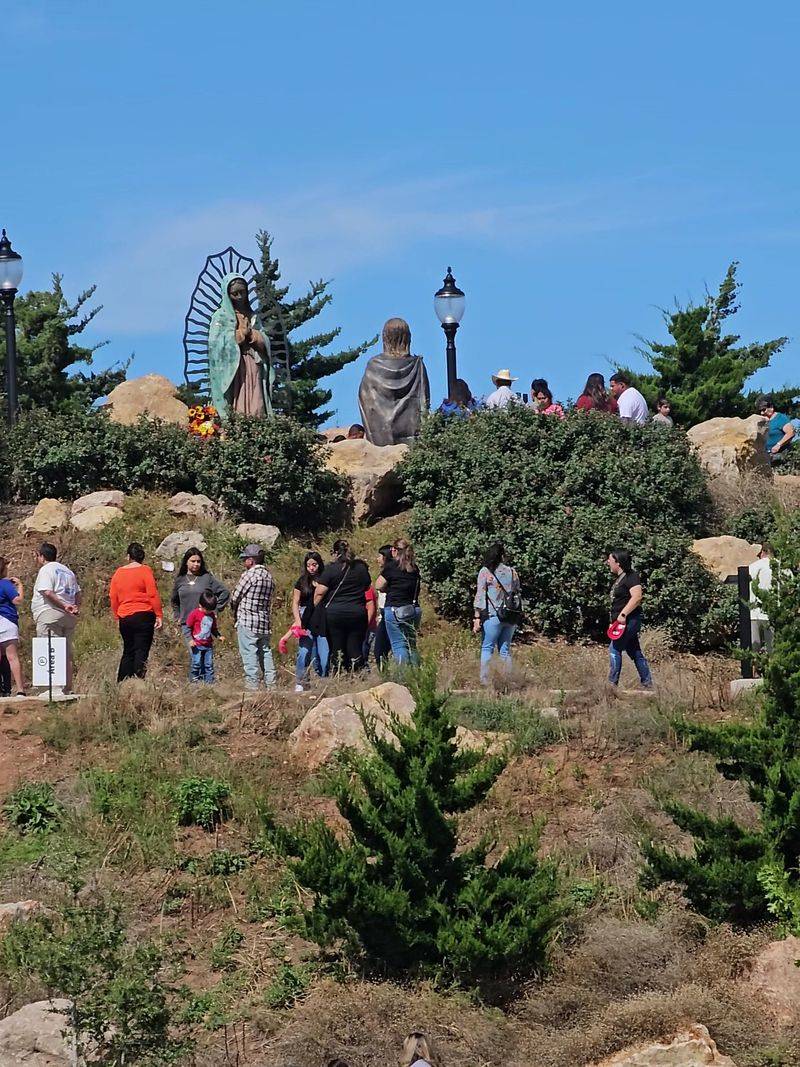
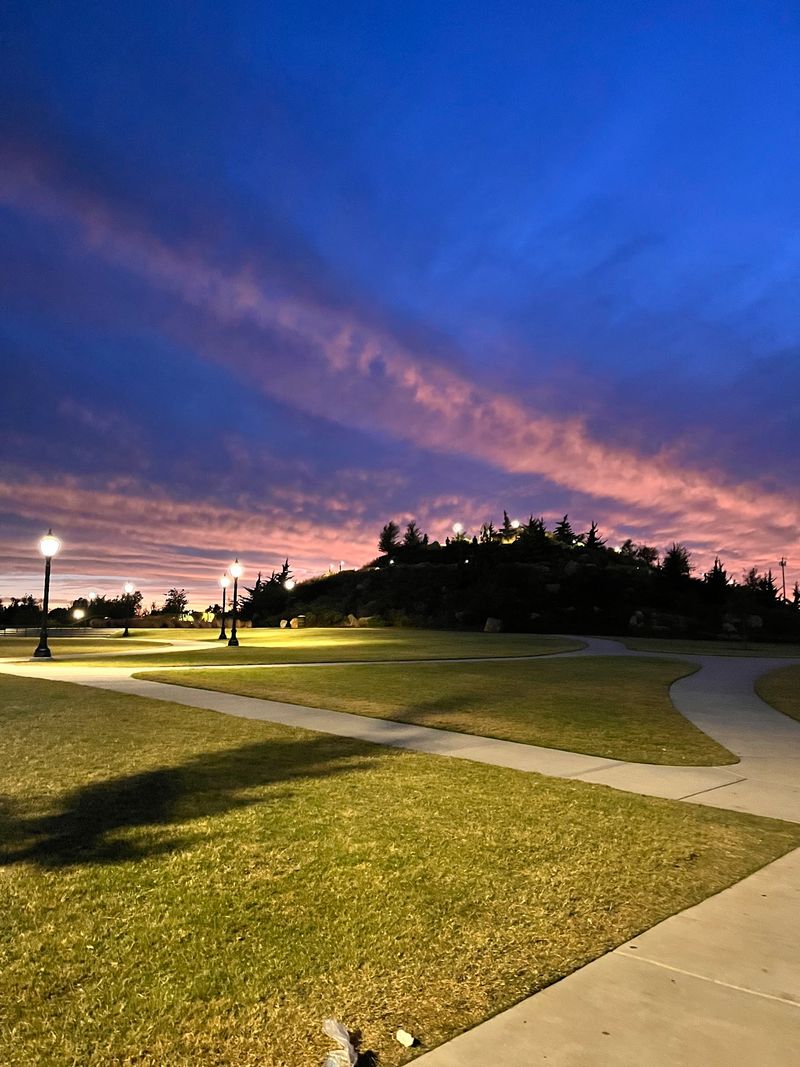
Outside on the shrine grounds, a carefully constructed artificial hill recreates Tepeyac Hill from Mexico, the location where Our Lady of Guadalupe is said to have appeared to St. Juan Diego in 1531. A winding trail leads from the base up to the summit, and the walk is short enough for families with strollers or visitors using wheelchairs.
The path is manageable for almost anyone willing to take a few minutes.
At the top, a 12-foot painted bronze statue of Our Lady of Guadalupe stands alongside an 8-foot statue of St. Juan Diego. The scale of both figures is striking up close, and the view from the hilltop looking back down at the shrine complex and surrounding Oklahoma City landscape gives the whole experience a memorable payoff.
On certain visits, the scent of roses left as offerings near the statue greets you before the statues even come into view.
The Tepeyac Hill feature is one of the most talked-about elements of the shrine among first-time visitors. It transforms what could be a purely indoor experience into something that gets you outside, moving, and seeing the property from an entirely different perspective.
Families especially seem to appreciate having a purposeful outdoor element woven into the visit.
The Museum and the 20-Minute Film That Tells His Story
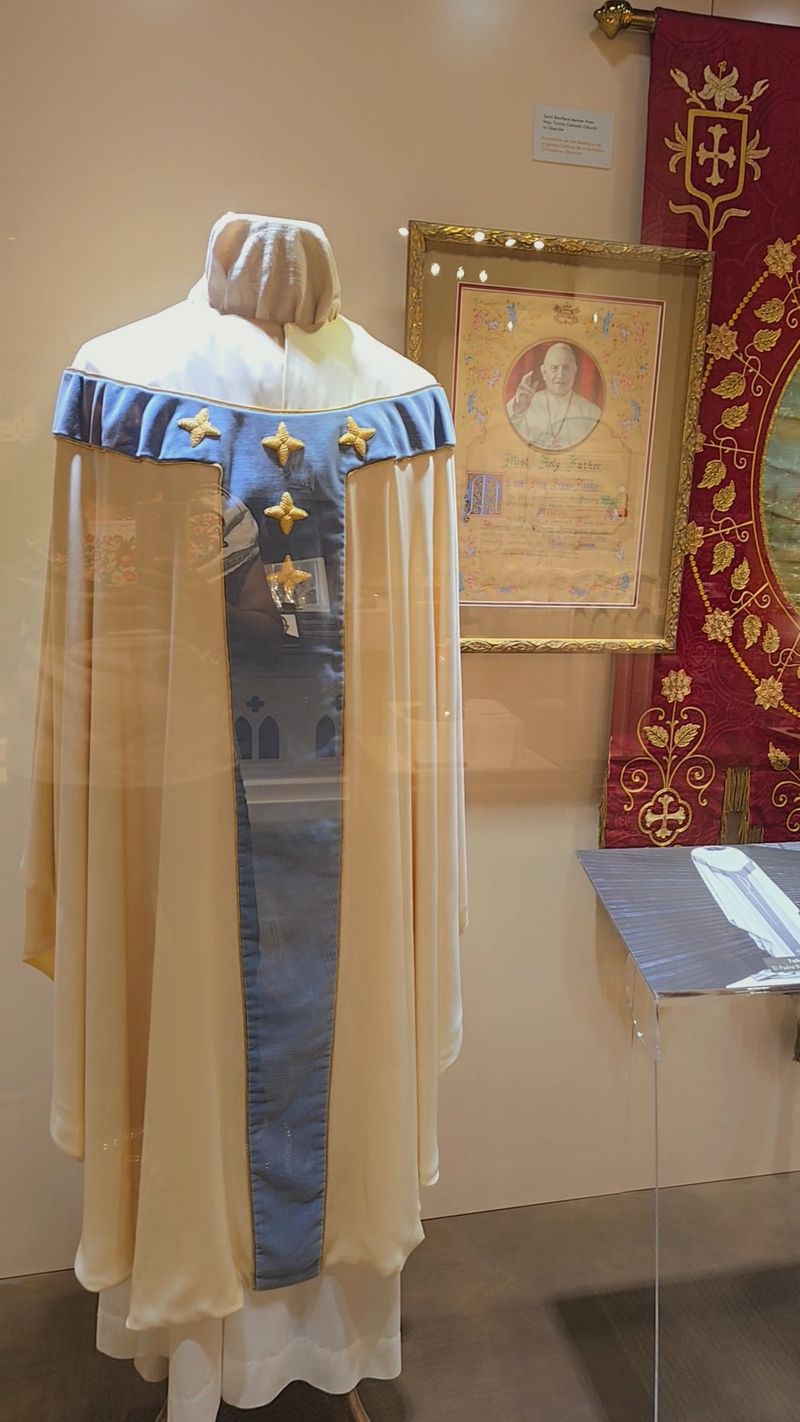
Located inside the Pilgrim Center, the museum dedicated to Stanley Rother’s life is a highlight that visitors repeatedly single out as something not to skip. Exhibits trace his journey from an Oklahoma farm upbringing through seminary, his years of missionary work in Guatemala, and the circumstances that led to his beatification.
Personal items from his life are displayed throughout, grounding the story in tangible detail.
A 20-minute film runs on a continuous loop in the museum’s small theater, and the production quality earns consistent praise from visitors of all backgrounds. Reviewers describe it as phenomenal – a word that shows up more than once in visitor feedback.
The film efficiently covers the major chapters of Rother’s life and provides context that makes the rest of the shrine visit significantly more meaningful.
Seeing the exhibits after watching the film tends to hit differently than walking in cold. Knowing the backstory transforms the displayed artifacts from interesting objects into pieces of a real human life.
The museum is free, unhurried, and staffed by knowledgeable, welcoming guides who genuinely seem to enjoy sharing the story. Budget at least 30 to 40 minutes for this section of the visit alone – rushing through it shortchanges the experience considerably.
Spanish Colonial Architecture Rooted in a Guatemalan Parish
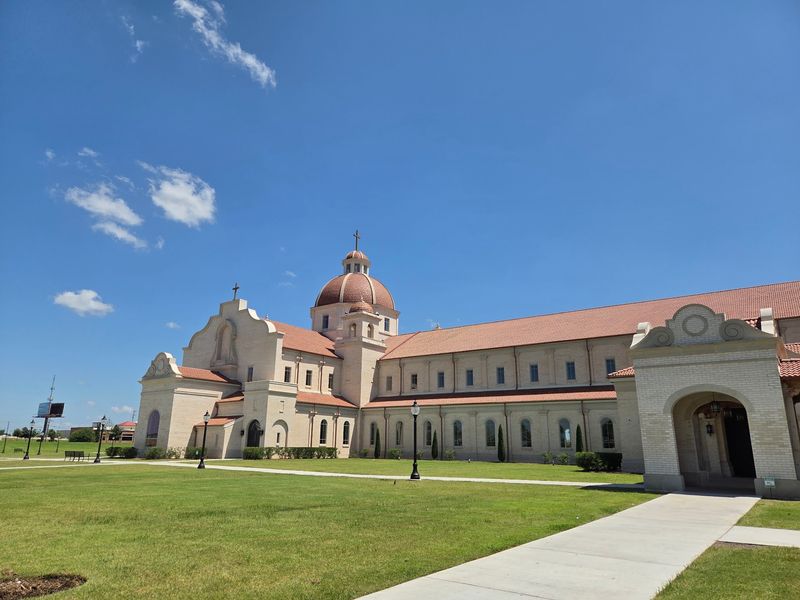
Every design decision at the shrine connects back to a specific source of inspiration: the parish church in Santiago Atitlan, Guatemala, where Stanley Rother served his community for years. The Spanish colonial style chosen for the Oklahoma City building deliberately echoes that Central American setting, creating a visual and emotional bridge between the Oklahoma plains and the place where Rother spent so much of his life.
From the red tile roof to the hand-detailed stonework around windows and entryways, the craftsmanship is visible at every scale. Visitors who have traveled throughout Spain and Latin America note that the building holds up favorably against historic examples of the style.
The fact that it is a recently constructed facility rather than a centuries-old structure surprises many first-time visitors who assume something this detailed must be older.
Standing back and taking in the full facade, especially on a clear Oklahoma day with the bell tower framed against an open sky, produces the kind of image that tends to end up on people’s phone camera rolls immediately. The building photographs beautifully from multiple angles and distances, which is part of why the shrine grounds attract visitors who are simply interested in architecture alongside those drawn by its spiritual significance.
The Gift Shop and Handmade Items Worth Browsing
Tucked into the Pilgrim Center alongside the museum, the gift shop at the shrine offers something more personal than the typical souvenir setup. Handmade crosses and handcrafted rosaries are among the items visitors mention most often, and the presence of genuinely handmade goods rather than mass-produced merchandise gives the shop a character that feels consistent with the broader spirit of the place.
Prices are described by visitors as very reasonable, which matters when you are browsing items that were clearly made with care. The shop carries a range of religious items, books, and keepsakes connected to Stanley Rother’s story and the broader devotional traditions represented at the shrine.
Even if purchasing something is not on your agenda, the shop is worth a walk-through for the craftsmanship on display.
Staff throughout the Pilgrim Center, including near the shop area, are consistently noted for being warm and approachable. The whole setup feels like it was designed to serve visitors rather than extract money from them, which makes browsing genuinely pleasant rather than pressured.
Picking up a handmade rosary or a cross as a tangible reminder of the visit is a popular choice among first-timers who want something meaningful to bring home from the experience.
Atmosphere and the Broad Range of People It Welcomes
Few places in Oklahoma City manage to feel simultaneously grand and approachable, but the shrine pulls it off consistently. Families with young children, solo travelers passing through on road trips, international visitors, and lifelong Oklahoma City residents all show up here, and the space accommodates every type of visitor without feeling crowded or exclusionary.
The welcome is genuine and unconditional.
Multiple visitors have made a point of noting that you do not need to be Catholic or even Christian to find value in a visit. The grounds are open to everyone, and that openness feels intentional rather than performative.
Stanley Rother himself, by most accounts, was the kind of person who prioritized serving others over gatekeeping belonging, and that spirit seems embedded in how the shrine operates today.
The overall atmosphere leans heavily toward peace. People speak quietly, move slowly, and seem genuinely affected by the combination of the architecture, the story, and the outdoor elements.
Visitors who arrive feeling rushed tend to leave feeling calmer, which is a harder trick to pull off than it sounds. Families report it working well as a meaningful outing that holds children’s attention without requiring elaborate planning or significant expense.
Practical Visiting Details – Hours, Cost, and Getting There
Planning a visit is straightforward. The shrine is open seven days a week from 9 AM to 5 PM, which makes it accessible for weekday visitors, weekend road-trippers, and anyone passing through Oklahoma City with a few hours to spare.
The consistent daily schedule removes the guesswork that complicates visits to many comparable sites.
Admission to the grounds, the museum, and the Pilgrim Center film is completely free of charge. There is no suggested donation box at the door, no tiered access, and no hidden costs.
The large parking lot handles significant visitor volume without issue, and accessibility across the property is well-maintained for visitors using strollers or wheelchairs. Restrooms are clean and include changing tables, a detail that matters more than people admit when traveling with small children.
The address is 700 SE 89th Street in Oklahoma City, and the shrine is visible from the nearby interstate, making it easy to spot on approach. For phone inquiries, the number is 405-421-9800, and the website at rothershrine.org provides additional information for planning.
Mass is held at 12:15 PM for those interested in attending a service. Budget roughly two hours for a full visit that includes the hill walk, museum film, chapel, and main sanctuary.
Why Road-Trippers and First-Time Visitors Keep Coming Back
Places that earn repeat visitors tend to do so because the experience rewards attention rather than just a quick glance. The shrine operates on that principle naturally.
First-time visitors who spend an hour often wish they had budgeted two, and those who return find that different sections of the property land differently depending on what they bring with them emotionally on any given day.
Road-trippers moving through Oklahoma City on I-35 or nearby routes increasingly include the shrine as a deliberate stop rather than an afterthought. The visibility from the highway helps, but word of mouth does more work.
Visitors from across the country, and occasionally from other countries entirely, show up having heard about the Tepeyac Hill recreation or the museum from someone who could not stop talking about it after their own visit.
Locals who have lived in Oklahoma City for years sometimes admit they had no idea the shrine existed until a friend dragged them along. That pattern – surprise followed by genuine appreciation – seems to be a defining feature of how most people encounter this place for the first time.
The combination of free access, meaningful history, outdoor walking, and stunning architecture creates something that is genuinely difficult to replicate elsewhere in the state.
Share this story