Johnny Cash may be Arkansas’s most famous musical son, but his story is only one part of what happened here. Across the state are childhood homes, historic theaters, old radio sites, museums, and performance spaces connected to country, blues, gospel, rockabilly, and some of the artists who changed American music.
You can stand inside the modest Delta farmhouse where Cash grew up, visit the town where he was born, and see a theater where he shared the bill with Elvis Presley in 1955. Other stops reveal the Arkansas roots of Levon Helm, Sister Rosetta Tharpe, King Biscuit Time, and the musicians who helped blur the lines between genres long before anyone called it rock and roll.
Together, these 12 places make a road trip through more than Johnny Cash’s biography. They show the musical world that surrounded him and help explain why so much influential American music came out of Arkansas.
1. Johnny Cash Boyhood Home, Dyess, Arkansas
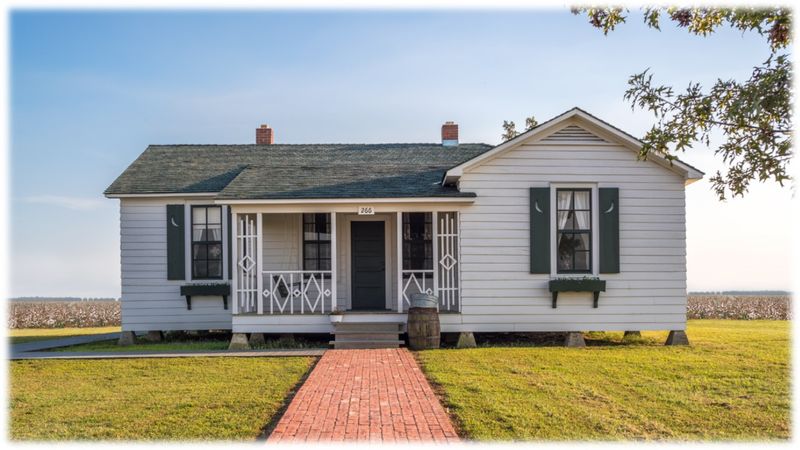
A five-room farmhouse in the middle of flat Delta farmland tells one of the most compelling origin stories in American music history. The Cash family arrived at Dyess Colony in 1935, part of a New Deal program designed to give struggling families a path forward during the Great Depression.
Young Johnny, known then simply as J.R., worked the cotton fields from the age of five alongside his parents and siblings.
Arkansas State University acquired the property in 2011 and completed a careful restoration, opening the house to the public in 2014. Cash’s younger siblings, Joanne Cash Yates and Tommy Cash, contributed personal memories and sketches to make sure the interior reflected the 1930s accurately.
The nearby Dyess Administration Building adds historical context about the colony itself, with interactive exhibits explaining the New Deal program. Songs like “Five Feet High and Rising” and “Pickin’ Time” take on an entirely different weight once you have stood on this ground.
2. Johnny Cash Commemorative Monument Circa 1976, Kingsland, Arkansas
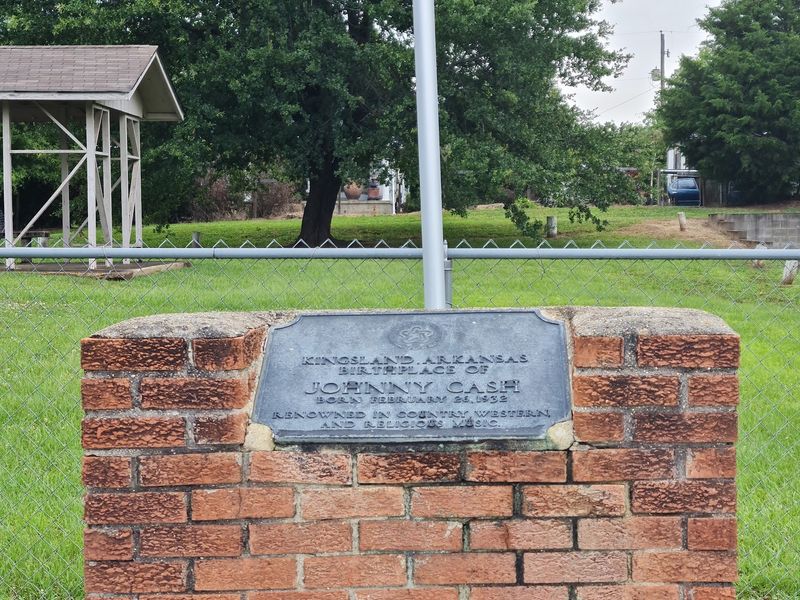
Before Dyess, before the cotton fields, before the music, there was Kingsland. Johnny Cash entered the world here on February 26, 1932, in this small Cleveland County community that he once famously called “a wide place in the road.” The town has not grown dramatically since then, and that understated quality is actually part of its appeal for visitors.
This commemorative monument, dating to 1976, gives music fans a concrete reason to stop rather than simply rolling through on the way to somewhere else. Cash himself returned to Kingsland in 1994, expressing a genuine desire to reconnect with his earliest roots, which adds a layer of personal meaning to the stop.
The contrast between the quiet rural surroundings and the enormous career that followed is striking. Pairing this monument with the nearby historical marker creates a fuller picture of Cash’s first chapter before the Dyess years reshaped everything.
3. Johnny Cash Marker Near His Birthplace, Kingsland, Arkansas
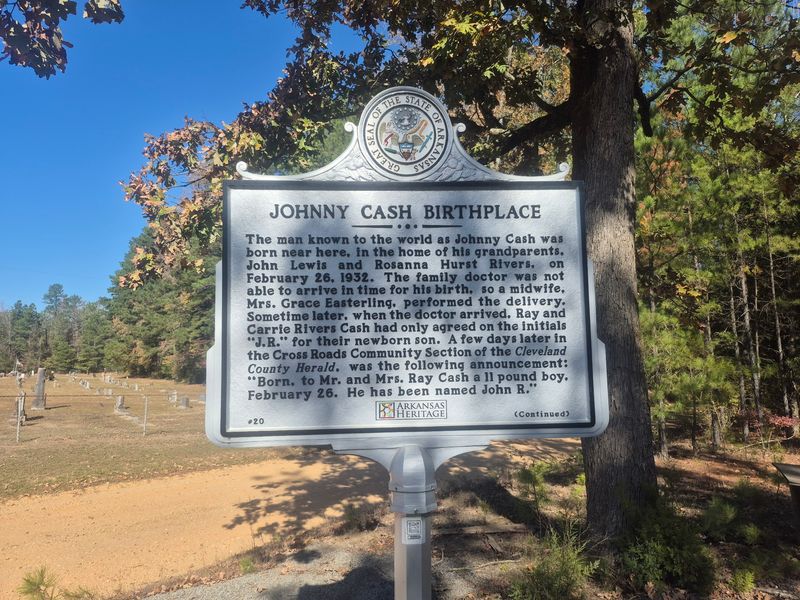
Erected in 2021 by the Cleveland County Historical Society and the Department of Arkansas Heritage, this marker stands at the intersection of Crossroads Road and Sims Road, closer to Cash’s actual birthplace than the monument in town. The sign details his birth at the home of his grandparents, John Lewis and Rosanna Hurst Rivers, placing the event in its precise geographical context.
Cash lived in this part of Cleveland County only during his earliest years, relocating to Dyess at age three when his family joined the colony. For casual visitors, the monument in Kingsland is probably enough.
For dedicated fans, this rural marker adds a genuinely satisfying layer of specificity.
Standing at this rural crossroads, surrounded by the same flat Arkansas countryside Cash’s family knew, makes the early chapters of his biography feel real in a way that no documentary or biography quite replicates. It is a simple stop with an outsized emotional payoff.
4. Arkansas Municipal Auditorium, Texarkana, Arkansas
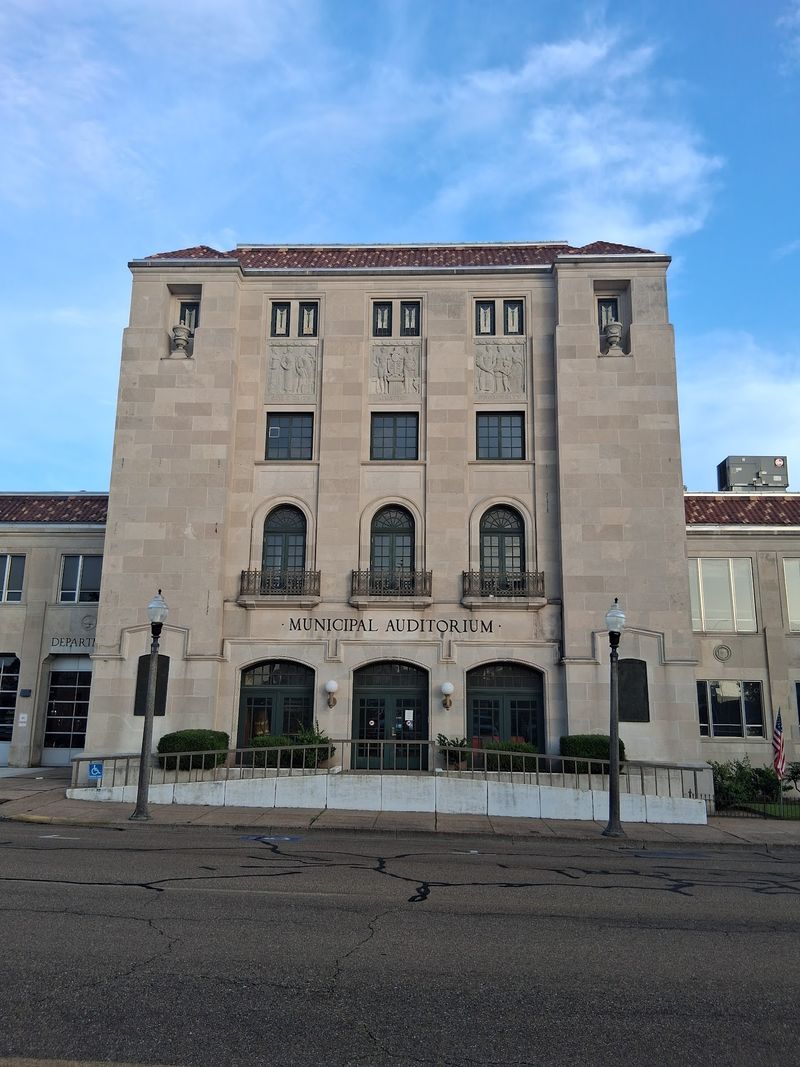
Built in the late 1920s, the Arkansas Municipal Auditorium in Texarkana has a backstage list that reads like a who’s who of early American popular music. Johnny Cash performed here twice alongside Elvis Presley in 1955, during the period when both artists were still building their names on the Louisiana Hayride circuit.
One of those Cash performances on September 2, 1955, was later depicted in the film “Walk the Line,” adding a pop culture layer to an already historically rich venue. Presley’s own first appearance came in November 1954, with several confirmed shows in 1955 following quickly after.
The auditorium is listed on the National Register of Historic Places, and a Walk of Fame Park outside pays tribute to the artists who graced its stage. Unlike a traditional museum, this building lets visitors stand inside an actual space where those defining performances happened, which makes the history considerably more vivid.
5. Arkansas State University Mid-South, West Memphis, Arkansas
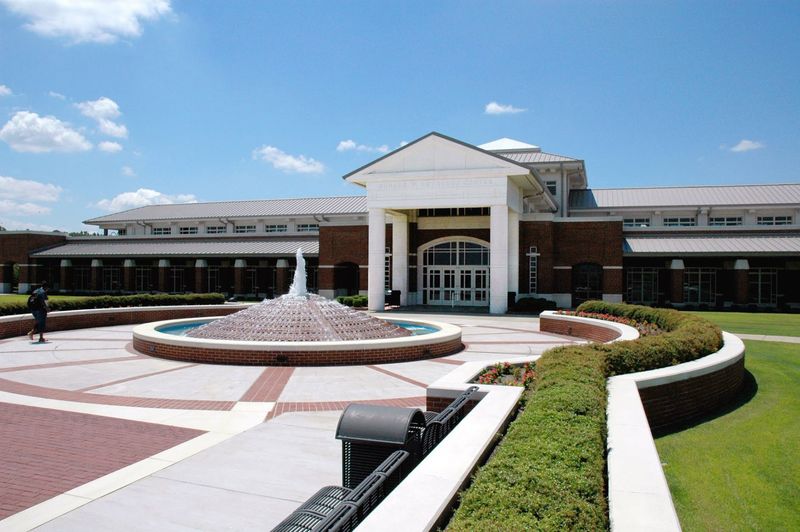
West Memphis was a musical crossroads unlike almost anywhere else in America during the late 1940s and 1950s. KWEM radio, broadcasting from downtown between 1947 and 1960, offered aspiring musicians a chance to perform live on air, often for a modest fee, reaching a regional audience hungry for new sounds.
The list of artists who appeared on KWEM is staggering: Johnny Cash, Elvis Presley, Howlin’ Wolf, B.B. King, and Albert King all used the station as an early platform.
Blues, country, gospel, and the emerging sound of rockabilly collided here in ways that were genuinely unprecedented.
Arkansas State University Mid-South now operates KWEM as a streaming internet station and maintains historical artifacts and a campus replica of the original studio. This site is one of the most compelling stops on any Arkansas music road trip because it frames Cash not as an isolated genius but as part of a remarkable regional musical ecosystem.
6. Delta Cultural Center, Helena-West Helena, Arkansas
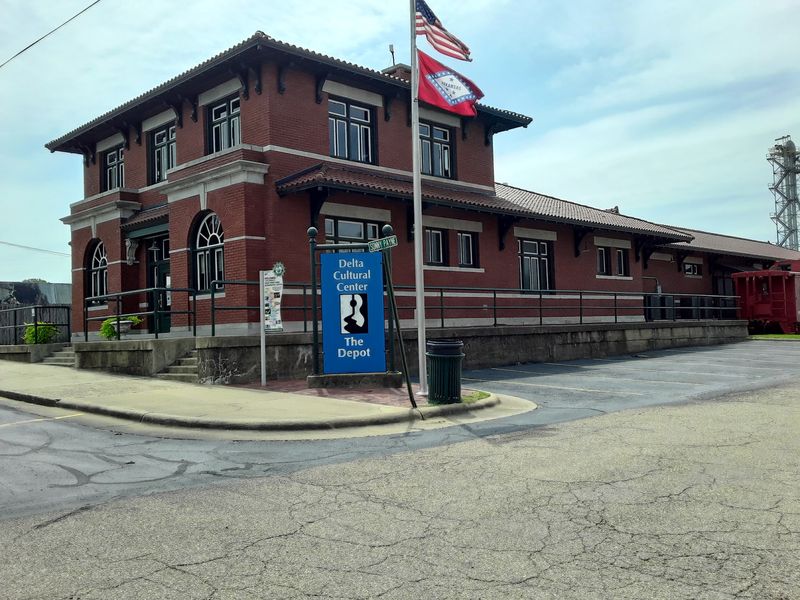
Helena-West Helena occupies a special place in the history of American music, and the Delta Cultural Center is the most organized way to understand why. The city became one of the South’s great blues hubs, largely because of King Biscuit Time, which began broadcasting on KFFA radio in 1941 and is recognized as the longest-running daily radio program in history.
The center’s music exhibits trace the performers and traditions that flourished throughout the Delta region, giving visitors a structured look at how this particular stretch of Arkansas shaped so much of what followed. For anyone tracing the broader story of Arkansas music rather than following a single artist, Helena is genuinely indispensable.
Cash’s generation grew up hearing and absorbing these sounds, which makes the Delta Cultural Center a useful reminder that no musician, however iconic, developed in a vacuum. The blues foundation explored here runs underneath a remarkable amount of popular music that came after it.
7. King Biscuit Blues Festival, Helena-West Helena, Arkansas
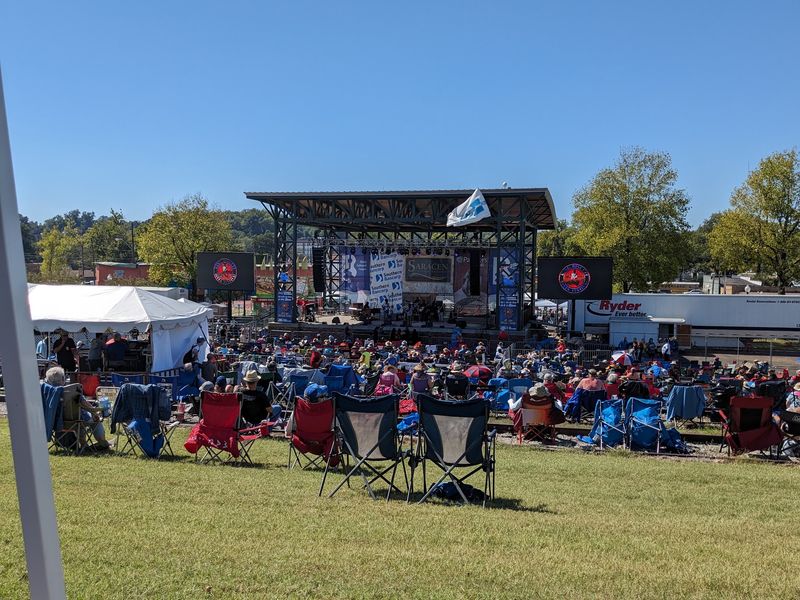
Helena’s musical history refuses to stay inside museum walls, and the King Biscuit Blues Festival is the annual proof of that. Held each October in historic downtown Helena, the festival transforms the city into a major celebration of the blues, drawing visitors from across the country and around the world to a setting with genuine historical weight.
The location near the Mississippi River connects the event directly to the geography that produced the Delta blues tradition in the first place. In a city where blues musicians once filled local clubs and where King Biscuit Time carried regional sounds to a massive radio audience, live blues performances today feel like a natural continuation rather than a nostalgic recreation.
Upcoming festivals are scheduled for October 10-11, 2025, and October 8-10, 2026. For travelers who want to experience Arkansas music history as a living, breathing tradition rather than a preserved artifact, this festival is the most dynamic option on the list.
8. Arkansas Entertainers Hall of Fame, Pine Bluff, Arkansas
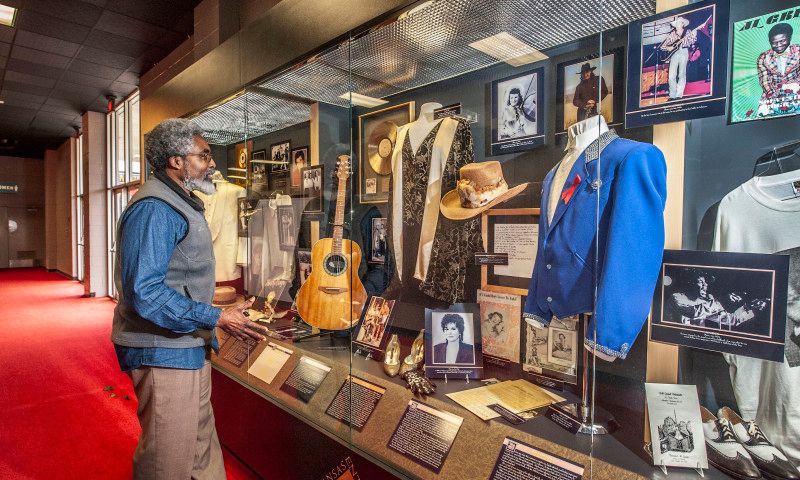
Approved by the Arkansas General Assembly in 1985 and opened to the public in 1998, the Arkansas Entertainers Hall of Fame in Pine Bluff brings together an extraordinary range of talent under one roof. Johnny Cash was part of the inaugural class of inductees in 1996, recognized alongside a diverse group of Arkansas musicians and performers who achieved national and international recognition.
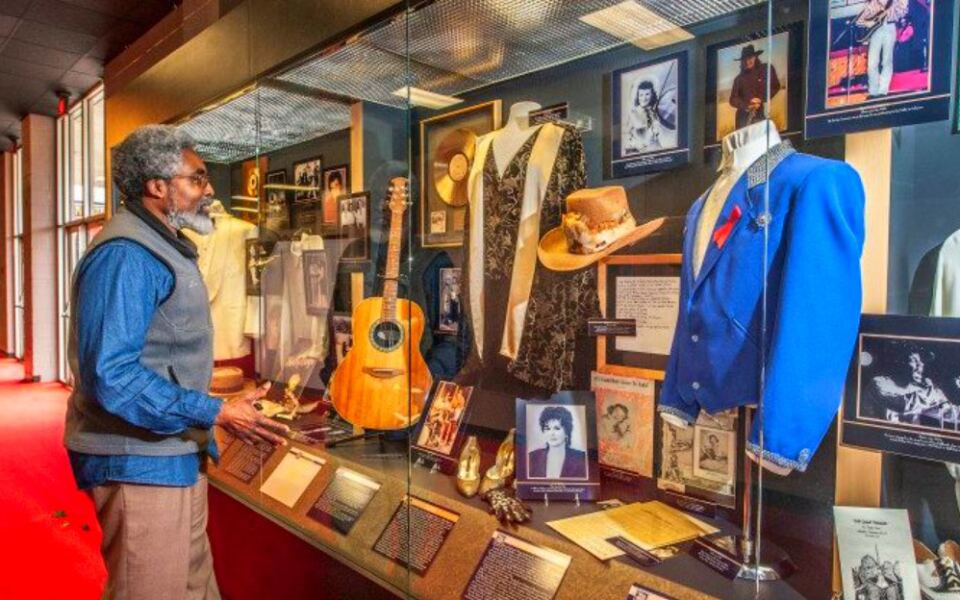
Display cases hold costumes, instruments, records, and memorabilia connected to these celebrated Arkansans, giving visitors a tangible connection to careers that spanned multiple decades and genres. The breadth of the collection is arguably its greatest strength, because it makes clear that Cash was one remarkable talent among many who emerged from small Arkansas communities.
Visitors who arrive focused purely on Cash often leave with a much broader appreciation for the state’s creative output. That widened perspective is exactly what a good hall of fame should produce, and this one delivers it consistently.
9. Mosaic Templars Cultural Center, Little Rock, Arkansas
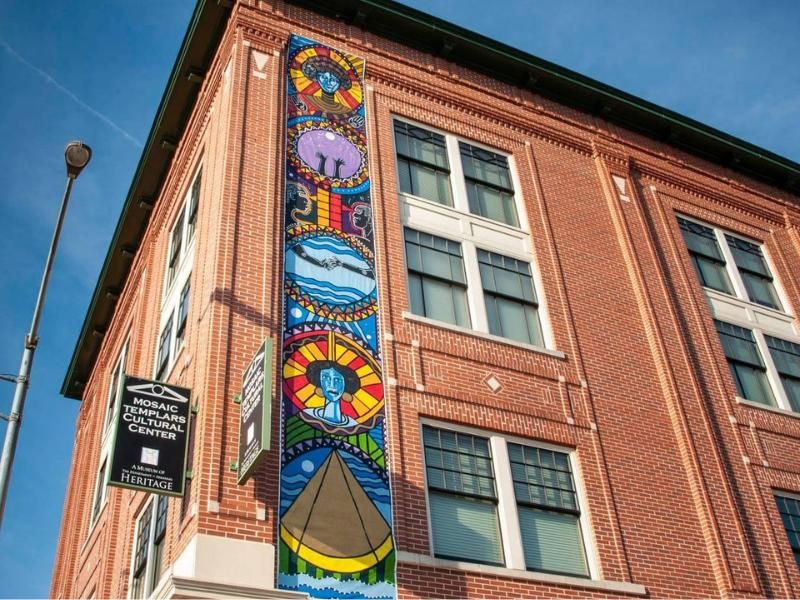
Arkansas’s music history cannot be told honestly without centering its African American artists, and the Mosaic Templars Cultural Center in Little Rock provides the essential framework for that conversation. The state produced influential Black musicians across blues, jazz, gospel, and rhythm and blues, including Sister Rosetta Tharpe, born in Cotton Plant, Arkansas, whose contributions reshaped what popular music could be.
Tharpe holds particular relevance for anyone following Johnny Cash’s story. Cash acknowledged her as a direct influence on his work, and her combination of fervent gospel vocals with inventive electric guitar playing laid much of the groundwork for rock and roll before the genre had a widely accepted name or identity.
The center provides cultural context that makes the rest of the Arkansas music journey considerably richer. Understanding the Black artistic tradition that Cash and his contemporaries absorbed helps explain why Arkansas produced so many musicians who sounded unlike anyone else at the time.
10. Chaffee Barbershop and Military Museum, Fort Smith, Arkansas
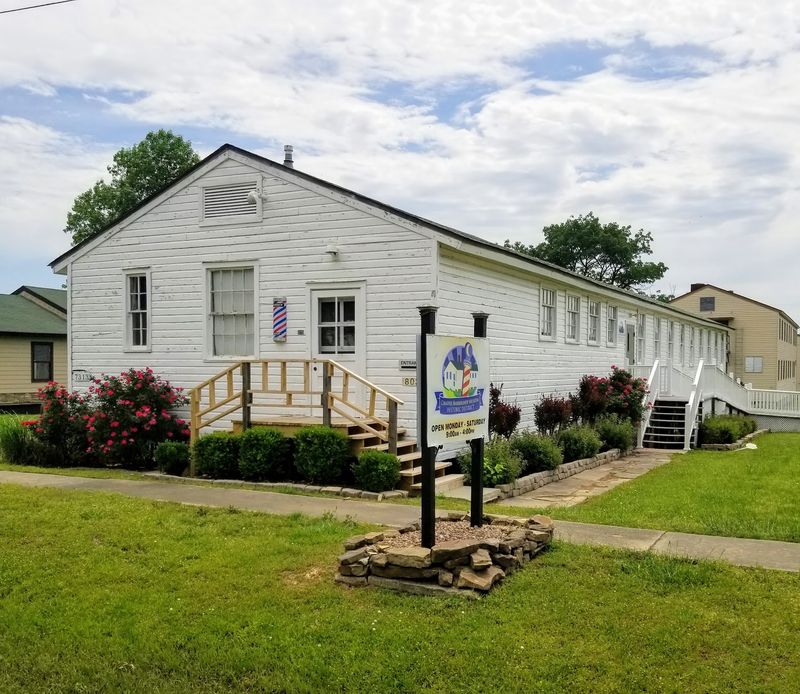
On March 25, 1958, inside an ordinary military barbershop at Fort Chaffee, Elvis Presley sat down in a barber’s chair and came out looking like a soldier. Photographers captured every clip, newspapers around the world ran the story, and the moment was immediately dubbed “the haircut heard ’round the world.” It remains one of the most photographed pop culture events of the entire decade.
The Chaffee Barbershop and Military Museum has restored the barbershop to its authentic 1950s appearance, complete with photographs, news footage, and memorabilia connected to that specific day. The museum opened in 2008 and has continued expanding its exhibits to cover the broader military history of Fort Chaffee alongside its rockabilly-era claim to fame.
As a companion stop on an Arkansas music road trip, this site is wonderfully specific. Presley and Cash were contemporaries who shared stages and radio stations across the mid-South, making this a fitting addition to the broader journey.
11. Levon Helm Boyhood Home, Marvell, Arkansas
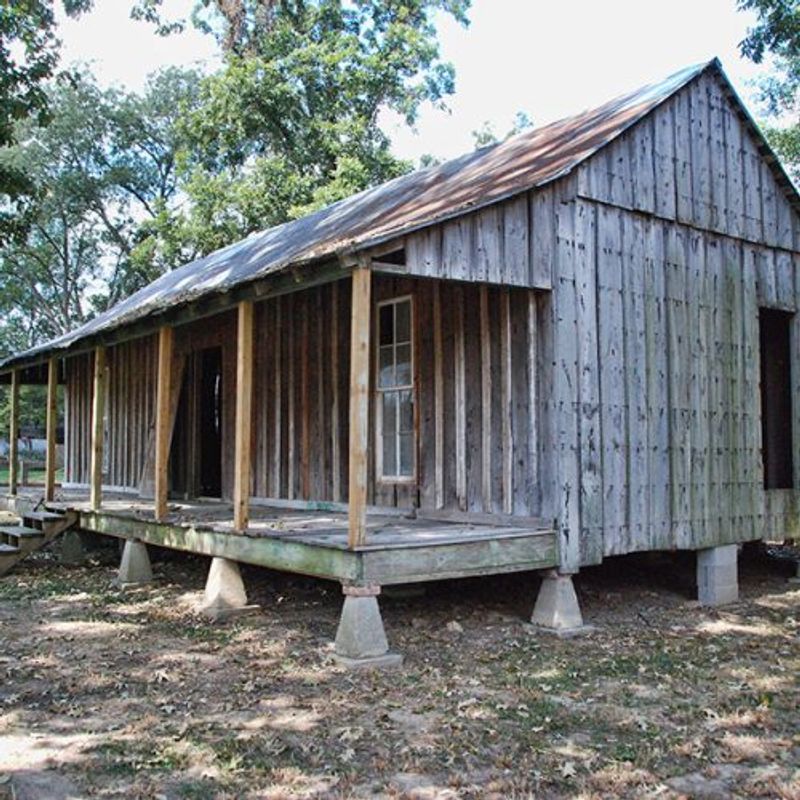
Levon Helm grew up absorbing the Delta in a way that never left him. Born in Elaine, Arkansas, in 1940, he spent his childhood in and around the small farming community of Turkey Scratch, where country, blues, gospel, and rhythm and blues surrounded him daily.
That musical environment eventually produced one of the most celebrated drummers and vocalists in American roots music history.
His boyhood home was relocated from Turkey Scratch to Marvell to ensure its preservation, restored carefully, and listed on the Arkansas Register of Historic Places in 2018. It opened to the public in 2019, with a bronze bust created by artist Kevin Kresse placed at the site later that same year.
Marvell was chosen as the new location because it is the closest incorporated town to Turkey Scratch and the place where Helm attended high school and formed his first band. Like the Cash home in Dyess, this site proves that modest beginnings and an extraordinary musical legacy are not mutually exclusive.
12. Ozark Folk Center State Park, Mountain View, Arkansas
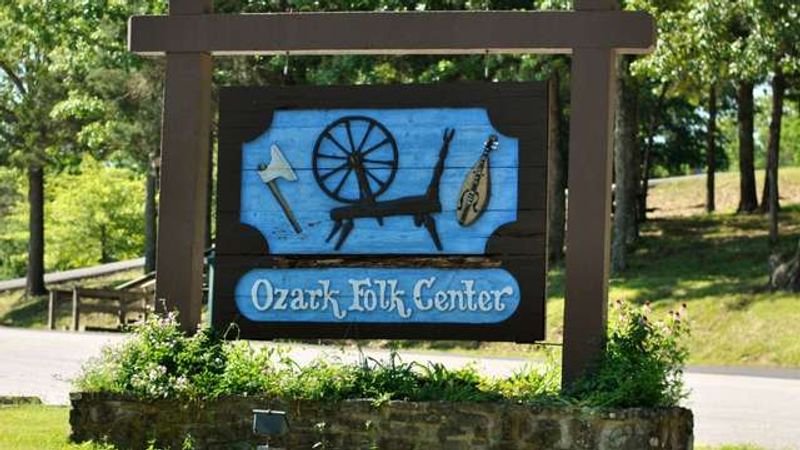
Mountain View calls itself the Folk Music Capital of the World, and the Ozark Folk Center State Park makes a convincing case that the title is earned. While most Arkansas music history conversations focus on the Delta, the Ozark Mountains preserved an entirely different musical tradition, one built around fiddle tunes, banjo music, gospel ballads, and community gatherings passed down through generations of family musicians.
The park offers live Southern mountain music performances, craft demonstrations covering skills like blacksmithing, pottery, and weaving, and cultural workshops that give visitors an active rather than passive experience. Instruments including fiddles, banjos, guitars, mandolins, dulcimers, and autoharps are regularly featured in performances.
For anyone building a comprehensive Arkansas music road trip, this stop is necessary because it broadens the story beyond recording stars and radio stations. The older folk traditions celebrated here formed a significant part of the musical vocabulary that artists like Cash, raised on gospel and country, carried with them throughout their careers.
Share this story