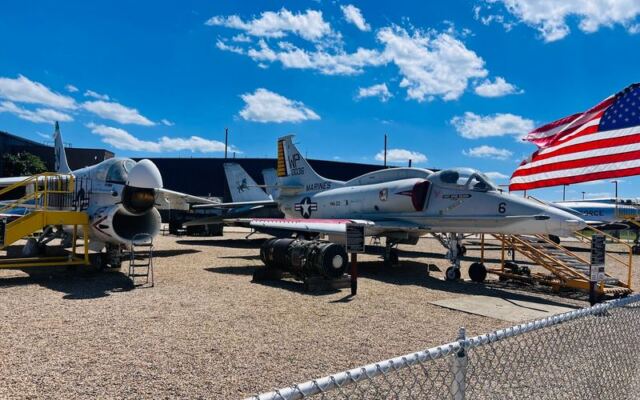
Somewhere in Illinois, tucked beside a busy road near a regional airport, sits a place that completely catches you off guard. You might drive past it without a second glance, but step inside and suddenly you are surrounded by legendary aircraft that look like they just rolled off a Hollywood film set.
For aviation fans, military history buffs, and curious families alike, this spot delivers far more than its modest footprint suggests. Pack the kids, clear your Saturday, and prepare to be genuinely amazed.
Bloomington’s Best-Kept Aviation Secret
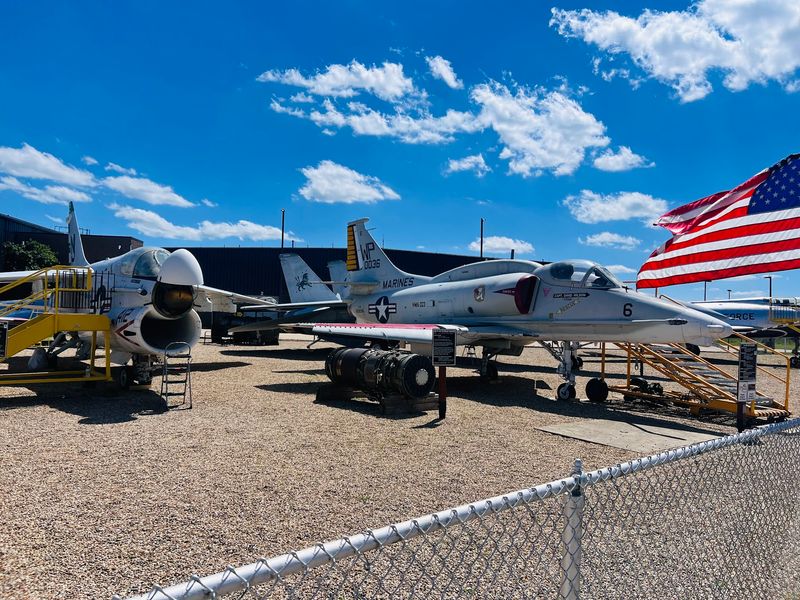
Sitting just off Empire Street near the Bloomington-Normal airport, Prairie Aviation Museum is the kind of place locals half-want to keep to themselves. The building is compact, roughly the size of a neighborhood fast-food spot, but what surrounds and fills it punches well above its weight class.
Bloomington, Illinois is not typically the first city that comes to mind when people think of world-class aviation collections. Yet here, in this unassuming corner of McLean County, visitors regularly find themselves standing jaw-dropped beside some of the most iconic aircraft ever built.
The museum sits at 2929 E Empire St and is easy to spot from the road thanks to the impressive jets parked outside. First-timers often admit they nearly skipped it, and every single one of them is glad they did not.
The Story Behind the Hangar
Prairie Aviation Museum grew from a community passion for preserving real aviation history, not just putting models behind glass. Over the years, dedicated volunteers and supporters worked to acquire actual retired military aircraft and bring them to central Illinois where families could experience them up close.
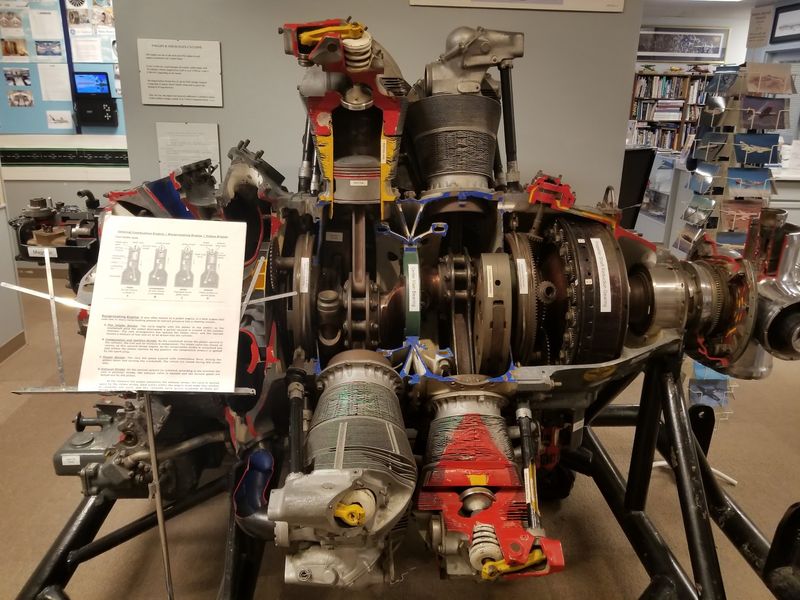
The indoor portion of the museum reflects that same commitment to storytelling. Visitors will find binders packed with research, framed photographs, plaques, and a section dedicated to NASA achievements.
There is even a guest book that returning visitors have been signing for years, a small but telling sign of just how loyal this place’s following really is.
Heritage and heart are woven into every corner. The museum runs almost entirely on volunteer energy, and that passion is impossible to miss once you walk through the front door and start exploring the carefully curated collection of aviation relics and artifacts.
The F-14 Tomcat – Crown Jewel of the Collection
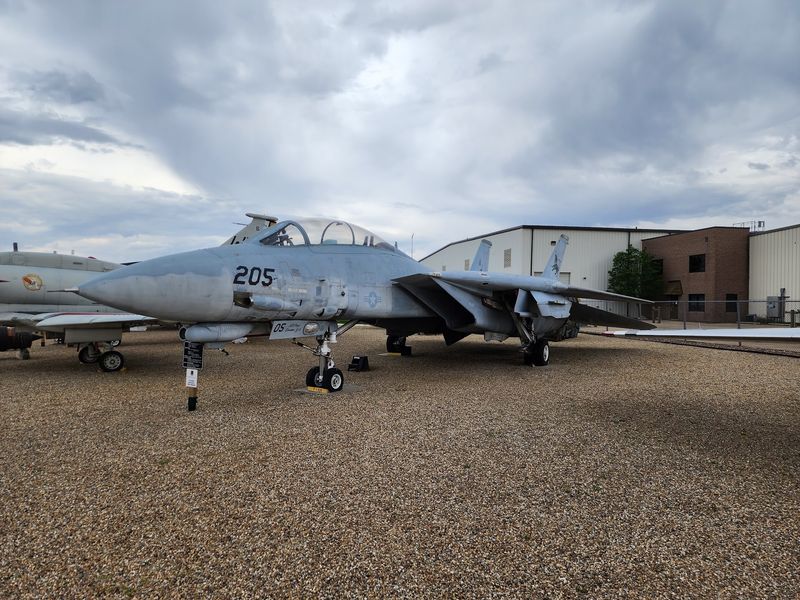
Ask any visitor what stopped them cold, and almost everyone points to the same aircraft: the Northrop Grumman F-14D Tomcat. This is not a replica or a scale model.
It is the real thing, specifically the F-14D designated 205 with Bureau Number 161163, which flew with the VF-213 Black Lions Squadron aboard the USS Theodore Roosevelt.
Standing beside it feels cinematic in the best possible way. The swept-wing silhouette, the sheer scale, the worn markings that hint at actual service history, it all hits differently when you realize this jet truly flew.
Visitors regularly spend an hour or more beside this single aircraft alone.
Knowledgeable volunteers are often stationed near the Tomcat ready to answer questions and share stories. Conversations here tend to run long, and nobody seems to mind.
For anyone who grew up idolizing this aircraft, the experience borders on surreal.
The F-4 Phantom and Its Combat History
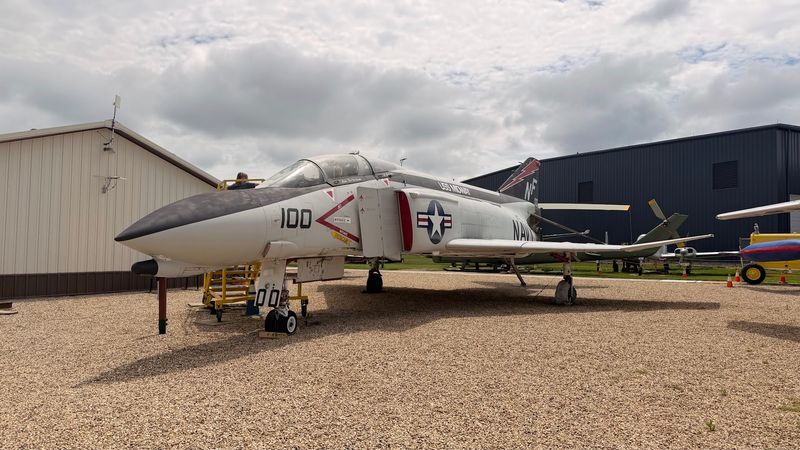
Few aircraft in the collection carry as dramatic a backstory as the F-4 Phantom II on display here. According to museum lore shared by volunteers, this particular aircraft charged into a confrontation with six enemy MiGs alongside a wingman.
After an intense aerial engagement, the crew scored two confirmed victories, and those kill markings are still visible on the fuselage more than four decades later.
Seeing those markings in person reframes everything. This is not a prop or a cleaned-up showpiece.
It is a machine that actually went into harm’s way and came back. Visitors who take a moment to absorb that history often describe it as the most emotionally resonant part of the outdoor collection.
The Phantom is one of several aircraft that rewards a slow, deliberate look. Walking around it, reading the details, and talking to a volunteer nearby turns a casual visit into something far more meaningful.
Cockpit Access and Open Cockpit Days
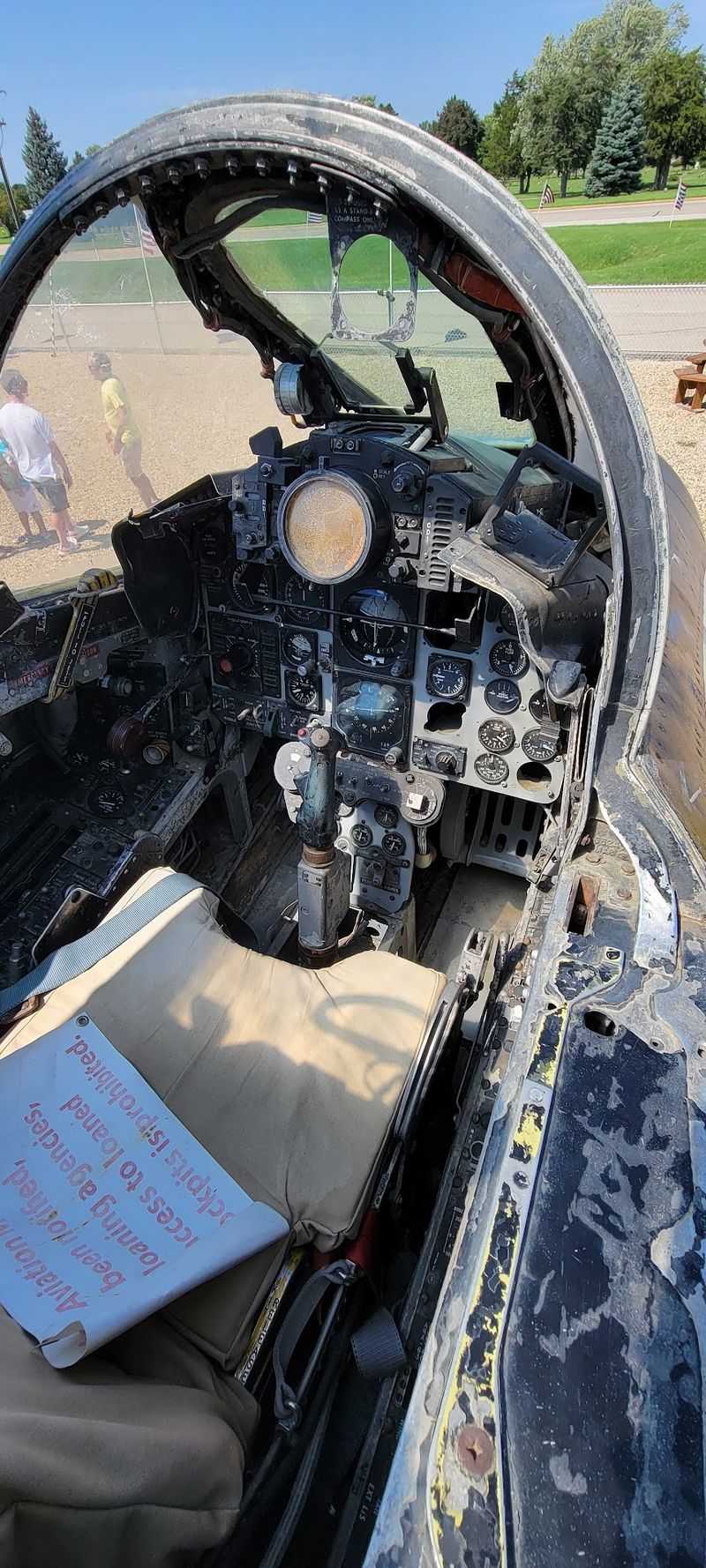
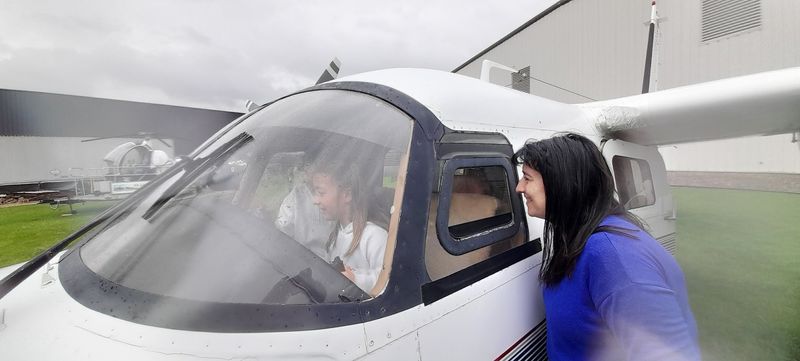
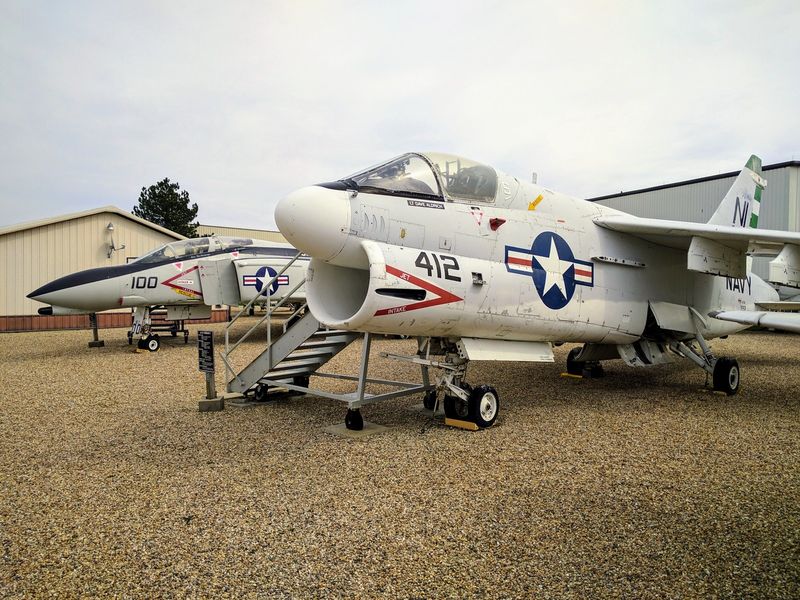
One of the features that consistently earns the loudest reactions from visitors is the ability to actually climb up and peer into real cockpits. Ladders positioned at various aircraft allow guests to get face-to-face with instrument panels that once flew at supersonic speeds.
It is the kind of hands-on access that larger institutions rarely offer.
On special Open Cockpit Days, the experience steps up even further. The cockpits are opened fully, allowing visitors to sit inside the aircraft and have photos taken.
Pilots and veterans attend these events to share firsthand stories of flying and combat, which transforms the visit into something closer to a living history lesson.
Families with children of all ages, from toddlers to teenagers, describe Open Cockpit Days as a highlight of their year. Visitors consistently mention that kids aged two through seventeen all find something thrilling to engage with.
Checking the museum’s website for upcoming event dates is strongly recommended.
The UH-1H Huey Helicopter and Other Aircraft
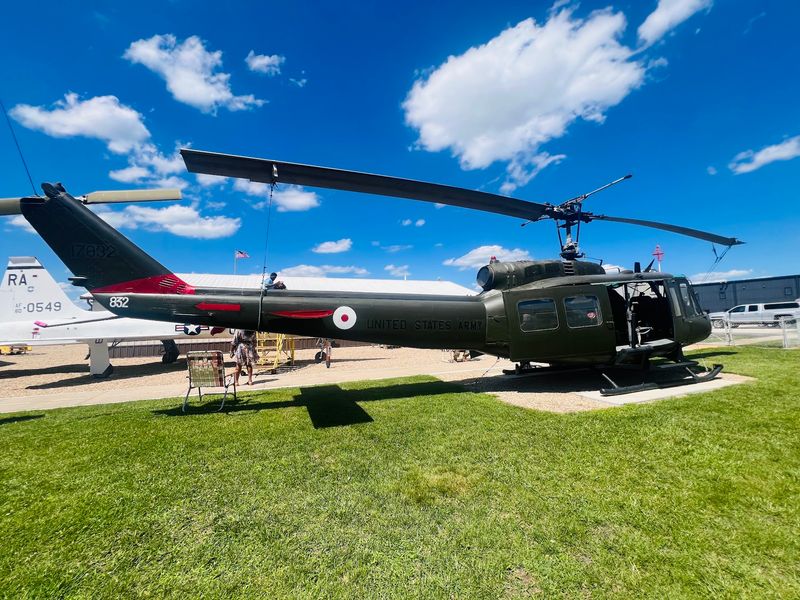
Beyond the headline jets, the outdoor collection includes a UH-1H Huey helicopter that draws its own crowd of admirers. The Huey is one of the most recognizable military helicopters ever produced, and seeing one at close range, without barriers or roped-off zones, gives visitors a genuine sense of its size and mechanical character.
Multiple visitors specifically call out the helicopter as a standout piece, noting that being able to walk right up to it and examine it from every angle is a rare opportunity. The outdoor path winds visitors through the entire collection in a natural loop, making it easy to take everything in at a comfortable pace.
Each aircraft in the lineup has its own personality and backstory. Whether it is a trainer, a fighter, or a utility helicopter, the museum presents them with enough context that even visitors with zero aviation background leave with a genuine appreciation for what they have seen.
Volunteers Who Make the Difference

What separates Prairie Aviation Museum from a simple static display is the people who show up every weekend to share their knowledge. The volunteers here are consistently described as the heart of the experience.
They are knowledgeable, approachable, and clearly passionate about every aircraft in the collection.
Some volunteers have backgrounds in military aviation themselves, which means a casual question can turn into a rich conversation about what it actually felt like to work around these machines. Visitors mention sitting with a single volunteer for close to an hour, completely absorbed in stories and technical details they never expected to learn on a weekend outing.
Homeschool groups and school field trips have found the museum especially valuable because the staff tailors tours to the age and curiosity level of the group. Coordinator Dick is specifically mentioned by educators as someone who goes above and beyond to make group visits memorable and genuinely educational.
Who Will Love It Here and Why
Prairie Aviation Museum casts a surprisingly wide net when it comes to who walks away happy. Aviation enthusiasts and military history fans are the obvious audience, but the museum consistently wins over visitors who arrived with modest expectations and left genuinely moved by what they experienced.
Families with young children find that the outdoor aircraft are endlessly fascinating, especially for kids who have never stood next to a full-scale fighter jet. The hands-on nature of the exhibits, including ladder access to cockpits, keeps energy levels high and attention spans engaged far longer than a typical museum visit might.
Adults with military family connections often find the visit unexpectedly personal. Standing beside aircraft that served in real conflicts, hearing stories from volunteers who knew these machines, creates a quiet sense of connection to history that is hard to replicate anywhere else.
First-time visitors and returning regulars alike agree: this place earns every minute of the drive.
Hours, Admission, and How to Plan Your Visit
Planning a trip to Prairie Aviation Museum is straightforward, but timing matters. The museum is open on Saturdays and Sundays only, from 11 AM to 3 PM.
Weekdays are closed, so this is firmly a weekend destination. Building a day trip around a Saturday or Sunday visit pairs well with other Bloomington-Normal attractions in the area.
Admission is budget-friendly, with adult entry historically priced around five dollars. Even visitors who choose not to pay admission can still walk past the outdoor jets from the road, though stepping inside to meet the volunteers and explore the indoor displays is absolutely worth the modest entry fee.
The museum can be reached by phone at 309-663-7632, and the official website at prairieaviationmuseum.org lists upcoming special events including Open Cockpit Days. Checking ahead for event schedules can significantly enhance the visit.
Parking is accessible, and the location near the Bloomington airport makes it easy to find.
Share this story