Most American takeout menus stick to the same few Asian favorites, but Asia has far more to offer. Many regional dishes are rich, comforting, and easy to find at local restaurants or learn to make at home.
Trying something new can teach you about different cultures and flavors. Here are twelve dishes worth ordering next time you want something different.
1. Khao Soi – Thailand
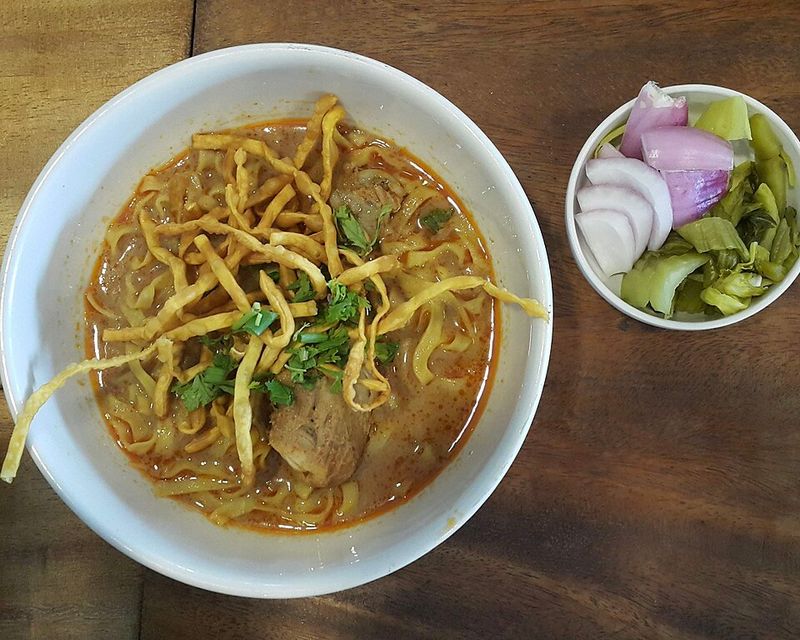
Picture a bowl of golden curry broth topped with a nest of crunchy noodles. That is khao soi, a favorite in Chiang Mai and across northern Thailand.
It is rich, a little spicy, and surprisingly smooth.
The dish combines soft egg noodles in coconut curry with chicken or beef. Crispy fried noodles sit on top for crunch.
Most bowls come with lime, shallots, and pickled mustard greens on the side.
The recipe likely traces back to Burmese and Chinese Muslim traders who traveled through the region. That mix of influences explains its unique taste.
If you enjoy Thai red curry, this is a natural next step. Add the lime and pickles a little at a time, so you can balance the creamy richness with some brightness and tang in every spoonful.
2. Bún Bò Huế – Vietnam
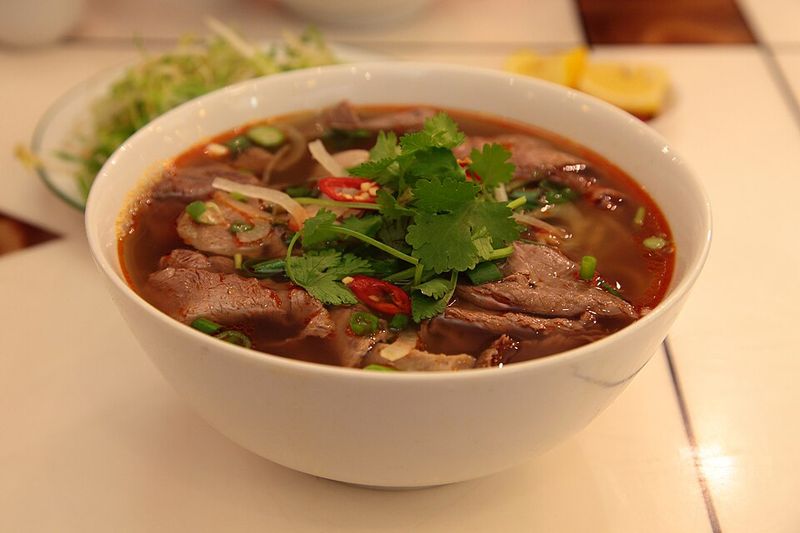
Pho gets most of the attention, but central Vietnam has its own bold noodle soup. Bún bò Huế comes from the old imperial city of Huế.
Its broth is deeper, spicier, and more fragrant than most people expect.
Lemongrass gives the soup a citrusy aroma, while shrimp paste adds savory depth. Thick, round rice noodles hold up well in the hot liquid.
Slices of beef shank and sometimes pork are common toppings.
A plate of fresh herbs, banana blossom, and lime usually arrives alongside. Tear the herbs and drop them in as you eat.
Spice levels vary, so ask for chili oil on the side if you are unsure. Many Vietnamese restaurants in the United States serve it, often as a weekend special.
3. Okonomiyaki – Japan
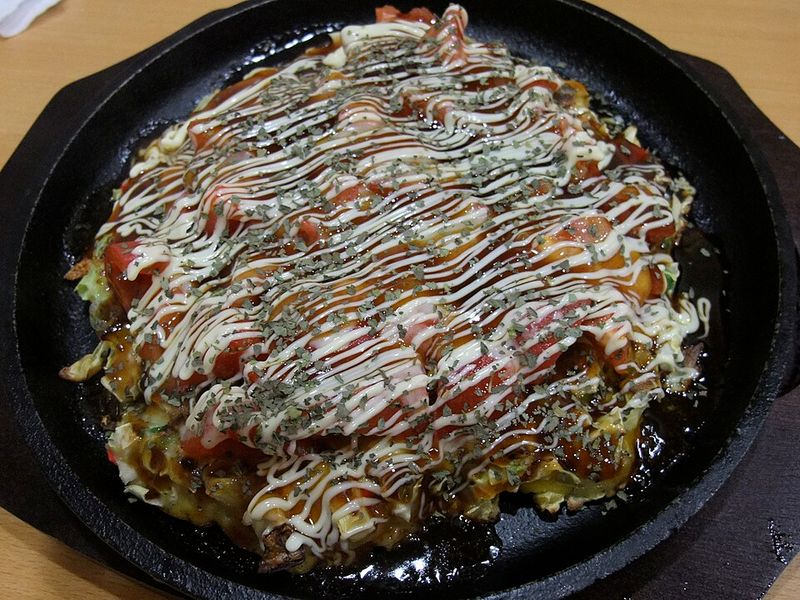
Think of it as a savory pancake you can customize however you like. The name okonomiyaki roughly means grilled as you like it.
Osaka and Hiroshima are famous for their own versions.
The batter mixes flour, eggs, and shredded cabbage, then cooks on a hot griddle. Pork belly, shrimp, or cheese are popular add-ins.
Cooks finish it with a sweet-savory sauce, mayonnaise, seaweed flakes, and dancing bonito shavings.
Many restaurants in Japan let diners cook it at the table, which makes the meal feel like a fun activity.
In the United States, you can find it at Japanese pubs and specialty spots. It also works well at home, since the ingredients are simple and cabbage is easy to find at any grocery store.
4. Jjajangmyeon – South Korea
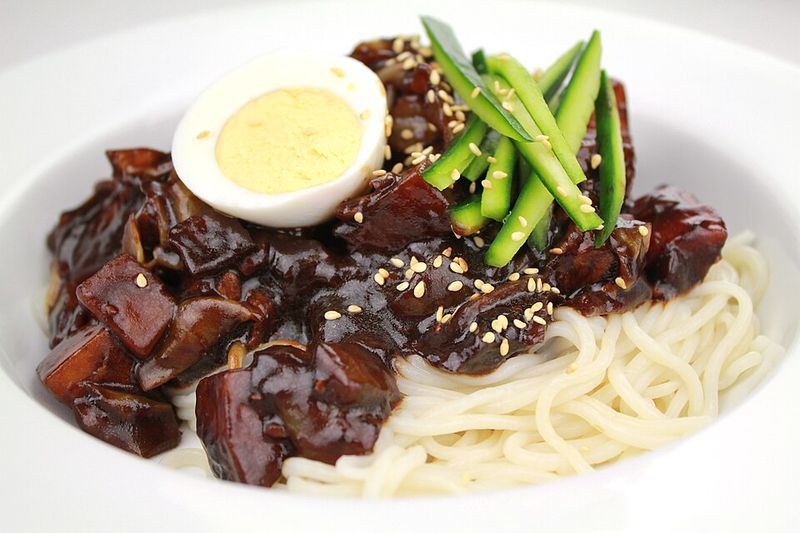
Few dishes feel more like comfort food in Korea than jjajangmyeon. Families often order it on moving day, and it shows up at birthdays and casual lunches alike.
Its dark, glossy sauce looks bold, yet the flavor is mellow and slightly sweet.
The sauce is made from fermented black bean paste, cooked with pork, onions, and zucchini. It is poured over chewy wheat noodles and mixed right before eating.
Pickled yellow radish on the side adds a sharp, crunchy contrast.
The dish began with Chinese immigrants in the port city of Incheon and was later adapted to Korean tastes.
Look for it at Korean Chinese restaurants, where it is often paired with sweet and sour pork called tangsuyuk.
5. Laksa – Malaysia and Singapore
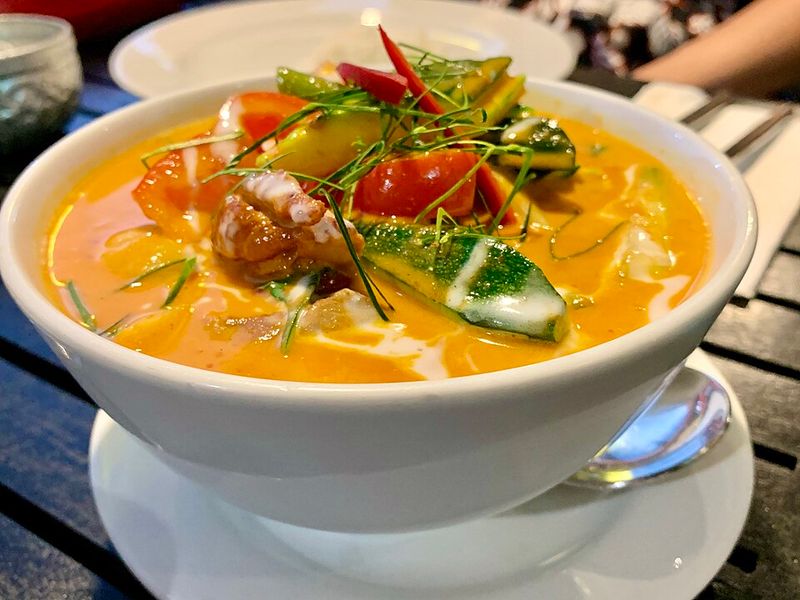
Ask ten people in Singapore about their favorite laksa and you may get ten different answers. This spicy noodle soup comes in many styles across Malaysia and Singapore.
The two main groups are curry laksa and asam laksa.
Curry laksa has a creamy coconut base with chili and lemongrass. Asam laksa is tangy and fish-based, with tamarind giving it a sour kick.
Both are served with noodles and toppings like shrimp, tofu puffs, or bean sprouts.
The dish grew out of Peranakan culture, which blends Chinese and Malay traditions.
If you are new to it, start with curry laksa since its flavor is rounder and milder. Squeeze in some lime and stir in a spoonful of sambal for extra heat.
6. Momos – Nepal and Tibet
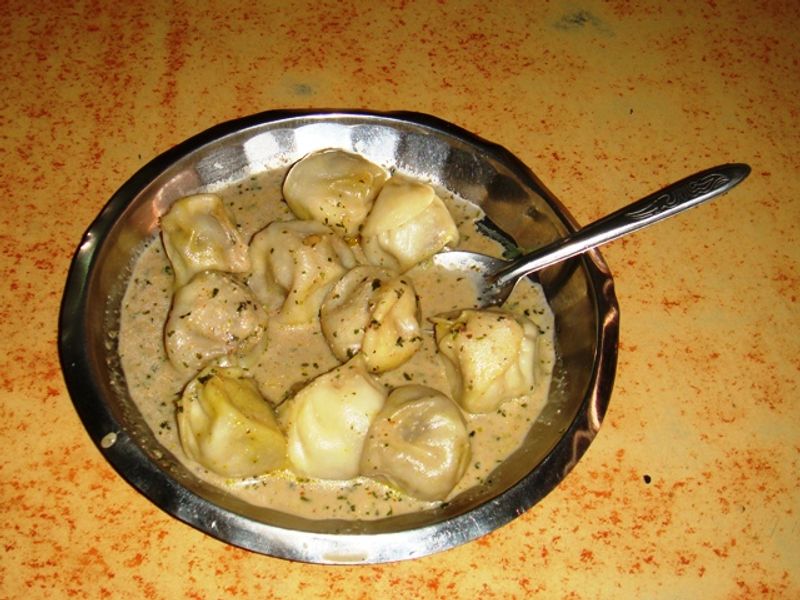
Dumpling lovers, meet your new obsession. Momos are small filled dumplings eaten across Nepal, Tibet, and nearby Himalayan regions.
They are often served in a bamboo steamer with a zesty dipping sauce.
Fillings range from spiced chicken and buffalo meat to potatoes, cheese, or vegetables. The sauce, called achar, usually blends tomatoes, sesame, and chili.
Some versions are fried or served in a spicy broth.
Food historians believe the dish traveled along trade routes between Tibet and the Kathmandu Valley. Today it is a street food staple in Nepal.
In many American cities, you can find momos at Nepali and Tibetan restaurants. Try the steamed style first to taste the filling, then explore fried or soup versions on a second visit.
7. Sinigang – Philippines
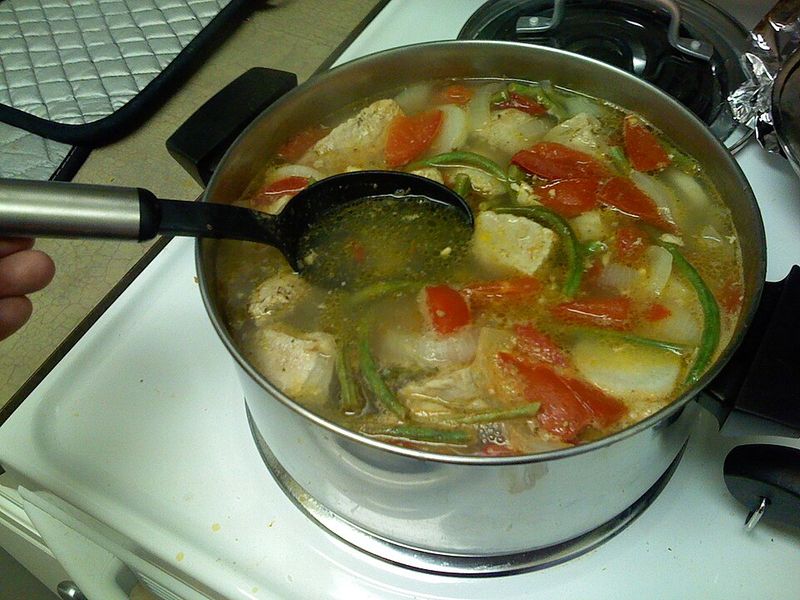
Sour soup might sound odd, but sinigang makes a strong case for it. This Filipino classic gets its tangy flavor from tamarind, though some cooks use guava or calamansi.
The result is bright, savory, and very comforting.
Pork is the most common protein, with shrimp, fish, and beef also popular. The broth simmers with tomatoes, onions, radish, taro, and leafy greens like water spinach.
It is almost always eaten with a scoop of steamed rice.
Many Filipino families treat it as a rainy day meal, and each household has its own preferred level of sourness.
Filipino restaurants across the United States often list it on the menu. Home cooks can also use packaged sinigang mix, which is sold at many Asian grocery stores.
8. Khachapuri – Georgia
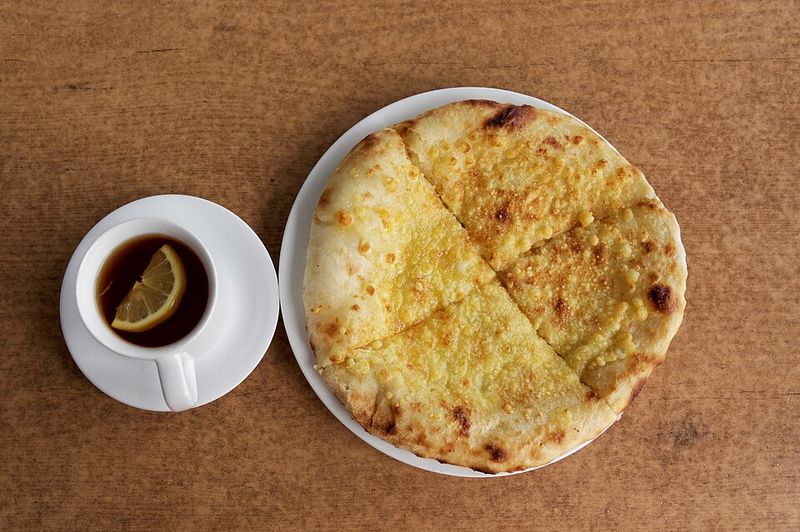
Bread, cheese, and an egg yolk swirled together: that is the idea behind Adjarian khachapuri. This boat-shaped Georgian bread is baked until golden, then filled with molten cheese.
Diners tear off the crust and dip it into the center.
Georgia sits where Europe and Asia meet, so its food draws from both. Khachapuri comes in many forms, including round, folded, and layered styles.
Each region has its own take on the cheese filling.
The Adjarian version comes from the Black Sea coast and is often topped with butter. Stir the egg and butter into the cheese while it is still hot.
Georgian restaurants are growing in major American cities, and many serve it as a shareable starter.
9. Mohinga – Myanmar
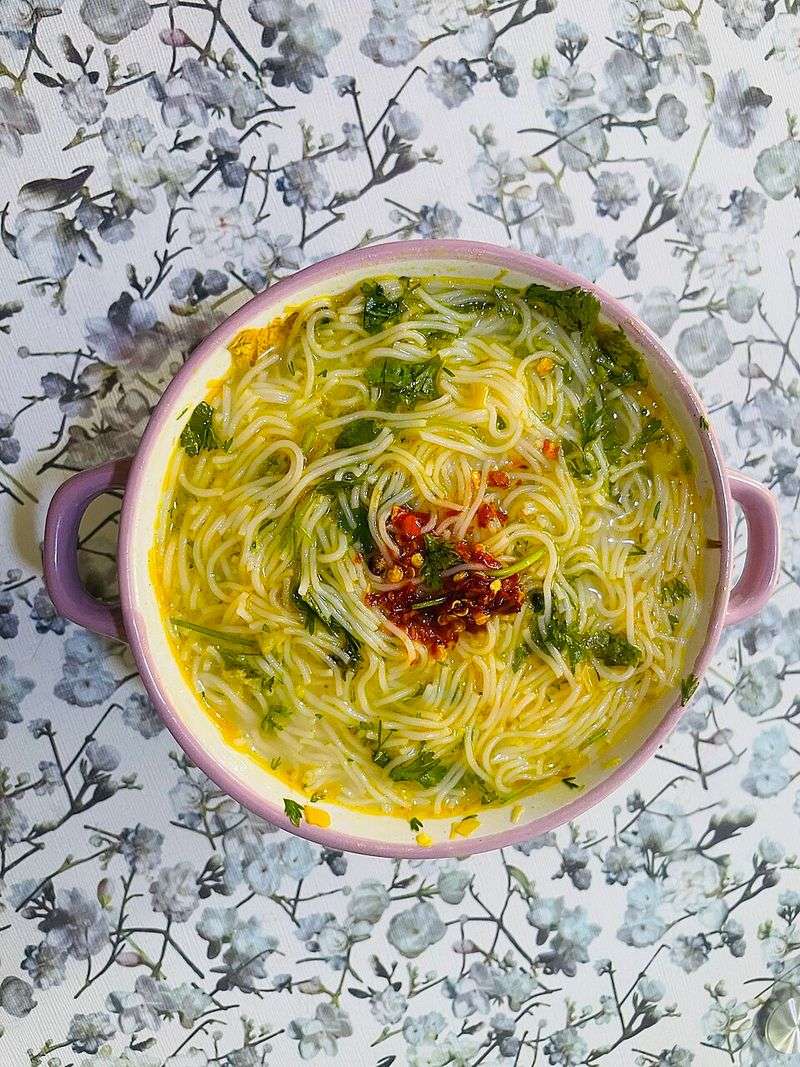
Early mornings in Yangon smell like simmering fish broth and fried shallots. Mohinga is widely considered the national dish of Myanmar, and many people eat it for breakfast.
Street vendors ladle it out from large steaming pots.
The broth is made with catfish, lemongrass, ginger, garlic, and banana stem. Chickpea flour thickens it into a hearty soup.
Thin rice noodles sit at the bottom, topped with boiled egg, cilantro, and crispy fritters.
A squeeze of lime and a sprinkle of chili flakes finish the bowl. The flavor is earthy and gently savory rather than fiery.
Burmese restaurants in the United States, especially in California, Minnesota, and Indiana, often serve it. It is a good way to try a cuisine many diners have not yet explored.
10. Hainanese Chicken Rice – Singapore and China (Hainan)
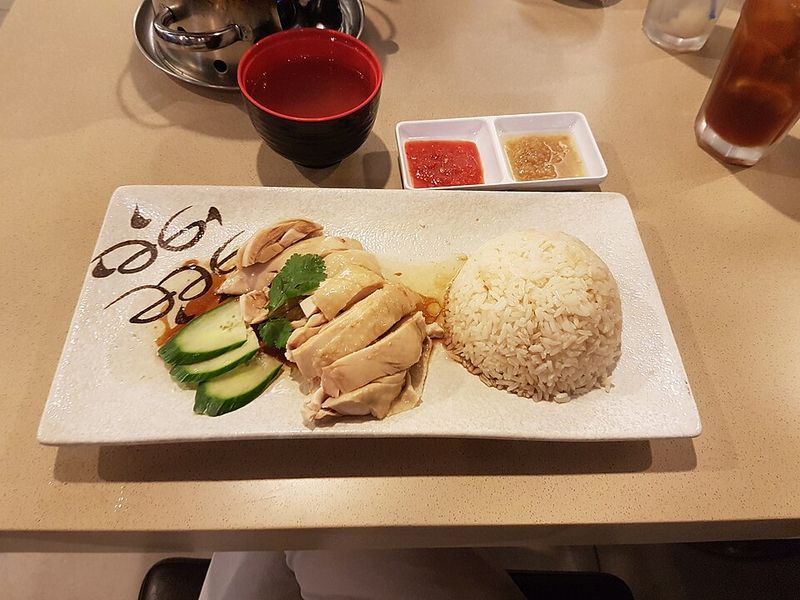
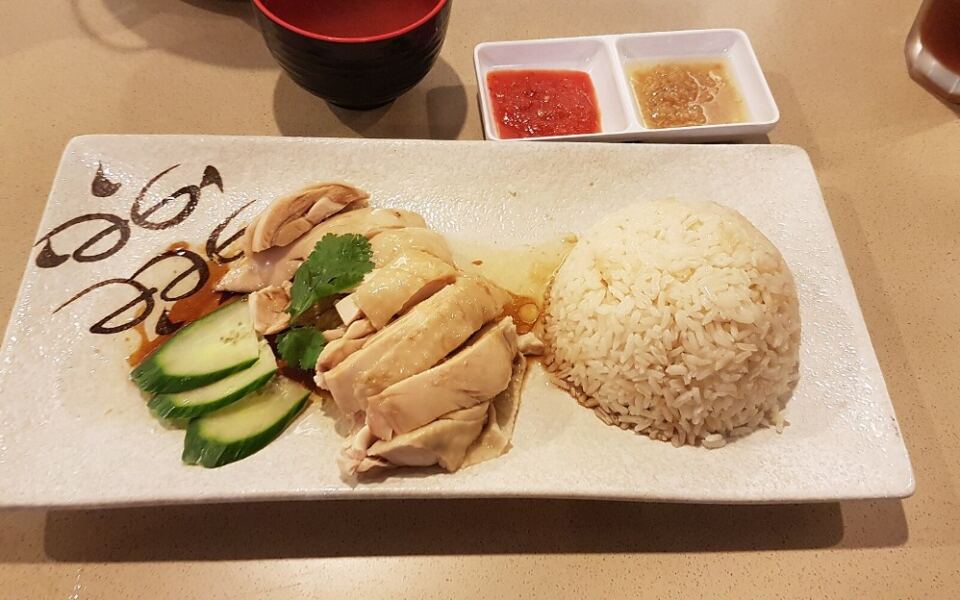
Simple does not mean boring, and this dish proves it. Hainanese chicken rice looks plain, yet each part is cooked with great care.
It is a national favorite in Singapore and has roots in Hainan, China.
The chicken is gently poached so the meat stays tender and juicy. The rice is cooked in the chicken broth with garlic and ginger, giving it a deep savory flavor.
A small bowl of clear soup often comes on the side.
Three sauces make the meal special: chili, ginger paste, and sweet soy. Try a bit of each with different bites.
Hawker stalls in Singapore sell it by the plate for a few dollars. In the United States, look for it at Singaporean and Malaysian restaurants.
11. Rendang – Indonesia
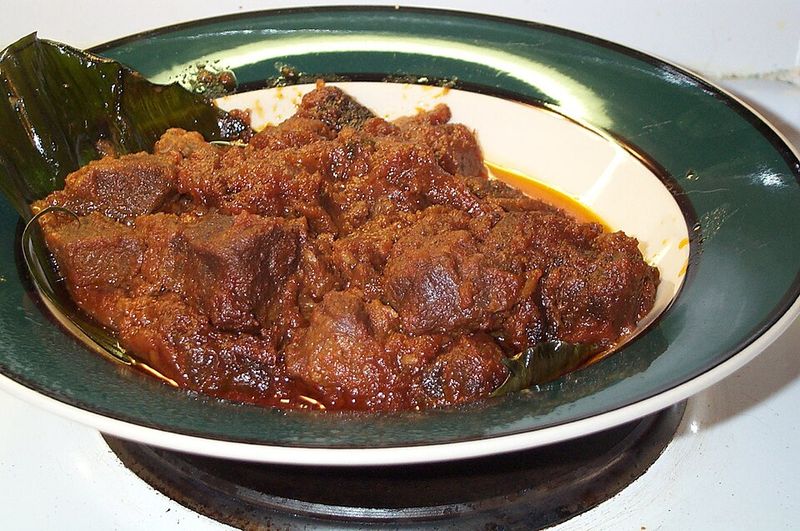
Slow cooking is the secret behind rendang. This dish comes from the Minangkabau people of West Sumatra in Indonesia.
Chunks of beef simmer in coconut milk and spices until the liquid cooks down and coats the meat.
The spice mix includes lemongrass, galangal, ginger, garlic, and chilies. As the sauce thickens, it turns dark brown and the flavors concentrate.
The finished dish is rich, aromatic, and tender enough to pull apart with a fork.
It was once a way to preserve meat without a refrigerator, which is why it lasts well.
Rendang has earned global praise and often appears on lists of the world’s most delicious foods. Serve it over steamed rice, and add a simple cucumber salad to cool the heat.
12. Laghman – Uyghur Cuisine, China and Central Asia
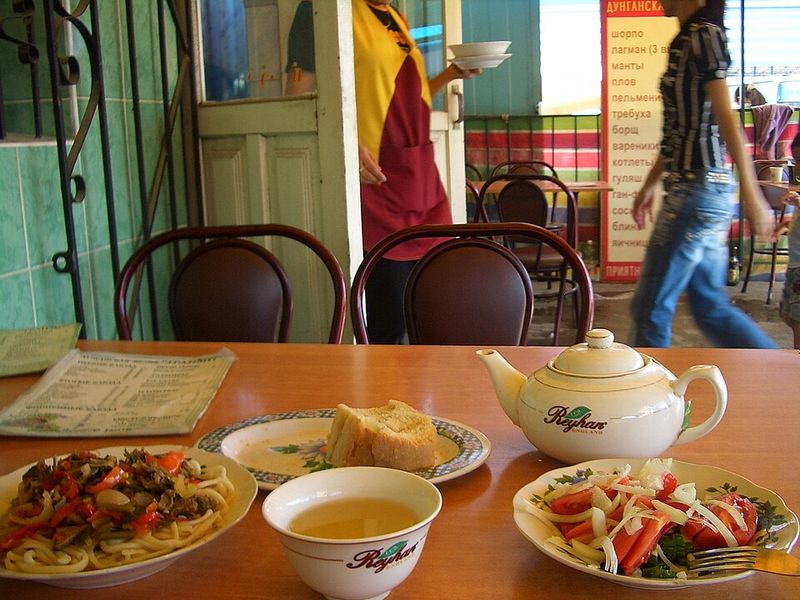
Watching a cook stretch dough into long, springy noodles is half the fun of laghman. This dish is a staple of Uyghur cuisine in Xinjiang, China, and is also loved across Central Asia.
The noodles are pulled by hand, giving them a pleasantly chewy bite.
A stir-fry of lamb or beef, peppers, tomatoes, onions, and garlic goes on top. Cumin and black vinegar add warmth and tang.
Some versions are served as a soup, while others are tossed with the sauce.
The dish reflects the Silk Road, where Chinese noodle traditions met Central Asian spices and ingredients.
Uyghur and Central Asian restaurants in the United States are still few, but they are growing. Seek one out for a fresh, hearty meal.
Share this story