Some towns are known for pretty views or historic buildings, but others earn their fame in far more unusual ways. From underground homes carved into desert rock to streets buried under natural cliff overhangs, the world is full of places where everyday life looks nothing like what most people would expect.
Geography, history, and clever human problem-solving have shaped these communities into something genuinely one-of-a-kind. Get ready to explore 15 towns where the word “normal” never quite applied.
Buñol, Spain
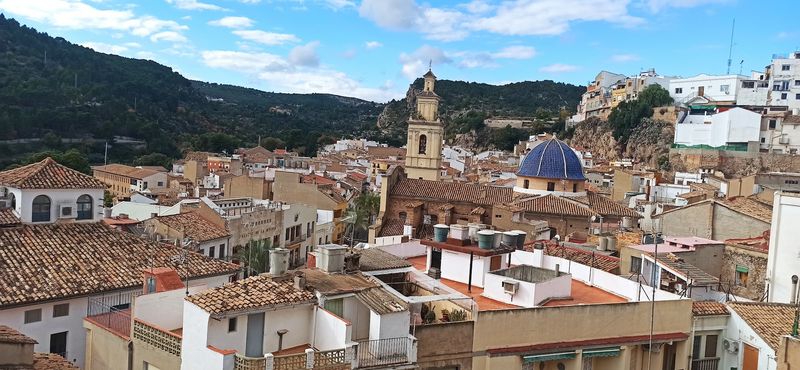
Every August, the quiet Spanish town of Buñol transforms into the world’s messiest party arena. La Tomatina takes place on the final Wednesday of August, drawing thousands of visitors who willingly drench themselves in overripe tomato pulp.
In 2026, the event landed on August 26, keeping its long-standing tradition alive.
The festival is tightly organized now. Paid tickets are required because crowds once grew dangerously large, and special trains, buses, and tour packages connect Buñol to Valencia and other nearby cities.
Organizers provide showers and lockers so participants can clean up afterward.
How did it start? Most accounts trace La Tomatina back to a street brawl in 1945 that accidentally involved a vegetable stall.
Locals liked the chaos so much they repeated it the following year. Decades later, it became one of Spain’s most internationally recognized events.
Few towns can honestly say their biggest claim to fame is getting absolutely buried in tomatoes, but Buñol wears that reputation with pride and a whole lot of red stains.
Coober Pedy, Australia
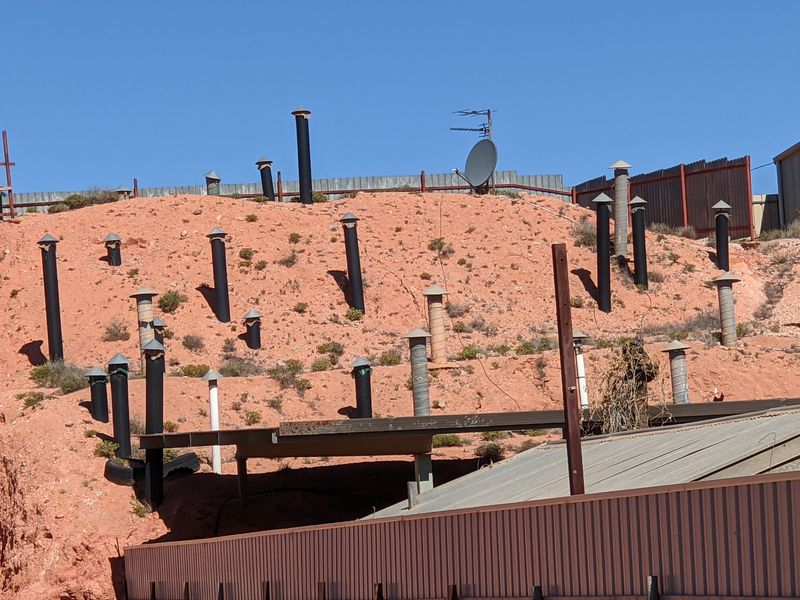
Standing on the surface of Coober Pedy, you might wonder where everyone went. The answer is simple: they went underground.
This South Australian outback town sits in one of Australia’s most brutal desert environments, where summer temperatures regularly push past 40 degrees Celsius.
Opal miners discovered in the early 20th century that their excavated dugouts stayed naturally cool year-round. The idea caught on fast.
Today, visitors can sleep, eat, and worship entirely below ground, with underground hotels, churches, restaurants, and museums scattered throughout the settlement.
The surrounding landscape adds to the surreal atmosphere. Abandoned mine shafts, mounded earth, and sparse scrubland give the area an almost lunar appearance that has actually attracted film crews over the years.
South Australia’s tourism authority proudly calls it the underground opal capital of the world. Living below the earth here was never a quirky lifestyle choice.
It was a genuinely smart solution to an environment that would otherwise make daily life unbearable. Coober Pedy proves that sometimes the best way to deal with extreme heat is to simply disappear beneath it.
Giethoorn, Netherlands
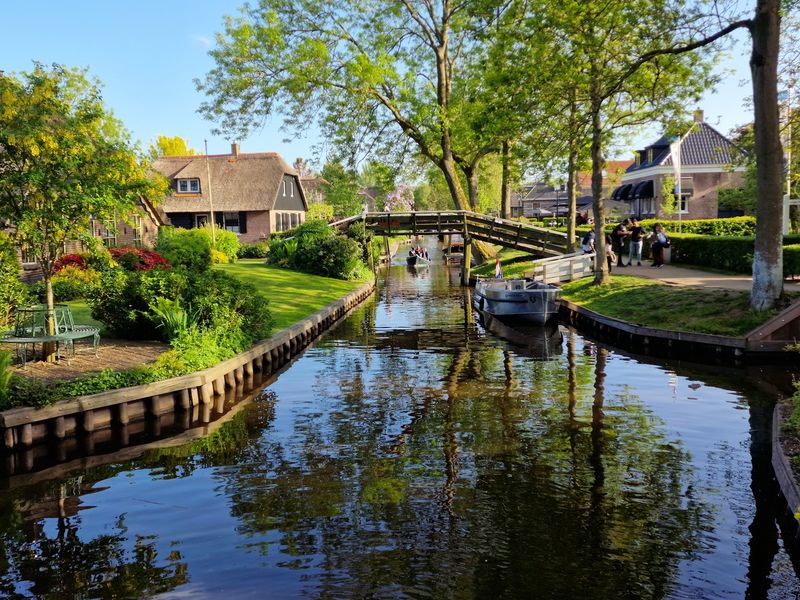
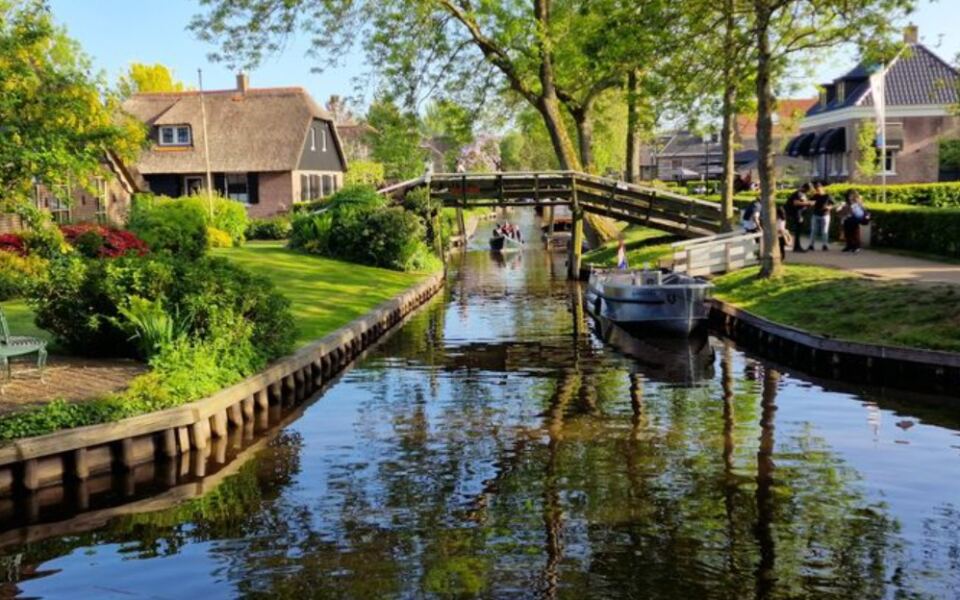
Giethoorn did not plan to become a village without roads. Centuries of peat extraction gradually carved the land into a web of canals, lakes, and narrow strips of earth, leaving houses stranded on small islands connected by more than 170 wooden bridges.
Cars are banned from the historic center. Getting around means walking, cycling, or boarding a small electric boat locals call a whisper boat, named for how quietly it moves through the water.
Thatched farmhouses line the canals so closely that some visitors feel like they have stumbled into a storybook.
The village became internationally famous after a 1958 Dutch film showcased its waterways, drawing tourists from around the world. Today, Giethoorn welcomes roughly a million visitors each year, which is a staggering number for a community of only around 2,600 residents.
The charm is real, but so is the crowd. Visiting on a weekday outside peak summer months gives a much calmer experience.
What makes Giethoorn genuinely remarkable is that its dreamy, road-free layout was never designed for tourism. It simply grew that way, shaped entirely by the wetland geography beneath it.
Setenil de las Bodegas, Spain
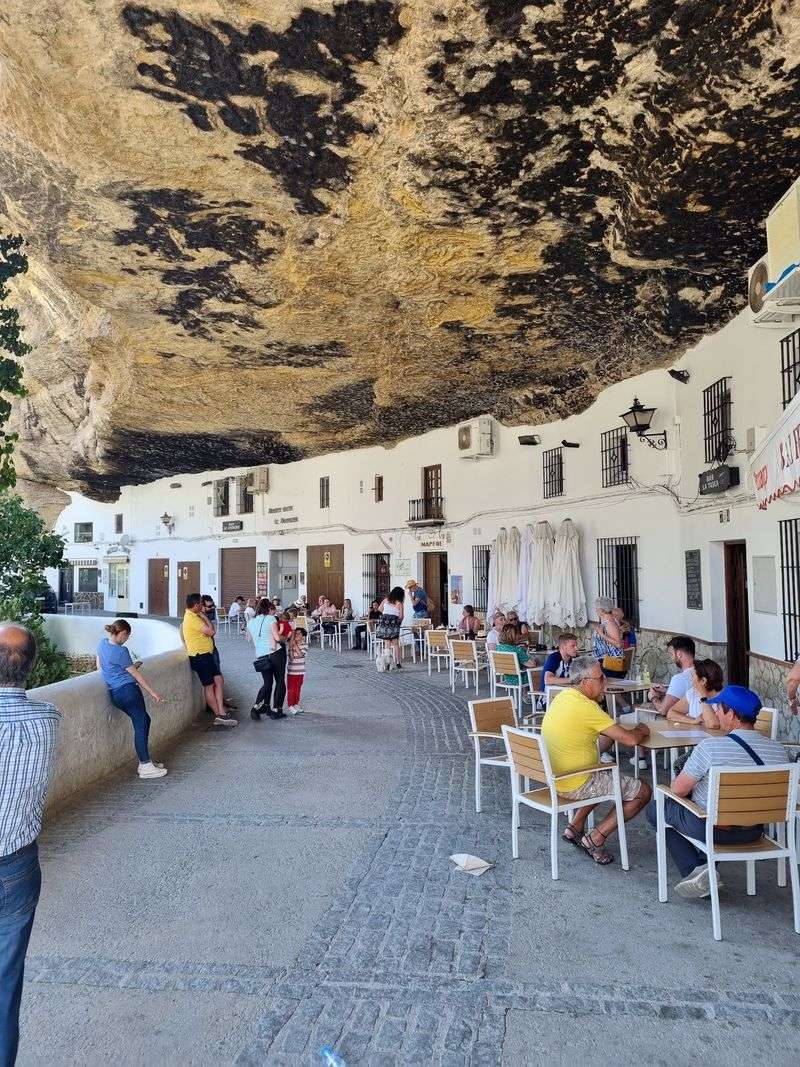
Imagine sitting at a cafe and realizing the ceiling above you is an entire mountainside. That is a perfectly ordinary Tuesday in Setenil de las Bodegas, a small Andalusian town where enormous rock overhangs form natural roofs above streets, homes, and restaurants.
The town developed inside the narrow gorge carved by the Rio Trejo. Rather than blasting away the rock, builders simply worked around it, tucking structures into natural cavities and under cliff faces.
Streets like Cuevas del Sol and Cuevas de la Sombra offer the most dramatic examples, where the overhanging rock feels close enough to touch from upper-floor windows.
Setenil’s name likely comes from the Latin phrase meaning “seven times nothing,” possibly referencing the seven failed sieges the Moors withstood before finally surrendering the town to Christian forces in 1484. Its cave-influenced architecture predates those battles by centuries.
Today, the town’s tourism board proudly highlights the rock ceilings as its defining feature, and visitors consistently describe walking those streets as one of the most visually disorienting experiences in all of Spain. Normal towns have rooftops.
Setenil has a geological formation doing the same job.
Nagoro, Japan
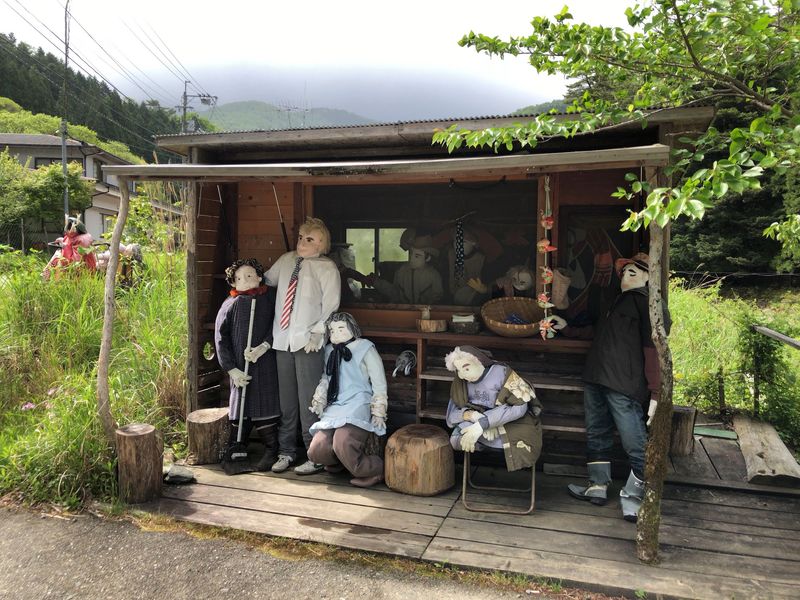
Walking into Nagoro feels like arriving at a village that forgot to mention most of its residents are made of cloth and stuffing. Artist Tsukimi Ayano began creating life-size scarecrow figures after returning to her childhood home in this remote Tokushima mountain village and finding it nearly empty.
Residents had left over the years through migration and old age. Ayano responded by crafting doll versions of former neighbors, placing them in the spots where real people once stood: working in fields, sitting on benches, waiting at bus stops.
The project grew steadily, and by recent counts, more than 300 scarecrows populate the area while fewer than 30 actual humans remain.
The abandoned elementary school is the most unforgettable stop. Dolls sit at desks, stand at chalkboards, and crowd the hallways as though a school day is quietly underway.
It is eerie, yes, but also strangely moving. Nagoro’s scarecrow project has been featured in international documentaries and photography projects because it captures something painfully real about rural depopulation in Japan.
Ayano’s response to an emptying village was not to leave. It was to fill the silence with something visible and human-shaped.
Roswell, New Mexico
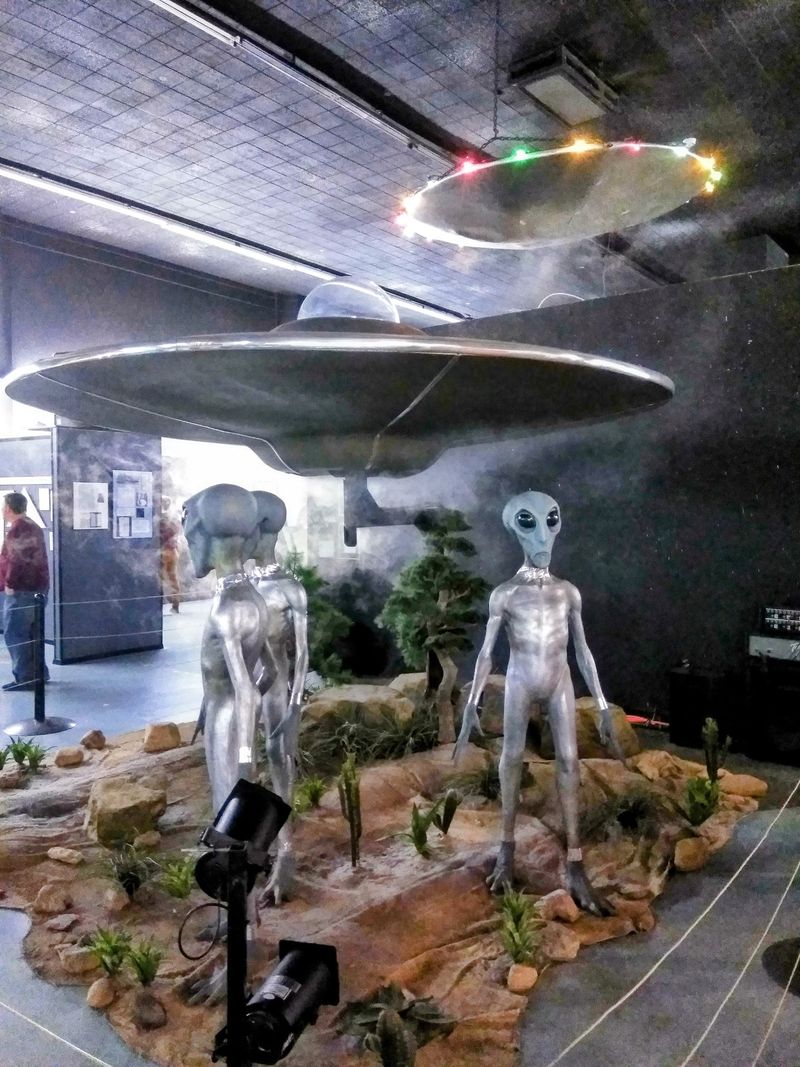
In July 1947, something crashed on a ranch northwest of Roswell, New Mexico. The U.S. military called it a weather balloon.
A lot of other people had very different ideas. That disagreement launched one of America’s most enduring and profitable conspiracy theories.
Roswell leaned hard into the alien narrative. Downtown is packed with UFO-themed shops, extraterrestrial murals, green alien statues, and the International UFO Museum and Research Center, which draws hundreds of thousands of visitors annually.
The annual UFO Festival fills the city with costumes, speakers, and entertainment that celebrates the unexplained with great enthusiasm.
Whether the 1947 incident involved anything genuinely otherworldly almost does not matter at this point. The legend has taken on a life of its own, and Roswell has built a thriving tourism economy around it.
Restaurants serve alien-branded food. Hotels decorate with spacecraft imagery.
Even the local McDonald’s is shaped like a flying saucer. What started as a disputed military report became a cultural phenomenon that turned a mid-sized New Mexico city into one of the most recognizable small towns in America.
Roswell did not find aliens. It found something arguably more useful: a really good story.
Longyearbyen, Svalbard
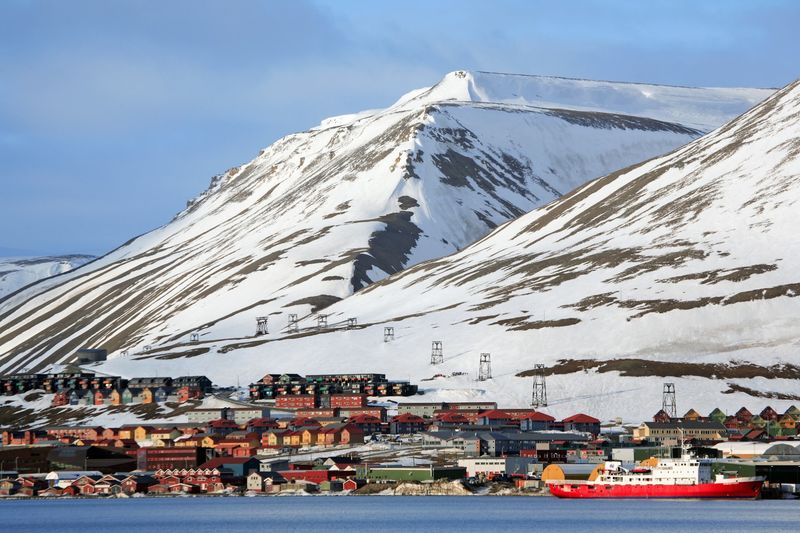
Longyearbyen sits at roughly 78 degrees north latitude, which means it spends months in complete darkness and other months in endless daylight. Neither of those things is a metaphor.
During polar night, residents go weeks without seeing the sun rise at all.
The midnight sun flips that completely in summer, when daylight continues around the clock and blackout curtains become essential bedroom equipment. Snowmobiles are a primary form of winter transportation, and venturing outside town without a guide and bear protection is genuinely discouraged because polar bears roam freely across Svalbard.
Longyearbyen also has one of the most unusual legal situations of any settlement on Earth. Under the Svalbard Treaty signed in 1920, citizens of all signatory nations have the right to live and work there, making it one of the few places with essentially open-border access.
The town is also home to the Svalbard Global Seed Vault, a facility carved into a mountain to preserve seeds from around the world. Daily life here involves adapting to conditions that would feel catastrophic elsewhere.
For residents, though, navigating months of darkness and polar bear country is simply Tuesday.
Alberobello, Italy
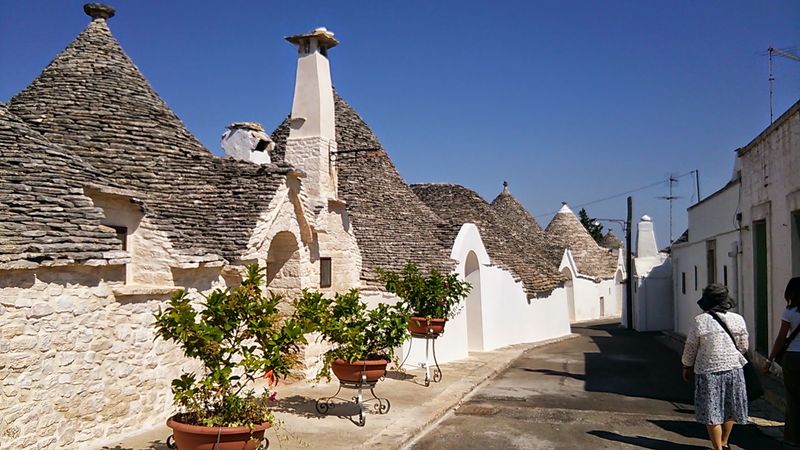
Alberobello looks like a town designed by someone who really loved wizard hats. Its famous trulli are circular whitewashed limestone buildings topped with conical dry-stone roofs assembled without a single drop of mortar.
The technique is ancient, and the result is genuinely unlike anything else in Europe.
More than 1,500 trulli survive in the Rione Monti and Aia Piccola districts alone, earning Alberobello UNESCO World Heritage status in 1996. Some rooftops bear painted symbols with religious, mythological, or protective meanings, and historians still debate exactly what each marking represents.
The architecture spread throughout the Itria Valley centuries ago as a practical regional building method.
There is a popular legend that trulli were originally built without mortar so they could be quickly dismantled when tax inspectors came to count permanent structures, though historians treat that story with some skepticism. What is not disputed is how striking the result looks in person.
Walking through Alberobello’s oldest districts feels less like touring a historic town and more like stepping into an illustration. The density of conical roofs stretching across the hillside creates a skyline that photographs struggle to do justice.
Some places just have to be seen.
Boryeong, South Korea
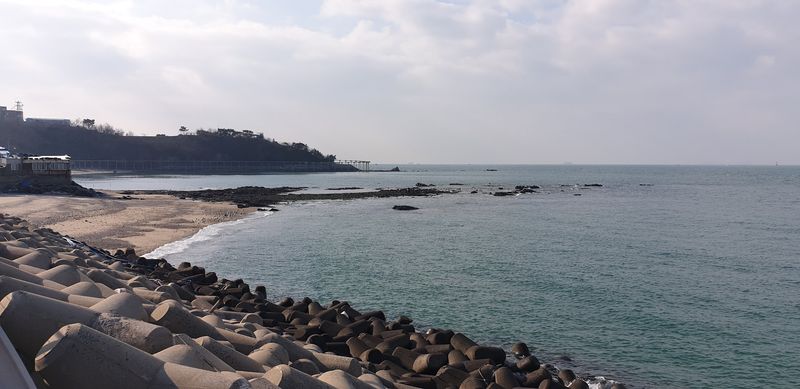
The Boryeong Mud Festival started as a marketing campaign. Local cosmetics companies wanted to promote the mineral-rich mud found along the nearby coastline, so they organized a promotional event at Daecheon Beach in 1998.
What followed was not exactly what anyone predicted.
The festival exploded in popularity, eventually drawing over two million visitors during peak years. Today it features mud pools, slides, wrestling pits, obstacle courses, and live performances spread across a massive beach zone.
The 2026 edition ran from July 24 through August 9, confirming its status as a major summer fixture on South Korea’s calendar.
International visitors, including large numbers of foreign military personnel stationed nearby, helped spread the festival’s reputation globally. Getting completely caked in mud is the entire point, and nobody seems to mind.
The mud itself is marketed for its skin benefits, which at least gives participants something to tell themselves while sliding face-first into a grey pool. Boryeong is otherwise a fairly ordinary coastal city, but for a few weeks each summer it becomes one of the messiest, loudest, and most cheerful places in all of Asia.
Sometimes the best tourism strategy is just giving people permission to make a spectacular mess.
Matmata, Tunisia
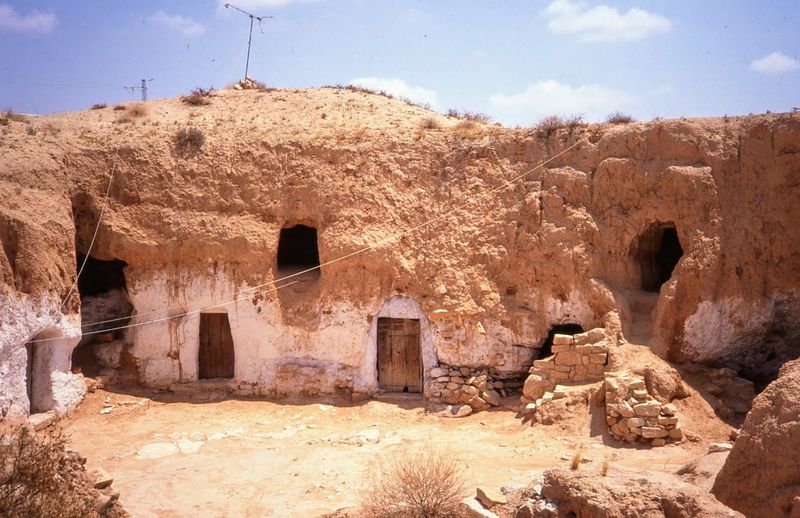
You could walk right over Matmata and never realize an entire community lives beneath your feet. The Amazigh people of southern Tunisia developed a remarkable solution to desert heat by excavating large circular pits into the earth and carving rooms horizontally from the surrounding walls.
The result is a home where the courtyard sits below ground level and the rooms fan outward like spokes from the center. Tunnels connect some dwellings to the surface and to neighboring structures.
The design keeps interior temperatures dramatically lower than the blazing air above, functioning as a form of natural air conditioning that requires no electricity.
Matmata picked up an unexpected layer of fame when filmmaker George Lucas chose the Hotel Sidi Driss and surrounding landscape as the filming location for Luke Skywalker’s home planet of Tatooine in the original Star Wars. Fans still visit the hotel specifically to photograph its courtyard.
But the architecture existed for centuries before any film crew arrived, developed entirely out of practical necessity by communities who understood their environment deeply. The genius of Matmata is not that it looks like a film set.
The genius is that it works, and has worked, for generations of people who needed shelter from an unforgiving sun.
Monsanto, Portugal
Monsanto does not have a rock problem. Monsanto has a rock philosophy.
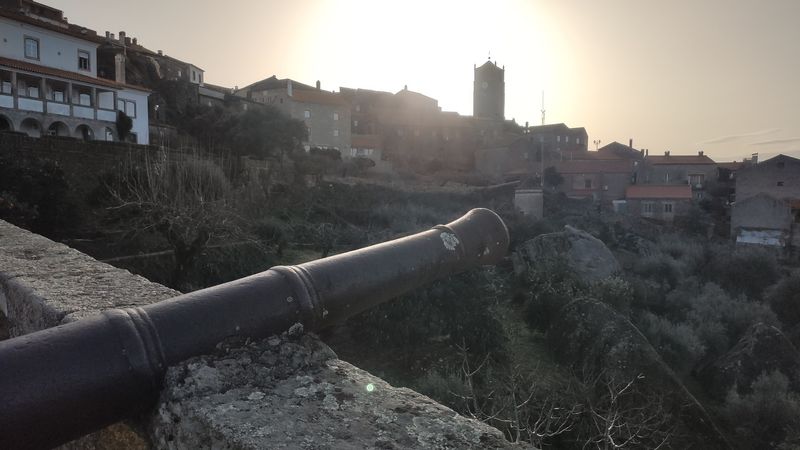
This hilltop village near Portugal’s Spanish border is built so completely around massive granite boulders that the line between house and geology practically disappears.
Some homes use enormous stones as exterior walls. Others are wedged into gaps between boulders, with rock faces forming part of the interior.
A few structures appear to be held in place by the boulders pressing against them from above, which looks alarming but has apparently worked for centuries. The village climbs a steep granite hill toward a ruined castle at the top, and the narrow lanes between buildings feel more like paths through a geological formation than a town.
Monsanto was voted the most Portuguese village in Portugal in a 1938 national competition, a title locals still reference with pride. Each May, residents celebrate the Festa das Cruzes by throwing clay pots filled with flowers from the castle walls, a tradition commemorating a medieval siege during which villagers supposedly threw their last food at enemy soldiers to suggest they had plenty to spare.
History, geology, and stubborn creativity all collide here in one of the most visually unusual settlements anywhere in southern Europe.
Whittier, Alaska
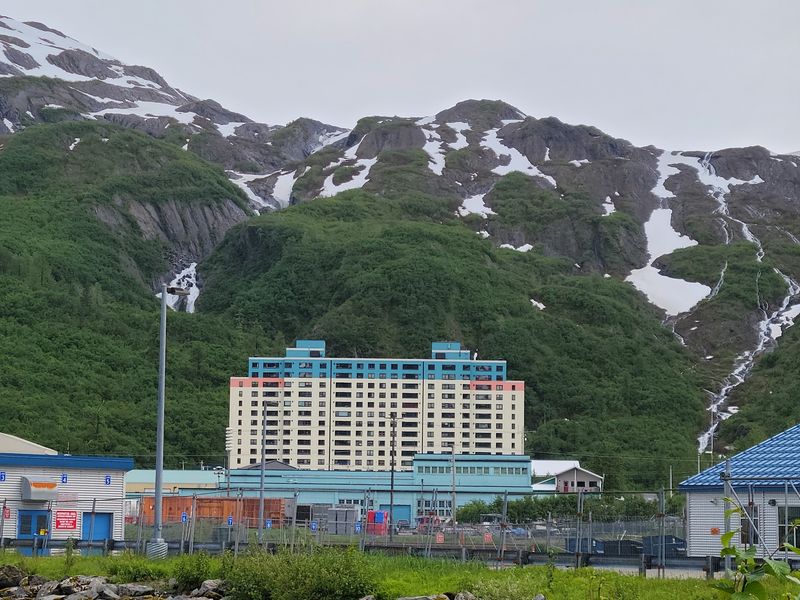
Whittier, Alaska, is a town where the phrase “my neighbors” has a very specific meaning: everyone in the building. Most of Whittier’s year-round residents live inside Begich Towers, a 14-story former U.S.
Army structure that now functions as a vertical neighborhood complete with apartments, a health clinic, a church, and a police station.
The arrangement is not a lifestyle trend. It is a practical response to a place that receives around 200 inches of precipitation annually and endures some of the most unpredictable weather in Alaska.
When conditions are brutal outside, being able to access most of what you need without stepping outdoors makes genuine sense.
Getting to Whittier by road involves passing through the Anton Anderson Memorial Tunnel, a roughly 2.5-mile single-lane passage through the Chugach Mountains that also accommodates rail traffic on a shared schedule. Visitors must time their approach around tunnel openings.
The combination of one-building living, Cold War-era infrastructure, staggering mountain scenery, and a tunnel-controlled entrance makes Whittier feel less like a town and more like a self-contained outpost at the edge of a wilderness. It is strange by almost any standard, and residents mostly seem fine with that assessment.
Hallstatt, Austria
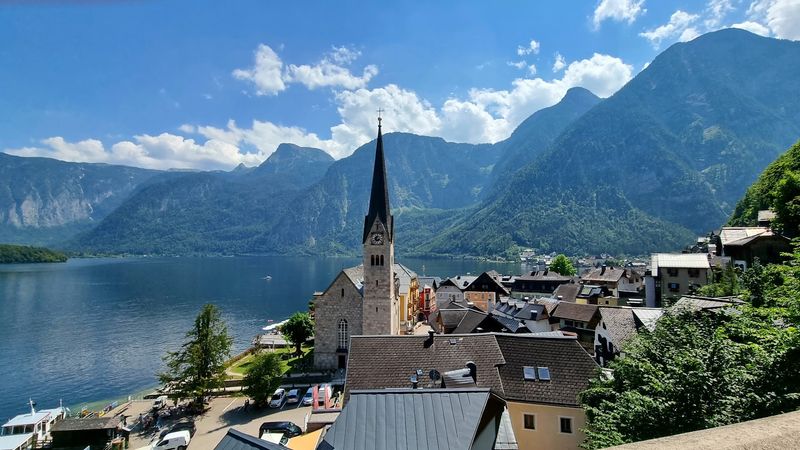
Hallstatt is one of those places that appears constantly on travel photography feeds, all glassy lake reflections and Alpine charm. What those photos rarely show is what sits inside the small chapel of St. Michael: a carefully arranged collection of painted human skulls and bones that would stop most visitors mid-step.
The ossuary developed from a very practical problem. Hallstatt occupies an extremely narrow strip of land between a mountain and a lake, leaving almost no room for an expanding cemetery.
The solution was to periodically exhume older graves, clean the remains, and move them to the bone house so burial plots could be reused. Many skulls were then decorated with the names, dates, and painted flowers or crosses of the individuals they belonged to.
The practice continued into the 20th century, producing a collection of over 1,200 decorated skulls. The most recent addition was made in 1995.
For modern visitors, the ossuary is genuinely startling, but it reflects something important about how communities adapt their most fundamental customs to geographic reality. Salt mining made Hallstatt wealthy for thousands of years.
Limited land made its residents creative about death. Both facts are equally central to understanding what makes this tiny Austrian lakeside town so memorably unusual.
Guanajuato, Mexico
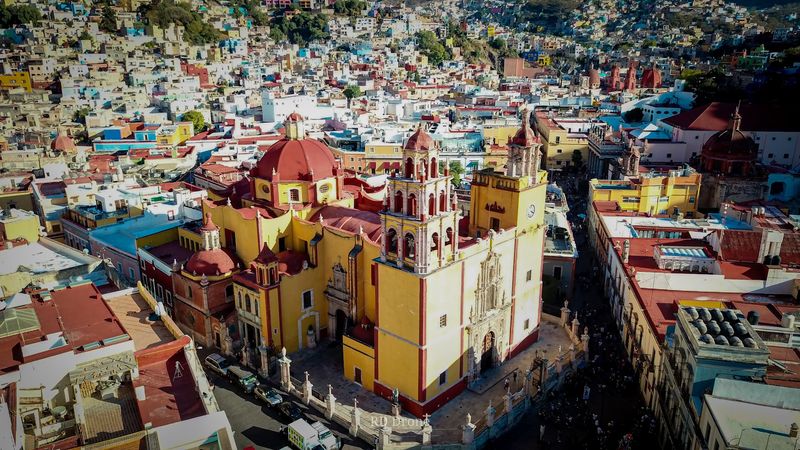
Guanajuato is already a visually remarkable city, with brightly painted hillside homes, underground roadways converted from old river channels, and a university that dates back centuries. Then you find out about the mummies, and everything gets considerably more interesting.
During the 19th and 20th centuries, bodies exhumed from local cemeteries were occasionally found in an unusually preserved state. The dry mineral-rich soil and specific burial conditions in parts of the region created natural mummification without any intentional embalming process.
These preserved remains were eventually gathered into what became the Museo de las Momias de Guanajuato.
The museum now displays dozens of mummified individuals, including adults and children, each connected to the city’s cemetery history. Some figures still wear remnants of the clothing they were buried in.
The collection has sparked ongoing ethical debates about displaying human remains as tourist attractions, and those conversations are worth taking seriously. Still, the museum draws enormous crowds annually and remains one of the most visited attractions in central Mexico.
Guanajuato’s mummies were not created through ritual or ceremony. They are an accidental product of local geology, which somehow makes the whole thing both stranger and more fascinating than deliberate preservation would have been.
Oymyakon, Russia
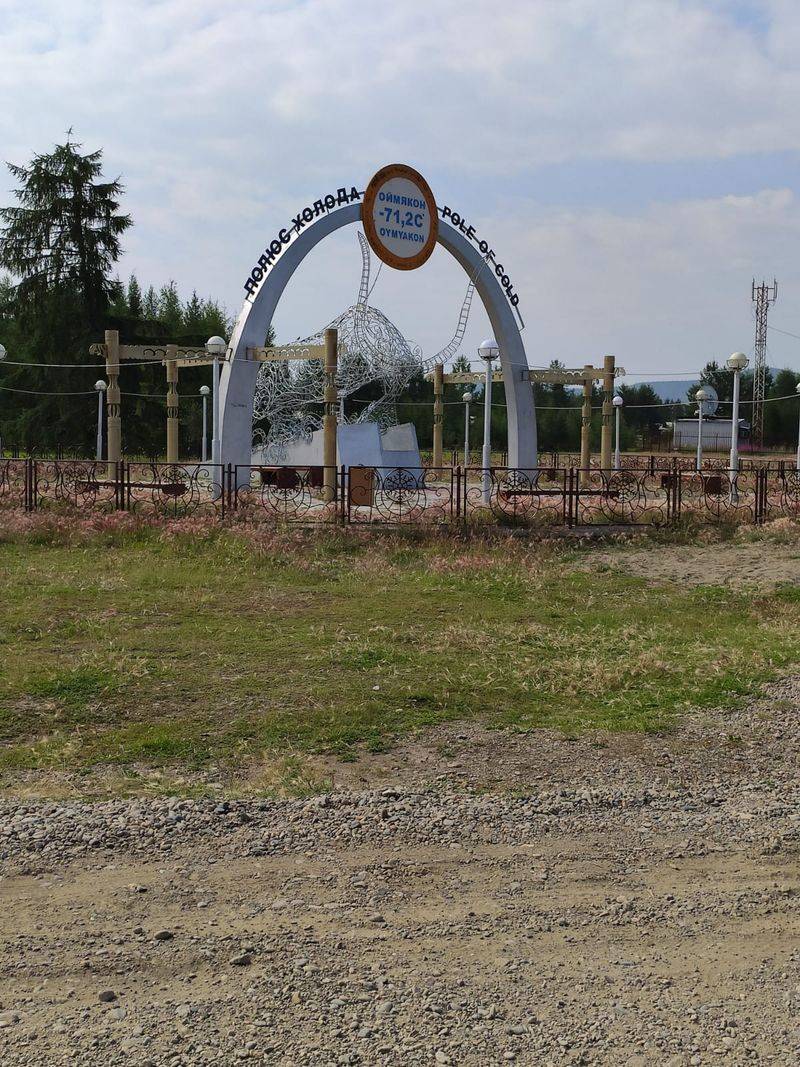
At around -67.7 degrees Celsius, recorded in February 1933, Oymyakon holds a temperature reading that most thermometers are not even designed to display. This small settlement in Russia’s Sakha Republic is widely recognized as one of the coldest permanently inhabited places on Earth, and life there reflects every degree of that distinction.
Vehicles must often be kept running continuously through winter nights because restarting a frozen engine at those temperatures can be nearly impossible. Permafrost makes underground infrastructure extremely difficult to build or maintain.
Food storage is simple: outdoors is the freezer. Locals bury meat and other supplies in the ground or leave them outside, where nature handles preservation better than any appliance could.
The name Oymyakon roughly translates to “non-freezing water” in the local Yakut language, referencing a nearby thermal spring that stays liquid year-round, which is how the area originally attracted reindeer herders seeking winter grazing. Around 500 people currently live there full time, navigating school days, grocery runs, and social visits in conditions that would trigger emergency declarations elsewhere.
Oymyakon does not celebrate its cold the way Boryeong celebrates its mud. For residents, extreme winter is not a festival.
It is simply the weather forecast, every single year.
Share this story