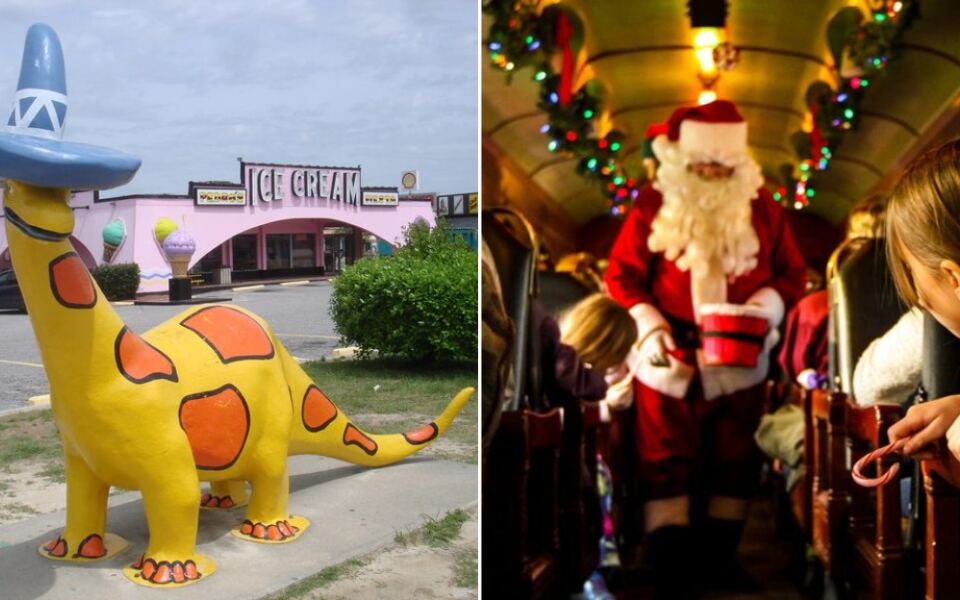
Some places have a way of pulling people off the highway year after year, decade after decade. Whether it is a giant elephant-shaped building, a field of buried Cadillacs, or a waterfall hidden inside a mountain, these attractions have earned their spot on the American road-trip map.
They are not famous because of social media or viral moments. They built their reputations the old-fashioned way, one carload of curious travelers at a time.
From the Black Hills of South Dakota to the redwood coast of Northern California, these 15 stops have been rewarding generations of road trippers with something genuinely worth the detour. If you have driven past any of these without stopping, this list might convince you to plan differently next time.
Wall Drug, Wall, South Dakota
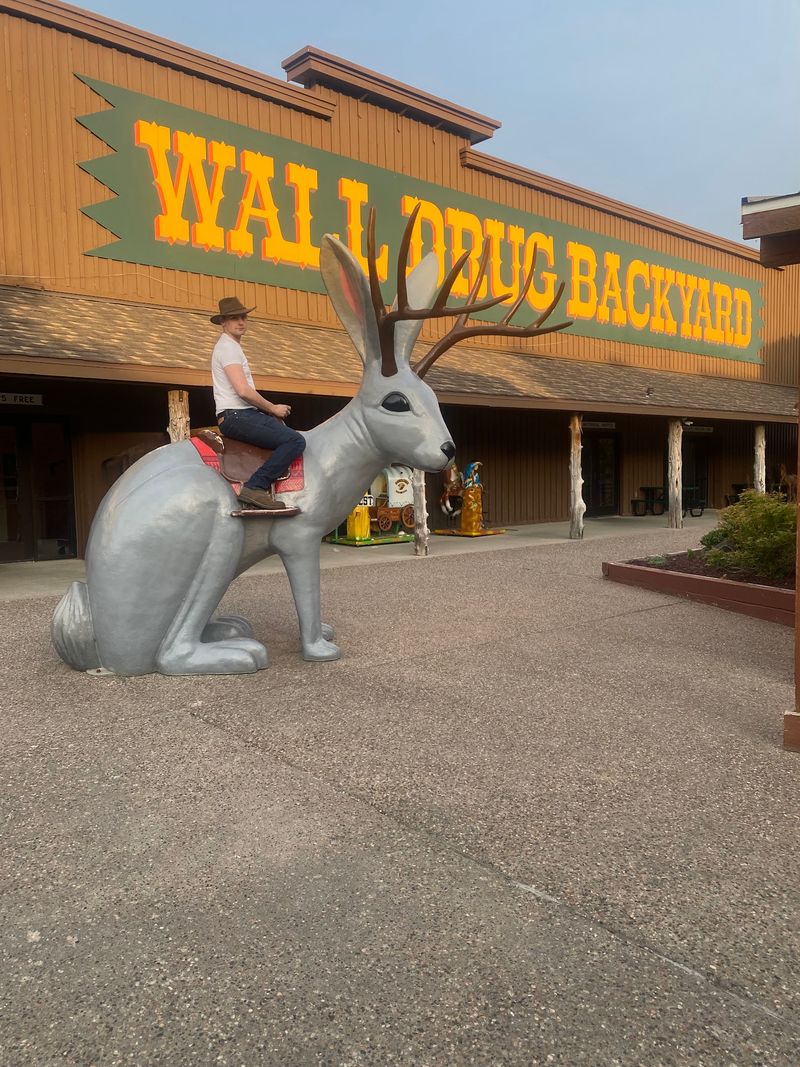
Long before GPS replaced highway signs, Wall Drug figured out how to get inside a traveler’s head miles before they arrived. The strategy started in 1931 when Dorothy Hustead suggested putting up roadside signs advertising free ice water to drivers crossing the hot South Dakota plains.
It worked better than anyone expected.
Today, Wall Drug has grown from a small pharmacy into a sprawling complex covering tens of thousands of square feet. Visitors find a collection of shops, a restaurant, Western art displays, animatronic figures, and photo opportunities scattered across the property.
The free ice water is still there.
Wall Drug sits right off Interstate 90, which makes it a natural stopping point for anyone heading toward Mount Rushmore or the Badlands. It operates seven days a week, and its famous highway signs still greet drivers hundreds of miles out.
The tradition of stopping here has practically become a road-trip ritual.
The Corn Palace, Mitchell, South Dakota
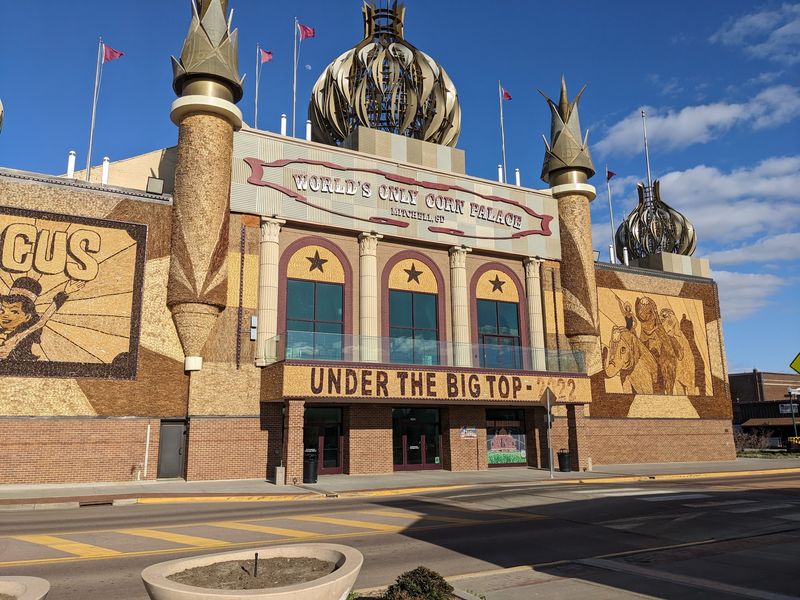
Mitchell, South Dakota has been decorating its most famous building with corn since 1892, and the results are genuinely hard to describe until you see them in person. The Corn Palace features elaborate exterior murals constructed entirely from corn, grains, and native grasses, with the designs refreshed regularly to reflect new themes.
What started as a way to showcase South Dakota’s agricultural strength eventually turned into one of the state’s most visited buildings. The city estimates roughly half a million people come to see it each year, which is a remarkable number for a town of around 15,000 residents.
Admission is free, which makes it one of the more accessible stops on any Great Plains road trip. The Corn Palace stays open throughout the year, though hours shift with the seasons.
Inside, visitors find exhibits, a gift shop, and displays explaining how the murals are assembled. It is genuinely unlike anything else on the highway.
Dinosaur Park, Rapid City, South Dakota
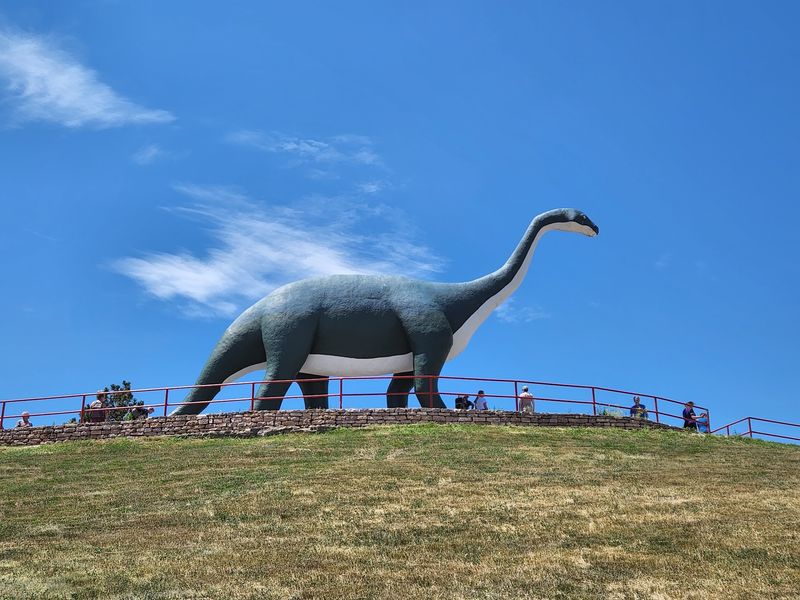
Perched on a ridge above Rapid City, seven concrete dinosaurs have been greeting Black Hills travelers since 1936. The sculptures were built as a Works Progress Administration project during the Great Depression, and their location was no accident.
Planners positioned them on a visible hilltop specifically to catch the attention of travelers already moving toward nearby attractions.
The dinosaurs are painted green and represent species from the Mesozoic Era, though paleontology has evolved considerably since the 1930s. That slight scientific datedness is part of the charm.
These are monuments to how people imagined prehistoric life nearly a century ago.
Admission to Dinosaur Park is free, and the hilltop location provides a good view of the surrounding city and landscape. Visit Rapid City continues to promote the park as a distinctive historic stop worth building into a Black Hills itinerary.
For road trippers, it delivers exactly what it promises: something strange, old, and completely photogenic.
Rock City Gardens, Lookout Mountain, Georgia
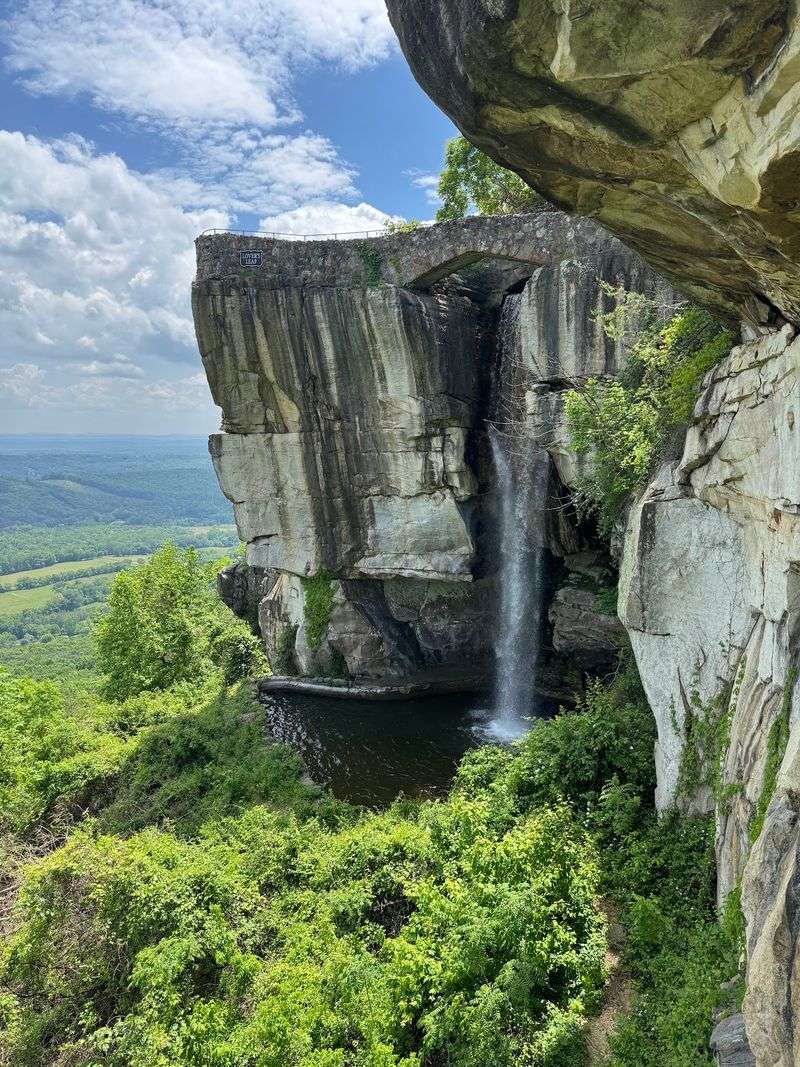
Before interstate highways dominated American travel, barn rooftops across the Southeast carried a simple painted message: See Rock City. That advertising campaign helped turn a mountaintop garden in Georgia into one of the region’s most recognizable road-trip destinations, and it has never really stopped working.
Rock City officially opened in 1932 after Garnet and Frieda Carter developed their Lookout Mountain property into a trail weaving through dramatic sandstone formations, gardens, and scenic overlooks. The barn painting campaign came later and spread the attraction’s name across rooftops in multiple states, making it one of the most creative marketing efforts in American tourism history.
Rock City remains fully active, with published operating hours throughout 2026 and seasonal events extending into the holiday season. Visitors walk the original garden trail, cross suspension bridges, and look out over views that, on clear days, reportedly cover parts of seven states.
It is a classic that has kept updating without losing its original character.
Ruby Falls, Chattanooga, Tennessee
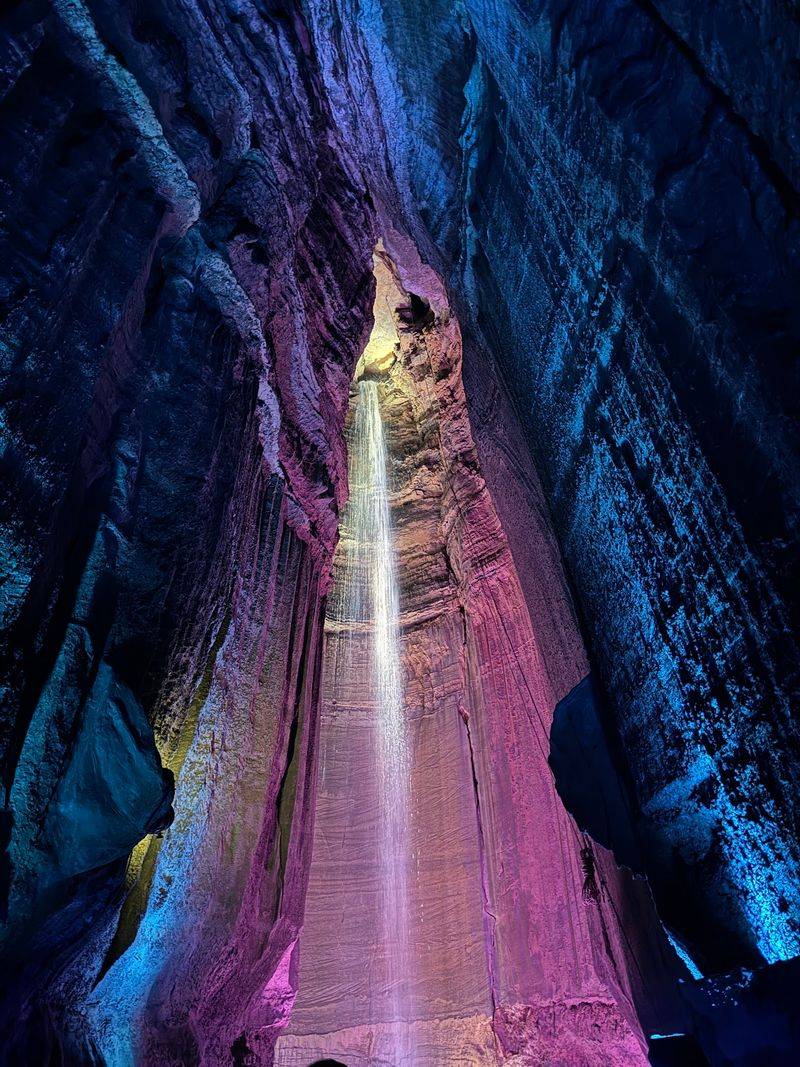
Lookout Mountain keeps more than one attraction tucked inside it. Ruby Falls sits deep underground, where a natural waterfall discovered in 1928 by Leo Lambert has been drawing visitors into the cave ever since.
Lambert named the falls after his wife Ruby, and the attraction opened to the public in 1929, making it one of the longer-running cave tourism operations in the country.
Reaching the waterfall requires a guided tour that takes visitors down through the cave system, past formations built over thousands of years, until the falls come into view. The experience is underground and climate-controlled, which makes it a practical stop in both summer heat and cooler weather.
Ruby Falls has a full calendar of 2026 tours and special events, confirming that this Chattanooga classic is firmly in business. Families, history enthusiasts, and geology fans all find reasons to make the trip.
The combination of natural history and a genuinely dramatic underground setting keeps it relevant across generations of road trippers.
Meramec Caverns, Stanton, Missouri
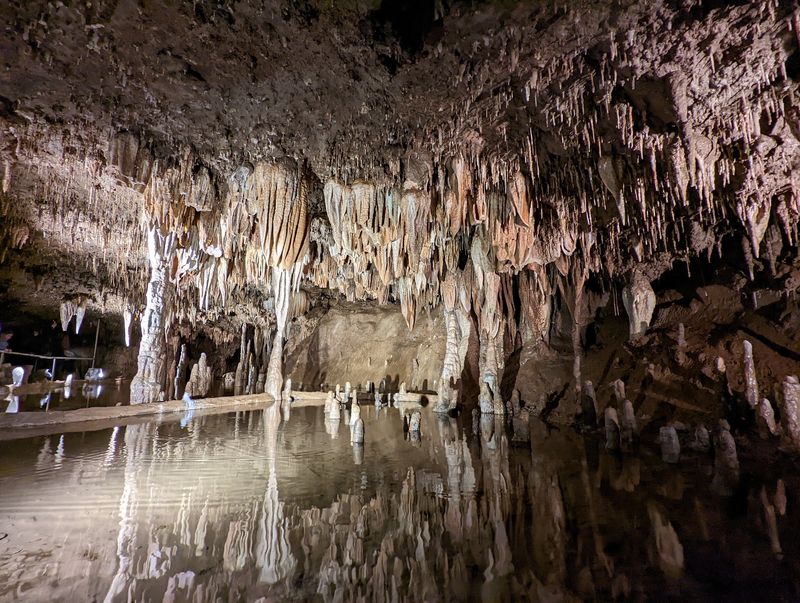
Missouri’s Route 66 corridor has collected roadside legends for decades, and Meramec Caverns ranks among the most enduring. The cave system beneath the Meramec Valley draws visitors off the highway with the promise of something genuinely ancient: limestone formations shaped over millions of years, sitting beneath the rolling Missouri landscape.
The guided cavern tour covers roughly 1.25 miles and lasts about 80 minutes. Along the way, visitors pass through large underground rooms filled with stalactites, stalagmites, and mineral formations.
The cave maintains a consistent cool temperature year-round, which has always made it an appealing summer stop for families crossing the state.
Meramec Caverns has published operating dates and hours for 2026, including daily tours through the main travel season. The attraction has been welcoming travelers since the mid-20th century and continues to draw a steady audience.
For anyone following the Route 66 route through Missouri, it remains one of the more substantial and rewarding stops along the way.
The Mystery Spot, Santa Cruz, California
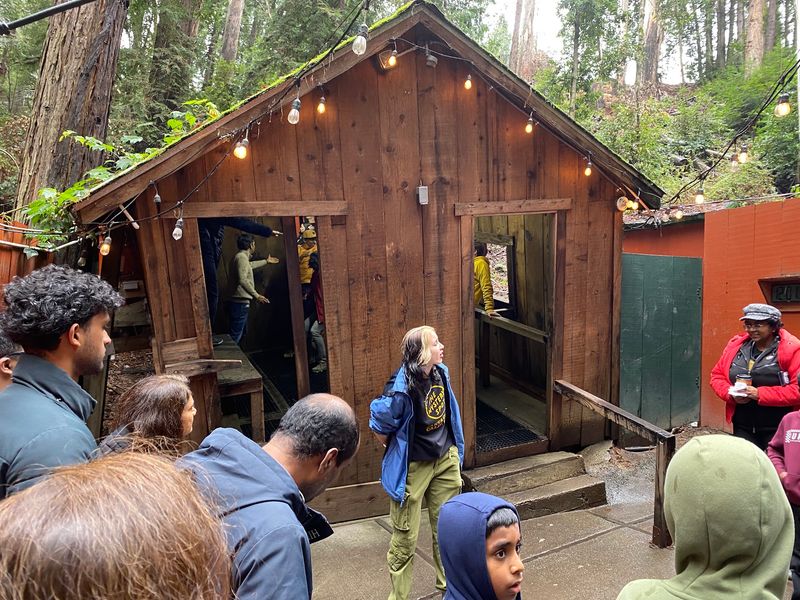
Somewhere in the redwoods outside Santa Cruz, gravity apparently has its own agenda. The Mystery Spot has been confusing and delighting California road trippers since the early 1940s, built around a location where visual perception and physical balance behave in ways that feel genuinely disorienting.
The attraction was discovered in 1939 and opened shortly afterward, becoming one of the most recognizable examples of the mid-century gravity house trend. The experience relies on carefully constructed angles and optical illusions that make people appear to change height, lean at impossible angles, and struggle with their sense of balance.
California officially recognizes it as a historical landmark.
Guided tours are the main event, and the attraction operates 365 days a year. The setting inside a redwood forest adds an extra layer of atmosphere that purely indoor novelty attractions cannot replicate.
Whether you fully believe the mystery or not, the experience is genuinely fun and strange enough to earn a stop on any Northern California coastal road trip.
Trees of Mystery, Klamath, California
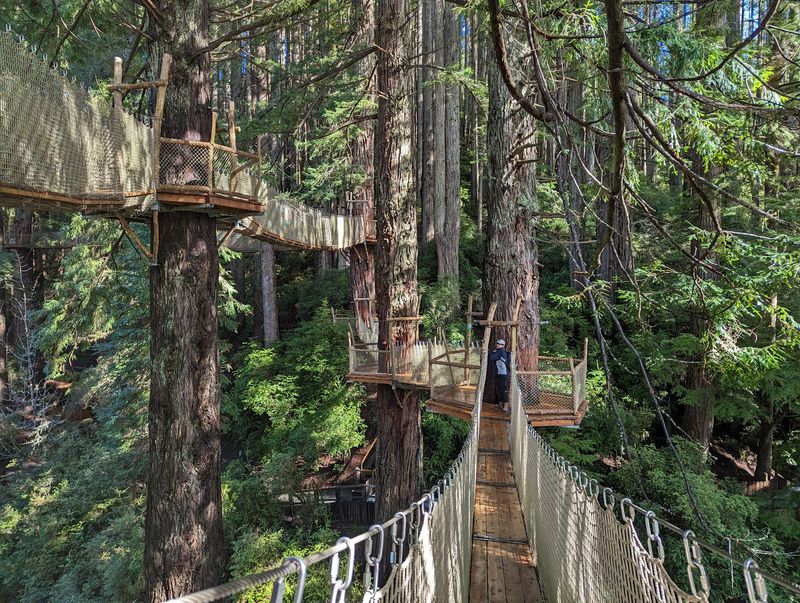
Standing at the entrance to Trees of Mystery, a giant Paul Bunyan greets passing Highway 101 travelers in a way that is very difficult to ignore. The attraction has been a fixture of the Northern California Redwood Coast since 1946, and its massive statues remain one of the most photographed roadside landmarks on the entire Pacific Coast route.
Beyond the statues, the property offers interpretive trails winding through towering old-growth redwoods, a SkyTrail gondola that carries visitors through the forest canopy, and the End of the Trail Museum, which houses a notable collection of Native American art and artifacts. The combination gives the stop more depth than a simple photo opportunity.
Trees of Mystery stays open throughout the year except on Thanksgiving and Christmas, which means it fits into a wide range of travel schedules. The attraction has managed to grow its offerings over the decades while keeping the classic roadside personality that made it famous in the first place.
That balance is harder to maintain than it looks.
South of the Border, Hamer, South Carolina
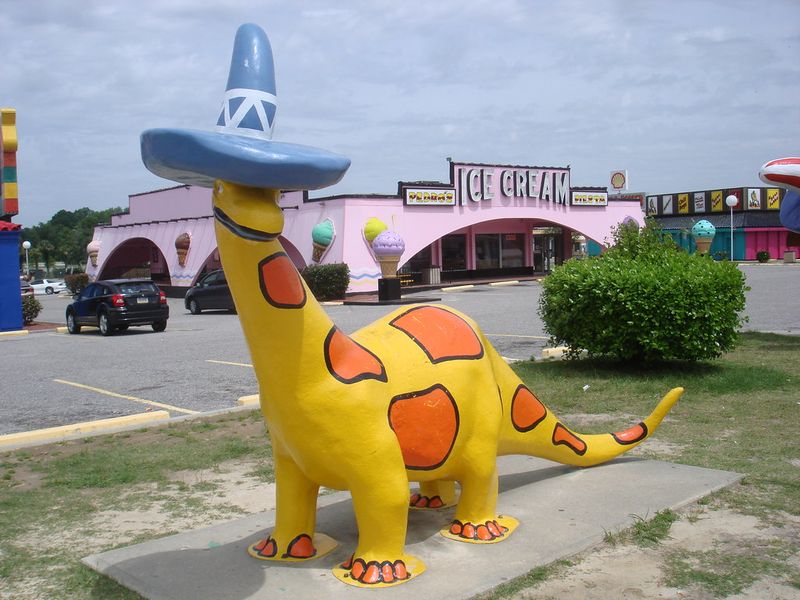
If you have ever driven Interstate 95 through the Carolinas, the signs started long before the destination appeared. South of the Border has been building anticipation along that highway corridor for nearly seven decades, using a string of roadside billboards to create a sense of arrival that few roadside stops can match.
The complex sits right at the North Carolina and South Carolina state line, a location that gave the attraction its punny name. Today, travelers find restaurants, shops, lodging options, an arcade, a reptile exhibit, and the more than 200-foot Sombrero Observation Tower all gathered in one sprawling stop.
Current operating hours for its major attractions are posted for 2026, confirming that South of the Border remains active. For generations of East Coast road trippers, it has been the kind of place where a quick bathroom break can turn into a full hour of wandering.
The scale of the place is part of what makes it memorable.
Lucy the Elephant, Margate, New Jersey
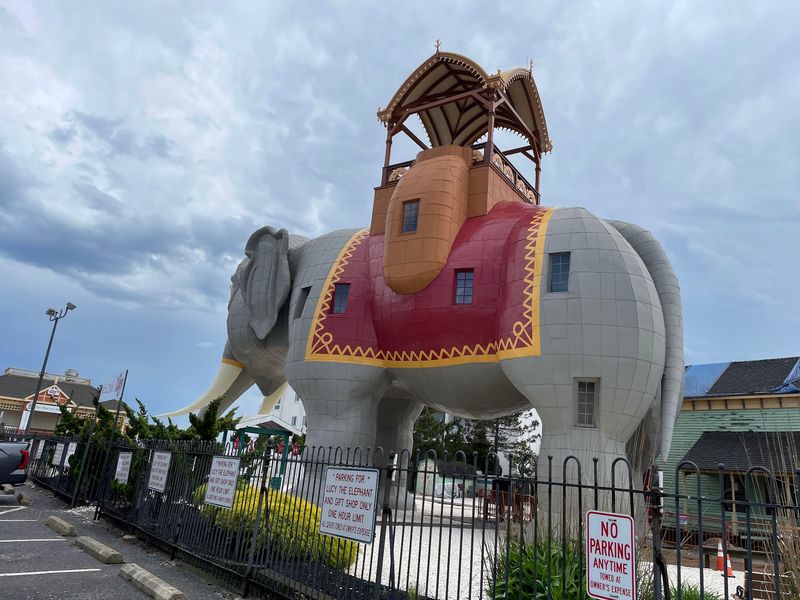
Long before fiberglass animals started appearing beside American highways, New Jersey already had something bigger and stranger: a six-story building shaped like an elephant. Lucy was constructed in 1881 in Margate, originally marketed as the Elephant Bazaar, and she has been one of the Jersey Shore’s most unusual landmarks ever since.
Over the decades, Lucy served various purposes, including time as a tavern and a private residence, before falling into disrepair. A preservation campaign saved her from demolition, and she eventually earned designation as a National Historic Landmark.
That status reflects how genuinely rare she is as a surviving example of 19th-century novelty architecture.
Visitors can still tour the interior of the structure, which sits not far from Atlantic City. Lucy’s official site continues to publish current tour schedules and hours, making her an active destination rather than simply a curiosity to photograph from the parking lot.
At over 140 years old, she remains one of America’s oldest and most distinctive roadside landmarks.
Paul Bunyan and Babe the Blue Ox, Bemidji, Minnesota
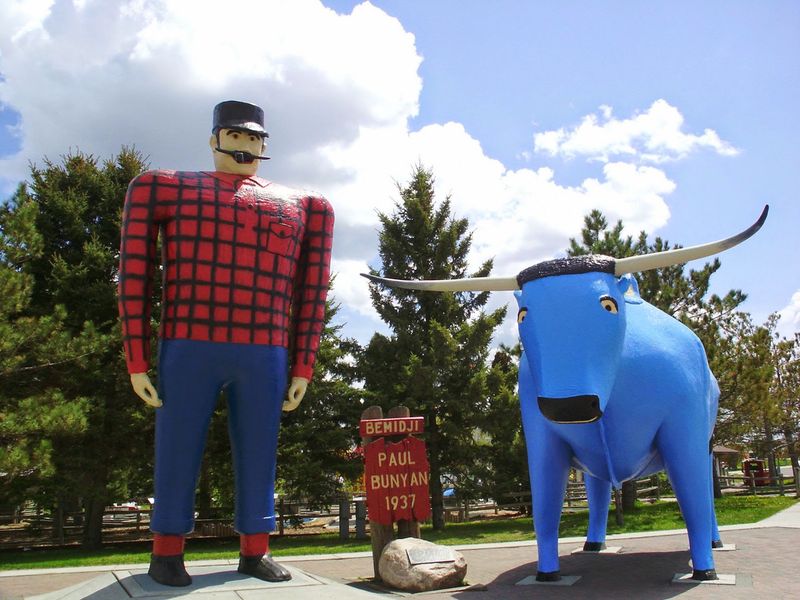
Bemidji unveiled its giant Paul Bunyan and Babe the Blue Ox statues during a winter carnival in 1937, and the pair became local celebrities almost immediately. Built to honor the region’s logging heritage, the statues were placed along the shore of Lake Bemidji, giving them one of the more scenic settings of any roadside landmark in the Midwest.
Their cultural footprint grew steadily over the decades. The statues were eventually added to the National Register of Historic Places, which puts them in rare company for figures originally built as tourist draws.
Paul stands about 18 feet tall, and Babe is painted a vivid blue that photographs well in almost any light.
The nearby Tourist Information Center operates year-round and includes Paul Bunyan memorabilia along with regional exhibits. Stopping for the traditional photograph beside the statues has become a routine part of northern Minnesota road trips for multiple generations of families.
The location beside the lake makes it a pleasant place to stretch your legs as well.
Blue Whale of Catoosa, Catoosa, Oklahoma
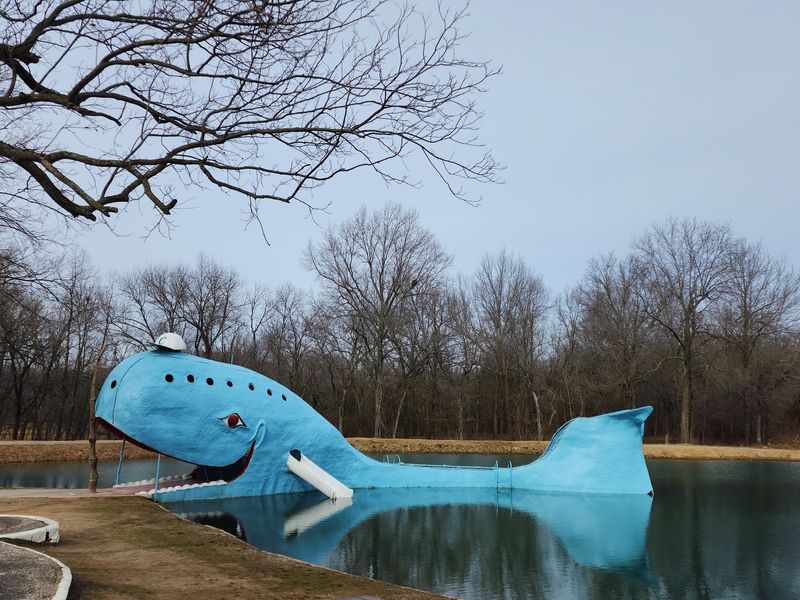
Route 66 has always had a talent for producing landmarks that make you slow down and stare, and the Blue Whale of Catoosa is one of its most cheerful examples. Hugh S.
Davis spent years building the giant concrete whale beside a pond in Catoosa, completing it in 1972 as a gift to his wife, who collected whale figurines.
For years, the pond served as a local swimming hole, and families gathered around the whale for picnics and summer fun. Swimming is no longer permitted, but the whale still draws a steady stream of visitors who come to photograph it, fish from the banks, and explore the surrounding park area.
The City of Catoosa owns and operates the property, and a visitor center has been added to support its growing role as a Route 66 destination. The whale’s wide grin has made it one of the most recognizable images associated with the historic highway.
It costs nothing to visit and is open to the public.
Cadillac Ranch, Amarillo, Texas
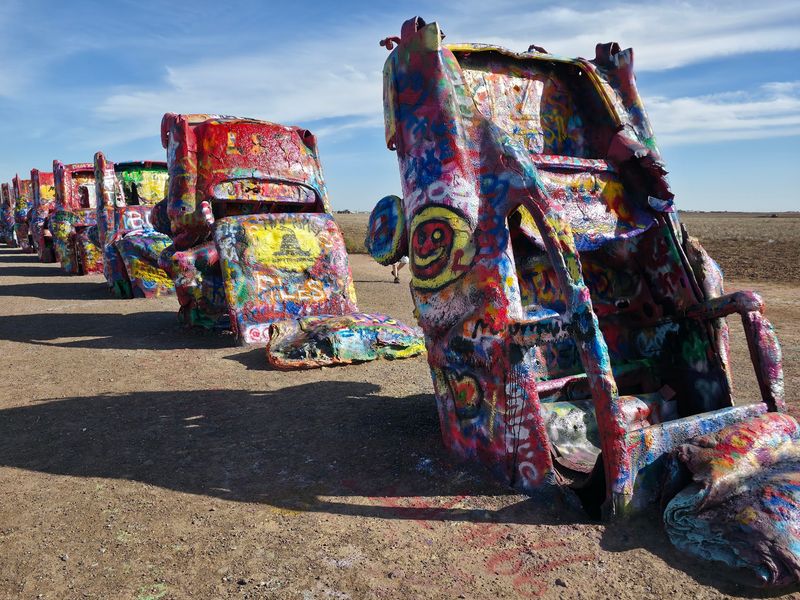
Ten Cadillacs buried hood-first in a Texas Panhandle field have been stopping traffic since 1974. Cadillac Ranch was created by the Ant Farm art collective with funding from eccentric Amarillo businessman Stanley Marsh 3, and it was always intended as something between a sculpture and a statement about American car culture.
What the creators may not have fully anticipated was how thoroughly the public would take ownership of the piece. Visitors are encouraged to bring spray paint and add their own layer to the cars, which means the installation is in a constant state of change.
The color and texture of the Cadillacs shift with every passing week.
Visit Amarillo lists Cadillac Ranch as open 24 hours a day, 365 days a year, with no admission charge. It sits just off Interstate 40, which traces the old Route 66 corridor through the Texas Panhandle.
Pulling over takes about two minutes, but most visitors end up staying considerably longer once they realize how much there is to look at.
Cabazon Dinosaurs, Cabazon, California
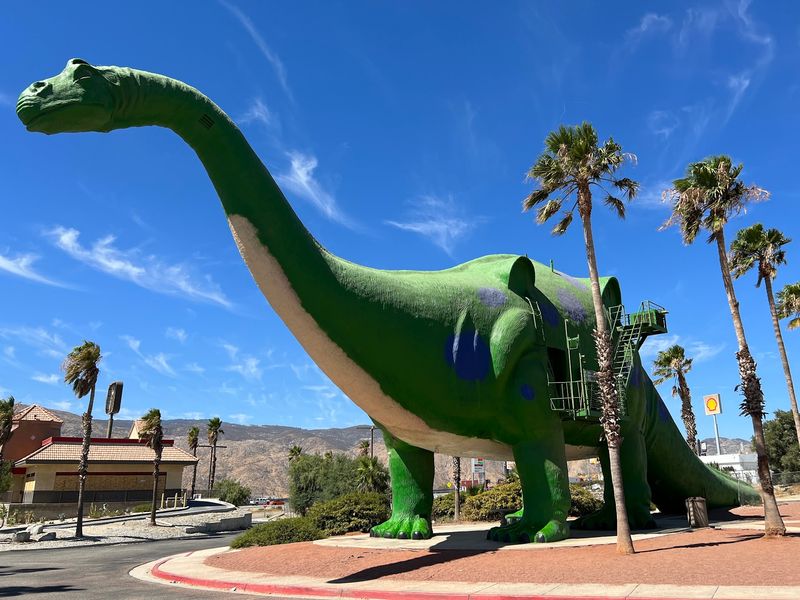
Spotting a massive dinosaur beside the freeway in the California desert is the kind of thing that makes passengers sit up straight. Dinny the Dinosaur and Mr. Rex have been doing exactly that to Interstate 10 travelers near Cabazon for decades, and their profile grew further after appearances in Hollywood films during the 1980s.
The original sculptures were built by Claude Bell, who worked on them for years before they became a public attraction. The site has since expanded well beyond those two figures.
Today, visitors find more than 100 dinosaur displays, fossil and gemstone panning, a dinosaur walk, and shops spread across the property.
Cabazon Dinosaurs remains open to the public in 2026, with daily operating hours posted by the attraction. Located roughly halfway between Los Angeles and Palm Springs, the stop fits naturally into Southern California road trips heading east.
The combination of roadside nostalgia and a genuinely expanded attraction gives it staying power beyond simple curiosity.
1880 Train, Hill City and Keystone, South Dakota
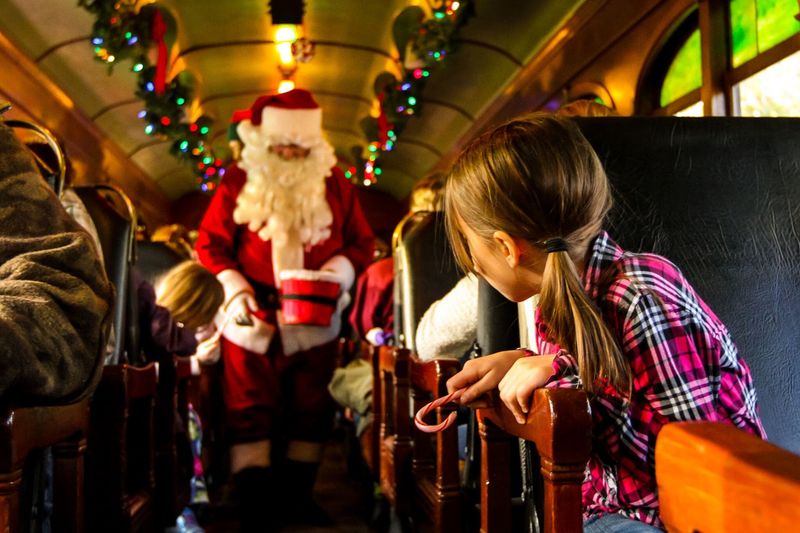
The Black Hills offer plenty of reasons to stay behind the wheel, but the 1880 Train makes a strong case for parking the car for a few hours. Running between Hill City and Keystone since 1957, this narrow-gauge railroad carries passengers through some of the most scenic terrain in South Dakota on a roughly 20-mile round trip.
The railroad identifies itself as the world’s oldest continuously operated standard-gauge excursion train, a claim that reflects how long this particular slice of American transportation history has been running. The route passes through forested hills, historic mining country, and open valleys that are difficult to appreciate at highway speed.
The 1880 Train’s 2026 season runs from May into December, giving it one of the longer operating windows among seasonal attractions in the region. For families who have made Black Hills vacations a tradition, the train ride has often become as expected a part of the trip as Mount Rushmore or Custer State Park.
It earns that kind of loyalty honestly.
Share this story