Something about Illinois keeps pulling curious travelers off the highway and into the unexpected. A story has been circulating about a free trail somewhere in the state where hand-carved wooden figures stand quietly among the trees, waiting to be found.
The claim is intriguing enough to investigate, but the evidence tells a more complicated and, honestly, more interesting story than the headline suggests. What the research actually turns up is a single carved-wood sculpture, a park full of genuine natural drama, and a few important questions worth asking before you lace up your boots.
The reported Illinois trail does not match the evidence
Before packing a bag and heading out to find a row of hand-carved figures standing sentinel along an Illinois prairie trail, there is something worth knowing: the research behind this story found no verified chain of hand-carved totem poles on any Illinois prairie trail or deep in the woods. No official park map, no Illinois DNR page, and no primary source reviewed for this article confirms that attraction as described.
The premise is genuinely compelling, which is exactly why it deserves a straight answer rather than a vague detour.
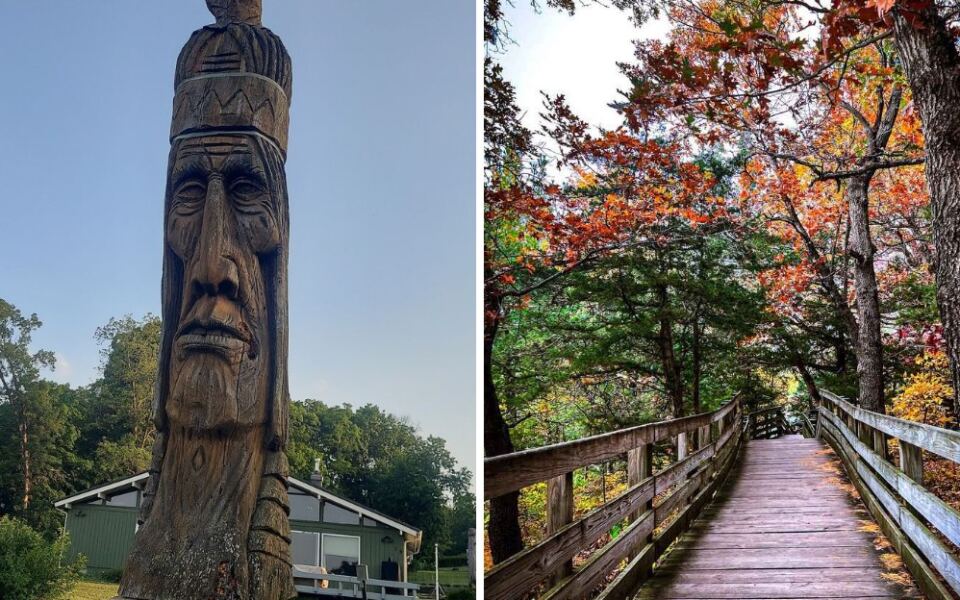
What the investigation did find is a single carved-wood sculpture associated with a broader national art project, connected in secondary sources to the Starved Rock area of northwestern Illinois. Illinois DNR’s Starved Rock State Park pages document 13 miles of marked trails, dramatic canyon scenery, and no entrance fee listed, but they do not describe a totem-pole trail or a chain of carvings.
A Roadside America entry on a Peter Toth carving in Illinois points toward the Starved Rock area as a possible location for one such sculpture, though the exact spot and current condition need confirmation from park staff or a firsthand visit.
Think of this article as a scouting report rather than a trail guide. The carving may well be out there, but readers should arrive with open eyes and realistic expectations rather than a checklist built on an unverified headline.
Starved Rock is a possible lead, not a confirmed carving trail
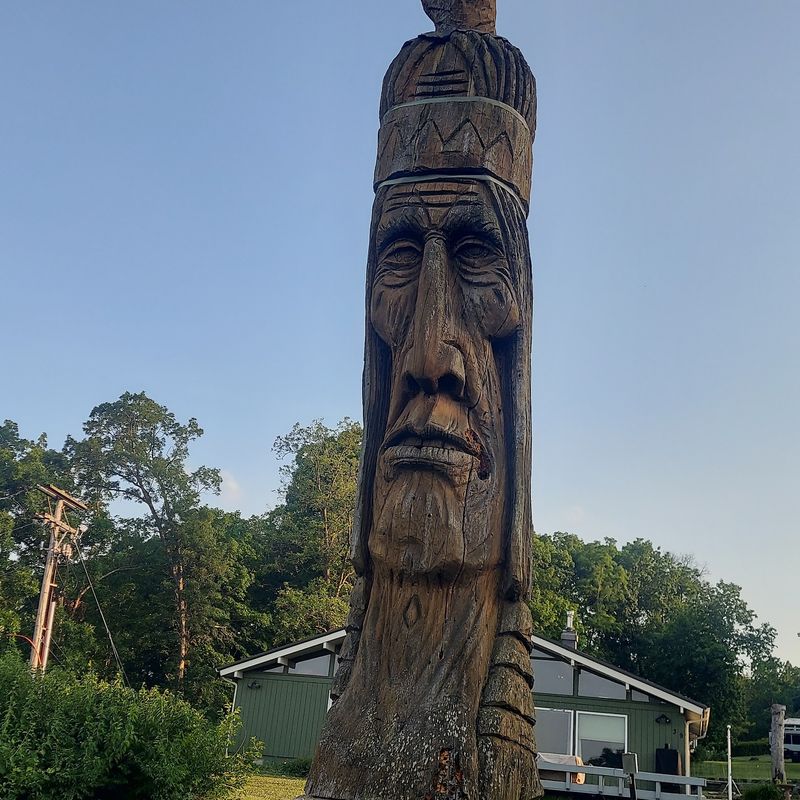
Among the sources reviewed for this article, the closest match to the premise of an Illinois carved-wood sculpture is a secondary report linking the Starved Rock area to Peter Wolf Toth’s Trail of the Whispering Giants, a nationwide project in which the Hungarian-born sculptor carved large wooden figures from single trees, donating each work to a state as a tribute to Indigenous peoples. Roadside America’s Illinois entry on a Toth carving places one sculpture in connection with the Starved Rock region, though the exact current location, condition, and public accessibility require verification from park staff or an official source before anyone plans a trip around it.
A travel blog documenting a cross-country search for Toth’s sculptures, Less Beaten Paths of America, offers additional context about how these carvings are scattered across the country, often in surprising or low-traffic spots. The official Trail of the Whispering Giants website provides limited location detail, which means local confirmation matters more than usual.
A second Illinois carving report involves a single carved pole near 147th Street and Oak Park Avenue in the Orland Park area, described by the Alpine Heights Subdivision history page as a Goesel family carving on forest-preserve property. That work is also a single sculpture, not a chain, and it has no documented connection to Starved Rock or to any trail linking multiple carvings.
Use “carved-wood sculpture” instead of assuming “totem pole”
Language matters when the subject involves Indigenous cultural traditions, and the word “totem pole” carries specific meaning that not every wooden carving earns. Works associated with Peter Wolf Toth’s Whispering Giants project are large figures carved from single tree trunks, created by a non-Indigenous artist as personal tributes to Native peoples.
They may look similar to a totem pole at a glance, but calling them totem poles without qualification flattens a meaningful cultural distinction. The University of Chicago’s public-art archive explicitly distinguishes carved tree-trunk works that merely resemble Native American totem poles from the real thing.
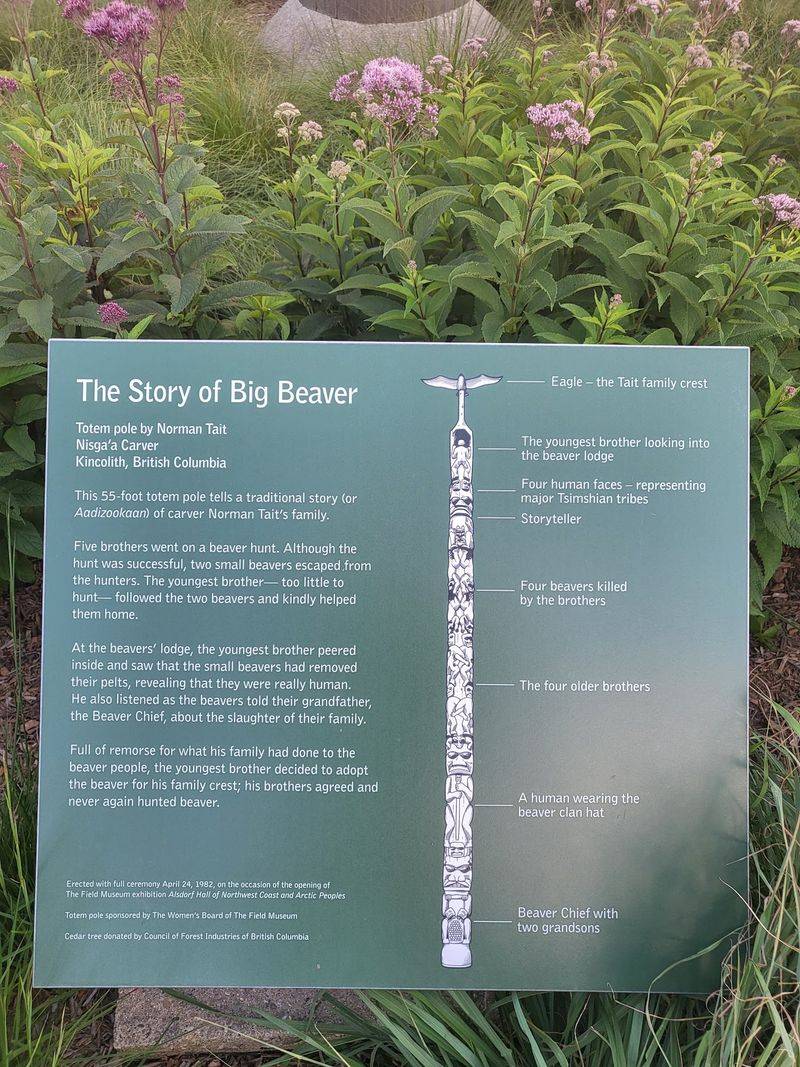
A genuine totem pole carries family ancestry, clan symbolism, and community history specific to Northwest Coast Indigenous nations. The Chicago Park District’s description of Norman Tait’s Big Beaver Totem Pole makes this clear: Tait is identified as a Nishga’a artist from British Columbia, and the pole’s imagery is tied directly to his family and clan.
That level of specificity is what separates a documented cultural object from a decorative carving, however impressive the latter might be.
Until park staff or a reliable primary source confirms the identity, creator, and cultural classification of any Starved Rock-area sculpture, “carved-wood sculpture” or “Whispering Giant” is the accurate, respectful choice. Toth’s own project website uses “Whispering Giants” as the series name, which is a useful, neutral term for the work.
Starved Rock offers a verified day outdoors even without the legend
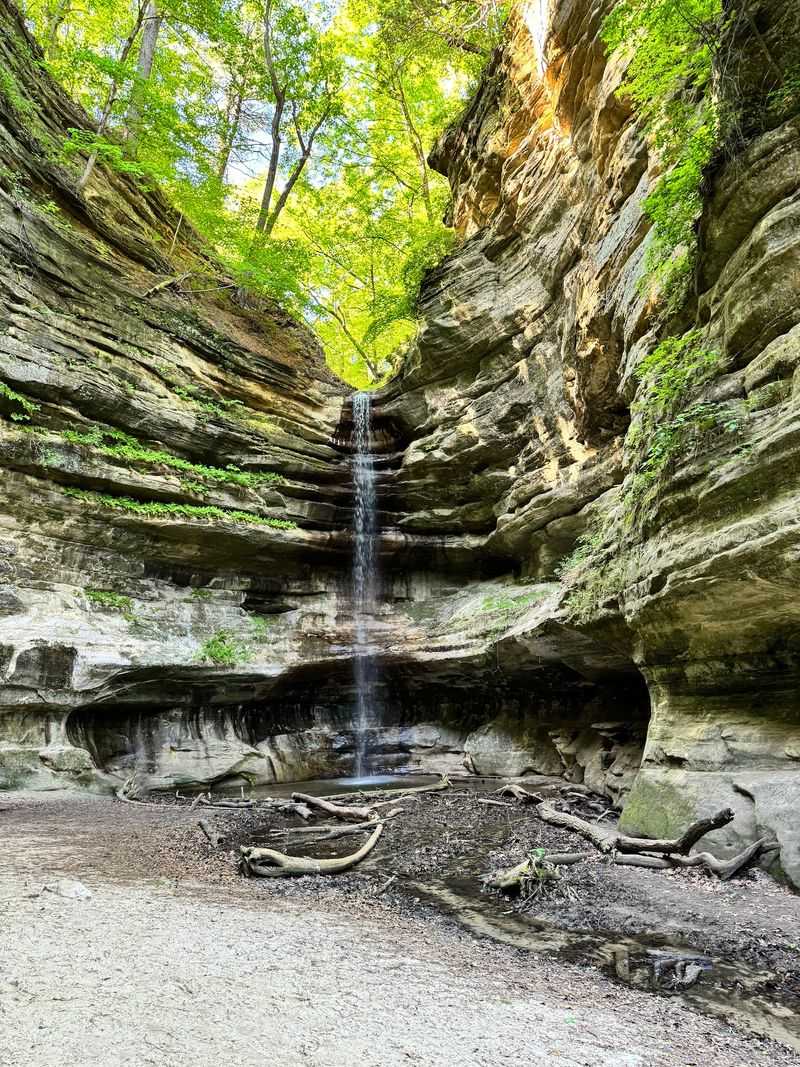
Whatever the carving situation turns out to be, Starved Rock State Park stands on its own as a genuinely rewarding Illinois day trip. Located near Utica in northwestern Illinois, the park is built around a landscape of sandstone bluffs, eighteen glacier-carved canyons, forest canopy, overlooks, and the Illinois River stretching out below.
The Illinois DNR’s Starved Rock park page lists no entrance charge, making it one of the more accessible outdoor destinations in the state, though it is worth distinguishing free park entry from possible costs for camping, concessions, or optional paid resources like the Prairie State Hike app mentioned on DNR’s hiking pages.
The trail system covers 13 miles of marked paths, with DNR’s Starved Rock hiking information offering several practical route examples. Starved Rock itself is a 0.6-mile round trip, French Canyon runs 0.8 miles, Wildcat Canyon covers 2 miles, and the Aurora and St. Louis Canyons route stretches to 3 miles round trip.
These distances reflect the scenic routes documented by DNR, not the distance to any carving, since no official source confirms a route to the sculpture.
For a first-time visitor, the canyon routes deliver the most concentrated scenery per mile. Waterfalls appear seasonally inside the canyons, the bluff overlooks offer wide river views, and the forest canopy changes character dramatically between spring and autumn.
Check construction updates before choosing a route
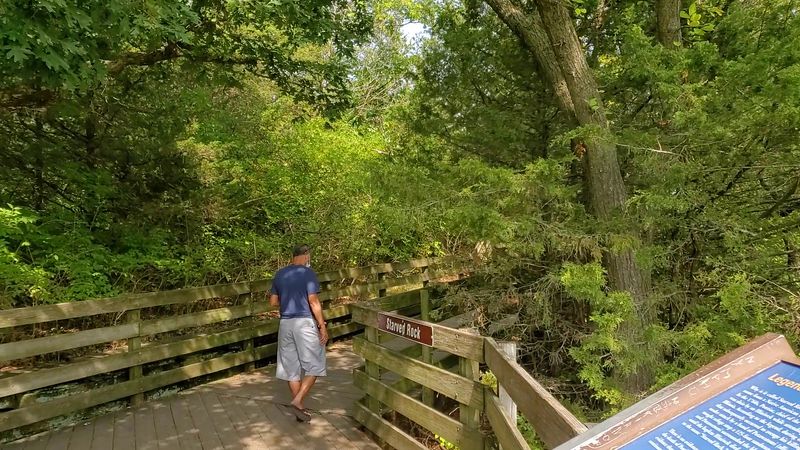
Planning a visit to Starved Rock right now requires one extra step that most trail guides skip: checking the current closure list before choosing a route. An $18 million trail improvement project is ongoing through 2026, and the restricted areas shift by phase.
As of the DNR update dated August 21, 2026, LaSalle, Tonty, Pontiac, Basswood, and Lonetree Canyons, along with Sandstone Point, were inaccessible during the July through October phase. French, Wildcat, Aurora, St. Louis, Ottawa, Kaskaskia, and Illinois Canyons remained open during that window.
Those accessible and restricted areas are date-sensitive examples, not permanent conditions. DNR’s Starved Rock Trail Improvement Project page posts weekly updates, and the department specifically advises visitors to check that page before traveling, watch for closure signs on the trail, and turn around immediately when they encounter caution tape or a blocked path.
Ignoring a closure barrier is not a shortcut to a hidden carving; it is a safety risk on terrain that is actively under construction.
Given that the current date places this visit squarely inside the July through October construction window, the closure list is the single most important piece of pre-trip research a visitor can do. A route that was open last month may not be open this weekend, and a canyon that looks passable from the trailhead may be blocked 200 yards in.
Build in flexibility, have a backup canyon in mind, and treat the DNR update page as a live resource rather than a one-time check.
Plan for marked paths, stairs, dogs, and incidental costs
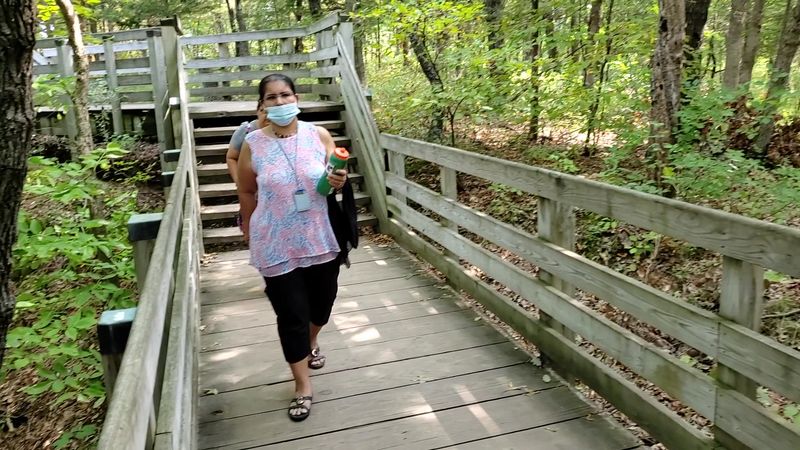
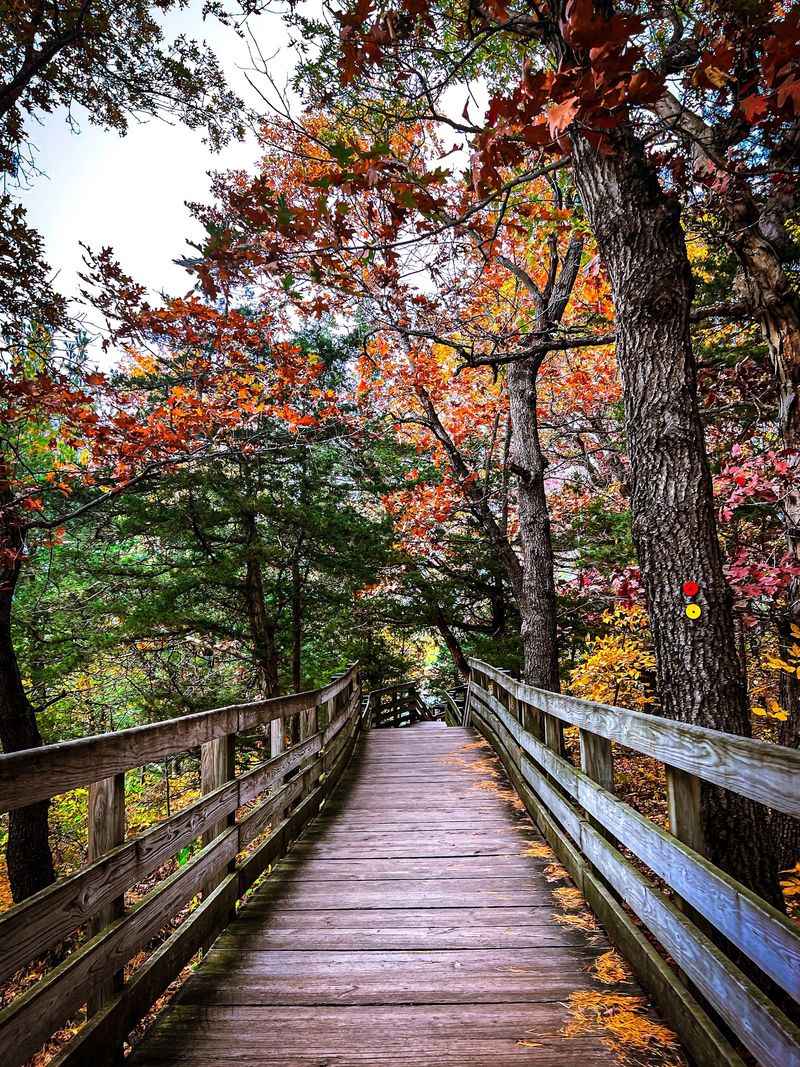
Knowing the rules before arriving saves a lot of frustration at the trailhead. DNR’s Starved Rock hiking page designates three color-coded path types: brown, green, and red.
Visitors are expected to stay on these marked routes, follow the park’s directional signs, and use trail maps available at access points, intersections, and parking areas. Wandering off a designated path to search for an unverified carving is not something DNR encourages, and on canyon terrain with active construction nearby, it is genuinely inadvisable.
Terrain is a practical consideration that the phrase “free hike” can obscure. Canyon and overlook routes at Starved Rock include major staircases, and DNR is direct about the fact that these areas are not accessible by car or wheelchair because of the topography.
If anyone in your group has mobility limitations, check the specific route’s accessibility before committing to it rather than discovering the staircase halfway down.
Dogs are welcome on a leash, but the rules come with real responsibilities. Owners must provide their own water for their dogs, clean up after them, and keep dogs from drinking from park waterways.
On a warm Illinois afternoon, that water supply matters more than it might seem.
On the cost side, the DNR park page lists no entrance fee, but free park entry is a specific thing. Camping, lodge concessions, shuttle services, and the optional Prairie State Hike app mentioned on DNR’s pages each carry their own pricing.
Budget accordingly rather than assuming the entire day costs nothing.
Visit for the scenery and investigate the carving carefully
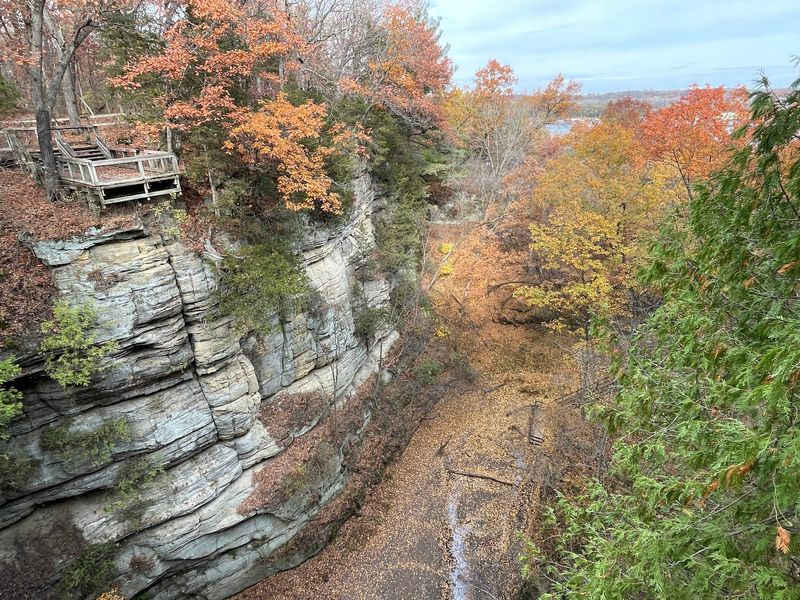
Arriving at Starved Rock with curiosity about a possible carved-wood sculpture is a perfectly reasonable thing to do. Treating that curiosity as a verified destination is where the plan needs adjusting.
Ask at the visitor center whether staff can point you toward the Toth-associated carving or confirm whether it is currently accessible from a marked trail. A brief conversation there does more good than an hour of off-trail searching, and it keeps the visit within the safety and access boundaries DNR’s improvement project page makes clear right now.
If the carving turns out to be unlocatable that day, or if staff cannot confirm its current location, the park still delivers. Marked trails, canyon light, river overlooks, and a landscape that took glaciers thousands of years to carve are not a consolation prize.
Starved Rock’s DNR page lists no entrance charge, which means the documented experience costs nothing to try. A Roadside America report pointing toward a Toth sculpture in the area is a lead worth following, not a guarantee worth banking on.
The best Illinois discoveries rarely announce themselves. Sometimes the trail itself, and the questions it raises, turns out to be the whole point.
Share this story