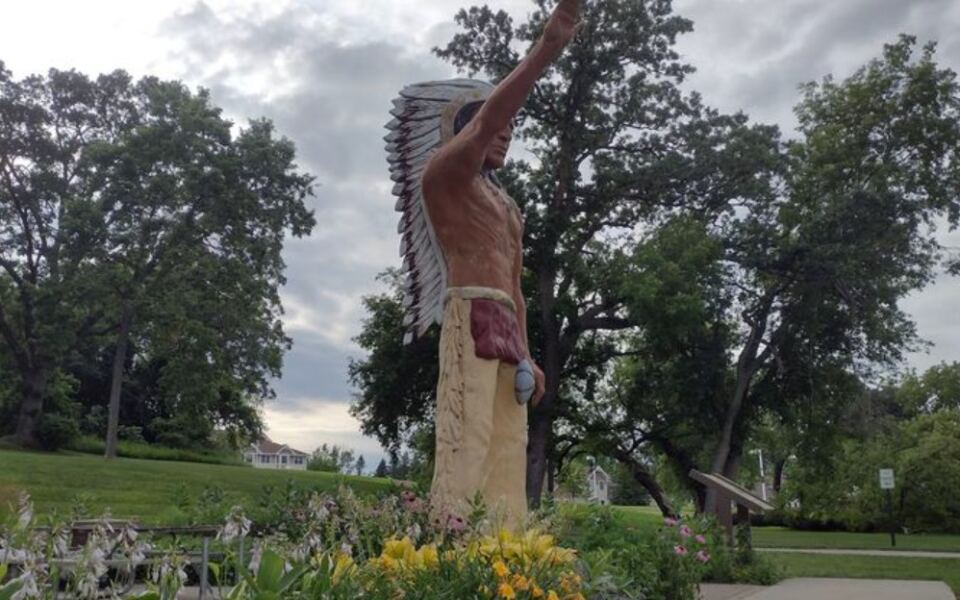
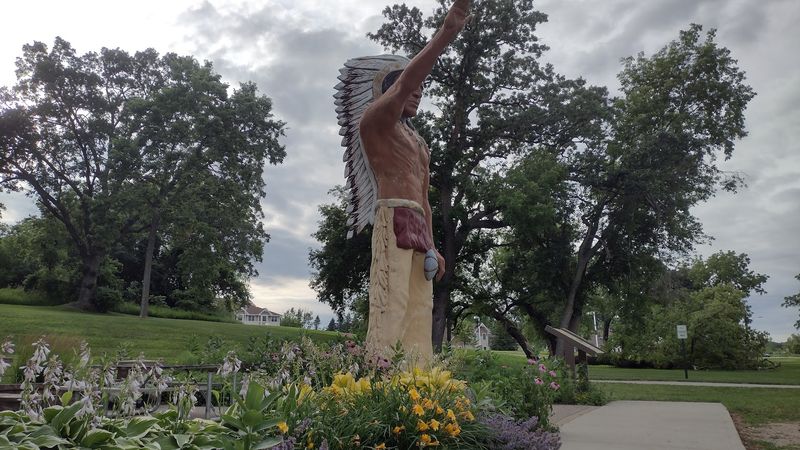
There is a 23-foot tall figure standing at the edge of a quiet Minnesota lake, and most people driving past nearly miss him. He is carved with remarkable detail, dressed in traditional Native American regalia, and he has been watching over the water for decades.
This giant statue is one of those roadside surprises that makes you slow down, pull over, and reach for your camera. Once you know he is there, you will absolutely want to see him for yourself.
The Giant Who Guards the Lake
Most roadside attractions make you wonder why someone bothered. Chief Wenonga is not one of those.
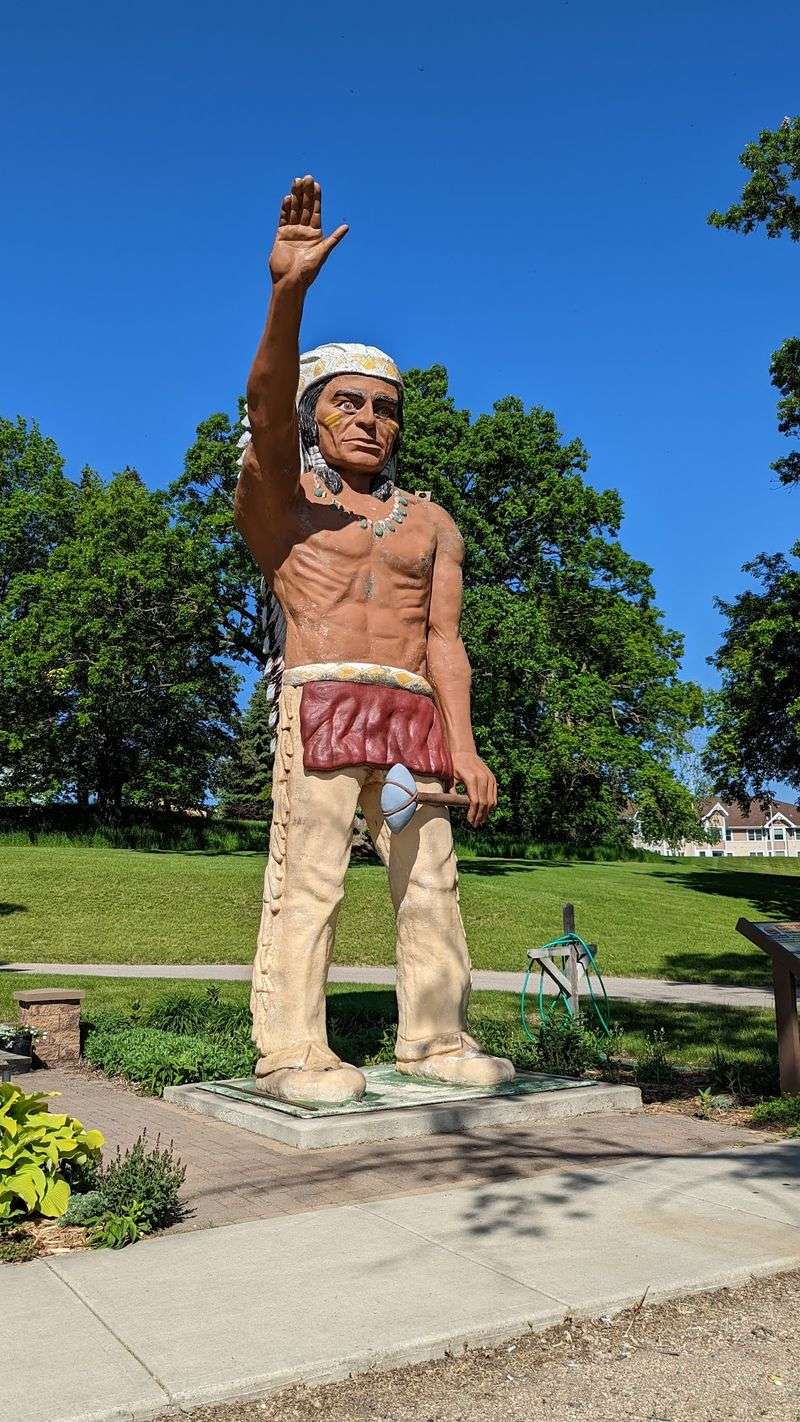
Standing a full 23 feet tall along State Highway 78 in Battle Lake, Minnesota, this towering figure commands attention the moment you spot him from the road.
He represents Chief Wenonga, a Dakota leader historically connected to the land surrounding Otter Tail Lake, which the town of Battle Lake sits beside. The statue was created as a tribute to the Native American heritage of the region, and it carries that responsibility seriously.
The craftsmanship is genuinely impressive up close. The feathered headdress, the facial expression, the posture all communicate something dignified and deliberate.
This is not a gimmick. He feels like a real monument, and the lake shimmering behind him only adds to the effect.
Where to Find the Statue and What to Expect
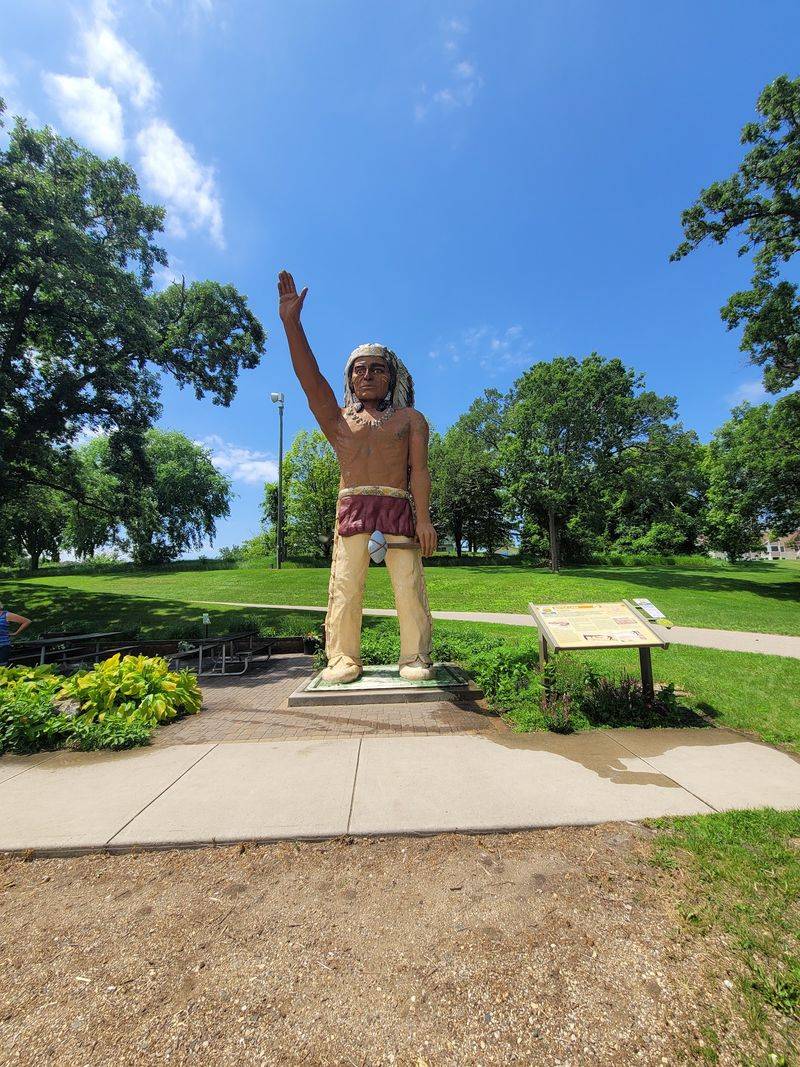
The Chief Wenonga Statue sits at 697-799 Lake Avenue North in Battle Lake, Minnesota. The site is open 24 hours a day, every day of the week, which means a sunrise or golden-hour visit is entirely possible and honestly worth the early alarm.
A generous parking lot sits right alongside the statue, making it easy to pull in without any stress. There are clean restrooms available on-site during warmer months, which travelers on long road trips will appreciate more than almost anything else.
Informational signs are placed around the area, giving visitors real historical context about Chief Wenonga and the Indigenous peoples who called this part of Minnesota home. You are not just looking at a big statue.
You are reading a story that deserves to be told, and the site does a solid job of telling it.
The History Behind the Name
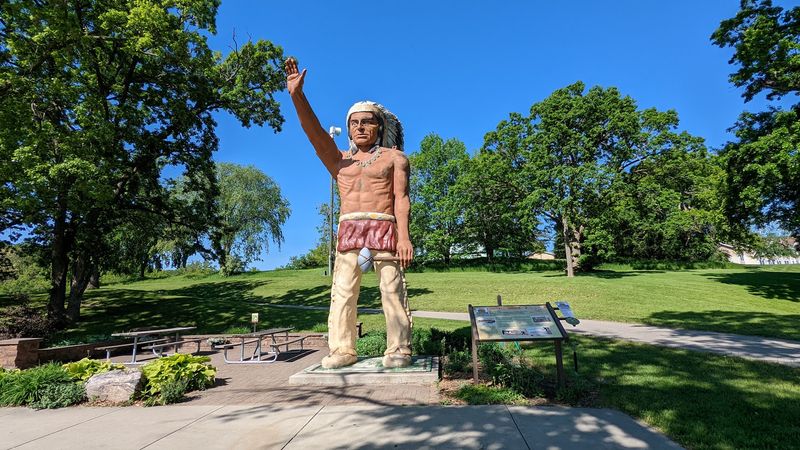
Chief Wenonga was a Dakota leader whose name is deeply tied to the lakes and forests of west-central Minnesota. The area around Battle Lake carries layers of Indigenous history, and the statue was designed to honor that connection rather than let it fade from public memory.
The town itself takes its name from a battle that reportedly took place between the Ojibwe and Dakota peoples near the lake long before European settlers arrived. That history is serious and complex, and the statue serves as one visible reminder that this land has a story stretching back far beyond the town’s founding.
Learning even a little of that background before you visit changes how you look at the statue. He stops being just a big roadside figure and becomes something closer to a landmark with genuine weight behind it.
That shift in perspective is worth the short read on those informational signs.
A Classic Example of the Muffler Man Tradition
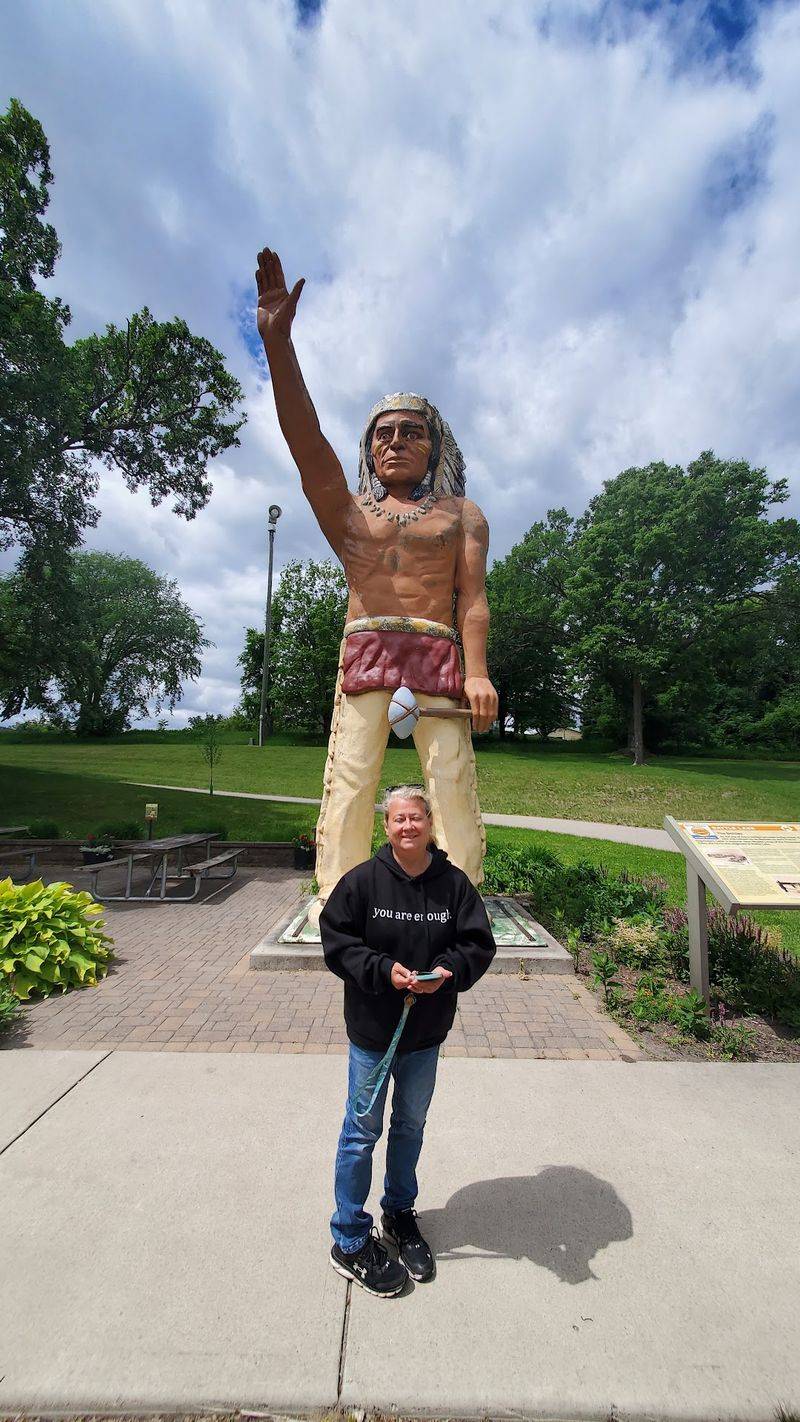
Road trip enthusiasts and roadside Americana fans will recognize Chief Wenonga as part of a beloved American tradition. He belongs to the family of large fiberglass figures commonly known as Muffler Men, a category of giant roadside statues that were produced starting in the 1960s to attract attention to businesses and towns across the country.
The Native American chief style is one of the classic variations within this tradition, and Chief Wenonga is widely considered one of the better-preserved and more impressive examples you will find anywhere. The detail work on his figure holds up remarkably well compared to others of his kind.
For collectors and fans of roadside Americana, tracking down Muffler Men across the country has become a genuine hobby. Finding one this well-situated, with a real lake view and a clean surrounding park, feels like hitting a small jackpot on a long road trip through Minnesota.
The View of Battle Lake That Comes Free With Every Visit
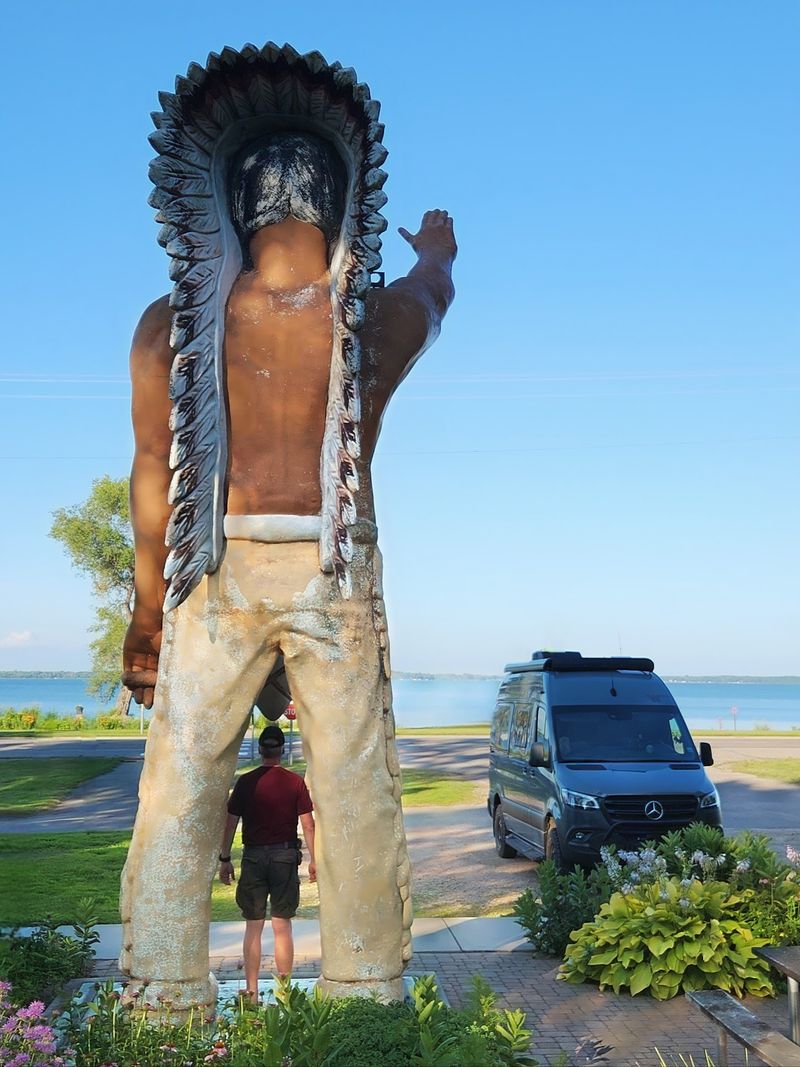
Standing near the statue and turning toward the water gives you one of the more effortlessly beautiful views in Otter Tail County. Battle Lake stretches out wide and calm, catching the light in a way that makes it hard to leave quickly.
The combination of the towering statue and the open water behind it creates a scene that photographs extremely well in almost any season.
Fall visits bring warm amber and red tones to the treeline along the far shore, making the whole scene feel like a postcard someone forgot to mail. Summer mornings bring mist off the water and a stillness that feels genuinely peaceful before the day picks up.
Visitors have mentioned stopping here with ice cream from a nearby shop and simply sitting with the view for a while. That kind of unplanned, unhurried moment is exactly what small-town Minnesota does best.
The Butterfly Garden That Surprises First-Time Visitors
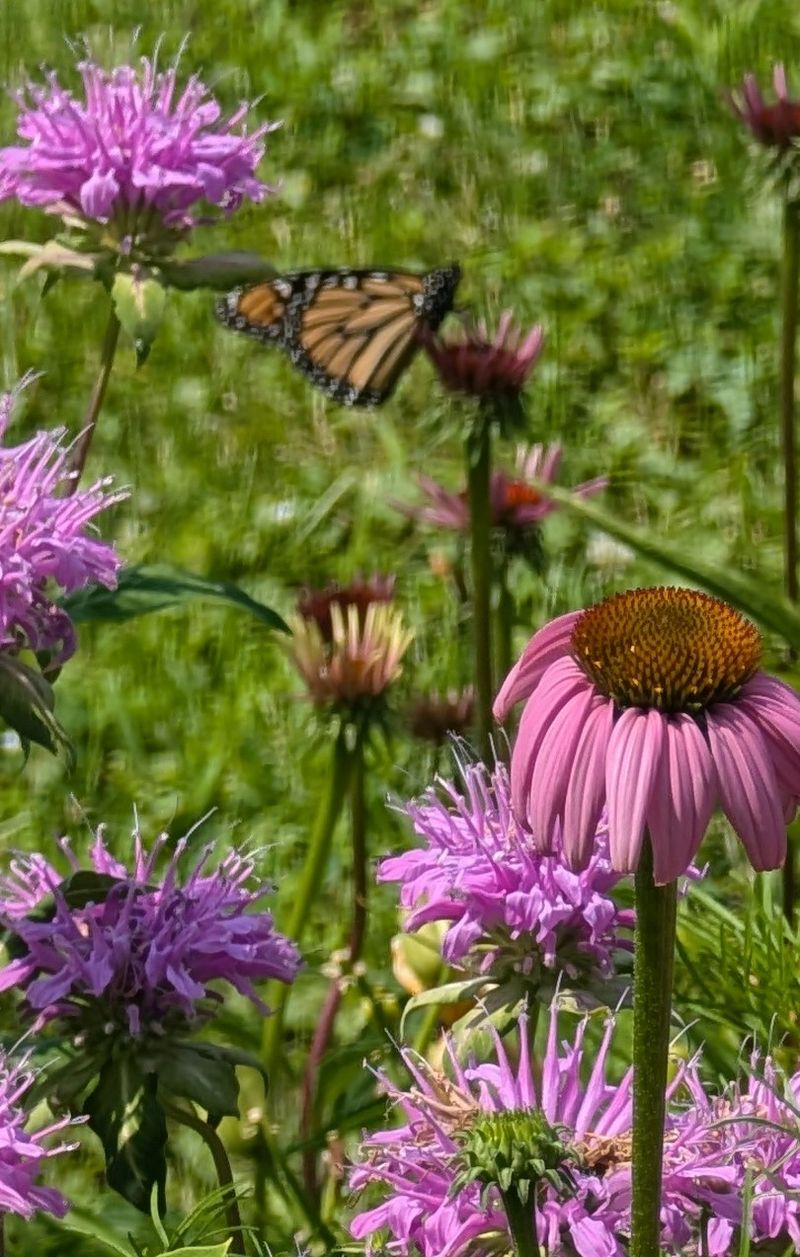
Most people arrive expecting a big statue and a parking lot. The butterfly garden is the part nobody sees coming.
Tucked into the park area near the statue, the garden attracts a noticeable number of butterflies during warmer months, turning what might have been a quick two-minute stop into a longer, more relaxed visit.
Monarchs and other native species have been spotted here, which makes the spot genuinely appealing to anyone who enjoys nature photography or just appreciates a quiet moment with something beautiful. The garden adds a softness to the site that balances nicely against the boldness of the towering statue.
Children tend to love this part of the stop. Watching butterflies land on flowers a few feet away has a way of holding young attention better than any screen.
It is one of those small, real details that makes the Chief Wenonga site feel more thoughtfully put together than a typical roadside pull-off.
The Paved Bike Trail That Starts Right Here
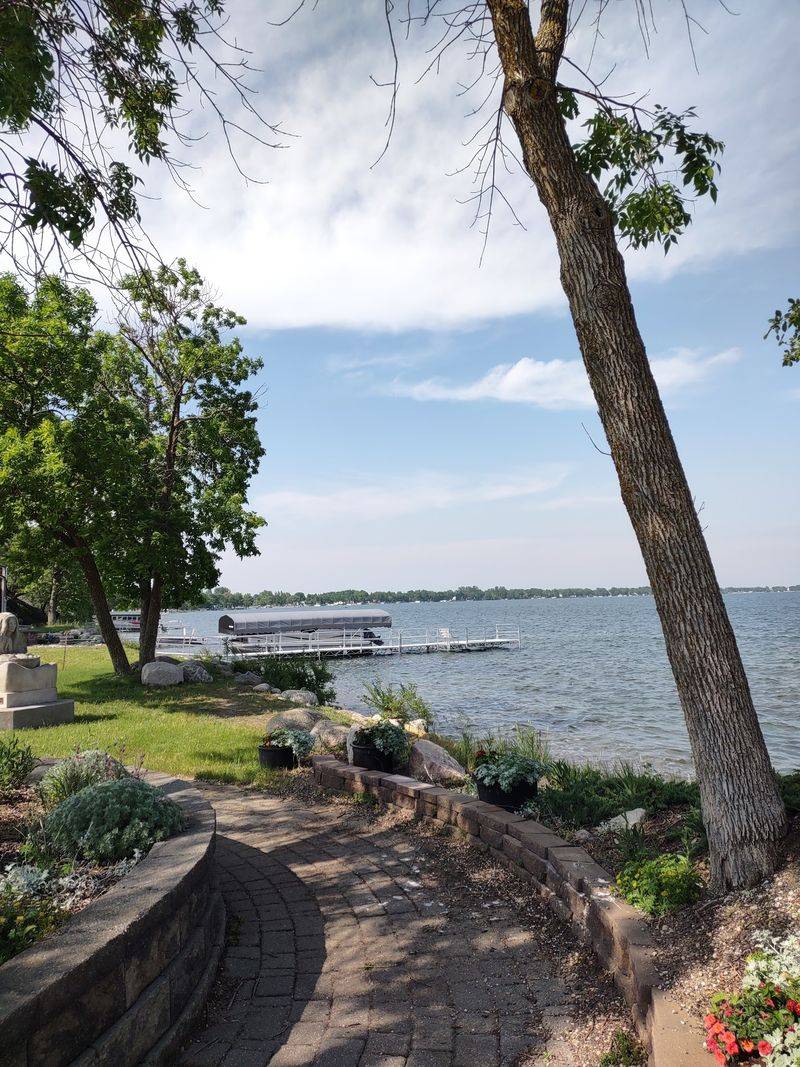
Cyclists already know something that casual visitors often miss. The paved bike trail that loops around Battle Lake begins right at this site, making the Chief Wenonga parking area the natural starting point for one of the more enjoyable rides in west-central Minnesota.
The full loop around the lake covers just over 11 miles of paved trail, which is a satisfying distance for most recreational riders. Those who want more can extend the ride for additional miles by looping again.
The trail surface is well-maintained, and the scenery along the water keeps the ride from feeling like work.
The site even has an air pump available for cyclists, which is a small but genuinely useful touch. Arriving to find a slow tire and discovering a pump right there has probably saved more than a few rides.
Pack a snack, check your tires, and start pedaling with the Chief watching you off from behind.
Geocaching at the Base of a Giant Chief
The geocaching community has not overlooked Chief Wenonga. A geocache is hidden at this site, which adds a layer of interactive fun for visitors who participate in the worldwide treasure-hunting hobby.
If you have never tried geocaching before, this is actually a pretty satisfying spot to start.
The combination of a landmark this distinctive with a hidden cache nearby makes for a genuinely memorable find. Geocachers often describe the feeling of locating a cache in an unexpected or scenic place as one of the best parts of the hobby, and finding one at the feet of a 23-foot chief next to a Minnesota lake fits that description well.
The site is easy to access and well-lit after dark, so an evening geocaching visit is entirely reasonable. Whether you are a seasoned cacher logging another find or a curious newcomer, the Chief Wenonga stop delivers a little more adventure than most rest areas ever manage.
What the Informational Signs Actually Teach You
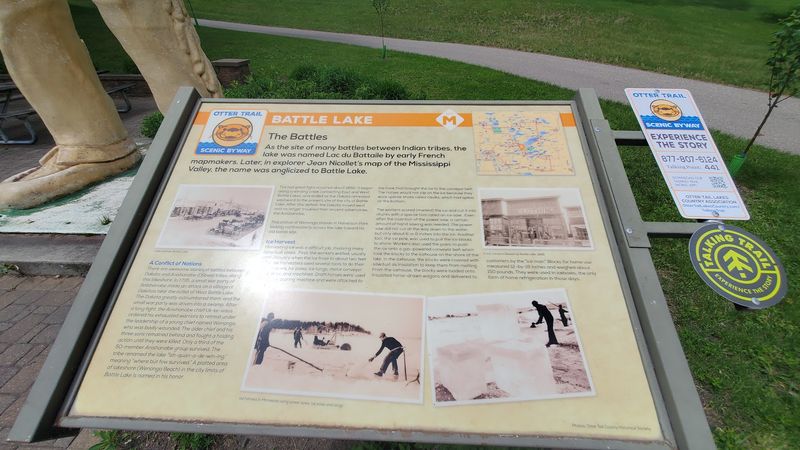
A lot of roadside monuments put up a single plaque and call it done. The Chief Wenonga site goes further.
Multiple informational signs are placed around the area, covering the history of the local Indigenous peoples, the significance of Chief Wenonga himself, and the broader cultural context of this part of Minnesota.
Some visitors have described the signage as genuinely informative, noting connections to Minnesota history including the Civil War era and the complex relationships between Native nations and early settlers in the region. Reading through everything takes maybe ten minutes, but those ten minutes add real depth to the visit.
Coming away from a roadside stop with actual knowledge you did not have before is rarer than it should be. The people who put this site together clearly wanted visitors to leave with more than just a photo.
That intention shows, and it makes the Chief Wenonga stop feel like something worth recommending to others.
A Year-Round Stop With Seasonal Personality
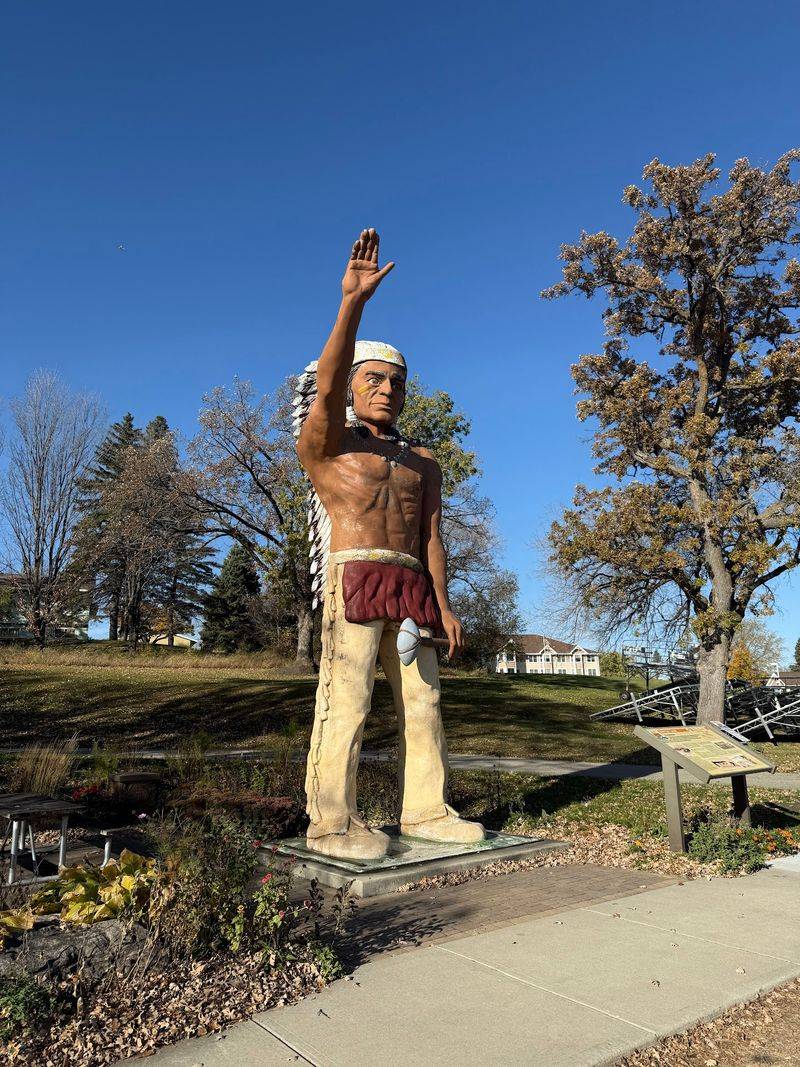
The statue is accessible every single day of the year, around the clock. That said, each season brings a noticeably different feel to the site.
Summer turns the park into a lively stop with cyclists, families, and visitors spreading out near the water. Fall wraps the whole area in color and quiet.
Winter visits are quieter still, with the restrooms closed during cold months, but the statue itself remains standing and visible from the road. There is something striking about seeing a 23-foot chief dusted with snow against a gray Minnesota sky.
Spring brings the butterfly garden back to life and fills the trail with people shaking off the long winter.
Planning a visit around a specific season is worth thinking about. Fall tends to draw the most praise for the combination of foliage and lake views, but honestly, any time you happen to be passing through Battle Lake is a good enough reason to stop.
The Small Town Surrounding the Big Chief
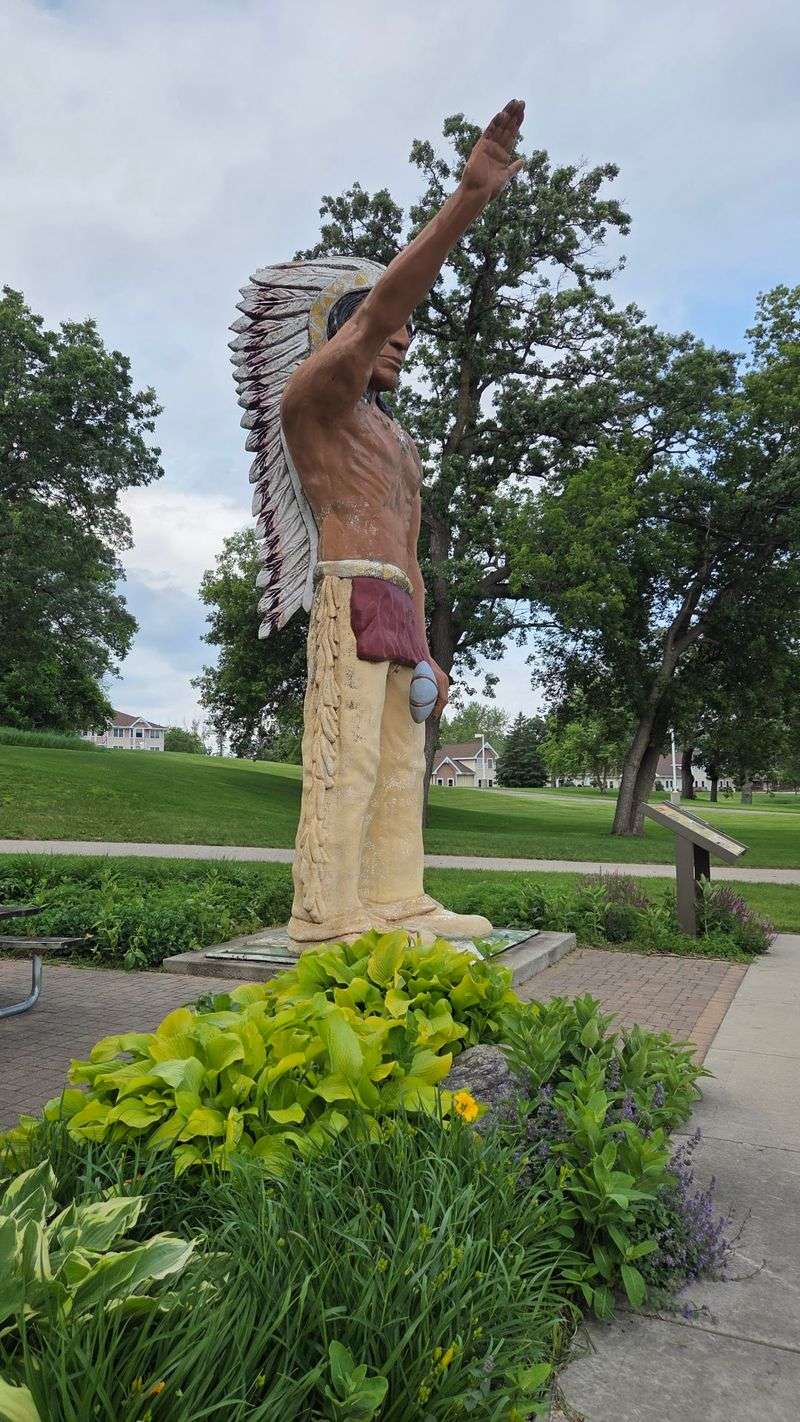
Battle Lake itself is the kind of small Minnesota town that reminds you why people fall in love with small Minnesota towns. The community sits in Otter Tail County, an area known for its abundance of lakes and its laid-back, outdoorsy atmosphere.
The town is compact but has enough character to make a short wander worthwhile.
Local shops and restaurants sit within easy reach of the statue site, so a quick stop can easily stretch into a longer afternoon. The town has a genuine local feel rather than the overly curated charm that some tourist-focused small towns project.
People here actually live here, and that comes through.
The area around Battle Lake draws visitors who come for the fishing, the trails, and the general peacefulness of west-central Minnesota lake country. The Chief Wenonga statue is often the first thing that catches a newcomer’s attention, but the town itself tends to be what brings people back.
Practical Tips Before You Pull Off the Highway
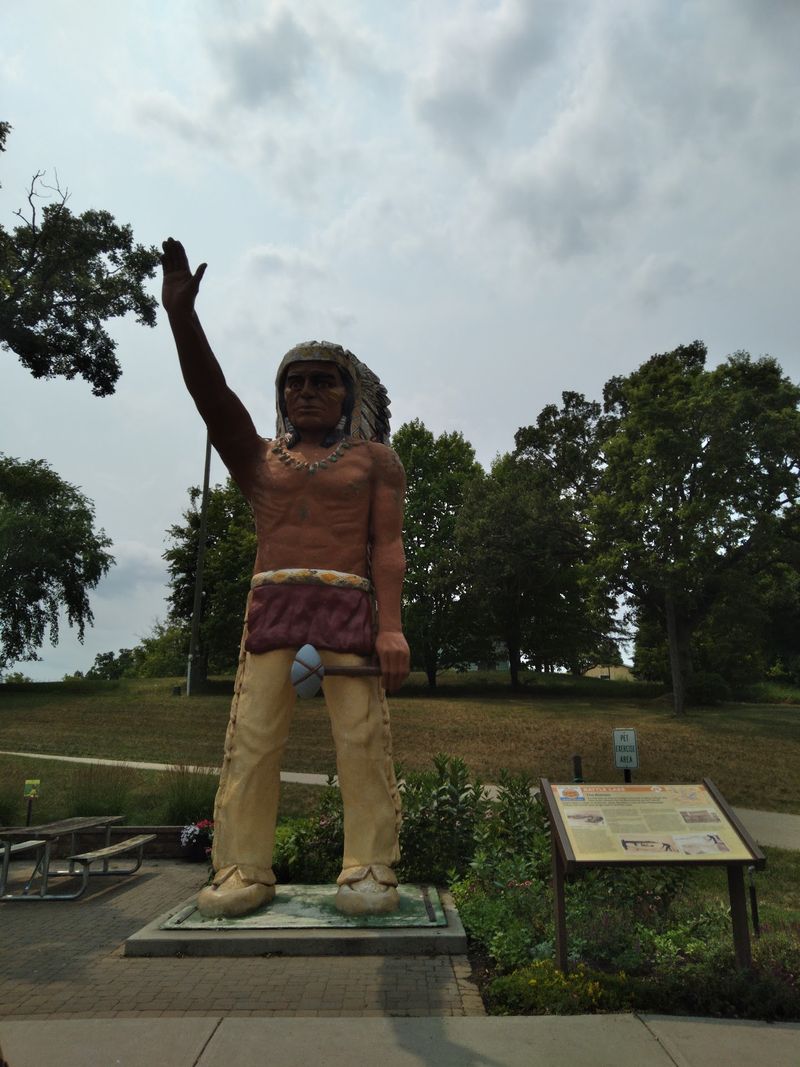
A few practical notes make the visit smoother. The parking lot is large and easy to navigate, even for vehicles towing trailers or boats, which is relevant in lake country where a lot of travelers are hauling something.
Arriving during daylight hours gives you the best view of the statue and the lake, though the site is well-lit after dark.
Restrooms are available on-site during warmer months but are closed in winter, so plan accordingly if you are passing through between late fall and early spring. Dogs are welcome on the trail and the surrounding area, with waste bags available for pet owners.
The site is free to visit, which is always a welcome detail. There is genuinely no reason not to stop here if you are anywhere near Battle Lake.
Give yourself at least 20 to 30 minutes to read the signs, walk around the statue, and take in the lake view properly.
Share this story