Most people visit a museum for the exhibits, a library for the books, or a capitol building for the history. But sometimes the building itself is the main event.
Across the United States, there are places where the architecture is so striking, so detailed, or so downright unexpected that visitors spend more time staring at the walls, ceilings, and facades than anything else inside. From a house built over a waterfall to a library that looks like a palace, these 14 American places prove that the structure surrounding an experience can be just as memorable as the experience itself.
Whether you are planning a road trip or just looking for something genuinely worth seeing, this list covers buildings that leave a lasting impression from the outside in.
Hearst Castle, San Simeon, California
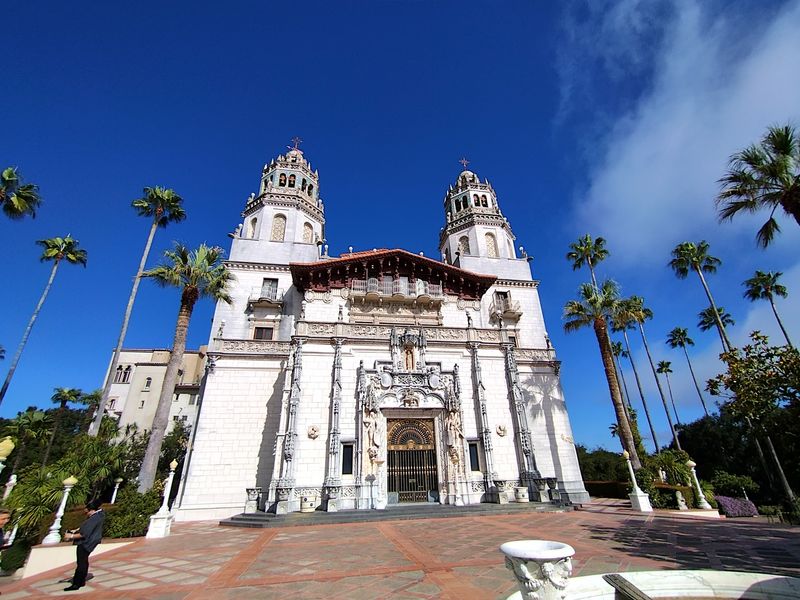
Newspaper publisher William Randolph Hearst did not build a home so much as he assembled a world. Architect Julia Morgan spent nearly three decades designing and refining Hearst Castle, and the result is a hilltop estate that borrows heavily from Spanish Colonial Revival and Mediterranean styles, mixing towers, arched colonnades, tiled rooftops, and sculpted terraces into something unlike any other private residence in America.
The famous Neptune Pool alone, an outdoor swimming pool flanked by classical columns and ancient Roman temple fragments, is worth the drive up the hill. The view of the Pacific Coast Highway and rolling hills below adds another layer to the experience.
Multiple tours operate regularly, including the Grand Rooms tour, the Upstairs Suites tour, and the Cottages and Kitchen tour. Each offers a different angle on the property.
But honestly, standing outside and taking in the full scale of the place is where most visitors stop and stare longest.
Biltmore House, Asheville, North Carolina
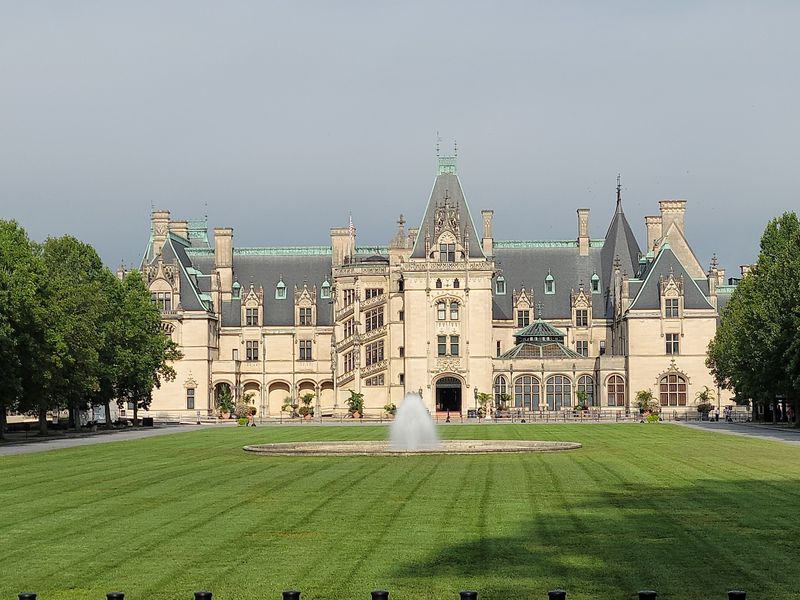
At 250 rooms, Biltmore House is the largest privately owned house in the United States, and it was completed in 1895 for George Vanderbilt. The French Renaissance style is immediately obvious from the approach, with a steeply pitched roofline, stone turrets, and an elaborate carved facade that looks transplanted straight from the Loire Valley.
Landscape architect Frederick Law Olmsted, who also designed New York’s Central Park, laid out the surrounding grounds and gardens. The approach road was intentionally designed to build anticipation before the house comes into full view, which is a detail that still works exactly as planned more than a century later.
The estate remains open year-round, with house tours and grounds admission available. Spring brings the famous Biltmore gardens into bloom, making the outdoor spaces just as compelling as the architecture.
The sheer scale of the building tends to stop first-time visitors in their tracks before they even reach the front door.
Fallingwater, Mill Run, Pennsylvania
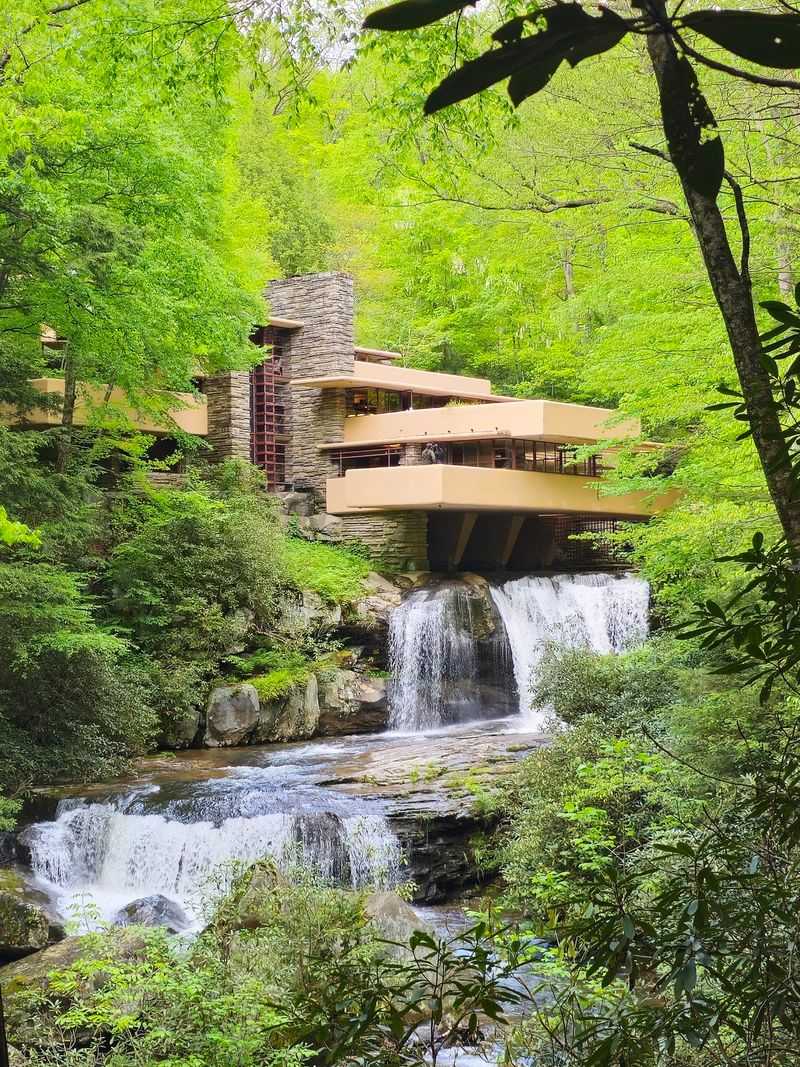
Frank Lloyd Wright reportedly designed Fallingwater in just a few hours after his client, department store owner Edgar Kaufmann Sr., called to check on the project’s progress. Whether that story is fully accurate or not, the result is one of the most photographed private residences ever built.
The house sits directly over Bear Run waterfall, with horizontal concrete terraces cantilevered above the rushing water below. Stone walls pull local sandstone into the structure, blurring the boundary between the building and the surrounding Pennsylvania forest.
The American Institute of Architects has called it the best all-time work of American architecture.
Fallingwater completed a significant preservation project ahead of its 90th anniversary in 2026 and is welcoming visitors for architectural tours again. Timed entry tickets are recommended.
The exterior view from the classic photography spot downstream is what most visitors remember most clearly, even after spending time inside the house itself.
Thomas Jefferson Building, Washington, District of Columbia
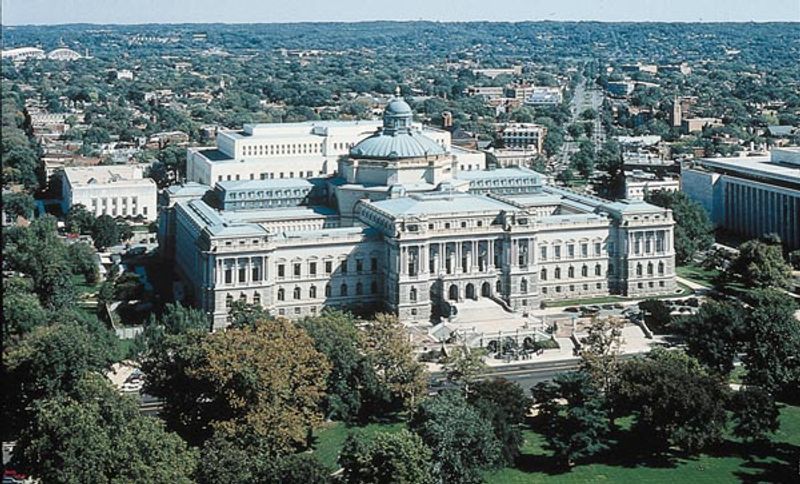
The Library of Congress holds the largest collection of books and recorded knowledge in the world, but the Thomas Jefferson Building gives visitors a reason to look up long before they find a single shelf. Opened in 1897, the building was designed in the Italian Renaissance style and remains one of the most ornate government buildings in the country.
The Great Hall inside features marble staircases, mosaic tile floors, painted ceilings, bronze statues, and carved stone details that took years to complete. The Main Reading Room, visible from a public gallery during designated hours, is a circular space topped by a soaring coffered dome that tends to leave visitors genuinely speechless.
The building is open Tuesday through Saturday and admission is free. Architectural tours are available and cover the building’s art, history, and construction in detail.
For anyone who appreciates craftsmanship on a grand scale, this is one of Washington’s most rewarding stops.
Stephen A. Schwarzman Building, New York City, New York
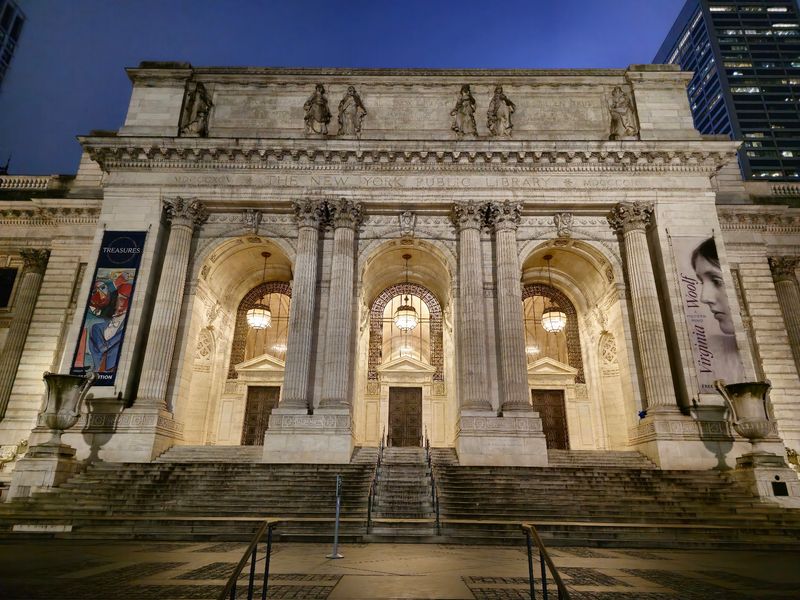
The two marble lions flanking the entrance on Fifth Avenue are so well known that New Yorkers gave them names, Patience and Fortitude, during the Great Depression. But the lions are just the introduction to a building that competes with any palace or museum facade in the city.
Completed in 1911, the Stephen A. Schwarzman Building is the flagship location of the New York Public Library system and a masterpiece of Beaux Arts architecture.
The exterior features carved stone, arched windows, and a grand staircase that has appeared in countless films and photographs. Inside, the Rose Main Reading Room stretches nearly two city blocks in length and is decorated with painted ceilings and ornate chandeliers.
The building is open throughout the week and admission is free. NYPL actively promotes the building as a destination for art and architecture exploration.
Even a short visit covers a lot of visual ground across multiple floors and rooms.
Boston Public Library Central Library, Boston, Massachusetts
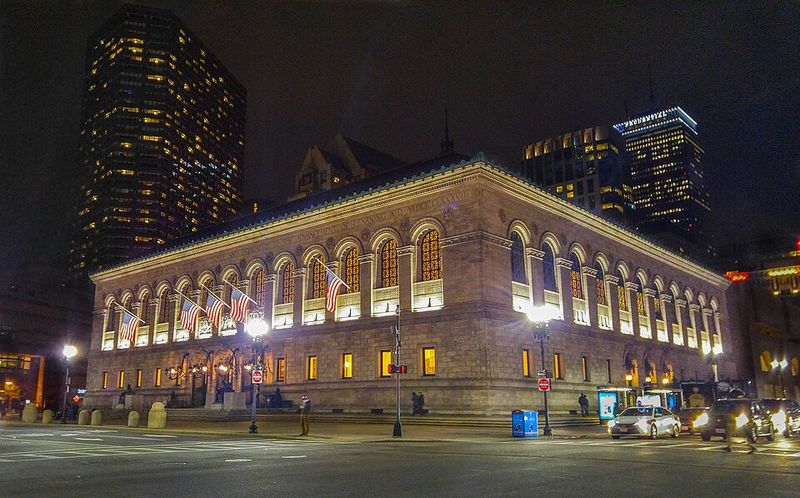
Boston’s Central Library in Copley Square has been drawing visitors for its architecture since it opened in 1895, making it one of the first large free municipal libraries in the United States. The McKim Building, named after architect Charles Follen McKim, is a Renaissance Revival structure built from Milford pink granite and featuring a row of arched windows across its broad facade.
Step inside and the building opens up into vaulted corridors, marble staircases, and an interior courtyard modeled after the Palazzo della Cancelleria in Rome. The Bates Hall reading room upstairs features a barrel-vaulted ceiling and long rows of reading tables that give the space a cathedral-like quality without any of the religious imagery.
The library offers both self-guided architectural tours and scheduled group tours covering the murals, art, and building history. Admission to tour the building is free.
It sits directly across from Trinity Church, making Copley Square one of the most architecturally rich public spaces in New England.
Milwaukee Art Museum, Milwaukee, Wisconsin
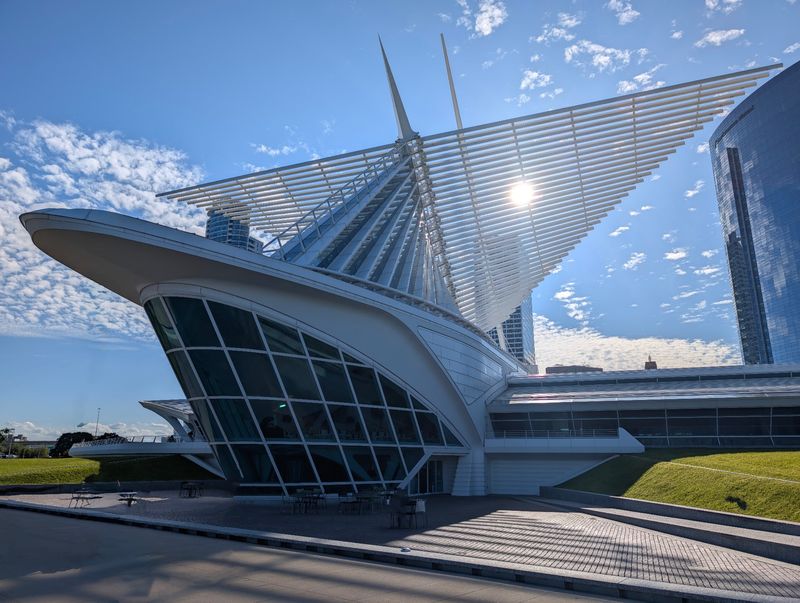
Santiago Calatrava’s Quadracci Pavilion, completed in 2001, turned the Milwaukee Art Museum into a destination for architecture before most visitors knew anything about the collection inside. The structure extends toward Lake Michigan with a sweeping white form that is hard to categorize at first glance.
The most striking feature is the Burke Brise Soleil, a movable sunscreen made of 72 steel fins that open and close like a massive pair of wings. It moves twice daily when the museum is open and has become one of the most photographed architectural moments in Wisconsin.
The pavilion connects to an older building by Eero Saarinen, which adds another layer of architectural history to the site.
The museum is open throughout the week except Tuesdays. The waterfront setting along Lake Michigan makes the exterior walk equally worthwhile.
For architecture followers, Milwaukee’s lakefront is genuinely worth a detour, and this building is the primary reason why.
Vizcaya Museum and Gardens, Miami, Florida
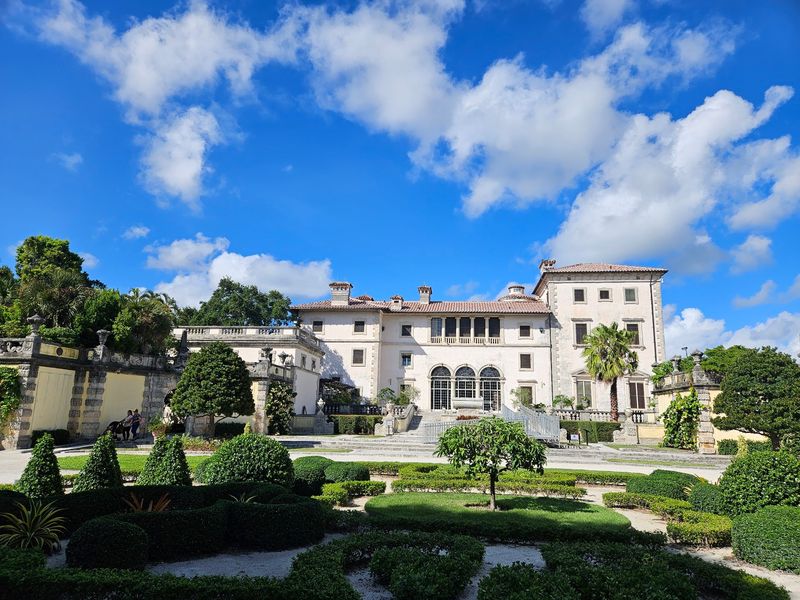
James Deering, a co-founder of International Harvester, built Vizcaya between 1914 and 1922 as a winter residence, drawing on Italian Renaissance and Baroque influences for a property that feels entirely out of place with its Miami surroundings, in the best possible way. The Main House facade is detailed with carved stone, decorative balconies, and a waterfront loggia that opens directly toward Biscayne Bay.
The formal gardens behind the house are laid out in a European style with fountains, sculpted hedges, stone pathways, and outdoor architectural features including a stone barge that sits permanently anchored just offshore. The barge was designed as a decorative breakwater and is one of the most photographed elements of the entire property.
Vizcaya is open daily except Tuesdays, with extended hours on select dates. The combination of the house exterior, gardens, and waterfront setting makes this one of South Florida’s most visually layered historic sites.
The building itself draws as much attention as anything inside.
Winchester Mystery House, San Jose, California
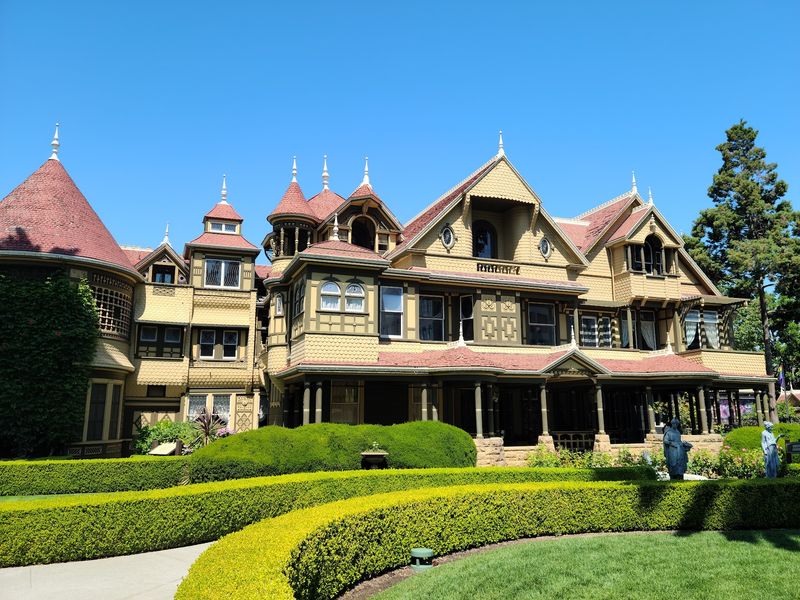
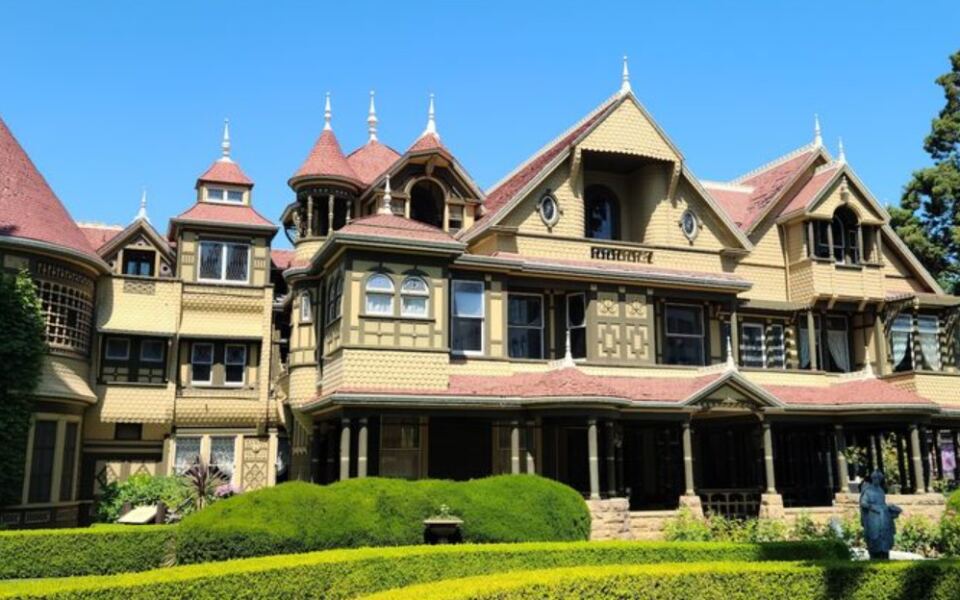
Sarah Winchester, widow of rifle manufacturer William Wirt Winchester, reportedly began construction on her San Jose home in 1884 and kept building continuously until her passing in 1922. What resulted is a Victorian mansion with 160 rooms, 2,000 doors, 10,000 windows, 47 fireplaces, and architectural oddities including staircases that lead into ceilings and doors that open to exterior walls.
The exterior alone is a visual puzzle. Multiple rooflines, turrets, gabled dormers, and additions pile on top of each other in a way that makes the building look like several different houses merged into one.
No single architectural style dominates because the construction never followed a master plan.
Daily tours operate throughout most of the year, covering the mansion’s strange layout and history. The property also runs specialty tours focusing on specific architectural features and behind-the-scenes areas.
Whether the legends surrounding the house interest you or not, the building’s sheer visual eccentricity is a genuinely compelling reason to visit.
Cathedral Basilica of St. John the Baptist, Savannah, Georgia
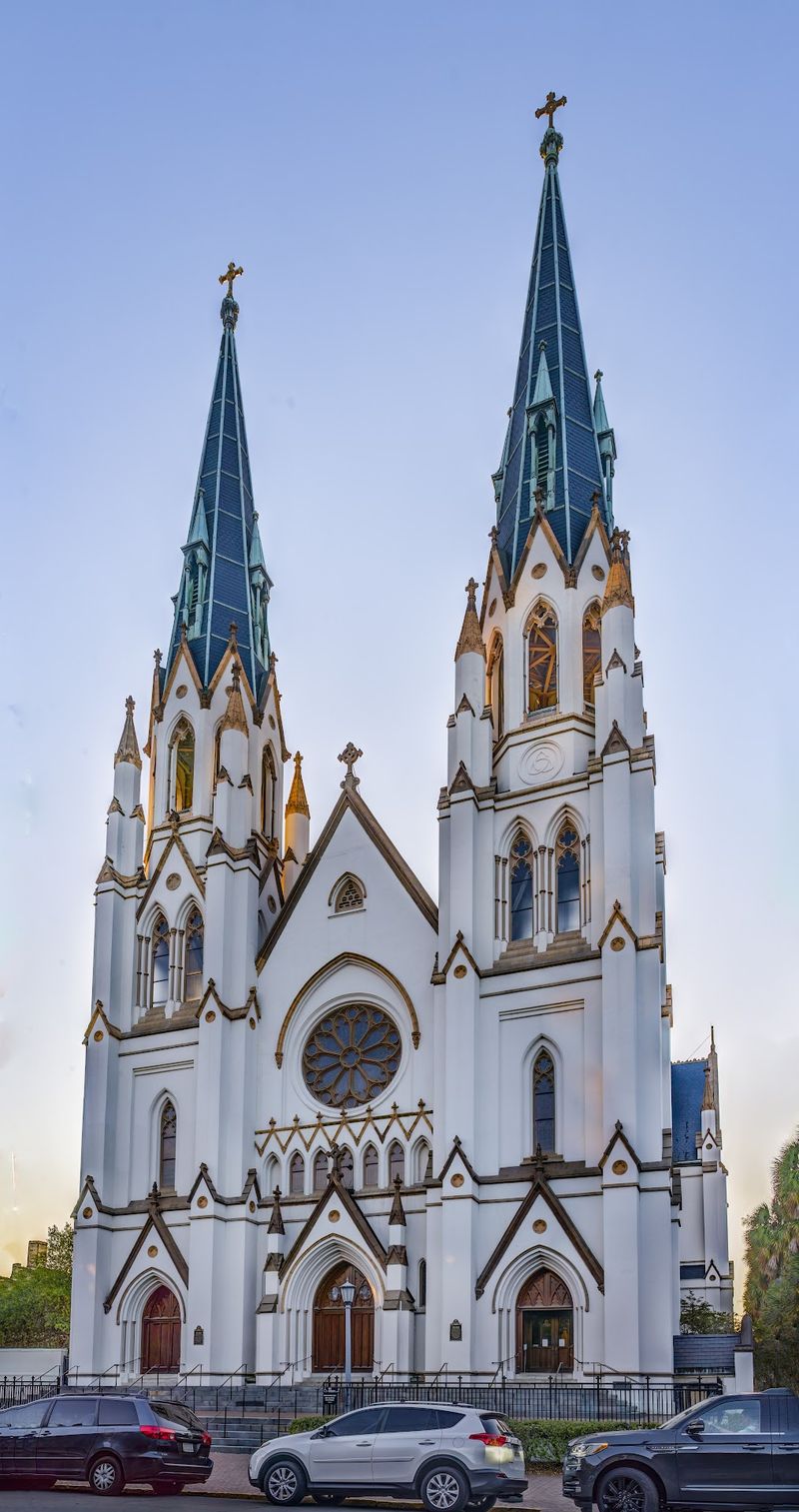
Rising above Lafayette Square in Savannah’s historic district, the Cathedral Basilica of St. John the Baptist is impossible to miss. Its twin spires reach 196 feet into the Georgia sky, making it one of the tallest and most recognizable structures on Savannah’s skyline.
The current building dates to 1876, though fire and restoration have shaped the structure significantly over the decades.
The French Gothic exterior features pointed arches, carved stone ornamentation, and large stained glass windows that face the square. Up close, the level of decorative detail across the facade becomes even more apparent.
The interior carries the same attention to ornament, with richly decorated ceilings, marble floors, and more stained glass throughout the nave.
The cathedral is an active parish that welcomes visitors for sightseeing and tours alongside regular worship services. Savannah’s walkable historic district makes it easy to combine a visit here with nearby squares and architecture.
The building reads as a landmark from almost every angle of approach.
St. Louis Cathedral, New Orleans, Louisiana
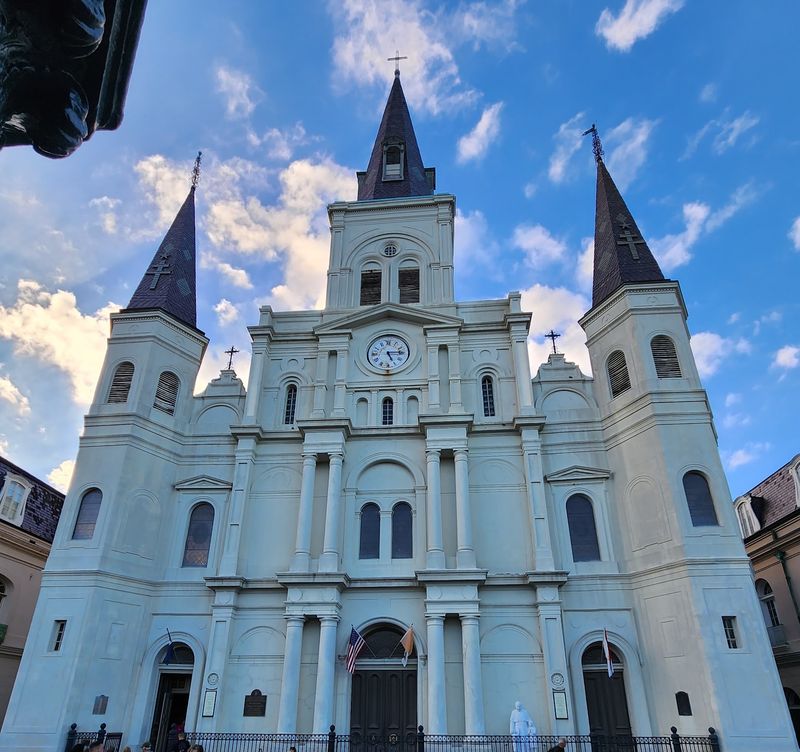
Few American buildings have been photographed from as many angles as St. Louis Cathedral. Standing at the top of Jackson Square in the French Quarter, its three white spires have anchored the New Orleans skyline for centuries and appear on more postcards and travel photographs than almost any other structure in the South.
The current building reflects multiple rounds of reconstruction, with the most significant version completed in 1851. The central tower is taller than the two flanking spires, creating an asymmetrical silhouette that is immediately recognizable.
The facade combines Spanish Colonial and French Baroque influences in a way that mirrors New Orleans’ layered cultural history.
As the oldest continuously active Catholic cathedral community in the United States, St. Louis Cathedral remains an active place of worship while welcoming visitors daily, subject to scheduled services and special events. The surrounding Jackson Square, with its street artists and iron fence, frames the building in a way that enhances its visual presence considerably.
Texas State Capitol, Austin, Texas
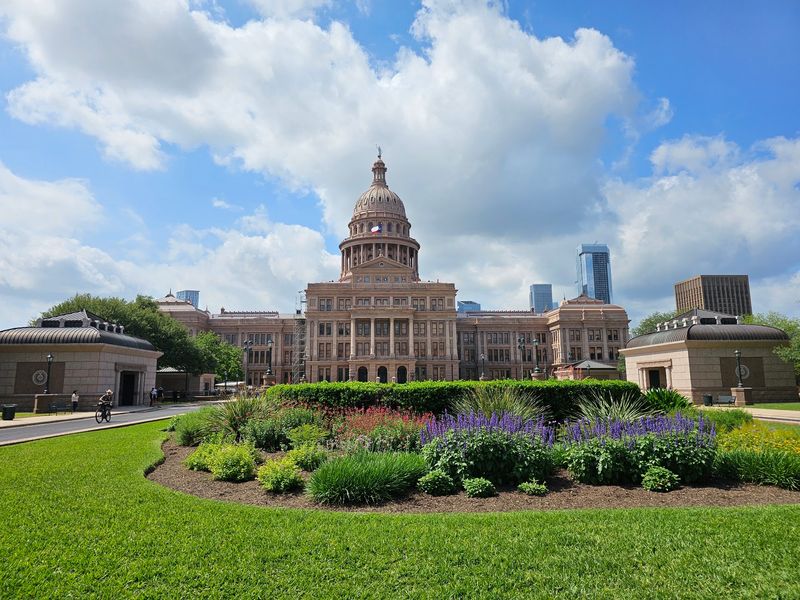
Everything is bigger in Texas, and the state capitol building makes sure visitors know it. Completed in 1888, the Texas State Capitol stands taller than the United States Capitol in Washington, a fact that Texans will mention without much prompting.
The building is constructed from Sunset Red granite quarried from Marble Falls, giving it a distinctive warm pink color that changes noticeably throughout the day as the light shifts.
The dome rises 302 feet above the ground floor and is topped by a zinc statue representing the Goddess of Liberty. Inside, the rotunda floor features a terrazzo star with the seals of the six nations that have governed Texas, which is a detail worth finding on a self-guided walk.
Free guided tours run throughout the week, and the building and grounds are open to the public. The underground Capitol Extension, added in 1993, connects the main building to additional office space without disrupting the historic exterior.
The grounds alone cover 22 acres of landscaped parkland.
Iowa State Capitol, Des Moines, Iowa
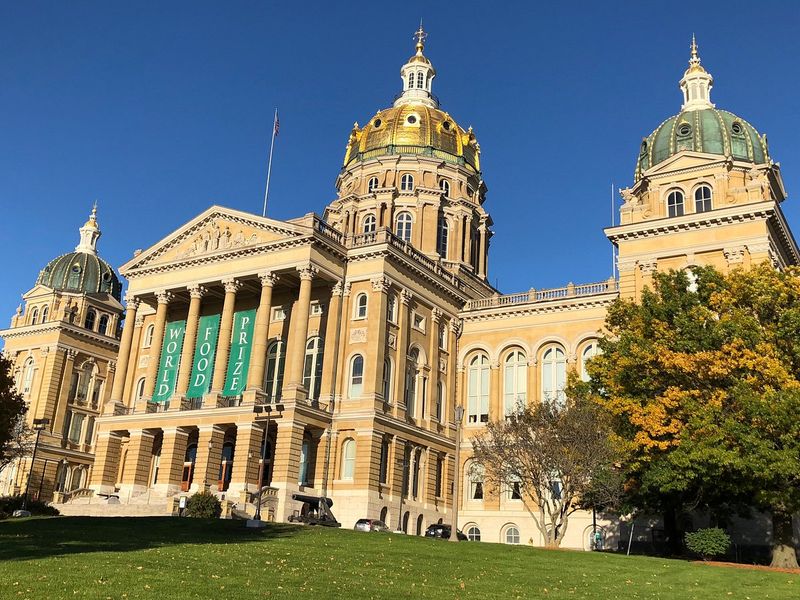
Most state capitols have one dome. Iowa’s has five, which immediately sets it apart from nearly every other government building in the country.
The central dome is covered in 23-karat gold leaf and rises 275 feet above the ground, catching sunlight in a way that makes the building visible from a considerable distance across Des Moines.
Construction took 17 years, from 1871 to 1886, and the building draws on a mix of Romanesque and Renaissance architectural styles. The interior features sweeping grand staircases, painted murals, decorative stonework, and ornate legislative chambers that reflect the ambitions of the era in which they were built.
Free guided tours are available Monday through Saturday, and self-guided visits are also welcome during open hours. The tour covers the building’s history, art, and architectural details across multiple floors.
For a state capitol that does not always appear on national travel lists, the Iowa building makes a strong case for itself based on the exterior silhouette alone.
Guardian Building, Detroit, Michigan
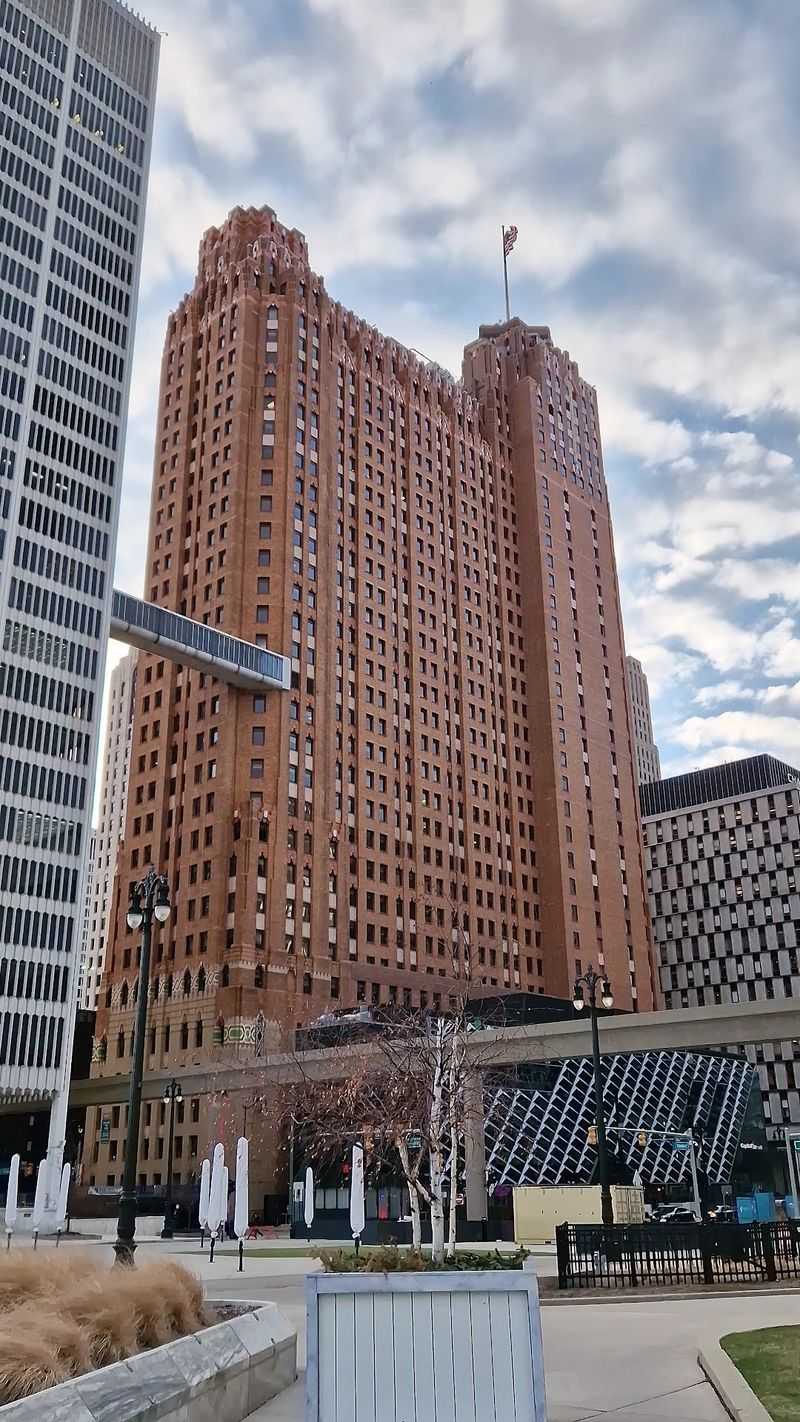
Built in 1929 and designed by architect Wirt Rowland, the Guardian Building in downtown Detroit is one of the finest surviving examples of Art Deco skyscraper design in the United States. The exterior is clad in Pewabic tile, Monel metal, and multicolored brick arranged in geometric patterns that make the building look more like a mosaic than a conventional office tower.
The lobby interior pushes the design even further. Vaulted ceilings covered in intricate tile work, decorative metalwork at every turn, and a color palette of orange, cream, and blue create a space that feels closer to a cathedral than a commercial building.
It earned the nickname “Cathedral of Finance” when it opened, and the label still fits.
The Guardian Building remains an active office building and hosts public events. Behind-the-scenes historical tours are currently available for visitors who want a guided look at the architecture and history.
Detroit’s architectural heritage runs deep, and this building is one of its strongest arguments.
Share this story