Some places on Earth make you stop and wonder how people thousands of years ago built something so extraordinary. Ancient ruins are more than old stones and broken walls.
They are windows into lives, cultures, and ideas that shaped the entire human story. From rose-red cities carved into cliffs to jungle temples swallowed by tree roots, these sites have survived wars, earthquakes, and centuries of time.
Each one tells a story that no history book can fully capture. Whether you are a seasoned traveler or someone who just loves a good mystery, these 20 ancient ruins are the kind of places that make the world feel bigger and more fascinating than you ever imagined.
Petra, Wadi Musa, Jordan
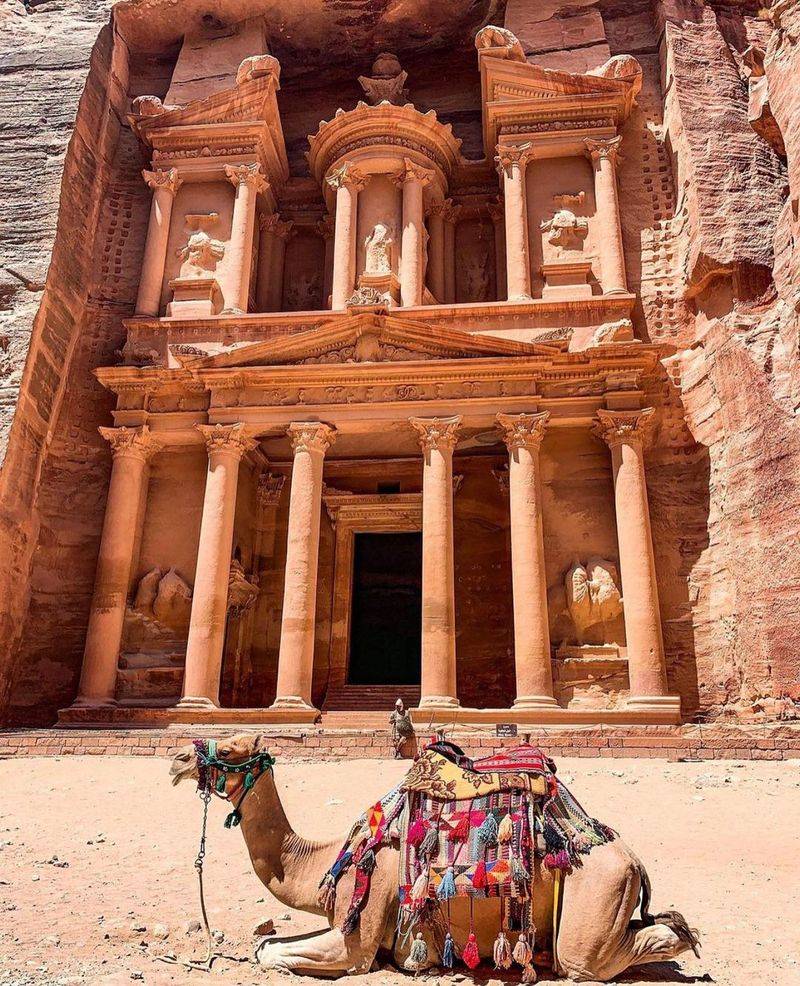
Walking through the narrow Siq toward the Treasury at Petra is one of those rare experiences that genuinely earns the word breathtaking. The Nabataean people carved this entire city directly into sandstone cliffs more than 2,000 years ago, and the scale of what they accomplished is hard to process until you are standing right in front of it.
Petra served as the capital of the Nabataean Kingdom and became one of the ancient world’s most important trading hubs. Merchants moving spices, silk, and incense through the Arabian Peninsula passed through these very corridors.
Beyond the Treasury, the site spreads into royal tombs, a colonnaded street, a massive theater, and the Monastery perched high above the valley.
The official visitor center publishes current opening hours for 2026, and most visitors recommend arriving early to beat both the crowds and the midday heat. A full day here barely scratches the surface.
Pompeii, Campania, Italy
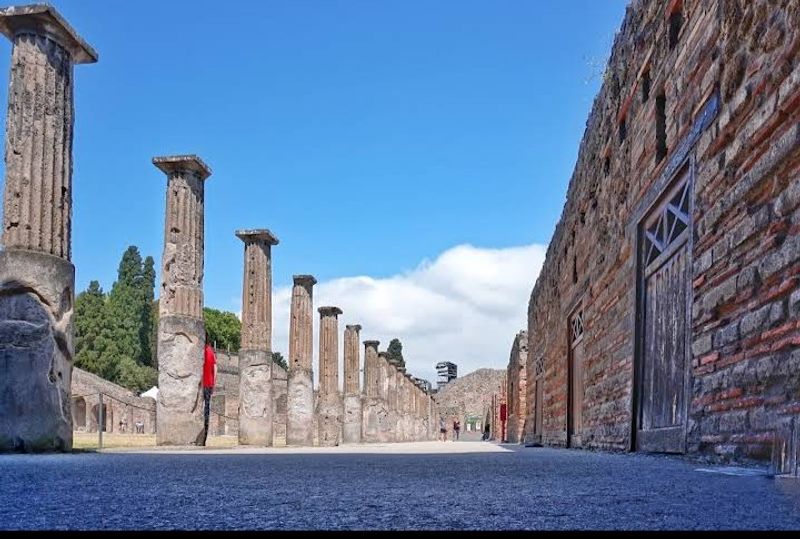
Few archaeological sites in the world offer the kind of detail that Pompeii does. When Mount Vesuvius erupted in AD 79, it buried the entire city under volcanic material almost instantly, and that tragic event accidentally preserved Pompeii in extraordinary detail for nearly 2,000 years.
Visitors today can walk along original Roman streets, peer into bakeries that still have grain mills in place, and see mosaics on floors that Romans once stepped across daily. The preserved graffiti on walls is particularly striking.
Ancient Romans wrote jokes, political opinions, and even advertisements directly onto their buildings.
The Archaeological Park of Pompeii continues operating with seasonal hours published for 2026. New excavations in recent years have revealed even more structures, including elaborately decorated rooms that were previously buried.
Pompeii is not a static ruin. It is an ongoing discovery, and that ongoing work keeps the site feeling genuinely alive.
Machu Picchu, Cusco Region, Peru
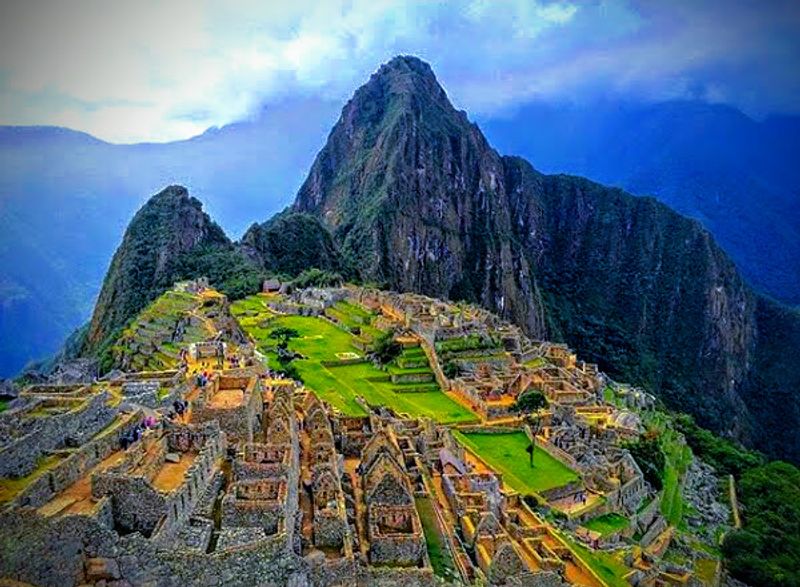
Perched at roughly 7,970 feet above sea level in the Peruvian Andes, Machu Picchu was constructed during the 15th century and is considered one of the finest examples of Inca engineering ever found. The stonework alone is remarkable.
Massive granite blocks were fitted together without mortar, yet many walls have survived centuries of mountain weather and seismic activity.
The site contains temples, royal residences, agricultural terraces, ceremonial plazas, and stairways connecting dozens of levels across the mountainside. The Intihuatana stone, believed to have served an astronomical function, remains one of the most studied features on the property.
Peru’s Ministry of Culture regulates visits through designated circuits and official ticket quotas for 2026, so booking in advance is genuinely necessary rather than just a suggestion. Early morning visits often reward travelers with mist rolling across the terraces before the site fills with other visitors.
The setting alone justifies the journey.
Angkor Archaeological Park, Siem Reap, Cambodia
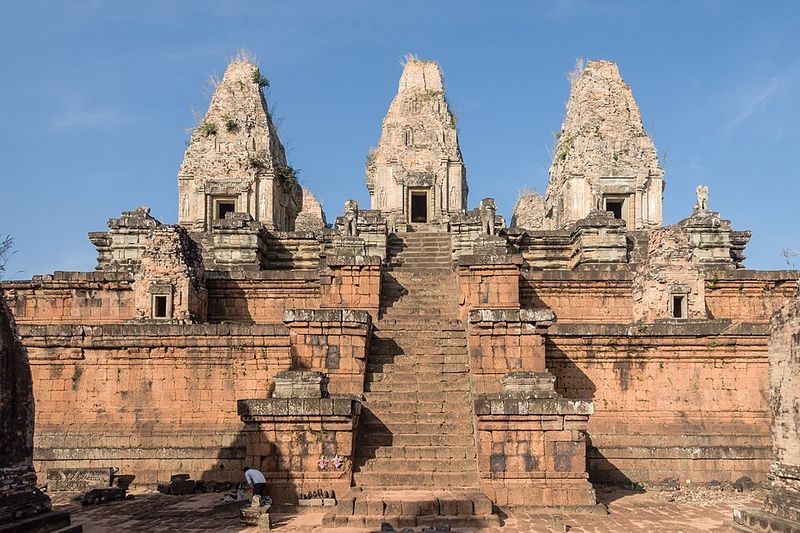
At its height, Angkor was one of the largest urban centers on Earth, and the temples and structures that survive across the park around Siem Reap give a genuine sense of how powerful the Khmer Empire once was. Angkor Wat is the most recognized monument, but spending all your time there means missing some of the park’s most compelling corners.
Bayon temple, with its dozens of massive stone faces carved into towers, has a completely different atmosphere. Ta Prohm, where enormous tree roots have grown directly through stone walls and doorways, is the kind of place that makes you feel like you have stumbled onto something that was never meant to be found.
Angkor Thom, the ancient walled city, contains its own collection of remarkable structures.
Official Angkor passes are sold through the government-operated Angkor Enterprise, and multi-day passes make far more sense than a single-day ticket given the sheer size of the complex. Cycling between temples is a popular and practical option.
Acropolis of Athens, Athens, Greece
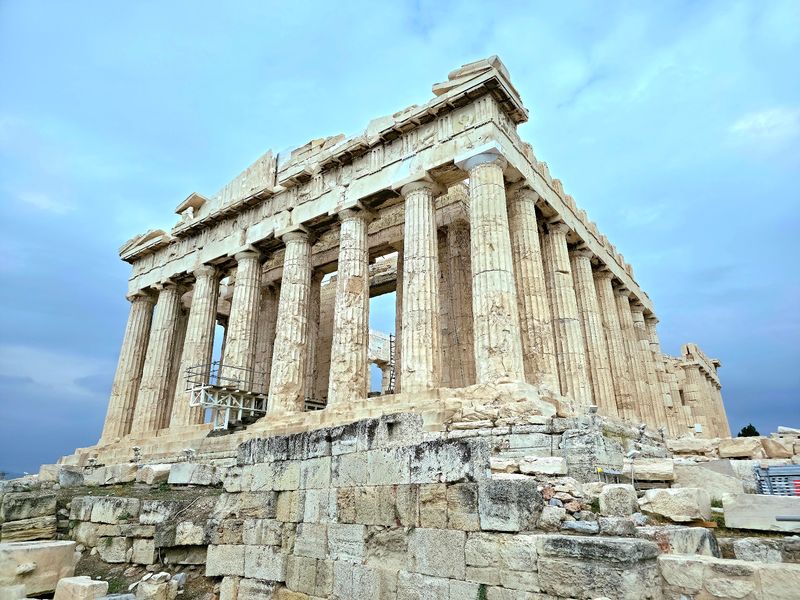
The Acropolis has been standing above Athens for more than 2,500 years, and even after centuries of damage, conflict, and weathering, it remains one of the most impressive architectural achievements from the ancient world. The Parthenon, dedicated to the goddess Athena, dominates the hilltop with its iconic colonnaded form.
The Erechtheion, with its famous Porch of the Caryatids where sculpted female figures serve as columns, sits nearby along with the Temple of Athena Nike and the monumental entrance gate called the Propylaea. UNESCO recognizes the Acropolis as the most complete surviving monumental complex from ancient Greece, and that designation reflects how much has actually been preserved here relative to other classical sites.
The site remains one of Greece’s most visited archaeological attractions, and the Acropolis Museum at the base of the hill provides important context for what you see above. Visiting on weekday mornings typically means shorter queues and better conditions for photographs.
The elevated position also offers sweeping views across modern Athens.
Ephesus, Selcuk, Turkiye
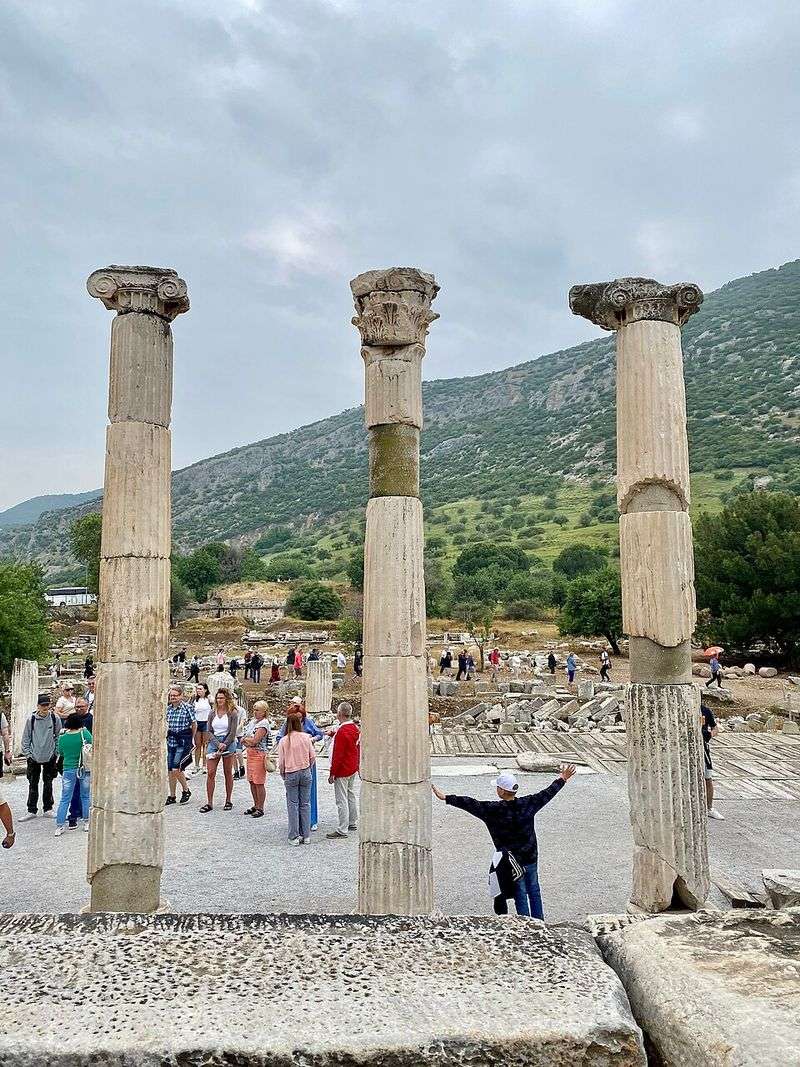
The Library of Celsus at Ephesus is one of the most photographed ancient facades in the world, and seeing it in person makes clear why. The two-story Roman structure, built in the second century AD as both a library and a mausoleum, is remarkably intact and genuinely grand in scale.
Ephesus was a major city in both the Greek and Roman worlds, and the archaeological site reflects that layered history. Marble-paved streets connect the library to a theater that once held 25,000 spectators.
The Terrace Houses, which require a separate ticket, reveal how wealthy residents decorated their private spaces with intricate mosaics and frescoed walls. The level of detail preserved inside those homes is astonishing.
Turkiye’s official museum authority lists the site as open every day, and the nearby town of Selcuk offers affordable accommodation and access to the Ephesus Museum, which holds many artifacts removed from the site for preservation. Comfortable walking shoes are absolutely essential here given the extensive marble surfaces.
Chichen Itza, Yucatan, Mexico
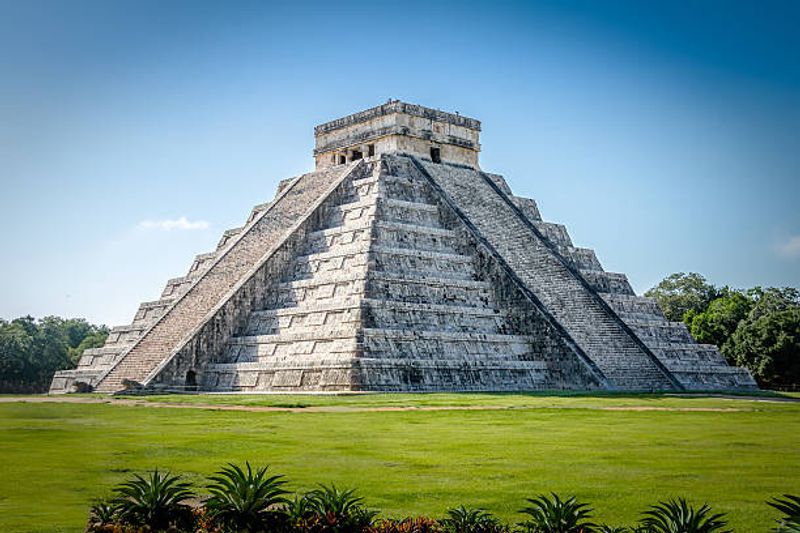
El Castillo, the stepped pyramid at the heart of Chichen Itza, was engineered with a precision that still impresses modern architects and astronomers. During the spring and fall equinoxes, the angle of sunlight creates a shadow pattern along the staircase that resembles a serpent descending toward the base, where carved stone serpent heads already wait at the bottom.
The archaeological zone extends well beyond that central pyramid. The Great Ball Court is the largest known ancient ball court in Mesoamerica.
The Temple of the Warriors features a forest of carved columns. The sacred cenote, a natural sinkhole used for ceremonial purposes, sits at the northern edge of the site.
Mexico’s National Institute of Anthropology and History lists Chichen Itza as open seven days a week. Visiting early in the morning is strongly advisable because the site becomes very crowded by midday, particularly during peak travel seasons.
The nearby town of Valladolid makes a good and less expensive base than Cancun for exploring the area.
Teotihuacan, State of Mexico, Mexico
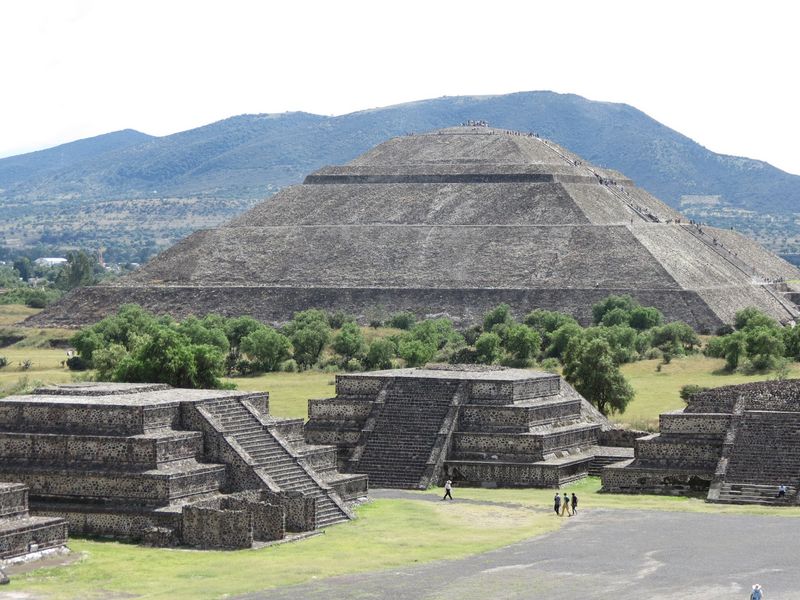
Teotihuacan was already a fading memory by the time the Aztec Empire rose to power, yet the Aztecs were so awed by what they found here that they named it the Place Where the Gods Were Created. At its peak around 450 AD, the city may have housed more than 100,000 people, making it one of the largest urban centers anywhere on Earth at that time.
The Avenue of the Dead runs for more than a mile through the site, connecting the Pyramid of the Moon at one end to the enormous Pyramid of the Sun and eventually the Temple of the Feathered Serpent. Climbing the Pyramid of the Sun offers a view across the entire ancient city layout that makes the scale of the original settlement genuinely comprehensible.
INAH lists the archaeological zone as open every day of the year, and the site is close enough to Mexico City to visit as a day trip. Morning visits are cooler and less congested than afternoon arrivals, especially during summer months.
Hampi, Karnataka, India
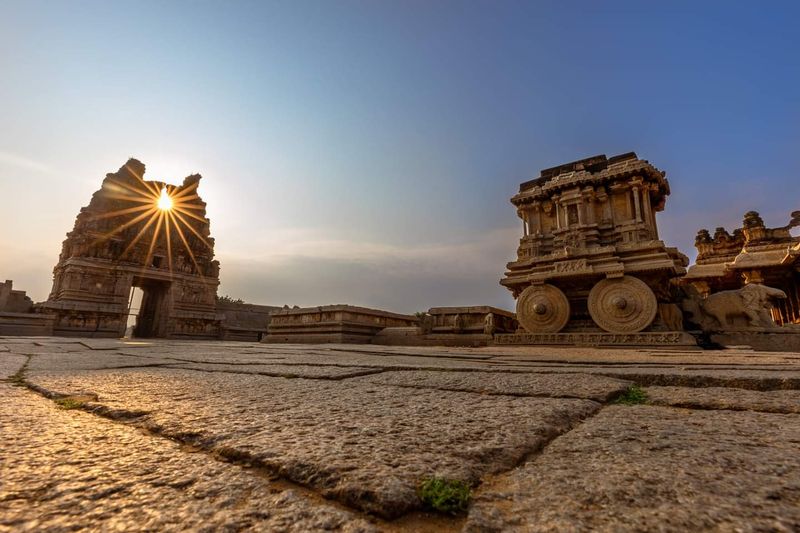
Hampi sits in one of the most visually unusual landscapes of any ancient city in the world. Enormous rounded granite boulders are scattered across the terrain in every direction, and between them lie the ruins of what was once the capital of the Vijayanagara Empire, one of the wealthiest and most powerful kingdoms in medieval India.
At its height in the 14th through 16th centuries, Hampi was reportedly home to hundreds of thousands of residents and drew merchants from as far as Persia and Portugal. The Stone Chariot at the Vittala Temple complex is one of the most recognized images from the site, but the royal enclosure, elephant stables, stepped tanks, and ruined market corridors are equally worth exploring.
Karnataka Tourism continues to promote Hampi as an active heritage destination with visitor information updated in 2026. The site is best explored over two or three days rather than a single rushed visit.
Bicycle rentals are widely available in the nearby village of Hampi Bazaar.
Hierapolis, Pamukkale, Turkiye
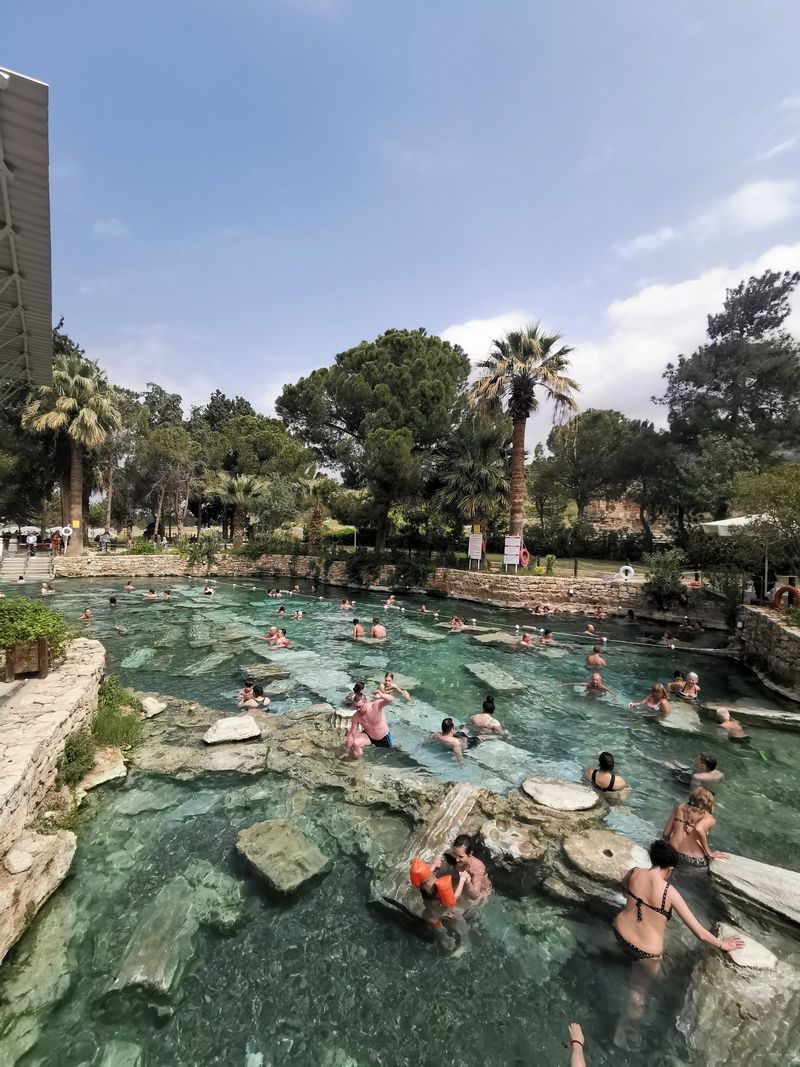
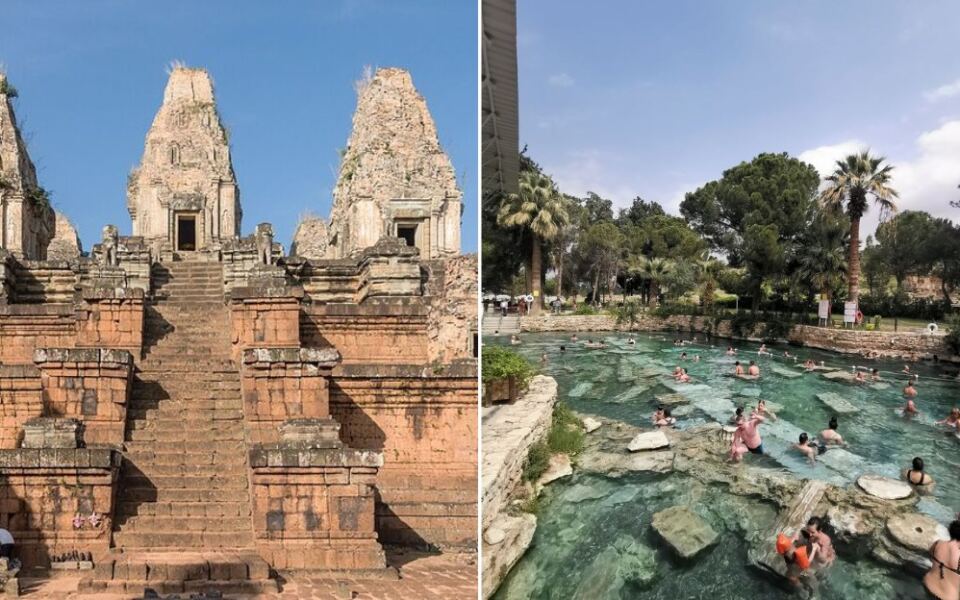
Hierapolis has one of the most dramatic natural settings of any ancient site in the world. The city rises directly above the brilliant white calcium carbonate terraces of Pamukkale, where mineral-rich thermal water has been flowing down the hillside and forming natural pools for thousands of years.
The combination of ancient ruins and geological wonder makes this one of the more genuinely surprising destinations in Turkiye.
Founded during the Hellenistic period and expanded significantly under Roman rule, Hierapolis preserves a large theater, an extensive necropolis, monumental gates, and the remains of grand baths. The city attracted visitors in antiquity partly because of its thermal springs, which were believed to have healing properties.
That reputation drew people from across the ancient Mediterranean world.
Turkiye’s official museum service lists Hierapolis as open to visitors every day. The site is typically combined with a visit to the Pamukkale terraces below, and both attractions are managed as a single UNESCO World Heritage area.
Comfortable footwear is essential given the uneven ancient surfaces.
Mycenae, Argolis, Greece
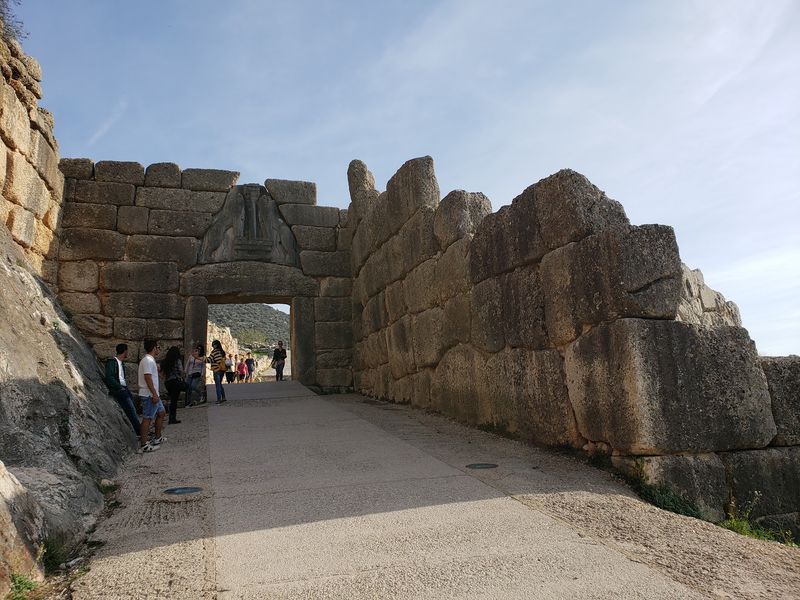
The Lion Gate at Mycenae is the oldest monumental sculpture in Europe, and it has been marking the entrance to this citadel for roughly 3,200 years. Two carved lions face each other above the massive stone lintel, and the engineering required to position those stones without modern equipment remains impressive by any standard.
Mycenae was the dominant power in the Greek world during the Bronze Age, and the civilization that grew here gave its name to an entire historical period. Heinrich Schliemann, the archaeologist who excavated the site in the 1870s, discovered royal grave circles containing gold masks, jewelry, and weapons that transformed understanding of prehistoric Greece.
The Treasury of Atreus, a beehive-shaped royal tomb near the main entrance, is one of the best-preserved examples of Mycenaean architecture anywhere.
Greece’s official Hellenic Heritage service publishes daily seasonal opening hours for the archaeological site. The surrounding Argolis region contains other significant ancient sites, making Mycenae a natural anchor for a broader Peloponnese itinerary.
Gobekli Tepe, Sanliurfa, Turkiye
Gobekli Tepe rewrote the timeline of human civilization. Before its excavation beginning in the 1990s, most researchers believed that organized monumental construction only became possible after humans developed agriculture and settled into permanent communities.
Gobekli Tepe is roughly 12,000 years old and predates farming, which means hunter-gatherers built these elaborate stone enclosures without the social infrastructure that was previously considered a prerequisite.
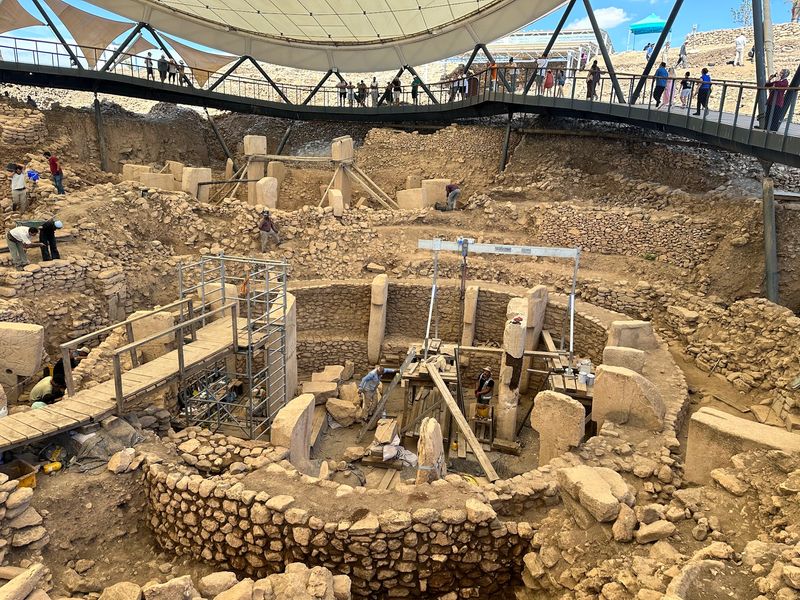
The site contains multiple circular enclosures formed by massive T-shaped limestone pillars, many of which are carved with detailed reliefs of animals including foxes, snakes, boars, and birds. The carvings show a level of artistic sophistication that surprises many visitors who encounter them for the first time.
Only a fraction of the site has been excavated so far, but visitors can view the exposed structures from protected walkways that keep the ancient stones accessible while preserving them from direct contact. Turkiye’s museum authority lists Gobekli Tepe as open every day.
The site is located about 15 kilometers northeast of Sanliurfa, and organized tours from the city are widely available.
Delphi, Central Greece, Greece
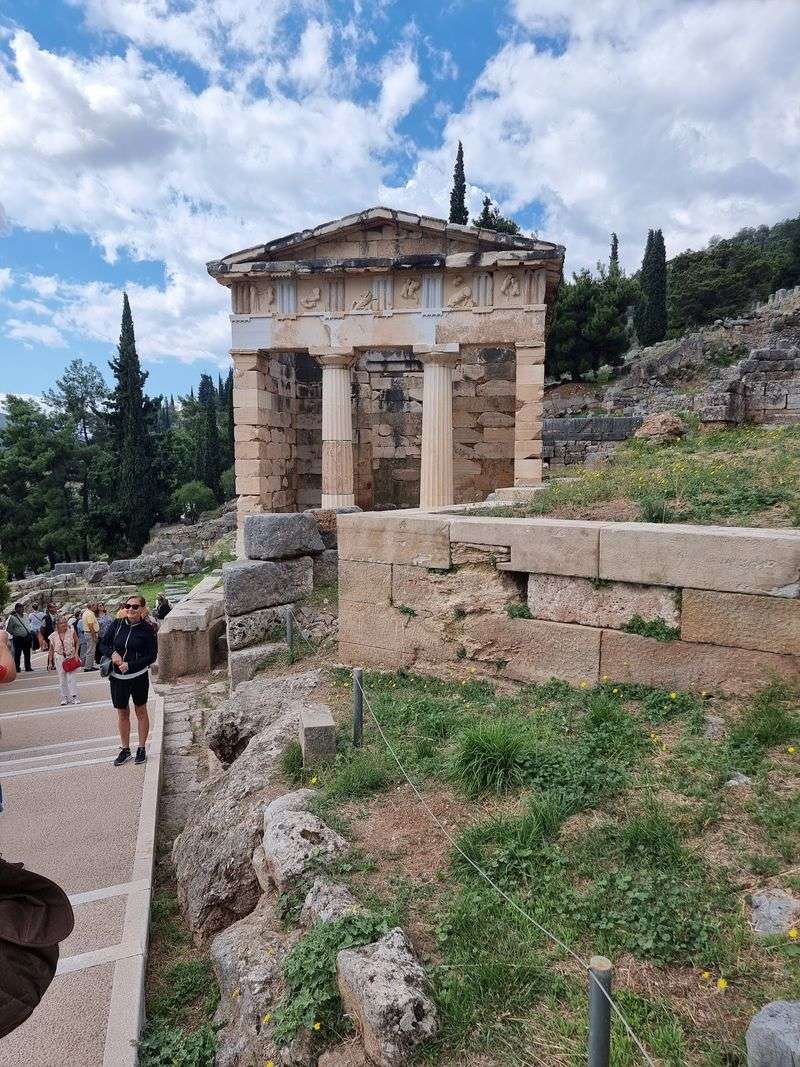
For centuries, people traveled from across the ancient Greek world to consult the Oracle at Delphi, a priestess who delivered prophecies that influenced wars, political decisions, and city foundations. The sanctuary of Apollo stretched dramatically along the slopes of Mount Parnassus, and the physical setting made the pilgrimage feel appropriately significant even before visitors reached the sacred precinct.
The archaeological site today includes the remains of the Temple of Apollo, the Sacred Way lined with treasury buildings erected by various Greek city-states, a well-preserved theater with mountain views behind the stage, and a stadium where the Pythian Games were held. The Delphi Archaeological Museum, located adjacent to the ruins, houses the famous bronze Charioteer and other exceptional finds from the site.
Greece’s Hellenic Heritage service was publishing current visitor and operating information for Delphi during summer 2026. The site is about two and a half hours from Athens by road, and many travelers combine it with a stop at the nearby town of Arachova, which sits on the mountain above.
Knossos, Crete, Greece
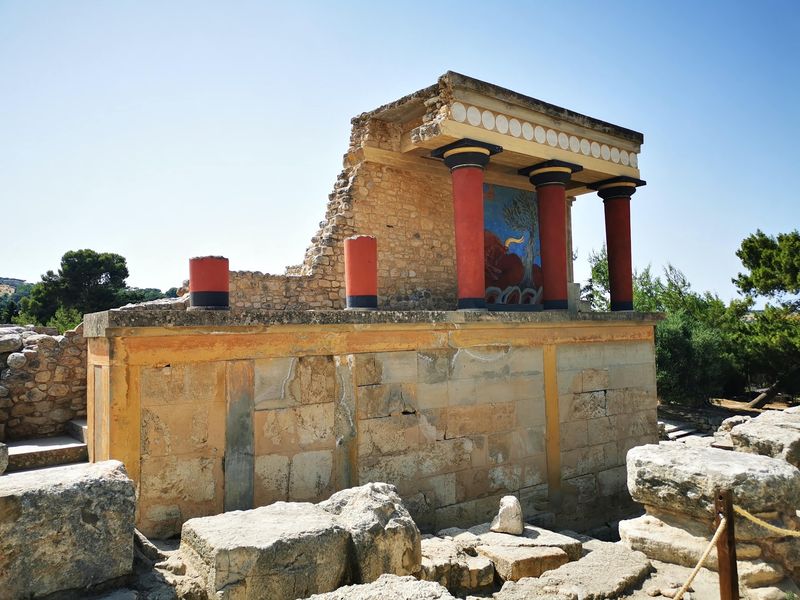
Knossos carries a mythology that is hard to separate from its archaeology. The palace complex on Crete is linked to legends of King Minos, the Minotaur, and the labyrinth, and walking through its multi-level corridors and storage rooms, it is not difficult to see how those stories took root.
The palace is genuinely maze-like, with dozens of interconnected rooms spread across several floors.
The Minoan civilization that built Knossos around 1700 BC was one of the most sophisticated Bronze Age cultures in the Mediterranean. The palace contained advanced drainage systems, painted frescoed walls, large central courtyards, and storage facilities for vast quantities of olive oil and grain.
Excavations led by Arthur Evans in the early 20th century revealed much of what is visible today, including reconstructed sections that remain controversial among archaeologists but help visitors understand the original structure.
The site continues to receive visitors regularly, though Greece occasionally imposes brief heat-related closures during extreme summer temperatures. Knossos is located just a few kilometers south of Heraklion, making it an easy excursion from the city.
Palenque, Chiapas, Mexico
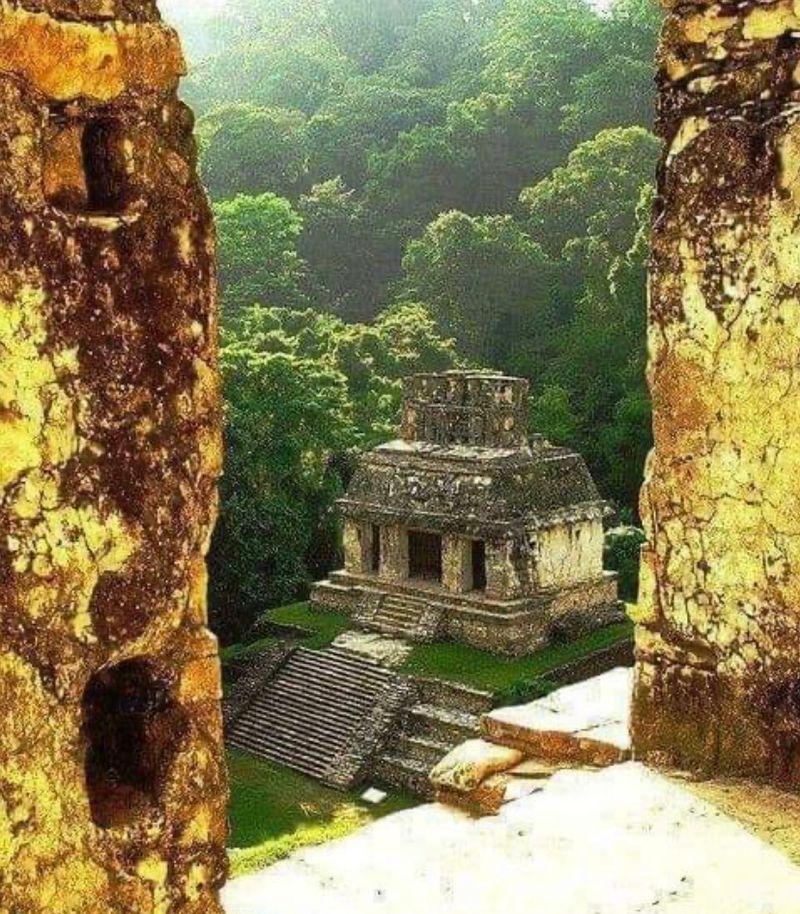
Palenque feels different from other Maya sites partly because the jungle has never fully retreated. Trees press close against temple walls, and the sounds of the surrounding Chiapas forest are present throughout the site.
That setting gives the ruins an atmosphere that is harder to find at more heavily developed archaeological parks.
The Temple of the Inscriptions is the most significant structure here. Inside, archaeologists discovered the elaborate tomb of the Maya ruler Pakal in 1952, buried beneath a carved stone sarcophagus lid whose intricate imagery has been studied and debated ever since.
The lid is now in Mexico City’s National Museum of Anthropology, but a replica remains at the site. The Palace complex nearby features a distinctive tower whose function is still not fully agreed upon by researchers.
Mexico’s INAH lists Palenque as open Monday through Sunday. The archaeological zone sits within a natural park, and howler monkeys are frequently heard and occasionally spotted moving through the canopy above the ruins.
The nearby town of Palenque offers accommodation at various price points.
Sukhothai Historical Park, Sukhothai, Thailand
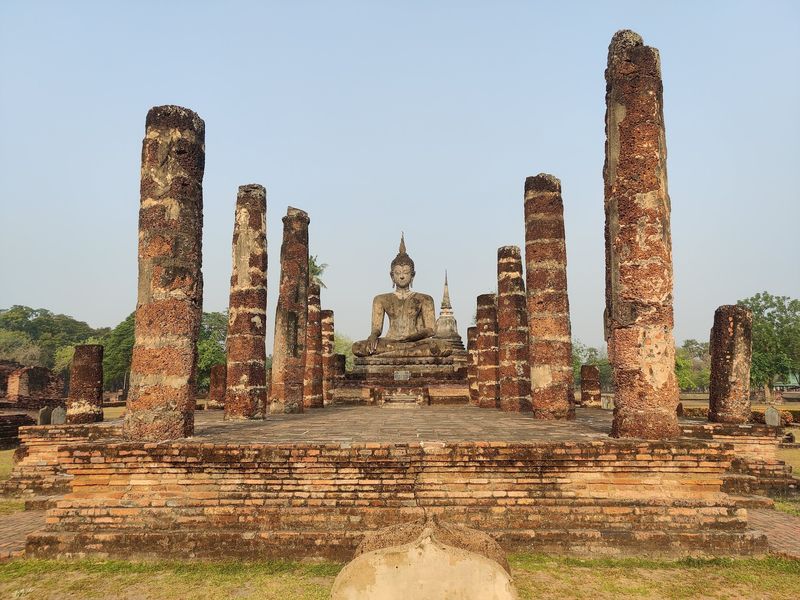
Sukhothai was the first capital of the Thai Kingdom, and the historical park that preserves its remains is one of Southeast Asia’s most rewarding archaeological destinations. Ruined temples, Buddha statues in various sizes and postures, lotus-bud towers, ancient ponds, and sections of the original city walls spread across a landscape that rewards slow and unhurried exploration.
Wat Mahathat is the largest and most central temple in the historic zone, featuring a main tower surrounded by rows of columns and a large seated Buddha. The park is divided into five zones, with the central zone containing the most significant structures.
Many visitors rent bicycles to move between temples, which makes the experience more relaxed than trying to cover the area on foot in midday heat.
Thailand’s Fine Arts Department states that Sukhothai Historical Park is open daily. The site is a UNESCO World Heritage property and sits about 427 kilometers north of Bangkok.
The nearby new town of Sukhothai has comfortable guesthouses and restaurants within easy reach of the historical area.
Ostia Antica, Rome, Italy
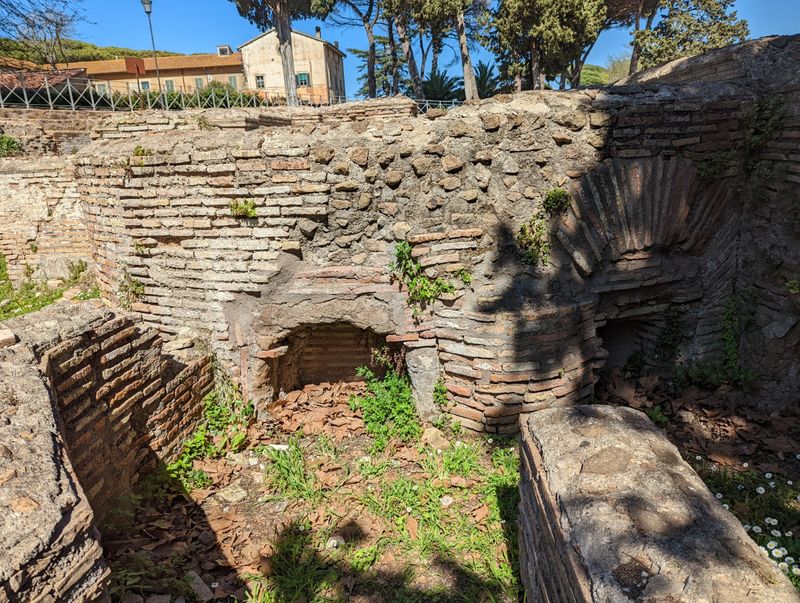
Most travelers who visit Rome never make it to Ostia Antica, which is a genuine oversight. The ancient port city of Rome sits only about 30 kilometers from the city center and is accessible by regional train, yet it receives a fraction of the attention that Pompeii or the Roman Forum attract.
That relative quiet makes it a genuinely pleasurable place to spend a few hours.
Ostia Antica preserves entire city blocks, including multi-story apartment buildings called insulae, public baths with preserved mosaic floors, warehouses, temples, taverns, and a theater that still hosts occasional performances. The level of urban detail here is remarkable and gives a vivid sense of daily life in a working Roman commercial city rather than just the ceremonial spaces that dominate the Forum in central Rome.
Italy’s Archaeological Park of Ostia Antica remains an active visitor attraction with ticketed access to both the archaeological area and its museums. The combination of easy access from Rome and relatively modest crowds makes Ostia Antica one of the more underappreciated Roman sites in Italy.
Mesa Verde Cliff Dwellings, Colorado, USA
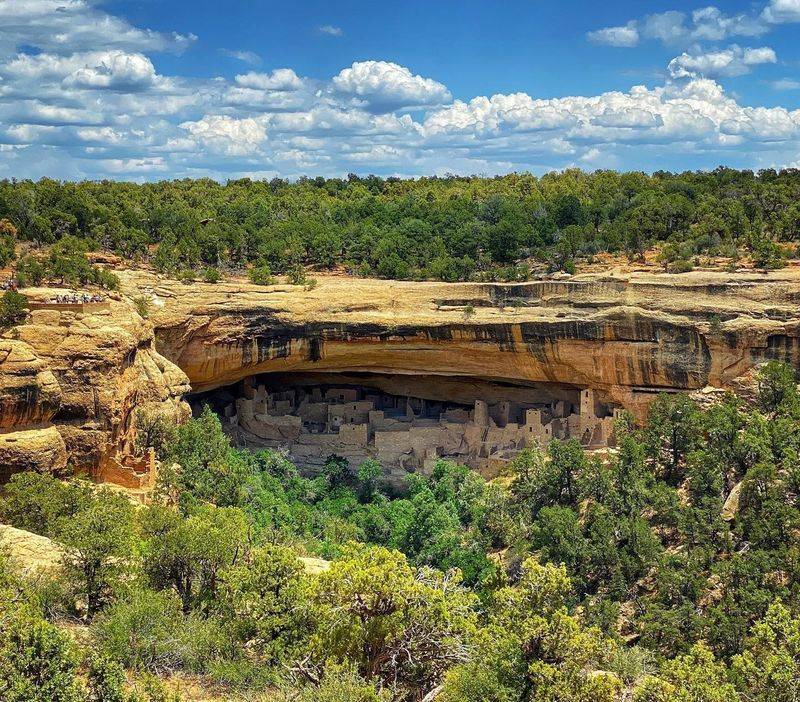
Built directly into the faces of canyon cliffs, the dwellings at Mesa Verde represent one of the most architecturally inventive responses to landscape anywhere in the ancient world. Ancestral Pueblo people constructed these multi-room stone structures beneath natural sandstone overhangs beginning around 1190 AD, and the sheltered position has helped preserve them for more than 800 years.
Cliff Palace is the largest cliff dwelling in North America, containing approximately 150 rooms and 23 kivas, which are circular ceremonial chambers. Reaching it requires descending a series of ladders and stone steps, which gives the visit a physical dimension that reinforces just how deliberate the site selection was.
Balcony House, another accessible dwelling, requires visitors to crawl through a narrow tunnel as part of the tour route.
Mesa Verde National Park is open year-round, although ranger-guided tours to the cliff dwellings operate on a seasonal schedule and require advance reservations. The park also contains hundreds of mesa-top sites and a museum that provides context for the broader Ancestral Pueblo story.
The park entrance is near Cortez, Colorado.
Ancient Agora of Athens, Athens, Greece
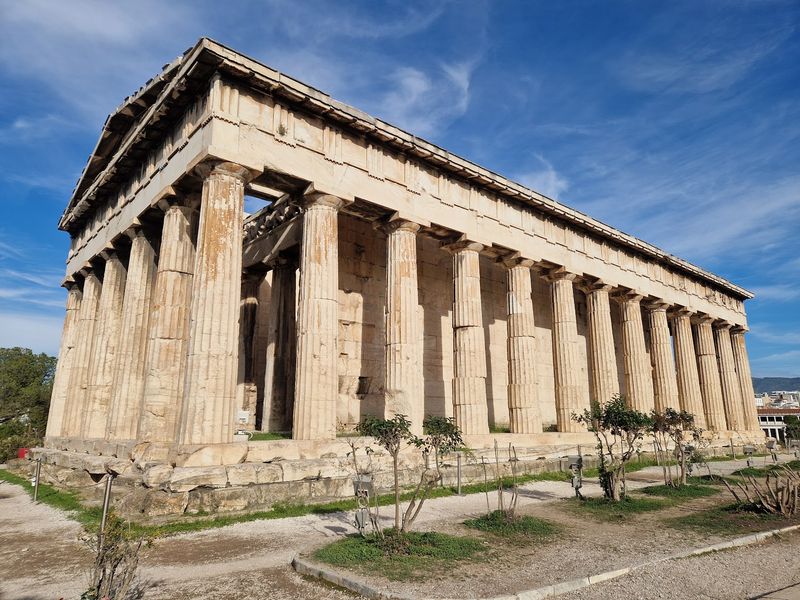
While the Acropolis draws most of the attention on Athens’s archaeological map, the Ancient Agora below it is where the actual daily life of classical Athens unfolded. This was the marketplace, the civic meeting ground, and the philosophical gathering space where Socrates reportedly engaged citizens in conversation.
The site covers a substantial area and contains remains from multiple historical periods layered on top of one another.
The Temple of Hephaestus, dedicated to the god of fire and metalworking, is one of the best-preserved ancient Greek temples anywhere in the world. Its Doric columns have remained largely intact because the building was converted into a church during the Byzantine period, which protected it from complete deterioration.
The reconstructed Stoa of Attalos now houses the Agora Museum, which holds a collection of everyday objects found during excavations.
Official visitor information published in 2026 confirms that both the archaeological site and the museum continue to operate with regular hours. The Agora is walkable from the Monastiraki metro station, and combining it with the Acropolis visit on the same day is a common and practical itinerary choice.
Herculaneum, Campania, Italy
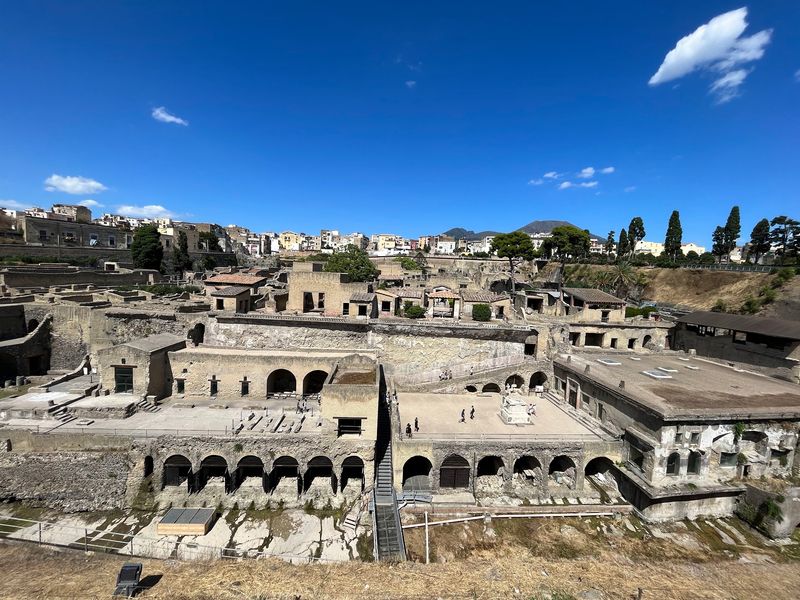
Herculaneum is often overshadowed by Pompeii, but in terms of preservation, it may actually be the more astonishing of the two sites. When Vesuvius erupted in AD 79, a different type of volcanic material engulfed Herculaneum and sealed buildings so thoroughly that upper floors, wooden beams, door frames, furniture fragments, and even carbonized food items have survived nearly two millennia underground.
Walking through the ancient streets here feels less like visiting ruins and more like stepping into a city that simply stopped. Buildings retain their second stories.
Mosaics cover floors in patterns that still carry their original color. Painted walls display decorative schemes that would look at home in an upscale modern interior design portfolio.
The contrast with the more skeletal remains at many other ancient sites is striking.
The archaeological park remains active in 2026, including a summer program and special evening openings that allow visitors to experience the site in a different light. Herculaneum is located in Ercolano, easily reached by the Circumvesuviana commuter rail line from Naples, making it a straightforward addition to any Campania itinerary.
Share this story