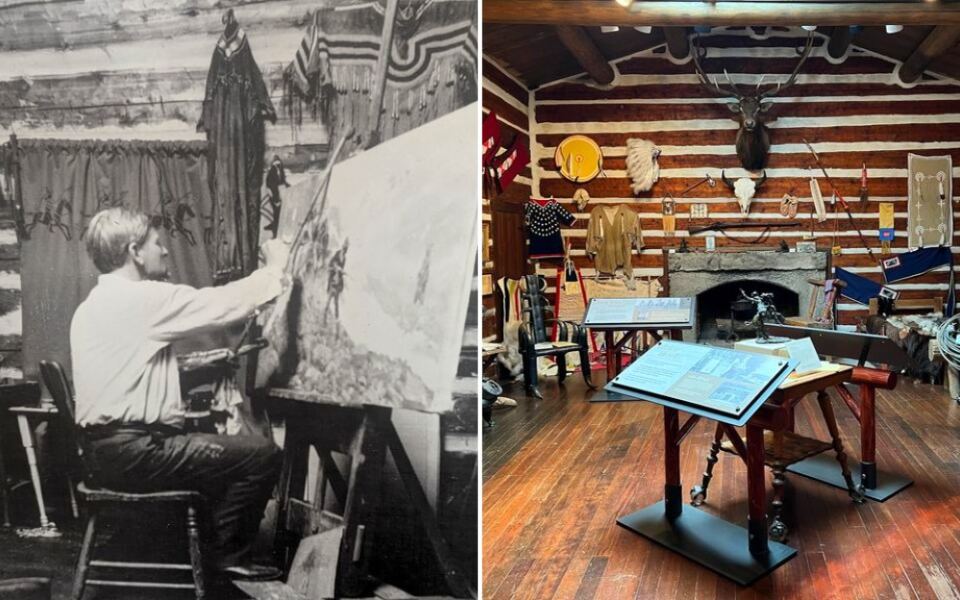
One Great Falls museum offers something unusual: the chance to see hundreds of works by a legendary Western artist, then step inside the actual log cabin studio where he created many of them.
The collection goes far beyond cowboy paintings, with sculptures, illustrated letters, Native American artifacts, bison exhibits, and thousands of works exploring the American West. The artist’s historic home and remarkably preserved studio remain part of the museum campus, making this as much a journey into his life as a traditional art museum.
Unlocking the Spirit of the Frontier: Address and Overview
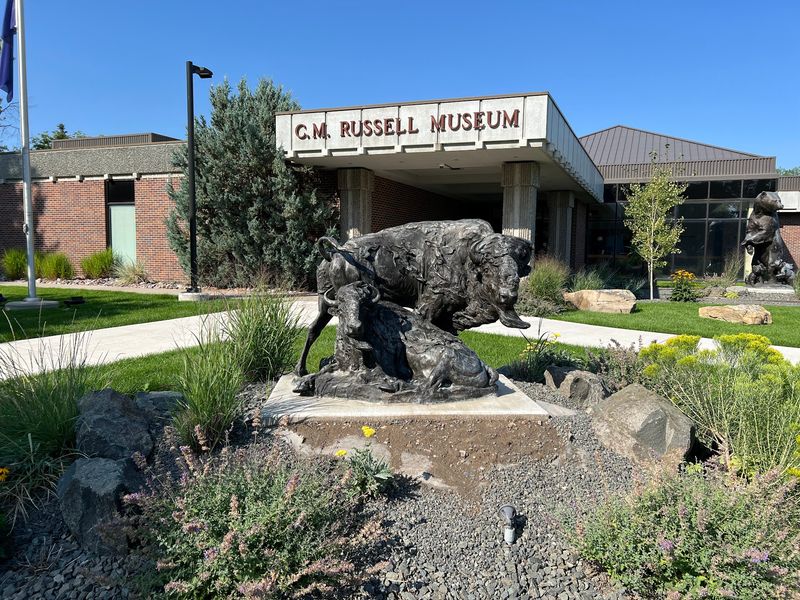
Few museums announce themselves with quite as much quiet confidence as the C.M. Russell Museum, which sits at 400 13th Street North in Great Falls, Montana, covering an entire city block with its impressive complex.
The institution was established in 1953 and has grown steadily into one of the leading Western art museums in the United States. Its mission centers on celebrating the artistic contributions of Charles M.
Russell while also honoring the broader cultural heritage of the American West, including Indigenous traditions and the natural world that defined the region.
With over 3,000 pieces of Western art in its collection, nearly a thousand of which were created by Russell himself, the museum is far more than a single-artist showcase. The campus integrates galleries, an outdoor sculpture garden, the artist’s original home, and his preserved log cabin studio, creating an experience that feels layered and genuinely immersive.
The phone number for visitor inquiries is 406-727-8787, and the museum’s website is cmrussell.org.
The Log Cabin Studio Where a Legend Worked
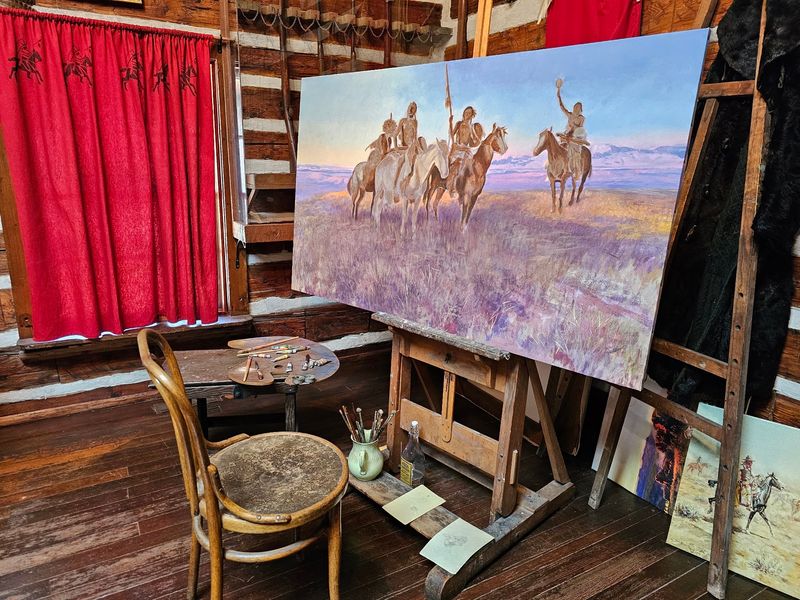
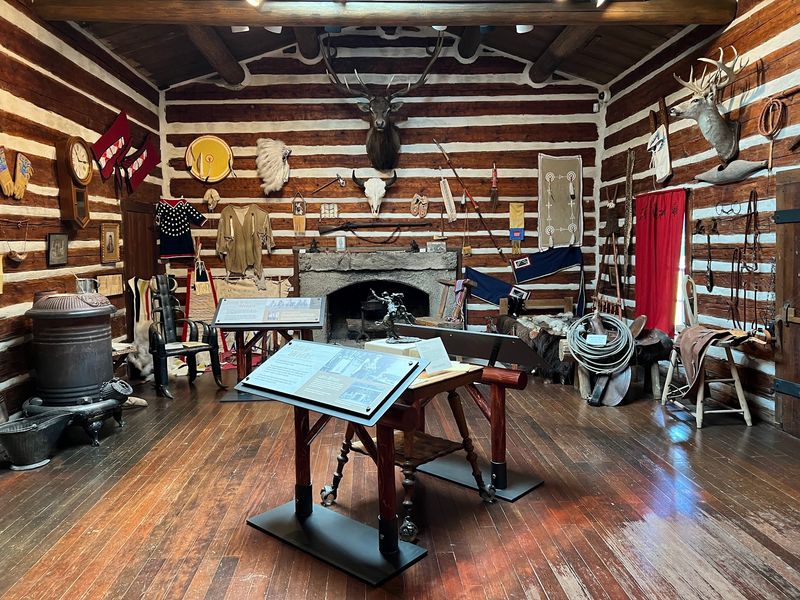
Built in 1903 from sturdy western red cedar telephone poles, Russell’s one-room log cabin studio is arguably the most intimate stop on the entire museum campus. The structure stands preserved essentially as he left it, complete with brushes, personal objects, and the working clutter of a deeply dedicated artist.
Russell packed the studio with reference props he used to ensure historical accuracy in his paintings: saddles, Native clothing, weapons, and what he called “horse jewelry.” The cabin originally measured 24 feet by 30 feet and featured a rock fireplace on the east side, with a porch adorned by elk antlers on the south side. Russell even raised the roof at one point to accommodate his larger canvases, a practical adjustment that says a great deal about his commitment to his craft.
The studio holds National Historic Landmark status, a designation it shares with the adjacent family home. Spending time inside this space creates a surprisingly personal connection to the man behind the paintings, and it sets the tone for everything else the museum has to offer.
Charlie and Nancy’s Victorian Home: A Partnership in Wood and Paint
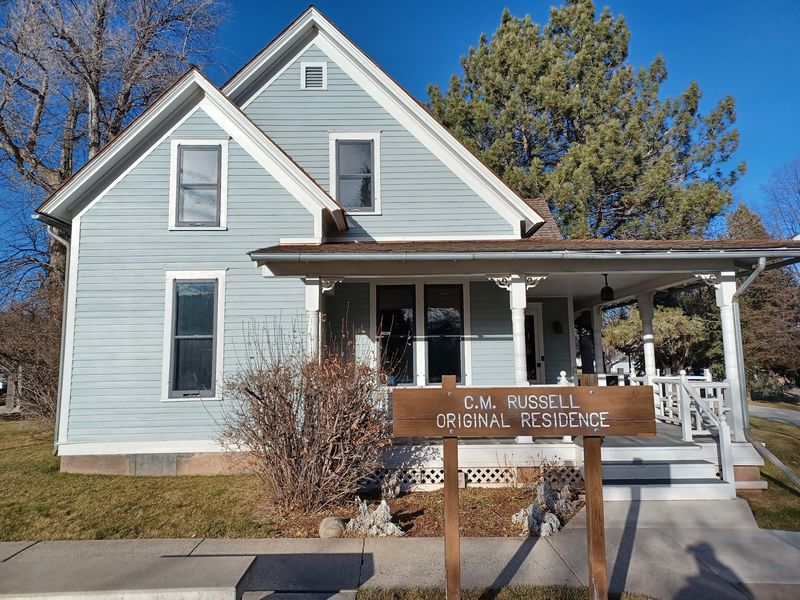
The modest two-story Victorian frame house where Charles and Nancy Cooper Russell made their home was built in 1900 and stands just steps from the log cabin studio, forming a naturally connected pair of historic structures on the museum grounds.
Nancy Russell was far more than a supportive spouse. She served as Charlie’s astute business partner, steadily raising his prices and building his reputation in the art world with a sharp strategic mind.
Without her guidance, his incredible body of work might never have reached the international audience it eventually captivated.
Walking through the home, you get a genuine sense of the warmth and partnership that defined their life together. The couple adopted their son, Jack, in 1916, adding another chapter to the family story woven into the fabric of this Great Falls residence.
Like the studio next door, the house carries National Historic Landmark status, recognizing its importance not just as a building but as a living record of one of the most consequential artistic partnerships the American West has ever produced.
Paper Talk: The Illustrated Letters That Reveal a Hidden Side of Russell
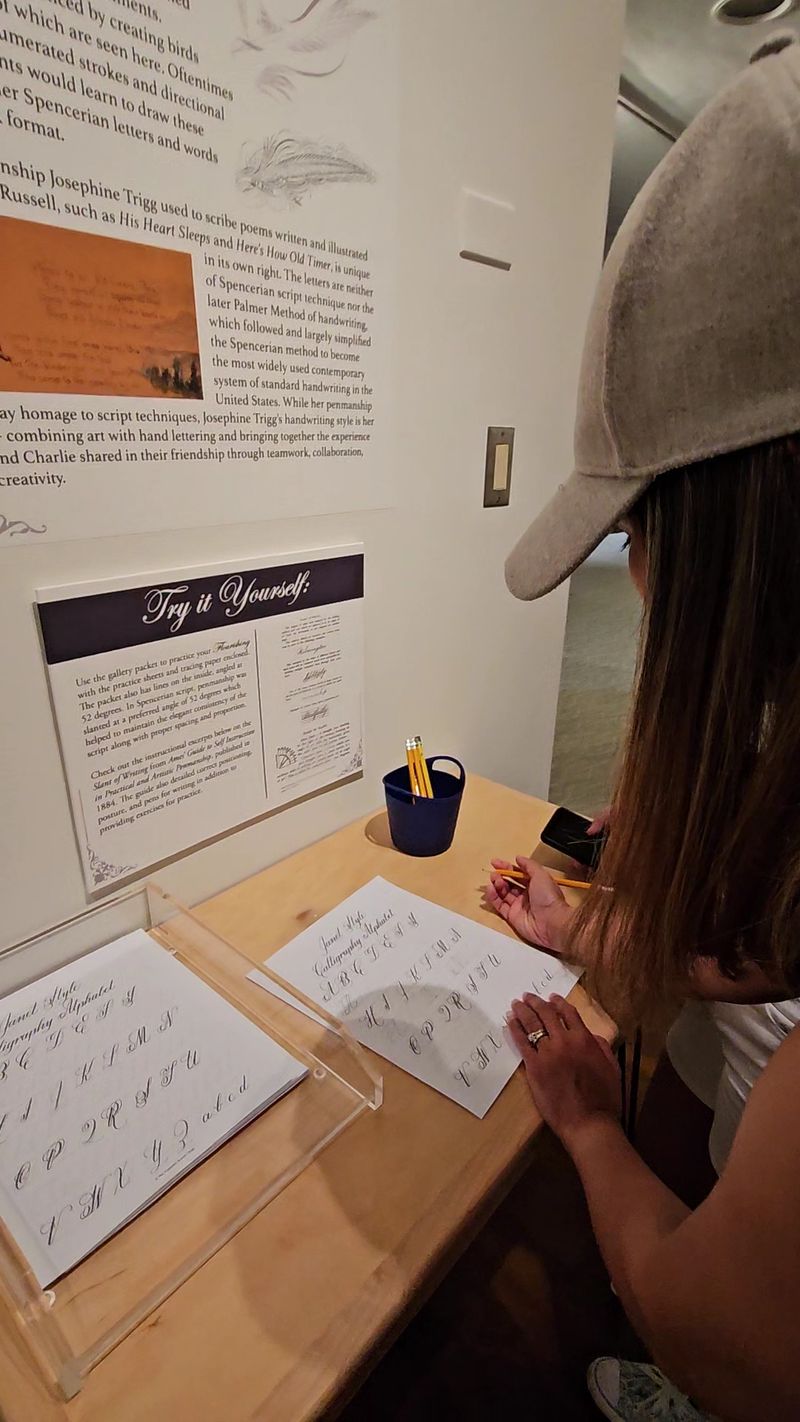
Charlie Russell had a habit that transformed even his personal correspondence into something worth framing. Nearly every letter he sent to friends and fellow artists was adorned with small, lively watercolor sketches in the margins, creating what his circle affectionately called “paper talk.”
These letters reveal a looser, more spontaneous side of his artistry, full of humor, warmth, and storytelling that his formal canvases sometimes keep at a respectful distance. In 1975, the museum received a donation of over 1,000 Russell letters, writings, postcards, and other memorabilia, a collection that dramatically deepened the institution’s holdings and gave scholars and visitors alike an invaluable window into his personality.
Poring over these pieces, you begin to understand that Russell valued friendship and humor as much as artistic recognition. The words and images intertwine across the pages, creating a narrative experience that feels genuinely personal.
For visitors who assumed they were coming to see only grand Western paintings, the illustrated letters often turn out to be the most unexpectedly charming discovery of the entire visit.
Bison: American Icon – The Exhibition That Shakes the Floor
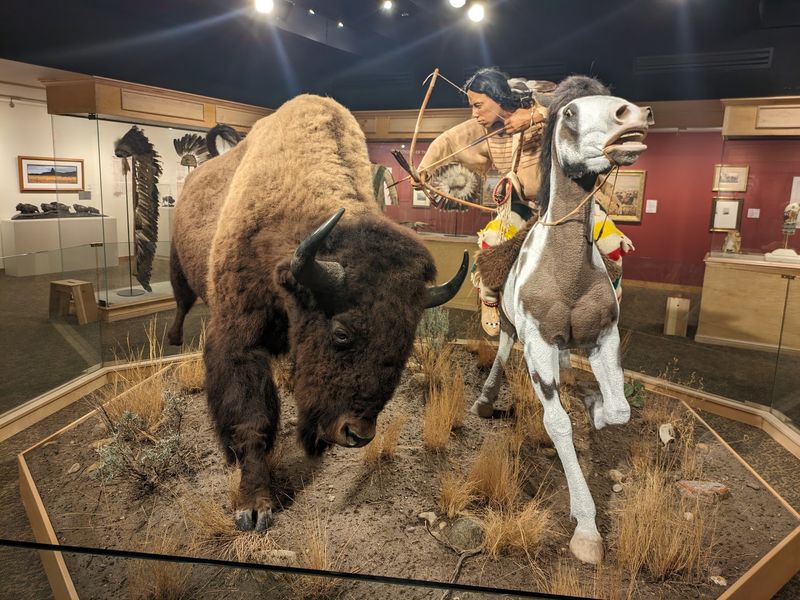
One of the most powerful permanent exhibitions at the museum is titled “Bison: American Icon, Heart of Plains Indian Culture,” and it earns that title with remarkable thoroughness. The exhibition traces the profound relationship between the bison and the peoples of the Northern Plains across more than two centuries, from 1800 to the present day.
More than 1,000 artifacts fill the space, including historic Native American clothing, regalia, tools, weapons, and contemporary artwork, all arranged to communicate the bison’s central role in the survival and spiritual life of Indigenous communities. The centerpiece is a thundering buffalo diorama that reportedly shakes beneath your feet as you walk over it, a tactile detail that transforms a museum visit into something closer to a physical encounter with history.
This exhibition does not exist in isolation; it provides essential cultural and ecological context for the paintings and sculptures found throughout the rest of the museum. Understanding the bison’s significance makes Russell’s depictions of Plains life feel even more weighted with meaning, and the exhibit consistently ranks among the most memorable stops for visitors of all ages.
Western Visionaries: Russell’s Contemporaries in the Collection
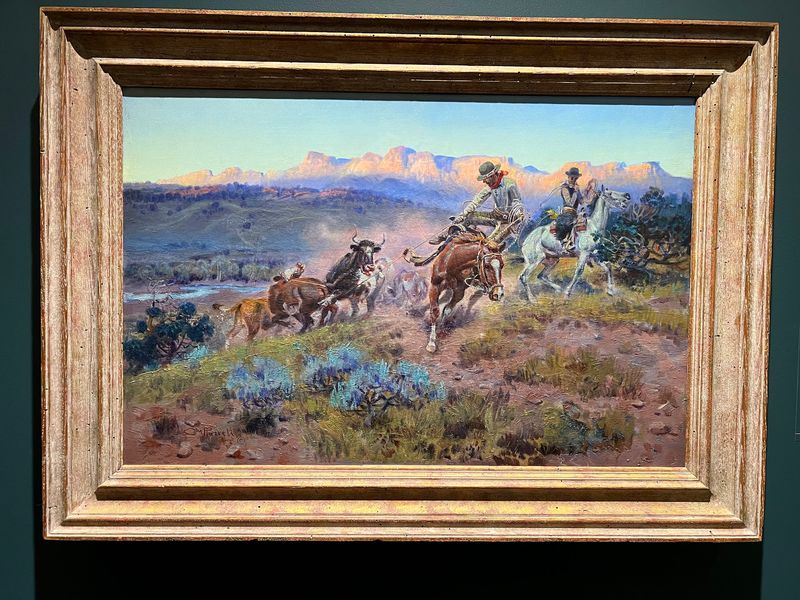
Charles Russell may be the star of the show, but the museum’s collection generously shares the spotlight with a remarkable group of artists who were working alongside him and interpreting the West through their own distinct lenses.
The roster of represented artists includes O.C. Seltzer, Winold Reiss, Joseph H.
Sharp, E. E.
Heikka, Maynard Dixon, E. I.
Couse, Olaf Wieghorst, Henry Farny, and Frank Tenney Johnson, among others. Each brought a different perspective to subjects like Montana wildlife, Northern Plains Indian life, and cowboy culture, creating a rich and layered conversation across the gallery walls.
Ansel Adams photographs also appear in the collection, adding yet another dimension to the visual story of the American West. Moving through these galleries, you begin to appreciate how Russell’s work existed within a broader artistic community rather than in a vacuum.
The variety of styles and subjects on display ensures that even visitors who arrive primarily as Russell admirers leave with a wider appreciation for Western art as a whole genre, not just a single artist’s achievement.
From a Friend’s Bequest to a Landmark Institution: The Museum’s Origin Story
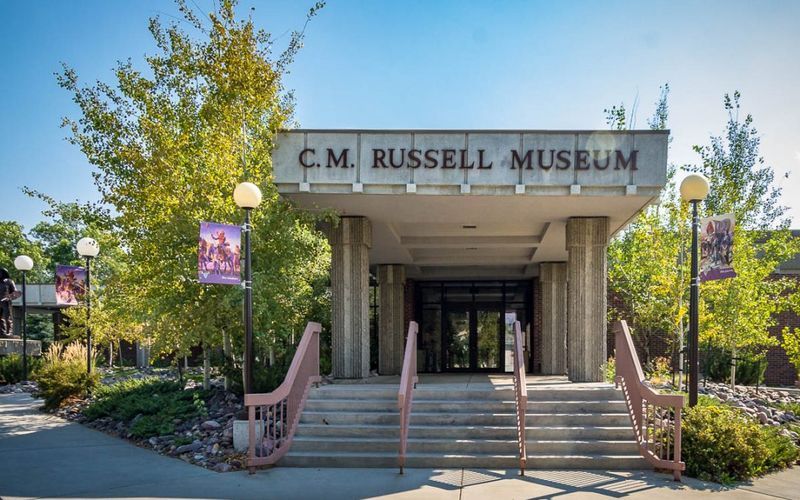
The story of how this museum came to exist is itself a testament to the power of friendship. Josephine Trigg, a close friend of Charles and Nancy Russell, stipulated in her will that her personal collection of approximately 153 items given to her by Russell over many years be donated to the city of Great Falls, on the condition that a museum be built to house them.
That bequest, honored in 1953, became the foundation of everything visitors see today.
The institution grew steadily from that heartfelt beginning. A new gallery opened in 1969, and by 1972 the Trigg-Russell Gallery was officially renamed the C.M.
Russell Museum. The 1975 donation of over 1,000 letters and memorabilia expanded the collection significantly, and further expansions in 1985 and 2001 added new galleries, a research center, educational spaces, and the outdoor sculpture garden.
Each phase of growth reflects the community’s ongoing commitment to preserving Russell’s legacy. What began as one woman’s generous act of friendship has become one of Montana’s most celebrated cultural institutions, welcoming tens of thousands of visitors every year.
Bronze Under the Big Sky: The Outdoor Sculpture Garden
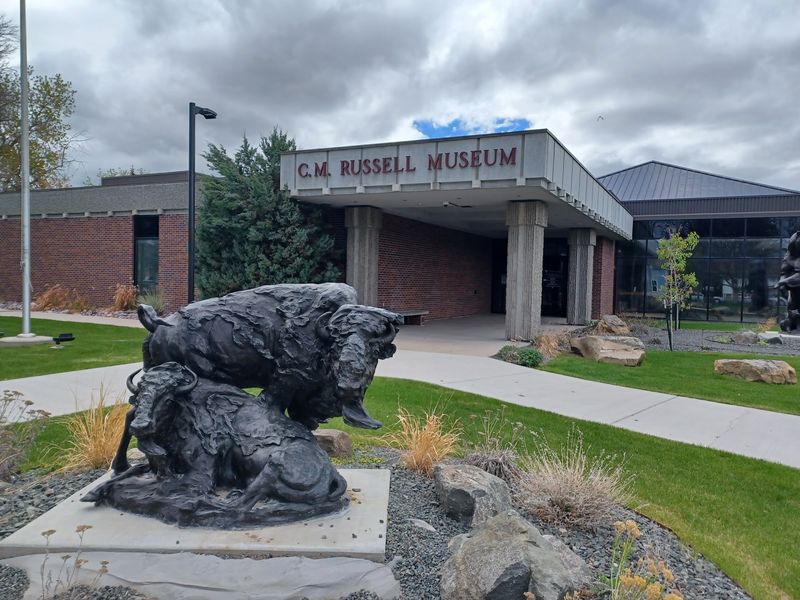
The Russell Riders Sculpture Garden transforms the museum grounds into an open-air gallery where monumental bronze works invite you to slow down and look carefully at the forms that Western artists have conjured from metal and imagination.
Bob Scriver’s contributions stand out in particular. His 53-piece sculptural history of the Piegan Blackfeet premiered at the museum in 1982 and remains one of the most ambitious artistic undertakings in the collection.
Wandering through the garden, you encounter depictions of wildlife, cowboys, and Indigenous figures rendered in three dimensions, each piece capturing a sense of movement and emotional weight that flat canvases approach differently.
Shaded picnic tables are available on the grounds, making the garden a natural pause point during a longer visit. There is something genuinely satisfying about experiencing Western art beneath the wide Montana sky that inspired so much of it in the first place.
The outdoor space also provides a refreshing contrast to the more intimate atmosphere inside the galleries, giving the overall visit a pleasing rhythm that alternates between discovery and reflection.
Planning Your Trip: Hours, Tickets, and Practical Tips
Getting the most out of a visit to the C.M. Russell Museum starts with a bit of advance planning.
During the summer season, from May 1 through September 30, the museum is open seven days a week from 10 a.m. to 5 p.m. From October 1 through April 30, hours shift to Thursday through Monday, maintaining the same 10 a.m. to 5 p.m. schedule.
Admission rates include discounts for students, seniors aged 60 and older, and veterans, while active military personnel and children five and under are admitted free of charge. Free on-site parking is available, which is a genuinely appreciated convenience.
Checking the official website or calling ahead at 406-727-8787 is always a smart move, particularly around holidays when hours may vary.
Most visitors find that two hours is not quite enough to absorb everything on offer, especially once you factor in the studio, the home, the Bison exhibition, and the sculpture garden. Arriving early and giving yourself a relaxed half-day is the approach that tends to produce the most satisfying experience, leaving room to linger over the illustrated letters without feeling rushed toward the exit.
The Gift Shop: Taking a Piece of the West Home With You
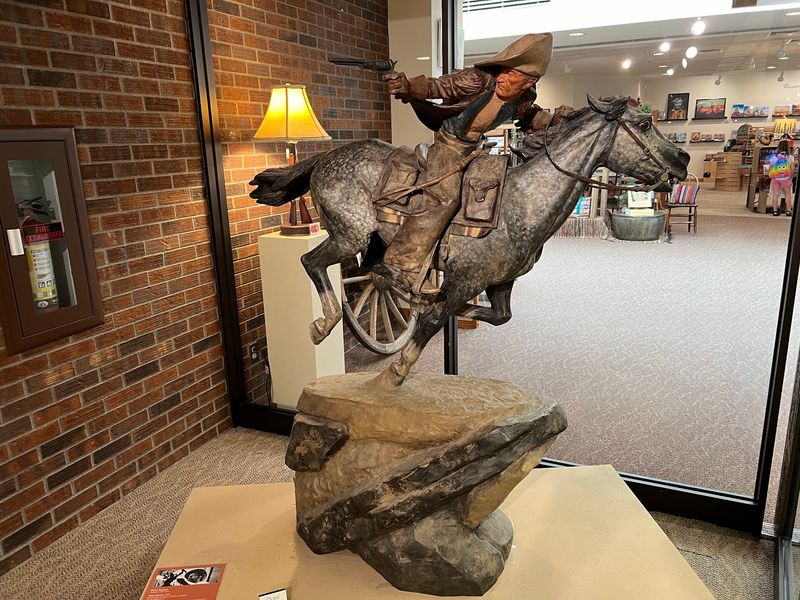
Before leaving the museum campus, most visitors make their way to the gift shop, and it consistently earns praise as one of the better museum stores in the region. The selection goes well beyond the standard postcard-and-magnet formula, offering pottery, handbags, dishes, jewelry, handmade goods, and a strong selection of books related to Russell, Western art, and Montana history.
Russell art reproductions are available in various formats, making it genuinely possible to bring a piece of his visual world back to your own walls at a reasonable price. Staff members in the shop tend to be knowledgeable and enthusiastic, happy to point visitors toward items that match their interests or budget.
The shop also carries works by contemporary artists who draw inspiration from the Western tradition, giving shoppers the chance to support living creators alongside appreciating historical ones. Whether you are looking for a meaningful souvenir, a thoughtful gift, or simply a book to read on the drive home, the gift shop rewards browsing with the kind of carefully chosen inventory that reflects the museum’s broader commitment to celebrating Western art and culture in all its forms.
The Enduring Legacy of America’s Cowboy Artist
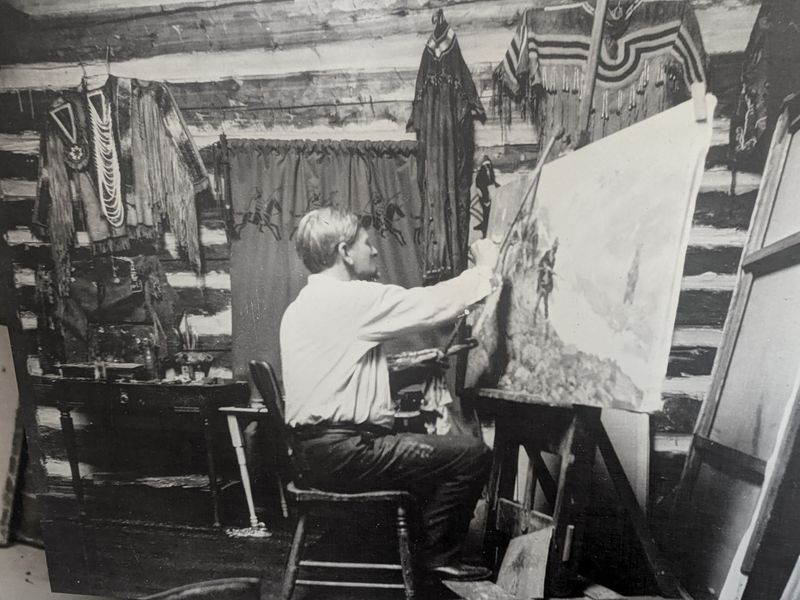
Charles Marion Russell was born in St. Louis, Missouri, in 1864 and arrived in Montana at the age of 16 in 1880. He spent 11 years working as a cowboy before committing fully to art in 1893, and that firsthand experience of ranch life and the rapidly changing West gave his work an authenticity that set it apart from artists who painted the frontier purely from imagination.
Over the course of his career, Russell produced more than 4,000 works in oil, watercolor, sculpture, and writing, earning the title “America’s Cowboy Artist” through lived experience rather than reputation alone. He was also a vocal advocate for Native Americans and supported the creation of the Rocky Boy Reservation in Montana, reflecting a genuine respect for the cultures he depicted so frequently in his art.
On the day of his funeral in 1926, children in Great Falls were released from school to watch the procession, a quiet but powerful measure of how deeply he was loved in the community he called home. His legacy, preserved with care at this remarkable museum, continues to resonate with everyone who encounters it.
Share this story