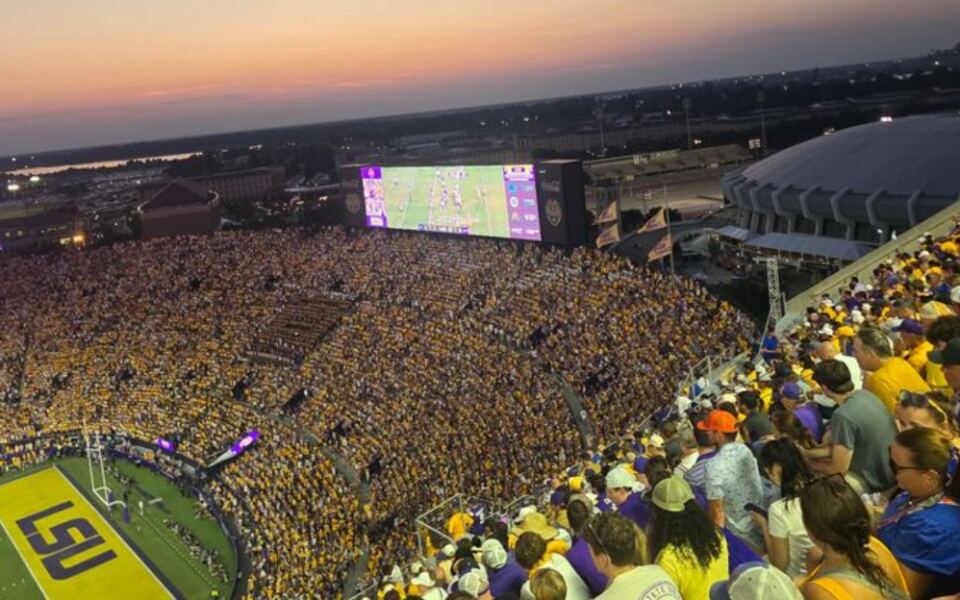
There is a stadium in Louisiana where the crowd gets so loud that a touchdown celebration once registered on a seismograph as a minor earthquake. That is not a myth or an exaggeration.
Scientists actually recorded the seismic activity during a memorable game moment, and that single fact has followed this stadium around ever since. College football fans travel from across the country just to witness the noise, the energy, and the traditions that make this place unlike any other sports venue in America.
The Seismograph Moment That Made History

Back in 1988, the crowd at Tiger Stadium in Baton Rouge, Louisiana, got so loud during a touchdown that a seismograph on the LSU campus actually picked up the vibration. Scientists at the university confirmed the reading, and the story spread fast.
That single moment turned an already passionate fan base into something of a legend in college football history.
The seismograph was located in the Geology Department on campus, close enough to the stadium to detect the ground movement created by tens of thousands of stomping, screaming fans. The spike in the reading happened during a particularly electric play, and the confirmation from scientists gave it real credibility.
That story is now part of Tiger Stadium’s identity. Fans bring it up in conversation like a badge of honor, and visiting fans often arrive already knowing about it, half-curious and half-disbelieving, until the noise hits them personally.
Death Valley and Why the Nickname Fits
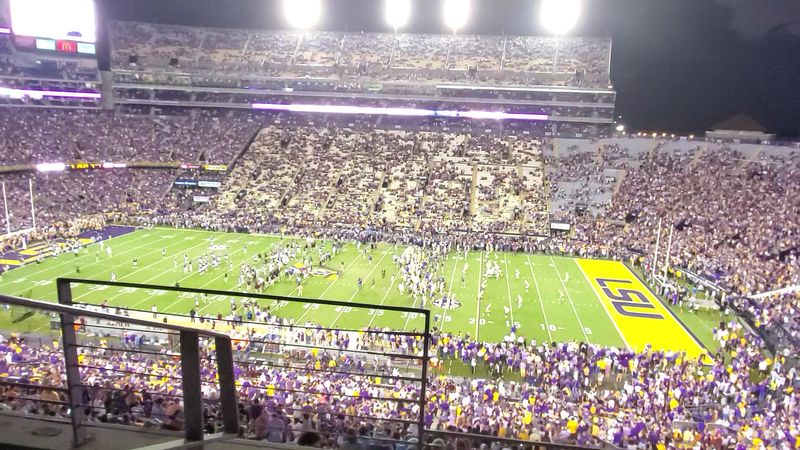
Tiger Stadium has two nicknames that college football fans recognize immediately. The official name is Tiger Stadium, but most people know it as Death Valley.
The name came from opposing teams who dreaded playing there, knowing the crowd noise and atmosphere made winning nearly impossible for visitors.
The nickname has stuck for decades, and it is easy to understand why. On a Saturday night in Baton Rouge, with over 90,000 fans packed into the stands, the sound level inside the stadium becomes genuinely disorienting.
Opposing quarterbacks have struggled to call plays at the line because their own teammates cannot hear them.
The combination of the bowl-shaped design, which traps sound inside, and the raw passion of LSU fans creates conditions that visiting teams genuinely prepare for in practice. Some coaches have even pumped crowd noise into practice sessions just to get their players ready for Death Valley.
A Stadium Built Into the Ground
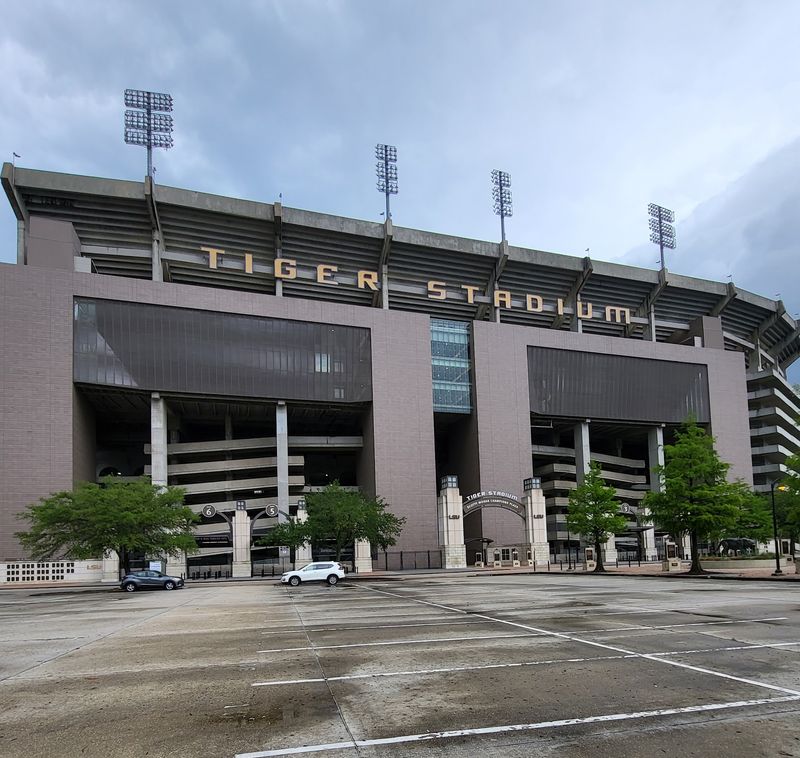
One of the most fascinating things about Tiger Stadium is how it was built. Unlike many modern stadiums that rise above the surrounding landscape, Tiger Stadium was partially constructed below ground level.
Engineers dug down into the earth to create the lower bowl, which gives the stadium its distinctive sunken appearance and acoustics.
That design decision, made decades ago, turned out to be one of the most brilliant engineering choices in sports venue history. Sound does not escape as easily from a sunken bowl.
Instead, it bounces around, amplifies, and builds on itself as the crowd gets louder.
When you walk into Tiger Stadium for the first time, the sheer depth of the bowl catches you off guard. You expect a tall stadium and instead find yourself looking down into something that feels more like an arena carved into the ground.
The effect on crowd noise is immediate and unmistakable.
The Capacity That Commands Respect
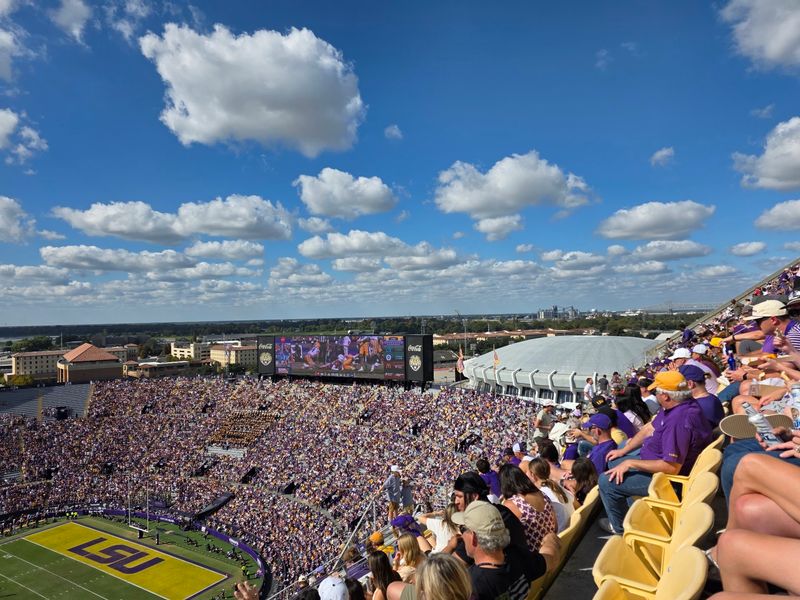
Tiger Stadium holds approximately 92,500 fans, making it one of the largest stadiums in the United States. On a sold-out Saturday night, that number of people packed into a sunken bowl creates an atmosphere that is genuinely hard to prepare for if you have never experienced it before.
For context, the city of Baton Rouge itself has a population that is not dramatically larger than the stadium’s capacity. On game days, the stadium essentially becomes one of the biggest gatherings of people in the entire state of Louisiana.
The energy that comes with that concentration of passionate fans is something you feel physically, not just emotionally.
LSU consistently ranks among the top programs in the country for home attendance. Fans plan their fall schedules around home games months in advance, and tickets for marquee matchups are treated like prized possessions passed down through families.
The numbers alone tell a story about how seriously this place is taken.
Saturday Night Games Are a Different Animal
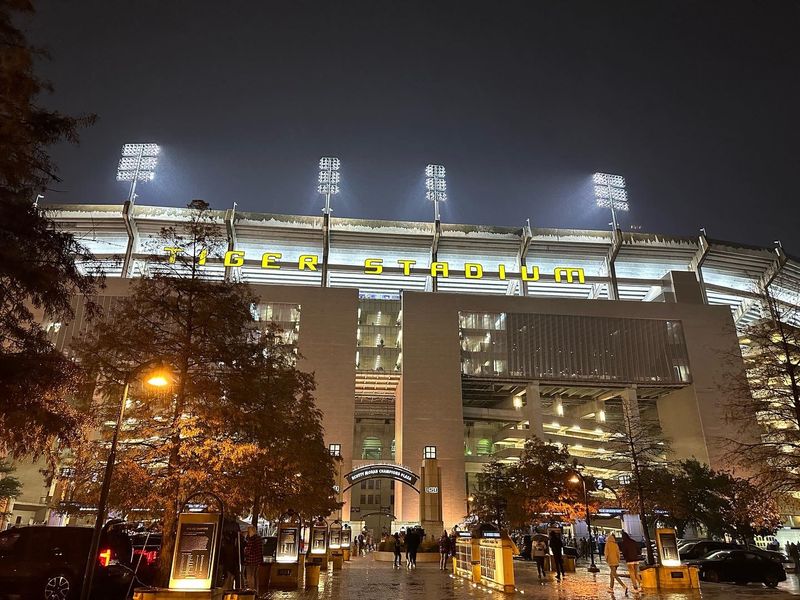
Ask any LSU fan what makes Tiger Stadium truly special and they will almost certainly say the same thing: Saturday night games. There is something about a night kickoff in Baton Rouge that elevates the experience into a completely different category from any afternoon game you have ever attended.
The Louisiana heat during the day can be brutal, especially early in the season. But once the sun goes down and the stadium lights come up, the temperature drops just enough for the crowd to truly come alive.
The energy shifts noticeably around kickoff, and by the end of the first quarter, the noise is already at a level that surprises first-time visitors.
Night games at Tiger Stadium have produced some of the most memorable moments in college football history. Opposing coaches and players have openly admitted that night games in Baton Rouge are among the most challenging environments they have ever faced, regardless of the talent level on the field.
Tailgating Culture That Starts Days Before the Game
The tailgating scene surrounding Tiger Stadium is legendary in its own right. Fans begin setting up days before kickoff, and by game morning, the entire campus transforms into one enormous outdoor gathering.
The smell of grilling food, the sound of music, and the sight of purple and gold everywhere create an atmosphere that many fans say is half the reason they come.
LSU fans are known for their hospitality. Visiting fans in opposing team colors often report being welcomed warmly, offered food, and invited into conversations by complete strangers.
That spirit of generosity makes the pre-game experience feel genuinely communal rather than competitive.
Groups set up elaborate tailgate stations with full cooking setups, decorated tents, and enough food to feed small neighborhoods. Walking through the tailgate area before a big game is an experience in itself, and many fans arrive hours early specifically to soak it all in before heading inside.
Mike the Tiger and His Place in LSU Tradition
No visit to Tiger Stadium is complete without a stop to see Mike the Tiger. LSU’s live tiger mascot lives in a naturalistic habitat right on campus, near the stadium, and has become one of the most recognized mascots in college sports.
The tradition of having a live tiger dates back to 1936, and the current Mike is the seventh tiger to hold the title.
Mike’s habitat was significantly upgraded over the years and now includes a stream, climbing structures, and plenty of space for him to roam. Fans can view him through a glass viewing area, and on game days, the energy around his enclosure picks up noticeably as thousands of fans walk past on their way into the stadium.
Seeing a Bengal tiger up close, in the middle of a college campus, is genuinely surreal. Mike has become as much a symbol of LSU as the stadium itself, and fans treat a sighting on game day as a good omen.
Championship Legacy on Display Outside the Gates
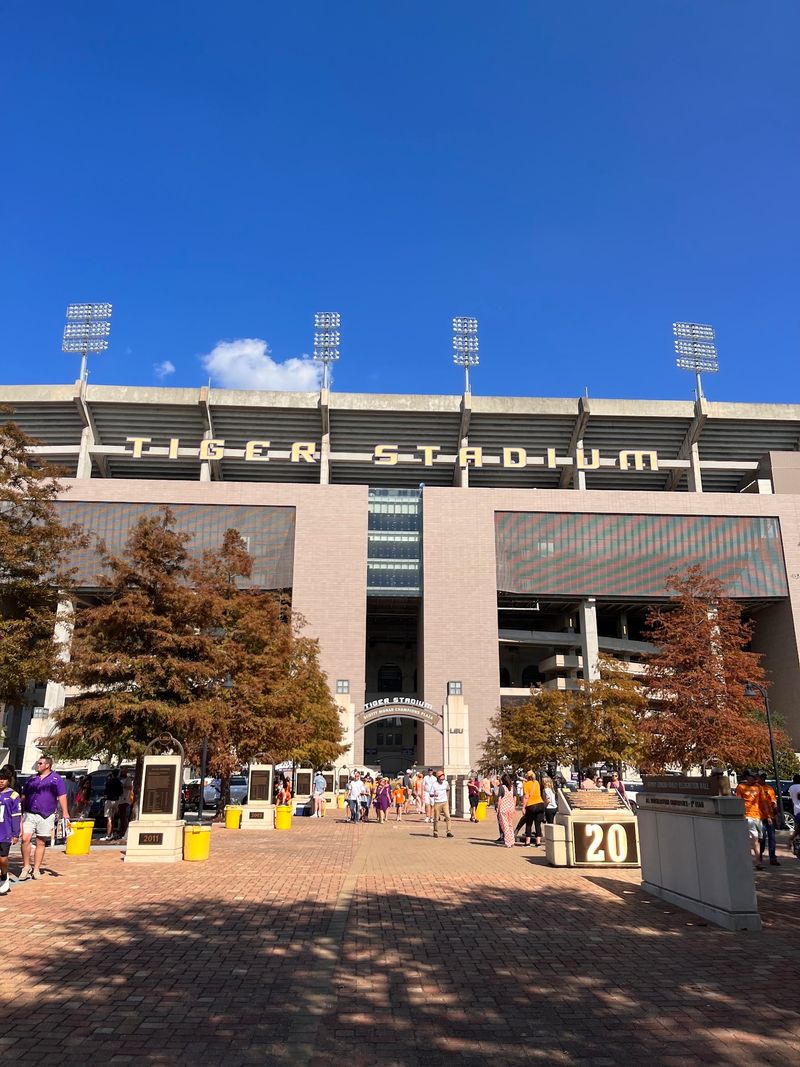
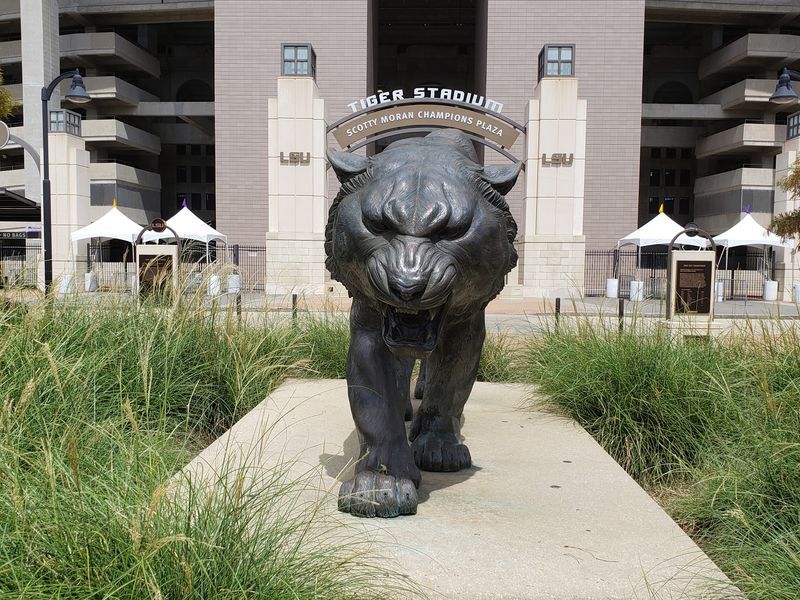
Walking around the outside of Tiger Stadium feels like moving through a timeline of LSU football greatness. National championship plaques, bronze statues, and commemorative monuments line the exterior, giving fans a visual history of the program’s biggest achievements before they even step inside.
The display is tasteful and impressive without being overwhelming. Each monument tells a story about a specific era of LSU football, and the craftsmanship of the plaques and statues reflects how seriously the university takes its athletic legacy.
First-time visitors often spend more time outside the stadium than they expected, pausing to read and take photos.
The monuments also serve as natural gathering points for fans before games, creating clusters of conversations and photo opportunities that add to the pre-game energy. For fans who grew up watching LSU from a distance, seeing those championship markers in person carries a weight that is hard to put into words without sounding overly sentimental.
Stadium Tours That Go Behind the Scenes
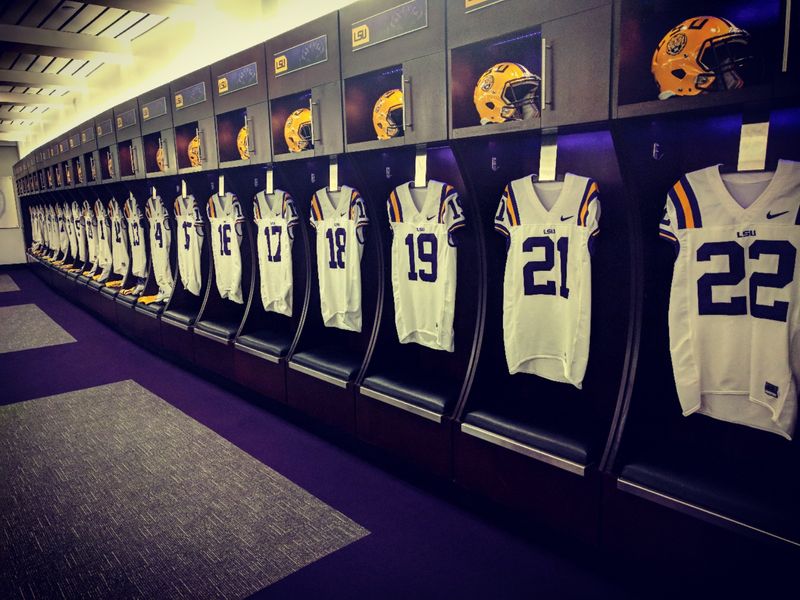
Tiger Stadium offers guided tours that take visitors into parts of the stadium most fans never see on game day. For around $15, you can walk through the locker room, explore the tunnel where players run onto the field, and get up-close access to areas that feel genuinely exclusive during a regular visit.
The locker room alone is worth the price of the tour. The attention to detail in how it is designed and decorated reflects the program’s commitment to creating an elite environment for its players.
Seeing the names and numbers of players who went on to NFL careers adds a layer of history that makes the space feel significant.
Tour groups are kept small enough that the experience feels personal rather than rushed. Guides share stories about the stadium’s history, the renovations it has gone through, and the moments that have defined it over the decades.
It is the kind of behind-the-scenes access that sports fans genuinely appreciate.
The Acoustics That Science Can Actually Explain
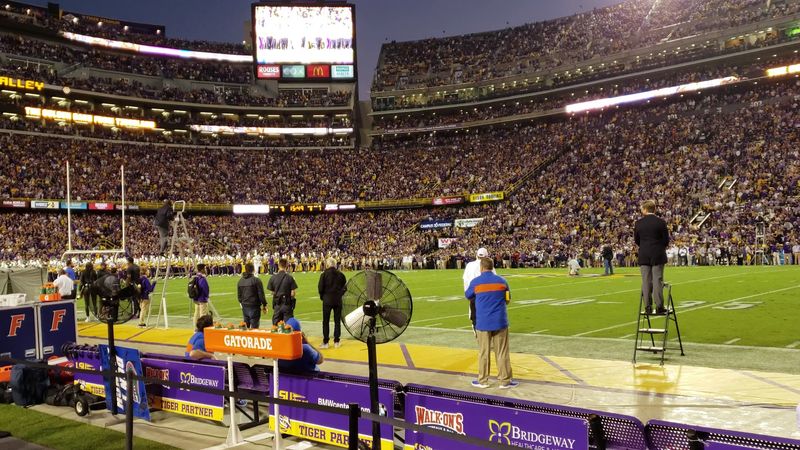
The reason Tiger Stadium gets so loud is not purely a matter of fan passion, though that certainly helps. The physical design of the stadium creates acoustic conditions that amplify crowd noise in ways that engineers and scientists have studied and documented.
The sunken bowl traps sound waves and reflects them back into the crowd, building intensity with each pass.
The addition of upper decks over the years made the effect even stronger. As more seating was added higher up, the roof-like overhang created by those upper levels began acting as a sound reflector, pushing noise back down toward the field rather than letting it escape into the open air.
Researchers from LSU’s engineering and geology departments have studied the stadium’s acoustic properties, and their findings confirm what fans have known for years: the design is genuinely exceptional at concentrating and amplifying sound. The seismograph moment was not a fluke.
It was physics doing exactly what the stadium’s structure set it up to do.
Pregame Traditions That Fire Up the Crowd
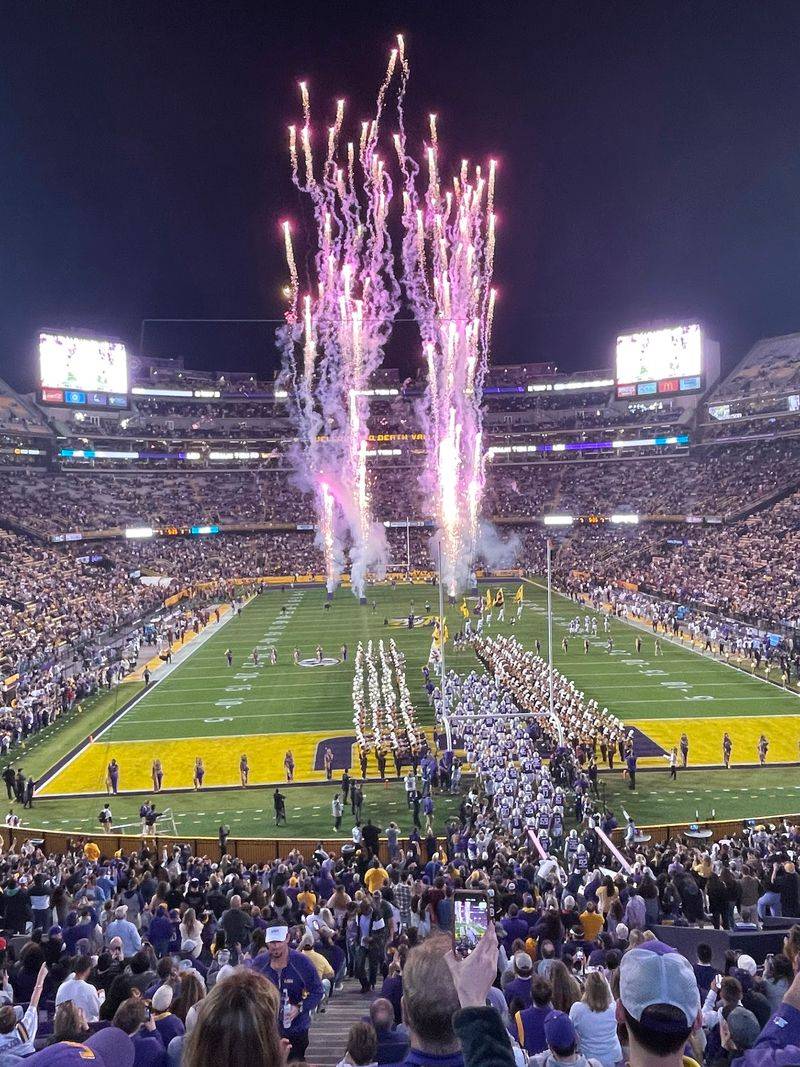
LSU’s pregame traditions are a major part of what makes a visit to Tiger Stadium memorable even before the ball is kicked off. The team’s entrance through the tunnel, with the crowd already at full volume, creates a wall of sound that first-time visitors describe as physically stunning.
The noise builds gradually through the pre-game warmups and then explodes at kickoff.
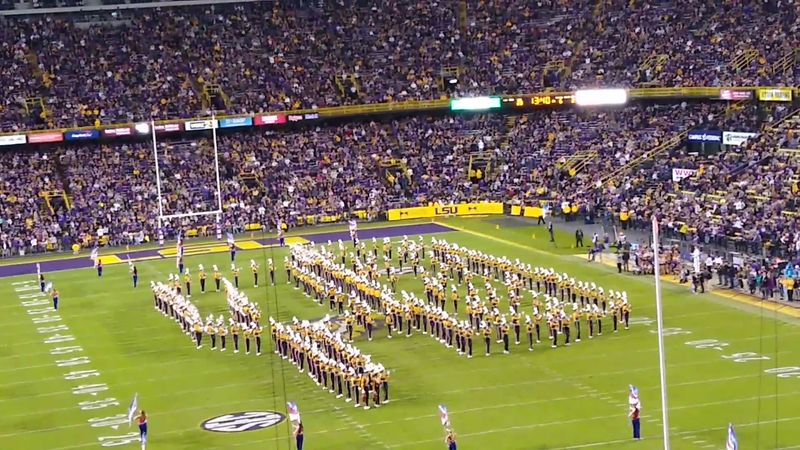
Music plays a big role in the Tiger Stadium experience. LSU has a well-regarded band program, and the selection of songs played before and during games is carefully curated to keep energy levels high.
Fans know the music well and respond to it enthusiastically, which adds another layer to the overall atmosphere.
The combination of the live mascot, the championship monuments, the tailgating, and the pregame music creates a sequence of experiences that builds steadily toward kickoff. By the time the game starts, the crowd is already primed and the noise level is already extraordinary.
How the Stadium Has Grown Over the Decades
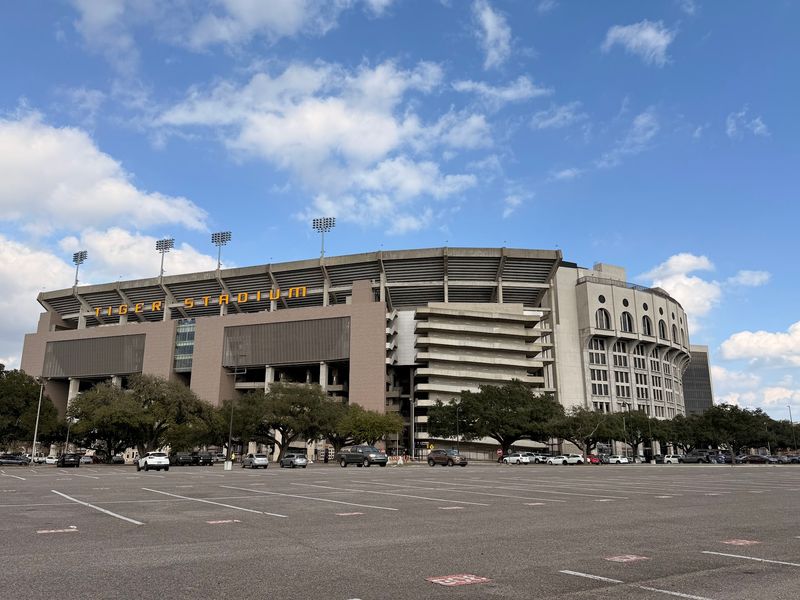
Tiger Stadium did not start out as the massive structure it is today. The original stadium opened in 1924 with a much smaller capacity, and it has been expanded numerous times since then as LSU football grew in popularity and national relevance.
Each expansion added seating, improved facilities, and changed the acoustic character of the venue.
The upper decks added in later decades were particularly significant. They not only increased capacity but also changed how sound behaved inside the stadium, contributing to the intense noise levels that define the modern Death Valley experience.
Each renovation built on the last, gradually creating the acoustic powerhouse that exists today.
The history of the stadium’s growth mirrors the history of LSU football itself. As the program earned more national attention and recruited higher-level talent, the demand for seats increased, and the university responded by building upward and outward.
The result is a stadium that feels like it was always meant to be this large.
What Visiting Fans Experience When They Show Up in Enemy Territory
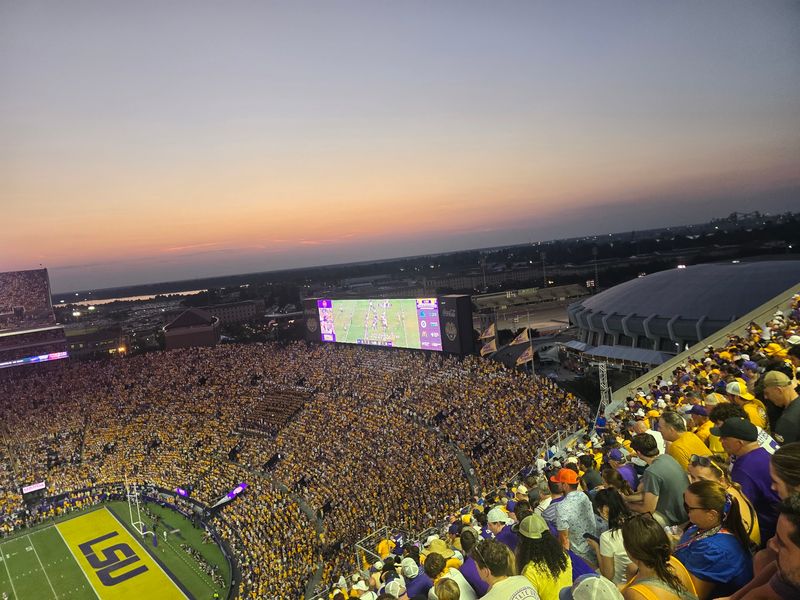
Visiting Tiger Stadium as a fan of the opposing team is an experience that people talk about long after the game ends. The crowd noise is one thing, but what surprises many visiting fans is how welcoming LSU supporters tend to be outside the stadium.
Tailgate invitations, shared food, and friendly conversations are genuinely common reports from fans who arrive in opposing colors.
Inside the stadium, the dynamic shifts. The crowd is loud, partisan, and fully committed to rattling opposing players and fans alike.
But even in that environment, the passion feels more celebratory than hostile, which is a distinction that experienced college football travelers notice and appreciate.
Fans who make the trip from opposing programs often come away saying the experience was worth it regardless of the final score. The combination of hospitality, atmosphere, and sheer spectacle makes Tiger Stadium a place that earns respect from visitors even when LSU wins convincingly, which happens frequently at home.
Concessions, Amenities, and the Practical Side of Game Day
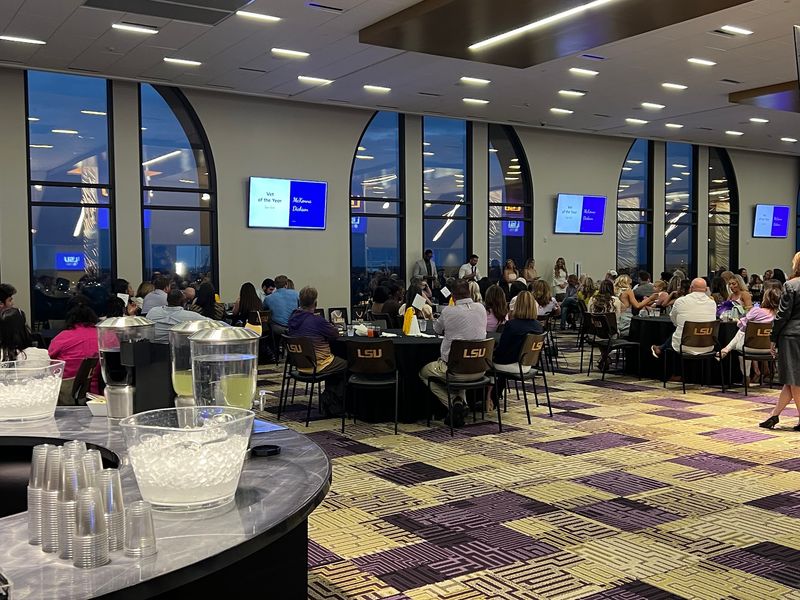
Tiger Stadium has made significant improvements to its concessions and amenities over the years, though the experience can still vary depending on where you are seated. The lower bowl and club areas offer a polished experience with solid food options and shorter lines.
Upper-level concessions can get overwhelmed during peak periods, so arriving early and eating before the game is practical advice worth taking seriously.
The food options include Louisiana-inspired choices that reflect the regional culture, which sets Tiger Stadium apart from more generic stadium menus. Pulled pork nachos, Lucky Dogs, and other comfort food staples are available throughout the venue, and many fans treat the concession run as part of the overall game day ritual.
The stadium also has a notably large number of restrooms compared to older venues of similar size, which fans consistently appreciate. Scoreboards are modern and bright, and the sound system delivers clear audio even in the upper sections, making sure no one misses a key moment.
Why This Stadium Belongs on Every Football Fan’s List
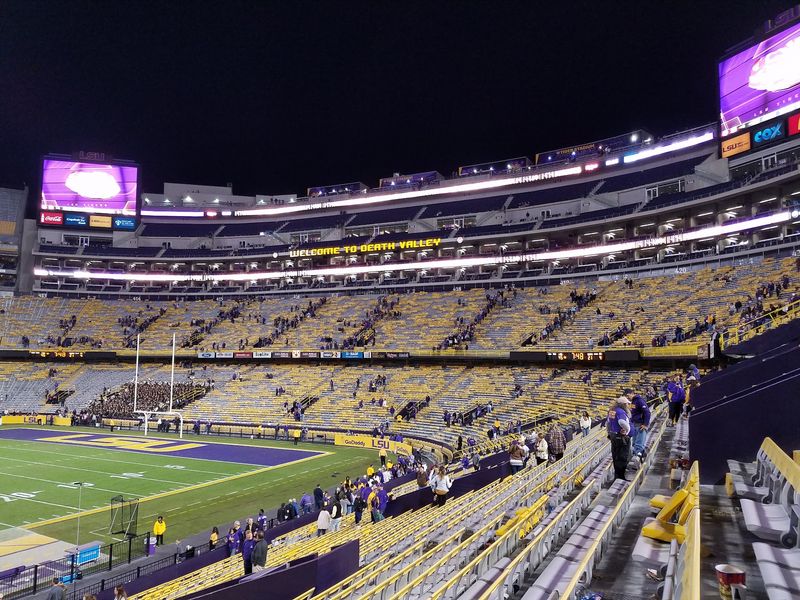
There are a handful of sports venues in the United States that transcend the game being played inside them and become destinations worth visiting purely for the experience. Tiger Stadium in Baton Rouge is firmly in that category.
The combination of history, acoustics, tradition, and raw atmosphere creates something that is genuinely difficult to replicate anywhere else.
College football fans who have visited multiple top-tier stadiums consistently rank Death Valley among the best. The night game atmosphere in particular draws comparisons to the loudest and most electric environments in all of sports, not just college football.
That reputation is not marketing. It is the result of decades of passionate fans showing up and making noise.
Whether you grew up watching LSU or have no connection to the program at all, a game at Tiger Stadium is the kind of experience that reframes what you thought a sporting event could feel like. The seismograph story is just the beginning of what this place has to offer.
Share this story