Every famous city has a shadow, and hiding in that shadow is usually a town that deserves way more credit. Travelers rush past these places on the way to the big names, missing medieval castles, ancient mosaics, royal palaces, and waterfront neighborhoods that tell stories just as compelling.
The towns on this list sit close enough to their famous neighbors to be dismissed as quick side trips, yet each one holds enough history, culture, and character to fill a proper visit. Pack an extra night and prepare to be pleasantly surprised.
Guimaraes, Portugal
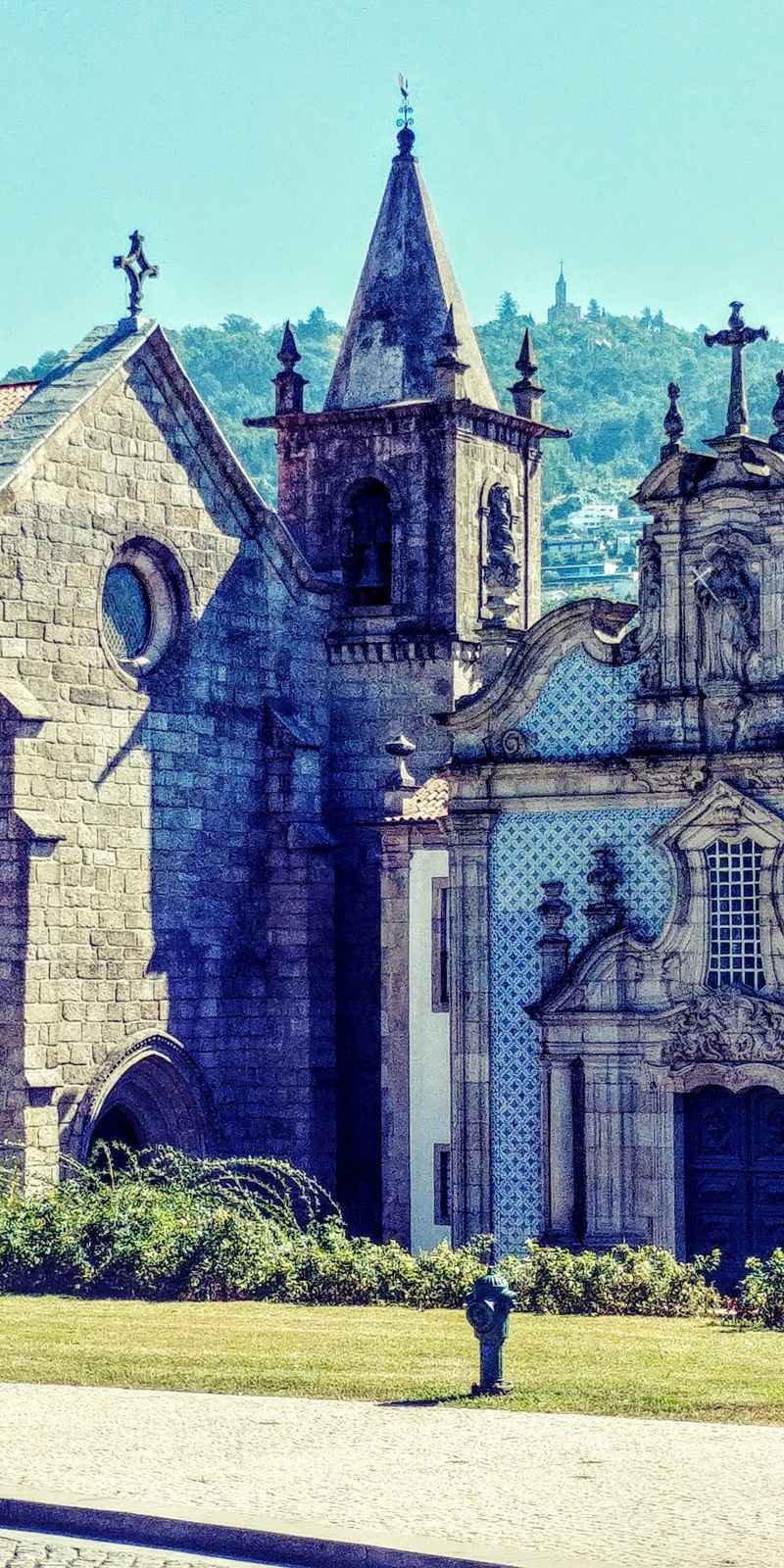
Portugal literally starts here. Guimaraes is widely recognized as the birthplace of the nation, tied directly to Afonso Henriques, the country’s first king, and the Battle of Sao Mamede in 1128.
Porto may grab the tourist spotlight about 35 miles to the southwest, but Guimaraes holds the origin story.
The medieval center is a UNESCO World Heritage Site, layered with granite balconies, shaded arcades, and narrow cobblestone lanes that have barely changed in centuries. Guimaraes Castle and the Romanesque Church of Sao Miguel anchor the Sacred Hill above town, giving the skyline a quietly dramatic profile.
What makes this town even more impressive is how it has moved forward without forgetting the past. Guimaraes earned the title of European Green Capital for 2026, recognizing serious sustainability efforts that most historic towns its size have not attempted.
History, architecture, and forward thinking rarely combine this neatly in one compact destination.
Girona, Spain
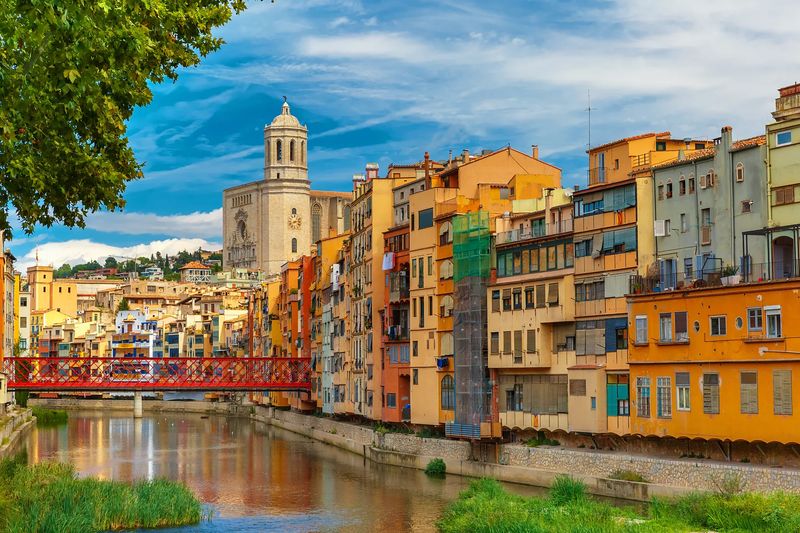
Girona has been quietly accumulating layers of history since the Romans founded it in the 1st century B.C. While Barcelona absorbs the crowds about an hour to the southwest, Girona gets on with the business of being genuinely fascinating.
Original Roman walls and medieval fortifications still stand, and visitors can walk stretches of both.
The old quarter packs Romanesque, Gothic, Jewish, and later architecture into a compact area that rewards slow walking. Girona Cathedral is a standout, featuring a Gothic nave that Spain’s official tourism authority describes as the widest in all of medieval European architecture.
El Call, the historic Jewish quarter nearby, ranks among the best preserved in Europe.
Then there are the brightly painted houses lining the Onyar River, which have become one of Catalonia’s most photographed scenes for good reason. Easy access to the Costa Brava adds a coastal option without requiring a separate trip.
Girona is not a day trip from Barcelona; Barcelona is a detour from Girona.
Bergamo, Italy
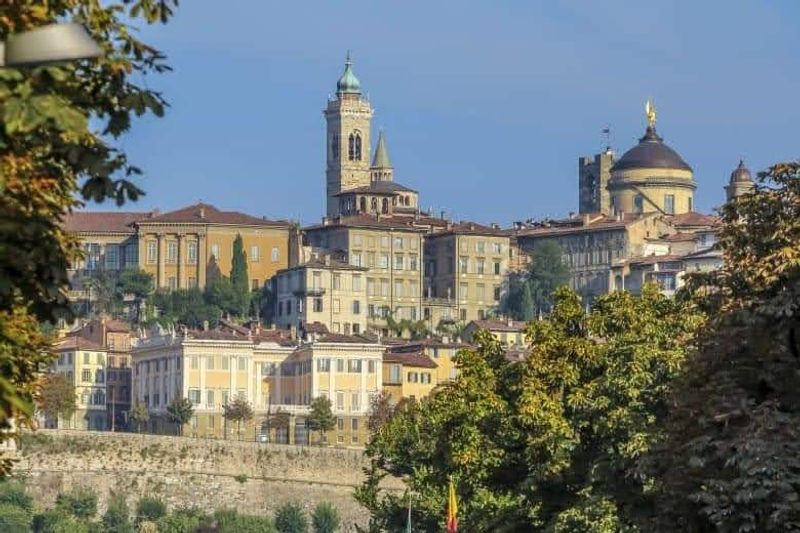
Bergamo plays a clever trick on first-time visitors: you think you have arrived, and then you realize there is a completely different city sitting on the hill above you. Divided between modern Citta Bassa and hilltop Citta Alta, Bergamo offers two distinct experiences within one destination.
A funicular has been shuttling people between the two since the late 19th century.
Up in the walled upper city, Piazza Vecchia opens onto the Palazzo della Ragione, the Campanone tower, Bergamo Cathedral, and the richly decorated Basilica of Santa Maria Maggiore. The massive Venetian fortifications surrounding Citta Alta are now part of a UNESCO World Heritage designation, recognizing their historical and architectural significance.
Milan sits less than 40 miles away and tends to dominate regional itineraries, but Bergamo holds its own culinary identity too. Casoncelli pasta, polenta taragna, and a local tradition linking the city with the invention of stracciatella gelato give food lovers plenty of reason to linger.
The funicular ride alone is worth the detour from Milan.
Potsdam, Germany
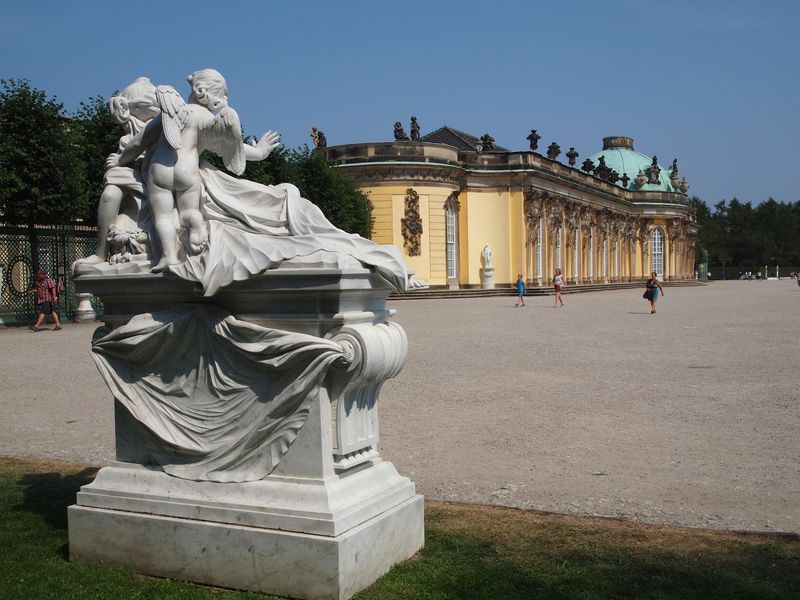
Immediately southwest of Berlin sits one of Europe’s most ambitious royal landscapes, and most travelers treat it as a half-day excursion rather than a destination worth staying in. Potsdam spent roughly three centuries being shaped by Prussian rulers who filled it with palaces, ornamental gardens, Baroque streets, and neoclassical architecture.
The result is a UNESCO-listed ensemble spanning about 500 hectares and around 150 buildings constructed between 1730 and 1916.
Sanssouci gets most of the attention, and it earns every bit of it. But the Dutch Quarter, Marble Palace, Alter Markt, and Cecilienhof round out a picture that goes well beyond a single palace visit.
Cecilienhof carries its own historical weight as the site of the 1945 Potsdam Conference, where Allied leaders shaped postwar Europe.
Glienicke Bridge nearby adds a Cold War chapter to the story, having served as the exchange point for captured spies between East and West. Potsdam is not a Berlin suburb with a nice garden.
It is a city with centuries of layered history that Berlin actually overshadows rather unfairly.
Nafplio, Greece
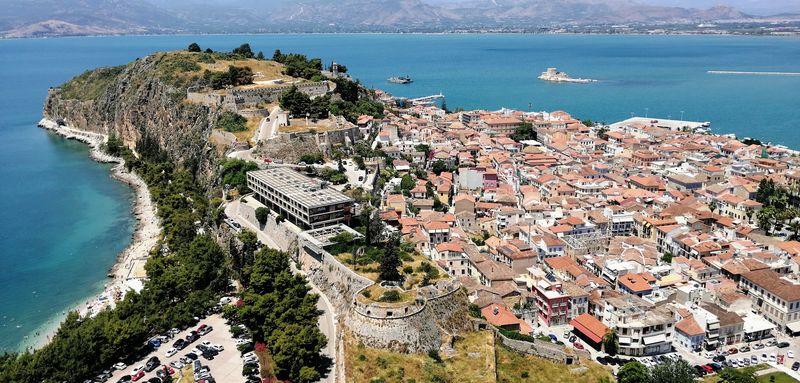
Perched above a harbor that looks almost too pretty to be real, Nafplio carries a history far heavier than its postcard appearance suggests. Venetian fortifications, neoclassical streets, and an Argolic Gulf waterfront make it one of the most visually layered towns in Greece, yet Athens consistently overshadows it despite Nafplio being entirely reachable from the capital.
Palamidi Fortress dominates the skyline from a 216-meter hill, built by the Venetians in the early 18th century with eight interconnected but independently defensible bastions. The famous staircase up to the fortress is often cited as 999 steps, though Greece’s official tourism organization puts the actual count at 857.
Either way, the view from the top is the kind that makes the climb feel short.
Greek forces captured Palamidi in 1822 during the War of Independence, adding a nationally significant chapter to its Venetian origins. Down in the harbor, the small Bourtzi fortress sits offshore on its own island, visible from the waterfront promenade.
Nafplio was also Greece’s first modern capital, a detail that adds one more reason to take it seriously as a destination.
Skofja Loka, Slovenia
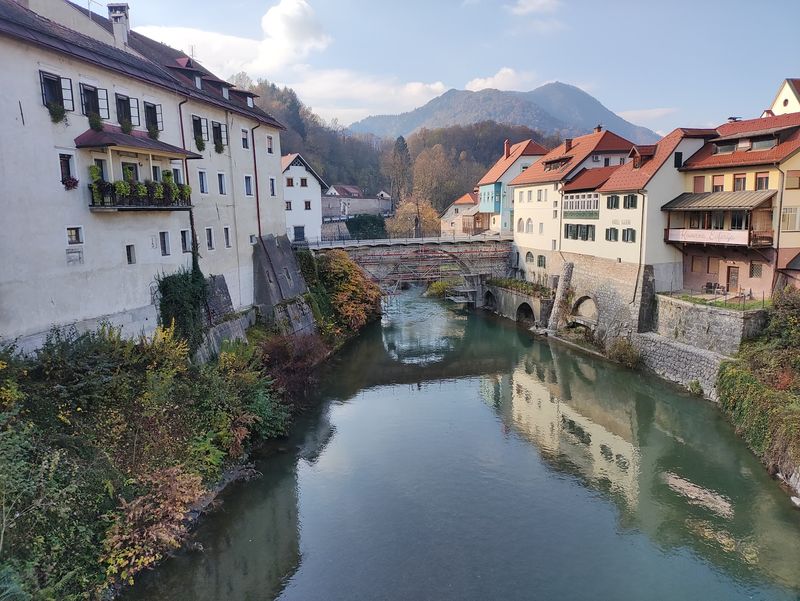
Skofja Loka is the kind of place where you half expect a knight to walk around the corner. One of Slovenia’s best-preserved medieval centers, it sits quietly off the main tourist trail while Ljubljana and Lake Bled collect the majority of visitor attention.
The main square is framed by historic noble houses, and Skofja Loka Castle rises above the rooftops to complete the medieval effect.
The castle now houses the Loka Museum, but the town’s most unusual claim to fame is cultural rather than architectural. The Skofja Loka Passion Play is documented in a manuscript dated 1721, described by Slovenia’s tourism authority as the oldest fully preserved Slovene dramatic text, complete with staging instructions.
UNESCO has inscribed this tradition on its Intangible Cultural Heritage list, which is not something most small towns can put on their resume.
The medieval Stone Bridge crossing the Selska Sora River adds another photogenic and historically significant layer to a town already packed with character. Skofja Loka is compact enough to explore comfortably on foot in a day, though the atmosphere makes it easy to justify staying longer.
Few towns this size carry this much living history.
Haarlem, Netherlands
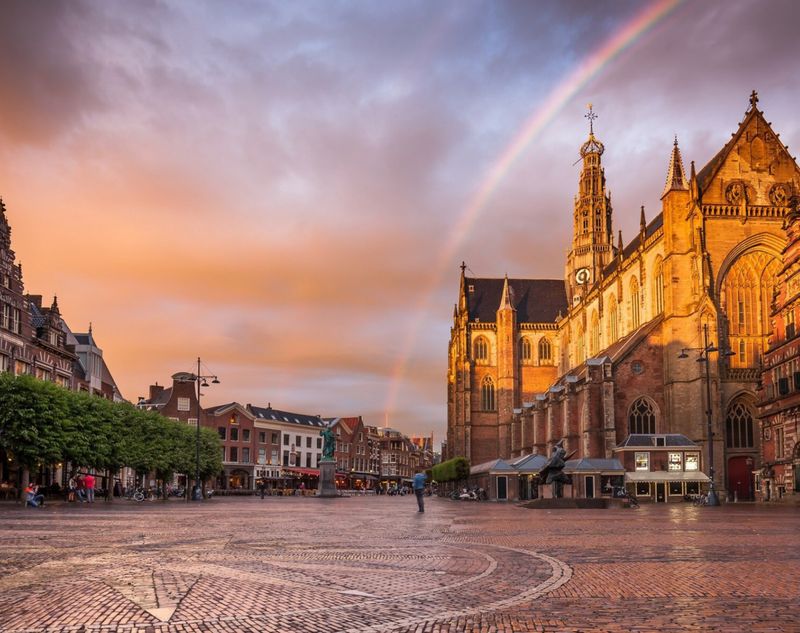
Just a short train ride from Amsterdam, Haarlem functions as the capital of North Holland and has been doing so for centuries, yet it consistently gets treated as a warm-up act rather than a headline destination. Canals, Dutch Masters paintings, a monumental church, and centuries of civic history give it credentials that stand up independently of its more famous neighbor.
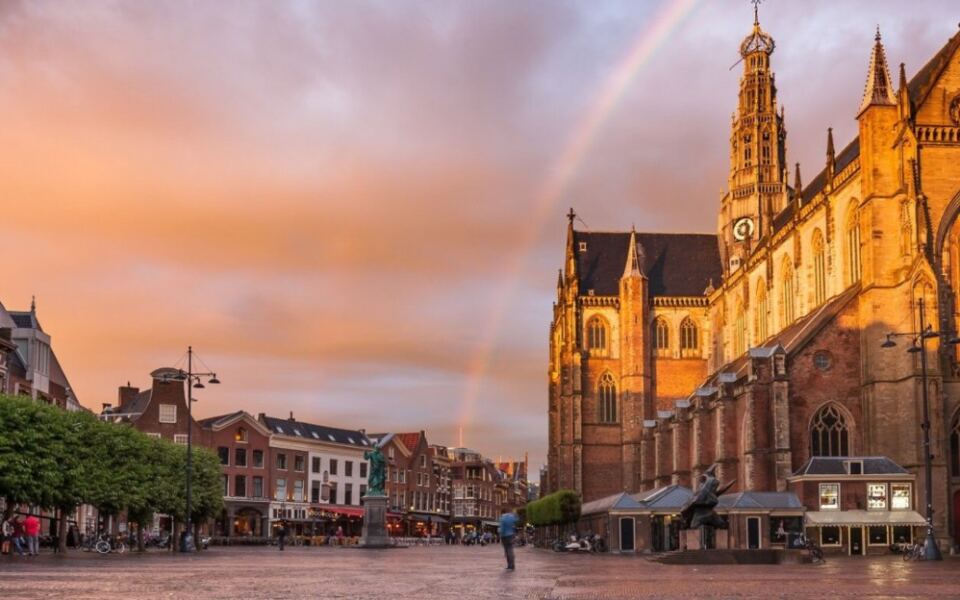
The Grote Markt forms the town’s lively centerpiece, surrounded by handsome facades, historic buildings, and the kind of street-level energy that makes Dutch cities so enjoyable to wander. Two museums alone make the journey worthwhile.
The Frans Hals Museum focuses on the celebrated Haarlem painter and Dutch Golden Age art, while Teylers Museum, founded in 1778, holds the title of oldest museum in the Netherlands.
Haarlem also sits less than 10 kilometers from Bloemendaal aan Zee, meaning a day that starts with Dutch art history can end with North Sea dunes and beach bars. That combination of historic city and accessible coastline is rare and genuinely useful for travelers who want variety without constantly changing hotels.
Haarlem rewards those who stay.
Delft, Netherlands
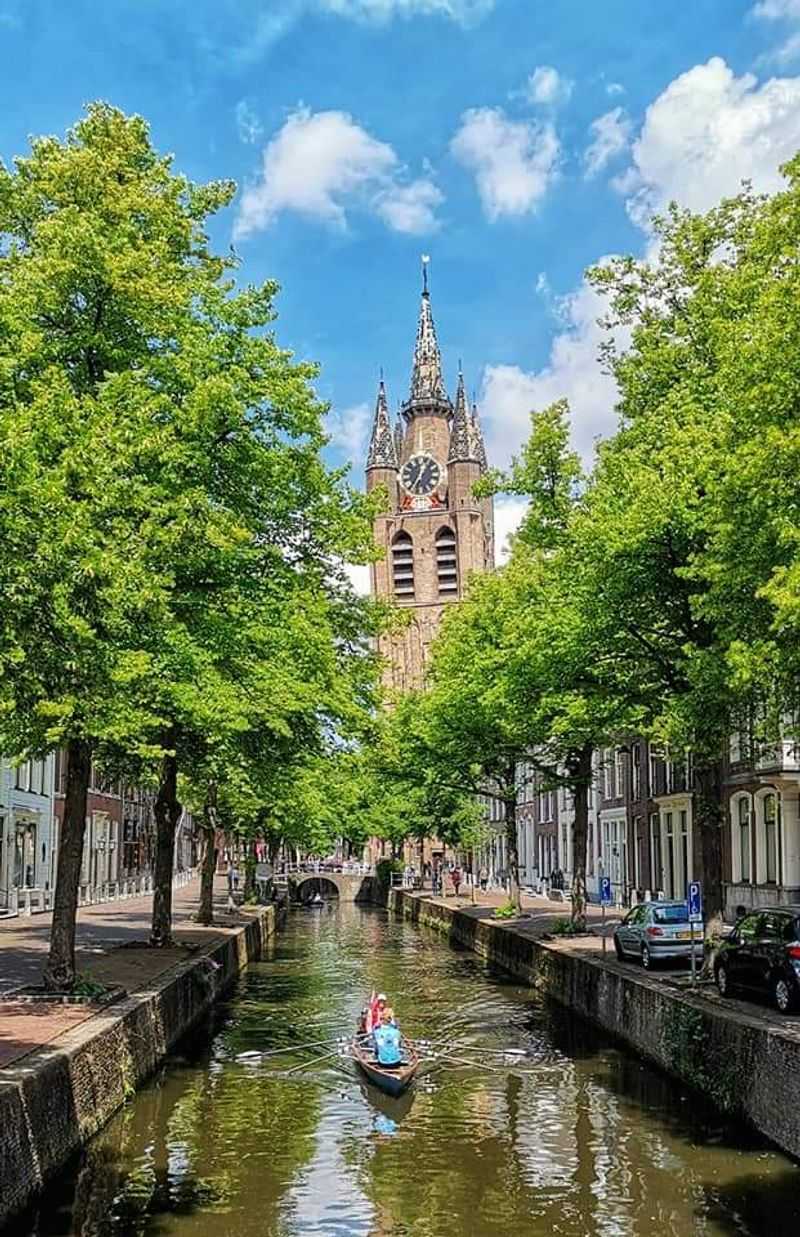
Delft gets unfairly reduced to its famous blue-and-white pottery, as if a city that produced Johannes Vermeer, houses the Dutch royal crypt, and operates one of Europe’s top technical universities needs a souvenir shop to justify itself. Wedged between Rotterdam and The Hague, Delft has a compact canal-lined center where centuries of history coexist with modern academic energy.
The Nieuwe Kerk holds the Dutch royal crypt, while the Oude Kerk’s noticeably leaning tower gives the skyline a slightly off-kilter charm. Delft’s central Markt, measuring roughly 120 by 50 meters, ranks among Europe’s largest historic market squares and anchors the city with a sense of civic grandeur.
Vermeer spent almost his entire life here, and the city takes that connection seriously.
Delft Blue ceramics are everywhere, but modern installations have kept the tradition alive and evolving rather than freezing it in amber. A gateway assembled from thousands of blue ceramic tiles shows how the city honors its past while staying current.
Delft is not a museum piece squeezed between two larger cities; it is a fully functioning, historically rich destination that simply does not shout loud enough.
Ravenna, Italy
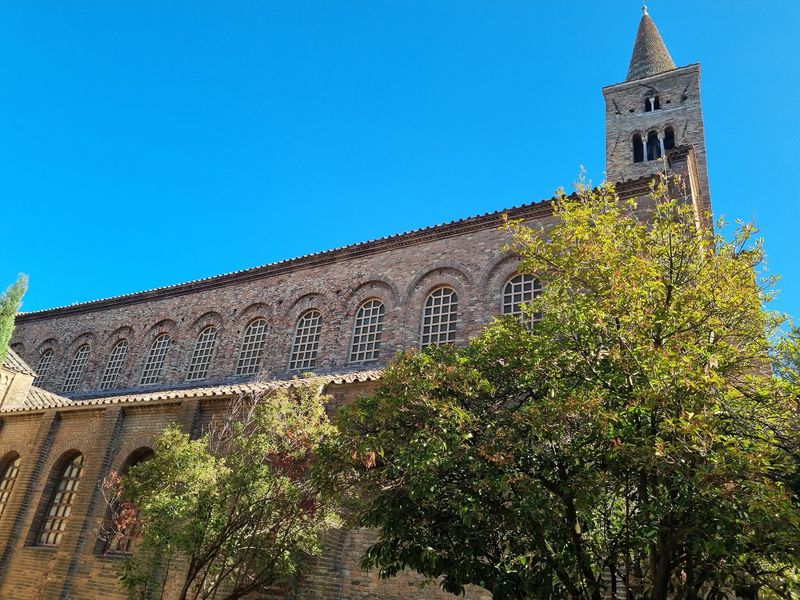
Walk into the Mausoleum of Galla Placidia in Ravenna and the ceiling above you is covered in deep blue mosaic dotted with golden stars, created more than 1,500 years ago. Bologna tends to headline trips through Emilia-Romagna, but Ravenna quietly preserves some of the most significant surviving art from late antiquity anywhere in the world.
The city’s political importance across several eras left an extraordinary concentration of early Christian architecture. Eight monuments carry UNESCO World Heritage status, and seven of them contain major mosaic programs.
The Basilica of San Vitale, Mausoleum of Galla Placidia, and Sant’Apollinare Nuovo each contain intricate fifth- and sixth-century mosaics that art historians consider among the finest examples of Byzantine art outside Constantinople.
Ravenna was successively the last capital of the Western Roman Empire, the seat of Theodoric’s kingdom, and a major Byzantine center, giving it a layered political history that few Italian cities can match. Dante Alighieri spent his final years here, adding a major literary connection to a city already exceptional on artistic and historical grounds.
Ravenna is not a detour; it is the main event that somehow got buried in Bologna’s shadow.
Arles, France
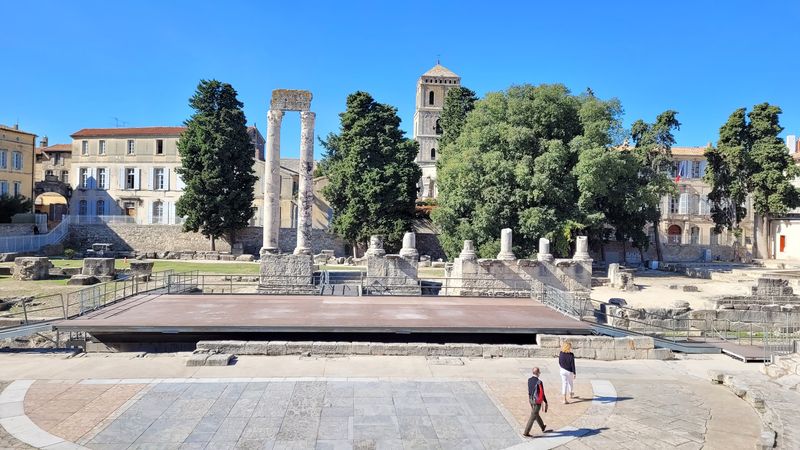
Arles has been hosting crowds since the Romans built an amphitheater there in the first century B.C., which means it has had centuries of practice being impressive. Avignon and Marseille tend to pull more attention in Provence, but Arles contains enough ancient Roman history to anchor an entire itinerary without needing to borrow interest from anywhere else.
The amphitheater and Roman theater are the obvious draws, but the wider UNESCO-listed group of Roman and Romanesque sites adds considerable depth. The Baths of Constantine, the Alyscamps necropolis, and Saint-Trophime, a major example of Provencal Romanesque architecture, fill out a picture that spans several centuries of monumental building.
Few French towns of this size carry this much architectural weight.
Arles also sits at the gateway to the Camargue, where the scenery shifts quickly from ancient stone streets to vast wetlands populated by flamingos and wild horses. That transition from Roman ruins to wild nature within a short drive is a combination that Avignon and Marseille simply cannot replicate.
Vincent van Gogh painted over 300 works while living in Arles, which adds one more reason to pay closer attention to a town that keeps rewarding it.
Sausalito, California
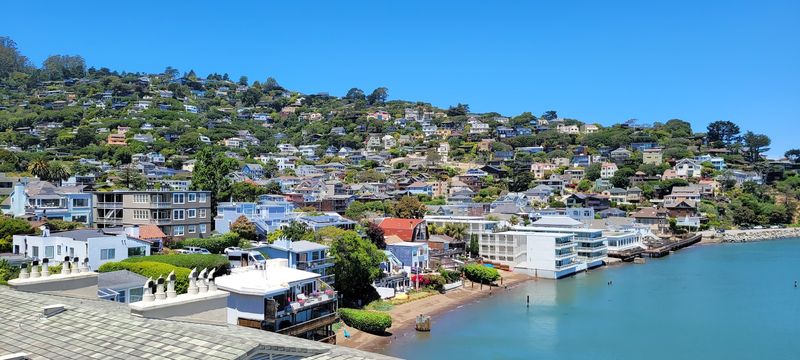
San Francisco’s skyline is actually part of Sausalito’s charm, which is a fun reversal: the famous city becomes the backdrop for the overlooked one. Sitting directly across the bay just north of the Golden Gate Bridge, Sausalito draws plenty of day visitors who arrive by ferry or bicycle, eat lunch along Bridgeway, and then head back.
Most of them miss the good part.
Victorian cottages climb steep Marin County hillsides above a shoreline that also hosts one of the most unusual residential communities in California: a colorful collection of floating homes and working marinas that have been evolving since the post-World War II era. The houseboat community gives Sausalito a quirky, creative identity that no amount of souvenir shopping in San Francisco can replicate.
From town, the rest of Marin County opens up in a way that surprises most visitors. Roughly half the county’s acreage is protected as parkland or agricultural land, putting wild coastline, hiking trails, and open pastoral landscapes surprisingly close to one of America’s densest metro areas.
Sausalito works perfectly as a base for exploring that combination of bay views, creative community, and preserved natural landscape.
Alexandria, Virginia
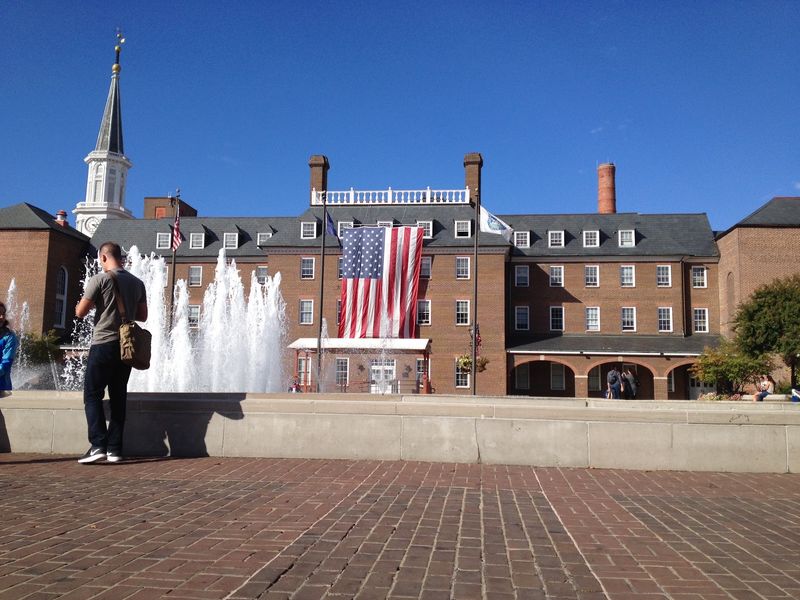
Washington, D.C., is visible across the Potomac, which has given Alexandria an undeserved reputation as merely a convenient place to sleep outside the capital. The city’s own history dates to 1749, and its Old Town contains one of the country’s oldest historic districts, packed with surviving 18th- and 19th-century buildings that would be the centerpiece of any other American city’s identity.
King Street stretches for roughly a mile through the historic core, lined with more than 200 independent shops and restaurants that end at the Potomac waterfront. Along the way, visitors find colonial-era architecture, small history museums, the Torpedo Factory Art Center, and sites connected with George Washington and Alexandria’s significant Black history.
The range of stories told within that one-mile stretch is genuinely impressive.
River taxis connect the waterfront directly with Washington and National Harbor, making Alexandria an easy alternative base that functions as a real destination rather than just a cheaper hotel option. The waterfront itself has a relaxed, walkable energy that the capital rarely matches.
Alexandria does not need Washington to justify a visit; it just happens to be conveniently located next door to one of the world’s most visited cities.
Annapolis, Maryland
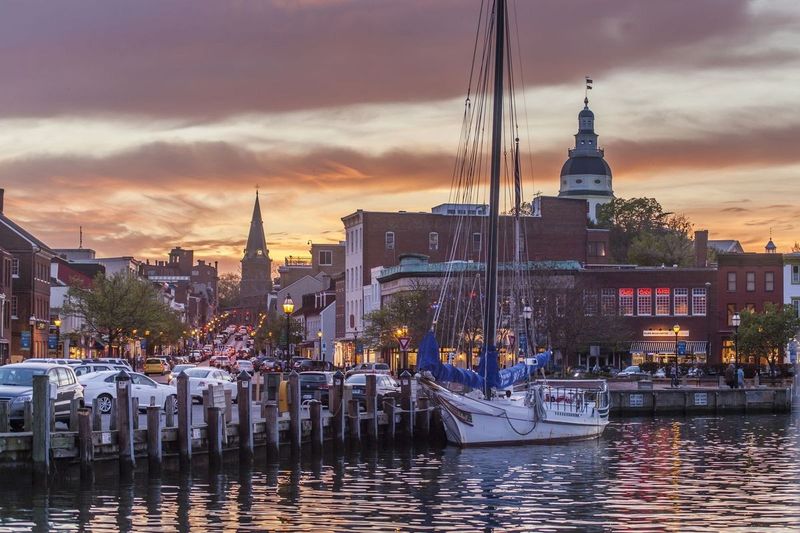
Maryland’s capital pulls off something that neither Washington nor Baltimore manages: colonial brick streets leading directly to a working Chesapeake Bay harbor, where sailboats and history share the same waterfront. Annapolis is compact enough to walk entirely, yet it contains enough layers to fill a weekend without any effort.
The Historic District holds brick townhouses, surviving 18th-century homes, and City Dock, where downtown literally meets the water. The U.S.
Naval Academy, established in 1845, occupies a 338-acre waterfront campus within easy walking distance of downtown. Visitors who meet current access requirements can tour the Naval Academy Museum, chapel, and the crypt of naval officer John Paul Jones, whose remains were brought to Annapolis from Paris in 1905.
Beyond the academy, the Maryland State House, William Paca House and Garden, and Hammond-Harwood House add architectural and political history to a city already strong on atmosphere. Sailing culture runs deep here, earning Annapolis the informal title of sailing capital of the United States.
The nearby Eastport neighborhood across the drawbridge adds a laid-back maritime vibe that perfectly balances the formality of the historic district. Annapolis is a destination, not a stopover.
Share this story