America has a secret life happening far beneath its surface. Tucked below mountains, deserts, and rolling hills are some of the most jaw-dropping natural spaces you will ever see, and most people drive right past them without a second thought.
From the world’s longest cave system to an underground waterfall inside a mountain, these destinations offer a completely different kind of adventure. If you are looking for something that genuinely surprises you, this list is a great place to start.
Mammoth Cave National Park, Mammoth Cave, Kentucky
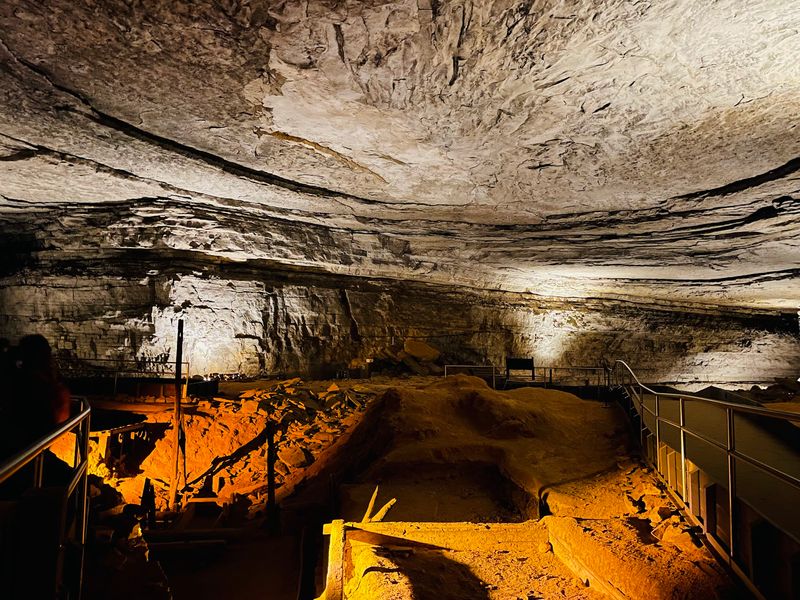
The numbers alone are staggering. Mammoth Cave holds the title of the world’s longest known cave system, with more than 400 mapped miles stretching beneath south-central Kentucky.
That record keeps growing as explorers continue to map new sections every year.
Multiple cave tours run throughout the 2026 season, ranging from easy, accessible walking routes to more adventurous options that pass through narrow passages and enormous underground chambers. The variety means first-time visitors and returning explorers can both find something that fits their pace and comfort level.
Above ground, the national park offers trails, wildlife, and river access along the Green River. Reservations for cave tours are strongly recommended, especially during summer weekends when demand is high.
The cave stays at a steady 54 degrees Fahrenheit year-round, so a light jacket is worth packing even in July. Mammoth Cave rewards curiosity on a genuinely massive scale.
Carlsbad Caverns National Park, Carlsbad, New Mexico
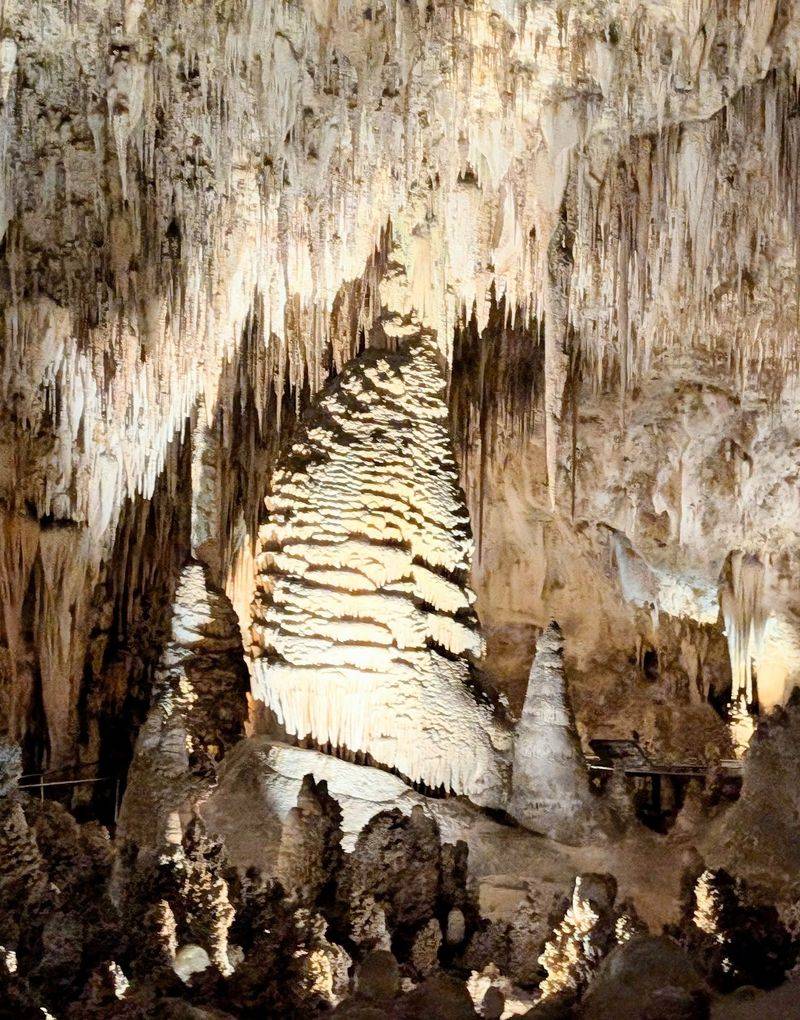
Few underground spaces in North America can match the sheer scale of Carlsbad Caverns. The Big Room, one of the most visited sections of the park, is a single natural chamber large enough to fit several football fields inside it.
Walking through it feels genuinely surreal.
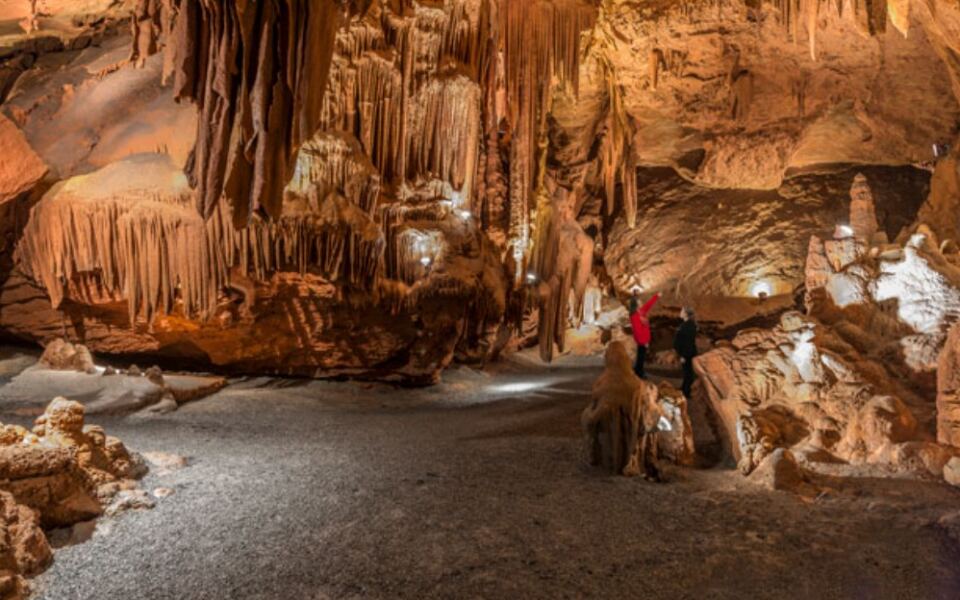
The caverns are filled with stalactites hanging from above, stalagmites rising from the floor, towering columns, and delicate formations that took thousands of years to develop. Designated self-guided routes let visitors move at their own pace, while ranger-led tours provide access to additional areas not open to the general public.
Located in the Chihuahuan Desert of southeastern New Mexico, Carlsbad Caverns is part of the National Park system, which means the America the Beautiful pass is accepted here. The cave elevator drops visitors 750 feet below the surface in under a minute.
That descent alone sets the tone for everything that follows.
Jewel Cave National Monument, Custer, South Dakota
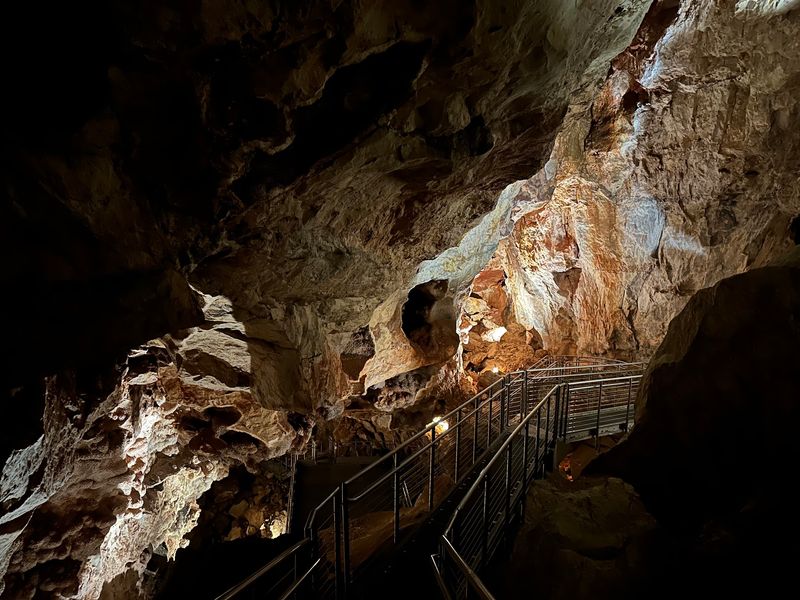
Jewel Cave earned its name from the calcite crystals that line its walls, catching light and giving the passages a distinctive sparkle that sets it apart from most other caves in the country. At over 220 mapped miles, it ranks as one of the longest cave systems in the world.
The Scenic Tour and Discovery Tour both operate during the 2026 season, offering different levels of access and physical challenge. The Scenic Tour follows paved pathways through larger chambers, while the Discovery Tour is more hands-on and takes visitors through tighter sections of the cave.
Reservations are recommended for both options.
Jewel Cave sits just outside the town of Custer, making it easy to pair with a visit to Wind Cave National Park or Custer State Park nearby. The monument is managed by the National Park Service, and the cave temperature stays around 49 degrees year-round, so layering up before heading underground is a practical move.
Wind Cave National Park, Hot Springs, South Dakota
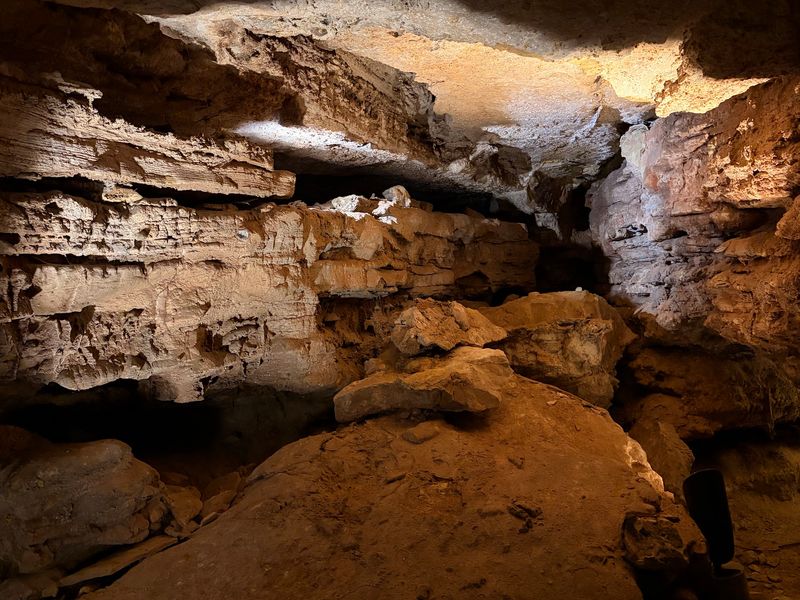
Wind Cave holds a geological feature found almost nowhere else on earth. The boxwork formations covering its walls look like a honeycomb made of thin calcite fins, and Wind Cave contains the largest known concentration of this structure anywhere in the world.
Scientists still study why it formed so abundantly here.
Ranger-led tours run throughout the year, with routes including the Natural Entrance Tour, Garden of Eden Tour, and Fairgrounds Tour. Each offers a different perspective on the cave’s layout and formations, so repeat visitors often choose a different route each time.
Tour availability shifts slightly depending on the season.
The park above ground is equally worth exploring. Wind Cave National Park protects one of the few remaining natural prairies in the country, home to bison, pronghorn, and elk.
The combination of underground geology and open-air wildlife makes this one of the more well-rounded stops in the Black Hills region of South Dakota.
Luray Caverns, Luray, Virginia
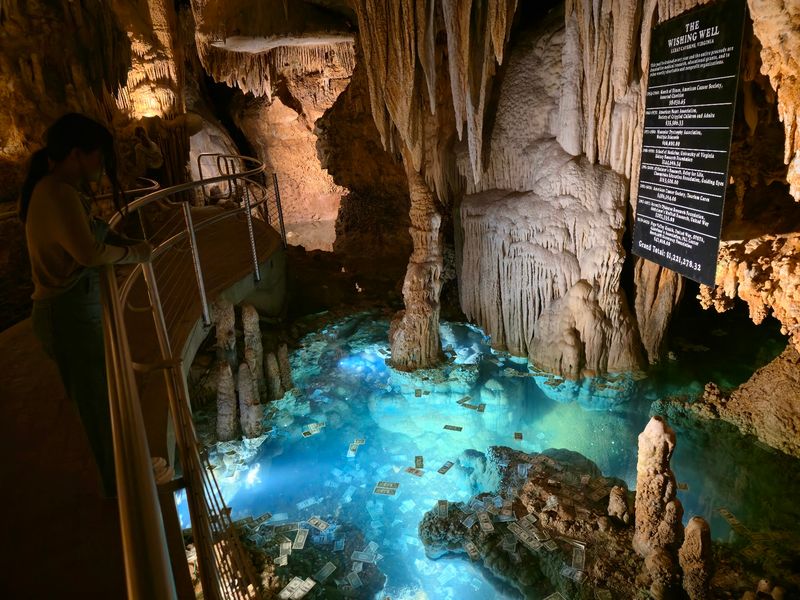
Opened to the public in 1878, Luray Caverns has been welcoming visitors for well over a century, and it remains one of the most visited cave attractions on the East Coast. The scale of its rooms is what tends to stop people in their tracks.
Columns stretching dozens of feet tall and pools so still they mirror the ceiling above create a setting that is hard to describe without seeing it firsthand.
Self-guided audio tours are currently available, allowing visitors to move through the caverns at their own pace along a paved, well-lit route approximately 1.4 miles long. The cave stays open every day of the year, which makes planning a visit fairly flexible regardless of season.
Luray also features the Great Stalacpipe Organ, an instrument that uses rubber mallets to strike stalactites throughout the cave, producing tones. It holds a Guinness World Record as the world’s largest natural musical instrument.
That detail alone tends to surprise most first-time visitors.
Ruby Falls, Chattanooga, Tennessee
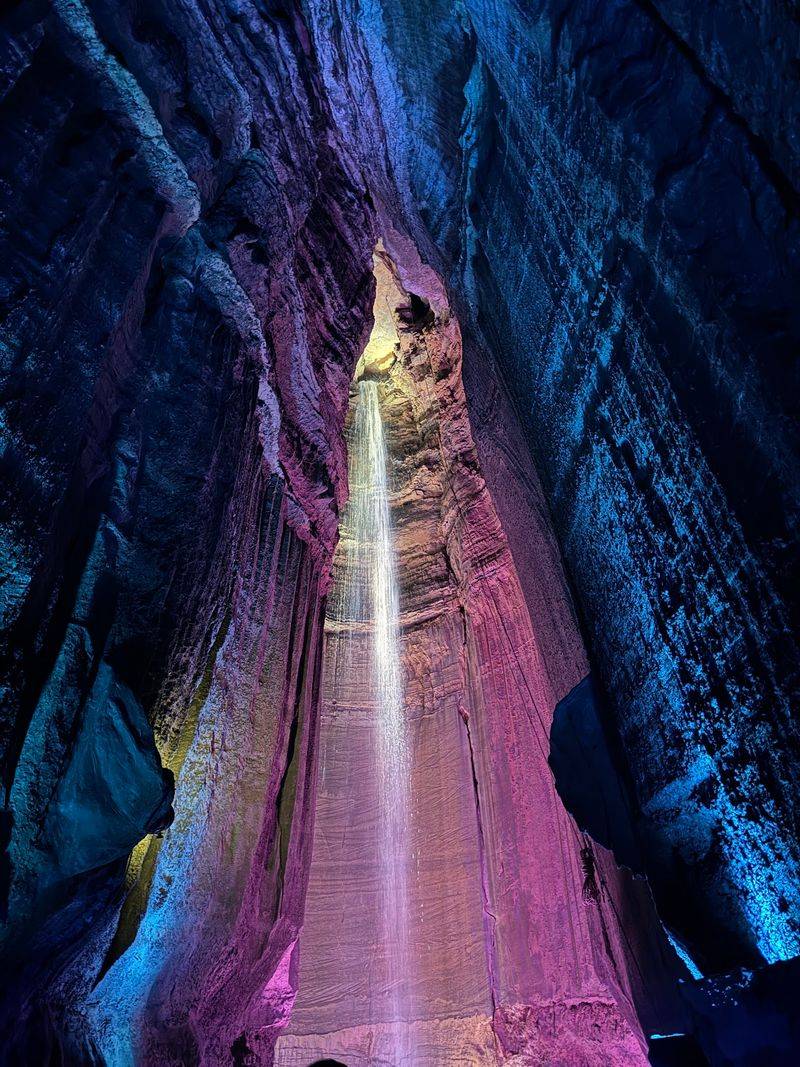
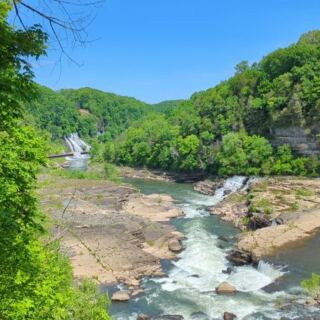
Ruby Falls sits 1,120 feet inside Lookout Mountain, making it one of the deepest commercially operated cave attractions in the United States. The 145-foot underground waterfall at its center was first discovered in 1928 by cave explorer Leo Lambert, who named it after his wife, Ruby.
Guided Cave Walk tours operate daily, taking visitors approximately one mile round trip through the cavern before arriving at the waterfall chamber. The route passes through narrow passages and larger open rooms filled with stalactites and stalagmites before reaching the dramatic final reveal.
Ruby Falls is located just outside of Chattanooga, making it a natural companion to other Lookout Mountain attractions in the area. Timed ticket entry keeps crowds manageable inside the cave, and booking in advance is the best way to secure a preferred tour time.
The cave maintains a consistent temperature around 60 degrees, which feels refreshing during Tennessee’s warmer months.
Howe Caverns, Howes Cave, New York
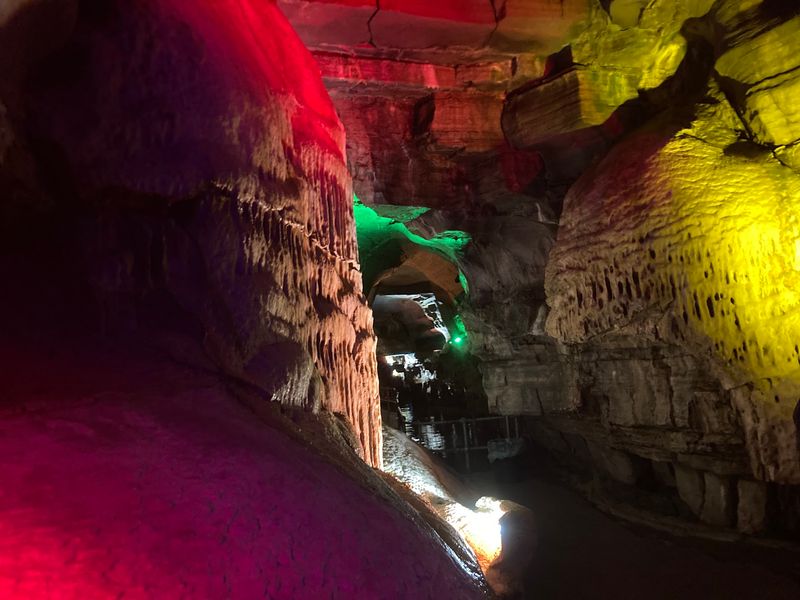
Getting to the cave itself is part of the experience at Howe Caverns. Visitors descend more than 150 feet below the surface by elevator before walking through a series of limestone passages carved by an ancient underground river.
The geology here tells a story millions of years in the making.
One of the most memorable parts of the traditional guided tour is a short flat-bottomed boat ride along the Lake of Venus, an underground waterway that winds through a section of the cavern. It is the kind of detail that makes Howe Caverns stand out from a standard walking tour.
Located in Schoharie County in central New York, Howe Caverns has operated as a public attraction since 1843, making it one of the oldest commercial cave tours in the country. Traditional guided tours remain available in 2026.
The site also includes above-ground amenities and activities, making it a practical full-day destination for families traveling through the region.
Blanchard Springs Caverns, Fifty-Six, Arkansas
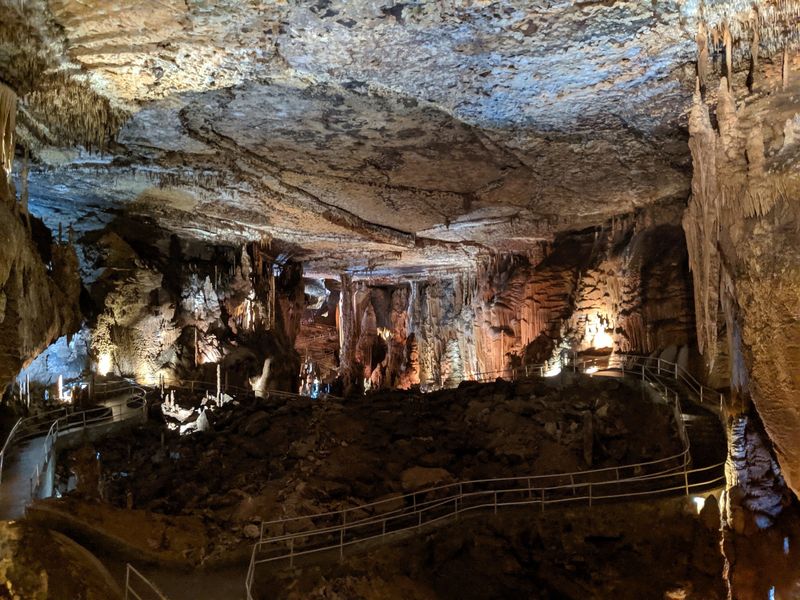
Blanchard Springs Caverns is what geologists call a living cave, meaning its formations are still actively growing. Water continues to move through the system, slowly depositing minerals and building the stalactites, stalagmites, and flowstone that cover nearly every surface.
That ongoing process gives the cave a sense of life that older, drier caves can lack.
Managed by the U.S. Forest Service as part of the Ozark-St. Francis National Forests, the caverns offer several guided tour options.
The Dripstone Trail is the most accessible route, following a paved path through large rooms filled with formations and operating year-round. Other tour options provide access to additional sections of the cave.
Blanchard Springs is located near the small community of Fifty-Six in northern Arkansas, a setting that already feels removed from everyday life before you even step underground. The surrounding Ozark landscape adds to the overall experience, with the caverns sitting alongside a natural spring that feeds into a clear creek above ground.
Kartchner Caverns State Park, Benson, Arizona
Kartchner Caverns was kept secret for over a decade after its discovery in 1974. The two cavers who found it, Gary Tenen and Randy Tufts, deliberately protected its location to prevent damage before proper conservation measures could be established.
That careful approach shaped how the cave is managed to this day.
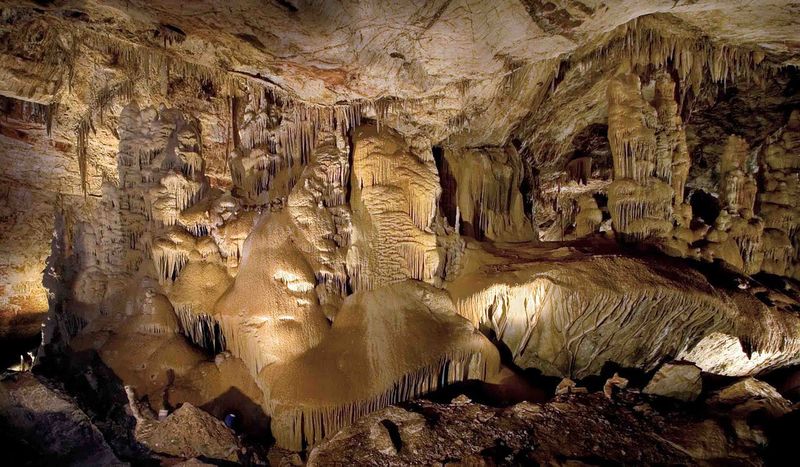
The caverns are a living system, meaning the formations inside are still actively growing. Arizona State Parks maintains strict humidity and temperature controls throughout the cave to protect its delicate stalactites, columns, and other features.
Visitors are required to pass through a series of airlock-style doors designed to preserve the cave’s interior climate.
Cave tours are available through Arizona State Parks, and reservations are strongly recommended because daily visitor numbers are intentionally limited to reduce impact. The Throne Room tour and Big Room tour each highlight different sections of the cavern.
Located near Benson in southeastern Arizona, the park is roughly an hour from Tucson and makes for a straightforward day trip from the city.
Fantastic Caverns, Springfield, Missouri
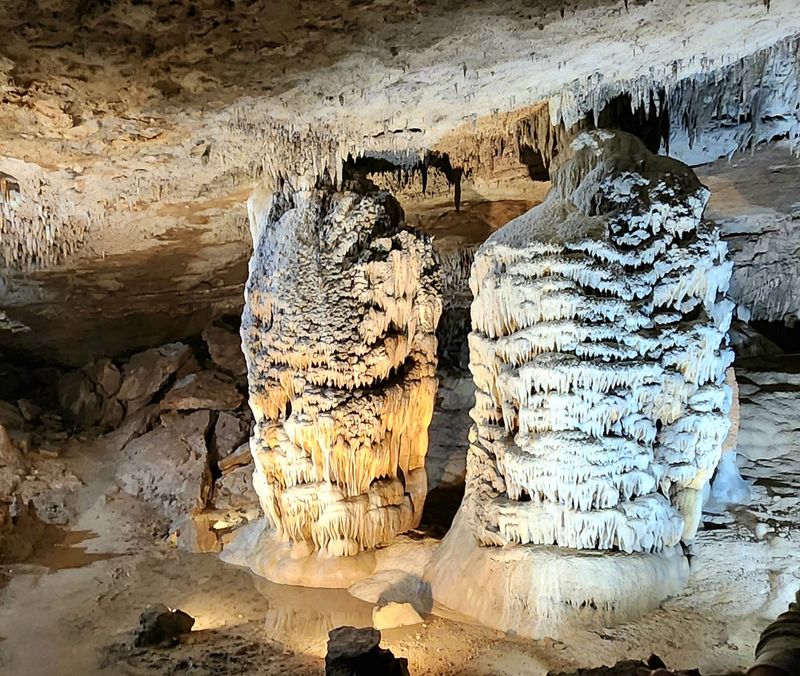
Fantastic Caverns is the only ride-through cave tour in North America, which immediately makes it a different kind of underground experience. Instead of walking the route, visitors board a jeep-drawn tram and travel through the cave passages seated.
The format makes the tour fully accessible for people who have difficulty walking longer distances.
The cave was discovered in 1862 and has a layered history that includes use as a concert venue and various other purposes before becoming a public attraction. Today the focus is squarely on the geology, with guides pointing out formations, underground streams, and passages that branch off the main route throughout the journey.
Located just north of Springfield, Fantastic Caverns operates daily for most of the year and lists active 2026 admission and tour hours on its website. The cave temperature holds steady around 60 degrees regardless of season.
Springfield itself offers plenty of additional stops, making Fantastic Caverns an easy addition to a broader Ozarks road trip itinerary.
Natural Bridge Caverns, San Antonio, Texas
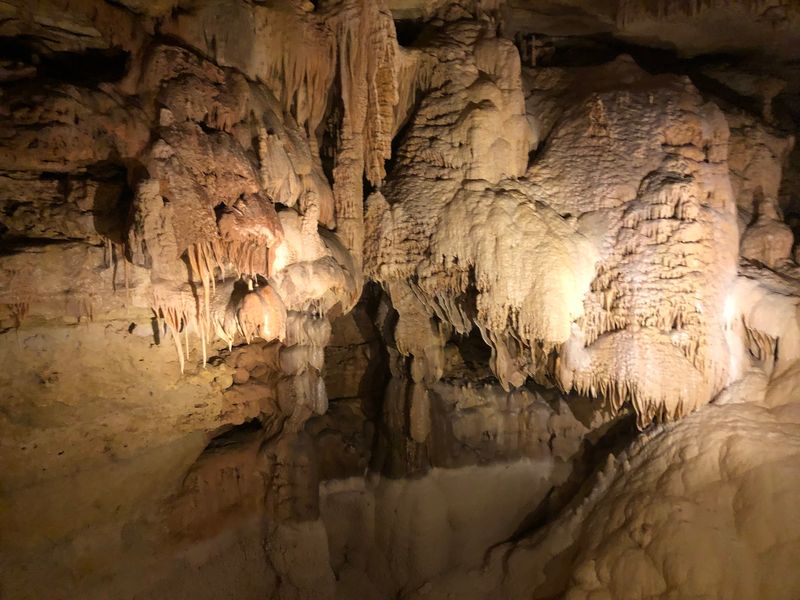
Natural Bridge Caverns sits beneath the Texas Hill Country about 30 miles north of San Antonio, and it holds the title of the largest commercially operated cavern attraction in the state. The cave was discovered in 1960 by a group of students from St. Mary’s University, and it opened to the public shortly after.
The Discovery Tour and Hidden Wonders Tour each access different sections of the cavern system, with the Hidden Wonders route reaching deeper and more remote chambers that are not part of the standard experience. Both tours are currently operating, and the caverns are open year-round.
The formations inside are genuinely impressive in scale. Some of the stalactites and columns are among the largest found in any commercially accessible cave in Texas.
Above ground, the property has expanded over the years to include additional attractions, but the cave itself remains the clear centerpiece. Reservations can be made online, and booking ahead on busy weekends is a practical step.
Caverns of Sonora, Sonora, Texas
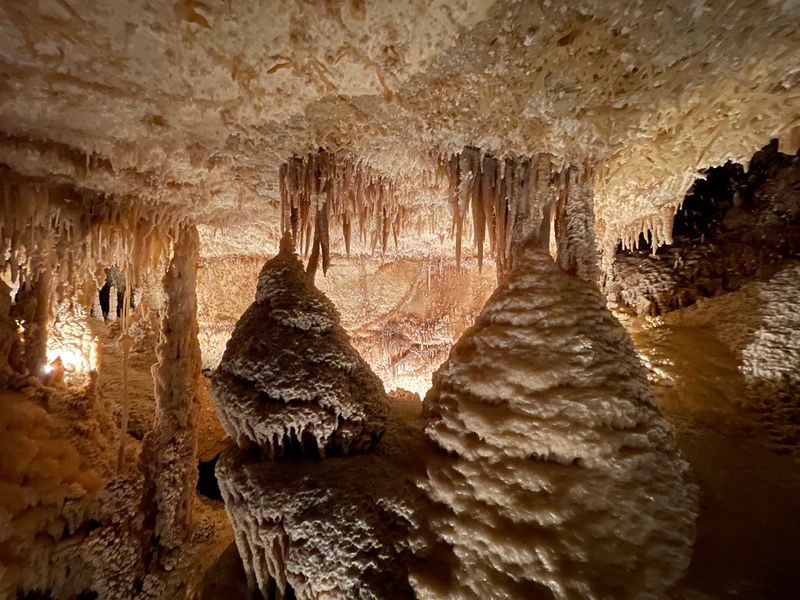
The Caverns of Sonora are considered by many geologists to be among the most beautifully decorated caves in the world, and that reputation comes primarily from one feature: helictites. These twisted, curling calcite formations grow in unpredictable directions, defying gravity in ways that still fascinate researchers.
Sonora has an unusually high concentration of them.
Beyond the helictites, the caverns contain dense displays of other delicate calcite formations covering walls, ceilings, and floors in nearly every chamber. The cave remains an active system, meaning the formations are still slowly growing.
That ongoing development is part of why the caverns are managed carefully to limit environmental impact from visitors.
Located near the town of Sonora in west-central Texas, the caverns are open year-round except for Christmas Day. Guided tours take visitors through the main passages and chambers at a measured pace that allows time to observe the formations up close.
The drive to Sonora from San Antonio runs roughly two hours along Interstate 10.
Shenandoah Caverns, Quicksburg, Virginia
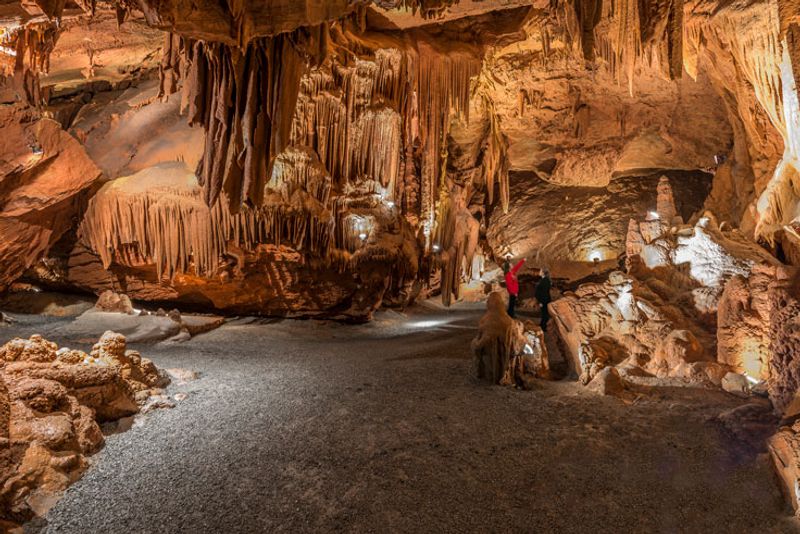
Shenandoah Caverns holds the distinction of being the only cavern in Virginia with elevator access, which means visitors of nearly all mobility levels can reach the underground passages without navigating stairs. That practical detail sets it apart from many other cave attractions in the region.
The guided tour follows an approximately one-mile route through chambers filled with flowstone, stalactites, stalagmites, and folded formations that have unusual shapes compared to what you typically see in other caves. One of the more recognized features is a formation called Bacon, a section of banded flowstone that resembles strips of layered rock in warm tones.
Located in the Shenandoah Valley near the small community of Quicksburg, the caverns operate seven days a week, closing only on Christmas Day. The surrounding valley is one of the more scenic stretches of rural Virginia, making a visit here easy to combine with a drive along Skyline Drive or a stop at a nearby orchard or farm market depending on the season.
Skyline Caverns, Front Royal, Virginia
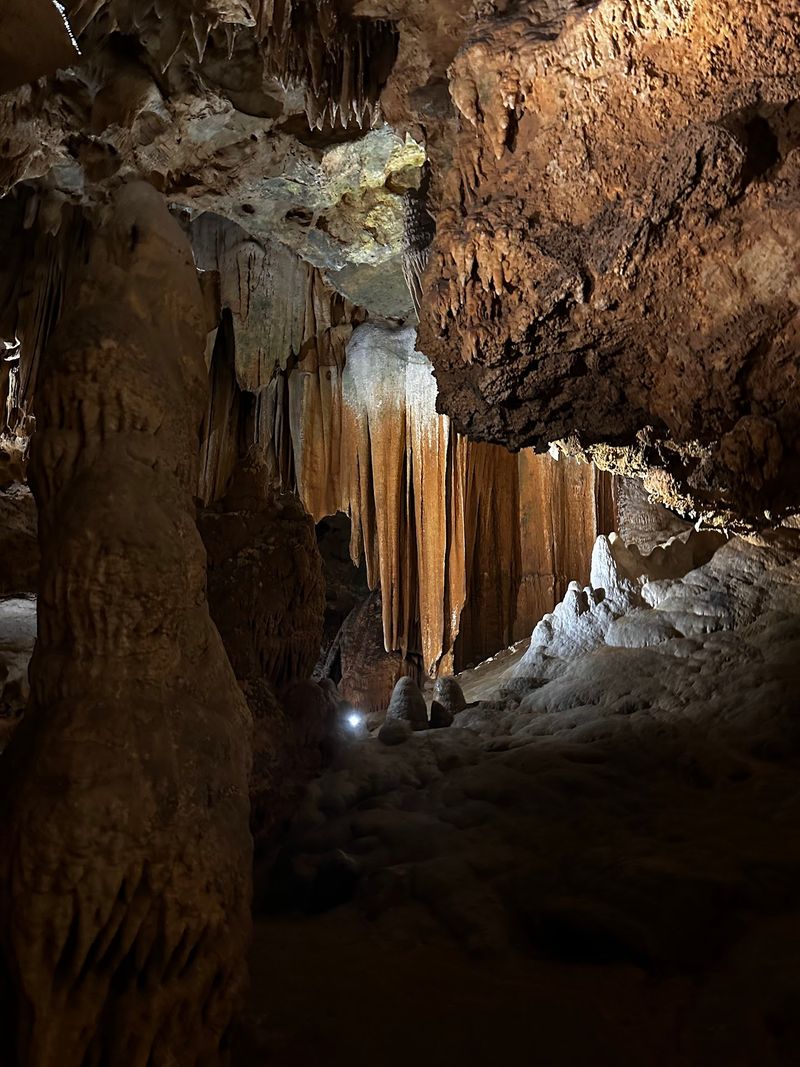
Anthodites are rare. These spiky, radiating calcite structures grow outward from cave walls in patterns that look almost like sea urchins or bursting stars, and they form in relatively few caves worldwide.
Skyline Caverns in Front Royal is one of the places where you can actually see them up close on a standard guided tour.
The caverns also contain stalactites, stalagmites, and flowstone formations spread throughout their passages, but the anthodites are the feature most visitors remember long after leaving. The guided tours run approximately one hour and follow a route through the main decorated chambers of the cave.
Front Royal sits at the northern entrance to Shenandoah National Park, which makes Skyline Caverns a natural addition to any trip through that area. The caverns are open daily, and the location is convenient for travelers heading in or out of the park along Route 340.
The cave temperature stays around 54 degrees year-round, so a layer is worth keeping nearby.
Ohio Caverns, West Liberty, Ohio
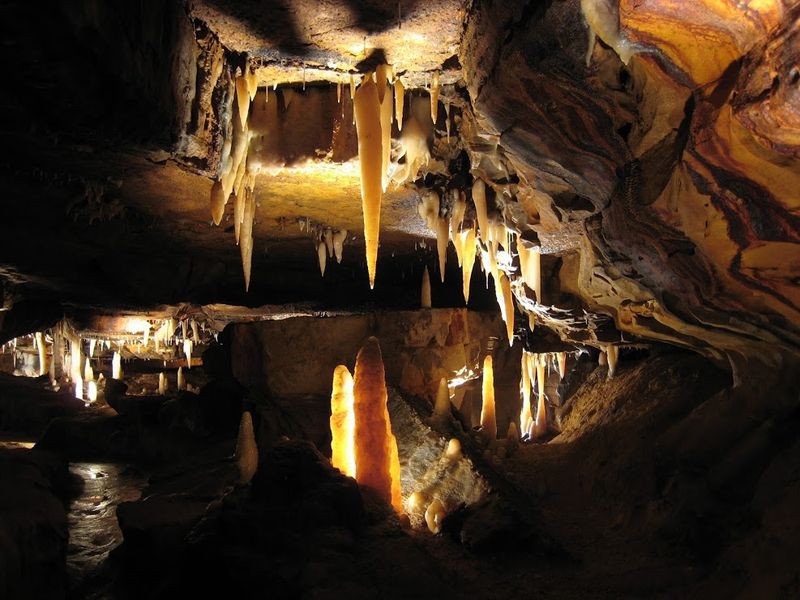
Ohio Caverns stands out for color. While many caves feature formations in shades of gray and brown, the stalactites and stalagmites here display a range that includes bright white crystal and deep rust orange, the result of different mineral deposits building up over thousands of years.
The contrast makes the formations visually striking even by cave standards.
Several tour options are offered, covering different sections of the cavern system and varying in length and physical demand. The attraction operates throughout the year, closing only for limited holiday periods.
West Liberty is a small town in Logan County in west-central Ohio, and the caverns are the area’s best-known natural attraction.
Ohio Caverns opened to the public in 1897, giving it one of the longer operating histories of any commercial cave in the Midwest. The main passage stretches through a long section of carved limestone, and the consistently cool underground temperature provides a welcome contrast to Ohio summers.
Parking is free and on-site, which keeps the visit straightforward from arrival to departure.
Mercer Caverns, Murphys, California
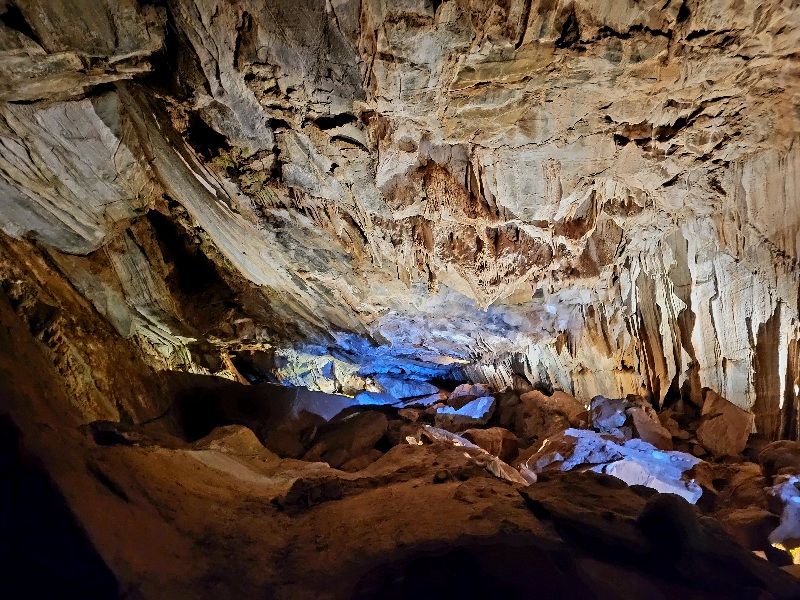
Mercer Caverns was discovered in 1885 by Walter Mercer, a prospector who reportedly stumbled onto the cave entrance while searching for water. The caverns have been open to the public ever since, making them one of the oldest continuously operating cave attractions in California.
Guided tours take visitors through a series of chambers and passages carved through limestone beneath the Sierra Nevada foothills. The formations inside include stalactites, stalagmites, cave coral, and aragonite crystals, giving the cave a varied appearance from one room to the next.
Tours run daily during summer months, with reduced hours and schedules during winter.
Murphys itself is a well-known Gold Rush era town in Calaveras County, with a main street lined with tasting rooms, historic buildings, and local shops. Combining a visit to Mercer Caverns with time in the town makes for a full and varied day.
The caverns are located just a short drive from downtown Murphys, and the elevation keeps temperatures noticeably cooler than the Central Valley below.
Lewis & Clark Caverns State Park, Whitehall, Montana
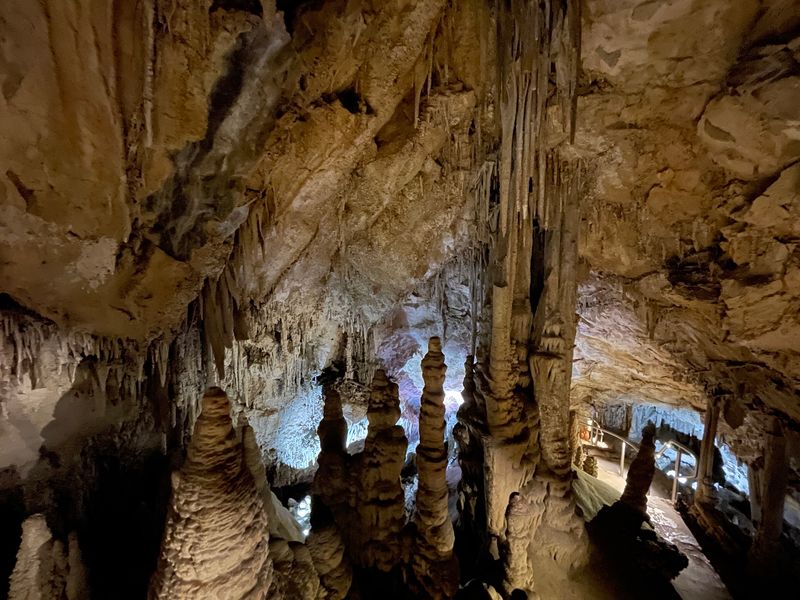
Despite the name, Lewis and Clark never actually entered these caverns. The explorers passed through the Jefferson River Valley below in 1805, and the cave was later named in their honor when it became one of Montana’s first state parks in 1937.
The name stuck, and today the park is one of the most recognizable natural landmarks in the state.
Guided cave tours operate seasonally, generally running from May through September. The route winds through decorated chambers connected by winding passages, with stalactites, stalagmites, and other formations filling the rooms throughout the tour.
The physical demands of the tour are moderate, with some areas requiring visitors to stoop or navigate narrower sections.
The park sits along the Jefferson River in southwestern Montana, roughly 50 miles east of Butte. Above ground, the setting is open and scenic, with views across the river valley and surrounding hills.
Camping is available within the state park, which makes Lewis and Clark Caverns a natural overnight stop for road trippers crossing Montana during the summer travel season.
Share this story