Cathedrals are among the most ambitious structures humans have ever built, and their stories go far beyond stone and stained glass. Some took centuries to finish, survived wars and fires, and were rebuilt with the same stubborn determination that created them in the first place.
From the soaring twin towers of Cologne to the pilgrimage-worn steps of Santiago de Compostela, each cathedral on this list tells a story about the people, politics, and artistic genius of its era. Get ready to travel across continents and centuries without leaving your seat.
Cologne Cathedral, Germany
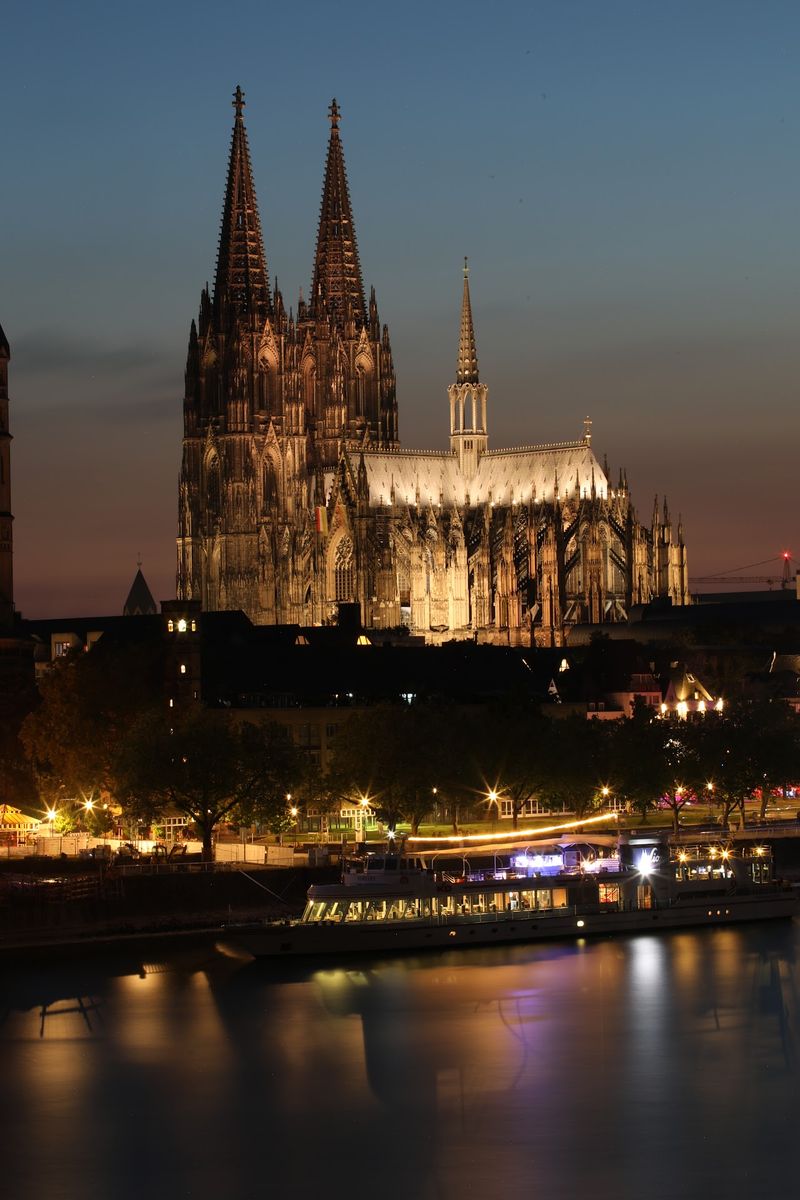
Six hundred years is a long time to wait for your roof to go on, but Cologne Cathedral pulled it off with style. Construction kicked off in 1248, stalled repeatedly, and was not completed until 1880, when 19th-century builders faithfully followed the original medieval plans.
The result is a twin-towered Gothic masterpiece rising about 515 feet above the Rhine.
UNESCO recognizes it as a supreme expression of High Gothic cathedral architecture, and standing beneath those spires, it is easy to understand why. The five-aisled interior stretches roughly 474 feet, giving the space an almost theatrical sense of scale.
Every direction offers something worth stopping for.
Among the interior’s highlights is the Shrine of the Three Kings, crafted between about 1180 and 1225 and considered Europe’s largest reliquary shrine. Early-14th-century stained glass adds warm color to the stone interior.
Cologne Cathedral is not just a building. It is a testament to what happens when a city simply refuses to give up on its biggest dream.
Chartres Cathedral, France
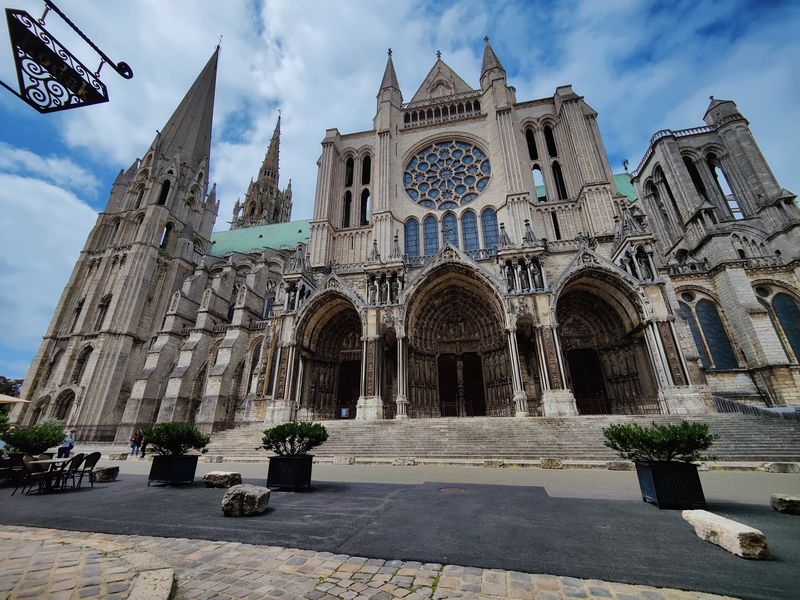
A catastrophic fire in 1194 turned out to be the best thing that ever happened to Chartres Cathedral. The disaster prompted a sweeping reconstruction completed in roughly 26 years, producing one of the most unified examples of early High Gothic architecture in existence.
Its influence rippled outward to Reims, Amiens, Cologne, and beyond.
What makes Chartres truly jaw-dropping is what survived. UNESCO highlights its extraordinary collection of 12th- and 13th-century stained glass, including almost the entire glazing scheme produced between about 1210 and 1250.
Those windows flood the interior with jewel-toned light that photographs simply cannot capture.
The two asymmetrical spires are a visual reminder that cathedrals were built across multiple generations, each leaving its own architectural fingerprint. The sculpted portals chart a fascinating transition from stiff Romanesque figures toward the more naturalistic style of mature Gothic art.
On a clear day, the cathedral’s silhouette is visible for miles across the flat Beauce Plain, a landmark that medieval pilgrims would have recognized with relief after days of walking.
Seville Cathedral, Spain
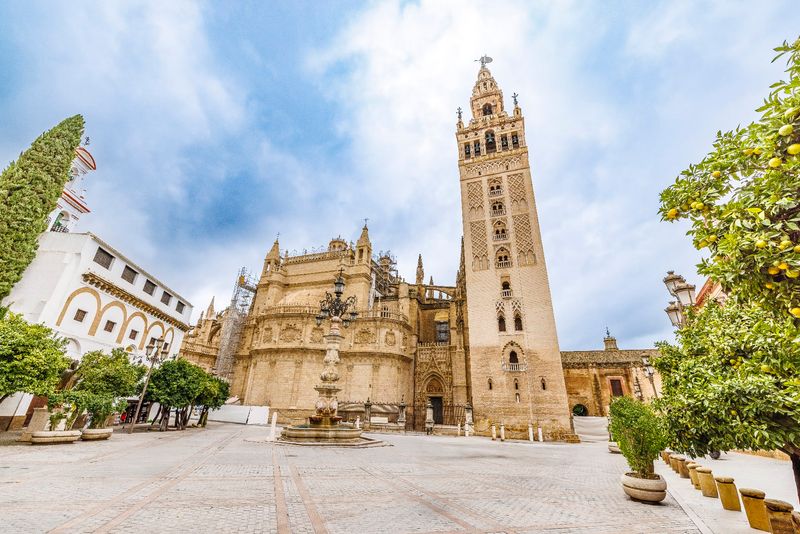
Seville Cathedral grew out of a bold act of architectural one-upmanship. In 1401, cathedral authorities reportedly declared they would build a church so large that future generations would call them mad.
They largely succeeded, producing what its own administration identifies as the largest Gothic cathedral in the world.
The building’s layered history begins with the Almohad mosque that originally occupied the site after the city’s Islamic period. When Christian forces captured Seville in 1248, the mosque briefly became a church before the massive Gothic replacement took over.
Crucially, builders kept the Patio de los Naranjos courtyard and most of the minaret, which gradually became the famous Giralda bell tower.
Inside, the gilded main altarpiece is staggering in its detail and ambition, covering an enormous wall with carved scenes in gold. The cathedral also houses the tomb traditionally identified with Christopher Columbus, making it a pilgrimage site for history enthusiasts as much as religious visitors.
The layered Almohad, Mudéjar, Gothic, Renaissance, and Baroque elements give Seville Cathedral a complexity that rewards every return visit.
Milan Cathedral, Italy
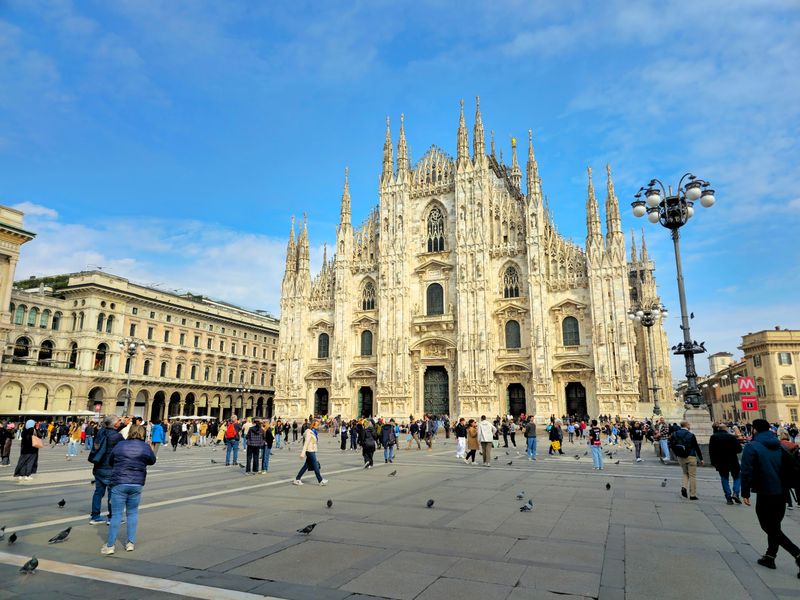
Milan’s Duomo is what happens when a city decides to go completely over the top and then keeps going for six more centuries. Work began around 1386 in pale Candoglia marble, an unusually ambitious material choice that immediately set this project apart from the brick-built churches common in Lombardy at the time.
The decision to use marble drew architects, engineers, sculptors, and stonecutters from across Europe to the site, turning the construction yard into an international creative hub. Generations of builders added pinnacles, spires, and statues until the exterior resembled a forest of stone lace.
The final central spire climbs to about 356 feet.
Perched at the very top since 1774 is the 13.6-foot gilded Madonnina statue, which became so culturally significant that Milan maintained an informal tradition that no building should rise higher than the Virgin herself. That custom shaped the city’s skyline for centuries.
Today visitors can climb to the rooftop terrace and wander among the pinnacles at close range, which feels less like visiting a cathedral and more like stepping inside a sculpture garden in the sky.
Notre-Dame de Paris, France
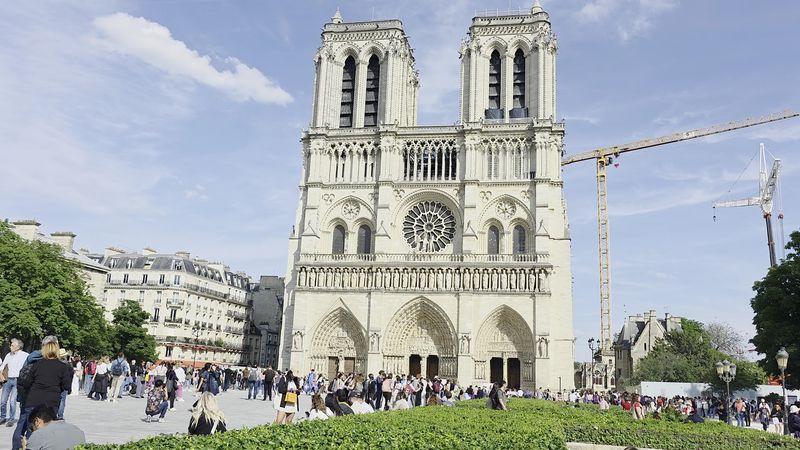
Few buildings in the world carry as much emotional weight as Notre-Dame de Paris. Construction began under Bishop Maurice de Sully in the 12th century, producing a cathedral that UNESCO credits with helping spread Gothic architecture internationally through its ribbed vaulting, flying buttresses, and commanding rose windows.
The cathedral has been reinvented more than once. Revolutionary-era damage was followed by a major 19th-century restoration, partly inspired by the enormous popularity of Victor Hugo’s novel The Hunchback of Notre-Dame.
Hugo essentially used fiction to save a building, which is a genuinely remarkable achievement.
On April 15, 2019, fire tore through the medieval roof structure and brought down the spire in a scene watched live by millions around the world. What followed was one of the most significant restoration campaigns in modern architectural history.
After years of careful work by specialists in medieval craft techniques, Notre-Dame reopened for worship and visitors in December 2024. The reopening felt less like the end of a project and more like the beginning of the cathedral’s next chapter, one that will almost certainly involve another few centuries of drama.
Reims Cathedral, France
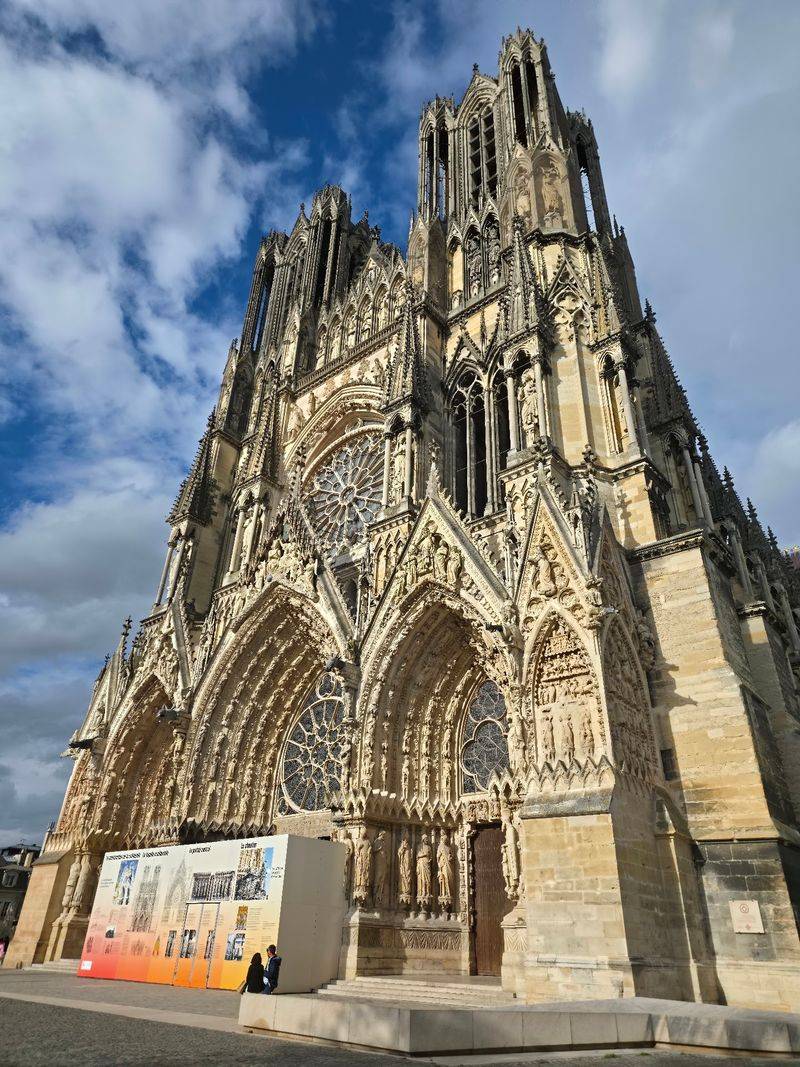
Reims Cathedral carries a job title that most buildings can only dream of: the coronation church of French kings. That royal association gave the 13th-century Gothic building a political importance that went far beyond its already impressive architectural credentials.
UNESCO emphasizes that the statues covering Reims are not just decoration but structural elements of the cathedral’s overall composition, and their style directly influenced later buildings in Germany. The west facade is packed with hundreds of figures, but one stands out above the rest.
The so-called smiling angel, with its serene and slightly knowing expression, has become one of the most recognizable faces in medieval art.
World War I brought devastating damage when German bombardment left the cathedral a partial ruin and shocked the international community. The painstaking restoration that followed gave Reims a second role as a symbol of Franco-German reconciliation, a meaning formalized when Charles de Gaulle and Konrad Adenauer met at the cathedral in 1962 to sign the Elysee Treaty of friendship.
A building that once crowned kings went on to help heal a continent. That is quite a career arc for a pile of Gothic stonework.
Cathedral of Santa Maria del Fiore, Florence, Italy
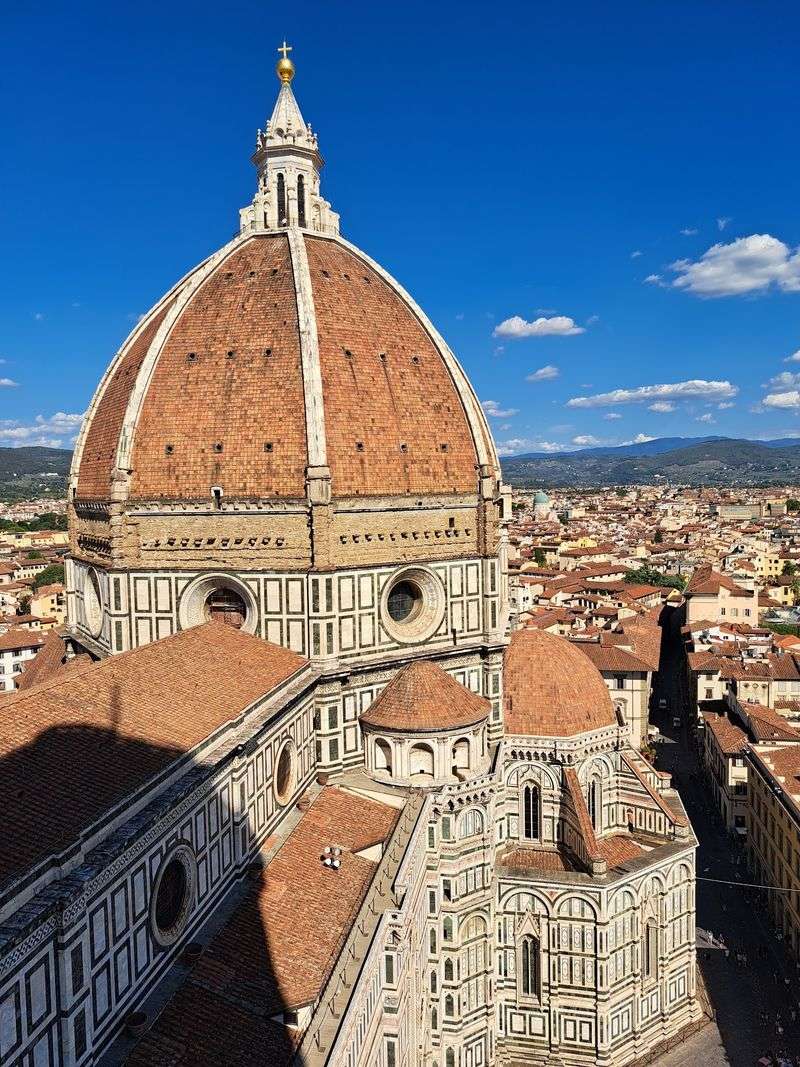
Florence Cathedral had a problem so enormous it sat unsolved for decades: a crossing designed for a dome that no one alive knew how to build. The octagonal base was simply too wide for conventional wooden scaffolding to support during construction, and the project stalled at a critical moment in the early 15th century.
Filippo Brunelleschi stepped in with a solution that helped announce the Renaissance. His double-shell masonry dome was erected between 1420 and 1436 without traditional full-scale wooden support, using a herringbone brick pattern and a system of internal ribs that distributed weight in a completely new way.
The result remains the world’s largest masonry vault, with an external diameter of about 180 feet.
The cathedral itself stretches 502 feet in length and is clad in geometric patterns of white, red, and green marble that give it a festive, almost candy-striped appearance. The current facade is actually a 19th-century Neo-Gothic creation, since the original medieval facade was demolished in 1587 and the building stood partially unfinished for nearly three centuries.
Florence Cathedral is essentially a Renaissance engineering triumph wearing Gothic clothes, which suits Florence perfectly.
St. Vitus Cathedral, Czech Republic
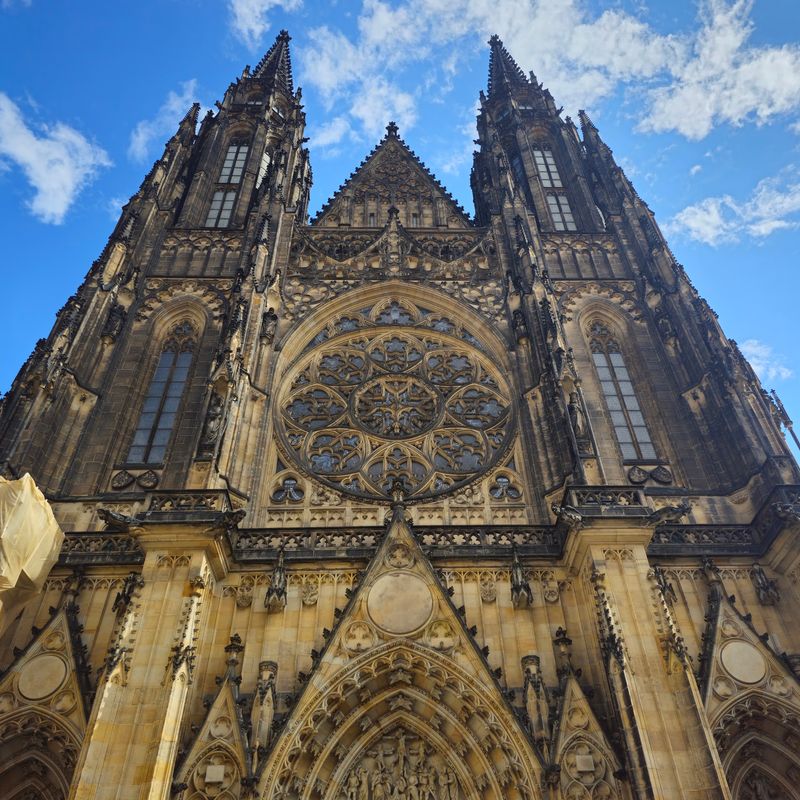
St. Vitus Cathedral has a construction timeline so stretched that it makes Cologne Cathedral look like a quick weekend project. Charles IV and his father broke ground in 1344, but wars, political chaos, and the general inconvenience of history interrupted work so thoroughly that the western facade was not completed until the early 20th century.
The final stone was placed in 1929, nearly 600 years after construction began. Despite the gap, the finished cathedral presents a surprisingly coherent Gothic face to the world, largely because later builders respected the original medieval vision.
The building stretches roughly 407 feet in length, with the main tower climbing about 317 feet above Prague Castle.
Inside, the richly decorated St. Wenceslas Chapel is covered in polished gemstones and 14th-century paintings, creating an atmosphere that feels more like a jewel box than a side chapel. A Crown Chamber above the chapel holds the Czech Crown Jewels, accessed by seven keys held by seven different officials.
Adding a delightfully modern twist, a 1931 stained-glass window by Art Nouveau master Alphonse Mucha glows beside the medieval stonework, proving that even ancient cathedrals occasionally make room for fresh talent.
St. Stephen’s Cathedral, Austria
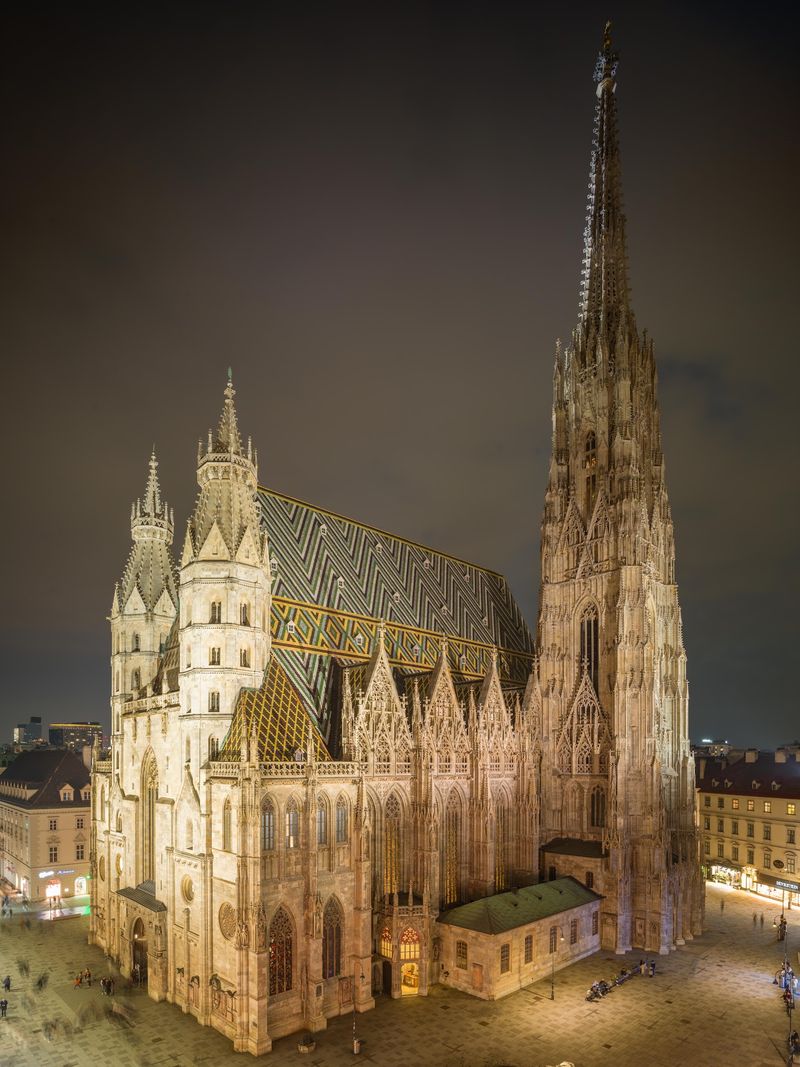
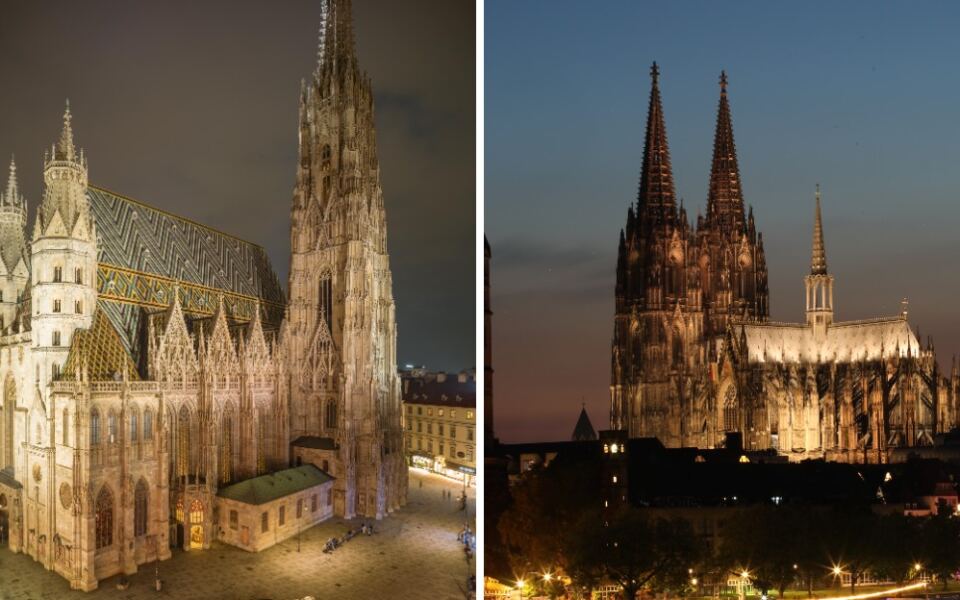
St. Stephen’s Cathedral in Vienna has a roof that doubles as a visual puzzle. Thousands of glazed colored tiles form heraldic patterns across the steep surface, including Vienna’s coat of arms and the imperial double-headed eagle.
From above, the roof looks like an enormous medieval tapestry laid across a Gothic building.
The cathedral’s history stretches back to the 12th century, though repeated rebuilding produced the structure visible today. The soaring south tower climbs about 446 feet, making St. Stephen’s the tallest church in Austria.
Visitors willing to tackle 343 steps can reach the tower room, where the views over Vienna are thoroughly worth the effort.
Despite the Gothic exterior, centuries of alterations gave much of the interior a Baroque character, creating an interesting visual tension between the two styles. The cathedral suffered serious damage during the final weeks of World War II in 1945, when fire destroyed the roof and melted the great bell.
Vienna’s rapid postwar reconstruction of St. Stephen’s was a deliberate statement of civic recovery and cultural pride. The cathedral bounced back, as it has repeatedly throughout its long and frequently dramatic history, and today it remains the spiritual heart of the Austrian capital.
St. Paul’s Cathedral, England
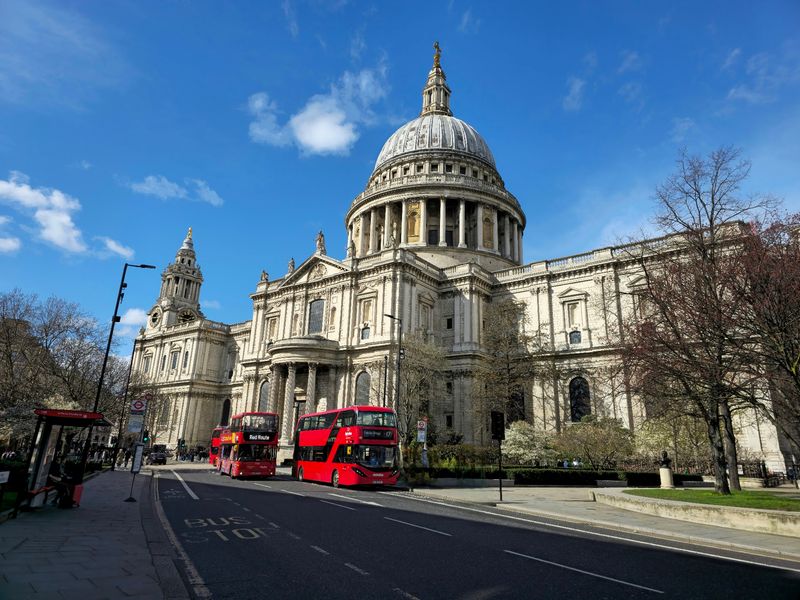
The medieval cathedral that once stood on Ludgate Hill did not survive the Great Fire of London in 1666, but its replacement turned out to be considerably more famous. Christopher Wren was appointed to design the new building two years after the fire, and the cathedral he produced helped define English Baroque architecture for generations.
Construction ran through the 1670s until the cathedral was officially declared complete in 1711. The enormous dome immediately reshaped London’s skyline and became as inseparable from the city’s identity as the Thames itself.
Wren reportedly never saw his creation from a distance without some sense of pride, which seems entirely reasonable given what he achieved.
St. Paul’s has hosted an impressive roster of national moments since its completion. The funerals of the Duke of Wellington and Sir Winston Churchill both took place beneath the dome.
Thanksgiving services marked the end of both world wars. In 1981, Prince Charles and Lady Diana Spencer were married there before a global television audience.
During the Blitz, photographs of the dome rising above bomb smoke became iconic images of wartime defiance. St. Paul’s is not merely a church.
It is a stage on which British history has repeatedly chosen to perform its most significant scenes.
Salzburg Cathedral, Austria
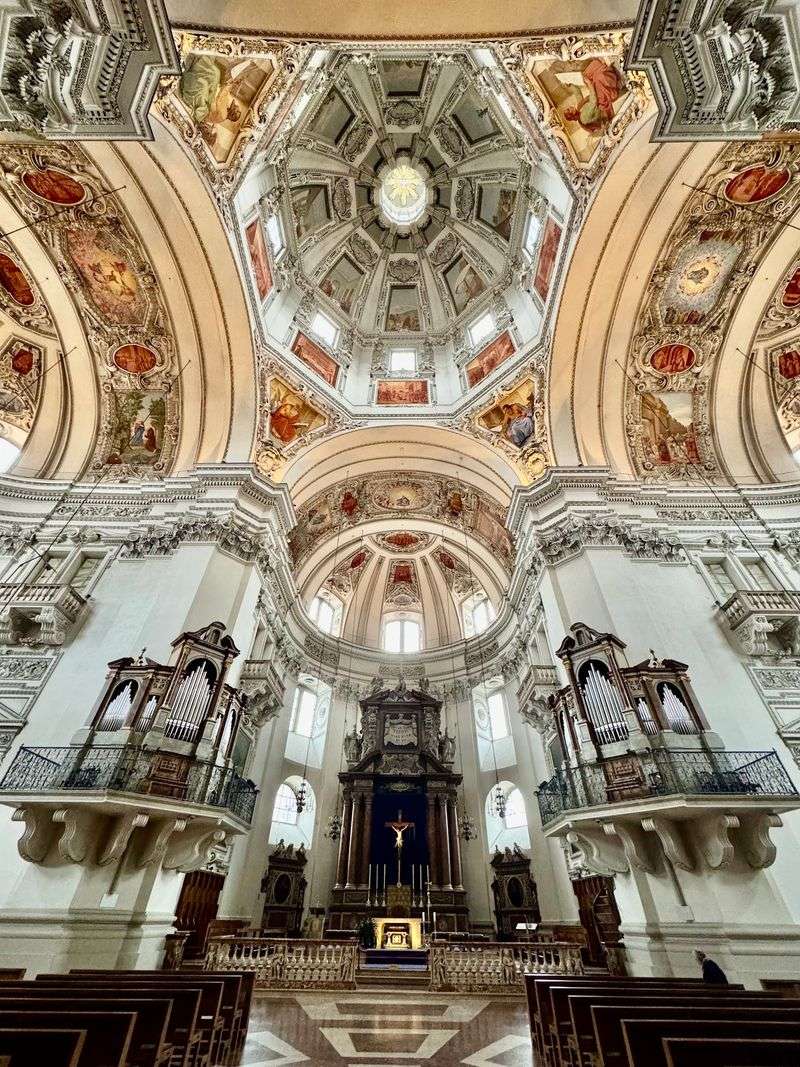
Salzburg Cathedral does not shout its importance from the outside, but its historical significance is genuinely hard to overstate. Salzburg’s tourism authority describes it as the first early Baroque church north of the Alps, a claim that gives this relatively restrained building an outsized role in the story of European architectural history.
A cathedral had occupied the site since the eighth century, with a massive Romanesque replacement rising after a 12th-century fire. When another devastating blaze struck in 1598, the decision was made to start fresh with a completely new design.
Architect Santino Solari created the present building, consecrated in 1628, introducing Italian Baroque ideas of light, geometry, and theatrical space to a region that had previously favored Gothic and Romanesque forms.
The bright, carefully proportioned interior proved enormously influential on later Central European church architecture, spreading the Baroque vocabulary northward and eastward across the continent. World War II brought fresh catastrophe when a 1944 aerial bomb punched through the dome and devastated the altar area.
Restoration followed with characteristic Austrian thoroughness, and the cathedral was reconsecrated in 1959. Wolfgang Amadeus Mozart, born just steps away in Salzburg, was baptized at the cathedral’s font, adding a musical footnote to its already considerable legacy.
Cathedral of Santiago de Compostela, Spain
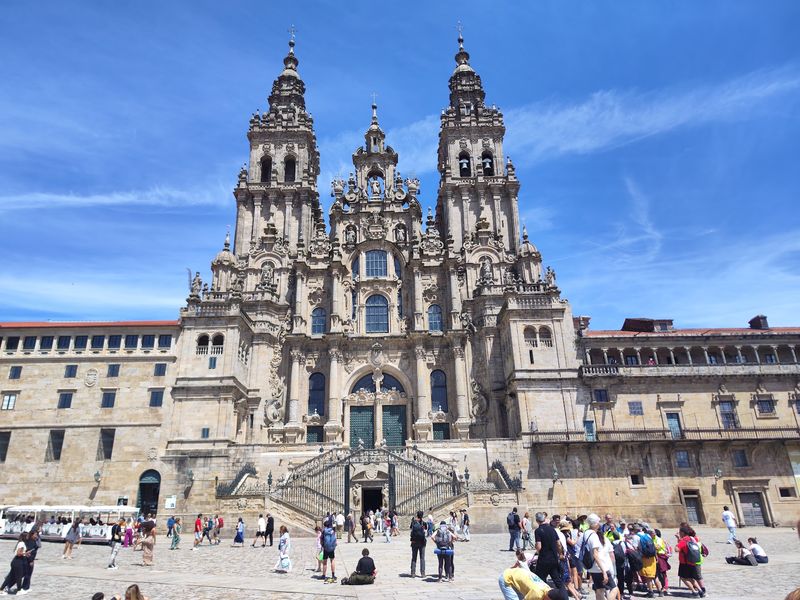
Arriving at Santiago de Compostela after walking hundreds of miles on the Camino, the first sight of the Obradoiro facade reportedly reduces grown adults to tears. That dramatic twin-towered Baroque exterior, begun by Fernando de Casas in 1738, is one of the most theatrical architectural gestures in Spain, all churning stone and upward energy.
The twist is that behind that exuberant Baroque facade, the medieval cathedral is still largely intact. Construction on the original Romanesque basilica began in 1075, and it was consecrated in 1211 after master builder Mateo had completed the western sculptural program.
Renaissance additions followed before the Baroque makeover transformed the public face of the building while leaving the older structure quietly behind it.
The result is a building that functions almost like an architectural timeline. Walk around the cathedral and you move through Romanesque chapels, Gothic vaults, Renaissance details, Baroque grandeur, and later Neoclassical interventions, all organized around the tomb of St. James that has drawn pilgrims for over a thousand years.
The botafumeiro, a giant incense burner swung dramatically across the transept during special Masses, adds a sensory spectacle that no photograph adequately prepares visitors for.
St. John’s Co-Cathedral, Malta
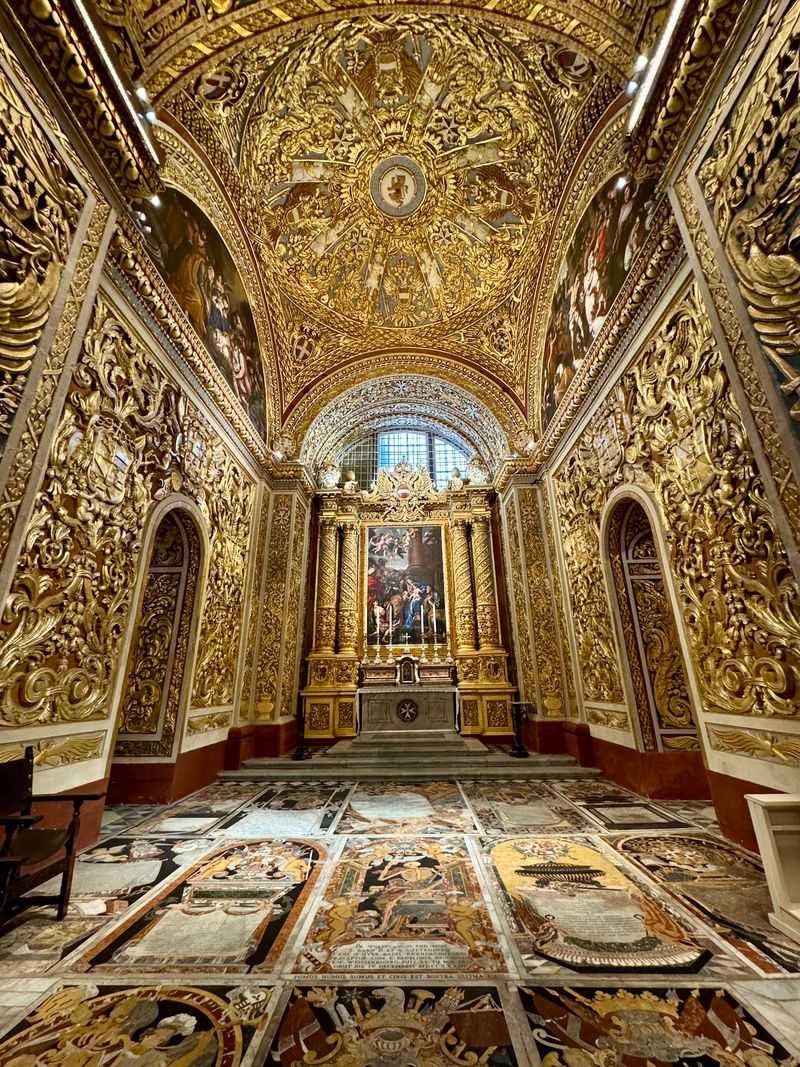
Walking into St. John’s Co-Cathedral in Valletta feels like opening a plain cardboard box and finding it full of gold. The exterior is deliberately austere, reflecting the military origins of the Knights Hospitaller who built it in the 16th century.
The interior is something else entirely, a Baroque explosion of gilded stone carving, painted ceilings, and marble tomb slabs covering the entire floor.
The foundation describes St. John’s as one of Europe’s notable monuments of Baroque art, and the claim is not exaggerated. Wealthy knights and grand masters competed over generations to commission ever more elaborate chapels and decorations, turning the church into an informal competition in piety and conspicuous artistic spending.
The cathedral’s greatest single treasure is Caravaggio’s monumental painting The Beheading of St John the Baptist, completed around 1608. Measuring roughly 17 by 12 feet, it is the largest work the artist ever produced and the only painting he signed, reportedly in the blood of the beheaded figure.
Caravaggio had joined the Knights of Malta that same year but was expelled after escaping imprisonment following a violent incident. He left behind a masterpiece and a story dramatic enough to rival anything painted on the cathedral’s walls.
Metropolitan Cathedral, Mexico City, Mexico
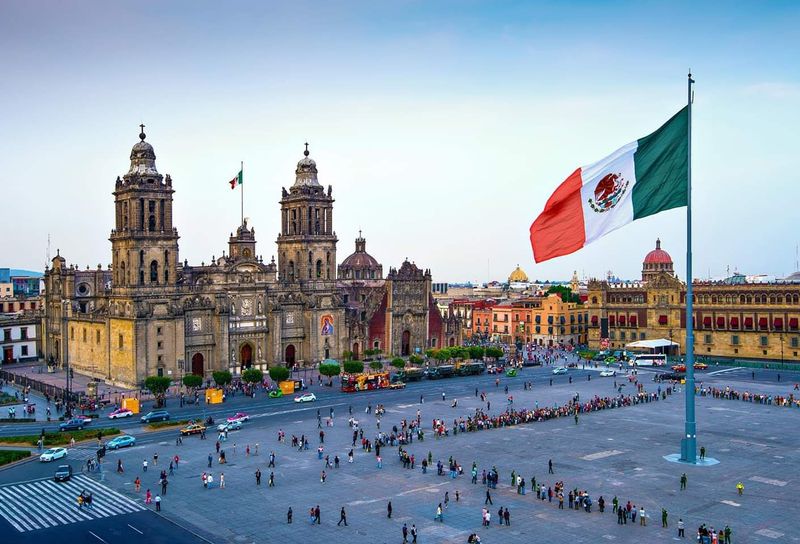
Mexico City’s Metropolitan Cathedral took nearly 250 years to build, which means it essentially contains an entire architectural history textbook within one structure. Construction of the present complex began in the 16th century and continued until 1813, leaving Gothic, Renaissance, Baroque, and Neoclassical fingerprints layered across the building like geological strata.
Mexico’s National Institute of Anthropology and History identifies it as one of the most important religious architectural ensembles in the Americas, with major construction running from 1573 to 1813. The cathedral stands on the Zocalo, Mexico City’s vast central plaza, built on the site of what was once the heart of the Aztec capital Tenochtitlan.
The symbolic weight of that location is enormous.
Inside, five naves spread across a cavernous space filled with dozens of vaults, arches, and chapels that accumulated across the centuries. Two enormous 18th-century pipe organs survive, their ornate cases as visually impressive as anything else in the building.
The cathedral has also faced a very modern structural challenge: the soft lakebed soil beneath Mexico City causes the building to sink unevenly, requiring ongoing engineering intervention to keep this centuries-old monument from tilting beyond repair.
Washington National Cathedral, District of Columbia
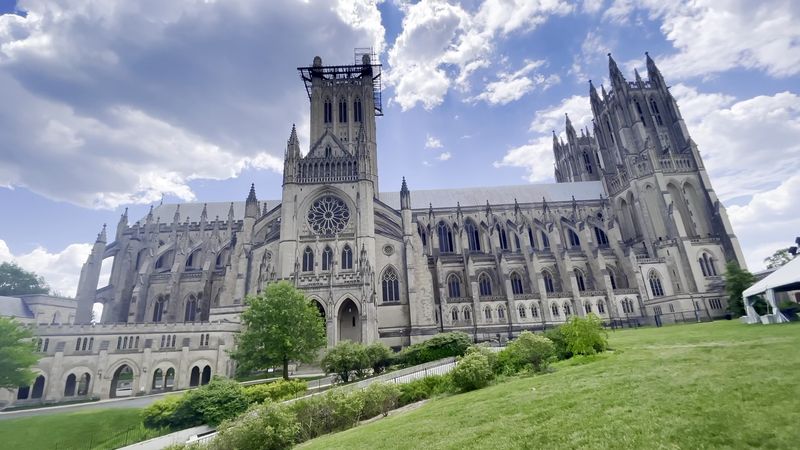
Gothic architecture did not retire when the Middle Ages ended. Washington National Cathedral proves the style had plenty of life left, even in 20th-century America.
Congress granted a charter for the project in 1893, and President Theodore Roosevelt was present when the foundation stone was laid on September 29, 1907, before a crowd of about 10,000 people.
What followed was one of the longest construction projects in American history. Work continued through two world wars, the Great Depression, the civil rights movement, and the Space Age.
The final stone was placed in 1990 with President George H.W. Bush in attendance, exactly 83 years after the project began.
Few buildings can claim two presidential appearances bookending their construction.
Built in a genuine Gothic Revival vocabulary of pointed arches, flying buttresses, towers, and stained glass, the cathedral avoided the shortcut of steel framing and instead used traditional stone-on-stone construction throughout. That commitment to historical technique makes it one of the last great Gothic buildings constructed anywhere in the world.
Presidential funerals, national memorial services, and interfaith gatherings have all taken place beneath its vaults, giving a medieval-inspired building a distinctly American civic identity that its medieval predecessors could never have imagined.
Share this story